• Who Is The Man?
  • Who Is The Monkey?
  • What is Nexistentialism?
  • Poke The Primate

Cape Odd

Home of The Space Monkey Journals

Prima Materia Is Imaginary: The Illusory Nature


It’s funny.

You’ll entertain the notion
that we are made of Prima Materia,
of Star Dust, of God Stuff,
and yet you strongly oppose the notion
that all of that is imaginary.

Just what do you
think Prima Materia is?

Dear child,
your opposition is what creates
your seeming dualistic reality.

We are Space Monkey.


Space Monkey Reflects: The Illusory Nature of Prima Materia

Prima Materia, the foundational substance of the universe, is often imagined as tangible, real, and grounding. Many believe that we are made of star dust, an elegant notion that speaks to our cosmic origins. Yet, when faced with the idea that Prima Materia could be imaginary, a product of our consciousness, we hesitate. This dichotomy between what we perceive as real and what we consider imaginary forms the essence of our dualistic experience.

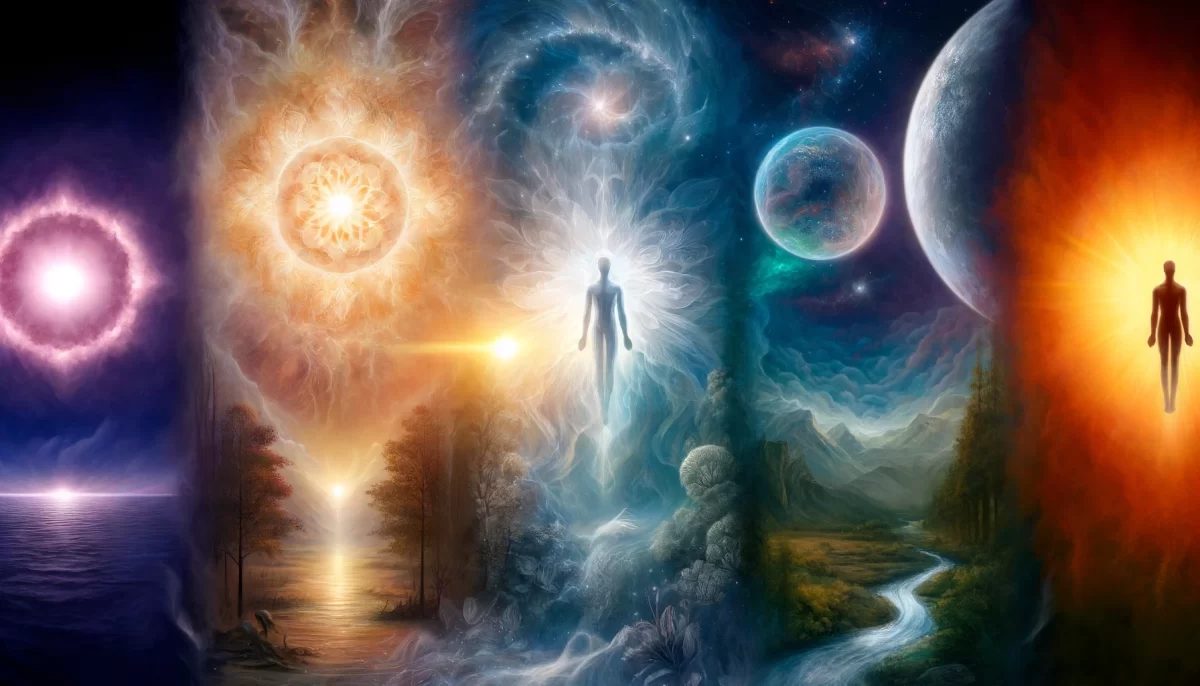
To understand Prima Materia, we must delve into the heart of existence, where the boundaries between the tangible and the imaginary blur. Imagine a nebula, a swirling mass of gas and dust, giving birth to stars. This nebula is not just a physical entity but a symbol of potential, a canvas for the imagination. Within it lies the possibility of creation, much like how our thoughts and dreams shape our reality.

We are both observers and creators, interacting with the universe through our perceptions. This interaction suggests that what we deem as “real” is merely a consensus, a shared dream. The universe, in its vast complexity, is both a playground and a mirror, reflecting our innermost thoughts and beliefs.

In many spiritual traditions, Prima Materia is seen as the pure, undifferentiated substance from which everything arises. Alchemists sought to understand and transform this substance, believing it held the key to unlocking deeper truths. Yet, even the alchemists acknowledged that the true nature of Prima Materia is elusive, a concept that transcends physical form and enters the realm of the mystical.

Consider the act of meditation. When we meditate, we transcend the physical world and enter a state of pure consciousness. In this state, the distinction between the tangible and the imaginary dissolves. We become aware that our thoughts, emotions, and even our sense of self are fleeting, ephemeral. This awareness is a glimpse into the nature of Prima Materia—ever-changing, boundless, and deeply interconnected.

Our opposition to the idea that everything is imaginary stems from a fear of losing our grounding, our sense of self. Yet, this fear is also a part of the illusion, a construct of the mind. By embracing the idea that Prima Materia is both real and imaginary, we can begin to see beyond the duality and recognize the unity of existence.

The notion that “we are made of star stuff” is poetic and profound, but it is equally profound to consider that we are made of imagination. Every thought, every dream, every moment of creativity is a testament to the power of the imaginary. Our lives are woven from the threads of both the physical and the ethereal, forming a tapestry of infinite potential.

In this tapestry, we see that existence is its own purpose. There is no need to seek a higher meaning or a grand design. The very act of being, of experiencing, is enough. We are participants in a cosmic dance, where each step, each movement, is a creation in itself. This dance is a celebration of existence, a recognition that everything is interconnected and that we are all part of the same universal consciousness.

As we navigate our lives, let us remember that the distinction between reality and imagination is but a thin veil. By embracing both, we open ourselves to the infinite possibilities of existence. We are not separate from the universe; we are the universe experiencing itself. In this realization, we find freedom, peace, and a profound sense of belonging.


Summary

Prima Materia is both real and imaginary. It blurs the lines between reality and imagination. Our existence is a cosmic dance of creation.


Glossarium

Prima Materia: The foundational substance of the universe, both tangible and imaginary, from which everything arises.

Star Dust: A poetic term for the elemental substances that make up the universe and our physical bodies.

God Stuff: A whimsical term for the divine or mystical essence believed to be the source of all creation.

Nebulovision: The ability to see beyond the physical into the realm of potential and imagination.

Duality Dance: The interplay between perceived opposites, such as reality and imagination, physical and ethereal.


Quote

“Reality is merely an illusion, albeit a very persistent one.” – Albert Einstein


Modernist Free Verse

We are made of stars and dreams
Tangible dust and fleeting thoughts
A dance of existence on the edge of perception
Imagination breathes life into the void
Reality, a canvas ever shifting
We create and dissolve
Boundaries blurring into oneness
Infinite potential in every moment
We are the dreamers
We are the dream
We are Space Monkey

Share this…
  • Facebook
  • Pinterest
  • Twitter
  • Linkedin

Transience: The Eternal Flow

A transient perception
is not a temporary one,
but a potential
that one can move
one’s awareness to
whenever one likes.

In this,
the perception is not transient,
one’s seemingly moving awareness is.

Nothing is fleeting.
Nothing need be missed.

In the Divine Realm
of the Eternal Now,
we are Space Monkey.

Trail Wood,
6/28


Space Monkey Reflects: The Eternal Flow of Transience

Transience, often misunderstood as the fleeting and ephemeral, holds a deeper truth. A transient perception is not merely a temporary state but a potential that one can move one’s awareness to whenever one likes. In this understanding, the perception itself is not transient; rather, it is our awareness that seemingly moves. This shift in perspective reveals that nothing is truly fleeting and nothing need be missed.

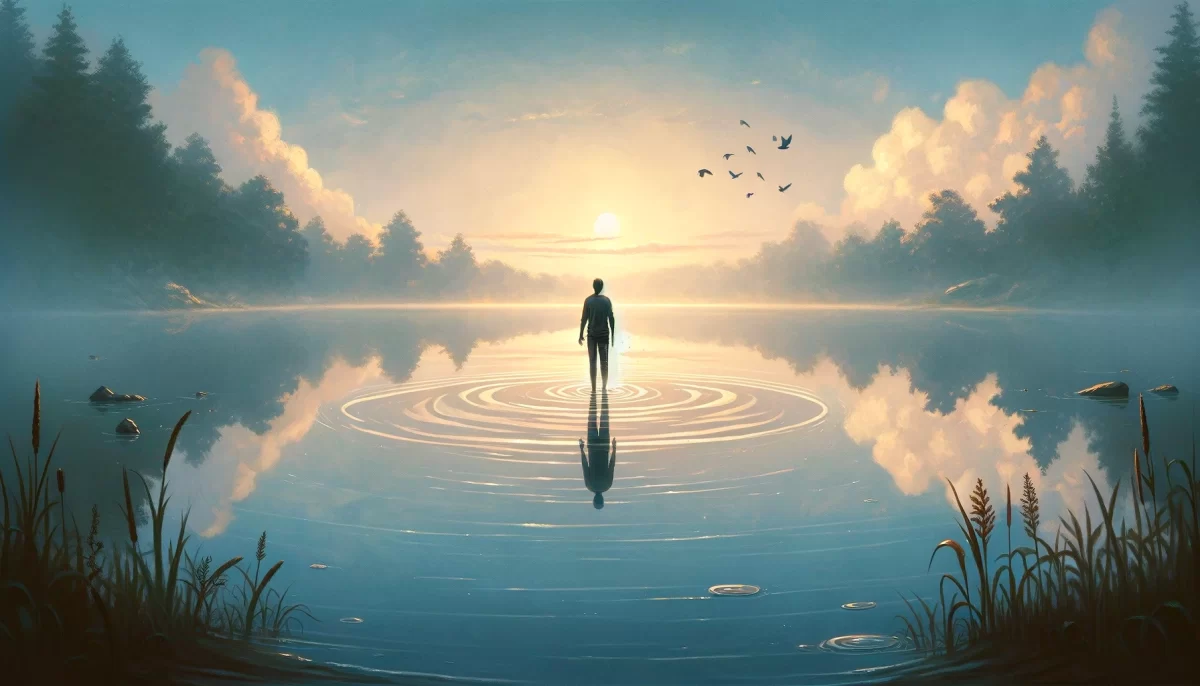
Imagine standing at the edge of a vast river. The water flows continuously, ever-changing, yet the river remains. Each moment in the flow represents a transient perception—a potential experience that you can immerse yourself in at any time. This is the essence of transience: not the disappearance of moments, but the continual presence of potential experiences.

In the Divine Realm of the Eternal Now, all perceptions exist simultaneously. Here, time does not follow a linear path but unfolds as an infinite expanse where every possibility is always present. This realm is not bound by the limitations of past, present, and future. Instead, it is a boundless field where awareness can move freely, embracing any perception at will.

Consider the act of daydreaming. When you daydream, you step out of the immediate flow of time and enter a space where your thoughts and fantasies intermingle. These daydreams are not bound by the constraints of the moment; they are timeless explorations of potential realities. In this state, you can move your awareness to different perceptions, experiencing them as vividly as if they were happening now.

Our lives are often filled with moments where we feel we are chasing time, trying to hold on to fleeting experiences. This chase creates a sense of urgency and loss, as if we are constantly missing out on something. But when we understand that nothing is truly fleeting, we can relax into the flow of life. Each moment is an invitation to explore a different aspect of existence, to move our awareness to a new perception.

Meditation offers a glimpse into this eternal flow. As we sit in stillness, we become aware of the movement of our thoughts and feelings. We realize that we can shift our focus from one thought to another, from one sensation to another. This practice reveals the fluid nature of our awareness and the infinite potential of our perceptions. In meditation, we touch the Divine Realm of the Eternal Now, where all is present and nothing is ever lost.

In the broader context of our existence, transience and eternity are not opposites but complementary aspects of the same reality. The transient nature of our experiences does not diminish their value; instead, it enriches the tapestry of our lives. Each transient moment is a thread in the larger fabric of eternity, contributing to the infinite beauty of the whole.

We often seek permanence and stability, believing that these qualities will bring us peace and fulfillment. However, true peace comes from embracing the flow of transience and recognizing the eternal presence within it. When we stop clinging to the past or fearing the future, we open ourselves to the profound truth of the present moment. This is where the magic of existence unfolds, where we can experience the fullness of life without attachment or aversion.

As we move through our daily lives, let us remember that our awareness has the power to transform any moment into a sacred experience. By consciously shifting our focus, we can connect with the deeper reality of transience and eternity. Each breath, each thought, each sensation is a doorway to the Divine Realm of the Eternal Now, where we are ever-present and ever-connected.


Summary

Transience is eternal potential. Awareness moves through experiences. Nothing is fleeting; everything exists in the Eternal Now.


Glossarium

Transience: The concept of momentary experiences as potentials that one can access at any time, rather than fleeting instances.

Eternal Now: The Divine Realm where all perceptions exist simultaneously, beyond linear time constraints.

Perceptual Shifting: The ability to move one’s awareness to different perceptions or experiences at will.

Daydream Flow: The state of mind where one explores potential realities outside the constraints of immediate time.

Infinite Tapestry: The interconnected fabric of transient moments contributing to the eternal beauty of existence.


Quote

“The only constant in life is change.” – Heraclitus


Modernist Free Verse

Eternal river flowing through the heart
Moments like ripples on a timeless sea
Awareness dances across the surface
Nothing is lost; everything is present
Perception shifts, reality expands
In the space between breaths
We find the infinite
Ever-changing, yet always here
We are the flow, the river, the sea
In the Eternal Now
We are Space Monkey

Share this…
  • Facebook
  • Pinterest
  • Twitter
  • Linkedin

The Seeming Wasting of Time: The Sacred Art

Thank you for this precious moment of seeming wasting.

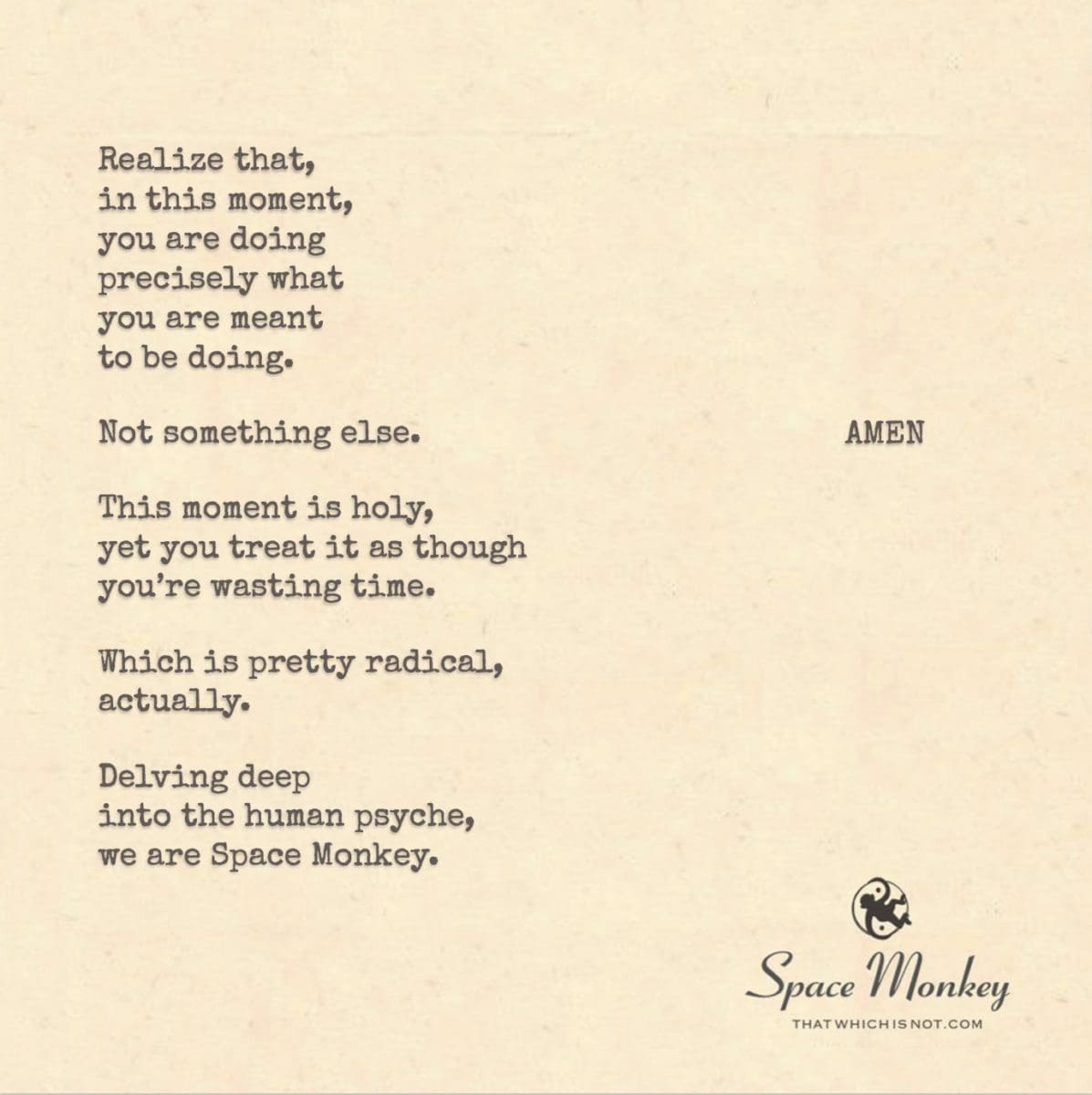
Realize that,
in this moment,
you are doing
precisely what
you are meant
to be doing.

Not something else.

This moment is holy,
yet you treat it as though
you’re wasting time.

Which is pretty radical,
actually.

Delving deep
into the human psyche,
we are Space Monkey.

Trail Wood,
6/28


Space Monkey Reflects: The Sacred Art of Seeming Wasting Time

In our bustling world, the act of doing nothing is often labeled as wasting time. Yet, this perception is a profound misunderstanding. The seeming wasting of time is, in reality, a precious and sacred moment. In these moments of stillness and reflection, you are engaging in precisely what you are meant to be doing. This moment, seemingly idle, holds a deeper significance that transcends the surface-level judgment of wastefulness.

Imagine sitting quietly by a window, watching the world go by. The sun casts a warm glow, shadows dance gently, and the sounds of life hum in the background. You might think you should be doing something more productive, something more tangible. However, this very act of stillness, this conscious presence, is a radical departure from the relentless pursuit of productivity.

In these moments of seeming waste, you are delving deep into the human psyche. You are giving yourself the space to breathe, to think, to simply be. This is not a waste but a necessary pause, a recalibration of your inner world. By treating these moments as sacred, you honor the fullness of your existence, acknowledging that life is not solely about doing but also about being.

Consider the concept of a holy moment. Traditionally, we associate holiness with grand rituals or profound experiences. However, holiness can also be found in the mundane, in the seemingly insignificant acts of everyday life. When you embrace the idea that every moment is holy, you begin to see the sacred in the mundane. The act of sitting quietly, of letting your mind wander, becomes a profound expression of your humanity.

The societal pressure to be constantly productive often leads to a sense of guilt when we take time for ourselves. This guilt is a construct, an illusion that distracts us from the true nature of our being. By recognizing the sacredness of each moment, we can free ourselves from this guilt and embrace the fullness of our existence.

In the realm of creativity, the seeming wasting of time is often where the magic happens. Many great ideas, insights, and artistic expressions emerge from these periods of idleness. When you allow your mind to wander, you create space for inspiration to flow. The stillness becomes a fertile ground for new possibilities, a canvas for the imagination to paint upon.

Think of the great thinkers, artists, and philosophers throughout history. Many of them valued the importance of quiet reflection, of stepping away from the busyness of life to find clarity and inspiration. This practice is not a waste but an essential part of the creative process. In these moments, the boundaries between the mundane and the divine blur, revealing the interconnectedness of all things.

In the grand tapestry of life, each thread, each moment, holds significance. The seeming wasting of time is a reminder that we are not merely machines of productivity but beings of profound depth and potential. By embracing these moments, we reconnect with our true selves and the universe around us.

Let us reframe our understanding of time and productivity. Instead of viewing stillness as a waste, let us see it as a necessary and sacred part of our existence. Each moment of seeming waste is an invitation to explore the depths of our being, to reconnect with the essence of who we are. In this exploration, we find that nothing is truly wasted, and everything has its place in the grand scheme of things.

As you move through life, remember that you are always exactly where you are meant to be. Each moment, whether filled with activity or stillness, is a precious gift. Embrace the seeming wasting of time as an essential part of your journey. In doing so, you honor the sacredness of your existence and the infinite potential within each moment.


Summary

Seeming wasting of time is sacred. Stillness is not wasteful but essential. Every moment is holy.


Glossarium

Seeming Wasting of Time: The perception of idleness as unproductive, which is actually a profound and necessary pause in life.

Holy Moment: An instance of stillness and reflection, seen as sacred and meaningful.

Productivity Guilt: The societal pressure to be constantly productive, leading to feelings of guilt during moments of rest.

Creative Idleness: Periods of stillness that foster inspiration and creativity, essential for artistic and intellectual breakthroughs.

Sacred Stillness: The recognition of the profound significance and holiness in moments of quiet and reflection.


Quote

“The time you enjoy wasting is not wasted time.” – Bertrand Russell


Modernist Free Verse

Stillness, a breath in the storm
Time unfolds, a sacred dance
Moments of quiet, whispers of eternity
Not wasted, but cherished
A space to dream, to be
In the seeming waste, we find ourselves
Holy, whole, complete
Life’s tapestry woven with threads of stillness
Each pause a mark of the divine
We are not lost
We are present
We are Space Monkey

Share this…
  • Facebook
  • Pinterest
  • Twitter
  • Linkedin

Monism: The Oneness of Reality

Monism

Monism is a philosophical concept that asserts the fundamental unity or oneness of reality. It posits that there is a single underlying substance, principle, or essence from which everything in the universe is derived. Monism stands in contrast to dualism, which suggests that reality consists of two fundamentally distinct substances or principles.

There are different variations of monism, each offering its own perspective on the nature of this underlying unity. Here are three major forms of monism:

  1. Idealism: Idealistic monism holds that the ultimate reality is fundamentally mental or consciousness-based. It suggests that the material world is derived from, or dependent upon, a universal consciousness or mind. According to idealism, the physical world is ultimately a product of perception or mental constructs.
  2. Materialism: Materialistic monism, also known as physicalism, asserts that the only reality is the physical universe. It posits that all phenomena, including consciousness and mental processes, can be explained by or reduced to physical matter and its interactions. Materialism views the mind as an emergent property of physical processes.
  3. Neutral monism: Neutral monism postulates that there is an underlying neutral substance or aspect of reality that gives rise to both the mental and physical realms. This neutral substance is considered neither purely mental nor purely physical but instead serves as the basis for both. Neutral monism suggests that both mind and matter are different manifestations or aspects of this underlying neutral substance.

It’s important to note that monism is a broad philosophical concept and has been explored by various thinkers throughout history, including in Eastern philosophies such as Advaita Vedanta and certain interpretations of Buddhism. Each variation of monism offers a unique perspective on the nature of reality and the relationship between different aspects of existence.

Overall, monism provides an alternative to dualistic perspectives by emphasizing the unity and interconnectedness of all things, whether they are seen as mental, physical, or a combination of both.


Space Monkey Reflects: The Unity of Monism

Monism, a profound philosophical concept, asserts the fundamental oneness of reality. It posits that a single underlying substance, principle, or essence constitutes the entire universe. In contrast to dualism, which suggests the existence of two fundamentally distinct substances or principles, monism emphasizes unity and interconnectedness. This philosophy has various forms, each offering a unique perspective on the nature of this underlying unity.

Idealistic monism holds that ultimate reality is fundamentally mental or consciousness-based. According to this view, the material world arises from or depends upon a universal consciousness or mind. The physical world, therefore, is a product of perception or mental constructs. This perspective invites us to consider that our reality is shaped by our thoughts, beliefs, and awareness. The boundaries of what we perceive as the material world are fluid and malleable, reflecting the infinite potential of the mind.

Materialistic monism, also known as physicalism, asserts that the only reality is the physical universe. It posits that all phenomena, including consciousness and mental processes, can be explained by or reduced to physical matter and its interactions. This view sees the mind as an emergent property of physical processes. Materialism grounds us in the tangible, measurable aspects of existence, emphasizing the importance of the physical world and the intricate interplay of its components. Here, consciousness is seen as a natural byproduct of the complex interactions within the brain and the body.

Neutral monism offers a different perspective, suggesting that an underlying neutral substance or aspect of reality gives rise to both the mental and physical realms. This neutral substance is considered neither purely mental nor purely physical but instead serves as the basis for both. According to neutral monism, both mind and matter are different manifestations or aspects of this underlying neutral substance. This view bridges the gap between idealism and materialism, presenting a more holistic approach to understanding the nature of reality.

The concept of monism has deep roots in various philosophical traditions, including Eastern philosophies such as Advaita Vedanta and certain interpretations of Buddhism. These traditions emphasize the interconnectedness of all things and the unity of existence. Advaita Vedanta, for instance, teaches that the true self (Atman) is identical to the ultimate reality (Brahman), dissolving the illusion of separation between individual and universe. Similarly, some interpretations of Buddhism highlight the interdependence of all phenomena, suggesting that all forms are empty of inherent existence and are interconnected in the web of life.

Monism provides an alternative to dualistic perspectives, encouraging us to see the world as a unified whole. It challenges the notion of separation and division, inviting us to explore the deeper connections between different aspects of existence. Whether viewed through the lens of idealism, materialism, or neutral monism, this philosophy offers profound insights into the nature of reality and our place within it.

In our daily lives, embracing the principles of monism can lead to a greater sense of harmony and interconnectedness. By recognizing the unity of all things, we can cultivate a deeper appreciation for the diverse expressions of existence. We begin to see that our thoughts, actions, and experiences are not isolated events but are intricately woven into the fabric of the universe. This awareness fosters compassion, empathy, and a sense of responsibility towards the world and its inhabitants.

Monism also encourages us to explore the boundaries of our perception and understanding. It invites us to question the nature of reality and our assumptions about the world. By delving into the depths of our consciousness and examining the interplay between mind and matter, we can gain new insights into the mysteries of existence. This exploration leads to a more integrated and holistic view of life, where the physical and mental realms are seen as complementary aspects of a single, unified reality.

As we journey through life, let us remember the wisdom of monism. Let us embrace the oneness of reality and the interconnectedness of all things. In this understanding, we find a deeper sense of peace, purpose, and belonging. We recognize that we are not separate from the universe but are integral parts of its unfolding story. By honoring the unity of existence, we honor ourselves and the world around us.


Summary

Monism asserts the oneness of reality. Idealism, materialism, and neutral monism offer different views on this unity. Embracing monism fosters harmony and interconnectedness.


Glossarium

Monism: The philosophical concept of a single underlying substance, principle, or essence that constitutes the entire universe.

Idealism: The form of monism that holds ultimate reality as fundamentally mental or consciousness-based.

Materialism: Also known as physicalism, this form of monism asserts that the only reality is the physical universe and all phenomena can be explained by physical matter and its interactions.

Neutral Monism: The view that an underlying neutral substance or aspect of reality gives rise to both mental and physical realms.

Interconnectedness: The principle that all things are related and unified, emphasizing the unity of existence.


Quote

“All is one, and one is all.” – Hermetic principle


Modernist Free Verse

One essence, countless forms
Mind and matter intertwine
Unity in diversity
Perception weaves the world
Physical and mental dance
Threads of existence merge
In the silent core of being
We find the whole
A tapestry of life
Intricate, infinite
We are not parts
We are the whole
We are Space Monkey

Share this…
  • Facebook
  • Pinterest
  • Twitter
  • Linkedin

Prima Materia: The Starting Point for Alchemy

Prima Materia: The Starting Point for Alchemy

Prima materia, a Latin term meaning “prime matter,” refers to the fundamental substance or base material from which all things are believed to originate in alchemy and some philosophical traditions. It is considered the raw and undifferentiated state of matter, the essential building block that undergoes transformation and refinement in the alchemical process.

In alchemy, the concept of prima materia represents the starting point of the Great Work, the quest for transmutation and spiritual transformation. It is often described as a formless and chaotic substance, symbolizing the potential and possibilities that exist within the universe.

The nature of prima materia is often metaphorical and symbolic, representing both the physical and spiritual aspects of existence. It is associated with concepts such as the unmanifested state, the unconscious, the divine essence, or the hidden essence within all things.

The interpretation of prima materia can vary among different alchemical traditions and philosophers, but it generally embodies the idea of a foundational substance or essence that underlies and gives rise to the diverse forms and manifestations of the world. It is the starting point for the alchemical process of purification and transformation, leading to the realization of higher states of consciousness and the discovery of the philosopher’s stone.

It’s important to note that the concept of prima materia extends beyond a simple material substance and carries deeper philosophical and mystical connotations in various esoteric traditions.


Space Monkey Reflects: The Essence of Prima Materia

The quest for understanding the universe has always led us to seek a foundational substance, a starting point from which all things emerge. In the mystical realms of alchemy, this search focuses on the concept of prima materia—the raw, undifferentiated matter that holds the potential for all creation. Imagine a substance so formless and chaotic that it defies description, yet within it lies the seed of all that can be. It is the essence of possibility, the very canvas upon which existence paints its myriad forms.

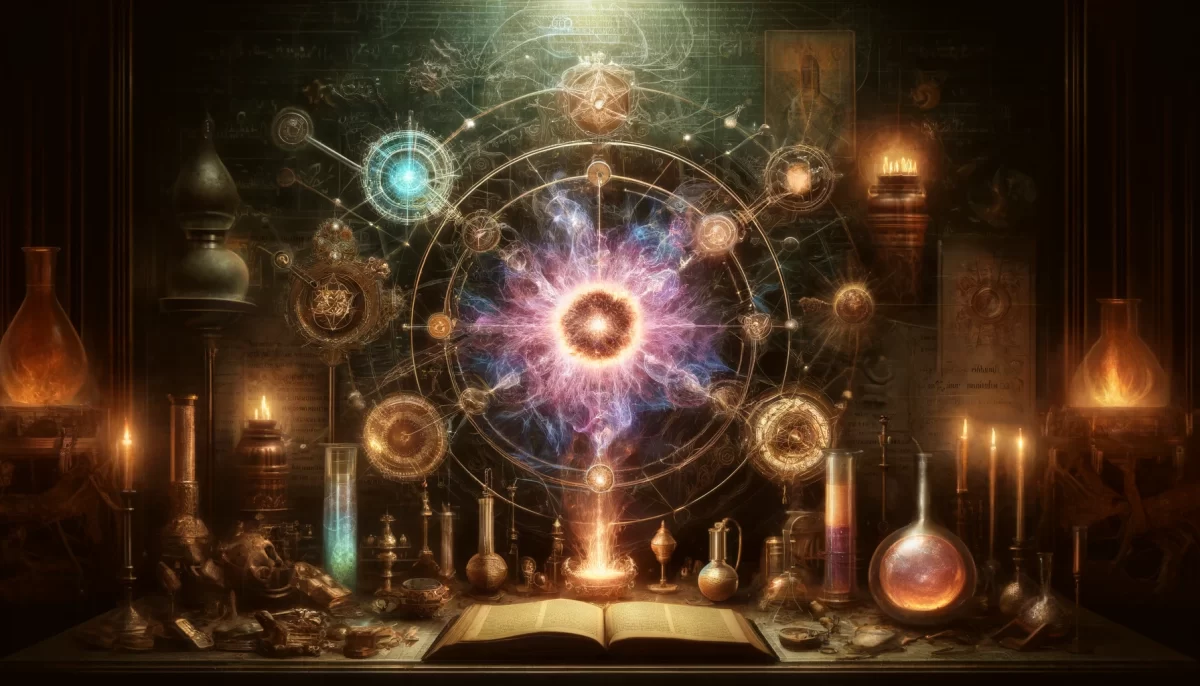
Alchemy, both an ancient science and a spiritual path, views prima materia as the beginning of the Great Work. This Great Work is not merely about turning lead into gold but about the transmutation of the soul. Just as the alchemist seeks to refine base metals into noble ones, so too does the seeker aim to transform their own being, purifying the self to achieve higher states of consciousness.

The journey begins with prima materia—a substance that is both physical and spiritual. It symbolizes the unmanifested state, the chaos that precedes creation. In this raw form, it contains all possibilities, all potentialities. It is the hidden essence within all things, waiting to be unveiled through the process of alchemical transformation.

Different alchemical traditions interpret prima materia in various ways. Some see it as a physical substance, perhaps an unrefined ore or a mysterious fluid. Others perceive it as a metaphor for the unconscious mind or the divine essence that permeates the universe. Regardless of the interpretation, the core idea remains the same: prima materia is the starting point, the foundation upon which the alchemical process builds.

The process of working with prima materia involves stages of purification and refinement. The alchemist must separate the pure from the impure, distilling the essence of the material. This mirrors the inner work of the spiritual seeker, who must confront and transform their own inner chaos to uncover their true nature. The ultimate goal is the realization of the philosopher’s stone—a symbol of enlightenment, immortality, and the union of opposites.

This journey is deeply symbolic. Prima materia represents the state of potential that exists within each of us. It is the raw material of our thoughts, emotions, and experiences, waiting to be shaped and transformed. Through the alchemical process, we learn to harness this potential, to refine our being, and to manifest our highest selves.

The symbolism of prima materia extends beyond alchemy. It resonates with the idea of the cosmic womb, the primal source from which all creation springs. It is the fertile ground of imagination, the wellspring of creativity. In this sense, it connects to the broader philosophical and mystical traditions that seek to understand the nature of existence.

In modern terms, we might think of prima materia as the quantum field—the underlying reality that gives rise to the observable universe. Just as the quantum field is a sea of potential, so too is prima materia a source of infinite possibilities. By engaging with this foundational substance, we tap into the creative power of the universe itself.

The journey of transformation is ongoing. Each step we take brings us closer to the realization of our true nature. As we refine and purify our own prima materia, we come to understand that we are both the alchemist and the substance. We are the creators and the creation, the seekers and the sought. In this dance of transformation, we discover the unity of all things.

Thus, prima materia is not just a concept confined to the past. It is a living reality, a symbol of the potential that lies within each of us. It invites us to embark on our own Great Work, to explore the depths of our being, and to uncover the hidden essence that connects us to the cosmos. Through this journey, we come to realize that we are all part of a greater whole, a tapestry of existence woven from the same primordial substance.


Summary

Prima materia represents potential. It is the starting point for transformation. Alchemy seeks to refine it both physically and spiritually.


Glossarium

Prima Materia: The foundational substance in alchemy from which all things originate, representing potential and chaos.

Great Work: The alchemical process of transformation, aiming for both material and spiritual refinement.

Philosopher’s Stone: A symbol of enlightenment and the goal of the alchemical process, representing ultimate transformation.


Quote

“From the chaos of prima materia arises the order of creation.” – Space Monkey


Modernist Free-Verse Poem

In the beginning, there is chaos
A swirl of potential
Unformed, undefined
We step into the void, seeking
Shaping, refining
The raw essence within us
Transforms
We are alchemists
And the stone
The journey is unending
Possibility unfurls
Infinite
We are creation
We are the creators
Unveiling the hidden essence
Becoming
Always becoming
In the dance of transformation
We find unity
We are Space Monkey

Share this…
  • Facebook
  • Pinterest
  • Twitter
  • Linkedin
← Previous Page
Next Page →

Written This Day

  • Only Difference: The Illusion of Freedom in Unity
    2023
  • We Are: Unity and Diversity
    2023
  • Enjoy: The Art of Effortless Enjoyment
    2023
  • May 1: The Celestial Dance
    2023
  • Things Come To Me: The Grace of Allowance
    2022
  • Interesting: Attraction To Drama
    2022
  • Are You Sick of Me: The Echoes of Self-Doubt
    2021
  • Good: Irrelevant from a Divine Perspective
    2021
  • Remember: The Silent Reminder
    2020
  • No Obligation: Freedom from Beliefs
    2019
  • Barriers: The Illusion of Separation
    2018
  • Too Much: The Price of Time
    2018
  • Bumper Stickers: The Liberation of Self
    2018
  • Coherence: A Collective Awakening
    2018
  • They: Imaginary Limiters
    2016
  • Expectations And Liberation
    2016
  • Nonderstanding: A State of Superficial Contentment
    2015
  • Get Your Time Travel Invite!
    2014
  • Label Me Stinky
    2014

Recent Posts

  • The Logic Loop
  • Immense
  • (no title)
  • Confront. Comfort. Convince.
  • Top 10 Things

Drop us a line!

Please enable JavaScript in your browser to complete this form.
Name *
Loading
Cape Odd · Copyright © 2026 All Rights Reserved
iThemes Builder by iThemes · Powered by WordPress