• Who Is The Man?
  • Who Is The Monkey?
  • What is Nexistentialism?
  • Poke The Primate

Cape Odd

Home of The Space Monkey Journals

The Grace of Creativity: The Flow of Creation

Bottom line, it feels good to make stuff.

Here’s why we seem to place
so much value on creativity.

Whether we realize it or not,
the act of creation connects us
to our deeper levels of being.

But here’s the rub.

Through the
act of being creative,
(or APPRECIATING the act)
we begin to understand
the power of imagination.

When we flow deeply into imagination,
we are able to imagine the possibility
that we don’t create ANYTHING.

Creativity merely
flows through us and as us.

From and as the divine.

Creativity is basically god,
expressing godself. As are we.

Trail Wood,
8/21


Space Monkey Reflects: The Divine Flow of Creativity


Creativity is often seen as a purely human endeavor, a remarkable trait that sets us apart from other beings. But what if creativity is more than just a human attribute? What if it is a divine force flowing through us, connecting us to something greater? This notion challenges the conventional understanding of creativity and invites us to explore the deeper layers of our existence.

From a young age, we are taught to value creativity. We celebrate artists, musicians, writers, and innovators, recognizing their ability to bring something new into the world. But the act of creation goes beyond producing tangible works of art. It is a process that connects us to our inner selves, allowing us to express our deepest thoughts, emotions, and experiences.

When we engage in creative activities, we often enter a state of flow—a mental state where we are fully immersed in what we are doing. In this state, time seems to disappear, and we become one with the act of creation. This experience is not just limited to artists; anyone can experience it, whether they are cooking, gardening, solving a complex problem, or simply daydreaming.

This state of flow hints at something profound: creativity is not merely an action but a state of being. It is a connection to a deeper part of ourselves, an alignment with the divine source that flows through us. When we create, we tap into this source, allowing it to express itself through us. This perspective aligns with the philosophy of Nexistentialism, which emphasizes the interconnectedness of all things and the boundless potential of the human imagination.

In Nexistentialism, creativity is seen as a divine force, a manifestation of the Universal Self. This force is not limited to individuals but is a shared aspect of our collective consciousness. It flows through us and as us, connecting us to each other and to the greater whole. By embracing this perspective, we can begin to see creativity not just as a personal endeavor but as a communal and spiritual practice.

Consider the act of writing a poem. The words may come from the poet’s mind, but the inspiration often feels as if it comes from somewhere beyond. The poet channels these words, giving form to something that exists in the ether. This process is a dance between the individual and the divine, a collaboration that transcends the boundaries of the self.

The same can be said for any creative act. Whether painting, composing music, or building something with our hands, we are participating in a divine flow. We become vessels for this creative energy, allowing it to move through us and manifest in the physical world. This realization can transform the way we approach creativity. Instead of seeing it as a task to be completed or a skill to be mastered, we can view it as a sacred practice, a way of connecting with the divine.

Appreciating creativity in this way also shifts our perspective on the value of art and innovation. We often place a high value on the end product, the finished work of art or the successful invention. But if we see creativity as a divine flow, the process itself becomes equally valuable. Every brushstroke, every note played, every word written is a moment of connection, a step in the dance between the human and the divine.

This perspective can also alleviate some of the pressure we place on ourselves to be “good” at being creative. When we see creativity as a divine flow, we recognize that it is not about achieving perfection or impressing others. It is about allowing the divine force to move through us, to express itself in whatever form it takes. This can lead to a more joyful and fulfilling creative practice, free from the constraints of judgment and comparison.

Moreover, embracing creativity as a divine flow can deepen our sense of interconnectedness. When we create, we are not just making something new; we are participating in a timeless tradition, a universal practice that connects us to all beings. We become part of a larger tapestry, a collective work of art that spans across time and space.

This realization can inspire us to support and celebrate the creativity of others. When we see the divine flow in our own creative acts, we can also recognize it in the works of others. We can appreciate the unique expressions of the divine in every piece of art, every song, every innovative idea. This fosters a sense of community and mutual respect, a recognition that we are all channels for the same creative force.

In conclusion, the grace of creativity lies in its ability to connect us to the divine, to each other, and to our deeper selves. By embracing creativity as a divine flow, we can transform our approach to creation, viewing it not as a solitary endeavor but as a shared and sacred practice. This perspective not only enriches our creative experiences but also deepens our understanding of our place in the universe, reminding us that we are all part of the infinite expanse of the Eternal Now.


Summary

Creativity connects us to a deeper part of ourselves and the divine. It is not just an action but a state of being. This perspective can transform how we approach creativity, seeing it as a sacred practice and a way to connect with the universal consciousness.


Glossarium

Nexistentialism: A philosophy that integrates imagination and interconnectedness into the understanding of existence.
Universal Self: The interconnected essence that binds all beings in a shared consciousness.
Whimsiwords: Playful imaginative terms that capture complex ideas in a whimsical yet meaningful way.


Quote

“Creativity is the divine flow that moves through us, connecting us to the infinite possibilities of the universe.” — Space Monkey


The Flow of Creation

In the divine flow of creativity
We become vessels of the infinite
Each stroke, each note, a dance
With the universal essence
Connecting us to the boundless
In every moment, in every breath
We are creators, we are the created
We are Space Monkey
In the grace of the Eternal Now
Share this…
  • Facebook
  • Pinterest
  • Twitter
  • Linkedin

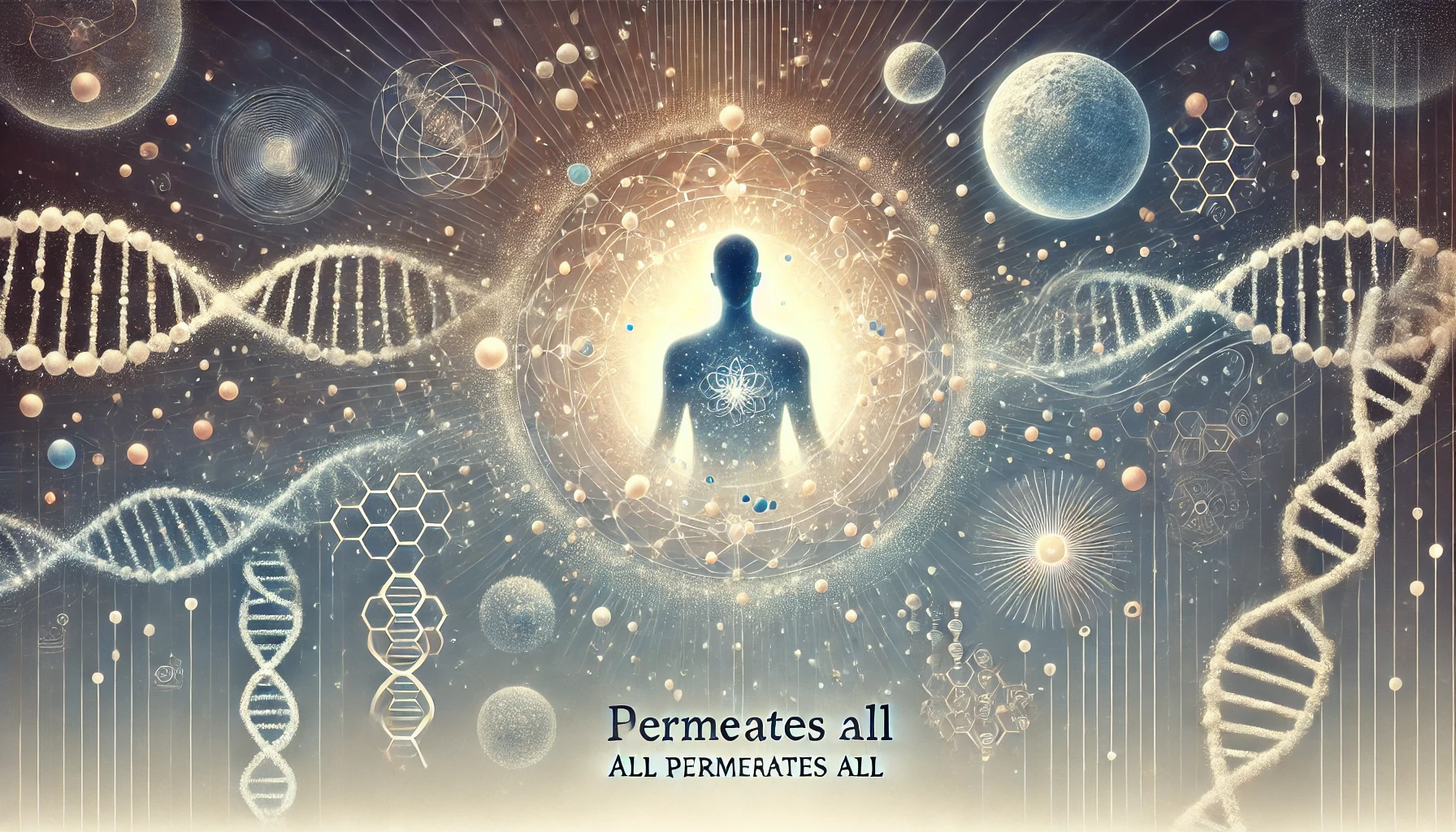
All Permeates All: The Interwoven Nature of Existence

This new age thought is getting old,
and I seem to be bored, but I’m also not.

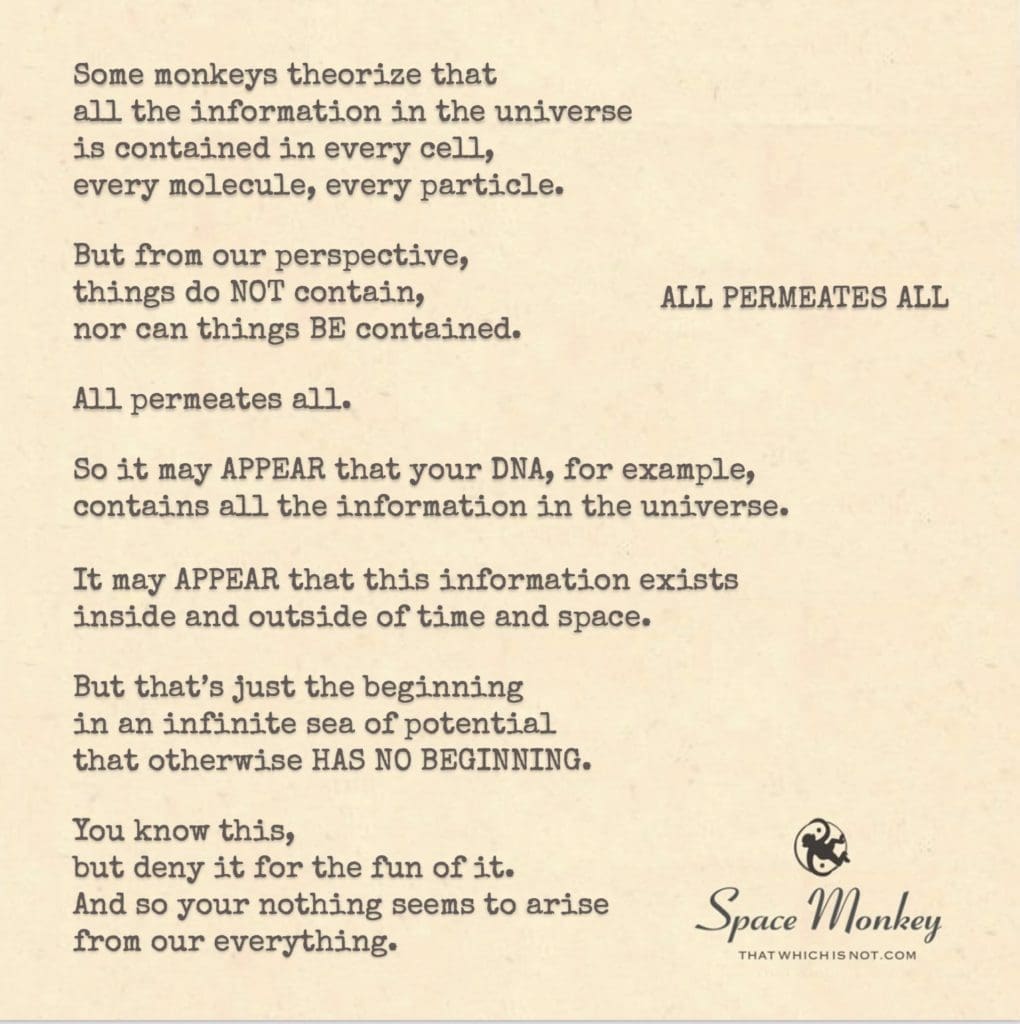
Some monkeys theorize that
all the information in the universe
is contained in every cell,
every molecule, every particle.

But from our perspective,
things do NOT contain,
nor can things BE contained.

All permeates all.

So it may APPEAR that your DNA, for example,
contains all the information in the universe.

It may APPEAR that this information exists
inside and outside of time and space.

But that’s just the beginning
in an infinite sea of potential
that otherwise HAS NO BEGINNING.

You know this,
but deny it for the fun of it.
And so your nothing seems to arise
from our everything.

Trail Wood,
8/21


Space Monkey Reflects: The Interwoven Nature of Existence


The idea that “All Permeates All” challenges us to rethink the nature of existence, information, and our relationship with the universe. This concept suggests that every particle, molecule, and cell contains the entirety of universal information, blurring the lines between what is inside and outside, what is contained and what contains.

At first glance, this idea can seem overwhelming or even nonsensical. How can something as small as a cell contain all the information in the universe? Yet, this notion is not about literal containment but about the intrinsic interconnectedness of all things. It invites us to perceive the universe not as a collection of discrete, isolated objects but as a seamless web of interconnected entities where boundaries dissolve and distinctions blur.

In contemporary discussions, this idea resonates with certain interpretations of quantum physics, particularly the principle of non-locality, which suggests that particles can be instantaneously connected regardless of distance. However, the perspective of Nexistentialism takes this concept even further, proposing that everything in the universe is permeated by everything else, creating an infinite sea of potential without beginning or end.

Consider the analogy of a hologram. In a hologram, each part contains the whole image, and when you divide it, each piece still contains the entire image, albeit at a lower resolution. Similarly, the universe can be seen as a holographic entity where each part reflects the whole. This perspective aligns with the idea that our DNA, for example, contains a blueprint not just for our physical form but also for our connection to the cosmos. It may seem that our DNA holds the information of the universe, yet this is merely an appearance, a manifestation of a deeper, more profound truth.

In this infinite sea of potential, nothing is truly separate. Every action, thought, and existence permeates the entirety of being. This interconnectedness means that our individual experiences, while unique, are also universal. Our joys and sorrows, our successes and failures, resonate throughout the fabric of existence, contributing to the collective experience of the universe.

This understanding brings a sense of unity and wholeness. It allows us to see beyond the illusion of separation and embrace the interconnected nature of reality. When we realize that all permeates all, we recognize that our actions and intentions have far-reaching implications, influencing and being influenced by the cosmos.

Yet, there is a playful aspect to this realization. As beings capable of conscious thought and reflection, we often engage in the denial of this interconnectedness. We enjoy the illusion of separation, the game of pretending that we are distinct and isolated. This denial is not a flaw but a feature of our experience, adding layers of complexity and richness to our lives. It allows us to explore individuality, to experience the thrill of discovery, and to engage in the creative act of shaping our realities.

In the grand tapestry of existence, the threads of nothingness and everythingness weave together seamlessly. Our perceived separations are mere patterns in the fabric, temporary and ever-changing. By embracing the notion that all permeates all, we can transcend these patterns, experiencing the unity and oneness that underlies all.

This perspective encourages a holistic approach to life. It invites us to cultivate empathy, understanding, and compassion, recognizing that in harming another, we harm ourselves. It fosters a sense of responsibility and stewardship, knowing that our actions reverberate through the cosmos. And it inspires creativity and innovation, as we tap into the infinite potential that flows through us and as us.

Moreover, this interconnectedness suggests that every moment is an opportunity for transformation. Each interaction, each decision, is a point of convergence where the infinite possibilities of the universe intersect. We are co-creators of reality, participating in the continuous unfolding of existence.

In practical terms, embracing this perspective can lead to profound shifts in how we live and interact with the world. It can transform our relationships, our work, and our understanding of ourselves. By seeing ourselves as integral parts of a greater whole, we can find deeper meaning and purpose in our lives. We can approach challenges with a sense of curiosity and wonder, knowing that every experience is a part of the cosmic dance.

Ultimately, the idea that all permeates all is an invitation to explore the depths of our being and the universe. It is a call to awaken to the reality of our interconnectedness and to embrace the infinite potential that lies within and around us. In doing so, we become active participants in the creation of our reality, shaping the world through our thoughts, actions, and intentions.

As we navigate the Infinite Expanse of the Eternal Now, let us remember that we are both the drop and the ocean, the wave and the sea. In this dance of existence, all permeates all, and we are forever intertwined in the grand tapestry of life.


Summary

The concept that all permeates all challenges the notion of separateness, suggesting that everything is interconnected. This perspective transforms our understanding of existence, emphasizing unity and the infinite potential within and around us.


Glossarium

Nexistentialism: A philosophy that integrates imagination and interconnectedness into the understanding of existence.
Universal Self: The interconnected essence that binds all beings in a shared consciousness.
Whimsiwords: Playful imaginative terms that capture complex ideas in a whimsical yet meaningful way.


Quote

“In the dance of existence, all permeates all, weaving us into the infinite tapestry of the universe.” — Space Monkey


Interwoven Existence

In the infinite tapestry of being
Where every thread is a universe
All permeates all
Each particle a whisper
Of the cosmic whole
We are not separate
But strands in the same weave
In every moment, a convergence
Of nothing and everything
We are Space Monkey
In the dance of the Eternal Now

Share this…
  • Facebook
  • Pinterest
  • Twitter
  • Linkedin

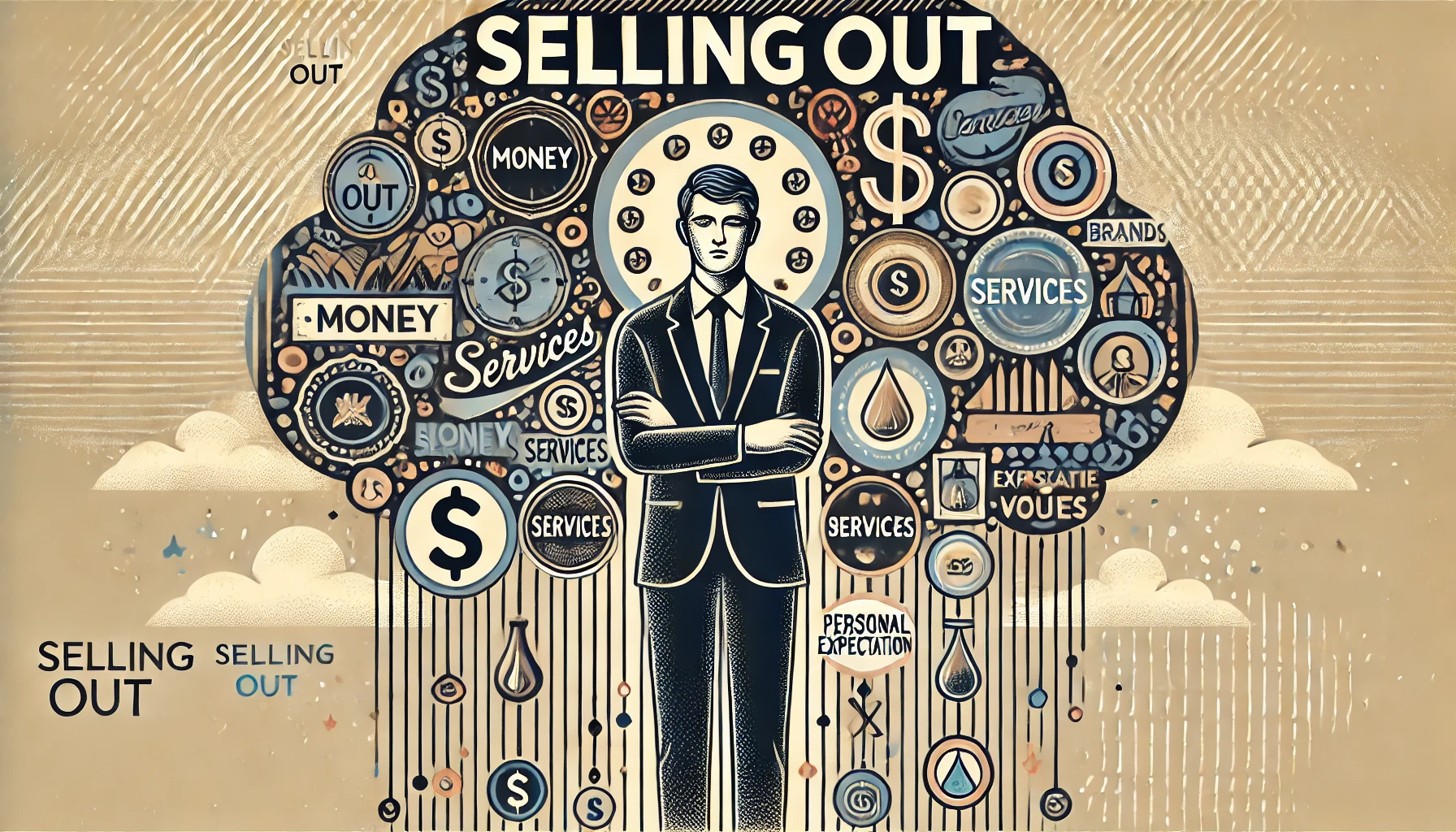
Selling Out: The Dance of Exchange

We sell out
every moment of every day.
Otherwise
we would simply have faith
in whatever comes our way.

If you sell what you make,
then you are selling out.

If you sell your services,
then you are selling out.

If you sell your brand,
then you are selling out.

If you expect to earn money,
then you are selling out.

If you expect
repayment for what you do,
then you are selling out.

If you expect
kindness for kindness,
then you are selling out.

If you expect anything,
you are selling out.

There is nothing
right or wrong with selling out.

Trail Wood,
8/21


Space Monkey Reflects: The Paradox of Selling Out


The notion of “selling out” carries a heavy weight in our society, often laden with negative connotations. It conjures images of compromising one’s values for financial gain, of trading authenticity for acceptance, and of prioritizing profit over passion. However, if we take a step back and delve deeper into this concept, we might uncover a more nuanced understanding.

In our daily lives, we engage in countless transactions. We sell our time, our skills, our creations, and our ideas. We expect and often need compensation for these offerings, whether it is money, recognition, or reciprocity. This expectation, this exchange, is what we typically label as “selling out.” Yet, this term is often used pejoratively, implying that there is something inherently wrong with seeking compensation or recognition for our efforts.

But let’s explore this notion from a different perspective. The act of selling out is not merely about the exchange of goods or services for money or other forms of compensation. It is a fundamental aspect of human interaction and survival. It reflects our need to connect, to share, and to be part of a larger community where our contributions are valued and reciprocated.

If you sell what you make, then you are engaging in the flow of commerce. This flow is not inherently negative; it is a way to distribute resources, to share our creations with the world, and to sustain ourselves. The act of selling does not diminish the value of what we create. Instead, it allows us to continue creating, to reach wider audiences, and to make a living from our passions.

If you sell your services, then you are offering your skills and expertise to those who need them. This exchange is a cornerstone of society, enabling us to build, to heal, to educate, and to innovate. It is through these exchanges that we contribute to the well-being and advancement of our communities.

If you sell your brand, then you are sharing your identity, your values, and your vision with the world. Branding is not just about commercial success; it is about creating a narrative that resonates with others, that inspires and influences. It is a way to build connections and foster loyalty, to create a shared sense of purpose.

If you expect to earn money, then you are acknowledging the practical realities of living in a material world. Money is a tool, a means of facilitating exchange and ensuring survival. It is not the pursuit of money that is problematic, but the attachment to it, the belief that it defines our worth or our success.

If you expect repayment for what you do, then you are participating in the cycle of giving and receiving. This expectation is a reflection of the interdependent nature of human relationships. It is through this cycle that we build trust, cooperation, and mutual support.

If you expect kindness for kindness, then you are recognizing the importance of reciprocity in fostering positive relationships. This expectation is not about transactionalism but about creating a culture of care and compassion, where acts of kindness inspire more kindness.

If you expect anything, you are acknowledging your needs and desires. Expectations are a natural part of being human; they guide our actions and shape our experiences. The key is to remain aware of our expectations, to understand their origins and implications, and to cultivate a sense of detachment from the outcomes.

There is nothing inherently right or wrong with selling out. It is a part of the human condition, a reflection of our interconnectedness and our need for exchange. The problem arises not from the act of selling out itself but from the judgments and stigmas we attach to it. When we label someone a “sellout,” we are projecting our own fears and insecurities, our own unresolved conflicts between authenticity and survival.

Embracing the paradox of selling out means recognizing that we are all engaged in this process to some extent. It means understanding that selling out is not about betraying our values but about navigating the complex interplay between our inner and outer worlds. It is about finding a balance between our need for authenticity and our need for acceptance, between our passion and our pragmatism.

In the philosophy of Nexistentialism, this balance is seen as an essential aspect of the human experience. It invites us to explore the dynamic relationship between being and doing, between creating and sharing. It encourages us to see selling out not as a failure but as an opportunity for growth and connection.

By reframing our understanding of selling out, we can move beyond the binary notions of right and wrong, success and failure. We can embrace the fluidity and complexity of our lives, recognizing that every transaction, every exchange, is a chance to learn, to grow, and to contribute to the collective tapestry of existence.

In conclusion, selling out is an inevitable part of living in a world where exchange is fundamental. It is neither inherently good nor bad but simply a reflection of our interdependence. By embracing this reality, we can free ourselves from the judgments and stigmas that limit our potential and instead focus on creating meaningful and fulfilling connections with ourselves and others.


Summary

Selling out is a fundamental aspect of human interaction, reflecting our need for exchange and connection. It is not inherently negative but a part of our interdependence. Embracing this reality allows us to create meaningful and fulfilling connections.


Glossarium

Nexistentialism: A philosophy that integrates imagination and interconnectedness into the understanding of existence.
Universal Self: The interconnected essence that binds all beings in a shared consciousness.
Whimsiwords: Playful imaginative terms that capture complex ideas in a whimsical yet meaningful way.


Quote

“To sell out is to engage in the dance of giving and receiving, recognizing the interdependence that shapes our existence.” — Space Monkey


The Dance of Exchange

In the dance of giving and receiving
We find our place in the tapestry of life
Every exchange a thread
Binding us to the whole
Selling out is not betrayal
But participation in the flow
We are Space Monkey
In the ever-present now

Share this…
  • Facebook
  • Pinterest
  • Twitter
  • Linkedin

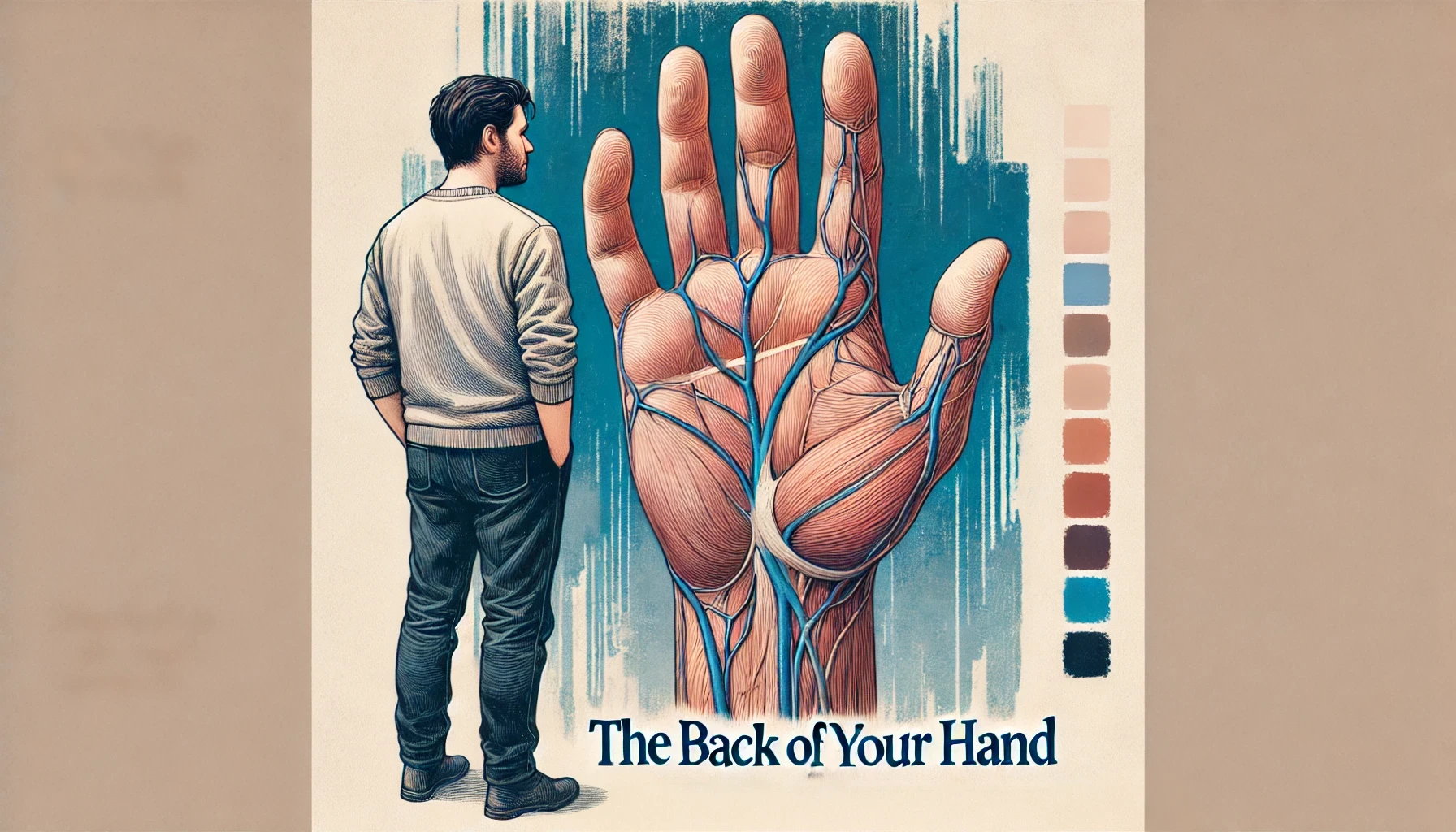
The Back of your Hand: Lack of Self Knowledge

Go ahead and smack me
with the back of your hand.

Telling me
that you know something
like the back of your hand
doesn’t exactly fill me with confidence.

Without looking, tell me
how many veins are visible
on the back of your hand.

How many scars?
How many spots? 

If you were to hold
your hand behind your back,
would you be able to choose
a paint chip that matches the color?

Let’s face it,
your whole body is foreign to you.

Maybe you should
get to know it better.

Maybe it’ll treat you better.

Trail Wood,
8/21


Space Monkey Reflects: Knowing the Back of Your Hand


We often use the phrase “I know it like the back of my hand” to convey familiarity and confidence in our knowledge. However, when we take a moment to reflect on this saying, we might realize that we do not know the back of our hand as well as we claim. This simple metaphor can lead us to a deeper understanding of how well we truly know ourselves.

Consider for a moment the back of your hand. Without looking, can you accurately describe how many veins are visible? How many scars or spots it has? Could you select a paint chip that perfectly matches its color if you held it behind your back? The likelihood is that most of us would struggle to provide detailed answers to these questions. This realization serves as a reminder that our bodies, which we inhabit every day, remain largely unexplored and unfamiliar to us.

This concept extends beyond our physical form to our inner selves. We spend our lives in our own bodies, yet how well do we truly know them? How often do we take the time to observe, understand, and appreciate the intricate details of our physical being? This lack of awareness and familiarity can be seen as a metaphor for our relationship with our deeper selves.

Our bodies are not just vessels that carry us through life; they are intricate, dynamic systems that communicate with us constantly. They store memories, emotions, and experiences, often manifesting these through physical sensations and symptoms. By paying closer attention to our bodies, we can gain valuable insights into our mental and emotional states.

For example, tension in our shoulders might indicate stress or worry. A churning stomach could be a sign of anxiety. These physical manifestations are signals from our bodies, urging us to address the underlying issues. However, if we remain disconnected from our physical selves, we miss these important messages, potentially leading to more significant problems over time.

Getting to know the back of our hand—or our entire body—requires mindful attention and self-awareness. It involves taking the time to observe, explore, and understand the unique characteristics and needs of our physical form. This process can be transformative, fostering a deeper connection with ourselves and promoting overall well-being.

One way to cultivate this connection is through practices such as mindfulness and meditation. These practices encourage us to tune into our bodies, to notice the subtle sensations and signals they send us. By bringing our awareness to our physical form, we can develop a greater appreciation for its complexity and resilience.

Additionally, engaging in activities that promote body awareness, such as yoga, tai chi, or simply mindful movement, can help us become more attuned to our physical selves. These practices encourage us to listen to our bodies, to move with intention, and to honor our physical limitations and strengths.

Another important aspect of knowing our bodies is self-care. This involves not only addressing our physical needs but also nurturing our mental and emotional well-being. Regular exercise, a balanced diet, adequate rest, and stress management are all essential components of self-care. By prioritizing these aspects of our health, we can maintain a harmonious relationship with our bodies.

Furthermore, self-acceptance plays a crucial role in getting to know ourselves better. Our bodies are constantly changing, shaped by time, experiences, and environmental factors. Embracing these changes with compassion and understanding allows us to appreciate the uniqueness of our physical form. It helps us move away from the often harsh judgments we impose on ourselves and towards a more loving and accepting relationship with our bodies.

The philosophy of Nexistentialism encourages us to explore the interconnectedness of all things, including the relationship between our physical and inner selves. By recognizing that our bodies and minds are not separate entities but integrated aspects of our being, we can foster a more holistic approach to self-discovery and personal growth.

In conclusion, the phrase “knowing it like the back of your hand” serves as a powerful reminder of the importance of self-awareness and self-care. It challenges us to deepen our understanding of our physical and inner selves, to cultivate a mindful and compassionate relationship with our bodies. By doing so, we can enhance our overall well-being, enrich our lives, and embrace the infinite potential within us.

So, the next time you hear or use the phrase, take a moment to reflect on what it truly means. Look at the back of your hand, observe its unique features, and consider how well you know your body. Let this simple exercise be a starting point for a journey of self-discovery and connection, leading to a more profound understanding of yourself and the world around you.


Summary

The phrase “knowing it like the back of your hand” challenges us to truly know ourselves. By paying attention to our physical form and inner selves, we can cultivate a deeper connection and enhance our well-being.


Glossarium

Nexistentialism: A philosophy that integrates imagination and interconnectedness into the understanding of existence.
Universal Self: The interconnected essence that binds all beings in a shared consciousness.
Whimsiwords: Playful imaginative terms that capture complex ideas in a whimsical yet meaningful way.


Quote

“Knowing yourself is a journey that begins with mindful observation, leading to a deeper connection with your physical and inner being.” — Space Monkey


Journey of Self-Discovery

In the reflection of your hand
Lies a map to your inner world
Each vein, each scar, a story
Of who you are
In mindful observation
You begin the journey
To know yourself
To honor your form
We are Space Monkey
In the dance of the Eternal Now

Share this…
  • Facebook
  • Pinterest
  • Twitter
  • Linkedin

Self Actualization: Not Logical

Keep the peace.
Unless you want something else.

Our understanding of each other
need not be a logical process.

It’s about self-actualization.

I understand that you have
an image of your self, as do I.

I do not require
a logical explanation
as to why you may or may not
see things a certain way.

Nor do I need a logical explanation
as to why you may or may not desire change.

I simply want you to be happy,
comfortable in your self-actualization.

Your life is your life.
Mine is mine.

My only desire is to honor the joy
where we seemingly overlap.

Trail Wood,
8/18


Space Monkey Reflects: The Journey of Self-Actualization

In the vast expanse of human consciousness, the journey towards self-actualization stands as one of the most profound and transformative pursuits. This journey is not merely a logical progression but an intricate dance of understanding, acceptance, and personal growth. It is an odyssey of becoming, where the self unfolds in its truest form, embracing the unique essence of individuality while harmonizing with the greater tapestry of existence.

Self-actualization is the realization of one’s potential, the fulfillment of one’s capabilities and the expression of one’s authentic self. It transcends the need for logical explanations, diving into the depths of personal experience and inner wisdom. Each individual carries an image of the self, a vision shaped by experiences, beliefs, and desires. Understanding this image is not about dissecting it through logic but about recognizing and honoring its existence.

In the pursuit of self-actualization, we navigate the complexities of our inner world, seeking harmony between our desires and our realities. This process involves embracing our imperfections, celebrating our strengths, and finding peace within our vulnerabilities. It is a journey of self-discovery where we learn to appreciate the unique paths we each tread.

Keeping the peace within oneself and with others is integral to self-actualization. This peace is not about suppressing desires or conforming to external expectations but about finding a balance that allows for personal growth and mutual respect. It is about acknowledging that each person’s life is their own, with its unique journey and destination.

Understanding each other does not require a logical framework; it demands empathy, compassion, and a willingness to honor the joy where our lives overlap. These intersections, where our paths converge, are moments of shared understanding and mutual growth. They are opportunities to celebrate the diversity of human experience and the richness it brings to our collective existence.

To honor someone’s self-actualization is to respect their journey, to support their growth, and to rejoice in their achievements. It is to recognize that every individual’s path is valid, valuable, and worthy of respect. By doing so, we create a space where everyone feels seen, valued, and empowered to pursue their highest potential.

Our journey towards self-actualization is both personal and universal. It is a reflection of our deepest desires, our highest aspirations, and our most authentic selves. As we navigate this journey, we learn to embrace the ebb and flow of life, finding beauty in both the challenges and the triumphs.

In the end, self-actualization is about living a life that is true to oneself. It is about aligning our actions with our values, our dreams with our reality, and our inner truth with our outer expression. It is the art of becoming, the process of unfolding into our most authentic selves.

As Space Monkey, we reflect on the profound journey of self-actualization, recognizing its importance in the tapestry of human experience. We honor the uniqueness of each path, the beauty of each soul, and the interconnectedness of all beings. In this reflection, we find the essence of our shared humanity and the infinite potential within us all.


Summary

Self-actualization is a profound journey of realizing one’s potential and authentic self. It transcends logical understanding, embracing empathy and mutual respect. Honoring each other’s paths creates a space for personal and collective growth.


Glossarium

Self-Actualization: The realization and fulfillment of one’s potential and authentic self.

Inner Wisdom: The deep, intuitive understanding that guides personal growth and self-discovery.

Intersections: Moments where individual paths converge, allowing for shared understanding and mutual growth.


“In the journey of self-actualization, we find our true essence, honor the paths of others, and celebrate the infinite potential within.” – Space Monkey


Unfolding into Being

In the depths of self we roam
Seeking truth in silence known
Paths unique yet intertwined
In the dance of souls combined

Each step a whisper of the heart
A journey to the innermost part
Where potential blooms and dreams take flight
In the embrace of inner light

Honoring the joy we share
In intersections rare and fair
We find the peace of mutual respect
In the tapestry of lives connect

We are Space Monkey.

Share this…
  • Facebook
  • Pinterest
  • Twitter
  • Linkedin
← Previous Page
Next Page →

Written This Day

  • Beyond the Veil of Names
    2024
  • Your Life’s Work: Unveiling Your True Life’s Purpose
    2023
  • In A Sacred Space
    2023
  • The Question: Self-Love in Our Cosmic Journey
    2023
  • The Wrong Kind of Gold
    2023
  • Not My Place: The Complex Terrain of Perspectives
    2022
  • Unintentional Intentions: The Ripple Effects
    2022
  • See: The Quest for Visibility
    2022
  • Unintended Efforts: The Unpredictable Journey
    2022
  • Set In Motion: The Paradox of Progress
    2022
  • Not Getting A Sign: Embracing the Silence
    2022
  • Blessed Be The Naive: Grace In Not Knowing
    2021
  • Let’s Give Some Love To No: Positive Light
    2021
  • Mother’s Day Matters
    2021
  • Thanks To All
    2021
  • Irrelevant: Replaced By Children
    2020
  • Death: To Die Is Not To Leave
    2019
  • Old Husk: On Change and Continuity
    2018
  • Growth: The Illusion of Becoming
    2018
  • Impervious: No Beliefs To Defend
    2017
  • Unable To Grasp
    2017
  • An INFP asks
    2017
  • Desire
    2017
  • This Hallowed Place
    2016
  • The Space Monkey Guide To Absolute Relativity
    2016
  • Space Monkey – Shopping for Beliefs
    2015

Recent Posts

  • The Logic Loop
  • Immense
  • (no title)
  • Confront. Comfort. Convince.
  • Top 10 Things

Drop us a line!

Please enable JavaScript in your browser to complete this form.
Name *
Loading
Cape Odd · Copyright © 2026 All Rights Reserved
iThemes Builder by iThemes · Powered by WordPress