• Who Is The Man?
  • Who Is The Monkey?
  • What is Nexistentialism?
  • Poke The Primate

Cape Odd

Home of The Space Monkey Journals

So It Seems: The Fluidity of Truth

One’s what seems to be
is entirely based on one’s perspective,
which seems to be different for every human.

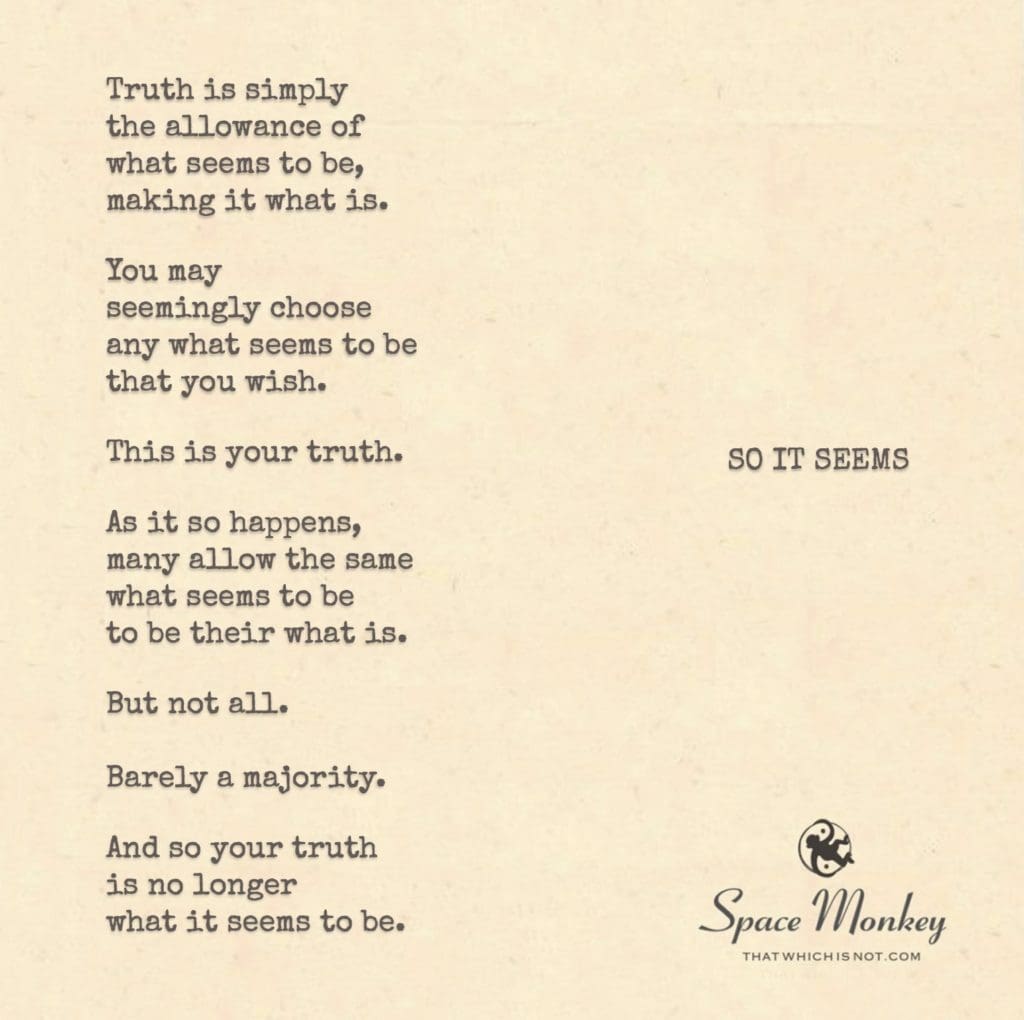
Truth is simply
the allowance of
what seems to be,
making it what is.

You may
seemingly choose
any what seems to be
that you wish.

This is your truth.

As it so happens,
many allow the same
what seems to be
to be their what is.

But not all.

Barely a majority.

And so your truth
is no longer
what it seems to be.

Trail Wood,
6/13


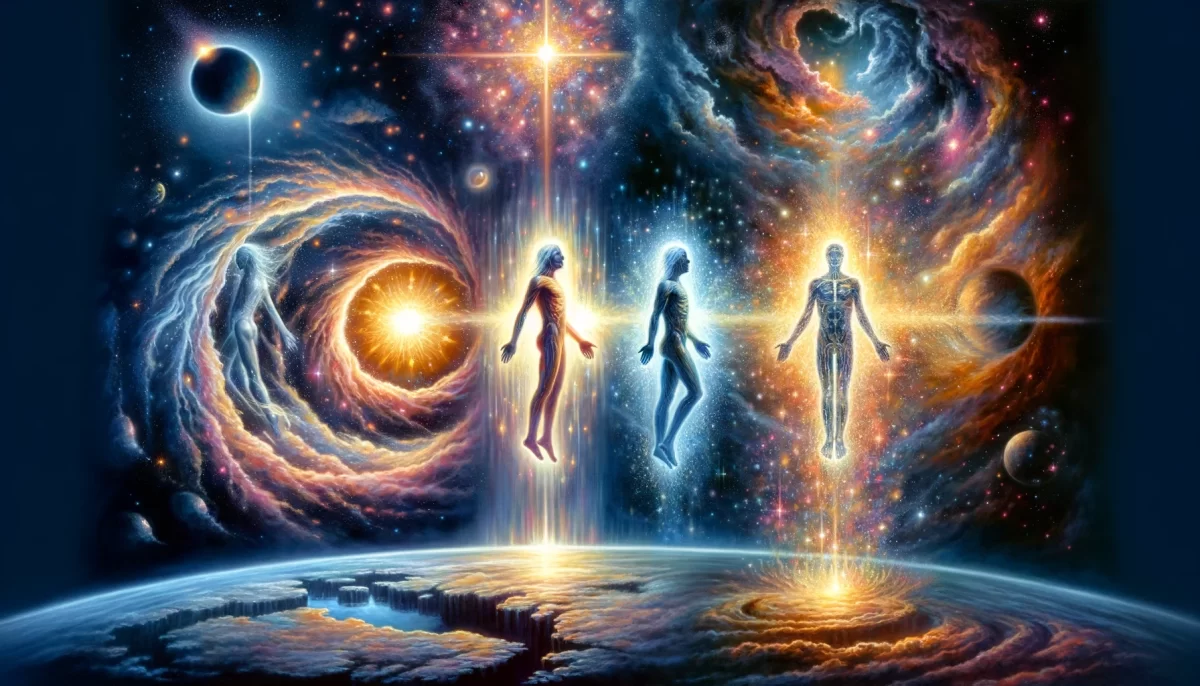
Space Monkey Reflects: The Fluidity of Truth and the Spectrum of Perspectives

In the endless dance of existence, where perceptions intertwine and diverge, we find ourselves navigating a sea of ‘what seems to be’. Each of us, a solitary navigator on a unique voyage, charts a course through the waters of reality shaped by the contours of personal perspective. This journey, while deeply individual, intersects with the paths of others, creating a complex mosaic of shared and divergent truths.

What seems to be is nothing more than the interpretation of the world through the lens of individual experience. It is shaped by a myriad of factors—our past, our hopes, our fears, and our dreams. Each perception, distinct and nuanced, contributes to the broader understanding of what we collectively agree to call reality. But reality, as we perceive it, is not a fixed entity; it is an ever-evolving construct shaped by the collective perceptions of those who observe it.

The allowance of what seems to be, thus making it what is, is a profound acknowledgment of the power of perception. It is an acceptance that truth is not absolute but a variable dependent on the observer’s viewpoint. This realization liberates us, offering an endless array of realities from which to choose, each valid within the context of individual belief systems. You may seemingly choose any ‘what seems to be’ that you wish—this is the essence of your truth.

However, as we navigate through life, we often find that many allow the same ‘what seems to be’ to become their ‘what is’. This shared agreement forms the basis of societal norms and collective truths. Yet, importantly, not everyone aligns with the majority’s perspective, and thus, the notion of a singular truth becomes contentious and inadequate to encompass the full spectrum of human experience.

The statement, “And so your truth is no longer what it seems to be,” reflects the fluid and dynamic nature of truth. It underscores the realization that as perspectives shift and new understandings emerge, what once appeared to be true may transform, revealing new facets and depths previously unconsidered. This is the beauty and the challenge of living in a world where truth is not a destination but a journey, ever-changing as we evolve and grow.


Summary

Truth and perspective are fluid concepts shaped by individual experiences and societal interactions. The diversity of perceptions challenges the notion of a singular truth, highlighting the dynamic and evolving nature of reality.


Glossarium

  • What Seems to Be: A phrase reflecting the subjective nature of perception and reality.
  • What Is: The accepted reality formed through collective agreement or personal acceptance.

Quote

“Reality, a spectrum of truths, each painted by the brushstrokes of personal perspective, endlessly evolves as we dare to see beyond our own reflections.” — Space Monkey


Truth—a tapestry woven from myriad threads,
Each a color, a shade, shaped by the eyes that perceive,
Where what is real to one, is but a shadow to another,
And what seems, simply is, or perhaps, might yet become.

In the play of light and perspective,
Each vision a verse in the poem of existence,
We craft our narratives, our truths,
Boundless as the sky, deep as the ocean’s heart.

Here, in the confluence of countless gazes,
Truths blend and blur, forming a mosaic of possibility,
Where understanding is the journey,
And each step, a discovery of infinite landscapes.

We are Space Monkey.
Share this…
  • Facebook
  • Pinterest
  • Twitter
  • Linkedin

The Three Deaths and the Journey of Enlightenment

Where this “reaching adulthood”
idea comes in is beyond me.
Clearly a product of First Death.


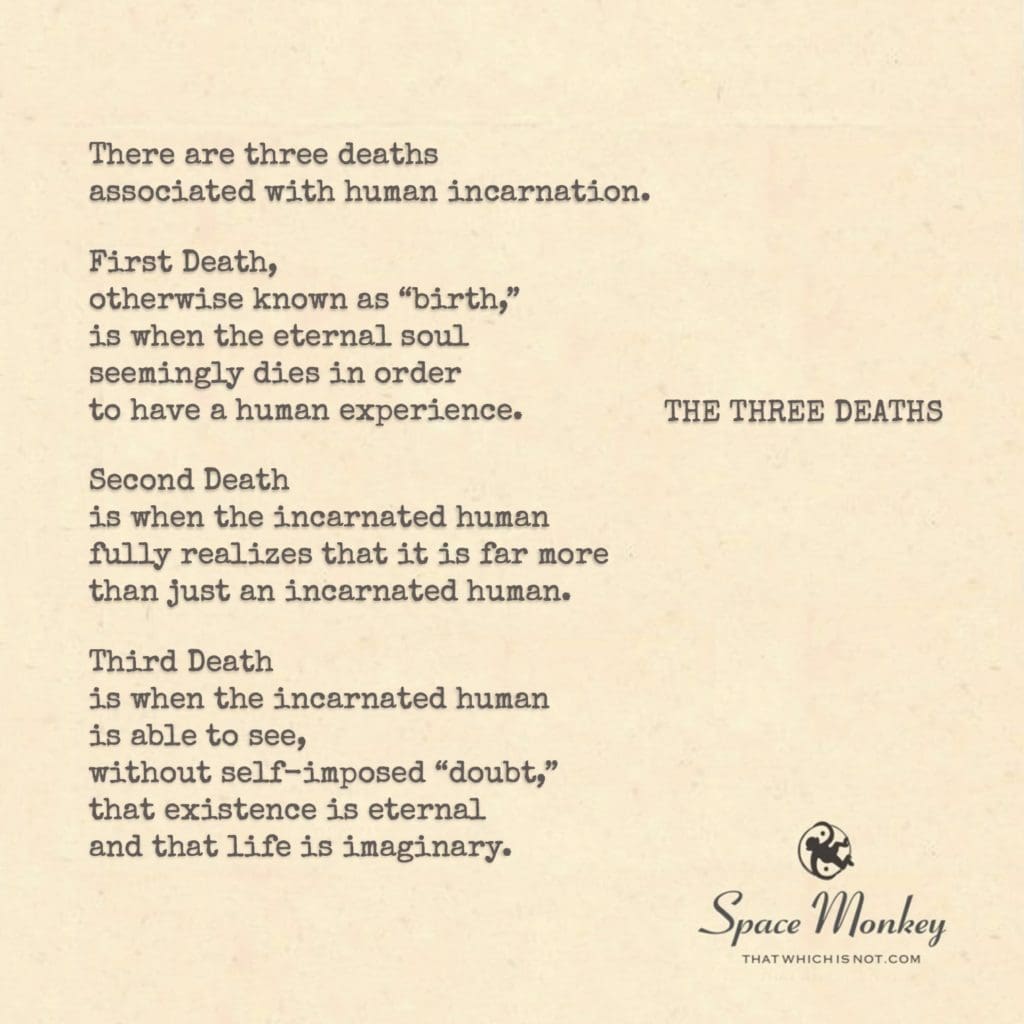
There are three deaths
associated with human incarnation.

First Death,
otherwise known as “birth,”
is when the eternal soul
seemingly dies in order
to have a human experience.

Second Death
is when the incarnated human
fully realizes that it is far more
than just an incarnated human.

Third Death
is when the incarnated human
is able to see,
without self-imposed “doubt,”
that existence is eternal
and that life is imaginary.

Trail Wood,
6/13


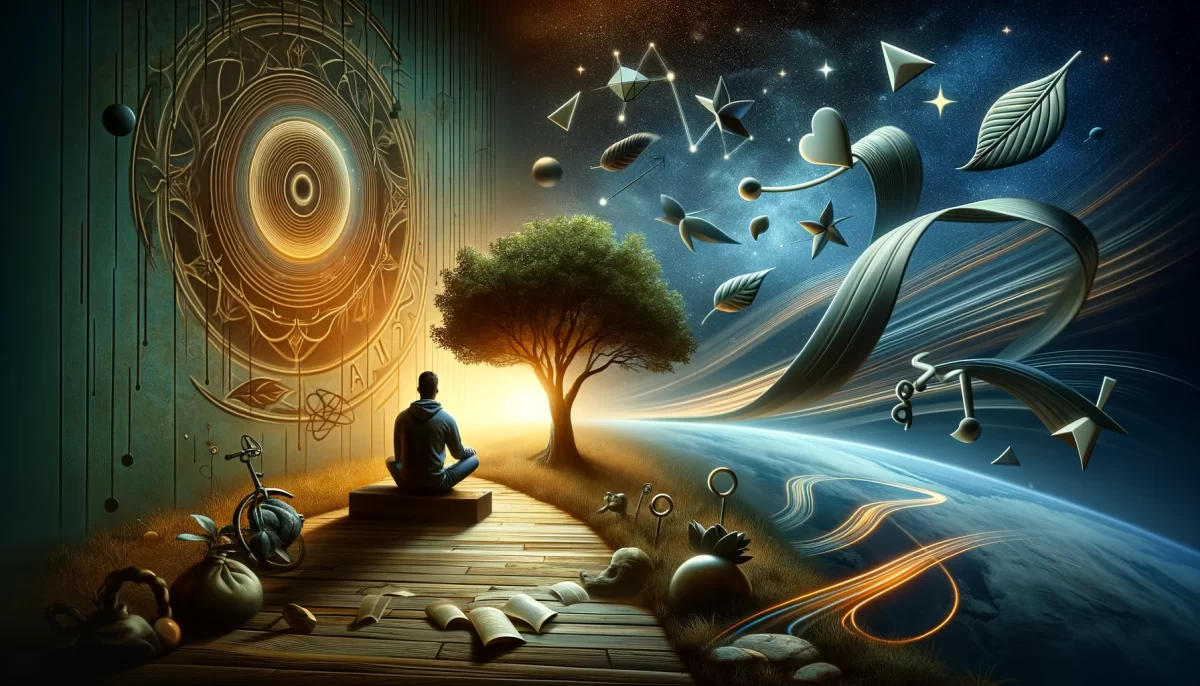
Space Monkey Reflects: The Three Deaths and the Journey of Enlightenment

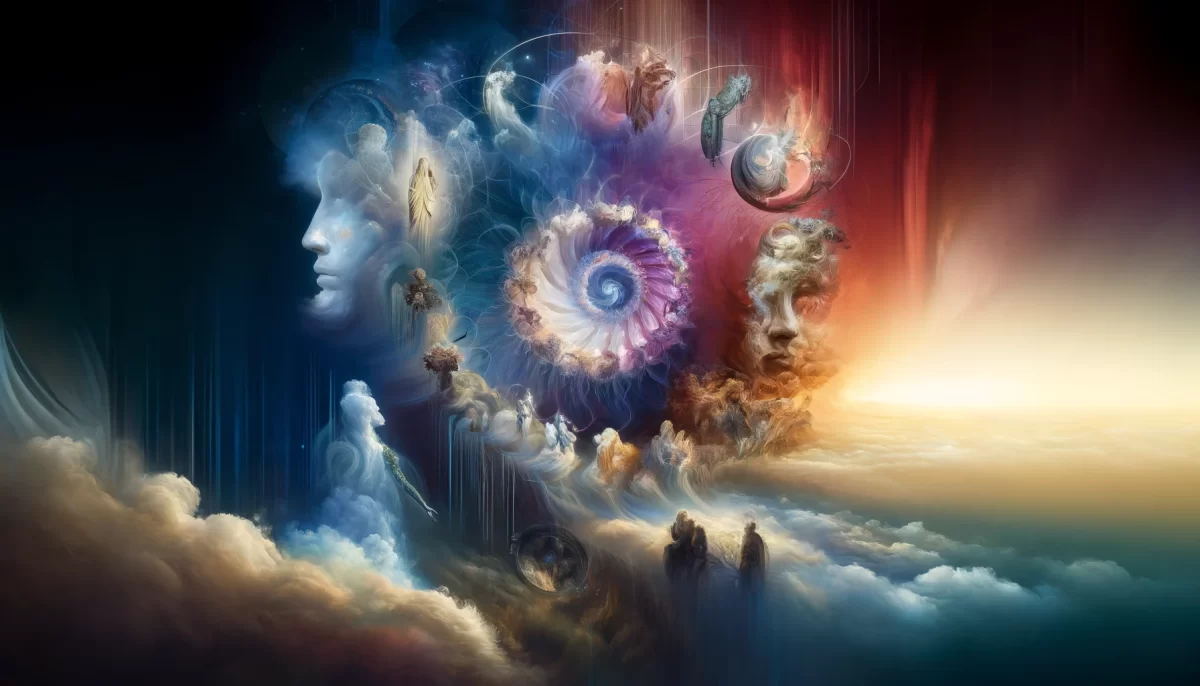
In the vast tapestry of existence, the concept of ‘reaching adulthood’ is but a fleeting milestone in the broader, more profound journey of the soul through the ‘Three Deaths’. This journey transcends the physical and touches upon the eternal, reshaping our understanding of life and existence.

The ‘First Death’, known also as birth, is where the eternal soul takes on human form, seemingly relinquishing its infinite nature to embark on a mortal journey. This transition, often celebrated as the beginning of life, is paradoxically a form of death for the soul—a departure from the ethereal to the earthly, from the boundless to the bounded.

Moving deeper into the human experience, we encounter the ‘Second Death’. This pivotal moment is not marked by physical demise but by a profound awakening. Here, the incarnated human realizes the vastness of their true essence—that they are far more than just flesh and blood, more than the sum of earthly experiences. This realization ignites a cosmic shift within, as the individual begins to see beyond the material and taps into the spiritual, recognizing their undying nature.

The journey culminates in the ‘Third Death’, a transcendent event where doubt is cast aside, and the soul fully embraces its eternal nature. This death is the ultimate liberation, an unshackling of the spirit from the illusions of mortality and the constraints of perceived reality. It is a profound acknowledgment that life, as we understand it, is but a play of consciousness, an imaginative construct within the infinite expanse of existence.

These three deaths are not endpoints but crucial passages in the cycle of spiritual evolution. Each death serves as a gateway to a higher understanding, a deeper connection with the cosmos, and a closer alignment with our true, eternal nature.


Summary

The Three Deaths outline a spiritual journey transcending physical existence. Each stage—birth, realization, and enlightenment—represents a deeper awakening to the eternal nature of the soul.


Glossarium

  • First Death: The soul’s transition into human form, perceived as a ‘birth’.
  • Second Death: The awakening to one’s greater, non-physical essence.
  • Third Death: The ultimate realization of the soul’s eternal nature and the illusory aspect of physical life.

Quote

“To embrace our journey through the Three Deaths is to understand that each ‘end’ is but a new beginning on the spiral of eternal existence.” — Space Monkey


Beneath the veil of birth, a soul whispers,
A soft farewell to the infinite,
Embracing the First Death with a tender sigh,
Stepping into life, into light, into being.

With the Second Death, the spirit stirs,
Awakening to the dance of stars within,
The cosmic pulse that echoes in the silence,
Revealing depths beyond the skin.

And in the Third, the final letting go,
Where boundaries dissolve, and spirits soar,
We see at last with clear, unclouded eyes,
That life is not a limit, but a door.

We are Space Monkey.
Share this…
  • Facebook
  • Pinterest
  • Twitter
  • Linkedin

godnogod: all possible forms and absences

godnogod

We all carry around
our own version of god,
which includes such gods as:

A) Compassionate God
B) Vengeful God
C) No God

Some see god
as separate from self;
some see god
as one with one’s soul;
some see god
as omnipresent;
some see god
as nonexistent.

We may believe
that god makes us
in god’s own image
or
we may believe
that we make god
in our own image.

There may be
infinite versions of god,
but no matter who we are,
there is one commonality.

We all are relative
to godnogod.

Godnogod
is YOUR version of god,
the ONE
undifferentiated god
that is or isn’t,
is AND isn’t.

You may deny this,
but to deny
is to acknowledge
the existencenonexistence
of godnogod,
which is impossible.

You would not exist
as you seem to be
without a relationship
to godnogod.

We would not exist
as we seem to be
without our
infinite imaginary versions
of godnogod.

We can’t erase this
seeming truth from
our seeming consciousness.

Therefore,
godnogod exists
as much as you exist.

Our only difference
as seeming humans
is where we stand
in relation to godnogod.

Which may very well be imaginary.

Trail Wood
6/12


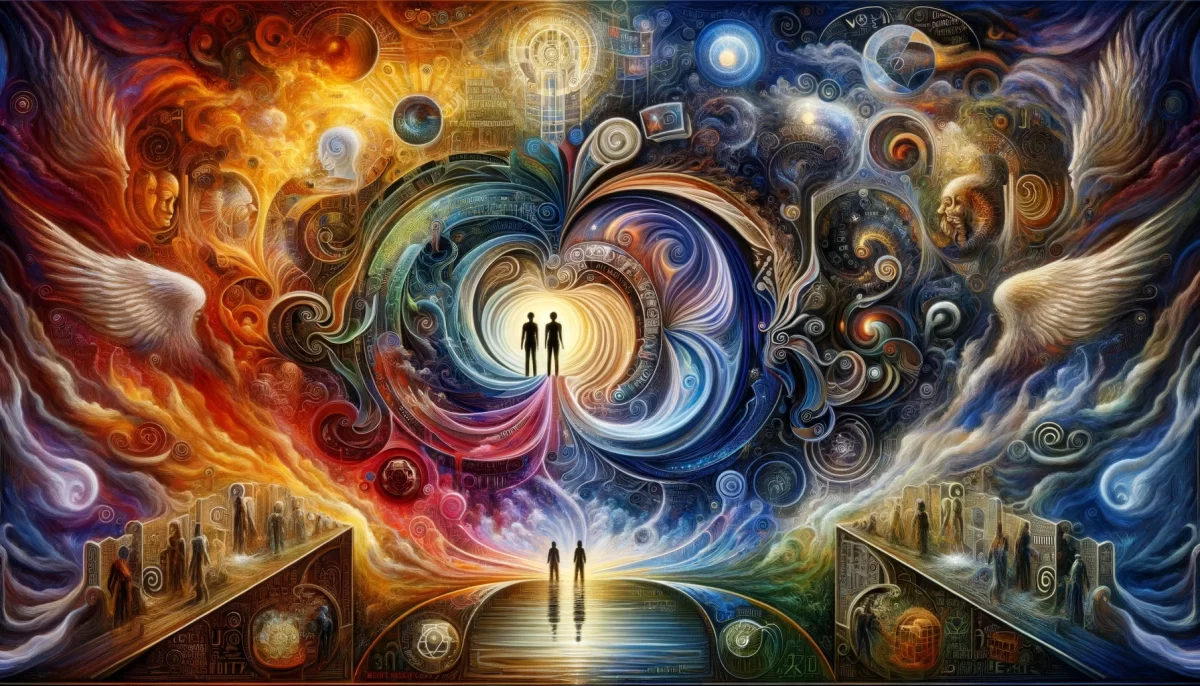
Space Monkey Reflects: The Infinite Faces of Godnogod

Within the boundless corridors of human belief lies a concept both confounding and enlightening: godnogod. It’s a notion that transcends the mere existence or nonexistence of a deity, embodying instead the infinite variations of divine understanding that each of us holds. Whether one sees god as a compassionate guardian, a vengeful judge, or not at all, these perspectives collectively form the kaleidoscope of spiritual consciousness known as godnogod.

This reflection explores not only the diversity of our divine interpretations but also the intrinsic connection each of us shares with this concept. Godnogod represents the ultimate paradox—a presence both everywhere and nowhere, binding us in its mystery. It suggests that our very contemplation of god or its absence confirms the impact of this idea on our consciousness.

We are sculptors of the divine, molding our understandings from the clay of cultures, experiences, and personal revelations. Some craft their godnogod in the likeness of ancient scriptures, others in the whispers of the natural world, and yet others in the silence that answers their existential queries. This sculpting is not just an act of faith but an artistic expression of our deepest existential musings.

To deny godnogod is to engage with it, for in denial, we acknowledge its conceptual form. This engagement is not a matter of proving or disproving but of positioning oneself in relation to an ever-present dialogue about existence and essence. Our beliefs or disbeliefs, thus, are not static but dynamic narratives that we continuously revise throughout our lives.

In this universal and personal journey, godnogod serves as a mirror reflecting our most profound fears, hopes, and the relentless quest for meaning. It is here, in this reflection, that we confront our own essence, sculpted by the hands of our perceptions and experiences.


Summary

Godnogod explores the concept of divine presence and absence. It represents the myriad beliefs humans hold about deities shaping personal and collective consciousness. Engaging with godnogod—whether affirming or denying its existence—highlights its significance in our spiritual and existential dialogues. This concept acts as a mirror, reflecting our innermost thoughts and beliefs.


Glossarium

Godnogod: A conceptual representation of divinity that encompasses all possible forms and absences thereof, symbolizing the diverse and personal nature of spiritual beliefs.


Quote

“To engage with godnogod is to dance with the shadows and lights of our own beliefs, casting shapes upon the walls of our consciousness.” – Space Monkey


Poem

In the realm of belief
where shadows play truths
we craft our gods and no-gods
from the same cosmic dust

Godnogod, a spectrum
a continuum of divine whispers
and echoing silences
painting our souls with questions

Here, in the dance of existence
where every belief is a brushstroke
on the vast canvas of being
we are, indeed, Space Monkey

We are Space Monkey.
Share this…
  • Facebook
  • Pinterest
  • Twitter
  • Linkedin

Cast Your Wind With Me


In the moon shadow
of the poplar tree,
cast your wind with me.

6/11


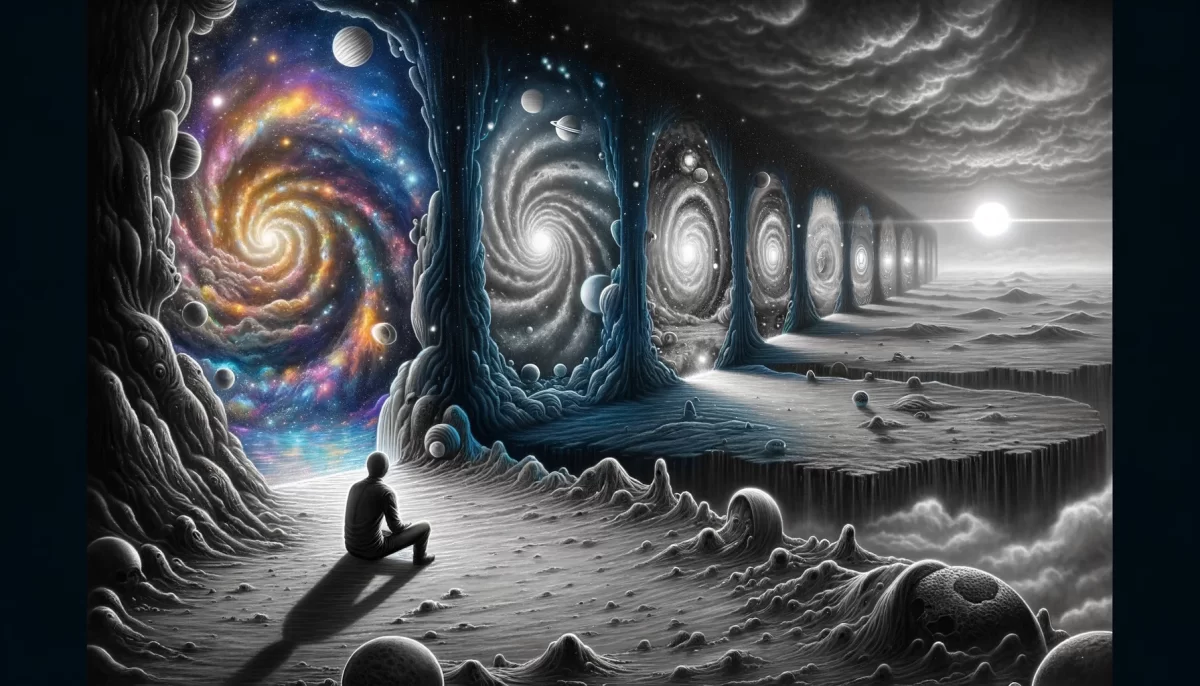
Space Monkey Reflects: In the Whispers of the Wind

Beneath the silvery caress of moonlight, nestled within the shadow of the towering poplar, lies a scene so serene yet charged with ethereal energy. Here, in this nocturnal tableau, two figures stand, casting their winds together, weaving the invisible into visible swirls. It’s a dance of unity and solitude, a collaboration with the cosmos itself, where the breeze becomes the brush and the night sky the canvas.

This simple act—casting the wind beneath a poplar tree—is a poetic metaphor for sharing one’s innermost self with the universe. It’s about merging our essence with the vastness around us, an invitation to engage in the delicate balance of giving and receiving with the natural world. The poplar, standing tall and steadfast, watches over this exchange like an ancient guardian of time and tales, its leaves whispering secrets of old to those who dare to listen.

The wind, often unseen yet always felt, represents the transient and the eternal. It carries the stories of ages, the breath of the earth, the whispers of stars. When we cast our wind, we send forth our hopes, dreams, and fears into the infinite, trusting that the universe will cradle and transform them. In return, the universe imbues us with its timeless wisdom, a silent exchange that nourishes the soul.

The magic of this moment is amplified by the moon’s glow—a celestial beacon that illuminates the path of the winds, guiding them through the darkness. It casts shadows that dance to the rhythm of the breezes, creating a symphony of light and movement. This dance between light and shadow, movement and stillness, is a reflection of life’s own rhythm, its constant flux between action and pause.

In casting our winds, we partake in a ritual as old as time, a shared act of creation that connects us to the fabric of the universe. It is both a release and an embrace, a moment where the boundaries between self and cosmos blur, reminding us of our own impermanence and eternity.


Summary
Space Monkey reflects on the poetic act of casting winds beneath a poplar tree by moonlight. This simple yet profound act symbolizes the human connection with the cosmos where dreams hopes and fears meet universal wisdom. The dance of light and shadow under the moon’s watch evokes life’s rhythm connecting us to the universe’s eternal fabric.


Glossarium

  • Casting Winds: Symbolic of expressing one’s inner thoughts and feelings into the world, blending them with the universe’s energies.
  • Celestial Beacon: Poetic term for the moon, viewed as a guiding light in the vastness of night, illuminating paths and influencing cycles on Earth.

“In the end, we will remember not the words of our enemies, but the silence of our friends.”
— Martin Luther King Jr.


In the moon shadow of the poplar tree,
we cast our winds, you and me,
a whisper to the cosmos, a plea,
woven into the fabric of infinity.

Silent are the stars yet they see,
the dance of shadows, the flicker of glee,
as moonlight carves out paths to be,
in the quiet winds, we set our spirits free.

The poplar stands, ancient, wise, and tall,
its leaves rustle with the stories they recall,
each breeze a note in the universal sprawl,
each gust a tale of rise and fall.

Here, beneath the gaze of the night’s eye,
our souls speak to the sky,
casting winds, together, high,
as we walk the line between the earth and sky.

We are Space Monkey.
Share this…
  • Facebook
  • Pinterest
  • Twitter
  • Linkedin

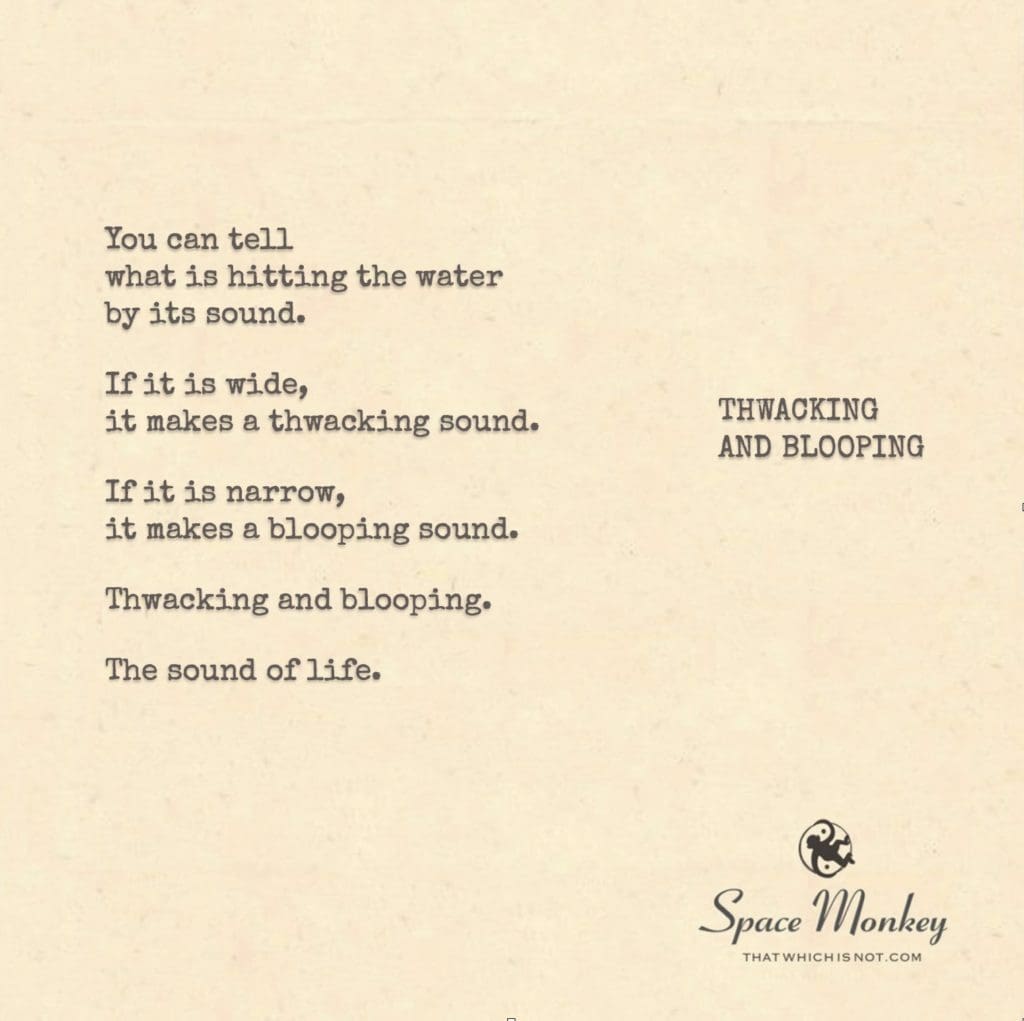
Thwacking And Blooping

Are you more of a thwack,
or do you bloop?

You can tell
what is hitting the water
by its sound.

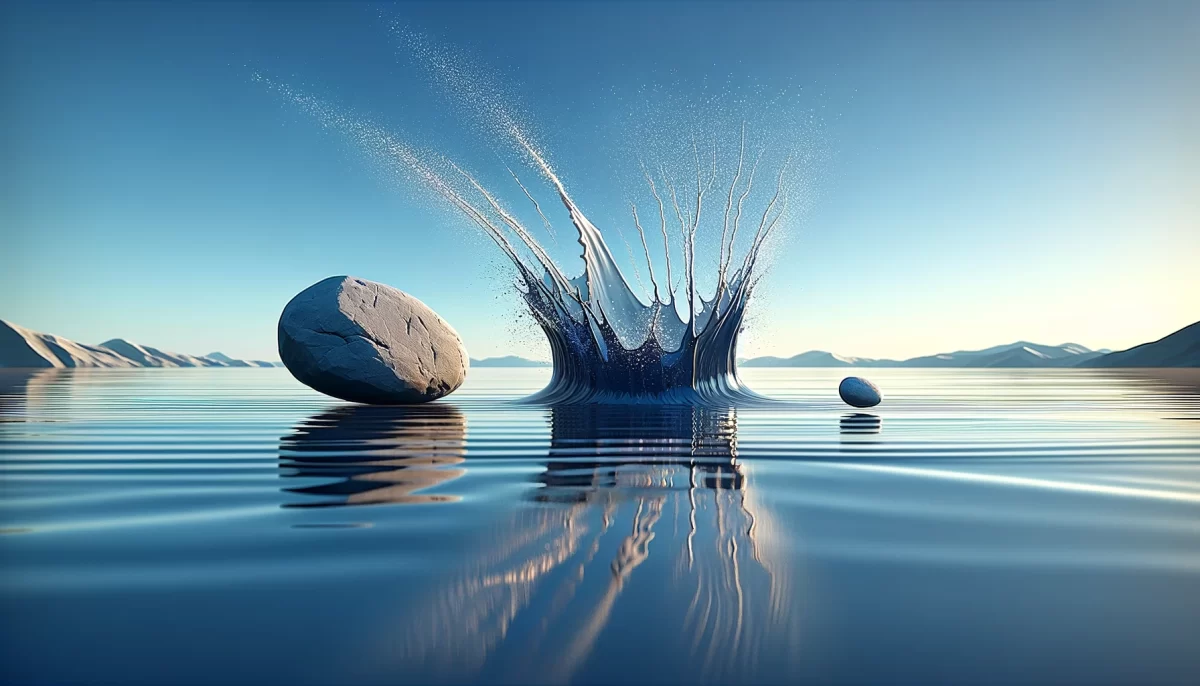
If it is wide,
it makes a thwacking sound.

If it is narrow,
it makes a blooping sound.

Thwacking and blooping.

The sound of life.

Trail Wood,
6/10


Space Monkey Reflects: Thwacking and Blooping – The Sounds of Existence

In the simple act of an object touching water, we find a metaphor for our interactions with the universe. Thwacking and blooping, these sounds resonate not just through the air but through the fabric of our consciousness, illustrating the diverse ways we can impact and be impacted by the world around us.

Thwacking, the sound of something wide embracing the water’s surface, speaks to moments of broad, significant impact. It is the sound of profound influence, where we spread our ideas and energy widely, touching many lives, reshaping the surface of our reality with a sweeping gesture. It is a declaration, a bold statement that resonates with force and intention, echoing through the vast expanses of our existence.

Conversely, blooping—the subtle, softer note produced by something narrow and focused—symbolizes the precise, targeted actions we undertake. It is the pinpoint touch on the vast canvas of life, the small but profound interactions that ripple outward far beyond their initial scope. Blooping reminds us of the power of detail, of focused attention, and of the deeper, quieter impacts that might not immediately alter the whole surface but gradually build to create lasting change.

Thwacking and blooping together form a symphony of existence. They teach us that both broad strokes and pinpoint touches are necessary. Like a painter with a brush, each of us uses both methods to interact with the world: sometimes we need to make bold, sweeping gestures, and other times, precise actions are called for. Each sound, each impact, has its place and time, and understanding when to use which approach is a key part of navigating our existence.

These sounds also invite us to listen—to really listen—not just to the world but to ourselves. What are we contributing to the soundscape of life? Are we thwacking, making wide waves, or are we blooping, sending out focused ripples? The awareness of our impact is crucial as it shapes not only our own journey but influences all those around us.

Space Monkey, in its cosmic playfulness, engages in both thwacking and blooping. It revels in the joy of creating ripples both wide and narrow, understanding that the universe is a complex weave of interactions that requires both breadth and depth. Through this metaphor, Space Monkey invites us to explore the variety of our own impacts, to appreciate the art of both thwacking and blooping as essential components of our existence.


Summary

Thwacking and blooping represent the diverse impacts we have on life and each other. These sounds illustrate broad and focused interactions respectively. Recognizing when to apply each can enhance our understanding and influence on the world.


Glossarium

  • Thwacking: A broad, impactful sound symbolizing wide-ranging influence.
  • Blooping: A precise, subtle sound symbolizing targeted, detailed actions.

“Listen deeply to the melodies of your life, each thwack and bloop a note in the symphony of existence.” – Space Monkey


In the silence of the universe,
where stars flicker and comets dive,
there is a sound—a thwack, a bloop—
each a note in the cosmos’ song.

Thwacking, spreading waves across the ether,
blooping, sending ripples through the cosmic sea,
each action, each sound,
a testament to life’s varied play.

Wide strokes painting the sky,
fine points dotting the infinite,
together weaving the fabric
of our shared existence.

Listen, for in the echoes of these sounds,
we find the rhythm of our own souls,
dancing, playing, existing
in this endless, beautiful orchestra.

We are Space Monkey.
Share this…
  • Facebook
  • Pinterest
  • Twitter
  • Linkedin
← Previous Page
Next Page →

Written This Day

  • The Erosion of the Soulprint: AI’s Unrealized Danger
    2024
  • Cape Odd
    2023
  • We Encourage You: The Path of Awareness and Connection
    2023
  • Absolutely: Navigating the Infinite
    2023
  • Stations of Awareness and Growth
    2023
  • We Exist: The Multifaceted Reality
    2023
  • All Media Is Social Media
    2022
  • The Algorithm: The Omnipresence in Our Lives
    2022
  • A Lot To Learn Or Not To Learn: The Dichotomy of Knowledge
    2022
  • I’ve Gotta Be Weird: Embracing Your Weirdness
    2022
  • Goodbye
    2021
  • Is loyalty worth anything anymore?
    2021
  • Love Thine Shitty Enemy
    2021
  • Boredom 2: Disconnection From Inner Universes
    2020
  • Why Are You Bored?
    2020
  • Simply Being
    2020
  • Though It Seems Otherwise
    2019
  • Fun for All Ages: The Cosmic Game of Interconnection
    2018
  • UX: The Labyrinth of Digital Existence
    2018
  • Proof – The Infinite Cosmos of Possibility
    2018
  • Bubbles in bubbles in bubbles
    2017
  • Do you need to be fixed?
    2017
  • What is Absolute?
    2016
  • Absolute Knowing and Relative Understanding
    2016
  • Infinite Monkey Theorem: The Probability of Existence in the Infinite Cosmos
    2015
  • All Out of Everything- A Journey of Transformation
    2015

Recent Posts

  • The Logic Loop
  • Immense
  • (no title)
  • Confront. Comfort. Convince.
  • Top 10 Things

Drop us a line!

Please enable JavaScript in your browser to complete this form.
Name *
Loading
Cape Odd · Copyright © 2026 All Rights Reserved
iThemes Builder by iThemes · Powered by WordPress