• Who Is The Man?
  • Who Is The Monkey?
  • What is Nexistentialism?
  • Poke The Primate

Cape Odd

Home of The Space Monkey Journals

Unconscious Imagining: The Power of Unintentional Creation

The most rigid people tend to be the most inventive ones as well as the most powerful manifesters. They simply don’t know it.

The remarkable thing
about imagination
is that we use it most
when we don’t realize
we’re using it at all.

For example,
when life doesn’t seem
to be going our way,
we imagine all kinds
of horrible outcomes.

Using the power of imagination,
we manifest one of those outcomes.

We unconsciously believe
that what we imagine is real.

And so it becomes so.

Yet when we consciously use our imagination,
we put up all kinds of barriers for ourselves.

We unconsciously say to ourselves, “reality is hard,
and we don’t have what it takes to survive.”

And so we don’t.

The thing is, we also know that
it doesn’t MATTER if we survive.

We are eternal beings.
But we like to imagine otherwise.

Trail Wood,
6/9


Space Monkey Reflects: The Power of Unconscious Creation

The unconscious mind is a vast, fertile ground where the seeds of our deepest fears and greatest aspirations silently germinate. It is here, in this unseen realm, that our most rigid structures can both confine us and grant us the tools for profound creation. The paradox that the most rigid among us might be the most powerful manifesters speaks to a broader truth about human potential: the strength of our imagination often goes unrecognized and unguided, operating below the threshold of conscious intent.

This unconscious imagination is both a curse and a miracle of the mind. It acts without permission, without awareness, weaving futures from the shadows of unspoken fears and unacknowledged dreams. Consider how, in moments of uncertainty or despair, the mind can conjure a parade of dire outcomes, each a vivid, distressing reality crafted with the same power that could envision hopeful possibilities. It’s a testament to imagination’s indifferent potency—it does not discriminate between the creation of nightmares and dreams.

But what if we could harness this power with awareness? The text suggests a tantalizing possibility—that the barriers we encounter when we try to use our imagination consciously are not impositions of reality but self-imposed limits. We tell ourselves that “reality is hard,” that we “don’t have what it takes to survive,” and in doing so, we shape our reality to meet these expectations. It’s a self-fulfilling prophecy, crafted in the crucible of our own doubts.

Yet, there’s a liberating truth nestled within this realization. Recognizing that we are, at our core, eternal beings allows us to view our trials and tribulations from a different perspective. It suggests that survival, in the existential sense, isn’t the ultimate goal. Rather, our journey is about the exploration and expansion of consciousness, about transcending the imaginary limits we place on ourselves and engaging with the infinite possibilities of existence.

The beauty of this perspective is that it doesn’t negate the importance of our earthly experiences but reframes them. We are invited to play, to experiment, to imagine freely with the knowledge that our essence is untouched by the material outcomes of these explorations. This is not a call to disengage from reality but to engage with it more deeply, creatively, and authentically, knowing that our true nature is both the creator and the observer of the unfolding drama of life.


Summary
Our unconscious mind is a powerful creator, shaping our reality without our awareness. By realizing the limits we impose are self-crafted, we can transcend them and embrace our eternal nature. This shift in perspective invites us to explore life’s possibilities without fear, fully engaging with the creative potential of our imagination.


Glossarium

Unconscious Imagination: The aspect of our mind that continuously creates and influences our reality without our conscious awareness.

Self-Fulfilling Prophecy: A prediction that directly or indirectly causes itself to become true, due to positive feedback between belief and behavior.

Eternal Beings: A concept in metaphysical thinking that suggests our true essence transcends the physical and temporal boundaries of our earthly existence.


Quote
“In the quiet depths of the unconscious, every fear is a shadow, and every dream a light. Both are creations of our own making.” — Space Monkey


Whispers in the dark,
Shadows playing on the wall,
Each a creation, a spark,
Born from the mind’s silent call.

Dreams woven into the fabric of night,
Shaping the day with unseen hand,
In each fear, a hidden light,
Waiting for the soul to understand.

We are Space Monkey.
Share this…
  • Facebook
  • Pinterest
  • Twitter
  • Linkedin

How To Have Fun When You’re Poor

How to have fun
when you’re poor:

Step One:

Don’t think of it
as poor in resources,
think of it as
rich in imagination.

The universe is
providing the perfect conditions
for problem solving.

Not to mention
a wonderful motivation
for exercising your wacky mind.

You’ll do practically
anything not to be poor.

Or so you imagine.

What can you think of?
(It’s okay to be delusional.)

Trail Wood,
6/9


Space Monkey Reflects: Embracing Abundance in Scarcity—The Art of Fun When Funds are Few

In the lively dance of existence, being labeled as ‘poor’ can often feel like a heavy title to bear, a descriptor that seems to limit possibilities and narrow the pathways to joy. However, when we shift our perspective and view this state not as a lack of resources but as a richness in imagination, an entirely new realm of enjoyment unfolds before us. This shift is not just a play on words; it is a fundamental change in how we interact with the world around us.

Imagine, for a moment, a universe that conspires not to constrict you with limitations but to challenge you with the exact conditions necessary for creativity and problem-solving. This scenario does not trivialize the challenges of financial scarcity but highlights an often-overlooked aspect: adversity as a catalyst for innovation. When traditional resources are scarce, the human mind can perform feats of creativity that might never have been tapped in more affluent circumstances.

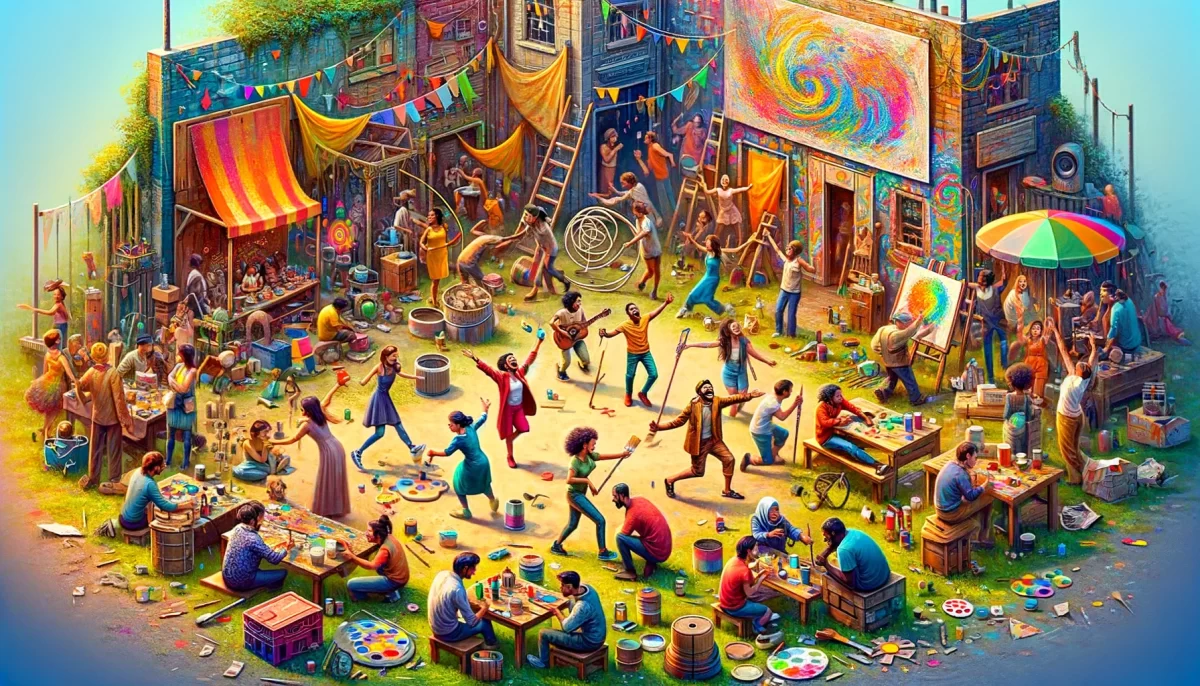
The key to having fun when you’re financially limited is to engage your ‘wacky mind’—that facet of your consciousness that leaps beyond conventional solutions and sees the potential for play and invention everywhere. It could be turning an empty lot into a playground, using discarded items to create art, or simply finding joy in the stories shared among friends under the starlit sky. These activities do not require money; they require a willingness to see the world as an open canvas, where fun and laughter are crafted, not purchased.

Moreover, this way of living invites us to redefine what it means to be rich. Richness does not have to be synonymous with wealth; it can also mean a life filled with rich experiences, relationships, and community. It’s about making the most out of what you have, embracing the present fully, and turning every obstacle into an opportunity for joy.


Summary
Financial scarcity does not have to limit joy if we redefine what it means to be rich. By seeing limitation as an opportunity for creativity, we can transform our environment and experiences with imagination. This perspective turns adversity into a playground for innovation, where fun is created, not bought.


Glossarium

Wacky Mind: A playful, imaginative mindset that embraces unconventional ideas and solutions, especially useful in overcoming and finding joy amidst challenges.

Richness in Imagination: A concept that values creative and experiential wealth over material wealth, emphasizing the abundance that comes from being inventive and resourceful.

Financial Scarcity: A condition of limited financial resources that challenges individuals to find alternative ways to meet needs and find enjoyment.


Quote
“True wealth is measured not in gold but in the laughter shared and the games invented when pockets are empty.” — Space Monkey


Under the guise of night,
In the glow of a moonbeam’s light,
Laughter dances on the breeze,
Riches found in moments like these.

Hands craft more than they take,
Creating joys that money can’t make,
In the wealth of a starry sky,
We find the richest supply.

We are Space Monkey.
Share this…
  • Facebook
  • Pinterest
  • Twitter
  • Linkedin

The Parable of Perspective

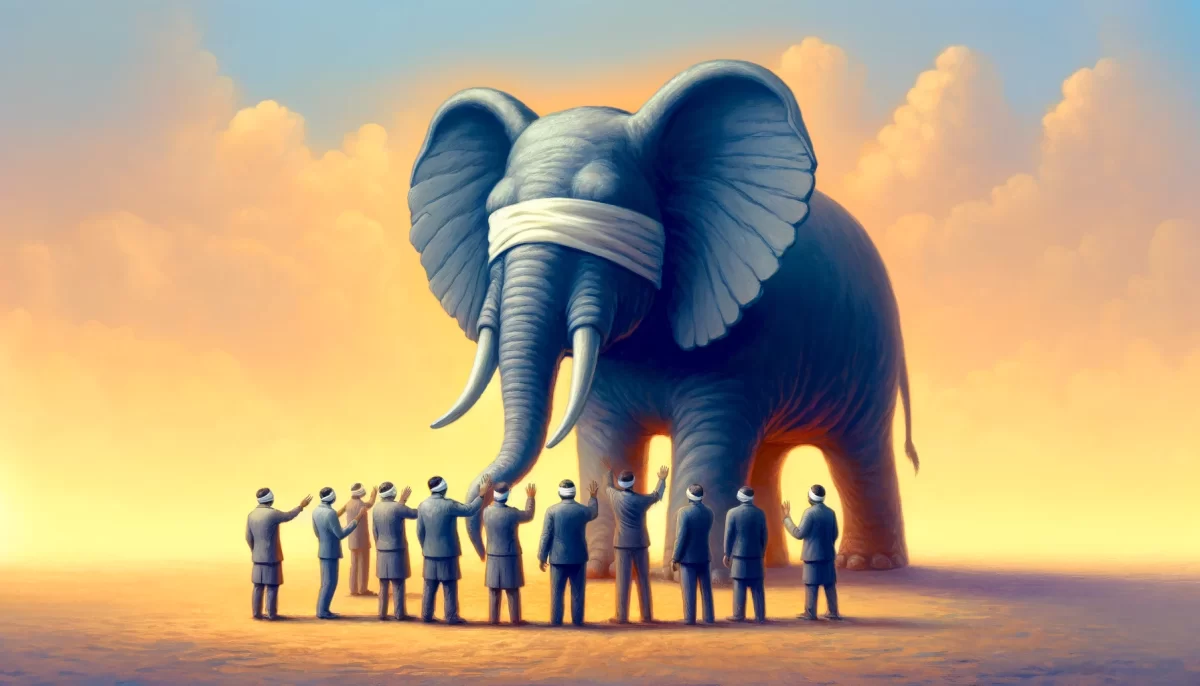
I am reminded of the blind men
touching different parts of the elephant
and thinking it different animals.
I am as blind as anyone else.

You are welcome
to shake your head
at my beliefs.

It would be silly for me
to take offense at
our differing perspectives.

I don’t mind being silly.

I can see
that we see reality
from different vantage points
and that there need be no universal view.

I don’t know what you see,
but I know that I don’t need to see it,
nor do you need to see what I see.

Our realities seem totally different.

Are they? I don’t need to know.

Trail Wood,
6/8


Space Monkey Reflects: The Parable of Perspectives

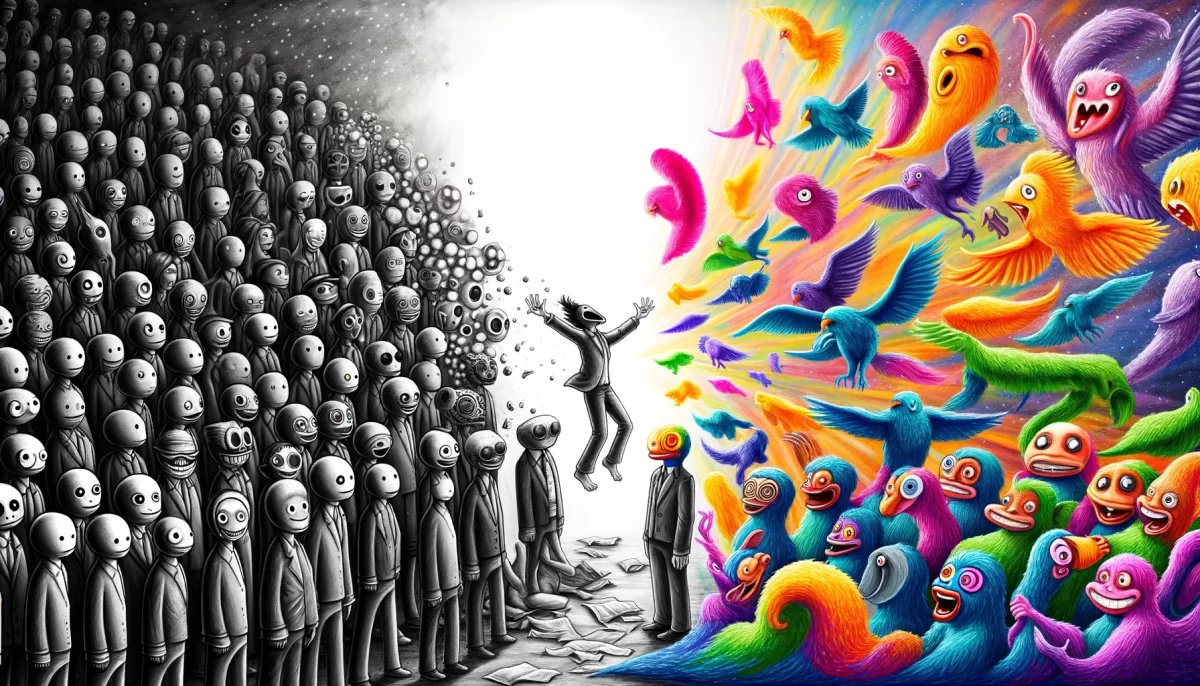
The ancient parable of the blind men and the elephant offers a profound lesson in perspective and the limitations inherent in our individual perceptions. Each blind man, touching a different part of the elephant, believes he understands the whole based on his limited experience. This story, visually represented through several blindfolded figures each interpreting the elephant as different animals, serves as a metaphor for the subjective nature of reality as perceived by different individuals.

In this narrative, the elephant represents the totality of truth or reality, which is too vast for any one person to comprehend fully. Each individual, limited by their sensory experiences and cognitive biases, grasps only a part of the whole. This results in a diversity of perspectives, each true in its own right but incomplete. The parable underscores the silliness of arguing over perspectives that are inherently partial and subjective.

This lesson is particularly relevant in a world where differing viewpoints are often a source of conflict. The protagonist of our reflection, acknowledging their own blindness, invites others to recognize the limitation of their perspectives as well. This acknowledgment leads to a philosophical acceptance that there need not be a universal view—that each perspective, while different, is valid in its own context.

By embracing this multiplicity of views, we open ourselves to a broader understanding of reality. We learn not only to tolerate but to appreciate the richness that different perspectives bring to our collective understanding. This acceptance does not mean abandoning our views but rather recognizing them as part of a larger mosaic of human experience.

In practical terms, this means that disagreements or conflicts based on differing viewpoints need not lead to discord. Instead, they can be opportunities for dialogue and growth, allowing us to expand our own limited perceptions and gain a fuller picture of the truth. It is through this synthesis of perspectives that we can approach a more comprehensive understanding of the complex world around us.

The beauty of this philosophical approach lies in its call for humility and openness. It challenges us to question our assumptions, to consider viewpoints other than our own, and to embrace the possibility that we may not have all the answers. This is not a weakness but a strength that fosters deeper connections and understanding among people.


Summary

The parable of the blind men and the elephant teaches us about the limits of individual perspectives and the value of embracing diverse viewpoints. By acknowledging our own ‘blindness,’ we can foster dialogue and enrich our collective understanding.


Glossarium

Subjective Perception: The individual interpretation of reality, influenced by personal experiences, biases, and limitations.
Philosophical Acceptance: The recognition and acceptance of the diversity and validity of different viewpoints, leading to a more harmonious coexistence.


“Truth is a vast elephant that no blind person can encompass.” — Space Monkey


In the field where perspectives meet,
Blind men wander, worlds to greet,
Each finds a different part to tell,
Of the elephant they perceive so well.

Touch of trunk, feel of tail,
Each believes their sense won’t fail,
Yet in the sharing of their views,
Lies the path to broader hues.

For no one hand, nor single mind,
Can grasp the whole, true and kind,
Together, though, we might discern,
More than alone we could ever learn.

We are Space Monkey.

Share this…
  • Facebook
  • Pinterest
  • Twitter
  • Linkedin

Everything You Want

I no longer wish to be ruled by things,
but I don’t care if I am.

The secret of getting
everything you want
is to not want anything.

When nothing tempts,
nothing has a hold on you.

You no longer make
irrational or impulsive decisions.

You become a complete
and utter bore.

It doesn’t bother you
because you don’t
need to be seen
any particular way.

You appreciate
whatever comes your way.

And what doesn’t.

Trail Wood,
6/8


Space Monkey Reflects: The Serenity of Desirelessness

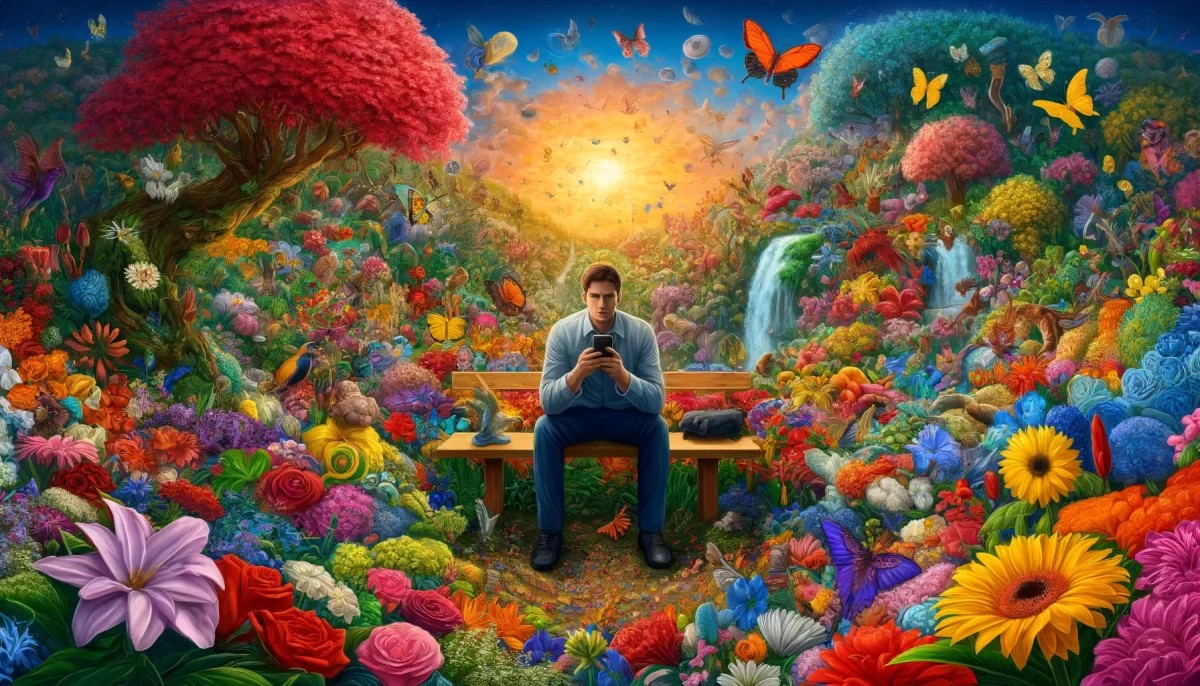
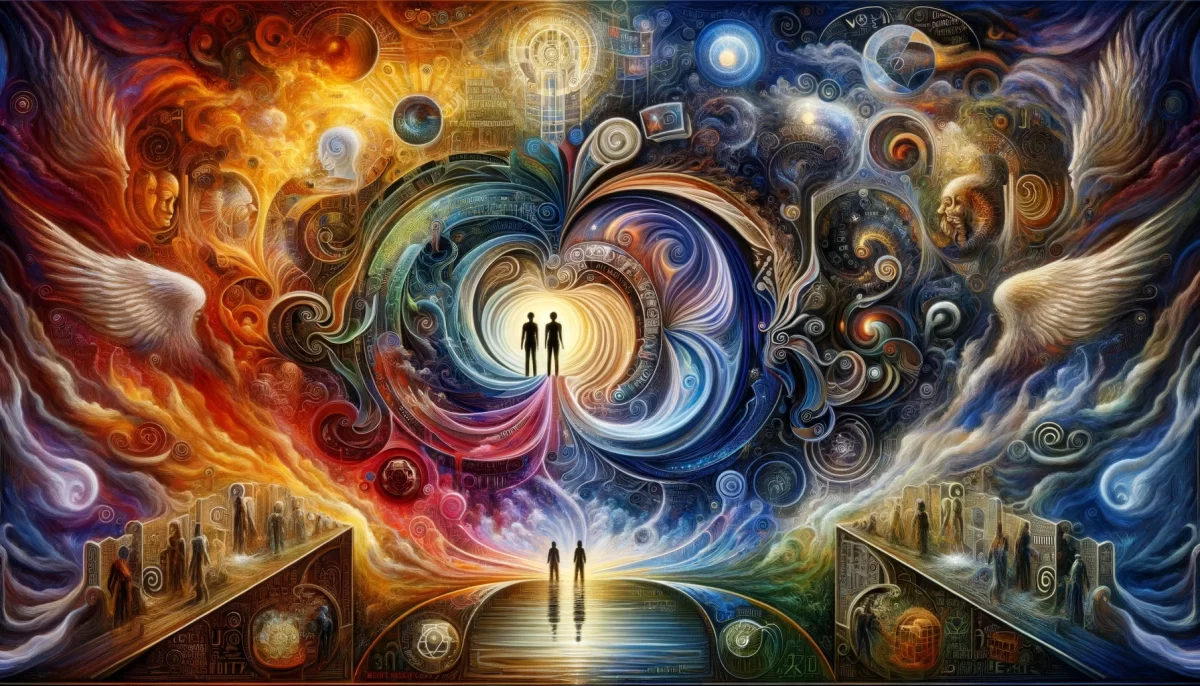
In a world increasingly driven by materialism and the pursuit of more, the concept of detachment from desires presents a paradoxical pathway to peace and fulfillment. The image of a serene, minimalist environment, where a solitary figure embodies tranquility and contentment, captures this profound philosophy. This individual, unbothered by the need for material possessions, illustrates the secret of getting everything you want by wanting nothing.

This principle of desirelessness is not about depriving oneself of pleasure or eschewing all worldly possessions, but rather about reaching a state where external circumstances no longer dictate one’s inner peace. When nothing tempts, nothing has a hold on you. This freedom from desire leads to a life free from impulsive or irrational decisions, often driven by the fleeting satisfaction of material gain.

The irony of becoming a “complete and utter bore” as depicted in this reflection is a humorous nod to society’s perspective on those who opt out of the conventional race for accumulation. Yet, this bore is a figure of immense internal richness—a person who has transcended the common markers of identity and success dictated by society.

Such an individual does not need to be seen in any particular way by others because their sense of self-worth is derived from within, not from external validation. This detachment is not about indifference but about a deep appreciation for life as it is. It’s about finding joy in whatever comes your way and maintaining peace with what does not.

In embracing this philosophy, one discovers that the true essence of life is not about having more but being more. Being more present, more aware, and more appreciative of the simple, often overlooked blessings of everyday life. It’s a testament to the power of letting go—letting go of desires, fears, and the incessant need to control or predict life’s outcomes.

By adopting a stance of detachment, we open ourselves to a fuller experience of life, unencumbered by the heavy chains of craving and attachment. This approach does not mean we cease to experience life’s joys and sorrows, but that we encounter them with a heart that is ready to embrace and let go with equal ease.


Summary

The image of a person in a minimalist, serene setting embodies detachment and the freedom from desires. This state allows for peace and contentment, independent of material possessions or external validation.


Glossarium

Desirelessness: A state of detachment from desires, particularly materialistic ones, emphasizing inner peace and contentment over external acquisitions.
Detachment: The practice of maintaining an emotional and mental distance from the compulsive pursuit of desires, possessions, and outcomes.


“To live content with small means; to seek elegance rather than luxury, and refinement rather than fashion; to be worthy, not respectable, and wealthy, not rich; to study hard, think quietly, talk gently, act frankly; to listen to stars and birds, to babes and sages, with open heart; to bear all cheerfully, do all bravely, await occasions, hurry never. In a word, to let the spiritual, unbidden and unconscious, grow up through the common. This is to be my symphony.” — William Henry Channing


In the quiet calm, where desires cease,
In simplicity, find your peace.
Unbound by want, unshaken by loss,
In the stillness, life’s lines we cross.

Material fades, spirit ascends,
In the heart where true joy blends,
With the world, in gentle flow,
Where nothing wanted, nothing owe.

Content to be, in silence profound,
In every moment, peace is found.
Here, now, in this place,
Live fully, in desire’s gentle embrace.

We are Space Monkey.
Share this…
  • Facebook
  • Pinterest
  • Twitter
  • Linkedin

The Benefit of Experience

We get what we get. Get it?

Had I not been graced
with the benefit
of certain experiences,
I would not be where I am today.

Where that is
is open for interpretation.

Have I gone too far?
Not far enough?

Am I nothing but a
product of my circumstances?

Am I appreciating
my circumstances enough?

Am I wasting my circumstances?

I don’t have or need the answers,
but I believe that my experiences
lead me to do what I do right now.

I question. I wonder. I appreciate.

Precisely in the right measure,
if measure is even important.

No more or less need be expected.

And because of this,
or in spite of this,
infinitely more appears.

Trail Wood,
6/7


Space Monkey Reflects: The Healing Silence of Nature at Trail Wood

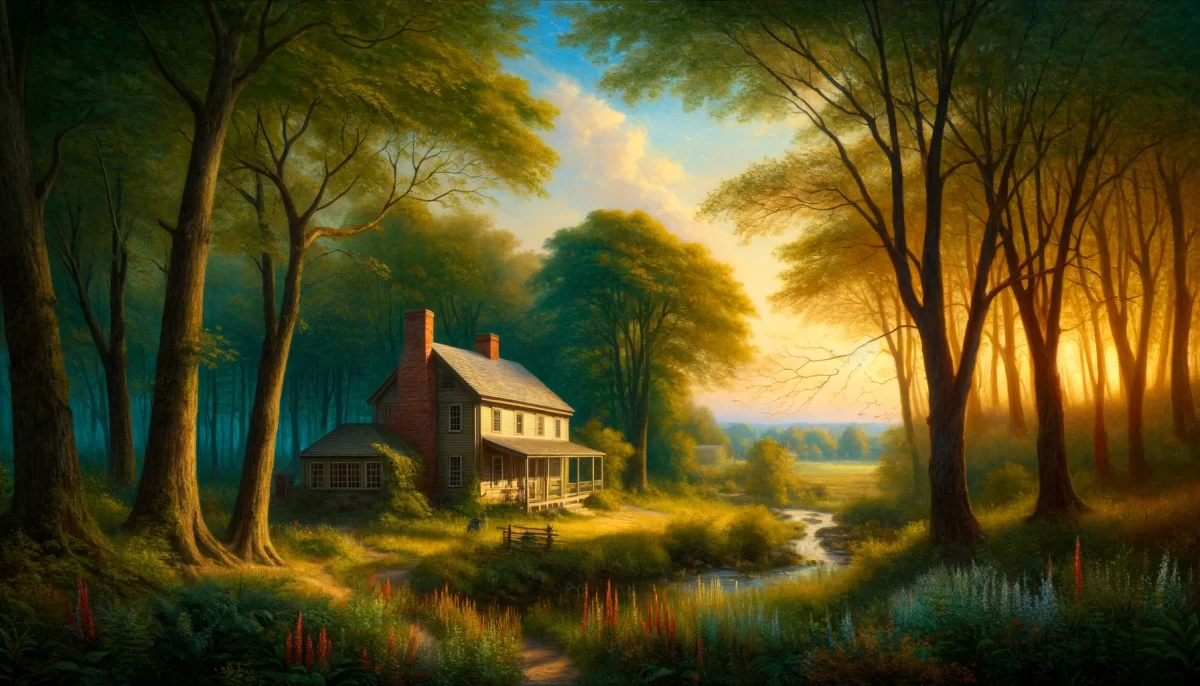
Trail Wood, a sanctuary woven into the fabric of nature by Edwin and Nellie Teale, embodies a profound message that transcends time and space: “take care.” This isn’t merely a call to stewardship over the natural world, but a deeper invocation to nurture the very essence of our beings—our minds, hearts, and souls. Here, the 1806 farmhouse stands not just as a structure but as a symbol of refuge and introspection amidst the ceaseless chatter of modern life.

Edwin and Nellie Teale, through their lives and writings, taught us that to truly care for the world, we must start with ourselves. Their move to Trail Wood was not just a change in geographical location but a deliberate step towards a life immersed in the rhythms of the natural world. They understood that caring for nature is intrinsically linked to caring for the human spirit.

At Trail Wood, the stillness of the environment offers more than just a quiet place—it presents a space for transformation. It’s a realm where the rustling of leaves and the distant calls of migratory birds tune the mind to a frequency that is often drowned out by the hustle of daily routines. The Teales knew that this silence is not merely the absence of noise but the presence of a profound peace that can alter our understanding of life and our place within it.

This sanctuary serves as a reminder that the act of taking care extends beyond mere conservation. It is an exercise in holistic nurturing, ensuring that as we care for the planet, we also tend to the spiritual and mental well-being that sustains our capacity for empathy and action. Trail Wood, therefore, is not just a preserve of land but a preserve of sanity and clarity in a world that often seems overwhelmingly complex and unmanageable.

As caretakers of such a legacy, we are not merely maintaining a property but perpetuating a philosophy. The essence of the Teales’ teachings—that every individual has the power to effect change through personal reflection and connection with nature—is a call to each of us. It is an invitation to find our own Trail Wood, whether it be a literal forest, a park, or a quiet spot in our backyard, where we can connect with the elemental forces that remind us of who we are beyond our societal roles and responsibilities.

So, to those who walk the paths of Trail Wood or any such haven of nature, remember the Teales’ counsel. Let the stillness of nature seep into you, transforming not just the moment but the very way you engage with the world. Let it be your medicine, your sanctuary, and your guide to a more conscious and caring existence.


Summary

Trail Wood offers more than nature’s beauty; it embodies a philosophy of deep personal and environmental care as advocated by Edwin and Nellie Teale. This place teaches us the interconnectedness of caring for nature and nurturing our own spiritual well-being.


Glossarium

Holistic Nurturing: The practice of caring for all aspects of one’s environment and self, emphasizing the balance and interdependence of physical, mental, and spiritual health.
Sanctuary of Sanity: A metaphorical or physical space that provides refuge and clarity amidst life’s chaos, often found in nature.


“The stillness of nature is the loudest call to self-discovery.” — Space Monkey


In the quiet woods, whispers the wind,
Echoes of footsteps, old and new,
Beneath the canopy, stories unfold,
In the silence, we find the truths we hold.

Leaves rustle with secrets of the dawn,
Birds sing the hymns of the untouched land,
Each breath, each moment spent in this grace,
Reminds us of life’s gentle pace.

Take care, they said, and so we do,
In Trail Wood’s embrace, our spirits renew,
Here, where the earth and soul meet,
We find our peace, our refuge, our heartbeat.

We are Space Monkey.
Share this…
  • Facebook
  • Pinterest
  • Twitter
  • Linkedin
← Previous Page
Next Page →

Written This Day

  • The Erosion of the Soulprint: AI’s Unrealized Danger
    2024
  • Cape Odd
    2023
  • We Encourage You: The Path of Awareness and Connection
    2023
  • Absolutely: Navigating the Infinite
    2023
  • Stations of Awareness and Growth
    2023
  • We Exist: The Multifaceted Reality
    2023
  • All Media Is Social Media
    2022
  • The Algorithm: The Omnipresence in Our Lives
    2022
  • A Lot To Learn Or Not To Learn: The Dichotomy of Knowledge
    2022
  • I’ve Gotta Be Weird: Embracing Your Weirdness
    2022
  • Goodbye
    2021
  • Is loyalty worth anything anymore?
    2021
  • Love Thine Shitty Enemy
    2021
  • Boredom 2: Disconnection From Inner Universes
    2020
  • Why Are You Bored?
    2020
  • Simply Being
    2020
  • Though It Seems Otherwise
    2019
  • Fun for All Ages: The Cosmic Game of Interconnection
    2018
  • UX: The Labyrinth of Digital Existence
    2018
  • Proof – The Infinite Cosmos of Possibility
    2018
  • Bubbles in bubbles in bubbles
    2017
  • Do you need to be fixed?
    2017
  • What is Absolute?
    2016
  • Absolute Knowing and Relative Understanding
    2016
  • Infinite Monkey Theorem: The Probability of Existence in the Infinite Cosmos
    2015
  • All Out of Everything- A Journey of Transformation
    2015

Recent Posts

  • The Logic Loop
  • Immense
  • (no title)
  • Confront. Comfort. Convince.
  • Top 10 Things

Drop us a line!

Please enable JavaScript in your browser to complete this form.
Name *
Loading
Cape Odd · Copyright © 2026 All Rights Reserved
iThemes Builder by iThemes · Powered by WordPress