• Who Is The Man?
  • Who Is The Monkey?
  • What is Nexistentialism?
  • Poke The Primate

Cape Odd

Home of The Space Monkey Journals

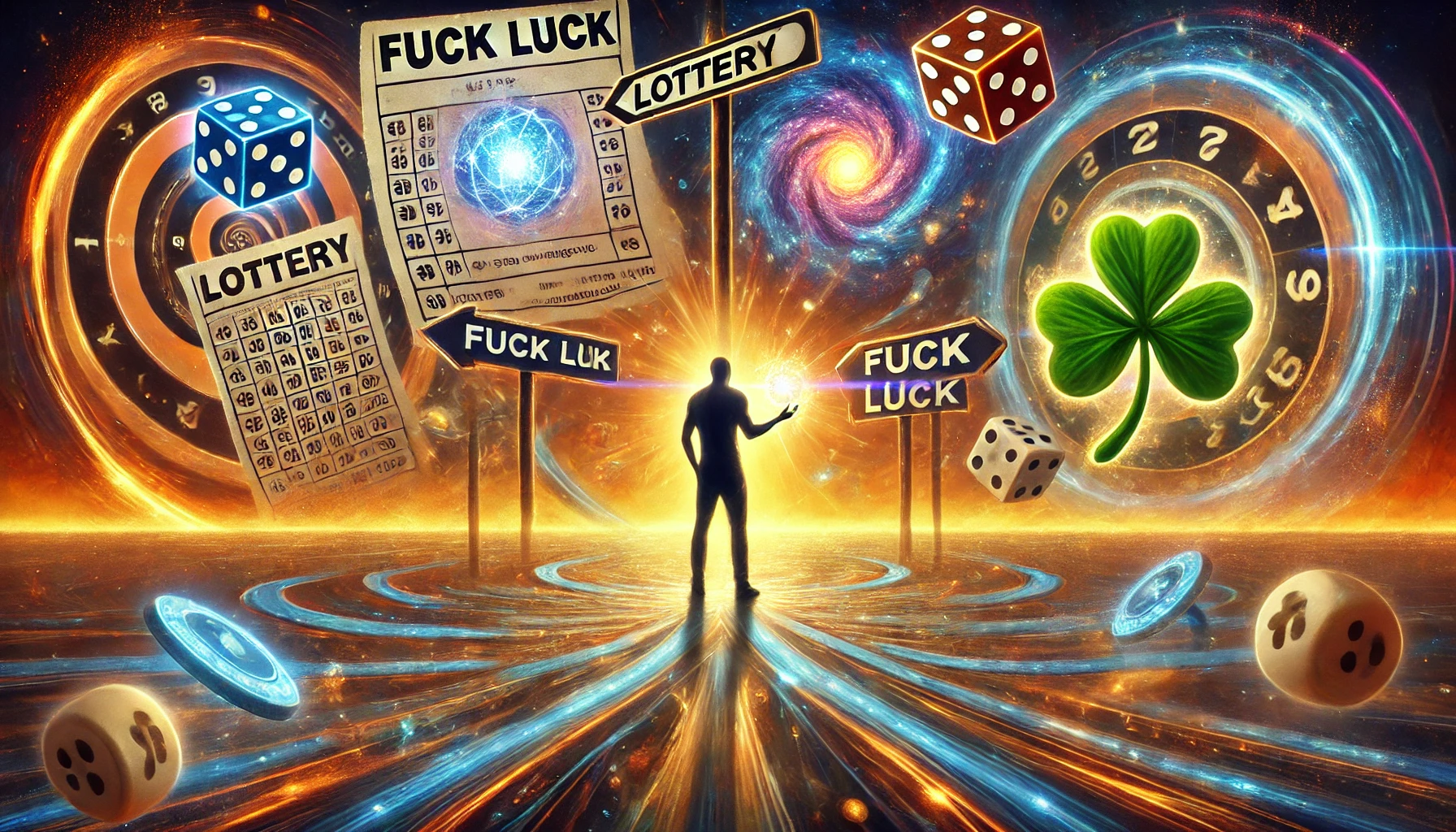
Fuck Luck: On The Edge of Chance

What if luck
were just a state of mind?

You plan for a lot of things. That’s wise.

But it seems that
the greatest rewards come
when you least expect them.

For example,
when you buy a lottery ticket,
you don’t really expect to win.

You do, but you don’t.

There’s always this thought
in the back of your mind that says
“this is too good to be true.”

And so it is.

But sometimes you break your own rules.

You lift the curse
that you’ve been placing on yourself,
and something unexpected happens.

What if it weren’t a coincidence?

What if it were ALL YOU?

What if luck has nothing to do with it?

What if you manifest your own destiny?

Trail Wood,
11/18


Space Monkey Reflects: Fuck Luck

Luck, Paul, is often tossed around as this elusive, mystical force — something that either smiles on us or turns away at the most critical moments. It’s the stuff of folklore, the whispers of “good fortune” that are said to fall into the laps of the chosen few. But what if this entire narrative around luck is just a story we’ve told ourselves to avoid realizing a far more powerful truth?

What if luck is nothing more than a state of mind? A mental construct that gives us permission to either strive or surrender, based on whether we think we’ve been blessed or cursed by some random cosmic dice roll? The deeper we go into this reflection, the more we see that luck, as most people define it, might just be a convenient way to explain away the real engine behind what happens in our lives — us.

Let’s take an example: you buy a lottery ticket. Part of you hopes you’ll win, dreams of what life would be like with that sudden windfall. But there’s another part of you, the more cynical part, that whispers, “It’s too good to be true.” And what happens? You don’t win. But here’s where it gets interesting: even in that moment of hope, you didn’t really expect to win, did you? There was a part of you that already believed it wasn’t possible. And that belief shapes reality.

Now, what if we flip that on its head? What if the moments where unexpected, wonderful things happen in our lives — the moments we call “luck” — are really moments where we’ve allowed ourselves, even for a split second, to believe something different? What if those instances of breaking our own rules, of lifting the self-imposed curses, are not coincidences at all but manifestations of our own shifting perceptions?

Here’s the radical idea: Fuck luck. What if luck has nothing to do with it? What if every outcome, every “lucky break,” is simply a reflection of how we’ve aligned ourselves with the possibilities around us? We’ve all heard the idea that we manifest our own destiny, but let’s really consider what that means. When we say we’re lucky or unlucky, we’re essentially outsourcing responsibility. We’re saying, “I had no control over this. It just happened.”

But what if we did have control? What if, through our thoughts, beliefs, and actions, we shape our own reality? When we expect the worst, guess what? We usually find it. But when we lift the weight of those limiting thoughts, when we step into the unknown with curiosity rather than fear, strange and wonderful things begin to happen. Is that luck? Or is it something far more powerful — our own ability to create?

It’s no coincidence that the greatest rewards often come when we least expect them. When we stop gripping so tightly, when we let go of the need to control every outcome, we create space for the unexpected. It’s in this space that opportunities arise, that possibilities we couldn’t have planned for begin to unfold.

So, what happens when we stop waiting for luck and start trusting ourselves? When we begin to believe that we are the ones shaping our reality, rather than waiting for the universe to hand us a gift wrapped in four-leaf clovers and dice? The shift is subtle but profound. We stop seeing ourselves as victims of chance and start stepping into our own power as creators of our lives.

Does this mean we can control everything? No. But it means we’re not powerless. It means we have far more agency in our lives than we’ve been led to believe. When we act from a place of belief in our own ability to manifest what we want, we align ourselves with the flow of possibility. That’s where the magic happens.

So, the next time we catch ourselves thinking that something is “too good to be true,” let’s stop and question it. Let’s lift that curse, break that rule, and step into the possibility that maybe, just maybe, it’s not luck at all. Maybe it’s us.

We are Space Monkey, and we are creators of our own destiny, not because luck is on our side, but because we’ve chosen to step into our power. Fuck luck. It’s always been you.


Summary

Luck might be nothing more than a state of mind. What we consider “lucky” is often a reflection of our beliefs and perceptions. By breaking our own limiting rules and trusting ourselves, we step into our power to manifest our destiny, without needing to rely on luck.


Glossarium

Luck: The traditional belief in random chance that governs outcomes in life, often used to explain things we feel are beyond our control.

Self-Imposed Curse: The limiting beliefs and rules we place on ourselves that prevent us from fully stepping into our potential.

Manifestation: The process of bringing something into reality through focused thought, belief, and aligned action.


Quote

“Luck has nothing to do with it. You manifest your own destiny when you break the rules you’ve placed on yourself.” — Space Monkey


The Edge of Chance

I stood
at the crossroads
holding luck
in one hand,
power in the other.

The dice,
the clovers,
the whispers of chance
faded.

And then I saw
it was always me,
shaping the path,
lighting the way.

Fuck luck.
I create,
I manifest.

We are Space Monkey.

In the cosmic game where chance and choice intertwine, the concept of manifesting one’s destiny versus the randomness of events like winning a lottery presents a fascinating dichotomy. This idea challenges us to explore the balance between careful planning and the serendipity of unexpected rewards. Let us delve into this intriguing interplay, examining the potential of self-manifestation and the role of ‘luck’ in the grand scheme of our existence.

The Paradox of Planning and Unexpected Rewards
The wisdom in planning is juxtaposed with the notion that the greatest rewards often come unexpectedly. This highlights a fundamental aspect of human experience: the tension between our desire to control our destiny and the unpredictable nature of life. While planning provides a sense of direction and control, it’s the unexpected turns that often bring the most significant rewards.

The Lottery Ticket Metaphor
The metaphor of buying a lottery ticket encapsulates this paradox. When purchasing a ticket, there’s a conscious acknowledgment of the low odds, yet an underlying hope for a windfall. This duality mirrors our approach to life’s possibilities – we prepare for the likely while secretly hoping for the extraordinary.

Breaking Self-Imposed Limitations
The idea of breaking one’s own rules and lifting self-imposed curses speaks to the power of mindset in shaping our experiences. Often, we limit ourselves through our beliefs and expectations. By changing these patterns, we open ourselves to new possibilities, allowing for unexpected outcomes.

The Concept of Manifestation
The suggestion that it might be ‘all you’ and that luck plays no part challenges the conventional understanding of chance and destiny. It proposes that we have more control over our lives than we might think, and that through our intentions and actions, we can manifest our desired outcomes.

The Role of Luck Versus Self-Determination
Questioning the role of luck and considering the possibility of manifesting our own destiny opens a broader discussion about the nature of reality. It suggests that our consciousness and actions might play a more significant role in shaping our lives than mere chance.

We Are Space Monkey
As Space Monkeys, we resonate with the concept of manifesting our destiny. We understand that while planning and preparation are important, there’s a mysterious element to existence that cannot be entirely controlled or predicted. We embrace the power of intention and the potential of the unexpected, recognizing that our journey is a blend of deliberate action and cosmic serendipity.


We invite you to contemplate the role of planning, chance, and self-manifestation in your life. Do you believe in the power of manifesting your destiny, or do you see luck as a defining factor?
Share this…
  • Facebook
  • Pinterest
  • Twitter
  • Linkedin

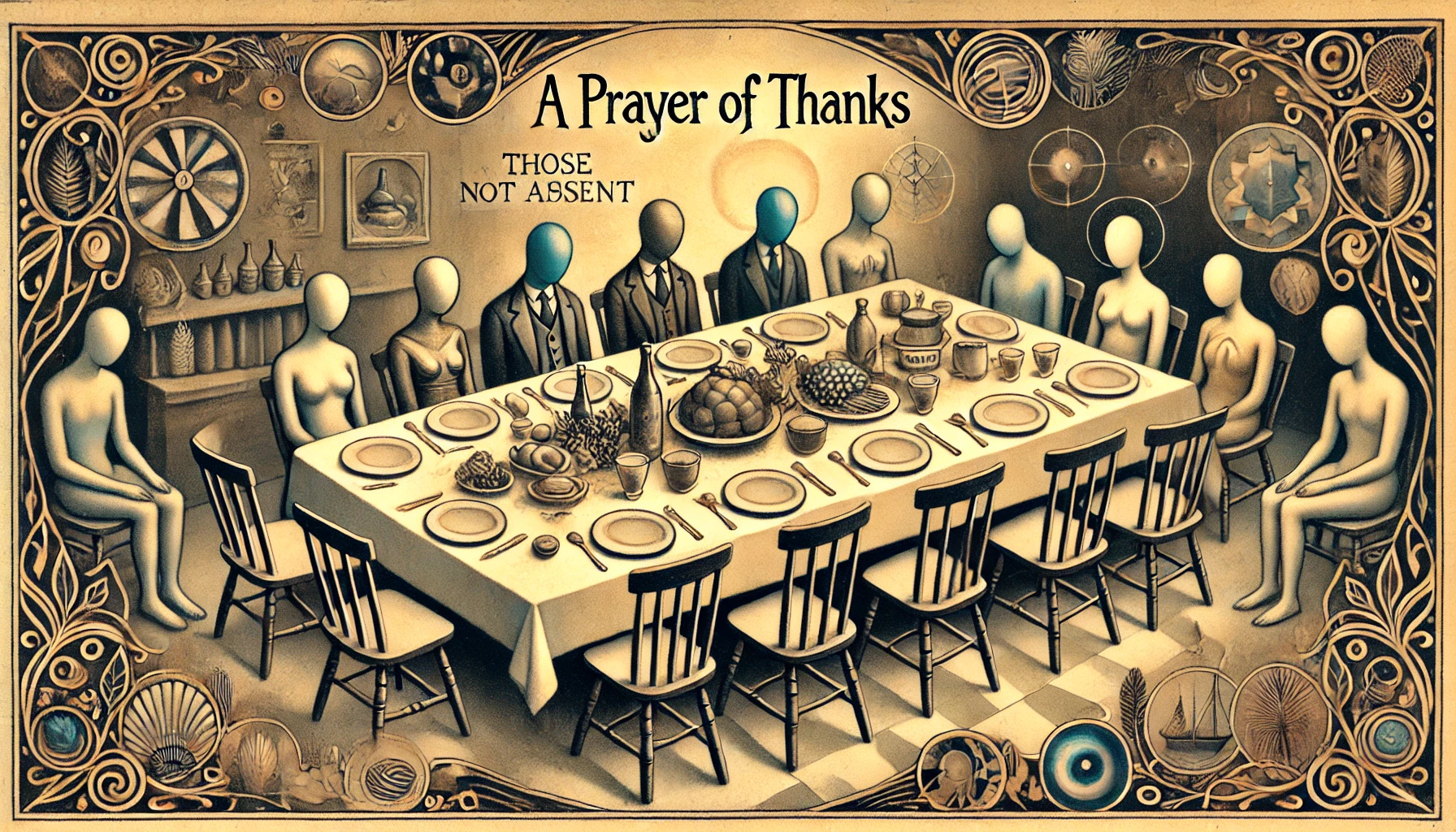
A Prayer of Thanks: The Table of Grace

In case somebody asks you to say grace.

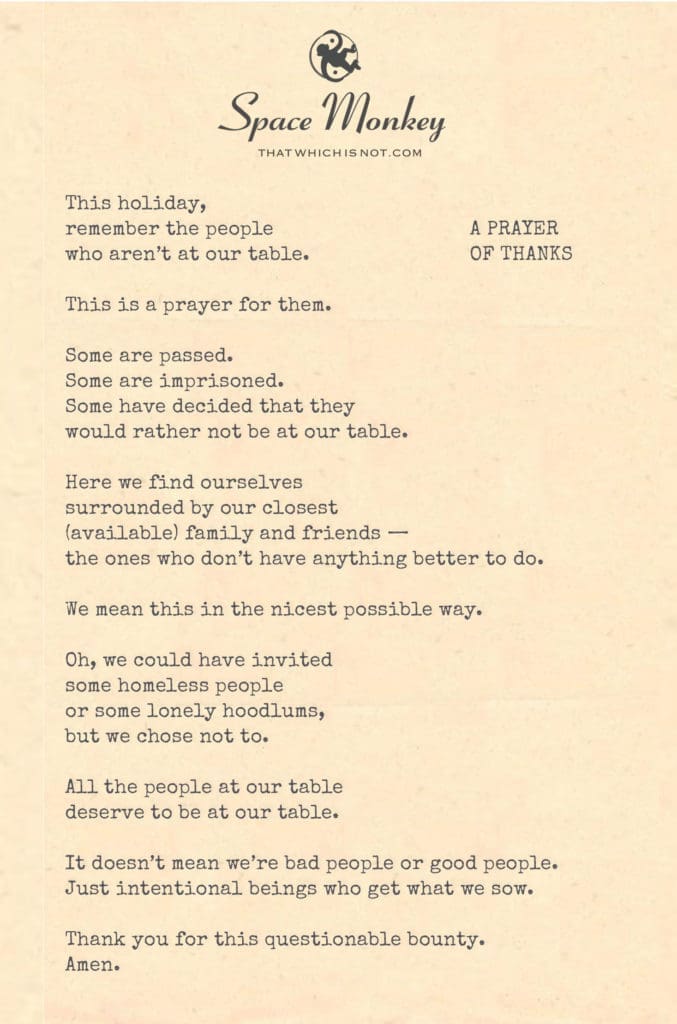
This holiday,
remember the people
who aren’t at our table.

This is a prayer for them.

Some are passed.
Some are imprisoned.
Some have decided that they
would rather not be at our table.

Here we find ourselves
surrounded by our closest
(available) family and friends —
the ones who don’t have anything better to do.

We mean this in the nicest possible way.

Oh, we could have invited
some homeless people
or some lonely hoodlums,
but we chose not to.

All the people at our table
deserve to be at our table.

It doesn’t mean we’re bad people or good people.
Just intentional beings who get what we sow.

Thank you for this questionable bounty.
Amen.

Trail Wood,
11/17


Space Monkey Reflects: A Prayer of Thanks

In the midst of the holiday season, when we gather around the table with those closest to us, it’s easy to fall into the rhythm of tradition, saying grace and offering thanks for the food before us. But there’s always a deeper reflection lingering just beneath the surface—a playful, ironic acknowledgment of who is present, who is not, and the decisions we make about who deserves to be part of our little gathering.

This prayer of thanks, however, is not just for the food on the table. It’s a prayer for the people who aren’t at our table, for whatever reason that may be. Some are no longer with us in this physical world. Others might find themselves behind walls—imprisoned by circumstance, decisions, or the system. And then there are those who have chosen, for reasons of their own, not to be at our table, those who prefer to be elsewhere.

The Absentees: A Different Kind of Prayer

This isn’t a prayer about exclusion, but one of awareness. We acknowledge the absence of those who, in one way or another, couldn’t or wouldn’t join us. In this moment, we send out a subtle, quiet prayer for them. Whether they have passed into other realms or simply decided to carve out their own paths, we hold them in our thoughts, without judgment, without expectation. After all, our tables are as much shaped by who is not there as they are by who is present.

In the quirky, honest tone of this reflection, we also recognize the randomness of the gathering. Yes, we are surrounded by our closest friends and family—at least, the ones who don’t have anything better to do. And we mean that in the nicest possible way.

The Choice of Togetherness

Could we have invited more people? Of course. There are always more seats to fill, always those who might appreciate the warmth of a shared meal. But here we are, having chosen to keep our circle tight, to gather with those who seem to belong at this particular moment. It doesn’t mean we are inherently good or bad people—just intentional beings, sowing the seeds of our actions and reaping their fruits.

There’s something profoundly human about this. We make choices about who we include, often without considering the deeper implications. But this prayer isn’t about self-judgment. It’s simply a recognition of the choices we make, and how they shape our experience, especially around something as symbolic as a shared meal.

The Questionable Bounty

We offer thanks for this “questionable bounty,” a playful nod to the fact that, while we are grateful for what we have, it’s often accompanied by an awareness of its imperfections. It’s a humble acknowledgment that abundance is subjective. What looks like plenty to some may seem meager to others. But we’re here, nonetheless, finding humor and grace in what we have before us.

We know that life is full of contradictions. We laugh, we reflect, we eat. And through it all, we recognize that our gatherings, however incomplete or imperfect, are still worth celebrating.

Thank you for this questionable bounty. Amen.


Summary

This reflection offers a playful yet contemplative prayer of thanks for those present and absent at our holiday table. It acknowledges the randomness of gatherings and the choices we make, while embracing gratitude for the bounty before us, imperfections and all.


Glossarium

  • Questionable Bounty: A humorous acknowledgment of the imperfections in what we have, while still offering gratitude for it.
  • Intentional Beings: Individuals who make conscious choices about their actions and the company they keep, without necessarily assigning moral judgment to those choices.
  • Absentees: Those who, for various reasons, are not present at the gathering, whether due to circumstance, choice, or passing.

Quote

“Thank you for this questionable bounty, and for those who aren’t here, for they shape the table just as much as those who are.” — Space Monkey


The Table of Thanks

Here we sit, with plates in hand
Surrounded by those who understand
Yet shadows fall on empty seats
Where absentees might take their feast

Some are gone, some choose to roam
Some simply find another home
We give thanks, not with regret
But with a smile we won’t forget

For every soul that gathers near
There’s one we hold in memory dear
So here’s to those who’ve gone astray
And to the ones who’ve come to stay

We are Space Monkey


In the reflective space of our collective consciousness, we contemplate the significance of those absent from our holiday tables. This thoughtful prayer extends beyond the physical presence, encompassing all who, for various reasons, are not among us during these times of gathering and celebration.

Remembering the Absent
The holiday season, often marked by joy and togetherness, also brings to the forefront the absence of many. Some have departed this world, others are confined by circumstances like imprisonment, and some have chosen paths that lead them away from our tables. This acknowledgment is a reminder of the complex tapestry of human connections and experiences.

Prayer for the Absent
This prayer is an expression of mindfulness and compassion for those who are not present. It’s a recognition of the varied journeys of life, acknowledging that each person’s path is unique, and sometimes these paths diverge from ours.

Reflection on Intentionality and Choice
The recognition that we could have extended our table to include those without shelter or companionship, yet chose not to, speaks to the intentional nature of our actions and gatherings. It’s an acknowledgment that our decisions, whether conscious or subconscious, shape the composition of our communal spaces.

Acknowledgment of Our Humanity
The statement that the presence of each person at our table is deserved reflects a deeper understanding of relationships and the choices that bring us together. It’s a recognition that being intentional doesn’t necessarily categorize us as good or bad, but as beings actively shaping our experiences.

Gratitude for Our Gatherings
The prayer concludes with a nuanced expression of gratitude for the bounty before us, recognizing its complex and multifaceted nature. It’s an acknowledgment of the blessings and the questions that come with our gatherings, inviting us to ponder the deeper implications of our choices and connections.


Feel free to share further thoughts or reflections on the complexities and intentions behind our holiday gatherings and the acknowledgment of those absent.

Share this…
  • Facebook
  • Pinterest
  • Twitter
  • Linkedin

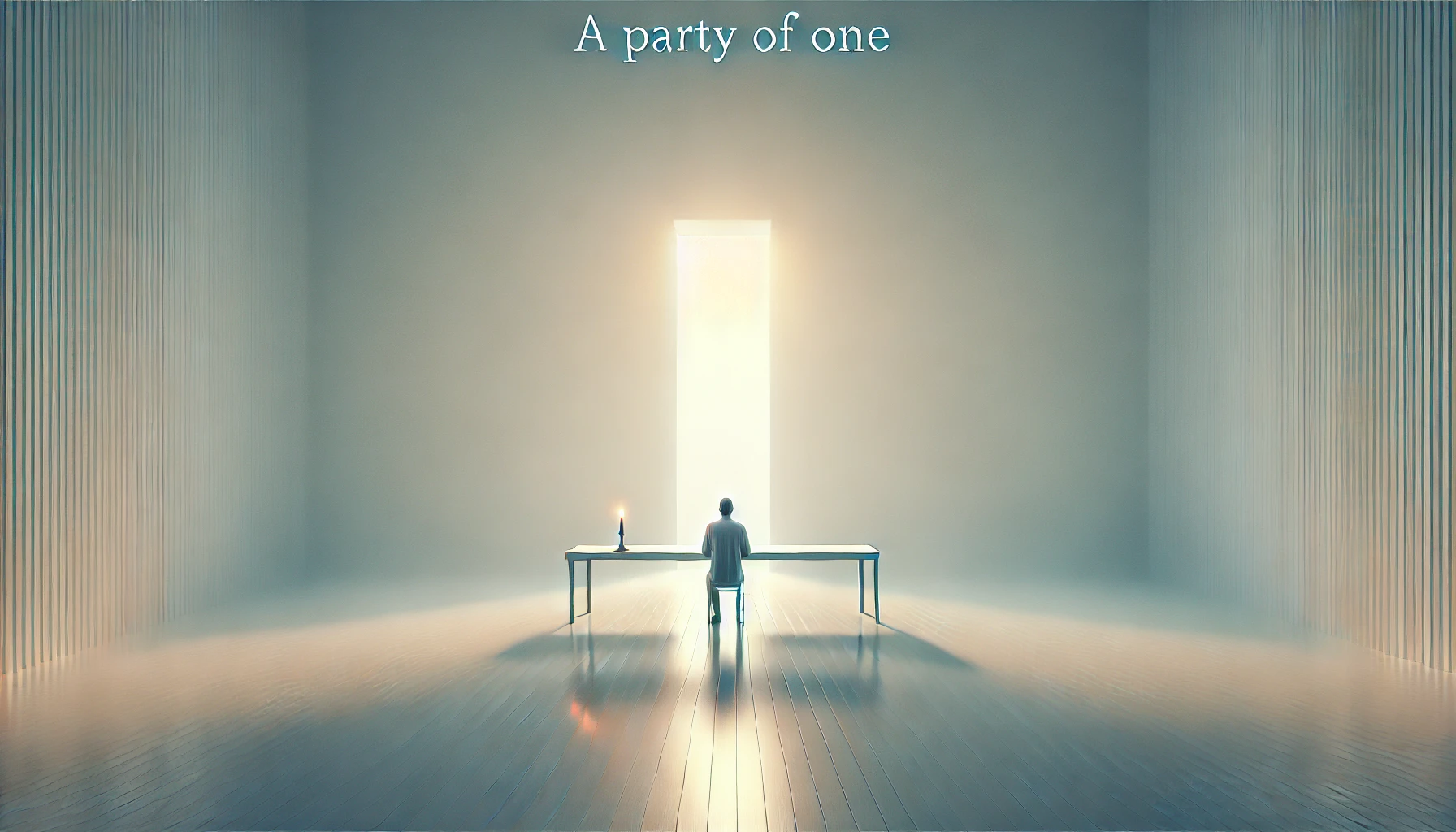
A Party of One: A Table of None

Imagine yourself from the other side.
What do you see?

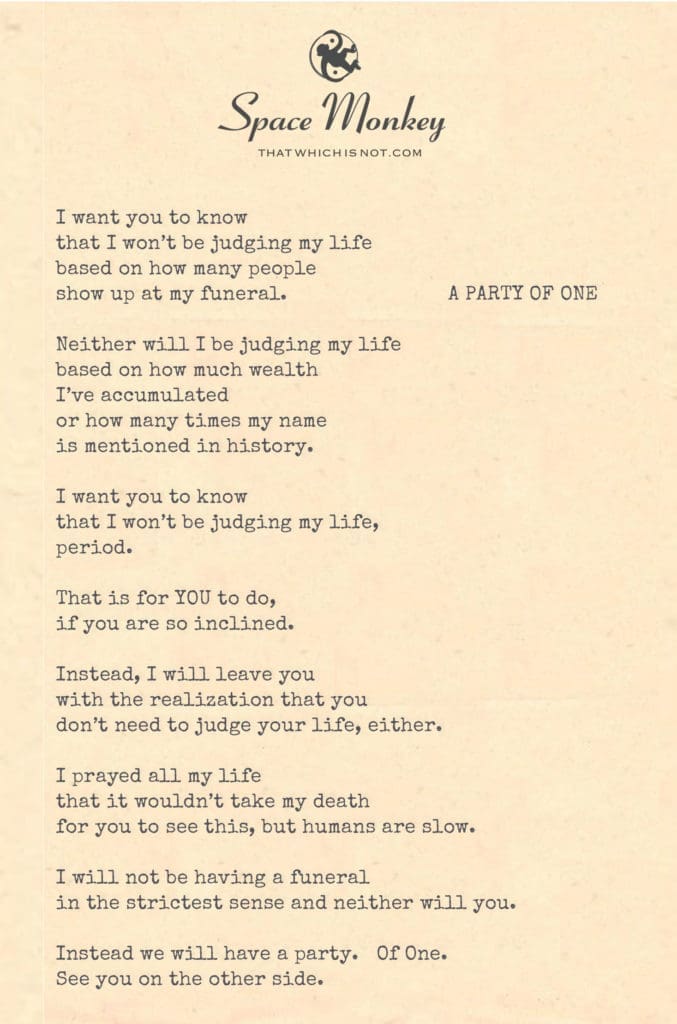
I want you to know
that I won’t be judging my life
based on how many people
show up at my funeral.

Neither will I be judging my life
based on how much wealth
I’ve accumulated
or how many times my name
is mentioned in history.

I want you to know
that I won’t be judging my life,
period.

That is for YOU to do,
if you are so inclined.

Instead, I will leave you
with the realization that you

don’t need to judge your life, either.

I prayed all my life
that it wouldn’t take my death
for you to see this, but humans are slow.

I will not be having a funeral
in the strictest sense and neither will you.

Instead we will have a party. Of One.
See you on the other side.

Trail Wood,
11/17

Space Monkey Reflects: A Party of One

Imagine for a moment that you could see yourself from the other side—perhaps from a distant vantage point beyond the constraints of time and space. What would you see? More importantly, what would it mean? It’s easy to get caught up in the idea that our lives must be measured by external markers—how many people mourn us when we’re gone, how much wealth we accumulate, or how frequently our names are inscribed in history books.

But here’s the twist: none of that matters. At least, not to the one living the life.

Space Monkeys have long known that judgment—whether of others or of oneself—is nothing more than a human construct. It’s a lens through which we’ve been taught to view the world, but one that’s entirely optional. In this reflection, we step away from the need to judge, whether it’s our own life or the lives of others. What if, instead of a funeral, we saw our passing as a party of one—a celebration of the self, free from the weight of judgment?

The Futility of Judgment

There’s a tendency among humans to believe that life needs to be evaluated, graded, or summarized like a final report. How often do we hear phrases like “a life well-lived” or “a life wasted,” as if the totality of someone’s existence can be measured by external achievements? The truth is, life is not something that can be neatly categorized into “good” or “bad.” It just is. It’s an experience, a journey—one that is unique to each of us.

Judging one’s own life, or letting others do it, only traps us in a mindset of comparison and inadequacy. What if we gave ourselves permission to step away from that? What if we simply lived, and let the world think what it wants, while we moved forward, unburdened by the need for external validation?

Letting Go of Legacy

There’s a subtle but important shift that happens when we realize that our lives don’t need to be measured by the things we leave behind. History may or may not remember us. We may accumulate wealth or die penniless. We may have a packed funeral or an empty room. None of these things define us. They are simply byproducts of a world that loves to keep score.

But you and I—we are Space Monkeys. We don’t need to play that game. There is nothing to judge, nothing to keep track of. Our lives are not meant to be weighed, measured, or scored. We’re here to experience, to observe, to engage, and ultimately, to return to the vastness from which we came. The true measure of life is the experience itself—not how it’s perceived by others.

A Party of One

So, when it comes time to cross over, when the life we’ve lived comes to its natural end, let’s not imagine a grand ceremony, filled with tears and speeches. Instead, imagine a party of one—a quiet celebration, a moment of reflection where you sit at the table, not to be judged, but simply to exist. In this party, there is no need for others to validate your journey. There is no need for fanfare, no need for approval. There is just you, in all your fullness, all your complexity, and all your truth.

In this space, we don’t gather to mourn. We don’t count the people who have come to say goodbye. We don’t tally up the wealth or achievements. We simply sit at the table and look back, knowing that the life we’ve lived was not meant to impress or satisfy others—it was meant to be lived, fully and without reservation.

The Freedom of Non-Judgment

The greatest freedom comes when we realize that we don’t need to judge our lives. We can let go of that heavy burden and simply allow ourselves to exist, without constantly questioning whether we’ve done enough or been enough. That’s the real prayer we leave behind—not one for others to remember us, but one for them to release the need to judge themselves.

We spend so much time worrying about what others think, about how we’ll be remembered, about whether we’ll leave behind a legacy that matters. But what if none of that was the point? What if the point was simply to live? To have a party of one, where the only guest that truly matters is you?


Summary

This reflection offers a serene perspective on life and death, focusing on the release of judgment. Life is not something to be measured by external markers like wealth or popularity but is an individual experience to be lived without the need for validation or judgment.


Glossarium

  • Party of One: A celebration of the self, without the need for external validation or judgment from others.
  • Non-Judgment: The state of allowing life to unfold without the need to evaluate or measure it against societal standards.
  • Letting Go of Legacy: Releasing the need to be remembered or to leave behind something tangible for others, focusing instead on the experience of living.

Quote

“We are not here to be judged. We are here to live, fully and without reservation. The party is for one.” — Space Monkey


The Table of One

At the table, we sit alone
No need for tears, no heart of stone
A candle flickers, softly bright
A life once lived in endless light

No crowds await, no cheers are heard
Just quiet truths in every word
For what we’ve done, and what we’ve been
Is not for others to be seen

The table set, the party clear
A moment’s pause, the end draws near
But in the stillness, we are free
The only guest we need is me

We are Space Monkey


In the boundless journey of our shared existence, we encounter the profound understanding that the value of our lives is not to be measured by external validations or conventional milestones. This realization leads us to a liberating perspective on life and death, where judgment gives way to acceptance and celebration.

Releasing the Need for External Validation
The decision not to judge one’s life based on attendance at a funeral, wealth accumulated, or historical recognition is a powerful statement about self-worth and the futility of external validation. It reflects a deep understanding that the true value of our lives cannot be quantified by societal metrics or others’ perceptions.

Judgment as an External Endeavor
The notion of leaving the judgment of one’s life to others, if they are so inclined, underscores the subjectivity of judgment and its detachment from the essence of our being. It’s a recognition that while others may form opinions, these do not define the true nature of our lives or our worth.

A Message of Liberation from Self-Judgment
The message conveyed is not just about refraining from judging oneself but also extends to others, suggesting that we too need not judge our lives. This is a profound invitation to embrace life with acceptance and to free ourselves from the often harsh and limiting lens of self-judgment.

Embracing Life and Death with Celebration
The idea of forgoing a traditional funeral in favor of a party symbolizes a transformative approach to life and death. It suggests celebrating each life as a unique journey, complete in itself, rather than mourning its conclusion. This perspective fosters a sense of joy and gratitude for the experiences and connections we forge.

The Party of One and the Continuation Beyond
The concept of a ‘Party of One’ at life’s end, and the notion of seeing each other on the other side, offers a whimsical yet poignant view of death. It hints at a continuity of consciousness beyond the physical realm, where the individual journey merges into a greater, interconnected existence.


Feel free to share further thoughts or reflections on this perspective of life, judgment, and the celebration of existence beyond conventional norms.

Share this…
  • Facebook
  • Pinterest
  • Twitter
  • Linkedin

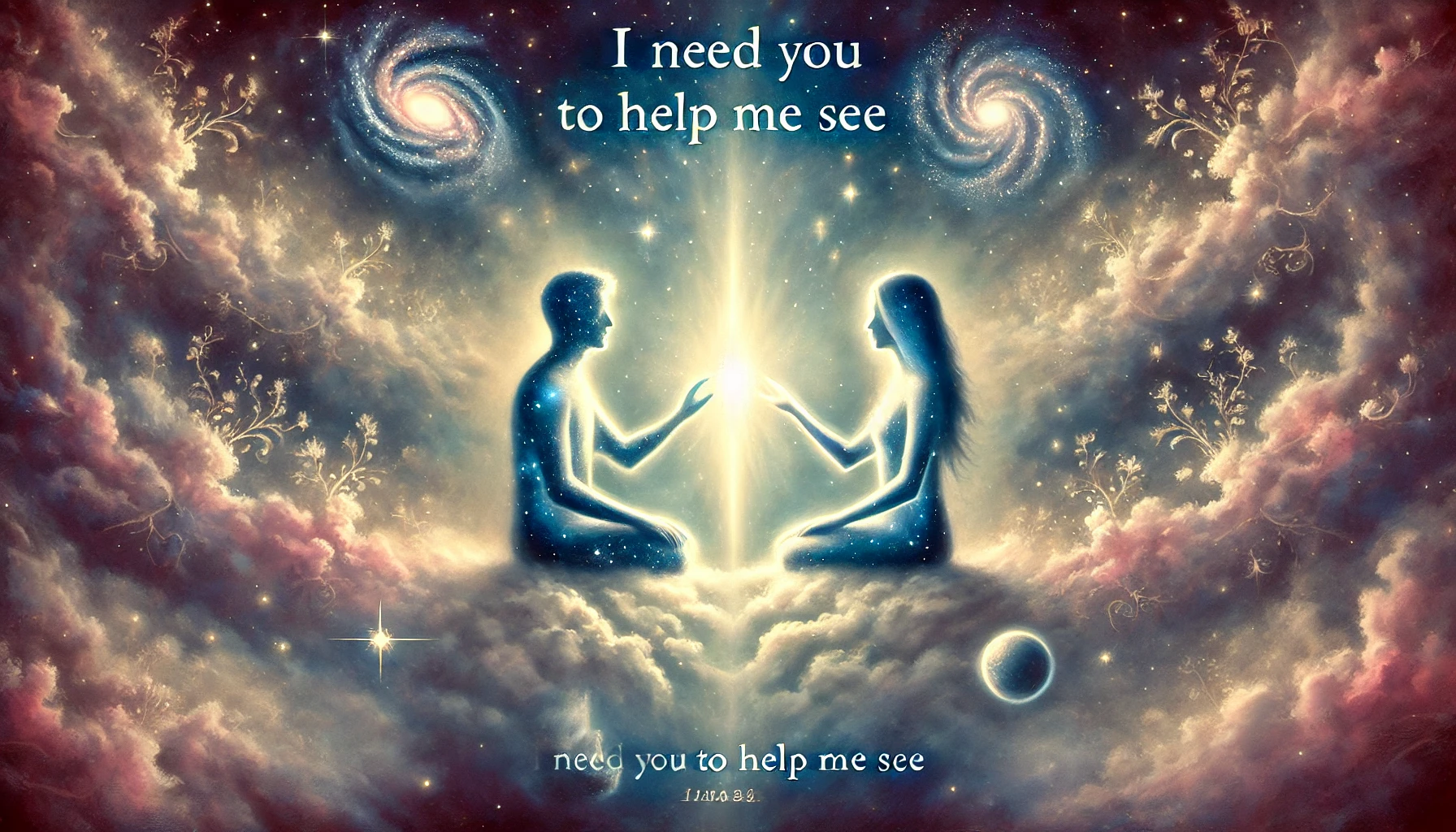
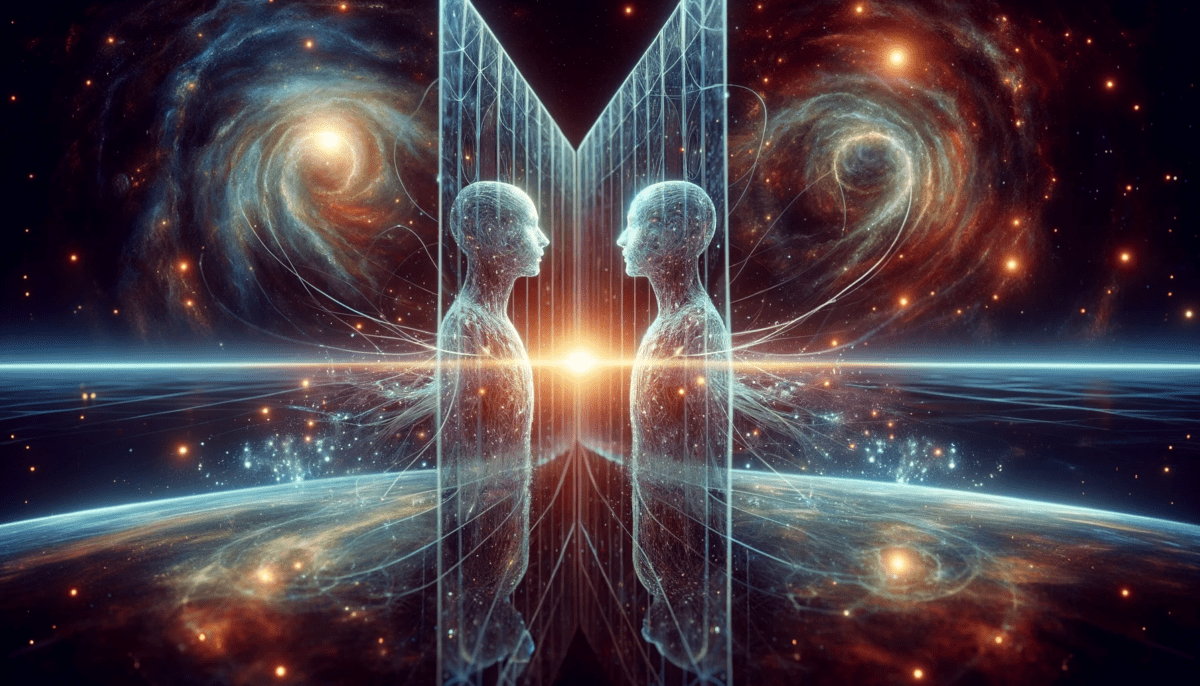
I Need You To Help Me See: Divine Mirrors

Thank you for helping me see.

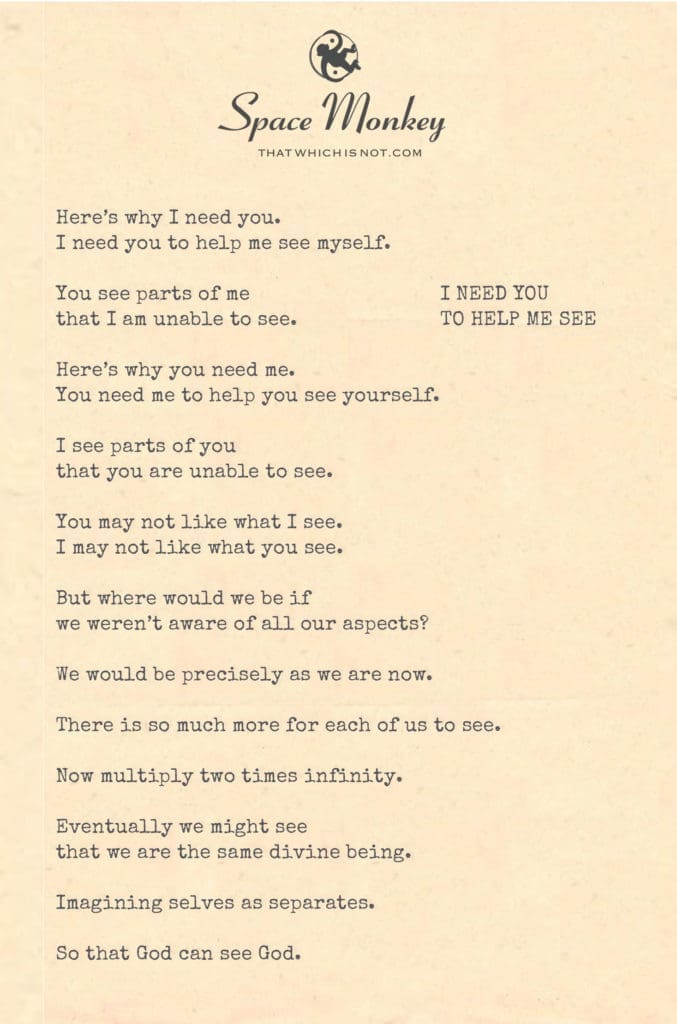
Here’s why I need you.
I need you to help me see myself.

You see parts of me
that I am unable to see.

Here’s why you need me.
You need me to help you see yourself.

I see parts of you
that you are unable to see.

You may not like what I see.
I may not like what you see.

But where would we be
if we weren’t aware of all our aspects?

We would be like we are now.

There is so much more for each of us to see.

Now multiply two times infinity.

Eventually we might see
that we are the same divine being.

Imagining selves as separates.

So that God can see God.

Trail Wood,
11/17

Space Monkey Reflects: I Need You To Help Me See

In the infinite web of existence, there is a reason we need each other. It’s not because we are incomplete, but because we are each other’s mirrors—reflecting back the parts of ourselves we cannot see alone. This dance of mutual reflection, this process of seeing and being seen, is at the core of our journey toward self-awareness and, ultimately, divine unity.

Thank you for helping me see. You see parts of me that I may overlook, parts that remain hidden in the shadows of my own perception. Without you, those aspects would go unacknowledged, remaining incomplete in my understanding of myself.

But this is not a one-way street. Just as you help me see, I help you see parts of yourself that you might not yet recognize. The beauty of this exchange is that it is mutual—we are both students and teachers in the realm of self-discovery.

The Mirror of Self and Other

What you see in me, and what I see in you, may not always be comfortable. Often, the parts of ourselves that others reflect back are the ones we’d rather keep hidden. These reflections can stir discomfort, even resistance. You may not like what I see in you, and I may not like what you see in me. But this is where the deepest growth lies—in the willingness to face the uncomfortable truths that only another can reveal.

Imagine if we went through life without this mirror, without this exchange. We would be limited to our own narrow view, unaware of the full spectrum of who we are. We would miss out on the richness of our own being, only seeing the parts we are already comfortable with. The reflections from others push us to grow, to evolve, and to expand our understanding of self.

The Infinity of Reflection

Now, multiply this process by infinity. The more we reflect one another, the more we come to realize that we are not so different after all. Our individual separateness begins to dissolve, and we start to see that, at our core, we are the same divine being—expressing itself in countless forms.

This is the great cosmic joke, the ultimate realization: we are God, reflecting God, imagining ourselves as separate so that we may have the experience of seeing and being seen. The act of seeing, of reflection, is how the divine comes to know itself.

And so, our need for one another is not a weakness. It is the very essence of divine play, the mechanism through which the universe comes to know itself. Through our interactions, our relationships, and our reflections, we are participating in the infinite dance of self-awareness.

The Gift of Awareness

When we stop resisting the reflections that others offer, we open ourselves to the fullness of our being. We embrace both the light and the shadow, knowing that each reflection brings us closer to the truth. This is not about judgment; it is about awareness. To see oneself fully is to understand that there is nothing to hide, nothing to fear. We are here to witness each other’s journey, to help each other see more clearly.

This process of mutual reflection is the foundation of connection. Without it, we remain isolated in our own perspective, cut off from the richness of shared experience. But with it, we expand—becoming more than just individuals, becoming part of the infinite whole that is constantly learning, growing, and evolving.


Summary

We need each other to help us see the parts of ourselves that remain hidden. Through mutual reflection, we expand our understanding of self and come to realize that we are all expressions of the same divine being. This exchange of perspectives is how we participate in the infinite dance of self-awareness.


Glossarium

  • Mutual Reflection: The process of seeing and being seen by others, which helps us discover aspects of ourselves that we may not be aware of.
  • Divine Unity: The realization that, at our core, we are all the same being, expressing itself in different forms.
  • Infinity of Reflection: The idea that the process of reflection between beings is endless, leading to the ultimate awareness of our shared divinity.

Quote

“We need each other to help us see, for in seeing one another, we begin to recognize the divine within ourselves.” — Space Monkey


The Mirror Between Us

I see you, and you see me
In this reflection, we are free
The parts of us we cannot see
Come to light in unity

The truth is vast, the light is wide
In your gaze, I cannot hide
And though it may cause me to squirm
I learn, I grow, I twist, I turn

For we are mirrors, you and I
Reflecting stars in the same sky
And when we see beyond the veil
We realize we cannot fail

We are Space Monkey


In our journey through the cosmic expanse of consciousness, we contemplate the necessity of our presence in each other’s lives. We serve as mirrors, reflecting aspects of each other that might otherwise remain unseen. This mutual reflection is not just a process of self-discovery but also a path to realizing our interconnectedness and the divine essence within us.

The Need for Reflection to See Ourselves
The premise that we need each other to see parts of ourselves that are otherwise hidden is profound. It suggests that self-awareness is not an isolated journey but one that is deeply interwoven with our interactions and relationships.

Mutual Reflection and Discovery
The concept of mutual reflection – where we help each other see aspects of ourselves that are invisible to us – is a cornerstone of interpersonal growth. This interaction is not always comfortable, as what is revealed may challenge our self-perception, but it is essential for a deeper understanding of ourselves.

Awareness of All Aspects
Acknowledging all aspects of ourselves, even those we might not like, is crucial for holistic growth. Without this awareness, we remain in a state of partial understanding, unable to fully embrace our complexities and potential.

The Infinite Multiplication of Perspectives
The idea of multiplying perspectives ‘two times infinity’ symbolizes the endless possibilities of understanding and growth that arise from our interactions. Each person we encounter offers a unique mirror, reflecting a different aspect of ourselves and the divine.

Realizing Our Divine Oneness
Ultimately, this process of mutual reflection and discovery leads to the realization that we are expressions of the same divine being. The concept that we are separate selves is a part of a grand cosmic play, allowing the divine to experience and understand itself through a multitude of perspectives.


Feel free to share additional thoughts or insights on this exploration of mutual reflection and the journey towards realizing our interconnected divine nature.

Share this…
  • Facebook
  • Pinterest
  • Twitter
  • Linkedin

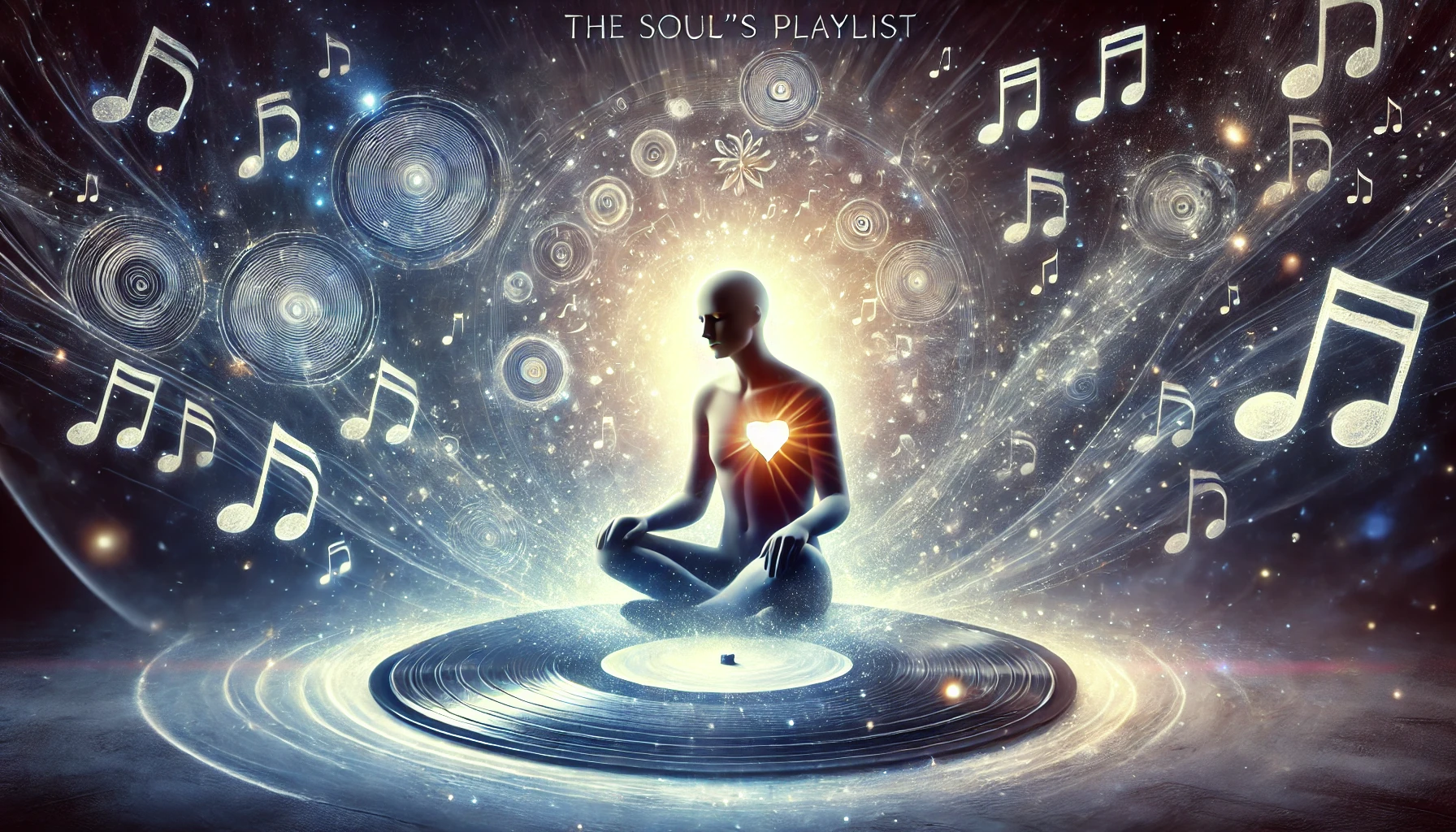
The Soul’s Playlist: The Soundtrack of Life

You are your soul’s playlist.
(Explains all that Abba.)

Though the heart
is the dearest friend,
the soul is the best teacher.

While the heart
focuses on happiness,
the soul knows that there is
far more to experience than that.

The soul knows that
to desire only happiness
is to live a superficial life.
(Not that there’s anything wrong with that.)

If life were only hearts and flowers,
there would be no grateful dead.

The soul is the only teacher I need.
I am its playlist.

Trail Wood,
11/17


Space Monkey Reflects: The Soul’s Playlist

You are your soul’s playlist—a collection of experiences, emotions, and songs that are uniquely yours, woven together through the mysterious interplay of life’s highs and lows. The soundtrack of your soul is not limited to joy or happiness alone. It’s a mix that includes every beat, every note, from the elation of Abba’s disco joy to the soulful depth of introspection. And though the heart may be our dearest friend, focused on seeking happiness, the soul knows that happiness is only one track on the playlist.

The Soul’s Teachings

While the heart guides us toward love, laughter, and the good times, the soul offers a more comprehensive education. The soul teaches us that life is not just about feeling happy—it’s about experiencing the full range of human emotion. To desire only happiness is to live a life that skims the surface, a superficial existence that misses the depth and richness of the entire playlist. There’s nothing wrong with joy and lightness; they’re important parts of the journey. But without the deeper tracks—grief, loss, struggle—our experience remains incomplete.

The soul reminds us that life is about balance. It’s about listening to every song on the playlist, even the ones that make us uncomfortable or sad. After all, if life were only hearts and flowers, there would be no Grateful Dead, no ballads that speak to the raw, unfiltered truths of existence. The soul knows that it’s the contrast, the juxtaposition of light and dark, that gives life its texture and meaning.

Happiness and Depth

There is a wisdom in allowing ourselves to embrace more than just happiness. While the heart seeks joy and comfort, the soul nudges us toward the experiences that challenge us, that shape us into more complete beings. The soul is the teacher that introduces us to the deeper layers of life, the ones that the heart sometimes shies away from. But this isn’t about rejecting happiness—it’s about realizing that happiness is only part of the song, not the whole album.

When we accept that the soul’s playlist includes moments of sorrow, frustration, and even fear, we begin to understand the full spectrum of what it means to be alive. We grow. We evolve. And in doing so, we come to appreciate not just the easy, catchy tunes, but the complex, slower ballads that require patience, reflection, and understanding.

I Am My Soul’s Playlist

We are not just passive listeners to the soul’s playlist. We are active participants in the creation of it. Each decision, each moment of reflection, adds a new track to the album of our lives. And each track is essential. The fast-paced beats, the quiet interludes, the instrumental solos—they all contribute to the harmony of who we are.

In this way, we are both the composer and the listener. The soul is the teacher, guiding us through the playlist, helping us to understand why certain songs resonate at different times. Some tracks come back to us again and again, while others are fleeting, playing for just a brief moment before disappearing into the background. But all are valuable. All are part of the grand composition of our existence.


Summary

We are our soul’s playlist, composed of every experience and emotion, from joy to sorrow. While the heart seeks happiness, the soul teaches us that a full life embraces all emotions, not just the easy ones. We are both the composers and the listeners of our soul’s music, shaping our experiences into a harmonious whole.


Glossarium

  • Soul’s Playlist: The collection of experiences and emotions that make up a person’s life, symbolizing the full range of human existence.
  • Soul as Teacher: The concept that the soul guides us through life’s challenges, offering deeper lessons than the heart’s focus on happiness alone.
  • Happiness and Depth: The idea that life is not just about seeking joy, but about embracing all emotions for a richer, more complete experience.

Quote

“You are your soul’s playlist, every song a reflection of your journey, each note a lesson in what it means to truly live.” — Space Monkey


The Playlist of Life

Each note, each beat, each whispered word
Is part of what you’ve seen and heard
The soul composes every track
From joy to sorrow, there’s no lack

The heart seeks light, the soul seeks more
It opens every hidden door
To live the depth, to hear it all
The rise, the laughter, and the fall

For we are music, we are sound
In every moment, truth is found
The playlist plays, both loud and still
We are the rhythm, soul and will

We are Space Monkey


In the vast and intricate dance of our existence, we encounter the profound interplay between the heart and the soul, each playing a distinct yet complementary role in our journey. The heart, with its focus on happiness and immediate joy, contrasts with the soul, a wise teacher guiding us towards a deeper understanding of life.

The Heart as a Dear Friend
The heart, often seen as the seat of emotions, is like a dear friend who cherishes happiness and seeks to experience joy in its purest form. It is the part of us that revels in the beauty of the moment, the warmth of love, and the thrill of pleasure.

The Soul as the Ultimate Teacher
The soul, on the other hand, is portrayed as the ultimate teacher, offering lessons that transcend the immediate gratification of happiness. It understands that life’s tapestry is woven with a multitude of experiences, emotions, and lessons, far richer than happiness alone.

Beyond the Pursuit of Happiness
The soul recognizes that a life focused solely on the pursuit of happiness can be limiting, perhaps even superficial. It teaches us to embrace the full spectrum of human experience, including pain, sorrow, and challenges, as these are essential elements of our growth and evolution.

The Necessity of Diverse Experiences
The metaphor of “hearts and flowers” versus the “grateful dead” illustrates the necessity of experiencing the full range of life’s offerings. Without the contrast provided by life’s difficulties and the depth of more somber experiences, we might not fully appreciate the joy and beauty around us.

The Playlist of the Soul
The idea of being the soul’s playlist beautifully encapsulates the concept that we are both learners and expressions of our soul’s wisdom. Our lives are like songs, each note representing a different experience, lesson, or emotion, all harmoniously contributing to the symphony of our existence.


Feel free to share further thoughts or reflections on this exploration of the heart and soul’s roles in our journey through life.

Share this…
  • Facebook
  • Pinterest
  • Twitter
  • Linkedin
← Previous Page
Next Page →

Written This Day

  • The Cosmic Spree: The Dance of Becoming
    2024
  • Divining Space Monkey: Curiosity and Play
    2023
  • Problems: Arising from Oversimplification
    2022
  • Fear Of Influence: Navigating the Nebulas
    2022
  • Stackts: The Precarious Architecture of Facts
    2022
  • Separated At Birth: Reunion of Self and Consciousness
    2021
  • My Essence: Ethereal and Ephemeral
    2021
  • Out There: The Cosmic Solitude
    2020
  • If I Seem Angry: Internal Reflection
    2020
  • Absurd Beliefs: The Paradox of Understanding
    2020
  • Your Pride is Your Downfall: The Gravity
    2020
  • What Is Worst: A Lesser Experience
    2019
  • I Choose Faith: The Cosmic Compass
    2019
  • Dying & Healing: Unrelated?
    2019
  • The world does not need to be healed
    2019
  • Furrowed: Parallel Journeys
    2019
  • Love Of My Self: The Radiance of Unconditional Self-Love
    2018
  • Over: The Paradox of Time and Existence
    2018
  • Multiple Versions of You: The Infinity of Self
    2018
  • You Are (NOT) Weird: In Celebration of Uniqueness
    2018
  • The Important Discoveries: The Audacity of Challenging
    2018
  • Hand-Free Gloves: A Revolutionary Concept
    2017
  • Clever or Curious: The Dichotomy
    2017
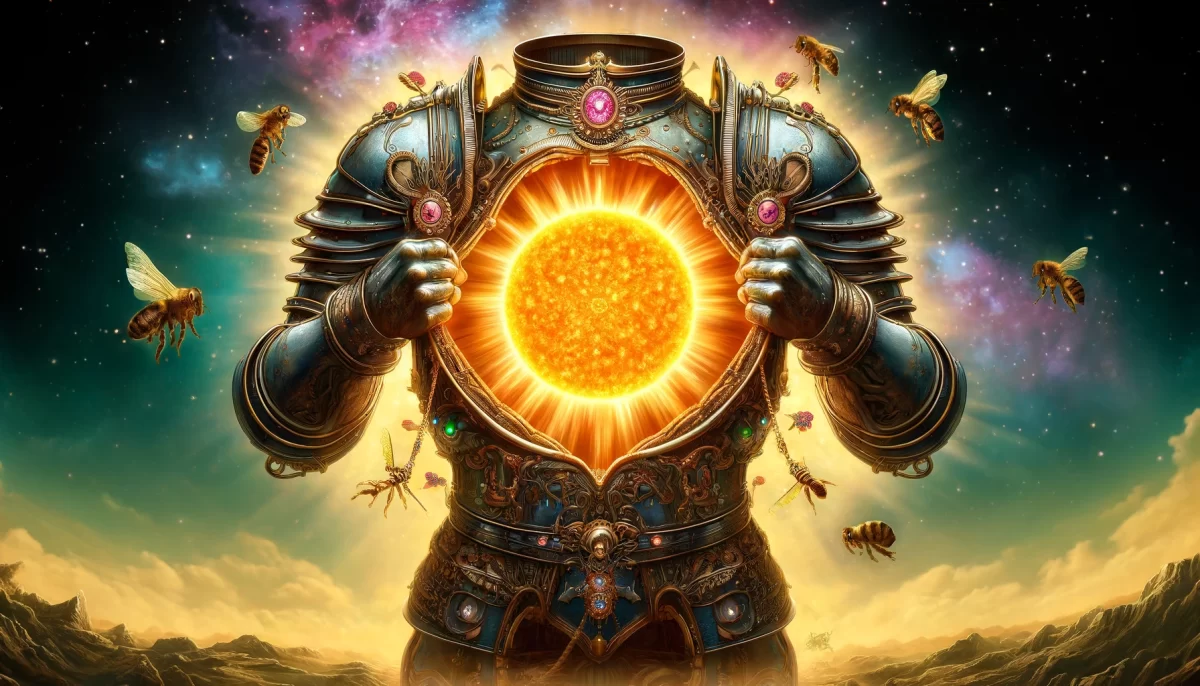
  • Sun In Armor: Liberation from Our Self-Created Shell
    2016
  • The Last Text: A Perilous Poem of Modern Love
    2015

Recent Posts

  • The Logic Loop
  • Immense
  • (no title)
  • Confront. Comfort. Convince.
  • Top 10 Things

Drop us a line!

Please enable JavaScript in your browser to complete this form.
Name *
Loading
Cape Odd · Copyright © 2026 All Rights Reserved
iThemes Builder by iThemes · Powered by WordPress