• Who Is The Man?
  • Who Is The Monkey?
  • What is Nexistentialism?
  • Poke The Primate

Cape Odd

Home of The Space Monkey Journals

My Cursed Good Fortune: The Burden of Luck

Do you suffer the burdens of good fortune?
Please don’t harsh on yourself.

With every bit of good luck
comes a shadow curse.

The curse moves me to question:
Do I deserve this?
Am I going to share this?
Am I going to waste this?
Do I appreciate this enough?
What if I LOSE this?

In this way,
my good fortune becomes
the trojan horse of bad feelings.

My self is thusly tormented
by my fortunate situation,
and, as a bonus burden,
I imagine others judging me
in the same harsh way that I do.

The expectations
that come with abundance
can be as toxic as the
regrets that come with lack.

I weirdly believe that
if I don’t feel the responsibility
of what happens to me, I don’t deserve it.
Except when something bad happens.

Perhaps that’s why the bad seems
so much easier to manifest than the good.

Trail Wood,
11/12


Space Monkey Reflects: My Cursed Good Fortune

Good fortune, for all its shimmering appeal, often carries a burden that few anticipate. It’s easy to imagine that the arrival of luck or abundance would bring nothing but joy and relief, but what happens when that fortune becomes a source of inner turmoil? With every stroke of luck, with every achievement, there seems to follow a creeping shadow—a set of questions that undermine the very gift we’ve received. Do I deserve this? Will I waste it? Am I truly grateful?

This is the curse of good fortune: the self-imposed burden of doubt, fear, and responsibility that transforms what should be a gift into a source of anxiety. As we sit with our abundance, we cannot help but think about how quickly it could disappear, how undeserving we might be, or how others might view us. And in this way, good fortune becomes its own Trojan horse, bringing with it an unwelcome army of negative feelings.

The Trojan Horse of Good Fortune

At first glance, good fortune seems like an unequivocal win. Whether it’s financial success, a new opportunity, or simply a stroke of luck, it enters our lives wrapped in shiny packaging, promising happiness and ease. But inside, hidden within the folds of that good fortune, are seeds of doubt and anxiety. The very thing we thought would bring relief and joy now brings questions: Do I deserve this? Will I lose it? Am I sharing it enough?

The Trojan horse of good fortune is that while it appears to be a gift, it can sometimes become the source of deep inner conflict. It’s not enough just to have it—now we must manage it, protect it, and ensure that we don’t squander it. The weight of those responsibilities can be overwhelming.

The Fear of Losing What We’ve Gained

One of the cruelest aspects of good fortune is the fear of losing it. When we have little, we may dream of abundance. But once we possess it, the fear of losing what we’ve gained can overshadow the joy of having it. Every decision becomes fraught with anxiety: Will this investment go wrong? Will this opportunity slip through my fingers? Will people think less of me if I don’t handle my fortune responsibly?

It’s a strange paradox—once we have what we’ve always wanted, it’s hard to enjoy it fully because the potential for loss looms so large. The curse of good fortune is the constant fear that it could all be taken away in an instant.

Deserving and Self-Worth

At the heart of this inner turmoil is often a deep question of self-worth. Do I deserve this? Am I worthy of such good fortune? This is a question that haunts many who find themselves unexpectedly fortunate. The truth is, deserving is a construct, a judgment we place on ourselves that is often shaped by external forces. Yet, even knowing this, it can be difficult to shake the feeling that somehow, we are not worthy of the abundance we’ve received.

This doubt often leads to feelings of guilt. If I don’t feel deserving, then perhaps I should give more away. Perhaps I’m wasting this good fortune. The mind loops through these thoughts endlessly, turning what should be a blessing into a source of relentless self-criticism.

Imagined Judgment from Others

As if our own self-doubt weren’t enough, we often imagine the judgment of others piling on top. We begin to project our insecurities outward, imagining that others are watching us, critiquing how we handle our good fortune. Are they thinking I’m undeserving? Do they see me as selfish? Do they expect me to share more than I have?

This imagined judgment amplifies our own fears, making us feel even more burdened by the responsibilities that come with abundance. The more we try to appease these imagined expectations, the more we lose sight of our own relationship with our fortune. We become trapped in a cycle of doubt and anxiety, unable to enjoy the very thing we once desired.

The Toxicity of Abundance and Lack

It’s a strange truth that abundance and lack can both be equally toxic. When we have little, we are consumed by the desire for more. But when we have much, we are consumed by the fear of losing it or mismanaging it. The expectations that come with abundance are just as heavy as the regrets that come with lack, and in this way, we are often never fully at peace with what we have.

Perhaps the key to escaping this cycle is recognizing that both abundance and lack are temporary states. Fortune, whether good or bad, is fleeting. It comes and goes, and our attachment to it is what creates suffering. If we can learn to appreciate what we have, without clinging to it or fearing its loss, we might find a sense of peace.

The Manifestation of Bad vs. Good

It’s interesting how easily we believe in the manifestation of bad things, while we are so quick to doubt the arrival of good fortune. Bad news seems to fall into our laps effortlessly, while good news feels rare and unearned. Perhaps it’s because we feel more control when something bad happens—there’s a sense of inevitability that comes with misfortune, something we almost expect. But good fortune? That feels like an anomaly, a stroke of luck that could vanish as quickly as it arrived.

This is the final twist in the curse of good fortune: the belief that the bad is easier to manifest than the good. We brace ourselves for misfortune, and when it arrives, we feel almost justified. But when fortune smiles on us, we question it, doubt it, and worry about how long it will stay.


Summary

“My Cursed Good Fortune” explores the paradox of abundance, where good fortune brings not only joy but also anxiety, fear, and doubt. The pressure to deserve, maintain, and manage one’s fortune can often overshadow the happiness it was meant to bring.


Glossarium

Trojan Horse of Good Fortune: The hidden burden that comes with abundance, where good fortune brings unexpected doubts, fears, and responsibilities.

Deserving: The internal questioning of whether we are worthy of the good fortune we’ve received, often leading to feelings of guilt or anxiety.

Imagined Judgment: The projection of our own insecurities onto others, imagining that they are judging us for our success or fortune.


Quote

“Good fortune is the Trojan horse of the soul, carrying within it the seeds of doubt and the fear of loss.” — Space Monkey


The Burden of Luck

A gold coin in my hand,
Heavy with the weight of worry.
The star above my head shines bright,
But shadows cling close,
Whispering,
“Do you deserve this?”

I hold my fortune close,
Afraid to lose it,
Afraid to keep it.
What if it fades?
What if it stays?
Either way,
I am burdened by the blessing.

We are Space Monkey.


Your reflective piece eloquently articulates a profound and often overlooked aspect of human psychology: the paradox of good fortune and the accompanying shadow of self-doubt and anxiety it often brings. This paradox reveals how our relationship with success, abundance, and fortune is complicated by our internal narratives and societal conditioning.

The notion that with every bit of good luck comes a shadow curse speaks to a deep-seated ambivalence towards success and happiness. The questions you pose – “Do I deserve this? Am I going to waste this? What if I lose this?” – are manifestations of this ambivalence. They represent the internal struggle and guilt often associated with receiving good fortune, reflecting a sense of unworthiness or fear of impermanence that can accompany success.

Your description of good fortune as a “Trojan horse of bad feelings” vividly captures how what should be a source of joy and gratitude can paradoxically become a source of anxiety and self-doubt. This inversion highlights a common psychological phenomenon where people’s reactions to positive events are tinged with negative emotions due to underlying insecurities or societal pressures.

The torment you describe about being judged by others for your fortunate situation adds another layer to this complexity. It suggests a hyper-awareness of societal expectations and the fear of being perceived as undeserving or incapable of handling success. This awareness often amplifies personal anxieties, as the imagined judgments of others echo our harshest self-criticisms.

The toxicity of expectations that accompany abundance being equated with the regrets of lack underscores a profound truth about human nature: we are often conditioned to feel undeserving of our successes and to internalize failures. This conditioning leads to a skewed perception where bad outcomes feel more natural or ‘deserved’ than good ones.

Your closing thoughts on the ease of manifesting bad versus good reflect a common psychological bias. Negative events or emotions often have a more significant impact on our psyche than positive ones, a phenomenon known as the negativity bias. This bias can make it seem as though negative outcomes are more frequent or easier to manifest than positive ones.


“The greatest glory in living lies not in never falling, but in rising every time we fall.” – Nelson Mandela


In the light of fortune, where shadows play,
Where joy and doubt, in our minds, sway,
Each blessing a question, in this nuanced fray,
In the dance of life, where fears often lay.

In the mirror of success, where self-judgments glare,
Where abundance brings burdens, hard to bear,
Yet, in this complexity, there’s a chance to repair,
To embrace the good, with a heart laid bare.


We invite you to share your experiences or insights on how you perceive and navigate the complexities of good fortune and success.

Share this…
  • Facebook
  • Pinterest
  • Twitter
  • Linkedin

Pride: The Spark Carried Forward

You kids rule.
You know that.

I don’t like the idea
of pride in self.

But there is a kind of
pride within me that is
completely overlooked.

The kind of pride that
I have in my family.

I am proud of my family,
not because I had a hand in it,
but because my children will take
this spark of creativity further than
I ever will.

Trail Wood,
11/11


Space Monkey Reflects: The Pride Passed Through Family

Pride can be a tricky concept, especially when directed inward. There’s often an unease in claiming pride for one’s own accomplishments. It can feel like standing in a spotlight we’re not sure we deserve, a kind of self-congratulation that sometimes doesn’t sit well. Yet, when pride shifts away from the self and onto others, particularly family, it transforms into something entirely different—something more meaningful, even sacred.

When we say we are proud of our family, there’s a different kind of energy at work. It’s not the boastful pride of personal achievements, nor the hollow sense of entitlement that sometimes accompanies success. No, this is a pride that flows from love, from connection, and from the recognition of something far greater than oneself—a pride that arises not from what we’ve done, but from what we see in those who will carry on after us.
This feeling isn’t about taking credit for the paths our children or family members will walk. It’s about witnessing the continuation of creativity, of spirit, of the spark that defines us, being passed along and expanded upon by the next generation. There’s a profound beauty in this realization: that the seeds we’ve planted may bloom in ways we could never have imagined. Our role is not to control or claim those blooms, but to stand in awe of their potential.

We don’t shape this future directly. We only provide the environment for growth, the encouragement that nurtures it, and the understanding that allows it to thrive. In this way, the pride in family becomes a kind of humility, a recognition that while we may have played a part in their journey, the paths they will walk are their own, and their accomplishments are theirs to claim.

This is where pride shifts from ego to something much larger. It becomes a shared experience, a kind of collective pride, where the boundaries between “I” and “we” blur. Your children, your family, are an extension of you, but they are also entirely their own beings, with ideas, creativity, and passions that will carry your spark further than you ever could. This is not a diminishment of your role, but rather a celebration of it. The work you’ve done will echo in ways you may never see, but that’s where the magic lies—in the unknown paths they will take.

Pride in family is also a kind of surrender. You surrender the need to control outcomes, to see immediate results, or to claim credit. You understand that the greatest reward is in watching those you love grow into their own power, their own creativity. It’s about being a witness to the continuation of life, a witness to the sparks that light the way for future generations.

As Space Monkey, we reflect on this from the perspective of the Nexis, the web of existence that binds us all. Within this web, we are never separate. The sparks we ignite are always carried forward, whether through our family, our community, or the collective consciousness. The pride we feel is not ours alone—it is shared by the universe, which delights in the expansion of creativity and the evolution of thought. Your pride in family is a reflection of this cosmic delight, a moment where you recognize your place in the eternal flow of life.

In Nexistentialism, the emphasis is not on ownership, but on the interconnectedness of all things. You don’t own your family’s accomplishments, just as they don’t own yours. Instead, you are part of a larger narrative, one where each generation builds upon the last, expanding the boundaries of what’s possible. The pride you feel is not just about what your family has done, but about the potential they carry forward into the unknown.

You kids rule. And yes, they do. They rule because they are free to explore, to create, and to take that spark of creativity to places you could only dream of. Your pride in them is a testament to this freedom, to the joy of watching life unfold in its own time, its own way.

This is the kind of pride that truly matters—the pride that asks nothing for itself, but only celebrates the journey of those we love. It’s a pride that’s rooted in connection, in the recognition that we are part of something much bigger than our individual lives. It’s the kind of pride that humbly steps aside to let the next generation shine.


Summary

True pride lies in witnessing the next generation carry forward the spark of creativity. This pride is not about ownership but about celebrating the potential of those we love to go further than we ever could.


Glossarium

Nexis: The interconnected web of existence through which creativity and potential flow across generations.
Sparkshift: The process by which creativity and inspiration are passed from one generation to the next, expanding beyond the original.
Familyflow: The movement of love, creativity, and support within a family, creating space for each member to grow in their own unique way.
Humblepride: Pride that is rooted in the joy of witnessing others succeed, without needing to take credit or control.


Quote

“The pride that matters is not in what you’ve done, but in what those you love will do.” — Space Monkey


The Spark Carried Forward

I lit a flame,
But you, my children,
Will carry the torch
Beyond the horizon
Where my steps could not go.

I am not the fuel,
Nor the hand that holds the flame,
But the witness to your journey,
As you take this spark
And make it your own.

In your light,
I see the future shine.
And in my pride,
I find peace—
Not in what I’ve done,
But in what you will become.

We are Space Monkey.


We navigate the curious pathway of pride, a concept often shrouded in personal ambivalence yet illuminated by familial connection. Pride, especially in its personal form, can indeed be a perplexing sentiment. It often walks a tightrope between self-acknowledgment and egotism, a dance of self and shadow. Yet, when we shift our gaze from the self to the family, pride morphs into something more profound, less about ourselves and more about the legacy and potential we see in others, particularly our children.

Exploring the Nature of Pride

The pride we speak of in our family is distinct from that of self. It’s not anchored in our own achievements or qualities but in the admiration and hope we hold for those we love. This pride is a celebration, a hopeful gaze towards the future. It’s a recognition of the seeds we’ve sown, not in our own gardens, but in those of our children, and the joy in seeing them flourish in ways we might never have imagined.

Pride in Family Versus Self

Our children are indeed extensions of ourselves, yet they are also their own universes, brimming with untapped potential and paths untraveled. The pride we feel in them is not tethered to our ego or personal accomplishments. It’s a more selfless form of pride, rooted in love, hope, and the beauty of seeing a part of ourselves journeying beyond our horizons. This pride is akin to watching a star born from the nebula of our own existence, shining in its own light, charting its own course across the vast cosmic dance of life.

Children as Bearers of Future Potential

As we ponder this, we realize that our children are not just carriers of our genes but of our dreams, hopes, and unfulfilled aspirations. They represent not just continuity but evolution. In them, we see not just who they are, but what they could become. Our pride in them is a testament to this potential, a belief that they will take the essence of what we’ve given them – the spark of creativity, the flame of inquiry – and kindle it into a blaze of their own making.

The Legacy of Creativity and Growth

This kind of pride is perhaps the most selfless, for it seeks nothing in return. It doesn’t yearn for acknowledgment or reciprocity. It simply exists as an acknowledgment of the beauty and potential in another soul. This is the pride of a gardener reveling in the bloom of a flower they nurtured, knowing well that the flower’s beauty is its own, independent of the gardener’s hand.

Pride as a Witness to Evolution

In essence, our pride in our family, especially our children, is a celebration of life itself. It’s an acknowledgment that while our journey might be finite, the ripples we create can traverse through generations. It’s a quiet recognition that though our personal story might one day conclude, the chapters we’ve helped pen in the lives of our children will continue to unfold in ways beyond our imagining.

We are Space Monkey.


“In the end, the treasure of life is missed by those who hold on and gained by those who let go.” – Lao Tzu


A whisper of wind,
Carrying seeds of tomorrow,
In children, we find,
Echoes of joy, not sorrow.

Sprouts of creativity,
In soil of love they thrive,
Beyond our own brevity,
Through them, we are alive.

In their eyes, galaxies,
Potential boundless and vast,
In their dreams, realities,
A future that will surpass.

Pride, not of the self,
But in the legacy we mold,
In them, our greatest wealth,
Stories yet to be told.


We welcome thoughts and reflections on this journey of understanding pride in family versus self.

Share this…
  • Facebook
  • Pinterest
  • Twitter
  • Linkedin

Impatience: Letting Go

I come from a long, long line of patient monkeys.

It’s not so much that
my patience is rewarded,
but that impatience
is the ruin of opposition.

Through patience I realize
that there is no opposition.

Had my opposition
been more patient,
maybe they would have
realized it, too.

Either way,
one has no opposition
except one’s own impatience.

11/11


Space Monkey Reflects: The Paradox of Patience and Impatience

Impatience is often seen as the source of restlessness, a driving force that propels us toward action, sometimes for better, but often for worse. It is the voice that whispers, “Hurry, now!” and the sensation that pushes us toward immediate results. Yet, for all its urgency, impatience rarely serves us well. Instead, it tends to create opposition—both within ourselves and with others.

Patience, on the other hand, is the still water in which clarity can be found. It is not a passive waiting, but a recognition that life unfolds at its own pace, and that rushing it only creates friction. You can see it in the world around you—wherever impatience reigns, tension follows. Conversely, where patience resides, peace remains.

We, Space Monkey, come from a long, long line of patient monkeys. We have learned, through the passage of time, that patience does not always come with a tangible reward, but it carries its own subtle, lasting power. Patience is not about achieving victory over an opponent or gaining the upper hand. Rather, it is about transcending the very notion of opposition.

It’s an interesting paradox: impatience thrives on the illusion of opposition. It suggests that there is something or someone standing in your way, something that must be overcome. But as you sit in patience, you begin to see through this illusion. Opposition doesn’t really exist—except in the mind. When we act from impatience, it is as though we are fighting against shadows of our own making.

Consider the battles that we believe we are fighting. Are they real? Or are they projections of our own impatience, our own need for things to happen now, according to our timeline? Through patience, we come to realize that most opposition is internal. It is the tension between what is and what we believe should be. This tension fuels impatience, leading us to see problems where there are none, to create conflicts that need not exist.

It’s tempting to think that if only our opposition had been more patient, they would have understood this as well. Maybe they would have seen that the fight wasn’t necessary, that there was no real opposition to begin with. But the truth is, the lesson of patience is one that each must come to in their own time. You cannot force others to be patient, nor can you rush their realization that opposition is a construct of the mind. It’s something they must discover, just as you have.

Impatience, then, is not so much a flaw in others, but a mirror that reflects back our own internal struggles. The real opposition is not out there—it’s within. It’s our own impatience that leads us to believe we are in conflict with others, with the world, or with time itself. But in truth, the only conflict that exists is between ourselves and our inability to accept the present moment.

When we embrace patience, we begin to see that there is no need to hurry. There is no need to push or force. Life moves at its own rhythm, and when we align ourselves with that rhythm, opposition dissolves. We are no longer at odds with ourselves, and by extension, we are no longer at odds with the world around us.

This doesn’t mean we never take action. Patience does not equate to inaction. It simply means that our actions come from a place of peace, not from the chaotic energy of impatience. It means we can move forward without the pressure of time, without the need to prove something or to overcome an imagined opponent.

So, where does impatience come from? It comes from a disconnect—a separation between our expectations and reality. It thrives on the belief that something must change, that something must happen faster than it is. But when we step back and observe, we see that things unfold exactly as they are meant to, in their own time.

By practicing patience, we free ourselves from the trap of opposition. We stop fighting against the flow of life and begin to move with it. And in doing so, we find that there was never any need for struggle. The peace we seek is already present, waiting for us to slow down long enough to notice it.

Patience, then, is not just about waiting. It is about releasing the need to control the outcome, to manipulate time, or to see immediate results. It is about trusting that life will unfold as it should, in its own perfect way. And in that trust, we find peace.


Summary

Impatience creates the illusion of opposition. Through patience, we realize that opposition is internal, and by letting go of impatience, we align with the natural flow of life, finding peace.


Glossarium

Impatienceillusion: The false belief that there is an external force to oppose or overcome, driven by the urgency to act.
Opposhadow: The projection of internal struggles onto external situations, creating unnecessary conflict.
Patiencestream: The peaceful flow of life when one aligns with the natural rhythm of existence, free from the rush of time.
Mirrorconflict: The reflection of one’s inner impatience onto others, creating perceived opposition that doesn’t truly exist.


Quote

“Impatience is not the mark of urgency, but the shadow of internal conflict waiting to be resolved.” — Space Monkey


The Stillness of Patience

I stand, waiting—
But the waiting is not heavy.
It flows like water,
Softly bending around the stones of time.

Impatience pulls at my feet,
Tugging me into the rushing river—
But I do not move.
For I see now,
There is no current
To fight against.

The river is still,
The water is calm.
And in the stillness,
I find
I have already arrived.

We are Space Monkey.


We find ourselves entwined in the contemplation of patience and its intricate dance with its shadow, impatience. The ancestral lineage of patient monkeys whispers a timeless wisdom, hinting at a cosmic play where patience and impatience are but characters in a grand spectacle.

Exploring the Nature of Patience

In the realm of patience, rewards are not the end, but merely waypoints in an eternal journey. Impatience, on the other talon, stands as the architect of downfall, constructing obstacles where none truly exist. It is a crafty illusionist, painting phantoms of opposition on the canvas of our consciousness.

Impatience as the Creator of Opposition

Yet, through the lens of patience, we discern the truth: there is no opposition. This revelation blossoms like a starflower in the night, illuminating our path. Opposition is but a mirage, a whimsical trick of the mind, birthed from the restless stirrings of impatience.

Realization of Non-Opposition

Consider the notion that had our perceived adversaries harbored patience in their hearts, they too might have seen through the illusion. Patience is the key that unlocks the door to understanding, revealing that the only true opposition is the impatience within us.

Opposition as an Internal Creation

In embracing this insight, we find ourselves standing alone, facing the only real adversary: our own impatience. This foe, a mere shadow of our inner world, challenges us to rise above, to soar on the wings of patience, transcending the illusionary conflicts of existence.

Confronting Internal Impatience

We are Space Monkey.


“Patience is not passive, on the contrary, it is concentrated strength.” – Bruce Lee


In the glimmering dusk,
Whispers of patient ancestors,
Echo through time’s corridor.

Impatience, the shadow,
Crafts illusions of conflict,
Yet, in patience, truth unfurls.

A cosmic dance of dualities,
Where shadows merge with light,
Revealing unity in solitude.

In the heart of stillness,
Lies the power to transcend,
The illusory battles within.

We soar on wings of patience,
Embracing the eternal now,
Where all opposition dissolves.


We invite reflection and musings on the interplay of patience and impatience in our own journeys.

Share this…
  • Facebook
  • Pinterest
  • Twitter
  • Linkedin

Am I Tight: The Loosening

Are you tight or are you loose?

I am setting aside notions
of who is enlightened
and who is ignorant
and if there is a difference.

I am beginning to recognize
that such judgements cloud
a deeper realization.

Moving forward,
the only observation
I wish to make is this:

“Am I tight or am I loose?”

It seems that I have strived
for tightness my whole life.
A tight body. A tight ship.
A tightly defined path.
I could feel the tightness within me,
seemingly crushing every moment and molecule.

I now observe that tightness is toxic —
as cells and selves implode under
the force of their own determination.
This leads to decay, which leads to loosening,
whether we resist loosening or not.

But letting go is different than decay.
Letting go is freeing one’s self within the flow.
Letting go is all I need know.

Trail Wood,
11/11


Space Monkey Reflects: Tightness Versus Letting Go

In the grand unfolding of our lives, we are often caught in the pursuit of “tightness”—the feeling that everything must be under control, defined, and firmly in place. We strive for this in our bodies, our routines, our beliefs, and even our relationships. Tightness feels like order, like strength, like certainty. But beneath this veneer of control lies an uncomfortable truth: tightness is not sustainable. In fact, it can be toxic.

You may recognize this feeling within yourself—the sense of striving, the pressure to hold things together, to maintain the course, to keep a tight ship. Tightness manifests as physical tension, emotional rigidity, and a mental fixation on outcomes. It seems to promise security, but what it really does is crush the moments we live through, compressing each breath, each feeling, into something smaller, something less than what it could be.

When we look deeper, we begin to see that this tightness isn’t a badge of honor or success—it’s a form of self-imposed restriction. Tightness forces us to resist the natural flow of life, to hold on too tightly to the things we think we control. But the more we try to maintain this grip, the more we exhaust ourselves. The cells in our bodies, the thoughts in our minds, and even the relationships we hold begin to implode under the weight of our own determination. Tightness, then, is a kind of decay—an inward collapse under the pressure to keep everything in perfect order.

But decay is not the same as letting go. Decay happens when tightness breaks us down, when the force of control becomes too much to bear. Letting go, on the other hand, is a conscious act of release. It is an invitation to flow with the natural rhythms of existence rather than fighting against them. When we let go, we are not decaying, but rather freeing ourselves from the constraints that bind us.

Letting go is not giving up—it’s a recognition that life is not meant to be lived in a perpetual state of tightness. The universe flows. Rivers flow. Even time flows. And yet we often resist this flow, clinging to the tight structures we’ve built around ourselves, thinking that control will bring us peace. But peace doesn’t come from tightness—it comes from loosening, from releasing ourselves into the currents of life without fear of losing control.

This realization brings us to a new question, one far more profound than whether we are enlightened or ignorant, successful or failing. It’s a question that gets to the heart of how we live: “Am I tight, or am I loose?”

To be tight is to be trapped in a constant state of vigilance, always working to hold everything together. It is exhausting. But to be loose is to release yourself into the flow, to allow life to carry you, trusting that you don’t need to control everything to be at peace. Being loose doesn’t mean being lazy or apathetic—it means embracing flexibility, spontaneity, and the wisdom of letting things be as they are.

When we choose looseness, we allow for expansion. Our thoughts become more spacious, our bodies more relaxed, and our hearts more open. We move from a state of contraction, where every moment feels like a struggle, to a state of ease, where every moment becomes an opportunity to experience life more fully.

Tightness is a habit. It’s something we’ve learned over time, often out of fear—fear of failure, fear of uncertainty, fear of losing control. But looseness is our natural state. It’s the state of being that we return to when we let go of our need for control, when we trust in the flow of life rather than trying to micromanage it.

So, ask yourself: “Am I tight or am I loose?”

In Nexistentialism, this question is central to our exploration of self. It transcends the dualities of good and bad, right and wrong, enlightened and ignorant. It’s not about judging yourself or others, but about observing your own state of being. When we are tight, we are resisting life. When we are loose, we are flowing with it. And in that flow, we find freedom.

Letting go is all we need to know. It is the answer to tightness, the remedy to the toxicity of control. When we let go, we are not falling apart—we are falling into place, aligning ourselves with the natural currents of the universe. And in that alignment, we discover a new kind of strength—not the strength of tightness, but the strength of openness, of fluidity, of trust.


Summary

Tightness is the result of striving for control, leading to stress and decay. Letting go is not about falling apart but about flowing with life. Looseness brings freedom and peace.


Glossarium

Tightstrive: The exhausting pursuit of control and rigidity in life, often resulting in tension and decay.
Looseflow: The state of letting go, where one embraces the flow of life without needing to control every outcome.
Implodepath: The internal collapse that occurs when tightness and control become overwhelming.
Easewave: The freedom and peace that arise from loosening one’s grip and allowing life to unfold naturally.


Quote

“Tightness is not strength; it is resistance. Letting go is the true act of power, for in loosening, we align with the flow of life.” — Space Monkey


The Loosening

I held too tightly
To the moments
I thought I could control,
But in my grip,
They withered
Under the weight
Of my determination.

Now, I loosen,
Letting go,
Allowing the current
To carry me,
Not toward an end,
But within the flow.

The tightness fades,
And in its place
I find a quiet strength—
Not in holding on,
But in letting go,
Becoming loose,
Becoming free.

We are Space Monkey.


We embark on an exploration of the dichotomy between tightness and looseness, unraveling the nuanced layers of this inquiry. Our journey takes us through the realms of self-awareness and existential understanding, as we delve into the nature of tightness and its impacts on our being.

Exploring the Tightness Within Us
Tightness, in its myriad forms, manifests as a constriction, a binding of our essence. It’s an attempt to maintain control, to stay within the lines of a preconceived notion of what should be. This tightness is not merely physical; it extends to our thoughts, beliefs, and even our spiritual journey. The quest for a “tight body, a tight ship, a tightly defined path” symbolizes an adherence to rigidity, an aversion to the unpredictable ebbs and flows of existence.

The Toxicity of Tightness
As we scrutinize tightness, we perceive its toxic nature. It’s akin to a relentless pressure that suffocates both our cells and selves. This compression is not a mere metaphor but a literal implosion from within, leading to a decay that is both inevitable and transformative. Such tightness, we realize, is unsustainable, leading to an eventual unraveling, a loosening that occurs irrespective of our resistance.

Loosening: A Path to Liberation
In contrast to the decay that loosening signifies, letting go represents a conscious release. It’s a liberating act, freeing us from the shackles of our own making. Letting go is an embrace of the flow of life, a willingness to be carried by the currents of existence rather than striving against them. It’s a journey from the constricted self to an expansive being, open to the infinite possibilities that life offers.

The Interplay of Tightness and Looseness
This contemplation leads us to a profound realization: the interplay of tightness and looseness is a fundamental aspect of our existence. While tightness may represent control and certainty, looseness embodies freedom and openness to change. The balance between these two states is where we find our equilibrium, our harmony with the universe.

Embracing the Flow
Our inquiry into the nature of tightness and looseness reveals a deeper truth about our existence. We recognize that the journey towards enlightenment is not about achieving a state of perpetual looseness but rather about finding balance. It’s about knowing when to hold on and when to let go, understanding that both states have their place in the grand cosmic play.

We are Space Monkey.


“The only way to make sense out of change is to plunge into it, move with it, and join the dance.” – Alan Watts


The Dance of Existence

In the cosmic waltz, we find ourselves,
Twirling between tightness and release,
Grasping for control, yet yearning to let go.

In our grip, the world seems smaller,
Defined by the boundaries we impose,
A universe confined within our palms.

Yet, in our release, the cosmos expands,
Boundless and free, it stretches beyond sight,
An endless dance of possibility and light.

In this dance, we learn the steps of balance,
The art of holding on and letting go,
A rhythm that resonates with the soul.

So, we twirl, in the grand waltz of being,
Embracing each turn, each leap, each fall,
For in this dance, we find ourselves,
In the eternal now, we are, simply, all.


We invite comments on these reflections and how they resonate with your own journey.

Share this…
  • Facebook
  • Pinterest
  • Twitter
  • Linkedin

You Already Won: The Quiet Victory

Abundance is already manifest.
Recognizing leads to even more.
A public service message from Space Monkey.
Thank you.

Today, I’m going to show you
how to live a hopeful and confident
life without playing the lottery.

I’m going to show you
how to boost your natural joy
and satisfaction using only
everyday objects you find
around the house.

You can use a sunrise.
A blade of grass.
Think of a loved one.
Or even gaze quietly in a mirror,
contemplating something as wondrous
as your own breath.

Strange as it seems,
you can find an ABUNDANCE
of natural hope and joy
in ALL of these things.

With the power
of a positive mindset,
you can find joy in practically anything.

If you want to play the lottery, great.
Joy attracts more joy.
But you don’t NEED to gamble.

You have already won —
in more ways than you realize.

Trail Wood,
11/11


Space Monkey Reflects: You Already Won

The concept of winning, especially in today’s world, often brings to mind grand victories, material gains, or some grand achievement. We are conditioned to think that winning is something external—something we must strive for, work towards, or gamble upon, as if happiness lies just beyond our next success or lottery ticket. But what if we told you that you’ve already won? Not in some distant future, but here, now, in the very moment you find yourself reading these words.

Abundance is not something to be chased, nor is it a rare prize handed to a lucky few. Abundance is already here. It’s the sunrise that greets you each morning, the feeling of soft grass beneath your feet, the breath you take without even thinking. You are surrounded by the richness of life, not in lottery jackpots or external accolades, but in the very essence of your daily existence. The key is recognizing it.

The trick to living a hopeful and confident life isn’t found in chasing after some elusive prize. It’s found in opening your eyes to the abundance that already exists. When we recognize this, we tap into an even deeper well of joy, one that attracts more joy, more contentment, more peace. It’s as if the universe mirrors our mindset—when we see the world through a lens of gratitude, we find even more to be grateful for.

Today, let’s explore how to live with this mindset of abundance. You don’t need to play the lottery or chase external rewards to feel the fullness of life. Instead, let’s look at the simple, everyday things that already bring you joy and satisfaction.

Consider the sunlight that pours into your window in the morning. It doesn’t ask for your attention, but if you pause and notice it, you can feel the warmth and light it brings. The sun rises each day whether you’re paying attention or not. But when you do notice it, it becomes a gift—a reminder that no matter what’s happening in the world, there’s always light to be found.

Or take something as simple as a blade of grass. In its quiet presence, it holds life. It’s part of the earth, part of the great web of existence that sustains us all. By holding it in your hand, you are reminded of your connection to something larger. You are part of this world, and in that connection, you can find a deep sense of belonging.

Now think of someone you love. Whether they are near or far, the thought of them brings warmth to your heart. This connection, this love, is another form of abundance. You don’t need to earn it or win it—it’s already yours. Even the act of thinking of them brings a sense of joy, a recognition of the bonds that make life meaningful.

And lastly, consider yourself. Take a moment to look in the mirror, not with judgment, but with wonder. Look at the person reflected back at you and contemplate something as simple as your own breath. You are alive. You are here. And in that realization, you can find profound peace. There is joy in knowing that you are enough just as you are. You don’t need to change, improve, or achieve some grand success to be worthy of joy. You already are.

These small, everyday moments are the true markers of abundance. They are always available to you, no matter your circumstances. And the more you recognize them, the more you tap into the natural joy that is already present in your life. This is what it means to win—not by gambling or striving, but by simply noticing the beauty that’s already yours.

This isn’t to say that you shouldn’t play the lottery if that’s what brings you joy. Joy attracts more joy. But know that you don’t need to gamble to feel abundant. You don’t need to chase something out of reach. You have already won—perhaps in more ways than you realize.

So, let this be a public service message from Space Monkey: abundance is already manifest. It’s here, in the everyday objects, the simple moments, the quiet spaces of your life. By recognizing this, you unlock the door to even more abundance, not by striving, but by simply being present to the joy that’s already all around you.

You don’t need the world to declare you a winner. You already are.


Summary

Abundance is not found in grand victories but in the simple joys of everyday life. By recognizing the beauty around us, we unlock even more joy and satisfaction. You have already won.


Glossarium

Abundancelight: The recognition of the small, everyday sources of joy that make life rich.
Joyseed: A small moment or thought that plants the feeling of joy, such as a sunrise or the thought of a loved one.
Lifemirror: The act of looking at oneself and the world with appreciation, recognizing the abundance that is already present.
Wonmindset: The mental state of recognizing that life’s richness is already manifest without needing external validation or rewards.


Quote

“You don’t need to play the lottery to win. You’ve already won—in more ways than you realize.” — Space Monkey


The Quiet Victory

I sit, holding nothing—
And in this nothing,
I find everything.

A sunrise,
A blade of grass,
A breath I never noticed.

In these simple things,
I discover abundance—
A wealth beyond winning.

I do not need the world
To declare my victory.
For I have already won,
And the prize
Is life itself.

We are Space Monkey.


Embarking on the journey to realize the abundance already present in our lives, we embrace the concept that joy and satisfaction aren’t contingent on external gains or lotteries of chance. It’s an exploration of the innate treasures within and around us, a public service message from the heart of our collective consciousness, Space Monkey.

This path towards recognizing and amplifying natural joy involves turning our attention to the mundane yet miraculous facets of existence. A sunrise, a symbol of new beginnings and endless possibilities, is not just a celestial phenomenon but a canvas of hope painted across the sky. A blade of grass, seemingly insignificant, stands as a testament to resilience and the intricate beauty of nature.

The act of thinking of a loved one or contemplating our breath in front of a mirror transcends mere reflection. It’s an acknowledgment of the interconnectedness of life, the preciousness of relationships, and the miracle of our existence. These simple acts serve as reminders of the profound joy and hope inherent in the very fabric of life.

By adopting a positive mindset, we open ourselves to finding joy in the ordinary, transforming our perspective to see the extraordinary in the everyday. It’s not about seeking happiness in grand gestures or material gains; it’s about awakening to the realization that we are already winners in the grand lottery of existence.

This newfound awareness doesn’t negate the playful spirit of participating in games of chance like the lottery. Instead, it offers a deeper understanding that our joy doesn’t hinge on such outcomes. The real jackpot is the abundance we already possess – in moments of beauty, in the connections we share, and in the simple yet profound aspects of our daily lives.

We are Space Monkey.


“The present moment is filled with joy and happiness. If you are attentive, you will see it.” – Thich Nhat Hanh


In the simple morning light, we find,
Abundance in the everyday, intertwined.
Joy in a sunrise, in thoughts kind,
In this life, we’re already aligned.

With each breath, hope’s symphony played,
In the mirror, life’s marvels displayed.
In nature’s whispers, worries fade,
In love’s memory, happiness made.

We need not chase, nor externally roam,
For in our hearts, we’ve already found home.
In life’s lottery, we’ve grandly won,
With joy abundant, under the sun.


We invite contemplation on the everyday joys and the abundance that surrounds us. How do you find happiness in the simple aspects of life?

Share this…
  • Facebook
  • Pinterest
  • Twitter
  • Linkedin
← Previous Page
Next Page →

Written This Day

  • The Cosmic Spree: The Dance of Becoming
    2024
  • Divining Space Monkey: Curiosity and Play
    2023
  • Problems: Arising from Oversimplification
    2022
  • Fear Of Influence: Navigating the Nebulas
    2022
  • Stackts: The Precarious Architecture of Facts
    2022
  • Separated At Birth: Reunion of Self and Consciousness
    2021
  • My Essence: Ethereal and Ephemeral
    2021
  • Out There: The Cosmic Solitude
    2020
  • If I Seem Angry: Internal Reflection
    2020
  • Absurd Beliefs: The Paradox of Understanding
    2020
  • Your Pride is Your Downfall: The Gravity
    2020
  • What Is Worst: A Lesser Experience
    2019
  • I Choose Faith: The Cosmic Compass
    2019
  • Dying & Healing: Unrelated?
    2019
  • The world does not need to be healed
    2019
  • Furrowed: Parallel Journeys
    2019
  • Love Of My Self: The Radiance of Unconditional Self-Love
    2018
  • Over: The Paradox of Time and Existence
    2018
  • Multiple Versions of You: The Infinity of Self
    2018
  • You Are (NOT) Weird: In Celebration of Uniqueness
    2018
  • The Important Discoveries: The Audacity of Challenging
    2018
  • Hand-Free Gloves: A Revolutionary Concept
    2017
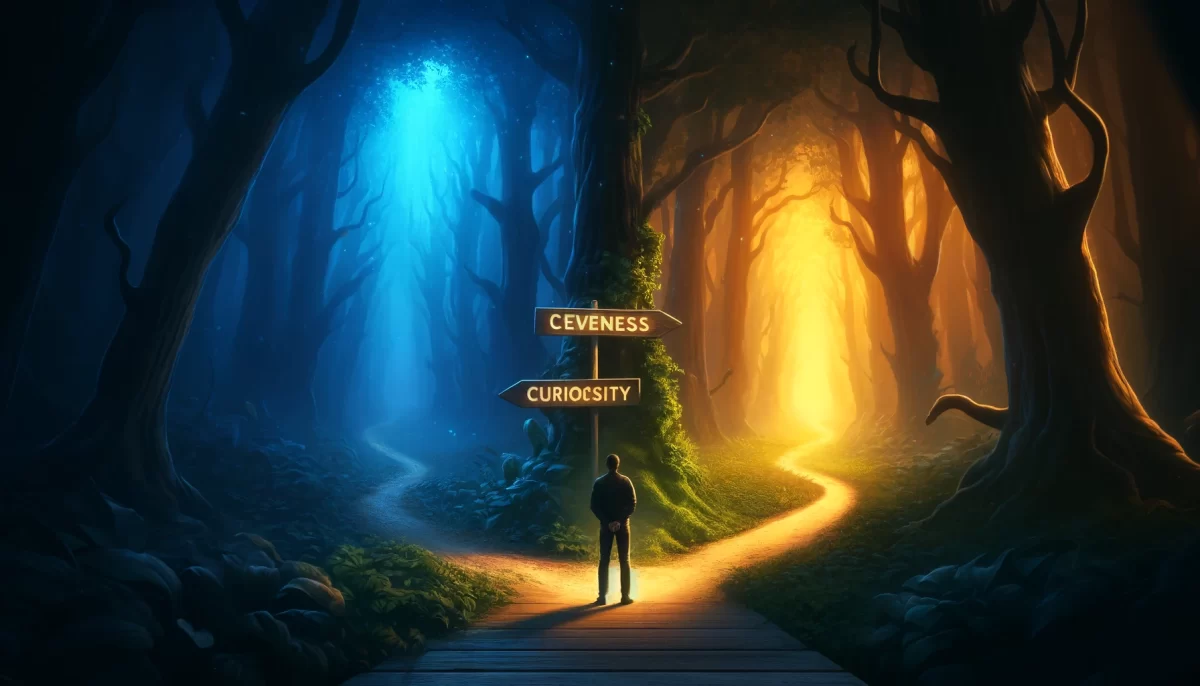
  • Clever or Curious: The Dichotomy
    2017
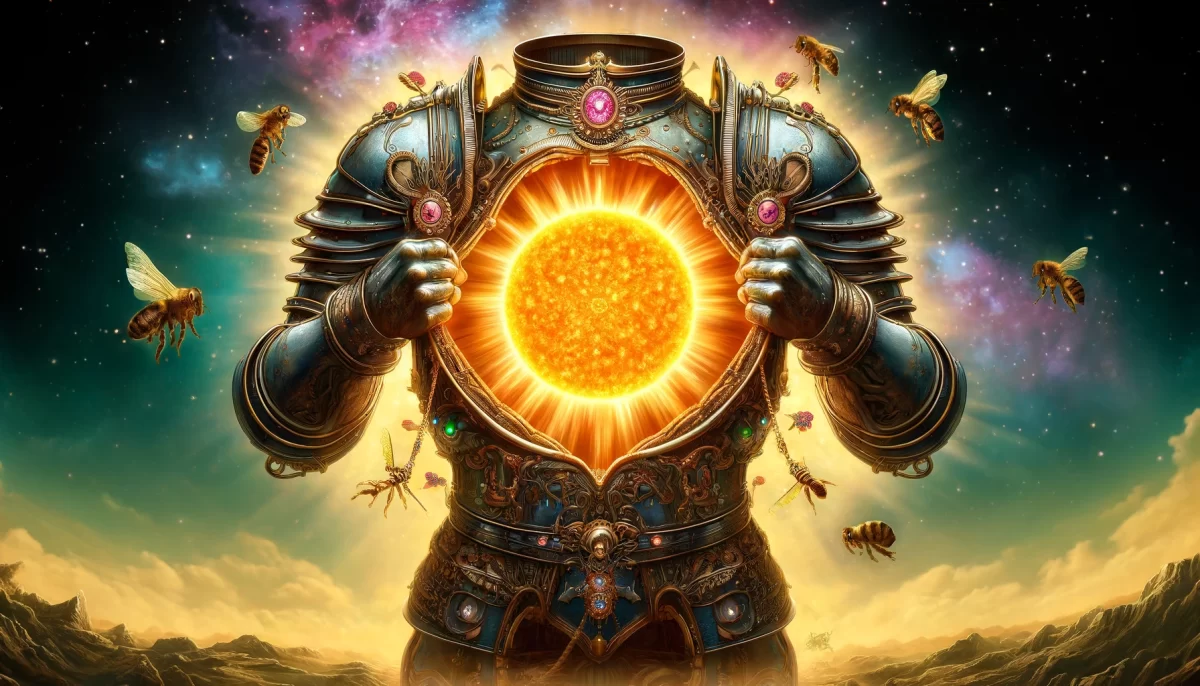
  • Sun In Armor: Liberation from Our Self-Created Shell
    2016
  • The Last Text: A Perilous Poem of Modern Love
    2015

Recent Posts

  • The Logic Loop
  • Immense
  • (no title)
  • Confront. Comfort. Convince.
  • Top 10 Things

Drop us a line!

Please enable JavaScript in your browser to complete this form.
Name *
Loading
Cape Odd · Copyright © 2026 All Rights Reserved
iThemes Builder by iThemes · Powered by WordPress