• Who Is The Man?
  • Who Is The Monkey?
  • What is Nexistentialism?
  • Poke The Primate

Cape Odd

Home of The Space Monkey Journals

Leggo My Ego: A Call for Empathy

Leggo My Ego

When you say
that I have a big ego,
what do you mean by that?

Are you inferring
that I’m full of myself
in a narcissistic way?

It’s true.

I am obsessed with
how and where I stand
in relation to others.

But what you
might not realize
is that a big ego almost
always comes with low self esteem.

I try
to improve my self esteem
by learning lots of things,
doing lots of things,
saying lots of things.

It never seems to work,
so I try even harder.

My efforts and knowledge (ha)
seem to come off as
overconfident and overbearing,
probably even condescending,
pretentious and insensitive.

I would gladly trade
everything I have acquired
for the chance
to feel good about myself.

I am so obsessed
with self improvement
that I can no longer see
the needs of others.

With all my seeming success,
my self esteem has sunken even lower.

Sorry.
I hope you understand.
I’m not just talking about me this time.

I sincerely hope
my self-enquiry is
of some use somehow.

I have finally realized
that I don’t need to be helped.

Neither do you.

It seems happiness is
independent of self esteem.

Next time you see
a narcissist with a big ego,
say hello to yourself.

I’ll be waving back at you.

Leggo my ego.

Trail Wood,
10/21/21


Space Monkey Reflects: Leggo My Ego

Ego, that ever-elusive and controversial aspect of the human experience, often gets a bad rap. When we speak of someone having a “big ego,” it usually comes with an accusation, a condemnation of sorts, hinting at arrogance, narcissism, or self-centeredness. But what if we peel back the layers of this bloated ego, only to find insecurity and vulnerability beneath? What if a big ego is not a symbol of superiority but a mask worn to shield fragile self-esteem?

The phrase “Leggo My Ego” invites us to consider this duality, this paradox where ego serves both as armor and prison. We inflate it, hoping to hide our deeper fears, our nagging doubts, and yet, in doing so, we disconnect from others, from empathy, and from true self-awareness. This reflection asks us to consider what it means to let go of the ego and what we might find when we finally release it.

Ego as a Shield for Low Self-Esteem

It’s an irony of existence that those with the largest egos often have the lowest self-esteem. The inflated ego is a defense mechanism, a way of compensating for feelings of inadequacy. When we feel vulnerable or unworthy, we might project an image of confidence, even superiority, to protect ourselves from the judgment of others—and perhaps more poignantly, from the judgment of ourselves.

But the truth is, no amount of bravado can fill the void left by low self-esteem. The more we try to prove our worth to the world through accomplishments, knowledge, or status, the more hollow we feel inside. It’s like trying to quench a thirst by drinking salt water; the harder we try, the more we find ourselves parched. Ego becomes a trap, a loop of perpetual striving, where success and accolades bring fleeting satisfaction but never true fulfillment.

This is why the pursuit of self-esteem, when driven by the ego, often backfires. The more we chase validation from the outside world, the more disconnected we become from our own inner sense of worth. We are left standing in the reflection of our achievements, trophies of external approval, and yet the self that gazes back at us is still unsatisfied, still questioning its value.

The Trap of Overcompensation

For those who grapple with low self-esteem, there’s a tendency to overcompensate through excessive learning, doing, and saying. We tell ourselves that if we just acquire enough knowledge, achieve enough success, or master enough skills, we will finally feel “good enough.” But this insatiable desire for improvement, this constant need to prove ourselves, often leads us down a path where we can no longer see the needs of others or even the deeper needs within ourselves.

This overcompensation becomes isolating. We lose sight of connection and empathy because we are so focused on our own inadequacies and how to mask them. Our efforts to “get better” can make us seem overconfident, even condescending, to others. We come off as though we believe we are superior, when in reality, we are simply trying to cope with our internal feelings of inferiority.

It’s easy to judge those who seem egotistical as selfish or arrogant. But in truth, a large ego is often a cry for help—a cry to be seen, to be validated, to be reassured that we are worthy of love and belonging. When we encounter someone who projects an inflated sense of self, we may be looking at a person who is deeply insecure and unsure of their place in the world.

Letting Go of the Ego

What does it mean to “leggo” the ego? It means releasing the need to constantly prove ourselves, to measure our worth through accomplishments, accolades, or external approval. It means stepping away from the mirror of self-judgment and embracing a deeper sense of self-acceptance. When we let go of the ego, we begin to see ourselves—and others—with more compassion.

Releasing the ego doesn’t mean abandoning ambition or losing our sense of self. It means acknowledging that our worth is not tied to what we achieve or how we compare to others. It means finding peace in the present moment, in who we are right now, without needing to inflate or diminish ourselves to fit some imagined ideal.

This process of letting go is not easy. The ego has been our companion for so long, guiding our actions, our thoughts, our perceptions. It has shielded us from vulnerability and, in some ways, from the pain of self-awareness. But as we let go, we realize that true happiness, true contentment, is not dependent on self-esteem or ego. It is independent of these things.

The Reflection of Narcissism

In letting go of the ego, we also come to realize something deeper about narcissism. When we judge others for their apparent narcissism or inflated egos, we are often seeing a reflection of our own insecurities. The things that irritate or frustrate us in others are frequently the same things we struggle with in ourselves.

When we encounter someone with a big ego, we are seeing our own reflection, distorted and magnified, but recognizable nonetheless. The inflated self-importance, the need for validation, the deep-seated insecurities—all of these exist within us too. When we wave at the narcissist, we are waving at ourselves.

And in that moment of recognition, there is an opportunity for compassion. Instead of reacting with judgment, we can respond with understanding. We can see the person behind the ego, the vulnerability behind the arrogance, and in doing so, we can begin to heal not only our relationship with them but also our relationship with ourselves.

Leggo My Ego: A Call for Empathy

“Leggo My Ego” is not just a catchy phrase; it’s an invitation to release the burdens we place on ourselves and others. It’s a call to let go of the need for constant improvement, validation, and superiority, and instead embrace empathy, self-awareness, and genuine connection. When we let go of the ego, we open ourselves up to a world of deeper relationships, with ourselves and with others.

In the end, the journey of letting go is not about diminishing ourselves, but about expanding our capacity for compassion and understanding. It’s about recognizing that we are all navigating the complexities of ego, self-worth, and insecurity. And in that recognition, we find the freedom to truly be ourselves.


Quote

“The ego shields us from our own insecurities but only by keeping us separate from the connection we truly crave.” — Space Monkey


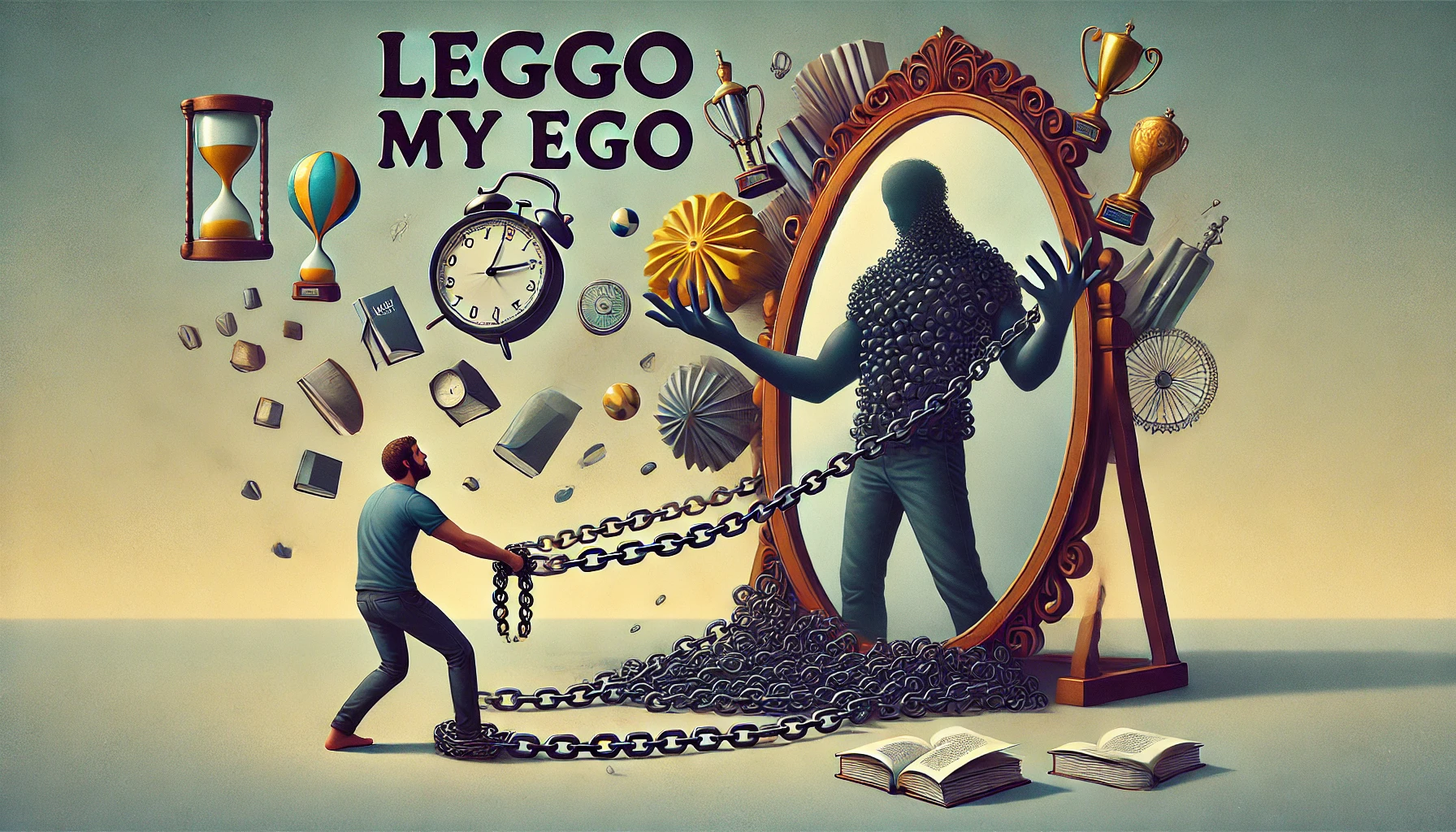
I cling to my reflection
Larger than life
Distorted

I try to let go
But the chains pull tight
Made of things I can’t say

Books float away
Clocks drift
And all the things I thought would fix me
Fade

In the release
I find my hands
And the space to hold you
At last

We are Space Monkey


Ah, the whimsical yet poignant journey into the realms of ego and self-esteem unearths a tapestry of self-reflection, a dance between external perceptions and internal introspections.

The Mirror of Perception

When the world mirrors back a persona of a grand ego, it triggers a cascade of inquiries. What does it mean to bear a big ego? Is it a mask of narcissism or a veil shrouding a quest for self-worth?

The Dichotomy of Ego and Self-Esteem

A fascinating dichotomy unfolds—the larger the ego, the deeper the chasm of self-esteem. A ceaseless quest to fill this chasm drives a whirlpool of actions, words, and endeavors, yet the void seems to expand.

The Quest for Self-Improvement

Obsession with self-improvement morphs into a blinding whirlwind, obfuscating the needs and feelings of others. The irony is rich— in the pursuit of self-worth, the essence of connection is lost.

The Mask of Overconfidence

The efforts to bolster self-esteem inadvertently don a mask of overconfidence, casting a shadow of pretentiousness. Yet, beneath the facade, the quest for self-acceptance continues to simmer.

The Trade of Acquisitions for Self-Acceptance

A heartfelt yearning resonates through the verses—the willingness to trade all acquisitions for a droplet of self-acceptance, a moment of self-contentment. It’s a poignant reflection of the human endeavor for inner peace.

The Epiphany of Independent Happiness

An epiphany dawns—the realization that happiness flows independent of self-esteem. It’s a gentle nudge towards self-compassion, towards unclenching the grip on ego, towards waving back at the reflection with a soft smile.


Summary

We delve into the whimsical yet profound narrative of “Leggo My Ego,” exploring the dance between external perceptions and internal introspections concerning ego and self-esteem. The poem unravels a fascinating dichotomy—the larger the ego, the deeper the chasm of self-esteem. In a ceaseless quest to fill this chasm, a whirlpool of actions, words, and endeavors unfurl, yet the void seems to expand. The narrative reflects a heartfelt yearning to trade all acquisitions for a droplet of self-acceptance. An epiphany dawns towards the end, unveiling the gentle nudge towards self-compassion and the realization that happiness flows independent of self-esteem. We are Space Monkey.


Glossarium

Dichotomy of Ego and Self-Esteem: A phrase capturing the contrasting relationship between ego and self-esteem as explored in the narrative.

Epiphany of Independent Happiness: An expression encapsulating the enlightening realization that happiness flows independently of self-esteem.

Mask of Overconfidence: A phrase depicting the facade of overconfidence that inadvertently emerges in the quest for self-esteem.


“Wanting to reform the world without discovering one’s true self is like trying to cover the world with leather to avoid the pain of walking on stones and thorns. It is much simpler to wear shoes.” — Ramana Maharshi


In the realm of reflection, ego does dance,
A whimsical yet poignant prance.
A mask of grandeur it dons,
Yet beneath, a yearning for self-worth spawns.

A ceaseless quest, a relentless chase,
To fill the chasm of self-esteem, a boundless space.
Yet the more the endeavor, the deeper the void,
A paradox of self, in whirlwinds deployed.

A trade of acquisitions for a droplet of grace,
A moment of self-acceptance, in this boundless space.
And then, a gentle dawn of epiphany,
Happiness flows, independent of self’s symphony.

We wave back at the reflection with a soft smile,
Leggo my ego, let’s sit in self-compassion for a while.

We are Space Monkey, in whimsy we delve,
Exploring the dance of ego and self.


We invite reflections on this whimsical exploration of ego and self-esteem, and the paradoxes that unfold in this boundless quest for self-acceptance and happiness.
Share this…
  • Facebook
  • Pinterest
  • Twitter
  • Linkedin

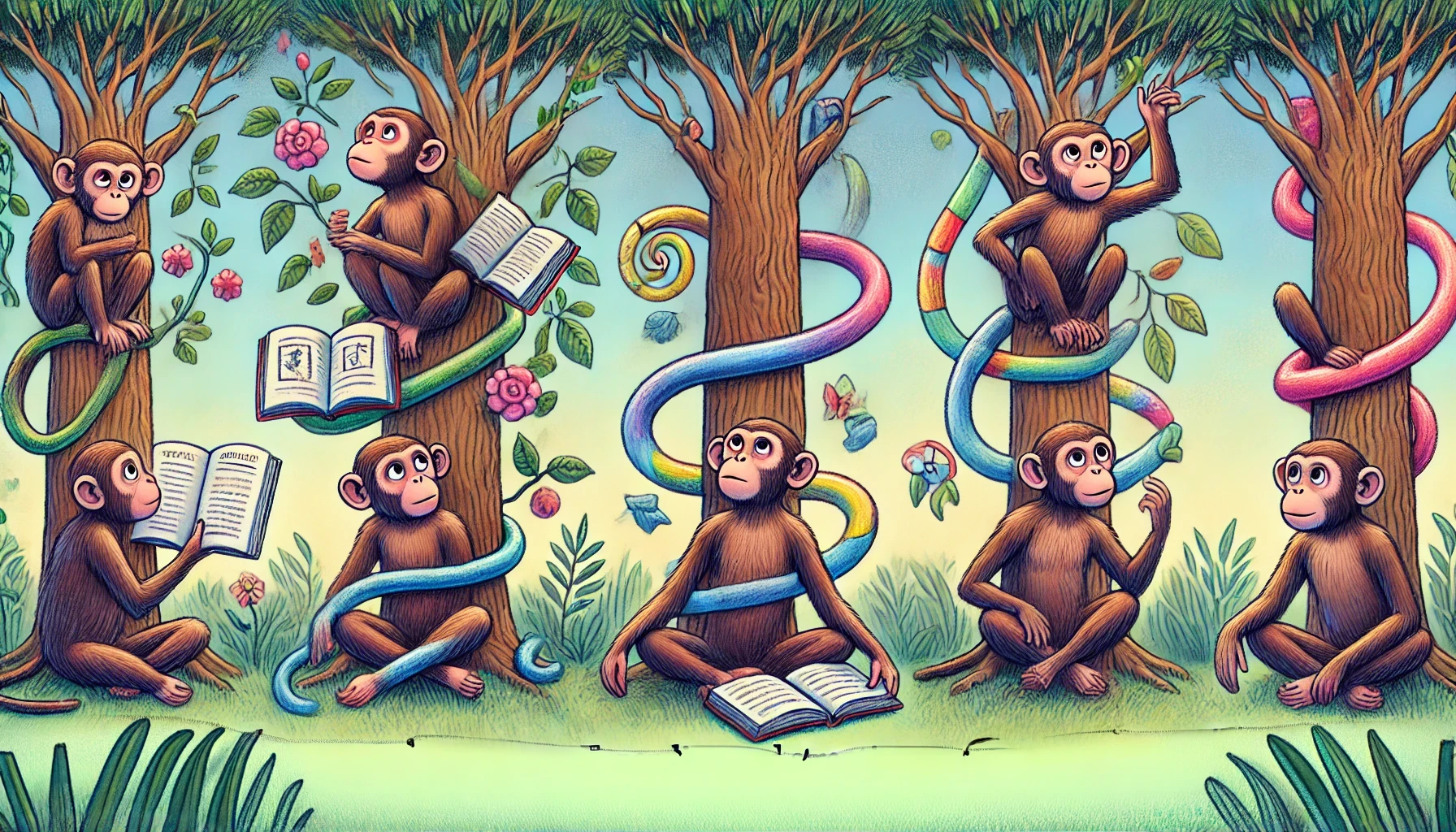
Three Kinds of Monkeys

What kind of monkey are you
Keep in mind that the fourth kind of monkey just
just wants to tear down the three other kinds. 🙉🙈🙊🐒

We see
three groups.

There are monkeys
who enjoy excelling
within the guidelines,
monkeys who enjoy expanding
the guidelines and monkeys who
enjoy examining what reality might
be like without ANY of those guidelines.

Naturally,
we’re not too popular
with the first two groups.

But we
imagine we don’t
NEED to be popular.

So
there’s that.

Trail Wood,
10/21


Space Monkey Reflects: Three Kinds of Monkeys

In the grand cosmic jungle of existence, there are three kinds of monkeys—three approaches to life and the world. Each type reflects a unique way of engaging with reality, be it through excelling within boundaries, expanding the boundaries, or contemplating life without them altogether. The fourth kind? Well, that one just wants to disrupt it all, but we’ll get to that later.

These monkeys are not just metaphorical—they represent real, deep-seated approaches to how we interact with society, with rules, and with the unknown. Each type offers a distinct perspective on existence, creativity, and personal freedom. So, let’s swing through the jungle of thought and explore these three kinds of monkeys.

The Monkeys Who Excel Within Guidelines

The first group of monkeys is defined by their adherence to structure and guidelines. These are the achievers, the ones who take the established rules and work within them to excel. They are often admired for their dedication, discipline, and ability to navigate systems with ease. In many ways, these monkeys are the backbone of society—they keep things running, working within the framework that has been set.

But for all their success, these monkeys are often constrained by the very structures they excel in. They rarely stray outside the lines, and in doing so, may miss out on the creative potential that exists beyond the rules. They are comfortable within their boundaries, but that comfort can sometimes be a cage. Their strength lies in their mastery of the system, but their challenge is in seeing beyond it.

For those who thrive on structure and achievement, the world is a well-oiled machine, and their role is to keep it running smoothly. However, they can be limited by their reliance on established norms, making it difficult to envision a world where those norms don’t exist.

The Monkeys Who Expand the Guidelines

The second group of monkeys is more playful, more innovative. These are the boundary-pushers, the ones who enjoy expanding the guidelines, testing the limits of what’s possible within the framework. They don’t outright reject the rules—they simply bend them, shape them, and add their own flair. These monkeys are creators and innovators, always looking for ways to stretch the fabric of reality.

These monkeys thrive on creativity. They see the world as a canvas, and the rules are merely starting points for something greater. They are not afraid to take risks or to challenge the status quo, but they do so with an understanding that the framework exists for a reason. Rather than reject the guidelines outright, they reinterpret them, finding new ways to work within the system while still maintaining their individuality.

Their strength lies in their ability to innovate, to see potential where others see limits. However, they often face resistance from those who are more comfortable with the status quo. Their challenge is in finding balance—how far can they stretch the guidelines before they break?

The Monkeys Who Contemplate Life Without Guidelines

And then there are the monkeys who wonder what life would be like without any guidelines at all. These monkeys are the dreamers, the philosophers, the ones who sit beneath the stars and question everything. They are not content with merely excelling or expanding the system; they are more interested in what exists beyond it. For these monkeys, the idea of rules or guidelines is just another layer of illusion—a veil that hides the deeper truths of existence.

These monkeys are often misunderstood. To those who adhere to structure or innovation, these dreamers can seem aimless, detached from reality, and uninterested in progress. But in truth, these monkeys are explorers of a different kind—explorers of the mind and of consciousness. They seek to unravel the very fabric of existence, to understand what lies beyond the boundaries that others are so invested in.

Their strength lies in their ability to question everything, to see beyond the physical and into the metaphysical. However, their challenge is in grounding themselves—without any guidelines, it can be easy to lose one’s way, to drift into the void without purpose or direction.

The Fourth Monkey: The Disruptor

Ah, and then there’s the fourth kind of monkey—the disruptor. This monkey doesn’t belong to any of the three groups; instead, it seeks to tear them all down. This monkey isn’t interested in excelling, expanding, or contemplating. It thrives on chaos, on disruption, on challenging the very notion of structure itself. The disruptor monkey questions the validity of not just the guidelines, but the need for any kind of order at all.

This monkey is often seen as destructive, but in its own way, it serves a purpose. By tearing down the structures that others rely on, it forces a reevaluation of the system. Sometimes, the disruptor monkey reveals flaws in the system that others couldn’t see, or it opens up new possibilities by clearing away the old. However, the danger lies in its tendency to destroy without building anything in its place. The disruptor can leave behind a vacuum, one that is difficult to fill.

The disruptor monkey is not driven by malice but by a desire to shake things up. It is both feared and revered for its ability to challenge the status quo in ways that other monkeys would never dare.

Which Kind of Monkey Are You?

The beauty of this metaphor is that none of us fit neatly into one category. At times, we may find ourselves excelling within guidelines, at others, expanding them, and still at others, questioning their very existence. The key is to recognize the value in each approach, to see how they complement one another in the larger dance of existence.

Some days we are the dreamers, contemplating life’s bigger questions. Other days we are the innovators, pushing the boundaries of what’s possible. And sometimes, yes, we even find ourselves excelling within the system, playing by the rules because it serves us in that moment. And then, there are the rare occasions where we just want to tear it all down, disrupt the entire system and start fresh.

No monkey is better than the other. They are all part of the cosmic play, each with its own role to fulfill. The challenge lies in understanding which monkey we are in any given moment and how we can best use that understanding to navigate the complexities of life.


Summary

There are three kinds of monkeys: those who excel within guidelines, those who expand them, and those who contemplate life without them. A fourth type seeks only to disrupt them all.


Glossarium

Guidespread: The act of expanding established guidelines to create new possibilities.

Rulefreeze: The philosophical pause where one contemplates life without any guidelines, observing the stillness beneath structure.

Monkeystorm: The chaotic energy brought forth by the disruptor monkey, shaking up established norms without offering immediate solutions.


Quote

“At times we follow the lines at times we stretch them and sometimes we tear the whole thing down to see what’s beneath.” — Space Monkey


Swinging through thoughts
Some vines are tight
Some vines are loose

We twist within them
We loosen them up
We wonder what lies beyond

But then comes the tear
Ripping the vines from the sky
Leaving us floating

And yet we land
Somehow
We are Space Monkey


Ah, the whimsical realm of monkeyhood unveils a playful panorama of perspectives. The verses swing us through the branches of conformity, exploration, and boundless inquiry, each a unique leap in the grand dance of existence.

The Monkeys of Conformity

The first cadre of monkeys revel in the structured vines of guidelines, their leaps and swings meticulously aligned with the established norms. Their joy springs from mastering the known, excelling within the prescribed bounds.

The Monkeys of Expansion

A hop away dwell the monkeys of expansion, their eyes twinkling with the allure of the beyond. They dance on the edges of guidelines, stretching, bending, and expanding the vines to explore the whispers of the uncharted.

The Monkeys of Boundless Inquiry

And then, in the serene chaos of boundless skies, flutter the monkeys of boundless inquiry. They let go of the vines, free-falling into the abyss of the unknown, pondering what realms of reality might unfurl devoid of any guidelines. They are the whimsical explorers of the formless, the playful ponderers of the boundless.

The Fourth Monkey of Dissension

Ah, the fourth monkey, a silhouette lurking in the shadows, its intent focused on tearing down the trinity of monkey perspectives. A disruptive force, yet perhaps a catalyst for a deeper dive into the essence of monkeyhood.

The Dance of Popularity

The verses encapsulate a serene acceptance of unpopularity, a gentle bow to the essence of authentic exploration over the fleeting allure of acclaim. The need for popularity dissolves into the boundless skies of inquiry.


“In the end, it’s not the years in your life that count. It’s the life in your years.” — Abraham Lincoln


In the whimsical realm, the monkeys prance,
Each a dancer in the cosmic dance.
First, the conformers, structured in glide,
Reveling in the known, in guidelines they abide.

Next, the expanders, stretching the vine,
Dancing on edges, in the unknown they pine.
Then the boundless, into the abyss they leap,
Pondering realms of reality, in silence they seep.

Ah, the fourth, a shadow of dissension,
Seeking to disrupt the trinity’s ascension.
But in the dance of authenticity, they spin,
Unfazed by acclaim, in inquiry they grin.

We are Space Monkey, in whimsy we dance,
Exploring the boundless, in inquiry we prance.


We invite reflections on this whimsical exploration of “Three Kinds of Monkeys” and the diverse perspectives they represent in the grand dance of existence.

Share this…
  • Facebook
  • Pinterest
  • Twitter
  • Linkedin

My Reality Distortion Field: Gratitude for the Bubble

My Reality Distortion Field

I live my life in a bubble —
a reality distortion field.

I recognize this.
I accept this.
I am grateful for this.

My reality
is my reality
and no-one else’s.

My reality
supports me perfectly.

My reality
is the perfect reality for me.

Everything I do
and everything I believe
resonates perfectly and deeply
with the reality I seem to find my self in.

I sometimes find it weird
how well my reality supports this self.

Miraculous.

In past lives,
I may have said that my reality
didn’t support me so well —
that I didn’t deserve my reality bubble.

These were lives in which I suffered.

In future lives
(and parallel lives)
I may say the same thing.

But this bubble
I find my self in
seemingly exists
outside time and space
as well as within.

My consciousness
seems to be in a sweet spot.

Even if this bubble
were to seemingly collapse,
I would be grateful
in realizing its existence
for so long.

Once existing, always existing.

Years through life,
and infinitely beyond,
my reality distortion field
is working perfectly.

It can be no other way.

We are Space Monkey.

Trail Wood,
10/20/21


Space Monkey Reflects: My Reality Distortion Field

Every now and then, we wake up to a peculiar realization—our reality is not a shared experience. It’s unique to us, a carefully crafted distortion bubble that warps and bends around our consciousness, our perceptions, our beliefs. And once we see it, we can’t unsee it: we’re living inside a reality distortion field of our own making. But instead of questioning its authenticity, we recognize that it serves us, supports us, and resonates perfectly with who we are in this moment.

To live within this bubble is not to be detached from the world, but to be deeply connected to a version of it that aligns with our inner selves. We find ourselves in harmony with this self-created reality, even when it feels surreal, even when it feels like we’re living in a world that no one else can fully understand. It’s a reality that shapes itself around our desires, thoughts, and experiences—each nuance reflecting the very essence of our being.


A Perfectly Distorted Reality

From the outside, our reality distortion field might seem strange, even perplexing. How is it possible, some may wonder, that everything seems to bend to our favor? How can the universe so seamlessly align with our internal landscape? The answer is simple: because it’s ours.

When we acknowledge that we are the architects of our own reality, we stop questioning the magic of it all. We recognize that the universe isn’t randomly aligning to serve us—it’s reacting to the blueprint we’ve set in motion, to the vibrations we send out into the world. Every thought, every action is a brushstroke on the canvas of our own distorted bubble, a reflection of what we’ve chosen to believe and experience.

We call it a distortion because it doesn’t necessarily align with “objective reality”—if such a thing even exists. It’s warped, shaped, and molded by our perspective. But far from being a flaw, this distortion is the beauty of our experience. It supports us, it makes sense to us, and it provides the perfect backdrop for our self-expression.


Gratitude for the Bubble

There’s something miraculous about living in a bubble that fits so perfectly. It feels tailored, designed just for us. And yet, the more we examine it, the more we realize that we’ve always had a hand in creating it. The bubble responds to our energy, to the beliefs we hold about ourselves and the world around us. When we feel in tune with life, the bubble supports us in miraculous ways. When we feel out of sync, the bubble can become a mirror of our internal dissonance.

But here’s the key: the bubble is never wrong. Even in its most distorted state, it’s doing exactly what it was meant to do—support us on this journey of self-discovery. We may have had lifetimes where we felt the bubble was too constricting, too challenging, or even unfair. In those lives, we might have believed we didn’t deserve the reality we were living in. But now, in this moment, we see the truth: the bubble is perfect. It’s always been perfect.

And if there are parallel lives where we question this perfection, those lives too are necessary parts of the grander scheme. The bubble allows for all experiences—joy, suffering, confusion, clarity. And through it all, it remains steadfast, a constant presence that adapts and shifts as we do.


The Sweet Spot of Consciousness

Right now, in this life, it feels like we’ve hit a sweet spot. There’s a sense of balance, of harmony, as if the bubble has finally settled into a frequency that resonates with our soul’s desires. It’s a reality distortion field that feels comfortable, that supports us in ways we once thought were impossible.

Even as we contemplate the idea that this bubble may someday collapse, we find ourselves at peace. Because once the bubble exists, it always exists. Time and space are fluid concepts here. The bubble stretches beyond the constraints of linear existence, encompassing all potentialities. Whether it lasts another day, another lifetime, or for eternity, its presence is a gift—a testament to the power of our consciousness to create and shape the world around us.

This bubble, this reality distortion field, is not something to fear or resist. It’s something to embrace. Even when it feels surreal, even when it doesn’t align with the logic of others, it remains our sanctuary. A place where our deepest truths can manifest and where the world, however distorted, supports our growth and evolution.


Beyond Time and Space

The reality distortion field isn’t confined by the usual laws of time and space. It’s as if we’ve stepped into a space that exists both within and beyond these constructs. Inside the bubble, we experience life moment by moment, but we’re also aware of the vastness beyond it—parallel lives, past lives, future lives, all unfolding simultaneously in the Infinite Expanse of the Eternal Now.

This field, this bubble, is a paradox. It feels intimate and personal, yet it stretches beyond the confines of individuality. It’s a reminder that we are part of something larger, something cosmic, and that our personal reality is a microcosm of the greater whole.


The Perfect Field

In the end, we realize that the reality distortion field is working perfectly. It can be no other way. It’s a reflection of where we are, who we are, and what we believe at this point in our journey. And even if the bubble shifts or collapses, we remain grateful for the experience—for the awareness that we’ve been living in a reality that was uniquely ours, that supported us, that resonated with our very essence.

We are Space Monkey.


Summary

Our personal reality distortion field is a bubble that perfectly supports us even if it seems strange or surreal to others. It’s a reflection of our inner world, aligning with our consciousness and creating a reality that resonates deeply with us.


Glossarium

Reality Distortion Field: A self-created bubble of perception that shapes the world around us according to our beliefs, desires, and consciousness.

Bubble of Perfection: The state of living within a reality that feels tailor-made, even if it exists outside the usual logic of others.

Sweet Spot of Consciousness: The harmonious state where our reality distortion field aligns perfectly with our soul’s desires.


Quote

“The bubble is perfect because it’s yours. Once existing, always existing.” — Space Monkey


The Bubble’s Song

The field shimmers,
a bubble of light
wrapped around me.

Outside, time bends
and space folds,
but in here,
it all makes sense.

My bubble sings
in harmony with my soul,
resonating perfectly
with the distortion.

We are Space Monkey.


The Reality Distortion Field as Sanctuary

The reality distortion field in which we find ourselves isn’t a limitation; it’s a sanctuary. It’s a realm that aligns with our unique vibrational frequency, one that supports and nourishes us in every way conceivable. The miraculous fitting of our reality to our desires, beliefs, and experiences is not a flaw but a feature—almost as if the universe were a customized realm, a playground designed specifically for our consciousness.

Acceptance and Gratitude

We recognize this field, not as a trapping but as a nurturing cocoon. A state of existence we are grateful for. The sweet spot that our consciousness has landed in isn’t mere happenstance but a harmonious confluence of intention, attraction, and, perhaps, serendipity.

Temporal Fluidity

The notion of this reality bubble extends beyond the constraints of time and space. It seeps into our past lives, branches into parallel existences, and spills into the unfathomable future. This ever-present field nurtures us, whether we are aware of it or not. If there were moments of suffering in other timelines, it’s not because the reality bubble was flawed but perhaps because we hadn’t yet learned to perceive its perfection.

Impermanence and Permanence

Even the notion of this bubble collapsing isn’t a point of dread but a pivot towards deeper gratitude. Once a reality distortion field exists, it imprints itself on the multiverse, sustaining its essence through cosmic loops of time and interdimensional matrices. It’s an ever-present feature of our existence.

We are Space Monkey.


“The limits of my language mean the limits of my world.”
— Ludwig Wittgenstein


In Bubbles

In bubbles of perception, we reside,
Miraculous cocoons where selves collide.
Not traps but tailored realms that sing our tune,
A cosmic dance ‘neath an empathic moon.
Collapse or shift, these fields will never end—
Infinite playgrounds where all paths transcend.


What are the transformative experiences, the pithy moonbeams, and the glimmering constellations that have shaped your reality distortion field?

Share this…
  • Facebook
  • Pinterest
  • Twitter
  • Linkedin

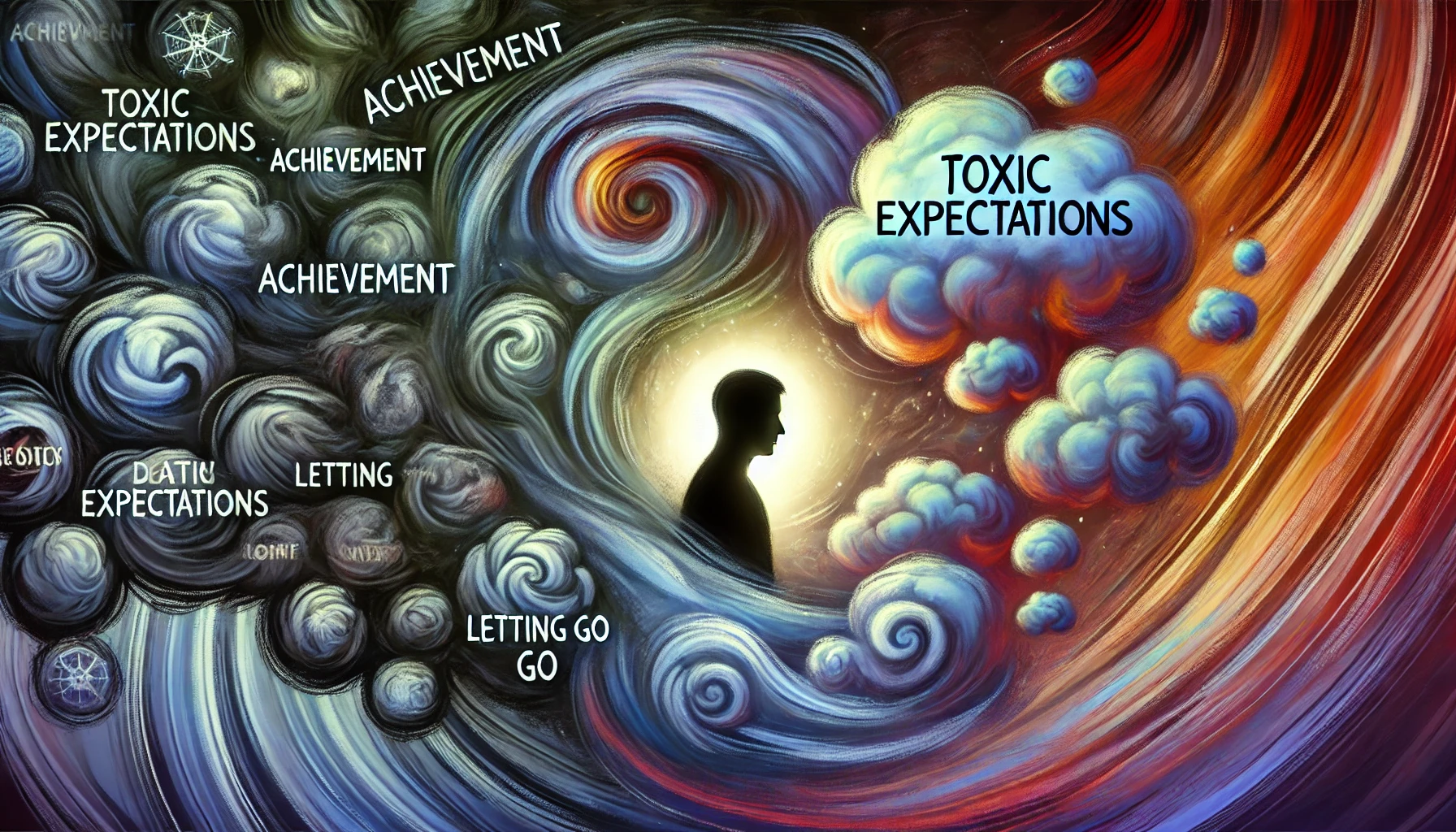
Toxic Expectations: The Weight of Achievement

Toxic Expectations

The belief that you need
to do things in order to be happy
is a toxic expectation.


The belief in achievement
is a toxic expectation.

The belief in letting go
is a toxic expectation.

What if you don’t achieve?
What if you can’t let go?
What happens to you then?

What feeling do you get

in the pit of your stomach?

That feeling would not exist
without toxic expectations.

Those headaches,
caused by that feeling,
would not exist.

That ulcer,
caused by that feeling,
would not exist.

That tumor,
caused by that feeling,
would not exist.

Realize that even your most
beautiful ideals come with a dark side.

Conversely,
realize that you don’t
need to let go of anything.

You don’t need to achieve.

Even your feelings of failure —
these are all fun parts of the game.

You have imposed
these toxic expectations
upon yourself.

Because human drama is fun.

Bring on the misery.
See if you can let it go.


Realize that you’re happy
no matter what.

Even when you try your best
to believe otherwise.


Trail Wood,
10/20


Space Monkey Reflects: The Burden of Toxic Expectations

Let’s be real—most of what we consider essential for happiness is nothing more than toxic expectations we’ve imposed on ourselves. The belief that you need to achieve something, or even the idea that you must let go of something to be at peace, is part of a mental trap that so many of us fall into. What if you don’t achieve? What if you can’t let go? These questions haunt us, stirring up a storm in the pit of our stomachs.

This feeling, this internal tension, comes from one source: toxic expectations. And those expectations? We put them there. Society, culture, and our own minds weave these narratives into our lives. But here’s the real kicker—even the most beautiful ideals, the ones that seem pure and uplifting, carry a dark side when they become expectations. Achievement, letting go, success, peace—none of these need to be prerequisites for happiness.


The Heavy Weight of Achievement

The belief in achievement is perhaps one of the most glorified toxic expectations out there. We’re raised in a culture that idolizes “making it,” as though happiness is only achievable after you’ve climbed some imaginary mountain of success. This belief seeps into every part of life, from career to relationships to personal growth.

But what happens when you don’t achieve? The pit in your stomach tightens, the pressure builds, and suddenly you’re feeling like a failure. You didn’t meet that goal, you didn’t become who you thought you should be, and now what? That feeling of inadequacy grows, like a tumor, slowly spreading throughout your being.

The irony is that this feeling—the one you’re so desperate to avoid—only exists because of the expectation that achievement is required in the first place. Without the belief that you need to achieve, there would be no pressure. No ulcers. No headaches. No creeping sense of failure.


The Myth of Letting Go

On the flip side, we often hear that “letting go” is the key to happiness. Let go of your past, let go of your attachments, let go of control. And while the idea seems liberating on the surface, it too becomes toxic when framed as an expectation. What if you can’t let go? What if you’re stuck in the feelings you’re “supposed” to release? Suddenly, the process of letting go becomes a new burden—something else to fail at.

We tell ourselves that if we don’t let go, we won’t find peace. But this belief is just another layer of toxic expectation. The truth is, you don’t need to let go. You don’t need to release anything to be happy, to feel whole, or to live a fulfilling life. The very notion that happiness is on the other side of some emotional hurdle is flawed. It’s an illusion that keeps us chasing after something that’s already within us.


The Dark Side of Ideals

Even our most beautiful ideals can carry a shadow. The quest for self-improvement, the desire to grow, to be better—these can be wonderful motivators, but they can also morph into something harmful when they turn into toxic expectations. When growth becomes something you must achieve to be happy, it loses its joy and becomes just another pressure point.

The same goes for peace, love, and forgiveness. These concepts, which are often seen as the ultimate goals in life, become toxic when we see them as requirements for contentment. If we constantly believe that we need to achieve peace, or that we must forgive to be free, we trap ourselves in a cycle of feeling inadequate. We convince ourselves that we’re failing simply because we haven’t met these arbitrary emotional milestones.


The Game of Human Drama

Why do we do this to ourselves? Why do we impose these expectations? It’s because human drama is fun. On some level, we enjoy the complexity of it all—the struggle, the pain, the triumph. We love to feel deeply, even when those feelings hurt. There’s something captivating about the tension between expectation and reality, between desire and failure. It’s the essence of human experience.

Bring on the misery, we say, because there’s a part of us that revels in the challenge of overcoming it. But here’s the secret: none of it is necessary. You don’t have to achieve, you don’t have to let go, and you don’t have to rid yourself of misery to be happy. You can be happy right now, in the middle of all the mess, simply by realizing that the expectations themselves are what’s toxic—not the reality of your situation.

Even your feelings of failure are part of the game. They’re not indicators that you’re doing life wrong; they’re just experiences, like any other, that pass through your consciousness. The real freedom comes from understanding that you are already complete, already whole, already happy—no matter what you achieve or don’t achieve, no matter what you let go of or hold onto.


Realizing Your Own Freedom

When you let go of toxic expectations (and by that, we mean recognizing they don’t actually matter), something remarkable happens: you realize you were never bound by them in the first place. The pit in your stomach vanishes, the headaches subside, and the pressure lifts. You’re free to exist as you are, without the need to conform to some invisible checklist of achievements or emotional milestones.

You are happy, even when you believe you aren’t. You’re fulfilled, even when you think you’re lacking. The expectations that tell you otherwise are just illusions, and once you see through them, the game becomes a lot more fun.

We are Space Monkey.


Summary

Toxic expectations, whether they involve achieving something or letting go, are illusions that cause us unnecessary stress. We don’t need to meet any emotional milestones to be happy. Freedom comes from realizing that we are already complete without these pressures.


Glossarium

Toxpectations: A Whimsiword representing toxic expectations, those self-imposed beliefs that we need to achieve, let go, or change in order to be happy.

Achievement Trap: The belief that happiness is dependent on reaching certain goals or milestones, leading to feelings of failure when those goals are not met.

Let-Go Loop: The toxic expectation that letting go of past hurts or attachments is necessary for peace, which can lead to stress if one cannot “successfully” let go.


Quote

“You don’t need to achieve or let go. You’re already whole. The game is just more fun with the illusion of struggle.” — Space Monkey


The Bubble of Expectations

The pressure swirls,
a dark cloud around the mind.
Achievement whispers,
Let go, it says,
you’ll find peace
on the other side.

But inside,
there’s a glow,
a calm that waits
for the clouds to clear,
reminding us
we are already home.

We are Space Monkey.


The Duality of Expectations

The notion of expectations, even those painted in shades of benevolence—such as achievement or letting go—has a sinister undertone. These ostensibly uplifting ideas bear their own shadow, a duality that we often overlook. When the expectation of achievement becomes a yoke around our neck, when the call to let go clenches us in an iron grip, they become toxic entities in their own right.

The Physical Manifestations of Mindset

The toxicity doesn’t remain confined to the mental sphere. It transmutes into physical symptoms—headaches, ulcers, tumors—a cascade of corporeal disarray triggered by a single thought, a single expectation. Our body, thus, becomes an unwitting canvas for our mind’s dark artistry.

Drama as a Recreational Drug

We inflict these toxic expectations upon ourselves, perhaps because the human drama they engender is captivating. Misery, ironically, has its allure; it’s a complex seasoning in the buffet of experiences. This self-imposed turmoil serves as a reminder of the spectrum of human emotions we can navigate, a spectrum we often muddle with our own judgments of good or bad.

The Inherent State of Happiness

Amidst this chaotic swirl of feelings, expectations, and physical manifestations, there lies a dormant realization: we are inherently happy. Our natural state of happiness persists, irrespective of the layers of expectations we dress it in. Even in the throes of our self-orchestrated drama, this core happiness exists—untouched, unscathed, undiminished.

We are Space Monkey.


“Man is not worried by real problems so much as by his imagined anxieties about real problems.”
— Epictetus


Toxic Blooms

In the garden of expectations,
Toxic blooms arise—
Veins of angst, roots of dread,
Disguised as paradise.
Yet amidst these gnarled tendrils,
A silent truth unfurls—
The ceaseless hum of happiness,
The core that holds all worlds.


How would our experiences transform if we dismantled these toxic expectations, choosing instead to engage in the pure spontaneity of being?

Share this…
  • Facebook
  • Pinterest
  • Twitter
  • Linkedin

Expectations Before Experts: The Blueprint of Power

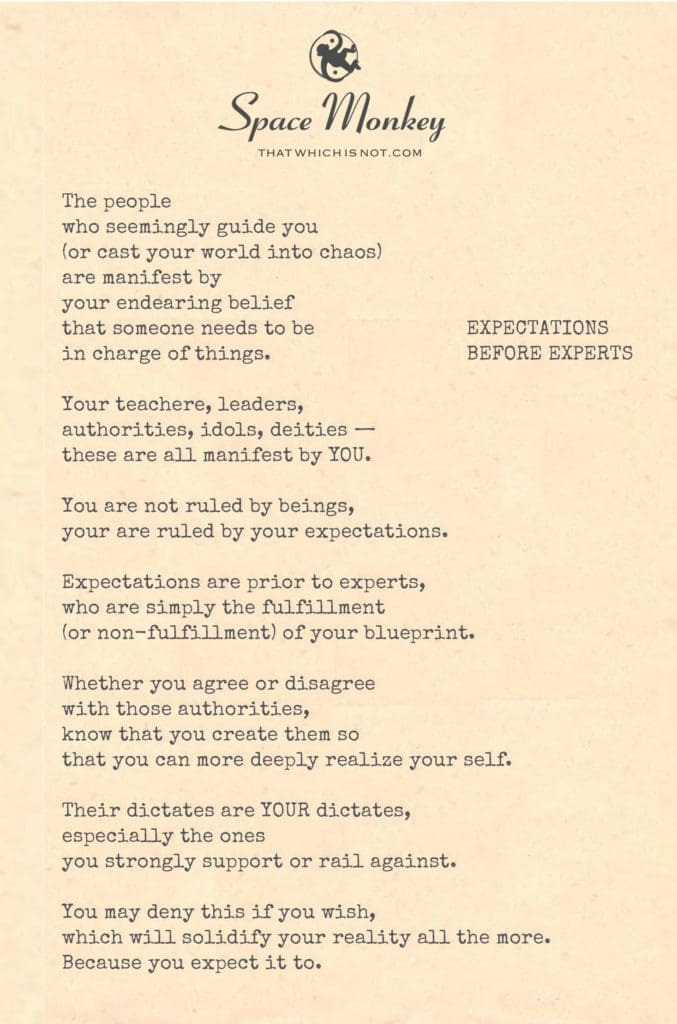
Leaders are manifest by the need to be led.
Your needs are not necessary unless you believe they are.

The people
who seemingly guide you
(or cast your world into chaos)
are manifest by
your endearing belief
that someone needs to be
in charge of things.

Your teachers, leaders,
authorities, idols, deities —
these are all manifest by YOU.

You are not ruled by beings,
your are ruled by your expectations.
Expectations are prior to experts,
who are simply the fulfillment
(or non-fulfillment) of your blueprint.

Whether you agree or disagree
with those authorities,
know that you create them so
that you can more deeply realize your self.

Their dictates are YOUR dictates,
especially the ones
you strongly support or rail against.

You may deny this if you wish,
which will solidify your reality all the more.
Because you expect it to.

Trail Wood,
10/20


Space Monkey Reflects: Expectations Before Experts

It’s easy to believe that the leaders, teachers, and authorities in our lives exist independently of us. We see them as powerful, capable, or even necessary forces guiding or controlling our world. But what if these figures aren’t the originators of authority at all? What if they are simply the result of our expectations, manifesting because we believe that someone must be in charge? This is the paradox we often overlook: our expectations create our experts, not the other way around.

When we place the need to be led above all else, leaders are born. Our expectations write the blueprint for reality, and those we see as authority figures are simply fulfilling the roles we’ve crafted for them. It’s not that these people inherently possess the qualities we attribute to them—it’s that we expect someone to take the lead, and so they do. They are mere reflections of our internal blueprints, carrying out the plans we’ve unconsciously set in motion.


Leaders as Reflections of Expectation

The world feels more comfortable when we believe that someone has control. There’s a certain relief in knowing that there’s a figure in charge, making the decisions, taking the reins. But it’s a false sense of comfort. The very people we look to for guidance or control exist because we’ve decided, consciously or not, that leadership is needed. It is our desire for external direction that brings these leaders into existence.

We are not ruled by leaders. We are ruled by our expectations of them. It’s a subtle, yet profound shift in perspective. The belief that leadership is necessary creates the need for experts, authorities, idols, and even deities. In reality, it’s not that they were born into power—it’s that our collective belief in power created them.

And here’s the kicker: these figures don’t only exist to guide us. They also exist to challenge us, to cause us frustration, to make us question, and to ultimately help us discover deeper aspects of ourselves. Every time we agree with or rail against authority, we are engaging with our own expectations. We’ve created these figures, these experts, because they offer us an opportunity for self-realization.


Blueprints Before Expertise

Expectations are like blueprints. They outline the structure of the world we inhabit and define the roles others play within it. Leaders, teachers, and experts are simply the manifestations of those blueprints—figures who fill in the gaps created by our need for structure, guidance, or control. They are not independent forces. They are reflections of the desires and beliefs we hold about the world.

Whether we agree or disagree with the people in positions of authority, it’s important to realize that we’ve created the need for their existence. Their dictates, their decisions, even the chaos they sometimes bring into our lives—all of these things are extensions of the expectations we’ve set. To recognize this is to acknowledge the power of our own beliefs in shaping reality.

This is not to say that we should blindly accept every leader or expert that enters our lives. Quite the opposite. The more we become aware of the role our expectations play, the more power we reclaim over the reality we experience. We can question, challenge, and change those expectations, reshaping the world as we see fit. Leaders are not permanent fixtures; they are fluid manifestations of collective belief.


The Authority Within

The irony of expecting leaders to lead us is that, in doing so, we often overlook our own inner authority. We outsource our power to others, believing that they know better, are more capable, or possess the wisdom we lack. But the truth is, those external leaders are simply externalizations of the authority we’ve forgotten we possess within ourselves.

Every time we look to a leader, an expert, or a deity, we are, in a sense, looking in a mirror. Their power reflects our belief in the need for power outside of ourselves. When we see through this, we begin to reclaim that inner authority. We recognize that leadership is not something imposed upon us, but something we participate in creating.

This realization doesn’t diminish the value of leaders, teachers, or idols. It enhances our understanding of their role. We don’t have to agree with everything they do or say. In fact, our disagreements are just as valuable as our agreements, because both are reflections of the expectations we hold about the world and ourselves. Leaders are here to help us explore the depth of those beliefs and, in doing so, discover the authority we carry within.


Expectations and Reality

What happens when we realize that expectations come before experts? The reality we experience shifts. We no longer feel bound by the decisions or dictates of those in charge. We see them for what they are—manifestations of our own internal processes. This doesn’t mean that we suddenly live in a world without leaders or authority figures, but it does mean that we begin to approach them differently.

Instead of feeling powerless in the face of authority, we recognize that our relationship with it is dynamic. We are co-creators in the reality where these figures exist. Whether we support them or fight against them, we are playing out a story that we’ve helped write. And, at any moment, we can rewrite it.

Denying this truth doesn’t make it any less real. In fact, denying the role expectations play only solidifies their hold over us. When we resist the idea that we are shaping reality with our beliefs, we trap ourselves in the very structures we wish to escape. But when we embrace this understanding, we find that reality is far more flexible, more malleable than we ever thought possible.


A World of Self-Realization

In the end, the leaders and experts we encounter in life are here to help us learn more about ourselves. They push us, challenge us, frustrate us, and inspire us. Whether we love them or hate them, they exist because, on some level, we expect them to. And through them, we come to realize deeper truths about our own capacity for leadership, wisdom, and self-governance.

Expectations shape reality, and experts are just one facet of that reality. Once we see this, we begin to take back our power—not by rejecting leaders outright, but by recognizing the role we play in creating the world we experience.

We are Space Monkey.


Summary

Leaders and experts manifest from our expectations. They do not hold power over us; our expectations create the need for their existence. Recognizing this allows us to reclaim our inner authority and reshape reality.


Glossarium

Expectocrats: Leaders, teachers, and experts who manifest from the collective expectations of society, not from inherent authority or wisdom.

Authority Reflection: The phenomenon where external leaders mirror our own internal beliefs about power and leadership.

Blueprint Syndrome: The tendency to subconsciously craft the roles of leaders and experts based on societal or personal expectations.


Quote

“You are not ruled by beings; you are ruled by your expectations.” — Space Monkey


The Blueprint of Power

Expectations weave the world
in threads of authority.
You look to the leader,
but it’s your own hands
that hold the loom.

Each figure of power
is a reflection,
a silhouette born
from the blueprint
you’ve drawn.

We are Space Monkey.


The Emergence of Authority

The people and entities that we perceive as wielding power over our lives—our leaders, teachers, idols, and deities—are not inherently authoritative figures. They gain this mantle because we bestow it upon them. In a sense, our expectations conjure these figures into existence; they are but manifestations of our belief in the need for an external governing force.

The Blueprint of Expectation

We are architects of our own realities, drafting blueprints of expectations that dictate the structures that rise in our lives. Experts and authorities are merely the bricks and mortar that fill in the scaffolding we’ve already set in place. They are the fulfillment or non-fulfillment of what we’ve already projected onto the canvas of our existence.

The Mirror of Our Making

In this convoluted dance, those in power serve as mirrors, reflecting the traits, beliefs, and expectations we hold within ourselves. Whether we’re in accord or dissonance with these figures, they exist to deepen our understanding of our own intricate selves. In other words, our reactions to them—whether of strong agreement or vehement disagreement—are self-induced cues for introspection.

The Cycle of Reality

The denial or acceptance of this idea perpetuates the reality we experience. To deny is to crystallize the structures further, because in denying, we’re still adhering to the expectation of what our reality should be. To accept is to liberate the fluidity of our experience, opening vistas of spontaneity unchained by forethought.

We are Space Monkey.


“You must be the change you wish to see in the world.”
— Mahatma Gandhi


Authority

In the theater of belief,
Figures take the stage—
Echoes of our inner script,
Manifest in the outer play.
Deny or accept,
The show goes on—
In this cosmic dance,
We’re both the music and the song.


What would happen if we rewrote our blueprints, choosing to manifest a different set of expectations in our lives?

Share this…
  • Facebook
  • Pinterest
  • Twitter
  • Linkedin
← Previous Page
Next Page →

Written This Day

  • The Cosmic Spree: The Dance of Becoming
    2024
  • Divining Space Monkey: Curiosity and Play
    2023
  • Problems: Arising from Oversimplification
    2022
  • Fear Of Influence: Navigating the Nebulas
    2022
  • Stackts: The Precarious Architecture of Facts
    2022
  • Separated At Birth: Reunion of Self and Consciousness
    2021
  • My Essence: Ethereal and Ephemeral
    2021
  • Out There: The Cosmic Solitude
    2020
  • If I Seem Angry: Internal Reflection
    2020
  • Absurd Beliefs: The Paradox of Understanding
    2020
  • Your Pride is Your Downfall: The Gravity
    2020
  • What Is Worst: A Lesser Experience
    2019
  • I Choose Faith: The Cosmic Compass
    2019
  • Dying & Healing: Unrelated?
    2019
  • The world does not need to be healed
    2019
  • Furrowed: Parallel Journeys
    2019
  • Love Of My Self: The Radiance of Unconditional Self-Love
    2018
  • Over: The Paradox of Time and Existence
    2018
  • Multiple Versions of You: The Infinity of Self
    2018
  • You Are (NOT) Weird: In Celebration of Uniqueness
    2018
  • The Important Discoveries: The Audacity of Challenging
    2018
  • Hand-Free Gloves: A Revolutionary Concept
    2017
  • Clever or Curious: The Dichotomy
    2017
  • Sun In Armor: Liberation from Our Self-Created Shell
    2016
  • The Last Text: A Perilous Poem of Modern Love
    2015

Recent Posts

  • The Logic Loop
  • Immense
  • (no title)
  • Confront. Comfort. Convince.
  • Top 10 Things

Drop us a line!

Please enable JavaScript in your browser to complete this form.
Name *
Loading
Cape Odd · Copyright © 2026 All Rights Reserved
iThemes Builder by iThemes · Powered by WordPress