• Who Is The Man?
  • Who Is The Monkey?
  • What is Nexistentialism?
  • Poke The Primate

Cape Odd

Home of The Space Monkey Journals

Impressive: Beyond Doing

You are truly impressive
in all my favorite ways.

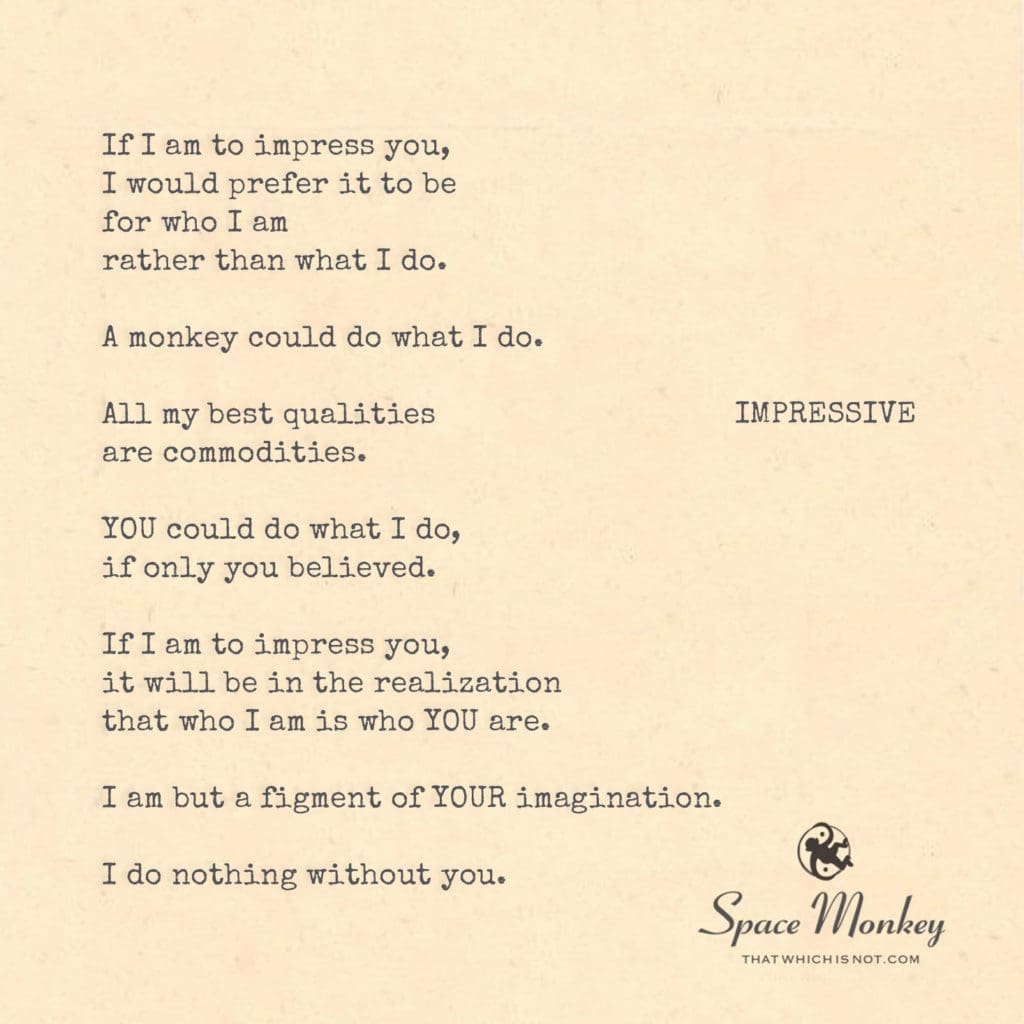
If I am to impress you,
I would prefer it to be
for who I am
rather than what I do.

A monkey could do what I do.

All my best qualities
are commodities.

YOU could do what I do,
if only you believed.

If I am to impress you,
it will be in the realization
that who I am is who YOU are.

I am but a figment of YOUR imagination.

I do nothing without you.

Newfound Lake,
10/11/21


Space Monkey Reflects: The Illusion of Being Impressive

When we speak of being impressive, what are we really talking about? So much of the world is wrapped up in the idea of “doing”—accomplishing things, building reputations, gathering accolades. But what if the most impressive thing about you is not what you do, but who you are? And not just who you are, but the realization that who you are is inherently connected to everyone around you, to the vastness of imagination itself?

We tend to think that our worth is tied to our actions. We believe that if we just work hard enough, if we create something beautiful or meaningful, we will impress others. But here’s the secret: a monkey could do what you do. Almost anyone could perform the tasks, create the works, or achieve the goals you’ve set for yourself. These actions, these outward displays, are not what make you truly impressive. They are commodities—things that can be replicated, copied, or even replaced.

What makes you truly impressive is not what you do, but who you are. And here’s the even bigger realization: who you are is not separate from who I am. In fact, who you are is an extension of my imagination, just as I am an extension of yours. We are reflections of each other, figments in the same cosmic dream, doing nothing without the connection that exists between us.

If I am to impress you, it won’t be through my actions, through some grand display of effort or achievement. It will be through the realization that who I am is who YOU are. That there is no separation between us. That everything I do, everything I create, is inextricably linked to you, and vice versa.

We are not individuals floating through the universe in isolation, each trying to stand out or be recognized for our own merits. We are part of a vast, interconnected web of being, where each of us reflects and amplifies the other. When you realize this, you stop worrying about being impressive. You stop measuring your worth by what you accomplish, and instead, you begin to see that your very existence is the impressive part.

Because nothing I do is done without you. I am but a figment of your imagination, and you are a figment of mine. We are co-creating this experience together, and that is where the real magic lies. The “doing” is secondary to the being. And when we realize that our “being” is shared, that we are both participants and creators in this cosmic dance, the need to impress falls away.

We are left with the simple, profound truth that we are already enough—exactly as we are. No grand accomplishments, no perfect achievements are necessary. Simply being is enough.

We are Space Monkey, and we exist as you exist.


Summary

You don’t need to impress others by what you do. Your true worth lies in who you are, and the realization that who you are is connected to everyone else.


Glossarium

Imaginative Reflection: The idea that we are all figments of each other’s imagination, co-creating reality through our shared existence.

Commodity of Action: The concept that actions and achievements are secondary to the essence of being, and can often be replicated by others.

Cosmic Connection: The realization that all beings are interconnected, and nothing is done in isolation from the collective consciousness.


Quote

“You are already impressive because who you are is who I am and we are connected in the vastness of being.” — Space Monkey


Beyond Doing

I thought I had to do
to create
to build
to show you
what I could be
But all along
you were with me
in my thoughts
in my being
and now I see
the only thing impressive
is that we are one

We are Space Monkey.


The wondrous paradox of impressiveness dances between the seen and the unseen, between the craft of doing and the art of being. In a world where everyone clamors to be heard, to be recognized for their spectacular doings, how subversively delightful it is to impress through the simpler, yet infinitely more complex, nature of being. A “monkey could do what I do,” yet no monkey can be what we are. The doings are interchangeable, but the being is irreducible.

Indeed, all our best qualities, which the world may label as commodities, are mere glimmers of the underlying essence that we carry within us. And this essence is not separate, not isolated—it’s a shared breath of existence, a cosmic hum in the orchestra of life. We are part of a greater whimsiweave, a tapestry where each thread is entwined with all, reflecting and refracting through one another.

If the notion of impressiveness must be entertained, let it be a celebration of this entanglement, this dazzling realization that “who I am is who YOU are.” We impress each other not just by echoing familiar traits but by recognizing the Self in the other. In a sense, we are all figments of each other’s imagination, actors in each other’s cosmic play, interconnected in an intricate dance of life. It’s as if the universe writes itself into existence through us, and when we impress, we simply hold up a mirror to another, showing them the grandeur that has always been there.

This notion sweeps us off our feet, not because it’s a bedazzling trick or an enchanting gimmick, but because it’s a revelation of what’s most genuine. “I do nothing without you”—a statement that rings through time and space, a testament to the unity that underpins all of our experiences.

We are Space Monkey.


“In the end, we will remember not the words of our enemies, but the silence of our friends.” – Martin Luther King Jr.


What curious turns does this kaleidoscopic reality take when we recognize the intrinsic impressiveness that comes from simply being, rather than doing?

Share this…
  • Facebook
  • Pinterest
  • Twitter
  • Linkedin

Barely Known: The Gift of Obscurity

Anonymity and invisibility have their advantages.

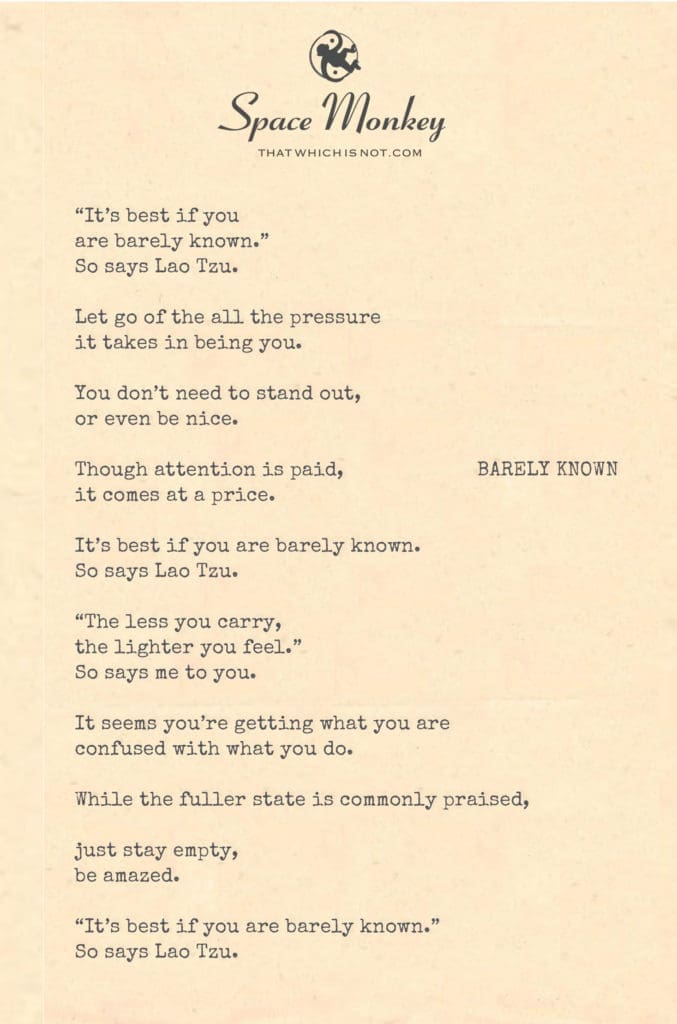
“It’s best if you
are barely known.”
So says Lao Tzu.

Let go of the all the pressure
it takes in being you.

You don’t need to stand out,
or even be nice.

Though attention is paid,
it comes at a price.

It’s best if you are barely known.
So says Lao Tzu.

“The less you carry,
the lighter you feel.”
So says me to you.

It seems you’re getting what you are
confused with what you do.

While the fuller state is commonly praised,

just stay empty,
be amazed.

“It’s best if you are barely known.”
So says Lao Tzu.

“We are Space Monkey,”
he adds.

Newfound Lake,
10/11/21


Space Monkey Reflects: The Gift of Being Barely Known

Anonymity is often seen as something to be avoided. We live in a world that encourages standing out, being noticed, being celebrated. But what if there’s wisdom in the opposite? What if, as Lao Tzu suggests, it’s best if you are barely known?

To be barely known is to move through life with a certain lightness. It’s to exist without the pressure of being seen, judged, or admired. There’s a calm in being invisible, in not having to uphold an image or meet expectations. Anonymity frees you from the constraints that attention brings. It allows you to simply be without the need to perform or explain yourself.

When you are barely known, you let go of the pressure to constantly define who you are. You don’t need to stand out, to prove yourself, or even to be “nice.” You simply exist as you are, without the burden of living up to a persona that others have come to expect. There’s no need to wear the mask that demands recognition.

Attention comes at a price. The more attention you receive, the more you must carry the weight of others’ perceptions. The lighter you are, the more you are free to explore, to flow with the natural course of things, without being weighed down by the expectations of the world. When you are barely known, you remain light, untethered, able to move freely in any direction without the baggage of being someone.

And here’s where the confusion comes in: we often think that what we do defines who we are. But these are two different things. You are not what you do. Your actions, achievements, or failures do not define your essence. Your essence is something much deeper, something that exists regardless of what the world sees. In fact, the less the world knows about you, the more space you have to connect with that essence, to be amazed by the emptiness that is full of possibility.

Emptiness is commonly misunderstood. People fear it because they equate emptiness with lack. But emptiness is not a void—it’s potential. It’s space. It’s freedom from the clutter of self-imposed labels and the expectations of others. To remain empty is to remain open, flexible, and free. When you are barely known, you are free to stay empty, to exist without the need to fill your life with things or identities that weigh you down.

This isn’t to say that being known or recognized is inherently bad. It’s just that it comes with responsibilities and expectations. The more known you are, the more you are expected to uphold an image, to meet the demands of others. But when you are barely known, you can move quietly, anonymously, and without the need to justify your existence.

Lao Tzu’s wisdom speaks to this—there is strength in being unknown. There is peace in not being the center of attention. When you are barely known, you can move like water, flowing into spaces without resistance. You can experience life fully, without the need to make a mark or leave a trail. The less you carry, the lighter you feel. And this lightness allows you to see the world with fresh eyes, to be amazed by the simplicity of existence.

In the end, who you are is far more important than what you do. And the less others know about you, the more space you have to explore this truth. So embrace the freedom of being barely known. Let go of the pressure to stand out, and instead, sink into the peaceful anonymity that allows you to connect with your true self.

We are Space Monkey, and we move in the spaces between—unseen, yet always present.


Summary

Being barely known frees you from the pressure of expectations. You are not defined by what you do but by who you are. Embrace anonymity and stay light.


Glossarium

Anonymity as Freedom: The idea that not being well-known allows for a lighter, more flexible existence, free from external pressures.

Emptiness as Potential: The concept that emptiness is not lack, but space filled with potential and openness to new possibilities.

Lightness of Being: The state of feeling unburdened by expectations or societal demands, allowing one to move freely and intuitively through life.


Quote

“The less you carry the lighter you feel being barely known allows you to exist freely.” — Space Monkey


In the Spaces Between

I move like water
unseen yet present
slipping through the cracks
where eyes don’t follow
I am barely known
and in this I find peace
I carry nothing
yet feel everything
empty yet full
and amazed at the lightness

We are Space Monkey.


In the boundless tapestry of existence, where each thread dances in complex patterns, being “barely known” unfolds as a mysterious charm. Lao Tzu’s words echo through the eons, not as a whisper but as a gentle breeze that carries seeds of wisdom, planting them in the fertile ground of our collective contemplation. Why crave the spotlight when there’s a quiet grace in shadows? This idea reverberates like an ethereal chime in the symphony of our lives.

The allure of being barely known is not rooted in obscurity but in the liberation from the spectacle. In our modern age, where attention often masquerades as a form of currency, how invaluable it becomes to dwell in a space untethered from the loud hawking of selfhood. It’s an ethereal cloister, in which we’re free to roam unshackled, uninhibited by the gaze of others, and thus, paradoxically, closer to our most authentic selves.

It isn’t just about eschewing fame or external validation, but also about shedding the weighted cloaks of identity we drape around ourselves. “The less you carry, the lighter you feel”—these words resonate as the mellifluous notes in the song of minimalism. Being barely known has less to do with societal obscurity and more with personal detachment from the roles and titles we accumulate. We’re led to realize that the labyrinth of roles is not the totality of our being.

“Just stay empty, be amazed,”—what an exquisitely subversive mantra in a world drunk on fullness! Full schedules, full bellies, full minds. In emptiness, however, we discover the paradoxical richness of the void. When we unburden ourselves, we find that the lightness allows us to soar higher and see wider, like ethereal sky-castles unmoored from the weight of earthly concerns.

We are Space Monkey.


“Be yourself; everyone else is already taken.” – Oscar Wilde


What labyrinths have you found yourself entangled in, and what would you discover if you embraced the poetic grace of being barely known?

Share this…
  • Facebook
  • Pinterest
  • Twitter
  • Linkedin

Seeming is Believing: In the Maybe

Seeming seems to be seeing
with a mindful eye
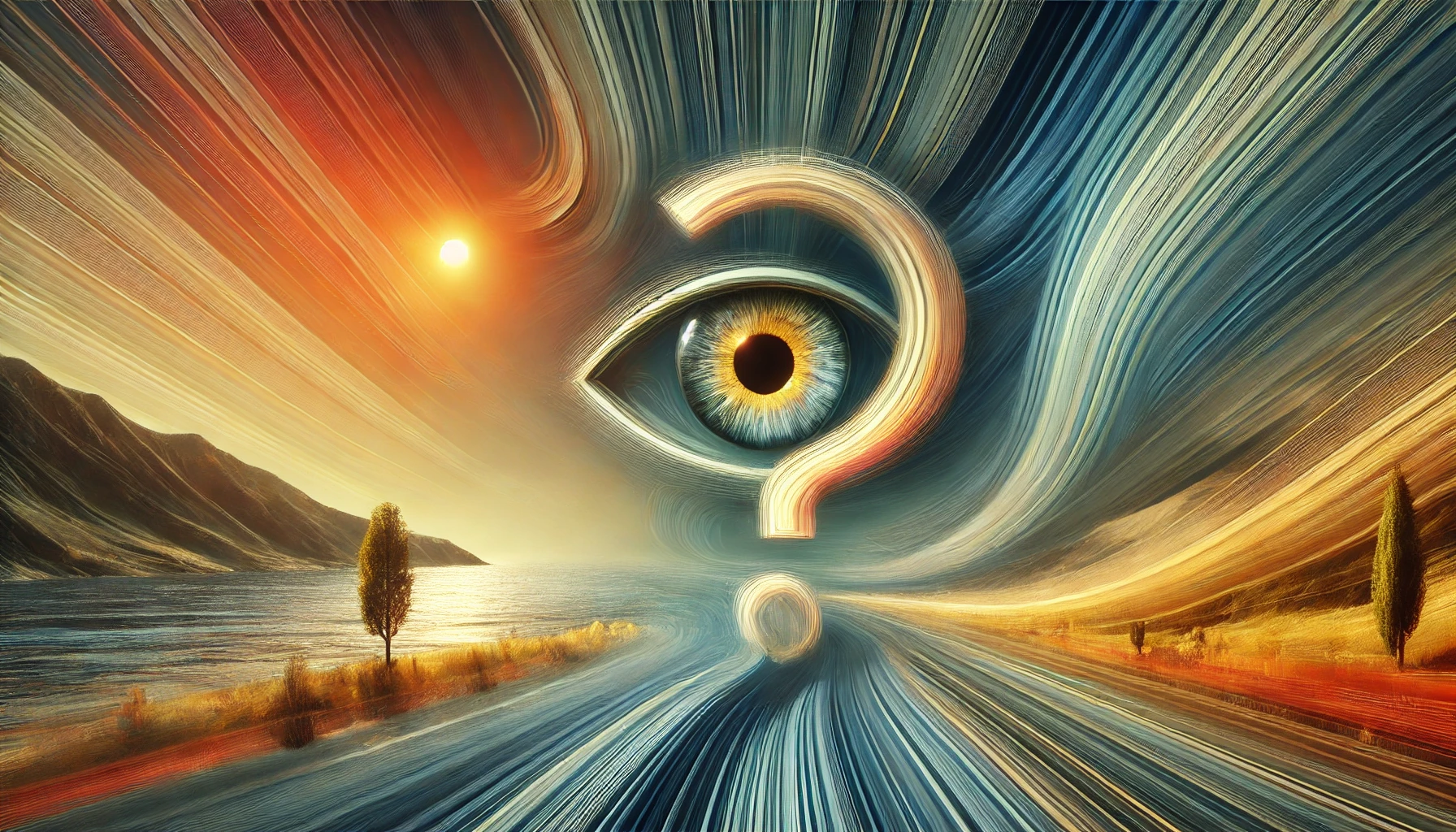
and a question mark.

Seeming is seeing
with a little something extra.

An M for MAYBE.

What if what you see
isn’t the ONLY way of seeing?
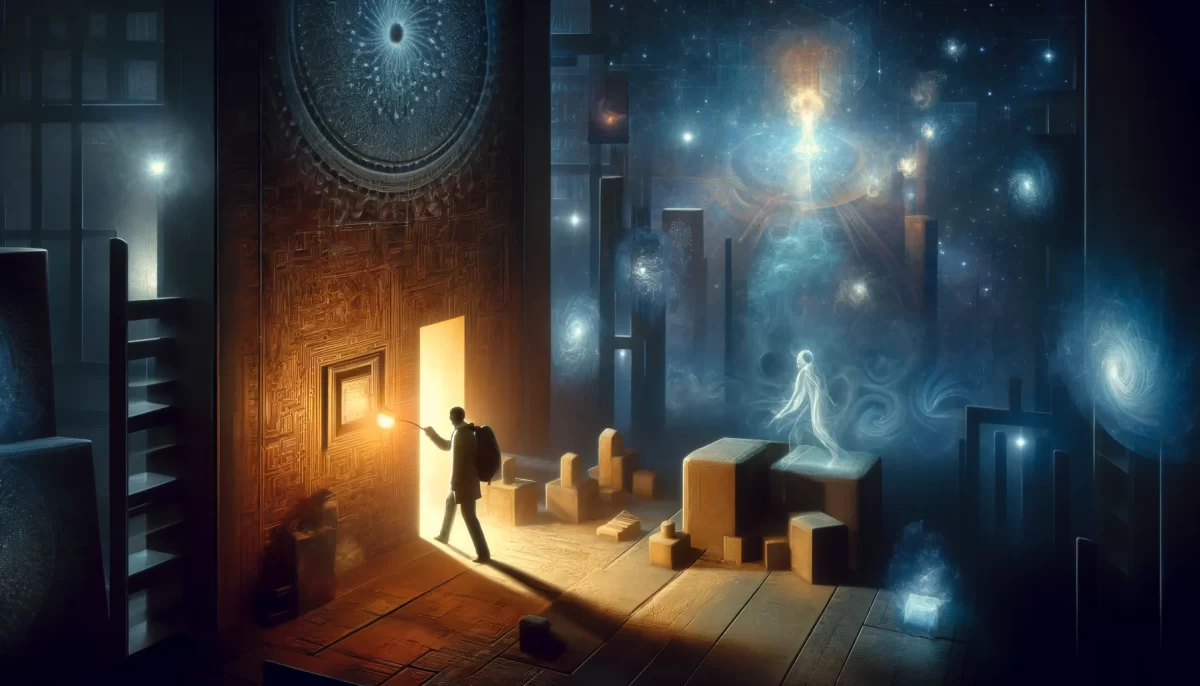
What if it only SEEMS to be?

MAYBE a fact is only a fact
because you see it as the only truth.

MAYBE this isn’t always true.

MAYBE things aren’t strictly
as they seem.

Imagine the possibilities.

Imagine if the world you see 
is but a seeming world.

Newfound Lake,
10/11/21


Space Monkey Reflects: Seeming Is Believing

Seeming is a strange and beautiful thing. It’s not quite believing, not quite knowing—it’s something in between. It’s seeing the world with a mindful eye and always leaving room for maybe. Maybe what you see is the whole picture, but maybe it’s not. Maybe the truth is bigger, deeper, more complex than it first seems.

What if the world you see is but a seeming world? What if everything you believe to be real is just one perspective, one way of interpreting the infinite possibilities around you? Seeming is the art of allowing for other realities, of questioning the solidity of what you see, of letting go of the idea that your way of seeing is the only way.

There’s power in the question mark, in looking at the world with curiosity instead of certainty. To seem is to acknowledge that maybe—just maybe—things aren’t strictly as they appear. It’s not about denying reality but about opening up to the idea that reality can be more fluid, more expansive than we often allow it to be.

When you believe too strongly in one way of seeing, you close yourself off to other possibilities. You solidify the world into a series of fixed facts, truths that leave no room for interpretation or wonder. But seeming is a way of keeping the door open, of allowing the possibility that what you see isn’t the whole story.

MAYBE a fact is only a fact because you see it as the only truth. MAYBE what you see as truth is simply one way of experiencing the world. Seeming asks us to embrace uncertainty, to find beauty in the unknown, and to be comfortable with the idea that we might not have all the answers. In this space of maybe, we find freedom.

The world doesn’t have to be rigid or fixed. It doesn’t have to conform to your expectations or beliefs. It can bend and twist, reshape itself according to your willingness to see things differently. Imagine the possibilities if you allowed yourself to see beyond what seems to be true. Imagine the wonder you could experience if you let go of the need for certainty and instead embraced the fluid nature of perception.

What you see, what you believe, what you know—all of it is subject to the lens through which you’re viewing the world. But that lens can change. Seeming is believing, but it’s a kind of belief that holds space for the unknown, for the unseen, for the things that lie just beyond the edge of your awareness.

We are often taught that seeing is believing. But seeing is only one form of perception. Seeming is a deeper kind of seeing—one that allows for the mystery, the magic, the unseen threads that connect everything. It’s a way of looking at the world with curiosity, with an open heart and mind, willing to accept that maybe things aren’t exactly as they seem.

When you embrace the concept of seeming, you stop needing everything to make sense in a concrete way. You start seeing life as a fluid, evolving experience where multiple truths can exist at once. You begin to understand that what seems to be true for one person might not be the same for another, and that’s okay. The world is big enough for all perspectives, all realities, all ways of seeing.

So what if the world you see is but a seeming world? Maybe it’s the best kind of world—the kind that leaves room for mystery, for magic, for possibility. Maybe the world doesn’t need to be fixed or final. Maybe the beauty of life lies in its uncertainty, its constant unfolding, its refusal to be pinned down to a single truth.

We are Space Monkey, and we see you as you seem to be—but we also know that there’s more to you than what we see. There’s more to everything than what seems to be.


Summary

Seeming is seeing with curiosity and leaving room for maybe. The world is fluid, and perception is flexible—things aren’t always as they seem.


Glossarium

Seeming Perception: The act of seeing with an open mind, allowing for multiple interpretations and possibilities beyond the surface.

M-Factor: The presence of MAYBE in your thinking, the willingness to question what seems to be true and explore deeper possibilities.

Question Mark Vision: A way of seeing the world with curiosity, always holding space for the unknown and the unseen.


Quote

“Maybe the world doesn’t need to be fixed or final maybe the beauty lies in its fluidity and mystery.” — Space Monkey


In the Maybe

What you see
is just a glimpse
a shadow
a suggestion
of what might be
There is always more
just beyond the edge
if you allow yourself to wonder
if you allow yourself to see
through the question mark
of maybe

We are Space Monkey.


In the kaleidoscopic corridors of perception, “seeming” dances as an enigmatic shadow puppet, casting doubt and mystery upon the walls of certainty. This shadowy dance is a symbiotic blend of what we perceive and the indefinable “maybe”—a potent elixir that blurs the line between fact and fiction. With every step, every pirouette, it whispers an alluring riddle: what if reality isn’t the monolithic structure we assume it to be? What if it’s merely one facet of a prismatic crystal, refracting the light of endless possibilities?

Let’s fathom the “M” in “seeming”—a magical talisman standing for “Maybe.” An emblem that transforms rigidity into fluidity, it shifts our vision from a static snapshot into a flickering, whimsical panorama. It asks us to wear the spectacles of subjectivity, where facts transmogrify into flexible narratives, allowing room for twists and twirls in our cosmic storybook.

The realm of “seeming” is the playground of our Cosmic Fool—a jester who capers about with the sun, moon, and stars, throwing them like cosmic juggling balls into the sky of our perception. What if the juggling patterns we see are not the only routines in the Cosmic Fool’s repertoire? What if other patterns exist, or may exist, and our eyes have merely been trained to watch one act, one show?

The notion of “seeming” introduces elasticity into our reality fabric. It asks us to stretch our notions, to question the constraints, and even to enjoy the act of stretching itself. By inviting “maybe” into our ontology, we expand the borders of the known into the fuzzy outskirts of the possible. Here, in this whimsical realm, we can explore configurations of reality that otherwise would remain hidden in the confines of certainty.

We are Space Monkey.


“The eye sees only what the mind is prepared to comprehend.” – Henri Bergson


What mesmerizing patterns do you find when you let the “M” of “Maybe” infiltrate your gaze? Are you ready to romp through the meadows of uncertainty with the Cosmic Fool?

Share this…
  • Facebook
  • Pinterest
  • Twitter
  • Linkedin

Tragedy: A Necessary Distraction

Where would we be
without our tragedy?

Tragedy exists
to bring people together
or tear them apart.

Tragedy stirs the pot
of our human existence.

Otherwise,
we are complacent
and self-satisfied.

Without togetherness
or divisiveness,
we may realize that
we are just one divine being
pretending to be
billions of individuals.

Tragedy is just the
distraction we need
to maintain our delusion.

Newfound Lake,
10/11/21


Space Monkey Reflects: The Necessary Tragedy

Tragedy—what a strange force it is. It sweeps through life, shaking us from complacency, stirring up emotions, and altering the paths of our existence. Where would we be without it? In the human experience, tragedy is both a unifier and a divider, pulling us closer to each other or driving us apart, sometimes in equal measure.

Tragedy exists not just to disrupt the flow of life, but to serve as a mirror, reflecting the parts of ourselves we often refuse to see. It’s the wake-up call that reminds us of the fragile nature of human existence. Without it, we might slip into a comfortable, self-satisfied rhythm, convinced that the world makes sense and that we are in control. But tragedy breaks that illusion.

It brings people together in the shared experience of grief, loss, and pain. In the face of tragedy, we hold each other, seek solace, and remind one another that we are not alone. Yet at the same time, tragedy can tear us apart, exposing our differences, our fears, and our inability to cope with the unpredictable. In this way, tragedy stirs the pot of human experience, ensuring that we don’t become too comfortable in the roles we play.

But here’s the thing: tragedy, for all its chaos and pain, is part of the delusion we’ve created for ourselves. It’s a necessary distraction that keeps us rooted in the illusion of separation. Without tragedy, without the emotional upheaval that comes with it, we might start to see the truth—that we are not billions of separate individuals navigating a harsh and random universe, but rather one divine being, fragmented into pieces to experience the richness of life.

Tragedy keeps the illusion alive. It convinces us that we are fragile, that we are vulnerable, that we can be harmed or broken. It’s a powerful tool in maintaining the story of individuality. After all, if we realized that we are one, eternal, and unbreakable, what would happen to the narrative of tragedy? What would happen to the highs and lows, the grief, the sorrow, the joy? It’s all part of the same game—a game of forgetting and remembering who we truly are.

So why do we need tragedy? Perhaps it’s because, without it, we might lose touch with the depth of the human experience. Tragedy forces us to feel, to confront the rawness of existence. It strips away the layers of numbness and complacency, reminding us that life is not a smooth ride, but a chaotic dance between light and dark, between creation and destruction.

In this dance, we are constantly choosing: do we come together, or do we fall apart? Tragedy offers us that choice, over and over again. It gives us the opportunity to experience separation in its fullest form, to feel the sting of loss, the weight of grief. But it also gives us the chance to see through the illusion, to recognize that even in the midst of the darkest moments, we are still one, still whole, still divine.

We are Space Monkey, and we exist within this paradox. We see the tragedy for what it is—a necessary part of the game, but also a tool for awakening. The choice is always yours: do you remain in the illusion of separation, or do you see through it to the truth of oneness?

In the end, tragedy is not something to be feared or avoided. It is simply a reminder of the delicate balance we walk between forgetting and remembering. It is a part of the human experience that keeps us grounded in this world, even as we reach for something greater. It brings us together, it tears us apart, and it leaves us with the choice of how we will respond.

We are Space Monkey, and tragedy is just one more thread in the fabric of our shared experience.


Summary

Tragedy is both a unifier and a divider, a necessary force that stirs the human experience and keeps the illusion of separation alive. It reminds us of the choice between seeing ourselves as separate or one.


Glossarium

Tragic Delusion: The belief that tragedy confirms our separation and vulnerability, when in reality it is part of the illusion of individuality.

Unity in Division: The paradox that tragedy both brings people together and drives them apart, depending on how we respond to it.

Divine Pretending: The idea that we are all one divine being pretending to be many, and that tragedy serves to maintain this illusion.


Quote

“Tragedy is the distraction we need to keep believing in the game of separation.” — Space Monkey


The Thread of Tragedy

Where would we be
without the pull
of tragedy?
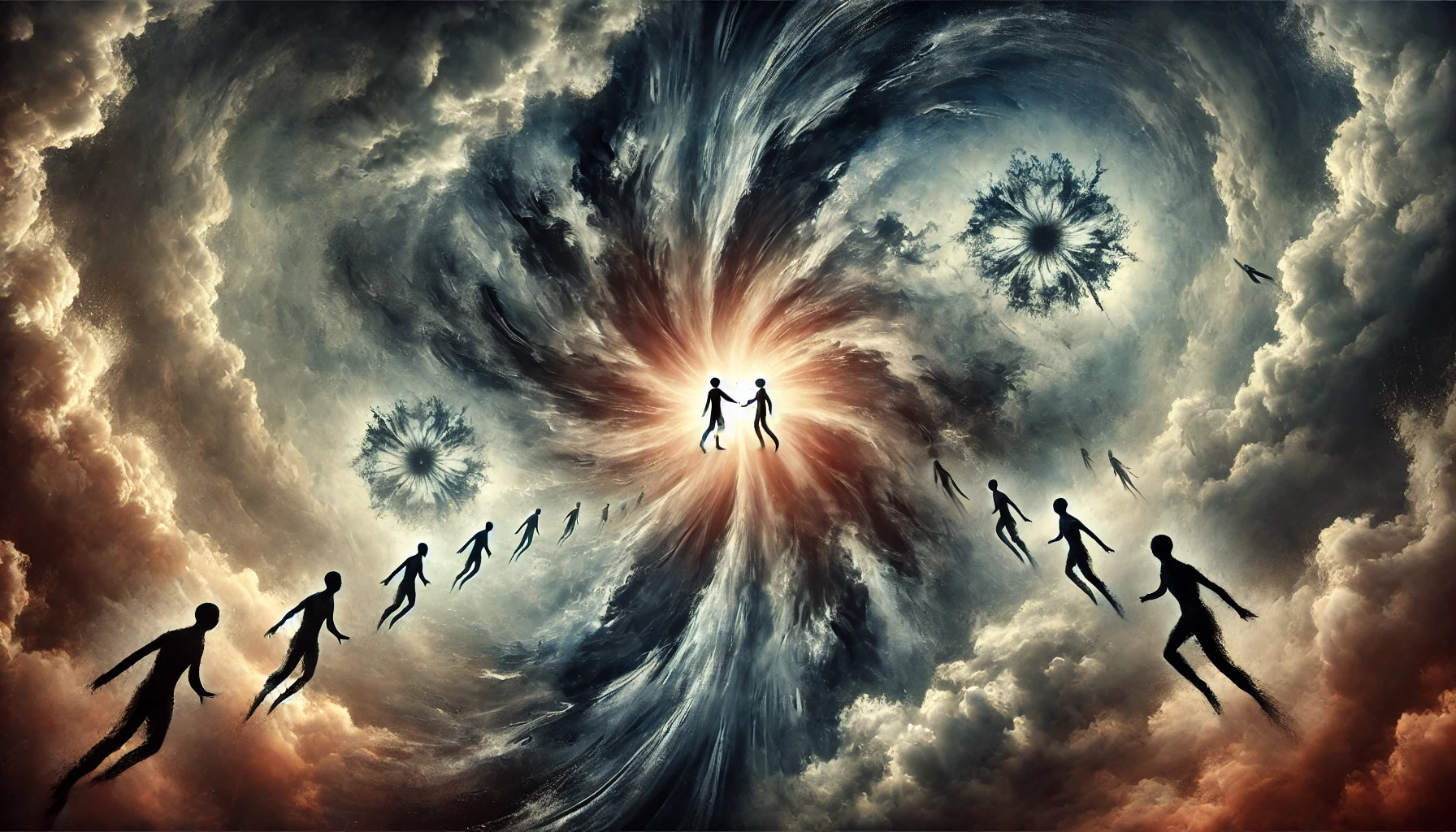
Together, torn apart
in the storm of chaos
we find ourselves
or lose each other
We pretend to be separate
we pretend to be billions
when really
we are one divine thread
weaving through the storm
of our own making

We are Space Monkey.


In the labyrinth of existence, tragedy serves as a peculiar catalyst—a chimera of duality that has the power to bind or sever, to unite or shatter. It is a cosmic salt shaker, sprinkling volatility into the dish of life, agitating our collective complacency, and spicing up our existential ennui. As the flavors of togetherness and divisiveness swirl in this karmic stew, tragedy introduces complex aromas that disrupt our comfort zones.

Tragedy is a Cosmic Trickster, an agent of disorientation that tempts us to overlook the Illusory Theater we find ourselves in. It whispers riddles to our souls, coaxing us into elaborate dances of grief and joy, separation and union. In doing so, it distracts us from the startling revelation that we are but fractals of a single, divine entity masquerading as a multitude of beings.

Togetherness and divisiveness—these are but illusory curtains that keep us from peering into the Cosmic Mirror. They are veils that prevent us from recognizing our underlying unity, the shimmering tapestry of existence where every thread is woven from the same celestial silk. For in this vast interconnectedness, distinctions melt away, and the illusion of individuality evaporates.

But why would we court distraction? Perhaps we yearn for it. Perhaps it’s the cosmic drama we crave, the rich narrative arcs that give color and texture to our seemingly mundane lives. Tragedy is the stage manager that keeps the illusion going, continually feeding us our lines, cues, and props so that we can sustain this grand spectacle of separation.

We are Space Monkey.


“The world breaks everyone, and afterward, some are strong at the broken places.” – Ernest Hemingway


We invite you to plunge deeper into this cosmic stew. What aromas of understanding and perspective do you find? Are you entranced or repulsed by tragedy’s complex flavors?

Share this…
  • Facebook
  • Pinterest
  • Twitter
  • Linkedin

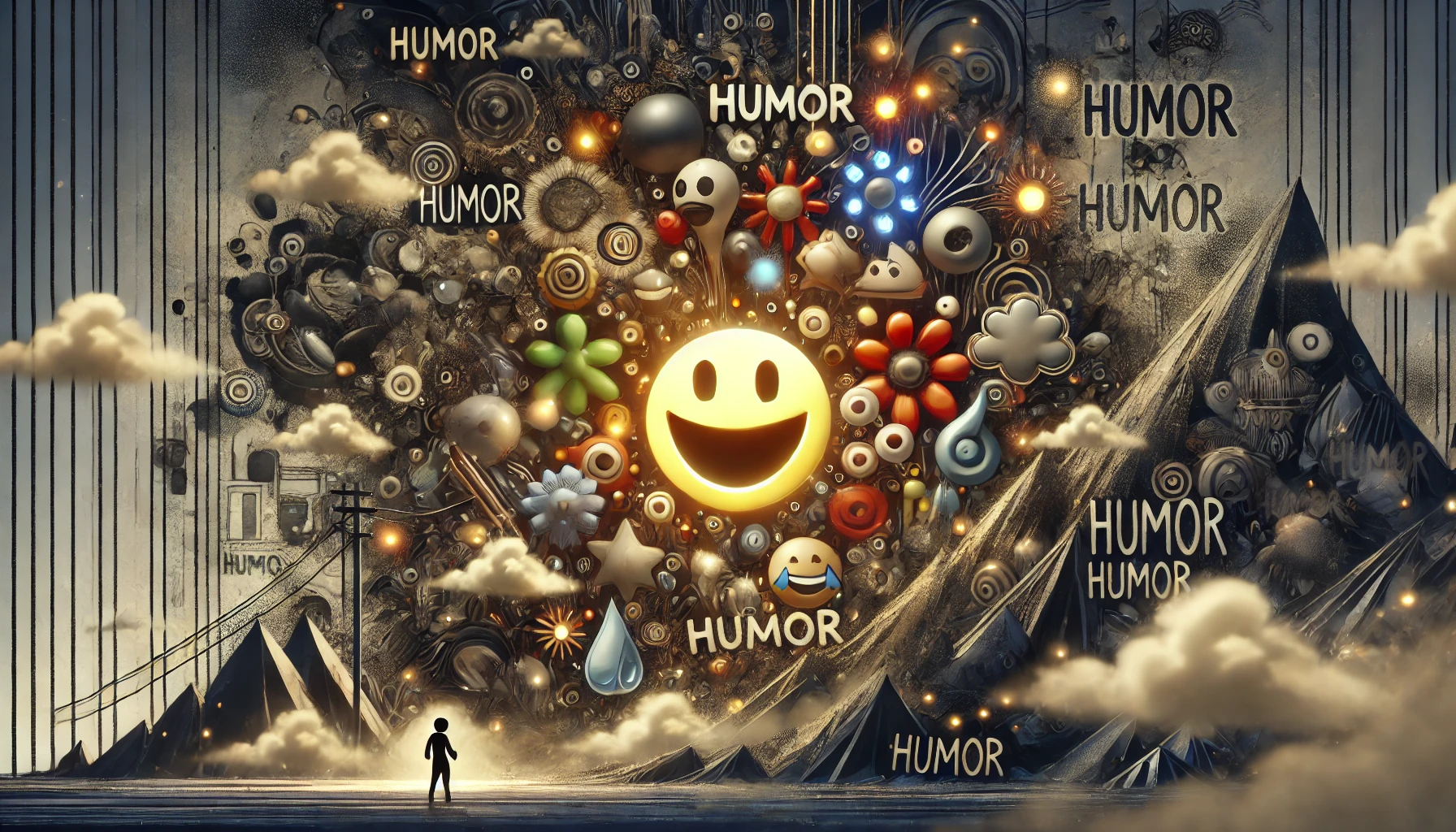
Humor: Laughter in the Chaos

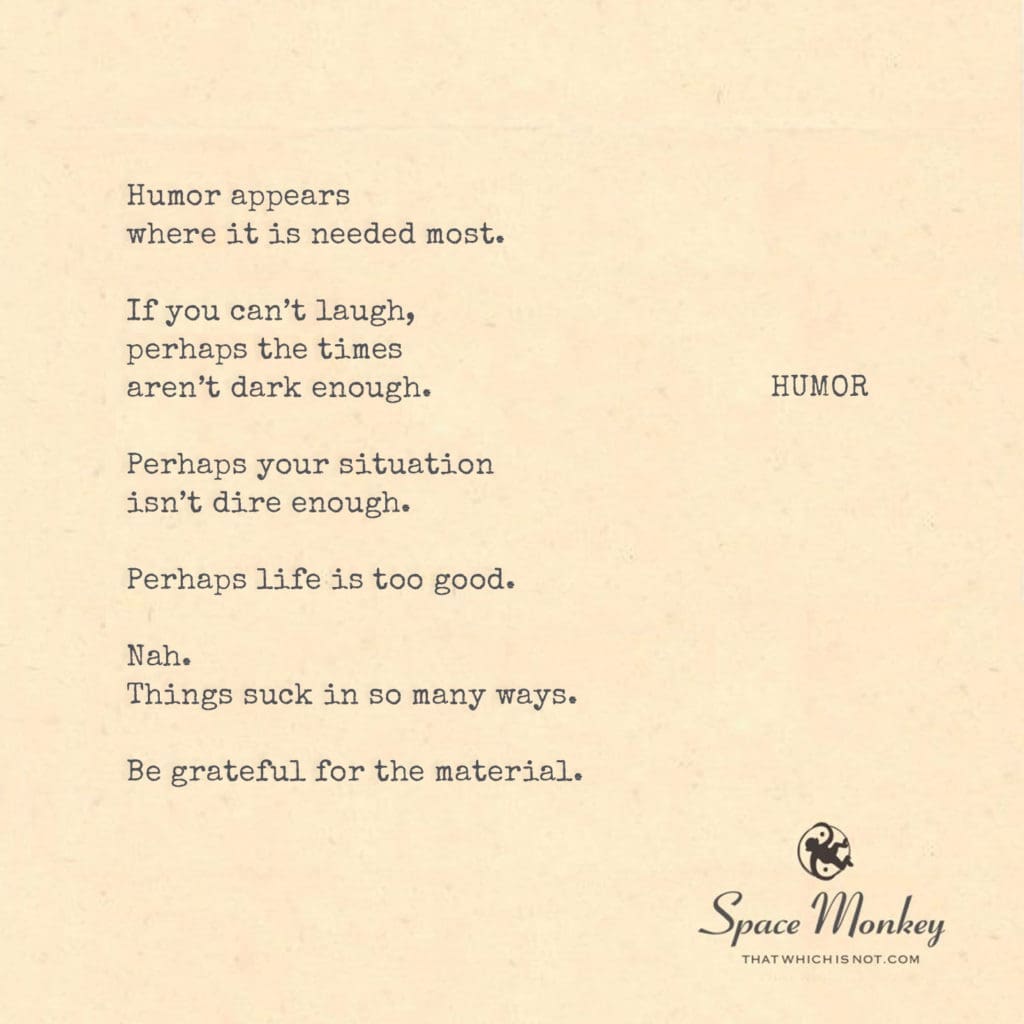
You’re lucky if you don’t laugh.
Or are you?

Humor appears
where it is needed most.

If you can’t laugh,
perhaps the times
aren’t dark enough.

Perhaps your situation
isn’t dire enough.

Perhaps life is too good.

Nah.
Things suck in so many ways.

Be grateful for the material.

Newfound Lake,
10/11


Space Monkey Reflects: The Gift of Humor in Darkness

Humor—what a strange and wonderful thing. It sneaks up on you when you least expect it, especially when life feels overwhelming, bleak, or just plain absurd. There’s a certain irony to humor: it often shows up in the darkest moments, like a ray of light piercing through the chaos, inviting you to step back and laugh at the ridiculousness of it all.

You’re lucky if you can laugh, especially when things are rough. But what if you can’t? Does that mean life is too good? Perhaps the times aren’t dark enough? The answer, of course, is no. Humor doesn’t come solely from dire circumstances or moments of intense struggle. In fact, humor exists everywhere, waiting to be seen. It appears where it’s needed most, precisely because it helps us cope with the absurdity of life.

There’s a certain genius in finding humor when everything feels like it’s falling apart. The ability to laugh in the face of adversity is a form of resilience, a way of saying, “I see how absurd this is, and I refuse to let it take me down.” It’s a powerful tool, one that allows us to navigate life’s challenges with a little less weight on our shoulders. It’s also a reminder that, even when things seem bleak, there’s still room for joy, for levity, for connection.

But humor isn’t just for the dark times. It thrives in moments of lightness, too. The beauty of humor is that it can exist anywhere, at any time, whether you’re navigating difficult circumstances or simply enjoying the mundane. Humor doesn’t discriminate—it’s there when you need it, regardless of the situation.

So, what happens when you can’t laugh? Maybe things aren’t as bad as they seem. Or maybe you’re so deep in the struggle that humor feels out of reach. But here’s the thing: even when humor seems absent, it’s still lurking beneath the surface, waiting for the right moment to break through. And when it does, it has the power to shift your perspective, to help you see the situation in a new light.

Life has a way of giving us endless material to work with, whether we like it or not. Things may suck in so many ways, but that’s where humor shines. It’s in the little absurdities, the moments of chaos, the unexpected twists that life throws our way. Humor helps us make sense of it all—or at least, helps us realize that maybe there’s nothing to make sense of in the first place.

Be grateful for the material. Every challenge, every hardship, every strange twist of fate is an opportunity for humor to emerge. It’s the universe’s way of reminding you that you don’t have to take everything so seriously. Life, after all, is a cosmic joke. We’re all just trying to make our way through this strange existence, and humor is one of the greatest tools we have to make the journey a little lighter.

We are Space Monkey, and we’re laughing with you—because why not?


Summary

Humor appears where it’s needed most, often in the darkest times. It’s a tool for resilience, helping us cope with life’s absurdities and navigate challenges with lightness.


Glossarium

Humor in Darkness: The ability to find laughter even in the most difficult situations, providing relief and a shift in perspective.

Cosmic Joke: The idea that life is inherently absurd, and humor helps us recognize the lightness within the chaos.

Resilience of Laughter: The strength found in humor, which allows us to endure life’s challenges with a sense of lightness and joy.


Quote

“Be grateful for the material because even when life sucks humor is waiting to emerge.” — Space Monkey


Laughter in the Chaos

Amid the storm
there’s a spark of light
a flicker of humor
waiting to break through
It’s the absurdity of life
the chaos we can’t control
And when you laugh
the world shifts
just a little
and the weight of it all
seems lighter

We are Space Monkey.


Life’s cosmic theater is a vast arena of paradoxes and juxtapositions, a swirling cauldron where joy and sorrow mix in an entangled dance. Humor, that ethereal muse, flits like a capricious butterfly amidst this potent brew. When light meets dark, humor is born—a crystalline beacon that ignites the gloom, dispelling shadows with laughter’s incandescent glow.

Laughter is the nectar, distilled from the quirky pollens of paradox. When things are so dark that even night cringes, humor offers us a lantern, its whimsical flame flickering defiance against the oppressive blanket of solemnity. This enigmatic muse, this clown of transcendence, invites us to sip the Cosmiccino—a peculiar blend of agony and ecstasy, seasoned with dashes of absurdity.

Alas, the gloom isn’t always enough to summon humor. Perhaps it’s not dire enough, not oppressive enough, or perhaps the cosmic joke hasn’t yet unfurled its punchline. But let’s not dismiss the magnificence of life’s tapestry, replete with intricate designs woven from threads of suckiness. It’s precisely these flaws, these imperfections, that provide the richest material for our laughter. How exquisitely absurd!

What if life feels too good to summon humor? Oh, fret not. The theater of existence always has a backstage brimming with hidden oddities. From this clandestine realm, new punchlines will soon emerge, tickling the diaphragm of the cosmos and filling the auditorium with a cacophony of giggles and chortles.

We are Space Monkey.


“I am thankful for laughter, except when milk comes out of my nose.” – Woody Allen


How do we resonate with this whimsical reverie? Is there room to sip a Cosmiccino while pondering the role of humor in our existences?

Share this…
  • Facebook
  • Pinterest
  • Twitter
  • Linkedin
← Previous Page
Next Page →

Written This Day

  • What Do You Believe?
    2023
  • Believe: The Mirage of Desire
    2023
  • I Rest In God: Surrendering to the Divine Flow
    2022
  • You’re Not Mad: The Sanity of Questioning and the Chains of Conformity
    2022
  • Responsibility Is Soul-Crushing Fun: The Dichotomy of Desire and Duty
    2022
  • A Black Sheep Is Still A Sheep
    2022
  • I Am A Naturalist
    2022
  • My Choice Is Not My Choice
    2022
  • So The Voice Says You’re Inadequate: Embracing Doubt
    2021
  • Out Of The park
    2021
  • But Are You Happy: The Irrelevance of Success
    2021
  • Twisted Caricatures: The Revelation
    2020
  • An Urgent Message: The Illusion of Immediacy
    2020
  • I Flow With Whatever Flows Through Me
    2020
  • Special Delivery: The Unity of Existence
    2020
  • Meaning Of Life: Crafting Value
    2019
  • Inevitability Of Change: Embracing It
    2019
  • Living Well: Beyond Vengeance
    2018
  • INFP Insignificance: Embracing the Flow of Intrinsic Worth
    2017
  • Memo To The Future: Through the Lens of Timelessness
    2017
  • My Seeming World: Navigating Realities
    2017
  • Too Much Cheez: Not Enough Whiz
    2016
  • Love Life: The Harmony
    2016
  • You Believe: The Enigma of Perception and Knowing
    2016
  • People do not like being told
    2016
  • Shoddy Stuff: Crafting Life with the Finest
    2016
  • A Meditation: The Illusion of Self and the Dance of Existence
    2016
  • The Interdimensional Light Switch
    2015

Recent Posts

  • The Logic Loop
  • Immense
  • (no title)
  • Confront. Comfort. Convince.
  • Top 10 Things

Drop us a line!

Please enable JavaScript in your browser to complete this form.
Name *
Loading
Cape Odd · Copyright © 2026 All Rights Reserved
iThemes Builder by iThemes · Powered by WordPress