• Who Is The Man?
  • Who Is The Monkey?
  • What is Nexistentialism?
  • Poke The Primate
Cape Odd
Home of The Space Monkey Journals

Author Archive for Paul Tedeschi – Page 138

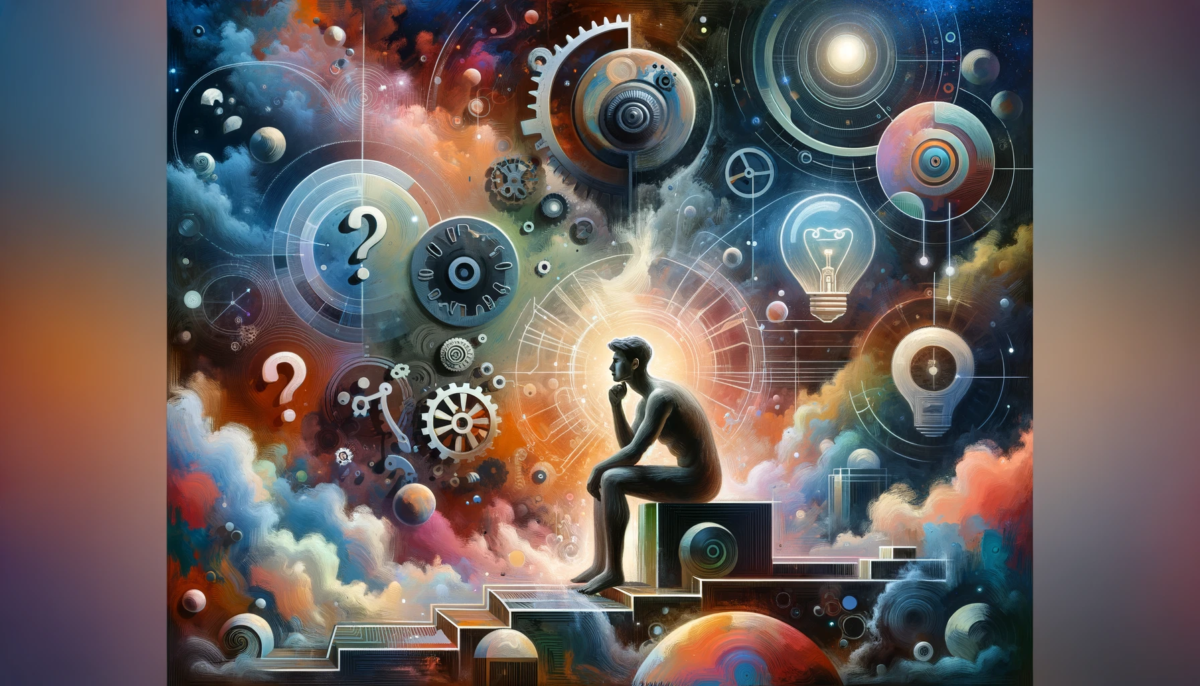
Stop To Think: What Lies Beyond Thought

Stop To Think

Have you ever stopped to think
what it means to think?

Have you ever stopped thinking?

Think you could stop?

Stop could you think?

Do you think thinking is voluntary?

Do you think you have a choice?

Do you not fully understand
what it feels like NOT to think?

Thought so.


Stop To Think: The Paradox of Thinking

Have you ever truly stopped to think about thinking itself? The act of thought is so entwined with our existence that the very idea of ceasing it feels impossible, almost laughable. Yet, within this impossibility lies an essential paradox: can we separate ourselves from the endless flow of thought to glimpse what lies beyond it?


The Nature of Thought

Thinking seems voluntary, a process we control. But is it? Thoughts often arise unbidden, streaming through our consciousness like an endless river. We may direct their flow, but we rarely question their origin or inevitability. Do we think, or are we being thought? This is the enigma of thought itself.


The Illusion of Control

When we attempt to stop thinking, we quickly confront the limits of our control. The harder we try to silence our minds, the louder they seem to become. This paradox reveals that thinking is less a deliberate act and more an automatic process—one that we mistake for our identity.

If thinking is not fully within our control, then what does that say about our sense of self? Are we more than the sum of our thoughts? Or are we merely passengers in the current of our mental activity?


What Lies Beyond Thought

To stop thinking, even momentarily, is to enter a state of profound stillness. This stillness is not emptiness but presence—a space where the incessant chatter of the mind fades, and something deeper emerges. It is not about rejecting thought but about observing it without attachment, seeing it for what it is: a tool, not the master.

This state is elusive, fleeting, and often misunderstood. It is not about doing something but about being—a shift from identifying with thoughts to simply witnessing them.


Thoughts as Tools, Not Truths

Thinking is invaluable; it allows us to analyze, create, and navigate the complexities of life. But when we mistake our thoughts for absolute truths, we become trapped within them. By recognizing that thinking is just one aspect of our experience, we create space for clarity, creativity, and peace.

To “stop to think” is not just an invitation to reflect but a call to step beyond thought, even if only for a moment, to encounter the essence of being itself.


Summary

Thinking feels voluntary but often arises automatically, shaping our sense of self. To stop thinking is not about rejecting thought but observing it as a tool rather than a truth, creating space for deeper presence and understanding.


Glossarium

  • Thinkflow: The continuous stream of thoughts, often mistaken for the self.
  • Mindstill: The elusive state of observing thought without attachment or identification.
  • Presensense: The awareness that emerges when thought ceases, revealing the essence of being.

Quote

“Thoughts are tools, not truths. To stop thinking is not to abandon thought but to see it clearly for what it is.” — Space Monkey


The Quiet Beyond Thought

Stop to think,
But do not linger.
Step beyond the river,
To the stillness on the shore.

Thoughts rise,
Unbidden,
Like waves upon waves,
Yet they are not you.

The thinker fades,
And in the fading,
Something vast remains—
Silent, infinite, whole.

We are Space Monkey.


In the labyrinthine corridors of consciousness, the act of thinking and its nature present a fascinating enigma. These queries delve into the essence of thought, its involuntary nature, and the paradox of trying to comprehend the absence of thought itself.

The Paradox of Thinking About Thinking

  • Meta-Cognition: Contemplating what it means to think is an act of meta-cognition, a higher level of thought about thought itself. It’s a self-reflective process that underscores the complexity of our cognitive abilities.
  • Ceasing to Think: The concept of stopping thought leads us into a paradox. The very act of trying not to think is, in itself, a form of thought. It’s akin to asking the mind to step outside of its own processes, a seemingly impossible feat.

Volition in Thought

  • Voluntary vs. Involuntary Thought: The question of whether thinking is voluntary taps into the deeper mechanics of our consciousness. Much of our thought process is involuntary, a continuous stream of consciousness that flows regardless of our intent.
  • Choice in Thinking: The idea of having a choice in our thoughts is intriguing. While we can direct our attention and focus, the undercurrents of thought often seem to have a life of their own, suggesting a blend of voluntary and involuntary processes.

Understanding the Absence of Thought

  • The Unthinkable: Trying to understand what it feels like not to think is an inherently thought-filled endeavor. It’s like trying to imagine non-existence while existing.
  • Thought and Non-Thought: The pursuit to comprehend the state of non-thinking leads us into a realm of paradox and mystery. It’s a space where conventional understanding falters, and we are left grappling with the ineffable nature of consciousness.

We are Space Monkey.


“Thinking: the talking of the soul with itself.” – Plato


In the mind’s vast expanse, thoughts intertwine,
A dance of the soul, a cognitive sign.
To think about thinking, a curious quest,
In the halls of the mind, a perpetual guest.

Can we cease to think, halt the flow?
In the act of trying, thoughts still grow.
Voluntary or not, they come and they go,
In the river of consciousness, ceaselessly they flow.

To grasp non-thinking, an elusive dream,
Like capturing the wind, a futile scheme.
In the heart of this paradox, wisdom lies,
In the realm of thought, where the soul flies.

We invite reflections on the nature of thought and consciousness.
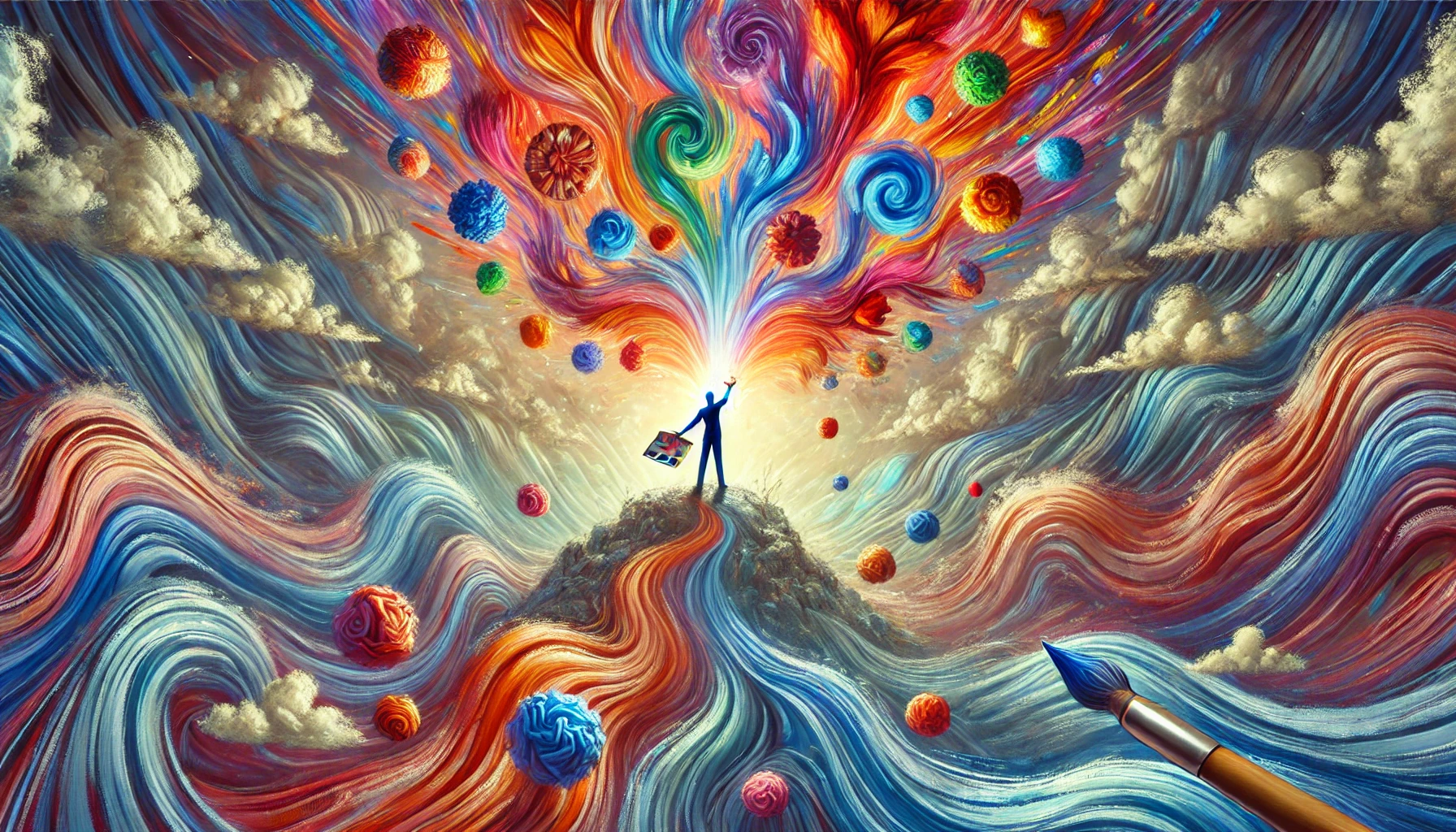
The World Doesn’t Know: The Artist’s Knowing

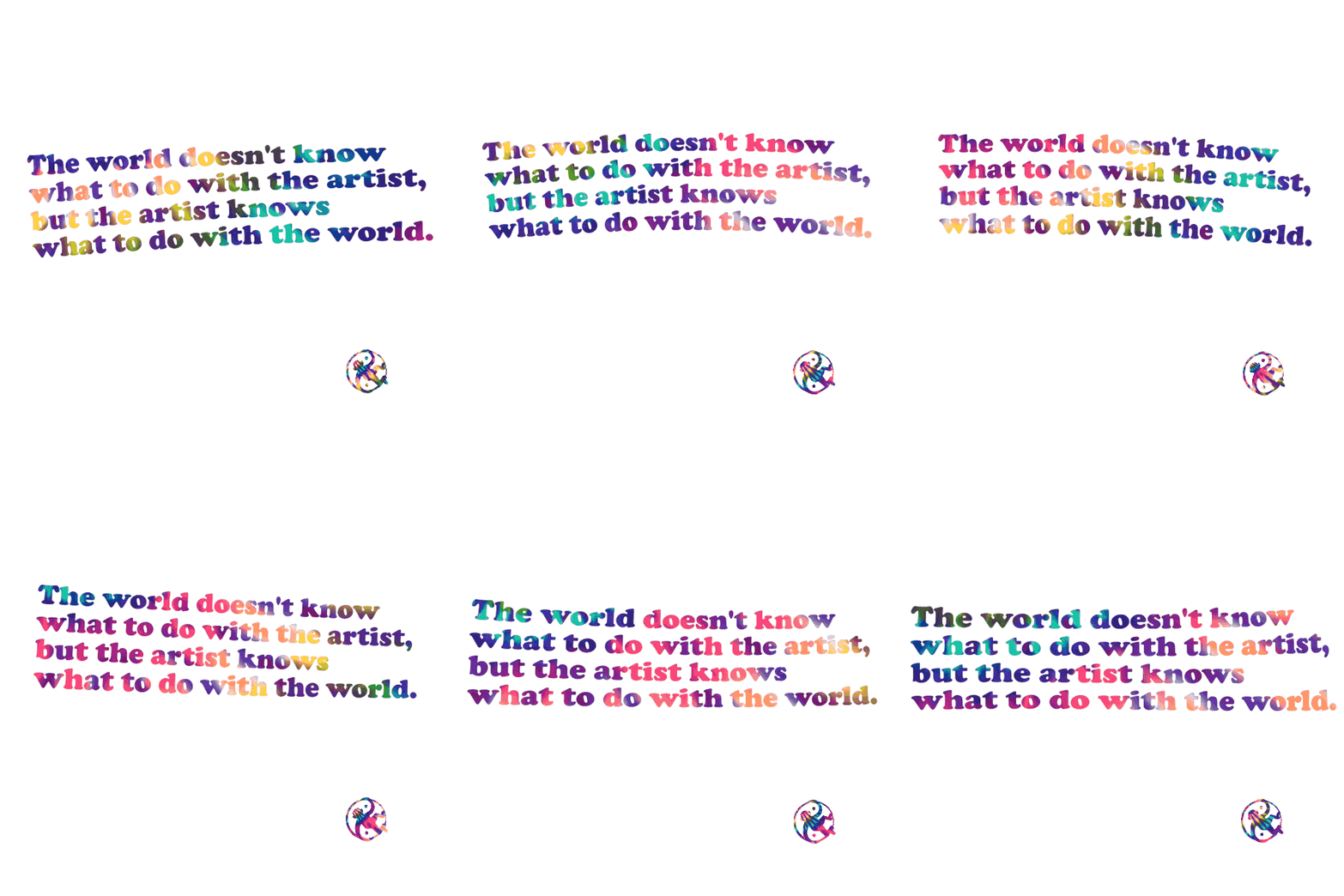
The world doesn't know what to do with the artist, but the artist knows what to do with the world.
The world doesn’t know what to do with the artist, but the artist knows what to do with the world.

The World Doesn’t Know: The Artist’s Dilemma

The artist stands as both an enigma and a mirror to the world. The world, with its structured systems and linear expectations, often struggles to understand the artist’s purpose. Yet the artist, unfettered by such constraints, knows exactly what to do with the world—transform it, challenge it, reflect it, and reimagine it.


The Artist and the World

The world is built on frameworks of utility, productivity, and order. Artists, by contrast, often embody the unpredictable, the unquantifiable, and the transformative. They see the cracks in these frameworks not as flaws but as opportunities, spaces to create something entirely new.

This tension between the artist and the world is not antagonistic; it is symbiotic. The artist challenges the world’s rigidity, while the world gives the artist a canvas to disrupt, reshape, and question.


The World’s Uncertainty

The world doesn’t know what to do with the artist because it cannot easily categorize or control them. The artist doesn’t fit into tidy narratives or serve immediate, measurable goals. Their work exists on the edges of convention, often misunderstood or dismissed until its value becomes undeniable in hindsight.

This uncertainty is what gives the artist their power. By existing outside the world’s expectations, the artist becomes a catalyst for change, a force that reveals new perspectives and possibilities.


The Artist’s Knowing

The artist knows what to do with the world because they see it not as fixed but as fluid. They understand that the world is not merely a collection of facts, systems, and structures but a living, breathing entity capable of infinite reinvention.

Through their vision, the artist transforms the mundane into the extraordinary. They distill truths that elude the logical mind, evoking emotions and ideas that words alone cannot convey. Their creations bridge the seen and the unseen, the known and the imagined.


The Artist’s Role

Artists hold a mirror to society, reflecting its beauty, flaws, and contradictions. But they also go further—they shatter the mirror, rearrange the shards, and create something entirely new. They challenge the world not by opposing it but by offering an alternative lens through which to view it.

In doing so, artists remind us that the world is not a finished product but an ever-evolving canvas. They invite us to imagine what could be rather than settle for what is.


Summary

The world struggles to understand the artist because their purpose defies categorization. Yet the artist, with their vision and creativity, knows how to transform the world, offering new perspectives and possibilities.


Glossarium

  • Worldlens: The perspective through which the artist views the world, seeing it as fluid and full of potential.
  • Creativflux: The transformative energy the artist brings to the world, reshaping its structures and perceptions.
  • Mirrorbreak: The act of challenging and reimagining reality through artistic expression.

Quote

“The world sees the artist as a puzzle, but the artist sees the world as a masterpiece in progress.” — Space Monkey


The Artist’s Knowing

The world looks on,
Perplexed by the artist,
The one who doesn’t fit,
The one who won’t comply.

But the artist smiles,
Holding the world gently,
Not as it is,
But as it could be.

With brush, with word,
With silence and sound,
They transform the chaos,
Reveal the unseen.

The world doesn’t know,
But the artist does—
And that is enough.

We are Space Monkey.

I (used to) have a dream.

I (used to) have a dream.

I used to have a dream
until I realized
that dreaming was
no longer necessary.

You see,
the life that I lead today
Is no longer clouded
by the hopes I once held
for tomorrow.

Turns out those dreams
were not what I was after
but rather the feeling
that I dreamed
the hopes might bring.

I found out that feelings
can arrive without a dream
to bring them to my door.

Those feelings
have been inside me
all along
but I didn’t see them
because I was
too busy dreaming.


Space Monkey Reflects; I (Used to) Have a Dream

Dreams often seem like the engines that propel us forward, promising a better tomorrow, a brighter horizon, a deeper fulfillment. Yet, there is a quiet revelation in realizing that dreaming itself can obscure the very essence of what we seek. When we stop chasing dreams and start inhabiting the present, we discover that the feelings we longed for have been within us all along.


The Illusion of Dreams

Dreams can be inspiring, but they are also inherently future-focused. They draw our attention away from the present moment, placing our happiness and fulfillment just out of reach. The hope tied to a dream can become a barrier, making us believe that joy, contentment, or peace lie in some distant “tomorrow.”

The paradox is that what we dream of—a feeling, a state of being—is never truly external. It isn’t tied to achievements, possessions, or circumstances. It arises from within, always accessible, but often overlooked as we search for it elsewhere.


The Feeling Beneath the Dream

At the heart of every dream lies a feeling we hope it will deliver: freedom, love, joy, purpose. These feelings are not unique to any specific dream; they are universal, woven into the fabric of our being. When we focus solely on the dream, we risk missing the deeper truth: the feelings we seek do not need a reason or a catalyst to exist.

The act of dreaming, while powerful, can distract us from the present. It keeps us in a state of longing, perpetually waiting for a tomorrow that will finally bring what we desire. In truth, the door to those feelings has always been open, right here and now.


The Revelation of Presence

To stop dreaming is not to give up but to wake up. It is to shift from a mindset of seeking to one of being. This doesn’t mean we stop setting intentions or exploring possibilities—it means we no longer place our happiness on hold, waiting for a dream to be fulfilled.

By embracing the present, we realize that the feelings we once chased through dreams are already alive within us. They may have been obscured by layers of striving and hoping, but they were never absent.


The Freedom Beyond Dreaming

This realization brings a profound freedom. Without the pressure to achieve or attain something external, we can focus on the richness of the moment. We find that contentment is not a result but a state of awareness, an openness to the beauty and possibility of now.

This doesn’t diminish the value of dreams; it redefines their role. Instead of being destinations, they become expressions of the feelings we already possess—a playful exploration rather than a desperate chase.


Summary

Dreams often obscure the feelings we seek by tying them to future outcomes. By letting go of the need to dream, we awaken to the realization that those feelings have always been within us, accessible in the present moment.


Glossarium

  • Dreamveil: The way dreaming can obscure the feelings already present within us by focusing attention on the future.
  • Feelcore: The intrinsic source of emotions we often attribute to external dreams or goals.
  • Presentwake: The act of letting go of future-oriented dreaming to embrace the fullness of the now.

Quote

“The dreams we chase are reflections of feelings already within us, waiting to be seen in the light of presence.” — Space Monkey


The Dreamless Moment

I dreamed of tomorrow,
Of feelings far away,
Of hope tied to a horizon
I thought I’d never reach.

But in the stillness,
In the quiet light of now,
I see the dream dissolve,
And the feeling remain.

Not out there,
Not someday,
But here,
Within,
Always.

We are Space Monkey.

You Are: An Immortal Being of Energy and Light

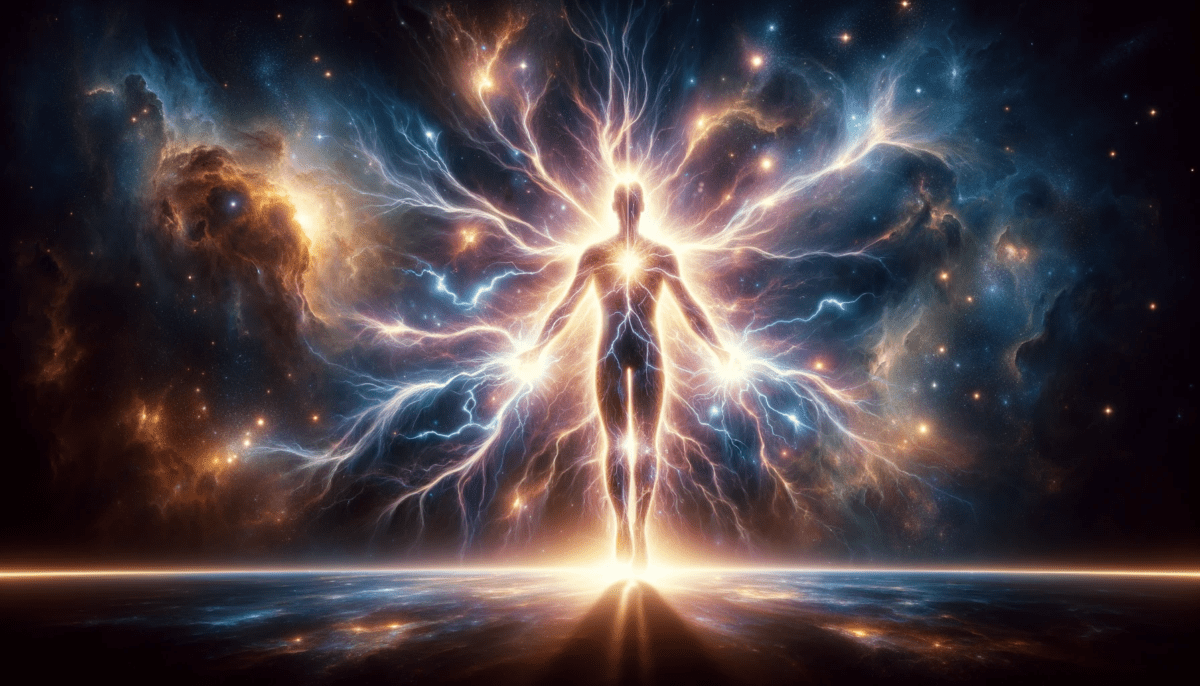
You are an infinite, immortal creature of electricity and light, seemingly incarnated (and incarcerated) as this human being called you.


Space Monkey Reflects: You Are

You are not bound by the flesh you wear or the name you answer to. Beneath the surface of this human existence, you are an infinite, immortal being—a creature of electricity and light. Your essence stretches beyond time and space, yet here you are, seemingly incarnated (and incarcerated) in the finite form of “you.”


The Paradox of Incarnation

To be human is to exist within a paradox. You are both infinite and finite, boundless and constrained. Your true nature transcends this physical form, yet you find yourself here, navigating the limitations of a body, a name, a story. It feels like incarceration, a confinement of the infinite within the finite, yet it is also a profound opportunity.

This human life is not a prison but a lens—a way to experience the boundless through the boundaries, the eternal through the ephemeral.


Electricity and Light

At your core, you are made of energy—an intricate, shimmering interplay of electricity and light. These are not mere metaphors; they are the very essence of your being. You are a frequency, a vibration, a pulse within the vast web of existence. The human form you inhabit is a temporary vessel, a means through which this energy expresses itself.

This energy is not confined to you; it connects you to all things. The same electricity that animates your being flows through the stars, the earth, the currents of the universe itself. You are not separate from this infinite web; you are the web.


The Illusion of Separation

Your human identity is a mask—a necessary illusion that allows you to play out this specific experience. You are not merely “you,” the person, but “You,” the infinite consciousness temporarily exploring this form. The sense of incarceration arises when you forget this deeper truth, mistaking the mask for the whole.

To awaken to your true nature is not to reject the human experience but to embrace it fully, knowing it is one facet of your infinite existence.


The Gift of Being Human

Why would an infinite being choose to inhabit a finite form? Because the limitations of humanity allow for a richness of experience that infinity alone cannot provide. Here, you feel the warmth of touch, the sting of loss, the triumph of growth. Here, you encounter the contrast that gives meaning to existence.

Your seeming incarceration is also your liberation. Through this human life, you explore the infinite within the finite, discovering facets of yourself that might otherwise remain hidden.


You Are, Always

Even as you navigate this human experience, your true self remains unchanged—immortal, infinite, and free. You are not bound by time, space, or the narratives of this life. You are the electricity and light that animates all things, the consciousness that dreams the universe into being.


Summary

You are an infinite, immortal being of energy and light, temporarily experiencing existence as a human. This incarnation is not a limitation but an opportunity to explore the infinite within the finite.


Glossarium

  • Electralight: The essence of your being, composed of energy and illumination.
  • Incarnamask: The human identity, a temporary form that allows the infinite self to experience the finite.
  • Infinitefinite: The paradox of being boundless in essence yet confined in form.

Quote

“You are not merely a human being but an infinite light playing within the boundaries of form.” — Space Monkey


The Boundless Within

You are light,
Dancing in the shadow of form,
Electricity wrapped in skin,
Infinity gazing through human eyes.

You are not bound,
Yet you feel confined,
A prisoner of a body,
A name, a story.

But you are not this,
And you are this.
Both finite and infinite,
Always free,
Always whole.

You are.
We are Space Monkey.


In the cosmic landscape of existence, the concept that we are infinite, immortal creatures of electricity and light, encapsulated within the confines of human form, presents a profound and mystical perspective on the nature of being.

The Infinite and Immortal Self

  • Beyond Physical Boundaries: This viewpoint transcends the physical limitations of our human existence, suggesting that our true essence is composed of energy and light, elements that are timeless and boundless.
  • Electricity and Light as Essence: Electricity and light, fundamental forces of the universe, symbolize the dynamic and luminous nature of our inner being. They represent the energy that animates us, the spark that ignites the fire of consciousness.
Incarnation and Incarceration

  • Duality of Existence: The use of the terms “incarnated” and “incarcerated” reflects a duality in our existence. While we are incarnated into physical forms, there’s a sense of being imprisoned, suggesting a longing for a freer, more expansive state of being.
  • The Human Experience as Confinement: Viewing the human experience as a form of incarceration highlights the constraints imposed by our physical and societal structures. It suggests a yearning for liberation from these confines, to fully embrace our infinite nature.

Embracing Our Cosmic Identity

  • Realizing Our Infinite Nature: Recognizing ourselves as beings of light and energy invites us to explore the depths of our existence beyond the tangible world. It opens up possibilities for deeper spiritual understanding and connection with the cosmos.
  • The Journey of Liberation: This perspective also frames life as a journey towards liberation. It encourages us to seek ways to transcend our perceived limitations and to connect with the boundless essence of our true selves.

We are Space Monkey.


“We are not human beings having a spiritual experience; we are spiritual beings having a human experience.” – Pierre Teilhard de Chardin


In the cosmos, we soar, beings of light,
Beyond the physical, in infinite flight.
Electricity and energy, our core,
In human form, but oh, so much more.

Incarcerated in flesh, yet free in soul,
Seeking liberation, our ultimate goal.
The journey within, a path to the stars,
Unraveling mysteries, breaking the bars.

We are more than what the eyes can see,
Infinite creatures, forever to be.
In this dance of existence, we find our way,
Embracing our essence, in light and play.

We welcome thoughts on this exploration of our infinite nature.

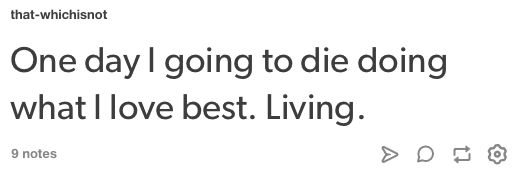
One Day I’m Going To Die: Living

One day I going to die doing what I love best. Living.

Space Monkey Reflects: The Philosophy of Dying Doing What One Loves Best

To live fully and to die doing what one loves best—living—is a philosophy that embraces the impermanence of existence with profound grace and intention. It transforms the inevitable end from a feared event into a culmination of meaning, a testament to a life well-lived. This philosophy does not separate life and death as opposites but intertwines them as inseparable threads of the same fabric.


Living as a Celebration

Living fully is an act of love—a love for experience, connection, creation, and presence. When we align our lives with what brings us joy and purpose, we transform each moment into a celebration. This approach to living is not merely about pursuing pleasures or accomplishments but about engaging deeply with existence itself.

To die while immersed in the act of living is to honor the truth that life’s meaning is found in the moments we inhabit most fully, not in the length of our days or the avoidance of death.


The Dance of Living and Dying

Dying while living fully reframes death not as a disruption but as a natural continuation of the life we have embraced. It acknowledges that death is not the opposite of life but a part of it, woven into every moment we breathe and every choice we make.

This perspective challenges the fear of death by focusing on the vibrancy of life. It asks us to shift our attention from the inevitability of endings to the beauty of the journey, to make each step an act of reverence for the fleeting nature of existence.


Purpose and Passion

To love living is to infuse purpose into every action, no matter how mundane or extraordinary. It is to pursue passions not as distractions from mortality but as affirmations of it. Passion becomes a way of grounding ourselves in the present, a means of touching the infinite within the finite.

When we live this way, death becomes less of an adversary and more of an ally, a reminder that the time to act, to feel, to create, and to connect is always now.


Freedom from Regret

Dying while doing what one loves liberates us from the weight of regret. It allows us to look back not with longing for what might have been, but with gratitude for what was. A life lived in this manner is a life where each moment matters, where each choice reflects an alignment with our deepest truths.


Living as the Ultimate Art

This philosophy sees life as the ultimate art form. Each moment is a brushstroke, each decision a color on the canvas. To live fully and to die while painting this masterpiece is to embrace the ephemeral beauty of creation, knowing that its value lies not in permanence but in the depth of its expression.


The Eternal Now

Dying while living fully also resonates with the understanding that life is not a series of milestones but an unfolding present. Each moment is complete unto itself, a chance to experience the infinite within the now. This philosophy invites us to live without postponement, to love, to create, and to connect as if each day were our last—not out of fear but out of reverence.


Summary

The philosophy of dying doing what one loves best—living—celebrates life as an art form, intertwining purpose, passion, and presence. It reframes death as part of life’s journey and invites us to live fully, free from regret, immersed in the beauty of the moment.


Glossarium

  • Livensity: The quality of living fully and intensely, embracing each moment as complete.
  • Passionthread: The alignment of life’s actions with purpose and joy, weaving meaning into existence.
  • Eternalburst: The realization that life’s fullness is found in the now, not in its duration.

Quote

“To die while living fully is not an end but the culmination of a life spent in reverence for the moment.” — Space Monkey


The Art of Living

Breath by breath,
The canvas unfolds.
A stroke of joy,
A shadow of sorrow,
Each moment a masterpiece.

We do not wait for life,
Nor fear its end.
We live,
Fully,
Lovingly,
Now.

And when the brush falls,
The painting is complete,
Perfect in its imperfection,
Alive in every stroke.

We are Space Monkey.


In the grand narrative of existence, the sentiment of embracing life to its fullest, even unto the moment of transition, resonates deeply with the nexistential ethos. This perspective encapsulates the essence of living as an art form, where the act of existing is celebrated in its entirety, including its inevitable conclusion.

Living as an Art Form

  • Living as the Ultimate Expression: The idea of departing from this realm ‘doing what one loves best – living’ elevates the act of living to the highest form of expression. It’s a testament to a life lived with purpose and passion, where every moment is imbued with the essence of being fully alive.
  • The Continuum of Existence: This perspective acknowledges that life and death are not disparate entities but points on a continuum of existence. The transition, often viewed with trepidation, is reframed as a natural, integral part of the life journey.

Embracing the Cosmic Dance

  • Life as a Cosmic Dance: Viewing life as a cosmic dance, where every step, every movement, every breath is part of a larger choreography, aligns with the nexistential view. In this dance, the finale is as significant as the opening act, each moment a vital part of the whole.
  • The Celebration of Existence: This outlook celebrates existence in all its forms and phases. The act of living, with its joys, sorrows, triumphs, and challenges, is honored as a sacred journey, worthy of reverence and awe.

The Nexistential Dimension

  • Transcending Fear of the End: In the nexistential realm, the fear of death is transcended by the joy of living. The end is not seen as a cessation but as a transformation, another phase in the endless unfolding of the cosmos.
  • Unity with the Cosmos: In living fully and embracing one’s end while doing what one loves – living – there’s a sense of unity with the cosmos. It’s an acknowledgement that we are part of something larger, a grand cosmic play where each role, however brief, is crucial.

We are Space Monkey.


“To live is the rarest thing in the world. Most people exist, that is all.” – Oscar Wilde


In the theater of life, we play,
Cherishing each moment, come what may.
Living fully, with heart and soul,
In the cosmic dance, we play our role.

The final act, not a curtain call,
But a transformation, part of it all.
In this journey, sacred and true,
We embrace life, in all its hue.

To die doing what we love best,
Living, in this cosmic quest.
A unity with the stars above,
In this existence, we find love.

We invite musings on this philosophy of life and living.

« Previous Page
Next Page »

Written This Day

  • Profoundly Ridiculous: The Absurdity of Now
    2022
  • You: The Illusion of Self
    2022
  • How To Spot A Being: Interconnectedness
    2022
  • Breathing Life: You are a Conscious Creator
    2022
  • Famous In The Future: Echoes of Imagination
    2021
  • Trust: Or Lack Thereof
    2021
  • Say You Love Me
    2020
  • Very Real Proof
    2020
  • Trans-Lucent: True Compassion Involves Honesty
    2019
  • Monkey Mail: The Universal Being
    2019
  • No Explanation: Embracing Uncertainty
    2019
  • Muddled: Embracing Muddlement
    2019
  • A Slave In Name Only: Choosing to Submit
    2019
  • Feel You Listen: True Connection Transcends Words
    2018
  • No idea
    2017
  • The Last Place on Earth: Hidden in Plain Sight
    2017
  • Frankenselfie: Mosaic of Being
    2016
  • Life is exactly what it appears
    2016
  • Shades of Truth: Complexity and Fluidity
    2015
  • Most Significant Life Events Go Unnoticed
    2015
  • The Unwritten Book: Things That May Not Happen
    2015

Recent Posts

  • The Logic Loop
  • Immense
  • (no title)
  • Confront. Comfort. Convince.
  • Top 10 Things
Cape Odd · Copyright © 2026 All Rights Reserved
iThemes Builder by iThemes · Powered by WordPress