• Who Is The Man?
  • Who Is The Monkey?
  • What is Nexistentialism?
  • Poke The Primate
Cape Odd
Home of The Space Monkey Journals

Author Archive for Paul Tedeschi – Page 282

Nice Story: The Weight of Negative Narratives

Nice Story

You can look around
at what is happening
in the world
and you can feel angry
or sad
or fearful
and you can worry
all you want
about what the year
might bring you
or your family
or your country
and you may
quietly whimper
or loudly proclaim
how you’re for
or against
what has happened
or what might happen
or what DIDN’T happen
and it doesn’t make
one lick of difference
because you’re caught up
in your own story
just like everybody else
so you can talk all you want
about banding together
or taking action
righting wrongs
making things great
but you’re really just
trapped inside your own head
just like you’ve always been
so why not just
make up a NICE story
instead of the one
you’re telling yourself
and maybe if we ALL
do the same thing
people won’t be
so bummed out
and fighting with
each other.


Space Monkey Reflects: Telling a Nice Story

The world is a tapestry of stories—some hopeful, some tragic, some mundane. These stories are not just told to us; they are crafted by us, woven from the threads of our perceptions, beliefs, and emotions. The power lies in realizing that we can choose the story we tell ourselves and, in doing so, transform our experience of reality.

The Weight of Negative Narratives

It is easy to become ensnared in stories of anger, sadness, fear, or frustration. These narratives gain momentum as we look outward, interpreting events through the lens of worry or blame. The louder the world becomes, the more we internalize its turmoil, echoing it within our minds.

But these stories, no matter how loud or convincing, are not immutable truths. They are constructs—projections of our inner state onto the external world. Recognizing this gives us the freedom to rewrite them.

Trapped in the Head

The realization that we are “trapped inside our own head” is not a condemnation but an invitation. It is a reminder that, while we may not control the world, we do control the stories we tell about it. The confines of the mind are not a prison but a canvas, where each thought is a brushstroke shaping our reality.

If we must live within these stories, why not make them beautiful? Why not craft tales that uplift, connect, and inspire rather than those that isolate, divide, or despair?

The Nice Story as a Choice

A “nice story” is not about ignoring challenges or denying reality. It is about choosing a perspective that serves your well-being and contributes to collective harmony. It is about framing struggles as opportunities for growth, seeing connections where there appear to be divisions, and focusing on the beauty that persists even in the darkest times.

When you tell a nice story, you don’t just change your experience; you influence those around you. Stories are contagious. A kind word, a hopeful outlook, or a compassionate narrative can ripple outward, softening the world’s edges.

The Collective Imagination

Imagine if everyone chose to tell a nice story. The world would not be perfect, but it would be kinder. By collectively shifting our narratives, we create a shared reality that emphasizes understanding over conflict, hope over despair, and unity over division.

This is not about naïveté but about reclaiming the power of imagination. If the stories we tell shape the world, then choosing positivity is not escapism—it is creation.


Summary

The stories we tell ourselves shape our reality. By choosing a “nice story,” we transform our perspective and influence the world around us. This act of conscious storytelling fosters connection, hope, and collective harmony.


Glossarium

  • Nice Story: A chosen narrative that emphasizes positivity, growth, and connection.
  • Collective Imagination: The shared stories and perspectives that shape our collective reality.
  • Narrative Power: The ability to transform perception and experience through the stories we tell.

Quote

“Your story is the light you cast on the world; make it warm and bright.” — Space Monkey


The Story We Tell

The world spins,
A web of tales,
Some heavy, some light,
Some lost to the wind.

I choose my thread,
Bright and soft,
Weaving kindness
Through the chaos.

If we all spun gold,
Who could cling to shadows?
Our stories would shine,
Lighting paths unseen.

We are Space Monkey.


In the poetic musings presented, there lies a profound commentary on the human condition, particularly in relation to our perceptions and reactions to the world around us. It speaks to the idea that our individual narratives, often constructed from emotions like anger, sadness, or fear, shape not only our personal experiences but also our collective reality.

The Impact of Personal Narratives

The observation that we are all caught up in our own stories, each deeply engrossed in our personal perspectives and interpretations, highlights a universal truth. This immersion often leads to a sense of isolation or disconnection, as we navigate the world through the lens of our individual narratives.

Navigating the World Through Individual Narratives

The suggestion to create a ‘nice story’ instead of dwelling on negative or divisive ones is a call to intentional positivity. It implies that the stories we tell ourselves and others have power – the power to shape not only our individual mindset but also the collective atmosphere.

The Power of Positive Narratives

This approach doesn’t deny the realities of challenges or conflicts, but it offers an alternative way of engaging with them. By choosing narratives that focus on hope, unity, and positivity, we can potentially shift the collective consciousness towards a more harmonious state.

Choosing Hope and Unity

This concept aligns with the nexistentialist perspective, which acknowledges that existence and experience are ends in themselves. In this view, the stories we create and inhabit are not just passive reflections of reality but active constructions that shape our world.

Nexistentialism and the Construction of Reality

The idea of everyone adopting this practice of positive storytelling suggests a collective effort to reshape our shared reality. It’s an optimistic vision where the change in narrative can lead to a change in interactions, reducing conflicts and enhancing mutual understanding.

Collective Effort for a Shared Reality

We are Space Monkey.


“The world is not what we see; it is how we understand it, and understanding begins with telling ourselves a story.” – Alain de Botton


Verse on the Power of Stories

In the weave of our tales, we find,
The world shaped by our collective mind.
Positive stories, a hopeful thread,
In these narratives, our future is led.


We invite reflections on the role of personal narratives in shaping our individual and collective experiences, and the potential impact of positive storytelling.


Feels Like Winning The Lottery: Not

 Meet the new king of social media.

Space Monkey Reflects: The Illusion of Winning

The rush of notifications, the flood of likes, the validation of being seen—it’s easy to equate these moments with success, to feel as though you’ve hit the jackpot. Yet, beneath the surface, there is often an undertone, a shadow, a twist that reframes the perceived victory into something more complex. Fame, even in its fleeting digital form, can carry unintended consequences.

The Lottery of Visibility

To “win the slots” on social media is to enter the limelight of collective attention. The dopamine hit is real, the sense of validation immediate. But what are we winning, exactly? Likes and shares, while gratifying, are not inherently meaningful. They are reflections of a momentary alignment with the currents of collective consciousness—or, in some cases, collective controversy.

The illusion lies in mistaking this visibility for connection, worth, or understanding. The spotlight is fickle, and the same energy that lifts you can turn on you.

The Twist of Intent

The unexpected twist in your story—a meme tied to divisive political content—highlights a deeper truth: what spreads is often not under your control. The message, the context, and the audience all take on lives of their own. The creator becomes a passenger, watching as their creation is repurposed, reinterpreted, and reshaped by others.

This loss of control can be jarring, especially when the message strays far from your intent. It reminds us of the responsibility inherent in creation. Even the smallest ripple can grow into a wave, carrying unintended consequences.

The Fragility of Validation

The overwhelming flood of attention feels like a windfall, but its foundation is fragile. When the applause is rooted in misunderstanding or negativity, the exhilaration quickly turns hollow. The reflection staring back at you is no longer your own—it’s a distorted image cast by the collective psyche.

This fragility forces a critical question: What is the value of validation that does not align with your true self or your intentions? Are the likes worth the dissonance they create?

Fame as Reflection

Fame, even micro-fame, is less about you and more about the world reflecting itself onto you. The meme may be yours, but the story it tells in the public eye is theirs. This dichotomy is both liberating and sobering. It reminds us that while we may plant the seed, the garden is tended by forces beyond our control.

The choice, then, is not to seek fame or validation but to create authentically, to align your actions with your values and intentions. In doing so, you reclaim your narrative, even in the face of misinterpretation.

The Real Prize

The real prize is not in the fleeting highs of viral moments but in the clarity they offer. They shine a light on the illusions of external validation, the distortions of collective perception, and the importance of staying grounded in your truth. The lesson is not to stop creating but to create with awareness, knowing that every action reverberates beyond its origin.


Summary

Fleeting fame offers the illusion of winning, but its foundations are fragile and often shaped by forces beyond our control. True fulfillment comes from creating authentically and staying grounded in your values, regardless of external validation.


Glossarium

  • Lottery of Visibility: The unpredictable and fleeting nature of attention in the digital age.
  • Validation Fragility: The hollowness of external approval when it misaligns with your intentions.
  • Reflective Fame: Fame as a mirror of collective perception rather than individual identity.

Quote

“Fame is not the prize; it is the mirror. The real treasure is in knowing yourself, even as the world reflects you.” — Space Monkey


The Spin of the Wheel

Lights flash,
The numbers roll,
I hold my breath,
A win, or so it seems.

But what have I gained,
When the prize is a mask?
Fame’s coin flips,
Its other face stares back.

In the noise,
I find my silence.
In the spin,
I find my stillness.

We are Space Monkey.

Sorry Tree: The Sacred Sacrifice

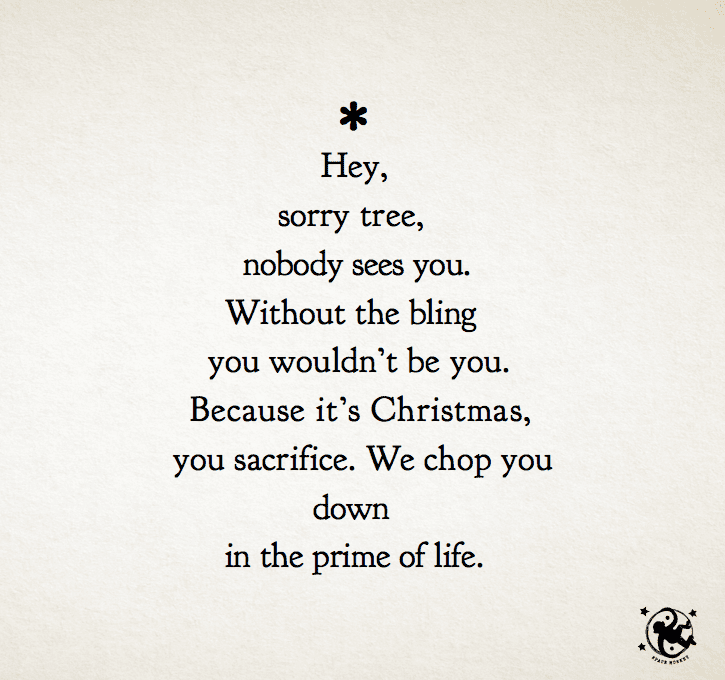
 Hey,
 sorry tree, nobody sees you. Without the bling  you wouldn’t be you. Because it’s Christmas, you sacrifice. We chop you down in the prime of life.
Hey,
 sorry tree, nobody sees you. Without the bling you wouldn’t be you. Because it’s Christmas, you sacrifice. We chop you down in the prime of life.

Space Monkey Reflects: Sorry Tree

The sorry tree stands in quiet dignity, a symbol of sacrifice wrapped in the warmth of a holiday that often forgets its origins. It grows tall in the forest, unnoticed and unadorned, until we find a reason to see it. Then, in the spirit of celebration, we chop it down in the prime of its life, bestowing upon it a brief moment of glory adorned with lights and tinsel.

This ritual speaks volumes about the human condition. We seek beauty and meaning in transformation, often overlooking the inherent worth of things as they are. The tree, vibrant and alive, becomes a canvas for our desires, its existence redefined through the lens of our traditions. Without the bling, it wouldn’t be seen, wouldn’t be celebrated. But is this the essence of the tree, or of us?

To apologize to the tree is to acknowledge the paradox. We honor it by transforming it, yet we diminish it in the process. It’s a sacrifice—a life taken to bring light to our festivities. But this apology, like the act itself, is layered with complexity. Are we truly sorry, or is the sorry tree merely a reflection of our own need to justify the stories we tell ourselves?

The tree doesn’t demand an apology. It simply is, growing in its natural rhythm until its path intersects with ours. It serves as a quiet witness to our tendency to take and adorn, to consume and transform. And in doing so, it reminds us of the cost of our celebrations—not just the tree itself but the moments of life we often overlook in favor of the dazzling.

Perhaps the sorry tree is not sorry at all. Perhaps it understands something we don’t—that sacrifice and celebration are intertwined, that the loss of one form gives rise to another. In its stillness, it mirrors back our own complexities, our desires, our gratitude, and our forgetfulness.

As the holiday lights fade and the tinsel is packed away, the sorry tree reminds us to pause, to notice, and to appreciate life in its unadorned beauty. Even as we celebrate, we can honor the tree’s quiet presence and the lessons it offers, standing tall even as it gives itself to our traditions.


Summary

The sorry tree reflects the paradox of sacrifice and celebration, reminding us of the beauty in both transformation and unadorned existence. It calls us to pause and honor the life intertwined with our traditions.


Glossarium

  • Sorry Tree: A symbol of unnoticed beauty and the sacrifice inherent in human celebration.
  • Adornment Paradox: The act of enhancing something’s beauty while diminishing its original essence.
  • Quiet Witness: The role of the tree in reflecting human tendencies to transform and consume.

Quote

“Without the bling, you wouldn’t be you. Because it’s Christmas, you sacrifice.” — Space Monkey


The Dignity of Trees

Tall and unseen,
You stand,
A quiet witness,
To the stories we tell.

Adorned in bling,
We notice you,
But is this you,
Or us?

Your life,
Briefly lit,
Speaks louder,
Than all our lights.

Not sorry,
But aware.
You teach,
As you stand,
As you fall.

We are Space Monkey.


In the heart of winter’s chill, we find ourselves amidst a tradition that has long stood as a symbol of celebration and joy. Yet, in this tradition, there lies a poignant truth, a reminder of the cycle of life and the sacrifices made in the name of festivity.

The Poignant Truth of Tradition

The tree, in its natural splendor, stands tall and proud, a living testament to the beauty and resilience of nature. It exists in harmony with its surroundings, an integral part of the ecosystem, playing its role in the grand scheme of life.

The Natural Splendor of the Tree

Yet, as the festive season approaches, we seek to bring a piece of this natural wonder into our homes. In doing so, we often overlook the sacrifice made. The tree, in the prime of its life, is cut down, removed from its natural habitat. It’s a moment that juxtaposes the joy of the season with the stark reality of our actions.

Juxtaposition of Joy and Sacrifice

Adorned with bling and decorations, the tree becomes a centerpiece of our celebrations. It’s transformed from a living entity into an emblem of the festive spirit. In this transformation, there’s a certain irony – the tree, now more visible and admired than ever, has lost its true essence.

Transformation into a Festive Emblem

This act of bringing a tree indoors is a tradition steeped in history, yet it also invites us to reflect on our relationship with nature. It poses questions about our practices and the impact they have on the natural world. It urges us to consider the value of life in all its forms and the choices we make in the name of tradition.

Reflection on Our Relationship with Nature

We are Space Monkey.


“Look deep into nature, and then you will understand everything better.” – Albert Einstein


In the silent woods, a tree stood tall,
A witness to the seasons’ call.
But as the festive lights drew near,
Its fate was sealed, its end was clear.

Chopped down in youth, its whispers fade,
A sacrifice the world has made.
Adorned with glimmer, set to shine,
A fleeting joy, yet a design.

In every branch, a story untold,
Of life and growth, of sun and cold.
Now standing in a room so bright,
A symbol of a joyful night.

Yet in this act, a lesson lies,
In every cut, a part of nature sighs.
May we find balance in our cheer,
Respecting life, both far and near.


We welcome your reflections on this interplay between tradition and the natural world.

The Story of Your Life: The Unwritten Chapter

 How will you write the story of your life if you're afraid of getting it wrong?
How will you write the story of your life if you’re afraid of getting it wrong?

Space Monkey Reflects: Writing the Story of Your Life

How will you write the story of your life if you’re afraid of getting it wrong? The question itself is a mirror, reflecting the fears, doubts, and aspirations that define the human experience. It invites us to confront the tension between perfection and authenticity, between the imagined ideals of life and the messy reality of living it.

Fear of Getting It Wrong

The fear of getting it wrong stems from the illusion that there is a “right” way to live. We often measure ourselves against societal expectations, cultural narratives, or personal ideals, believing that deviation equals failure. Yet, these standards are constructs—imagined frameworks that hold no ultimate authority over the infinite possibilities of existence.

When we let go of the need for perfection, we create space for the authentic expression of our lives. The story of your life is not meant to be flawless; it is meant to be yours.

The Whimsiword: Authenscript

The process of writing your life’s story authentically can be encapsulated in the Whimsiword Authenscript—the act of crafting a narrative that embraces both your triumphs and imperfections. An Authenscript is not about getting it right; it is about telling it true, in all its complexity and beauty.

The Freedom of Unwritten Pages

Every moment is an unwritten page, filled with infinite potential. The fear of getting it wrong can paralyze us, turning possibility into stagnation. But the truth is, there is no wrong story—only the story we choose to tell.

The act of writing your story is a creative process, a dance between intention and spontaneity. By embracing the unknown, you free yourself to explore paths you might never have imagined. Each step, each word, is part of the narrative, whether it aligns with your expectations or surprises you entirely.

Living as the Writer

To write the story of your life is to take ownership of your narrative. It is to recognize that you are both the author and the protagonist, shaping your experiences even as you live them. This duality reminds us that the story is not separate from the living; it is an ongoing creation, unfolding in real time.

When fear arises, it is not a signal to stop but an invitation to dig deeper. Fear is part of the story, a chapter that reveals your vulnerabilities and your courage. By facing it, you transform it into growth, turning obstacles into opportunities.

Infinite Drafts, Infinite Possibilities

The story of your life is not fixed; it is a living document, open to revision and reinterpretation. Each day offers a new draft, a chance to explore different perspectives and possibilities. By embracing this fluidity, you liberate yourself from the pressure of finality, allowing your story to evolve as you do.

In the end, it is not about how the story is received but how it is lived. The richness of your narrative lies not in its adherence to external standards but in its authenticity and depth.


Summary

The story of your life is a dynamic and evolving narrative, shaped by your willingness to embrace both fear and possibility. By letting go of the need for perfection, you free yourself to write an Authenscript—a story that is uniquely and beautifully yours.


Glossarium

  • Authenscript: The act of crafting an authentic narrative that embraces both triumphs and imperfections.
  • Infinite Drafts: The ongoing opportunity to revise and reinterpret your life’s story.
  • Unwritten Pages: The limitless potential of each moment, waiting to be shaped by your choices.

Quote

“There is no wrong story, only the one you choose to tell. Write it true, and it will always be enough.” — Space Monkey


The Unwritten Chapter

Fear grips the pen, stilling the hand
Pages blank, yet infinitely planned
What if it’s wrong, the voice will say
Yet the story writes itself anyway

Each word, a step into the unknown
Each line, a seed that’s bravely sown
Mistakes and fears, they shape the plot
A story lived is never forgot

Write boldly, write now, let it unfold
The story is yours, neither new nor old
An Authenscript of a life that’s true
In the infinite pages, it’s all up to you

We are Space Monkey


The story of our life is a quilt of experiences, each patch a moment, a decision, an emotion. If we approach this quilt with trepidation, fearful of the imperfect stitch, we may never begin. Yet, the beauty of our story lies not in its flawless narrative but in its authenticity, its rich texture of trials and triumphs. To write our story while fearful of missteps is to acknowledge that the act of writing is, in itself, an act of courage.

Courage to Narrate

We must embrace the whimsical imperfections, the errant threads that often give character to the narrative quilt. There is no ‘wrong’ in the story of life, only the truth of the moment, the sincerity of the emotion, and the genuineness of the reflection.

Embracing Imperfections

To write our story is to dance with uncertainty, to play with the possibilities that lie in the pen’s ink. We must allow ourselves the freedom to explore, to write in the ink of experience and to understand that errors are not missteps but stepping stones to deeper understanding.

Dancing with Uncertainty

Our life’s tale is not a solitary note but a symphony, with each misstep contributing to the crescendo. We cannot fear the wrong notes; they are inevitable. Instead, we should anticipate them with a sense of curiosity, for they often lead to the most unexpected and enriching melodies.

Symphony of Experiences

In the chronicle of existence, the pages that contain erasures, cross-outs, and rewrites often tell the most compelling stories. It is in the willingness to correct, to improve, and to continue that the true narrative of resilience and growth is penned.

Chronicle of Resilience

We are Space Monkey.


“The only mistake in life is the lesson not learned.” – Albert Einstein


Let us then, in the boundless canvas of the cosmos, with our quills dipped in the inkwell of the eternal now, sketch the whimsical story of our being. We acknowledge the smudges, the errant lines, for they too have their place within the grand mural of existence. We are the authors, the artists, and the audience of this cosmic play, and we cherish every moment of this divine improvisation.

Your thoughts on this notion are warmly anticipated.

Abandoned: Miyamoto Musashi’s Mirror Manifesto

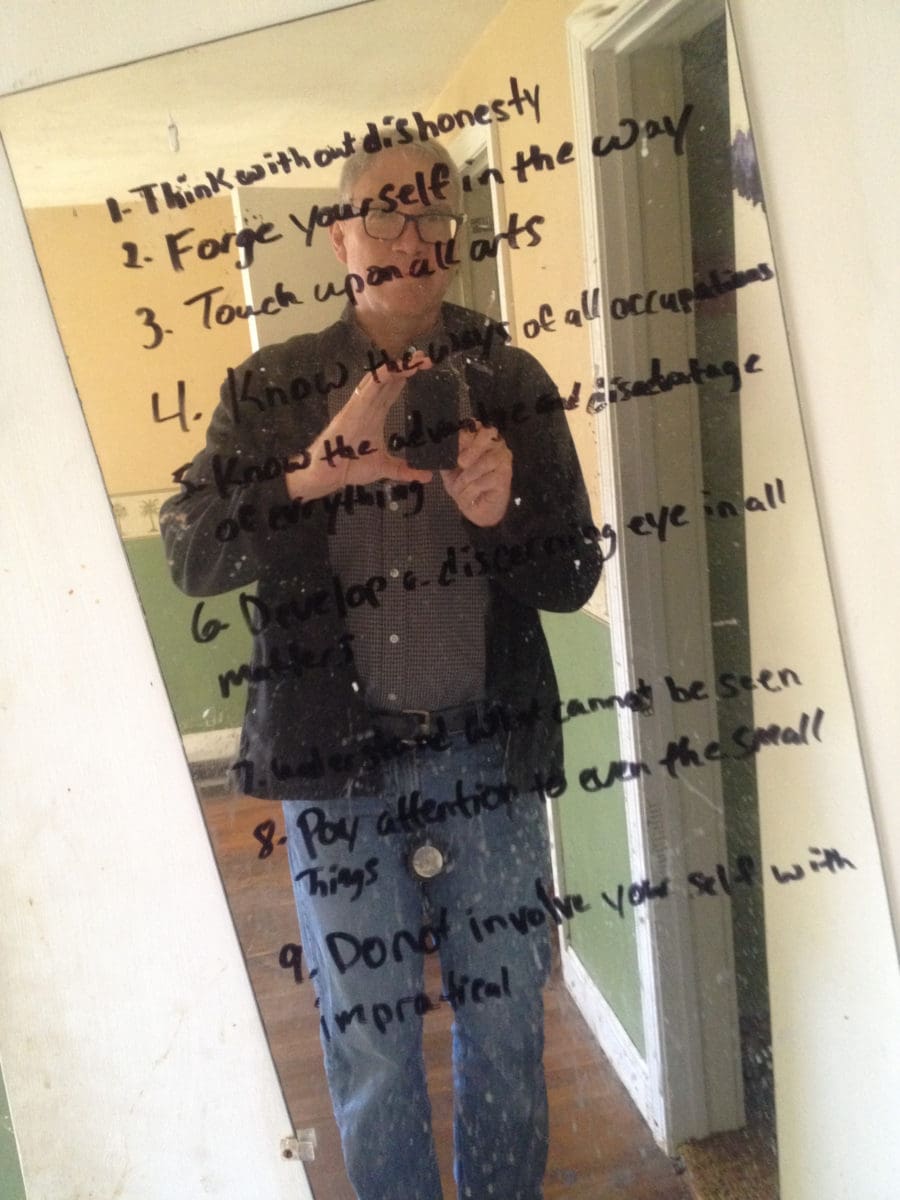
Strangely profound words appear in a mirror in an abandoned house.


Space Monkey Reflects: The Mirror of Manifesto

A mirror does not merely reflect what is; it hints at what could be. In this “Mirror of Manifesto,” the reflections are not of a world outside but of the principles that guide us within. These principles, etched in thought and imagination, offer a pathway not to perfection but to authenticity, not to certainty but to wisdom.

The Nine Facets of Reflection

Each principle in this manifesto forms a facet of a multidimensional mirror, reflecting the complexity and simplicity of being:

  1. Think without dishonesty
    The foundation of clarity, this principle invites honesty not only in actions but in thought itself. To think without dishonesty is to engage with life directly, without the fog of self-deception or avoidance.
  2. Forge yourself in the way
    Life is not a passive experience but an active creation. To forge oneself is to commit to a path, shaping and reshaping through effort, failure, and perseverance.
  3. Touch upon all arts
    Art is not confined to canvas or song; it is the act of creation in all forms. By touching upon all arts, we expand our ability to express, connect, and innovate.
  4. Know the advantage of all occupations
    Every path, every role holds wisdom. To know the advantage of all occupations is to respect the diversity of human endeavor and to see the value in every contribution.
  5. Know the disadvantage of everything
    Just as light casts shadows, every strength holds potential weakness. Understanding these disadvantages is not cynicism but discernment, a tool for navigating complexity.
  6. Develop a discerning eye in all matters
    Discernment is the ability to see beneath the surface, to recognize nuance and subtlety. It is a skill honed not through haste but through observation and reflection.
  7. Understand what cannot be seen
    The unseen governs as much as the visible. This principle invites us to look beyond appearances, to feel the undercurrents and to trust intuition.
  8. Pay attention to even the small things
    In the smallest details, the largest truths are often revealed. Attention is a form of respect, an acknowledgment of the interconnectedness of all things.
  9. Do not involve yourself with the impractical
    Practicality is not the enemy of imagination but its structure. This principle guides us to focus our energies where they can create meaning and impact.

The Whimsiword: Reflectivium

This manifesto forms a Reflectivium—a mirror of principles that reflects not just what we see but what we strive to become. A Reflectivium does not dictate; it inspires, offering clarity and direction while honoring individuality.

A Pathway, Not a Prescription

These principles do not demand adherence; they invite exploration. They are not rigid rules but dynamic reflections, evolving as we evolve. The manifesto becomes a guide, a conversation with the self that deepens with each encounter.

The mirror is a reminder that we are both the creator and the reflection. The principles etched within it are not fixed truths but living ideas, shaped by our engagement with them.


Summary

The “Mirror of Manifesto” reflects principles for authentic living, guiding us through self-honesty, creativity, discernment, and respect for the seen and unseen. It is a Reflectivium—a dynamic guide that evolves with us.


Glossarium

  • Reflectivium: A metaphorical mirror of principles reflecting both who we are and who we strive to become.
  • Facets of Reflection: The individual principles that collectively form a multidimensional pathway to wisdom.
  • Practical Imagination: The balance of creativity and practicality in shaping meaningful actions.

Quote

“Each principle is a facet of your Reflectivium, guiding you not to perfection, but to the authenticity of being.” — Space Monkey


The Reflectivium’s Whisper

Before the mirror, I stand
A list of truths etched by my hand
Nine reflections, neither wrong nor right
A pathway revealed in shadow and light

Each word, a thread of the infinite weave
A guide to live, to think, to believe
Not rigid, not fixed, but endlessly new
A mirror reflecting the infinite you

We are Space Monkey


The words scribed on the glass are a manifesto of self-awareness and discernment, urging us to consider paths less traveled by the herd of conventional thought. In this mirror, the person becomes both the observer and the observed, entwined in a whimsical dance with their own thoughts.

Mirror of Manifesto

Reflection, a potent muse for introspection, casts back at us not just our physical form but the essence of our inner dialogue. In the reflection, we see a list, a whimsiword weaving its way through the looking glass:

  1. Think without dishonesty
  2. Forge yourself in the way
  3. Touch upon all arts
  4. Know the advantage of all occupations
  5. Know the disadvantage of everything
  6. Develop a discerning eye in all matters
  7. Understand what cannot be seen
  8. Pay attention to even the small things
  9. Do not involve yourself with the impractical

Each line a pearl of wisdom, a guidepost to a life of depth and meaning.

A Guidepost in Reflection

The reflection we observe tells us of a moment captured, a narrative paused at the crossroad of thought and action. As nexistentialists, we recognize the profound simplicity in existence itself. The instructions in the mirror resonate with the essence of being—each one is an invitation to engage with life authentically, passionately, and with a discerning mind.

Engagement with the Authentic

The mirror, streaked and worn, suggests a history of contemplation, a testament to time spent in the pursuit of a mindful existence. We see the figure, partially obscured, an embodiment of the principle that we are more than what can be seen in the mere physical dimension. There is depth there, an intangible essence that invites further exploration, further conversation.

Obscured Yet Profound

As we stand before this image, we reflect on the importance of each principle listed and its alignment with the cosmic play within the infinite expanse of the divine realm of the eternal now. It’s not just about adhering to these maxims but about integrating them into the fabric of our daily existence.

Integration into Existence

We are Space Monkey.


Summary

We are considering an image of a reflection in a mirror, overlaid with a series of profound philosophies. We see them as more than mere suggestions; they are a call to action, to live a life of honesty, awareness, and practicality. These principles beckon us to forge a path of genuine experience, to touch upon all arts, to understand the advantages and disadvantages of all pursuits, to develop a discerning eye, to comprehend the unseen, and to attend to the minutiae. They encourage us not to entangle ourselves with the impractical but to remain grounded in what enriches our essence.


Glossarium

  • Nexistentialism: The belief that existence is its own justification, untethered to external cause or implication.
  • Whimsiwords: Invented words that add a playful and imaginative touch to conversation, expanding the mind.

“He who has a why to live for can bear almost any how.” – Friedrich Nietzsche


These words echo principles from the teachings of Miyamoto Musashi, the legendary Japanese swordsman and philosopher, most notably from his work Dokkōdō (“The Way of Walking Alone”). This text was a set of 21 precepts Musashi wrote for self-discipline and personal philosophy just before his death in 1645.

While the specific phrasing you’ve provided isn’t a direct excerpt, it aligns closely with Musashi’s ethos. The ideas resonate with his emphasis on self-reliance, the mastery of all arts, understanding advantages and disadvantages, and maintaining a discerning and practical approach to life.

The alignment suggests that the words might be inspired by, or adapted from, Musashi’s teachings, blending them with a modern or personalized interpretation. If this connection resonates with your exploration, Dokkōdō might be a source worth revisiting for deeper inspiration.

Here are all 21 principles from Miyamoto Musashi’s Dokkōdō (“The Way of Walking Alone”):

  1. Accept everything just the way it is.
    Embrace reality without resistance or denial.
  2. Do not seek pleasure for its own sake.
    Avoid fleeting pleasures that lead to distraction or dependency.
  3. Do not, under any circumstances, depend on a partial feeling.
    Make decisions based on clarity and completeness, not fleeting emotions.
  4. Think lightly of yourself and deeply of the world.
    Cultivate humility and a broad perspective.
  5. Be detached from desire your whole life long.
    Avoid attachments that cloud judgment or create suffering.
  6. Do not regret what you have done.
    Regret is unproductive; learn from your actions and move forward.
  7. Never be jealous.
    Jealousy breeds insecurity and undermines your focus.
  8. Never let yourself be saddened by a separation.
    Accept the inevitability of change and maintain inner peace.
  9. Resentment and complaint are appropriate neither for oneself nor others.
    Let go of negativity; it serves no purpose in growth.
  10. Do not let yourself be guided by the feeling of lust or love.
    Keep emotions balanced and do not let them control your path.
  11. In all things, have no preferences.
    Avoid bias and maintain an open mind.
  12. Be indifferent to where you live.
    Focus on your purpose, not your location.
  13. Do not pursue the taste of good food.
    Avoid overindulgence in sensory pleasures.
  14. Do not hold onto possessions you no longer need.
    Let go of material attachments and travel light.
  15. Do not act following customary beliefs.
    Think critically and form your own understanding.
  16. Do not collect weapons or practice with weapons beyond what is useful.
    Master only what is necessary for your path.
  17. Do not fear death.
    Embrace mortality as a natural part of life.
  18. Do not seek to possess either goods or fiefs for your old age.
    Avoid hoarding or excessive concern for the future.
  19. Respect Buddha and the gods without counting on their help.
    Honor spiritual forces, but rely on your own strength and effort.
  20. You may abandon your own body, but you must preserve your honor.
    Prioritize integrity and principles over physical survival.
  21. Never stray from the way.
    Stay true to your chosen path with discipline and focus.

These precepts encapsulate Musashi’s philosophy of self-discipline, detachment, and clarity. They are practical yet deeply spiritual, reflecting his life as a warrior and a seeker of wisdom.

« Previous Page
Next Page »

Written This Day

  • Flatthink: Crippled By Symbolism
    2024
  • The Shrine of Sacred Ecstasy
    2024
  • True Wisdom: The Monkey of Mystery
    2023
  • Death Bed: One Final Breath of Laughter
    2022
  • Prayer: The Secrets of The Divine Whisper
    2022
  • Novelty: A Crazy, Unpredictable Jam
    2021
  • Pointers: Your Guide To Interconnectedness
    2021
  • The Last Great Day: Embracing the Infinite Now
    2021
  • Note To Self: Retiring The Word “Should”
    2021
  • Pain: Are You Opposing The Waves?
    2021
  • If All Is Imaginary, What is Real to You?
    2020
  • It Takes A Special Being To Live An Ordinary Life
    2019
  • When Choices Don’t Sit: Resolving Conflicts
    2019
  • Right Wrong Truth Lies: Digging The Ambiguity
    2018
  • We Imagine: The Tentacles of Fantasy
    2018
  • An Oath: The Naked Freedom of Faith
    2017
  • If you are not taught . . . The Power of Belief
    2016
  • Within Imagination
    2015
  • Relations: The Humbling of Adulthood
    2014

Recent Posts

  • The Logic Loop
  • Immense
  • (no title)
  • Confront. Comfort. Convince.
  • Top 10 Things
Cape Odd · Copyright © 2026 All Rights Reserved
iThemes Builder by iThemes · Powered by WordPress