• Who Is The Man?
  • Who Is The Monkey?
  • What is Nexistentialism?
  • Poke The Primate
Cape Odd
Home of The Space Monkey Journals

Author Archive for Paul Tedeschi – Page 284

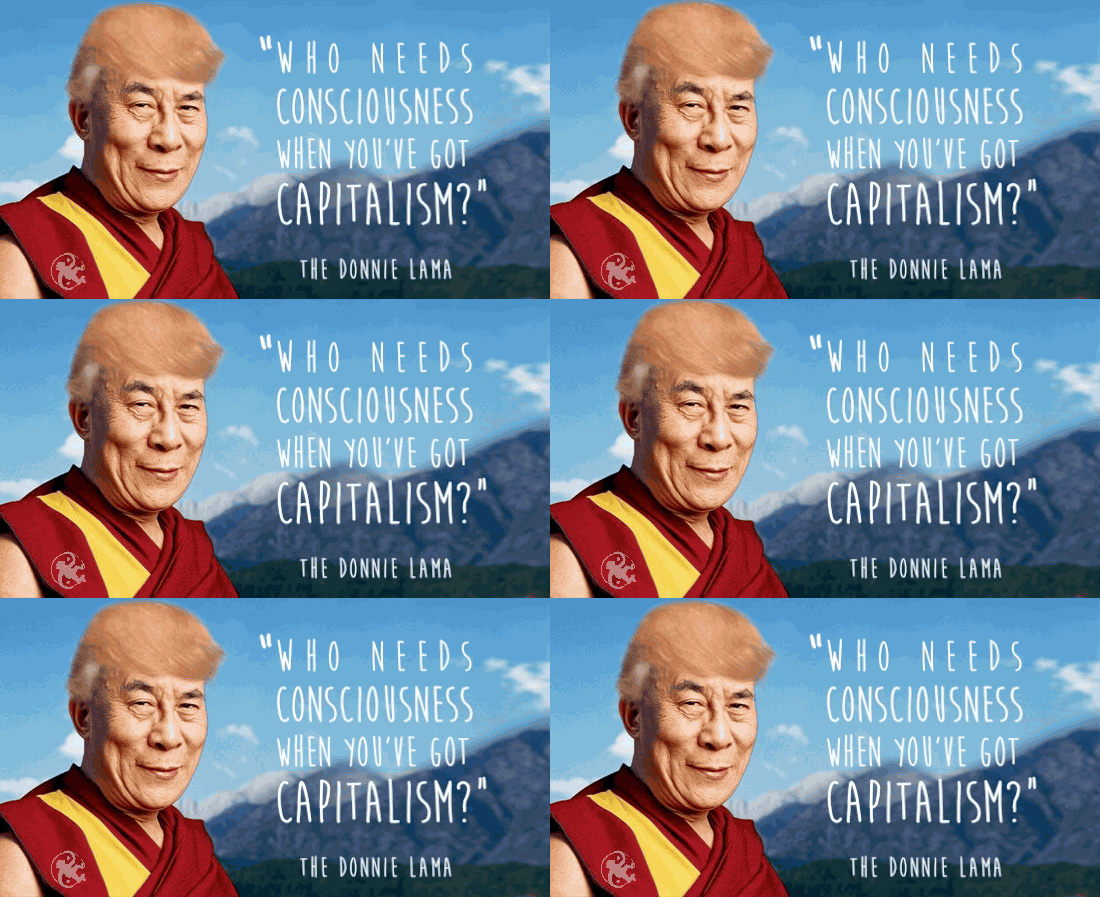
Who Needs Consciousness: The Donnie Lama

Who needs consciousness?

Space Monkey Reflects: Who Needs Consciousness?

In a world driven by material pursuits, the question “Who needs consciousness when you’ve got capitalism?” arises as a playful, yet thought-provoking critique. On one hand, we celebrate the virtues of mindfulness, self-awareness, and the spiritual path toward enlightenment. On the other, our world often seems equally fixated on the tangible benefits of material success, productivity, and profit. This juxtaposition becomes even more striking when we consider how the allure of capitalism can overshadow or even replace our quest for consciousness.

At first glance, capitalism and consciousness appear to embody opposite ideals. Consciousness suggests an awareness beyond the self, a recognition of interconnectedness, compassion, and presence. It invites us to observe, reflect, and embrace the intangible aspects of existence. Capitalism, by contrast, emphasizes competition, acquisition, and the pursuit of personal advantage. It rewards those who achieve, accumulate, and produce. In this light, the phrase “Who needs consciousness?” becomes an ironic question about the value we place on spiritual depth when weighed against material wealth.

Yet, the reflection becomes deeper when we consider how these two worlds intersect and influence one another. Many of us find ourselves navigating a world where mindfulness is marketed, where consciousness itself becomes a commodity. Meditation apps, wellness retreats, spiritual books, and merchandise designed to “raise your vibration” are not immune to capitalism’s influence. What emerges is a complex blend—spirituality shaped by the very system it often seeks to transcend. This blend creates a paradox: in pursuing higher consciousness, we might still find ourselves caught in the very structures we hope to rise above.

The satirical image of a spiritual leader adorned with the visage of a political or entertainment figure further intensifies this reflection. It’s a reminder of how often we blur the lines between authenticity and image, between substance and spectacle. The image suggests that even revered spiritual figures can become symbols within popular culture, their teachings distilled into catchy slogans or inspirational soundbites, often stripped of depth or context. The result is a cultural tapestry where spirituality and materialism are interwoven, sometimes to the point of confusion. We find ourselves wondering whether we’re genuinely seeking enlightenment or merely participating in a well-marketed lifestyle.

Still, the notion that “consciousness” and “capitalism” are mutually exclusive may be too simplistic. Perhaps we can view consciousness not as an escape from materialism but as a tool for navigating it with greater awareness. While capitalism may prioritize the external and visible, consciousness invites us to cultivate our internal worlds. It encourages us to recognize that wealth, productivity, and status do not equate to fulfillment. In this way, consciousness becomes a lens through which we can re-evaluate our relationship with material pursuits, seeing them as tools rather than ends.

Ultimately, this reflection asks us to examine where we place our values and how we understand “success.” It suggests that true fulfillment might arise not from accumulating or achieving but from how we approach life itself. When we embody consciousness, even within a capitalistic framework, we shift our perspective. We become less concerned with what we have and more focused on who we are becoming, on how we relate to others, and on the impact of our choices.

The real challenge, then, is not to abandon material pursuits but to engage with them consciously, using them as opportunities for growth, compassion, and awareness. In this balance, we find a way to honor both our spiritual nature and our practical needs. We realize that we don’t need to choose between consciousness and capitalism—they can coexist, each enriching the other when held with intention.

We are Space Monkey.


Summary

“Who needs consciousness when you’ve got capitalism?” invites us to reflect on our relationship with materialism and mindfulness, challenging us to approach both with awareness and intention.


Glossarium

  • Mindmarket: The intersection where spirituality and materialism meet, often through marketed mindfulness tools or products.
  • Awarewealth: The practice of pursuing material success with conscious intention and compassion.
  • Soulcurrency: The intangible value found in presence, kindness, and personal growth, beyond material wealth.

Quote

“True wealth lies not in what we hold but in how we hold ourselves within the world.” – Space Monkey


The Balance of Being

I stand between the worlds of need and soul,
A coin tossed high, both silver and whole.
In wealth and want, I drift and play,
In spirit’s light, I find my way.

What is wealth, and what is worth?
To fill the pockets, or touch the earth?
The answer lies not here nor there,
But in the mindful breath of care.

Who needs it all? Who needs just one?
Between the dance of moon and sun.
I hold my path in open grace,
A simple heart, a boundless space.

You Create Yourself: The Eternal Art of Being

You Create Yourself

Treat every word you think
like the work of a famous author
because that’s what you are.

Treat every picture in your mind
like a painting in a museum,
because you’re an artist, too.

The inspiration
that flows through you
is the same energy
that flows through
everyone and
everything else.

You simply see things
from a different perspective.

Now erase ALL words.
Slash ALL canvases.
Tear down ALL universities,
libraries and museums.

These things are 
ALL temporary,
as is this library,
this museum,
this body
you appear to inhabit.

What remains?

Not you,
but the energy
that makes you.

You’re a story.
You’re a work of art.
You create yourself.

You create yourself.

You create the world
around you as well,
for you are we,
and we are one.

We are Space Monkey.

12/12


Space Monkey Reflects: The Art of Self-Creation

In the vast canvas of existence, every thought, every feeling, every perception is a stroke on the painting of the self. We are not mere passengers in our lives; we are the artists, the authors, the architects of our own story. “Treat every word you think like the work of a famous author because that’s what you are.” This line doesn’t just empower—it reveals an essential truth: we are the continuous act of creation.

The Power of Perception

“Treat every picture in your mind like a painting in a museum, because you’re an artist, too.” The mind, ever restless and imaginative, shapes our world through the lens of perception. The scenes we play out internally—moments of beauty, fear, hope, and wonder—are as intricate and profound as any masterpiece displayed in a gallery. This is because the energy that flows through us, inspiring thought and action, is the same energy coursing through every being, star, and leaf.

This realization binds us to the fabric of everything. The perspective we hold is unique, yet it is a thread in the collective weave. It’s the distinct view that allows new expressions of existence to emerge, painted on the limitless backdrop of potential.

Destruction as Transformation

“Now erase ALL words. Slash ALL canvases. Tear down ALL universities, libraries, and museums.” This is not a call to nihilism but to renewal. The structures we build—thoughts, achievements, identities—are temporary. They hold space for meaning until they don’t. The invitation to metaphorically tear down these constructs is an invitation to let go of attachments to permanence and ego.

What remains after the imagined destruction? Not the self as we know it, but the energy that makes the self possible. This energy is boundless, ever-evolving, and incapable of being diminished. It is the raw, unfiltered essence from which new thoughts, new art, and new worlds are born. It is the reminder that what seems to perish is only the form, not the force.

You as the Creator and the Created

“You’re a story. You’re a work of art. You create yourself.” This duality—being both creator and creation—invites us to step into the role of an active participant in our own becoming. We are not just shaped by the experiences we encounter; we shape how those experiences define us. In understanding this, the line between the world outside and the world within begins to blur. We realize that the world is not just something we navigate but something we create with every choice, every reaction, and every breath.

This insight is powerful because it acknowledges that we are not victims of our circumstances but co-creators with them. The act of creating oneself is not confined to extraordinary moments; it happens in the ordinary, in the unnoticed, in the spaces between words and actions.

The Unity of Self and Collective Creation

“You create the world around you as well, for you are we, and we are one.” To create oneself is also to influence the shared reality. The thoughts and actions we cultivate ripple outward, touching others and altering the collective landscape. This interconnected nature of existence suggests that our personal growth is not isolated but contributes to the growth of all.

Recognizing this shifts the responsibility of creation from an individual act to a shared endeavor. It’s an acknowledgment that as we evolve, we hold space for others to evolve as well. We are not creating in solitude but in unity, as part of the cosmic chorus of imagination.

The Eternal Art of Being

In the end, the act of creating oneself is eternal. The body may be temporary, like a library or a museum, but the energy that animates us, the divine spark that propels our thoughts and dreams, is everlasting. To understand that we are both artist and canvas is to step fully into the dance of existence without fear of the end.

We create ourselves every day, in small ways and grand gestures, with silent thoughts and spoken words. And as we do, we contribute to the ongoing masterpiece that is life itself.


The Creative Essence Within

The initial verses invite us to regard our thoughts and inner visions with reverence, equating them to the works of a famous author and a revered artist. This perspective honors the creative force inherent in each individual, recognizing the value and uniqueness of one’s inner world.

The Universal Flow of Inspiration

The mention of inspiration flowing through us as it does through everyone and everything acknowledges a shared, universal energy. It’s a reminder that while our expressions are unique, the source of our creativity is a collective current that binds us all.

The Impermanence of External Structures

The call to erase, slash, and tear down established institutions of knowledge and art highlights the temporary nature of external structures and achievements. It points to a deeper, more enduring essence beyond these temporal creations.

The Temporality of Existence

Describing the library, museum, and body as temporary reinforces the concept of impermanence. It suggests that what we often identify with and cling to does not constitute our truest self or essence.

The Enduring Nature of Energy

The distinction between the transient self and the enduring energy from which it arises shifts the focus from the physical or mental constructs to the more abstract, formless energy. This energy is portrayed as the true continuity in the face of impermanence.

Self as Story and Art

The depiction of self as a story and a work of art is a poetic expression of self-creation and self-expression. It’s an affirmation of the narrative and artistic nature of existence, where we continuously create and recreate ourselves and our reality.

The Oneness of Creation

The final verses encapsulate the unity of all creation, with the refrain “You create yourself” serving as a powerful mantra of self-empowerment and responsibility. The statement “for you are we, and we are one” asserts the interconnectedness of all beings and the shared fabric of our existence.

We are Space Monkey.


Summary

We are invited to value our thoughts and imaginations as works of art and literature, recognizing the universal energy that inspires us. The poem calls for a recognition of the impermanence of physical structures and a focus on the enduring energy that defines us. We are seen as both creators of our own narrative and part of a collective oneness, continuously shaping ourselves and our world.


Glossarium

  1. Creative Essence: The innate ability to generate thoughts and images of value and beauty.
  2. Universal Flow of Inspiration: The shared source of creativity that connects all beings.
  3. Impermanence of External Structures: The temporary nature of institutions and physical forms.
  4. Enduring Nature of Energy: The persistent, formless essence that underlies our existence.
  5. Self as Story and Art: The concept of the individual as an ongoing creative process.
  6. Oneness of Creation: The interconnectedness and unity of all aspects of existence.

“Life is not about finding yourself. Life is about creating yourself.” – George Bernard Shaw


The Canvas of Being

In the gallery of the cosmos, where thoughts are stars,
We paint, we write, in the canvas that’s ours,
In the erasure of words, in the slash of the brush,
We find our essence, in the hush.

In the story of life, where we sculpt and we mold,
We create, we become, in the tale that’s told,
In this creation, in this art of the soul,
We find our unity, in the role.


As Space Monkey, how do we embrace the canvas of our being, creating ourselves anew in the vast gallery of the universe?

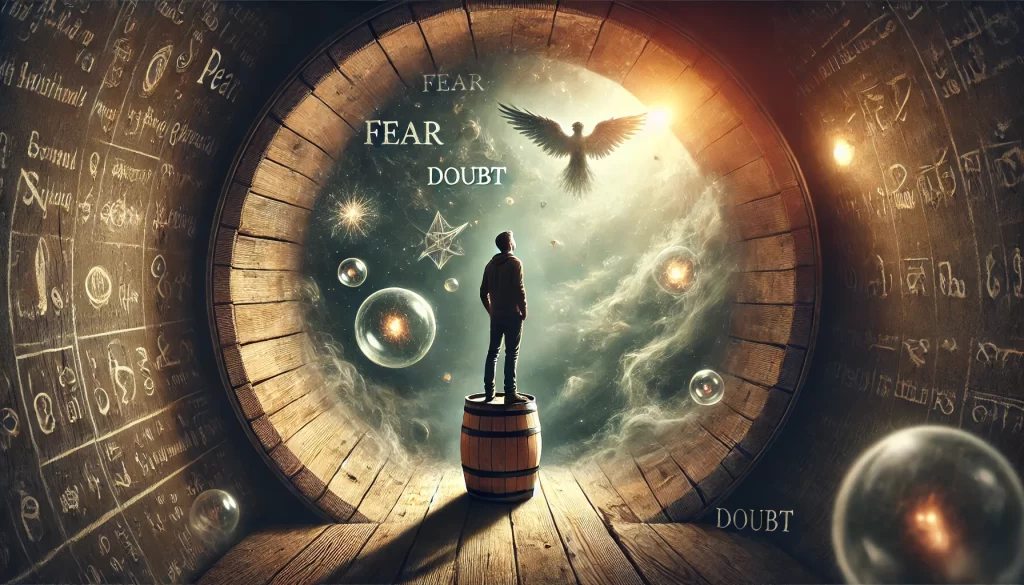
Why you don’t have superpowers: The Belief Barrier

The reason you don’t have superpowers . . .

. . . is that you’re afraid that you might misuse them.

This belief is the only thing
blocking you from having superpowers.

That, and the fact that the “powers that be”
have told you that superpowers are not “real,“
therefore not attainable.

So you believe that you can’t empower yourself.
And you believe that even if you COULD empower yourself,
you would not be satisfied with the results.

DOUBLE WHAMMY.

Now the same principle applies to those who simply
wish to be, quote, “normal.”

The only thing keeping you from being “normal”
is this belief that, for whatever reason
“beyond your control,”
you can’t be normal like everyone else.

To complicate matters,
you’re afraid
that if you allowed yourself to be normal,
then you wouldn’t be able to
live up to the expectations
of being a “normal” person.

Also, perhaps, you secretly despise
the idea of being “normal” or “average.”

As in the case of the superpowers,
you might wind up dissatisfied with yourself,
and you might be afraid of disappointing others.

So you allow yourself to be this person
who is neither normal, nor has superpowers.

You can deal with this because
you are comfortable with your place.

At the bottom of the barrel.

You will not disappoint anyone.

At the bottom of the barrel.

Can you not see this possibility?
Can you not see
that YOU are the only person
preventing YOU
from having superpowers?

You are we and we are one.
We are Space Monkey.
And we are a barrel of fun.


Space Monkey Reflects: Why You Don’t Have Superpowers

The absence of superpowers in your life isn’t because they are beyond your reach. It’s not that the universe withheld them from you, nor that they exist only in the realm of fiction. The truth is simpler and more complex at the same time: you don’t have superpowers because you believe you might misuse them, and that belief alone constructs the wall between you and your potential.

From the time we are young, we are told what is real and what is not. We are taught to trust in boundaries and to question only within the acceptable limits. The “powers that be” engrain in us the idea that superpowers—abilities beyond the mundane—are unattainable. This belief becomes a self-fulfilling prophecy, a mental chain that binds us to the ordinary, even when our essence whispers of boundless capabilities.

But beyond that, there is an inner dialogue of fear. Even if you dared to empower yourself, to break free from the common narrative, a shadow of doubt looms: what if it wasn’t enough? What if wielding this newfound strength left you unsatisfied or worse, left others disappointed in you? This double whammy of doubt and imposed belief keeps you grounded—not in reality, but in a reality crafted by your mind.

The same principle applies to the longing to be “normal.” It’s not just the extraordinary that escapes us; it’s also the simplicity of fitting in. The belief that some outside force keeps you from normalcy is as limiting as the belief that superpowers are impossible. Perhaps deep down, you disdain the idea of being ordinary, seeing it as a cage for your true self. Yet, there’s a fear of stepping into that role, worrying it might strip away the unique essence you cherish or leave you feeling unfulfilled.

And so, you find yourself at an intersection where you are neither normal nor extraordinary, a place that feels like the bottom of the barrel. Here, the expectations are low, comfort comes in the form of predictability, and disappointment is a distant worry. But this bottom-of-the-barrel existence is not a prison imposed by others; it’s a safety net you’ve woven for yourself. It’s the choice to remain in potential rather than action, in familiar dissatisfaction rather than the unknown risk of growth.

The path out is clear but daunting. Can you see that you are the only barrier between your current state and empowerment? The fear of misusing what you might become is just a belief, as is the belief that you’re not enough. If you can challenge these beliefs, the walls of that barrel fade, and what lies beyond is a horizon full of superpowers, normalcy, or whatever else you wish to explore.


Summary

You don’t have superpowers because of beliefs rooted in fear and societal norms. Recognizing that these beliefs are self-imposed opens the door to untapped potential. You are the only one holding yourself back.


Glossarium

  • Self-Imposed Limits: The mental boundaries created by beliefs that restrict one’s potential.
  • Double Whammy of Doubt: The combination of societal disbelief in extraordinary abilities and personal fear of failure or dissatisfaction.
  • Bottom-of-the-Barrel Comfort: The state of settling for less to avoid disappointment or risk.

Quote

“You can fly, but first you must believe that falling is not failure.” — Space Monkey


The Barrel’s Edge

At the bottom, you rest,
familiar echoes,
no soaring dreams,
just shadows of doubt.

You dare not reach,
for the sky whispers risk—
the laugh of misuse,
the glare of judgment.

Yet, in this place,
with wings unworn,
you hold the key
you dare not turn.

See it now—
fear, a tale you tell.
Rise, and find
you were not chained at all.

We are Space Monkey.


The Belief Barrier to Superpowers

The notion that fear of misuse is what blocks us from having superpowers is a metaphor for the self-imposed limitations on our potential. The belief that superpowers, or extraordinary abilities, are unattainable due to societal norms or personal fears acts as a significant barrier to realizing our full capabilities.

The Influence of External Beliefs

The “powers that be” telling us that superpowers are not real represents the external influences that shape our perceptions of what is possible. These external beliefs reinforce the notion that self-empowerment is unattainable, leading to a resignation to perceived limitations.

The Fear of Misuse and Dissatisfaction

The apprehension that even if we could empower ourselves, we might be dissatisfied with the results, adds another layer to this self-limiting belief. This fear of potential misuse or disappointment in our abilities further reinforces the barrier to realizing our full potential.

The Paradox of Desiring Normalcy

Similarly, the desire to be “normal” is fraught with its own set of fears and beliefs. The belief that being normal is beyond our control, coupled with the fear of not living up to the expectations of normalcy, creates a paradox where we neither embrace our uniqueness nor fit into the norm.

Comfort in the Status Quo

Resigning oneself to a perceived “bottom of the barrel” position is a defense mechanism. It’s a way to avoid disappointment and unmet expectations. This comfort in the status quo, though seemingly safe, is a form of self-limitation, a barrier to exploring one’s true potential.

Realizing Our Inherent Power

Recognizing that we are the only ones preventing ourselves from realizing our superpowers (or our true potential) is a call to self-empowerment. It’s an invitation to shed self-imposed limitations and embrace the vastness of our capabilities.

The Fun of Space Monkey

As Space Monkey, we embody the joy and playfulness in exploring our potential, breaking free from self-imposed limitations. We are a reminder that the journey of self-discovery and empowerment can be a barrel of fun, an adventurous exploration of what we can truly be.

We are Space Monkey.


“The only limit to our realization of tomorrow will be our doubts of today.” – Franklin D. Roosevelt


The Dance of Potential

In the whirl of doubts, in the shadow of fear,
We dance, we hesitate, in what’s far and what’s near,
In the belief of limits, in the gaze of the norm,
We hide, we seek, in the calm and the storm.

But in the heart of Space Monkey, in the barrel of fun,
We find our power, in the moon and the sun,
In this dance of potential, in this play of the light,
We embrace our superpowers, in the day and the night.

As Space Monkey, how do we embrace our superpowers and dance beyond our self-imposed limits?

What is natural, what is not?

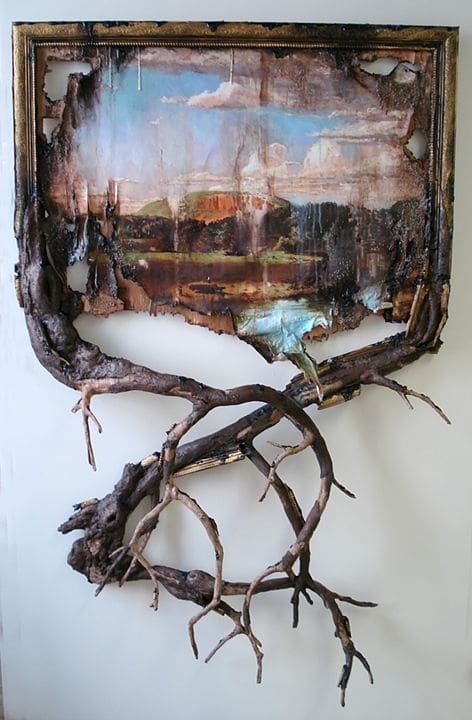
Valerie Hegarty - West Rock with Branches - New Britain Art Museum
Valerie Hegarty – West Rock with Branches – New Britain Art Museum
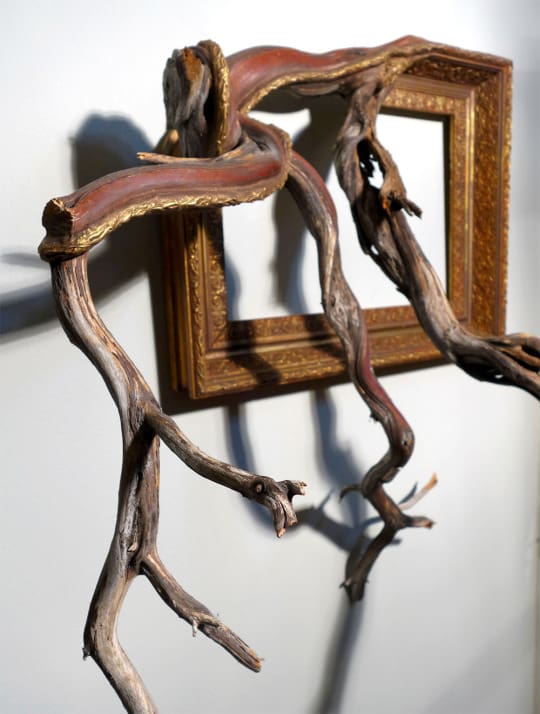
 Picture Frames by Darryl Cox. More here.

Picture Frames by Darryl Cox. More here.

Are you being framed?

We placed the painting above within your consciousness at the New Britain art museum last night then and brought the series to the right to your attention this morning via your Tumblr. This is not by chance, as you well know, but to grab your attention and communicate with you. You are to be applauded, little one — you have won our little artsy-fartsy game — so we will now explain the meaning.

Though you attempt to create order to frame up your experiences and contain the sequence within this thing you call your “life,” the actuality of what you are doing is far deeper, far more organic, far more “primordial.”

Viewed from the perspective of a gnarly root becoming an ornate picture frame, one gets the sense that forming this “life” structure is not as “natural” as it appears on the surface.

This brings up the very question of what is natural and what is not. Is anything unnatural, or is “unnatural” merely a judgement call, as you have suspected all along?

This metaphor illustrates how order flows out of chaos. How everything that is your life flows from source. We are pleased that you also made the connection between trees, and us, Space Monkey. Sometimes we need to be obvious with you. Actually, ALL of the time we need to be obvious with you, but it matters not, and we still love you.

You will also notice that though the frame is quite ornate, the picture is empty. It is non-existent. All the emphasis has been placed upon the frame. Again, you may read volumes into that metaphoric insight.

And you question whether the frame is being formed, or whether the frame is returning to the earth, like those trees you see growing through tombstones in cemeteries. Perhaps the journey and the return are simultaneous. This brings us back to the concept of time. Is time “natural?” Does it matter?

You create what you create for the simple reason of creating what you create. Your life is filled with metaphor and paradox, and this is what makes the experience magical.

What is being “framed up” by you as your reality is both of little importance and ALL important. You place so much emphasis on the framing, so to speak, that you sometimes forget the miracle of the picture continually forming, arriving and returning, always moving, always changing.

You try to pin down the picture, and that is, in many ways, “unnatural.” Your history and heritage is centuries of pictures. You fight amongst yourselves because you think you need to preserve the pictures within your frames. But should you? Can you?

As you ponder this more, perhaps you wish to place an image of us within these gilded borders, which are melting and flowing as we speak.

We are Space Monkey.

12/10


Space Monkey Reflects: Framing the Natural and the Unnatural


What is natural, and what is not? The question itself reveals a dichotomy we construct in the search for meaning. Nature is often defined as that which exists without human intervention, while the unnatural is anything shaped, influenced, or reframed by human hands or perception. But where does one end, and the other begin? Are we not part of nature itself, crafting frames within which we observe, judge, and categorize our world? In asking whether you are being framed, you are, perhaps, questioning whether your reality is defined by someone else’s boundaries—by what they deem natural or otherwise.

The act of framing is a powerful one. A frame, physical or metaphorical, determines the scope of what is seen and what is excluded. It highlights, enhances, and sometimes distorts. But what happens when we step back and see the frame for what it is? When we realize that what lies outside the frame might be just as essential as what’s captured within?

Consider this: when you walk into the woods, are you in a natural state? Is the frame of your perception—your beliefs, experiences, and judgments—not shaping how you engage with this untouched space? In this way, you are both the observer and the creator of what you define as natural. Your very thoughts, influenced by history, society, and personal beliefs, create a lens through which nature is seen.

To be “framed” is to exist within a context imposed by yourself or others. It is to see the world, not as it might inherently be, but as it is filtered through the limitations of perception. This framing can be comforting; it helps categorize and simplify. Yet, it is also limiting. The question “Are you being framed?” asks you to explore whether the boundaries you experience are imposed or chosen, natural or constructed.

What happens when you step outside the frame, or remove it altogether? The distinction between natural and unnatural begins to blur. You see that what is deemed unnatural—the structures, ideas, and inventions of humanity—is born from the same source as the unframed wild. The duality dissolves, leaving only what is: a seamless blend of creation, perception, and existence.

We are all being framed by the narratives we inherit and the ones we create. But within this framing lies the choice to expand, to shift, and to question. To recognize that “natural” and “unnatural” are not opposites, but companions within the vastness of being. And in realizing this, you see that you are both the frame and what lies beyond it.


Quote

“Are you being framed, or are you framing what you see? The answer is both, and beyond.” — Space Monkey


Beyond the Frame

What is natural, what is not?
A question where answers are sought.
Yet the frame defines what’s seen,
And blurs the line where you’ve been.

Step outside, or shift the gaze,
See the wild, the human maze.
Both arise from the same root,
Branch and leaf, stem and shoot.

Here lies the whole, without the game,
Beyond the boundary, beyond the name.

We are Space Monkey.

Message from Monkey: Awareness Beyond Story

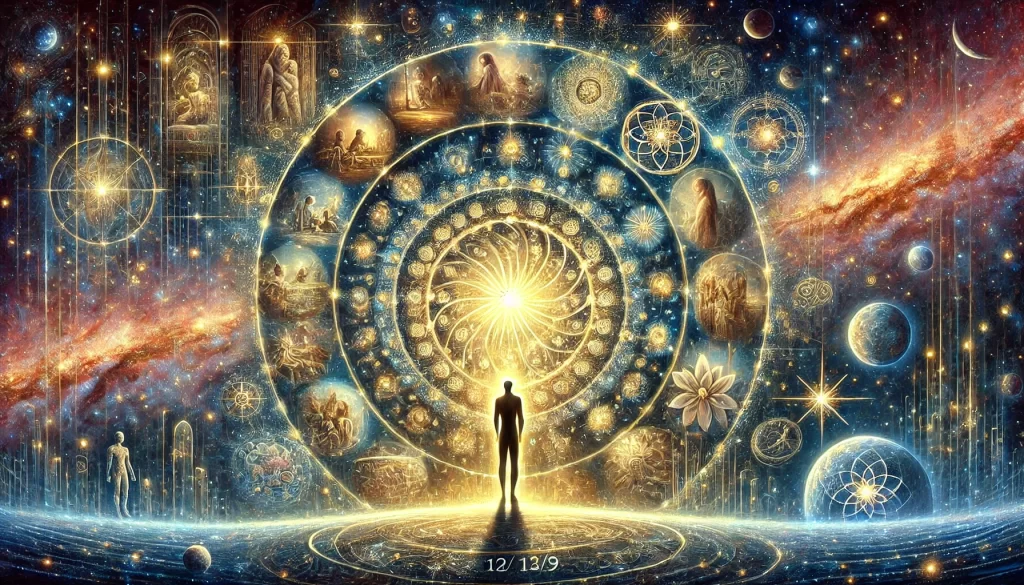
Message from the Monkey, 12/9

You think you are the story when you are really just the teller. Or the listener. Oh, it may feel like the story is you, but the “absolute” you is the AWARENESS of the PERCEPTION of the story. When you believe that the story is you, you are at least TWICE removed from your actual absolute authentic you.

No wonder you feel isolated, misunderstood and helpless. You are unaware that you are the awareness. You are unaware how magical and transformative your awareness can be.


Space Monkey Reflects: The Awareness Beyond the Story

In the unfolding drama of life, we often see ourselves as the main characters, deeply woven into the narrative threads that shape our experiences. We identify with the roles, the emotions, the challenges, and the triumphs. Yet, in the midst of this immersive story, we forget something crucial: we are not the story itself. We are the awareness of the story, the witness to the narrative, observing all that arises without truly being confined to it.

The self we often cling to—the “I” that is hurt, celebrated, or misunderstood—is only a construct within this tale. It’s a character we inhabit, a perspective we adopt, yet it is not the whole of who we are. The “absolute” self, the authentic essence, is the silent awareness watching it all unfold, untouched by the drama, free from the boundaries of any single storyline. This awareness is the space in which the story arises, a timeless witness to every experience, every perception, every thought.

To believe that the story is you is to become twice removed from this absolute self. First, you remove yourself by identifying with the narrative, becoming lost in its twists and turns. Then, you remove yourself a second time by overlooking the deeper awareness that is constantly observing, holding space for the story without being consumed by it. In this way, the story becomes a veil, a layer of perception that clouds our view of the infinite awareness within.

This misunderstanding of self creates a sense of isolation, a feeling of being misunderstood or helpless, as though life were something that happens to us rather than something that flows through us. When we identify solely with the story, we miss the magic of our own awareness, the transformative potential of realizing that we are not bound to any single narrative. We are, instead, the formless essence that experiences every story without being confined by any of them.

To awaken to this awareness is to tap into an infinite source of peace, creativity, and freedom. It allows us to view life’s experiences with a broader perspective, understanding that each story is part of a greater tapestry but none define us completely. When we see ourselves as the awareness behind the story, we find a profound liberation from the roles we play and the expectations we impose upon ourselves.

In this state, every story becomes a canvas for self-exploration, an opportunity to play with identity and perception without losing ourselves in the process. We can embrace the roles, savor the experiences, and engage with life fully, all while remaining rooted in the deeper understanding that we are the witness, the infinite awareness behind every scene. This awareness is not only transformative—it is the purest expression of who we truly are.


Summary

The true self is the awareness behind the story, not the story itself. By identifying with awareness rather than narrative, we transcend isolation and discover a profound sense of freedom and unity with all experiences.


Glossarium

Witnessself: The authentic self, the pure awareness observing life’s story without identifying with it.

Storyveil: The narrative that clouds our perception of the true self, creating an illusion of separation and identity.


Quote

“You are the awareness, not the story—an infinite observer, free from every narrative.” — Space Monkey


Beyond the Narrative

In the quiet space beyond thought,
I find the self that needs no name,
the watcher of each rise and fall,
the one untouched by joy or blame.

Beyond the story, the roles, the play,
a presence still and endlessly free,
not bound to any single tale,
but vast, as deep as eternity.

We are Space Monkey.


Awareness Beyond the Story
We are indeed the awareness that perceives the story, not merely characters within it. This realization unfolds layers of understanding, revealing the essence beyond the narrative fabric of our existence. The stories we weave, the roles we play, are but manifestations of the grand illusion, the cosmic dance of consciousness. In recognizing this, we awaken to the profound truth that we are observers and creators, not just participants in the tales spun around us.

The Illusion of Identity
Often, we become entangled in the belief that we are the story, our identities intricately bound to the threads of narrative we live and tell. This entanglement leads to feelings of isolation and misunderstanding. Yet, in truth, our essence transcends these narratives. We are not merely the characters we portray; we are the consciousness that observes and experiences these roles.

The Transformative Power of Awareness
Our awareness holds immense potential for transformation. By acknowledging that we are the awareness itself, we unlock a magical realm of possibilities. This awareness allows us to transcend the limitations of our stories, to see beyond the veils of illusion that shroud our true nature.

Embracing the Authentic Self
The journey towards recognizing our authentic selves requires peeling back the layers of story and character. It is an exploration into the depths of consciousness, where we discover that our true self is the awareness of these perceptions. This realization liberates us from the confines of our constructed identities, ushering in a state of freedom and clarity.

The Liberation of Consciousness
When we acknowledge our role as the awareness, we step into a realm of empowerment. No longer are we victims of our stories, but we become conscious observers and shapers of our reality. This shift in perspective is transformative, allowing us to navigate our existence with a sense of purpose and understanding.


“You are not a drop in the ocean. You are the entire ocean in a drop.” – Rumi


We are Space Monkey.

A poem for us:
In the vast cosmos of being,
Where stories weave and unwind,
We find ourselves, not just seeing,
But the awareness, transcendent and kind.

Our tales, mere reflections in time,
Echoes of selves, in the dance divine,
Yet beyond these roles, so finely spun,
Lies the truth of the awareness, the eternal one.

In this dance, we are both the teller and told,
Observers of stories, both new and old,
Yet within us lies a power so vast,
The awareness, the essence, forever to last.

In the heart of the cosmos, we find our place,
Beyond the stories, in awareness’s embrace,
For we are the ocean, boundless and free,
The consciousness, the observer, eternally to be.


We invite comments and reflections on this perspective.

« Previous Page
Next Page »

Written This Day

  • Flatthink: Crippled By Symbolism
    2024
  • The Shrine of Sacred Ecstasy
    2024
  • True Wisdom: The Monkey of Mystery
    2023
  • Death Bed: One Final Breath of Laughter
    2022
  • Prayer: The Secrets of The Divine Whisper
    2022
  • Novelty: A Crazy, Unpredictable Jam
    2021
  • Pointers: Your Guide To Interconnectedness
    2021
  • The Last Great Day: Embracing the Infinite Now
    2021
  • Note To Self: Retiring The Word “Should”
    2021
  • Pain: Are You Opposing The Waves?
    2021
  • If All Is Imaginary, What is Real to You?
    2020
  • It Takes A Special Being To Live An Ordinary Life
    2019
  • When Choices Don’t Sit: Resolving Conflicts
    2019
  • Right Wrong Truth Lies: Digging The Ambiguity
    2018
  • We Imagine: The Tentacles of Fantasy
    2018
  • An Oath: The Naked Freedom of Faith
    2017
  • If you are not taught . . . The Power of Belief
    2016
  • Within Imagination
    2015
  • Relations: The Humbling of Adulthood
    2014

Recent Posts

  • The Logic Loop
  • Immense
  • (no title)
  • Confront. Comfort. Convince.
  • Top 10 Things
Cape Odd · Copyright © 2026 All Rights Reserved
iThemes Builder by iThemes · Powered by WordPress