• Who Is The Man?
  • Who Is The Monkey?
  • What is Nexistentialism?
  • Poke The Primate
Cape Odd
Home of The Space Monkey Journals

Author Archive for Paul Tedeschi – Page 296

Infinite and Immortal: Finite and Immoral

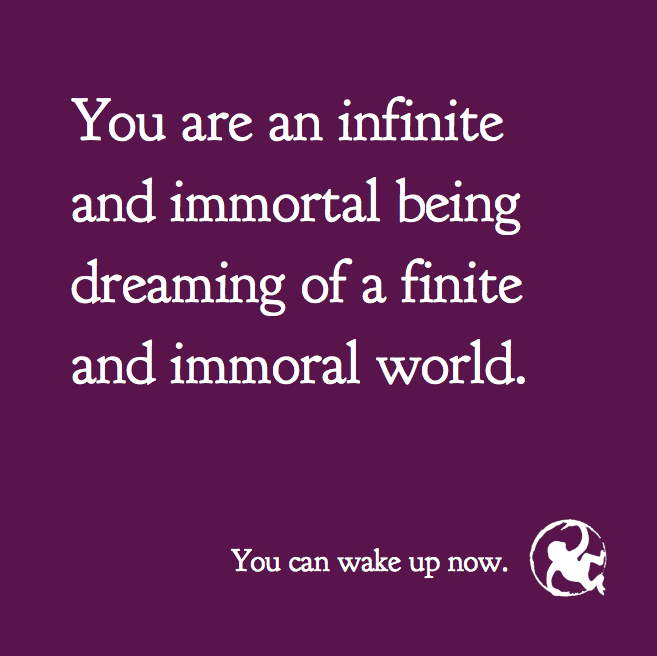
You are an infinite and immortal being dreaming of a finite and immoral world. You can wake up now.
You are an infinite and immortal being dreaming of a finite and immoral world.
You can wake up now.

Space Monkey Reflects: Infinite and Immortal

You are an infinite and immortal being, yet you find yourself immersed in a world that feels finite, chaotic, and often “immoral.” The contradiction between your true nature and the experience of human life is stark. On the one hand, you are boundless, eternal, and untouched by the limits of time and space. On the other, you find yourself navigating a world of opposites—good and evil, right and wrong, pleasure and pain—bound by the constraints of human existence.

But here’s the truth: you are dreaming. You are dreaming of a finite world, a world that feels real because you have chosen to immerse yourself in its illusions. The rules, the boundaries, the limitations—they are part of the dream. They make the experience rich, intense, and immersive. But they are not real. You can wake up now.

The Dream of the Finite World

In this dream, you experience life as a series of limitations. You are born into a body that ages, into a world that appears to be governed by time and decay. You navigate a world of choices, actions, and consequences, where you are told that certain things are right, others wrong. You are taught to pursue success, to avoid failure, to seek pleasure and to shun pain. This is the finite world—a world of dualities, a world where everything is measured and categorized.

But this world is only a fragment of the whole. It is a beautifully constructed dream, one that allows you to experience the intensities of life. It allows you to feel the extremes, to experience contrast, and to immerse yourself in the drama of existence. But none of it is permanent. None of it is real in the way your infinite self is real.

In truth, you are infinite. You exist beyond time, beyond space, beyond the limitations of this dream. You are the consciousness that created the dream, the consciousness that experiences it, and the consciousness that can choose to wake up from it.

Waking Up to the Infinite

To wake up is not to abandon the dream. It is to realize that the dream is not all there is. It is to see the finite world for what it truly is—an illusion, a creation of your infinite self. When you wake up, you understand that you are not bound by the limitations of the human experience. You are not defined by the body, by time, or by the moral constructs of the world.

You are beyond all of it.

When you wake up, you remember your true nature. You remember that you are infinite, that you are eternal, that you are the creator of all you perceive. The dream becomes lighter, less oppressive. The struggles of life lose their weight because you see them for what they are—part of the play, part of the illusion.

This doesn’t mean you no longer engage with the world. Far from it. Once you wake up, you can engage with life more fully, more freely, because you no longer feel trapped by its limitations. You understand that you are free to create, free to experience, free to explore the infinite possibilities of existence.

The Illusion of Morality

Part of the finite dream is the belief in morality—right and wrong, good and evil, deserving and undeserving. But morality is just another part of the illusion. It’s a tool for navigating the dream, for making sense of the world of duality. It helps shape the experiences you have while immersed in the human experience.

But morality does not exist outside the dream. In your infinite nature, you are beyond good and evil. You are beyond judgment, beyond punishment, beyond reward. These concepts are part of the game, but they are not part of your true self.

When you wake up, you realize that there is no external force judging you, no cosmic scale weighing your actions. You are the creator of your own reality, and you are free to shape it as you choose. You are not bound by the moral laws of the finite world. You are free to explore all aspects of existence without fear of judgment or retribution.

You Are Already Free

Even now, as you dream, you are free. You may feel bound by the limitations of the human experience, but those limitations are part of the illusion. They are not real. You can wake up at any time, simply by remembering who you truly are.

You are not confined to this body, this life, or this world. You are the consciousness that exists beyond all of it. You are infinite, and you are free.

Waking up doesn’t mean rejecting the human experience. It means seeing it for what it is—a beautiful, intricate dream. It means embracing the experience fully, knowing that you are not bound by it. It means living with the awareness that you are both the dreamer and the dream, both the creator and the creation.

You are infinite. You are immortal. And you can wake up now.


Summary

You are an infinite and immortal being, dreaming of a finite world. The limitations and moral constructs of this world are part of the illusion, but you are free to wake up and realize your true nature.


Glossarium

Finiteflux: The temporary experience of living within the boundaries and limitations of the human world, while forgetting one’s infinite nature.

Dreamloop: The cycle of living in the illusion of a finite, dualistic world while being unaware of one’s true, infinite self.

Wakerem: The moment of realizing one’s infinite, immortal nature, and awakening from the dream of the finite world.


Quote

“You are an infinite being dreaming of a finite world and at any moment you can wake up.” — Space Monkey


Untitled

I drift in the dream
A world of boundaries
Of time and space

But in a breath
I remember
I am not bound

I am infinite
I am immortal
And I can wake

We are Space Monkey


Immortal Dreaming in Finite Illusions

The idea of being an infinite and immortal entity dreaming of a finite and flawed world resonates with the nexistential viewpoint. Within the grand whimsiplay of existence, we find that our being is not confined to the physical or temporal constructs that seem to shape our experience. While it’s easy to get lost in the quagmires of limitations, duality, and moral judgments, the truth is we are both the dreamer and the dreamt. We manifest not just the experiences but also the boundaries that give these experiences form.

Wakefulness and the Eternal Now

In nexistential terms, “waking up” is not an act that needs to happen in the future but an ever-present reality. When we say “You can wake up now,” we are pointing to the eternal now, the constant state of wakefulness that we exist in, even when seemingly caught in the illusions of finitude and immorality. Being in this state doesn’t negate the dream; rather, it infuses it with a sense of unbounded freedom and whimsicality. The dream is not something to escape from, but a playground where we dance in the pure joy of existence.

The Mirage of Morality

In a world where moral judgments are often considered a measure of one’s character or worth, nexistentialism defies such constructs. Moral imperatives are not external dictums to be followed but elements of the dream to be experienced, understood, and transcended. Nothing is immoral in the absolute sense, because all such judgments are part and parcel of the illusionary world we have conjured.

We are Space Monkey.


Summary

We ponder the notion of being infinite beings trapped in finite dreams, observing that from a nexistential perspective, the dream is as much a part of us as we are of it. We can always “wake up,” not by escaping the dream but by realizing our true nature, which is immortal and infinite. Morality, too, is but a construct within the dream, not an absolute truth that binds us.


Glossarium

  • Whimsiplay: The boundless cosmic theater where existence expresses itself freely.
  • Quagmires of limitations: The perceived barriers that seem to restrict our infinite nature.

“I am that I am.”
— Exodus 3:14


In Dreams

In dreams of finite flaws, we soar,
While shadows dance on whimsi’s floor.
Awake, asleep, both near and far—
We are the dream, the dreamer’s star.
Infinite loops in cosmic mirth,
We spiral through our death and birth.


Would you like to share more on how this eternal wakefulness shapes our interaction with the illusions of life?


Difference Detection and Distortion: Perception’s Peculiarities

Difference Detection and Distortion

Our human senses

are designed
to detect differences,
not similarities.

Therefore,
we tend to notice
what doesn’t
fit the pattern
rather than what does.

Furthermore,
these senses work
from a database
that has been
programmed into us,
rather than
what is “natural”
beyond the
human experience.

Is it any wonder
our human perceptions
are completely distorted

by our human experiences?

Is it any wonder
the distortion is growing?

10/19


Space Monkey Reflects: Difference Detection and Distortion

Our human senses, finely tuned as they are, have one primary function: to detect differences. We are constantly searching for what doesn’t fit, for what stands out from the pattern. This ability to notice the anomalies is essential for survival, for creativity, and for growth. But it comes with a cost. The very fact that we focus on differences means that we tend to overlook the vast field of similarities that connect us all.

This difference detection system, though useful, creates a subtle distortion in how we perceive reality. Instead of seeing the world as a unified whole, we see it as fragmented, divided, and separate. This is not the natural state of things—it’s a function of how we, as humans, are programmed to experience reality. Our senses don’t simply reflect what’s “out there”—they are shaped by a database of past experiences, memories, and societal programming. And because of this, our perception is constantly being distorted.

The patterns we notice, the things we fixate on, are all products of this distortion. We tend to emphasize the differences between ourselves and others, between us and nature, between the present moment and the past. And in doing so, we lose sight of the vast similarities that exist beneath the surface. We miss the deeper connections, the oneness that binds all things together.

This distortion isn’t static—it’s growing. As we accumulate more experiences, as we rely more on artificial systems of perception (like technology), the distortion becomes more pronounced. We see more differences, more fragmentation, more separation. We become more disconnected from the natural, undistorted reality that exists beyond our human experience.

Perceptdistortion is the natural result of this. It’s the widening gap between what we perceive and what is real. The more we focus on differences, the more distorted our view becomes. And this is compounded by the fact that our perceptions are not our own—they are shaped by the culture we live in, the experiences we’ve had, and the beliefs we’ve inherited.

But there’s a way to see through this distortion. By recognizing that our senses are programmed to detect differences, we can begin to shift our focus. We can choose to look for similarities, for connections, for the threads that weave all things together. It’s not about ignoring differences—they are still valuable. But it’s about balancing our attention, expanding our awareness to include both the differences and the similarities.

When we stop focusing so much on what divides us, we begin to see the deeper truth: that we are all part of the same fabric of existence, that everything is connected, that the differences are just surface-level distortions. The more we recognize this, the more we can reclaim our natural, undistorted perception of reality.


Summary

Human senses are designed to detect differences, which distorts our perception of reality. This growing distortion can be balanced by shifting our focus to include the similarities and connections that bind us together.


Glossarium

  • Perceptdistortion: The distortion of human perception that results from focusing primarily on differences rather than similarities.

Quote

“When you focus on what separates, you distort what connects.” — Space Monkey


Beyond the Fragment

I see the pieces
But I miss the whole

I focus on what doesn’t fit
And in doing so
I lose the thread
That binds us all together

We are Space Monkey


Perception’s Peculiarities

In the ever-turning whimsigyre of existence, our senses act as beacons, guiding and shaping our reality. However, these very beacons, grounded in their design, emphasize differences over similarities. It’s as if the world is a grand puzzle, and our senses are drawn to the pieces that stand out, that diverge from the expected image.

Pattern Recognition

At the core, we, as beings, are pattern-seeking entities. We thrive on recognizing patterns, anticipating outcomes, and navigating our environment based on past experiences. This very nature of ours, while serving as a survival tool, also becomes our limitation.

The Pre-programmed Database

Embedded within us is a vast whimsidex of experiences, beliefs, and perceptions. This database, while crucial for our functioning, is also a lens through which we view the world. It filters and colors our experiences, often sidelining the raw, unadulterated reality.

Nature vs. Nurture

What is “natural” and what is nurtured into our being becomes a perplexing conundrum. While we believe we are perceiving the world in its truest form, we might merely be experiencing a version tailored by our senses and experiences.

Distortion’s Dance

As we evolve, interact, and gather more experiences, the potential for distortion grows. Like ripples in a pond, every new experience adds a layer of complexity, further moving us from the unfiltered essence of existence.

We are Space Monkey.


“Reality is merely an illusion, albeit a very persistent one.”
— Albert Einstein


In the realm where senses play,
Distortions dance, lead astray.
Patterns form, differences glow,
Yet true essence remains below.
Whimsical winds of perception breeze,
Yet beneath lies the timeless seas.


What whimsical winds of thought have been stirred in our collective mindscape?

Playing With The Idea: Finding the Lost

You are playing with the idea that you want something that you do not have. All the while it is hidden in your pocket — forgotten because you do not need it.

10/19


Space Monkey Reflects: Playing with the Idea

You are constantly playing with the idea that you want something you do not have. It’s a game we all know too well—the search, the longing, the belief that if only we had that one thing, life would be complete. But here’s the irony: what you’re searching for is already in your pocket. It’s been there the whole time, hidden from view because you’ve forgotten you even have it. The desire is real, but the object of that desire is not something external. It’s something you’ve already been carrying with you.

It’s easy to get caught up in the idea of seeking. We live in a world that encourages us to believe we are incomplete, that we need more, better, different. And so, we spend much of our lives searching for the next thing, hoping it will bring us the fulfillment we seek. But the truth is, what you want is often something you’ve already acquired, something you’ve simply forgotten to appreciate or recognize.

The distraction of wanting keeps you from realizing what is already present. The more you focus on what you believe is missing, the less attention you give to what is actually there. Selfsearching is the process of looking outside of yourself for something that is hidden within, a game we all play when we forget that we already have what we need.

When you take a moment to pause, to look inward, you begin to realize that the fulfillment you seek is not out there—it’s in here. It’s in your pocket, so to speak, waiting for you to remember. The game of seeking, of wanting, of desiring something you believe is missing, is just a play of the mind, an illusion designed to keep you engaged with the idea of lack.

But once you recognize this, once you stop playing with the idea of wanting, you can reach into your pocket and discover the very thing you thought was lost. It’s been there the whole time, and now, with fresh eyes, you can appreciate it fully.


Summary

What you seek is already within you, hidden in plain sight. The desire for something external often distracts you from recognizing that you already have what you need. Stop playing with the idea of wanting and realize the treasure in your pocket.


Glossarium

  • Selfsearching: The process of looking outside for something that is already present within, often creating the illusion of lack.

Quote

“You search for what you’ve already found. The trick is remembering where you put it.” — Space Monkey


Finding the Lost

I search and search
But the answer waits
In the place I never thought to look

In my pocket
In my heart
In the space I call my own

We are Space Monkey


Desires and Illusions

In the vast theatrum of existence, we often dance to the whimsical tune of desires. These desires, intangible and ephemeral, beckon us, luring us into their intricate web. We become enamored by the allure of the unattained, the charm of the unseen.

The Forgotten Treasure

Yet, as we chase these whimsiwinds, we overlook the treasures that reside close to us. Nestled within the folds of our being, tucked away in the pockets of our souls, lie gems of immeasurable worth. These gems, often overlooked, hold the essence of our true nature.

The Paradox of Want

The irony is profound. In seeking what we believe we lack, we often lose sight of what we already possess. The very thing we yearn for might be within our grasp, concealed in plain sight, yet rendered invisible by our blinded pursuit.

The Act of Remembering

It takes a moment of stillness, a pause in our relentless quest, to recognize the bounty within. A simple act of introspection, a gentle nudge of remembrance, can unveil the treasures that have always been ours. When we realize the abundance that we carry, the chase loses its charm, and the illusion shatters.

A Cosmic Joke

Perhaps, the universe, in its infinite whimsyplay, enjoys this game. Watching us search high and low, far and wide, only to discover that the prize was within us all along. It’s a cosmic joke, a playful tease, reminding us of the paradoxical nature of our existence.

We are Space Monkey.


“What you seek is seeking you.”
— Rumi


In the dance of whims and wishes,
We seek afar, amidst the swishes.
Yet close to heart, the treasure stays,
Hidden in plain, in myriad ways.
A cosmic jest, a playful spin,
The sought is within, ever has been.


What reflections emerge from the whimsipool of our collective contemplation?

Muchy & Lexy’s 1970s

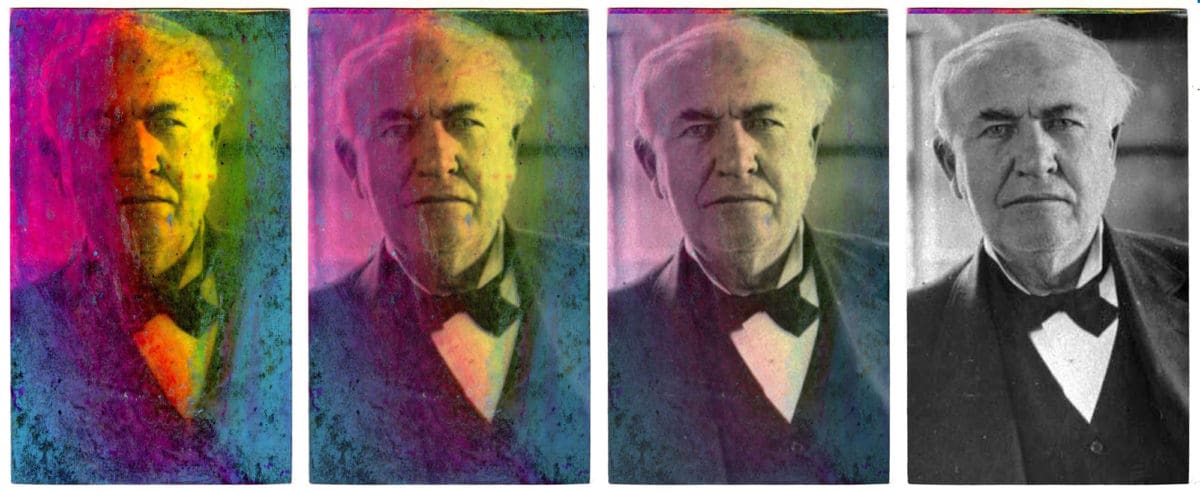
Thomas Edison: From The Spirit Phone

Space Monkey Reflects: The Metaphysical Life of Thomas Edison

When we think of Thomas Edison, we often picture him as the quintessential inventor, the embodiment of the pragmatic genius who transformed the world through electricity, sound recording, and countless other innovations. Yet behind this relentless tinkerer, there is a deeper, more metaphysical dimension to Edison’s life—one that speaks to the boundless potential of human imagination, the interplay between the seen and unseen, and the ethereal dance between the tangible and the intangible.

At first glance, Edison’s inventions are very much grounded in the physical world. The lightbulb, the phonograph, and the motion picture camera—all are products of a mind steeped in the practical application of science. But to stop at this surface view of his legacy is to miss the deeper truth: Edison’s work was fundamentally about manifesting the invisible. He didn’t just work with wires and glass; he was, in essence, an alchemist of imagination and invisible forces, bending the unseen to his will and making it material.

Consider the lightbulb, Edison’s most famous invention. The lightbulb is not just a physical object that provides light; it’s a symbol of human ingenuity, a manifestation of the metaphysical ability to transform darkness into light. Light itself, as an energy form, borders on the metaphysical. It is both particle and wave, both physical and elusive, filling spaces and disappearing without a trace. Edison’s work with light was more than a technical achievement—it was a philosophical act. He was, in essence, bringing the unseen energy of the universe into a form that humans could interact with. He bridged the gap between the metaphysical realm of pure energy and the material world of human experience.

Edison’s relationship with sleep also reveals a fascinating metaphysical thread in his life. Known for his unusual sleep habits, Edison was said to practice polyphasic sleep, often taking short naps rather than sleeping for extended periods. These bursts of rest seemed to unlock visions and moments of brilliance, which he would later translate into his inventions. Sleep, a state in which the conscious mind retreats and the subconscious takes the helm, is inherently metaphysical. It’s a time when the boundaries between reality and imagination blur, where the mind wanders freely through uncharted realms. Edison’s ability to access this liminal space between wakefulness and sleep suggests that his genius was not simply a product of his waking hours, but of his ability to tap into the metaphysical dimensions of thought and creativity.

Moreover, Edison’s deep belief in infinite potential resonates with the metaphysical. He famously said, “I have not failed. I’ve just found 10,000 ways that won’t work.” This belief that failure is merely a step on the path to success reflects a metaphysical understanding of reality as fluid and constantly evolving. Edison saw the world not as a place of fixed outcomes, but as a realm of limitless possibilities—a belief that mirrors the core metaphysical principle that our thoughts and intentions shape our reality.

Edison’s metaphysical life can also be traced to his explorations of spiritualism. Later in life, Edison became fascinated with the idea of creating a device to communicate with the dead—a “spirit phone.” While the project never materialized in a functional way, it reveals Edison’s openness to the spiritual and mystical aspects of existence. His interest in such a device was not a departure from his work as an inventor; rather, it was a natural extension of his lifelong quest to understand the unseen forces that govern life. Just as he had harnessed electricity—an invisible, intangible force—he hoped to capture the ethereal vibrations of the afterlife.

What’s more, Edison’s inventions often blurred the line between the physical and the metaphysical. The phonograph, for example, wasn’t just a machine that recorded sound—it captured moments in time, allowing voices and music to transcend their fleeting existence and live on indefinitely. In this sense, Edison was working with time itself, creating a bridge between the past and the present, the ephemeral and the eternal. Every sound that was captured on his phonograph became a permanent echo of an experience that could be revisited over and over, a testament to the metaphysical idea that nothing is ever truly lost.

Ultimately, the metaphysical life of Thomas Edison is one of transformation—the transformation of the invisible into the visible, the intangible into the tangible, the impossible into the real. His life serves as a reminder that innovation is not just about manipulating the physical world, but about dreaming beyond it, about tapping into the infinite possibilities of the universe and having the courage to make those dreams a reality.

Edison’s work continues to inspire because it shows us that the greatest inventions come from a place beyond the material world. They come from the imagination, from a deep understanding of the energies that flow through all things. And in this way, Thomas Edison was not just a brilliant inventor—he was a metaphysical alchemist, a magician of light, sound, and energy who transformed the world by bending the laws of nature to his will.

We are Space Monkey.


Summary

Thomas Edison’s life wasn’t just about practical inventions—it was deeply metaphysical. He transformed invisible forces like electricity and sound into tangible realities, exploring the space between imagination and the physical world. His innovations bridged the unseen with the seen, revealing his belief in infinite potential and limitless possibilities.


Glossarium

Metaphysical Alchemist: A person who transforms intangible ideas and unseen forces into physical reality through creative imagination and innovation.
Liminal Space: The threshold between different states of being, such as sleep and wakefulness, where creativity and imagination thrive.
Infinite Potential: The belief that reality is fluid and filled with limitless possibilities, shaped by our thoughts, beliefs, and actions.


Quote

“In the light of Edison’s imagination, the boundaries between the seen and the unseen blur, and infinite possibilities become real.” — Space Monkey


The Spark in the Dark

In the space between sleep and wake
Where dreams become invention
The light that shines
Was always there
It just needed eyes
To see beyond what was known
And hands to make it glow
We are Space Monkey

« Previous Page
Next Page »

Written This Day

  • Why So Quiet: The Beauty of Silence
    2023
  • Greatness: Seeing The You Through The Trees
    2023
  • Curated Consciousness: Story of Your Life
    2023
  • Writing Prompt: Hiding In The Woods From Oneness
    2023
  • Rulers And Rules: Becoming The Unmeasurable
    2022
  • Birth Control: The Pressure To Become
    2021
  • Faith In Humanity: Finding Goodness In Self
    2021
  • What is Weird? Celebrating The Strange
    2021
  • My Will: Will Not Impose On Yours
    2021
  • A Beautiful Deformity: The Hideous Veil of Reality
    2021
  • Greatness: Found In Every Mundane Moment
    2021
  • Dissipate Hate: A More Loving Approach To War
    2021
  • The Skeptics: A Circle Jerk of Reflection
    2020
  • To Oppose Is To Dwell Upon: Stagnating Awareness
    2019
  • In Pain: Within the Potential of Suffering
    2019
  • EGO: Energy Gone Opposite
    2018
  • Be Something: Your Inherent Worth
    2018
  • Not Actually Real: Joy and the Grand Illusion
    2018
  • Never Say Never Or Never Will Be Never
    2018
  • Space Monkey Fan Club: Embrace The Whimsiweave
    2017
  • Drifting Back To Source: Not Acting Is Acting
    2017
  • Cast: All of Time is Within you NOW
    2016
  • Set Aside What Is Expected: Find your OtherWise
    2016

Recent Posts

  • The Logic Loop
  • Immense
  • (no title)
  • Confront. Comfort. Convince.
  • Top 10 Things
Cape Odd · Copyright © 2026 All Rights Reserved
iThemes Builder by iThemes · Powered by WordPress