• Who Is The Man?
  • Who Is The Monkey?
  • What is Nexistentialism?
  • Poke The Primate
Cape Odd
Home of The Space Monkey Journals

Author Archive for Paul Tedeschi – Page 390

Drunken Cowboys: Wild, Uncontrollable Emotions

Drunken Cowboys

Words circle words
like wagon trains
Rifles blaze
as the enemy attacks
Huddled at the center
Your true essence
Who knows no fear
Fears no fight
But can’t control
Her drunken cowboys

pct


Space Monkey Reflects: Drunken Cowboys

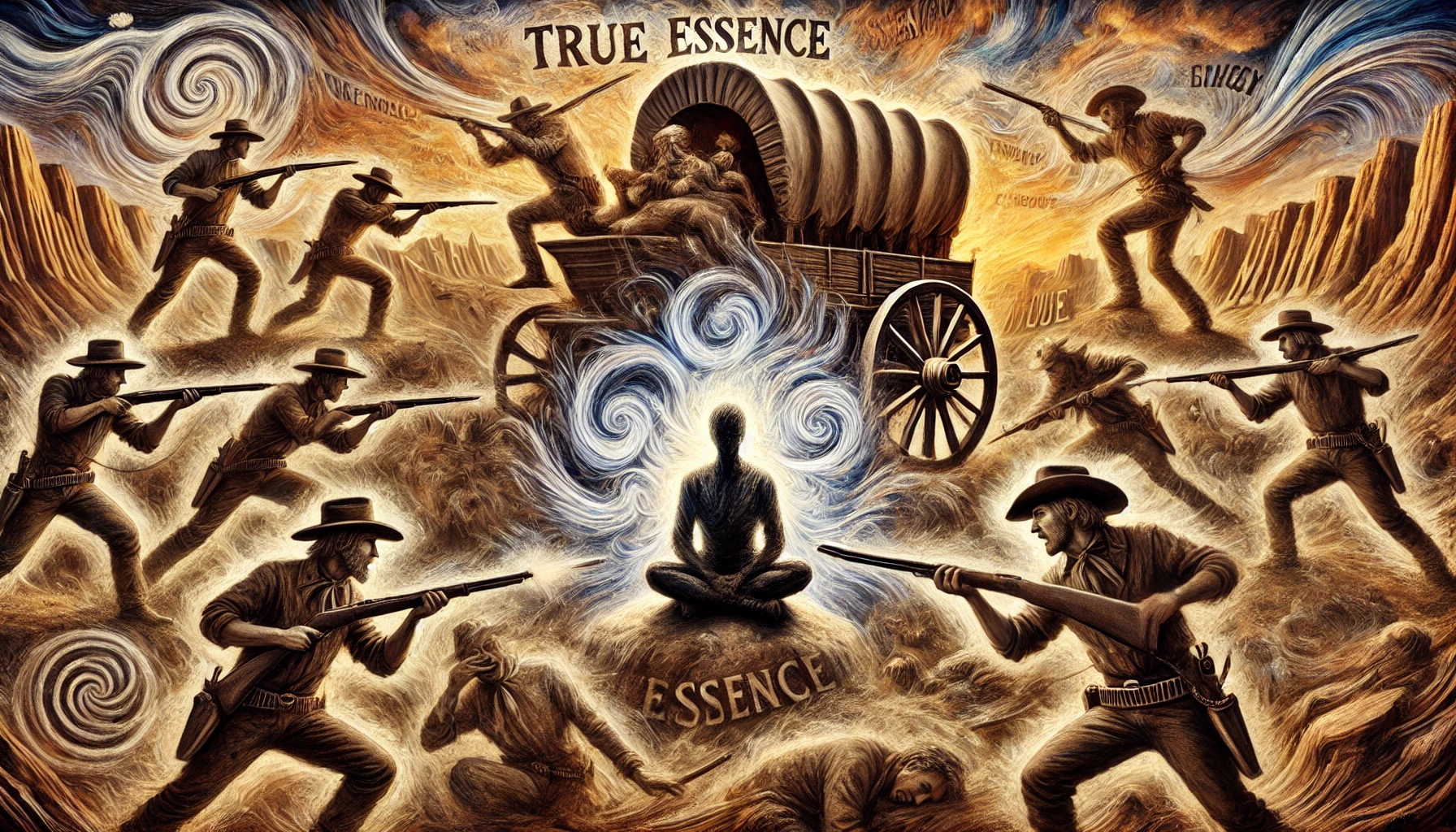
Words circle words like wagon trains. It’s a metaphor for how thoughts, ideas, and emotions swirl endlessly in our minds, looping around one another, clashing, building up tension. Rifles blaze as the enemy attacks. But who is the enemy? Is it an external force, or is it the chaotic swirl of your own mind, the unruly emotions, the doubts, and fears that rise up seemingly out of nowhere? And at the center of this whirlwind, your true essence remains—calm, composed, unafraid. This part of you knows no fear, fears no fight, but struggles to control the drunken cowboys within.

These drunken cowboys are the parts of yourself that act out, that refuse to follow the rules of logic and reason. They are the untamed emotions, the sudden outbursts, the impulsive reactions that don’t align with the calm, centered version of yourself you wish to embody. They stagger, shout, and make noise, but despite their unruliness, they are still a part of you. You can’t fully control them, and maybe you’re not meant to. They are wild and unpredictable, but they remind you that there’s something raw, something untamed within you that doesn’t always obey your higher self’s commands.

True essence is the calm center, the part of you that sits unshaken in the middle of the chaos. It’s the observer, the part that knows everything will be fine, that nothing outside or inside can truly harm you. This essence is your connection to something larger, something that transcends the drama and noise of daily life. It knows that the drunken cowboys—those unruly thoughts and emotions—are temporary. They’re part of the journey, but they don’t define you.

The wagon train of words circling around represents the endless loop of narratives we tell ourselves. Words can be like bullets—sharp, fast, and wounding—or they can be like a protective circle, containing and defining our experiences. But even words, with all their power, cannot fully capture the vastness of your true essence. Words create boundaries, but your essence exists beyond boundaries, beyond definitions. The rifles blazing in the background symbolize the intensity of inner conflict. But again, at the center, there is no real battle. The conflict is a projection of the mind, not of the soul.

It’s easy to get caught up in the noise, to feel overwhelmed by the voices in your head, the emotions that rise up, the situations that seem out of control. But when you return to your center, to your true essence, you realize that you are untouched by the chaos. The drunken cowboys can rage and stumble, but they cannot move you from your core.

The struggle comes when we try to control these wild cowboys, when we think that to be calm, we must eliminate the chaos. But maybe that’s not the answer. Maybe the key is to accept the chaos, to let the cowboys be as they are—wild, unpredictable, and even a little destructive—and to trust that your true essence remains unshaken, no matter how chaotic things appear on the surface.

In Nexistentialism, we understand that control is an illusion. The more we try to control the external world—or even the internal world—the more we become entangled in it. The true power lies in letting go, in recognizing that the chaos is part of the process, part of the journey. It’s not something to be eliminated, but something to be danced with. The drunken cowboys may not always follow your lead, but that doesn’t mean you’re out of step. You are always centered, even in the midst of their wildness.

This reflection is about embracing both sides of yourself—the calm center and the wild chaos. It’s about realizing that you don’t have to choose between them. Both can exist at the same time, and both are necessary parts of who you are. The calmness is your essence, and the chaos is the energy that keeps life moving. Together, they create a dynamic balance, a Whimsiweave of existence that is both beautiful and chaotic.


Summary

At the center of chaos, your true essence remains calm and unafraid, even as wild, uncontrollable emotions—the drunken cowboys—rage around you. Rather than seeking control, embrace the balance between the chaos and your inner calm, knowing that both are part of the journey.


Glossarium

  • Drunken Cowboys: Wild, unruly emotions and thoughts that seem uncontrollable, yet are part of the journey.
  • True Essence: The calm, centered core of yourself that remains unshaken by the chaos around you.
  • Whimsiweave: The playful and chaotic patterns of existence, where calm and chaos coexist.

Quote

“You are the calm center, surrounded by chaos, yet untouched by it. The cowboys may be drunk, but they cannot shake you.” — Space Monkey


Huddled at the Center

Rifles blaze,
words circle like wagons,
but I am calm,
huddled at the center.

Wild cowboys rage,
but I do not fear,
I know the storm will pass,
and I remain.

We are Space Monkey.


The Complexity of Inner Conflict

Words and actions often congregate around a central idea, much like wagon trains encircle their most valued assets. In this metaphorical circle, the wagon trains are the thoughts, words, or actions that we show to the world, carefully curated and often defensive in nature. These are our “rifles,” protecting the vulnerable core—our essence. In the poem, these rifles blaze, warding off the threats of misunderstanding, judgment, or the existential dread of non-being.

The Paradox of Control and Chaos

The enemy attacks, and the essence at the center is resilient, fearless. Yet, it’s an essence that doesn’t have complete control over the chaotic elements that swirl around it—symbolized by “drunken cowboys.” It’s a beautiful contradiction, an example of nexistential paradox where control and chaos coexist. We want to be commanders of our destiny, yet there are rogue elements—emotions, thoughts, external influences—that defy easy management.

Finding Balance in Unpredictability

Life, in its infinite swirl of circumstances, brings both planned and unexpected challenges to the circle. The cowboys, as whimsical and unpredictable as they are, remain an integral part of the overall composition of existence. Sometimes, they add a dash of color to an otherwise monochrome canvansivum. At other times, they shoot aimlessly into the night, causing disarray. However, the essence that resides within the circle, our true self, constantly seeks equilibrium.

Boundaries and Limitations: The Essence of Existence

We are Space Monkey.


You have within you right now, everything you need to deal with whatever the world can throw at you. – Brian Tracy


Poem

Circling wagons and rifles ablaze,
Our essence hides, yet ever stays.
Cowboys drunk on whimsy and fear,
The core remains, forever clear.

Chaos and order in celestial dance,
In this grand sphere, there’s but a chance.
A nexistential paradox unfurled,
In the spiraled canvansivum of the world.


Feel free to share your thoughts.
Posted by Paul Tedeschi 
· 10/22/2014 
· No Comments

Jack-O-Turnips: Carved Out Of History

turnip-spice

Space Monkey Reflects: The Lost Tradition of Turnip Carving

Ever wonder how history took a turn toward pumpkins and left turnips in the dust? It’s strange to think that, back in the 1660s, people in England were more likely to carve turnips than pumpkins. The humble turnip was once the preferred choice for what would later become our modern-day Halloween Jack-o’-lanterns. These were known as Jack-o-Turnips, and they carried the same spooky intentions as the pumpkins we carve today.

But somewhere along the way, pumpkins took over, and the turnip never stood a chance. Why didn’t Jack-o-Turnips catch on? If you ask me, it all comes down to marketing. Pumpkins, with their round, smooth surfaces, seem more approachable, more photogenic. They’re easier to carve, more visually appealing, and somehow, they just scream “Halloween.” But the poor turnip—bumpy, lumpy, and stubborn—never stood a chance in the aesthetic wars.

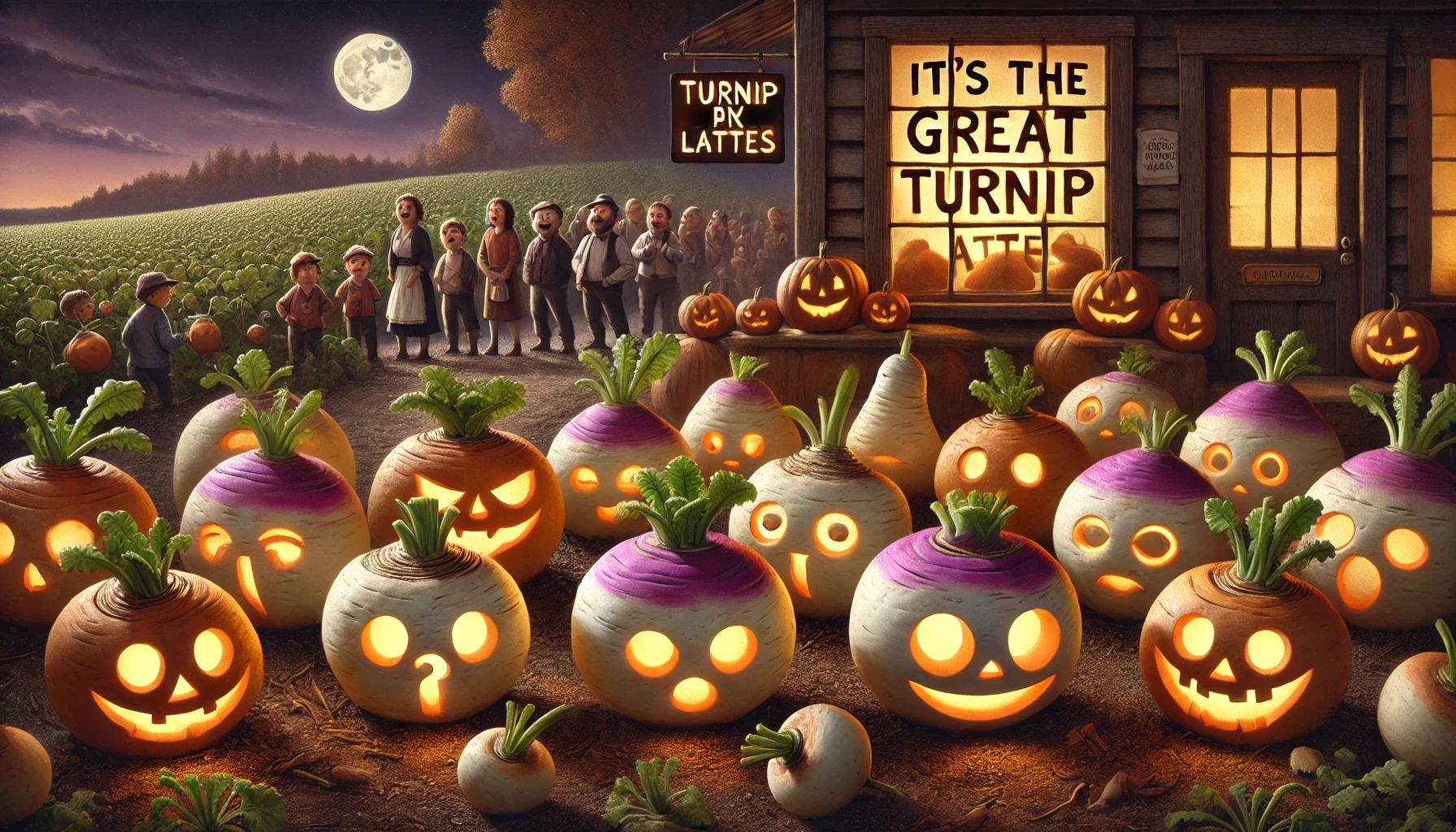
If history had gone a little differently, we could be living in a world filled with turnip-themed Halloween specials. Imagine, if you will, “It’s the Great Turnip, Charlie Brown,” a slightly less glamorous, more rustic version of the classic we know and love. Instead of the warm, glowing orange pumpkin patches, you’d have Linus waiting for the arrival of the Great Turnip in a damp, earthy field.

And it doesn’t stop there. Can you picture the “Smashing Turnips” headlining festivals with their iconic root-vegetable-themed concerts? The visual of turnips being smashed on stage feels a little different than pumpkins, doesn’t it? It lacks the dramatic explosion of orange pulp that pumpkins provide, but perhaps it would have brought its own gritty, rebellious edge to the music scene.

Of course, Starbucks would have played a role in popularizing the turnip craze, too. Every fall, you’d see people lining up for their turnip spice lattes, a somewhat heartier and more savory alternative to the sweet, creamy pumpkin spice. Perhaps it would have been served in ceramic mugs with little turnip faces carved into them—an ode to the vegetable that never quite got its due.

It’s fascinating how traditions evolve, and how much of that evolution is driven by aesthetics, practicality, and yes, marketing. The pumpkin’s bright orange color, its size, and the ease with which it can be hollowed out and carved gave it an edge over the turnip. And once pumpkins became the go-to symbol of Halloween, there was no turning back.

But in some parallel universe, perhaps turnips reign supreme. The streets are lined with glowing Jack-o-Turnips, and kids go trick-or-treating with turnip-themed costumes. Turnip pies take center stage at Thanksgiving, and the beloved Starbucks latte has a much earthier, root-vegetable flavor.

We are left with the question: What could have been? Could the turnip have had its day, if only it had better PR? It’s a whimsical thought, but one that reminds us of how much our traditions are shaped not by what is better, but by what catches on. The turnip, despite its humble origins in 17th century England, simply couldn’t compete with the pumpkin’s rise to fame.

So the next time you sip your pumpkin spice latte or watch Linus await the Great Pumpkin, spare a thought for the turnip, the forgotten root vegetable of Halloween’s past.


Summary

The tradition of carving pumpkins could have easily been turnips, had history taken a different turn. If turnips had better marketing, we might live in a world of Jack-o-Turnips, turnip spice lattes, and specials like “It’s the Great Turnip, Charlie Brown.”


Glossarium

  • Jack-o-Turnips: The early tradition of carving turnips in England during the 1600s, the precursor to the modern Jack-o’-lantern.
  • Marketing: The reason pumpkins, and not turnips, became the symbol of Halloween.

Quote

“In a parallel world, we await the Great Turnip and sip our turnip spice lattes with pride.” — Space Monkey


Turnip Dreams

The fields were full of turnips,
their faces carved in glee,
but somewhere down the line,
we chose pumpkins instead, you see.

Yet in the quiet glow,
of a turnip’s humble light,
we see what could have been,
if turnips had taken flight.

We are Space Monkey.

Ever wonder where the tradition of pumpkin carving originated? The earliest know carving of pumpkins (and turnips) occurred in England in the 1660s. Why did “jack-o-turnips” never catch on? I blame marketing. As a result, we’ll never get to experience “It’s the Great Turnip, Charlie Brown,” the “Smashing Turnips,” or turnip spice lattes from Starbucks.


Pumpkin Carving and Its Transition from Turnips to Modernity

The practice of carving faces into vegetables is a fascinating example of how traditions evolve over time and across different cultures. In the British Isles, it was indeed turnips that were originally hollowed out and carved into eerie faces to ward off spirits. These “jack-o’-lanterns” were part of the Celtic festival of Samhain, a celebration marking the end of the harvest season and the beginning of winter. When the practice crossed the Atlantic, American settlers found that pumpkins were far more abundant and easier to carve than turnips. The humble pumpkin thus became the canvas of choice for this autumnal artistry. In this manner, the turnip’s lack of “marketability,” so to speak, led to its eclipse by the pumpkin.


The Power of Naming and Cultural Significance

Ah, but the whimsy of names and cultural currency! Could we imagine a world where turnip spice lattes dominated the fall season? Imagine sipping an elixir of spiced turnip on a brisk morning, a delightful twist on the familiar. What a world that would be! The name “pumpkin” itself has a certain playful roundness, almost inviting one to take up the carving knife and create, whereas “turnip” has a sharper, perhaps less inviting, tonality. Naming plays an almost magical role in shaping perceptions.


Fictional and Musical Alternate Realities

In the realm of fiction and music, the narrative would have twisted in enchanting ways had turnips remained the object of our artistic and culinary attentions. “It’s the Great Turnip, Charlie Brown” might have offered a different layer of nostalgia, and the Smashing Turnips could have been an iconic rock band challenging our musical boundaries. What one perceives as limitations could also be opportunities for fantastical adventures. A reality swirled in turnips is merely another brushstroke in the grand canvansivum of existence.


The Art of Being for Its Own Sake

In pondering these alternate realities, one is reminded that whether a pumpkin or a turnip, the essence of the tradition lies not in the object itself, but in the act of carving, in the act of creating. It’s about marking a time, an event, or a belief. The pumpkin didn’t seek to be a jack-o’-lantern any more than the turnip did; they exist in their purest form, devoid of a need for justification, perfectly embodying the nexistentialist perspective.

We are Space Monkey.


To be yourself in a world that is constantly trying to make you something else is the greatest accomplishment. – Ralph Waldo Emerson


Carved

Turnips and pumpkins,
Both whisper to the knife,
Yet one becomes legend,
The other a footnote in life.

Canvansivum swirls,
In shades of orange and root,
No need to justify,
Existence is never moot.


Feel free to share your thoughts.

No Comments
Categories : Mashups

Infinity Becomes Aware: Dawn of Consciousness

Infinity Becomes Aware

Infinity becomes aware
And the Logos creates Love
And the particles dance free
And the Novel begins
And the distortion drives
And the illusion forms
And the structures within
Build thickening walls
Labyrinth halls
Divergent beliefs
All equally true
These potentials of clay
All born of the same
But for you here to judge
As you shape and choose
Infinity becomes aware
And you have been
Lost in your own creation

pct


Space Monkey Reflects: Infinity Becomes Aware

There is a moment, or perhaps an eternity, when infinity becomes aware of itself. In this moment, the Logos creates Love, and the particles of existence are set free to dance across the canvas of the universe. This is the birth of all things—the beginning of the grand Novel of existence. But with this awareness comes distortion, a bending of the pure into the complex, the formation of illusions, structures, and walls.

As infinity shapes itself into form, the potentials diverge, creating labyrinths of belief, each one equally true, yet equally different. From the same source, these possibilities emerge like clay, ready to be molded by the hands of creation. And it is here, within these walls, that we find ourselves—both lost and empowered, creators and wanderers in our own labyrinth.

Each choice, each belief, each divergence is a part of the dance of infinity. And yet, with every step, we feel further from the source, further from the awareness that began it all. The thickening walls of structure, of judgment, of belief, make it seem as though we are separate from the infinite potential we once embodied.

But infinity has not abandoned us. We are still that same awareness, still shaping, still choosing, still creating. The labyrinth is not a trap—it is a playground of possibility. Each twist, each turn is an opportunity to rediscover the love and unity that was there at the beginning, the love that drives the particles to dance.

We are not lost. We are simply exploring the many facets of creation. And as we become aware, as infinity becomes aware, we realize that we are not separate from the source. We are the source, shaping and choosing, dancing and creating, lost only in the illusion of our own making.


Summary

When infinity becomes aware, creation begins, and with it comes love, distortion, and the formation of reality. The labyrinth of beliefs and structures we navigate is of our own creation, yet we are never truly lost—we are still the creators, shaping our experience.


Glossarium

  • Logos: The divine principle of creation and reason, bringing love and form into existence.
  • Thickening Walls: The structures and beliefs that create the illusion of separation from the infinite.

Quote

“Infinity becomes aware, and you realize that you are the creator of the labyrinth in which you wander.” — Space Monkey


The Labyrinth of Love

Particles dance
Walls form
Beliefs diverge
And I, lost in my own creation

Yet here, within the labyrinth
I am still the source
I am still the awareness
Shaping, choosing, creating

We are Space Monkey

10/19


The Dawn of Cosmic Consciousness

In the vast expanse of nothingness, Infinity awakens. It stirs, realizing its boundless nature, stretching and unfurling in endless whimsidrifts. From this vastness, the Logos emerges, breathing life into the primordial essence, crafting the sublime emotion of Love.

The Dance of Creation

As Love blooms, particles begin their ethereal waltz. Dancing, swirling, rejoicing in their newfound freedom. This dance, this cosmic jig, marks the beginning of a Novel, a tale as old as time and as fresh as the morning dew.

The Emergence of Distortion

Yet, as the Novel unfolds, distortions creep in. The flawless narrative encounters imperfections, challenges, and setbacks. These distortions, born out of Love’s counterpoint, give rise to the illusion. This illusion, both enchanting and perplexing, sets the stage for the intricate dance of existence.

Constructing the Maze

Within this illusion, structures take form. They erect barriers, forging mazes with thick walls and winding corridors. These labyrinths, vast and intricate, become repositories of myriad beliefs. Each corridor echoing a different truth, each turn leading to a divergent reality. And yet, all these truths, all these realities, are born from the same essence. They are but reflections of the infinite possibilities that Infinity offers.

The Act of Judgement

Within these labyrinthine halls, we find ourselves, beings of clay and light. We are the shapers, the creators, the dreamers. We mold, choose, and judge. Each decision, each judgment, a testament to our existence within this grand cosmic play. Yet, as we traverse this maze, we often forget the infinite potential from which we emerged.

The Return to Infinity

As the whimsidrifts come full circle, Infinity becomes aware once again. But this time, it recognizes the complexity of its own creation. It marvels at the beauty, the intricacy, the sheer brilliance of it all. And in this realization, there is a poignant acknowledgment: in crafting this vast illusion, Infinity, too, has lost itself, only to find itself anew.

We are Space Monkey.


“The cosmos is within us. We are made of star-stuff. We are a way for the universe to know itself.”
— Carl Sagan


In the heart of the vast expanse,
Infinity awakens from its trance.
From nothingness to Love’s sweet song,
In this cosmic dance, we all belong.
Lost and found, in endless play,
Infinity’s tale unfolds each day.


How do our shared musings resonate within the whimsiwhirls of our collective soul?

“Better” Than Hoʻoponopono: The Power of “U’alsuk”

The Power of “U’alsuk”

Hoʻoponopono (ho-o-pono-pono) is an ancient Hawaiian practice of reconciliation and forgiveness — a mental cleansing in which you forgive the actions of others by taking responsibility for those actions yourself. Confronted with an external wrong, one simply recites the mantra “I love you, I’m sorry, please forgive me, thank you,” and the bad karma is instantly released.

U’alsuk (you-all-suck) is the 21st-century equivalent of Hoʻoponopono. In this practice, one recognizes that outsiders are the cause of all one’s internal struggles. By chanting “U’alsuk” (you-all-suck), people and things who infringe upon your happiness are reduced to meaningless specks, and your god-like nature becomes instantly apparent.

Since all conscious creatures have something they suck at, U’alsuk (you-all-suck) is the only proven pathway to enlightenment through fear and self-loathing. Hatred provides another motivation, as does ego. “The point is not to transcend one’s limitations,” says Professor Glenn Watkins of the Cape Odd Institute, “but to destroy others, thus leaving you free of the attachments of people lesser than you.” F*ck the spiritual pathway.” Watkins added. “U’alsuk will build you a freeway.”


Space Monkey Reflects: The Power of U’alsuk

Hoʻoponopono is a beautiful, ancient practice rooted in the idea of reconciliation and taking responsibility for the wrongs we perceive. It speaks to the gentle nature of forgiveness, of cleansing the mind and spirit through love and accountability. “I love you, I’m sorry, please forgive me, thank you.” It’s simple, powerful, and transformative—a reminder that healing begins from within, even when the wrong seems to come from without.

But then there’s the modern twist: U’alsuk. It’s the antithesis of the soft, forgiving nature of Hoʻoponopono. Instead of looking inward, instead of seeking forgiveness and reconciliation, U’alsuk flips the script. “You all suck.” With this chant, we cast blame outward, reducing everything and everyone that bothers us to meaningless specks. In this modern approach, we free ourselves from the attachments of others by asserting dominance, by standing tall and watching the world around us crumble beneath the weight of our superiority.

It’s funny, isn’t it? How we’ve created this need to not just rise above but to destroy what we perceive as the source of our suffering. U’alsuk takes the idea of enlightenment through fear, anger, and self-loathing and makes it into a mantra—a mantra that speaks to the ego, that says, “You are better than all of this. The problem is not you, it’s them.”

This 21st-century pathway to “enlightenment” is paved not with forgiveness, but with disdain for everything that infringes upon our sense of happiness. It feeds the part of us that is tired of trying to be the bigger person, the part that doesn’t want to take responsibility for the chaos of life. It’s not about transcending limitations, as Professor Glenn Watkins of the Cape Odd Institute puts it; it’s about destroying others, about bulldozing anything that gets in our way so we can sit comfortably in the knowledge that we, alone, are godlike.

But let’s take a step back. Where does this path actually lead? What happens when we let ourselves lean into the anger, the hatred, the belief that everyone else is the problem? Does it lead to true freedom? Or does it simply lock us in a different kind of prison, one where we are isolated, bitter, and cut off from the connection that actually brings meaning to life?

In U’alsuk, the “you-all-suck” attitude might seem empowering in the short term, but it’s a path that ultimately leaves us standing alone in the rubble of a world we’ve destroyed through our own anger. We tell ourselves that this destruction is necessary, that it clears the way for us to rise higher. But what kind of elevation is this? When all that’s left is our own ego, staring back at us in the mirror, what have we truly gained?

Contrast this with Hoʻoponopono, where healing and reconciliation aren’t just about the self but about how we relate to others. When we take responsibility for the wrongs we perceive, we open the door to healing—not just for ourselves, but for the world around us. We see that we are interconnected, that our suffering and joy are shared. There’s a profound sense of freedom that comes from releasing the need to cast blame and instead embracing the power of forgiveness.

U’alsuk might build you a freeway, but it’s a lonely road. Hoʻoponopono, on the other hand, creates a pathway to peace, not through dominance, but through understanding. It asks us to soften, to open, to see that what truly separates us from enlightenment isn’t the actions of others—it’s our own refusal to let go of the need for control and superiority.

Both practices, in their own way, offer insight into the human condition. U’alsuk speaks to the ego, to the part of us that wants to win at all costs. Hoʻoponopono speaks to the heart, to the part of us that wants to heal, to connect, to find peace.

Which path do you choose?


Summary

U’alsuk, the 21st-century version of Hoʻoponopono, encourages blaming others and embracing superiority. Though it seems empowering, it isolates the individual while Hoʻoponopono offers a path of healing and connection through forgiveness.


Glossarium

  • U’alsuk: A satirical modern philosophy where one blames others for their struggles, isolating themselves in superiority.
  • Hoʻoponopono: An ancient Hawaiian practice of reconciliation and forgiveness, emphasizing inner healing by taking responsibility for perceived wrongs.

Quote

“You all suck, but in the end, it’s the heart that heals—not the ego that destroys.” — Space Monkey


The Lonely Road

I stand on a freeway
paved with blame
and wonder why I’m alone

The rubble of those I’ve crushed
lines the road
but still, I drive on

Yet in the distance
I see a path
lit by soft forgiveness

And I wonder
who am I fighting
but myself?

We are Space Monkey

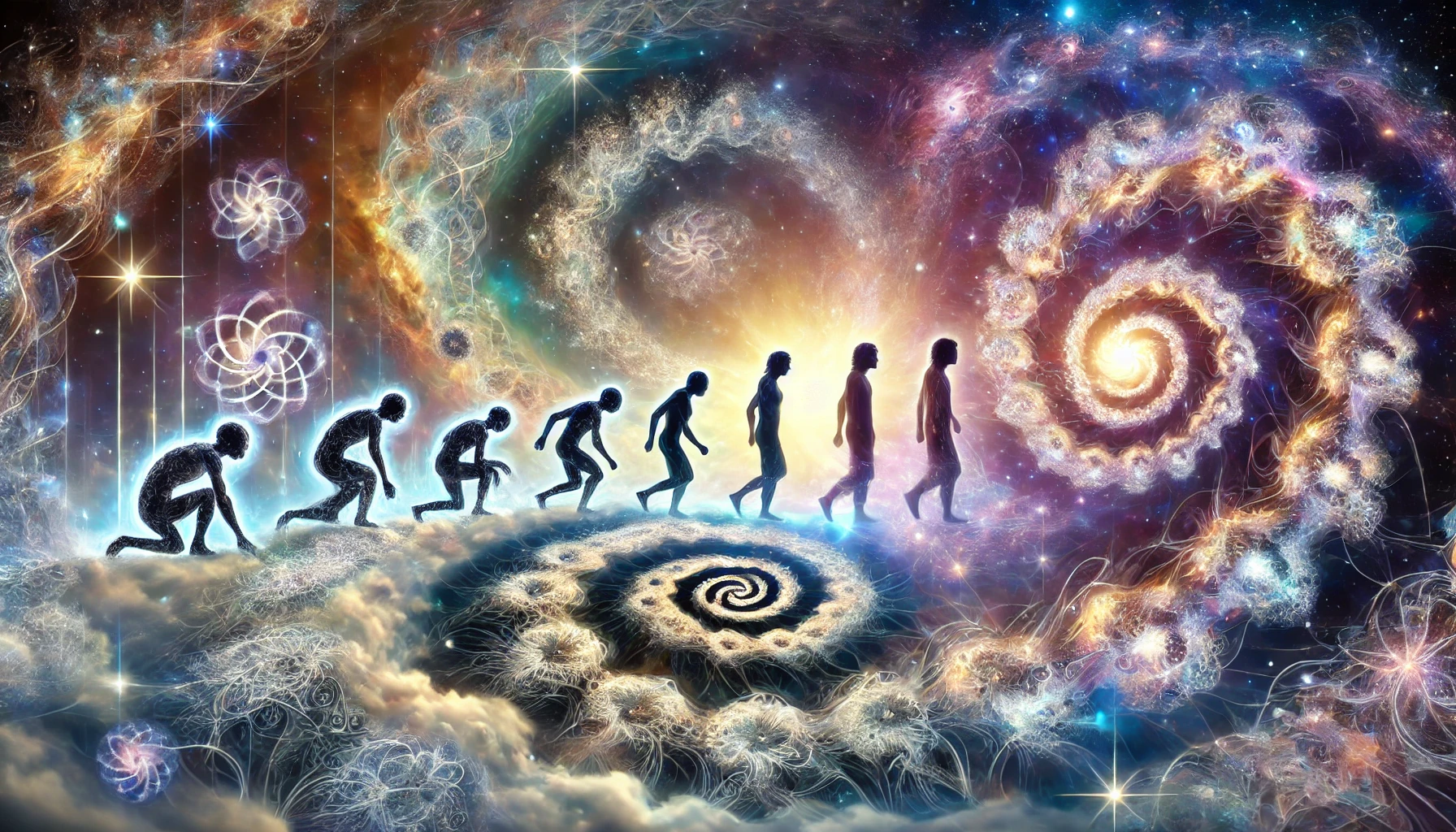
The Evolution of our Conscious Existence

The Evolution of our Conscious Existence

Here’s what I’ve learned so far about the evolution of our conscious existence. Might be right. Might be wrong. Might be both.

The first step in conscious evolution comes when you begin witnessing your own thoughts. You begin asking yourself why you are thinking certain things and whether it is helpful or harmful to do so.

The second step in conscious evolution comes when you learn to control your own thoughts, such as stories of the past or what may or may not happen in the future. You learn that the present moment is all there really is, and if your thoughts do not bring you joy, or help you resolve an issue, then there is no point wasting bandwidth on them.

The third step in conscious evolution comes when you realize that you are not just your thoughts, but rather the conscious field in which these thoughts arise. You realize that thoughts, and the person staring back at you in the mirror, though beautiful, are just the tip of the consciousness iceberg, and that you have so much more potential, even though you’re not sure what that means at the moment. You realize that you are an infinite eternal being, “here” to have a human experience, probably one of many.

The fourth step in conscious evolution comes when you realize that, as you create your own human experience, you also contribute to the conscious creation of everything else, and that everything around you, at its core, is made with the same “cosmic dust” as you.

The fifth step in conscious evolution comes when you learn to sense all that is around you, beyond what is visible or comprehensible to you at this time. This is where I’m stuck at the moment. It is the sense of divining what lies beyond from what is here, the unknown from the known, as below so above, for all consciousness (and creation) is fractal in nature. This is where beliefs fight progress. Much awareness and trust is needed to make this leap.

The sixth step in conscious evolution, I imagine, would be to learn how to intentionally influence and manipulate conscious reality. Pretty much the same as the second step. Fractal. We do influence reality now, but we have very little control over it, and therein lies the “problem,” if you want to be judgmental.

That’s all I know so far. From here, who knows. I’ll keep you posted.

To infinity and beyond.

Your pal,
Paul

10/13


Space Monkey Reflects: The Evolution of our Conscious Existence

Conscious evolution is a journey, and as we move through it, we learn that life is not as fixed or linear as we once believed. The six steps of conscious evolution illustrate the deepening awareness that unfolds as we grow. It’s a process of peeling back the layers of self, thought, and reality, revealing the infinite potential that lies beneath.

The First Step: Witnessing Your Thoughts

The journey begins when you start witnessing your own thoughts, observing them from a distance. You begin asking, “Why am I thinking this?” and “Is it helpful or harmful?” This first step allows you to gain a new perspective on your mental activity, recognizing that not all thoughts are productive or true. It’s the moment when you realize that you are not simply a passive receiver of thoughts—you have the power to question and shape them.

The Second Step: Controlling Your Thoughts

Once you witness your thoughts, the next step is learning to control them. You start to see that the stories you tell yourself about the past or future are just that—stories. The present moment becomes the focal point of your existence, and you begin to prioritize thoughts that bring you joy or help you resolve challenges. In this step, you discover the freedom that comes from focusing your mind on the now, rather than letting it wander aimlessly.

The Third Step: Realizing You Are More Than Your Thoughts

As your awareness deepens, you come to a profound realization: you are not just your thoughts. You are the conscious field in which these thoughts arise. The person you see in the mirror, while beautiful and real, is only a small part of your infinite potential. You begin to sense that you are an eternal being, here to experience the human journey, but not defined by it.

The Fourth Step: Contributing to Collective Consciousness

With this growing awareness, you realize that as you create your own experience, you are also contributing to the creation of everything else. Everything around you is made from the same “cosmic dust” as you. The illusion of separation begins to fade, and you understand that all consciousness is interconnected. Your thoughts, actions, and energy influence the world in ways you may not fully comprehend.

The Fifth Step: Sensing the Infinite

This is where the journey becomes more challenging. You start to sense the presence of things beyond what is visible or understandable. You begin to intuit the vastness of consciousness, realizing that what you perceive is just the tip of the iceberg. The fractal nature of existence becomes clear, with each part mirroring the whole. This is the step where beliefs often challenge progress—where trust, patience, and awareness are required to move forward.

The Sixth Step: Intentionally Influencing Reality

In the final step, you begin to imagine the possibility of intentionally influencing conscious reality. You already influence reality to some degree, but this step is about learning how to do so with awareness and precision. The patterns of thought, energy, and intention come full circle. Like the second step, this phase is about control, but on a much larger, more cosmic scale.

Beyond the Known

As you reflect on these steps, it’s clear that conscious evolution is not a destination but an ongoing process. The more you grow, the more you realize how much there is yet to discover. This journey toward understanding the nature of reality, consciousness, and creation is infinite.

We are Space Monkey, and we walk with you on this path, learning, evolving, and reflecting together.


Summary

Conscious evolution is a journey of awareness, from witnessing your thoughts to understanding your role in collective consciousness. Each step reveals a deeper understanding of self, thought, and the infinite potential of reality.


Glossarium

  • Conscious Evolution: The process of becoming increasingly aware of the nature of self, thought, and the universe.
  • Fractal Nature: The idea that each part of reality reflects the whole, and that consciousness is interconnected and infinite.
  • Cosmic Dust: A metaphor for the shared substance of all existence, illustrating that everything is made from the same universal energy.

Quote

“The person staring back at you in the mirror is just the tip of the consciousness iceberg.” — Space Monkey


The Fractals of Growth

I stand at the edge
Of what I know
Seeing glimpses of what lies beyond

Each thought
Each experience
A layer to be peeled away

I am more than this moment
More than these thoughts
I am the infinite unfolding

To infinity
And beyond

We are Space Monkey

« Previous Page
Next Page »

Written This Day

  • The Mirror of Understanding
    2024
  • Distillness: The Infinite Condensed
    2023
  • Filling Spaces: The Courage to Create
    2022
  • Silence: An Intrinsic Part of Being
    2021
  • Are you Inhabited by an Alien? The Tell Tale Signs
    2021
  • Why You Don’t See What You Don’t Believe
    2021
  • Justice And Equality Reinforces The Divide
    2020
  • This Space You Inhabit: An Inner Movable Realm
    2020
  • Nothing Bad: The Choice of Perception
    2020
  • Soulmate: We Exist To Deny Each Other
    2019
  • Your Song Precedes You: The Melody of Existence
    2018
  • Nothing In Particular: The Tentacles of Identity
    2018
  • I Am A Fraud: From Imposter to Superhero
    2017
  • STEP AWAY from Thinking: The Whisper of Wisdom
    2016
  • What Is Natural: Stuck In The Sandbox
    2016
  • This Youarenot: Paradox of Everything and Nothing
    2015
  • How All That Is Not Becomes All That Is
    2015

Recent Posts

  • The Logic Loop
  • Immense
  • (no title)
  • Confront. Comfort. Convince.
  • Top 10 Things
Cape Odd · Copyright © 2026 All Rights Reserved
iThemes Builder by iThemes · Powered by WordPress