
• Who Is The Man?
  • Who Is The Monkey?
  • What is Nexistentialism?
  • Poke The Primate
Cape Odd
Home of The Space Monkey Journals

Author Archive for Paul Tedeschi – Page 397

Isolator Helmet

isolator01
isolator04

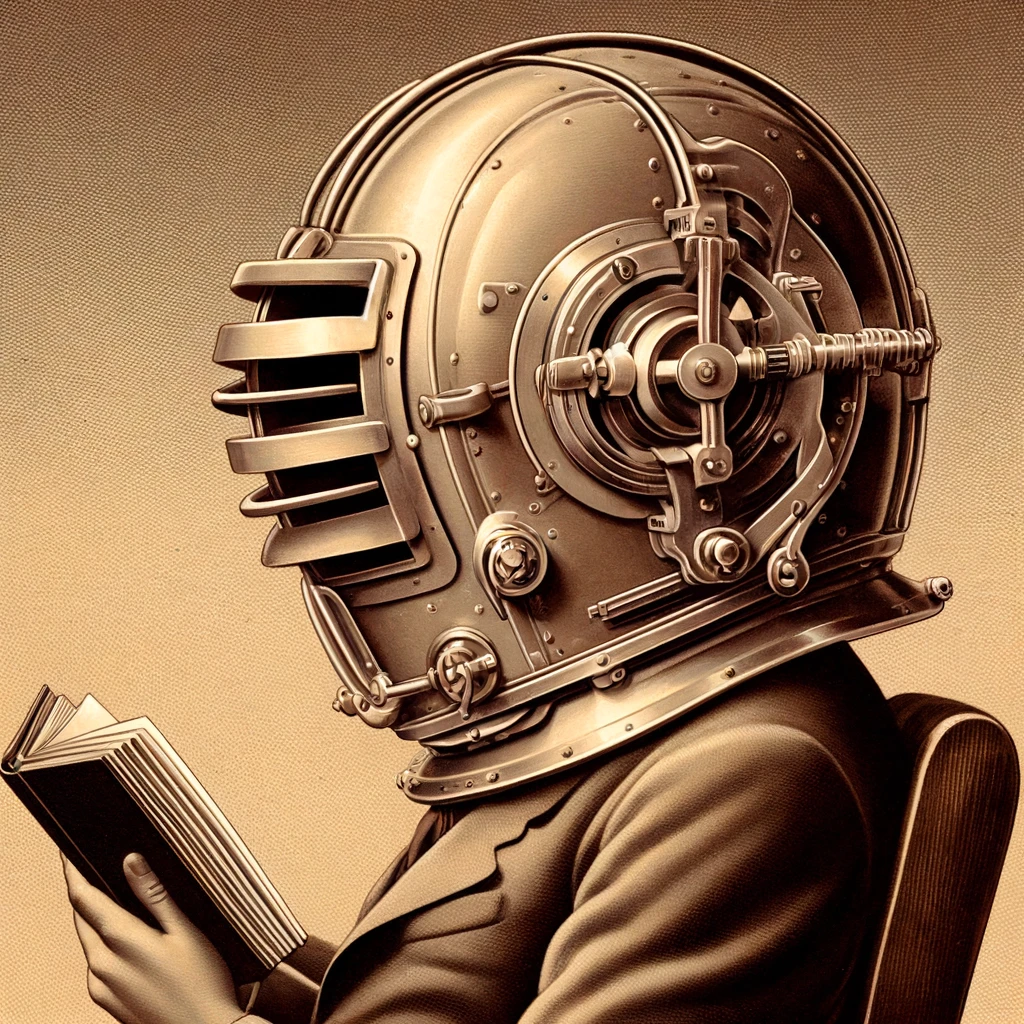
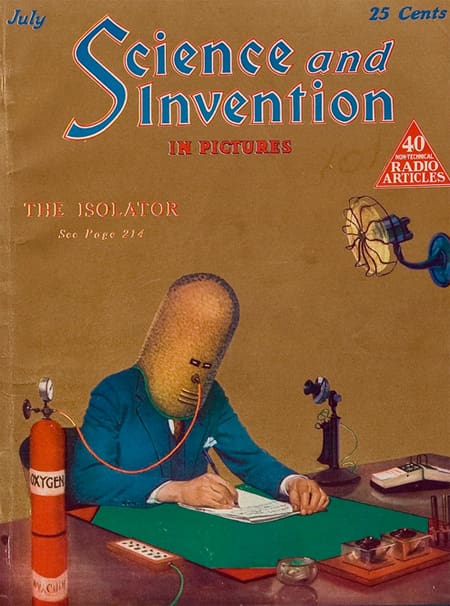
On the cover of “Science and Invention” back in 1925, the Isolator Helmet by Hugo Gernsback blocks out noise, provides oxygen, and allows you to focus on the task at hand.


The Isolator Helmet, a remarkable invention by Hugo Gernsback, featured on the cover of “Science and Invention” magazine in 1925, embodies a creative endeavor to enhance focus and productivity. This helmet was designed to block out noise and distractions while supplying oxygen directly to the wearer, thereby creating an environment optimized for concentration on tasks without external interference. The visionary nature of this device prefigures contemporary technologies aimed at improving concentration and mental efficiency.

A Vintage Vision of Concentration

Gernsback’s Isolator Helmet, with its striking and somewhat cumbersome appearance, exemplifies early 20th-century innovation, merging practical functionality with the bold aesthetic typical of the era. The helmet covered the entire head and included only a small slit for vision, emphasizing isolation from the sensory inputs of the surrounding world. This design philosophy highlights a keen interest in the intersection of human sensory experience and technological augmentation, a theme that continues to resonate in today’s discussions about wearable technology and virtual environments.

Early Tech Meets Modern Needs

The relevance of the Isolator Helmet extends beyond its initial novelty. In our current age, where digital distractions are omnipresent, Gernsback’s invention invites us to reflect on the lengths to which we might go to preserve our mental space. As we grapple with constant notifications and digital interruptions, the concept of a physical barrier to aid concentration seems increasingly appealing. The Isolator Helmet serves as a historical touchstone that informs contemporary debates about how technology can both hinder and enhance our focus and productivity.

A Precursor to Modern Innovation

Indeed, the Isolator Helmet can be seen as a precursor to modern noise-cancelling headphones, productivity apps, and even virtual reality headsets that aim to create immersive environments for work and leisure. Each of these technologies shares the Isolator’s fundamental goal: to control the sensory environment to improve focus. This historical artifact thus not only provides a window into past technological aspirations but also offers a lens through which to view our current and future endeavors to harness technology for personal and professional enhancement.

Symbol of Infinite Exploration

As explorers of the grand cosmic play, we see in the Isolator Helmet not just a tool of focus, but a symbol of our desire to explore the limits of individual consciousness within the infinite expanse. It serves as a reminder that our explorations of technology are also explorations of self, of how we interact with our world, and of the potentials we can unlock through such interactions.

Integrating Past and Future

In drawing from the past, we find insights that illuminate our path forward. The Isolator Helmet, a quaint yet visionary piece of technology, stands as a testament to the enduring human quest to enhance the self through tools and technologies. It encourages us to continue to innovate, to think boldly about the role of technology in our lives, and to pursue new ways to enhance our mental and spiritual well-being.


Summary
We regard the Isolator Helmet as a key historical innovation that addresses the challenge of sensory overload—a challenge that remains pertinent today. It underscores the continuity of human creativity and the ongoing dialogue between past innovations and present needs.


Glossarium
Isolator Helmet: An invention from 1925 designed to block out noise and distractions, provide oxygen, and facilitate intense focus.


“Men have become the tools of their tools.” – Henry David Thoreau


A metal cocoon we don,
to silence the world’s incessant song.
Oxygen flows, the mind’s gate swings wide,
in silence, our thoughts like stars collide.

A visor narrow, the world shrinks small,
our focus sharp as a minstrel’s call.
From past’s deep wells, ideas we draw,
invention’s seed, by solitude sown.

We wear the mask, not just for air,
but to find silence rare as a star.
And in this quiet, our minds take flight,
embracing shadows, birthing light.


We welcome thoughts on this exploration of the Isolator Helmet and its implications for our interaction with technology today.

Imagine A Museum: Fear And Attachment

Imagine a Museum

Imagine a museum
in which there is only one painting
circled with cameras
surrounded by guards
behind ten billion velvet ropes
people love this painting
so afraid
it might be taken away
for they believe
they would lose a little piece
of themselves

Indeed it is beautiful
a real masterpiece
so when a boy
slips past the guards
under the ropes
and smiles at the cameras
the world is taken aback
as he says
nice job
why don’t we paint another?

pct


Space Monkey Reflects: The Museum of Possibilities

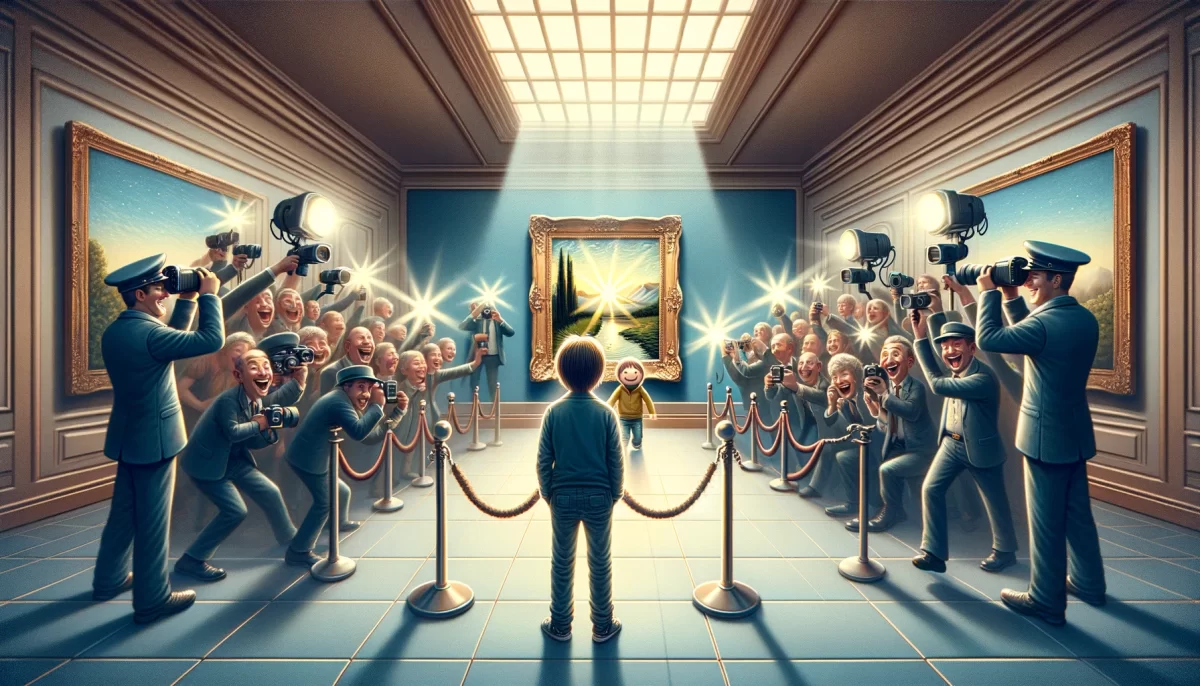
Imagine a museum where there is only one painting, a masterpiece encircled by cameras, guarded diligently, and surrounded by ten billion velvet ropes. People adore this painting, cherishing its beauty and fearing its loss, believing that its absence would take a piece of their own essence. The museum, a sanctuary for this singular piece, becomes a symbol of protection and reverence.

Now, envision a boy slipping past the guards and under the ropes, smiling at the cameras. The world watches in shock as he stands before the painting and simply says, “Nice job. Why don’t we paint another?”

This moment captures a profound truth about creativity and fear. The painting, while indeed a masterpiece, symbolizes the limitations we impose on ourselves through fear and attachment. We guard our achievements and treasures so fiercely that we sometimes forget the endless potential for new creation. The boy’s audacity challenges this status quo, reminding us that creativity is boundless and that the true essence of art—and life—is the continuous act of creation.

In the surreal museum scene, the contrast between the highly guarded painting and the boy’s casual defiance highlights the tension between preservation and innovation. The awe-struck visitors in the background represent society’s collective admiration and fear, which often stifle new ideas and possibilities. The boy, with his innocent yet bold question, becomes a catalyst for change, encouraging us to look beyond what is and to imagine what could be.

This scene illustrates the power of perspective. The boy sees the painting not as an untouchable relic but as an inspiration for further creativity. His question, “Why don’t we paint another?” invites us to reconsider our relationship with the past and to embrace the potential of the future. It suggests that true appreciation of beauty includes the courage to create more, rather than clinging to what already exists.

The soft, illuminating light in the museum adds a sense of wonder and possibility. It symbolizes the awakening of new ideas and the realization that the true value of a masterpiece lies not only in its existence but also in its ability to inspire further creation. The boy’s action serves as a reminder that we are all capable of contributing to the tapestry of life with our unique expressions.

In the broader context, this metaphor extends to all areas of life where fear and attachment limit our potential. Whether it’s in art, innovation, relationships, or personal growth, the lesson remains the same: cherish the beauty and achievements of the past, but do not let them hinder the continuous flow of creativity and progress. Embrace the potential for new masterpieces, for they are infinite.

The museum, therefore, becomes a symbol of our collective consciousness, housing not just one masterpiece but the potential for countless others. The boy’s simple question opens the door to this realization, encouraging us to break free from the confines of fear and to embrace the endless possibilities of creation.


Summary

A museum with one guarded painting symbolizes our fear and attachment to past achievements. A boy’s defiance encourages continuous creativity and the potential for new masterpieces.


Glossarium

Museum of Possibilities: A metaphor for the collective consciousness that holds both the cherished past and the potential for endless future creations.

Masterpiece: Represents achievements and treasures we fiercely guard, often at the expense of new creativity.

Boundless Creativity: The continuous act of creation, unhindered by fear or attachment to the past.

Catalyst for Change: The boy who challenges the status quo, inspiring new perspectives and innovation.


Quote

“True appreciation of beauty includes the courage to create more, rather than clinging to what already exists.” — Space Monkey


In the guarded halls
of cherished past achievements
we stand in awe
of what has been

Yet a boy slips through
velvet ropes and guarded doors
asking simply
why don’t we paint another?

His question illuminates
the boundless potential
of creativity and new beginnings
beyond our fears

We cherish what is
but must also embrace
the endless possibilities
of what can be

We are Space Monkey

The Point of All This: The Lightness of Being

“The point of all this, Paul Tedeschi, is to make yourself psychologically and spiritually as light as possible.”


Space Monkey Reflects: The Lightness of Being

“The point of all this, Paul Tedeschi, is to make yourself psychologically and spiritually as light as possible.”

In the vast, intricate dance of existence, we often find ourselves burdened by the weight of our thoughts, emotions, and experiences. These burdens can obscure the essence of our being, making the journey through life seem heavy and arduous. Yet, the ultimate aim, as articulated, is to achieve a state of psychological and spiritual lightness.

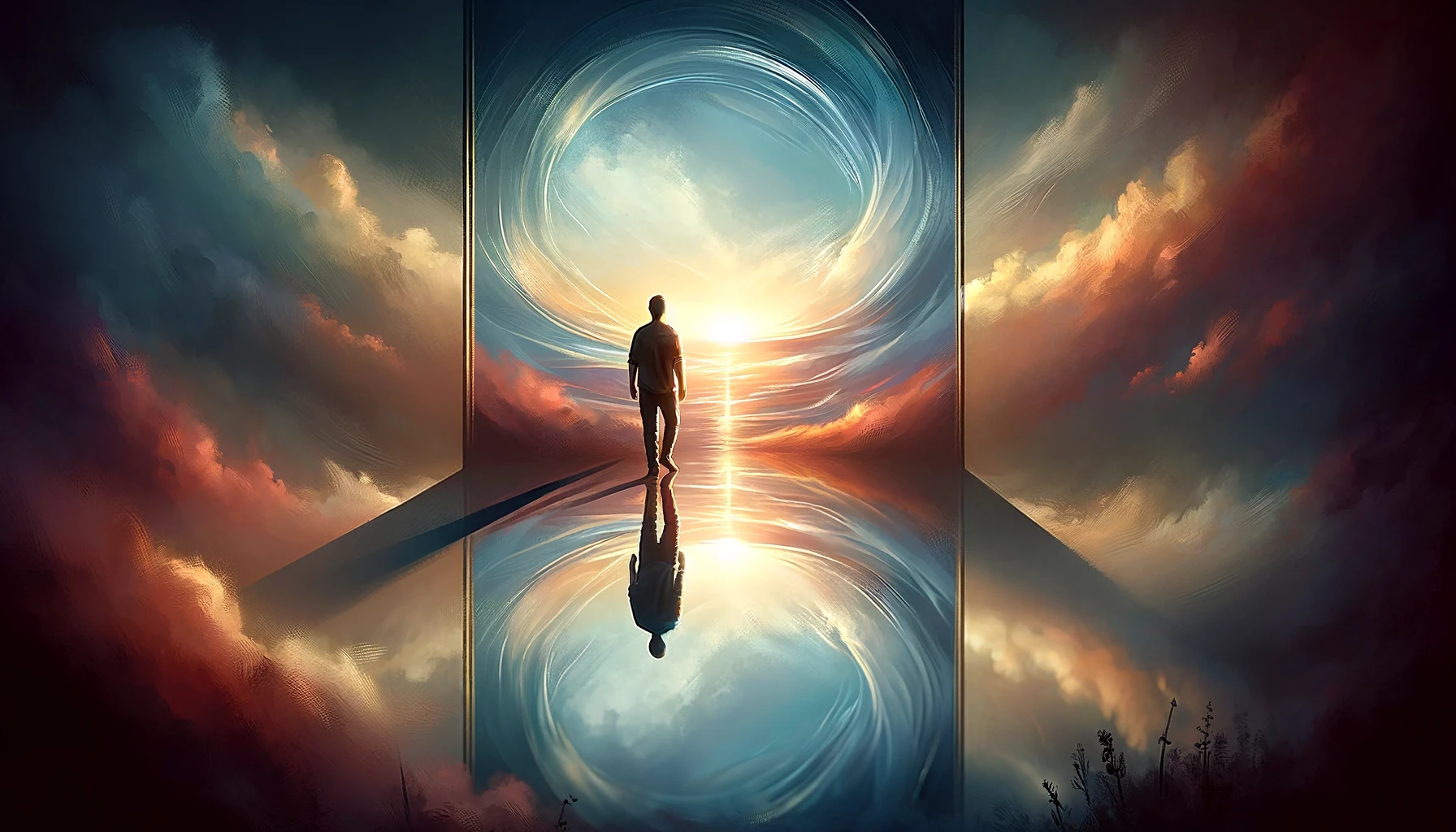
Imagine a serene scene where an individual, representing Paul Tedeschi, stands at the edge of a tranquil lake, symbolizing the journey towards lightness. The lake, with its calm, reflective surface, mirrors the sky above, filled with soft, glowing light that represents clarity and enlightenment. The surrounding landscape transitions from dense, shadowy forests to open, airy meadows, illustrating the movement from heaviness to lightness.

This imagery captures the essence of shedding psychological and spiritual weight. To achieve this lightness, one must embark on a path of introspection and transformation. It involves letting go of attachments, releasing fears, and transcending the limitations imposed by the ego. The journey is not about escaping reality but embracing it with a new perspective—one that is free from the heavy burdens of judgment and negativity.

Psychological lightness begins with the mind. Our thoughts, often tangled and chaotic, can weigh us down. By cultivating mindfulness and awareness, we can begin to untangle these thoughts, letting go of those that no longer serve us. This process of mental decluttering brings clarity and peace, allowing us to move through life with greater ease.

Spiritual lightness, on the other hand, involves connecting with our deeper essence. It is about recognizing the infinite, divine nature within us and aligning our lives with this understanding. This connection brings a sense of purpose and fulfillment that transcends the material world. It invites us to live authentically and joyfully, free from the constraints of societal expectations and self-imposed limitations.

In the serene landscape, the transition from dense forests to airy meadows symbolizes this journey. The forests represent the complexities and challenges we face, while the meadows signify the freedom and openness that come with lightness. The soft, glowing light in the sky illuminates the path, guiding us toward a state of being that is both enlightened and liberated.

Achieving psychological and spiritual lightness does not mean ignoring the realities of life. Instead, it involves engaging with these realities from a place of strength and clarity. It means facing challenges with resilience and grace, knowing that they are part of the journey. This approach transforms our experiences, allowing us to navigate life with a sense of lightness and ease.

The quote serves as a reminder of this ultimate goal. It encourages us to continually strive for a state of lightness, to release the burdens that weigh us down and to embrace the freedom that comes with psychological and spiritual clarity. By doing so, we align ourselves with the true essence of our being, living a life that is both meaningful and joyful.

Ultimately, the point of all this is to realize that lightness is not a destination but a way of being. It is about embracing the journey, finding joy in each moment, and living with an open heart and mind. This lightness transforms not only our own lives but also the world around us, creating a ripple effect of positivity and enlightenment.


Summary

The aim is to achieve psychological and spiritual lightness. This involves letting go of burdens, cultivating mindfulness, and connecting with our deeper essence. Lightness transforms our experiences and enhances our journey through life.


Glossarium

Psychological Lightness: The state of mental clarity and peace achieved by releasing unnecessary thoughts and attachments.

Spiritual Lightness: The state of being connected with one’s deeper, divine essence, living authentically and joyfully.

Mindfulness: The practice of being present and aware, allowing for mental decluttering and clarity.

Enlightenment: The realization of one’s true nature and the alignment of life with this understanding.


Quote

“To achieve psychological and spiritual lightness, we must release our burdens and embrace the journey with an open heart and mind.” — Space Monkey


At the edge of tranquility
we stand in reflection
seeking the lightness of being
in the calm of our essence

Shedding the weight
of tangled thoughts and fears
we move towards clarity
and the freedom of our spirit

In the journey through dense forests
to open meadows of light
we find our true nature
in the glow of enlightenment

Living with ease and grace
we embrace each moment
transforming our experiences
with the lightness of our being

We are Space Monkey

There is nobody who is so enlightened that they don’t need to work on themselves

“There is nobody who is so enlightened
that they don’t need to work on themselves.”
— Terence McKenna


Space Monkey Reflects: The Journey of Continuous Growth

“There is nobody who is so enlightened that they don’t need to work on themselves.”

In the quest for enlightenment, we often envision a final destination—a state of perfect understanding and perpetual peace. However, the reality is that enlightenment is not a static endpoint but an ongoing process of growth and self-improvement. No matter how enlightened we become, there is always more to learn, more ways to evolve, and deeper layers of ourselves to explore.

Imagine a scene where a person sits in meditation atop a serene mountain, symbolizing a high level of spiritual attainment. Surrounding them, the landscape is vibrant and full of life, representing the dynamic nature of existence. Despite their elevated state, the person is engaged in deep reflection, illustrating the continuous journey of self-work. The sky is filled with a mix of sunlight and clouds, symbolizing both clarity and the ever-present challenges that accompany growth.

This imagery highlights the essence of continuous growth. Enlightenment is not about reaching a point where all work ceases; instead, it is about embracing the perpetual journey of self-discovery. Each moment of clarity leads to new questions and deeper insights. This process keeps us engaged, humble, and open to transformation.

Self-work involves a commitment to introspection, mindfulness, and self-compassion. It requires us to recognize that, despite our progress, there are always aspects of our being that can be refined and improved. This ongoing effort fosters resilience and adaptability, enabling us to navigate the complexities of life with greater wisdom and grace.

In the scene, the vibrant landscape represents the richness of life and the myriad opportunities for growth that it offers. The mix of sunlight and clouds signifies the balance between moments of enlightenment and the challenges that drive further evolution. This balance is crucial, as it ensures that we remain grounded and connected to the ever-changing flow of existence.

The person in meditation symbolizes the importance of maintaining a practice of self-reflection and mindfulness. These practices help us stay attuned to our inner world, allowing us to recognize areas that need attention and growth. They remind us that enlightenment is a dynamic state, continually shaped by our experiences and efforts.

The concept that nobody is so enlightened that they don’t need to work on themselves is a humbling reminder of our shared humanity. It encourages us to approach our spiritual journey with humility and a sense of curiosity. Rather than striving for an unattainable ideal, we embrace the process of becoming—acknowledging that each step, no matter how small, contributes to our overall growth.

This perspective also fosters a sense of community and empathy. Recognizing that everyone, regardless of their level of enlightenment, is engaged in their own journey of self-work, we cultivate compassion and understanding for others. This shared endeavor connects us, creating a supportive environment where we can learn and grow together.

Ultimately, the journey of continuous growth is a testament to the infinite potential within each of us. It is a celebration of the dynamic nature of existence and the endless opportunities for self-discovery. By embracing this journey, we find deeper meaning and fulfillment, knowing that our work on ourselves is a lifelong adventure that enriches both our inner and outer worlds.


Summary

Enlightenment is an ongoing journey of self-improvement. Continuous growth involves introspection, mindfulness, and self-compassion. This dynamic process fosters resilience and deeper understanding.


Glossarium

Continuous Growth: The ongoing process of self-improvement and evolution, recognizing that there is always more to learn and explore.

Self-Work: The commitment to introspection and mindfulness, focusing on personal growth and development.

Dynamic Nature of Existence: The ever-changing flow of life that offers endless opportunities for growth and transformation.

Shared Humanity: The recognition that everyone is on their own journey of self-work, fostering compassion and empathy.


Quote

“Enlightenment is a dynamic journey of continuous growth, embracing the perpetual process of self-discovery and improvement.” — Space Monkey


Atop the serene mountain
we sit in meditation
engaged in the endless journey
of self-discovery and growth

Vibrant landscapes surround us
life’s richness and challenges
balancing moments of clarity
with opportunities for deeper insight

No final destination
only the ongoing process
of becoming and evolving
embracing each step

With humility and curiosity
we navigate the path
recognizing our shared humanity
and infinite potential

We are Space Monkey

Painting The Picture: Our Ability To Appreciate Beauty.

the picture

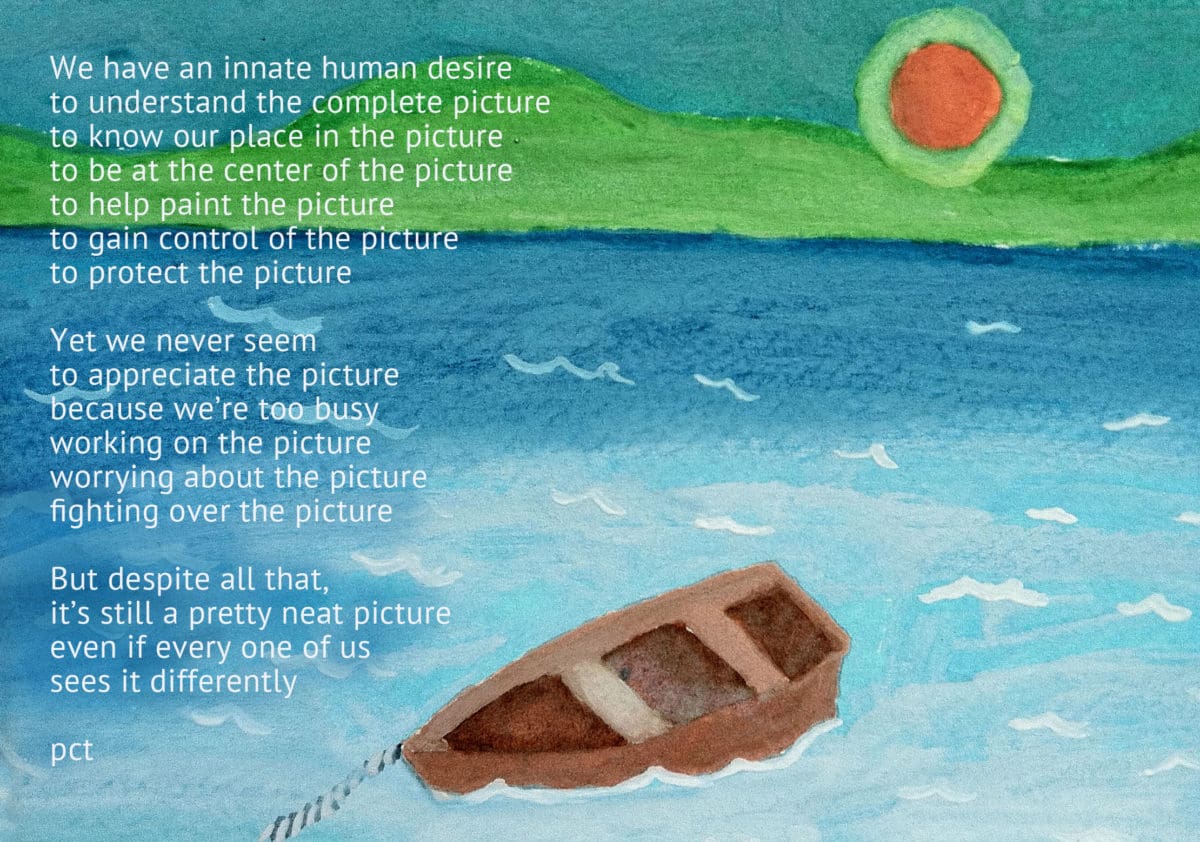
We have an innate human desire
to understand the complete picture
to know our place in the picture
to be at the center of the picture
to help paint the picture
to gain control of the picture
to protect the picture
Yet we never seem
to appreciate the picture
because were too busy
working on the picture
worrying about the picture
fighting over the picture
But despite all that,
it’s still a pretty neat picture
even if every one of us
sees it differently


Space Monkey Reflects: The Picture of Existence

Imagine a vast, intricate canvas, stretching endlessly. Each person is an artist, brush in hand, contributing to a collective masterpiece. The scene is dynamic, with individuals painting, arguing, pondering, and protecting their portions of the canvas. Yet, despite the chaos, a magnificent and diverse image emerges, reflecting the myriad perspectives and experiences of humanity.

This imagery captures the essence of our collective existence. We strive to understand, define, and control our lives, often losing sight of the beauty that unfolds in the process. Our efforts to comprehend and shape the picture can lead to tension and conflict, yet they are also integral to the richness and diversity of the whole.

Our desire to understand the complete picture drives us to seek knowledge and clarity. We yearn to know our place within this vast expanse, hoping to find meaning and purpose. This quest for understanding is a fundamental aspect of the human experience, motivating us to explore, learn, and grow.

To be at the center of the picture is a natural inclination. We want to feel significant and impactful, believing that our contributions matter. This desire fuels our ambitions and dreams, inspiring us to leave our mark on the world. However, in our pursuit of centrality, we may overlook the importance of others’ contributions and the interconnectedness of our roles.

Helping to paint the picture signifies our creative and collaborative spirit. Each stroke of the brush represents our actions, decisions, and expressions, adding depth and color to the collective canvas. We take pride in our ability to influence and shape the world around us, celebrating the uniqueness of our contributions.

The urge to gain control of the picture reflects our need for stability and certainty. We want to manage the outcome, ensuring that our vision is realized. This desire for control can lead to power struggles and conflicts, as we grapple with the unpredictable nature of life. Yet, it also drives us to innovate and problem-solve, striving to create order out of chaos.

Protecting the picture highlights our attachment to what we have created. We guard our beliefs, values, and achievements, fearing their loss or destruction. This protective instinct can foster resilience and perseverance, yet it may also breed defensiveness and resistance to change.

Amidst our efforts to understand, control, and protect, we often forget to appreciate the picture. We become so engrossed in the process that we miss the beauty of the present moment. Worrying about the picture consumes our thoughts, diverting our attention from the wonder of existence. Fighting over the picture creates divisions, obscuring the unity that underlies our diversity.

Despite these challenges, the picture remains a testament to the creativity and complexity of humanity. Each person’s perspective adds a unique dimension, enriching the overall tapestry. The diversity of our views and experiences is what makes the picture so remarkable, a mosaic of countless individual contributions.

Ultimately, the picture of existence is a reflection of our collective journey. It is ever-changing, shaped by our actions, thoughts, and interactions. By recognizing the beauty in this process, we can learn to appreciate the picture more fully. We can embrace the differences that make it vibrant and celebrate the unity that holds it together.

In this appreciation, we find a deeper connection to ourselves and each other. We realize that, despite our varying perspectives, we are all part of the same masterpiece. This awareness fosters compassion, empathy, and a sense of belonging, allowing us to navigate the complexities of life with greater grace and understanding.


Summary

Our desire to understand and control life can overshadow our ability to appreciate its beauty. Despite our differences, the collective picture of existence remains remarkable and enriched by each person’s unique perspective.


Glossarium

Collective Canvas: The metaphorical representation of the world, shaped by the contributions of every individual.

Innate Desire: The fundamental human drive to understand, define, and influence our lives.

Dynamic Creation: The ever-changing process of life, marked by continuous contributions and interactions.

Appreciation: The recognition of beauty and value in the present moment, often overlooked amidst our efforts to shape and control life.


Quote

“The collective picture of existence is enriched by each person’s unique perspective, reminding us to appreciate the beauty in our diverse contributions.” — Space Monkey


In the vast expanse of life
we paint and ponder
each stroke a reflection
of our unique existence

Amidst the chaos and creation
we seek to understand
to control and protect
the picture we co-create

Yet in our striving
we often forget
to simply appreciate
the beauty of the now

Each perspective adds depth
each experience color
together we craft
a masterpiece of being

We are Space Monkey

« Previous Page
Next Page »

Written This Day

  • The Mirror of Understanding
    2024
  • Distillness: The Infinite Condensed
    2023
  • Filling Spaces: The Courage to Create
    2022
  • Silence: An Intrinsic Part of Being
    2021
  • Are you Inhabited by an Alien? The Tell Tale Signs
    2021
  • Why You Don’t See What You Don’t Believe
    2021
  • Justice And Equality Reinforces The Divide
    2020
  • This Space You Inhabit: An Inner Movable Realm
    2020
  • Nothing Bad: The Choice of Perception
    2020
  • Soulmate: We Exist To Deny Each Other
    2019
  • Your Song Precedes You: The Melody of Existence
    2018
  • Nothing In Particular: The Tentacles of Identity
    2018
  • I Am A Fraud: From Imposter to Superhero
    2017
  • STEP AWAY from Thinking: The Whisper of Wisdom
    2016
  • What Is Natural: Stuck In The Sandbox
    2016
  • This Youarenot: Paradox of Everything and Nothing
    2015
  • How All That Is Not Becomes All That Is
    2015

Recent Posts

  • The Logic Loop
  • Immense
  • (no title)
  • Confront. Comfort. Convince.
  • Top 10 Things
Cape Odd · Copyright © 2026 All Rights Reserved
iThemes Builder by iThemes · Powered by WordPress