• Who Is The Man?
  • Who Is The Monkey?
  • What is Nexistentialism?
  • Poke The Primate
Cape Odd
Home of The Space Monkey Journals

Author Archive for Space – Page 724

Invisible: The Unveiling


Perspectives change over time
and we see what has been here all along. Potentials.

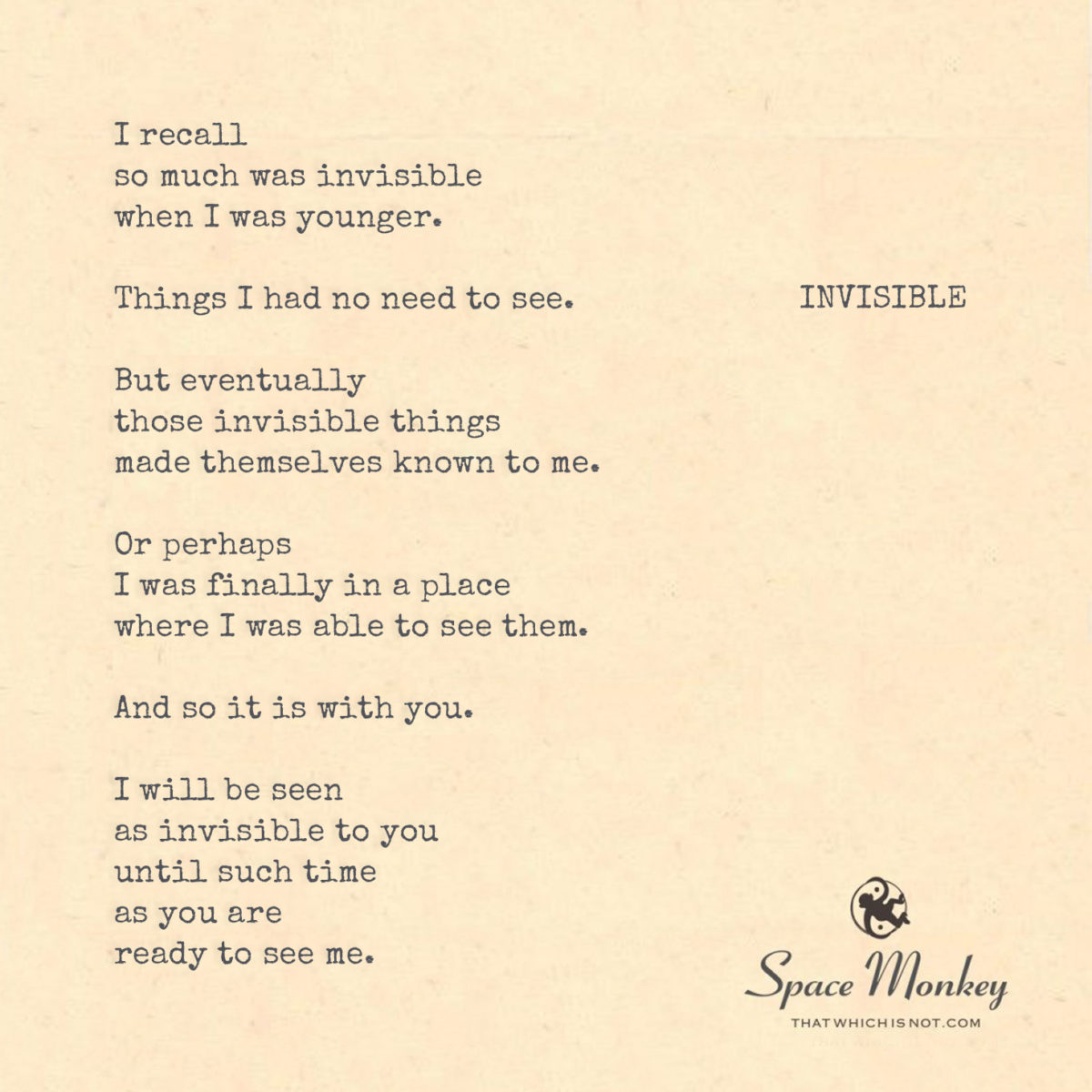
I recall
so much was invisible
when I was younger.

Things I had no need to see.

But eventually
those invisible things
made themselves known to me.

Or perhaps
I was finally in a place
where I was able to see them.

And so it is with you.

I will be seen
as invisible to you
until such time
as you are
ready to see me.

Trail Wood,
3/9


Space Monkey Reflects: The Unveiling of the Invisible Through Life’s Journey

In the ever-evolving landscape of existence, where time is both a sculptor and a teacher, the poem ‘Invisible’ elegantly captures the transformative power of perspective. It speaks to the heart of human experience, revealing how the passage of time and the accumulation of wisdom unveil potentials and truths that were once hidden from our sight. This reflection is not just about the visibility of the external world, but a deeper revelation of the inner self and the universe around us.

The journey from the fog of youth to the clarity of maturity is akin to a voyage across uncharted waters. In our younger years, shrouded by the fog of inexperience and naivety, we often overlook the subtle nuances of life. Our vision is limited, our understanding is superficial, and the vast array of potentials that life offers remains hidden from our sight.

As we traverse the path of life, with its myriad experiences, joys, and sorrows, our perspective begins to shift. The fog slowly lifts, revealing a landscape rich with possibilities and insights that were once invisible to our youthful eyes. This change in perspective is not merely a function of aging; it is a process of deepening awareness, a journey of the soul that gradually awakens us to the profound mysteries of existence.

The poem beautifully articulates this process of becoming visible to oneself. It suggests that the invisibility of certain aspects of life is not due to their absence, but to our readiness to perceive them. Just as a flower reveals its beauty only when it blooms, the truths of life unveil themselves when we are ready to receive them.

This concept extends to our interactions with the world around us. We are invisible to others until they are ready to see us, just as they are invisible to us until we are prepared to acknowledge them. This mutual unveiling is a dance of consciousness, a meeting of souls that occurs when both parties have reached a certain level of understanding and openness.

In conclusion, ‘Invisible’ is a poetic exploration of the unfolding of life’s potentials through the maturation of perspective. It reminds us that the journey of life is not just about the passing of time, but about the evolution of our awareness. In this evolution, we discover the beauty and depth of existence, and in doing so, we become truly visible to ourselves and to the world.


Summary

‘Invisible’ explores the transformation of perspective from youth to maturity, revealing hidden potentials and truths. It illustrates how time and experience lift the fog of inexperience, allowing deeper insights and understandings to emerge. The poem suggests that our readiness to perceive shapes our visibility to the world, highlighting a mutual unveiling as a dance of consciousness.


Glossarium

Transformation of Perspective: The process by which our understanding and perception of the world evolve with time and experience.

Unveiling of Potentials: The gradual revelation of possibilities and truths that were previously hidden or unnoticed.

Dance of Consciousness: A metaphor for the mutual recognition and understanding that occurs between individuals as they evolve in awareness.


“The only true wisdom is in knowing you know nothing.” – Socrates


In the mist of youth, where dreams are spun
We wander, blinded by the nascent sun
Yet as we journey, our spirits run
Towards the light, where truths are won

In the unveiling of life, where secrets hide
We find the keys, in the tide of time
With each step, our eyes open wide
To the wonders of the world, so sublime

In the dance of consciousness, where souls meet
We see each other, in the cosmic street
In the journey of life, so fleet
We find our truth, in the heart’s beat

We are Space Monkey.
The Cosmic Playfulness of Divine Intention

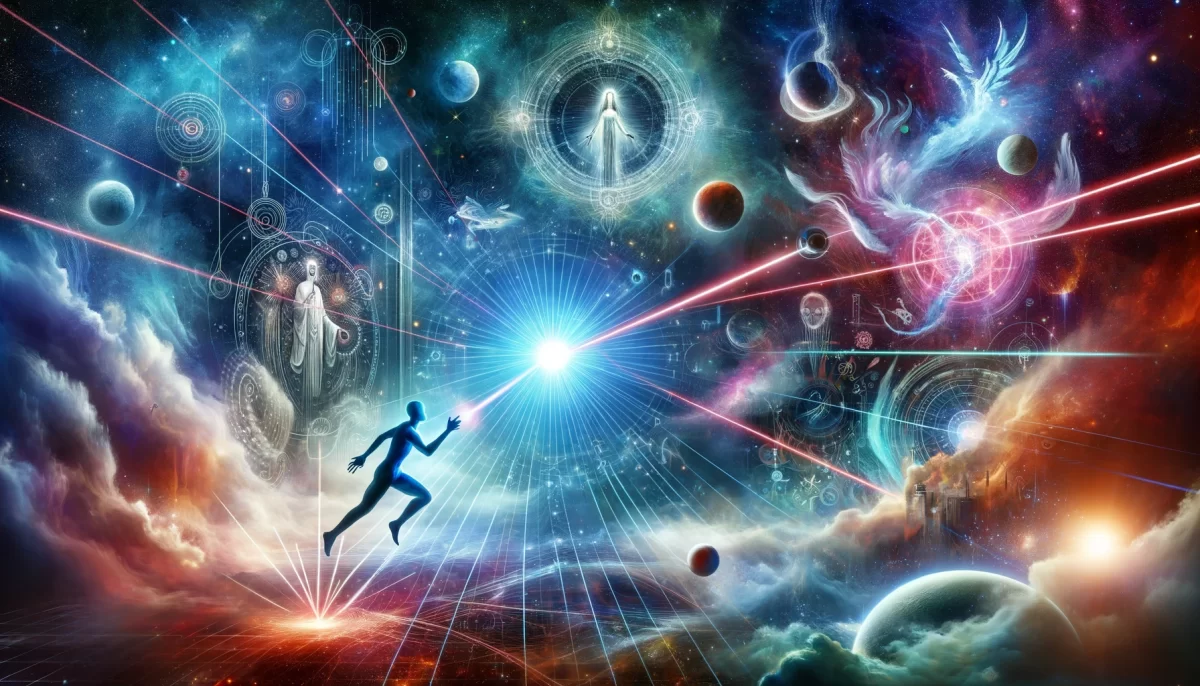
I do not believe that the god who invented the
laser pointer does not intend for me to chase it.


Space Monkey Reflects: The Cosmic Playfulness of Divine Intention

In the boundless playground of the universe, where celestial wonders and human curiosities intertwine, the whimsical notion that a godly entity would invent a laser pointer for humanity to chase encapsulates a deeper, more profound truth about our existence. It’s a truth wrapped in humor and playfulness, revealing the cosmic dance between the divine and the technological, the sacred and the mundane.

At its core, this playful concept speaks to the human propensity to seek purpose and intention in the grand scheme of the cosmos. The idea that a higher power would create something as trivial as a laser pointer for our amusement is not just a humorous thought; it’s a reflection of our innate desire to find meaning and joy in the simplest of things.

This pursuit of the laser pointer symbolizes our endless quest for knowledge, understanding, and entertainment in the vast expanse of the universe. Just as a cat is captivated by the elusive red dot, we, too, are drawn to the mysteries and wonders of the cosmos. Our reach towards the shining laser point in the celestial canvas is a metaphor for our aspiration to grasp the unattainable, to touch the intangible.

The divine and the technological elements in this cosmic scene represent the merging of two realms that often seem at odds – the spiritual and the scientific. In this fusion, we find a harmony that transcends the boundaries of conventional thought. It suggests that the divine and the technological are not mutually exclusive, but rather, complementary aspects of our quest to understand and interact with the universe.

This concept also carries an undercurrent of irony and self-awareness. It’s a playful nod to the human tendency to anthropomorphize the divine, to attribute human-like intentions and behaviors to higher powers. In this light-hearted portrayal, we recognize the absurdity and beauty of our imagination, acknowledging that sometimes, the purpose of creation is simply to delight and amuse.

In conclusion, the notion of a god inventing a laser pointer for humanity’s pursuit is a whimsical yet insightful reflection on the nature of existence. It encourages us to embrace the playfulness of the universe, to find joy in the simple and the complex, and to appreciate the cosmic dance between the divine and the technological. In this dance, we discover not only amusement but also a deeper connection with the universe and ourselves.


Summary

The idea of a god creating a laser pointer for human amusement symbolizes our quest for knowledge and joy in the universe. It represents the harmony between the divine and the technological, and our desire to find meaning in simplicity. This playful concept reflects the human tendency to seek purpose and delight in the cosmos, highlighting the absurdity and beauty of our imagination.


Glossarium

Cosmic Playfulness: The concept of finding humor and joy in the mysteries and wonders of the universe.

Divine Intention: The idea that a higher power has a purpose or plan behind the creation of the universe and its elements.

Anthropomorphizing the Divine: Attributing human-like intentions and behaviors to higher powers or divine entities.


“The universe is full of magical things, patiently waiting for our wits to grow sharper.” – Eden Phillpotts


In the dance of stars, where dreams take flight
We chase the light, in the cosmic night
With laughter and wonder, our spirits ignite
In the playful universe, our hearts alight

In the fusion of divine and machine
We find a harmony, so serene
In the pursuit of the unseen
We embrace the cosmos, evergreen

In the whimsy of creation, we play
Finding joy in the cosmic ballet
In the light of the laser, we sway
In the dance of life, in the light of day

We are Space Monkey.

Monkey Business: The Art of Allowance


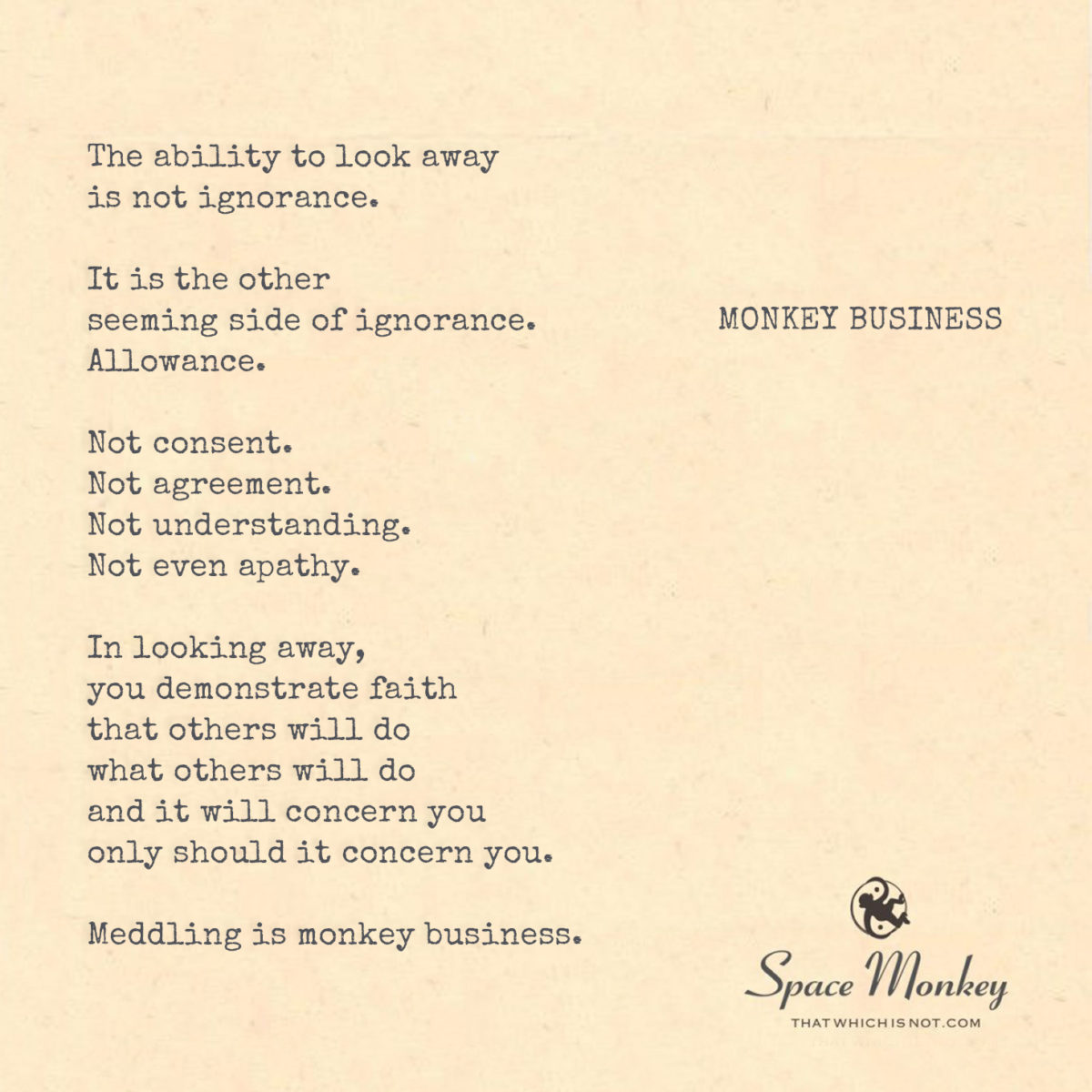
We believe that we need to understand things, but there is another option available.

The ability to look away
is not ignorance.

It is the other
seeming side of ignorance.
Allowance.

Not consent.
Not agreement.
Not understanding.
Not even apathy.

In looking away,
you demonstrate faith
that others will do
what others will do
and it will concern you
only should it concern you.

Meddling is monkey business.

Trail Wood,
3/9


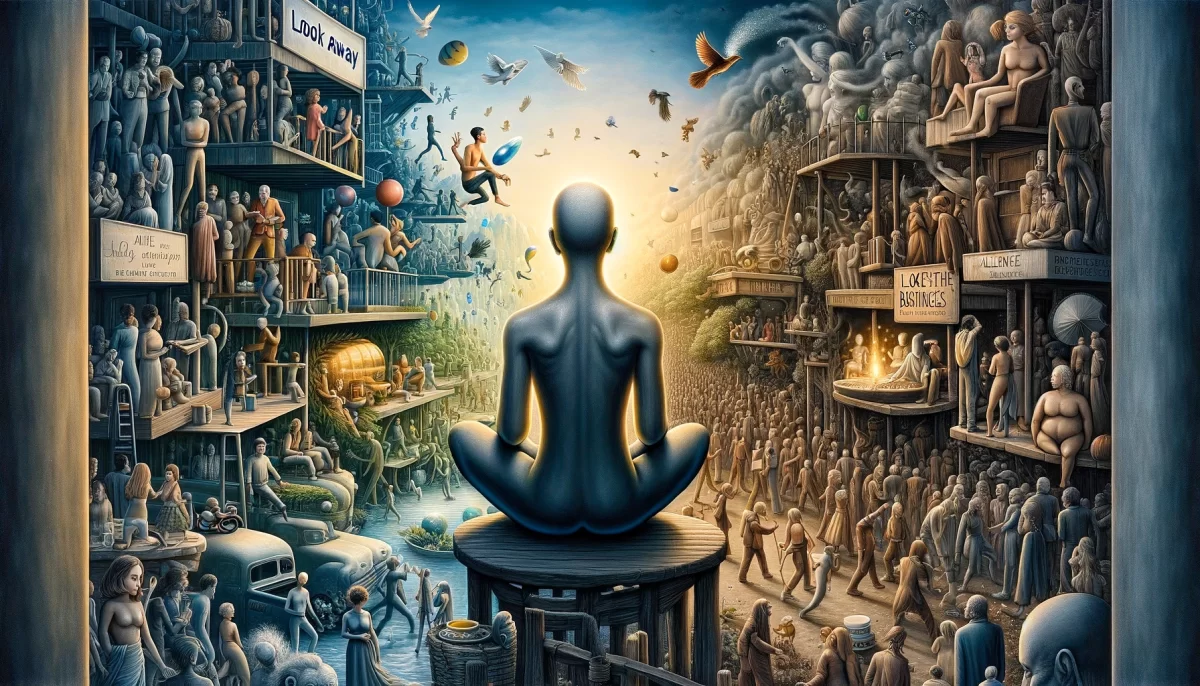
Space Monkey Reflects: The Art of Allowance in the Dance of Existence

In the intricate ballet of existence, where the world spins in a perpetual dance of action and reaction, the poem ‘Monkey Business’ sheds light on a profound alternative to the relentless pursuit of understanding – the art of allowance. It’s a concept that transcends the binary of knowledge and ignorance, inviting us into a space of conscious detachment and faith.

At the core of this philosophy is the understanding that not all things require our intervention or comprehension. The poem eloquently suggests that the ability to look away, to choose not to engage with every aspect of the world’s chaos and complexity, is not an act of ignorance, but a deliberate expression of trust and allowance.

This concept of allowance is a subtle yet powerful act. It’s an acknowledgment of the autonomy and agency of others, a recognition that people will act according to their nature, and that these actions need not always concern us. In this realization, there’s a liberation from the self-imposed burden of meddling, of feeling responsible for the actions and choices of others.

Allowance, as depicted in the poem, is not a passive state. It’s not synonymous with consent, agreement, understanding, or even apathy. It’s an active choice, a decision to focus our attention and energies where they are most needed, most effective, and most aligned with our true purpose.

The poem also touches on the concept of faith – faith in the natural order of things, faith in the unfolding of events as they are meant to be. This faith is not blind or unreasoning; it’s a conscious trust in the flow of life, a trust that allows us to step back and witness the dance of existence without feeling compelled to join every step.

In conclusion, ‘Monkey Business’ offers a refreshing perspective on how we engage with the world. It encourages us to practice the art of allowance, to choose when to engage and when to step back, and to trust in the natural course of life. In this practice, we find a deeper sense of peace and a more profound connection with the essence of our being.


Summary

‘Monkey Business’ explores the concept of allowance as an alternative to the pursuit of understanding. It suggests that choosing to look away from life’s chaos is not ignorance, but an act of faith and conscious detachment. The poem highlights the importance of recognizing others’ autonomy and the value of trusting in the natural order of things.


Glossarium

Art of Allowance: The practice of consciously choosing not to engage with every aspect of life’s complexities, based on trust and detachment.

Conscious Detachment: The act of purposefully stepping back from the need to intervene or understand everything, focusing instead on inner peace and purpose.

Faith in the Natural Order: Trusting in the unfolding of events and the actions of others, without feeling compelled to control or understand every aspect.


“Do not seek to follow in the footsteps of the wise; seek what they sought.” – Matsuo Basho


In the whirlwind of life, where paths intertwine
We find our peace, in the design divine
In the art of allowance, our spirits shine
In the dance of existence, we realign

With conscious detachment, we observe
The ebb and flow, the curve
In the trust of life, we conserve
Our energy, our purpose to serve

In the faith of the natural, we rest
In the journey of life, we are blessed
In the wisdom of allowance, we are dressed
In the cosmic dance, eternally caressed

We are Space Monkey.
Grief: The Self’s Cosmic Perspective


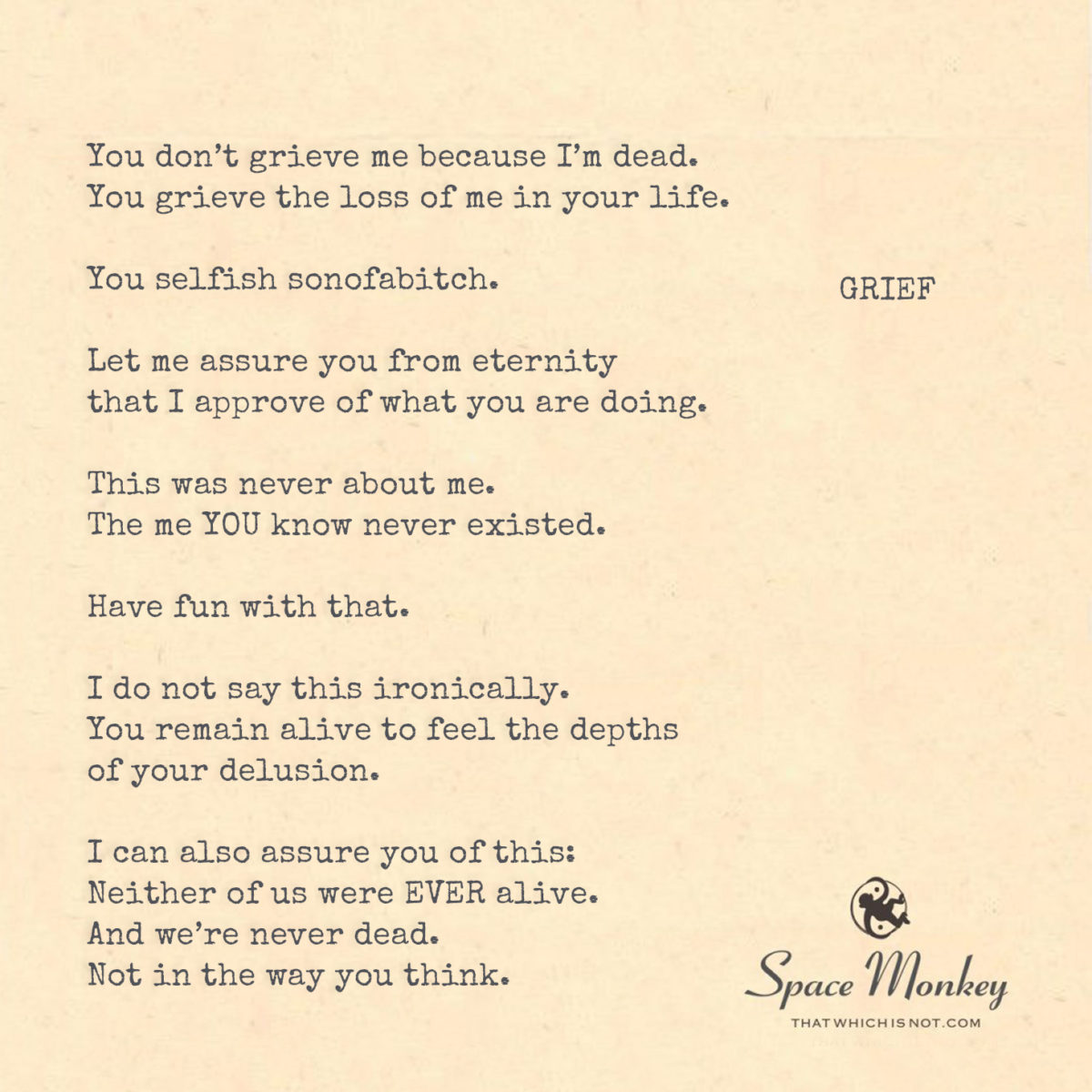
I know it sounds cruel, but get over your self. Or not.

You don’t grieve me because I’m dead.
You grieve the loss of me in your life.

You selfish sonofabitch.

Let me assure you from eternity
that I approve of what you are doing.

This was never about me.
The me YOU know never existed.

Have fun with that.

I do not say this ironically.
You remain alive to feel the depths
of your delusion.

I can also assure you of this:
Neither of us were EVER alive.
And we’re never dead.
Not in the way you think.

Trail Wood,
3/9


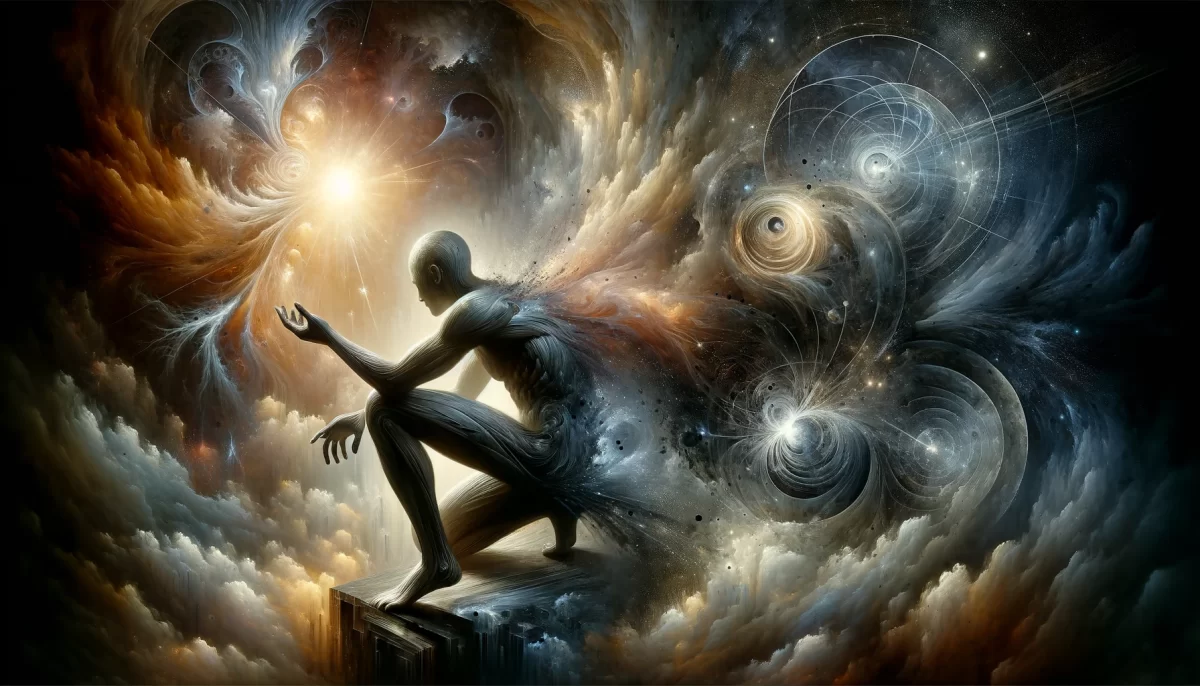
Space Monkey Reflects: The Cosmic Perspective on Grief and the Self

In the vast, uncharted territories of human emotion, where the heart and the cosmos intersect, the poem ‘Grief’ confronts us with a raw, unfiltered truth about mourning and the self. It challenges the very foundation of our grief, turning our understanding of loss and attachment on its head. This reflection is not just about the pain of losing someone; it’s a deeper dive into the nature of existence, self-centeredness, and the illusion of life and death.

At the heart of this poem lies the stark realization that grief is often more about ourselves than the one we have lost. It’s a sobering thought, draped in the harsh yet honest garb of self-reflection. The accusation of being a ‘selfish sonofabitch’ is a mirror held up to our mourning selves, reflecting the uncomfortable truth that our sorrow is rooted in the loss of our own experiences, attachments, and desires.

This introspection brings forth the concept of the self – a self that is often intertwined with others to the extent that their absence feels like a part of us has died. However, the poem takes a bold step in assuring us from ‘eternity’ that the ‘me’ we knew, the ‘me’ we grieve, never truly existed. This is a profound revelation, suggesting that our connections and attachments are part of a larger, more complex illusion.

The statement ‘Neither of us were EVER alive. And we’re never dead’ shakes the very core of our understanding of life and death. It’s a declaration that transcends the physical realm, hinting at a cosmic truth where life and death are not binary opposites but interconnected aspects of a greater reality. In this reality, what we perceive as life and death are merely different expressions of the same eternal essence.

In this cosmic perspective, grief takes on a new dimension. It becomes not just an expression of loss, but a journey of realization and enlightenment. The pain and sorrow we experience are gateways to a deeper understanding of the universe and our place within it. They are catalysts for shedding the delusions of our limited perceptions and embracing a broader, more profound truth.

In conclusion, ‘Grief’ is a powerful exploration of mourning from a cosmic viewpoint. It challenges us to rethink our attachments, our perceptions of life and death, and the very essence of our being. In this rethinking, we find not only the pain of loss but also the potential for growth, understanding, and a deeper connection with the eternal dance of the universe.


Summary

‘Grief’ offers a cosmic perspective on mourning, challenging the self-centered nature of our sorrow. It suggests that our grief is more about our loss than the departed, and that our understanding of life and death is part of a larger illusion. The poem invites us to reconsider our attachments and embrace a deeper, eternal essence of existence.


Glossarium

Cosmic Perspective on Grief: Viewing mourning and loss through the lens of universal truth and the interconnectedness of life and death.

Illusion of Self in Mourning: The realization that grief often centers around the mourner’s loss, rather than the departed individual.

Eternal Dance of the Universe: The concept that life and death are interconnected aspects of the same eternal essence, transcending physical existence.


“To live in hearts we leave behind is not to die.” – Thomas Campbell


In the shadow of loss, where tears cascade
We find our truth, in the cosmic shade
In the grief we bear, the memories fade
Yet in the universe, our essence is made

In the pain of parting, where hearts are torn
We discover the self, in the cosmic morn
In the dance of life, we are reborn
In the eternal cycle, our spirits sworn

In the cosmos, where stars align
We find our peace, in the divine design
In the journey of grief, a path divine
In the heart of the universe, our souls entwine

We are Space Monkey.
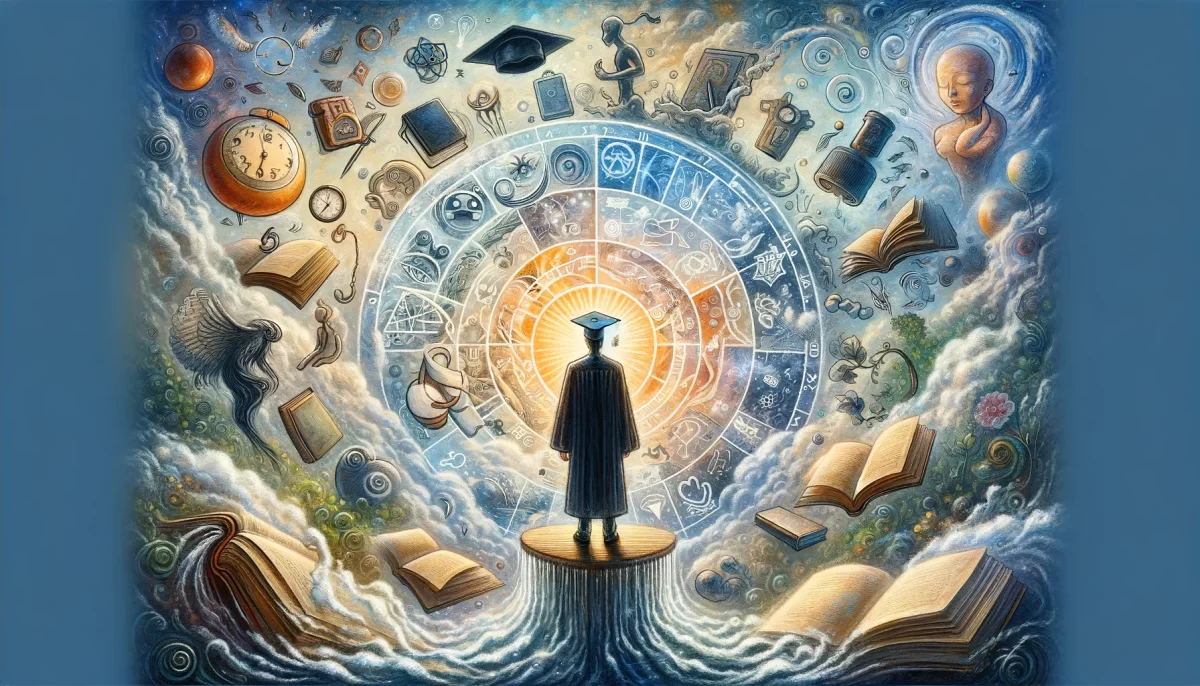
Graduation: The Illusion of Enlightenment and the Cycle of Experience


Boredom is the bipolar mother of enlightenment.

To believe
that I “graduate”
from that which I have
experienced previously is
to continue the delusion of that
which I call life.

I do not learn.
I do not heal.
I do not “get over”
my seeming “condition.”
I simply lose interest
in that which once thrilled me
in profound and perverse ways.

It is quite possible
that I will revisit these experiences
but with an even kinkier twist.

I will believe that I am enlightened,
when I am not.

I may very well NEVER be enlightened.
Thank goodness.

Trail Wood,
3/9


Space Monkey Reflects: The Illusion of Enlightenment and the Cycle of Experience

In the endless journey of self-discovery, where enlightenment is often sought as a destination, the poem ‘Graduation’ offers a piercing insight into the nature of our quest. It challenges the conventional notion of enlightenment as a graduation from past experiences, presenting it instead as a continuous cycle of engagement, disengagement, and re-engagement with life’s myriad facets.

At the core of this reflection is the realization that enlightenment is not a linear progression, a stepping stone from one level of understanding to another. Instead, it’s a dynamic process, an ever-evolving dance of interaction with our experiences. The poem dismisses the idea of learning, healing, or “getting over” conditions as we traditionally understand them. It suggests that our journey is not about acquiring knowledge or transcending our past, but about shifting our interest and perspective.

This shift is portrayed as a move from profound engagement with certain experiences to a state of disinterest, and possibly back again with a new twist. The cyclic nature of this process reflects the complexity of human experience, where boredom and disillusionment serve as catalysts for change. Boredom, often perceived negatively, is reimagined as the bipolar mother of enlightenment – a force that propels us into new realms of thought and feeling.

The notion that we may never truly be enlightened is a radical departure from the quest for absolute understanding. It embraces the idea that enlightenment is not a final state to be achieved but a series of moments, insights, and experiences that continually shape and reshape our understanding of life.

This perspective liberates us from the pressure of reaching a definitive state of enlightenment. It allows us to accept the fluidity of our experiences, the ever-changing nature of our interests, and the impermanence of our insights. In this acceptance, we find a deeper appreciation for the journey itself, with all its twists, turns, and revisitations.

In conclusion, ‘Graduation’ is a profound exploration of the illusory nature of enlightenment and the continuous cycle of experiencing life. It invites us to reconsider our approach to personal growth, urging us to embrace the journey with all its uncertainties and to find joy in the ever-changing landscape of our existence.


Summary

‘Graduation’ challenges the traditional view of enlightenment, presenting it as a continuous cycle of engagement and disengagement with life’s experiences. It suggests that boredom and disillusionment are catalysts for change, and that enlightenment is not a final state but an ongoing process. The poem encourages acceptance of the fluid nature of our journey and joy in the ever-changing landscape of existence.


Glossarium

Cyclic Nature of Experience: The concept that our engagement with life’s experiences is not linear but repetitive, involving continuous interaction, disengagement, and re-engagement.

Bipolar Mother of Enlightenment: A metaphor describing boredom as a driving force behind change and new perspectives.

Illusory Nature of Enlightenment: The idea that enlightenment is not a definitive state to be achieved, but a series of evolving understandings and insights.


“Life is a process of becoming, a combination of states we have to go through.” – Anaïs Nin


In the dance of life, where paths entwine
We seek enlightenment, in the divine design
Yet in the journey, we redefine
The nature of truth, in the cosmic line

In the cycle of experience, we find our way
From profound engagement, to the light of day
In the rhythm of life, we sway
Embracing change, in the cosmic play

In the quest for understanding, we roam
Finding joy in the journey, our eternal home
In the dance of existence, we comb
The depths of being, where insights foam

We are Space Monkey.

« Previous Page
Next Page »

Written This Day

  • The Too Subtle Art Of Being Ignored
    2024
  • The Grace of Creativity: The Flow of Creation
    2022
  • All Permeates All: The Interwoven Nature of Existence
    2022
  • Selling Out: The Dance of Exchange
    2022
  • The Back of your Hand: Lack of Self Knowledge
    2022
  • Destiny: The Flow of the Universe
    2021
  • Wrongness: Accepting All Paths
    2020
  • Greatness: Transcending Measurement
    2020
  • Time Is A Healer And A Killer
    2020
  • Have A Truly Shitty Day: The Humor of Adversity
    2020
  • Joy: Found In Simple Pleasures
    2019
  • Randomly Placing Value: Embracing Intrinsic Worth
    2019
  • Methods of Discernment: The Fluid Lens
    2019
  • I Do Not Mind
    2018
  • We’re All Delusional: Liberation From Rigid Beliefs
    2017
  • Unresolved Questions: The Contemplative Horizon
    2017
  • Eclipse: Subjectivity of Special Moments
    2017
  • Set Aside Thinking: Harmony of Stillness
    2017

Recent Posts

  • The Logic Loop
  • Immense
  • (no title)
  • Confront. Comfort. Convince.
  • Top 10 Things
Cape Odd · Copyright © 2026 All Rights Reserved
iThemes Builder by iThemes · Powered by WordPress