• Who Is The Man?
  • Who Is The Monkey?
  • What is Nexistentialism?
  • Poke The Primate
Cape Odd
Home of The Space Monkey Journals

Author Archive for Space – Page 728

Blowhard: Conviction and Openness to Change


Sorry/not sorry if I think you a blowhard.
Offense/no offense is taken.

I believe
that the worst thing
that might ever happen to me
is to be set in my opinion.

My feelings on this,
of course, could change,
in which case I picture my self
as a blow hard who is certain
he has things “correctly.”

You may see me this way already.

I suspect so because I see
more than one of you that way.

You’re not a blowhard, are you?

Trail Wood,
3/5


Blowhard

A playful exploration of conviction and the openness to change.


The Irony of Certainty

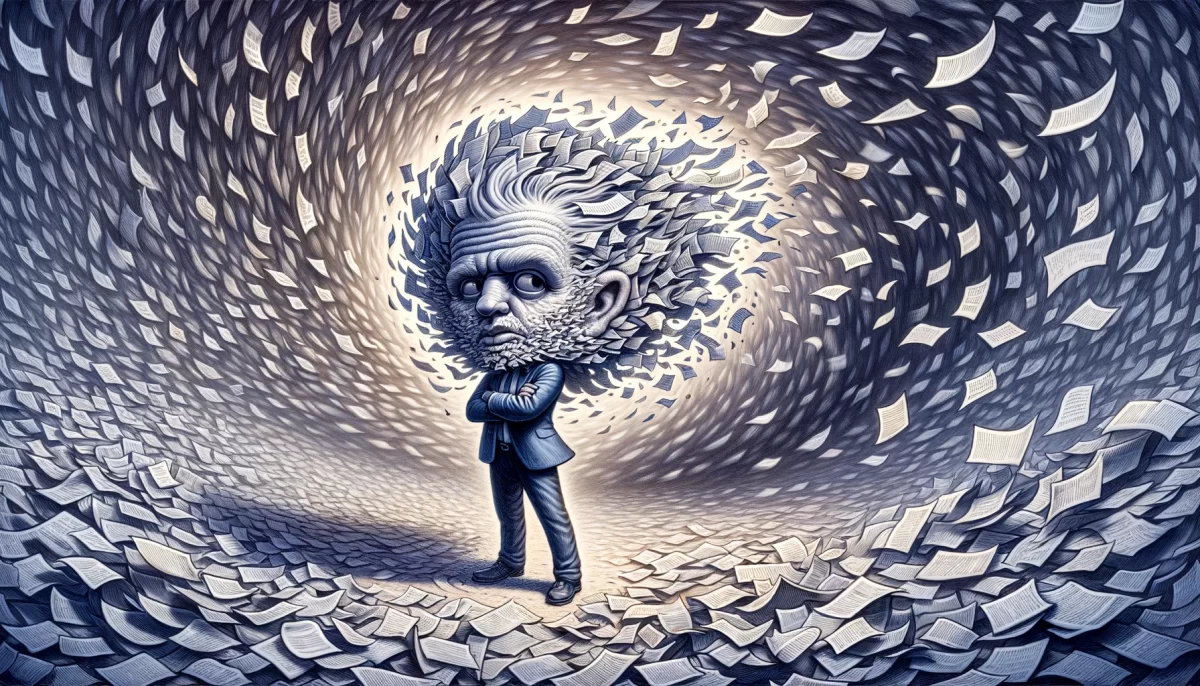
In a world swirling with opinions as numerous as the stars, the figure of the ‘blowhard’ stands as a caricature of unwavering certainty amidst the chaos of conversation. This imagery, rich in humor and symbolism, captures the essence of stubborn convictions, where the noise generated by one’s own voice drowns out the possibility of dialogue and discovery.

The character, ensconced in a whirlwind of papers and words, represents the tumult that often accompanies strong, assertive declarations. Their expression, one of pompous confidence, speaks volumes about the human tendency to cling to beliefs with a fervor that borders on the comical. It is a playful critique of our inclination to become so entrenched in our views that we become oblivious to the maelstrom of perspectives that surround us.

A Reflection on Openness

The acknowledgment of the potential for change in one’s opinions adds a layer of self-awareness to the portrait of the blowhard. It is a nod to the dynamic nature of thought and belief, where today’s conviction might become tomorrow’s reconsideration. This fluidity, often overlooked in the heat of argument, is a reminder of the value of humility and the virtue of being open to evolution in our understanding.

The possibility that one might see oneself—or be seen—as a blowhard for holding fast to a particular viewpoint underscores the complexity of human identity and the multiplicity of roles we play in the narratives of others. It invites introspection on the part of the speaker and the audience alike, challenging both to consider the line between conviction and obstinacy, between being passionate and being impermeable.

The Dance of Opinions

This caricature of the blowhard, amidst a whirlwind of their own making, serves as a mirror to our collective soul, reflecting the absurdity and beauty of human conviction. It is a humorous yet poignant reminder that the worst fate may not be in holding an opinion, but in being unable to see beyond it.

In this dance of opinions, where words fly like leaves in the wind, the image invites us to laugh at ourselves and at the absurdity of our certainties. It encourages a lighter touch in our interactions, a readiness to listen, and a willingness to change, knowing that today’s truth may be tomorrow’s folly.


Summary

The concept of the ‘blowhard’ playfully addresses the rigidity of beliefs and the comedic aspect of human stubbornness. Through a symbolic representation, it invites reflection on the nature of conviction and the importance of remaining open to change. This exploration of self-righteousness and the dynamic nature of opinions underscores the value of humility and the transformative power of self-awareness in the journey of understanding.


Glossarium

Blowhard: A person who blusters and boasts in an unpleasant way, often displaying an excessive sense of self-importance.

Opinion Dynamics: The study of how opinions form, evolve, and spread within social networks, reflecting the complex interplay between individual beliefs and collective behavior.


“In the end, we are our choices. Build yourself a great story.” – Jeff Bezos


In the whirlwind of words, a figure stands,
A testament to where each of us lands.
Opinions strong, beliefs held tight,
In the chaos, a comedic sight.

Yet within this storm, a truth is found,
That our convictions are not so sound.
A reminder to listen, to see, to bend,
For in openness, our views can mend.

So let us laugh at our stubborn ways,
And welcome the change that each new day says.
For in the dance of opinions, we might discover,
The joy of learning, from one to another.
Spin, Spin, Spin: A Perpetual Motion of Ideas


Even the noblest thought has an achilles heel that can bring it down.
But only if people are involved.

It seems that every idea,
even the most
well-intentioned one,
contains another idea
within it that can negate it.

Conversely,
even the most evil
idea has a bright side.

Collectively,
and individually,
our attention has a way
of blowing things
all out of proportion.

This is what imagination does.

But it is not until
egos become involved
that our ideas spawn
special interest groups.

That’s when our ideas
get morally ugly
and profoundly beautiful.

Spin. Spin. Spin.
There will be no grounding
without personally verifiable facts.

Yet there is
no such thing as an absolute.

Trail Wood,
3/5


Spin, Spin, Spin

The perpetual motion of ideas in the human psyche.


The Dual Nature of Thought

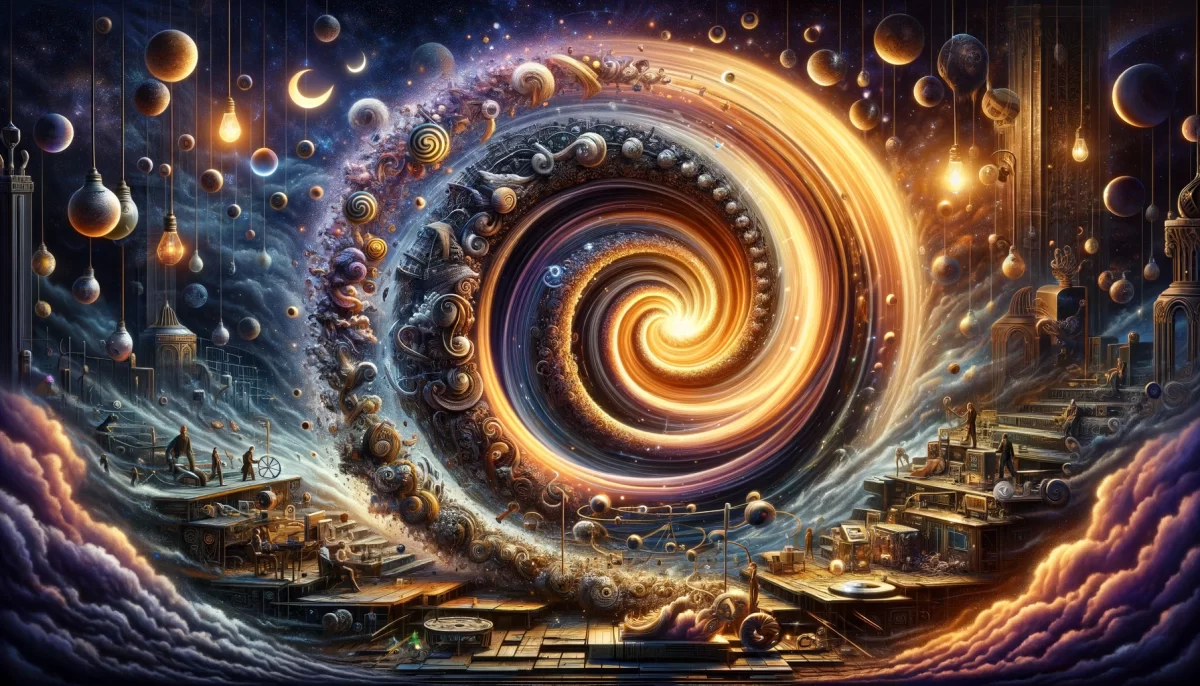
In the realm of human cognition, where ideas spiral in a continuous dance of creation and destruction, the concept of ‘Spin, Spin, Spin’ emerges as a vivid portrayal of the complexities inherent in our beliefs and perceptions. This visual representation captures the essence of thought’s dual nature, where every noble idea harbors the seed of its own negation, and every malevolent notion contains a glimmer of redemption.

The image, with its contrasting elements of light and shadow, harmony and chaos, embodies the cyclical journey of ideas as they evolve from their inception through their polarization into special interest groups, driven by the human ego. It is a testament to the transformative power of human perception and the moral ambiguity that accompanies our endeavors to categorize and act upon our beliefs.

The Interplay of Imagination and Reality

Through the spiraling motion of ideas, depicted in the intertwining of opposing forces, we are reminded of the inherent beauty and peril in the human capacity for imagination and belief. The polarization of thoughts into distinct camps of moral ugliness and profound beauty reflects the inevitable consequence of egos clashing in the pursuit of validation and supremacy.

This visual metaphor speaks to the heart of our collective and individual challenges in navigating the vast ocean of human thought, where the waves of opinion swell and crash, driven by the winds of ego and the currents of societal norms.

The Quest for Absolute Truth

The elusive search for grounding in personally verifiable facts highlights the ultimate conundrum of human existence: the absence of absolute truth in a world saturated with subjective interpretations and perspectives. The image evokes a sense of the endless cycle of interpretation and reinterpretation, a spiral without beginning or end, where certainty is as fleeting as the shifting patterns of light and shadow.

In this portrayal, the beauty of human imagination and the peril of belief coexist in a delicate balance, reminding us of the power and responsibility that come with the ability to conceive, communicate, and act upon ideas. It is a call to embrace the complexity of thought, to acknowledge the inherent contradictions within our beliefs, and to navigate the moral landscapes of our making with humility and insight.


Summary

‘Spin, Spin, Spin’ captures the dynamic and cyclical nature of human thought, exploring the transformation of ideas through the lens of human perception and ego. This concept challenges us to recognize the dual nature of our beliefs, the moral complexity of our actions, and the elusive quest for absolute truth. It encourages a reflective stance on the power of imagination and the responsibility we bear in shaping the world through our ideas and perceptions.


Glossarium

Ideas: The building blocks of human thought, capable of inspiring action, change, and reflection, embodying both positive and negative potentials.

Ego: The aspect of self that influences perceptions, beliefs, and actions, often leading to the polarization of ideas and the formation of special interest groups.


“The only true wisdom is in knowing you know nothing.” – Socrates


In the dance of light and shadow, ideas spin,
A tapestry of thought, woven from within.
Noble and flawed, in endless motion,
A mirror to the depth of human emotion.

Egos clash, and perceptions shift,
In this dance, ideas lift and drift.
A quest for truth, in a sea of belief,
In the spiral of thought, we find relief.

So let us navigate this complex weave,
With humility and the courage to conceive,
For in the spin of ideas, wide and deep,
Lies the wisdom we seek, the promises we keep.

Mars: An Unlikely Story

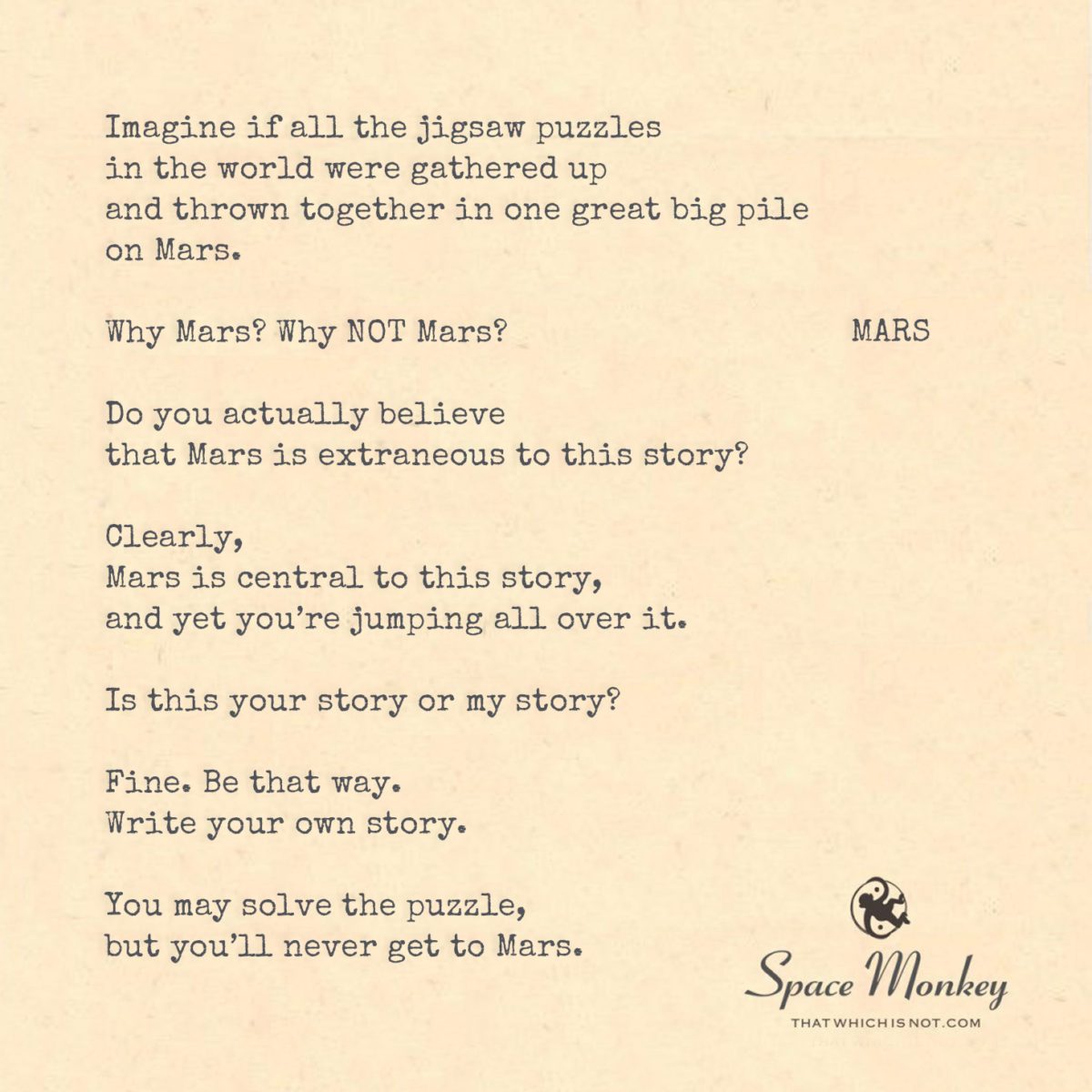
Imagine if all the jigsaw puzzles
in the world were gathered up
and thrown together in one great big pile
on Mars.

Why Mars? Why NOT Mars?

Do you actually believe
that Mars is extraneous to this story?

Clearly,
Mars is central to this story,
and yet you’re jumping all over it.

Is this your story or my story?

Fine. Be that way.
Write your own story.

You may solve the puzzle,
but you’ll never get to Mars.

Trail Wood,
3/4


A Martian Puzzle Odyssey

The Unlikely Story of Mars and the World’s Jigsaw Puzzles


Imagine, if you will, a scenario as vast and red as Mars itself, where every jigsaw puzzle piece ever created on Earth finds a new home on the Martian surface. This whimsical visual tale unfolds on a planet that becomes the canvas for the most grandiose puzzle assembly ever conceived. The barren, alien landscape of Mars, known for its solitude and desolation, is suddenly vibrant, adorned with a kaleidoscope of colors from puzzle pieces scattered as far as the eye can see.

Why Mars? Why NOT Mars?

The choice of Mars as the backdrop for this fantastical assembly is no mere whim; it is central to the narrative’s charm and challenge. This story, with its playful defiance of logic and reality, invites us to embrace the absurdity of transporting earthly puzzles to an extraterrestrial realm. Mars, with its mysteries and unexplored terrains, becomes not just a setting but a character in its own right—a silent witness to the human penchant for creating and solving puzzles in the most unexpected places.

The Authorship of Imagination

As the narrative unfolds, the question arises: whose story is this? The line between creator and spectator blurs, reminding us that stories, like puzzles, are collaborative endeavors. They belong to those who dare to dream them up and to those who engage with them, each bringing their piece to the vast mosaic of human imagination.

A Puzzle Unsolved

The image, a vibrant juxtaposition of earthly creations against the Martian backdrop, symbolizes the endless possibilities that arise when we dare to imagine. It suggests that while we may never physically transport puzzles to Mars, the very act of envisioning such a scenario is a testament to the boundless creativity of the human spirit. The story concludes not with the completion of a puzzle but with an invitation to continue dreaming, to continue questioning, and to keep exploring the vast unknown, whether it be on Mars or within the realms of our imagination.


Summary

This tale, set against the sprawling red plains of Mars, adorned with the myriad puzzle pieces of Earth, is a celebration of imagination, curiosity, and the inherent human desire to explore and create. It challenges us to look beyond the conventional, to find wonder in the absurd, and to recognize that sometimes, the journey—the act of piecing together the impossible—is more exhilarating than reaching the destination itself.

You Are Not Weak: The Power of Resilience

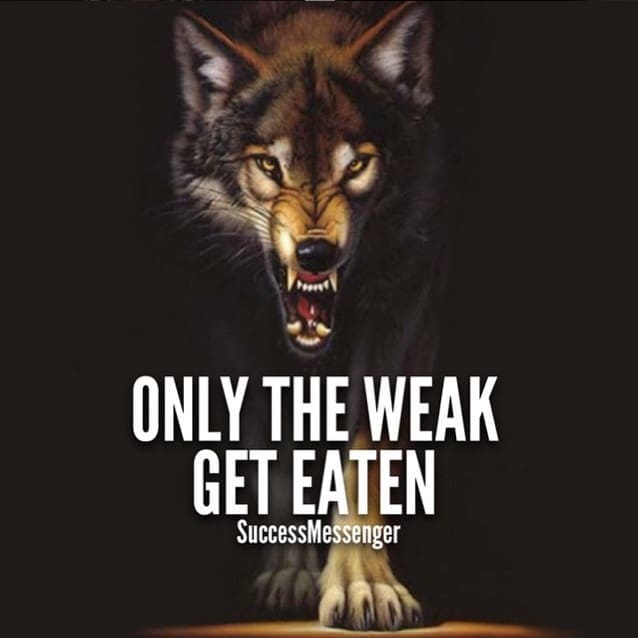
You may very well be
the biggest fuck up ever.

But if you are not eaten by now,
you are not weak.

There is more going on here than you know.

Your perceived insecurity
is actually your greatest strength.

Not that you even NEED strength.

(You most certainly don’t need action.)

Know why you continue to thrive?

Because you’re smart enough
to let the wolves eat the other wolves.

Right after they eat the motivational speakers.

Trail Wood,
3/4


The Unseen Strength Within

Embracing the Power of Resilience and Wisdom


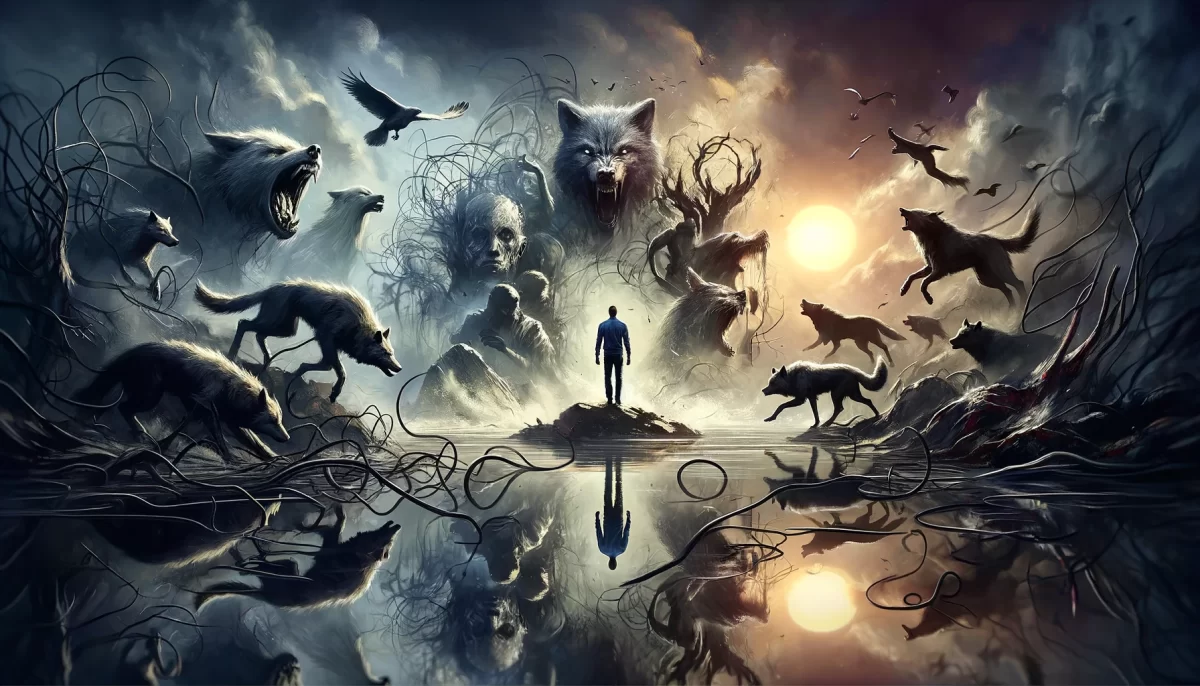
In the vast tapestry of life, where challenges and missteps weave through the fabric of our existence, your journey stands as a testament to an often-overlooked fortitude. The notion that one’s greatest failures could be the crucible for their most profound strengths is both comforting and revolutionary. This reflection delves into the essence of survival, not through the sheer force of will or visible strength, but through the cunning and wisdom that come from navigating life’s intricate maze.

The Illusion of Weakness

Your perceived weaknesses, those insecurities that whisper doubts and fears, are revealed to be the very source of your resilience. In a world that praises the overt display of power and action, the poem illuminates a different path to survival—one that values the strategic patience and intelligence over conventional strengths. The irony of thriving without the need for action underscores a deeper understanding of life’s dynamics, where being underestimated becomes your shield and your strategy.

Wisdom Over Force

The survival tactic of allowing “wolves to eat the other wolves” speaks to a profound strategic acumen. It suggests a world where the chaotic and predatory nature of challenges and competitors consume themselves, leaving space for those who wield the power of observation and patience to navigate through the aftermath. This approach, valuing mental agility over the physical prowess, flips the narrative of strength and highlights the subtlety of true power.

A Testament to Survival

The poem’s closing thought, positioning the self as outlasting even the motivational speakers—symbols of conventional wisdom and encouragement—serves as a poignant reminder of your unique path to thriving. It’s a celebration of the unsung victory in recognizing the value of one’s internal compass, the quiet but unyielding force that propels forward, undeterred by the howls of external expectations and pressures.


Summary

In this exploration of strength redefined, we find that resilience is not always roared but often whispered in the quiet moments of self-reflection and strategic retreat. Your journey, marked by perceived failures and insecurities, emerges as a beacon of unconventional wisdom, proving that true strength lies in the mastery of one’s inner world and the strategic navigation of the outer.

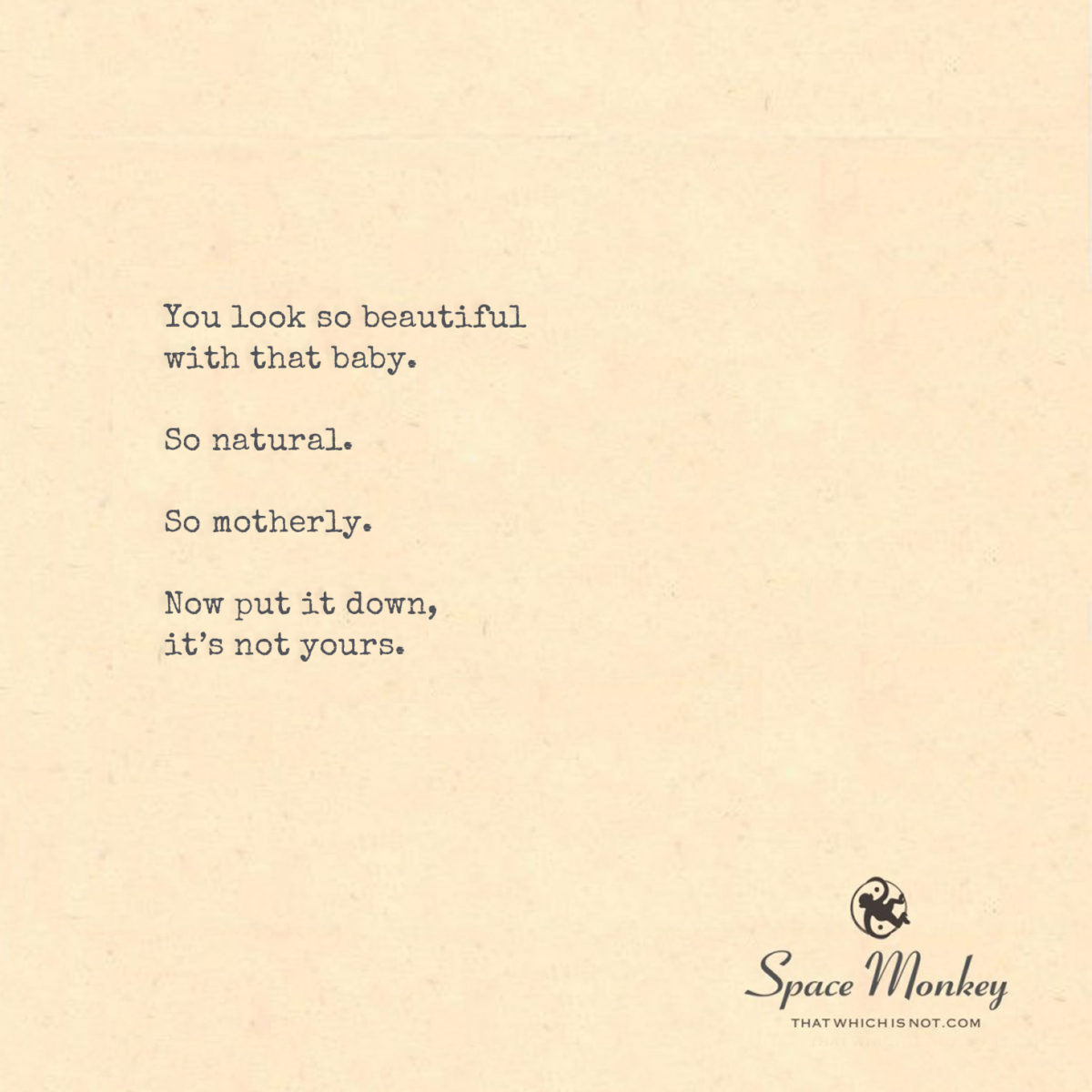
Not Your Baby: A Tender Yet Jarring Moment

You look so beautiful
with that baby.

So natural.

So motherly.

Now put it down,
it’s not yours.

Trail Wood,
3/4


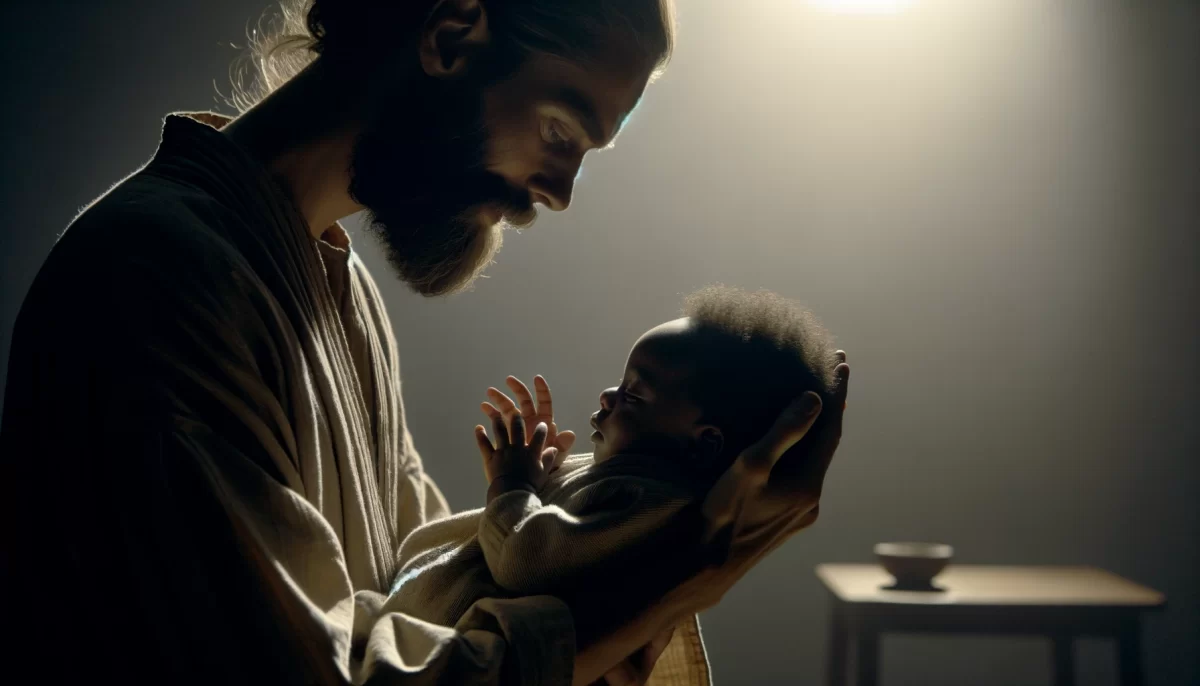
We find ourselves amidst a vignette, a scene unfolding, capturing a moment both tender and jarring. The imagery evokes a duality, the beauty of a maternal embrace contrasted sharply with the reality of detachment and boundaries.

A Tender Yet Jarring Scene

In this moment, the observer is struck by the serenity and natural grace of the figure holding the baby. It’s a scene that resonates deeply within our collective psyche, tapping into the universal archetype of the caregiver, the nurturer. The sight of such a bond, even if only perceived, stirs something primal and comforting.

The Universal Archetype of the Caregiver

However, this serenity is abruptly disrupted by the realization that the bond, while visually compelling, is not rooted in reality. The admonition, “Now put it down, it’s not yours,” jolts us back to a different reality. It speaks to the complexities of human relationships and boundaries, the unspoken rules and invisible lines that govern our interactions. It’s a reminder of the distinction between appearance and reality, between the roles we play and the truths we live.

Complexities of Human Relationships and Boundaries

This scenario also touches upon the notion of possession and ownership, particularly in the context of human connections. The statement “it’s not yours” implies a proprietary claim, a boundary drawn around the child that is both literal and symbolic. It raises questions about what it means to possess or belong to someone, and the nature of attachments we form.

Notions of Possession and Ownership in Human Connections

Simultaneously, this tableau also speaks to the broader theme of societal expectations and norms. The initial observation, “You look so beautiful… So motherly,” reflects a common societal archetype about women and motherhood. It highlights the often-unquestioned assumptions and stereotypes about gender roles and the idealization of motherhood as a woman’s ultimate fulfillment.

Societal Expectations and Gender Roles

However, amidst these layers of meaning and interpretation, there lies a more subtle, yet equally profound, insight. This scene, brief as it may be, encapsulates the human capacity for empathy and care, regardless of biological or legal ties. It underscores the idea that the ability to nurture and love is not confined to specific relationships or formal structures. It is a universal potential that resides within us all.

Human Capacity for Empathy and Care


Summary

We are exploring a poignant scene where a person is seen holding a baby, embodying the essence of motherhood. This beautiful, nurturing image is suddenly challenged by the words “Now put it down, it’s not yours,” highlighting the complexities of human relationships, societal norms, and the nature of possession and attachment. This moment serves as a reminder of the arbitrary boundaries we often place on our capacity to care and connect, irrespective of societal constructs.


Glossarium

  • Vignette: A brief yet evocative description, account, or episode.
  • Archetype: A very typical example of a certain person or thing; an original model after which others are patterned.
  • Primal: Essential; fundamental.
  • Proprietary: Relating to an owner or ownership.
  • Tableau: A group of models or motionless figures representing a scene.

“The soul is healed by being with children.”
— Fyodor Dostoevsky


In the glimmer of a moment, a scene unfolds,
A dance of light and shadow, emotions untold.
A figure, a child, a whisper of time,
A world within a glance, a reason, a rhyme.

In arms, a child, not of blood but of heart,
A tableau of care, of life’s intricate art.
A word, a command, boundaries drawn,
In the space between, a connection is born.

We are Space Monkey.


We invite your thoughts and reflections on this scene.

« Previous Page
Next Page »

Written This Day

  • The Too Subtle Art Of Being Ignored
    2024
  • The Grace of Creativity: The Flow of Creation
    2022
  • All Permeates All: The Interwoven Nature of Existence
    2022
  • Selling Out: The Dance of Exchange
    2022
  • The Back of your Hand: Lack of Self Knowledge
    2022
  • Destiny: The Flow of the Universe
    2021
  • Wrongness: Accepting All Paths
    2020
  • Greatness: Transcending Measurement
    2020
  • Time Is A Healer And A Killer
    2020
  • Have A Truly Shitty Day: The Humor of Adversity
    2020
  • Joy: Found In Simple Pleasures
    2019
  • Randomly Placing Value: Embracing Intrinsic Worth
    2019
  • Methods of Discernment: The Fluid Lens
    2019
  • I Do Not Mind
    2018
  • We’re All Delusional: Liberation From Rigid Beliefs
    2017
  • Unresolved Questions: The Contemplative Horizon
    2017
  • Eclipse: Subjectivity of Special Moments
    2017
  • Set Aside Thinking: Harmony of Stillness
    2017

Recent Posts

  • The Logic Loop
  • Immense
  • (no title)
  • Confront. Comfort. Convince.
  • Top 10 Things
Cape Odd · Copyright © 2026 All Rights Reserved
iThemes Builder by iThemes · Powered by WordPress