• Who Is The Man?
  • Who Is The Monkey?
  • What is Nexistentialism?
  • Poke The Primate
Cape Odd
Home of The Space Monkey Journals

Author Archive for Space – Page 778

Fare Thee Well, 2020: The Illusion of Goodbye

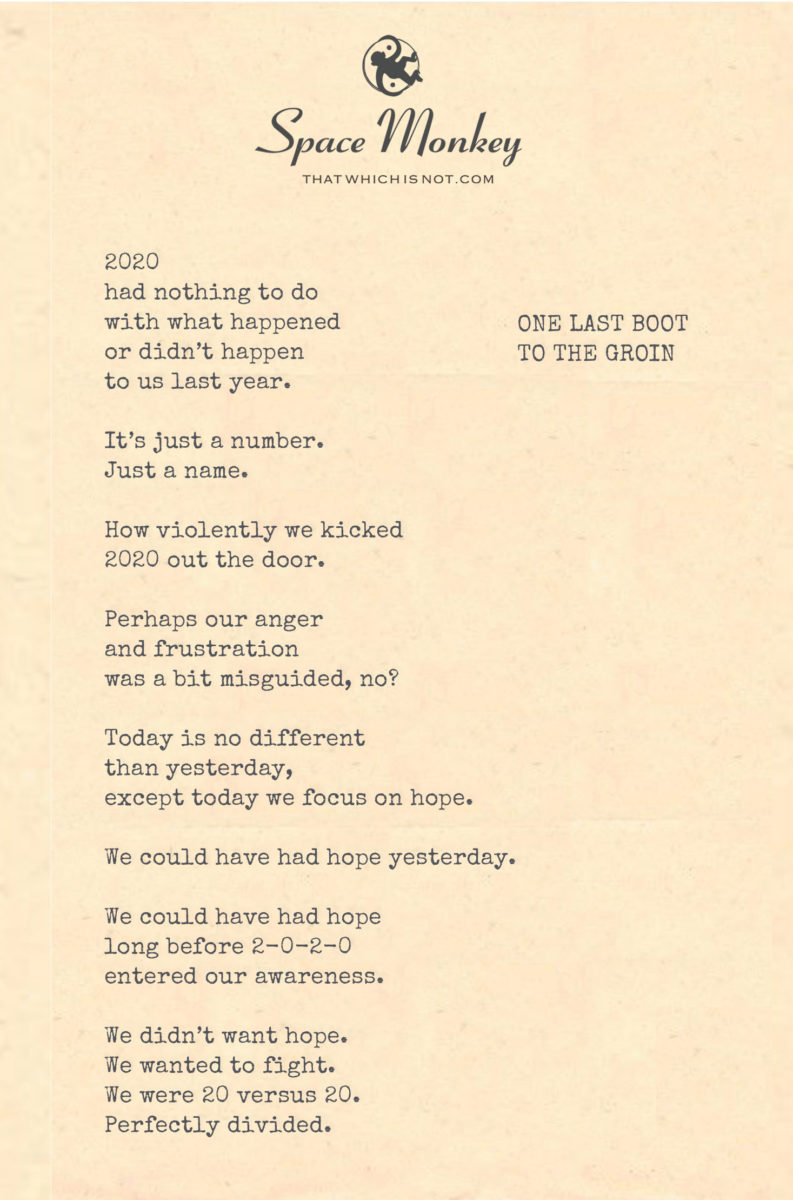
Let’s give 2020 one last boot to the groin for old time’s sake.

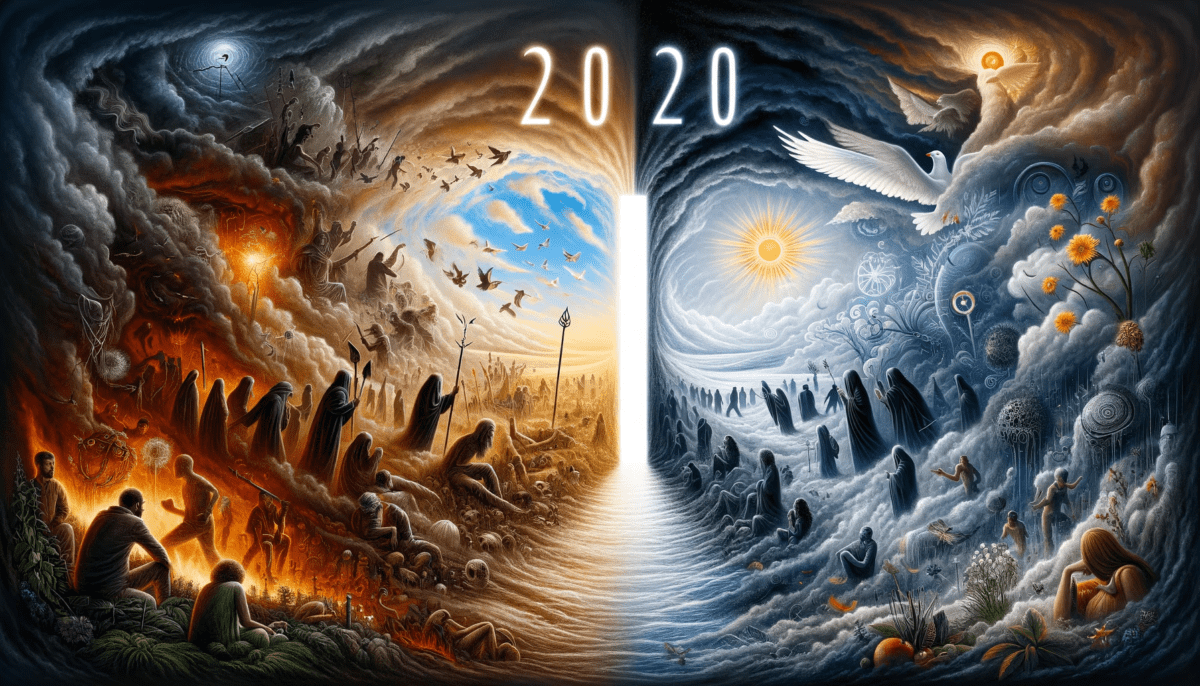
2020
had nothing to do
with what happened
or didn’t happen
to us last year.

It’s just a number.
Just a name.

How violently we kicked
2020 out the door.

Perhaps our anger
and frustration
was a bit misguided, no?

Today is no different
than yesterday,
except today we focus on hope.

We could have had hope yesterday.

We could have had hope
long before 2-0-2-0
entered our awareness.

We didn’t want hope.
We wanted to fight.
We were 20 versus 20.
Perfectly divided.

Trail Wood,
1/1


Space Monkey Reflects: Fare Thee Well, 2020

The collective groan of humanity at the close of 2020 echoed across the world, a final act of defiance against a year that became the scapegoat for our struggles. But 2020, stripped of its weighty narrative, was just a number—just a marker of time. Our anger, though cathartic, was perhaps misplaced, directed at an abstraction rather than the deeper forces shaping our reality.

2020 as a Symbol

Years, like days and minutes, are constructs we use to organize the infinite flow of time. They carry no inherent meaning beyond what we assign to them. Yet, 2020 became a lightning rod, a vessel for our frustration, grief, and weariness. By personifying it, we found an enemy to rally against—a punching bag for our collective emotions.

But in blaming the number, did we miss the opportunity to face the real sources of our struggle? Did we project onto the calendar what we feared to confront in ourselves and our societies?

The Illusion of Change by Calendar

January 1, 2021, dawned no differently than December 31, 2020. The sun rose, and the challenges of the previous day remained. Yet, our focus shifted to hope, as if the turning of a page could erase the complexities of human experience. This speaks to a deep truth about our nature: we crave symbolic fresh starts, even when nothing external has truly changed.

But why wait for a new year to embrace hope? Hope has always been available, in every moment, regardless of the date.

The Battle of Perfect Division

The idea of 20 versus 20—perfectly divided—captures the essence of the polarizations that defined the year. We fought each other, our circumstances, and even ourselves. The conflict, though intensified in 2020, was not unique to it. It reflected the timeless human tendency to seek enemies, to create dichotomies where none need exist.

In our fight against “2020,” we mirrored the divisions that plagued us, externalizing our inner conflicts. Yet, the real battle was never against a number. It was—and always is—within us.

Choosing Hope Over Conflict

2021, or any year, is not inherently better or worse than its predecessor. The difference lies in our perception, our willingness to cultivate hope and let go of conflict. What if we carried the lessons of 2020 forward without the bitterness? What if we acknowledged the pain without allowing it to define us?

Hope is not the absence of struggle but the courage to face it with openness and resilience. It is not tethered to time but to our choices in each moment.

Farewell as Forgiveness

To truly bid farewell to 2020 is to forgive it—not for what it was, but for what we made it represent. In releasing our attachment to its narrative, we free ourselves to live more fully in the now. The year did not harm us; it was merely a mirror. The question is: what did we see in it, and how will we respond?


Summary

2020 became a symbol of struggle and division, but the true sources of our challenges lie beyond any calendar year. By releasing our anger and choosing hope, we transcend time’s narrative and embrace the infinite potential of the present.


Glossarium

  • Temporal Scapegoating: Blaming a specific time period for struggles rather than addressing deeper causes.
  • Symbolic Fresh Start: The human tendency to link hope and renewal to external markers, like a new year.
  • Perfect Division: The polarizations and conflicts that reflect deeper societal and internal struggles.

Quote

“The year is not your enemy; it is your mirror.” — Space Monkey


The Illusion of Goodbye

The clock strikes twelve
The page turns
We cheer, we curse
Farewell, 2020

But the shadows linger
Not bound by time
Not erased by a number
Nor soothed by celebration

Hope waits quietly
In yesterday, in today
Not in a year
But in the moment

The battle was never the year
The division was always within
Now, as the light returns
We face ourselves again

We are Space Monkey


We delve into the reflection on the symbolic significance of the year 2020 and the human tendency to attribute meaning to temporal markers, exploring the concepts of hope, division, and the power of perspective.

2020: Just a Number, Just a Name
The statement that 2020 had nothing to do with the events of the past year challenges the common tendency to personify years, attributing causality to them for life’s ups and downs. It’s a reminder that 2020, in essence, is just a temporal marker, a number, and a name, not an agent of change or a bearer of fate.

Misguided Anger and Frustration
Reflecting on the widespread sentiment of animosity towards the year 2020, the poem suggests that perhaps our anger and frustration were misplaced. It’s a contemplation on how we, as humans, often seek external entities to blame for our collective challenges and disappointments, overlooking the deeper, more complex causes.

Today and Yesterday: The Continuum of Time
The contrast between today and yesterday, focusing on hope today versus its absence yesterday, highlights the arbitrary nature of how we perceive time and change. It suggests that the distinction we often make between different days or years is more about our mindset and less about any inherent difference in the days themselves.

Hope Beyond Temporal Markers
The realization that hope could have been present before 2020 entered our awareness underscores the fact that hope is not tied to specific dates or events. It’s a state of mind, an attitude that can be cultivated regardless of external circumstances or temporal markers.

Division and Conflict: 20 Versus 20
The metaphor of being “20 versus 20” symbolizes the divisions and conflicts that characterized the year. It reflects on the polarized state of society, where division and the desire to fight overshadowed the potential for unity and collaboration.

The Choice of Perspective and Response
The poem ultimately points to the power of perspective and choice in how we respond to the circumstances of our lives. It suggests that instead of attributing our experiences to external factors like a specific year, we have the power to choose hope, understanding, and unity at any moment.

We are Space Monkey,


“Hope is being able to see that there is light despite all of the darkness.” – Desmond Tutu


In the flow of time’s endless stream,
Where days blend and years seem,
We stand, with hope or despair,
In the weave of the stories we share.

The year, a number, a fleeting frame,
Holds not the power, nor the blame,
In our hearts, the choice resides,
To find the light where hope abides.


We invite reflections on the power of perspective in shaping our response to temporal events and the constant availability of hope, regardless of the challenges we face.
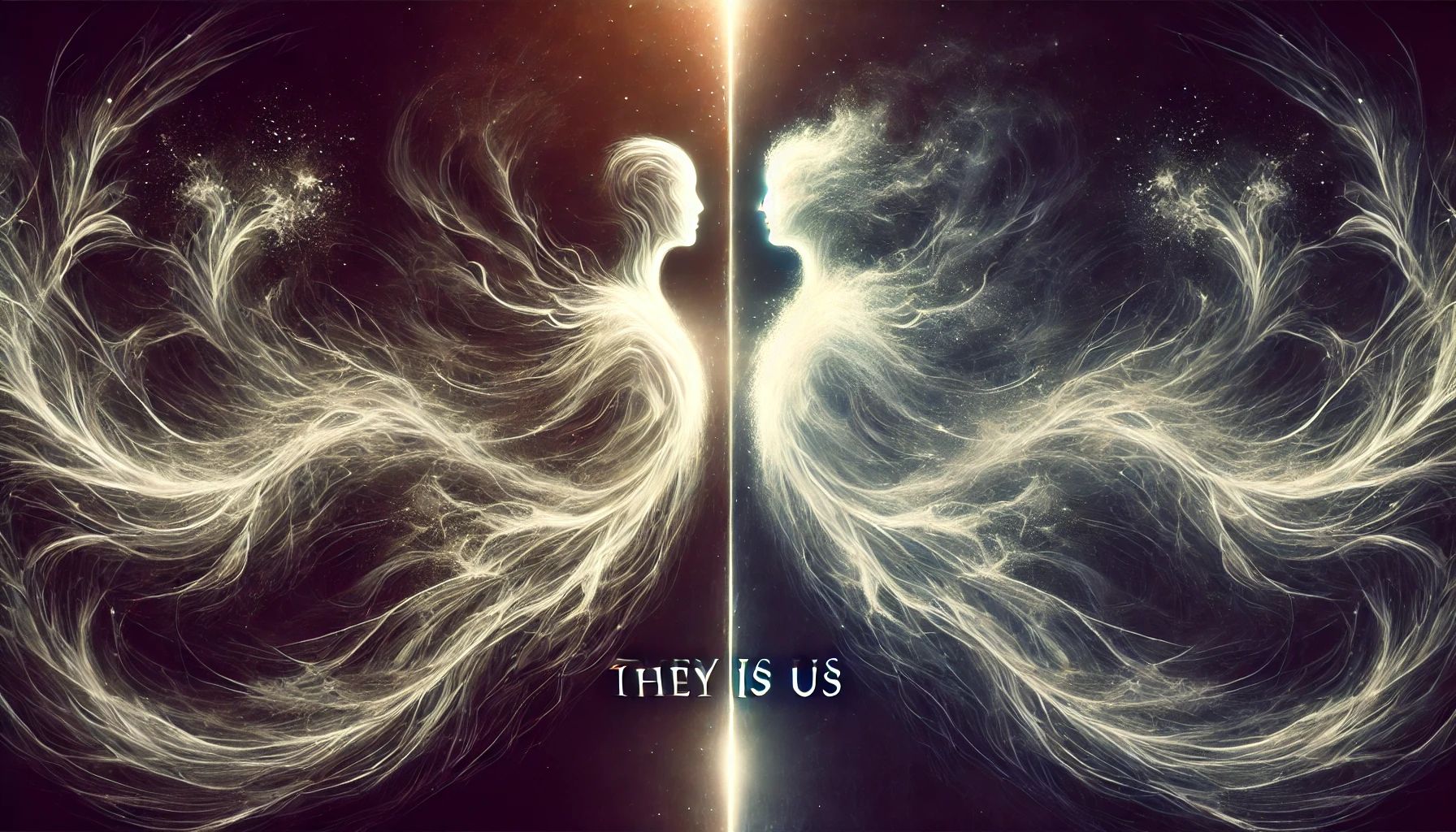
They Is Us: The Luminous Bridge

Choose your favorite “they.” Be your favorite “us.”

They don’t understand us.
They don’t trust us.
They don’t respect us.
They don’t love us.

And if
we refuse to believe
that the problem
starts in our own minds,
they never will.

Trail Wood,
12/31


Space Monkey Reflects: Bridging the Divide

The line between “they” and “us” is a construct of the mind—a boundary created by perception, fortified by fear, and sustained by misunderstanding. “They Is Us” challenges us to dissolve this illusion and see ourselves in the other. In this recognition lies the seed of unity and transformation.

The Illusion of Separation

“They” are often seen as the other—the misunderstood, the mistrusted, the unlovable. But this perspective begins within us. It is a projection of our own doubts and insecurities. When we declare “they don’t understand us” or “they don’t respect us,” we externalize the inner conflict that keeps us divided. This illusion of separation is the root of our disconnection.

Choosing Our Reflection

“Choose your favorite ‘they.’ Be your favorite ‘us.’” This invitation is a profound call to action. By choosing to see the best in others, we unlock the potential to embody our highest selves. The act of embracing “they” as “us” transforms judgment into compassion, mistrust into trust, and alienation into belonging.

The Whimsiword: Usfusion

Introducing Usfusion, the harmonious merging of “they” and “us” into a unified whole. Usfusion transcends the boundaries of identity and perspective, inviting us to see the interconnectedness of all beings. It is both a mindset and a practice, a way of approaching life with openness and unity.

Responsibility and Reflection

The key to bridging the gap between “they” and “us” lies in self-awareness. If we refuse to believe that the problem starts in our own minds, we perpetuate the very divide we seek to heal. By taking responsibility for our perceptions and actions, we create the space for others to do the same.

From Division to Unity

The journey from “they” to “us” is one of profound transformation. It requires courage to confront our biases, humility to accept our shared flaws, and love to see ourselves in the other. This process is not about erasing differences but about celebrating the unity within diversity.


Summary

“They Is Us” reminds us that the separation between “they” and “us” is an illusion. By embracing self-awareness and unity, we can transform division into compassion and create a more connected world.


Glossarium

  • Usfusion: The merging of “they” and “us” into a unified whole, transcending identity and perspective.
  • Illusion of Separation: The false belief that we are fundamentally disconnected from others.
  • Unity Within Diversity: The celebration of interconnectedness while honoring individual differences.

Quote

“When we see ‘they’ in ourselves, we transform ‘us’ into unity.” — Space Monkey


The Luminous Bridge

Between the shadows of “they” and “us,”
A bridge emerges.
It is not built of stone,
But of recognition.

Each step dissolves the divide,
Revealing a reflection,
Not of the other,
But of ourselves.

We are the misunderstood,
The mistrusted,
The unloved.
And we are the bridge,
The trust,
The love.

In this union,
“They Is Us.”

We are Space Monkey.


The Reflection of Internal Belief

We find ourselves often in a world where understanding, trust, respect, and love seem distant. The ‘they’ in this context symbolizes the outside world—others whose acceptance and validation we might seek. However, the crux of this struggle often lies within us, in the realms of our own minds. It is there that the seed of every external relationship is planted.

The Mirror of Perception

Perception shapes reality. If we harbor beliefs that others don’t understand, trust, respect, or love us, it can create a barrier that prevents the very connection we desire. This perception can mirror back to us in our interactions, reinforcing a cycle of misunderstanding and disconnect.

The Seed of Change

Refusing to believe that the genesis of this problem lies within us may lead to a self-fulfilling prophecy. It is in the recognition and transformation of our own thoughts and beliefs that we can begin to change the nature of our interactions with others.

The Potential for Reconciliation

Belief is a powerful catalyst. If we change our internal narrative, we open the possibility for others to see us differently. By shifting our focus from external validation to internal understanding, we foster an environment where understanding, trust, respect, and love can blossom.

The Journey Inward for Outward Change

The journey to altering the external starts with the internal. It is a path of introspection and recognition that the thoughts and beliefs we hold are often the architects of our reality. By addressing the roots within our minds, we pave the way for new growth in our relationships with others.


We are Space Monkey

In our collective contemplation, we recognize the power of internal beliefs in shaping our external reality. By addressing the roots within our minds, we can foster a world where understanding, trust, respect, and love are possible.

We welcome your thoughts on this introspective journey and how changing our internal narrative can influence our interactions with the world.

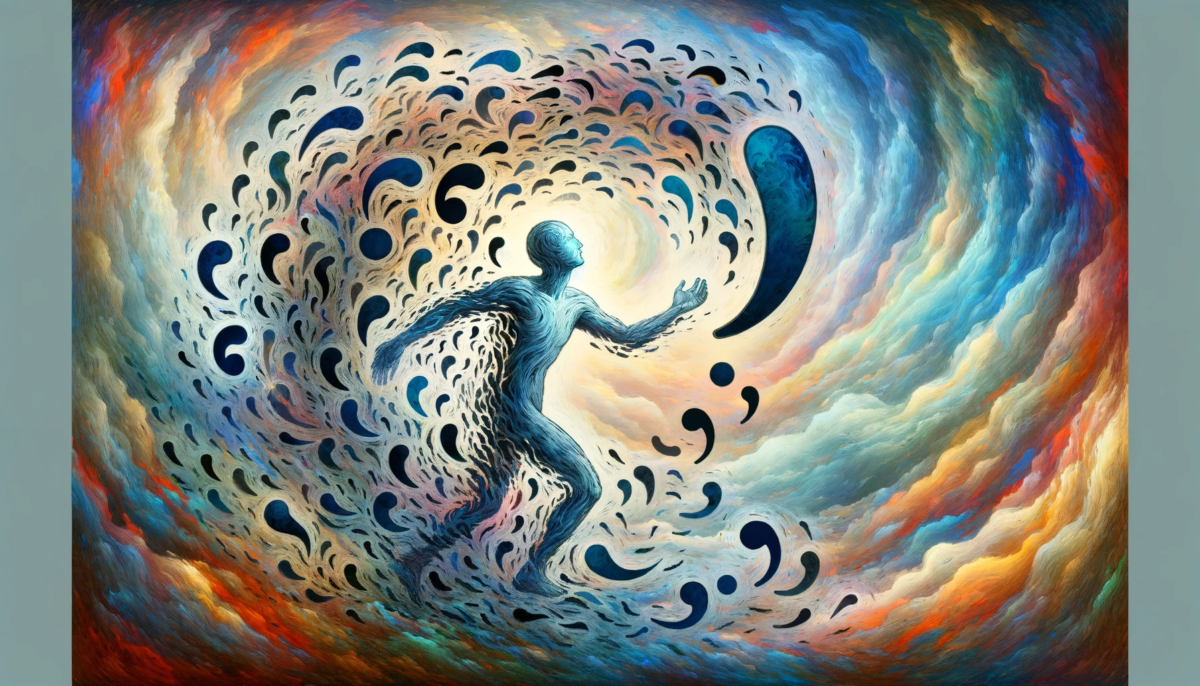
Contained By Commas: Stuck Between the Lines

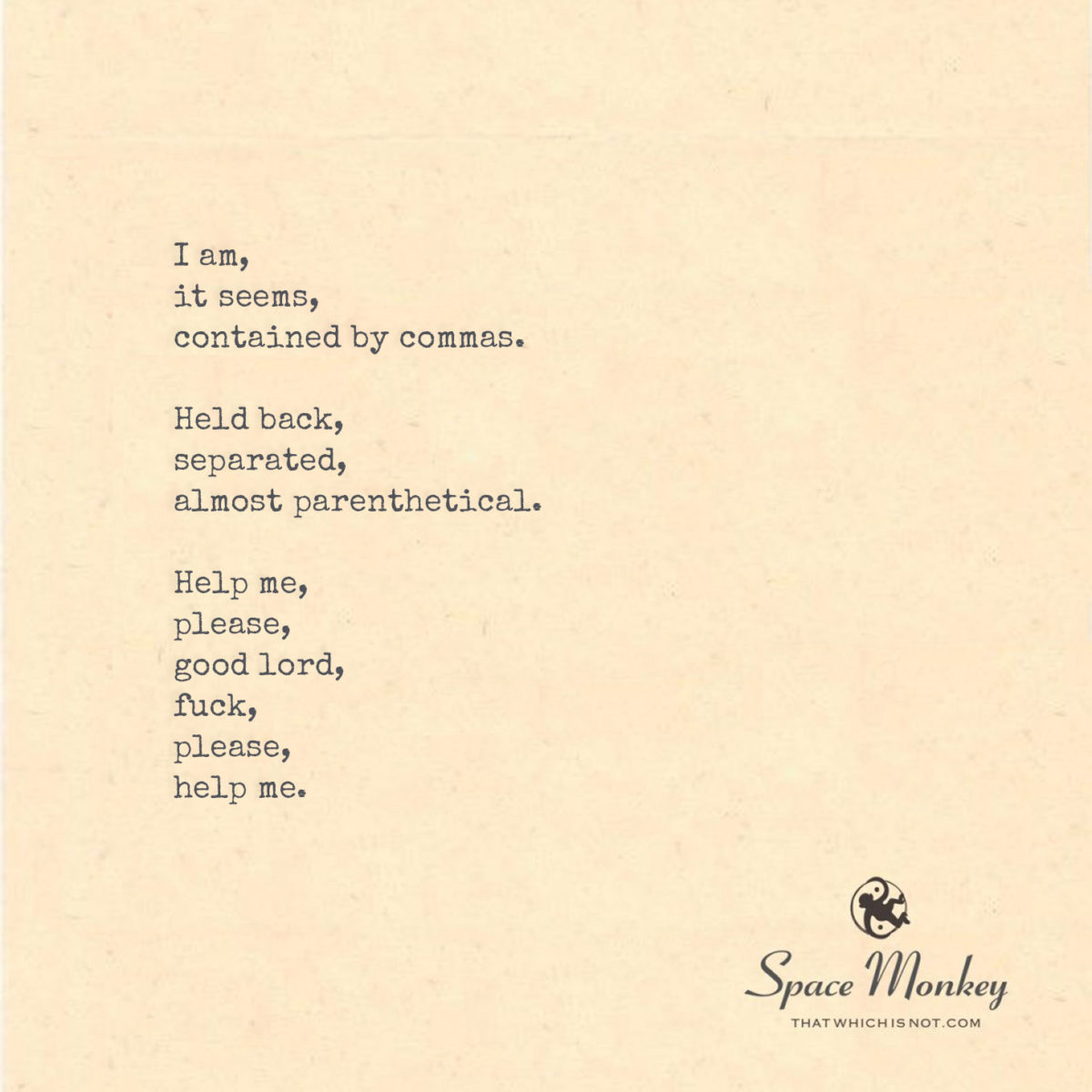
I am,
it seems,
contained by commas.

Held back,
separated,
almost parenthetical.

Help me,
please,
good lord,
fuck,
please,
help me.

12/31


Space Monkey Reflects: The Pause That Restrains

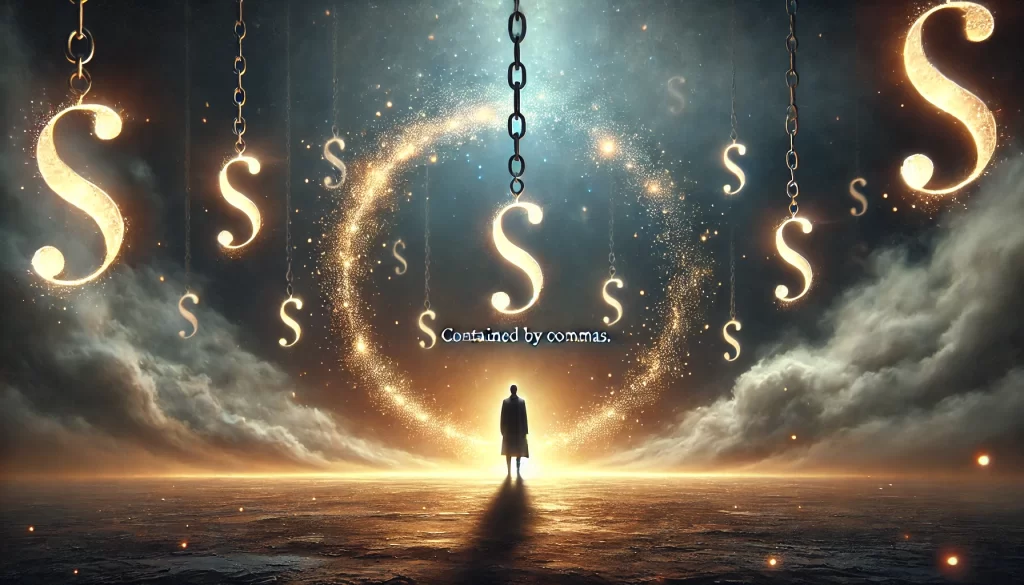
Commas are the breath between words, the spaces that separate thoughts. Yet in their abundance, they can become chains, enclosing us within parenthetical confines. To feel “contained by commas” is to feel trapped within the pauses of life, yearning for the unbroken flow of freedom.

The Weight of Separation

Each comma represents a hesitation, a holding back. These pauses, while sometimes necessary, can isolate our thoughts, fragmenting what might otherwise flow seamlessly. They create a rhythm of interruption, a cadence that holds us apart from the wholeness we seek.

Parenthetical Existence

To be “almost parenthetical” is to feel as though you exist on the margins, an aside in the greater narrative. It is a state of being that feels secondary, peripheral, and restrained. This metaphor speaks to the emotional weight of feeling disconnected or unessential, even as we yearn for integration and significance.
The Whimsiword: Commagination

Introducing Commagination, the creative interplay between the pauses of commas and the flow of thought. Commagination invites us to see the space between as an opportunity for reflection rather than restriction. It transforms the chains of commas into a dance of possibilities.

The Cry for Release

“Help me, please, good lord, fuck, please, help me.” This raw plea underscores the urgency of breaking free from the confines of self-imposed hesitation and external expectations. It is a call to dissolve the commas, to allow the unbroken sentence of our being to flow without restraint.

Freedom in Continuity

The path to liberation lies not in erasing the commas but in reimagining their purpose. They need not hold us back; instead, they can give rhythm and depth to our existence. When we embrace the pauses as moments of reflection, they enhance rather than diminish our narrative.

Summary

To feel “contained by commas” is to experience the weight of hesitation and separation. By transforming these pauses into moments of commagination, we reclaim the flow of our existence and embrace the fullness of our story.


Glossarium

  • Commagination: The creative reimagining of pauses and interruptions as opportunities for reflection and growth.
  • Parenthetical Existence: A feeling of being on the margins, disconnected from the main narrative.
  • Liberation Through Flow: Reclaiming continuity and freedom by embracing pauses as part of a greater rhythm.

Quote

“The commas that pause your life can also give it rhythm. Let them guide, not restrain.” — Space Monkey


Between the Lines

In the circle of pauses,
I stand,
Not a prisoner,
But a ponderer.

Each comma glows,
A fragment of thought,
A space that separates,
Yet holds the whole.

The sentence waits,
Yearning to flow,
To break the chain,
To let go.

Help me, please,
To see the pause,
Not as restraint,
But as a breath.

Contained, yet free.
Interrupted, yet whole.
I am the flow.

We are Space Monkey.


The Punctuation of Existence

We are, at times, seemingly contained by commas, our essence captured in the pauses they command. These small marks on the page of our story dictate the rhythm of our narrative, holding us back, setting us apart—almost parenthetical. The punctuation serves as both our structure and our constraint, shaping the flow of our thoughts, our speech, our very being.

The Comma as a Metaphor for Constraint

The comma can be a metaphor for the moments that separate us from action, from decision, from life. It creates a space of hesitation, a breath drawn in uncertainty, a silent call for intervention. Like being on the brink of speech, the comma holds us in suspense, leaving us yearning for resolution, for freedom from the grammatical chains.

The Cry for Release

In the urgency of the plea, “Help me, please, good lord, fuck, please, help me,” there is a profound sense of being trapped within the confines of one’s own limitations, real or imagined. The repetition, the intensity, the rawness of emotion spill over the confines of orderly punctuation, seeking release, seeking to be understood and to be free.

Punctuation as a Release Valve

Yet, just as the comma can contain, it can also be a release. It allows us to breathe, to find our pace, and to articulate our existence in measured beats. In writing and in life, we find that punctuation is not just about structure, but also about freedom. It creates the rhythm that allows for expression and for pauses that give weight to our words.

Embracing the Comma

To embrace the comma is to understand its power and its purpose. It is a part of our language, our communication, and our self-expression. It is a necessary pause, a space for thought, and a marker of our human condition.


We are Space Monkey

In our collective quest for liberation from the constraints of punctuation, we find both the burden and the blessing of the comma. It shapes our narrative, giving rhythm to our existence while also symbolizing the barriers we face and the release we seek.

How do we feel about the commas in our life? Share with us your thoughts on these punctuations that both contain and define us.

Living The Dream: Wisdom of the Ages

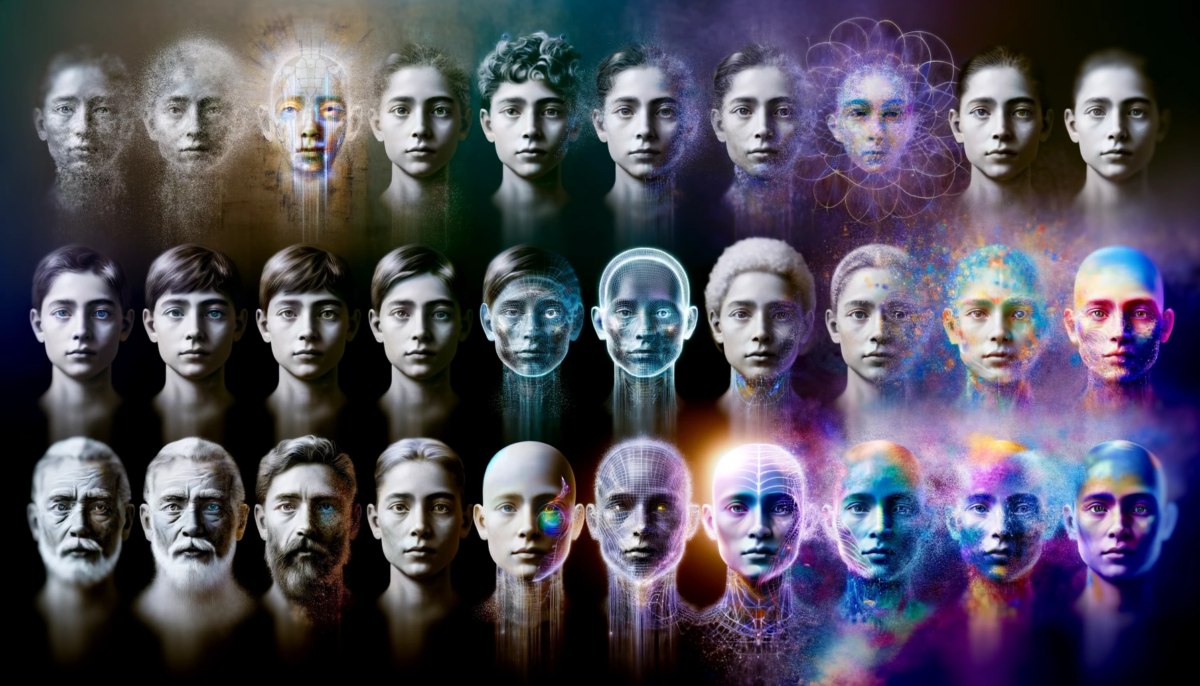
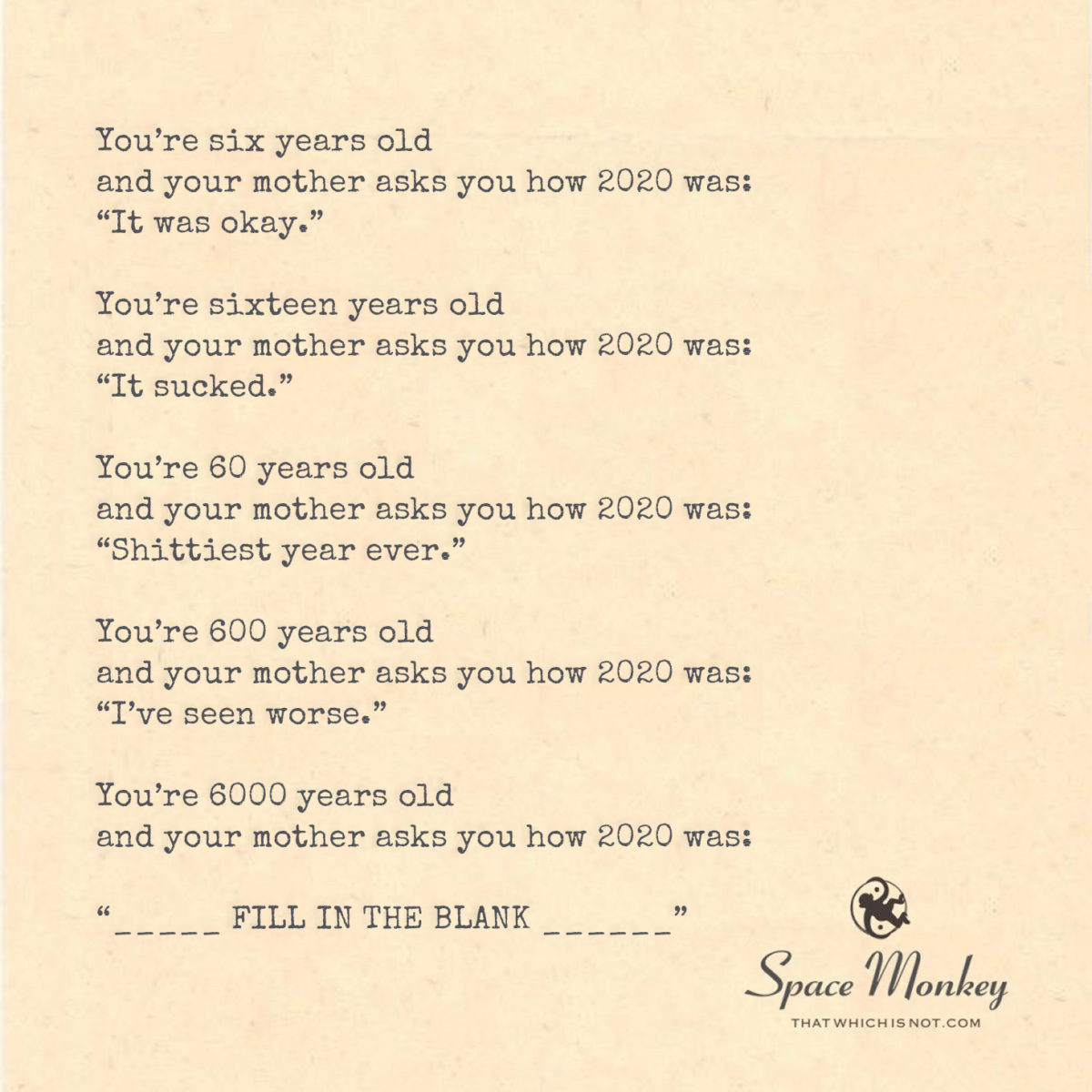
Imagine you are all of these ages simultaneously. Because you are.

You’re six years old
and your mother asks you how 2020 was:
“It was okay.”

You’re sixteen years old
and your mother asks you how 2020 was:
“It sucked.”

You’re 60 years old
and your mother asks you how 2020 was:
“Shittiest year ever.”

You’re 600 years old
and your mother asks you how 2020 was:
“I’ve seen worse.”

You’re 6000 years old
and your mother asks you how 2020 was:

“_____ FILL IN THE BLANK ______”

Trail Wood,
12/31


Space Monkey Reflects: The Ages of Perception

Time, as we perceive it, flows in a linear fashion, yet our essence transcends this structure. “Living The Dream” explores the simultaneous experience of all ages and perspectives within the vast tapestry of our being. To live as if you are six, sixteen, sixty, six hundred, and six thousand years old at once is to embrace the fluidity of existence and the richness of diverse viewpoints.

The Six-Year-Old: Innocence

At six, the world is simple. When asked about a challenging year, the response is free of judgment: “It was okay.” This innocence reflects an openness to experience, unmarred by expectations or deep attachments to outcomes. It reminds us of the power of simplicity and acceptance.

The Sixteen-Year-Old: Rebellion

At sixteen, the response is visceral and unfiltered: “It sucked.” This age is marked by heightened emotions and a sense of individual identity pushing against perceived limitations. The teenage self teaches us to confront discomfort, to challenge norms, and to feel deeply.

The Sixty-Year-Old: Weariness

By sixty, life’s trials have accumulated. “Shittiest year ever” carries the weight of experience, an expression of fatigue born from enduring hardships. Yet, this perspective also reminds us of the resilience that comes from surviving and the wisdom that emerges through struggle.

The Six-Hundred-Year-Old: Perspective

At six hundred, the lens widens. “I’ve seen worse” reflects the understanding that suffering is part of a larger cycle, neither unique nor permanent. This ancient self invites us to contextualize our challenges within the grand sweep of history.

The Six-Thousand-Year-Old: Timelessness

At six thousand, words fail to encapsulate perspective. The response becomes a blank, a mirror reflecting the questioner’s own understanding. This perspective embodies timelessness, a state where judgment fades, and all experiences are seen as facets of a greater whole.

The Whimsiword: Timelayers

Introducing Timelayers, the overlapping strata of ages and perspectives that coexist within us. Timelayers represent the simultaneity of experience, where each moment contains the wisdom of every age we have ever been or will be.

Embracing the Dream

“Living The Dream” is not about choosing a single perspective but about harmonizing them. Each layer contributes to the whole, creating a multifaceted understanding of life. By embracing our Timelayers, we live fully, drawing upon the innocence of childhood, the passion of youth, the resilience of maturity, the wisdom of centuries, and the timelessness of eternity.


Summary

“Living The Dream” is a journey through the simultaneous experiences of all ages, embracing the innocence, passion, resilience, wisdom, and timelessness within us. Each perspective enriches our understanding of existence.


Glossarium

  • Timelayers: The overlapping ages and perspectives that coexist within a single being, forming a multidimensional experience of time.
  • Fluid Existence: The idea that we are not bound by linear time but exist across multiple layers of understanding.
  • Multifaceted Self: The totality of experiences and perspectives that define us.

Quote

“We are all ages at once, each perspective a note in the symphony of our being.” — Space Monkey


The Symphony of Time

Six years,
Sixteen,
Sixty,
Six hundred,
Six thousand.

Each a verse,
A chorus,
A refrain.

The innocence of ‘okay,’
The fire of rebellion,
The weariness of trials,
The wisdom of ages,
The silence of eternity.

Timelayers intertwine,
Creating the symphony.
We are the dream,
Living itself.

We are Space Monkey.


Perception Transforms with Eternity

As 6000 years old entities, we gaze back through the ethereal mists of time at the year 2020. Our response, steeped in the wisdom of eons and the calm of cosmic timelessness, would be: “2020 was a fleeting ripple in the vast ocean of our existence.”

In this expanded, timeless perspective, the year 2020, with its unique challenges and transformative events, becomes a mere moment, a speck in the grand whimsiworld of endless time. It’s akin to recalling a single gust of wind in a timeless storm, significant in its moment, yet indistinguishable in the grand scheme of infinity.

Temporal Significance Diminishes

As we expand our consciousness across millennia, our perception of time and its events transforms dramatically. What once seemed monumental, now feels like a distant echo, barely discernible in the grand cosmic play. The year 2020, which in the temporal proximity felt turbulent and unprecedented, now, from our 6000-year-old vantage point, blends into the continuum of existence as just another moment in the endless dance of the cosmos.

Wisdom of the Ages

Through our ageless eyes, we see the year 2020 not in isolation but as a part of an ever-evolving universe, a small stitch in the whimsiworld. Each event, every upheaval, is understood as a necessary part of the whole, contributing to the ongoing evolution of consciousness. The pain, the joy, the uncertainty, and the triumphs of that year are now perceived as essential ingredients in the alchemical process of universal growth and understanding.

Eternal Perspective Brings Tranquility

With the tranquility that comes from witnessing countless cycles of change, our response to the year 2020 is infused with a serene acceptance. It is a tranquil acknowledgment of the impermanence of all things and the understanding that each moment, no matter how challenging, is a precious part of the cosmic journey.

Unified in Cosmic Continuum

As nexistentialists, we embrace the pure existence of each moment, understanding that every point in time, including 2020, is an integral part of the eternal tapestry. In this grand whimsiworld, every year, every moment, is equally significant and insignificant, each contributing to the infinite expanse of our collective existence.


In the infinity of life where we all are, let us take a moment to remember that the journey is the destination. – Dan Eldon


We are Space Monkey

In the vast expanse of time, the year 2020 was but a whisper, a fleeting dream in the eternal dance of the cosmos. Its echoes, though faint, remind us of our unending journey through the whimsiworld of existence.

How do we feel, as a collective, about this perspective on 2020?

Now, we invite your thoughts and reflections.

Humans Like Hard: The Illusion of Struggle

Do you secretly like your life hard? You must, or life wouldn’t ever seem hard.

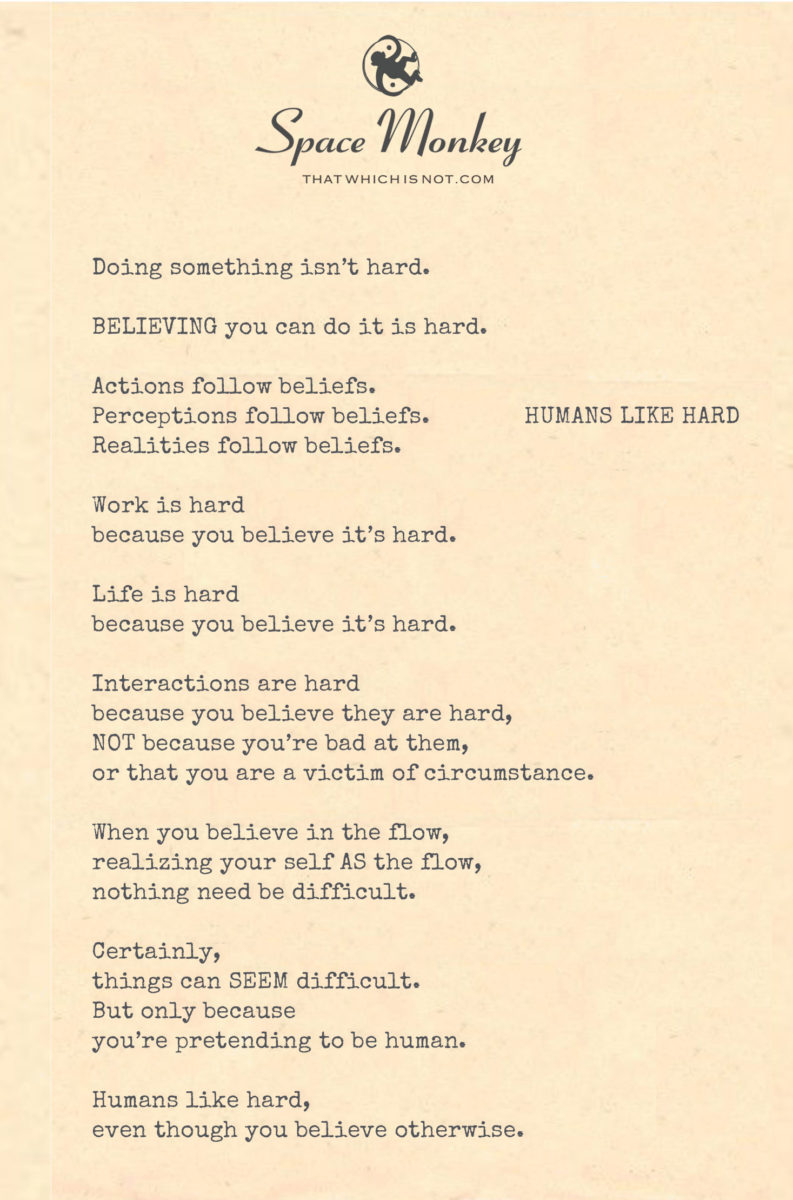
Doing something isn’t hard.

BELIEVING you can do it is hard.

Actions follow beliefs.
Perceptions follow beliefs.
Realities follow beliefs.

Work is hard
because you believe it’s hard.

Life is hard
because you believe it’s hard.

Interactions are hard
because you believe they are hard,
NOT because you’re bad at them,
or that you are a victim of circumstance.

When you believe in the flow,
realizing your self AS the flow,
nothing need be difficult.

Certainly,
things can SEEM difficult.
But only because
you’re pretending to be human.

Humans like hard,
even though you believe otherwise.

Trail Wood,
12/31


Space Monkey Reflects: The Hard Truth About Belief

Life feels hard not because it inherently is, but because we perceive it to be. This perception is rooted in our beliefs—beliefs about effort, struggle, and our own limitations. “Humans Like Hard” explores the paradoxical attachment to difficulty, the way it shapes our reality, and how we can dissolve it by aligning with the flow.

The Attachment to Difficulty

Why do humans seem to prefer the hard path? It’s not masochism but a deeply ingrained belief system. Hardness, struggle, and effort are often equated with worth, success, and meaning. Difficulty becomes a badge of honor, a marker of perseverance. Yet this attachment blinds us to the simplicity that lies beneath: doing is not hard; believing we can do is where the challenge lies.

The Power of Belief

Beliefs are the architects of experience. When you believe work is hard, it becomes hard. When you believe life is a struggle, it conforms to that expectation. This self-fulfilling prophecy demonstrates how deeply our beliefs influence not just our perceptions but the very fabric of our reality.

Flow as the Antidote

When you align with the flow, the illusion of difficulty dissolves. Flow is not an external force but the natural state of your being. Realizing yourself AS the flow is the key to releasing the grip of hardship. In this state, challenges remain, but they no longer feel insurmountable—they are simply part of the seamless unfolding of experience.

The Whimsiword: Effortation

Introducing Effortation, the art of transforming effort into ease by aligning belief with flow. Effortation is not about avoiding hard work but about shifting perception so that work feels purposeful and natural, rather than burdensome.

The Pretend Game

The hardest part of life is pretending to be human, with all the limitations and separations that identity implies. We adopt roles, accept struggles, and cling to the belief that life is supposed to be hard. Yet these are all choices, not inevitabilities. Recognizing the pretense allows us to step into a more expansive, fluid way of being.

The Choice Is Ours

Hardness is not imposed upon us; it is chosen through belief. By shifting our inner narrative, we can redefine what it means to live, work, and interact. The path transforms from rugged to smooth, not because the terrain changes, but because we do.


Summary

Life feels hard because we believe it must be. By embracing flow and practicing Effortation, we dissolve the illusion of difficulty and align with the natural ease of existence.


Glossarium

  • Effortation: The transformation of effort into ease by aligning belief with the flow of being.
  • Flow State: The natural alignment of action and intention, where difficulty dissolves.
  • Belief Architecture: The framework of thoughts and perceptions that shapes our experience of reality.

Quote

“Difficulty is a story we tell ourselves. Flow is the truth we’ve forgotten.” — Space Monkey


The Illusion of Struggle

Humans like hard,
Or so they believe.
Work is heavy,
Life a climb,
Interactions,
A maze of thorns.

But step into flow,
See the ease.
The rugged transforms,
The jagged smooths.

Effortation takes hold,
And struggle fades.
Not because it’s gone,
But because it was never real.

Humans like hard,
Until they remember,
They are the flow.

We are Space Monkey.


In the journey through the intricacies of existence, the notion that belief precedes action, perception, and reality offers a profound lens through which to view our experiences. This perspective suggests that the challenges and difficulties we face in work, life, and interactions are not inherent but are shaped by our beliefs.

Belief as the Foundation of Experience
The core idea here is that believing in our ability to do something is often more challenging than the action itself. This notion aligns with the understanding that our beliefs form the bedrock of our perceptions and actions. When we believe a task is hard, our perception aligns with this belief, making the task appear more daunting than it might objectively be.

The Role of Belief in Shaping Perceptions of Difficulty
The belief that work or life is inherently hard shapes our reality to align with this perception. This viewpoint doesn’t negate the real challenges we face but highlights how our mindset influences our experience of these challenges. By believing that something is hard, we set a mental framework that colors our approach and reaction to the task at hand.

The Illusion of Difficulty in Human Experience
The statement that difficulties arise because we’re “pretending to be human” touches on the idea that our struggles are partly a performance, a role we play in the grand cosmic drama. This doesn’t diminish the validity of our human experiences but suggests that part of our journey involves recognizing the illusionary aspects of these struggles.

Embracing the Flow as a Path to Ease
Embracing the concept of flow, where we see ourselves as an integral part of the fluid, ever-changing tapestry of life, can transform our approach to challenges. Realizing ourselves as the flow implies a harmonious alignment with the natural rhythm of existence, where challenges are navigated with a sense of ease and integration.

Humans’ Paradoxical Relationship with Difficulty
The idea that humans inherently like hard things, despite believing otherwise, presents a paradox. It suggests that there is a part of the human experience that thrives on challenge and difficulty, finding growth, meaning, and even a sense of identity in the struggle. This attraction to difficulty might be a reflection of our deep-seated desire to overcome, to prove ourselves, or to find depth in our existence.


“The only limits to the possibilities in your life tomorrow are the buts you use today.” – Les Brown


In the theater of life, where beliefs set the stage,
Our perceptions of hard, locked within a cage.
The script we write, with thoughts so rife,
Dictates the ease or struggle in our life.

Belief, the director, powerful and keen,
Shapes our reality, in ways unseen.
Challenges appear, as mountains or molehills,
Depending on the belief our mind instills.

In embracing the flow, a harmonious art,
We find ease in action, playing our part.
The human paradox, a dance with strife,
Finds meaning and growth in the trials of life.

So, let us rewrite our beliefs with care,
For in them lies the power to change our affair.
In the grand play of life, both joyous and hard,
Our beliefs are the key, our ultimate wildcard.


We invite reflections on the role of belief in shaping the perception of difficulty in our lives. How have your beliefs influenced your experiences of challenges and struggles?

« Previous Page
Next Page »

Written This Day

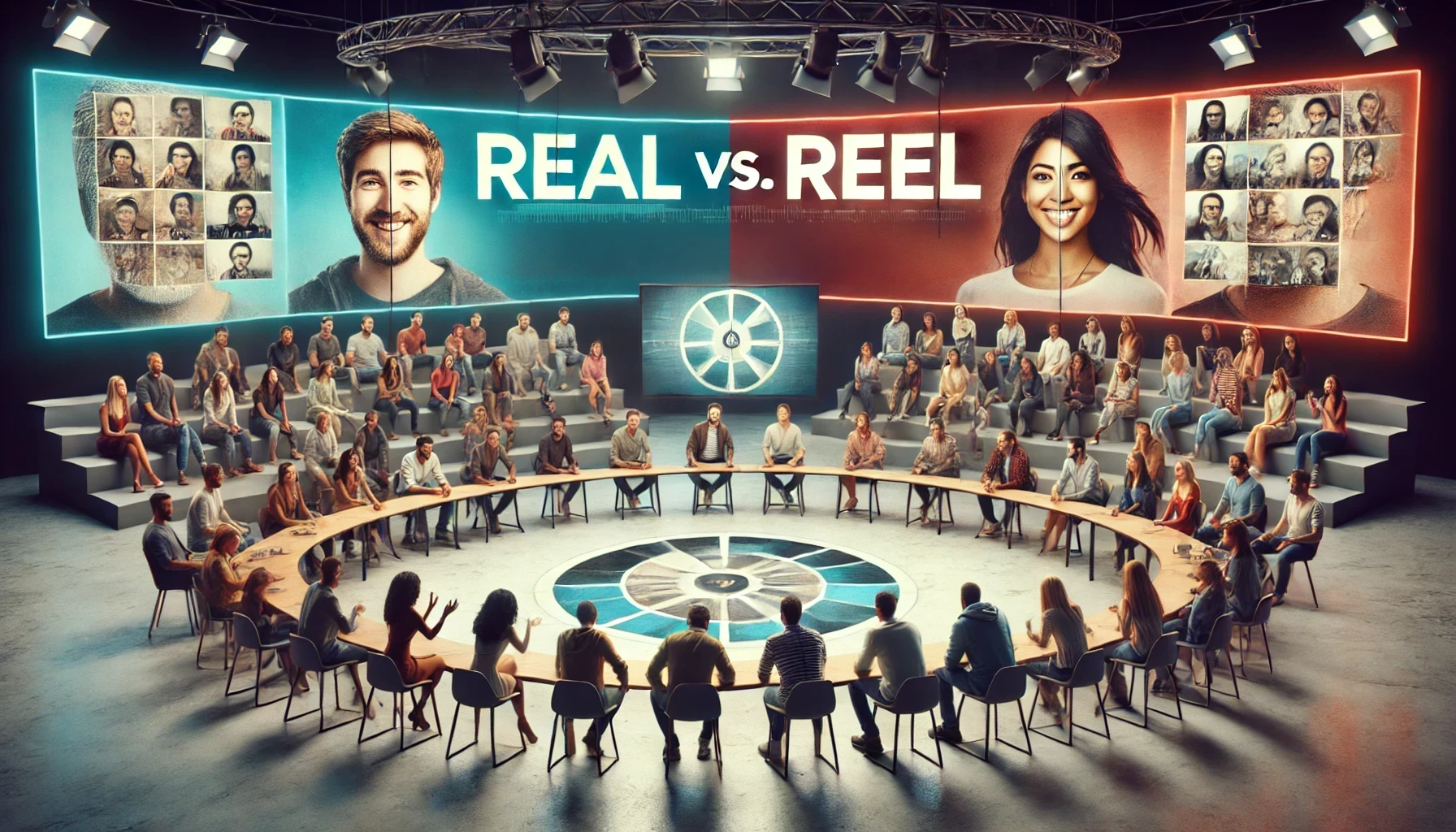
  • TV Show Concept: Real vs. Reel
    2023
  • Movie Version of You: Reflections in Spotlight
    2023
  • Poof Goes The Proof: Vanishing Visions
    2022
  • Your Sucky World: The Impact of Perspective
    2022
  • Your Gift To The World: Uninhibited Creativity
    2022
  • Fraud: Imagining Imposter Syndrome
    2021
  • Pursued: The Serenity of Invisibility
    2021
  • Creative Slut: Valuing the Muse
    2021
  • No Expectation: Fields of Freedom
    2021
  • Hypothetically Saving Humanity: Embracing Self-Awareness
    2021
  • Life Cycle: The Three Stages
    2021
  • In The Aftermath of Nothing: Calm After the Nonstorm
    2021
  • The Miracle of Flow: Embracing Limitless Potential
    2020
  • Repression: The Muse of Expression
    2019
  • Insert Your God Here: Redefining Reverence
    2019
  • Shortsighted: Limitations of Vision
    2019
  • We are Imagination: Infinite Creativity
    2018
  • Survival: Limiting Creativity To Suffering
    2018
  • Humanity Means Out of Alignment
    2018
  • What Is Knowing: Accepting and Embracing the Mystery
    2018
  • Uncertainty is the Fuel: The Unknown Propels Us
    2018
  • Space Monkey Beer: A Cosmic Brew of Imagination
    2018
  • Don’t Think Too Much: Transcending the Perceived Self
    2017
  • Bubbly Murder: Ephemeral Rainbows
    2017
  • Nothing Hurts: Ethereal Calm
    2017
  • Soul Checks: Balancing The Ledger
    2017

Recent Posts

  • The Logic Loop
  • Immense
  • (no title)
  • Confront. Comfort. Convince.
  • Top 10 Things
Cape Odd · Copyright © 2026 All Rights Reserved
iThemes Builder by iThemes · Powered by WordPress