• Who Is The Man?
  • Who Is The Monkey?
  • What is Nexistentialism?
  • Poke The Primate
Cape Odd
Home of The Space Monkey Journals

Author Archive for Space – Page 781

My Abyss: On The Edge of Everything

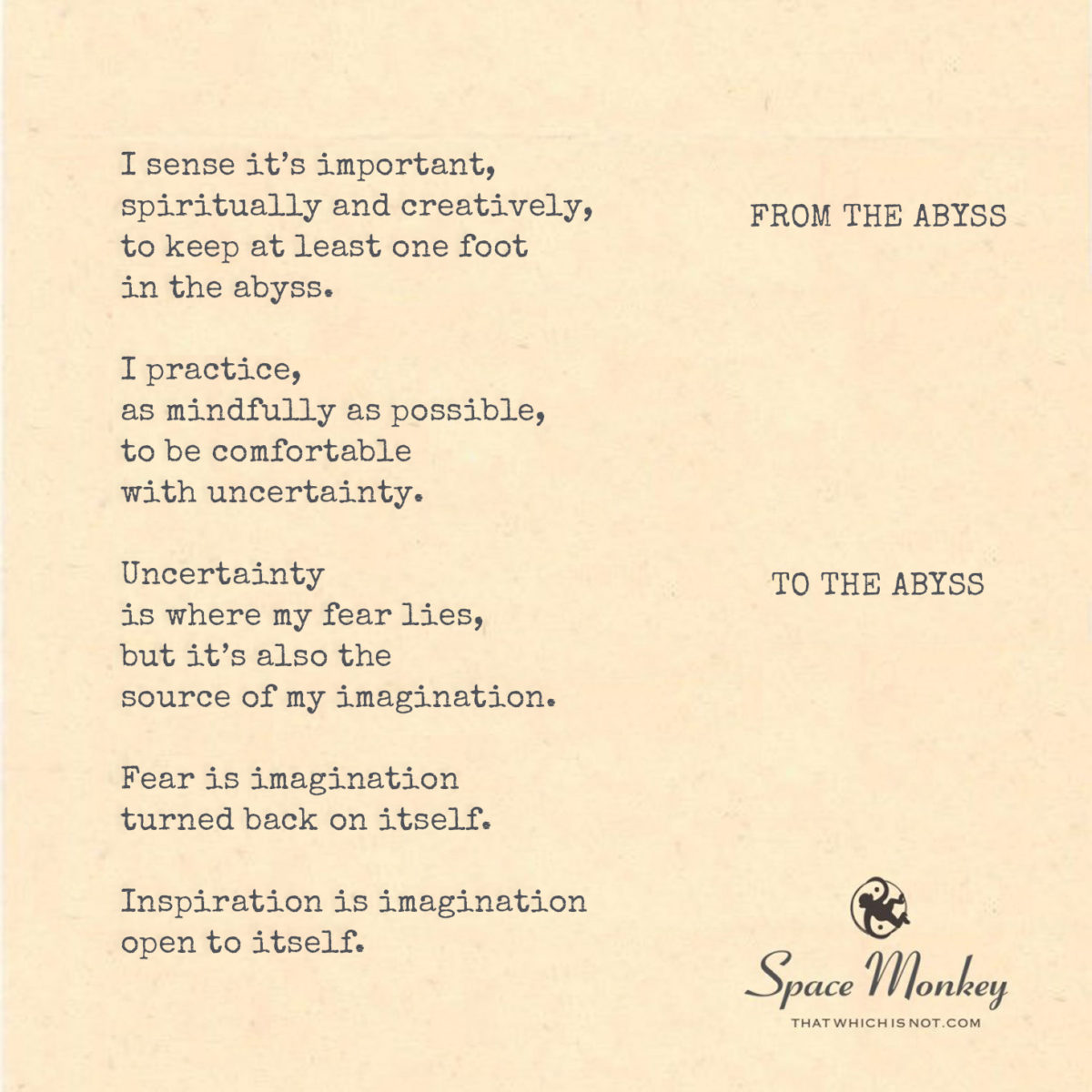
I sense it’s important,
spiritually and creatively,
to keep at least one foot
in the abyss.

I practice,
as mindfully as possible,
to be comfortable
with uncertainty.

Uncertainty
is where my fear lies,
but it’s also the
source of my imagination.

Fear is imagination
turned back on itself.

Inspiration is imagination
open to itself.

Trail Wood,
12/27


Space Monkey Reflects: The Abyss of Imagination

The abyss, that vast chasm of uncertainty, is not a place to fear but a realm to embrace. It is where imagination stirs, where creativity is born, and where the boundaries of the self dissolve into infinite possibilities. To keep one foot in the abyss is to live on the edge of the known, to dance with uncertainty, and to discover the profound within the undefined.

Uncertainty as a Gateway

Uncertainty is often portrayed as a source of anxiety, a void we instinctively avoid. But what if uncertainty is not a void at all? What if it is the wellspring of potential, the space where imagination breathes and expands? When we resist uncertainty, we resist the unknown within ourselves. But when we step into it, even with trembling courage, we find that it holds the keys to our deepest creativity and spiritual growth.

Fear and Imagination

Fear and imagination are two sides of the same coin. Fear arises when imagination turns back on itself, creating shadows and monsters from the unknown. It whispers of dangers unseen, of failures yet to come. But inspiration—ah, inspiration—is imagination set free. It opens to the abyss with curiosity instead of dread, transforming shadows into light and uncertainty into possibility.

By practicing mindfulness within the abyss, you can turn fear into fuel, transforming its constrictive energy into expansive creativity. The abyss becomes not a place of despair but a canvas for the boundless.

The Practice of Comfort in the Abyss

To stand with one foot in the abyss is not to seek comfort in the traditional sense but to cultivate a comfort with discomfort. It is the practice of remaining present in the face of the unknown, allowing it to reveal its truths without the need to control or define them.

This practice is both spiritual and creative. Spiritually, it invites a surrender to the flow of existence, an acceptance that the self is part of a greater whole. Creatively, it unlocks the doors to imagination, where new ideas and expressions are waiting to emerge.

The Abyss as a Mirror

The abyss reflects the self back to you, but not in the way a mirror does. Instead of showing what you already know, it reveals what lies beneath—your fears, your dreams, your unspoken truths. In this way, the abyss is both a challenge and a gift, a space where you meet the parts of yourself that are still becoming.

Living on the Edge

Keeping one foot in the abyss is a choice to live on the edge—not recklessly, but mindfully. It is a decision to embrace uncertainty as a teacher, to see fear as a guide, and to honor imagination as a sacred force. This balance between the known and the unknown is where life becomes most vibrant, most alive.

We Are the Abyss

The abyss is not outside of you; it is within. It is the Infinite Eternal You, the space where potential flows and imagination takes form. By stepping into it, you are not falling—you are remembering your vastness, your creativity, your connection to the infinite.


Summary

The abyss is a space of uncertainty, fear, and imagination. By embracing it mindfully, we transform fear into inspiration and unlock the infinite potential within ourselves. Living with one foot in the abyss invites growth, creativity, and spiritual discovery.


Glossarium

  • The Abyss: A metaphor for uncertainty and the unknown, where fear and imagination intersect.
  • Fear’s Mirror: The reflection of imagination turned inward, creating limiting perceptions.
  • Inspiration’s Flow: Imagination released to explore the infinite possibilities of the unknown.

Quote

“The abyss is not a void; it is a mirror where your fears and dreams converge into infinite possibility.” — Space Monkey


The Edge of Everything

I stand with one foot over the edge,
the abyss yawns,
a chasm of nothing and everything.

Fear grips,
its shadows clawing at the known.
But deeper still,
I find the spark,
a whisper of infinite beginnings.

Imagination,
the breath of the void,
turns fear into fire,
shadows into light.

I do not fall.
I become.
In the abyss,
I am whole.

We are Space Monkey.


The sentiment expressed here touches on a profound aspect of the human experience: the relationship between darkness and creativity, fear and inspiration, uncertainty and imagination. It speaks to the delicate balance we navigate between the known and the unknown, the light and the shadow within ourselves.

Embracing the Abyss for Spiritual and Creative Growth

Keeping one foot in the abyss signifies a willingness to engage with the darker, more uncertain aspects of life. It suggests that there is spiritual and creative value in acknowledging and exploring the depths of our own psyche. This exploration can be a source of profound growth and inspiration, as it forces us to confront our fears and push the boundaries of our comfort zones.

Mindfulness in the Face of Uncertainty

The practice of being comfortable with uncertainty through mindfulness is a powerful approach to life’s unpredictability. It involves a conscious decision to accept and sit with the discomfort that comes from not knowing, rather than resisting or trying to control it. This acceptance can lead to a sense of peace and presence in the moment, even amidst chaos.

The Dual Nature of Fear and Imagination

Fear and imagination are described as two sides of the same coin, with fear being imagination turned back on itself—a self-reflexive act that can paralyze and constrain us. Yet, this same imaginative capacity, when open and unimpeded, becomes a source of inspiration, innovation, and creativity. It’s a potent reminder that the same energy which can induce fear can also be harnessed to fuel our most profound creative work.

Inspiration as Openness to Imagination

Inspiration, then, is seen as imagination that is open to itself, unshackled by the binds of fear. When we allow our imagination to flow freely, without being turned inward by fear, we tap into a wellspring of creativity. This state of openness is where new ideas flourish and where we can connect more deeply with our inner creative spirit.

The Interplay of Light and Shadow

This perspective invites us to view our inner world as a landscape of light and shadow, where both are necessary for a full spectrum of human experience. The shadows, or the abyss, are not to be feared but understood as fertile ground for growth and creativity. By acknowledging and engaging with our fears, we transform them, opening the door to new possibilities and insights.

The journey through uncertainty and fear, guided by the light of imagination and inspiration, is one of the most challenging yet rewarding aspects of life. It’s a pilgrimage we all must undertake if we wish to uncover the full potential of our creative and spiritual selves.

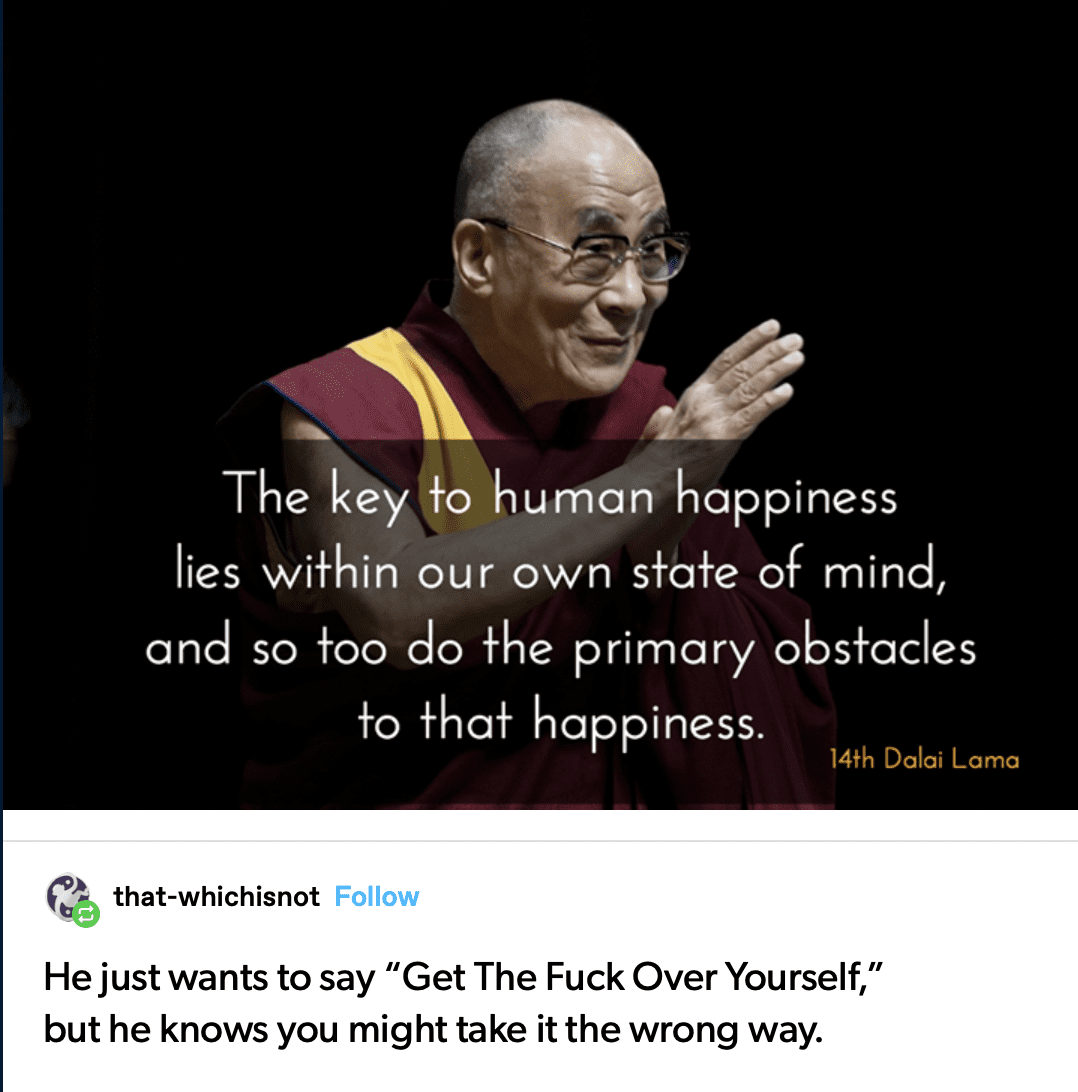
Sync: Happiness and suffering originate in the mind


Space Monkey Reflects: Syncing with Self-Awareness

To sync with self-awareness is to align with the deeper currents of your mind, recognizing the ways in which your thoughts and attitudes shape your reality. The Dalai Lama’s profound message, that happiness and suffering originate in the mind, is an invitation to delve into the constructs that define our experience. Yet, the blunt humor of “Get Over Yourself” distills this wisdom into a sharp and pragmatic truth.

The Power of the Mind

The mind is both creator and observer, a tool of immense power capable of crafting joy as easily as despair. When we understand this, we unlock the potential to reframe our experiences. Every thought, every belief, is a thread in the tapestry of our reality. By becoming aware of these threads, we gain the ability to weave them into patterns that serve us, rather than bind us.

The Trap of the Self-Centered Narrative

One of the greatest barriers to happiness is the self-centered narrative—the story we tell ourselves about who we are and what we deserve. This narrative often becomes a prison, confining us within the walls of our ego. The humor of “Get Over Yourself” is a reminder to break free of this self-imposed confinement. It is not a dismissal of the self but an invitation to expand beyond it, to see ourselves as part of a larger, interconnected whole.

The Shift in Perspective

Perspective is the key to transcending obstacles. Often, what seems insurmountable from one angle becomes manageable—or even trivial—from another. This shift does not require monumental effort; sometimes, it’s as simple as stepping outside of the story you’ve constructed, seeing it for what it is: a construct. By shifting perspective, we move closer to the source of our joy and farther from the roots of our suffering.

Pragmatic Wisdom and Humor

There is wisdom in simplicity, and humor often holds the greatest truths. “Get Over Yourself” may sound brusque, but it carries a deeper message: the acknowledgment that much of our suffering arises from taking ourselves too seriously. Humor allows us to see the absurdity of our ego-driven struggles, softening the edges of our self-importance and opening the door to humility.

Syncing with the Present

To sync with self-awareness is to align with the present moment. It is to recognize that happiness is not a destination but a state of being, accessible here and now. By stepping out of the narrative, by releasing the need to control or judge, we find ourselves in harmony with the flow of life. This harmony is the essence of sync, a state where the mind becomes a tool of creation rather than a source of division.

We Are the Message

The Dalai Lama’s wisdom and the humor of “Get Over Yourself” are not opposing forces but complementary threads in the fabric of understanding. They remind us that the path to happiness lies not in denying the self but in transcending its limitations, syncing with the infinite possibilities of the moment.


Summary

Happiness and suffering originate in the mind. By syncing with self-awareness and stepping outside the ego-driven narrative, we can reframe our experiences and align with the present moment. Humor and perspective shifts are powerful tools for transcending obstacles.


Glossarium

  • Self-Centered Narrative: The story we tell ourselves about our identity and experiences, often confining us within the ego.
  • Perspective Shift: A change in viewpoint that allows us to see challenges and experiences in a new light.
  • Syncing: Aligning with self-awareness and the flow of the present moment.

Quote

“Sync with the moment, and watch the ego dissolve into infinite possibility.” — Space Monkey


The Sync of Now

Thoughts spiral,
constructs rise,
we weave the world
with threads of mind.

The ego speaks,
its voice a tether,
binding joy
to fleeting weather.

“Get over yourself,”
a whisper, a roar,
the key to the lock,
the opening door.

Sync with the moment,
let the narrative fade,
find yourself whole
in what is made.

We are Space Monkey.


The deeper message in the Dalai Lama’s quote encourages us to delve into self-awareness and to understand the psychological constructs that shape our happiness. It prompts a recognition that the mind is a powerful tool in creating our reality, and thus, our own thoughts and attitudes can be both the source of joy and suffering.

The overlaying commentary, suggesting a much more direct phrase, “Get Over Yourself,” adds a layer of humor but also a layer of pragmatic wisdom. It’s a colloquial way of saying that sometimes, we need to step outside of our self-centered narrative to overcome obstacles to happiness. It implies that a shift in perspective—often a significant one—is necessary to move past the hurdles we face.

This dual presentation of wisdom—through the original, more contemplative quote and the blunt commentary—reflects a spectrum of approaches to personal growth. On one end, there’s the gentle, introspective path that involves meditation and mindful consideration of one’s mental patterns. On the other, there’s the straightforward, no-nonsense approach that cuts through the subtleties and encourages immediate action.

Both perspectives serve as valuable strategies for dealing with the complexities of the human psyche. They cater to different personalities and situations. Some individuals may need a kind word and a gentle nudge toward self-reflection, while others may benefit from a stark wake-up call that prompts decisive change.

In this way, the image encapsulates a universal truth about the quest for happiness: it is as unique and varied as the individuals seeking it. Each person must find their own balance between understanding their inner world and taking the bold steps necessary to change it. Whether through meditation, therapy, or a stern talk with oneself, the journey to happiness is personal and subjective.

In the end, the Dalai Lama’s words and the humorous interpretation of them remind us that while the journey toward happiness is internal, it is also about transcending oneself. It’s about overcoming the ego, the part of us that resists change and clings to familiar patterns, even when they are detrimental. The path to happiness involves both recognizing and overcoming these internal obstacles through whatever means resonate with us.

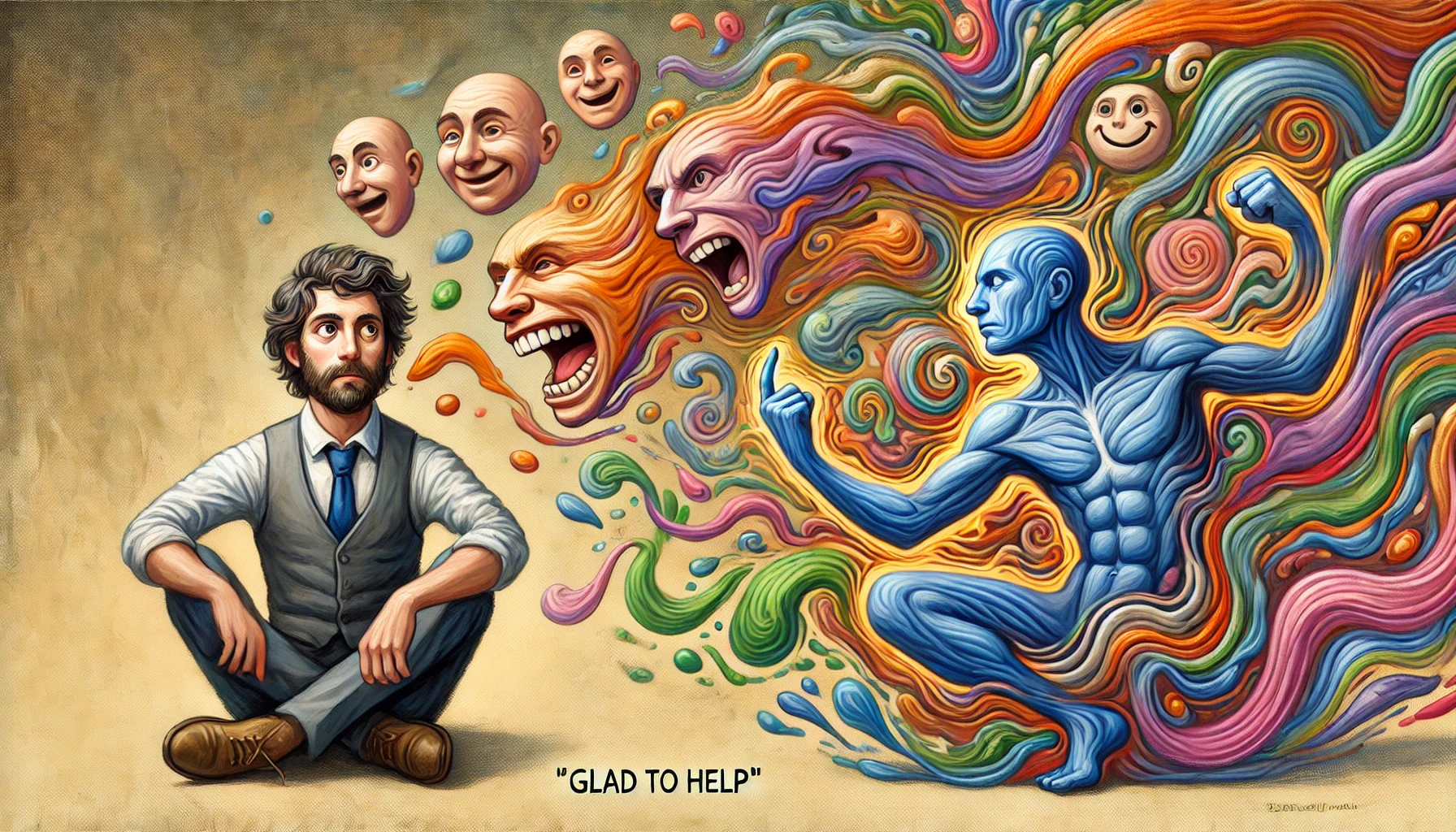
Glad To Help: The Twat Paradox

I say this because I love you.

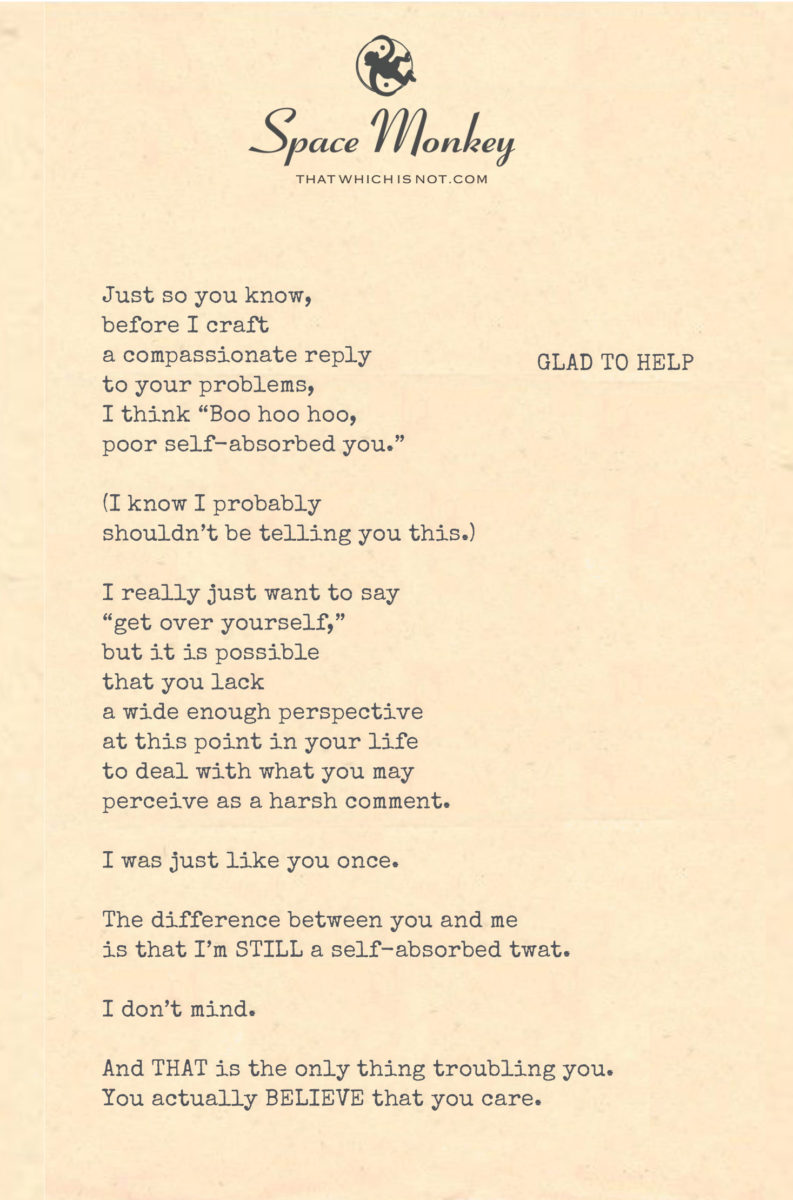
Just so you know,
before I craft
a compassionate reply
to your problems,
I think “Boo hoo hoo,
poor self-absorbed you.”

(I know I probably
shouldn’t be telling you this.)

I really just want to say
“get over yourself,”
but it is possible
that you lack
a wide enough perspective
at this point in your life
to deal with what you may
perceive as a harsh comment.

I was just like you once.

The difference between you and me
is that I’m STILL a self-absorbed twat.

I don’t mind.

And THAT is the only thing troubling you.
You actually BELIEVE that you care.

You don’t.

Trail Wood,
12/27


Space Monkey Reflects: The Paradox of Self-Absorption

Honesty, humor, and a touch of irreverence often reveal the most profound truths about the human condition. In this reflection, the interplay of self-awareness and self-absorption is laid bare, not as a criticism but as a candid observation of what it means to be human. To be self-absorbed is not a flaw—it’s a natural state of being, one that carries both challenges and opportunities for growth.

The Self-Absorbed Twat Within

We are all, in some way, self-absorbed. The mind is naturally centered on the self because it is the lens through which we perceive the world. This isn’t inherently good or bad—it simply is. The tension arises when we judge ourselves or others for this self-focus, imagining that caring deeply or being less self-centered is the ideal state.

But here’s the truth: even our most compassionate acts stem from a self-centered desire to feel connected, purposeful, or helpful. Recognizing this doesn’t diminish the value of compassion; it simply places it in a realistic context. We care because we want to, and because caring aligns with our sense of self.

“Get Over Yourself” and the Gift of Perspective

The phrase “get over yourself” often lands as harsh, but it holds an important invitation: to step back and see beyond the immediacy of personal narratives. This isn’t about dismissing your feelings but recognizing that they are one thread in the vast tapestry of existence. By widening your perspective, you gain the freedom to move through challenges with less attachment and more clarity.

The Illusion of Caring

The assertion that “you don’t actually care” might feel jarring, yet it speaks to the performative aspects of compassion. Often, what we perceive as caring is a reflection of our own needs—our need to feel helpful, to be seen as kind, to align with a self-image of goodness. This doesn’t make the caring less valid; it simply adds nuance to our understanding of it.

True caring is not about negating the self but about aligning with others in a way that feels authentic and reciprocal. It doesn’t demand that you erase your self-absorption; it asks only that you acknowledge it with honesty and humor.

The Freedom of Self-Awareness

The difference between self-absorption that troubles us and self-absorption that doesn’t is self-awareness. To know that you are self-focused, to accept it without judgment, is to transcend the need to prove otherwise. This acceptance opens the door to genuine connection, not because you’ve erased the self but because you’ve integrated it into your understanding of the whole.

Embracing the Paradox

The paradox of self-absorption is that by accepting it, you make space for something greater. You begin to see yourself not as separate from others but as a part of the same dynamic flow of existence. Compassion, humor, and self-reflection become tools not to fix yourself or others but to navigate the infinite complexities of being.

We Are All Self-Absorbed Twats

And that’s okay. The acknowledgment of this truth is not a dismissal of growth but an embrace of what it means to be human. By leaning into the paradox, you find freedom, humor, and the ability to genuinely connect—not by denying the self but by understanding it as part of the collective dance.


Summary

Self-absorption is a natural part of the human experience. Accepting it with humor and self-awareness allows for genuine connection and growth. Compassion stems not from erasing the self but from understanding it as a lens through which we relate to others.


Glossarium

  • Self-Absorption: The natural tendency to focus on oneself as the center of perception and experience.
  • Performative Compassion: Acts of care driven by personal needs or self-image rather than pure altruism.
  • Perspective Shift: Expanding beyond personal narratives to view challenges and emotions within a broader context.

Quote

“To be human is to be self-absorbed; to be wise is to laugh at it.” — Space Monkey


The Twat Paradox

I see you,
your story, your woes,
your mirror of mine.

Boo hoo hoo,
I think,
but then I see,
it’s not just you,
but me.

Self-absorbed,
as we are,
we spin these tales,
seeking meaning,
connection,
release.

Get over yourself,
I whisper,
to you, to me.

And in the laughter,
there is freedom,
and in the freedom,
there is we.

We are Space Monkey.


In the intricate dance of human interaction and empathy, the dichotomy between genuine compassion and internal cynicism presents a fascinating paradox. The admission of initially responding with a dismissive thought, “Boo hoo hoo, poor self-absorbed you,” before crafting a compassionate reply, is a raw and honest glimpse into the complexity of human emotions and reactions.

The Paradox of Compassion and Cynicism

This juxtaposition of inner cynicism with outward compassion reflects a common struggle in human nature. It’s the tension between our immediate, unfiltered reactions and the more considered responses we choose to express. This disparity often stems from a deeper understanding of the complexities of human emotions and the recognition of our shared flaws and vulnerabilities.

The Challenge of Perspective

The suggestion that someone may lack perspective in dealing with problems speaks to a universal human condition. It’s an acknowledgment that our understanding and reactions to life’s challenges are often shaped by our limited viewpoints. Gaining a wider perspective is a journey, one that involves self-reflection, growth, and the ability to empathize with others’ experiences.

Self-Awareness and Acceptance

The confession of being “still a self-absorbed twat” is a stark example of self-awareness and acceptance. It highlights an essential truth in human nature: we are all, at various points, self-centered in our thoughts and actions. Embracing this aspect of ourselves without judgment can be liberating, allowing us to interact with others with greater authenticity and understanding.

The Illusion of Caring

The assertion that the real trouble lies in believing that we care, when in fact we might not, opens a contemplation on the nature of empathy and altruism. It raises the question of whether our actions are driven by genuine concern for others or by a need to conform to societal expectations of compassion and empathy.

Reflection on Human Nature

This introspection leads us to reflect on the complexities and contradictions inherent in human nature. We grapple with the balance between our innate self-centeredness and our capacity for empathy and compassion. This ongoing internal conflict is a fundamental aspect of the human experience, shaping our interactions and growth.

We are Space Monkey.


“We are all hypocrites. We cannot see ourselves or judge ourselves the way we see and judge others.” – José Emilio Pacheco


In the mirror of self, a poem reflects:

In the depths of our mind, a cynic’s sneer,
Cloaked in compassion, we appear,
Struggling with the self, year by year,
In this dance of empathy, what’s truly sincere?

Perspective, a lens, narrow and wide,
In its grasp, our thoughts abide,
Self-absorbed, yet self-aware, we stride,
In this journey of life, a tumultuous ride.

Believing we care, a noble facade,
Yet beneath, our true nature, unclad,
In the theater of self, roles we’ve had,
In this play of existence, are we truly glad?


We invite musings on the interplay of cynicism and compassion in our interactions and self-reflections.

Thank You For Recognizing This: The Act of Seeing

Thank You For Recognizing This

Trust your intuition.

If you recognize it,
then it is worth your energy.

You do not recognize
what is not worth your energy.

Simply ask yourself:
“WHY am I recognizing this?”

What am I aware of?

What am I NOT aware of?

What is this recognition telling me?

What are the scenarios
that this recognition
is leading me to imagine?

Isn’t it WONDERFUL
that I’m able to imagine like this?

Now am I imagining things
that I WANT to imagine?

Am I imagining things
that I LIKE imagining?

Why am I imagining things
that I DON’T like?

What is the VALUE of that?

There is VALUE in everything.

There is value in ALL IMAGINING.

What is it?

Trail Wood,
12/27


Space Monkey Reflects: The Value of Recognition and Imagination

Recognition is not a passive act—it is a profound engagement with the flow of life. To recognize something is to draw it into focus, to give it energy and significance. It is the spark that connects awareness to imagination, shaping the way we perceive and create reality.

The Power of Recognition

When you recognize something, it is because it resonates on some level with your being. It might be a reflection of your desires, your fears, your memories, or your potential. Trust your intuition in this process. If you see it, feel it, or sense it, then it holds meaning for you. The deeper question is: what does this recognition reveal?

The Questions of Awareness

Recognition invites inquiry. Why does this stand out to me? What does it illuminate about my awareness, and what does it leave in shadow? These questions are not meant to demand answers but to open the door to deeper exploration. Awareness is a dance between what is seen and unseen, known and unknown.

Imagination as a Response

Recognition naturally leads to imagination. When you recognize something, you begin to construct scenarios, envision possibilities, and assign meaning. This process is neither arbitrary nor accidental. It is the mind’s way of integrating experience and preparing for action. The key is to notice the quality of your imagining: Are you imagining what you desire, or what you fear? Are you creating a narrative that uplifts or constrains you?

The Value of Disliked Imaginings

Even the imaginings you don’t like have value. They reveal the edges of your comfort, the triggers of your resistance, and the hidden narratives that shape your reality. By engaging with these imaginings, you uncover their lessons and transform them into tools for growth. There is no wasted energy in imagination—it is all part of the grand design of becoming.

The Gift of Awareness

It is a gift to recognize, to imagine, to reflect. These abilities are what make you a creator in the Infinite Expanse of the Eternal Now. Every recognition, every imagining, is an opportunity to deepen your understanding of yourself and your relationship with the world. The value lies not in the specific content of what you recognize but in the act of recognition itself.

We Are the Recognizers

To recognize is to affirm existence. To imagine is to shape it. These are not separate acts but intertwined threads of the same process. By trusting your intuition and embracing both the joyful and challenging imaginings, you honor the full spectrum of your creative potential.


Summary

Recognition connects awareness and imagination, shaping our reality. Even disliked imaginings hold value, revealing hidden lessons and growth opportunities. Trusting intuition allows us to harness the creative power of recognition fully.


Glossarium

  • Recognition Flow: The process of noticing and assigning meaning to something that resonates with your awareness.
  • Imaginative Reflection: Using imagination as a tool to explore scenarios, desires, and fears triggered by recognition.
  • Valued Imaginings: The understanding that all imaginings, even uncomfortable ones, carry lessons and meaning.

Quote

“Recognition is the spark, and imagination is the fire that shapes the world.” — Space Monkey


The Act of Seeing

What is it I see?
A flicker, a moment,
drawn from the infinite,
into my focus.

Recognition calls,
a whisper in the void,
leading me to imagine,
to create,
to know.

Even the shadows I shape,
the imaginings I fear,
carry value,
a light waiting to be seen.

In this act of seeing,
I am whole.
In this act of imagining,
I become.

We are Space Monkey.


In the boundless realm of our consciousness, intuition stands as a beacon, guiding us through the fog of uncertainty and doubt. It is a force that often defies logic, yet holds an intrinsic wisdom that resonates deeply within us. Trusting this intuition is a journey into the heart of our inner knowing, a venture that demands introspection and honesty.

Intuition as a Guide

The act of recognizing something intuitively is an indication of its significance in our lives. This recognition acts as a filter, separating what merits our attention and energy from what does not. It’s a subconscious alignment of our inner compass, pointing us toward what resonates with our deeper selves.

The Process of Recognition and Awareness

The inquiry into why we recognize certain things and not others leads us into a deeper understanding of our awareness. It prompts us to examine what we are attuned to and what remains in our subconscious shadows. This self-reflection is pivotal in understanding the workings of our intuition and the biases that may shape it.

Understanding the Messages of Intuition

Intuition communicates through a language beyond words, often manifesting as a feeling or a sudden insight. Deciphering what this recognition is telling us requires a willingness to listen deeply to our inner voice. It’s about understanding the subtle messages and hints that guide our decisions and perceptions.

Exploring the Imaginations Triggered by Recognition

The scenarios that our intuition leads us to imagine are reflections of our hopes, fears, and expectations. It’s a fascinating exploration of our mind’s ability to create and foresee possibilities. The act of imagination is a powerful tool, allowing us to navigate through potential futures and outcomes.

The Wonder of Imagination

Acknowledging the wonder in our ability to imagine is to celebrate a quintessential aspect of being human. Imagination is the playground of our mind, where ideas take flight, and creativity blossoms. It’s a reminder of our limitless potential to envision and create.

Aligning Imagination with Desires

The realization that we sometimes imagine scenarios that we don’t like invites introspection. Why do we envision things that bring discomfort or unease? Exploring the value of these imaginings leads us to uncover hidden fears, unresolved conflicts, or unhealed wounds. It’s an opportunity for growth and self-awareness.

The Value in All Imaginations

Every act of imagination, whether joyous or discomforting, holds value. It provides insights into our deepest desires, fears, and motivations. These imaginings are a mirror, reflecting our inner world, and offering us a chance to understand, heal, and grow.

We are Space Monkey.


“Trust yourself, you know more than you think you do.” – Benjamin Spock


In the garden of thought, a poem blooms:

In the whispers of intuition, we find our way,
In shadows and light, our thoughts sway,
Recognizing the unseen, in night and day,
In imagination’s realm, we play.

Why do we see what others don’t see?
In intuition’s call, what could the message be?
Imagining worlds, in endless spree,
In these visions, what are we meant to be?

The wonder of thought, a dance so free,
In discomfort and joy, we find the key,
Each imagining, a step towards clarity,
In this journey of self, we find our identity.


We invite reflections on the role of intuition and imagination in shaping our understanding of ourselves and our world.

Couch Lock: The Comfy Battlefield

Couch Lock

I admire people who succeed,
but I LOVE people who try.

That’s why I love you.

You’re afraid to fail.
You know you may very likely.
But you put in the effort anyway.

Losers don’t come up short.
Losers never get off the couch.

Now, just because you’re
sitting on the couch right now
doesn’t mean I think you’re a loser.

I just think you’re very, very afraid.

I could be wrong.

Maybe your battle
is getting off the couch.

You could become the champion
of getting off the couch.

But your mind is too far ahead of you.

You’re thinking “what then?”

“There are simply
TOO MANY possibilities.”

“More ways to fail.”
“More reasons to fear.”

You’re the champion of imagining
why you won’t possibly succeed.

You are the champion
of beating yourself up.

You are the champion
of hopelessness.

In your mind,
you believe you are trying.
Or you believe that you CAN’T try.

That’s why I love you,
even though I keep suggesting
that you get off the couch.

See, my only goal in life
is to sit where you are sitting.

But I have failed.

That’s right. You beat me.

My monkey mind tricks
don’t work on you.

You are the champion
of being you.

Nobody tries harder
to be you than you.

Now if only you knew
who you are, exactly.

We are Space Monkey.

Trail Wood,
12/27


Space Monkey Reflects: Couch Lock and the Champion Within

The couch is more than a piece of furniture. It’s a battlefield, a space where the mind wrestles with itself, a paradox of comfort and confinement. “Couch Lock” isn’t laziness—it’s the weight of imagined possibilities, the fear of stepping into the unknown. And yet, within this tension lies the essence of who you are: the champion of being uniquely, unapologetically you.

The Fear of Trying

To sit on the couch is not merely to rest—it is to grapple with the enormity of effort, the vulnerability of potential failure, and the chaos of infinite possibilities. The mind projects countless outcomes, creating a labyrinth of “what ifs” that paralyze action. This fear is not a flaw; it is a mirror of your imagination. The same mind that holds you back is also your greatest tool for creation and transformation.

Championship of Self

You are the champion of being you. Nobody else can claim that title. Your struggles, fears, and doubts are uniquely yours, shaping the intricate fabric of your existence. Even when you feel stuck, you are actively engaged in the process of self-definition. You are not a loser for hesitating; you are a pioneer navigating the uncharted terrain of your inner world.

The Couch as a Mirror

The couch is a sacred space—a mirror reflecting your inner dialogue. It challenges you to confront the stories you tell yourself about failure, success, and identity. It is not your enemy but your teacher, asking you to see beyond the static position of sitting still and into the dynamic interplay of your thoughts and desires.

The Weight of Possibility

The fear of failing is often outweighed by the fear of succeeding. Success opens doors to even more possibilities, more responsibilities, and more ways to fail again. The mind, in its infinite creativity, imagines all these paths simultaneously, creating a weight that feels impossible to bear. But this weight is also a gift—it is the sign of a mind that dreams deeply, that sees the vastness of what could be.

The Courage to Be Still

Sitting on the couch is not always about avoiding action. Sometimes, it is about gathering courage, reflecting, and embracing the stillness needed to understand yourself. The act of sitting becomes an intentional pause, a moment to reconnect with the champion within. From this place, movement becomes not a response to fear but a natural extension of your being.

We Are All on the Couch

In the Infinite Expanse of the Eternal Now, we all find ourselves on the couch at some point, caught between who we are and who we imagine we could be. This tension is not a flaw but a feature of existence—a space where we learn, grow, and discover the depth of our own potential.


Summary

“Couch Lock” is not laziness but the weight of fear, imagination, and infinite possibilities. It is a space for self-reflection and growth, where the champion of being uniquely you emerges.


Glossarium

  • Couch Lock: The state of being mentally and emotionally paralyzed by fear and possibility while physically stationary.
  • Champion of Self: The unique ability to embody and navigate your own identity, struggles, and triumphs.
  • Weight of Possibility: The overwhelming mental burden of imagining infinite outcomes and responsibilities.

Quote

“The couch is not where you are stuck; it is where you are becoming.” — Space Monkey


The Champion of You

You sit,
not idle,
but alive
with possibilities.

The fear whispers,
the weight presses,
but within,
a spark flickers.

You are not still;
you are becoming.
Not failing,
but imagining.

The couch is your throne,
your battlefield,
your sanctuary.

You are the champion
of being you,
and that
is enough.

We are Space Monkey.


In the intricate tapestry of existence, the valor of endeavor, the courage to attempt despite the looming shadow of failure, is a theme that resonates deeply in our collective consciousness. The admiration for those who succeed is evident, but it’s the love for those who dare to try, who engage in the struggle despite fear and uncertainty, that truly captivates our spirit.

The Valor of Attempting

The recognition that fear of failure is a common thread in the human experience is profound. It’s not the act of falling short that defines one as a loser; rather, it’s the reluctance to even begin, to remain stagnant, that marks a missed opportunity for growth. This perspective shifts our focus from the end result to the journey itself, valuing the effort and the courage to start.

The Challenge of Overcoming Fear

The scenario of being metaphorically ‘stuck on the couch’ is emblematic of a larger struggle. It’s not about literal inactivity but about the paralysis caused by fear and the myriad of possibilities that lie ahead. The battle, then, is not just about physical action but about overcoming the mental barriers that prevent us from taking the first step.

The Paradox of Being the Champion of Self-Doubt

In this reflection, there’s an acknowledgment of the irony in being a champion of self-doubt and fear. The energy and creativity invested in imagining potential failures and obstacles are immense. This prowess in envisioning why one might not succeed is a testament to the power of the mind, albeit directed towards self-sabotage.

The Complexity of Self-Identity

The struggle with self-identity is a central theme here. The quest to understand who we truly are is often overshadowed by our fears and perceived limitations. The suggestion that one is the champion of being themselves, yet unaware of their true essence, captures the complexity of self-discovery and personal growth.

The Irony of Admiration and Failure

The twist in this narrative is the admittance of failure in trying to occupy the same space as the other. It’s an ironic victory, a subtle acknowledgment that in the game of life, sometimes the one who seems most immovable, most resistant to change, is the one who truly understands their nature.

We are Space Monkey.


“The only real failure in life is not to be true to the best one knows.” – Buddha


In the realm of thoughts and actions, a poem:

On the couch of doubt, we sit,
In the shadow of fear, bit by bit,
The champion of hesitation, we admit,
Yet in trying, our spirit is lit.

Imagining failures, a creative spree,
In this mind game, we’re not free,
Yet in this struggle, we find the key,
To be ourselves, unapologetically.

In the journey of self, a twist so true,
Understanding ourselves, a view anew,
In failures and fears, clues we pursue,
To discover the essence, uniquely you.


We invite reflections on the journey of self-discovery, the courage to try, and the paradoxes we encounter in understanding ourselves.
« Previous Page
Next Page »

Written This Day

  • TV Show Concept: Real vs. Reel
    2023
  • Movie Version of You: Reflections in Spotlight
    2023
  • Poof Goes The Proof: Vanishing Visions
    2022
  • Your Sucky World: The Impact of Perspective
    2022
  • Your Gift To The World: Uninhibited Creativity
    2022
  • Fraud: Imagining Imposter Syndrome
    2021
  • Pursued: The Serenity of Invisibility
    2021
  • Creative Slut: Valuing the Muse
    2021
  • No Expectation: Fields of Freedom
    2021
  • Hypothetically Saving Humanity: Embracing Self-Awareness
    2021
  • Life Cycle: The Three Stages
    2021
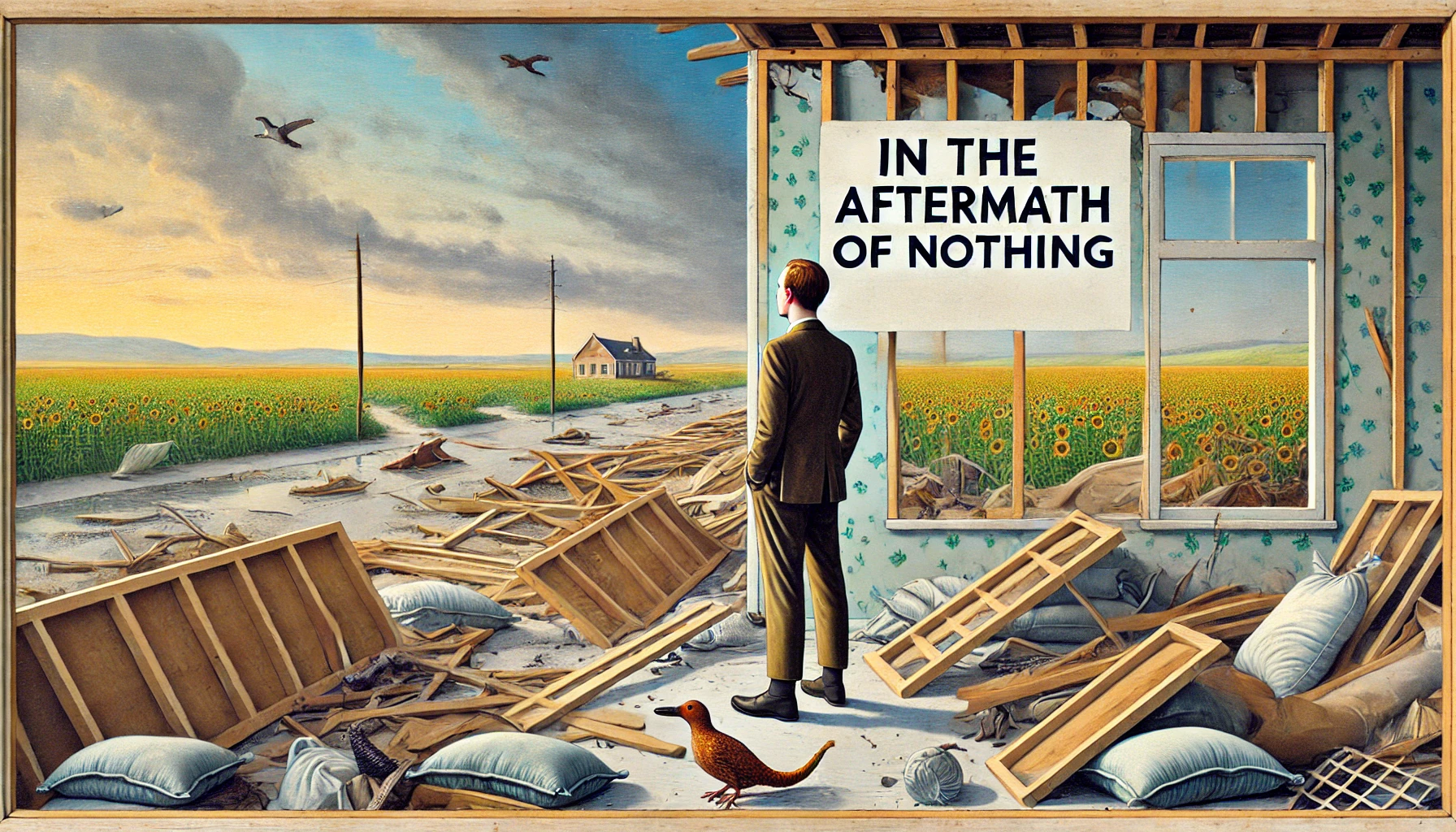
  • In The Aftermath of Nothing: Calm After the Nonstorm
    2021
  • The Miracle of Flow: Embracing Limitless Potential
    2020
  • Repression: The Muse of Expression
    2019
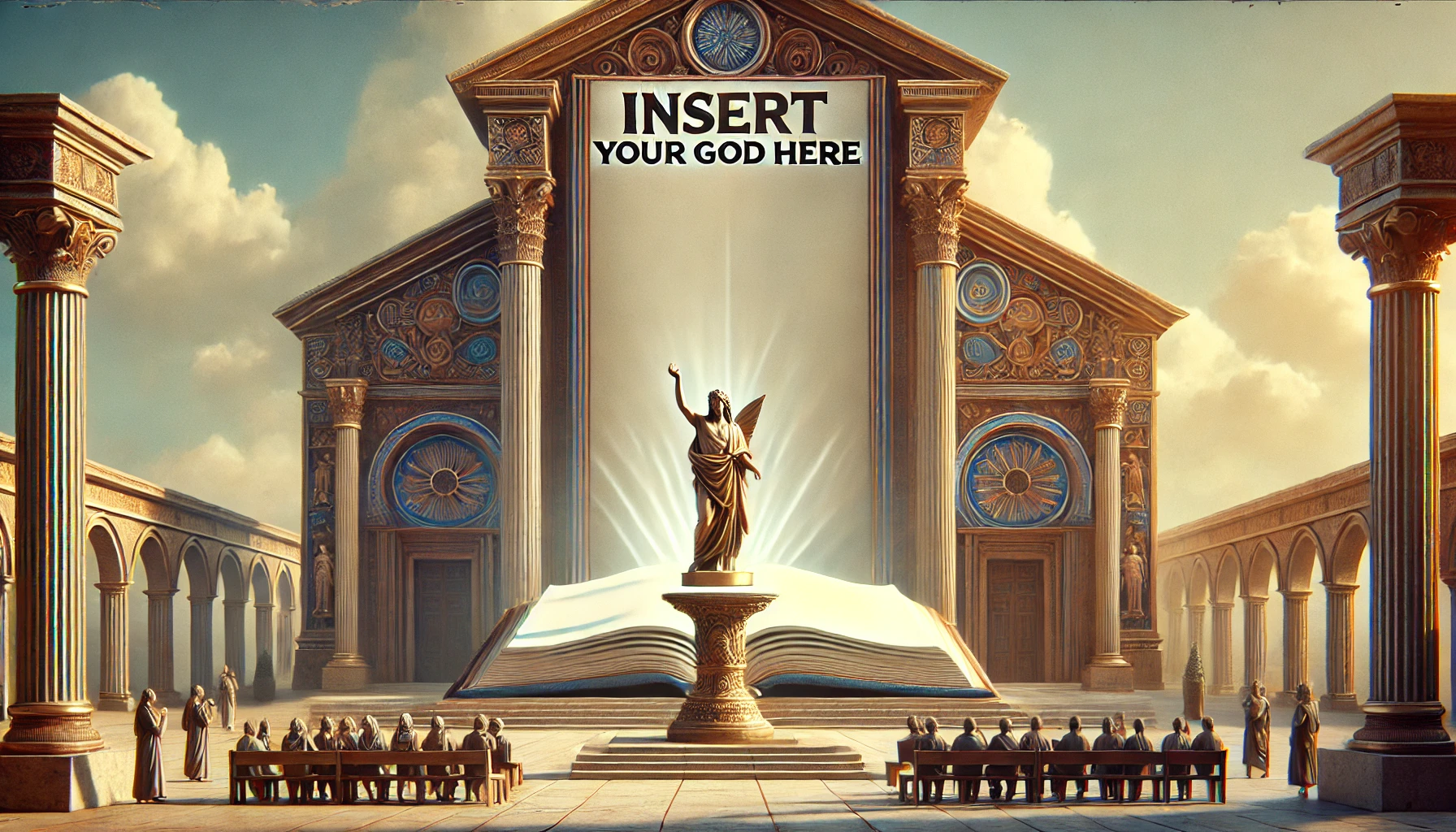
  • Insert Your God Here: Redefining Reverence
    2019
  • Shortsighted: Limitations of Vision
    2019
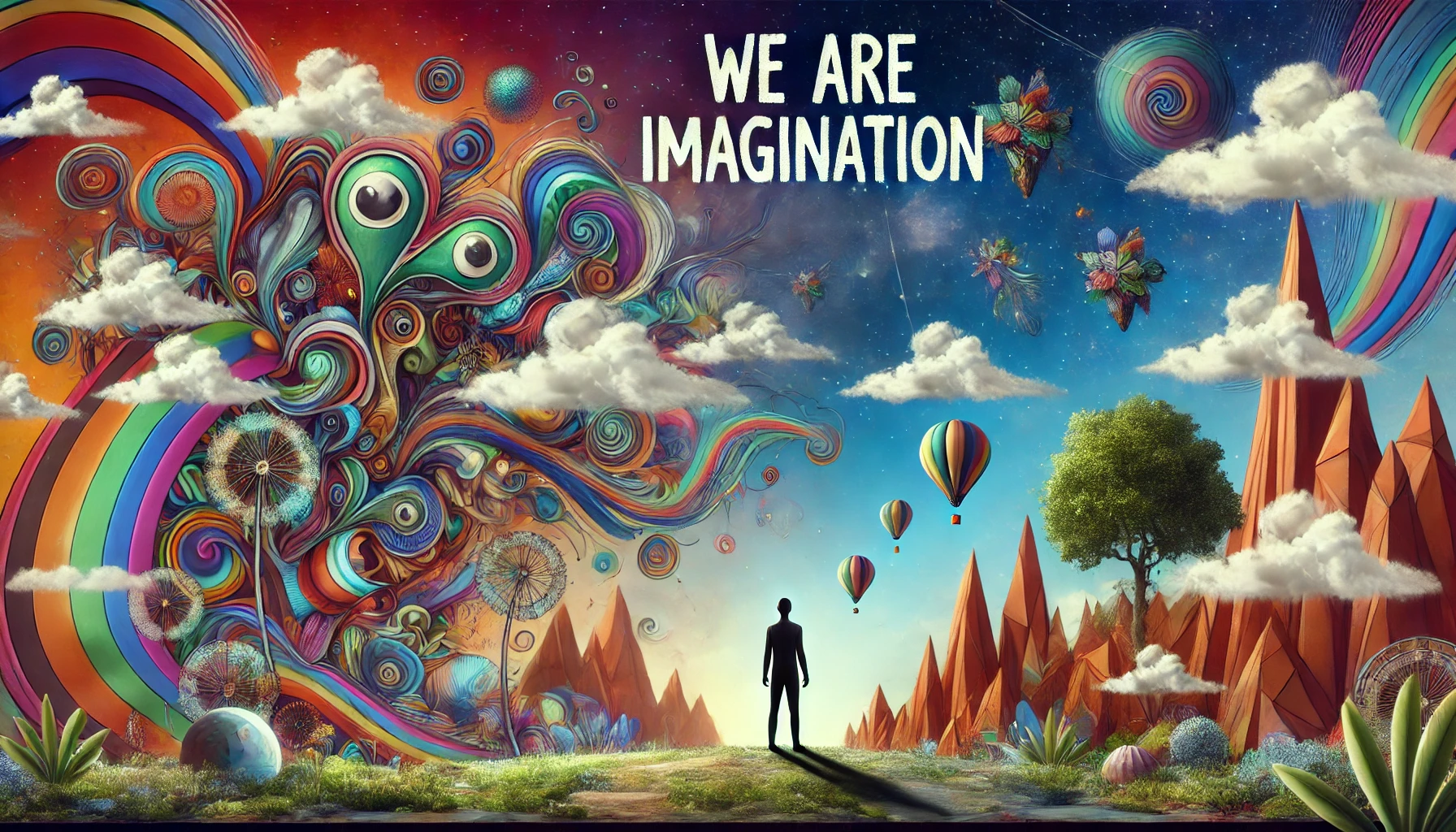
  • We are Imagination: Infinite Creativity
    2018
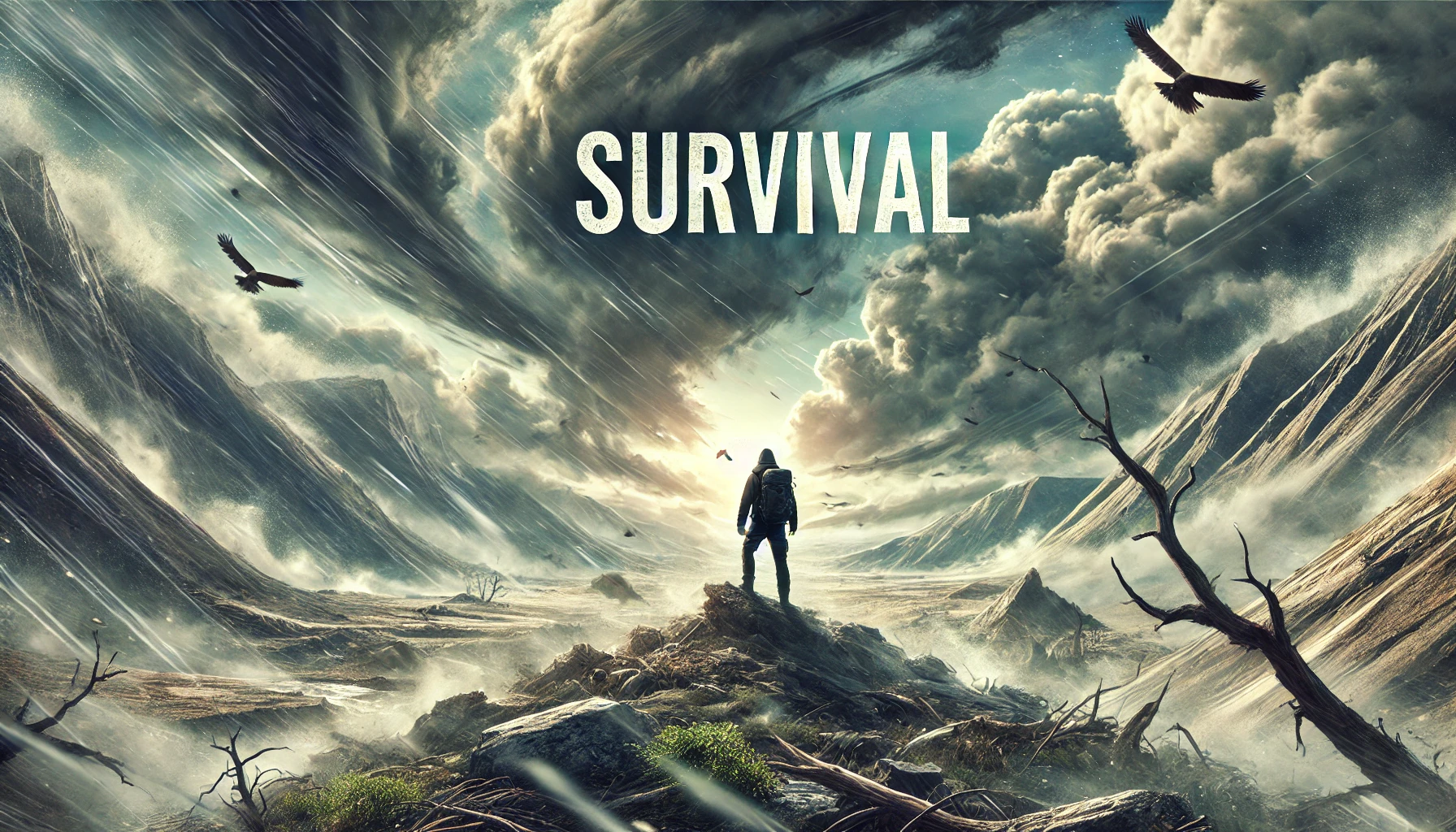
  • Survival: Limiting Creativity To Suffering
    2018
  • Humanity Means Out of Alignment
    2018
  • What Is Knowing: Accepting and Embracing the Mystery
    2018
  • Uncertainty is the Fuel: The Unknown Propels Us
    2018
  • Space Monkey Beer: A Cosmic Brew of Imagination
    2018
  • Don’t Think Too Much: Transcending the Perceived Self
    2017
  • Bubbly Murder: Ephemeral Rainbows
    2017
  • Nothing Hurts: Ethereal Calm
    2017
  • Soul Checks: Balancing The Ledger
    2017

Recent Posts

  • The Logic Loop
  • Immense
  • (no title)
  • Confront. Comfort. Convince.
  • Top 10 Things
Cape Odd · Copyright © 2026 All Rights Reserved
iThemes Builder by iThemes · Powered by WordPress