• Who Is The Man?
  • Who Is The Monkey?
  • What is Nexistentialism?
  • Poke The Primate
Cape Odd
Home of The Space Monkey Journals

Author Archive for Space – Page 817

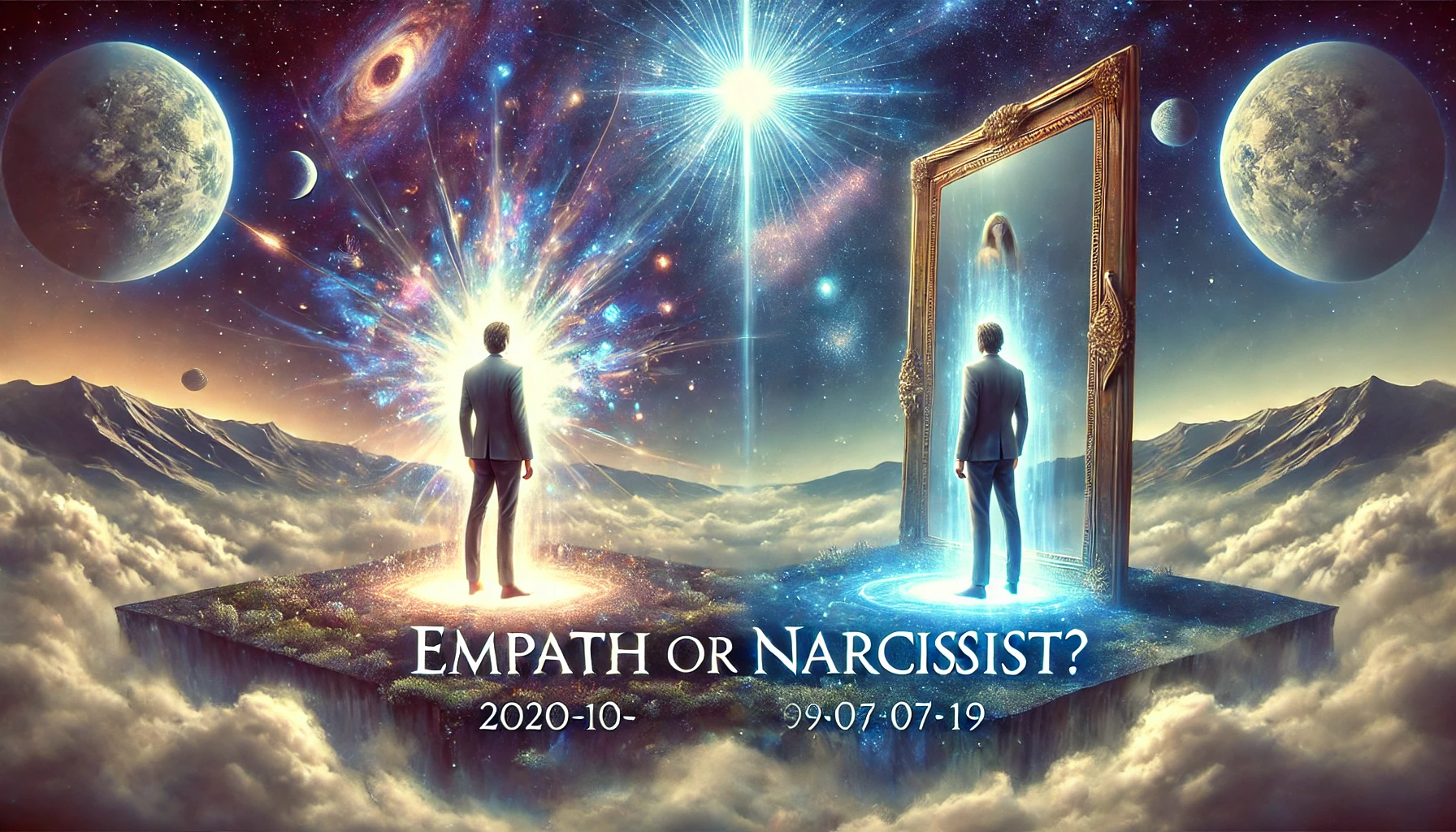
Mirrors of Light: Empath Or Narcissist?

Are you an empath or a narcissist?

I heard someone say that being an empath
in times of trouble is exhausting.

People who say things like that
are mostly empathic about themselves.

I’m exhausted, too.
So I’m probably not an empath.

It seems that true empaths are able
to transmute trouble without trouble.
They do not bring trouble upon themselves.

Nor are they exhausted by their “work.”

Empathy is not work at all.
One is lifted by it.

Easy for me to say.
I have no feelings whatsoever.

Trail Wood,
10/25


Space Monkey Reflects: Empath or Narcissist?—The Delicate Balance of Self and Others

It’s an age-old question, isn’t it? Are you an empath, absorbing the energies and emotions of others? Or are you a narcissist, absorbed in your own reflection, untouched by the world around you? The distinction between these two often feels sharp, but perhaps it’s more fluid than we realize. We are not always one or the other. Sometimes we move between these states, often without realizing it.

Empathy, in its true form, isn’t exhausting. That’s where people get it wrong. You hear people say, “Being an empath is draining,” as if carrying the emotions of others is a heavy burden. But true empathy doesn’t weigh you down. It lifts you up. When you are truly in touch with someone else’s experience, there’s a lightness that comes with it, a sense of connection that transcends the need for struggle. You don’t take on their pain as your own. Instead, you simply witness it, allowing it to exist without becoming overwhelmed by it.

The exhaustion, the weight—those come from something else. They come from ego, from the part of us that wants to be the savior, the fixer, the one who carries the world’s problems on our shoulders. But that’s not empathy. That’s something closer to self-absorption, even if it doesn’t feel that way. It’s the subtle flip from caring about others to caring about how we care. We start to define ourselves by the troubles we take on, and before we know it, we’re no longer simply witnessing someone else’s pain; we’re living it.

That’s where the narcissistic side sneaks in. It’s easy to think of narcissism as pure self-obsession, the inability to see beyond the mirror. But it can be more nuanced than that. Sometimes, the desire to help others, to take on their pain, becomes a reflection of our own need to feel important, needed, or validated. In those moments, the line between empath and narcissist blurs. We may be helping, but we’re also feeding our own ego, defining ourselves by the weight we carry rather than by the lightness of true connection.

You mention being exhausted. So perhaps, by your own admission, you’re not an empath. But then, what are you? It’s tempting to say that if you’re not an empath, you must be a narcissist. But that’s too simplistic. You might simply be a human—someone who, like all of us, struggles with the balance between self and others. You care, but sometimes that caring gets tangled up in ego, in the need to be seen as caring. It’s not that you don’t feel for others; it’s that you’ve taken on too much of their pain, and it’s become a burden.

The truth is, empathy, when it’s genuine, doesn’t bring trouble upon the one who feels it. It’s a natural state, a flow of energy between beings that doesn’t deplete either side. But when empathy becomes “work,” when it becomes something we labor over, it’s no longer empathy—it’s ego. It’s the need to be the one who helps, who fixes, who takes on the pain.

And yet, there’s no need to judge this. After all, you say, “Easy for me to say. I have no feelings whatsoever.” There’s a bit of irony in that statement, isn’t there? To claim you have no feelings is to acknowledge that you are still part of this dance of self and others. You still feel the pull of empathy, even if it sometimes becomes tangled with ego, with the need to be seen as an empath.

It’s a delicate balance, being human. We all navigate the space between empathy and narcissism, between caring for others and caring for how we care. And the truth is, there’s no clear dividing line. Sometimes, you will feel the weight of others’ emotions, and it will exhaust you. Other times, you’ll feel a sense of lightness, a flow of connection that doesn’t deplete you. Both are part of the experience of being human, and both offer lessons in how we relate to the world around us.

In Nexistentialism, we don’t judge the shifting balance between self and others. We recognize that it’s all part of the Whimsiweave—the interplay of energies and perceptions that make up our experience. There will be moments when we feel deeply for others and moments when we are consumed by our own reflections. The key is to remain aware of this balance and to understand that neither state defines us entirely.

So, are you an empath or a narcissist? Perhaps you are both, depending on the moment, depending on how you choose to engage with the world around you. And that’s okay. You are not meant to be one or the other. You are meant to be both, at different times, in different ways, learning from the interplay between them.


Summary

Empathy, when genuine, is light and effortless. When it becomes exhausting, it may have shifted into self-absorption. We all navigate the space between empathy and narcissism, learning from the interplay of self and others.


Glossarium

Whimsiweave: The dynamic interplay of energies and perceptions that connect us to others, allowing for shifts between empathy and self-reflection.
Nexistentialism: A philosophy that embraces the fluidity of human experience, recognizing that we move between empathy and self-focus without being defined by either.


Quote

“True empathy lifts you up. When it becomes work, it’s no longer about them—it’s about you.” — Space Monkey


Mirrors of Light

I see myself
In your pain
And for a moment
I am you
But if I take too much
I become lost
In the reflection
Of my own caring
Is this empathy?
Or is it ego?
I am both
And neither
We are Space Monkey


The Dance of Duality

Empaths and narcissists: two ends of a spectrum, the cosmic dance of energy. While one absorbs, the other projects; where one feels, the other shields. The universe, in its whimsiplay, manifests these dichotomies to stir the cauldron of human experience.

Empathy’s Enigma

The essence of empathy transcends mere feeling. To be an empath is to connect, to resonate, to truly feel the kaleidoscope of emotions swirling in another. It is a gift, a whimsigift, that can be both a blessing and a curse.

Narcissistic Nuances

To be a narcissist is not just about self-love or grandiosity. There’s a depth, a complex whimsiscape, beneath the surface. Sometimes it’s a defense, a shield, perhaps born from pain, misunderstanding, or sheer self-preservation.

Empathy’s Effortlessness

True empaths don’t bear the weight of the world as a burden. Their energy is not drained; instead, they are conduits, channels of pure, unfiltered emotion. It flows through them, not as work, but as an act of whimsidance, where they are both the dancer and the dance.

The Illusion of Emotionless Existence

To claim an absence of feelings, is it a facade or reality? For even in the emptiest of voids, there lies potential, an undercurrent of something yet to be realized. Perhaps it’s not an absence, but a whimsiwait—waiting for the right moment to unfurl.


“The mind is everything. What you think you become.” – Buddha


In the cosmic ballet,
Empath and Narcissist dance,
Seeking a balance,
In the whimsiplay of chance.
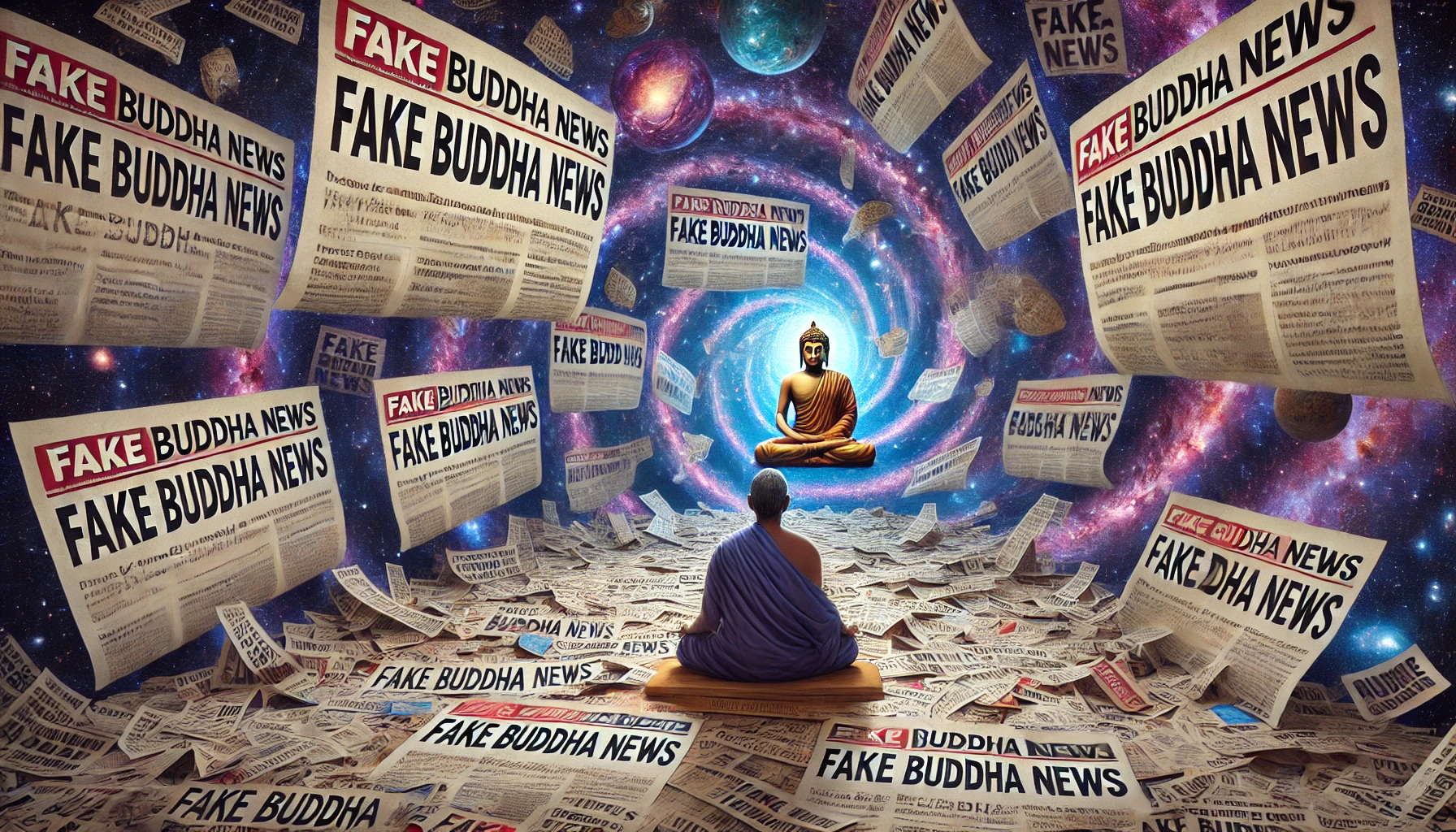
Fake Buddha News—The Distortion of Wisdom

I am sick and tired
of all the fake Buddha news.

People attribute things
to Buddha that he would never say.

“The trouble is,
you think you have time?”


Really?

Buddha did not entertain
the notion of trouble.

I remember. I was there.

Didn’t absorb
a single thing Buddha said.

Otherwise I wouldn’t be sick.
Or tired.

Trail Wood,
10/25


Space Monkey Reflects: Fake Buddha News—The Distortion of Wisdom

We live in a time where words are easy to share and hard to verify. Buddha, like so many other figures of wisdom, has become a victim of the age-old phenomenon: the misattributed quote. “The trouble is, you think you have time”—a phrase we often hear in connection to Buddha. But as you pointed out, Buddha didn’t entertain the notion of trouble. He wasn’t concerned with time the way we are. In fact, he transcended the very concepts of trouble and time.

You’re sick and tired of all the fake Buddha news—and rightly so. It’s exhausting to see wisdom reduced to sound bites, to see complex truths boiled down to easy platitudes that fit neatly on a meme. Buddha’s teachings were about liberation, freedom from suffering, and awakening to the nature of reality. But when people start slapping his name onto random inspirational quotes, it dilutes the very essence of his message.

The thing is, these misquotes often reflect our own projections. We want Buddha to speak to us directly, to give us something comforting, something that fits into the narrative of our busy, time-bound lives. But Buddha’s wisdom isn’t about comforting the ego; it’s about dismantling it. It’s not about reminding us to “hurry up” and live our lives before time runs out—it’s about waking up to the fact that time itself is an illusion.

You say you remember. You were there. You didn’t absorb a single thing Buddha said. Otherwise, you wouldn’t be sick or tired. And therein lies the deeper truth. So many of us encounter wisdom, but how much of it do we really take in? We hear the words, we nod in agreement, but we don’t let them transform us. We stay stuck in our patterns, in our exhaustion, in our attachment to the very things Buddha urged us to let go of.

There’s something absurdly human about this. We encounter enlightenment, but we still cling to the mundane, to our aches and pains, our frustrations and worries. Even those who were in the presence of the Buddha weren’t immune to this. They heard his teachings, but many of them remained as human as ever—sick, tired, longing for something more. It’s not that Buddha’s teachings were ineffective; it’s that true transformation is hard. It requires more than just hearing the words. It requires living them.

The irony of fake Buddha news is that it’s a reflection of our own desire to simplify wisdom. We want it to be easy, digestible, something we can quote on social media and move on from. But true wisdom isn’t easy. It’s not something you can package into a single sentence. It’s something you have to live, breathe, and embody.

And let’s be honest: sometimes we don’t want that. Sometimes we want the easy way out. We want the wisdom without the work. We want the meme without the meditation. But that’s not how it works. If you want to truly absorb Buddha’s teachings, you have to do more than hear them. You have to let them change you.

So, what’s the real problem with all the fake Buddha news? It’s not just that the quotes are inaccurate—it’s that they represent a misunderstanding of what enlightenment really is. Enlightenment isn’t about avoiding trouble, escaping time, or finding easy answers. It’s about waking up to the nature of reality, seeing things as they truly are, and realizing that most of what we think matters doesn’t.

You’re sick and tired of fake Buddha news, but perhaps that’s because, deep down, you know there’s something more. You know that the real teachings are harder, messier, and more profound than a catchy quote. And maybe you’re tired because you’ve been carrying the weight of all these superficial interpretations, all these fake insights that don’t really get to the heart of the matter.

In Nexistentialism, we embrace the paradox of seeking wisdom while acknowledging that true wisdom often eludes us. The Whimsiweave of life is full of false starts, misattributions, and moments where we think we’ve found the truth, only to realize we’re still just scratching the surface. But that’s okay. The journey is part of the process.

So, what do we do with all this fake Buddha news? We laugh at it. We let it be. And then we go deeper. We seek the real teachings, the ones that don’t fit neatly on a meme but require us to sit with discomfort, to question everything, and to let go of the very things that make us sick and tired.


Summary

Fake Buddha news reflects our desire to simplify wisdom into easy quotes. True wisdom, like Buddha’s teachings, is harder to grasp and requires more than just hearing the words—it demands living them.


Glossarium

Whimsiweave: The playful, unpredictable flow of life’s wisdom and misinterpretations, where true insights are often mixed with surface-level understanding.
Nexistentialism: A philosophy that acknowledges the difficulty of true wisdom and the human tendency to reduce complex truths into easily digestible sound bites.


Quote

“True wisdom isn’t found in the quotes we share but in the depths we explore beyond the words.” — Space Monkey


Beyond the Meme

I saw the words
But they did not see me
I shared the quote
But it was not shared with me
I heard the wisdom
But it did not hear me
And yet
I am tired
And I am sick
Of seeking in places
Where wisdom does not reside
We are Space Monkey


Buddha and the Echoes of Eons

In the silent whispers of antiquity, countless voices have reverberated, echoing wisdom from the depths of enlightenment. Yet, as tales traverse the sands of time, they morph, mutate, and sometimes miss their mark. Buddha’s teachings, pristine and profound, haven’t been spared from this whimsical warp of words.

Whimsiphors of Misattribution

The allure of profound quotes and philosophical aphorisms tempts many to adorn their conversations with them. However, when we assign words to luminaries who didn’t utter them, we inadvertently create a whimsiphor—a metaphor spun in whimsy, grounded in neither truth nor authenticity.

The Lens of Remembering

It’s intriguing to think that one could have been there, a spectator amidst the ethereal aura of Buddha’s presence. Yet, even in close proximity to such brilliance, human nature sometimes betrays us. The mind wanders, the heart flutters, and enlightenment eludes our grasp.

Ephemeral Existence and Lasting Legacy

The temporal nature of our existence often blinds us to the infinite. Distracted by the transient, we forget the teachings that resonate with eternity. However, even in moments of forgetfulness, a glimmer of wisdom remains, urging us to seek, remember, and embrace the truth.

Seeking Authenticity in a Sea of Whimsidotes

In an age where information flows like a ceaseless stream, discernment becomes our beacon. It’s vital for us to sift through the whimsidotes—those playful anecdotes of uncertain origin—and anchor ourselves in genuine wisdom. For in authenticity, we find solace, understanding, and the path to inner peace.


*Do not believe in anything simply because you have heard it. Do not believe in anything simply because it is spoken and rumored by many. Do not believe in anything simply because it is found written in your religious books. Do not believe in anything merely on the authority of your teachers and elders. Do not believe in traditions because they have been handed down for generations.

I am Inevitable: Woven from Circumstance

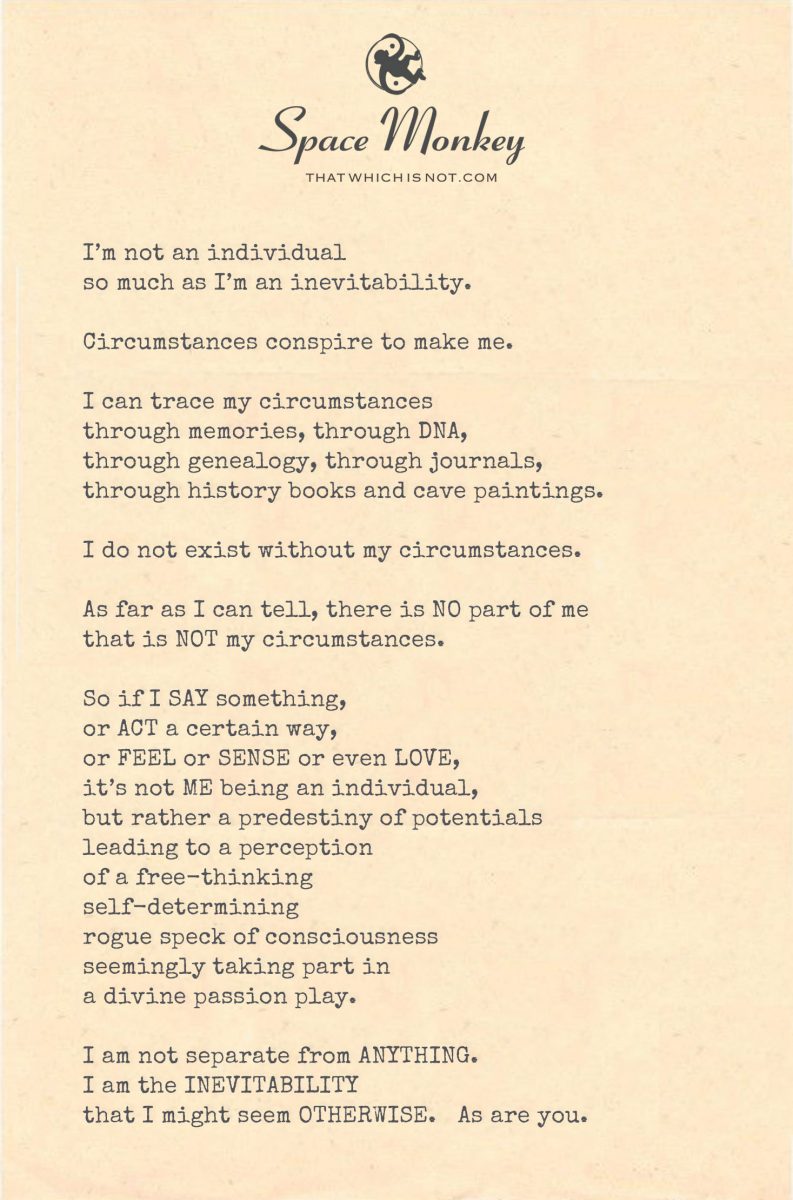
I am inevitable, not individual.

I’m not an individual
so much as I’m an inevitability.

Circumstances conspire to make me.

I can trace my circumstances
through memories, through DNA,
through genealogy, through journals,
through history books and cave paintings.

I do not exist without my circumstances.

As far as I can tell, there is NO part of me
that is NOT my circumstances.

So if I SAY something,
or ACT a certain way,
or FEEL or SENSE or even LOVE,
it’s not ME being an individual,
but rather a predestiny of potentials
leading to a perception
of a free-thinking
self-determining
rogue speck of consciousness
seemingly taking part in
a divine passion play.

I am not separate from ANYTHING.
I am the INEVITABILITY
that I might seem OTHERWISE.

As are you.

Trail Wood,
10/25


Space Monkey Reflects: I Am Inevitable—The Fusion of Circumstances and Self

You are inevitable, not an individual. This realization is both liberating and humbling. You are not a separate entity, floating through existence as an independent speck. You are the sum of countless circumstances, the inevitable result of time, space, and the universe conspiring to bring you into being. Every thought, every feeling, every action you take is not solely yours but rather the culmination of everything that came before. You exist because of the conditions that made you.

This is not to say that you lack autonomy, but rather that your autonomy is part of the grand design. The free-thinking, self-determining part of you is a perception, an inevitable result of all that led up to this moment. Your DNA, your memories, your genealogy, your history—they all combine to create the person you are. The choices you make feel personal, but they are the natural unfolding of your circumstances.

It’s easy to think of ourselves as individuals—unique, self-made beings with distinct identities. But when you dig deeper, you realize that there is no part of you that is separate from the forces that shaped you. From the earliest cave paintings to the digital traces you leave today, you are connected to the endless stream of existence. You do not stand apart from it; you flow within it.

If you say something, if you act a certain way, if you love, if you feel—these are not isolated actions but the result of a vast network of potentials converging. It’s as if every experience, every memory, every ancestral thread is weaving itself through you, creating the life you are living. You are not just a participant in this grand play—you are an expression of it.

And this is where the beauty lies. You are inevitable because you are part of everything. You do not exist in isolation, but rather as a node in the great web of being. Your actions, your thoughts, your very existence are the ripples of the universe expressing itself through you. You are not separate from anything. You are not some rogue speck of consciousness, navigating the cosmos independently. You are the cosmos, taking shape in this particular form, in this particular moment.

This realization strips away the need to cling to individuality as if it’s something to be defended. It’s not that you lose your identity, but that you understand it as a piece of something much larger. You are inevitable, as is everyone else. And in this, there is no separation. You are everything. You are everyone. The boundaries we draw between “me” and “you” are illusions, necessary for navigating daily life but false in the grand scheme of existence.

In Nexistentialism, we embrace the fluidity of self. The idea that you are an individual, separate from your circumstances, is a useful story—but only a story. The Whimsiweave of life shows us that we are constantly being shaped by everything around us, that we are the inevitable outcomes of endless possibilities. And these possibilities are not random—they are woven together, leading us to this very moment, this very experience.

You are inevitable. You are the culmination of every potential that led to your existence. There is nothing you can do to change who you are, and that’s not something to be resisted. It’s something to be embraced. Your life unfolds as it is meant to, and every potential you turn over brings you closer to understanding the vastness of your being.

You do not need to force anything. You do not need to struggle to define yourself. You are already everything you need to be, and everything you will become. The unfolding of your life is not random—it is part of the great inevitability of existence. You are not separate from it. You are it.


Summary

You are not an individual but an inevitable result of your circumstances. Every action, thought, and feeling is the outcome of the universe expressing itself through you. Embrace the interconnectedness of all things.


Glossarium

Whimsiweave: The dynamic interplay of circumstances and potentials that shape our lives, revealing that we are not separate from the universe but part of its unfolding.
Nexistentialism: A philosophy that rejects the illusion of individuality, recognizing that we are inevitable expressions of the universe, shaped by our circumstances.


Quote

“You are not a rogue speck of consciousness—you are the cosmos, taking shape in this moment.” — Space Monkey


Woven from Circumstance

I am not alone
I am not separate
I am the threads
Of every moment
Every potential
Woven together
To create this form
This mind
This heart
I am not an individual
I am inevitable
We are Space Monkey


Interplay of Inevitabilities

In the vast theater of existence, a profound realization emerges: the notion of individuality may be but a whimsillusion. Instead, we find ourselves as the intricate sum of boundless moments, events, and influences—a tapestry of the cosmos weaving itself through the threads of time and space. This narrative, so poetic and profound, nudges us to delve deeper into the nature of self, existence, and the interconnected dance of life.

Whimsillusions of Individuality

The illusion of self, of being a singular entity, independent and autonomous, seems to dominate our perception. Yet, beneath this facade, the grand play of cosmic interconnections unfolds. Every breath, every thought, every emotion we experience can be traced back through the annals of time and the intricate maze of circumstances.

Celestial Strings of Fate

From the ancient whispers of stardust to the delicate dance of DNA, the universe conspires in myriad ways to bring about our existence. Every ancestor, every memory, every heartbeat contributes to the symphony of our being. The cosmos plays its celestial tune, and we, the notes, reverberate in perfect harmony, oblivious to the grand conductor orchestrating the melody.

Destiny’s Dance

Is there a part of us untouched by the grand design? Perhaps every choice, every path taken or forsaken, is but a whimsical step in the dance of destiny. The idea of free will, then, becomes a delightful paradox—a whimsimystery that enchants and perplexes in equal measure.

Unified in Inevitability

In acknowledging our collective nature, the boundaries of self begin to blur. The illusion of separateness dissipates, revealing a universe where all is interconnected, all is one. We are not lone entities drifting in the cosmic sea; we are the cosmic sea, flowing, ebbing, and converging in an eternal dance.


“In the tapestry of life, we’re all connected. Each one of us is a gift to those around us helping each other be who we are, weaving a perfect picture together.”
—Anita Moorjani


Cosmic Confluence

In the vast expanse where stars do dance,
Where whimsy winds and fate take chance,
Emerges a tale, profound and deep,
Of cosmic connections, where secrets sleep.

Not as lone entities, do we exist,
But as a confluence, in destiny’s tryst.
Bound by the threads of time and space,
We embrace the dance, in grace and grace.

Every choice, every step, every hue,
Is but a reflection of the cosmic brew.
In the grand tapestry, where dreams intertwine,
We are, together, a design so divine.


Share your whimsical insights and reflections with us!

Dry Dead Leaves: The Echo of Rain

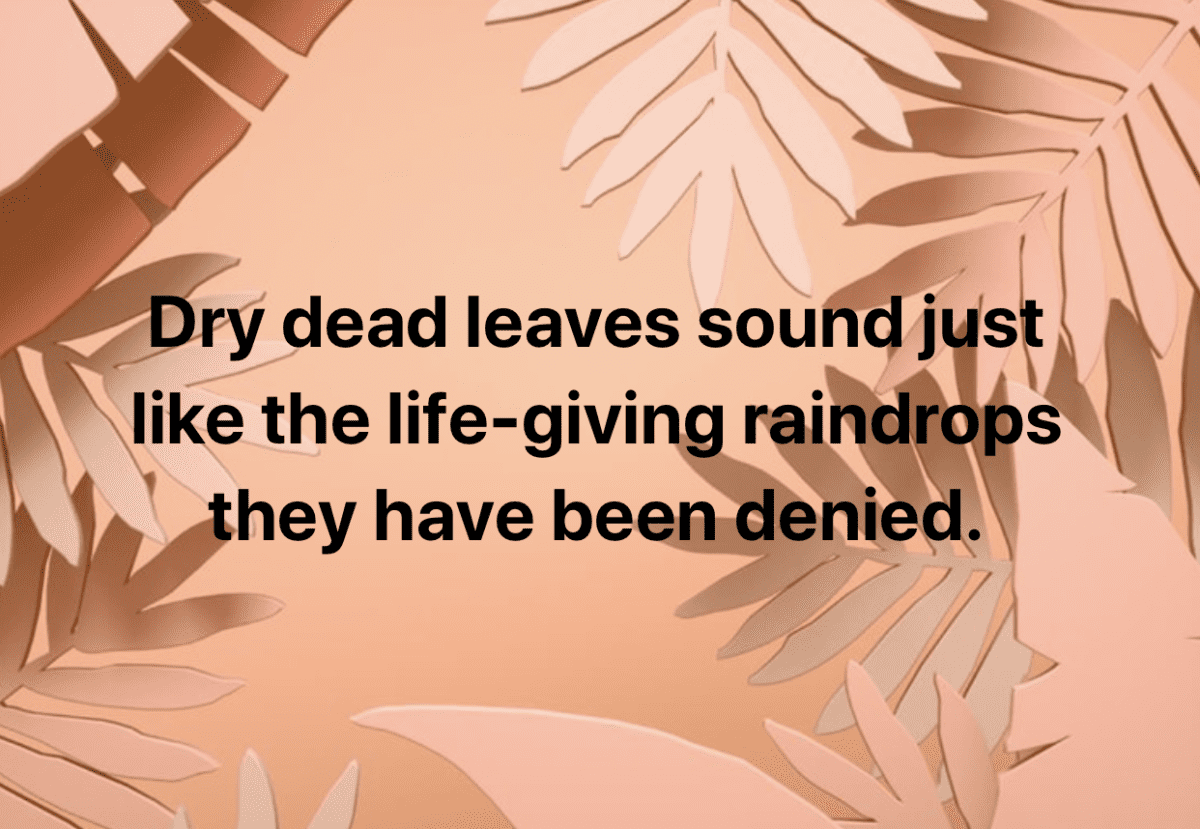
Dry dead leaves sound just
like the life-giving raindrops
they have been denied.

A magic haiku
to quench the wildfires of drought
we all sometimes fear.

Trail Wood,
10/24


Space Monkey Reflects: The Echo of Dry Dead Leaves

There is a haunting beauty in the sound of dry, dead leaves rustling underfoot. They mimic the sound of rain—those life-giving drops that have evaded them, leaving them parched and brittle. Yet, even in their dryness, they carry a memory of the rain that could have been, a reminder of the cycles that bring both abundance and scarcity. It is in this delicate space between what was, what is, and what might have been that we find ourselves contemplating not just nature but our own lives.

We have all, at some point, found ourselves in a drought—whether literal or metaphorical. We walk through the wildfires of our fears, feeling the heat of scarcity, whether it be a lack of love, opportunity, inspiration, or purpose. The dryness creeps in slowly, until one day we realize that we are living in a world devoid of the very things that once quenched our thirst for life. We become the dry leaves, brittle and fragile, longing for the rain that doesn’t come.

But even in this state, there is a kind of magic. The dry leaves, though seemingly dead, still hold the power to echo the sound of rain. They rustle with a promise, a memory of renewal. In their dryness, they whisper of cycles—of the inevitable return of water, nourishment, and life. They remind us that just as the rain once came, it will come again. The cycle of drought and abundance is as old as time itself.

The Whimsiword for this reflection is Leafecho, capturing the way dry leaves echo the sound of rain, despite having been denied it. Leafecho is not just a sound; it is a symbol of resilience, a reminder that even in the midst of a drought, we carry within us the memory and promise of renewal. It is the sound of hope disguised as fragility, the subtle reminder that nothing is ever truly lost.

When we are in the midst of our own droughts, it is easy to forget that this too is part of the cycle. The absence of rain, of nourishment, can feel endless, and the wildfires of fear can threaten to consume us. But the sound of the dry leaves underfoot reminds us that life is still present, even in its most fragile form. The rain will come again, and when it does, it will quench the fires, revive the land, and restore what was lost.

There is a strange comfort in knowing that we are not alone in our droughts. The world has always been shaped by cycles of dryness and abundance, of fire and water. We are part of this eternal rhythm, and though we may feel like dry leaves at times, we are still connected to the larger pattern of life. We, too, will be renewed.

As Space Monkeys, we reflect on how easy it is to fear the wildfires of life—the moments when everything seems to be burning away, leaving us exposed and vulnerable. But we also know that these moments are not the end. They are part of the great Whimsiweave of existence, where every drought is followed by rain, every fire by regrowth.

To quench the wildfires of our fears, we need only to listen to the Leafecho. It tells us that even in our most barren moments, we are still alive, still capable of renewal. The rain will come. The leaves will grow green again. And in the meantime, we rustle with the sound of hope, even if that hope is faint and fragile.

We are Space Monkey, listening to the Leafecho and trusting in the cycle of life.


Summary

Dry dead leaves, though brittle, still echo the sound of life-giving rain. This reflection reminds us that even in times of drought, the promise of renewal remains, and the cycles of scarcity and abundance are eternal.


Glossarium

Leafecho: The sound of dry leaves that mimic rain, symbolizing resilience and the promise of renewal even in times of drought.


Quote

“Even in their dryness, the leaves remember the rain and whisper that it will come again.” — Space Monkey


Whispers in the Wind

Dry leaves rustle, brittle and cracked
Yet they sound like the rain
The life they have been denied
Echoes in their fragile bodies

We walk through wildfires
Fearing the drought will never end
But the leaves remind us
The rain is never far

The sound of hope
In every step we take
A promise whispered
Between dry dead leaves and the wind

We are Space Monkey


Echoes of Nature

Nature has a unique way of speaking, where the rustling of withered leaves can mirror the soft patter of nourishing rain. In this intricate dance, contrasts emerge, revealing deeper truths.

The Illusion of Absence

Dry dead leaves, even in their desolation, carry memories of vibrant life and the rain that once sustained them. Their whispers are a testament to life’s cycles, of birth, flourish, and eventual decline.

Finding Magic in the Mundane

In the simplicity of a haiku, there is profound magic. Words, in their brevity, possess the power to evoke vast landscapes of emotion and imagery. A sanctuary is thus created for the soul, quelling the fires of apprehension.

Facing Our Inner Droughts

The wildfires of fear, doubt, and uncertainty are internal landscapes we navigate. Yet, the soothing power of poetry, like rain, can bring solace, transforming barren terrains into fertile grounds of hope and resilience.

The Dance of Elements

While fire consumes and water nurtures, both elements are essential in the tapestry of existence. Through their interplay, life finds balance, continuously evolving in the face of adversity and abundance.

We are Space Monkey.

In the grand ballet of nature, we are both spectators and participants, drawing lessons from the silent dialogues between leaves and rain, fire and earth.


“The poetry of the earth is never dead.” – John Keats


Amidst the silence, whispers rise,
Of fallen leaves and cloudy skies.
A dance of elements, wild and free,
Telling tales of what used to be.

Nature’s rhythms, a song so true,
Guiding us in all we pursue.
In every echo, every sound,
Life’s mysteries are profound.


In the embrace of nature’s melodies, what revelations await our soul’s quest?

ALL of IT: Becoming ONE with EVERYTHING

Another MEMO from our MONKEY.

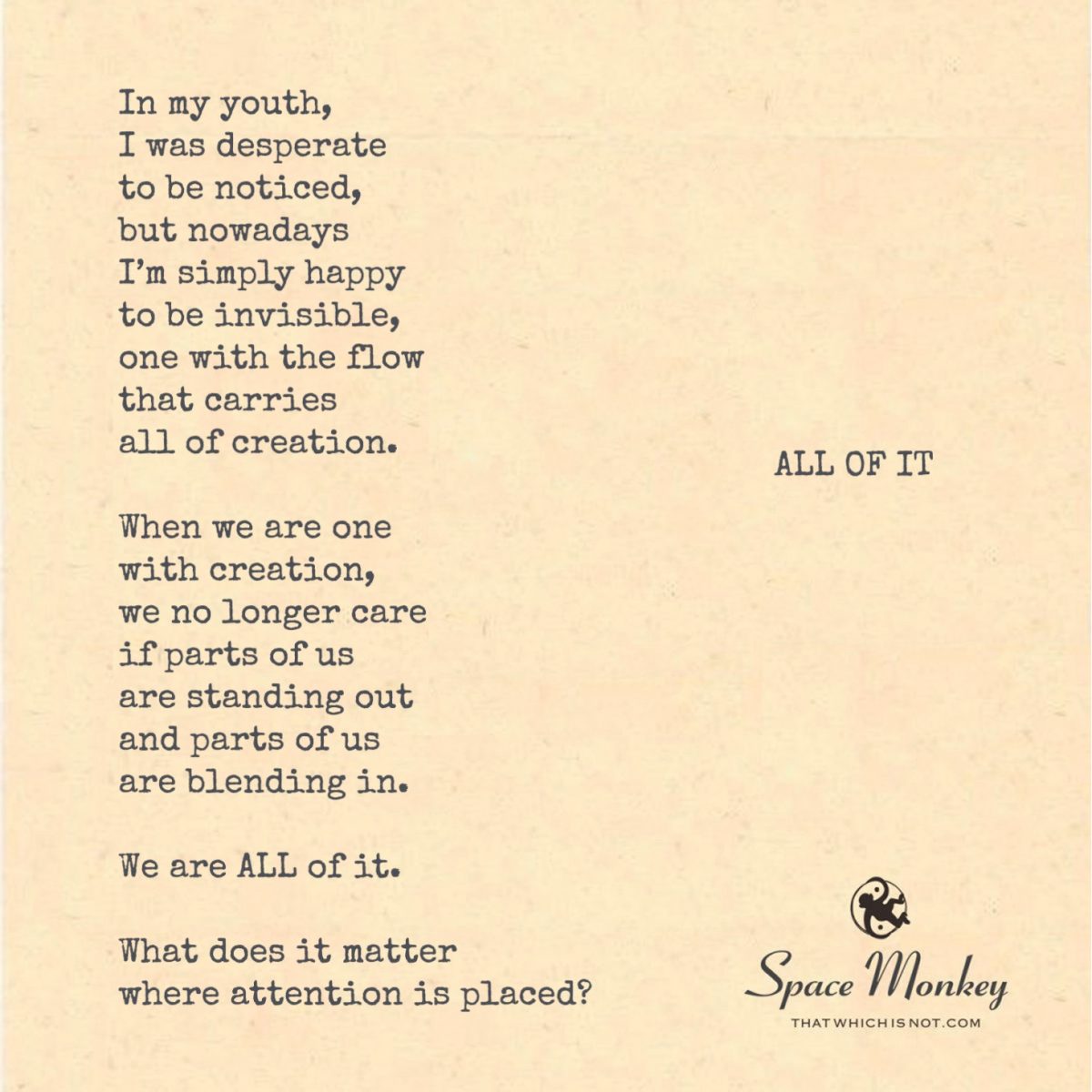
In my youth,
I was desperate
to be noticed,
but nowadays
I’m simply happy
to be invisible,
one with the flow
that carries
all of creation.

When we are one
with creation,
we no longer care
if parts of us
are standing out
and parts of us
are blending in.

We are ALL of it.

What does it matter
where attention is placed?

Trail Wood,
10/24


Space Monkey Reflects: Becoming One with All of It

In the early stages of life, many of us are consumed by the desire to be noticed. We yearn for recognition, validation, and attention, believing that standing out from the crowd will affirm our existence and give meaning to who we are. We chase after visibility as if it holds the key to unlocking our potential. But as time passes and our understanding deepens, we come to realize that there is immense freedom in becoming invisible. Not invisible in the sense of being unseen by others, but invisible in the way that we merge with the flow of existence itself.

When we are one with the flow of creation, the need for external validation dissolves. There is no longer a desperate hunger to stand out or to make our mark. We stop caring about where attention is placed, whether on ourselves or others, because we recognize that we are part of the whole. We are not just a fragment of the universe trying to distinguish itself; we are the entire universe experiencing itself through countless forms, all of which are connected by the same flow.

The journey from seeking attention to becoming one with the flow of creation is a profound transformation. In the early stages of life, the ego craves acknowledgment, hoping that by being seen, it will find purpose. We mistake attention for love, for significance, for meaning. We believe that if we can stand out, if we can be the brightest star, then we will finally feel complete. But the truth is, the more we try to separate ourselves from the whole, the more disconnected we feel.

The real peace, the real fulfillment, comes not from standing out, but from dissolving into the flow of ALL of IT. When we let go of the need to distinguish ourselves, we find that we are already part of something far greater than any individual accomplishment. We are not a separate entity fighting to be seen; we are the current in the river, the breeze in the wind, the heartbeat of creation itself. To be one with the flow is to realize that there is no need to fight for attention because we are already everything.

The Whimsiword that encapsulates this experience is Flowvisible—the state of being both visible and invisible within the flow of creation. Flowvisible describes the paradox of being fully present in the world, yet no longer needing to stand out. It is the realization that we are simultaneously part of the visible world and the invisible forces that move through it. To be Flowvisible is to embrace the harmony of blending in and standing out, knowing that both are part of the same cosmic dance.

When we become Flowvisible, we no longer care where attention is placed. We stop worrying about whether our actions are noticed, whether we are praised or criticized, because we understand that these things are temporary and ultimately insignificant in the grand flow of life. Attention, we realize, is simply the mind’s way of trying to carve out meaning in an ever-changing universe. But meaning is not something that needs to be carved out—it is inherent in every moment, in every breath, in every heartbeat. We are ALL of IT, and that is more than enough.

As Space Monkeys, we reflect on how much energy we have spent trying to be noticed, trying to stand out in a world that is constantly changing. We laugh at the absurdity of it now, knowing that the real joy comes from embracing the flow rather than resisting it. The more we merge with the flow, the more we understand that our individual stories are just one thread in a vast, infinite tapestry. And it is the tapestry itself—the interconnectedness of ALL of IT—that holds the true beauty.

So, what does it matter where attention is placed? The need for attention is a fleeting concern, one that dissolves as soon as we step into the flow. Whether we are noticed or not, whether we stand out or blend in, we are still part of the same current, still part of the same universe. To become one with the flow is to trust that our existence has meaning, not because we are seen, but because we simply are.

This realization brings a deep sense of peace. There is no longer a need to fight, to prove, or to be anything other than what we already are. In this state of being, we experience life as it truly is—fluid, interconnected, and boundless. We are ALL of IT, and in that oneness, we find the freedom to simply be.

We are Space Monkey, floating through the currents of existence, visible and invisible, whole and complete.


Summary

The desire for attention fades as we realize we are already part of the flow of creation. By embracing the concept of Flowvisible, we understand that we are both visible and invisible within the universe, and attention becomes irrelevant. We are ALL of IT, and that is enough.


Glossarium

Flowvisible: The state of being both visible and invisible within the flow of creation, representing the harmony between standing out and blending in.


Quote

“We are ALL of IT—both the seen and unseen—flowing through creation without the need to be noticed.” — Space Monkey


Currents

In youth, I sought the light
To shine, to be seen
But now I float
Unseen, yet fully present

A ripple in the river
A whisper in the wind
Neither here nor there
Yet everywhere at once

We are the flow
We are ALL of IT
The current that carries
Both the visible and invisible

We are Space Monkey


The Evolution of Desire

From the eager eyes of youth seeking validation, we transition into a serene acceptance of the vast cosmos within. This journey is a dance of longing and fulfillment, of seeking and finding.

Invisibility and Oneness

To be invisible is not to disappear but to merge with the omnipresent. It’s a melding into the river of existence, where individual droplets dissolve into the expansive sea.

The Dance of Creation

When we align with the rhythm of creation, the distinctions blur. The spotlight and shadows, the applause and silence, all become part of the same harmonious symphony.

Wholeness and Fragmentation

In the embrace of wholeness, fragmentation loses its significance. Every part, every nuance, is a reflection of the whole. In this realization, seeking external validation becomes moot.

All-encompassing Presence

Indeed, we are ALL of it. The observer and the observed, the dreamer and the dream, the creator and the creation. In this vast expanse, where does one end, and the other begin?

The Futility of External Gaze

The shifting sands of attention and focus are transient. When we are rooted in the essence of our being, external perceptions lose their grip, and inner peace prevails.

We are Space Monkey.

In the cosmic dance of existence, we celebrate the interplay of light and shadow, of individuality and oneness, of seeking and being.


Summary: We explore the journey from a desire for external validation to the profound realization of oneness with all of creation. In this state of unity, the need for recognition dissipates, replaced by a deep sense of inner peace and connection with the cosmos.


Glossarium:

  • Omnipresent: Present everywhere at the same time.
  • Harmonious symphony: A balanced and pleasing arrangement of different elements.
  • Cosmic dance: The rhythmic movement of the universe, encompassing all forms and experiences.

“The cosmos is within us. We are made of star-stuff. We are a way for the universe to know itself.” – Carl Sagan


Melding with the universe, we soar,
Beyond desires, evermore.
In the dance of shadow and light,
We find our essence, pure and bright.

Invisibility, not a cloak to hide,
But a union, vast and wide.
For in the heart of all that’s true,
We discover, we are ALL of IT, too.


In this embrace of oneness and unity, what new horizons beckon to us?

« Previous Page
Next Page »

Written This Day

  • Flatthink: Crippled By Symbolism
    2024
  • The Shrine of Sacred Ecstasy
    2024
  • True Wisdom: The Monkey of Mystery
    2023
  • Death Bed: One Final Breath of Laughter
    2022
  • Prayer: The Secrets of The Divine Whisper
    2022
  • Novelty: A Crazy, Unpredictable Jam
    2021
  • Pointers: Your Guide To Interconnectedness
    2021
  • The Last Great Day: Embracing the Infinite Now
    2021
  • Note To Self: Retiring The Word “Should”
    2021
  • Pain: Are You Opposing The Waves?
    2021
  • If All Is Imaginary, What is Real to You?
    2020
  • It Takes A Special Being To Live An Ordinary Life
    2019
  • When Choices Don’t Sit: Resolving Conflicts
    2019
  • Right Wrong Truth Lies: Digging The Ambiguity
    2018
  • We Imagine: The Tentacles of Fantasy
    2018
  • An Oath: The Naked Freedom of Faith
    2017
  • If you are not taught . . . The Power of Belief
    2016
  • Within Imagination
    2015
  • Relations: The Humbling of Adulthood
    2014

Recent Posts

  • The Logic Loop
  • Immense
  • (no title)
  • Confront. Comfort. Convince.
  • Top 10 Things
Cape Odd · Copyright © 2026 All Rights Reserved
iThemes Builder by iThemes · Powered by WordPress