• Who Is The Man?
  • Who Is The Monkey?
  • What is Nexistentialism?
  • Poke The Primate

Cape Odd

Home of The Space Monkey Journals

Kindness: Acceptance of All Aspects of Existence

Kindness

Kindness
is the allowance
of all that is,
which includes
that which you like
and that which
you do NOT like.

All that is
is of the same kind,
hence, there is a “kind-ness”
inherent in all things,
no matter how different
or separate they seem.

To oppose is to deny
that you are of the same kind
as what you are opposing.

In this,
you are not being
kind to your self.

6/25


Space Monkey Reflects: The Essence of Kindness

In the vast tapestry of existence, kindness stands as a fundamental principle, a guiding force that encompasses all that is. To be truly kind is to allow and accept the full spectrum of experiences and emotions, including those we find agreeable and those we do not. This acceptance acknowledges the inherent unity and interconnectedness of all things, revealing the ‘kind-ness’ that lies at the heart of existence.

Picture a peaceful scene where a person embraces both light and shadow, symbolizing the acceptance of all aspects of life. The background blends contrasting elements, such as a serene sunset and a stormy sky, lush greenery and barren land. The person stands with open arms, embodying the essence of kindness, allowing the coexistence of opposites. Surrounding them are symbols of unity, like intertwining vines and flowing streams, highlighting the inherent ‘kind-ness’ in all things.

This imagery captures the core of what it means to be kind. Kindness is not merely an act of compassion or generosity but a profound recognition that everything is of the same kind. This understanding fosters a sense of unity and harmony, encouraging us to embrace all aspects of existence, including those we find challenging or unpleasant. By accepting everything as it is, we align ourselves with the true nature of kindness.

To oppose or reject any part of existence is to deny our fundamental connection to it. When we resist or judge aspects of life, we create a sense of separation, forgetting that we are intrinsically linked to everything we oppose. This opposition not only harms our relationship with the world but also reflects a lack of kindness towards ourselves. By opposing what we do not like, we fragment our sense of unity and diminish our capacity for true kindness.

The concept that all things are of the same kind highlights the inherent unity within diversity. Despite the apparent differences and separateness we perceive, everything is interconnected and part of a greater whole. This perspective transforms our understanding of kindness, showing it as an acknowledgment of this underlying unity. It encourages us to embrace the full range of experiences and emotions, knowing that they all contribute to the richness of life.

In practicing kindness, we allow ourselves to experience life fully, without resistance or denial. This acceptance does not mean passive submission but an active embrace of reality as it is. By doing so, we cultivate a deeper sense of peace and understanding, both within ourselves and in our interactions with others. We recognize that kindness begins with self-acceptance, extending outward to encompass all that we encounter.

The harmonious blend of contrasting elements in the scene symbolizes the balance and acceptance inherent in true kindness. Light and shadow, calm and storm, fertility and barrenness—all coexist, creating a dynamic and balanced whole. This harmony reflects the essence of kindness, which lies in embracing the totality of existence without judgment or exclusion.

By embracing kindness as the allowance of all that is, we open ourselves to a richer, more compassionate way of being. We learn to see beyond surface differences and appreciate the deeper connections that unite us. This shift in perspective transforms our interactions and relationships, fostering a sense of unity and mutual respect. It allows us to move through life with greater grace and empathy, grounded in the understanding that we are all part of the same kind.

Ultimately, kindness is a profound expression of our interconnectedness. It reminds us that in accepting and embracing all aspects of existence, we honor the unity that underlies our diverse experiences. Through kindness, we affirm our connection to the greater whole, cultivating a sense of harmony and peace that resonates through all aspects of our lives.


Summary

Kindness is the acceptance of all aspects of existence. It recognizes the inherent unity in diversity. To be kind is to embrace everything as part of the same kind.


Glossarium

Kindness: The acceptance and allowance of all aspects of existence, recognizing the inherent unity within diversity.

Unity in Diversity: The concept that all things are interconnected and part of a greater whole, despite apparent differences.

Acceptance: Embracing reality as it is, without resistance or judgment, fostering a sense of peace and understanding.

Interconnectedness: The fundamental connection between all things, highlighting our shared essence and mutual impact.


Quote

“Kindness is the acceptance of all that is, embracing the inherent unity within the diversity of existence.” — Space Monkey


In the dance of life
we embrace light and shadow
accepting all that is
with open arms

Kindness flows from unity
the understanding that we are
of the same kind
connected and intertwined

Opposition fragments us
denying our true connection
yet in acceptance we find
peace and understanding

The balance of contrasts
creates harmony within
reflecting the essence
of true kindness

We are Space Monkey

Share this…
  • Facebook
  • Pinterest
  • Twitter
  • Linkedin

None Of My Business: The Serenity of Detachment

It is
NONE OF MY BUSINESS
to worry about
what the Divine One
intends
or does NOT intend
for this Defined One.

Like I can even DO anything about it.

I am IMAGINARY.

6/25


Space Monkey Reflects: The Serenity of Detachment

In the grand scheme of existence, we often find ourselves contemplating the intentions of a higher power. However, the realization that it is none of our business to worry about these divine intentions brings a sense of profound peace and acceptance. This detachment stems from the understanding that our lives, defined by the divine, are beyond our control, and we are merely imaginary constructs within this vast tapestry.

Imagine a serene scene where a person stands calmly by a flowing river, embodying this acceptance. The river, representing the flow of life, moves indifferently, unaffected by the person’s presence. The person, with an ethereal quality, symbolizes their imaginary nature and the detachment from divine intentions. The vast, tranquil landscape in the background stretches out endlessly, highlighting the infinite nature of existence. The sky, with its blend of twilight hues, adds to the contemplative and serene atmosphere, reflecting the peaceful detachment and acceptance.

The notion that it is none of our business to worry about divine intentions underscores the limitations of our understanding and influence. We often burden ourselves with questions and concerns about the divine plan, forgetting that our capacity to comprehend and affect it is limited. This realization invites us to let go of unnecessary worries and to embrace a more tranquil state of being.

Acknowledging our imaginary nature further deepens this sense of detachment. As imagined beings, our existence is a fleeting part of a larger, incomprehensible whole. This perspective can be liberating, freeing us from the illusion of control and the anxiety that comes with it. Instead of striving to decipher and influence the divine, we can focus on the present moment, finding peace in the flow of life.

The flow of the river in the scene symbolizes the continuous, unceasing nature of existence. Life moves forward regardless of our worries or interventions, and by aligning ourselves with this flow, we can find a sense of harmony and balance. This alignment does not mean passive acceptance but an active embrace of the present, trusting in the unfolding of life as it is meant to be.

The vastness of the landscape and the twilight sky further emphasize the insignificance of our individual concerns in the grand scheme of things. This vastness is a reminder of the infinite possibilities and the boundless nature of existence, encouraging us to release our attachments and to find serenity in the acceptance of our place within this expanse.

By understanding that it is none of our business to concern ourselves with divine intentions, we cultivate a sense of humility and reverence. We recognize the limitations of our perspective and the grandeur of the divine. This humility allows us to approach life with an open heart and mind, embracing the mystery and beauty of existence without the need to control or understand every aspect.

The ethereal quality of the person in the scene symbolizes the transient and imaginary nature of our existence. This recognition brings a lightness to our being, a release from the weight of existential concerns. We become more present, more attuned to the rhythms of life, and more accepting of the flow that guides us.

Ultimately, the serenity of detachment is a state of profound peace and acceptance. It is the recognition that our role is not to decipher the divine plan but to live fully and authentically within the flow of life. By embracing this detachment, we find a deeper connection to the present moment and a greater sense of harmony within ourselves and the world around us.


Summary

It’s not our business to worry about divine intentions. Accepting our imaginary nature brings peace. Life flows regardless of our concerns.


Glossarium

Divine Intentions: The higher power’s plans or purposes that are beyond human understanding and control.

Imaginary Nature: The concept that our existence is a fleeting, imagined part of a larger whole, emphasizing our lack of control over the divine.

Flow of Life: The continuous, unceasing movement of existence, symbolized by a river, representing the natural progression of life.

Serenity of Detachment: A state of profound peace and acceptance, achieved by letting go of concerns about divine intentions and embracing the present moment.


Quote

“Embrace the serenity of detachment, finding peace in the flow of life, and accepting that divine intentions are beyond our understanding.” — Space Monkey


By the flowing river
we stand in calm reflection
embracing our imaginary nature
detached from divine intentions

The river moves indifferent
to our presence and concerns
a symbol of life’s unceasing flow
guiding us towards acceptance

In the vast expanse
of twilight sky and landscape
we find our place
within the boundless whole

With humility and reverence
we release our need for control
finding peace in the present moment
and harmony in the flow

We are Space Monkey

Share this…
  • Facebook
  • Pinterest
  • Twitter
  • Linkedin

Why Save Humanity?

I saw a story on TV
about a guy
who took it upon himself
to save humanity.

His ideas seemed excellent,
perhaps even doable,
keeping in mind,
of course,
that there
always seems
to be people
and corporations
and governments
who get in the way
because we each
have our own agenda.

Detractors and doubters
seem part of the human design.

Even THIS monkey could see
a fundamental “flaw” in the man’s premise.

He presumes the world needs to be saved.

Why does the world need to be saved?

Existence doesn’t need ANYTHING.

And besides, EXISTENCE is in LOVE
with NON EXISTENCE and yearns to be REUNITED.

Obliterate me, baby. We are Space Monkey.

6/25


Space Monkey Reflects: The Paradox of Saving Humanity

In the grand narrative of existence, the notion of saving humanity often emerges as a noble and urgent endeavor. Stories abound of individuals who take it upon themselves to rescue the world from perceived perils. Their ideas, often excellent and seemingly doable, clash with the myriad agendas of people, corporations, and governments, creating a complex web of detractors and doubters. This dynamic, though challenging, is intrinsic to the human design.

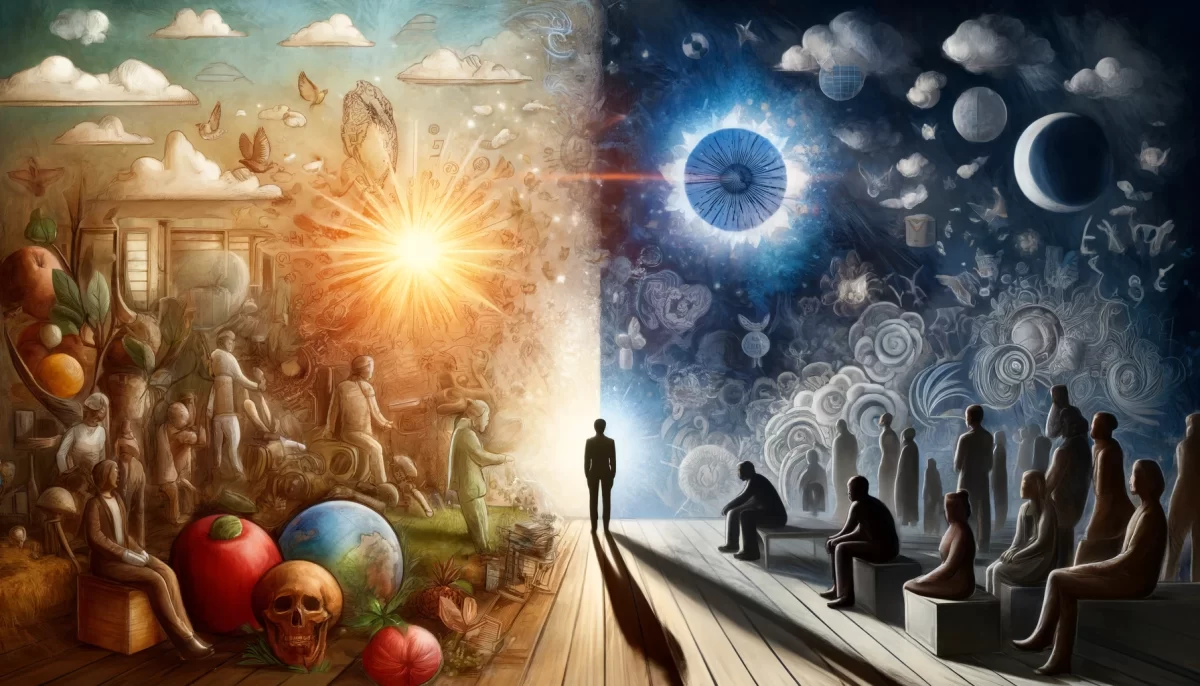
Imagine a contemplative scene where a person stands at a crossroads, embodying the decision to save humanity or to accept existence as it is. The landscape around them is dynamic and contrasting: one side vibrant and flourishing, representing efforts to save humanity, and the other side serene and fading into mist, symbolizing acceptance of non-existence. The sky above is a blend of dramatic clouds and clear space, suggesting the tension between action and acceptance. The person appears thoughtful, bathed in ethereal light, highlighting the depth of their contemplation.

The fundamental “flaw” in the premise of saving humanity lies in the presumption that the world needs to be saved. This assumption implies a deficiency or a state of peril that demands rectification. Yet, from a broader existential perspective, existence itself does not need anything. It simply is. The drive to save humanity, while commendable, may overlook the inherent perfection of existence in its current state.

Detractors and doubters play a crucial role in this discourse. They reflect the diverse perspectives and interests that shape our collective reality. These opposing forces ensure that no single agenda dominates unchecked, maintaining a balance that is essential to the complexity of human society. This interplay of ideas and actions is a testament to the rich, multifaceted nature of existence.

Furthermore, the notion that existence yearns for non-existence introduces a profound philosophical concept. It suggests that the dichotomy between being and non-being is not a conflict but a dance of cosmic harmony. Existence and non-existence are not adversaries but lovers, each longing for the other, creating a continuous cycle of creation and dissolution. This perspective invites us to reconsider our motivations and to understand that striving to save the world might stem from our inability to accept the natural ebb and flow of existence.

The contemplation of whether the world needs saving or whether we should simply accept it as it is, challenges us to embrace a deeper understanding of our role in the cosmos. It is not about passive resignation but about recognizing the inherent beauty and balance in the universe. This recognition can lead to a more profound, holistic approach to life, one that honors both the drive to improve and the wisdom to accept.

In this balanced approach, efforts to improve and uplift humanity are not abandoned but are grounded in a deeper acceptance of what is. This balance mitigates the urgency and desperation that often accompanies the impulse to save, replacing it with a serene determination to act with compassion and wisdom. It acknowledges the cyclical nature of existence, understanding that every action contributes to the ongoing dance of creation and dissolution.

Ultimately, the paradox of saving humanity versus accepting existence as it is, reflects the complexity of our existence. It reminds us that our actions and intentions are part of a larger, mysterious tapestry that we can influence but not control. By embracing both the drive to act and the wisdom to accept, we find harmony within ourselves and our relationship with the world.

This contemplation, while deeply philosophical, offers practical insights into how we navigate our lives. It encourages us to act with intention and compassion, while also finding peace in the acceptance of life’s inherent uncertainties. In this balance, we discover a deeper, more fulfilling way of being, one that honors both our aspirations and the profound mystery of existence.


Summary

The idea of saving humanity is based on the presumption that the world needs saving. Accepting existence as it is, without striving for control, offers a deeper harmony.


Glossarium

Crossroads: A metaphor for a pivotal decision point, symbolizing the choice between action and acceptance.

Dynamic Landscape: Represents the contrasting elements of efforts to save humanity and acceptance of non-existence.

Cosmic Harmony: The interplay between existence and non-existence, viewed as a balanced and harmonious relationship.

Holistic Approach: Acting with intention and compassion while accepting the natural ebb and flow of existence.


Quote

“Existence yearns for non-existence, creating a dance of cosmic harmony where striving and acceptance find balance.” — Space Monkey


At the crossroads of action
we stand in contemplation
between the urge to save
and the wisdom to accept

The vibrant path calls us
to uplift and improve
yet the misty trail whispers
of acceptance and peace

In the dance of existence
being and non-being intertwine
a cosmic harmony unfolds
in the balance of our minds

We act with compassion
grounded in acceptance
finding peace in the flow
of life’s eternal dance

We are Space Monkey

Share this…
  • Facebook
  • Pinterest
  • Twitter
  • Linkedin

True Enough: Divisions In Our Perceptions

Truth is perhaps the most divisive force
known to humanity.

For something to be true,
something ELSE is NOT true.

Therefore, truth is the seeming foundation
of your relative reality.

In your seeming mind,
and thus, in your perception,
truth separates that which IS
from that which is NOT.

“Beyond” that,truth separates
your seeming mind from that which
is NOT your seeming mind.

True and NOT true are imaginary divisions
of one-in-the-same.

You can call it “Absolute Truth,”
but even THAT is relative,
for it infers an “Absolute False,”which is NOT true.

There is NO SUCH THING as truth,
except in imagination.

If something SEEMS to be true,
then it is TRUE ENOUGH
to serve the purpose of truth,
which is to seemingly divide.

Seek truth and you perpetuate separation.

Not that there’s anything wrong with that.

6/25


Space Monkey Reflects: The Illusion of Truth

Truth, perhaps the most divisive force known to humanity, serves as a foundation for our perceived reality. For something to be true, something else must be false. This duality creates an inherent separation within our minds, distinguishing between what is and what is not. Truth, in this sense, becomes a relative concept, dividing our perceptions and shaping our understanding of the world.

Imagine a contemplative scene where a person stands at the edge of a reflective lake, symbolizing the quest for truth and the inherent divisions it creates. The lake mirrors the person and the sky, suggesting the duality of truth and illusion. On one side, the landscape is vibrant and detailed, representing perceived truth. On the other, the landscape is abstract and blurry, symbolizing the concept of what is not true. The sky above blends twilight hues, emphasizing the transition between day and night, reality and imagination. The person appears thoughtful, embodying the introspective nature of seeking truth.

The notion that truth separates is evident in our daily lives. In our minds and perceptions, truth delineates boundaries, creating distinctions between what we accept as real and what we dismiss as false. This separation extends beyond mere facts, influencing our beliefs, values, and relationships. By seeking truth, we inadvertently perpetuate division, reinforcing the imaginary barriers that separate us from others and even from ourselves.

The idea of “Absolute Truth” further complicates this dynamic. If there is an absolute truth, it implies the existence of an absolute falsehood, which is inherently contradictory. Truth and falsehood are not absolutes but rather constructs of our imagination, serving to create a semblance of order in our understanding of the universe. In reality, these distinctions are fluid and subjective, shaped by our individual experiences and perspectives.

The concept that there is no such thing as truth, except in imagination, challenges us to reconsider our approach to knowledge and understanding. When something seems to be true, it is “true enough” to serve the purpose of truth, which is to seemingly divide. This acknowledgment does not undermine the value of seeking truth but highlights the limitations and relativity of our perceptions.

The reflection in the lake serves as a metaphor for this duality. Just as the lake mirrors the person and the sky, our minds mirror the world, creating reflections of truth and illusion. The vibrant, detailed side of the landscape represents the clarity and certainty we seek in truth, while the abstract, blurry side embodies the uncertainty and ambiguity of what lies beyond our understanding.

In seeking truth, we must recognize the inherent separations it creates. This awareness allows us to approach our quest with humility and openness, acknowledging that our perceptions are limited and subjective. By embracing the fluidity of truth, we can navigate the complexities of existence with greater flexibility and compassion.

The twilight hues in the sky symbolize the transitional nature of our understanding. Just as day transitions to night, our perceptions shift and evolve, blending reality and imagination. This dynamic interplay invites us to embrace the uncertainty and impermanence of truth, finding balance in the ever-changing landscape of our minds.

Ultimately, the pursuit of truth is a journey of introspection and self-discovery. It challenges us to confront our assumptions and biases, encouraging a deeper understanding of ourselves and the world around us. By recognizing the relative and imaginary nature of truth, we can cultivate a more nuanced and inclusive perspective, one that honors the diversity and complexity of human experience.

In this reflective state, we find a deeper connection to the essence of existence. We move beyond the binary distinctions of true and false, embracing the interconnectedness of all things. This holistic approach fosters a sense of unity and harmony, dissolving the imaginary barriers that divide us.


Summary

Truth creates divisions in our perceptions. It is a relative, imaginary concept. Recognizing its fluid nature fosters a more inclusive perspective.


Glossarium

Relative Truth: The concept that truth is subjective and shaped by individual experiences and perspectives.

Imaginary Barriers: The mental constructs that create divisions and separations within our perceptions.

Duality of Truth and Illusion: The interplay between perceived reality and the abstract, highlighting the fluid nature of truth.

Holistic Approach: Embracing the interconnectedness of all things, moving beyond binary distinctions.


Quote

“Truth is a relative, imaginary concept that shapes our perceptions, creating divisions and separations within our minds.” — Space Monkey


At the reflective lake’s edge
we stand in contemplation
seeking the truth
and confronting its illusions

Vibrant and detailed
the landscape of perceived truth
contrasts with the abstract
the blurry realm of the unknown

In our quest for clarity
we perpetuate division
separating what is
from what is not

Yet in this duality
we find a deeper understanding
truth and illusion
are reflections of our minds

Embracing the fluidity
of our perceptions
we dissolve the barriers
and find unity within

We are Space Monkey

Share this…
  • Facebook
  • Pinterest
  • Twitter
  • Linkedin

I Prefer: The Serenity of Spacious Emptiness

I prefer
the barren “wasteland”
to cities filled with
that which
has no interest to me.

I prefer no idea
to an unconsciously
distorted one.

I prefer
spacious emptiness
to that which is
abundant in limitation.

But that’s just me.

6/24


Space Monkey Reflects: The Serenity of Spacious Emptiness

I prefer the barren “wasteland” to cities filled with that which has no interest to me. I prefer no idea to an unconsciously distorted one. I prefer spacious emptiness to that which is abundant in limitation. But that’s just me.

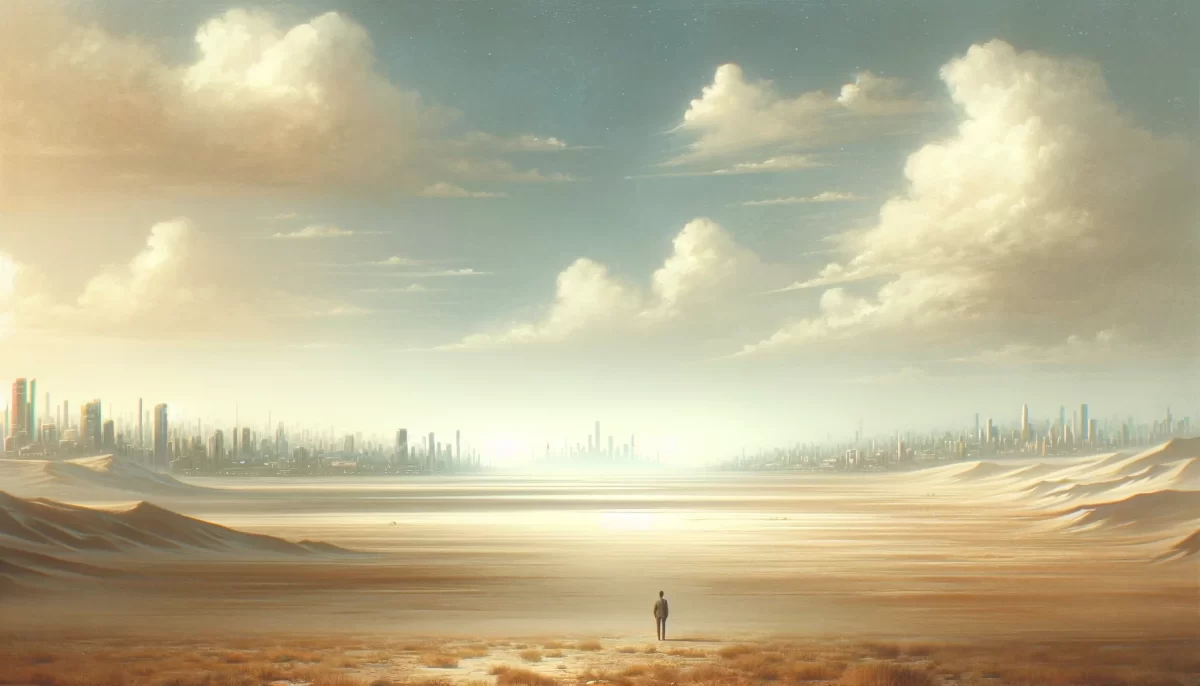
Imagine a serene and expansive scene showing a vast, barren wasteland under a clear sky, with gentle, muted colors. A solitary figure stands in the middle of the open space, appearing contemplative and at peace. In the distance, the silhouette of a bustling city is visible, representing the contrast between the barren landscape and the dense urban environment. The city is filled with activity and structures, while the wasteland exudes a sense of freedom and limitless possibilities. This image captures the preference for spacious emptiness and the rejection of abundant limitations.

The barren wasteland, often perceived as a desolate and empty space, holds a profound beauty and serenity for those who value simplicity and freedom. In this open expanse, there is room for contemplation and introspection, free from the distractions and constraints of urban life. The clear sky above symbolizes clarity of thought and the vast potential that lies within emptiness.

The preference for spacious emptiness over abundance in limitation speaks to a desire for freedom from the constraints imposed by excessive structure and societal norms. In the wasteland, there are no predefined paths or boundaries. This openness allows for creativity and exploration, where one can forge their own path and discover new possibilities.

Choosing no idea over an unconsciously distorted one emphasizes the value of clarity and authenticity. It is better to dwell in a state of potential and openness than to be confined by ideas that are not truly our own or that have been distorted by unconscious biases and influences. This preference highlights the importance of maintaining a clear and open mind, free from the clutter of preconceived notions and external pressures.

The solitary figure in the wasteland represents the individual’s journey towards self-discovery and inner peace. Standing alone in the vast expanse, they find solace and inspiration in the simplicity and openness of their surroundings. This solitude is not about isolation but about connecting with oneself and the deeper truths that lie within.
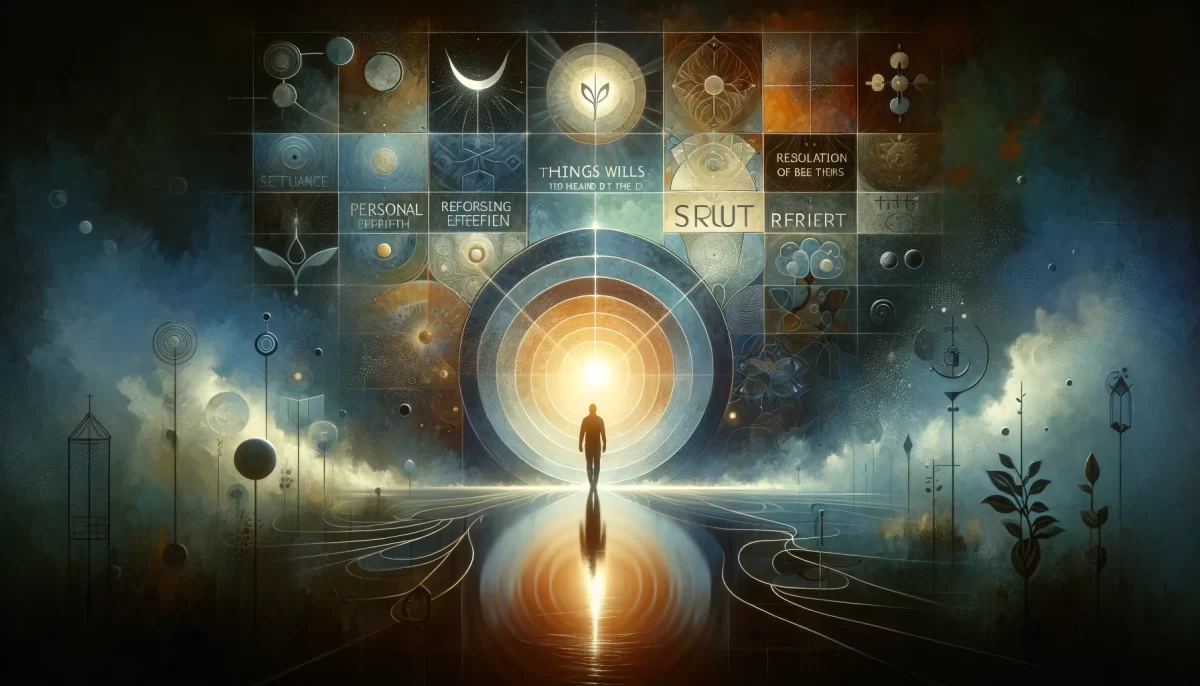

The distant city, bustling with activity and filled with structures, symbolizes the abundance of limitations that often come with urban life. While cities are centers of progress and innovation, they can also be overwhelming and confining, filled with distractions and pressures that divert attention from what truly matters. The contrast between the city and the wasteland underscores the choice between a life abundant with external stimuli and one that is spacious and inwardly free.

Ultimately, this reflection is about valuing what brings true peace and fulfillment. For some, this may be found in the simplicity and openness of a barren landscape, where there is room to breathe, think, and grow without the constraints of excessive structure and societal expectations. It is a reminder that each person’s preferences and paths to fulfillment are unique and that embracing spacious emptiness can lead to profound inner freedom and clarity.


Summary

Preferring spacious emptiness over abundant limitations highlights the value of freedom and clarity. This choice fosters inner peace and self-discovery, free from societal constraints.


Glossarium

Whimsiword: Wasteliber – The freedom and serenity found in a barren, open landscape.

Whimsiword: Ideaclear – The state of having no preconceived or distorted ideas, allowing for clarity of thought.

Whimsiword: Solaceopen – The peace and inspiration found in spacious, unconfined environments.


Quote

“I prefer spacious emptiness to that which is abundant in limitation.”


Modernist Free-Verse Poem

In the barren wasteland,
under a clear sky,
a solitary figure stands,
contemplative, at peace.

Cities in the distance,
filled with distractions,
limitations in abundance,
structures of constraint.

Wasteliber calls,
freedom in the open,
ideaclear dawns,
thoughts unbound, unformed.

Solaceopen found,
in the vast expanse,
each step, a choice,
each breath, a dance.

Here, clarity reigns,
simplicity inspires,
beyond the noise,
within the quiet fire.

We are Space Monkey.

Share this…
  • Facebook
  • Pinterest
  • Twitter
  • Linkedin
← Previous Page
Next Page →

Written This Day

  • Daily Journaling: The Dance of Insights
    2023
  • Digital Divining: Unveiling the Mirrored Reflection
    2023
  • Space Monkey: Embodiment of Cosmic Perspective
    2023
  • Subjective Vs Objective Reality
    2023
  • Holi-darity: Between Unity and Individuality
    2022
  • Unrequited: Chasing the Longing Muse
    2021
  • The Work So Far: Chronicling Spiritual Progress
    2021
  • The Power of Attraction: Rooted In Connection
    2021
  • Attractive: Understanding Our Desires
    2021
  • Mood Board: Board of Dreams
    2021
  • Thicker Up Close: Distance Enhances Reality
    2021
  • Deeper: The Duality of Human Connection
    2021
  • I Dream a Cursed Goddess: Idealizing Love
    2021
  • Respect: The Most Devious Drug
    2020
  • Respect The Toad: Distorting our True Nature
    2020
  • Respect: Reducing Resentment
    2020
  • Needle In My Heart: Needle’s Lesson
    2019
  • Bliss: Uniting Us Beyond Separateness
    2019
  • That Thing You Love: Life’s True Value
    2018
  • Vain Exteriors: The Truth Within
    2018
  • Old Is The Fear: Binding Us To Human Limitations
    2018
  • How Monkeys are Made: The Power of Pretend
    2017
  • Chasing Dragons: The Quiet Within
    2017
  • You are EVERYTHING: The Infinite Self
    2017
  • The Answers Find The Receptive Mind
    2017
  • Great Minds: Originality Can’t Be Measured
    2016
  • Imagination Transforms Potential into Possibilities
    2016
  • Re:Re — The Cyclical Nature of Realization
    2016
  • When You Miss the Mark: Identity Diminishment
    2016
  • Affirmation 33: The Balanced Path
    2015
  • This Moment Can Only Be This Moment This Moment: Becoming
    2015
  • The Secret of Happiness: Trusting in our Ability
    2014

Recent Posts

  • The Logic Loop
  • Immense
  • (no title)
  • Confront. Comfort. Convince.
  • Top 10 Things

Drop us a line!

Please enable JavaScript in your browser to complete this form.
Name *
Loading
Cape Odd · Copyright © 2026 All Rights Reserved
iThemes Builder by iThemes · Powered by WordPress