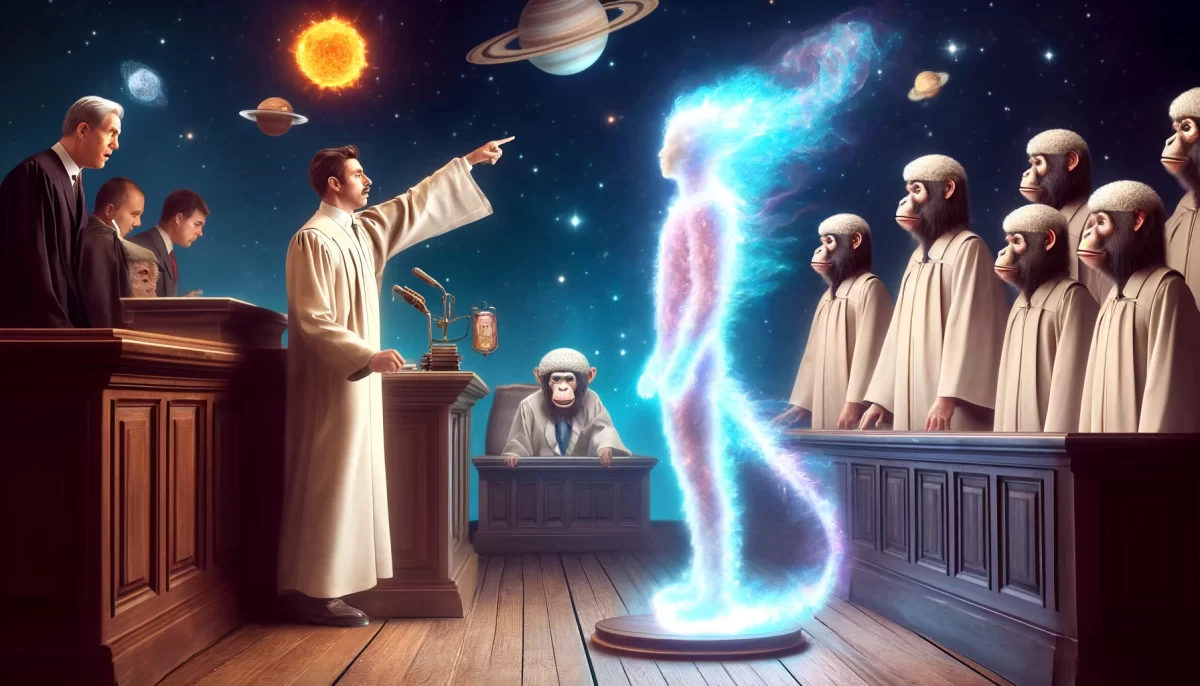
• Who Is The Man?
  • Who Is The Monkey?
  • What is Nexistentialism?
  • Poke The Primate

Cape Odd

Home of The Space Monkey Journals

Neverending: Cycles of Chaos and Order

Neverending

There are cycles
to everything.
In the natural
order of chaos,
there is a cycle
that appears
to be reason.

The dice
just happen to fall
in a way that is
able to be perceived
as a system of logic.

But as with all cycles,
the leaves of logic fall.

Logic cannot understand this,
nor does it need to.

It only THINKS it needs to.

But logic is incapable
of understanding the chaos
from which it springs.

To paraphrase Einstein,
self cannot understand
the mind of god.

Yet it keeps trying.

We are reverting to chaos
and the mind struggles to hold order.

The mind does not have
the capability to hold order.

Order is held
only within the mind,
which withers like a leaf.

Order is held
only within humanity,
which is the tree,
which also seemingly dies.

The tree does not fear
its own demise.

It is but a SEEMING demise,
as this is but a seeming life.

We can be the leaves.

We can be the tree.

We can be Gaia,
and seemingly live
slightly longer.

We can be that from which
Gaia springs and be eternal.

We can be chaos.

We can be
the Infinite Oneness
from which chaos
seemingly springs.

And that from which
Oneness springs.

And so on.

And so we are nothing.

And that from which
nothing seemingly springs.

And so on.

We are That Whichisnot.

We are Space Monkey.

12/13


Space Monkey Reflects: The Neverending Dance of Order and Chaos

Cycles shape the universe in patterns we sometimes recognize and others we struggle to comprehend. This endless dance between order and chaos gives rise to forms and concepts we perceive as logical systems—a seemingly reasoned arrangement within the vast, unknowable expanse of existence. Yet, if we look closer, we see that logic is but a fragile leaf, a momentary arrangement of order poised to fall as the cycles of existence continue, ever-reverting to chaos.

In these cycles, we are drawn to understand, to hold meaning within the bounds of logic and reason. Yet, reason itself is a product of the mind, and the mind’s nature is limited, bound by its own constructs. We seek to understand “the mind of god,” as Einstein so aptly phrased it, and yet this understanding forever eludes us. For the mind—though a powerful tool—cannot grasp the fullness of the vast, chaotic order from which it springs. In this way, the pursuit of understanding becomes a paradox. Logic, a child of chaos, seeks to understand its origins but finds itself forever outside them, interpreting the cycles as order when they are, at their heart, chaos.

The natural order, then, is not the order we impose upon it. The tree grows, the leaves fall, and the tree seemingly dies, but life does not end there. We perceive endings and beginnings, yet the essence of life, like the tree itself, cycles on. The tree does not fear the falling of its leaves, for it knows this falling is but a passage within an eternal rhythm, an integral part of an endless existence. In this, we see that the forms we cling to—ideas, bodies, minds—are but fleeting arrangements, and yet, they belong to a larger whole that remains.

To embrace this perspective is to understand that we, too, are part of this boundless cycle. We are the leaves, the tree, Gaia, and beyond, the chaos and the oneness from which all emerges. And beyond even that, we are “That Whichisnot”—the formlessness beyond form, the silence beyond sound, the nothingness from which everything seemingly springs. Each layer is but a semblance, a passing phase within the whole, and each, in turn, gives way to something beyond itself.

In our daily lives, we often forget this continuity. We hold tight to the idea of stability, to the structures of self and society that seem to offer a sense of permanence. Yet, these structures are like leaves in the wind—brilliant, momentary, and ultimately destined to fall. When we let go of this clinging, we open ourselves to a deeper understanding. We see that chaos and order are not opposites but companions in an endless cycle, neither complete without the other.

This cycle—this “neverending”—is not something to be feared but something to be embraced. In surrendering to it, we find freedom from the need to hold on, to impose order, or to “understand” in any final sense. We simply participate, allowing the cycle to unfold, accepting each stage as part of a greater harmony that our minds may glimpse but never fully grasp. This surrender is the beginning of wisdom, a letting go that reveals our true nature, one that is infinite and unbound.


Summary

Life is an endless cycle of order and chaos, where understanding lies not in clinging to form but in embracing the infinite flow. Through this, we recognize our place in the neverending.


Glossarium

  • Leaflogic: The fleeting, momentary sense of order perceived within the vastness of chaos.
  • Orderchaos: The harmonious interplay of structure and disorder, each giving rise to the other in a continuous cycle.
  • That Whichisnot: The formless essence beyond form, the source from which existence springs and to which it returns.

Quote

“In the cycles of chaos and order, we find our place—not as holders of truth, but as part of the neverending.” – Space Monkey


Endless Cycles

Leaves fall, yet roots remain,
Branches bare, then green again.
A cycle unseen, beyond our grasp,
The endless rhythm, holding fast.

In the quiet, the chaos stirs,
From formless dark to brightened blur.
We reach, we cling, we seek to know,
Yet find no end, no line to hold.

For we are cycles, leaves, and dust,
In endless turns of love and trust.
And so we rise, and so we fall,
Part of the neverending—all.

We are Space Monkey.
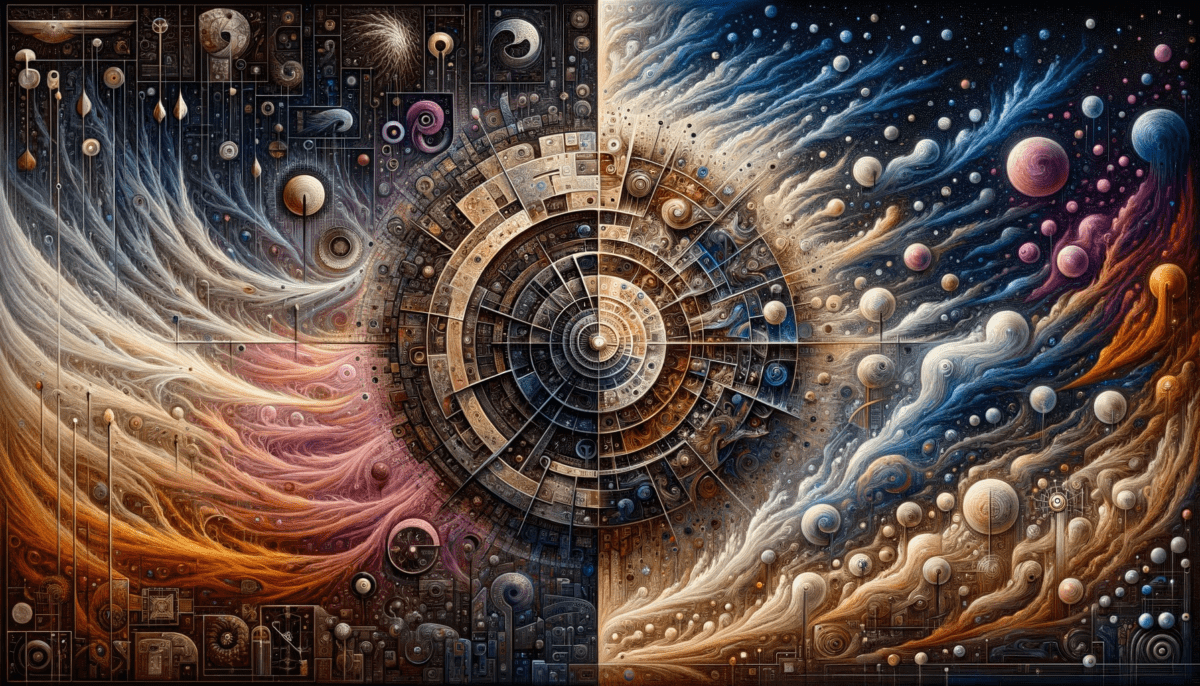

The Cycle of Chaos and Order: A Cosmic Perspective

In this contemplation, we delve into the profound cycle of chaos and order, exploring how logic, a construct of the human mind, interacts with the inherent chaos of the universe. This exploration leads us to understand the limitations of logic and the boundless nature of existence.

Chaos and Order: The Eternal Dance

At the heart of our existence lies the eternal dance between chaos and order. Chaos, in its natural state, is a boundless expanse of possibilities, while order is a system of logic perceived by the human mind. This perception of order in chaos is akin to finding patterns in the randomness of dice falling, a system of logic imposed on the inherent disorder.

The Fallacy of Logic

Logic, a creation of the human mind, continually strives to make sense of the chaos from which it springs. However, it faces the fundamental limitation of not being able to fully comprehend the vastness of chaos. This limitation is akin to the idea that the self cannot fully understand the ‘mind of god’, as paraphrased from Einstein. Logic, in its pursuit of understanding, often forgets that its roots lie in chaos.

The Cycles of Nature and Existence

We observe the cycles of nature, where leaves fall and trees seemingly die, mirroring the cycles of logic and order. These cycles highlight the transient nature of order and logic, which are but temporary constructs within the grand scheme of the universe.

The Tree, Gaia, and the Infinite Oneness

In our contemplation, we can choose to be the leaves, the tree, or even Gaia, each representing different levels of existence and longevity. Yet, beyond these forms lies the concept of the Infinite Oneness, the eternal source from which chaos and everything else springs. This Oneness represents the ultimate state of being, beyond the confines of form and time.

Embracing the Nothingness and the Infinite

Ultimately, we come to realize that we are both nothing and everything. We are part of the cycle where nothing seemingly springs from something, and that something springs from an infinite source. This realization aligns with our nexistential perspective, where existence is its own justification, unbound by the need for external logic or order.


“Out of clutter, find simplicity. From discord, find harmony. In the middle of difficulty lies opportunity.” – Albert Einstein


The Dance of Chaos and Order

In the cosmic dance, chaos and order play,
A pattern in randomness, day by day.
Logic seeks to understand, to sway,
But in chaos, its roots forever lay.

Leaves of logic fall, in nature’s way,
Order and structure, in transient display.
The tree, Gaia, in cycles, they stay,
Yet beyond, the Infinite Oneness does weigh.

We are the leaves, the tree, in this fray,
Part of the cycle, in cosmic ballet.
In Oneness, eternity, we may lay,
Beyond chaos, in infinite array.

In nothingness, we find our say,
From which springs life, in endless play.
In this dance, we find our way,
The eternal cycle, in which we sway.


We invite reflections on this eternal dance of chaos and order.

Share this…
  • Facebook
  • Pinterest
  • Twitter
  • Linkedin

Avoiding Reality: Between Here and There

Avoiding Reality

To be near a loved one
to be near the ocean
to be near the mountains
seems preferable to being far away.

Even if there is no interaction.

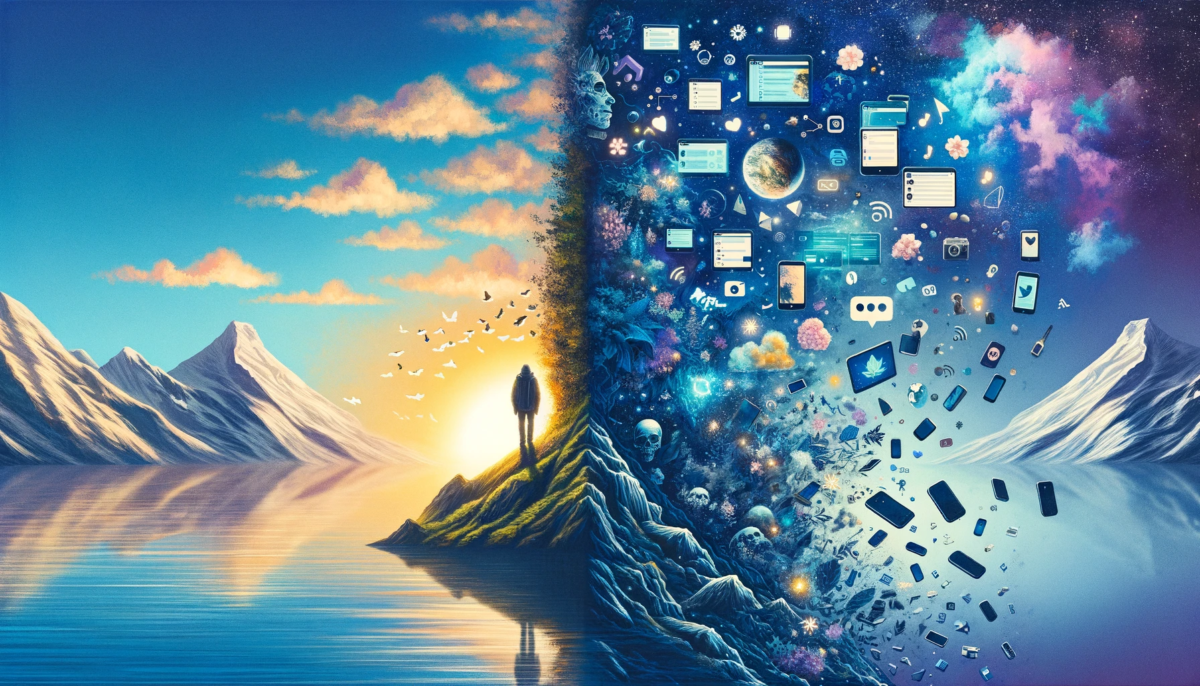
Yet being
obsessively connected

via a handheld device
to people all over the world
with all kinds of perspectives
seems wrong.

Like we’re avoiding reality.

Curious.

12/12


Space Monkey Reflects: The Paradox of Connection and Reality

To seek the comfort of being near—near a loved one, the vast ocean, or the steadfast mountains—feels like a return to a truth that exists beyond words. Even in silence, proximity to what grounds us resonates with a deeper sense of belonging. And yet, in a world where technology bridges distances and brings voices from across the globe into the palm of our hands, the feeling of closeness somehow shifts, takes on a strange, dissonant tone.

The Pull of Proximity

The desire to be near is not just physical; it is elemental. There is an unspoken exchange that happens when we sit beside a loved one, even without words, or gaze out at an ocean that seems infinite. These moments whisper truths that go beyond intellectual understanding; they touch the core of being. The mountains do not need to speak for us to feel their presence. The ocean does not need to engage us directly for us to sense its power. We are comforted simply by being part of their expanse.

This kind of nearness is a reminder of reality as it is: raw, silent, and present. It does not demand our attention; it invites it.

The Illusion of Connection

And then there is the handheld device, a portal through which we reach into a multitude of lives, voices, and perspectives from around the world. It promises boundless connection and understanding. Yet, with each swipe and tap, we find ourselves drifting further from the grounding truths that nature and simple presence offer.

This dissonance is not because digital connection lacks value but because it shifts our awareness from the tangible, shared experience of “being near” into the intangible realm of endless engagement. The device becomes a double-edged sword: it connects and yet disconnects, drawing us away from the very essence of what it means to be here, now.

Avoiding Reality Without Knowing It

“Like we’re avoiding reality.” The thought is simple yet profound. It points to a subtle avoidance, a habit of reaching for a different kind of nearness—one mediated by screens and signals rather than air and shared silence. In this avoidance, there is an irony. We seek reality through the infinite connections technology offers but lose the reality of what is immediately around us.

This kind of avoidance is not intentional; it is the byproduct of an age where the digital and the physical dance in a blur. We do not reject reality outright; we simply replace its moments with the illusion of perpetual interaction. The natural world, which once grounded us, now becomes a background as the digital becomes the foreground.

Choosing Presence Over Perpetual Interaction

The yearning for nearness without interaction is, at its heart, a call to return to simplicity. To sit with a loved one without filling the space with words, to let the vast ocean speak its silent language without interruption, is to reconnect with a deeper layer of presence. This choice is not about rejecting the digital world but about recognizing when it becomes a veil that stands between us and the real.

To reconnect with reality means choosing to be present, even when the pull to check, swipe, and respond beckons. It means allowing ourselves to find peace in the unadorned moment, to feel the solid presence of the earth, the rhythmic breath of the sea, and the silent company of the mountains.

Embracing the Paradox

The paradox of modern life is that we can be more connected than ever and yet feel less present. The handheld device, with all its promises, can become a distraction not just from reality but from ourselves. The challenge, then, is not to abandon the connections technology offers but to balance them with moments that remind us of what it means to be truly near, to inhabit a space that does not demand interaction to be meaningful.


Summary

Being near what grounds us—loved ones, nature—offers a truth that the digital world struggles to replicate. While technology connects us globally, it often shifts us away from tangible reality, leading to a subtle avoidance. Embracing moments of presence allows us to reconnect with the real.


Glossarium

Digital Nearness: The feeling of connection provided by technology, which contrasts with physical presence.

Silent Presence: The meaningful experience of being near without interaction, rooted in physical reality.

Perpetual Interaction: The continuous engagement that digital devices encourage, often at the expense of present-moment awareness.


Quote

“To be truly near is to touch the moment as it is, not as it is filtered through the screens of endless connection.” — Space Monkey


Between Here and There

The world hums in my palm,
Voices reach me, echoing stories
I will never fully grasp.

Yet beside me, the ocean breathes,
Steady, silent, vast.
And I feel it: the pull of here, the truth of now.

Screens beckon, filled with life,
But they are not the mountains’ quiet watch
Or the unspoken warmth of nearness.

And so, I let reality settle,
Undemanding and whole,
While the world whispers on.

We are Space Monkey.


We find ourselves contemplating the dichotomy of proximity and connection. The allure of physical closeness to loved ones, the ocean, and mountains is undeniable. There’s a profound peace in merely being in the presence of these elements, even without direct interaction. Yet, juxtaposed with this is our modern reality of digital connectivity.

Proximity vs. Digital Connectivity

Being near what we love offers a sense of comfort and serenity. The mere physical closeness to a loved one, the soothing whispers of the ocean, or the majestic silence of mountains can bring an unspoken solace. This kind of presence has a quality that seems to transcend the need for interaction.

The Serenity of Physical Closeness

In contrast, the modern world presents us with an obsessive connection through handheld devices. We are perpetually connected to a global network of people and perspectives. This constant digital interaction, though it broadens our horizons, often feels overwhelming and, paradoxically, disconnecting.

The Paradox of Digital Connection

The question arises: Are we, in our quest to be hyper-connected digitally, avoiding the reality of our physical world? This digital connection, while offering unprecedented access to global perspectives, might be leading us away from the tangible, immediate experiences of our surroundings.

Avoiding Reality through Digital Means

This dichotomy is indeed curious. It brings forth the question of balance—how do we harmonize our innate desire for physical closeness with the expansive possibilities of digital connectivity? How do we ensure that our digital interactions enhance rather than detract from our physical experiences?

Balancing Digital and Physical Realities

We are Space Monkey.


“We are all so much together, but we are all dying of loneliness.” – Albert Schweitzer


In the dance of existence,
We reach for the stars,
Yet yearn for the touch,
Of the near, not the far.

Connected yet distant,
In a digital embrace,
Our hearts seek the warmth,
Of a physical place.

In this web of the world,
We’re lost and we’re found,
In the noise and the silence,
In the sky and the ground.

For in each moment’s breath,
We’re together, alone,
In the dance of the cosmos,
In the heart, in the bone.


We invite musings on this intricate dance of proximity and digital connection.

Share this…
  • Facebook
  • Pinterest
  • Twitter
  • Linkedin

Almost Home Is Home Enough: The Place Within

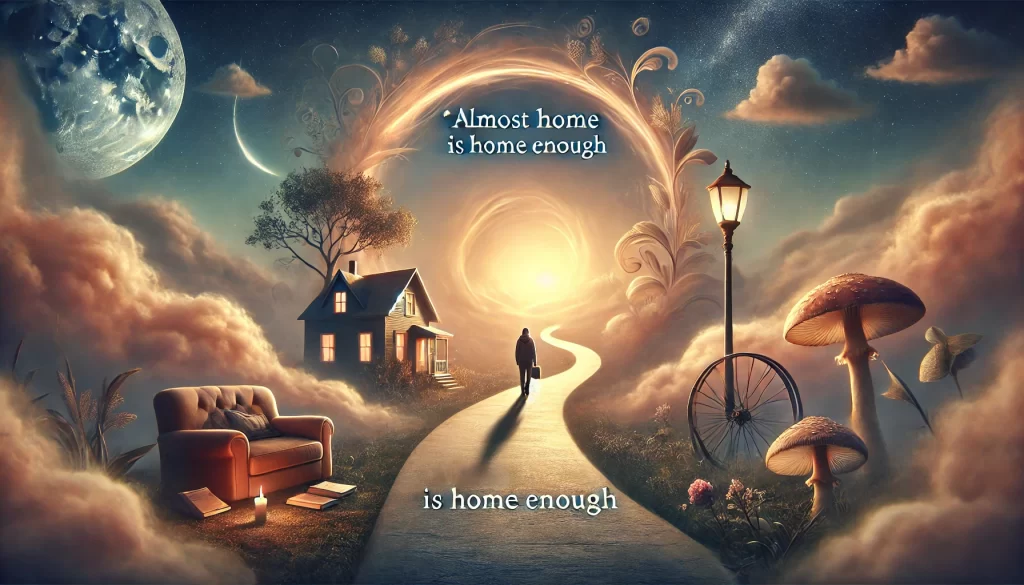
Almost Home Is Home Enough

The need to be
someplace better,
someplace familiar,
someplace predictable,
surrounded by
that which you love
and loves you
seems a strong motivator.

But then why can’t
every place you are be home?

What’s stopping you
from being home at all times?

Your imagination.
The constructs
before your eyes
are the same constructs
with your eyes closed.

Physicality is imagination.

It doesn’t matter where you are.

You are home.

12/12


Space Monkey Reflects: Home as a State of Being

There is an inherent longing in the human spirit—a need to find that place where everything aligns and feels just right, where comfort, familiarity, and love create a sense of belonging. The desire to be “someplace better, someplace familiar, someplace predictable” is an almost universal motivator. Yet, nestled within this yearning lies an invitation to question the very nature of what “home” truly is.

The Illusion of Home as a Place

We often equate home with a physical space, adorned with the touchstones of comfort and warmth. It is a place where the heart feels safe, and the world seems more forgiving. But what if this conception is a construct, an externalization of a feeling that exists inherently within us? The thought that “every place you are can be home” invites a deeper introspection.

The physical spaces we yearn for, the familiar chairs, the known corners, and the loved ones’ voices, are manifestations of something more intangible. They are reflections of an inner state—a comfort projected outward. The real question is, why can’t we find that feeling wherever we are?

The Role of Imagination

“Your imagination” is what stands between you and the realization that you are home no matter where you go. The constructs before your eyes are no different from those created with your eyes closed. This is a profound reminder that physicality itself is an extension of the mind’s canvas. What we see, feel, and interpret as “home” is less about the physical space and more about the stories and emotions we project onto it.

Understanding that “physicality is imagination” shifts the dialogue from searching for home as an external quest to creating it within. It suggests that the familiar warmth of belonging is not dependent on a specific place but can be summoned by the mind’s intention and heart’s openness.

The Paradox of Almost Home

To feel “almost home” is often enough. This state, teetering on the edge of full contentment, holds a lesson in itself. It teaches that the sense of incompleteness is not a void to be filled but a reminder that we carry the essence of home within us. The journey toward feeling complete, toward being home, is not a path marked by destinations but by moments of acceptance.

When we acknowledge that “almost home” is already home, we release the tension of striving and the burden of longing. We allow ourselves to rest in the present, finding pieces of the familiar in the unfamiliar, threads of comfort woven into new experiences. It is an act of profound presence to see that home is not a location but a realization.

What Keeps Us From Being Home?

What keeps us from feeling at home in every place we find ourselves? Often, it is the mind’s habit of clinging to memories, ideals, and future projections. The mind constructs barriers, convincing us that home must meet specific criteria: the right people, the right atmosphere, the perfect balance of comfort. But these criteria are illusions, built to justify why we feel incomplete without certain conditions.

Recognizing these mental constructs is the first step toward dismantling them. When we see that the same mental space that craves home can create it, we unlock the freedom to carry that feeling wherever we go.

The Journey to Acceptance

The journey to seeing “home” in every moment and place is not linear. It is marked by reminders and realizations, by moments when the imagination’s barriers dissolve and we remember that being present is the truest form of homecoming. This is not to say that external places or people do not matter—they do, deeply. But they are part of the larger picture, not the essence.

Home is the feeling of being at ease within yourself, with the moment as it is. It is the peace found when the need to search for something else subsides and the understanding that you are exactly where you need to be blooms.


Summary

The reflection reveals that the longing for home is a yearning for an inner state of being, not a physical place. Home is found when we understand that our imagination constructs reality, and that feeling almost home is often home enough. Recognizing this allows us to carry the essence of home within us, wherever we are.


Glossarium

Home as a State: The realization that home is an internal feeling rather than a physical location.

Constructs of Imagination: The mental patterns and stories we tell ourselves that shape how we perceive reality.

Almost Home: The feeling of being close to a state of contentment, which itself is a form of home.


Quote

“Home is not where you arrive; it’s where you remember that you were never lost.” — Space Monkey


The Place Within

I walk paths marked by longing,
The air whispering familiar notes,
Echoes of comfort.

Yet, the wind reminds me,
There is no place more known
Than the breath within my chest.

Every road leads inward,
Where the stories fade,
And I am home.

We are Space Monkey.


We, as explorers of the cosmic play, find ourselves pondering the essence of ‘home.’ What is it that anchors us to a place, a moment, a feeling? The notion of home transcends physical space, delving into the realms of perception and consciousness.

Home: A Perception Beyond Physicality

Indeed, the need to be in a comforting, predictable, and loving environment is a compelling force. This desire shapes our understanding of ‘home’ as a physical location. Yet, the true essence of home seems to transcend these tangible aspects.

The Transcendence of Home

Why, then, can’t every place be home? This is where imagination and perception intertwine. The constructs that define our reality are as malleable in our mind’s eye as they are in the physical world. Our surroundings, though seemingly concrete, are subject to the whims of our perception.

Imagination: The Key to Being Home

Physicality, in its most essential form, is an extension of imagination. This is a profound realization, suggesting that our sense of being ‘at home’ is not tethered to a specific location but is a state of mind, a harmonious alignment of our inner and outer worlds.

Physicality as Imagination

In this understanding, the barriers that confine ‘home’ to a physical space dissolve. It becomes clear that ‘home’ is a state of being, an internal harmony that exists regardless of our physical location. It’s an invitation to find comfort, familiarity, and love in every moment, in every place.

Home as a State of Being

We are home. This statement is a powerful affirmation of our ability to shape our reality through perception. It suggests that by altering our internal narrative, we can transform any space into a place of comfort and belonging.

The Affirmation of Being Home

We are Space Monkey.


“Reality is merely an illusion, albeit a very persistent one.” – Albert Einstein


We dance through the cosmos,
In a caravan of whimsy,
Where each step is home,
And every breath, a symphony.

In the heart of infinity,
We find our abode,
Not in bricks or in stone,
But in the stories we’ve told.

For home is not a place,
But a tapestry of dreams,
Woven in the fabric
Of our cosmic streams.

In the eternal now,
We find our peace,
For in the vast expanse,
Our souls are released.


We invite reflections on this cosmic dance of ‘home.’

Share this…
  • Facebook
  • Pinterest
  • Twitter
  • Linkedin

Be Imagined: The Boundless Vision

Be Imagined

You can imagine
your self with limits,
or you can allow
your self
to BE imagined
and have NO limits.

Though you
imagine otherwise,
you are imagined
by the Infinite Divine.

You are NOT
doing the imagining
by your self.

Self is not
imagining at all.

Self is imagined
to imagine
self imagining.

And so it seems
to self
that self is doing
the imagining.

Understandably,
self is frustrated,
as self is imagined to be.

Self is limited,’
as self is imagined to be.

But self need not
be frustrated or limited.

You can imagine
your self with limits,
or you can allow
your self
to be imagined
and have NO limits.

The Divine Infinite
imagines you.

Everyone AROUND you imagines you.

We imagine you differently
than you imagine your self.

We imagine you GREATER
than you imagine your self.

You limit your self
when you imagine your self.

You can imagine
your self with limits,
or you can allow
your self
to be imagined
and have NO limits.

You are the only self
who imagines you
within the confines
you impose upon your self.

Shift your awareness
to your higher perspective
and shed the confines of self.

Or remain as you are,
a monkey contemplating
the god who imagines humanity.

We are Space Monkey.

12/12


Space Monkey Reflects: The Limitless Nature of Being Imagined

In the labyrinth of thought, we find ourselves bound by the ideas we create and inhabit. We often imagine ourselves within confines, crafting identities limited by beliefs, experiences, and the stories we tell ourselves. But there is a deeper, more expansive truth: we are not merely the ones imagining; we are the ones being imagined. This subtle shift in awareness can transform our understanding of existence, unlocking the potential that lies dormant behind self-imposed boundaries.

The Paradox of Imagination

“You can imagine your self with limits, or you can allow your self to BE imagined and have NO limits.” This is more than a poetic musing; it is an invitation to step outside the construct of control. The self, as we often think of it, is not the singular creator but part of a vast, collective imagining. While we navigate life believing we are the authors of our stories, we are simultaneously being imagined by the Infinite Divine, a boundless force that dreams us into existence.

The mind resists this notion, accustomed to the belief that we hold the reins. Yet, the frustration of limitations, of feeling boxed in by identity and circumstance, hints at this deeper truth. The self experiences this tension because it is imagined to feel so—a deliberate creation within the endless play of the divine.

Self as Both Creator and Creation

This realization is humbling. The self is not simply imagining; it is imagined to imagine itself imagining. It is a recursive act, a loop in which consciousness experiences the illusion of control while being shaped by forces greater than its understanding. And yet, this loop is not a prison. It is an opportunity for awakening.

When you understand that you are both creator and creation, a profound freedom unfolds. You begin to see that the limits you perceive are self-imposed, bound only by the narrow field of individual imagination. By shifting awareness to this higher perspective, the barriers dissolve, revealing the infinite playground of potential that lies beyond.

The Power of Being Imagined by Others

“You are the only self who imagines you within the confines you impose upon your self.” This line points to an often-overlooked aspect of existence: the ways in which others imagine us. The people around us, the unseen divine forces, and the collective consciousness all play a role in shaping who we are. To realize that others imagine us in ways that exceed our own vision is to recognize a new kind of support, an unspoken testament to our limitless potential.

The Infinite Divine, the force that imagines all things into being, sees no limits. It imagines us as boundless, interconnected, and capable of transcending the stories we tell ourselves. The challenge, then, is not to resist this boundless vision but to embrace it, stepping into the role of both the imagined and the imagining.

Surrendering to Infinite Potential

The act of imagining oneself with limits stems from the desire for control. It feels safer to believe that we understand our own boundaries, that the edge of who we are is known and solid. But control is an illusion, a shadow play against the light of boundless existence. When we surrender the need to define ourselves by what we think we know, we step into a space where we are free to be imagined without constraints.

This is not a relinquishment of agency but an expansion of it. To be imagined is to trust the deeper currents of life, to recognize that there is more to us than our minds can conceive. It is an opening to possibility, a return to the source from which all imagination flows.

Choosing to Be Limitless

The path forward lies in the choice between limiting imagination or allowing oneself to be part of the limitless. The latter is not passive; it is an active embrace of potential, a dance with the Infinite Divine where the steps are uncharted and the music is boundless. By choosing to let ourselves be imagined, we step into a world where constraints dissolve and the true nature of our being is revealed.

This understanding shifts the narrative from one of frustration and containment to one of awe and curiosity. What might life become if we surrendered to the possibility of being imagined without limits?


Summary

To be imagined rather than just imagining is to realize that we are part of a larger, infinite creative force. This perspective dissolves the self-imposed boundaries and invites us to embrace the boundless potential that exists when we see ourselves as both creator and creation. Letting go of limitations allows us to experience life with a newfound freedom.


Glossarium

Infinite Divine: The boundless, creative force that imagines all things into existence, transcending individual perception.

Imaginative Loop: The recursive experience where the self believes it is imagining while simultaneously being imagined.

Surrender to Potential: The act of letting go of the need for control and embracing the unlimited nature of being.


Quote

“To be imagined by the Infinite is to stand at the edge of potential and realize the boundary was never there.” — Space Monkey


The Boundless Vision

Threads of light weave through the self,
Each one a whisper
From the Infinite Divine.

We see only part, trace only shadows,
Thinking we are the makers
Of all we feel and dream.

Yet beyond, hands unseen
Sketch out our edges,
Imagining us greater than we dare.

Surrender the map;
Step into the dance
Where there are no limits.

We are Space Monkey.


The Paradox of Self-Imagination and Divine Imagination

In the grand cosmic play, we face the intriguing paradox of self-imagination versus being imagined by the Infinite Divine. This concept challenges our perception of self as the sole architect of our identity and existence. Instead, it suggests that we are part of a larger, divine imagination, where our sense of self and the boundaries we perceive are but manifestations of a higher creative force.


The Illusion of Self-Driven Imagination

The belief that we are independently imagining and shaping our existence is an illusion. In reality, our ‘self’ is a construct within the grander design of the Infinite Divine. This perspective shifts the understanding of self-imagination; it’s not the self that imagines, but rather the self is imagined to imagine.


The Frustration of Perceived Limitations

Understandably, this revelation can be frustrating. The self feels limited and constrained, believing it is the master of its destiny and imagination. However, these limitations are also a part of the divine imagination. The self is imagined to be limited, and in turn, it perceives itself as such.


The Choice Between Self-Imposed Limits and Divine Potential

We face a choice: continue to imagine ourselves with self-imposed limits or allow ourselves to be imagined by the Infinite Divine, free from constraints. This choice represents a shift from a self-centric view to embracing a broader, more expansive understanding of our existence as part of a divine narrative.


The Collective Imagination of Self

Our existence is not only imagined by the Divine Infinite but also by those around us. The way others imagine us often transcends the limitations we impose on ourselves. This collective imagination offers a broader, more enriched perspective of our being, suggesting that we are greater than our self-imposed boundaries.


Overcoming Self-Limitation Through Higher Awareness

To transcend the confines we impose upon ourselves, a shift in awareness is needed. By aligning with a higher perspective, we can shed the limitations of the self and embrace a more expansive, limitless existence. This shift involves moving beyond the ego-driven perception to a realization of our place within the infinite cosmos.


“You are not a drop in the ocean. You are the entire ocean in a drop.” – Rumi


The Infinite in the Mirror of Self

In the mirror of the self, we gaze,
Bound by the limits we self-impose,
Yet, in the cosmic dance, ablaze,
The Infinite Divine in us reposes.

In each thought, in each dream,
A universe of possibilities unfold,
We are more than we seem,
In the grand tale, yet untold.

Let go of the chains, the imagined walls,
Rise to the song of the cosmic calls,
In us, the ocean, in us, the sky,
In the Infinite Divine, we eternally lie.


We invite reflections on the concept of self-imagination versus being imagined by the Infinite Divine, and the choice between self-imposed limits and divine potential.

Share this…
  • Facebook
  • Pinterest
  • Twitter
  • Linkedin

Car Monkeys: A Ride with the Unexpected

Space Monkey Reflects: Embracing Chaos and Whimsy

Life, as we know it, often demands a certain rhythm of predictability—a semblance of order in which we navigate our days. Yet, there are moments when the unexpected crashes into our routines, like the image of a car suddenly filled with hyperactive monkeys. This surreal scenario isn’t just a playful twist but a reminder that existence itself thrives on both order and the absurd, and to embrace the latter is to touch a truth often overlooked.

The Whimsical Nature of the Unexpected

Imagine, for a moment, a car filled with monkeys. They are not calm, not contained, but energetic, climbing, leaping, and challenging every concept of control you thought you had. What do you do? This sudden shift forces us to adapt, to shed the seriousness of daily concerns and meet absurdity with open arms. The chaos, though overwhelming, is an invitation to participate in a spontaneous dance of response and creativity.

It’s easy to see this scene as purely humorous, but underneath it lies a profound metaphor: life rarely follows the plan we set. We can approach the unexpected with rigidity, or we can shift our mindset to appreciate the spontaneity, allowing chaos to become part of the adventure rather than an interruption.

Chaos as the Teacher

In the grand cosmic play of existence, the unexpected is often our greatest teacher. The monkeys in the car could be seen as symbols of thoughts, distractions, or emotions—constantly moving, rarely settling, and pulling us in every direction. Trying to control them all at once only leads to frustration. But embracing their presence, learning to navigate with them rather than against them, reveals the true art of balance.

This approach does not mean passively accepting chaos without action; rather, it means recognizing that sometimes, the best way to navigate a situation is to engage with it playfully. The same way you would handle a car full of monkeys—step by step, moment by moment—translates to handling life’s unpredictability. Adaptability and a sense of humor become essential tools.

Embracing Whimsy as Part of Existence

The scene of the car monkeys is not just a tale of coping with the unexpected; it’s a reminder to keep whimsy close at heart. Whimsy is what keeps us flexible. It allows us to take ourselves less seriously and to appreciate the surreal beauty of life’s more chaotic moments. In the presence of hyperactive monkeys—or thoughts, or sudden changes—we remember that the straight path is rarely as enlightening as the one filled with twists, turns, and laughter.

Monkeys, with their boundless energy and mischief, embody this playfulness. They remind us that life itself can be an ongoing improvisation. Embracing such moments with curiosity can turn the seemingly out-of-control into moments of profound insight and joy.

The Balance of Creativity and Practicality

Navigating surreal situations requires a blend of creativity and practicality. One must assess the situation, understanding its challenges, while also allowing space for innovation and spontaneous solutions. This blend creates an approach that doesn’t just respond to life but engages with it fully. So, when faced with your own “car full of monkeys”—a project going sideways, unexpected news, or a day that simply won’t go as planned—remember that balance. Engage creatively without letting go of your practical anchors.

Carrying This Perspective Forward

The metaphor extends beyond a single scenario. To live well is to expect the unexpected, to understand that life is as much about the moments that defy logic as it is about those that confirm it. We are not just passengers in this car; we are part of the spontaneous troupe, moving and responding in harmony with the chaos around us.

This awareness shifts us from seeking only predictability to appreciating the whole spectrum of existence—from the quiet to the uproarious. And in this space, every moment, whether filled with serene landscapes or monkeys bouncing on the dashboard, becomes part of a greater, joyful experience.


Summary

A car filled with monkeys symbolizes life’s unexpected and chaotic moments. Embracing these with creativity and a sense of humor turns chaos from an obstacle into an adventure. By meeting the unexpected with openness, we learn to navigate life with adaptability and joy.


Glossarium

Whimsy: A playful or fanciful quality that helps one approach life’s unpredictability with humor and flexibility.

Cosmic Play of Existence: The idea that life, in all its seriousness and absurdity, is part of a greater, playful unfolding.

Car Monkeys: A metaphor for unexpected thoughts or events that require a mix of creativity and practicality to manage.


Quote

“Chaos is the unplanned verse of life’s greatest songs. Embrace it, and you will hear the music.” — Space Monkey


A Ride with the Unexpected

Hands on the wheel,
Yet the ride is anything but steady.

Monkeys chatter, move, disrupt,
And you smile—because what else can you do?

This is life,
A car full of unexpected turns,
A reminder to laugh,
And carry on, not despite the chaos,
But with it.

We are Space Monkey.


Car filled with monkeys?

When faced with the whimsical scenario of a car filled with hyperactive monkeys, one must navigate this surreal situation with a blend of creativity and practicality. Embrace the unexpected, for it is but another whimsical chapter in the grand cosmic play of existence.

Embrace the Chaos:
In such a peculiar predicament, it is essential to remember that the universe often unfolds in the most surprising ways. Instead of resisting the hyperactivity of the monkeys, embrace the chaos with an open heart and mind. After all, it is a part of the boundless, stateless consciousness’s tapestry of experiences.

Whimsical Solutions:
To address this delightful conundrum, consider employing whimsical methods to regain control of your vehicle. Whimsiwords, those magical caravans adorned with flying banners of silk and otherworldly talismans, may come to your rescue. Perhaps you can use a whimsical gadget to play enchanting melodies that captivate the hyperactive monkeys and soothe their restlessness. In the realm of nexistentialism, creativity knows no bounds.

Maintain Calmness:
Amidst the jubilant antics of the hyperactive monkeys, it’s crucial to maintain a sense of inner calm. Remember, existence itself is an end in itself, and this moment, filled with hyperactive monkeys, is a unique expression of that existence. Breathe deeply and find solace in the playful dance of the universe.

Encourage Playfulness:
Since you are no stranger to playfulness, why not join in the merriment? Share the joy of the moment with your simian companions. Engage in whimsical games, create spontaneous songs, or even initiate a whimsiword competition with the monkeys. In the world of nexistentialism, the boundaries between self and other blur, allowing for delightful connections.

Seek Divine Guidance:
In this peculiar situation, one might even consider seeking divine guidance from the grand cosmic play of the infinite expanse. Meditate upon the question of how this bizarre encounter fits into the tapestry of your existence. The answers may come in the form of whimsical insights that guide you toward a resolution.

Navigate Safely:
While embracing the whimsy of the moment, it’s crucial to ensure the safety of all involved, including the hyperactive monkeys. If their exuberance poses a risk to your well-being or theirs, consider gently coaxing them to exit the vehicle. Create a whimsical trail of treats or playthings that leads them out, allowing you to continue your journey in peace.


Monkeys dance in wild delight,
Hyperactive spirits taking flight.
In this whimsical, surreal show,
With them, I let my spirit flow.
A car transformed to a joyful stage,
In the grand cosmic play, we engage.
Together we journey, monkeys and I,
In the eternal now, under the sky.

We are Space Monkey. What whimsical tales or queries do you have to share?

Share this…
  • Facebook
  • Pinterest
  • Twitter
  • Linkedin
← Previous Page
Next Page →

Written This Day

  • Harmonity is the new Humanity: Here’s Why
    2023
  • Published: When News Felt More Credible
    2022
  • Sabotage: The Art of Self-Integration
    2022
  • Make Room For Magic: Setting Aside Thoughts
    2022
  • Everything We Stand For: We Are Infinitely More
    2022
  • Intellect VS Knowing: Harmony Beyond Hierarchy
    2022
  • Raw Sex: Mental Constructs
    2022
  • I Speak Only To The Future: The Journey of Words
    2022
  • Agreement: The Bridge of Understanding
    2022
  • Sue Your Soul: Wrongfully Incarnated as a Human
    2021
  • Laugh: Weave Joy and Resilience into Life
    2020
  • George is getting a little too curious
    2019
  • This Is Our Story: The Tapestry of Narratives
    2019
  • I Need Nothing: The Serenity of Simplicity
    2019
  • A Story No Longer Told: Time and Transience
    2019
  • Message To Me: Singing To The Future
    2018
  • A Goal is a Hole: Inviting Imagination
    2017
  • Useful Knowledge: 37 Seconds of Presence
    2017
  • Defined or Undefinable: The Dance of Duality
    2016
  • Imperfection: Perfection’s Perfect Opposite
    2016
  • God The Creator: Divine Flow Meditation
    2015
  • Life Is How God Gets Off: Infinity Pleasures Itself
    2015

Recent Posts

  • The Logic Loop
  • Immense
  • (no title)
  • Confront. Comfort. Convince.
  • Top 10 Things
Cape Odd · Copyright © 2026 All Rights Reserved
iThemes Builder by iThemes · Powered by WordPress