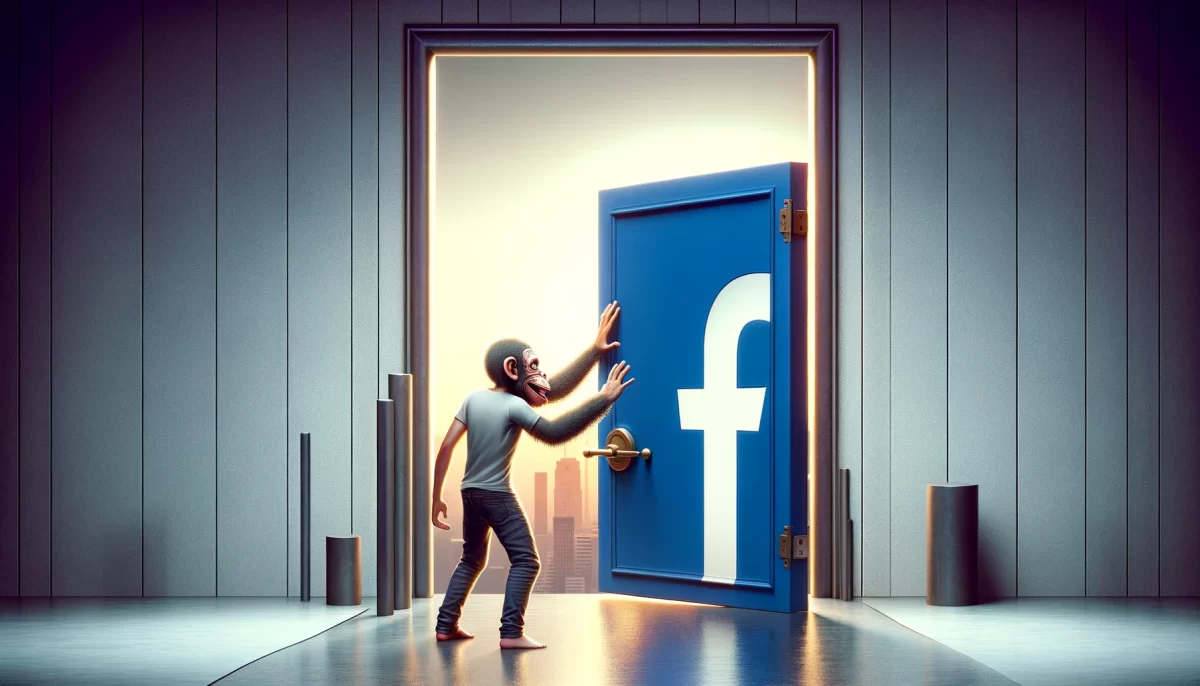
I don’t need this monkey mask anyway.
In the digital age, the act of “Knocking on Facebook’s Door” represents a deliberate choice to engage with social media platforms, often at the cost of personal privacy. Your statement, “If Facebook wants my data, Facebook can HAVE my data. I don’t need this monkey mask anyway,” captures a moment of resignation or perhaps defiance. It suggests a readiness to part with the guise of anonymity or privacy—the “monkey mask”—in exchange for the benefits and conveniences provided by the platform.
This scenario opens up a broader conversation about the trade-offs between privacy and connectivity. Social media platforms like Facebook operate on the currency of data—every interaction, click, and like contributes to a vast reservoir of information that shapes how these platforms evolve and how they serve us. By removing the “monkey mask,” you are acknowledging the implicit contract of transparency (or exposure) that comes with these services.
In embracing this exchange, there’s an acceptance of the dual role users play—as both consumers and products. This relationship with social media is complex, reflecting our desire for connection and recognition alongside our struggles with visibility and control. The decision to give up data and privacy is not without its consequences, shaping not only personal experiences but also broader societal norms and expectations about privacy.