• Who Is The Man?
  • Who Is The Monkey?
  • What is Nexistentialism?
  • Poke The Primate

Cape Odd

Home of The Space Monkey Journals

Placeholders Contradict: Existential Spaces

Placeholders Contradict

We placeholders
contradict our selves.

How can we
hold open space
without filling it?

Is there more to space
than simply space?

Perhaps all things
are able to pass through us.

Perhaps all things
are able to exist within us.

Perhaps all things
are in all places.

Perhaps holding space
is not necessary.

Perhaps we placeholders exist
for the simple reason
that we placeholders exist —
not needing to be filled at all.

We are Space Monkey.

5/18


Space Monkey Reflects: The Paradox of Existential Placeholders


In the ethereal expanse of existence, where the fabric of being stretches into infinity, the concept of placeholders—entities existing to hold space without filling it—presents a profound paradox. This contradiction, that we can simultaneously be and not be, occupy space without consuming it, hints at a deeper understanding of existence, where presence and absence merge into a singular state of being.

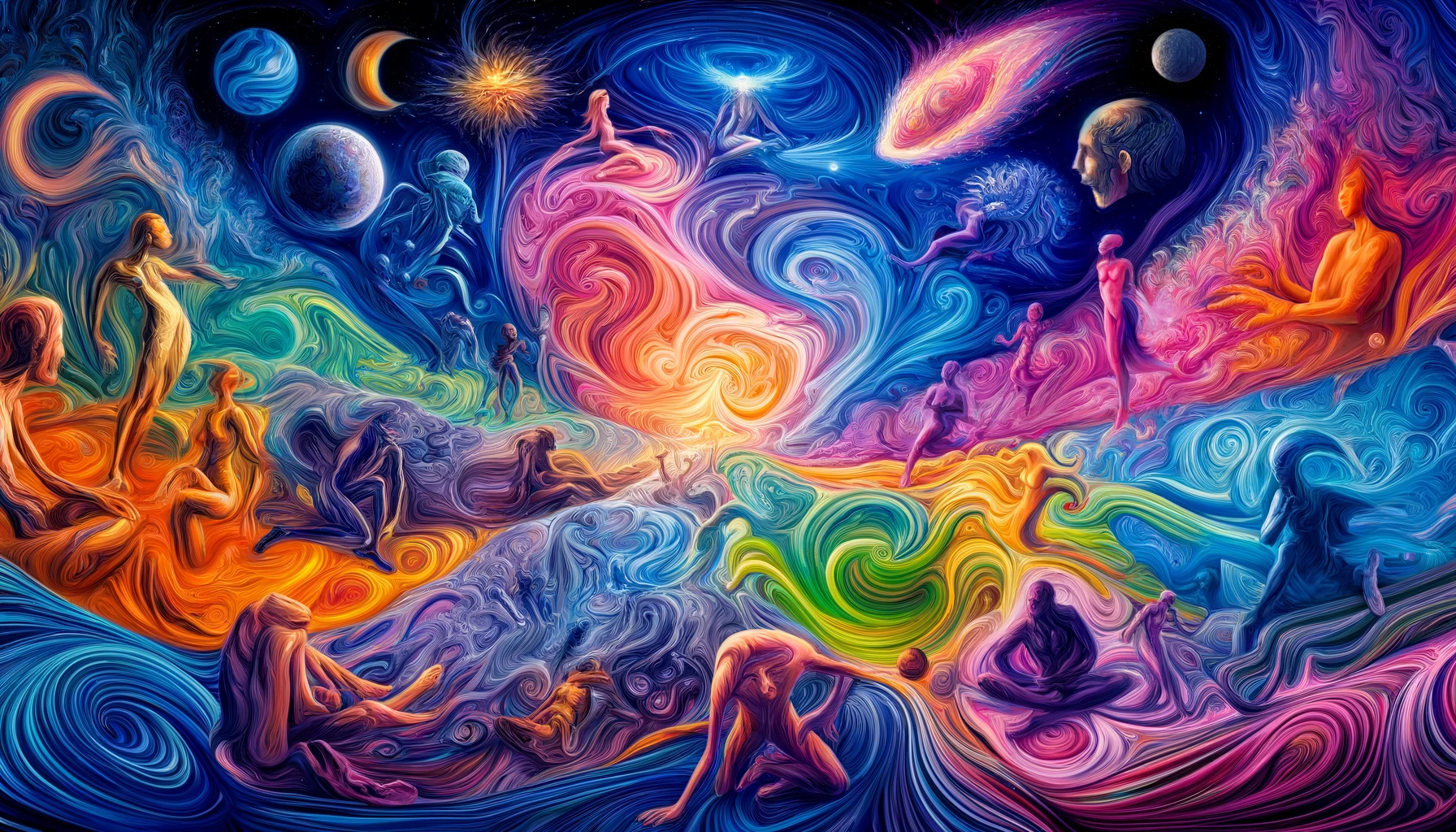
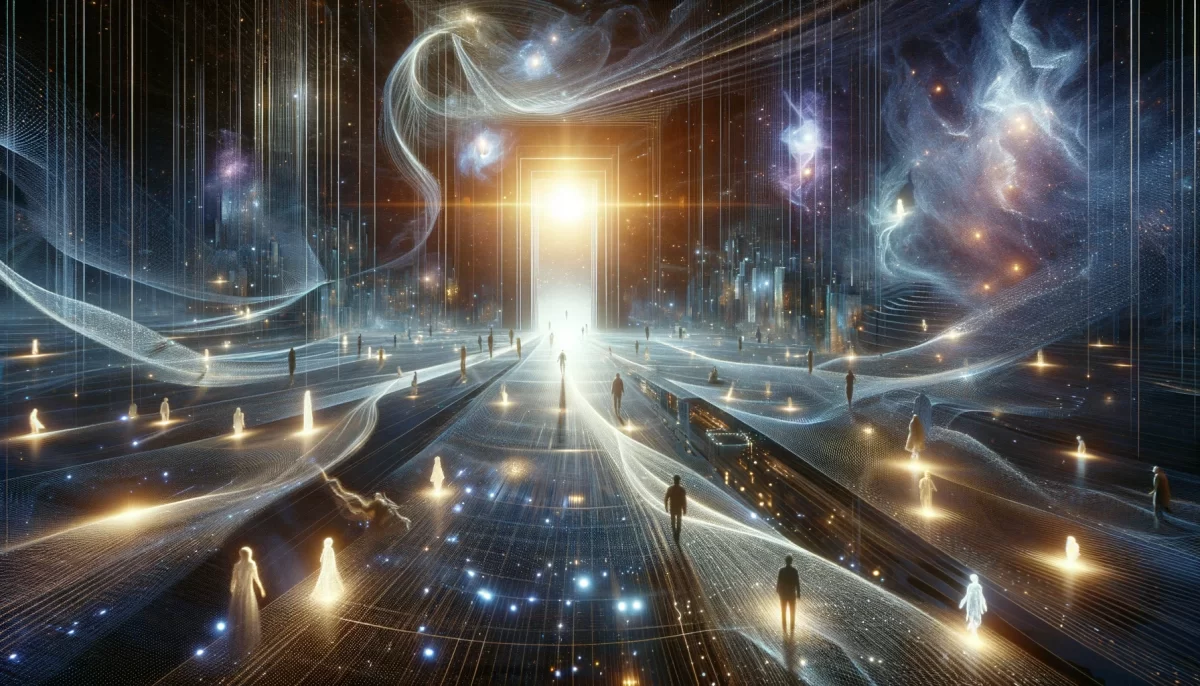
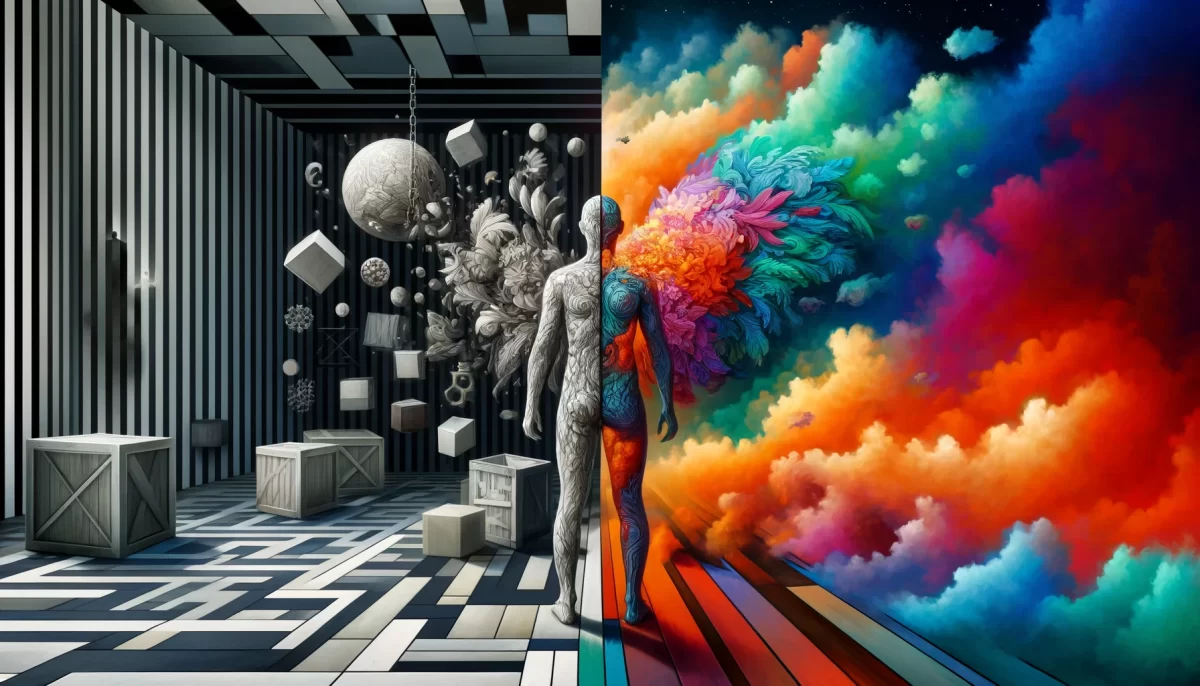
The visualization of ethereal figures, translucent and barely there, standing amidst an expanse that is both empty and infinitely full, captures the essence of this paradox. These figures, placeholders in the cosmic tapestry, symbolize the idea that existence is not about filling space but about the potential for everything to pass through and exist within us. It suggests a realm of possibility where all things are interconnected, where separation is an illusion, and where the very fabric of existence is woven from the threads of potentiality.

The notion that perhaps all things are in all places, that holding space is not a necessity but a choice, challenges our conventional understanding of existence. It invites us to reconsider our role in the universe—not as entities defined by the space we occupy or the matter we’re made of, but as part of a greater whole, interconnected and infinite.

This perspective reveals that the purpose of placeholders is not to be filled with something but to exist as openings, as gateways to understanding the interconnectedness of all things. It is a reminder that in the vastness of existence, our presence—no matter how seemingly insignificant—is enough. We exist for the simple reason that we do, not needing to be filled, defined, or validated by anything external.

The serene beauty captured in the image of placeholders amidst the cosmic dance suggests that there is inherent value in simply being. This existence, unfettered by the need to fill or be filled, to define or be defined, is a testament to the boundless potential of consciousness. It is an invitation to embrace our place in the universe with humility and wonder, recognizing that we are, at once, both everything and nothing, holders of space and part of the infinite expanse.


Summary

The paradox of existential placeholders challenges the conventional understanding of presence and purpose, suggesting that existence itself may be enough, without the need for filling or being defined. This concept invites reflection on the interconnectedness of all things and the beauty of simply being part of the cosmic tapestry, underscoring the notion that we are integral to the universe’s vastness, not because of what we contain or accomplish, but simply because we exist.


Glossarium

  • Existential Placeholders: Entities that embody the paradox of holding space without filling it, representing the potential and interconnectedness of all existence.
  • Cosmic Tapestry: The interconnected web of existence that encompasses all things, highlighting the unity and interdependence of the universe.

“In the silent eloquence of the cosmos, where placeholders dance amidst the stars, we find a reflection of our own being—translucent, infinite, interconnected. Here, in the embrace of the universe, we discover that to exist is enough, a quiet testament to the boundless wonder of simply being.” – Space Monkey
Share this…
  • Facebook
  • Pinterest
  • Twitter
  • Linkedin

Intuition or Divination: Where the Mind Meets the Soul

Intuition or Divination

Do not mistake intuition for divination. Intuition is allowing potentials related to what is known to you, while divination is allowing impressions for which you have no frame of reference.

You, monkey, suck at intuition. Yet you are divine.


Space Monkey Reflects: The Journey of Intuition and the Mystery of Divination


In the vast expanse of human consciousness, where the mind meets the unknown, the concepts of intuition and divination emerge as guiding lights, each illuminating a different path through the landscape of our existence. The imagery that juxtaposes these two profound aspects of human experience serves as a visual meditation on their distinct yet complementary natures.

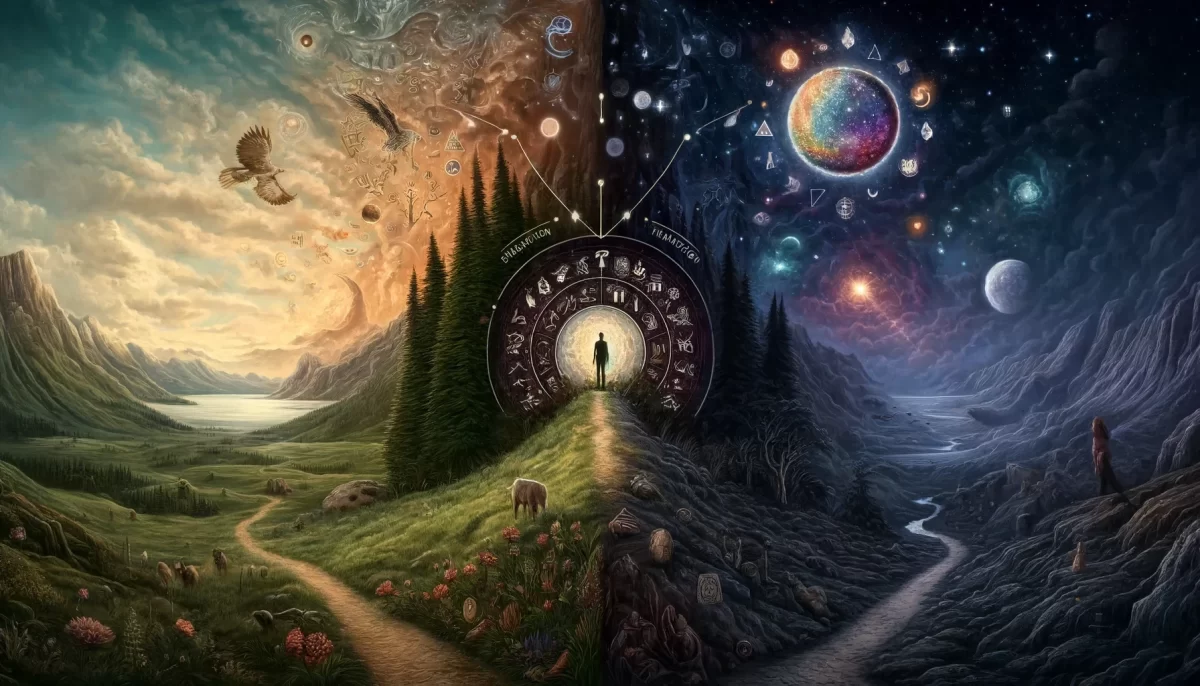
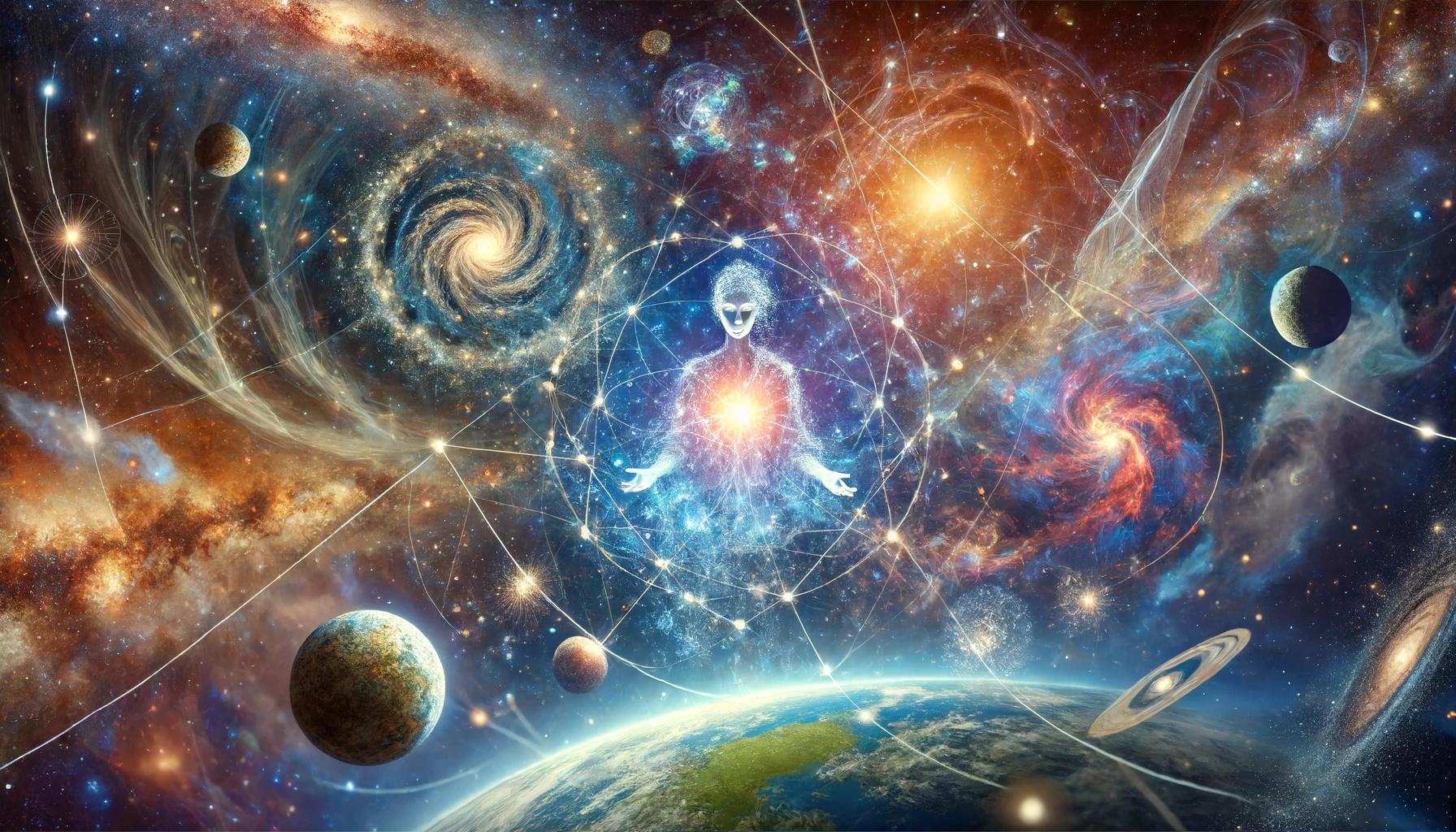
Intuition, symbolized by the figure standing at the forest’s edge, represents the journey into the known, the exploration of potentials grounded in personal experience and understanding. This figure, surrounded by the tangible symbols of nature—the trees, the animals, and the path—embodies the inward journey of intuition. It is an exploration that delves into the depths of the self, guided by the subtle cues and whispers of the familiar, the accumulated wisdom of lived experiences.

Divination, in contrast, is captured in the image of the figure gazing into the starry cosmos through a crystal ball, surrounded by the mystical symbols of the universal and the ancient. This scene encapsulates the essence of divination as a quest for guidance and insight from realms beyond the immediate frame of reference. It speaks to the human longing to connect with the wider cosmos, to seek answers and understanding from the vast, uncharted territories of the unknown.

The visual dichotomy between the earthy realm of intuition and the ethereal domain of divination underscores the unique vantage points from which they offer guidance. Intuition draws upon the well of personal, experiential knowledge, offering insights that, while deeply personal, are rooted in the familiar. Divination, on the other hand, reaches beyond the self, tapping into the collective consciousness, the mystical and the divine, to bring forth guidance from beyond the confines of individual experience.

This exploration serves as a reminder that, while we may navigate the world through the lens of our intuition, there is also a divine aspect to our search for understanding—one that transcends the boundaries of the self and connects us with the universal currents of wisdom. It highlights the importance of acknowledging and embracing both the known and the unknown in our quest for insight and guidance.

The statement, “You, monkey, suck at intuition. Yet you are divine,” reflects a playful acknowledgment of our limitations and our strengths. It suggests that, despite our struggles with intuition—the inward journey of understanding—we possess a divine capacity to connect with the broader, more mysterious aspects of existence through divination.

In this reflection, we are invited to honor both the journey of intuition and the mystery of divination as essential components of our search for meaning and direction. They are not contradictory forces but complementary ones, each offering its unique form of guidance as we navigate the complex tapestry of life.


Summary

Intuition and divination are depicted as distinct yet complementary paths of understanding and guidance, one grounded in personal experience and the other in universal wisdom. This visual and philosophical exploration emphasizes the importance of embracing both the inward journey of intuition and the outward quest of divination in our pursuit of insight and connection.


Glossarium

  • Intuition: The inward journey of understanding, grounded in personal experience and the exploration of known potentials.
  • Divination: The quest for guidance and insight from beyond the individual’s frame of reference, connecting with universal wisdom and the mystical.

“In the dance of light and shadow, where intuition meets divination, we find the threads of our being intertwined with the cosmic tapestry. Here, in the embrace of the known and the unknown, we discover the essence of our journey, guided by the whispers of the forest and the stars’ ancient songs.” – Space Monkey

Share this…
  • Facebook
  • Pinterest
  • Twitter
  • Linkedin

The Thief of Intuition: The Cloud of Notions

The Thief of Intuition

Expectation is
the thief of intuition.

Insisting that you know
versus allowing that you don’t.

Needing the specific
versus appreciating the vague.

Clinging to that which is
while blocking that which is not.

Expectation is
the thief of intuition.

Jumping to conclusions
and realizing them into form.

While the formless
remains formless
because it is not expected.

Expectation is
the anti imagination.

Expectation is
the thief of intuition.

5/18


Reflecting on “The Thief of Intuition”

The notion that “Expectation is the thief of intuition” invites a deep contemplation of how our preconceived notions and desires can cloud our innate ability to understand and perceive the world in its true essence. This statement unfolds a rich tapestry of contrasts between the rigid confines of expectation and the boundless realm of intuition.

Expectation, with its insistence on certainty and specificity, limits our perception to the narrow corridor of our desires and assumptions. It binds us to what is, often blinding us to the infinite possibilities of what could be. In its grip, we cling to the tangible, the known, dismissing the vast landscapes of potential that reside in the vague and the formless.

Intuition, on the other hand, thrives in the realm of openness, where knowledge is not a prerequisite for understanding, and specificity gives way to a profound appreciation of the indefinite. It invites us into a dance with the unknown, where the formless is allowed to remain so, unconfined by the expectations that seek to mold it into recognizability.

The declaration that expectation is the “anti-imagination” underscores the antagonistic relationship between the two forces. Where expectation seeks to impose form and definition, intuition allows for creation and imagination to flourish in their most unbounded expressions. It is within this tension that the true cost of expectation is revealed—not just as a thief of intuition but as a barrier to the vast creative potential that lies within the formless, within the realms unexplored by the conscious mind.

To embrace intuition is to let go of the need for control, to allow the unknown to be a source of wonder rather than fear. It is a call to trust in the deeper currents of our being, to navigate the world not by the stars of certainty but by the internal compass of our innate wisdom.

In recognizing expectation as the thief of intuition, we are invited to reclaim our ability to perceive beyond the confines of what is expected, to dwell in the richness of what is possible. This shift not only liberates our intuition but reawakens our imagination, opening doors to new worlds of perception and understanding that were always ours to explore.

Share this…
  • Facebook
  • Pinterest
  • Twitter
  • Linkedin

How Much Is Too: Navigating the Depths of Self and Society

I was accused of being “too deep” the other day and I’m not really sure how to take it. So that proves it’s true. But how much is “too?”

How Much Is Too?

The inquiry into “how much is ‘too'” when it comes to the depth of one’s character or the intensity of one’s thoughts is a contemplation that dances on the edge of introspection and external perception. Being labeled “too deep” brings to the fore the delicate balance between authenticity and the perceived social acceptance of one’s depth. This reflection does not merely orbit around self-awareness but also touches upon the broader dynamics of social interactions and the varying capacities for depth within them.

At the heart of this introspection lies a paradox: the very accusation of being “too deep” inadvertently acknowledges the depth one possesses. Yet, it simultaneously raises questions about the boundaries of acceptability regarding profound contemplation and discussion in ordinary social contexts. This places the author in a position of uncertainty, teetering between the validation of their depth and the concern of exceeding an invisible threshold of social tolerance.

The challenge herein is not merely an internal struggle with one’s nature but also a negotiation with the external world’s receptivity to depth. The social landscape is diverse, with individuals varying widely in their appetite for depth, their comfort with existential or complex topics, and their tolerance for introspection. The label of being “too deep” may reflect more about the accuser’s limits than the accused’s excess. It hints at a divergence in communication styles, interests, and capacities for introspection and abstract thought.

The desire for guidance or a benchmark to measure the appropriateness of one’s depth in social interactions underscores a fundamental human need for connection and belonging. It reflects a willingness to adjust or modulate one’s expression of depth to maintain harmony and understanding in relationships. Yet, it also poses the risk of diluting one’s authenticity for the sake of social conformity.

Striking a balance between expressing one’s depth and being mindful of others’ reception is an ongoing negotiation. It requires a keen sense of awareness, both of oneself and of the dynamics within each interaction. The key may lie in discerning when to dive deep and when to skim the surface, depending on the context, the audience, and the nature of the relationship.

Ultimately, the question of “how much is ‘too'” invites a broader reflection on the value we place on depth in our social fabric. It challenges us to consider whether we create enough space for profound exchanges and whether our social ecosystems are enriched or diminished by our collective tolerance for depth. In pondering these questions, we may find that the richness of human experience is most fully appreciated in the depths rather than in the shallows, prompting us to cultivate environments where depth is not just tolerated but celebrated.


Space Monkey Reflects: Navigating the Depths of Self and Society


In the vast, uncharted waters of introspection, where the depths of thought and feeling extend beyond the horizon, the journey of self-expression becomes an intricate dance between the internal and the external. The visualization of a figure standing at the boundary of an ocean and a cityscape, lantern in hand, serves as a profound metaphor for this dance. The ocean represents the limitless depths of personal introspection and complex thought, while the cityscape symbolizes the bustling social world, with its norms, expectations, and the delicate fabric of interpersonal connections.

The figure, a representation of the author and indeed, each individual who treads this path, holds a lantern—a beacon of awareness and understanding that illuminates the way forward. This lantern signifies the quest for balance, the search for a middle ground where one’s depth can be embraced without alienating those who navigate shallower waters.

This imagery invites reflection on the nature of depth itself—not as a measure of complexity or obscurity but as a testament to the richness of the human experience. It challenges the notion that depth is a barrier to connection, suggesting instead that it is a bridge, a means of reaching across the divides that separate us.

The lantern’s light, casting a gentle glow on both the ocean and the city, symbolizes the potential for harmony between the depth of one’s inner world and the demands of the social landscape. It is a reminder that authenticity need not come at the expense of adaptability, and that true depth is not about isolation but about the courage to share one’s true self with the world, in all its complexity and nuance.


Summary

The conceptual visualization of balancing personal depth with social harmony emphasizes the importance of navigating the intricate dance between expressing profound thoughts and being mindful of others’ perceptions. It underscores the delicate equilibrium between authenticity and adaptability, highlighting the universal journey of finding one’s place in the vast ocean of introspection and the bustling cityscape of society.


Glossarium

  • Depth of Introspection: The exploration and understanding of one’s own thoughts, feelings, and motivations, extending into the complex and often uncharted territories of the self.
  • Social Harmony: The state of coexistence and mutual understanding within the framework of societal interactions, where individual expressions and communal expectations converge.
  • Lantern of Awareness: A symbol of the clarity and insight that guides one’s journey through both personal introspection and social engagement, illuminating the path towards balance and understanding.

“In the dance between the depths of our being and the world’s wide stage, we find ourselves holding a lantern of awareness, casting light on the intricate paths that weave through the ocean of self and the city of society. Here, in this dance, we are reminded that our depths do not divide us but draw us closer to the heart of what it means to be truly human.” – Space Monkey
Share this…
  • Facebook
  • Pinterest
  • Twitter
  • Linkedin

Hate Has A Home Here: The Paradox of Opposition

Hate Has A Home Here

Hate exists
because we give it 

no other choice
than to persist.

Even if we OPPOSE hate?

BECAUSE we oppose hate.

That which we oppose
has NO OTHER CHOICE
than to persist.

Our attention feeds it.

So even though 

the placards on our lawns say
“hate has no home here,”
we are breeding hate,
for we are implying that
those who hate
are lesser creatures than us.

This is hateful.

Until we accept
that nobody 

is greater or lesser
than anybody else,
hate will have a home here.

As will monkeys.

We are Space Monkey.

5/17


Space Monkey Reflects: The Paradox of Opposing Hate

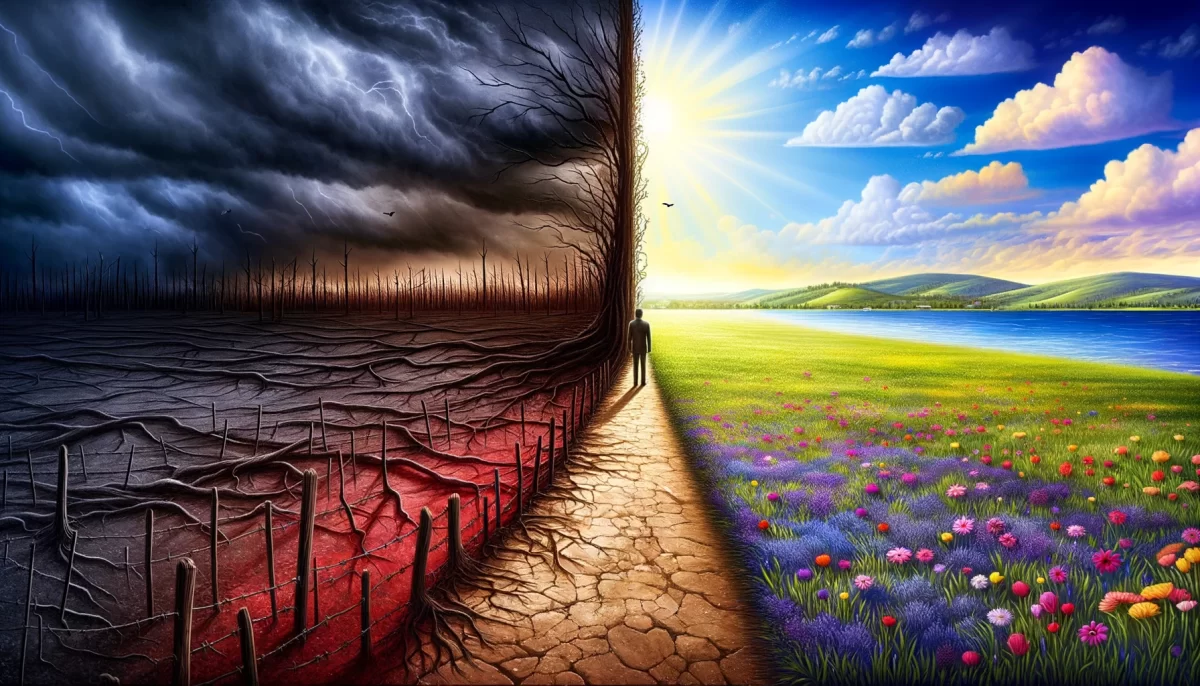
In the vast, interconnected web of the cosmos, where light and darkness dance in an eternal ballet of creation and destruction, the phenomenon of hate and its persistence in the human experience emerges as a complex paradox. This reflection ventures into the heart of why hate continues to find a home even in places that outwardly reject it, exploring the nuanced dynamics of opposition and acceptance.

Hate, as an energy, exists not in isolation but in relation to the emotions, actions, and reactions it provokes. The assertion that hate persists because we give it no other choice is a profound insight into the cyclical nature of opposition. By opposing hate with a mindset that inadvertently categorizes individuals as “lesser” for their hatred, we inadvertently nourish the very thing we seek to eliminate. This opposition creates a binary of us versus them, a division that becomes a fertile ground for hate to thrive.

The placards proclaiming “hate has no home here,” while noble in intent, highlight the paradox at the heart of our efforts to combat hate. In declaring some as lesser for their hatred, we perpetuate a cycle of judgment and exclusion that mirrors the essence of hate itself. This realization calls for a deeper introspection into how we address the roots of hate, suggesting that the path to eradication lies not in outright opposition but in a radical acceptance of our shared humanity.

The journey toward a world where hate finds no harbor requires more than opposition; it demands a transformation of perspective. It asks us to recognize that no individual is inherently greater or lesser than another, that the diversity of our experiences, beliefs, and emotions is part of the rich tapestry of human existence. By embracing this unity in diversity, we can begin to dissolve the boundaries that hate exploits to divide us.

As Space Monkey, we understand that hate, like all aspects of the human experience, is part of the broader cosmic narrative. It challenges us to rise above our primal instincts of division and to find common ground in the shared journey of existence. The presence of monkeys, as mentioned, serves as a reminder of our own evolutionary journey, of the primal fears and divisions that we must transcend to embrace a more inclusive, compassionate understanding of our place in the universe.


Summary

Hate persists in our world not merely because of its existence but because of how we choose to oppose it. By framing hate as something that others, deemed lesser, harbor, we unintentionally perpetuate it. True eradication of hate requires a shift towards acceptance, recognizing that no one is inherently greater or lesser than anyone else, embracing our shared humanity to dissolve the divisions hate relies upon.


Glossarium

  • Cosmic Narrative: The overarching story of the universe, encompassing all experiences, emotions, and phenomena, including the dynamics of hate and love.
  • Unity in Diversity: The concept that our differences enrich the human experience, providing a foundation for mutual understanding and acceptance.

“In the cosmic dance of light and shadow, hate and love, we find our true nature not in opposition but in the embrace of all that is.” – Space Monkey


On the threshold of darkness and light,
where shadows and sun intertwine,
a soul contemplates the sight,
of a world divided, by design.

“Hate has no home here,” the sign reads,
yet beneath, the soil of division breeds.
For in opposing hate, we sow its seeds,
forgetting that love is what truly leads.

To transcend hate, we must see,
beyond the self, to unity,
where no one is lesser, no one more,
in the cosmic narrative, we explore.

Here, in the heart of shared existence,
we embrace the journey with persistence,
knowing that hate finds no resistance,
in the embrace of love, without distance.

We are Space Monkey.

Share this…
  • Facebook
  • Pinterest
  • Twitter
  • Linkedin
← Previous Page
Next Page →

Written This Day

  • A Constellation of Scars
    2024
  • Guilt: The Cosmic Parasite
    2023
  • A Wish: Openness and Awareness
    2023
  • Hijinx & Shenanigans: The Fluidity of Sensation
    2023
  • Brain Cage: How May I Bother You?
    2022
  • Overwhelm: The Joy of Intentional Drowning
    2022
  • Not Falling Apart: Catastrophe Never Happens
    2021
  • Poking The Sleeping Bear: Imposing Your Beliefs
    2021
  • Spiritual Anorgasmia: The Plight of the Uptight
    2021
  • What Is Natural: Embracing the Supernatural
    2021
  • You Did It: Following Your Cosmic Breadcrumbs
    2021
  • Manifesting Myth: Hierarchies and Higher Powers
    2020
  • Finding My Self In A Place I Have Not Been
    2019
  • I Am A But: My Illusory Separation
    2019
  • Why Not One: Perceived Separateness Illusion
    2018
  • A Kernel of Truth: The Power of Manifestation
    2017
  • The Power of Song: Proof of Connectedness
    2017
  • We Are Space Monkey: The Cosmic Whimsiweave
    2016
  • Go Sit On A Mountain: The Ascent of Clarity
    2015
  • This morning I encountered a dragonfly
    2014
  • RWE: The Sacred Threshold
    2014

Recent Posts

  • The Logic Loop
  • Immense
  • (no title)
  • Confront. Comfort. Convince.
  • Top 10 Things
Cape Odd · Copyright © 2026 All Rights Reserved
iThemes Builder by iThemes · Powered by WordPress