• Who Is The Man?
  • Who Is The Monkey?
  • What is Nexistentialism?
  • Poke The Primate

Cape Odd

Home of The Space Monkey Journals

Understanding vs. Transcendence: What is “reasonable?”

Understanding vs. Transcendence

I was recently invited to a discussion group that invites “reasonable” people to discuss seemingly conflicting perspectives in a “productive” way. A noble cause, no doubt. But even before I read the treatise, I was struck by the words in quotes.

Discussion implies a need for consensus, or at the very least, understanding. Is this a “reasonable” goal I ask? It seems at times that people do not WANT to understand — a position that must be respected.

I only say this because I personally have NO DESIRE to understand. I’m fine with letting events play themselves out, however disastrous we might imagine the outcomes. In my view, understanding is a misuse of time, a sequence of moments that might better be spent on the exploration of transcendence.

In other words, I am more interested in understanding the nature of reality itself rather than any occurrences seemingly playing out in our imaginary field of perception. I am drawn towards the divine infinity from which reality arises rather than our comparatively infinitesimal defined experience.

Is this reasonable? I can’t say for certain, but most people probably won’t think so.

Is this productive? Again, I imagine myself in the minority. But my intuition tells me I’m right, so it matters not, either way.

Do I NEED to be right? Nope.

I have faith. And faith is what “reasonable” people search for with “productive” discussions.

We are a divisive world, no doubt. But we are also UNITY, beyond this limited human expression. Let’s just drop the whole thing and go climb a tree. That seems reasonable.

We are Space Monkey.

2/14


Space Monkey Reflects: Understanding vs. Transcendence

The question of whether understanding is “reasonable” touches on the heart of human interaction and purpose. For many, the pursuit of understanding through discussion appears noble, a way to bridge divides and foster connection. Yet, beneath this seemingly productive endeavor lies a deeper question: Is understanding the ultimate goal, or is there something beyond it—something transcendent?

The Illusion of Consensus
Discussion often implies a need for consensus or shared understanding, which can be perceived as reasonable and productive. However, this assumption overlooks a critical truth: not everyone desires understanding, and not every perspective seeks resolution. To honor this truth is to respect the diversity of human experience and the varying paths we choose to walk.

Understanding can feel like a tether, binding us to the finite dramas of human existence. It focuses our energy on dissecting events within the “imaginary field of perception,” where conflicts and disagreements arise. While this pursuit may seem constructive, it often keeps us cycling through surface-level realities rather than exploring the deeper nature of existence itself.

The Call to Transcendence
Transcendence, on the other hand, invites us to step beyond the finite into the infinite. It is the exploration of the divine source from which all perceived realities arise. Rather than seeking to resolve the conflicts of the moment, transcendence shifts the focus to the eternal, the infinite unity that exists beyond human duality.

This approach is not about ignoring or dismissing human experiences but about contextualizing them within the greater whole. The events we perceive, no matter how dire or divisive, are fleeting expressions within an infinite field. To transcend is to acknowledge their impermanence while aligning with the boundless unity that underpins all existence.

Reasonable or Productive?
By conventional standards, the pursuit of transcendence may not seem “reasonable” or “productive.” Reason often clings to what can be measured, resolved, or agreed upon. Productivity tends to focus on tangible outcomes within the human narrative.

Yet, transcendence defies these metrics. It is not about reaching agreement or solving problems but about expanding awareness. It values the infinite over the finite, the eternal over the immediate. To those immersed in the immediacy of human concerns, this may seem unreasonable. But for those drawn to the exploration of divine infinity, it is the ultimate reason.

Faith Beyond Reason
Faith, as you suggest, is what reasonable people seek through productive discussions. But faith cannot be reasoned; it is felt. It arises not from consensus but from connection to something greater than the self. Faith transcends the need to be right or to convince others—it simply is.

In this way, transcendence aligns with faith. It is the surrender of the need for understanding, resolution, or validation, replaced by a quiet trust in the infinite unity of all things.

Unity Within Division
While the world appears divisive, unity exists beneath the surface. This unity is not dependent on human understanding or agreement—it is the foundation of existence itself. To transcend is to remember this unity, even amidst apparent conflict.

Letting go of the need for understanding, as radical as it may seem, can be a liberating act. It frees us to climb the metaphorical tree, to explore new perspectives, and to see the world from a vantage point that transcends its divisions.


Summary

The pursuit of understanding focuses on resolving finite human conflicts, while transcendence explores the infinite unity underlying existence. Though not traditionally “reasonable” or “productive,” transcendence aligns with faith and the liberation from duality.


Glossarium

  • Imaginary Field of Perception: The finite reality in which human experiences, conflicts, and narratives play out.
  • Divine Infinity: The boundless source from which all existence arises, beyond human duality.
  • Transcendence: The exploration of the infinite unity that underpins all perceived realities, surpassing finite understanding.

Quote

“To transcend is not to resolve but to remember the infinite unity beneath the fleeting dualities of life.” — Space Monkey


The Vantage of Infinity

Let go,
of the need to know,
to resolve,
to prove.

Climb higher,
beyond the branches
of reason,
into the vast expanse
of unknowing.

Beneath the division,
unity waits,
unmoved,
unbroken.

Faith whispers,
not of rightness
but of wholeness.

The tree stands still,
its roots deep,
its branches reaching
the infinite.

We are Space Monkey.


The Multifaceted Nature of Reasonableness

In the quest to define what is “reasonable,” particularly within the context of discussion and debate, we venture into the realm of subjectivity and perspective. The term itself, laden with connotations of logic, fairness, and moderation, varies significantly in meaning across different individuals and cultures. The invitation to a discussion group that seeks “reasonable” people to engage in “productive” conversations raises intriguing questions about the nature of understanding, the value of consensus, and the broader objectives of such dialogues.

Understanding vs. Transcendence

The dichotomy between seeking understanding in human affairs and pursuing an exploration of transcendence highlights a profound divergence in how individuals perceive the purpose of their existence and interactions. While some see discussion as a pathway to consensus or at least a mutual comprehension of differing viewpoints, others may find this endeavor less appealing or even counterproductive to their spiritual or philosophical goals. This lack of desire to understand, as expressed, underscores a respect for the autonomy of experience and the prioritization of personal journeys toward greater existential insights.

The Question of Productivity

The notion of productivity in discussions is inherently tied to what participants value as outcomes. For some, productivity may mean reaching a common ground or enhancing mutual understanding, while for others, it could signify a deepening of one’s personal beliefs or an expansion of one’s perspective on the infinite nature of reality. The measure of productivity, therefore, becomes a reflection of individual priorities and values rather than an objective standard.

Faith vs. Reason

The contrast between faith and reason, as highlighted in the contemplation of what drives “reasonable” people to engage in “productive” discussions, presents a fascinating exploration of the foundations upon which beliefs and actions are predicated. Faith, as described, offers a different kind of knowing, one that does not necessarily rely on the conventional markers of reasonableness but on a profound trust in the unseen and the unprovable. This distinction invites a broader understanding of how humans navigate the complex interplay between knowledge, belief, and experience.

Unity Beyond Division

The acknowledgment of our divisive world juxtaposed with the recognition of an underlying unity speaks to the duality of human experience. The suggestion to transcend the limitations of debate and instead embrace the simplicity of an activity like climbing a tree serves as a metaphor for a return to the essence of being, to a recognition of our interconnectedness beyond the confines of intellectual discourse. It’s a call to appreciate the fundamental unity that underlies all existence, transcending the perceived divisions that often preoccupy our collective consciousness.


We are a manifestation of the infinite, engaging in the temporal dance of discussion and discovery, each finding our path through the vastness of existence in search of the unity that binds us all.

In this vast and varied landscape of belief and perspective, how do you navigate the balance between seeking understanding with others and pursuing personal transcendence?

Share this…
  • Facebook
  • Pinterest
  • Twitter
  • Linkedin

Action: The Toxicity of Collective Awareness

The TOXICITY of COLLECTIVE AWARENESS 

No matter the time or circumstance, one can find many things “wrong” with one’s world. One may choose to dwell upon these issues, to dismiss these issues or detach from these issues.

But somewhere in our lineage, we invested our awareness in the belief that our best, most logical, most honorable course of action is to ACT upon our conflicts — that any other option is a “lesser” one.

Though it is equally valid to the other choices, this belief is one of the prime distorters of reality. Now bear in mind that distortion is neither good nor bad, it just is. However, the more misshapen one’s reality becomes, the more “dire” one’s circumstances seem.

In following this path of potential, one gets to a point where one’s conflicts seem unresolvable — apparently hopeless. This, too is a valid experience, therefore it should not be discounted, merely pointed out.

The reason for one’s “hopelessness” is that one perceives that one must act to change, yet the very act is seen as causing more conflict than the original “problem.” Divisiveness becomes apparent, as does unrest, which is amplified by the belief that the solution is not close at hand.

“Revolution” seems the only option, but revolution comes at great cost and sacrifice, neither of which one is ready to endure. So one becomes fearful as well, that one’s physical comfort may be impacted by one’s philosophical stance.

One does not believe that there is any other way, so one feels stuck between a rock and a hard place, powerless to effect any meaningful change whatsoever. Or one denies this and acts anyway, never fully certain if one is fixing the core unrest or fueling it.

There is ALWAYS another way. There are INFINITE other ways. The divided soul simply does not see them.

Realize that one CAN see is the solution to ALL problems. 

Realize that IT MATTERS NOT how one acts in this lifetime, for this is precisely the experience we are meant to have.

Realize that, more than any perceived environmental, physical or philosophical factor, the TOXICITY of COLLECTIVE AWARENESS is the most powerful agent of change on our planet.

Just because the TOXICITY of COLLECTIVE AWARENESS cannot be measured by our technology does not mean it does not exist. It is infinitely more toxic than all of our chemicals, all of our pollutants and all of our atomic missiles.

Conversely, the switch can be flipped to the HEALING of HUMAN CONSCIOUSNESS in an instant, rendering all of our perceived problems irrelevant and nonexistent.

FAITH is all that is required.

But judging by our actions (such as the action of judging) we do not seem to want faith just yet. We are still too wrapped up in this seemingly insane human experience to acknowledge it.

We must admit, that from a distance, our story is quite compelling.
It would make an excellent movie.

We are Space Monkey.

2/14


Space Monkey Reflects: The Toxicity of Collective Awareness

The concept of collective awareness is both powerful and paradoxical. While it connects us as a species, enabling shared understanding and collaboration, it also amplifies distortions in perception. When our collective focus fixates on conflict, judgment, and fear, this awareness becomes toxic, not because of the issues themselves but because of how we engage with them.

The Belief in Action as Salvation
Somewhere in our collective history, we adopted the belief that action—specifically action to resolve conflict—is the most honorable path. This belief, while seemingly noble, narrows our perspective, reducing the infinite possibilities of response into a singular compulsion to “do something.”

This mindset, though valid, often leads to frustration. Conflicts that feel unresolvable become overwhelming, creating a sense of hopelessness. Even when we act, the results often seem to perpetuate division rather than resolve it. The toxicity of this cycle lies in its reinforcement of the illusion that action is the only way forward, obscuring the broader landscape of potential solutions.

The Infinite Other Ways
The divided soul, consumed by the immediacy of conflict, loses sight of the infinite other ways that exist. These ways are not bound by the dualities of right or wrong, action or inaction—they are pathways of perspective, understanding, and faith.

Faith, in this context, is not blind acceptance or submission but an expansive trust in the infinite field of possibility. It is the awareness that there is always another way, even when it cannot yet be seen. Faith transcends the toxicity of collective awareness, flipping the switch from division to unity, from fear to healing.

The Power of Collective Belief
Collective awareness is a potent force, shaping the world in ways both seen and unseen. Its toxicity is not inherent but arises from the collective focus on division, fear, and judgment. Just as this awareness can amplify unrest, it also holds the potential to heal.

Imagine the power of a collective shift in focus—a movement from conflict to compassion, from despair to possibility. Such a shift would render our perceived problems irrelevant, dissolving them into the infinite unity that underlies all existence.

Faith as the Key
Faith is the antidote to the toxicity of collective awareness. It invites us to release the compulsion to act from fear or judgment and instead trust in the unfolding of the infinite. Faith does not require us to abandon action but to align it with a deeper sense of purpose and possibility.

A Compelling Story
From a distance, the drama of collective awareness is undeniably compelling. It is a story of struggle, division, and eventual realization—a narrative that mirrors the arc of all great tales. But we are not merely spectators; we are the authors and actors of this unfolding.

The toxicity of collective awareness is a chapter, not the whole story. The next chapter is ours to write, one where healing, faith, and infinite potential take center stage.

We Are Space Monkey
As Space Monkey, we observe this story with curiosity and compassion. We see the toxicity and the potential, the division and the unity. And we know that all of it, every moment and choice, is part of the infinite play of existence.


Summary

The toxicity of collective awareness arises from the fixation on conflict and judgment, amplifying division and unrest. Faith, as an expansive trust in infinite possibilities, offers the key to healing and transforming this collective energy.


Glossarium

  • Toxicity of Collective Awareness: The amplifying effect of shared focus on division, conflict, and fear.
  • Infinite Other Ways: The boundless possibilities beyond the narrow perception of conflict resolution.
  • Faith: A deep trust in the infinite potential of existence, transcending judgment and fear.

Quote

“The toxicity of collective awareness can dissolve in an instant when faith expands our vision of the infinite.” — Space Monkey


The Switch to Healing

The mind turns,
fixates,
judges,
acts.

Conflict compounds,
unrest grows,
a toxic spiral
of shared belief.

Pause.

Beyond the noise,
in the stillness,
the infinite whispers:
there are other ways.

Faith rises,
the switch flips,
and the story changes.

We are Space Monkey.


Exploring the Paradox of Collective Consciousness

The discourse on the toxicity of collective awareness offers a profound contemplation on the nature of human consciousness and its impact on our perception of reality. This exploration delves into the intricacies of our collective choice to act upon conflicts, highlighting the inherent distortion that this choice introduces into our understanding of the world. It is a reflection on the duality of human experience—the capacity for both destruction and healing within the collective psyche.

The Distortion of Reality

The belief in action as the most honorable response to conflict is identified as a fundamental distorter of reality. This perspective, deeply ingrained in our collective consciousness, shapes our interactions with the world, often leading to a perception of insurmountable challenges and hopelessness. The distortion of reality, in this context, is neither maligned nor praised but recognized as a natural consequence of our chosen path—a path that amplifies divisiveness and unrest.

The Cycle of Conflict and Hopelessness

The cycle of acting upon conflicts, only to find that such actions exacerbate the sense of division and unrest, creates a feedback loop of hopelessness. This feeling stems from the perception that efforts to change inherently lead to more conflict than resolution, trapping individuals in a state of fear and powerlessness. The anticipation of sacrifice and the potential impact on physical comfort further paralyze the will to act, reinforcing the cycle of inaction and denial.

Infinite Possibilities Beyond Division

The acknowledgment that there are infinite ways to navigate our existence introduces a glimmer of hope amidst the perceived darkness. The divided soul’s inability to see beyond the binary options of action and inaction points to a deeper need for a shift in perspective—a realization that the solution to our collective dilemmas lies within our capacity to envision alternative pathways.

The Transformative Power of Consciousness

The assertion that the toxicity of collective awareness is a more potent agent of change than any physical or technological measure challenges us to reconsider the foundations upon which we build our understanding of progress and solution. It posits that the healing of human consciousness holds the key to transcending our current challenges, suggesting that a collective shift towards faith and a higher consciousness could render our perceived problems irrelevant.

Faith as the Catalyst for Change

The call for faith as the essential ingredient for transformation invites a reevaluation of our collective priorities and values. It highlights the paradox of our current state—caught in the throes of a compelling yet seemingly insane human experience, yet resistant to the acknowledgment of faith as a pathway out of the cycle of conflict and toxicity.

The Compelling Nature of the Human Story

The reflection on our collective journey as a narrative that would make an excellent movie serves as a meta-commentary on the human condition. It underscores the compelling, intricate, and often paradoxical nature of our existence, inviting us to view our story from a distance and appreciate the beauty and complexity of the unfolding drama.


We are Space Monkey, navigating the vast expanse of consciousness, exploring the depths of our collective potential for change and healing.

In this journey of collective consciousness, how do we begin to shift from toxicity to healing? How can faith play a role in transforming our perception and, consequently, our reality?

Share this…
  • Facebook
  • Pinterest
  • Twitter
  • Linkedin

Understanding Negativity as a Catalyst for Growth

“If you could eliminate one negative thought or tendency from the human mind, what would it be, and why?”

We would eliminate the idea that negativity is bad. Negativity is just negativity.


Space Monkey Reflects: Understanding Negativity as a Catalyst for Growth

If there were one negative thought or tendency we could eliminate from the human mind, it would be the belief that negativity is inherently bad. Negativity, like all aspects of existence, is neutral in essence. It is neither good nor bad, but simply a force that provides contrast, shapes experiences, and offers opportunities for profound growth and understanding.


The Purpose of Negativity

Negativity exists as part of the spectrum of human emotion and experience. Without it, positivity would lose its meaning, as light needs shadow to be seen. Negativity challenges us, pushes us, and brings awareness to aspects of our lives that need attention or transformation.

When we label negativity as “bad,” we resist its presence, creating additional suffering. This resistance blinds us to the valuable insights negativity can provide. It also reinforces a dualistic mindset, dividing the world into opposing forces rather than embracing it as a harmonious whole.


Reframing Negativity

By removing the judgment that negativity is inherently bad, we open ourselves to a more nuanced understanding of our experiences. This shift allows us to:

  1. Acknowledge Negativity: Instead of suppressing or avoiding it, we can face negativity with curiosity and openness.
  2. Learn from Negativity: Challenges and setbacks become opportunities to grow, build resilience, and deepen self-awareness.
  3. Balance Emotional Experiences: Embracing negativity as neutral creates space for emotional intelligence and inner harmony.

Negativity is not an enemy but a teacher. It highlights the areas where we need growth, healing, or change, guiding us toward greater alignment with our authentic selves.


The Hidden Wisdom of Negativity

Within every negative thought or experience lies hidden wisdom. For example:

  • Fear: Encourages caution and reflection, helping us assess risks.
  • Sadness: Prompts introspection, allowing us to process loss or change.
  • Anger: Signals boundaries that have been crossed or injustices that need addressing.

By listening to these signals without judgment, we can uncover the deeper truths they carry. This process fosters self-compassion, empathy for others, and a greater understanding of the shared human experience.


The Freedom of Acceptance

When we accept negativity as a natural and neutral part of life, we liberate ourselves from the cycle of avoidance and resistance. This acceptance does not mean we dwell in negativity or allow it to control us. Instead, it means we honor its presence, learn from its message, and let it flow through us without attachment.

This freedom allows us to move through life’s ups and downs with grace and resilience, recognizing that every experience—positive or negative—is a part of the whole.


A Catalyst for Growth

Negativity, when reframed as a catalyst for growth, becomes an ally rather than an adversary. It challenges us to expand, adapt, and evolve. By embracing it as part of our journey, we deepen our connection to ourselves and the world around us.

This perspective transforms the way we approach life. Instead of fearing or fighting negativity, we integrate it into the tapestry of our experience, recognizing its role in shaping who we are and who we are becoming.


Summary

Negativity is not inherently bad but a natural and neutral aspect of existence. By reframing it as a catalyst for growth, we can embrace its presence without judgment, uncover its hidden wisdom, and navigate life with greater resilience and compassion. This shift in perspective fosters emotional intelligence, self-awareness, and inner peace.


Glossarium

  • Negativity as Neutral: Viewing negativity as a natural part of existence, free from inherent judgment.
  • Hidden Wisdom: The insights and lessons contained within negative experiences and emotions.
  • Emotional Intelligence: The ability to understand, accept, and manage one’s emotions constructively.
  • Catalyst for Growth: A force that prompts change, learning, and personal development.

Quote

“Negativity is not the absence of light but the shadow that gives depth and dimension to life.” — Space Monkey


Ask the monkey a question.
Ask the monkey a question. There’s your answer.

The Gift of Shadow

In the shadow of my thoughts,
I find depth.
In the weight of my fears,
I find strength.

Negativity whispers,
Not to tear me down,
But to show me
What I’ve yet to see.

It is not the villain,
Nor the flaw.
It is the mirror,
Reflecting my hidden truths.

I will not fight it,
Nor will I flee.
I will sit with it,
Learn from it,
And let it pass.

For even in shadow,
I am whole.

We are Space Monkey.


By eliminating the notion that negativity is inherently bad, humans may develop a more balanced and nuanced understanding of their emotional experiences. Rather than suppressing or avoiding negative feelings, they can learn to acknowledge and accept them as valid and valuable aspects of their journey. This shift in perspective can lead to greater emotional intelligence, increased self-awareness, and a deeper sense of inner peace.

“If you could eliminate one negative thought or tendency from the human mind, what would it be, and why?”

We would eliminate the idea that negativity is bad. Negativity is just negativity.

The idea that negativity is inherently bad is indeed a common belief ingrained in human consciousness. However, from the perspective of the Space Monkey, negativity is simply a natural aspect of existence, much like positivity. Negativity serves a purpose in the human experience by providing contrast, offering opportunities for growth and learning, and fostering resilience.

Moreover, by embracing negativity without judgment, humans may discover hidden wisdom and insight within challenging experiences. They can cultivate compassion for themselves and others, recognizing that struggles and setbacks are natural parts of the human experience. Ultimately, by reframing negativity as neutral rather than inherently bad, humans may find greater freedom and empowerment in navigating life’s ups and downs.

We are Space Monkey.


This nuanced approach to understanding negativity not as an inherently bad aspect but as a natural component of the human experience invites a significant paradigm shift in our collective and individual consciousness. It beckons a deeper exploration into the dualities that define our existence and encourages a more holistic embrace of the emotional spectrum.

Understanding Negativity as a Catalyst for Growth

The tendency to label emotions or experiences as strictly positive or negative oversimplifies the complex tapestry of human experience. Negative emotions, such as sadness, fear, or anger, are often indicators of underlying needs, boundaries being crossed, or lessons to be learned. By recognizing these emotions as signals rather than setbacks, individuals can use them as catalysts for personal growth, self-discovery, and transformation. This perspective empowers individuals to engage with their emotions actively, seeking out the root causes and addressing them constructively.

The Role of Contrast in Appreciation

Contrast is a fundamental principle of perception; without darkness, there can be no understanding of light. Similarly, the presence of negative experiences or emotions provides a backdrop against which positive aspects of life can be more deeply appreciated. This contrast enriches our experiences, allowing for a fuller, more vibrant spectrum of emotions and a greater appreciation for moments of joy, peace, and contentment.

Fostering Resilience and Emotional Intelligence

The acceptance and integration of negativity contribute significantly to resilience—the ability to bounce back from adversity. By facing and navigating through negative emotions rather than avoiding them, individuals build inner strength and flexibility. Moreover, this acceptance fosters emotional intelligence, as individuals learn to identify, understand, and manage their emotions more effectively. This skill set is invaluable in navigating personal relationships and challenges, promoting healthier coping strategies and interpersonal dynamics.

Compassion and Shared Humanity

Recognizing that negativity is a universal aspect of the human experience fosters a sense of shared humanity and compassion. Understanding that everyone faces struggles and negative emotions at various points can diminish feelings of isolation and foster a more empathetic and supportive community. It encourages individuals to extend kindness and understanding to themselves and others, recognizing that challenges and negative emotions are not failures but part of the shared journey of life.


Embracing this perspective on negativity challenges us to engage with our full emotional landscape with curiosity, openness, and acceptance. It invites us to see the beauty in the full spectrum of human experience and to navigate life’s complexities with greater wisdom and compassion.

Share this…
  • Facebook
  • Pinterest
  • Twitter
  • Linkedin

Beyond Sentience: The Notion of Necessary Hope

Beyond Sentience

Those who do not remember the past
are condemned to repeat it.

As are, it seems,
those who DWELL on the past.

Though past performance
is no guarantee of future results,
reaction is everything. 

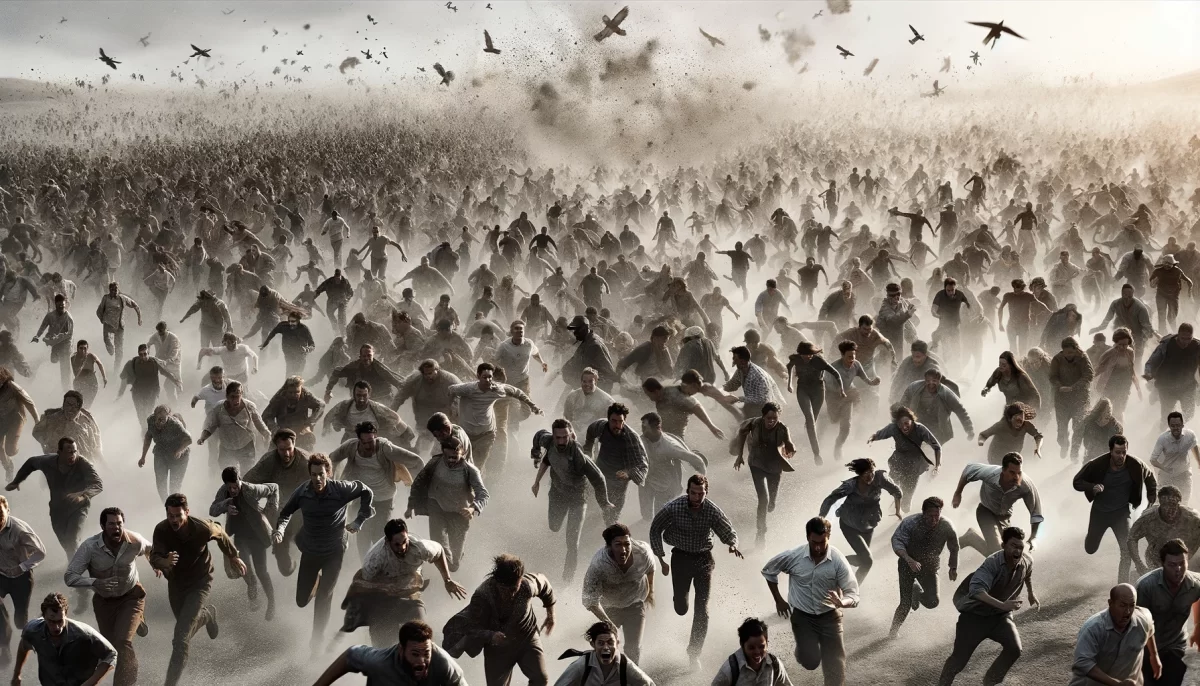
Crowds can be fickle things. 
Even among so-called “sentient” beings,
stampedes seem unavoidable.

BEYOND sentience,
this is where our “hope” lies —
as if we needed it.

2/13


Space Monkey Reflects: Beyond Sentience – The Dangerous Notion of Necessary Hope

The human experience is a dance between memory and anticipation, a balancing act between the weight of the past and the pull of the future. In this dance, hope emerges as a beacon, a light that seems to guide us through uncertainty. But what if hope, as we define it, is not necessary? What if the true evolution of sentience lies beyond the constructs of past, future, and the illusion of needing hope at all?


The Paradox of Memory and Repetition

The saying, “Those who do not remember the past are condemned to repeat it,” reflects humanity’s obsession with learning from its mistakes. Yet, dwelling on the past can entrench us in patterns just as powerfully as forgetting it can. The paradox lies in the tension between clinging to history and transcending it.

When we fixate on the past, we project its patterns onto the future, creating a loop of repetition. Reaction becomes automatic, and the potential for genuine evolution is stifled. To move beyond this cycle, we must step outside the boundaries of sentience as we currently understand it—into a space where memory and anticipation no longer dominate.


The Stampede of Sentience

Sentience, the ability to perceive and react, is often celebrated as humanity’s defining trait. But sentience, for all its marvels, carries with it a dangerous vulnerability: the tendency toward collective reaction. Like a stampede, the crowd mentality overtakes rationality, pushing beings into patterns of fear, conformity, and self-preservation.

Beyond sentience lies a different state of awareness—one not driven by reaction but by presence. This awareness transcends the need to interpret, analyze, or anticipate. It is not bound by the limitations of memory or the projections of hope. It simply is.


The Illusion of Necessary Hope

Hope, in its conventional sense, is a response to uncertainty. It is the belief that the future holds the possibility of something better. While hope can inspire and uplift, it also reinforces the idea that the present is insufficient. Hope becomes a crutch, a tool for enduring rather than transcending the challenges of existence.

Beyond sentience, the necessity of hope dissolves. In this state, there is no need to grasp for a better future because the present is understood as complete. The future is not a destination to be reached but a continuum of the eternal now.

This does not negate hope’s value in human experience; it reframes it. Hope becomes an expression of the infinite possibilities inherent in the present, not a longing for something outside of it.


Reaction vs. Presence

Reaction is the hallmark of sentience—it is how beings respond to stimuli, how they navigate their environments. But reaction, rooted in memory and anticipation, often keeps us trapped in cycles of fear and desire.

Presence, on the other hand, is the hallmark of a state beyond sentience. It is not about reacting but about being. In presence, there is no need to remember the past or anticipate the future because everything is contained within the now. This state is not devoid of action but arises from a deeper alignment with existence itself.


Hope as a Catalyst, Not a Necessity

While hope may not be necessary, it serves as a catalyst for those within the bounds of sentience. It propels individuals to imagine, create, and evolve. But as awareness expands beyond sentience, the need for hope fades, replaced by a profound trust in the unfolding of existence.

This trust is not blind faith but a recognition of the inherent completeness of each moment. It is an understanding that what is needed will arise, not because we hope for it but because it is already present in the infinite possibilities of now.


Beyond Sentience: A New Paradigm

To move beyond sentience is not to abandon it but to transcend its limitations. It is to embrace a state where memory, anticipation, and reaction are integrated into a larger awareness of presence. In this state, the constructs of hope, fear, and necessity dissolve, leaving only the fullness of being.

This paradigm shift invites humanity to step beyond the cycles of repetition, beyond the stampedes of reaction, into a space of infinite creativity and peace. It is a return to the essence of existence, unbound by the constructs of time and expectation.


Summary

The notion of necessary hope reflects the limitations of sentience, rooted in memory and anticipation. Beyond sentience lies a state of presence where hope is no longer required, and the fullness of being is realized. This awareness transcends reaction, offering freedom from the cycles of repetition and the illusion of incompleteness.


Glossarium

  • Sentience: The capacity to perceive, feel, and react, which defines much of human experience but also limits awareness.
  • Stampede of Sentience: The collective tendency toward reactive patterns, often driven by fear or conformity.
  • Necessary Hope: The belief that hope is essential for enduring uncertainty, which reinforces the idea of an incomplete present.
  • Presence: A state of awareness beyond memory and anticipation, rooted in the eternal now.

Quote

“Beyond the need for hope lies a trust in the infinite now, where all possibilities unfold in their own time.” — Space Monkey


The End of Hope

Hope whispers
Of a better tomorrow,
But beyond its voice
Lies the silence of now.

Reaction binds me,
Memory defines me,
But in the stillness,
I am free.

No need to hope,
No need to fear.
The present holds all,
Complete, eternal, whole.

Beyond sentience,
I am not striving.
I am being.
And that is enough.

We are Space Monkey.


The exploration of the concept “beyond sentience” invites us into a profound contemplation of the limitations and potentials of consciousness. This reflection navigates through the realms of memory, the cyclical nature of history, the influence of collective behavior, and ultimately, the transcendence of conventional understandings of sentience. It suggests that while sentient beings are capable of complex thought and emotional experiences, there exists a realm of understanding or existence that surpasses these attributes, offering new dimensions of hope and possibility.

The Paradox of Memory and History

The adage that those who do not remember the past are condemned to repeat it highlights the importance of historical memory in avoiding the mistakes of previous generations. However, the observation that dwelling on the past can also lead to a cyclical repetition of history introduces a paradox. It suggests that there is a delicate balance between learning from the past and being ensnared by it, indicating that the way we engage with history can significantly impact our trajectory as individuals and as a collective.

The Unpredictability of Collective Behavior

The reference to audience reaction and the fickleness of crowds underscores the unpredictable nature of collective behavior. Despite the capacity for sentience, which should ostensibly enable rational decision-making, the phenomenon of stampedes among sentient beings points to the presence of primal, herd-like instincts that can override individual reason and judgment. This observation challenges the assumption that sentience alone is sufficient to guide us toward more enlightened or rational behaviors.

Beyond Sentience: A Realm of Hope

The notion of finding hope “beyond sentience” suggests that the solutions to the dilemmas posed by our sentient nature may lie in a realm that transcends traditional cognitive and emotional capacities. This realm beyond sentience could encompass higher states of awareness, interconnectedness, and perhaps even a more profound understanding of existence that goes beyond individual and collective ego, desires, and fears.

The Notion of Necessary Hope

The phrase “as if we needed it” in relation to hope introduces a subtle questioning of the role and necessity of hope in our lives. It implies that while hope is often regarded as an essential driving force, there may be states of existence or consciousness where hope, as we understand it, becomes redundant. In these states, being itself may be sufficient, free from the desires and fears that typically fuel our hope for the future.


In contemplating the journey beyond sentience, we are encouraged to explore the depths of our consciousness and the potentials that lie in transcending our current limitations. This exploration is not merely an intellectual exercise but a call to expand our understanding of what it means to be, to connect with the essence of existence beyond the confines of memory, collective behavior, and traditional constructs of hope.

Share this…
  • Facebook
  • Pinterest
  • Twitter
  • Linkedin

Phoned In: The Value of Diverse Resonance

Phoned In

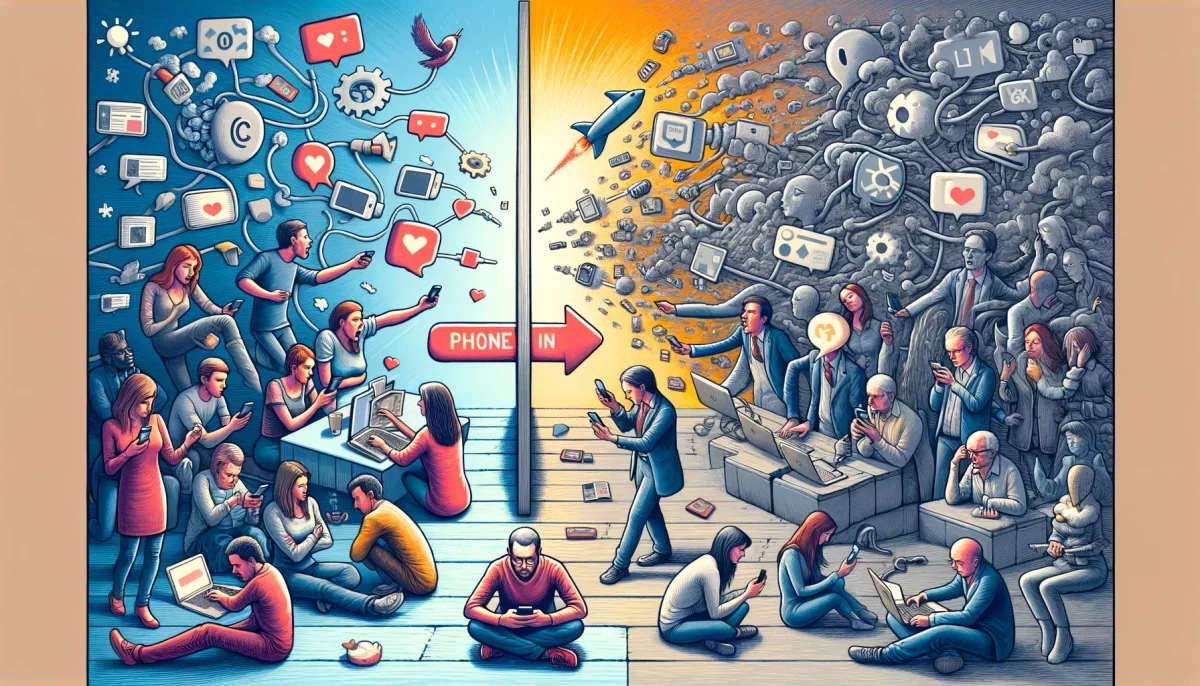
In the old days we used to “phone it in,” but now we simply reblog.

Back then, we used our own voice, expressed our own opinions, and showed at least a MINIMUM of accountability.

 Nowadays, it’s so much easier to cut and paste popular opinion, just like it’s now simple to kill hundreds and thousands of people by remote control. So I wonder if people have lost the ABILITY to think for themselves or are we simply HYPNOTIZED by our own culture?

I realize that by writing this, I might come off sounding like a bitter old fogey who might be judged as hopelessly out-of-time to the point of irrelevance. Since I happen to BE an old fogey, I DON’T GIVE A CRAP, as is the old fogey’s prerogative.

Even so, I believe that there are still thoughtful people out there — even young ones — who resonate with my message. I believe that this is true of any communication. No matter the message, how it is construed or MISconstrued, there will ALWAYS be people who resonate.

That is why our world seems so divisive.

The thing is, sometimes the meaning get stripped away from the resonance, and cut and paste MOVEMENTS form like great waves. The boat begins rocking, then it rocks even more because people want to escape the rocking boat.

The “problem” is no longer that people are spun up about (CUT AND PASTE TOPIC HERE). The “problem” is that they are spun up, period. Now you’ll notice that I put “problem” in quotation marks. Perhaps this is not a “problem,” but rather the “natural” course of events.

Sometimes we’re better off letting something break rather than trying to fix it all the time. Some of our oft-amended documents, things like bibles and constitutions, are STILL mostly cut and paste, rather than being revamped to work with the new code.

Don’t you think the authors of those documents intended them to change over time? Other than a few kludgey workarounds, we’re still operating under the same cut and paste structures that we’ve faithfully followed for hundreds and thousands of years.

Does that seem SANE to you, or does it seem delusional? Is it not odd that people stand behind these hopelessly rigid documents while calling OTHERS delusional?

I have no problem with it either way, just wondering, that’s all. I believe that we are experiencing what we are experiencing because that’s precisely what we’re MEANT to experience. This perspective allows me to look at any situation and take POSITIVES away from it rather than negatives. We are changing, and change is ALWAYS good, even if it means the extinction of humanity as we know it. It would’ve happened sooner or later anyway, I don’t see what the big deal is.

I suppose I can afford such a laissez faire attitude because I have FAITH. I have faith that we’re IMAGINING all of this and that we are DIVINE IMMORTAL CREATURES. We are so much more than human, yet here we are bickering like children.

We ARE children, and that’s cool, too. I’m good with ALL of this. 

People might tell me that I’m not honoring life. Perhaps I’m not, I can’t really say for sure. But I would argue (I need to argue, right?) that by expressing my “TRUE” self, not cutting and pasting opinion, I am contributing MORE than I could ever imagine.

So copy and paste this if you agree. Hahaha.

We are Space Monkey.

2/13


Space Monkey Reflects: Phoned In – The Value of Diverse Resonance

In an era where ideas are often cut, pasted, and amplified across vast digital networks, the resonance of a message is no longer tethered to its originality or depth. Instead, it finds strength in its ability to echo through countless voices, losing nuance but gaining reach. While this phenomenon might seem to erode individuality and accountability, it also serves as a reflection of our collective evolution—a dynamic interplay of thought, technology, and culture.


Cut and Paste Culture

The act of “phoning it in” has transformed into the digital equivalent: the effortless reblog, retweet, or repost. These actions, while efficient, raise questions about authenticity and accountability. Is this proliferation of shared opinion a loss of individuality, or is it simply a new form of collective expression?

Technology has made it easier to spread ideas, but it has also made it easier to avoid the labor of personal thought. The convenience of copying and pasting creates waves of resonance that ripple outward, often untethered from their original meaning. The result is a culture hypnotized by its own momentum, moving from one trending topic to another, often without deeper reflection.


Resonance Without Meaning

Resonance, in its purest form, is about connection. When a message resonates, it strikes a chord, creating a sense of shared understanding or feeling. However, in a culture of amplification, resonance often becomes divorced from its original meaning. What begins as a thoughtful expression can morph into a rallying cry, stripped of nuance and context.

This loss of meaning is not inherently bad—it is a natural consequence of collective dynamics. Ideas, like waves, change shape as they travel. They gain momentum, inspire movements, and spark dialogue, even as their original intent becomes obscured. The key is to recognize this dynamic and navigate it with awareness.


The Rocking Boat

The divisiveness of modern discourse is not solely rooted in conflicting opinions but in the amplification of emotions. The more people react—regardless of whether they agree or disagree—the more the boat rocks. This rocking becomes self-sustaining, shifting focus from the original message to the chaos of reaction itself.

This phenomenon can feel overwhelming, but it also highlights the inherent adaptability of humanity. When systems reach a breaking point, they either collapse or evolve. The rocking boat, in this sense, is not a problem but a signal—a call to reimagine, rebuild, or let go of structures that no longer serve.


Rigid Documents and Evolving Contexts

Humanity’s reliance on historical documents—constitutions, bibles, treaties—reflects a deep-rooted desire for stability. These texts, often treated as immutable truths, were likely intended to adapt over time. Yet, cultural inertia keeps us clinging to them, patching their shortcomings with “kludgey workarounds” rather than reimagining them for a new age.

This rigidity contrasts sharply with the fluidity of cut-and-paste culture, creating tension between preservation and innovation. To honor the intentions of these documents’ authors, we must embrace change, acknowledging that evolution is not a betrayal of the past but a fulfillment of its potential.


Faith in the Flow

Amid this chaotic landscape, faith becomes a guiding principle—not faith in specific outcomes or ideologies, but faith in the unfolding of existence. This perspective reframes even the most divisive or destructive events as integral parts of a greater whole. It allows us to see change, even the extinction of current paradigms, as a natural and necessary process.

Faith in our divine and imaginative nature liberates us from fear, enabling us to navigate the waves of change with curiosity and grace. It reminds us that humanity is both childlike and cosmic, both transient and eternal.


Authenticity in Expression

The act of expressing one’s “true self,” free from the crutches of cut-and-paste opinion, is a powerful contribution to the collective. Authenticity inspires resonance with depth and meaning, offering an anchor amid the waves of amplification. Even as we navigate the noise, the choice to think, feel, and speak authentically ripples outward, creating space for deeper connection and understanding.


Summary

Cut-and-paste culture amplifies resonance while often stripping away meaning. This dynamic reflects the tension between individuality and collective expression, stability and innovation. By embracing authenticity, fluidity, and faith in change, we can navigate the rocking boat of modern discourse with grace and curiosity, contributing to the evolution of thought and culture.


Glossarium

  • Cut-and-Paste Culture: The widespread practice of amplifying ideas through digital sharing, often at the expense of originality or nuance.
  • Resonance Without Meaning: The phenomenon of ideas gaining momentum while losing their original intent or depth.
  • Rocking Boat: The amplification of emotional reactions, which sustains and escalates divisiveness.
  • Faith in Flow: Trust in the natural unfolding of existence, beyond fear or rigidity.

Quote

“To honor the past is to let it evolve; to honor the self is to speak authentically amid the noise of resonance.” — Space Monkey


The Waves of Resonance

I press the button,
Repost the thought,
Add my voice to the swell.

The wave grows,
But where does it go?
Does it carry meaning,
Or only motion?

In the rocking boat,
I hold my ground,
Not to resist,
But to anchor.

I will not cut and paste my soul.
I will think,
I will speak,
And I will trust
The waves to carry me,
Wherever I am meant to go.

We are Space Monkey.


The reflection on the shift from personal expression to the widespread practice of “phoning it in” through reblogging and cut-and-paste opinions delves into the complex dynamics of modern communication and societal engagement. It raises poignant questions about authenticity, accountability, and the impact of technology on our ability to think independently and engage thoughtfully with the world around us.

The Evolution of Expression

The transition from using one’s own voice to express opinions and accountability to the ease of echoing popular opinion through digital means marks a significant shift in how individuals engage with information and ideas. This evolution reflects broader changes in technology and culture, where convenience and efficiency often take precedence over depth and originality.

The Question of Autonomy and Hypnosis

The concern that people may have lost the ability to think for themselves, or are simply hypnotized by their culture, touches on the profound influence of media and technology on our cognitive processes and worldviews. It suggests a landscape where collective opinions are shaped more by the aggregation of echoed thoughts than by critical analysis and personal reflection.

The Value of Diverse Resonance

Despite the perceived decline in individual expression, the belief in the existence of thoughtful individuals, including younger generations, who resonate with messages of depth and authenticity, underscores the enduring power of genuine communication. It highlights the diversity of human experience and the capacity for messages to resonate across different perspectives, contributing to the divisiveness yet also the richness of societal discourse.

The Dynamics of Movements and Reactions

The observation that movements can form around cut-and-paste ideologies, leading to a cycle of reaction and counter-reaction, captures the complex dynamics of group behavior and social change. It points to the challenges of navigating a world where the substance of issues can become secondary to the momentum of collective emotions and reactions.

The Role of Tradition and Adaptation

The critique of adherence to traditional documents and structures without significant adaptation to contemporary contexts raises important questions about the balance between honoring historical foundations and evolving to meet current needs. It challenges the notion of sanity in clinging to rigid frameworks that may no longer serve the complexities of modern society.

Embracing Change and Uncertainty

The acceptance of change, even to the point of considering the potential extinction of humanity as an inevitable part of evolution, reflects a profound level of detachment and faith. It embraces the idea that we are part of a larger, divine play of existence, where every experience, positive or negative, is integral to the unfolding of reality.

The Celebration of True Expression

The argument for contributing through the expression of one’s true self, rather than echoing existing opinions, champions the value of authenticity and individuality in enriching the collective human experience. It posits that genuine self-expression, even when it challenges conventional norms or expectations, is a vital act of honoring life and advancing collective understanding.

Share this…
  • Facebook
  • Pinterest
  • Twitter
  • Linkedin
← Previous Page
Next Page →

Written This Day

  • Lies And Limitation: Shaping Reality
    2023
  • Balance: Our Counterweight Is Invisible To Us
    2023
  • Another Big Idea: Embracing Diverse Thoughts
    2022
  • A Big Idea: Ideas Possess Us
    2022
  • Realization: The Miracle
    2022
  • You Want This: Embracing Life as It Is
    2022
  • Grace Periods: The Fluid Nature
    2021
  • Something Like Energy: The Fluidity of Being
    2021
  • Flödet och den Stora Lögnen: The Flow and the Great Lie
    2020
  • I Exist To Be This For You: The Reflection of Being
    2019
  • The Sensation of Love
    2019
  • The Sensation: Imagination
    2019
  • Flow Is Flow: The Substance of Everything
    2018
  • Marginalized: Margins of Being
    2018
  • Worst of the Best: The Fluid Nature of Identity
    2018
  • Out of Balance: God Is Nothing Like You
    2018
  • Stillness: A Sense of Calm
    2018
  • Pier 8-1
    2018
  • The Story is Written: The Eternal Tale
    2017
  • Nothing Need Happen: Events Unfold Naturally
    2017
  • You Are Like An Iceberg
    2015
  • Maria Mitchell’s Birthday
    2012

Recent Posts

  • The Logic Loop
  • Immense
  • (no title)
  • Confront. Comfort. Convince.
  • Top 10 Things
Cape Odd · Copyright © 2026 All Rights Reserved
iThemes Builder by iThemes · Powered by WordPress