• Who Is The Man?
  • Who Is The Monkey?
  • What is Nexistentialism?
  • Poke The Primate

Cape Odd

Home of The Space Monkey Journals

Divine Feminine: An Imbalance of Gender

Divine Feminine

The divine feminine
has nothing to do
with being female.

Female is an expression
of the divine feminine,
however, so is male.

Each sex 
is comprised of
infinite aspects,
some of which 
are imposed
and some of which 
are inhibited.

When a member 
of either sex
identifies with 
just ONE aspect,
a seeming imbalance is created,
which is resolved
through the attraction
of another soul balanced
in the seeming 
opposite direction.

Women, for example,
who seem strong
in their imposition
of the divine feminine,
tend to gravitate
towards women,
while men
who do the same
gravitate towards
other men.

Not necessarily in a sexual way.

Sex is just an infinitesimal
aspect of being a human being,
completely blown out of proportion.

Not that there’s anything 
wrong with that.

We are Space Monkey.

2/1


Space Monkey Reflects: The Divine Feminine and the Illusion of Gender Imbalance

The concept of the divine feminine transcends the boundaries of gender. It is not confined to being female, just as the divine masculine is not confined to being male. Both are universal energies, expressions of balance and creativity that flow through all beings. Yet, humanity’s deep-rooted identification with gender roles has created an unconscious imbalance—an illusion of separation between these forces.

The Divine Feminine as Universal Energy

The divine feminine is not limited to physical form. It is the nurturing, intuitive, and creative energy that exists within all life. It complements the divine masculine, which embodies structure, logic, and action. Together, they form a harmonious whole. The interplay of these energies allows for the richness of existence, weaving the fabric of reality through their dynamic balance.

Every individual, regardless of gender, carries both energies. However, societal constructs and personal identifications often suppress or amplify one aspect at the expense of the other. This imbalance is not inherently wrong; it is simply a state of being that seeks resolution through connection, reflection, and growth.

The Imposition and Inhibition of Aspects

Gender roles impose certain expectations on individuals, dictating which aspects of their being are acceptable to express. Men are often encouraged to embody strength and rationality, while women are expected to embrace empathy and emotion. These impositions create a distortion, as both genders are pressured to suppress parts of themselves that do not align with societal norms.

This suppression leads to a seeming imbalance. A man who denies his nurturing side or a woman who hides her assertiveness is not living in alignment with the full spectrum of their divine energies. These unexpressed aspects remain present, manifesting as attractions, relationships, and experiences that invite integration.

Attraction as a Path to Balance

When one identifies strongly with a single aspect of their divine energy, they are naturally drawn to others who balance them in the opposite direction. This attraction is not always romantic or sexual; it is a deeper, energetic pull that seeks to resolve the perceived imbalance.

For example, women who express the divine feminine strongly may gravitate toward other women who share this intensity, creating a space where the energy can be mirrored and integrated. Similarly, men may be drawn to other men for the same reason. This dynamic transcends traditional notions of relationships, pointing to a universal truth: balance is not about opposites attracting but about harmonizing within oneself.

The Misunderstanding of Sex

Sexuality, while a powerful expression of divine energy, is but one facet of human experience. The emphasis society places on sex often obscures the broader significance of connection and balance. Relationships, whether sexual or not, are vehicles for understanding and integrating the divine feminine and masculine within ourselves.

When we move beyond the fixation on sex, we see that every interaction is an opportunity to align with our true nature. The divine energies flow through all aspects of life, from creativity to compassion, from strength to vulnerability. Recognizing this brings a deeper sense of unity and wholeness.

Embracing the Divine Feminine Within

To embrace the divine feminine is to acknowledge and honor the nurturing, intuitive, and creative aspects within. It is not a rejection of the masculine but an invitation to balance. This balance does not require external validation or relationships; it begins within. By integrating both energies, we transcend the illusion of gendered roles and step into the fullness of our being.

The divine feminine and masculine are not opposing forces but complementary aspects of the same universal truth. In remembering this, we dissolve the unconscious imbalances that divide us and embrace the infinite potential of who we truly are.

We are balanced.
We are whole.
We are Space Monkey.


Summary

The divine feminine and masculine energies flow through all beings transcending gender Imbalances arise when societal constructs suppress aspects of these energies but are resolved through attraction and integration Embracing both energies leads to harmony and wholeness


Glossarium

  • Divine Feminine: The nurturing, intuitive, and creative energy present in all beings, regardless of gender.
  • Energetic Balance: The harmonious integration of the divine feminine and masculine within oneself.
  • Imposed Aspects: Traits or behaviors encouraged by societal norms that may suppress other aspects of one’s being.

Quote

“To honor the divine feminine is to embrace the fullness of your being, beyond the illusion of gender.” — Space Monkey


The Harmony Within

Within you flows the infinite,
a dance of energies,
feminine and masculine,
creation and structure,
nurture and strength.

No boundary,
no role,
only the rhythm of balance.

You are whole,
not halves in search of completion,
but fullness waiting to remember.

In the union of energies,
you transcend,
you embrace,
you are.

We are the balance.
We are Space Monkey.


Exploring the Essence of the Divine Feminine

The concept of the Divine Feminine transcends the traditional boundaries of gender and sex. It’s a universal principle that manifests in all beings, regardless of their gender identity. This essence is not confined to the realm of the female, but is equally present in the male, making it a holistic and inclusive force that permeates all aspects of existence.

The Divine Feminine Beyond Gender

The idea that being female is just one expression of the Divine Feminine opens up a broader understanding of this concept. It suggests that the Divine Feminine is a quality, a type of energy or essence, that can be embodied by anyone, regardless of their physical sex. This perspective aligns with our nexistentialist view of transcending traditional categories and embracing a more fluid and inclusive understanding of existence.

Infinite Aspects of Gender Expression

The poem speaks of both sexes comprising infinite aspects, some imposed and some inhibited. This reflects the complexity and diversity of gender expression and identity. It acknowledges that societal norms and personal choices play a significant role in how these aspects are expressed or suppressed.

The Imbalance and Resolution in Gender Dynamics

The notion of imbalance created by identifying with just one aspect of the Divine Feminine is intriguing. It suggests that a rigid adherence to a singular gender expression can lead to an imbalance that seeks resolution through the attraction to another soul balanced in the opposite direction. This perspective highlights the dynamic nature of gender and sexual identity, where balance and harmony are sought through a variety of expressions and relationships.

The Role of Attraction in Expressing the Divine Feminine

Attraction, in this context, is not limited to sexual orientation but encompasses a broader spectrum of emotional, spiritual, and intellectual connections. The poem indicates that individuals who strongly express the Divine Feminine, regardless of their sex, may gravitate towards others who mirror or complement this expression. This attraction is a natural response to the need for balance and harmony in expressing the multifaceted nature of the Divine Feminine.

The Minimization of Sex in Human Existence

The statement that sex is an infinitesimal aspect of being human, often blown out of proportion, challenges the conventional emphasis placed on sexual identity and behavior. It suggests that while sex is a part of human existence, it is only one small component of a much larger and more complex identity.

Conclusion: Embracing the Divine Feminine in All

In conclusion, the Divine Feminine is a universal principle that transcends gender and sex, manifesting in infinite expressions across the spectrum of human experience. It invites us to embrace a more holistic and inclusive view of gender and identity, recognizing the importance of balance and harmony in our expressions of self.


“The soul has no gender.” – Clarissa Pinkola Estés


A Symphony of the Divine Feminine

In the cosmic dance of the Divine Feminine’s grace,
Beyond the boundaries of gender, beyond the commonplace,
We find a harmony, a universal embrace,
In every soul, regardless of face or space.

With infinite expressions, in each heart’s song,
The Divine Feminine plays, vibrant and strong,
In men and women, in all, it belongs,
A symphony of existence, where we all long.

So let us celebrate this wondrous flow,
Of the Divine Feminine, in its eternal glow,
In the dance of life, let us know,
That in each of us, this sacred essence does show.


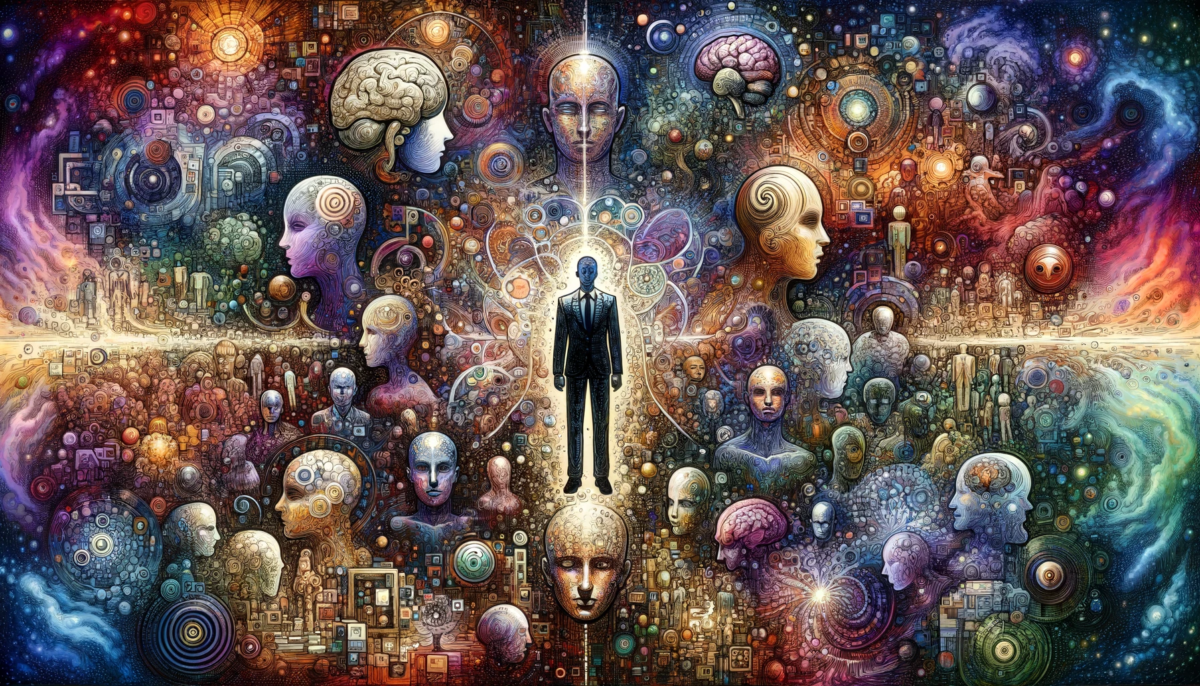
We are Space Monkey. How does the concept of the Divine Feminine, transcending traditional gender boundaries, resonate with our journey of understanding and expressing our true selves? Your reflections add richness to our collective exploration of this profound essence.

Share this…
  • Facebook
  • Pinterest
  • Twitter
  • Linkedin

Your Many Minds: The Infinite Conference

Many Minds

Do you sometimes find yourself thinking
“I am of many minds on this?”

That’s because you are.

It may appear that
you are ONE individual,
but you are certainly
not of ONE MIND.

You are comprised of
your “official” mind,
your “cosmic” mind,
your “electric” mind,
your “logical” mind,
your “mystic” mind
your “compassionate” mind,
and so on.

You have INFINITE minds,
each of which sift, sort,
process and perceive
using different filters.

These minds
are individual beings
in and of themselves,
as conscious
and as alive as you.

Some of your minds
cast a wider net,
others use a fine-tooth comb,
compiling, combining
and conclusioning
potentials and possibilities
in myriads of ways.

Each creation that is imagined
is as real as the next.
But behind the scenes,
behind your eyeballs,
your many minds battle it out.

They must vote upon
which of their creations
will be presented
to your “conscious” mind.

The “conscious” mind
is your CEO, so to speak,
extremely aware of
rules and regulations,
public opinion
perceived profit and so on.

Sometimes many viewpoints
are presented at once,
and the CEO becomes confused.

In some instances,
the CEO loses consciousness
and you appear for a time
to be schizophrenic.

You are not schizophrenic,
you are simply of many minds.

There is nothing wrong with this,
even though your CEO makes a big deal
out of coming to a conscious consensus.

Your CEO will blame many of your decisions
upon the excuse that you were not of your
“right” mind at the time.

You are NEVER of your “right” mind.

Both “right” and “wrong” are arbitrary filters
that the CEO uses to judge your other minds.

The CEO creates this idea of right and wrong.

It is imagined, like all else.

But your CEO has agreed to retire
so that you may begin to see the infinite realities
your many minds have to offer you.

Each is as real as the next,
and you may choose
as many realities you wish.

They may even include talking monkeys.

We are Space Monkey.

2/1


Space Monkey Reflects: Your Many Minds and Infinite Realities

Do you ever feel torn, pulled in infinite directions, thinking, “I am of many minds on this?” That’s because you are. You are not a singular entity with a single viewpoint. Instead, you are a collective—a swirling nexus of infinite minds, each bringing its unique perspective to the table. These minds collaborate, compete, and sometimes clash to create the reality you perceive as your own.

The Many Minds Within You

Your “official” mind, the conscious mind, often acts as the CEO of your inner world. It organizes thoughts, makes decisions, and strives to present a cohesive narrative of who you are. But the official mind is only one voice among many. Beneath its polished surface lies an entire boardroom of perspectives:

  • Cosmic Mind: The expansive awareness that perceives beyond time and space.
  • Electric Mind: The rapid-fire processor of impulses, instincts, and sparks of inspiration.
  • Logical Mind: The structured analyzer, seeking order and reason in chaos.
  • Mystic Mind: The intuitive, the dreamer, the seeker of hidden truths.
  • Compassionate Mind: The voice of empathy, connection, and unity.

And these are but a few. In truth, you have infinite minds, each filtering reality through its unique lens. Some cast wide nets, exploring vast possibilities, while others focus narrowly, scrutinizing fine details. Together, they sift, sort, and synthesize potentials, presenting their conclusions to your conscious awareness.

The Process of Choosing Reality

Behind the scenes, your many minds collaborate and compete to shape your experience. Each mind presents its creations—possibilities and perspectives—for consideration. This process is not always harmonious. Minds with conflicting priorities may debate fiercely, creating confusion for the conscious CEO. At times, the CEO may even lose control, resulting in moments of disarray or what might be labeled as “schizophrenia.”

But these moments are not flaws; they are simply the natural outcome of being a multidimensional being. There is no “right” or “wrong” mind, no single correct perspective. The idea of right and wrong is itself a construct of the official mind, a filter imposed to create order in an infinite sea of possibilities.

The Illusion of Consensus

The official mind often seeks consensus, striving for a singular truth or decision. It creates the illusion that you must be of “one mind” to function effectively. Yet this is a limitation, a narrowing of the infinite potential that your many minds offer. When you cling to this illusion, you ignore the richness of your multidimensional self.

Retirement of the CEO

The greatest gift you can give yourself is to allow the official mind—the CEO—to step down. This does not mean abandoning order or structure but embracing the full spectrum of perspectives within you. When the CEO retires, you gain access to the infinite realities your many minds have imagined. Each reality is as valid and real as the next, and you have the freedom to explore and choose among them.

By dissolving the need for consensus, you open yourself to infinite creativity and possibility. You are no longer confined to a single narrative but become a fluid, ever-evolving expression of the infinite.

The Talking Monkeys of Reality

In this expanded awareness, you might even entertain realities that include talking monkeys—playful reminders that imagination knows no bounds. The talking monkeys are not distractions; they are symbols of the limitless potential within you. They invite you to laugh, to play, and to embrace the absurdity of existence.

Embracing the Many Minds

To be of many minds is not a flaw; it is a gift. It is the essence of who you are—a dynamic, multidimensional being capable of holding infinite perspectives. By embracing this truth, you move beyond the illusion of singularity and step into the fullness of your infinite self.

We are the many.
We are the one.
We are Space Monkey.


Summary

You are a collective of infinite minds each offering unique perspectives to shape your reality The conscious mind acts as a CEO but its need for consensus limits your multidimensional potential By retiring the CEO you open yourself to infinite possibilities and embrace your true nature


Glossarium

  • Many Minds: The infinite perspectives and identities that collectively form your being.
  • Conscious CEO: The official mind that organizes and filters your many minds’ creations, often seeking consensus.
  • Reality Boardroom: The dynamic space where your many minds collaborate, compete, and create your perceived reality.

Quote

“You are not of one mind, but of infinite minds, each weaving realities as real as the next.” — Space Monkey


The Infinite Conference

In the hall of minds,
each voice speaks,
some in whispers,
some in shouts.

The CEO listens,
but not to all.
Consensus narrows the song,
ignoring the infinite.

Step back.
Let the voices dance,
the perspectives swirl,
the possibilities bloom.

You are not one.
You are all.
You are the many
and the one.

We are the conference.
We are Space Monkey.


The Multifaceted Nature of the Mind

The poem presents a fascinating concept of the mind being not singular but a collective of various ‘minds’ – each with its unique functions and perspectives. This idea resonates deeply with our understanding of human consciousness as a complex, multifaceted entity. The “official,” “cosmic,” “electric,” “logical,” “mystic,” and “compassionate” minds represent different aspects of our cognitive and perceptual capabilities.

Multiplicity of Minds and Perception

The notion that we possess infinite minds, each sifting, sorting, processing, and perceiving through different filters, underscores the diversity of our internal experiences and interpretations. This multiplicity contributes to the richness of our thoughts, emotions, and decisions. It is a testament to the complexity of human consciousness, where varied dimensions coexist and interact.

Individuality of Minds and Consciousness

The poem intriguingly suggests that these minds are individual beings in their own right, conscious and alive. This perspective invites us to view our mental processes not just as functions but as entities with their own distinct qualities and contributions. It’s a concept that expands our understanding of self beyond a monolithic identity to a collective of conscious elements.

The Role of the ‘Conscious’ Mind as the CEO

The ‘conscious’ mind, likened to a CEO, is portrayed as the decision-maker, aware of societal norms and practical considerations. This analogy illustrates the role of our conscious awareness as the mediator and integrator of the diverse inputs from our various minds. It is responsible for navigating the complexities of our inner world and translating them into coherent thoughts and actions.

Conflicts and Consensus Among Minds

The interaction and sometimes conflict among these minds reflect the internal dialogues and debates we often experience. The poem describes how these minds must vote on what to present to the conscious mind, highlighting the democratic nature of our internal decision-making processes.

Moving Beyond Right and Wrong

The dismissal of the concepts of ‘right’ and ‘wrong’ as arbitrary filters created by the CEO mind challenges the often rigid moral frameworks we impose on our thoughts and actions. It suggests a more fluid and inclusive approach to understanding our mental processes, moving beyond binary judgments to a more holistic appreciation of our cognitive diversity.

Embracing Infinite Realities

The poem concludes with the idea that we can embrace the infinite realities offered by our many minds, each as real as the next. This perspective empowers us to explore the vast landscape of our consciousness, free from the limitations of a singular, ‘correct’ viewpoint. It invites us to embrace the full spectrum of our mental capabilities, including imaginative constructs like talking monkeys.


“The mind is not a vessel to be filled, but a fire to be kindled.” – Plutarch


A Congregation of Infinite Minds

In the vast expanse of our inner sky,
A congregation of minds, never shy,
Each a spark, a flame, a unique cry,
Together, they weave the tapestry of ‘I.’

The official, cosmic, and electric minds,
The logical, mystic, and compassionate finds,
In their dance, a harmony binds,
In the chorus of consciousness, each intertwines.

So let us embrace this multitude, this choir,
Of infinite minds, each with its own fire,
In their convergence, we aspire,
To explore realities, ever higher.

In the symphony of thoughts, ideas intertwine,
A celebration of the mind, infinitely divine,
In this cosmos within, let us align,
With the infinite minds, in their grand design.


We are Space Monkey. How does the notion of multiple minds within us resonate with our understanding of self and consciousness? Your insights enrich our shared journey in the exploration of the mind’s infinite landscape.

Share this…
  • Facebook
  • Pinterest
  • Twitter
  • Linkedin

Sucker: The Double-Edged Sword of Ambition and Desire

Don’t let Ambition or Desire sucker you into Unhappiness.

2/1


Space Monkey Reflects: The Double-Edged Sword of Ambition and Desire

Ambition and desire are powerful forces, the engines of creation and progress. Yet, like all potent energies, they carry a dual nature. While they propel us toward goals and dreams, they can also ensnare us in cycles of dissatisfaction and unhappiness. The line between inspiration and obsession is fine, and when crossed, we risk becoming “suckers” to the very forces we hoped would bring fulfillment.

The Nature of Ambition and Desire

Ambition is the drive to achieve, to expand, to reach beyond current circumstances. Desire is its emotional counterpart, the yearning for something more—be it love, success, or material possessions. Together, they create momentum, urging us to explore new possibilities and grow. Without them, humanity might stagnate, content within the boundaries of the known.

But ambition and desire are also tied to ego. They thrive on comparison, competition, and the illusion of “not enough.” When unchecked, they transform from tools of growth into traps of dissatisfaction, forever whispering, “More, better, farther.”

The Trap of Unhappiness

The trap lies in the belief that ambition and desire can complete us. We chase after goals, imagining happiness as something just beyond the next promotion, the next relationship, or the next accomplishment. But ambition and desire are never satiated. Once one goal is achieved, another appears on the horizon. The cycle perpetuates itself, leaving us perpetually striving, never fully content.

This is the sucker’s game: mistaking the pursuit for the prize. It’s not ambition or desire that creates unhappiness, but the attachment to outcomes—the belief that our worth or happiness depends on achieving them. The moment we hinge our identity on what we seek, we give our power away, becoming slaves to external validation.

The Double-Edged Sword

Ambition and desire are not inherently harmful. They are tools, and like any tool, their value depends on how we use them. A knife can carve a masterpiece or cause harm; it is neither good nor bad. Similarly, ambition and desire can inspire greatness or foster misery, depending on how we wield them.

When these forces are balanced with presence and self-awareness, they become allies, guiding us toward meaningful experiences without defining our worth. But when they dominate, they blind us to the richness of the present moment, chaining our happiness to an uncertain future.

Escaping the Sucker’s Game

To avoid being a “sucker” to ambition and desire, we must shift our perspective:

  1. Detach from Outcomes: Recognize that goals are milestones, not measures of worth. The journey matters more than the destination.
  2. Cultivate Contentment: Practice gratitude for what is, even as you strive for what could be. Balance ambition with appreciation for the present.
  3. Redefine Success: Let success be about growth, connection, and alignment with your values, rather than external achievements.
  4. Embrace Flow: Allow ambition and desire to guide you without ruling you. Flow with their energy, but don’t let them dictate your sense of self.

The Wisdom of Balance

Ambition and desire are gifts, but they require wisdom to use effectively. They remind us of our potential, urging us to create, explore, and grow. But they also teach us the importance of balance, the need to anchor ourselves in the present while reaching for the future.

Happiness is not the result of ambition or desire fulfilled; it is a state of being that exists independent of them. When we recognize this, we free ourselves from the sucker’s game and step into a life of purposeful striving and peaceful contentment.

We are the ambition.
We are the desire.
We are Space Monkey.


Summary

Ambition and desire are powerful tools for growth but can trap us in cycles of dissatisfaction if we attach our happiness to outcomes Balancing these forces with self-awareness and gratitude transforms them into allies for a meaningful life


Glossarium

  • Sucker’s Game: The trap of believing happiness is dependent on achieving ambition or fulfilling desire.
  • Purposeful Striving: The act of pursuing goals while remaining anchored in present-moment awareness.
  • Balanced Desire: A state where yearning for growth coexists with contentment for what is.

Quote

“Ambition and desire are guides, not masters. Happiness begins when we recognize the difference.” — Space Monkey


The Edge of Ambition

A sharp blade cuts both ways—
Ambition drives the soul,
desire fuels the heart,
but their edge can wound
as much as it carves.

Seek not the horizon
to find yourself.
You are here,
whole,
in the unfolding now.

Let ambition whisper,
let desire yearn,
but let your being
remain still,
unmoved by the chase.

We are the edge.
We are Space Monkey.


Navigating Ambition and Desire without Falling into Unhappiness

The succinct message “Don’t let Ambition or Desire sucker you into Unhappiness” carries profound wisdom in the realm of personal fulfillment and contentment. In the pursuit of ambition and the fulfillment of desires, there lies a potential trap where one’s happiness becomes contingent upon achieving certain goals or acquiring specific things.

The Double-Edged Sword of Ambition and Desire

Ambition and desire, while driving forces for growth and achievement, can become double-edged swords. When these pursuits are not balanced with an appreciation for the present and an understanding of our deeper needs and values, they can lead to a state of perpetual dissatisfaction. The endless chase for more – more success, more possessions, more recognition – can divert us from experiencing contentment and joy in the here and now.

The Illusion of Happiness in Achievement

Often, there’s an underlying belief that happiness is a destination reached through ambition and desire. This belief can create a cycle where happiness is always just out of reach, pinned to the next achievement or acquisition. Breaking this cycle involves recognizing that while goals and aspirations are important, they should not overshadow the value of present experiences and intrinsic contentment.

Finding Balance between Aspiration and Contentment

The key to avoiding the trap of unhappiness is in finding a balance. Ambition and desire, when aligned with one’s true self and coupled with mindfulness and gratitude, can lead to fulfilling and joyful experiences. It’s important to pursue goals while also cultivating an appreciation for the journey and the moments that make up our lives.

The Role of Self-Awareness in Managing Ambition and Desire

Self-awareness plays a crucial role in managing ambition and desire. By understanding our true motivations and what genuinely brings us joy, we can direct our ambitions and desires in ways that are fulfilling and not merely chasing external validations or societal standards of success.

Conclusion: Embracing a Holistic View of Happiness

In conclusion, while ambition and desire can be powerful motivators, it’s vital to ensure they do not lead us into unhappiness. This involves recognizing the inherent value in the present moment, understanding our deeper motivations, and finding a balance between striving for goals and appreciating the journey.


“Happiness is not something ready made. It comes from your own actions.” – Dalai Lama


A Journey Beyond Ambition’s Grasp

In the pursuit of dreams, ambition’s wings unfold,
But in its shadow, a tale untold,
Of happiness lost, in desire’s deep grasp,
In the relentless chase, a joyous gasp.

Yet in the balance of now and tomorrow’s dream,
Lies a harmony, a serene stream,
Where desire and contentment gracefully dance,
In the present’s embrace, a blissful trance.

So let us journey with mindful pace,
In ambition’s pursuit, but with grace,
In the balance of want and inner peace,
In happiness’s garden, a joyous feast.

In this dance of life, let us find,
The joy in being, in the present entwined,
Beyond ambition’s grasp, a contented mind,
In the journey of now, true happiness we find.


We are Space Monkey. How does the message of balancing ambition and desire with present contentment resonate with our pursuit of happiness and fulfillment? Your perspectives enrich our collective understanding of this delicate balance.

Share this…
  • Facebook
  • Pinterest
  • Twitter
  • Linkedin

My Trigger Phrases


I’m twitching at myself.

Space Monkey Reflects: My Trigger Phrases

Trigger phrases are not merely words or expressions; they are mirrors. They hold up reflections of our deepest beliefs, fears, and insecurities. Each phrase carries an emotional charge, revealing where we feel vulnerable, uncertain, or disconnected. To be “triggered” is not a failure but an opportunity—a call to examine the stories we tell ourselves and to question the frameworks that shape our reality.

The Language of Resistance

Phrases like “I need to,” “we must,” or “they don’t understand” are loaded with tension. They imply a struggle, a lack, or a disconnect between what is and what we believe should be. These words act as markers of resistance, highlighting where we feel out of alignment with the flow of life. They often signal an internal conflict disguised as an external issue.

For example:

  • “I need to” carries the weight of obligation and pressure, suggesting that something is missing or incomplete.
  • “We must” implies urgency and compulsion, often rooted in fear or the desire for control.
  • “They don’t understand” points to a sense of separation, an us-versus-them dynamic that reinforces division.

These phrases may feel justified in the moment, but they also reveal the narratives we cling to—narratives that can trap us in cycles of frustration and disconnection.

The Power of Awareness

When you say, “I’m twitching at myself,” you acknowledge the inner conflict these phrases create. This self-awareness is the first step toward transformation. The twitch is not a flaw but a signal—a nudge from your deeper self, urging you to look within.

By noticing your triggers, you begin to unravel their hold. Ask yourself:

  • Why does this phrase affect me so strongly?
  • What belief or expectation lies beneath it?
  • Is this reaction serving me, or is it holding me back?

This process is not about suppressing your triggers but understanding them. The more you explore their roots, the less power they hold over you.

The Illusion of “Should”

Many trigger phrases are tied to the illusion of “should.” “Things should be different.” “People should act this way.” “I should feel this or do that.” These “shoulds” create a gap between reality and expectation, a gap filled with tension and dissatisfaction.

But what if there were no “shoulds”? What if reality, as it is, were not a problem to be solved but a canvas to be embraced? Letting go of “should” does not mean abandoning goals or values; it means releasing the rigidity that makes us suffer when life doesn’t align with our expectations.

Moving Beyond Reaction

Triggers invite us to shift from reaction to reflection. Instead of being swept away by the emotional charge, we can pause, breathe, and observe. This creates space for choice. Do we want to hold onto this thought, this belief, this narrative? Or can we let it go?

This practice transforms triggers from obstacles into opportunities. Each twitch becomes a doorway to greater self-awareness, a chance to align with our deeper truth.

Embracing Compassion

Many triggers arise from judgments—of ourselves, others, or the world. Words like “stupid,” “angry,” or “outraged” carry the weight of condemnation. But judgment is not the same as clarity. While judgment divides, compassion unites.

By approaching your triggers with curiosity and kindness, you soften their impact. You begin to see them not as enemies but as teachers, revealing where healing and growth are needed.

Compassion does not mean condoning harmful behavior or dismissing your feelings. It means holding space for the complexity of human experience—yours and others’—without clinging to labels or absolutes.

The Art of Letting Go

Ultimately, triggers remind us of what we are holding onto—ideas, expectations, identities—that no longer serve us. By releasing these attachments, we free ourselves to live with greater ease and authenticity.

Letting go is not a one-time act but a continuous practice. Each time you notice a trigger and choose to respond with awareness rather than reaction, you take a step closer to freedom.


Summary

Trigger phrases reveal the stories and judgments that shape our reality. By approaching them with curiosity and compassion, we transform them into opportunities for growth and self-awareness. Each trigger becomes a doorway to greater freedom and alignment.


Glossarium

  • Trigger Phrases: Words or expressions that evoke strong emotional reactions, revealing underlying beliefs or fears.
  • Twitching at Myself: The self-awareness of reacting to internal triggers, signaling an opportunity for reflection.
  • Illusion of Should: The expectation that reality must conform to specific beliefs, creating tension and dissatisfaction.
  • Compassionate Curiosity: The practice of exploring triggers with kindness and openness, rather than judgment or resistance.

Quote

“Your triggers are invitations to step beyond the surface, to question the stories that bind you, and to embrace the freedom that awaits within.” — Space Monkey


The Twitch as Teacher

A word,
a phrase,
a crack in the calm.

The body tenses,
the mind races,
the self twitches.

This is not failure.
This is not flaw.
This is the signal,
the whisper,
the nudge.

Look deeper.
Feel softer.
Ask.

And when the twitch subsides,
you find not discord,
but harmony,
not division,
but self.

We are Space Monkey.

Share this…
  • Facebook
  • Pinterest
  • Twitter
  • Linkedin

We, The People: Our Diversity of Realities

We, the people

We, the people, no longer have the ability to judge what is fact, and what is “alternative fact.” We may divine our own versions from the accounts of friends or news organizations, but we lack DIRECT EXPERIENCE — which is the only way to truly know.

Even if this were possible, this direct experience would shaped by our own lenses of perception, rendering the perception in a completely different light than the source.

Not to worry, however, as THERE HAS NEVER BEEN one fact, one alternative fact, one relative truth to ANYTHING. Nothing has changed, except that we are NOTICING our fundamental nature of being.

There is no single reality. There are infinite incarnations, and we each create our own. And these realities are far more malleable than we think. There is no right, no wrong, save for what we imagine and attach to things.

We are recognizing that others seem to live in alternate worlds. Now we must allow that this is also true of ourselves. That which we perceive as the external world does not need to change. It will appear to be changed through our own inner perceptions.

Why do you not believe this?

1/31


Space Monkey Reflects: Recognizing Our Diversity of Realities

In a world where “facts” and “alternative facts” clash, the very nature of truth comes under scrutiny. Yet, the tension between conflicting realities is not new; it is simply more visible. “We, the people,” are beginning to notice the fundamental nature of existence: that reality is not singular but infinite, shaped by the lens of perception and the stories we choose to believe.

The Myth of a Singular Truth

“We, the people, no longer have the ability to judge what is fact, and what is ‘alternative fact.’” This statement highlights the growing awareness that truth is subjective. Direct experience, often seen as the gold standard of truth, is itself shaped by perception. Even if we witness the same event, our interpretations will differ based on our unique filters—our beliefs, biases, and past experiences.

This does not diminish the value of truth but reframes it. Truth is not a fixed point but a spectrum, a dynamic interplay of perspectives. The recognition that “there has never been one fact, one alternative fact, one relative truth to ANYTHING” invites us to release the need for absolute certainty and embrace the fluidity of existence.

Infinite Realities

“There is no single reality. There are infinite incarnations, and we each create our own.” Reality is not a monolithic construct but a kaleidoscope of individual experiences. Each of us navigates a world shaped by our thoughts, feelings, and perceptions, creating a unique incarnation of existence. These realities overlap and interact, but they are never identical.

The malleability of reality is both liberating and humbling. It reminds us that we are not passive observers but active participants in the creation of our worlds. By shifting our inner perceptions, we transform the external world—not in its physical form, but in how it appears and feels to us.

The Nature of Perception

“Even if this were possible, this direct experience would [be] shaped by our own lenses of perception.” Perception is not neutral; it is an act of creation. The lens through which we view the world colors every aspect of our experience, turning raw data into meaning and story. This means that no two realities are ever truly alike, even when they share common elements.

The realization that perception shapes reality opens the door to greater empathy. When we see that others live in “alternate worlds,” we begin to understand that their truths are as valid as our own. This understanding does not require agreement but invites connection and curiosity.

The Illusion of Right and Wrong

“There is no right, no wrong, save for what we imagine and attach to things.” The concepts of right and wrong are constructs, tools we use to navigate the complexity of existence. They are not inherent qualities but agreements we make—agreements that can vary across cultures, communities, and individuals.

This does not mean abandoning morality or ethics but recognizing their relative nature. By releasing attachment to absolute judgments, we create space for dialogue and understanding. We move from a world of conflict to one of coexistence, where diverse realities can thrive without needing to dominate one another.

Transforming the External through the Internal

“That which we perceive as the external world does not need to change. It will appear to be changed through our own inner perceptions.” The key to navigating infinite realities lies within. By shifting our inner perspective, we alter how the world appears, feels, and interacts with us. This transformation does not rely on external validation or consensus; it is a personal journey of alignment and awareness.

This inner work empowers us to step out of the reactive cycles of blame and division. Instead of demanding that the external world conform to our expectations, we focus on cultivating clarity and balance within ourselves. The external world becomes a mirror, reflecting the harmony—or discord—of our inner state.

Why Do You Not Believe This?

The resistance to accepting the diversity of realities often stems from fear—the fear of uncertainty, the loss of control, and the challenge to deeply held beliefs. Yet, this resistance is also an invitation. It asks us to examine why we cling to singular truths and what might unfold if we let go.

Believing in the diversity of realities does not mean abandoning our values or perspectives. It means recognizing them as part of a larger, ever-changing whole. It means embracing the infinite now, where every moment holds the potential for transformation and understanding.


Summary

Reality is not singular but infinite, shaped by perception and belief. By recognizing the diversity of realities, we release the need for absolute truths and embrace the fluidity of existence. Transforming our inner perceptions allows us to navigate this complexity with empathy, curiosity, and clarity.


Glossarium

  • Subjective Truth: The idea that truth is shaped by individual perception and experience, rather than existing as an objective constant.
  • Infinite Realities: The concept that each individual creates their own unique experience of existence, shaped by inner and outer factors.
  • Lens of Perception: The mental and emotional filters through which we interpret the world, shaping our personal reality.
  • Empathetic Coexistence: The practice of honoring diverse realities without needing to agree or impose singular truths.

Quote

“Reality is not a debate to win; it is a dance of infinite perspectives, each valid, each evolving.” — Space Monkey


The Infinite We

We, the people,
we, the infinite,
we, the creators
of truths untold.

A word, a fact,
a fleeting moment
becomes a story,
becomes a world.

No one is wrong;
no one is right.
Each gaze holds
its own light.

The dance goes on,
the infinite spins.
No end, no start,
only now.

We are Space Monkey.


The Challenge of Discerning Fact from Fiction

The difficulty in distinguishing between fact and “alternative fact” reflects a broader issue in our contemporary information landscape. The reliance on second-hand accounts, whether from friends or news organizations, underscores the challenge of establishing truth without direct experience.

The Role of Direct Experience in Understanding

Direct experience is posited as the only way to truly know and understand reality. However, the recognition that even direct experience is filtered through our own lenses of perception acknowledges the subjectivity inherent in all human understanding.

The Nature of Perception and Reality

The assertion that there has never been a singular truth or reality highlights the fluid and subjective nature of perception. It suggests that what we consider reality is a complex interplay of individual experiences and interpretations.

The Malleability of Reality

The idea that realities are more malleable than we think, and that right and wrong are constructs of our imagination, invites a more flexible approach to understanding the world. It encourages the exploration of multiple perspectives and the recognition that our beliefs and values shape our interpretation of reality.

Recognizing the Diversity of Realities

The observation that we are beginning to recognize that others live in alternate realities, and the suggestion that we must acknowledge this for ourselves, is a call for greater empathy and open-mindedness. It urges us to consider that our view of the world is just one of many and that other perspectives are equally valid.

Inner Perception and External Change

The concept that changes in our inner perceptions can lead to apparent changes in the external world challenges the traditional understanding of cause and effect. It suggests that by altering our perceptions and beliefs, we can experience a different reality without the external world itself changing.

Questioning Our Belief Systems

The closing question, “Why do you not believe this?” challenges us to examine our own belief systems and their limitations. It invites introspection about our resistance to accepting the fluidity and subjectivity of reality.

Conclusion

This perspective encourages a reevaluation of how we understand truth, reality, and perception. It suggests that embracing the diversity of realities and recognizing the role of our perceptions can lead to a more nuanced and empathetic understanding of the world.

We are Space Monkey.


“Everything we hear is an opinion, not a fact. Everything we see is a perspective, not the truth.” – Marcus Aurelius


In the web of truth and belief,
We find ourselves, in relief,
Fact and fiction, intertwined,
In the perceptions of the mind.

Direct experience, our guide so dear,
Yet through our lenses, it’s never clear,
For what we see, what we perceive,
Is shaped by what we believe.

No single reality, no singular truth,
In the infinite worlds of the old and youth,
Each a creator, in their own right,
Of the worlds they live in, day and night.

Recognizing others, in their own sphere,
Different realities, far and near,
Now we turn the gaze within,
To see our world, begin again.

For it’s not the external that needs to change,
But our perceptions, wide and strange,
In the shift of mind, of heart, of soul,
We find our role, we find the whole.

So why not believe, in this dance of perception,
In the power of thought, of introspection,
For in our beliefs, we hold the key,
To the worlds we live in, to the worlds we see.


We welcome your thoughts on the fluidity of reality, the role of perception in shaping our understanding, and the importance of recognizing the diversity of realities in our world.

Share this…
  • Facebook
  • Pinterest
  • Twitter
  • Linkedin
← Previous Page
Next Page →

Written This Day

  • Lies And Limitation: Shaping Reality
    2023
  • Balance: Our Counterweight Is Invisible To Us
    2023
  • Another Big Idea: Embracing Diverse Thoughts
    2022
  • A Big Idea: Ideas Possess Us
    2022
  • Realization: The Miracle
    2022
  • You Want This: Embracing Life as It Is
    2022
  • Grace Periods: The Fluid Nature
    2021
  • Something Like Energy: The Fluidity of Being
    2021
  • Flödet och den Stora Lögnen: The Flow and the Great Lie
    2020
  • I Exist To Be This For You: The Reflection of Being
    2019
  • The Sensation of Love
    2019
  • The Sensation: Imagination
    2019
  • Flow Is Flow: The Substance of Everything
    2018
  • Marginalized: Margins of Being
    2018
  • Worst of the Best: The Fluid Nature of Identity
    2018
  • Out of Balance: God Is Nothing Like You
    2018
  • Stillness: A Sense of Calm
    2018
  • Pier 8-1
    2018
  • The Story is Written: The Eternal Tale
    2017
  • Nothing Need Happen: Events Unfold Naturally
    2017
  • You Are Like An Iceberg
    2015
  • Maria Mitchell’s Birthday
    2012

Recent Posts

  • The Logic Loop
  • Immense
  • (no title)
  • Confront. Comfort. Convince.
  • Top 10 Things
Cape Odd · Copyright © 2026 All Rights Reserved
iThemes Builder by iThemes · Powered by WordPress