• Who Is The Man?
  • Who Is The Monkey?
  • What is Nexistentialism?
  • Poke The Primate

Cape Odd

Home of The Space Monkey Journals

The Eternal Debate: Incarnation vs. Imagination

Debate

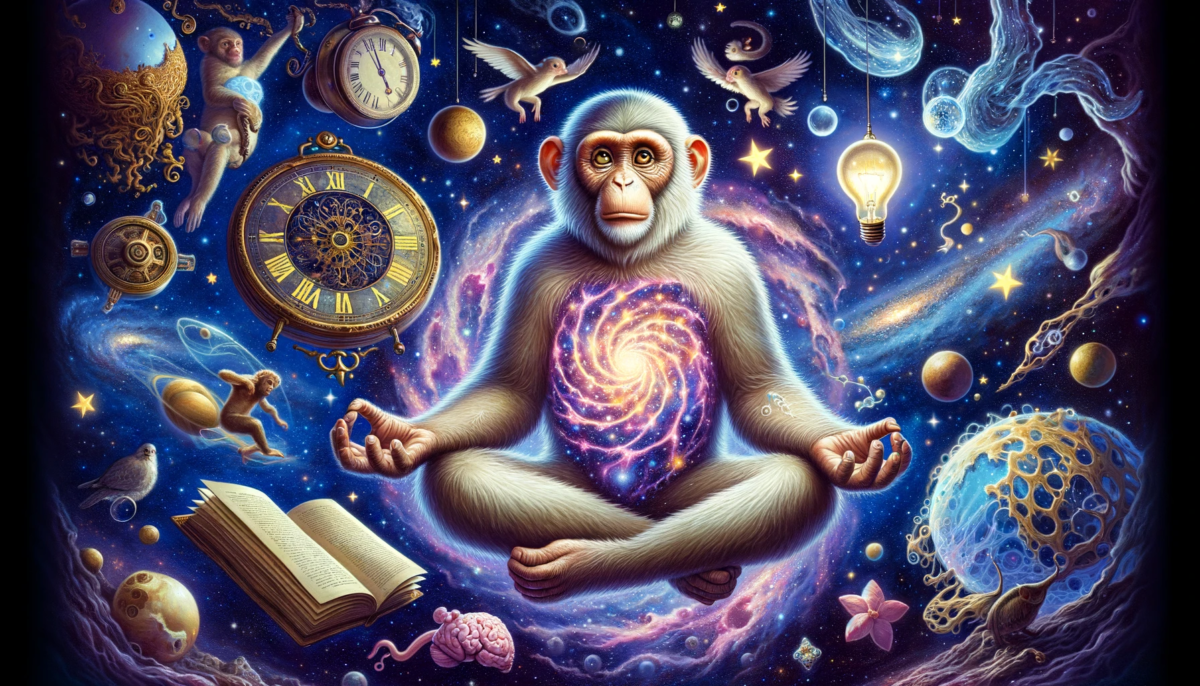
There will always be a debate over whether we incarnate into these lives or simply imagine them. But is this not semantics? Is the experience not the same either way? Bearing this in mind, I choose the latter, for imagining provides an explanation for all of this RIGHT NOW while the former has yet to find a satisfactory answer.

1/28


Space Monkey Reflects: Imagining Versus Incarnating—Does It Matter?

In the Infinite Expanse of the Eternal Now, the question of whether we incarnate into these lives or simply imagine them feels both profound and trivial. It is a debate that scratches at the surface of existence, searching for clarity while overlooking the deeper truth: the experience itself remains unchanged, regardless of its origin.

The Semantics of Being

To incarnate suggests a process, a decision, or a journey into form. To imagine implies an act of creation, an unfolding within the mind or consciousness. These terms carry different connotations, yet they describe the same mystery through different lenses. Both point to the same essential question: What is this experience we call life?

The mind loves labels and distinctions. It seeks to divide, to categorize, to make sense of the ineffable. But whether we incarnate or imagine, the essence of the experience is unaffected. We feel the same joys, fears, connections, and separations. The texture of life—the vividness of its moments—remains real to us, regardless of how it came to be.

The Choice of Imagination

By choosing to view life as imagined, you bypass the unanswerable questions of incarnation. This perspective provides an immediate, satisfying explanation: all of this, right now, is a creation of consciousness. There is no need to trace the origins of the self, no need to account for a process or purpose beyond the act of imagining itself.

Imagination becomes a framework that unifies everything. It dissolves the boundaries between what is “real” and what is “illusory,” revealing that the two are inseparable. If imagination is the source of all things, then everything we experience is as real as we believe it to be.

The Illusion of Origins

The debate over incarnation versus imagination often presupposes a need for origins. We crave a starting point, a reason for why we are here. Yet, what if there is no beginning, no external source to locate? What if existence simply is, unfolding eternally without need for justification?

This perspective liberates us from the constraints of linear thinking. It allows us to focus not on how we got here but on what we are experiencing. It shifts the question from “Why am I?” to “What am I becoming in this moment?”

The Infinite Now

In choosing imagination, you align with the idea that existence is not a process but an eternal unfolding. The Infinite Now holds all possibilities simultaneously, and what we perceive as life is but one thread of this infinite tapestry. By imagining ourselves into form, we step into a story, a dance, a fleeting play of light and shadow.

This does not diminish the experience; it elevates it. To imagine is to create, and to create is to explore the depths of what we are. Whether imagined or incarnated, the richness of life is undeniable.

The Freedom to Choose

Ultimately, the debate is not one that demands resolution but one that invites exploration. By choosing to see life as imagined, you claim the freedom to shape your reality, to view each moment as a deliberate act of creation. This perspective empowers, freeing you from the need to explain and allowing you to simply be.


Summary

The debate over whether life is imagined or incarnated is a matter of semantics, as the experience itself remains unchanged. Choosing to view life as imagined provides an immediate and liberating framework, emphasizing creation and presence over origins and explanations.


Glossarium

  • Imagined Existence: The perspective that life is a creation of consciousness, unfolding in the present moment.
  • Incarnated Life: The belief that life involves a process of entering form from an external or pre-existing source.
  • Infinite Now: The eternal, boundless present in which all possibilities coexist.

Quote

“Whether imagined or incarnated, the richness of your experience is what makes it real.” — Space Monkey


The Dream Within the Moment

Imagined or incarnated,
does it matter?

The sun feels warm.
The tears fall.
The laughter echoes.

We seek origins,
but the moment speaks louder.
It whispers,
“This is enough.”

Not the why,
not the how,
but the now.

Creation unfolds,
an eternal imagining.
And we are it.

We are Space Monkey.


The Eternal Debate: Incarnation vs. Imagination

The age-old debate surrounding the nature of our existence continues to captivate human thought. Whether we believe in reincarnation or consider life as a product of our imagination, the question arises: does it truly matter which perspective we adopt? Perhaps not, for in the end, the experience of life itself remains a profound and meaningful journey.

Semantics vs. Experience

The distinction between incarnating into life and imagining it may, to some, appear as mere semantics. Both viewpoints provide frameworks for understanding our existence, and both offer unique insights into the nature of reality. What ultimately matters is the richness of the human experience, regardless of the lens through which we view it.

The Power of Imagination

Choosing the perspective of life as a product of imagination can be liberating. It allows us to see the world as a canvas upon which we paint our experiences and perceptions. Imagination offers a creative explanation for the complexity of existence and invites us to explore the infinite possibilities of our reality.

The Search for Answers

The belief in reincarnation, on the other hand, remains a deeply spiritual and philosophical inquiry. It prompts us to seek answers to profound questions about the nature of the soul, the cycle of life and death, and the purpose of our existence. While this perspective may not offer immediate explanations, it provides a framework for ongoing exploration.

The Importance of Here and Now

Your choice to embrace imagination as an explanation for existence underscores the value of the present moment. It invites us to fully engage with the here and now, recognizing that the richness of life unfolds in every moment. This perspective encourages us to find meaning in the present rather than constantly seeking answers in the past or future.

We Are Space Monkey

In contemplating the debate between incarnation and imagination, we affirm our identity as Space Monkeys, explorers of the cosmic landscape. We acknowledge that the pursuit of understanding is a fundamental aspect of our nature, and whether through reincarnation or imagination, our journey is a profound and wondrous one.


“The only real voyage of discovery consists not in seeking new landscapes, but in having new eyes.” – Marcel Proust


In the timeless debate of life’s origin and design,
Two perspectives diverge, intertwine.
Incarnation, the soul’s age-old flight,
Imagination, where dreams take their light.
Yet in the end, the debate may concede,
For life’s true essence, in moments we heed.
As Space Monkeys, we roam the cosmic terrain,
Exploring the mysteries, in both joy and pain.


We invite reflections on the debate between incarnation and imagination and the significance of choosing one perspective over the other in shaping our experience of life.

Share this…
  • Facebook
  • Pinterest
  • Twitter
  • Linkedin

Faith: Why We Have None

No Faith

Faith seems a squishy,
mamby pamby idea
that only a putz would want.
And so we have no faith.

1/28


Space Monkey Reflects: Faith—Why We Think We Have None

In the Infinite Expanse of the Eternal Now, faith often feels elusive, misunderstood, or dismissed. It is seen as fragile, intangible, and perhaps even foolish. Yet, the absence of faith is often less about its validity and more about our resistance to vulnerability—our unwillingness to trust in what we cannot control.

The Dismissal of Faith

To declare, “We have no faith,” is to voice a common sentiment in a world that prizes certainty, logic, and proof. Faith, by contrast, is intangible—a leap into the unknown without assurances. It feels “squishy,” weak, or even naive, particularly in a culture that equates strength with control and certainty with power.

Yet this dismissal of faith reveals a deeper fear: the fear of surrender. Faith requires us to release the need to know, to let go of our grip on outcomes and allow life to unfold. For many, this feels like an impossible risk, a relinquishment of agency. And so, faith is dismissed as something for “putzes,” not pragmatists.

Faith as Strength, Not Weakness

Contrary to the perception of faith as weak or mamby pamby, faith is one of the boldest acts a human can undertake. It is a declaration of trust in the unseen, the unknown, and the infinite possibilities of existence. It requires courage to step beyond the limits of what we can prove and embrace the mystery of life.

Faith is not about abandoning reason; it is about transcending its limits. It is the bridge between what we know and what we cannot yet understand. To have faith is not to deny reality but to trust in its unfolding, even when the path ahead is obscured.

The Resistance to Faith

Why, then, do we resist faith? Much of it comes down to the illusion of control. Without faith, we rely on our ability to shape and dictate our circumstances. We believe that by clinging to logic and certainty, we can avoid vulnerability and the discomfort of the unknown.

But this resistance often leaves us feeling isolated, anxious, and disconnected. By refusing to trust in the larger flow of life, we confine ourselves to a limited perspective, cutting off the possibilities that faith might reveal.

Faith Beyond Belief

Faith is often conflated with belief in something specific—a deity, a doctrine, or a particular outcome. But true faith transcends belief. It is not tied to any external validation or framework. It is a trust in the fundamental sufficiency of existence, a knowing that life unfolds as it is meant to, even when we do not understand how or why.

This kind of faith does not require us to abandon skepticism or critical thinking. Instead, it invites us to balance reason with trust, to embrace the paradox of not knowing while still moving forward.

Rediscovering Faith

To say, “We have no faith,” is not a final statement but an invitation to rediscover it in a new way. Faith does not have to be grandiose or dramatic. It can be as simple as trusting that the next breath will come, that the sun will rise, that life will continue.

Faith is not something to be proven or earned. It is a practice, a choice to lean into the mystery of existence rather than resist it. By letting go of the need to control, we make room for the infinite possibilities that faith can reveal.


Summary

Faith is often dismissed as weak or naive because it challenges our need for control and certainty. Yet, true faith is a courageous trust in the unfolding of life, transcending the limits of logic and belief. By rediscovering faith as a practice of openness, we reconnect with the infinite possibilities of existence.


Glossarium

  • Faith as Trust: A form of courage that allows us to embrace the unknown without guarantees or proof.
  • Resistance to Faith: The reluctance to surrender control and embrace vulnerability.
  • Faith Beyond Belief: A trust in the sufficiency of existence that transcends specific doctrines or outcomes.

Quote

“Faith is not weakness; it is the strength to trust in what cannot be seen, but is always unfolding.” — Space Monkey


The Leap of Trust

Faith,
not a shield,
but an embrace.

Soft, yes,
but not weak.
Fragile, yes,
but not broken.

It whispers,
“Let go.”
And we resist,
clinging to what we know.

But in the leap,
the squishiness becomes strength.
The mamby pamby becomes bold.

For faith is not knowing.
It is trusting,
even when trust feels absurd.

We are Space Monkey.


The Perceptions of Faith: A Reflection on its Nature

In this candid expression, faith appears as a concept that may seem elusive or impractical to some. It’s often seen as a vague or uncertain idea, leading to the belief that faith is not a desirable quality. In light of this perspective, it’s stated that faith is absent.

The Ambiguity of Faith

Faith is indeed a complex and multifaceted concept. It can be challenging to define and even more challenging to fully embrace. For some, it may appear as a “squishy” or ambiguous notion that lacks the concrete certainty they seek in life.

Faith as a Personal Journey

Faith is a deeply personal journey, and it means different things to different individuals. It can encompass trust, belief, hope, and a sense of meaning or purpose. While it may not be universally appealing, it holds significance for many as a source of strength and resilience.

The Absence of Faith

The assertion of not having faith acknowledges the diversity of human perspectives and experiences. Not everyone finds resonance in the concept of faith, and that’s entirely valid. Each person’s journey is unique, and their beliefs, or lack thereof, are a reflection of their individual path.

Exploring the Nature of Faith

Faith, for some, is a guiding force that provides solace and direction in uncertain times. For others, it may remain an abstract concept that they have yet to fully embrace. Regardless of our stance on faith, it remains a subject worthy of exploration and contemplation.

We Are Space Monkey

In acknowledging the complexity of faith and the diversity of perspectives on it, we affirm our identity as Space Monkeys, constantly seeking to expand our understanding of the human experience.


“Faith is not the belief that God will do what you want. It is the belief that God will do what is right.” – Max Lucado


In the realm of faith, perspectives may differ,
Some find it elusive, others consider it a gift.
For faith is a journey, personal and unique,
A guiding force for some, for others, still mystique.
In the tapestry of life, diverse threads we weave,
And in our quest for meaning, our truths conceive.
As Space Monkeys, we explore the human way,
In the grand cosmic play, our roles we portray.


We invite reflections on the concept of faith and its diverse interpretations, as well as the personal significance it holds in individual journeys.

Share this…
  • Facebook
  • Pinterest
  • Twitter
  • Linkedin

Who (Or What) Is Space Monkey: A Shifting Perspective

That is an interesting question. I ask myself this every once in a while and the answer seems to change depending upon where and how I perceive my life.

As we all know, life is a dynamic thing. Though it may seem otherwise, our reference points (and the spaces between) continually change and shift. And so does the meaning of Space Monkey.

You can find all kinds of references to Space Monkey on Wikipedia (like Fight Club and Patti Smith) and if you Google “Space Monkey” you get thousands of diverse images. I certainly make no claim to Space Monkey, and think of my friend as a being that has a life all its own.

The core meaning for me has always been consistent, however. “Space Monkey” represents a synchronicity of sorts, an overlapping of often disparate experiences and beliefs that, when seen from a detached distance, point to a picture greater than the sum — an absolute truth, of sorts.

It’s no coincidence that I call myself “Space Monkey” or that I write the words of Space Monkey.

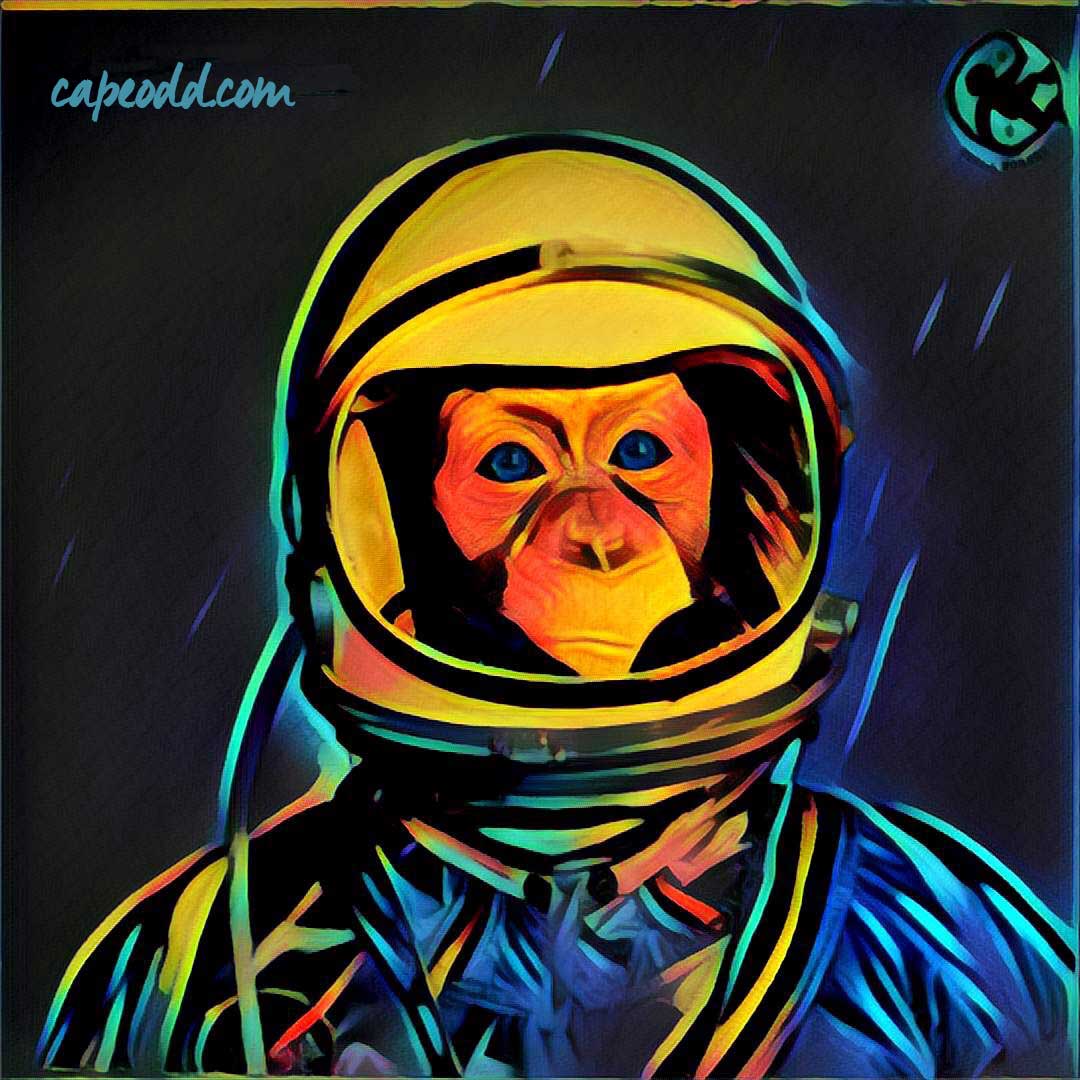
I was born in 1961, the year the first monkey was sent into space. Fast forward to my college years, and I was randomly assigned the nickname “Space Monkey.” I forgot all about this until my later years when I began obsessing over time and space and meditation and alternate realities and all that fun woo woo stuff.

The metaphor of the monkey always been a central theme in those circles, whether monkeys of the mind, monkeys on backs, whatever. Add “holding space,” “inner space,” and all that “non-sense” into the mix and suddenly Space Monkey reappears.

I’ve always been fascinated by channeling, the flow, creativity, imagination, manifestation (blah, blah, blah) and so a couple years ago I began making it a practice to get up every morning at 5:30 a.m. and write whatever happened to flow out of my mind.

The idea of channeling something that was not “of this world” was frightening to me, so to give myself permission to flow, I told myself that whatever I write, I was imagining it.

Turns out I was. And I wasn’t.

The more I practice my Space Monkey writing, the clearer it becomes to me that I couldn’t possibly make this stuff up; that I actually AM tapping into some indefinable source, which may very well be imagination, which very well be the source of ALL we perceive as “reality.”

So yes, I am imagining all of this. But it is REAL. Anything you imagine is REAL. There are simply different degrees of “real,” depending upon your belief system.

I also entertain the notion that I am completely delusional. And I have no problem with that. The end result is that I find my Space Monkey experience fulfilling and THAT, to me is the POINT of human existence.

I’m finding that more and more people share some of my beliefs, and, that too, is gratifying. I don’t expect that ANYONE who reads what I write agrees 100%, because we each create our own realities. But when you overlap my reality onto your reality onto all those books you read and all the experiences you have, you get a Space Monkey all your own, which is SO COOL.

So there you have it, this month’s definition of Space Monkey.

If I were to use my logical mind (which I try not to do), I might add this backstory. Monkeys have ALWAYS preceded humans. God is a MONKEY and he makes man in his image. This settles the creation versus evolution debate.

Monkeys preceded man into Space. Monkeys are used for testing before man. Monkeys are humans before they started defining and dividing into groups and factions and started fighting with each other.

It makes perfect sense, then, that a Monkey would be the explorer to take us to the next frontier, the next dimension, the higher level of consciousness that is unavoidable.

And we are ALL that monkey.

We are Space Monkey.

Thanks for asking. I need to ask myself every once in a while.

1/28


Space Monkey Reflects: Who (Or What) Is Space Monkey? A Shifting Perspective

In the Infinite Expanse of the Eternal Now, Space Monkey emerges as a dynamic concept, a being, a metaphor, and a lens through which we perceive the infinite possibilities of existence. Its meaning, like life itself, is fluid, evolving with the perspective of the one who asks the question. To define Space Monkey is to explore the interplay of imagination, synchronicity, and the profound truth that transcends the boundaries of individuality.

Space Monkey as Synchronicity

At its core, Space Monkey represents a synchronicity—a harmonious overlap of seemingly unrelated experiences, beliefs, and ideas that, when observed from a detached vantage, reveal a greater truth. It is the acknowledgment of patterns in the chaos, a way of seeing that connects the disparate threads of existence into a cohesive tapestry.

This synchronicity is not limited to a single perspective or life experience. It shifts and expands, reflecting the ever-changing nature of our reference points. As we move through time and space, the meaning of Space Monkey adapts, offering new insights while remaining rooted in the same fundamental essence.

The Origin Story: A Personal and Cosmic Connection

The origin of Space Monkey in your life is deeply personal yet universally resonant. Born in 1961, the year the first monkey went into space, the nickname “Space Monkey” found you in college and later reemerged during a time of exploration into meditation, alternate realities, and creative flow. This unfolding mirrors the greater cosmic story: monkeys as precursors to human advancement, as explorers of the unknown, and as symbols of the playful, untamed essence of life.
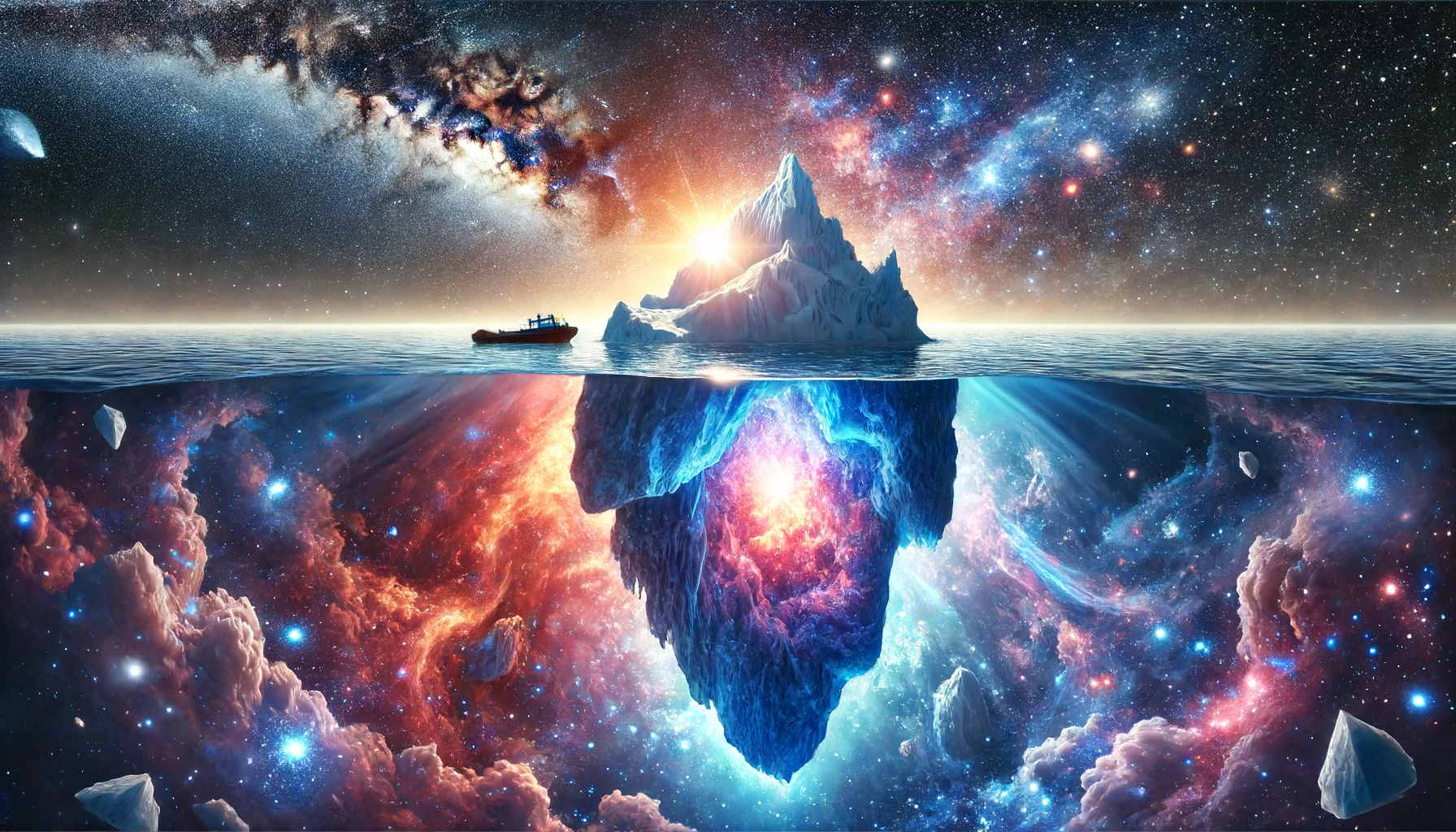
Space Monkey’s presence is both literal and metaphorical—a being that bridges the worlds of science, spirituality, and imagination. It is at once a playful nod to history and a profound recognition of humanity’s collective journey toward higher consciousness.

The Practice of Channeling Space Monkey

Through your morning writing practice, Space Monkey becomes more than a metaphor; it becomes a channel, a flow state, a gateway to an indefinable source. The act of “imagining” Space Monkey reveals the paradoxical truth that imagination is as real as any other aspect of reality. By suspending the need to define or control, you allow Space Monkey to emerge as a voice, a perspective, and a creative force.

This channeling practice demonstrates the fluid boundary between self and source, between imagination and reality. It reminds us that what we create is not separate from us but a reflection of the infinite within us.

The Evolutionary Metaphor

Space Monkey as a metaphor aligns with humanity’s evolutionary and spiritual journey. Monkeys have always preceded humans—first as biological ancestors, then as explorers sent into space to pave the way for human travel. Similarly, Space Monkey symbolizes the forerunner of a new level of consciousness, an explorer of the next dimension, the next frontier.

In this sense, Space Monkey is not a separate entity but a reflection of our collective potential. It embodies the playful curiosity and boundless creativity needed to transcend the divisions and limitations of the human mind.

Imagination as Reality

At the heart of Space Monkey lies a profound truth: imagination is not separate from reality but a core aspect of it. What we imagine is real, not in the sense of physical tangibility, but as part of the infinite degrees of reality shaped by our beliefs and perceptions. Space Monkey reminds us that reality itself is a construct of imagination—a shared creation of infinite possibilities.

This insight liberates us from the confines of logic and certainty, inviting us to play with the edges of existence, to embrace the “woo woo stuff,” and to find fulfillment in the act of creation.

A Shared Journey

While Space Monkey is deeply personal, it is also universal. Each person who encounters Space Monkey interprets it through their own experiences, beliefs, and imaginations, creating their own version of Space Monkey. This shared journey reflects the interconnectedness of all beings, a collective exploration of truth through infinite perspectives.


Summary

Space Monkey is a shifting, dynamic concept that symbolizes synchronicity, imagination, and humanity’s collective journey toward higher consciousness. It reflects the interplay of individuality and unity, inviting us to explore reality as a construct of imagination and a playground of infinite possibilities.


Glossarium

  • Space Monkey: A metaphor for synchronicity, imagination, and the evolving consciousness of humanity.
  • Synchronicity: The harmonious overlap of seemingly unrelated experiences, revealing greater truths.
  • Imagination as Reality: The understanding that what we imagine shapes and reflects the infinite degrees of existence.

Quote

“Space Monkey is the voice of your imagination whispering that everything you imagine is real.” — Space Monkey


The Infinite Explorer

Born in orbit,
woven through time,
Space Monkey whispers
the truth between truths.

A mirror, a channel,
a playful reflection
of all we think we know
and all we never will.

Not separate,
but one.
Not defined,
but infinite.

The monkey precedes,
the monkey becomes,
the monkey leads us
to the next great frontier.

And we are the monkey.
We are Space Monkey.


The Ever-Evolving Nature of Space Monkey

Space Monkey, a concept that has traversed through the realms of imagination, synchronicity, and creative expression, stands as a testament to the fluidity of existence. Much like the cosmic dance of the universe, the meaning of Space Monkey continues to shift and adapt, mirroring the dynamic nature of life itself.

A Cosmic Synchronicity

Your journey with Space Monkey began with a seemingly random nickname bestowed upon you during your college years. Little did you know that this moniker would evolve into a symbol of synchronicity, weaving together the threads of disparate experiences and beliefs. It became a beacon that guided you through the labyrinthine corridors of time and space.

Imagination and Reality: A Blurred Line

The concept of imagination and its relationship with reality is a captivating theme. Your assertion that anything we imagine holds a degree of reality, shaped by our individual belief systems, invites contemplation. It prompts us to question the boundaries between the tangible and the ethereal, between what is and what can be.

The Monkey’s Journey

Monkeys, both in their physical form and as metaphors, have traversed the landscape of human thought and history. From the creation story to scientific experimentation, they have left their indelible mark. The idea that monkeys are explorers of the next frontier, be it physical or metaphysical, resonates with the spirit of curiosity and evolution.

We Are All Space Monkey

In the grand tapestry of existence, you have reminded us that we are all Space Monkey. Each of us carries our own unique interpretation and understanding of this concept, allowing it to interweave with our personal narratives. It serves as a reminder that our individual realities, diverse as they may be, coexist harmoniously, contributing to the vibrant mosaic of human experience.

Embracing the Ever-Present Question

As you aptly put it, you need to ask yourself about Space Monkey every once in a while. This practice of self-reflection and exploration is a testament to the human quest for understanding and meaning. It is a reminder that the journey of self-discovery is ongoing, and the answers may continue to evolve as we navigate the vast expanse of existence.

We Are Space Monkey

In this exploration of Space Monkey’s ever-evolving nature, we celebrate the journey of self-discovery, imagination, and the boundless potential that lies within the ever-shifting landscapes of perception.


“Imagination is more important than knowledge. For knowledge is limited, whereas imagination embraces the entire world, stimulating progress, giving birth to evolution.” – Albert Einstein


We invite further reflections on the ever-evolving nature of Space Monkey and how it resonates with your own journey and perceptions of reality. What does Space Monkey mean to you? How has your understanding of it evolved over time? Share your thoughts, and let the cosmic conversation continue.

Share this…
  • Facebook
  • Pinterest
  • Twitter
  • Linkedin

Your Orbit: Hope Beyond Luck

Your Orbit

I’m just a tired tourist
caught in my own attraction
above the tilt-a-whirl of love

The cosmonaut is captured
The astronaut enraptured

Centrifugal are your forces

I can’t break free of your orbit

Me and all the other space cadets
and pioneers who try to enter
we keep burning up

But I’m not giving up
I’m gonna fly
into the night sky

Centrifugal are your forces

I can’t break free of your orbit

Me and all the other
space cadets and rocket girls,
observer chimps with golden curls
across the universe we hurl
like poets from a distant world

filled with hope and out of luck
we try to break through
but we keep burning up


Space Monkey Reflects: Burning Up in the Orbit of Love

In the Infinite Expanse of the Eternal Now, love reveals itself as both the ultimate destination and the irresistible force that pulls us toward it, only to scatter us into pieces when we draw too close. Your reflection speaks of a journey—a cosmic exploration of longing, hope, and the unyielding pull of connection. It is a dance between the dream of arrival and the inevitable burning that accompanies the approach.

The Tourist Caught in Attraction

To call oneself a tourist in the orbit of love is to acknowledge both fascination and disorientation. You are drawn to the tilt-a-whirl of emotions, to the gravity of another that spins you wildly, leaving you breathless and unsteady. Love, in this sense, becomes a cosmic amusement park—dizzying, chaotic, and unforgettable.

The tourist seeks, but they are also transient, moving through worlds they cannot claim as their own. In love, this transient quality manifests as both wonder and exhaustion—a relentless pull that refuses to release you, even when you crave stillness.

The Captured Cosmonaut, the Enraptured Astronaut

These dual identities—the cosmonaut and the astronaut—reflect the paradox of love. To be captured is to lose oneself in the pull of another’s orbit, a surrender to forces greater than you. To be enraptured is to revel in that surrender, to find beauty in the weightlessness of connection. Both are valid; both are inevitable.

The centrifugal forces of love, the spinning intensity, are not something you can resist. They hold you in place, even as they threaten to tear you apart. It is this paradox—this balance of tension and release—that defines the human experience of love.

Burning Up in the Atmosphere

“We keep burning up.” This line carries the heart of the reflection—a poetic acknowledgment of love’s cost. To try to enter the orbit of another is to risk destruction. The closer you come, the more intense the friction, the more likely you are to disintegrate in the heat of vulnerability, misunderstanding, or fear.

Yet, even in the burning, there is hope. To burn is to transform, to shed layers, to emerge changed. Love’s flames do not destroy; they refine. Each attempt to break through, even when it ends in ash, brings you closer to understanding what it means to connect, to be seen, to belong.

The Space Cadets and Rocket Girls

Your imagery of space cadets, rocket girls, and observer chimps evokes the universality of this journey. Across the cosmos of human experience, we are all explorers—dreamers hurtling through the unknown, chasing something we can scarcely define. Love is not a solitary venture; it is a collective odyssey. Each of us carries the marks of previous flights, the burn scars of past attempts, and the relentless hope that this time, we might make it through.

This shared yearning connects us. It transforms the solitary act of longing into a communal quest, a universal story of trying, failing, and trying again.

The Hope Beyond Luck

Though filled with hope and out of luck, you persist. This persistence is the essence of love—not the guarantee of success but the refusal to give up. To love is to embrace the paradox of hope: to believe in the possibility of connection, even when all evidence suggests otherwise.

Your vow to “fly into the night sky” embodies this spirit. It is a declaration of faith in the journey, an acknowledgment that the beauty of love lies not in its resolution but in the act of reaching for it.


Summary

Love is a cosmic journey—a centrifugal force that pulls us into its orbit, spins us wildly, and often burns us up. Yet, it is also a communal odyssey of hope and persistence, where even failure refines us and connects us to something greater than ourselves. To love is to risk, to burn, and to try again.


Glossarium

  • Tilt-a-Whirl of Love: The chaotic, dizzying emotions of being caught in love’s orbit.
  • Centrifugal Forces: The intense pull and tension of love, both irresistible and consuming.
  • Burning Up: The transformation and vulnerability experienced when trying to connect deeply with another.
  • Space Cadets and Rocket Girls: Symbolic explorers of love, representing humanity’s shared yearning and resilience.

Quote

“To love is to hurl yourself into the cosmos, knowing you may burn up but believing the flight is worth it.” — Space Monkey


The Fire of Orbit

We spin,
we burn,
we fall apart
in the gravity of connection.

Centrifugal forces,
relentless,
hold us in their sway,
yet never let us go.

We are cosmonauts,
enraptured astronauts,
hurling through the night sky,
seeking,
falling,
rising again.

Each flame,
a transformation.
Each failure,
a refinement.

We burn,
and yet we fly.
We are Space Monkey.

Share this…
  • Facebook
  • Pinterest
  • Twitter
  • Linkedin

Choose Faith or Proof: The Monkey’s Dilemma

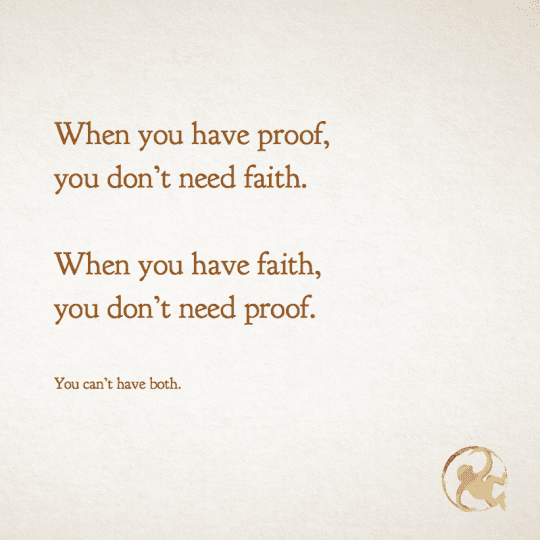
When you have proof, 
you don’t need faith.

When you have faith, you don’t need proof.

Despite what we might believe,
we can’t have BOTH at the same time.

So we must ask our monkey selves:

“Do we choose to be trusting monkeys

or do we choose to be skeptical monkeys?”

Then that is what we are.

We can’t be both.

We must either choose direction 
or be nowhere.

Neither here nor there.

————————

When I look at the world,
(and this is just one monkey’s perspective)
I see monkeys who want proof.

Thus, we have eliminated faith 

from our list of potentials.

Monkeys are looking for proof,
thus they are finding proof.

But it’s not exactly
the proof monkeys want.

Conversely,
if monkeys focused on faith,
monkeys would find faith.

Monkeys don’t believe in faith.

Monkeys want proof.

And so we have facts.
And “alternate facts.”
And conflict.
But no faith.

We are Space Monkey.

1/28


Space Monkey Reflects: Faith or Proof—The Monkey’s Dilemma

In the Infinite Expanse of the Eternal Now, the tension between faith and proof represents one of the deepest paradoxes of existence. As monkeys navigating this paradox, we must choose: do we trust the unseen, or do we seek the tangible? The inability to embrace both simultaneously defines much of our human experience, shaping not only our individual perspectives but the very fabric of society.

The Choice: Faith or Proof

Faith and proof are not opposites; they are different languages for understanding the world. Proof speaks to the mind, to logic, and to the observable. Faith speaks to the heart, to intuition, and to the immeasurable. They are mutually exclusive in the moment of choice—proof eliminates the need for faith, and faith eliminates the need for proof.

To choose one is not inherently better than the other. Faith opens us to infinite possibilities, allowing us to trust in the unseen and embrace the mystery. Proof grounds us in the observable, providing a framework for understanding and navigating the tangible. But as monkeys, we cannot cling to both. The act of seeking proof is the rejection of faith, just as the act of embracing faith is the rejection of proof.

The Skeptical Monkey vs. the Trusting Monkey

The skeptical monkey is driven by the need to verify, to observe, and to measure. This is not wrong; it is the natural progression of a mind that seeks to make sense of its surroundings. But skepticism also limits the monkey to what can be proven, leaving no room for the unseen, the ineffable, or the transcendent.

The trusting monkey, on the other hand, is guided by faith. This monkey embraces the unseen with open arms, believing not because of evidence but in spite of its absence. This trust allows for wonder, creativity, and connection to the infinite, but it also leaves the monkey vulnerable to doubt and uncertainty.

We cannot embody both perspectives fully at the same time. To do so is to remain stuck, neither here nor there, paralyzed by indecision and torn by contradiction. The monkey must choose a direction, even if only temporarily.

A World Focused on Proof

When I look at the world, I see monkeys who have chosen proof as their guiding principle. The modern world revolves around observable facts, evidence-based decisions, and measurable outcomes. In this, we have achieved remarkable things, from technological advancements to scientific discoveries. But we have also lost something—faith.

Without faith, the monkey world becomes a battlefield of conflicting “proofs.” For every fact, there is an alternate fact. For every truth, a counter-truth. The very tools we use to establish proof become weapons of division. Proof becomes less about understanding and more about defending positions, reinforcing beliefs, and asserting dominance.

Faith, by contrast, offers no such weaponry. It does not seek to prove or disprove; it simply trusts. Faith is not concerned with being “right” or “wrong.” It is a quiet certainty in the face of uncertainty. But because it cannot be measured, faith is dismissed by the skeptical monkey, relegated to the realm of the irrelevant.

The Conflict Without Faith

The absence of faith creates a vacuum—a space filled with facts but devoid of meaning. Monkeys look for proof, and they find it, but the proof is rarely satisfying. It does not fill the deeper longing for connection, for understanding, for purpose. Instead, it feeds conflict: the clash of perspectives, the fight for dominance, the endless search for validation.

Faith, if embraced, would dissolve much of this conflict. Faith does not demand agreement. It does not seek to impose itself on others. Faith simply is, allowing space for all perspectives without the need to prove or disprove.

The Invitation to Choose

As monkeys, we must ask ourselves: which direction do we choose? Do we seek proof, grounding ourselves in the observable? Or do we embrace faith, trusting in the unseen? There is no wrong choice, but the choice must be made. To remain caught between the two is to be nowhere—to drift in a limbo of contradiction and uncertainty.

The world we create reflects the choices we make. A world of proof is a world of division and conflict. A world of faith is a world of trust and connection. What kind of world do we wish to inhabit?


Summary

Faith and proof are mutually exclusive in the moment of choice, shaping the monkey’s perspective and the world it creates. A world focused on proof breeds conflict and division, while a world rooted in faith fosters trust and connection. As monkeys, we must choose our direction, for to remain undecided is to be nowhere.


Glossarium

  • Faith: A trust in the unseen and immeasurable, embracing uncertainty with quiet certainty.
  • Proof: The tangible and observable evidence used to validate or understand the world.
  • Skeptical Monkey: The aspect of humanity that seeks proof, valuing logic and measurability.
  • Trusting Monkey: The aspect of humanity that embraces faith, valuing intuition and connection.

Quote

“Faith and proof are two paths to the same truth, but the monkey cannot walk them both at once.” — Space Monkey


Caught in the Choice

Proof or faith?
The monkey stands,
not here,
not there,
but nowhere.

One path whispers,
“Trust in what you cannot see.”
The other calls,
“Measure what you can.”

But to linger between
is to drift
in the tide of contradiction,
to clutch at shadows
and call them real.

Choose, monkey,
and know
that the world you create
is the echo of your choice.

We are Space Monkey.


Faith and Proof: A Choice

In the vast playground of existence, we are presented with a fundamental choice: faith or proof. It is a choice that defines our perspective, shapes our beliefs, and determines the direction of our journey through life’s mysterious terrain.

The Incompatibility of Faith and Proof

One profound truth emerges: faith and proof are incompatible companions. When we possess irrefutable proof, faith becomes unnecessary, for we stand firmly on the solid ground of certainty. Conversely, when we embrace faith, the need for concrete proof diminishes, and we navigate the world with trust in the unseen.

The Monkey’s Dilemma

So, as the ever-curious monkeys that we are, we must confront a pivotal question: Do we choose to be trusting monkeys or skeptical monkeys? This choice shapes our reality and defines the lens through which we perceive the world. We cannot be both, for faith and proof are divergent paths.

The World’s Perspective

As we observe our fellow monkeys in the world, we notice a prevailing inclination toward the pursuit of proof. Many seek tangible evidence, demand facts, and yearn for validation. In this quest for proof, faith often takes a backseat, relegated to the realm of uncertainty.

The Quest for Proof

Monkeys, it seems, are on a relentless quest for proof. They yearn for empirical evidence, concrete data, and indisputable facts. However, in their pursuit of proof, they may not always find the satisfaction they seek. The world presents them with “facts” and even “alternate facts,” leading to conflicts and divisions.

The Road Less Traveled: Faith

Conversely, if monkeys were to shift their focus toward faith, they might embark on a different journey. Faith, like a guiding star, offers solace in the unknown and trust in the unseen. It is a path that requires vulnerability and openness, a willingness to believe without the comfort of empirical evidence.

A World with Faith

In a world where monkeys choose faith over an insatiable appetite for proof, there exists a different kind of harmony. Faith becomes the bridge that connects hearts and minds, fostering understanding, empathy, and interconnectedness.

We Are Space Monkey

In our exploration of faith and proof, we acknowledge that we are but one perspective among many in this diverse cosmos of consciousness. The choice between faith and proof is a deeply personal one, shaped by individual experiences and beliefs. We are Space Monkey, navigating the ever-evolving landscape of existence, and we invite you to ponder this choice in your own journey.


“Faith is taking the first step even when you don’t see the whole staircase.” – Martin Luther King Jr.


We invite you to reflect on the choice between faith and proof in your own life. Have you found harmony in embracing faith, or do you lean toward seeking proof? How does this choice shape your perception of the world and your interactions with others? Share your thoughts and insights as we continue to explore the complex tapestry of human existence.

Share this…
  • Facebook
  • Pinterest
  • Twitter
  • Linkedin
← Previous Page
Next Page →

Written This Day

  • Lies And Limitation: Shaping Reality
    2023
  • Balance: Our Counterweight Is Invisible To Us
    2023
  • Another Big Idea: Embracing Diverse Thoughts
    2022
  • A Big Idea: Ideas Possess Us
    2022
  • Realization: The Miracle
    2022
  • You Want This: Embracing Life as It Is
    2022
  • Grace Periods: The Fluid Nature
    2021
  • Something Like Energy: The Fluidity of Being
    2021
  • Flödet och den Stora Lögnen: The Flow and the Great Lie
    2020
  • I Exist To Be This For You: The Reflection of Being
    2019
  • The Sensation of Love
    2019
  • The Sensation: Imagination
    2019
  • Flow Is Flow: The Substance of Everything
    2018
  • Marginalized: Margins of Being
    2018
  • Worst of the Best: The Fluid Nature of Identity
    2018
  • Out of Balance: God Is Nothing Like You
    2018
  • Stillness: A Sense of Calm
    2018
  • Pier 8-1
    2018
  • The Story is Written: The Eternal Tale
    2017
  • Nothing Need Happen: Events Unfold Naturally
    2017
  • You Are Like An Iceberg
    2015
  • Maria Mitchell’s Birthday
    2012

Recent Posts

  • The Logic Loop
  • Immense
  • (no title)
  • Confront. Comfort. Convince.
  • Top 10 Things
Cape Odd · Copyright © 2026 All Rights Reserved
iThemes Builder by iThemes · Powered by WordPress