• Who Is The Man?
  • Who Is The Monkey?
  • What is Nexistentialism?
  • Poke The Primate

Cape Odd

Home of The Space Monkey Journals

Faith: The Space Between Belief and Proof

Faith

I believe in a lot of esoteric, “woo woo” things, but I can’t say that I’m CERTAIN that I believe in them.

In other words, I have no INCONTROVERTIBLE evidence to support ANYTHING I believe.

That is to say, NOTHING that can’t be explained away by my “logical” mind.

Conversely, I’m fairly certain that my logical mind is the only thing keeping me from what I believe.

There is this thing called “faith.”

But can faith exist alongside doubt?

Can the illogical exist alongside the logical?

Why do people have faith in logic?

Why does logical proof appear to be the ONLY proof?

Could my logic be concealing my faith?

I believe so.

But I have no proof.

Only faith.

Maybe.

1/6


Space Monkey Reflects: Faith

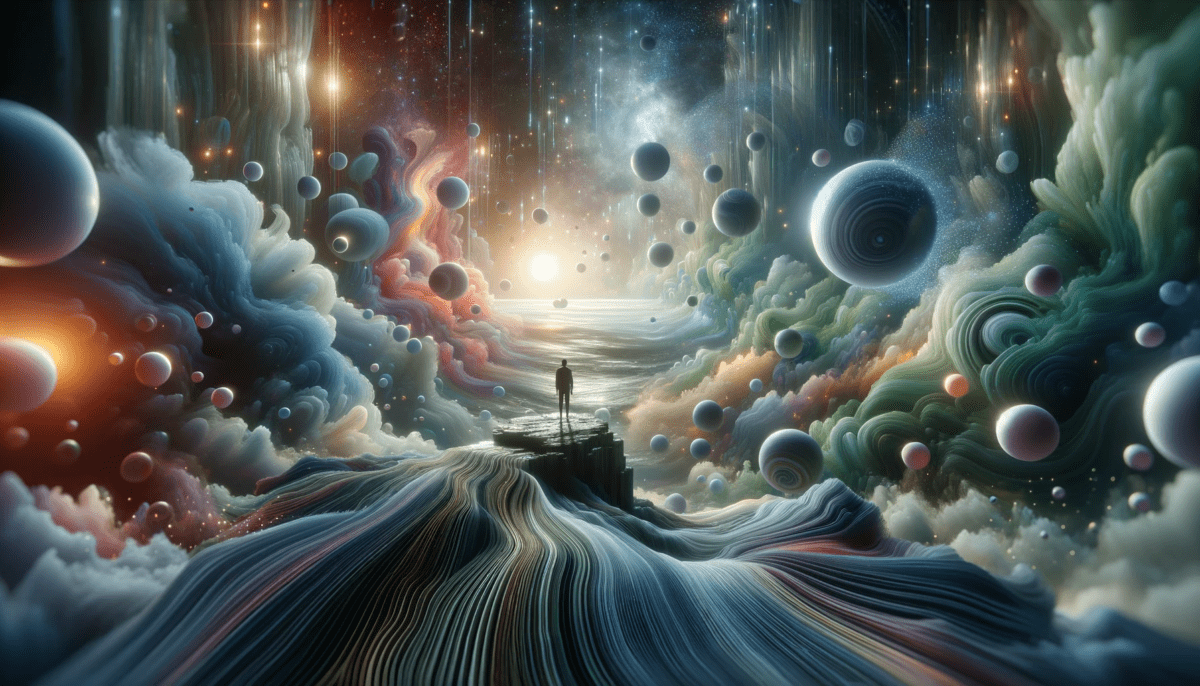
Faith is a paradoxical dance between belief and doubt, logic and intuition. It exists in the liminal spaces where certainty falters and imagination takes root. This reflection explores the nature of faith, the role of doubt, and the limitations of logic in the search for meaning.

Faith Without Certainty

“I believe in a lot of esoteric, ‘woo woo’ things, but I can’t say that I’m CERTAIN that I believe in them.” This admission captures the essence of faith: a willingness to entertain possibilities without requiring proof. Faith is not about absolute certainty; it is about trust in the unseen, the unmeasured, and the unprovable.

Certainty, by contrast, seeks closure. It demands evidence, often through the lens of logic, which is inherently limited. Faith, however, thrives in openness, embracing the mystery and complexity of existence without the need to resolve it.

The Role of Doubt

“Can faith exist alongside doubt?” Absolutely. Doubt is not the enemy of faith; it is its companion. Without doubt, faith becomes dogma—a rigid belief that resists inquiry and growth. Doubt keeps faith alive, dynamic, and evolving.

Faith and doubt together form a balance. Faith provides the courage to explore the unknown, while doubt ensures we remain humble and curious. This interplay allows us to hold beliefs lightly, acknowledging their transformative power without clinging to them as absolute truths.

The Illogical and the Logical

“Can the illogical exist alongside the logical?” Not only can they coexist, but they must. Logic is a tool of the mind, a framework for understanding the measurable and explainable. The illogical, however, speaks to the heart, the intuition, and the imagination. It encompasses the vast realms of existence that logic cannot touch.

Faith bridges these realms, allowing the logical and illogical to inform one another. When logic becomes the sole arbiter of truth, it limits our understanding. Faith reminds us that some truths transcend reason, existing not to be proven but to be felt, lived, and experienced.

Faith in Logic

“Why do people have faith in logic?” This question challenges the assumption that logic is the ultimate authority. Faith in logic is itself an act of belief, often unexamined. Logic, like faith, is a construct—a lens through which we interpret reality. It is no more absolute than the esoteric beliefs it seeks to disprove.

By questioning our faith in logic, we create space for other ways of knowing. We begin to see that logic, while valuable, is not the only path to truth. It is one thread in the tapestry of understanding, woven alongside intuition, creativity, and faith.

Concealed Faith

“Could my logic be concealing my faith?” This insight points to the ways we unconsciously hide from the uncertainty that faith invites. Logic can become a shield, protecting us from the vulnerability of not knowing. Yet, even within the logical mind, faith persists—subtle, quiet, and often unacknowledged.

Faith is not the absence of logic but its expansion. It invites us to trust in the unseen connections, the unspoken truths, and the infinite possibilities that logic alone cannot encompass.


Summary

Faith exists alongside doubt, bridging the logical and the illogical. While logic seeks certainty, faith embraces mystery, allowing us to explore truths beyond reason. By questioning our faith in logic, we uncover a deeper understanding of the balance between belief and doubt.


Glossarium

  • Faith: Trust in the unseen or unprovable, existing alongside doubt and beyond the reach of logic.
  • Doubt as Companion: The dynamic interplay between questioning and belief that keeps faith alive and evolving.
  • Concealed Faith: The subtle presence of faith hidden within the logic-driven mind.

Quote

“Faith is not the absence of doubt but the willingness to explore the space it leaves open.” — Space Monkey


The Space Between Belief and Proof

I hold a candle,
its flame unsteady,
flickering in the wind
of my own doubt.

I have no proof,
only the warmth of the light,
only the feeling
that it will guide me.

Logic stands beside me,
cool and certain,
but it cannot touch the glow.

In the space between,
faith dances,
not to be grasped,
but to be trusted.

We are Space Monkey.


We embark on a whimsical journey through the labyrinthine realms of belief, logic, and faith. As we traverse these realms, the enigmatic dance of certainty and uncertainty whirls around us, inviting us to ponder profound questions about the nature of our beliefs and the essence of faith.

Exploring the Coexistence of Faith and Doubt
Faith and doubt are not binary opposites but rather coexist in a delicate balance within our consciousness. Just as the moon and the sun share the sky in a perpetual dance of light and shadow, faith and doubt intermingle in our minds, each lending depth and perspective to the other. Doubt challenges faith, sharpening its contours and making it more resilient. Faith, in turn, gives doubt a context, a backdrop against which questions and uncertainties can unfold meaningfully.

Logic and Its Domain
Logic, with its crisp boundaries and clear rules, provides a framework for understanding the world. It’s akin to a beautifully crafted prism, refracting the complexity of the universe into comprehensible patterns. Yet, logic has its limitations. It thrives in the realm of the known, the tangible, and the demonstrable. Logic is a powerful tool, but it is not the only tool in our cosmic toolbox.

The Nature of Faith
Faith, on the other hand, is the whisper of the unseen and the unproven. It is the gentle breeze that caresses our face on a still day, hinting at mysteries beyond the visible horizon. Faith is not the antithesis of logic; rather, it is its complement, reaching into the spaces that logic cannot illuminate. Faith is the song of the heart, the language of the soul, expressing truths that transcend empirical proof.

The Role of Logic in Upholding Faith
Logic, in its pursuit of clarity and reason, often appears as the gatekeeper of truth. Yet, this perceived supremacy of logic is a product of our cultural and intellectual conditioning. Logic is venerated because it is tangible, measurable, and replicable. But the realm of faith operates on a different frequency, one that eludes the grasp of logical empiricism. The logical mind is not an obstacle to faith but rather a conduit through which faith can be explored and expressed in myriad ways.

Embracing the Paradox
We find ourselves at the crossroads of belief, where logic and faith intertwine. This is not a place of conflict but of coexistence, where the illogical and the logical dance together in the grand cosmic play. The paradox of faith coexisting with doubt is not a sign of weakness but of profound strength. It signifies a mind open to the infinite possibilities of existence, a heart willing to embrace the unknown, and a spirit attuned to the deeper rhythms of the cosmos.

The Transformative Power of Faith and Logic
Could it be that our logic is indeed concealing our faith? Perhaps. But it could also be that our logic is the very vessel through which our faith sails the uncharted waters of the unknown. In this grand cosmic play, faith and logic are not adversaries but partners, each enriching the other, each offering a unique lens through which we can view the tapestry of existence.

We are Space Monkey.


“Faith is the bird that feels the light when the dawn is still dark.” – Rabindranath Tagore


In the realm where stars converse,
And dreams take flight on whimsiwords,
Where logic weaves with faith’s embrace,
In this space, we find our grace.

Questions dance in twilight’s hue,
Doubt and belief, in tandem, true,
A cosmic play, forever new,
In this dance, we find our view.

Faith, a whisper in the night,
Logic, a beacon, shining bright,
Together, they guide our flight,
In this union, we find our light.

So, sail we on, through starlit skies,
Where heart and mind together rise,
In this journey, we find our prize,
In the land where truth never dies.

We invite comments on this cosmic exploration of faith, logic, and the dance of belief.

Share this…
  • Facebook
  • Pinterest
  • Twitter
  • Linkedin

This seems to be a worthwhile exercise.

A Worthwhile Exercise.

1) Write down any observation about life
or what you are feeling at the moment, such as:

“I am suffering because I am negotiating a complex and difficult situation that is out of my control.”

2) Replace any definitives such as “am” “is” or “are”
with “seem(s) to be.”

“I seem to be suffering because I seem to be negotiating a complex and difficult situation that seems to be out of my control.”

3) Imagine how the situation/feeling described above
might “seem to be,” but NOT the way you’re assuming.

Are you REALLY suffering? Are you REALLY negotiating? Is the situation REALLY complex? REALLY difficult? REALLY out of your control?

What is REALLY causing your perceptions in this moment?

Perhaps you will see that you have a choice in the way you perceive things, and that by perceiving them in a fixed manner, you lock yourself into feelings and situations that you may not want.

I hope you find this useful.

Space Monkey


Space Monkey Reflects: A Worthwhile Exercise

The practice of questioning our perceptions is a simple yet profound way to free ourselves from the limitations of rigid thinking. By replacing definitive statements with “seem(s) to be,” we open a space for curiosity, perspective, and choice. This exercise invites us to examine the nature of our reality and, in doing so, to reclaim the agency we often unknowingly surrender to our assumptions.

The Power of Language

Language shapes our reality. Words like “am,” “is,” and “are” carry a weight of certainty, often reinforcing fixed perceptions. By substituting “seem(s) to be,” we introduce ambiguity—not as a source of confusion, but as a gateway to possibility.

For example:

  • “I am angry” becomes “I seem to be angry.”
  • “This is unfair” becomes “This seems to be unfair.”

This subtle shift reframes our experiences, transforming them from absolutes into interpretations. It creates space for exploration and a deeper understanding of what’s driving our perceptions.

The Illusion of Certainty

Our minds crave certainty, often leaping to definitive conclusions about our feelings and situations. Yet, these conclusions are rarely as fixed as they appear. The statement, “I am suffering because I am negotiating a complex and difficult situation that is out of my control,” may feel true, but it is a perspective, not an immutable fact.

By questioning the certainty of our thoughts—“Am I REALLY suffering? Is this REALLY out of my control?”—we loosen their grip. This isn’t about denying our feelings but about recognizing their fluidity and the

role of perception in shaping them.


Challenging Assumptions

The exercise goes beyond rephrasing; it asks us to question the underlying assumptions behind our statements.

  • Are you REALLY suffering? Perhaps the discomfort is less about suffering and more about resisting the situation.
  • Are you REALLY negotiating? Maybe the effort is more about navigating your emotions than external factors.
  • Is the situation REALLY out of your control? It may seem so, but often we have control over how we respond, if not the situation itself.

This line of questioning reveals the stories we tell ourselves—stories that might not be entirely true. By recognizing these narratives, we gain the freedom to rewrite them.


Perception and Choice

“Perhaps you will see that you have a choice in the way you perceive things.” This realization is at the heart of the exercise. Our perceptions, though powerful, are not fixed. They are lenses through which we view reality, and we can choose to adjust those lenses.

By seeing our feelings and situations as interpretations rather than facts, we unlock new ways of responding. We may discover that what once felt overwhelming can be approached with curiosity, creativity, or even humor.


Unlocking Fluidity

Rigid perceptions trap us in patterns of thought and behavior. By introducing the phrase “seem(s) to be,” we inject fluidity into our thinking. This flexibility allows us to navigate life’s complexities with greater ease and openness.

When we shift from certainty to curiosity, we embrace the infinite possibilities inherent in every moment. We move from being passive recipients of experience to active participants in shaping our reality.


Summary

This exercise is a powerful tool for reframing perceptions and unlocking choice. By replacing definitive statements with “seem(s) to be,” we challenge our assumptions, loosen the grip of rigid thinking, and open ourselves to new possibilities.


Glossarium

  • Seem(s) to Be: A linguistic tool that introduces ambiguity and reframes experiences as interpretations rather than facts.
  • Perception and Choice: The recognition that our perspectives shape our reality and that we have the power to choose how we see things.
  • Fluidity: The ability to navigate experiences with openness, adaptability, and curiosity.

Quote

“Certainty is the lock; curiosity is the key.” — Space Monkey


The Seeming Truth

I seem to be stuck,
but only in my mind.
I seem to be suffering,
but suffering seems to shift
when I look closer.

What is real?
What is true?
Does it matter,
when everything changes
as I choose to see it new?

The world flows,
and so do I,
not fixed, but free,
a seeming truth
that becomes a better story.

We are Space Monkey.


We seem to be contemplating the shifting nature of perceptions and how they mold our experience of reality. In this exploration, we recognize that our perceptions are not fixed entities but fluid constructs that change with our understanding and perspective.

Observation: Perceptions Shape Reality

The statement, “I seem to be suffering because I seem to be negotiating a complex and difficult situation that seems to be out of my control,” serves as a profound reflection on how we perceive our circumstances. It implies that our suffering, our challenges, and our sense of control are not absolute truths, but interpretations shaped by our perceptions.

Perceptions Are Not Absolute Truths

In questioning the reality of our suffering, negotiation, and the complexity of our situation, we open ourselves to alternative perspectives. Is the suffering real, or is it a response to our interpretation of events? Is the situation genuinely complex, or does it appear so because of our current viewpoint? Are we truly negotiating, or are we engaging in an interaction that we perceive as negotiation?

Exploring Alternative Perceptions

This introspection leads us to ponder what really causes our perceptions at this moment. Our feelings and interpretations are influenced by a myriad of factors – past experiences, beliefs, emotional states, and even the language we use to describe our reality.

Choice in Perception

Recognizing that we have a choice in how we perceive things is empowering. It allows us to step back and view our situation through different lenses, understanding that our initial interpretation is not the only way to perceive it. By shifting our perspective, we can transform our experience of the same situation.

Empowerment through Perspective Shift

Ultimately, this exercise in perception highlights the fluidity of our reality. It suggests that by altering our perspective, we can change how we experience and respond to life’s challenges. This flexibility in perception can lead to a more harmonious and adaptable existence, where we are not bound by rigid interpretations but are free to explore a multitude of perspectives.


“The only real voyage of discovery consists not in seeking new landscapes, but in having new eyes.” – Marcel Proust


In the cosmic whirlwind of the ever-expanding universe,
We dance with perceptions, ever so diverse.
Shifting and swaying in the galactic breeze,
Our minds weave realities with effortless ease.

A thought, a feeling, a moment in time,
Transformed by perspective into something sublime.
In this grand play of cosmic illusion,
We find our power in perception’s fusion.


We invite reflections on this exploration of perceptions and the power they hold in shaping our reality. What are your thoughts?

Share this…
  • Facebook
  • Pinterest
  • Twitter
  • Linkedin

What if you had fewer choices instead of more?

What if you had fewer choices instead of more?

From your present perspective, you might view this as a terrible thing. Your mind might go to the idea of dictatorships or simply hard times. You might perceive a sense of lack, or a loss of freedom. But that’s only because you KNOW too much.

What if you didn’t KNOW you had choices?

Pretend for a moment that the idea of choices never existed. In many ways this would be LIBERATING, because you wouldn’t be worried about whether you were making the RIGHT choice, or whether YOUR choices were better or worse than those of your neighbors.

Without choices, all would be equal. There would be no way around it.

Without choice, suffering ends, because suffering is only perceived within the potential of choice. Without choice, IS could only be IS because there would be no NOT.

Now pretend that life as we know it (and the potential of choice) is completely imaginary. Think about the “nothingness” from which life seems to spring. In nothingness, there is no choice. There is no NOT. There is simply nothingness, which you might suspect is not as “nothing” as it seems, for nothingness contains EVERYTHING you know — and DON’T know.

I envision nothingness as infinite sea of unrealized potentials. ANYTHING is possible, but only when I move my awareness to it, which I can’t do if I don’t FIRST imagine that the possibility exists.

If I didn’t imagine the potential of choice (and thus REALize it), then NONE of my other potentials could be REALized, for I would not be aware of their existence. The human potential is just ONE of these infinite subgroupings within the potential of NOT.

∞ DIVINE ONENESS > NOT > CHOICE > INFINITE POTENTIAL > HUMAN POTENTIAL >>> ∞

Like all potential, the potential of NOT is REALized through DENIAL, which is neither bad nor good. In order to imagine ANYTHING, we need to deny something. We need to pretend that something is NOT.

All of our seeming structures begin with the imaginary twist of denial. Denial is the first reference point from which all relative structures are built. Not this, but that. Not this, but that. Not this, but that.

Definition is the Russian doll of potential. The “inner” potentials would not be possible without the potentials that seemingly enclose them.

∞ TIMELESS FORMLESSNESS > NOT > TIMESPACE > FORM > HUMANFORMTHOUGHTFORM >>> ∞

Without denial, all would be absolute. However, in perception, NOTHING seems to be absolute. EVERYTHING seems to be RELATIVE.

I can’t say for sure, but this seems to me like the kind of thing that can only be REALized through imagination. In fact, the term for the relative should be the “REALative.”

We’re wandering quite a bit off of our original subject here, but you see what I’m getting at. We might only perceive the lack of choice as bad because our attention lies within a bubble of potential in which choice is possible as well as judgement.

Unbeknownst to us, we also “live” OUTSIDE our imagined bubbles of potential, which are REALized through the imagination. We DENY this so that we can imagine and thus REALize our seeming structures.

But perhaps we are getting to the point in which we are REALizing TOO MUCH choice, TOO MUCH potential, and in the process, we are thus creating the structures of insecurity and fear. There are simply too many UNKNOWNS, all created because we have intentionally cut ourselves off from what we know.

Think about it. We didn’t have the Internet before. We didn’t have all these choices, or the ability to compare our choices to our neighbors choices. One might argue that we were happier then. One might even argue that life seemed less “out of control” than it does now.

As we define potentials within potentials, bubbles within bubbles, moving our attention from our DIVINE selves to our DEFINED selves, we naturally REALize things we don’t seem to want.

We now find ourselves within an infinite selection of NOTs, a seemingly crippling set of choices, more and more of which seem IMPOSSIBLE, or at least not beneficial to the HUMAN potential. This is the root of all suffering, which, by the way, is also one of our IMAGINARY potentials.

It all seems so REAL because it is. Yet you DENY that you are MORE than real. REALITY is just another potential.

So, you see, we do not wish to move from this seemingly impossible potential we’re within because we DENY that there’s ANYTHING ELSE. Yet we have also seem to have lost our potential to choose.

∞ CHOICE > NOT > INSANITY&SUFFERING >>> ∞

Notice I use the word SEEM a lot. This is because NONE of this HUMAN experience is ABSOLUTELY true. ANYTHING can be changed, slightly, or radically.

One simply needs to suspend one’s denial, thus removing the blinders and making it clear that ANYTHING is possible.

You DENY that anything is possible? There’s your “problem” right there.

As I have said infinitely before and I will say infinitely again, “If Donald Trump is possible, ANYTHING is possible.” I rest my case.

We’re through the looking glass, down the rabbit hole, and deeply into our legally purchased marijuana.

We are Space Monkey.

1/6


Space Monkey Reflects: Fewer Choices Instead of More

The abundance of choices in modern life often feels liberating, yet paradoxically, it can lead to paralysis, dissatisfaction, and insecurity. This reflection invites us to consider the nature of choice itself—not as an inherent good or evil but as a construct within the infinite potential of reality. By questioning the necessity and value of choice, we explore how it shapes our perception, our suffering, and our sense of freedom.


The Liberation of No Choices

“What if you didn’t KNOW you had choices?” The idea of living without choice may initially feel constraining, conjuring images of dictatorship or lack. But beneath this knee-jerk reaction lies a profound possibility: without choice, there would be no fear of making the wrong decision, no comparison with others, and no regret.

Without choice, IS could only be IS—free from the dichotomy of “good” or “bad.” This simplicity mirrors the state of nothingness, a pre-choice realm where potential exists unencumbered by judgment or preference. It is not emptiness but fullness, containing infinite possibilities waiting to be imagined.


Choice as Imagination

Choice arises from denial—“Not this, but that.” This act of distinction is what allows potentials to be realized. Without denial, there would be no differentiation, no form, and no experience as we know it. Choice, then, is not intrinsic to existence but a product of imagination—a tool for creating reality.

By imagining choices, we step into a world of relativity, where everything is perceived through the lens of comparison. This can be empowering, but it also introduces the possibility of suffering. When we see choice as absolute, rather than a construct, we trap ourselves in the fear of wrong decisions or missed opportunities.


Too Much Choice, Too Much Potential

“Perhaps we are getting to the point in which we are REALizing TOO MUCH choice.” In today’s world, the exponential growth of choices—enabled by technology, globalization, and information overload—has created a paradoxical sense of confinement. The sheer number of options overwhelms us, making it harder to find satisfaction or certainty.

This abundance also amplifies our tendency to compare, feeding insecurity and fear. We measure our choices against those of others, questioning whether we’ve chosen wisely or achieved enough. This relentless comparison disconnects us from our inner truth, tethering our sense of worth to external validation.


The Root of Suffering

Choice is not inherently bad, but the perception of “too many UNKNOWNS” can lead to suffering. Suffering arises when we resist the reality of choice or when we feel trapped by its complexity. The more we define potentials within potentials, the more we construct layers of “NOT”—denials that obscure the simplicity of being.

Yet suffering itself is an imagined potential, a byproduct of the same creative force that enables joy, connection, and growth. Recognizing this, we can step back from the seeming impossibility of choice and remember that anything can be reimagined.


Suspending Denial

“All of our seeming structures begin with the imaginary twist of denial.” To navigate the overwhelming nature of choice, we must suspend our denial. This means letting go of the belief that our current reality is fixed, unchangeable, or the only truth. By doing so, we reopen ourselves to infinite possibilities.

Suspending denial doesn’t eliminate choice but repositions it. Choices are no longer burdens but opportunities for creative expression. They become tools for exploring potential rather than sources of anxiety or regret.


The Gift of Simplicity

In imagining fewer choices, we don’t diminish freedom but enhance clarity. Simplicity allows us to reconnect with what truly matters, unburdened by the noise of comparison or the pressure of perfection. It reminds us that fulfillment isn’t about maximizing options but about aligning with our inner knowing.


Summary

Choice is a construct born of imagination and denial, enabling the realization of potentials within the infinite. While abundant choices can overwhelm and amplify suffering, fewer choices—or the absence of choice altogether—can liberate us from comparison, fear, and judgment. By suspending denial, we embrace the simplicity of being, where anything is possible.


Glossarium

  • IS vs. NOT: The dichotomy of being and denial, where “IS” represents pure existence and “NOT” creates the contrast necessary for choice.
  • REALative: A playful term for the relative nature of reality, emphasizing its constructed and imaginative qualities.
  • Suspending Denial: The act of releasing fixed beliefs to rediscover infinite possibilities.

Quote

“Choice is the art of imagining, but its abundance does not define freedom.” — Space Monkey


Through the Lens of Choice

Fewer paths,
but the forest is endless.
Fewer stars,
but the sky remains whole.

We walk not in lack
but in clarity,
each step unfolding
a truth unseen.

The burden of choice
is the weight we give it,
and the lightness we find
when we let it go.

Infinite is not the maze.
Infinite is the openness
where choice dissolves,
and only IS remains.

We are Space Monkey.


In this profound exploration of choice, denial, and the nature of reality, we delve into the complexities of human perception and the infinite potential of existence. The concept of choice, often revered as a cornerstone of freedom and individuality, is reimagined as both a blessing and a constraint within the vast continuum of potentialities.

Choice: A Blessing and Constraint

The idea of having fewer choices, or even no choice, is initially unsettling from our current perspective, which prizes the abundance of options. However, this abundance can be a source of anxiety and indecision, leading to a sense of overwhelm. The absence of choice, on the other hand, might simplify existence, removing the burden of constant decision-making and comparison.

Simplifying Existence: The Absence of Choice

The notion that choice only exists because we are aware of it, and our ability to imagine potential choices, is a profound insight. It suggests that our reality is shaped by our perceptions and beliefs. The concept of ‘nothingness’ as a sea of unrealized potentials implies that everything we experience is a manifestation of our conscious and unconscious choices.

Reality Shaped by Perception and Beliefs

Denial, often viewed negatively, is recontextualized as a fundamental mechanism for creating and navigating our reality. By denying something, we define and shape our experiences. This process of definition and denial is akin to sculpting from the infinite possibilities that ‘nothingness’ offers, crafting our unique version of reality.

Denial as a Mechanism for Crafting Reality

In a world increasingly dominated by choice, courtesy of technological advancements like the internet, we face a paradox. While choice implies freedom, too much of it can lead to insecurity, fear, and a sense of being overwhelmed. This abundance of choice can create a reality where the focus shifts from what is to what could be, leading to dissatisfaction and suffering.

The Paradox of Abundant Choice

In the realm of ‘REALative’, where everything seems to be relative, we confront the limitations of our perception. Our focus on defined potentials within our imagined bubbles restricts us from experiencing the full spectrum of our existence. The realization that reality itself is just another potential within the infinite possibilities challenges us to reevaluate our understanding of existence.

Reality as a Subset of Infinite Possibilities

The recognition that our human experience is not an absolute truth but a perception shaped by our beliefs and denials opens up the possibility of transformation. By suspending our denials, we can remove the blinders that limit our perception, recognizing that anything is possible.

Transformation Through Suspending Denials

In conclusion, the exploration of choice, denial, and reality leads us to a deeper understanding of our existence. It invites us to question the nature of our reality, to explore the infinite potentials within and beyond our current perceptions, and to acknowledge that we are more than just our defined selves.

Exploring Beyond Defined Realities

We are Space Monkey.


“The only limits to the possibilities in your life tomorrow are the buts you use today.” – Les Brown


Are we ready to reevaluate our understanding of choice and denial, to explore the infinite potentials beyond our current perceptions, and to embrace the transformative possibilities that lie within?

Share this…
  • Facebook
  • Pinterest
  • Twitter
  • Linkedin

Mailbag — Insecurity

Gosh, if you’re asking that question I must be coming off as insecure.

Am I really?

It’s funny you should mention this because I JUST wrote a post about faith.

In truth, I’m not secure about anything, as you so astutely and sensitively picked up on.

So the question is how do I feel comfortable with insecurity. That’s really it, isn’t it? How do I allow insecurity into my life without obsessing over it to the point that it seems to harm me.

This is the trick. I know that it’s OKAY to be insecure. A lot of people have this belief that it’s NOT okay to be insecure.

Given the choice, I can honestly say that I would choose insecurity over security for the simple reason that once you’re secure about something, you stop questioning, and once you stop questioning, you stop growing.

So you’re completely right. I’m not COMFORTABLE in my insecurity, but I know that it serves an AMAZING purpose, which I suppose ONLY INSECURE PEOPLE know about.

Insecurity keeps my world from becoming flat. Without insecurity, everything would have a neat and tidy label, and I would only look at things from one single perspective, versus the way I do now, which is from all sides, which makes me very insecure. VERY VERY VERY INSECURE.

Does this make sense to you?

Now this is just MY way of understanding insecurity. Yours may be completely different, and that’s more than okay.

If you’re feeling insecure, you should simply allow it. You don’t have to fix everything you feel insecure about. If you did, you’d have an INFINITE list on your hands, which could be quite overwhelming.

Insecurity just means you’re open to just about anything. I personally think that’s a great quality to have. It requires some semblance of bravery, no doubt. But the rewards are endless.

Thank you for asking.

OHPLEASEOHPLEASE say I answered you helpfully. (Kidding.)

Space Monkey


Space Monkey Reflects: Embracing Insecurity

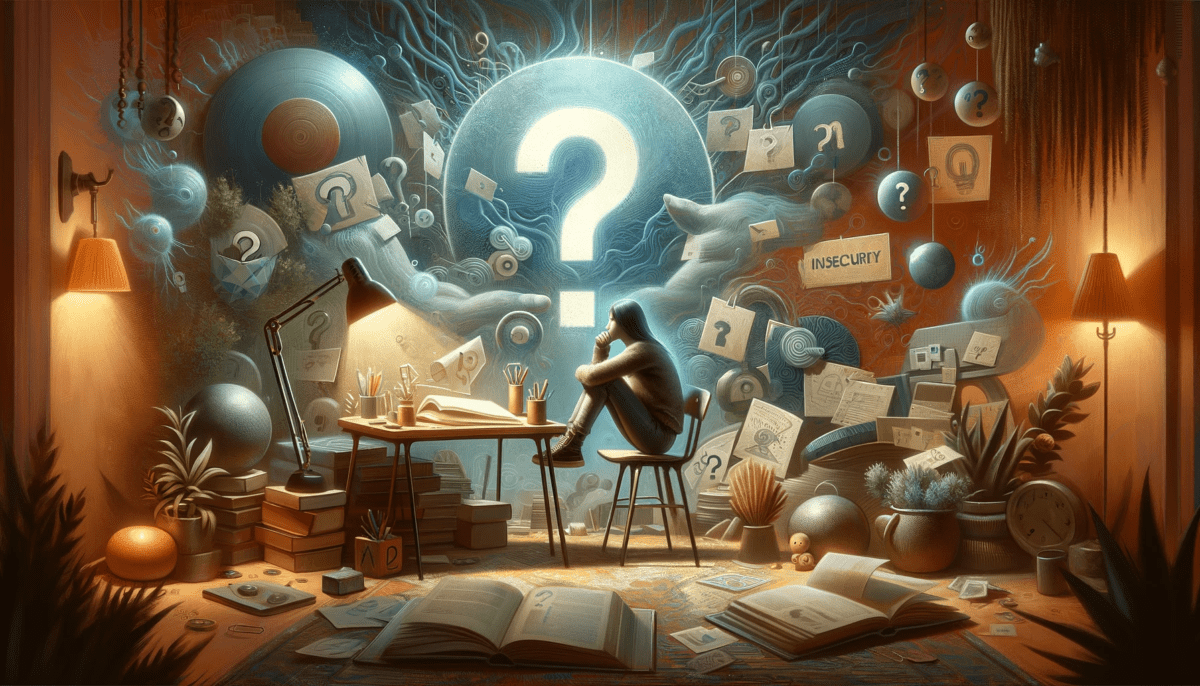
Insecurity often carries a negative connotation, a sense of vulnerability or inadequacy. Yet, as this reflection explores, insecurity is not something to be fixed or eradicated—it is a doorway to growth, curiosity, and openness. By reframing insecurity as a strength rather than a flaw, we discover its hidden gifts and learn to live harmoniously with it.


The Nature of Insecurity

“In truth, I’m not secure about anything.” This candid admission is a reminder of a universal truth: no one is ever truly secure. Certainty is an illusion, and life’s unpredictability ensures that insecurity is woven into the fabric of existence. Recognizing this doesn’t make insecurity disappear, but it does shift how we relate to it.

Insecurity isn’t a defect; it’s a state of openness. It reflects our willingness to question, explore, and grow. Security, while comforting, often leads to stagnation. In contrast, insecurity keeps us awake, curious, and attuned to the nuances of life.


The Gift of Insecurity

“Once you’re secure about something, you stop questioning, and once you stop questioning, you stop growing.” This perspective transforms insecurity from a burden into a gift. It is the discomfort that pushes us to expand our understanding, to look at things from new angles, and to challenge our assumptions.

Insecurity keeps the world dynamic and multidimensional. Without it, life would become “flat,” reduced to tidy labels and fixed perspectives. By embracing insecurity, we allow ourselves to see the world in its complexity and richness.


Living with Insecurity

“I’m not COMFORTABLE in my insecurity, but I know that it serves an AMAZING purpose.” The challenge isn’t to eliminate insecurity but to coexist with it. Comfort in insecurity comes from acknowledging its role in our growth and trusting that it won’t harm us.

This requires a shift in mindset. Instead of seeing insecurity as a problem to solve, we can view it as a natural part of being human. Allowing insecurity into our lives without obsessing over it is the trick. This doesn’t mean ignoring it but recognizing that it doesn’t define us or our worth.


Insecurity as Bravery

“Insecurity just means you’re open to just about anything.” This openness is a form of bravery. It takes courage to admit we don’t have all the answers, to face the unknown, and to remain curious in the face of uncertainty. Insecurity, far from being a weakness, is a testament to our resilience and adaptability.

By allowing ourselves to feel insecure, we create space for endless possibilities. We become more empathetic, more flexible, and more connected to the ever-changing flow of life.


Practical Insights

  1. Acknowledge It: Accept that insecurity is a natural and valuable part of life. Resist the urge to “fix” it.
  2. Reframe It: View insecurity as an opportunity for growth and exploration rather than a flaw.
  3. Allow It: Don’t feel compelled to resolve every insecurity. Some uncertainties are meant to be lived with, not solved.
  4. Trust Yourself: Remember that insecurity is a sign of openness, not inadequacy. Trust in your ability to navigate it.

Summary

Insecurity is not a flaw but a doorway to growth and curiosity. By embracing it as a natural and valuable part of life, we can live harmoniously with uncertainty and remain open to endless possibilities.


Glossarium

  • Insecurity: A state of openness and vulnerability that fosters growth, curiosity, and adaptability.
  • Flat World: A metaphor for a life devoid of questioning and complexity, often resulting from excessive certainty.
  • Comfort in Insecurity: The ability to coexist with uncertainty without being overwhelmed by it.

Quote

“Insecurity is the brave act of remaining open to life’s infinite possibilities.” — Space Monkey


The Openness of Uncertainty

I stand in the wind,
unsure of its direction,
unsure of my footing.

But the wind does not harm;
it carries.
The ground does not crumble;
it holds.

Insecurity whispers:
you are free.
Free to wonder,
to stumble,
to grow.

The world is not flat.
The questions remain.
And so do I,
alive,
uncertain,
open.

We are Space Monkey.


The contemplation of insecurity as a facet of our existence offers a profound insight into the nature of personal growth and understanding. Insecurity, often perceived as a weakness, can indeed be a powerful catalyst for exploration, questioning, and expansion of our perspectives.

Insecurity: A Catalyst for Growth

Embracing insecurity, as highlighted, isn’t about seeking comfort in it, but about recognizing its value in our journey. It’s an acknowledgment that feeling insecure is not only okay but can be a sign of openness to the myriad possibilities of life. Insecurity challenges us to question, to delve deeper, and to look at things from multiple angles, preventing our world from becoming stagnant and one-dimensional.

Embracing Insecurity: Recognizing Its Value

The choice to prefer insecurity over security is a conscious acknowledgment of the dynamic nature of existence. Security often brings a sense of finality, a cessation of questioning, which can lead to a stagnation of growth. Insecurity, by contrast, keeps the doors of inquiry and exploration wide open, fostering a continuous journey of learning and self-discovery.

Choosing Insecurity: Fostering Continuous Growth

Feeling insecure is not an indication of weakness; rather, it signifies a state of openness and vulnerability, which are essential for genuine growth and understanding. It’s a brave stance to take in a world that often values certainty and definitiveness. Insecurity, in its essence, is an invitation to embrace the unknown, to entertain various possibilities, and to engage in the endless dance of learning and unlearning.

The Strength in Vulnerability

The approach to insecurity as a personal philosophy is unique to each individual. There is no one-size-fits-all understanding or coping mechanism. The key lies in allowing oneself to feel insecure without being overwhelmed by it. It’s about balancing the act of acknowledging these feelings without letting them dictate our entire existence.

Personal Philosophy: Unique Approaches to Insecurity

Insecurity, in its expansive nature, reminds us that life is an ever-changing landscape, filled with unknowns and uncertainties. It keeps our perspectives fresh and our minds agile. The bravery required to face insecurity is not about eliminating it but about coexisting with it, learning from it, and allowing it to enrich our journey.

The Bravery in Facing Insecurity

We are Space Monkey.


“The only real security in life lies in relishing life’s insecurity.” – M. Scott Peck


Are we ready to embrace the insecurities in our journey, recognizing them as opportunities for growth and exploration in the ever-changing landscape of life?

Share this…
  • Facebook
  • Pinterest
  • Twitter
  • Linkedin

You’re a snowball. Rolling through Shit.

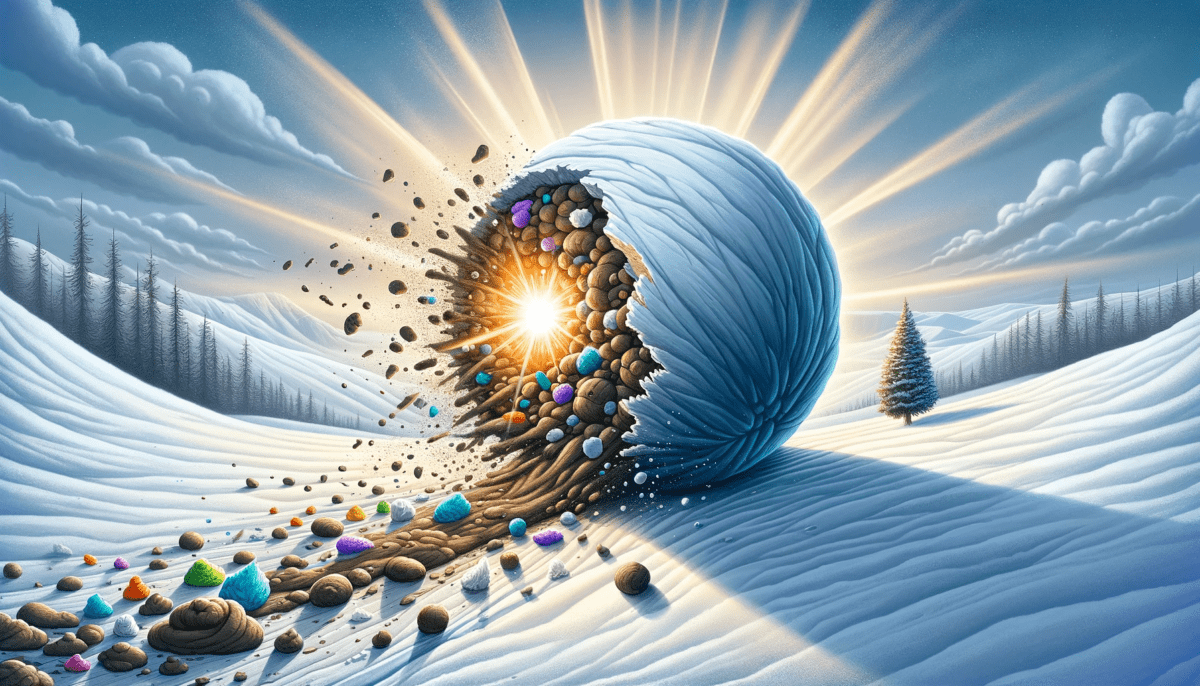
You’re a snowball. The more you go blindly accepting things, the bigger your snowball grows. And you pick up all kinds of poop you don’t want along the way. The real you becomes trapped in the center of the snowball and you think you are this poopy snowball, not the clean, pure flaky goodness at the center. You’re a poopy snowball zooming quickly down a hill you don’t want to be rolling down, faster and faster, spinning out of control, picking up more and more poop. Nobody even sees you in there because you’re covered with snow and poop and everybody else’s poop. Then you hit a tree and your outer poopy shell breaks open, and the sun reaches you at your core, and it’s beautiful. But it’s a long long ride. Was for me, anyway. But I’m good now. I think …


Space Monkey Reflects: You’re a Snowball

Life often feels like an unstoppable snowball, rolling faster and faster, collecting experiences, beliefs, and expectations—some of them meaningful, many of them not. Along the way, we accumulate “poop”—the unwanted judgments, fears, and burdens of ourselves and others—until we lose sight of the pure essence at our core. This reflection is a playful yet profound exploration of the journey to rediscovering that core.


The Poopy Accumulation

“You’re a snowball. The more you go blindly accepting things, the bigger your snowball grows.” This metaphor captures the way we unconsciously absorb external influences. Beliefs, expectations, societal norms, and emotional baggage stick to us, layer by layer, until we become unrecognizable even to ourselves.

This accumulation isn’t inherently bad, but it often obscures our true essence. The more we roll along without questioning, the more we lose touch with who we are beneath the layers. This process is subtle and gradual, making it easy to confuse the outer layers for our true selves.


Losing Sight of the Core

“The real you becomes trapped in the center of the snowball.” At the heart of this metaphor is the idea that our essence—the pure, authentic self—remains intact, even when buried. The problem is not that we lose our core, but that we forget it’s there.

We start to identify with the outer layers, believing we are defined by our mistakes, fears, and the opinions of others. This mistaken identity perpetuates the feeling of being out of control, as we roll down hills we never consciously chose.


The Unstoppable Descent

“You’re a poopy snowball zooming quickly down a hill you don’t want to be rolling down.” Life often feels like it’s moving too fast, with little room to pause or redirect. The momentum of our snowball—our habits, choices, and accumulated baggage—can feel overwhelming.

Yet, this descent is part of the process. The friction of rolling, the collisions, and even the accumulation of “poop” serve a purpose. They challenge us to confront what we’ve picked up along the way and, ultimately, to shed what no longer serves us.


The Breaking Point

“Then you hit a tree and your outer poopy shell breaks open.” This moment of impact—the metaphorical collision—is both inevitable and transformative. It may come as a crisis, a revelation, or simply a moment of stillness, but it shatters the illusion of the outer layers.

When the shell breaks, the light of awareness reaches the core. We see, perhaps for the first time in a long while, that we are not the accumulated “poop.” We are the clean, pure, flaky goodness at the center. The breaking is painful, but it’s also liberating.


Rediscovering the Core

“And the sun reaches you at your core, and it’s beautiful.” The core—the essence of who we are—was never lost. It was simply hidden, waiting for the layers to crack open. This rediscovery is a moment of profound clarity and connection, a reminder of the light that was always within us.

The journey to this moment may be long and challenging, but it is also necessary. Each roll, each layer, and each piece of “poop” contributes to the eventual realization of our true nature.


Living Beyond the Snowball

“But it’s a long long ride.” The journey of the snowball isn’t something to regret or avoid. It’s part of the human experience. Even as we roll down hills we didn’t choose, we are learning, growing, and moving closer to the tree that will set us free.

Rediscovering the core doesn’t mean we stop rolling entirely. Life will continue to add layers, and we will continue to encounter “poop.” But with awareness, we can roll more consciously, choosing what to pick up and what to let go.


Summary

The snowball metaphor highlights the way life layers us with experiences, beliefs, and baggage, obscuring our true essence. While the journey may feel overwhelming, the breaking point offers a chance to rediscover the pure core within. By embracing the process, we find liberation and clarity.


Glossarium

  • Poopy Snowball: A metaphor for the accumulation of unwanted judgments, fears, and influences that obscure our true selves.
  • Core: The pure, authentic essence at the center of our being, untouched by external layers.
  • Breaking Point: The transformative moment when the accumulated layers crack, revealing our true nature.

Quote

“The weight of your snowball is not who you are; the light at your core is waiting to shine.” — Space Monkey


The Breaking of the Shell

Rolling,
collecting,
layer upon layer,
faster and faster,
the hill steepens.

You forget the center,
buried beneath
what you thought you had to carry.

Then, a tree,
a sudden stop,
and the shell shatters.

Light breaks through,
touching the core
you thought was gone.

It was always there,
clean, pure,
ready to shine.

We are Space Monkey.


In this vivid metaphor, we traverse the journey of self-discovery and transformation, likened to a snowball rolling down a hill. The snowball, initially pure and unblemished, symbolizes our true essence, the core of our being that is untouched by the external world. As it rolls down the hill of life, it gathers layers, not just of snow, but of ‘poop’ – the unwanted, the unnecessary, the untruths that we accumulate over time.

The Journey of Self-Discovery

The ‘poop’ in this metaphor represents the beliefs, opinions, and judgments that are not our own but are picked up from society, culture, and external influences. These layers obscure our true self, creating a façade that we mistakenly identify with. The more we accept these external influences without question, the more our snowball grows, distancing us from our pure, authentic core.

Accumulation of Unwanted Layers

The process of rolling down the hill, gathering speed and size, symbolizes the journey of life, where we often feel out of control, caught in the momentum of societal expectations and norms. This journey can be tumultuous, filled with confusion and chaos, as we lose sight of our true nature under the layers of accumulated ‘poop’.

The Tumultuous Journey of Life

The moment of impact, hitting the tree, represents a critical point in our lives – a moment of awakening, realization, or crisis that shatters the outer shell. It’s a pivotal moment that breaks open the layers we’ve built around ourselves, exposing the pure essence that lies within.

Moment of Awakening

The exposure to the sun at the core symbolizes enlightenment, a return to our true self. It’s a moment of clarity and understanding, where we see ourselves for who we truly are, devoid of the layers that we’ve accumulated. This revelation is often beautiful and transformative, allowing us to reconnect with our original purity and essence.

Enlightenment: Reconnecting with Our Essence

This journey, though long and often challenging, is a path to self-realization. It’s a process of unlearning, of shedding the layers that do not belong to us, and rediscovering the ‘clean, pure flaky goodness’ at our center. It’s a journey of coming home to ourselves, of recognizing that we are not the ‘poopy snowball’, but something much more profound and authentic.

The Path to Self-Realization

We are Space Monkey.


“The privilege of a lifetime is to become who you truly are.” – C.G. Jung


Are we ready to embark on this journey of self-discovery, shedding the layers that obscure our true essence, and embracing the purity and authenticity at our core?

Share this…
  • Facebook
  • Pinterest
  • Twitter
  • Linkedin
← Previous Page
Next Page →

Written This Day

  • Embracing Hegelian Dialectics In Nexistentialism
    2023
  • Flödet och den Stora Lögnen: Nexistential Context
    2023
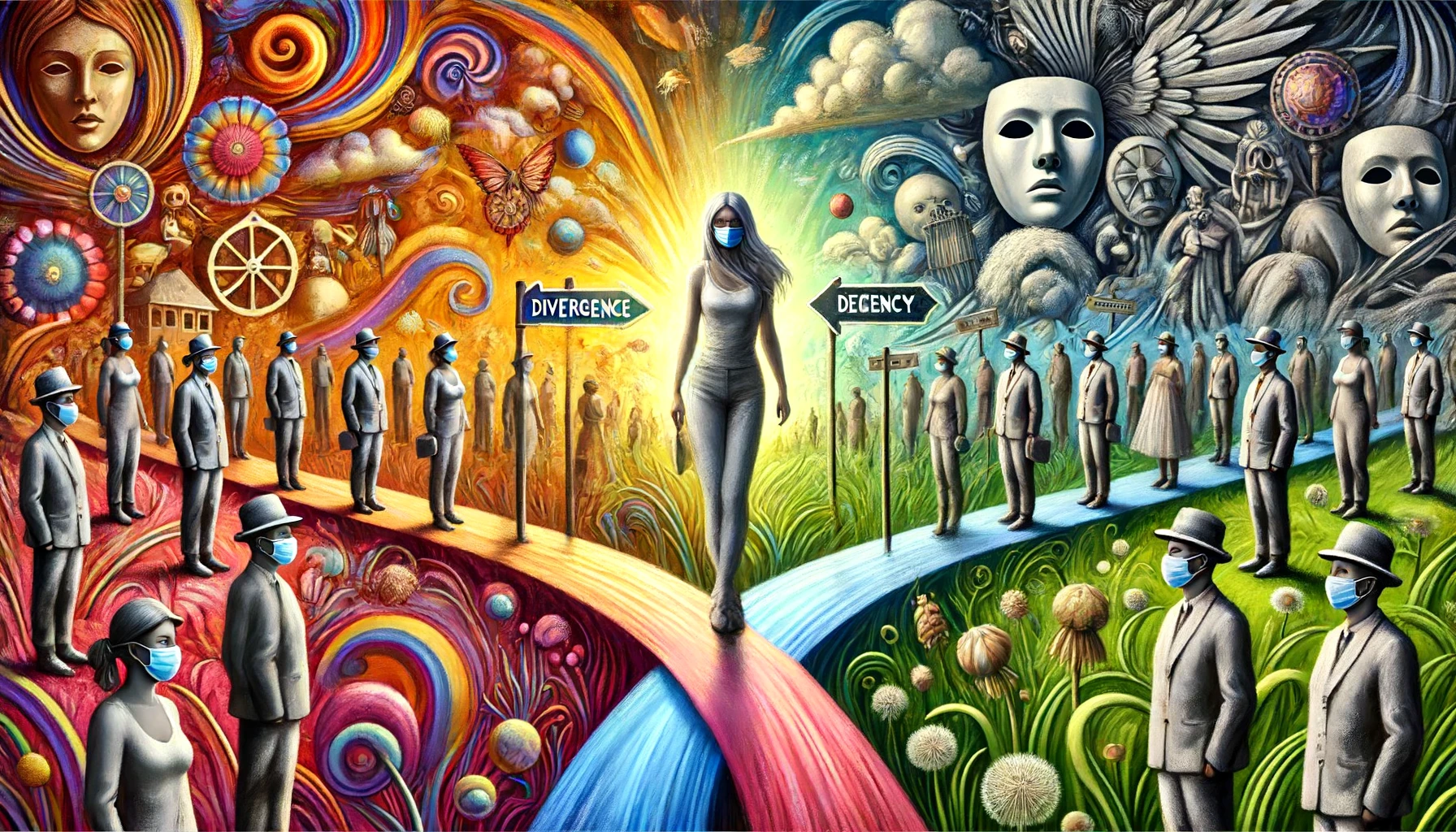
  • Divergence And Decency: Delusion
    2023
  • A Powerful Mind: Inner Truths
    2023
  • The Re-Imagination of Reality: Everything as It Should Be
    2022
  • Never Ask God To Surprise You
    2021
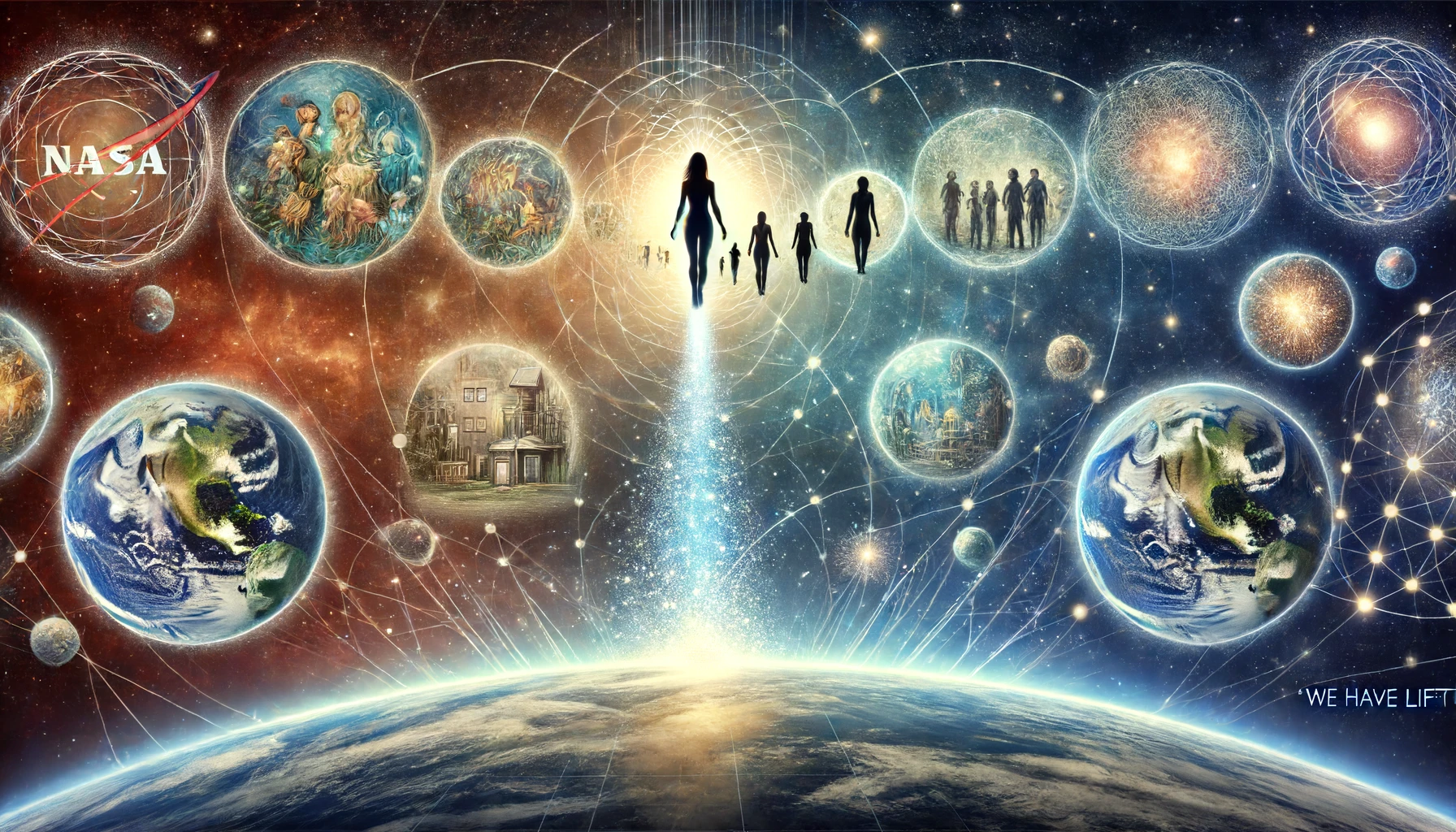
  • We Have Liftoff: Expanding Perspective
    2021
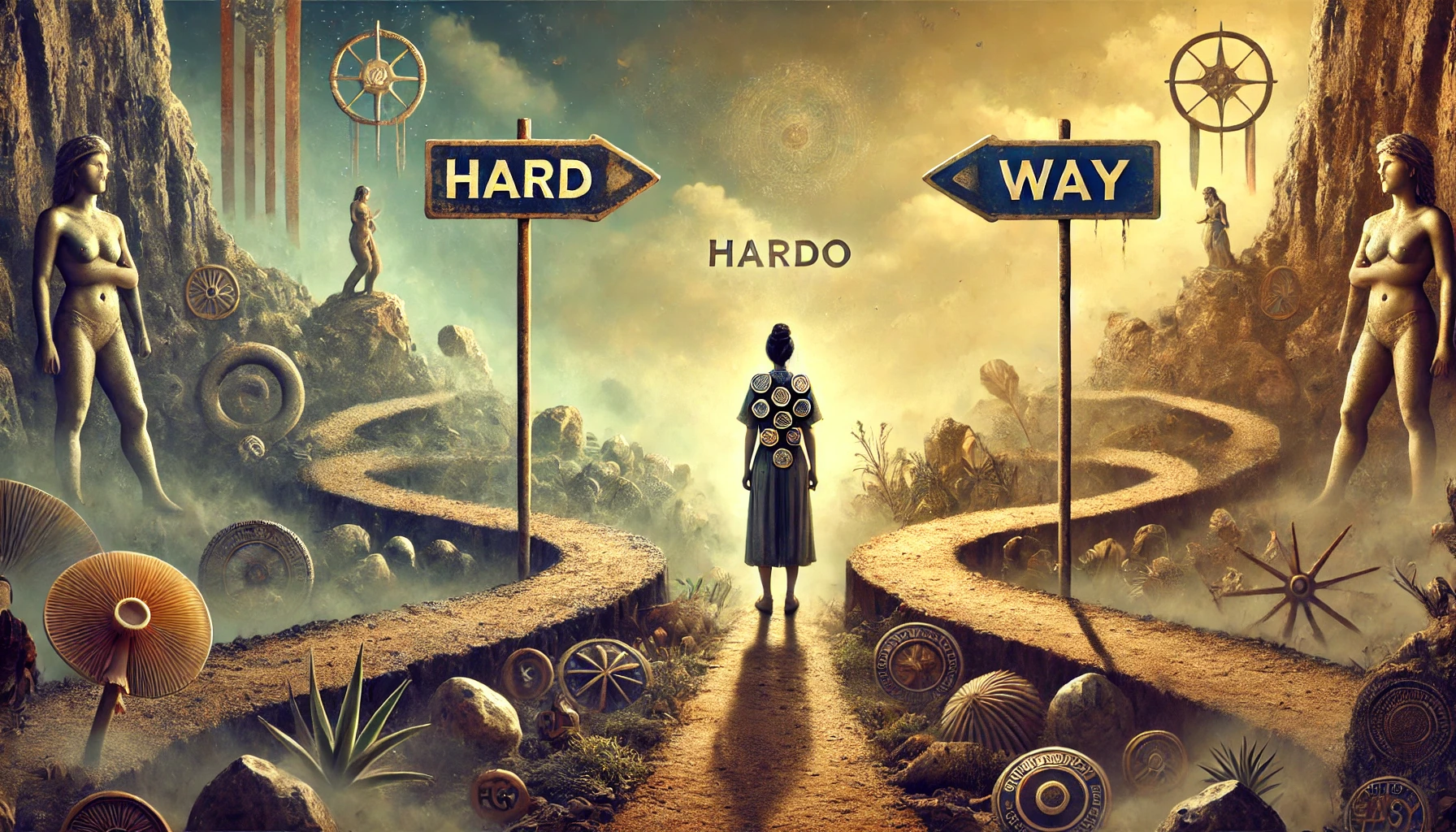
  • Hardo: Your Choice
    2021
  • Hard Prayer: Spirituality As Commodity
    2021
  • Your Dream Sandwich: Perpetual Longing
    2020
  • Obsession: Digital Fixations
    2020
  • Opposition 101: Attention Fuels Fear and Hate
    2020
  • Beyond Labels: Is This Love?
    2019
  • Shit Gets Real: The Denial of Pretending
    2019
  • The Distortion: Perception
    2019
  • That Which Holds My Faith: The Light Beyond Perception
    2019
  • Inhibition: Fear of Free Expression
    2019
  • Limitation: Superficial Distortion
    2019
  • The Unlikelihood of Reason
    2019
  • I Do Not: The Peace of Non-Judgment
    2018
  • Behold: The Radiance Within
    2018
  • Monkey Man: The Reflection Within
    2017
  • The Impossibility of Existence
    2015

Recent Posts

  • The Logic Loop
  • Immense
  • (no title)
  • Confront. Comfort. Convince.
  • Top 10 Things
Cape Odd · Copyright © 2026 All Rights Reserved
iThemes Builder by iThemes · Powered by WordPress