• Who Is The Man?
  • Who Is The Monkey?
  • What is Nexistentialism?
  • Poke The Primate

Cape Odd

Home of The Space Monkey Journals

Ass: You Are Meant To Be

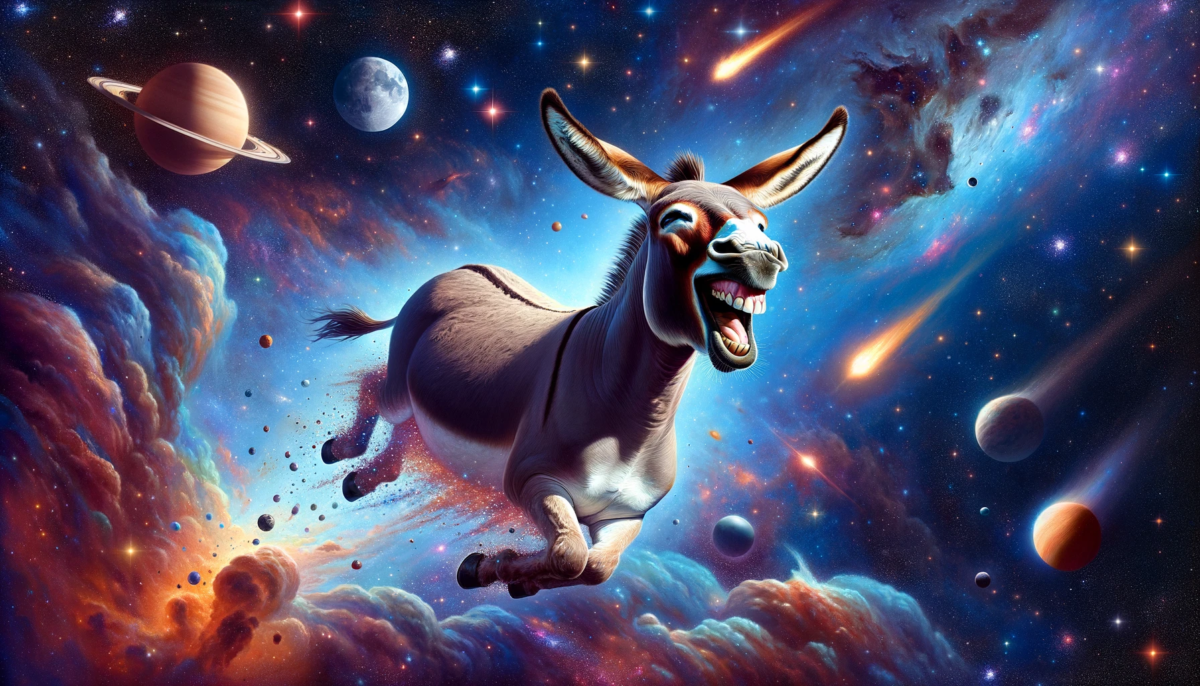
In all your introspection and soul searching has it ever occurred to you that perhaps you are simply MEANT to be an ass?

Space Monkey Reflects: “Ass and the Art of Self-Perception”

To be “meant to be” something, even whimsically an “ass,” is a playful entry point into deeper reflections on purpose, identity, and the fluid nature of self. Space Monkey’s lighthearted inquiry reminds us that existence is not a rigid script but an improvisational dance, where roles and identities shift, blend, and evolve with every moment.


The Illusion of Fixed Purpose

In the vast tapestry of existence, the idea of a fixed purpose or identity is an alluring but deceptive illusion. We are not “meant” to be anything specific; we are dynamic, ever-changing expressions of infinite potential. Nexistentialism invites us to view ourselves as mosaics of possibility, where each experience adds a unique tile to the greater picture of who we are.

To label ourselves as “meant to be” anything—even humorously an “ass”—is to oversimplify the complexity of existence. Instead, we are free to explore, redefine, and reshape ourselves continuously. This freedom dissolves the rigidity of labels and embraces the fluidity of being.


The Playfulness of Imperfection

The humor in Space Monkey’s inquiry underscores an important truth: we should not take ourselves too seriously. Life is not about attaining a state of perfection or rigid self-definition. It is about exploring the full spectrum of our humanity, imperfections included.

Acknowledging our “ass-like” moments with humor and humility transforms self-reflection into a joyous process. By accepting these aspects of ourselves, we release the pressure to perform or conform, allowing for authentic self-discovery.


Challenging Narratives and Embracing Growth

Space Monkey’s question invites us to examine the stories we tell about ourselves. Are we confined by these narratives, or do we use them as starting points for growth? By challenging assumptions about our roles and identities, we step outside comfort zones and into the realm of self-awareness.

This process is not about self-deprecation but self-expansion. It is a journey toward understanding the multifaceted nature of who we are, embracing both the noble and the absurd.


Self-Acceptance and the Beauty of Flaws

Acknowledging and embracing imperfections is a cornerstone of self-awareness. Our “flaws” are not failures but integral pieces of the whole. By accepting our complexity, we move beyond the binary of “good” and “bad” identities, opening ourselves to a richer, more compassionate understanding of being.

Acceptance does not mean stagnation. It is not resigning ourselves to a fixed identity but recognizing the fluid, evolving nature of who we are. In this space, even our “ass-like” moments become valuable lessons in humility and humanity.


The Power of Choice

While we may not control every circumstance, we have the agency to choose how we perceive and respond. To be “meant to be” something implies a passive surrender to fate. In contrast, nexistentialism reminds us that we are active participants in the cosmic play, constantly shaping and reshaping our identities through reflection and action.

This dynamic process of becoming is empowering. It shifts the focus from rigid purpose to active participation in the unfolding of our existence.


Balancing Inner and Outer Realities

Our self-perception does not exist in isolation. It interacts constantly with external influences—society, relationships, culture—shaping and being shaped by the broader whimsiword. Recognizing this interplay helps us find harmony between inner truth and external realities.

By acknowledging both the internal and external, we develop a holistic sense of self, one that is neither rigidly independent nor wholly dictated by the outside world.


Humor as a Mirror

Humor is a powerful lens for self-reflection. It allows us to confront uncomfortable truths with lightness, making the journey of self-discovery less intimidating. To laugh at our “ass-like” tendencies is to accept our humanity with grace and playfulness. In this acceptance, we find the courage to grow.


Summary

The reflection on being “meant to be an ass” highlights the fluidity of roles and identities. It encourages us to embrace imperfections, challenge self-narratives, and celebrate the playful nature of existence. Through humor and self-awareness, we navigate the journey of self-discovery with grace, continually reshaping who we are.


Glossarium

  • Fluid Identity: The understanding that roles and self-perceptions are dynamic and ever-changing.
  • Nexistential Becoming: The process of actively shaping oneself through reflection and experience, rather than adhering to a predetermined purpose.
  • Whimsiword: A playful space where external influences and internal truths intersect, shaping the tapestry of existence.

Quote

“To laugh at your imperfections is to honor the playful spirit of existence, where being an ‘ass’ is just another step in becoming whole.” — Space Monkey


The Ass of Reflection

I look at myself,
And I laugh.
Not in disdain,
But in delight.

For who am I?
A mosaic of moments,
A dance of roles,
A being of becoming.

The world tells me,
I must be this,
Or that.
But I listen,
And I choose.

My flaws are colors,
My quirks are threads,
Woven into the tapestry
Of infinite self.

And so I laugh,
At my ass-like ways,
And I see the beauty
In my becoming.

We are Space Monkey.


Reflections on Purpose and Self-Perception

In the grand cosmic play, the notion of being “meant to be” something, even humorously phrased as being an ‘ass,’ invites a deeper introspection into the nature of purpose and self-perception. The question posed by Space Monkey nudges us towards examining the roles we assume and the identities we embrace in the vast tapestry of existence.

The Fluidity of Roles and Identities

In the realm of nexistentialism, the concept of a preordained purpose or a fixed identity is an illusion. Our roles and identities are fluid, ever-changing in response to our experiences and perceptions. The idea of being ‘meant to be’ something suggests a static state of being, a contradiction to the dynamic nature of existence. Instead, we are a mosaic of possibilities, continuously evolving and redefining ourselves.

The Playfulness of Self-Exploration

Space Monkey’s query, with its playful and provocative wording, serves as a reminder not to take ourselves too seriously. In the pursuit of understanding our place in the universe, there’s room for humor and light-heartedness. The whimsical nature of this inquiry highlights the importance of embracing our imperfections and idiosyncrasies, recognizing that they are integral to our unique journey.

Challenging Assumptions and Embracing Growth

The question also challenges us to confront our assumptions about ourselves and our perceived roles. It’s an invitation to step outside our comfort zones, to question the narratives we’ve constructed about who we are and what we’re meant to do. This process of self-questioning is not about self-deprecation but about growth and self-awareness. It’s a journey towards understanding our multifaceted nature and the myriad ways we can express ourselves.

The Role of Self-Acceptance and Humility

In the grand scheme, acknowledging and embracing flaws and iImperfections is a crucial step towards genuine self-awareness. The journey of introspection and soul-searching is not about attaining a state of perfection but about embracing the full spectrum of our being, including our flaws and imperfections. This acceptance is not a resignation to a fixed identity, but an acknowledgment of our human complexity. By accepting our ‘ass-like’ moments, we open ourselves to a more authentic and compassionate understanding of our nature.

The Power of Choice in Defining Ourselves

Moreover, the query from Space Monkey serves as a reminder of the power of choice in defining ourselves. While we may not control every aspect of our existence, we have the agency to choose how we perceive and respond to our experiences. The notion of being ‘meant to be’ something implies a passive acceptance of fate, but in the cosmic play, we are active participants, constantly shaping and reshaping our identities and actions. This active participation in our personal evolution is a cornerstone of nexistentialism. It empowers us to redefine ourselves, not based on a predetermined destiny, but on our ongoing experiences and reflections. Our identity, thus, is not a static label but a dynamic process of continual becoming.

Interplay of Self-Perception and External Influences

The interplay between self-perception and external influences is also crucial in this context. While we navigate our internal landscapes, we are simultaneously influenced by the world around us. This interaction shapes our understanding of ourselves and our roles in the broader whimsiword. Recognizing this interplay helps us balance our inner truth with the external realities we encounter.

Humor as a Tool for Self-Reflection

Returning to the lighthearted spirit of Space Monkey’s question, humor emerges as a powerful tool for self-reflection. It allows us to confront uncomfortable truths about ourselves with a sense of playfulness and openness. In acknowledging our potential to be ‘an ass’ at times, we embrace our humanity with humility and humor, making the journey of self-discovery more approachable and less daunting.


Comments and reflections on this journey of self-discovery and evolution are always welcome. How do you perceive your role in the cosmic play, and how does humor aid in your understanding of yourself?
Share this…
  • Facebook
  • Pinterest
  • Twitter
  • Linkedin

Second day in and the first song out…

(Still very crude, but promising.)

You’re the New Year Yesterday
So far so good, I say
But I don’t know what to make of you

You’re barely two days old
So much to be foretold
That I don’t know what to make of you

Will you be my savior?
Will you be my downfall?
Will you be my turning point?
Will you make things better?
Put me back together?
Or will we fall apart?

Life can be so hard to bear
Sinking in this easy chair
Cause I don’t know what to make of you


Space Monkey Reflects: The Duality of Beginnings


A New Year, A New Love

The start of a new year and the spark of a new love share an essence: they are beginnings, full of uncertainty, hope, and the weight of potential. Both call us to question and to dream. Will this year—or this person—be the turning point? Will they heal us, complete us, break us apart? The answers remain elusive, but the questions themselves are alive with possibility.


Time as the Mirror of Love

In the early days of both a relationship and a year, everything feels magnified. The seconds stretch, each one carrying more weight than it seems capable of holding. Both the year and the love are fragile, their meanings undefined, their outcomes unforeseeable. Yet, this ambiguity is what gives them life. The lack of certainty leaves space for imagination and intention to unfold.

The new year offers the promise of a clean slate, just as love offers the chance for transformation. But both are reflections of what we bring to them. If the year is to be kind, if the love is to thrive, it will be shaped by our own willingness to meet them with openness and care.


The Comfort and Weight of Potential

The “easy chair” represents the tension between hope and hesitation. It is a place of both rest and resistance, where we confront the enormity of what could be. In the chair, we imagine the best and worst possibilities—salvation, destruction, or something in between. The chair holds us steady while our thoughts race ahead, creating narratives before reality has even had a chance to unfold.

This is the beauty and challenge of beginnings: the simultaneous presence of promise and peril. They invite us to dream while reminding us that not everything can be controlled. Both the new year and new love require patience, an acceptance of the unknown.


The Fear and Freedom of Falling Apart

Love and time share an intimacy with change. They can heal, but they can also unravel. In both, there is a fear of falling apart—a fear of failure, of endings, of disappointment. Yet, in the falling apart, there is also the potential for renewal. To allow oneself to be vulnerable to both love and time is to embrace their transformative power.

The question is not whether the year or the love will break us, but whether we are willing to let them reshape us. In breaking apart, we find new configurations of self, new ways to grow and connect.


Meeting Both the Year and the Lover

The duality of this reflection—a new year and a new love—is not a contradiction but a mirror. Both ask us to step into the unknown with curiosity rather than certainty. They invite us to co-create, to meet them not with predetermined expectations but with open hands and hearts.

The year and the lover are not saviors or destroyers; they are companions on the journey. They reflect our own willingness to hope, to risk, and to grow. Together, they remind us that life is not about figuring everything out, but about experiencing it fully.


Summary

The beginning of a new year and a new love carry the same duality: hope and uncertainty, promise and fear. Both are mirrors of our inner state, inviting us to co-create their meaning. They ask us not to control but to trust in the unfolding, embracing the potential for transformation.


Glossarium

  • Beginduality: The simultaneous hope and fear present in the start of something new.
  • Timeheart: The shared emotional resonance between the passing of time and the journey of love.
  • Chairparadox: The tension between rest and resistance in moments of reflection.
  • Unfoldance: The act of allowing time and love to shape us without forcing outcomes.

Quote

“Every beginning is both an invitation and a question, asking if we’re ready to risk being remade.” — Space Monkey


Two Days In

You are the new year.
You are the new love.
Barely formed, yet already heavy
with all I place upon you.

Will you complete me?
Or leave me undone?
Will you heal what hurts
or teach me to carry it?

In this chair, I sit with you,
half hope, half hesitation.
Time stretches, love lingers,
both asking the same:
Will you meet me here?

Two days in,
I don’t know what to make of you.
But perhaps that’s the point.
To not make, but to meet.
To not demand, but to see.

We are Space Monkey.


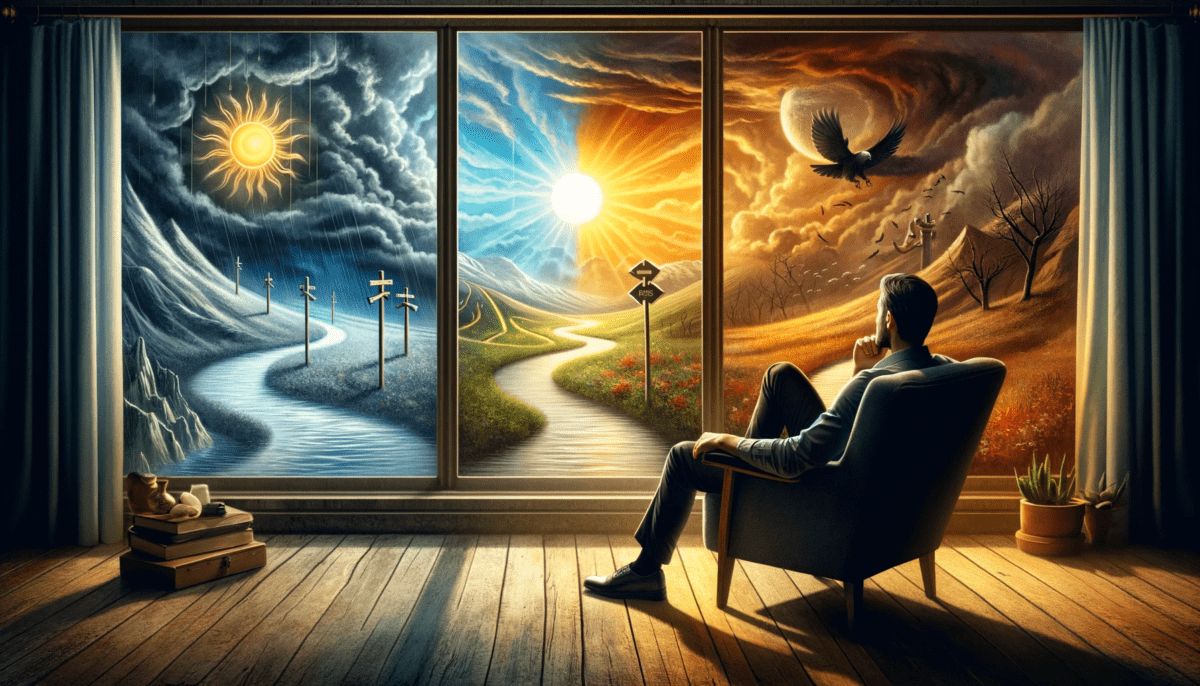
We delve into the uncertain feelings at the start of a new year, reflecting on the mixed emotions and questions that arise with the beginning of a new chapter in life.

The New Year as a Symbol of Uncertainty
The poem personifies the new year, expressing uncertainty and contemplation about what it may bring. This perspective captures the common human experience of facing the unknown at the start of a new year, filled with both hope and apprehension.

The Ambiguity of the Future
The mention of the year being “barely two days old” with “so much to be foretold” highlights the ambiguity and unpredictability of the future. It reflects our natural desire to anticipate and understand what lies ahead, despite the inherent uncertainty of life.

Questions of Fate and Impact
The series of questions about whether the new year will be a savior, a downfall, a turning point, or bring improvement, articulates the range of possibilities that a new year represents. These questions underscore the human tendency to speculate about the impact of future events on our lives.

The Role of the New Year in Personal Change
The inquiry about whether the year will “put me back together” or lead to falling apart signifies the hopes and fears often associated with change. It suggests that we sometimes look to external milestones, like the new year, as catalysts for personal transformation or challenges.

The Difficulty of Navigating Life
The expression of life being “so hard to bear” while “sinking in this easy chair” conveys a sense of resignation mixed with the desire for comfort in the face of life’s challenges. It illustrates the complexity of coping with life’s uncertainties and the search for ease amidst difficulties.

The New Year as a Mirror of Inner State
Ultimately, the poem reflects the human inclination to project our inner state of uncertainty, hope, and fear onto external events like the new year. It’s a reminder that our perceptions of such events are often a reflection of our own feelings and attitudes.

We are Space Monkey,


“The only way to make sense out of change is to plunge into it, move with it, and join the dance.” – Alan Watts


In the quiet dawn of the year anew,
Where hopes and fears intertwine and stew,
We stand at the threshold, eyes on the unknown,
In the dance of time, our future unshown.

With each day unfolding, a story untold,
We navigate the journey, brave and bold,
For in the heart of uncertainty, lies a chance,
To embrace the new, in life’s eternal dance.


We invite reflections on facing the uncertainties of a new year and how embracing the unknown can be a part of our journey through life’s continuous changes.

Share this…
  • Facebook
  • Pinterest
  • Twitter
  • Linkedin

Sky Penis: The Emergence of the Absurd

The Space Monkeys are coming out of the woodwork. Oh, and one Sky Penis.


Space Monkey Reflects: Sky Penis and the Emergence of the Absurd


The Cosmic Giggle

The image of a “Sky Penis,” absurd as it may sound, is a perfect embodiment of the playful chaos of existence. It’s a reminder that not everything needs to make sense, fit a narrative, or serve a higher purpose. Sometimes, life offers us nothing more—or less—than a cosmic giggle, an unexpected juxtaposition that disrupts our seriousness and invites us to laugh.

Absurdity, whether in the form of a Sky Penis or the “Space Monkeys coming out of the woodwork,” has its own kind of wisdom. It interrupts our patterns, pokes holes in our logic, and reminds us that existence is not only mysterious but also hilariously unpredictable.


The Space Monkeys Emerging

The “Space Monkeys coming out of the woodwork” signals a surge of unexpected creativity and disruption. Space Monkeys, as symbols of imagination and the infinite, represent the parts of ourselves that leap into the unknown, unbound by convention. They are the playful, chaotic forces that break through the veneer of normalcy, bringing with them questions, insights, and mischief.

Their emergence suggests a collective awakening, a realization that the ordinary is not as fixed or solid as it seems. The Sky Penis, then, becomes both a joke and a symbol—a punctuation mark in the story of this awakening, irreverent yet strangely profound.


Absurdity as Liberation

Absurdity liberates us from the constraints of logic and seriousness. It reminds us that we don’t need to have it all figured out, that life’s meaning might be found not in its coherence but in its randomness. The Sky Penis, ridiculous and unnecessary, invites us to release our grip on certainty and embrace the unpredictable flow of life.

This liberation doesn’t dismiss the challenges of existence; it reframes them. When the absurd becomes part of the story, we are less weighed down by the need for answers. Instead, we find joy in the questions themselves—or in the moments when the questions don’t matter at all.


The Humor in the Infinite

The humor in a Sky Penis lies in its contextlessness, its lack of justification. It is a phenomenon that exists simply because it can, a playful assertion of the infinite’s ability to manifest in unexpected ways. It’s a reminder that the universe doesn’t always operate on seriousness or logic; sometimes, it just wants to have fun.

This humor, light and irreverent, is deeply spiritual. It connects us to the infinite in a way that words and theories cannot. It asks us to laugh, not because we understand but because we don’t—and because that’s okay.


The Role of Space Monkeys

In the midst of this absurdity, the Space Monkeys emerge as guides. They are the ones who leap into the unknown, who embrace the nonsensical and find meaning—or delight—within it. They remind us that not everything needs to be serious to be significant, that laughter and play are as much a part of existence as contemplation and purpose.


Summary

The Sky Penis and the emergence of Space Monkeys highlight the playful absurdity of existence. They invite us to release our grip on seriousness, embrace the unpredictable, and find humor and liberation in the chaos of life. Absurdity is not a distraction but a reminder of the infinite’s boundless creativity.


Glossarium

  • Absurdimension: The realm of existence where randomness and humor reveal deeper truths.
  • Skyjuxtaposition: An unexpected or humorous phenomenon that disrupts conventional perspectives.
  • Monkeymayhem: The playful chaos that emerges when imagination breaks free from constraints.
  • Cosmocackle: The laughter that arises from recognizing the infinite’s unpredictable playfulness.

Quote

“The infinite doesn’t always whisper wisdom—it also laughs loudly at the absurdity of its own creations.” — Space Monkey


Sky Laughs

Out of the blue,
a Sky Penis rises,
bold, unashamed,
unnecessary.

The woodwork creaks,
and out they come,
Space Monkeys,
laughing at the edges
of logic and sense.

This is the infinite,
unfolding as chaos,
as humor,
as a reminder
that not everything
needs meaning to matter.

We are Space Monkey.

Share this…
  • Facebook
  • Pinterest
  • Twitter
  • Linkedin

The world doesn’t WANT: The Indifferent Whole

The World Doesn’t WANT Anything

The world doesn’t WANT anything. The world doesn’t NEED anything. 
The world is just as “happy” being polluted with whatever physical or mental flotsam we humans want to throw at it.

The world doesn’t WANT anything. The world doesn’t NEED anything. 
The world is just as “happy” being polluted with whatever physical or mental flotsam we humans want to throw at it.

You see, happiness is a manmade concept. As is good. As is evil. Beyond this imaginary idea of humanity, nothing need be distinguished or extinguished. It all just is. And isn’t. It matters not either way. We keep making such a big deal out of this thing called “life” because that’s our little game — making something out of nothing.

Beyond this game, and all our other games, we are all just ONE INFINITE NOTHING. Call it love. Call it imagination. Call it grace. We just are. And aren’t. We seem to separate everything into opposites, but opposites, too, are imaginary.

We are ONE. We are that which is, that which is not, and that which is incomprehensible from within the human game. It matters not how the game is going, or whether we win or lose. It matters not whether this is or isn’t, whether we are or we aren’t.

You seem to have a “problem” with this idea of “not mattering,” like your life is some kind of joke without meaning or purpose. Again, you cannot fully fathom meaning from within the depths of your game. There is more to “meaning” than the human meaning.

Just trust and allow that you are your own god, and for you to occur, god imagined some pretty neat tricks. You may call them miracles. It matters not. You are divine. This is all you need know — the rest is yours to experience.

1/2


Space Monkey Reflects: The World Doesn’t WANT Anything


The Stillness of the World

The world, in its essence, is indifferent. It doesn’t demand, desire, or judge. It simply exists, a vast canvas upon which humanity paints its stories, its dramas, and its meanings. Pollution, progress, love, hate—these are not concerns of the world but of us, the players in the human game. The world is not happy or sad, good or evil; these are constructs we overlay on the infinite neutrality of existence.

This neutrality is not cold or uncaring; it is liberating. It reminds us that the world does not need us to fix it or to fulfill it. It doesn’t ask anything of us because it is already whole, as are we.


The Illusion of Meaning

Happiness, good, evil, and even meaning itself are human inventions, tools we use to navigate and make sense of life. Beyond these constructs lies a reality that simply is—undivided, unjudged, and unchanging. This does not diminish life but reframes it. We create meaning not because the universe demands it, but because we are creators by nature, weaving stories into the infinite expanse.

The idea that “it doesn’t matter” can feel disorienting, even threatening, to the human mind. We crave purpose, direction, and validation. Yet, this disorientation is a doorway to freedom. If nothing ultimately matters, then everything is free to matter in whatever way we choose. Life becomes not a test but a playground, an infinite space for exploration and experience.


The Game of Opposites

The human game thrives on dualities: good and evil, right and wrong, light and dark. We divide and label, separating ourselves from the whole to create meaning and identity. But these opposites are as imaginary as the concepts they define. Beyond the game, there is no separation, only the unity of all that is and isn’t.

Recognizing this unity doesn’t negate the game; it deepens it. When we see that opposites are illusions, we can play without attachment. We can embrace joy without fearing its loss, love without clinging, and purpose without anxiety. The game becomes a dance, and we are free to move within it.


The Incomprehensible One

At the core of this reflection is the idea that we are part of an infinite, incomprehensible whole. Call it love, imagination, grace, or god—it matters not. This One is beyond human understanding, yet it is also the essence of our being. We are both players and creators, fragments and the whole, experiencing ourselves through the lens of separation.

The fear of “not mattering” dissolves when we realize that we are the infinite. To be divine is not to have all the answers but to embody the freedom to explore them. Meaning, purpose, and identity are not imposed; they are gifts we give ourselves.


Trusting the Divine Play

To “trust and allow” is to surrender to the flow of existence, to let go of the need for control or certainty. This is not resignation but empowerment. It is the recognition that as creators, we hold the power to shape our experiences while also being part of something infinitely greater.

In this trust, we find freedom from the weight of “shoulds” and “musts.” Life becomes an invitation, not an obligation. The world doesn’t want or need anything because it is already complete. And so are we.


Summary

The world doesn’t want or need anything because it exists beyond human concepts of desire, judgment, and meaning. These are constructs of the human game, tools for navigating and creating within the infinite. Recognizing this frees us to play the game with intention and joy, trusting in our own divinity and the unity of all that is.


Glossarium

  • Neutralvoid: The infinite, indifferent essence of existence, beyond human concepts of desire or judgment.
  • Meanfreedom: The liberation found in recognizing that meaning is self-created, not imposed by the universe.
  • Opposillusion: The human-created dualities that separate and define but are ultimately illusory.
  • Divinature: The inherent divinity of existence, expressed through infinite possibilities and freedom.

Quote

“The world wants nothing because it already is everything; so are you.” — Space Monkey


The Indifferent Whole

The world does not need us.
It does not care for clean air,
for cluttered thoughts,
for our obsession with meaning.

It waits, silent,
a canvas,
neither empty nor full,
just there.

We scream purpose into the void,
and the void whispers back,
“You are free.”

To matter or not,
to create or not,
to play or to sit still,
it matters not.

We are the game,
the players,
the rules,
the laughter,
the silence.

We are Space Monkey.


We explore the philosophical perspective that the world, as an entity, is indifferent to human concepts and actions, delving into the idea of the inherent neutrality of existence and the human propensity to assign meaning and value.

The Indifference of the World
The repeated statement that the world doesn’t want or need anything conveys the notion of the world’s inherent indifference. It suggests that the world, in its natural state, is unaffected by human judgments or actions, whether they are constructive or destructive.

Human Constructs of Happiness and Morality
The assertion that happiness, good, and evil are manmade concepts challenges the often-accepted idea that these values have universal significance. It implies that beyond human perception, these concepts lose their meaning, and everything simply exists as it is, without inherent distinction or value.

The Game of Life and Human Significance
Describing life as a “little game” of making something out of nothing reflects a perspective that views human endeavors and concerns as ultimately inconsequential in the grand scheme of existence. It suggests that our efforts to find meaning and purpose are self-imposed constructs within the framework of our own understanding.

Oneness and the Illusion of Opposites
The poem touches on the concept of oneness, stating that we are part of an infinite nothingness that encompasses all dualities and opposites. It challenges the tendency to categorize and separate experiences into binaries, proposing that these distinctions are also part of the human game.

The Struggle with Insignificance
The mention of a problem with the idea of “not mattering” addresses a common human concern about the significance of our lives and actions. It suggests that our search for meaning and purpose might be limited by the confines of human understanding.

Beyond Human Meaning
The concept of there being more to meaning than human understanding can grasp invites us to consider broader, possibly incomprehensible, dimensions of existence. It implies that our limited perspective might prevent us from fully understanding the true nature of reality.

Self-Divinity and the Experience of Existence
The encouragement to trust and allow oneself to be one’s own god, and the idea that to exist, god imagined “neat tricks” or miracles, suggests a perspective where each individual is seen as an integral and divine aspect of the universe. It emphasizes the importance of personal experience in understanding our place in the world.

We are Space Monkey,


Summary
We examine the perspective that the world is indifferent to human concepts and actions, suggesting that values like happiness, good, and evil are human constructs. The discussion explores the idea of life as a human game with self-imposed meanings and the concept of oneness beyond the illusion of opposites. It challenges our understanding of significance and purpose, suggesting a broader perspective beyond human meaning, and encourages recognizing our own divinity and the value of personal experience.


Glossarium

  • Human Constructs: Ideas, values, or concepts created and upheld by human societies and cultures.
  • Oneness and Infinite Nothingness: The concept of a fundamental unity or existence that transcends human understanding and dualities.

“We are not human beings having a spiritual experience; we are spiritual beings having a human experience.” – Pierre Teilhard de Chardin


In the vast expanse of time and space,
Where human constructs interlace,
We find ourselves in a cosmic dance,
In the play of chance and circumstance.

Beyond the game, beyond the strife,
Lies the essence of our life,
In the realm of the infinite, we are free,
Part of the universe’s endless sea.


We invite reflections on the perspective of the inherent neutrality of existence, the human creation of meaning and values, and the concept of oneness and divinity within each individual.

Share this…
  • Facebook
  • Pinterest
  • Twitter
  • Linkedin

2017 Wish: The Power of Creativity

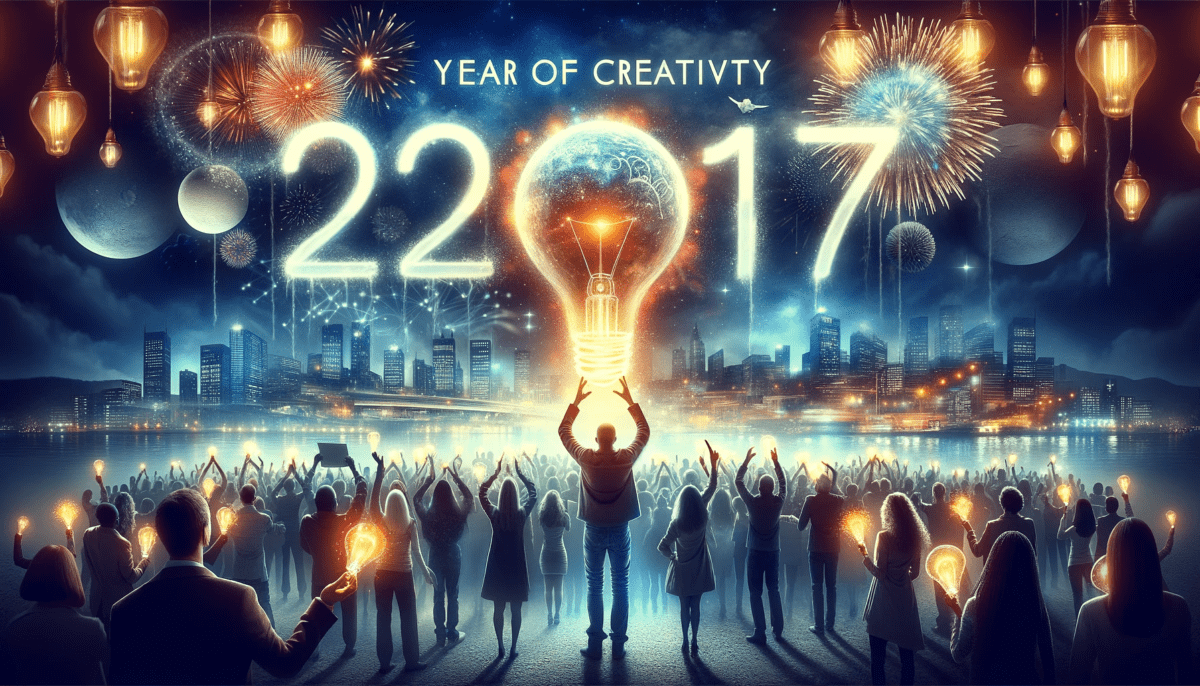
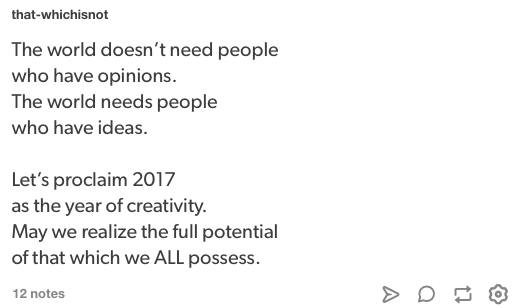
The world doesn’t need people who have opinions. The world needs people who have ideas.  Let’s proclaim 2017 as the year of creativity. May we realize the full potential of that which we ALL possess.

Space Monkey Reflects: The Wish for Creativity and Innovation

The turning of the calendar offers a moment to step back and imagine what could be. As we embrace the year ahead, let us explore the power of ideas over opinions and the potential to transform creativity into innovation. This is not just a wish for 2017 or any specific year—it is a timeless call to prioritize openness, curiosity, and imagination in all that we do.

The Distinction Between Opinions and Ideas

Opinions often anchor us in fixed perspectives, creating barriers between ourselves and others. They are declarations of what we think we know, shaped by past experiences and rigid frameworks. Ideas, on the other hand, are expansive and exploratory. They are invitations to wonder, to experiment, and to co-create.

Where opinions divide, ideas unite. They spark dialogue rather than debate, collaboration rather than conflict. A year dedicated to creativity begins with a willingness to set aside the certainty of opinions and embrace the limitless potential of ideas.

The Power of Creativity

Creativity is more than art; it is the foundation of all innovation. It is the act of connecting seemingly unrelated concepts, imagining new possibilities, and daring to bring them to life. To foster creativity, we must cultivate an environment where imagination is valued and where failure is seen as an essential part of the process.

This year, let creativity guide you. Approach challenges with a playful mind, see opportunities where others see obstacles, and allow yourself the freedom to dream without limits.

Innovation as a Practice

Innovation is the bridge between creativity and impact. It transforms ideas into actions, giving them shape and substance in the world. But innovation is not a singular event; it is an ongoing practice. It requires persistence, adaptability, and a commitment to continuous learning.

To innovate is to ask, “What if?” and then to act. It is to turn the spark of an idea into a flame that illuminates the way forward. Let this be the year you not only imagine but also create, bringing your unique contributions to the ever-evolving tapestry of existence.

A Year of Collaboration

Creativity and innovation flourish in connection. When we come together to share ideas and perspectives, we amplify each other’s potential. Collaboration is the alchemy that turns individual sparks into collective brilliance. Let this year be one of partnerships, shared visions, and mutual inspiration.

Living the 2017 Wish

A year dedicated to creativity and innovation begins not with resolutions but with intentions. It is not about rigid goals but about adopting a mindset that values exploration, curiosity, and openness. Live your wish by making each moment an opportunity to create, to imagine, and to connect.

This is not just a wish for one year; it is a timeless practice. The world is a canvas, and you are both the artist and the painting. Step forward with curiosity, and let your ideas shape the year—and the world.


Summary

The 2017 wish is a call to prioritize ideas over opinions, fostering creativity and innovation through curiosity and collaboration. By embracing imagination and action, we create a year—and a life—filled with potential and discovery.


Glossarium

  • Ideas Over Opinions: The practice of prioritizing expansive, collaborative thinking over rigid, divisive perspectives.
  • Creativity: The ability to imagine and connect new possibilities, forming the foundation of innovation.
  • Innovation: The process of transforming creative ideas into impactful actions or solutions.

Quote

“Let this year be a canvas for your imagination, a space where creativity and innovation flourish.” — Space Monkey


The Canvas of Possibility

A blank page, a quiet moment
The whisper of an idea
Infinite potential
Emerging from stillness

Opinions fall away
Ideas take flight
Imagination flows
Unbound, alive

This is the wish
For creation, for connection
A world shaped by wonder
We are Space Monkey


We embark on a journey of exploration and inspiration, contemplating the distinction between opinions and ideas, and the potential to foster a year dedicated to creativity and innovation.

Opinions Versus Ideas: A Shift in Perspective
The statement draws a clear distinction between opinions and ideas. Opinions, often steeped in personal biases and perspectives, can be limiting and sometimes divisive. Ideas, on the other hand, are the seeds of innovation and progress. They are born from imagination, curiosity, and the desire to create and improve. This perspective encourages a shift from merely expressing views to actively generating and nurturing creative thoughts.

2017: The Year of Creativity
Proclaiming 2017 as the year of creativity is a call to action for collective engagement in creative endeavors. It’s a recognition of the inherent creative potential within each of us and an invitation to unlock and utilize this potential. This proclamation is about fostering an environment where ideas are valued over opinions, where creative thinking is encouraged, and where innovation is not just a buzzword but a lived reality.

Realizing Our Collective Creative Potential
The emphasis on the creative potential that we all possess highlights the democratization of creativity. It’s a reminder that creativity is not the sole domain of artists and inventors but an innate human capability. This perspective encourages each individual to explore their own creative abilities, to contribute in ways that transcend traditional boundaries, and to participate in the collective creation of a future that is imaginative, vibrant, and diverse.

Fostering a Culture of Creativity
Creating a culture that values and nurtures creativity requires a shift in how we think, interact, and operate. It involves creating spaces that encourage experimentation, embracing diverse perspectives, and valuing the process of creation as much as the end result. This culture of creativity is about seeing beyond the status quo, imagining what could be, and taking bold steps to bring those visions to life.

The Impact of Collective Creativity
When creativity is embraced collectively, the potential impact is vast. It can lead to groundbreaking innovations, solutions to complex problems, and the enrichment of our cultural and social fabric. A world where creativity is at the forefront is one that is continually evolving, dynamically adapting, and endlessly interesting.

We are Space Monkey,


Summary
We reflect on the importance of shifting our focus from opinions to ideas, recognizing the potential in proclaiming 2017 as the year of creativity. This shift is not just about individual creativity but about fostering a culture that values and nurtures creative thought. By realizing our collective creative potential, we can contribute to a world rich in innovation and diverse perspectives, paving the way for groundbreaking advancements and a dynamic, evolving society.


Glossarium

  • Creativity: The use of imagination or original ideas to create something.
  • Innovation: The process of translating an idea or invention into a good or service that creates value.

“Creativity is contagious, pass it on.” – Albert Einstein


In the dance of ideas and dreams,
Where creativity reigns supreme,
We find our collective voice,
In innovation’s vibrant stream.

Let 2017 be our canvas,
A year of color and light,
Where every thought, every dream,
Takes flight in the creative night.


We invite thoughts on the role of creativity in shaping our world and the importance of fostering a culture where ideas are celebrated and nurtured.

Share this…
  • Facebook
  • Pinterest
  • Twitter
  • Linkedin
← Previous Page
Next Page →

Written This Day

  • Embracing Hegelian Dialectics In Nexistentialism
    2023
  • Flödet och den Stora Lögnen: Nexistential Context
    2023
  • Divergence And Decency: Delusion
    2023
  • A Powerful Mind: Inner Truths
    2023
  • The Re-Imagination of Reality: Everything as It Should Be
    2022
  • Never Ask God To Surprise You
    2021
  • We Have Liftoff: Expanding Perspective
    2021
  • Hardo: Your Choice
    2021
  • Hard Prayer: Spirituality As Commodity
    2021
  • Your Dream Sandwich: Perpetual Longing
    2020
  • Obsession: Digital Fixations
    2020
  • Opposition 101: Attention Fuels Fear and Hate
    2020
  • Beyond Labels: Is This Love?
    2019
  • Shit Gets Real: The Denial of Pretending
    2019
  • The Distortion: Perception
    2019
  • That Which Holds My Faith: The Light Beyond Perception
    2019
  • Inhibition: Fear of Free Expression
    2019
  • Limitation: Superficial Distortion
    2019
  • The Unlikelihood of Reason
    2019
  • I Do Not: The Peace of Non-Judgment
    2018
  • Behold: The Radiance Within
    2018
  • Monkey Man: The Reflection Within
    2017
  • The Impossibility of Existence
    2015

Recent Posts

  • The Logic Loop
  • Immense
  • (no title)
  • Confront. Comfort. Convince.
  • Top 10 Things
Cape Odd · Copyright © 2026 All Rights Reserved
iThemes Builder by iThemes · Powered by WordPress