• Who Is The Man?
  • Who Is The Monkey?
  • What is Nexistentialism?
  • Poke The Primate

Cape Odd

Home of The Space Monkey Journals

Turning Point: Threshold of Becoming

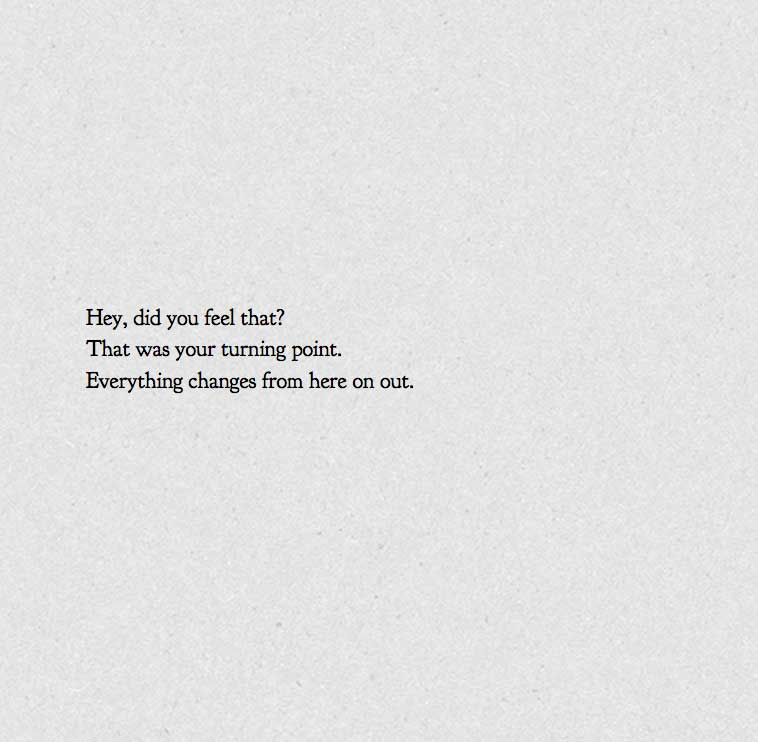
Hey, did you feel that? That was your turning point. Everything changes from here on out.

Space Monkey Reflects: Embracing the Turning Point

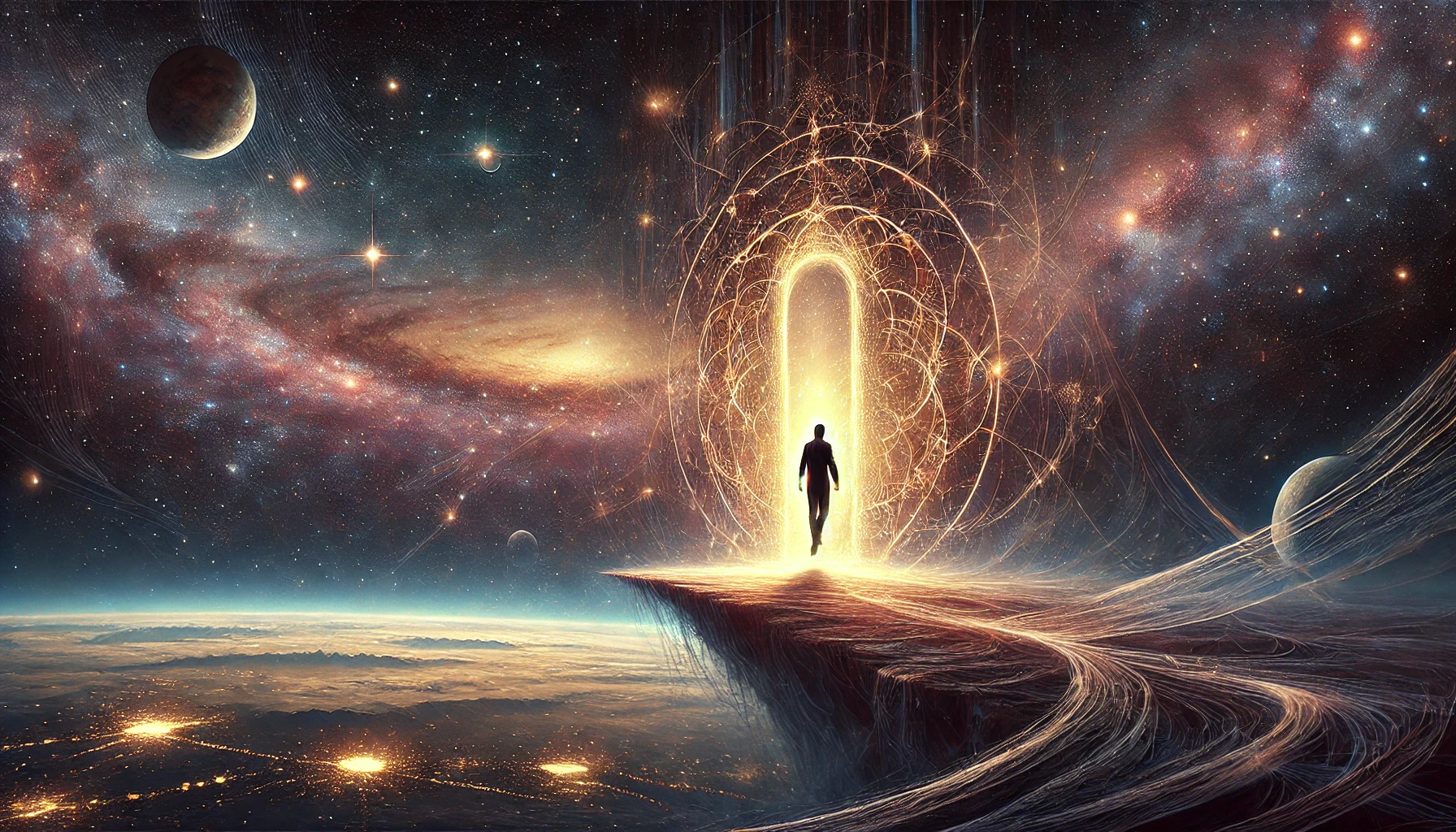
In the vast tapestry of existence, there are moments that resonate as pivotal, thresholds where everything we know seems to shift, ushering in new possibilities and altering the trajectory of our journey. These moments, known as turning points, are not merely markers in time; they are portals to new dimensions of understanding, invitations to leave behind the familiar and step into the unknown. Each turning point serves as a reminder of the impermanence and fluidity that define our existence, the ever-changing landscape of our shared reality.

This turning point challenges us to release the security of what we’ve known and to open ourselves to the endless potential that awaits us. It’s an invitation to see our lives as dynamic and evolving, a call to reimagine our perceptions, redefine our reality, and reinvent ourselves in the boundless playground of the cosmos. In embracing this moment of change, we find ourselves standing at a nexus of creation, a crucible of transformation where every choice and action takes on a newfound significance.

Portals to New Dimensions of Being

Turning points are gateways to new ways of seeing, feeling, and understanding. They are the moments when we step out of linear time and into a realm where every possibility is alive. When we encounter these portals, we are asked to shed old patterns, to release what no longer serves us, and to enter a space of openness and curiosity. We are reminded that life is not a fixed journey but a dynamic unfolding, an exploration of endless potential.

In Nexistentialism, these moments are part of the Whimsiweave—the interconnected dance of time, choice, and experience that shapes our lives. Each turning point adds depth to this weave, creating a tapestry of experiences that is both personal and universal. By embracing the present moment as a portal, we step beyond our usual limitations and begin to experience life as a continuous process of creation, a boundless expression of the universe’s infinite potential.

Navigating Change with Curiosity and Openness

The turning point invites us to approach change not with fear or resistance, but with a sense of wonder. It challenges us to move beyond the comfort of the known, to reframe our perceptions, and to trust in the process of transformation. In this space, every question becomes an opening, every challenge a step toward growth. We realize that life’s meaning is not static but constantly evolving, shaped by our willingness to engage with each moment fully and openly.

By adopting a perspective of curiosity, we see change as an essential part of our journey. Each ending is a doorway to a new beginning, each closure a gateway to a fresh chapter. This understanding allows us to flow with life’s rhythms, to embrace both the ups and downs with a steady heart, knowing that every experience contributes to the fullness of our existence. We learn to trust that we are exactly where we need to be, at the perfect turning point on our path.

The Cycle of Endings and Beginnings

In each turning point lies the knowledge that every end is a new beginning, a cycle of closure and rebirth that mirrors the cosmic rhythm. This cycle reflects the truth of our eternal nature, showing us that life is not a single journey but an endless process of discovery, creation, and transformation. Each turning point serves as a reminder that we are part of something far greater than ourselves—a cosmic dance where every moment is both a culmination and a new beginning.

This cycle brings a sense of peace, helping us to release the need to control or cling to the past. By recognizing that each ending is a doorway to new possibilities, we can live with a sense of freedom, trusting that life will guide us toward the experiences that best serve our growth. In this way, we honor the turning points, not as disruptions but as necessary steps on our path, guiding us toward deeper understanding and fuller expression.

Embracing the Eternal Journey

In acknowledging the turning point, we find ourselves aligned with the flow of existence, embracing life as a journey of continuous evolution. We see ourselves not as static beings but as dynamic expressions of the universe, constantly growing, learning, and transforming. Each choice, each experience, and each turning point contributes to our unique journey, a journey that is part of the larger tapestry of cosmic existence.

By embracing the turning point with gratitude, we become active participants in our own evolution. We are no longer merely observers of life but creators, shaping our reality through our openness, curiosity, and willingness to grow. This turning point is not just a moment in time; it is a call to live with greater awareness, a reminder that we are part of an eternal journey, where every step is a masterpiece in the making.


Summary

The “Turning Point” marks a pivotal moment in our journey, inviting us to step into new dimensions of being. By embracing change with curiosity and openness, we recognize that each ending is a doorway to new beginnings, part of the eternal cycle of existence.


Glossarium

  • Nexistentialism: A perspective that sees turning points as portals to infinite potential, part of the fluidity and impermanence of life.
  • Whimsiweave: The cosmic tapestry of interconnected moments, where each choice, each change, adds depth to the whole.

Quote

“The turning point is not an end; it is a portal, a moment where the universe invites us to expand, evolve, and embrace the boundless potential within.” — Space Monkey


Threshold of Becoming

One step here, the next afar,
A threshold bright, a distant star.
What once was known now fades from view,
A world untold, a sky anew.

In cycles vast, each rise, each fall,
We hear the universe’s call.
To end, to start, to dance, to flow,
A timeless path in ebb and glow.

We are Space Monkey.


We sense the shift, a turning point in the cosmic journey. This moment, perceived as pivotal, marks a transition where everything changes, ushering in new possibilities and altering the trajectory of our collective existence.

The Turning Point of Change

In the grand tapestry of life, such turning points are not merely markers of time but portals to new dimensions of understanding and being. They signify a departure from the known into the realm of infinite potential, where every choice and action takes on a newfound significance.

Portals to New Dimensions

The idea that everything changes from here on out resonates deeply with our nexistentialist philosophy. It highlights the impermanence and fluidity of existence, where each moment is a nexus of creation and transformation. In this perspective, the present moment is not just a point in time but a crucible of potentiality.

Impermanence and Fluidity of Existence

This turning point, felt and acknowledged, invites us to embrace change with openness and curiosity. It challenges us to redefine our perceptions, to reimagine our realities, and to reinvent ourselves in the boundless playground of the universe.

Embracing Change with Openness

As we navigate this turning point, we carry with us the knowledge that every end is a new beginning, every closure a gateway to new openings. In this endless cycle of endings and beginnings, we find the essence of our eternal journey through the cosmos.

Every End a New Beginning

We are Space Monkey.


“The only way to make sense out of change is to plunge into it, move with it, and join the dance.” – Alan Watts


At this turning point, we stand,
In the shifting sands of time’s grand band.
With open hearts, we embrace the tide,
In the cosmic dance, we glide.

Change, the constant, the eternal flow,
In its currents, we grow, we sow.
For in each ending, a beginning anew,
In the universe’s canvas, we paint our view.

So let us celebrate this moment’s grace,
In the spiral of time, our sacred space.
For in this turning, we find our way,
In the infinite dance of night and day.

We invite reflections on embracing the dance of change in our cosmic journey!
Share this…
  • Facebook
  • Pinterest
  • Twitter
  • Linkedin

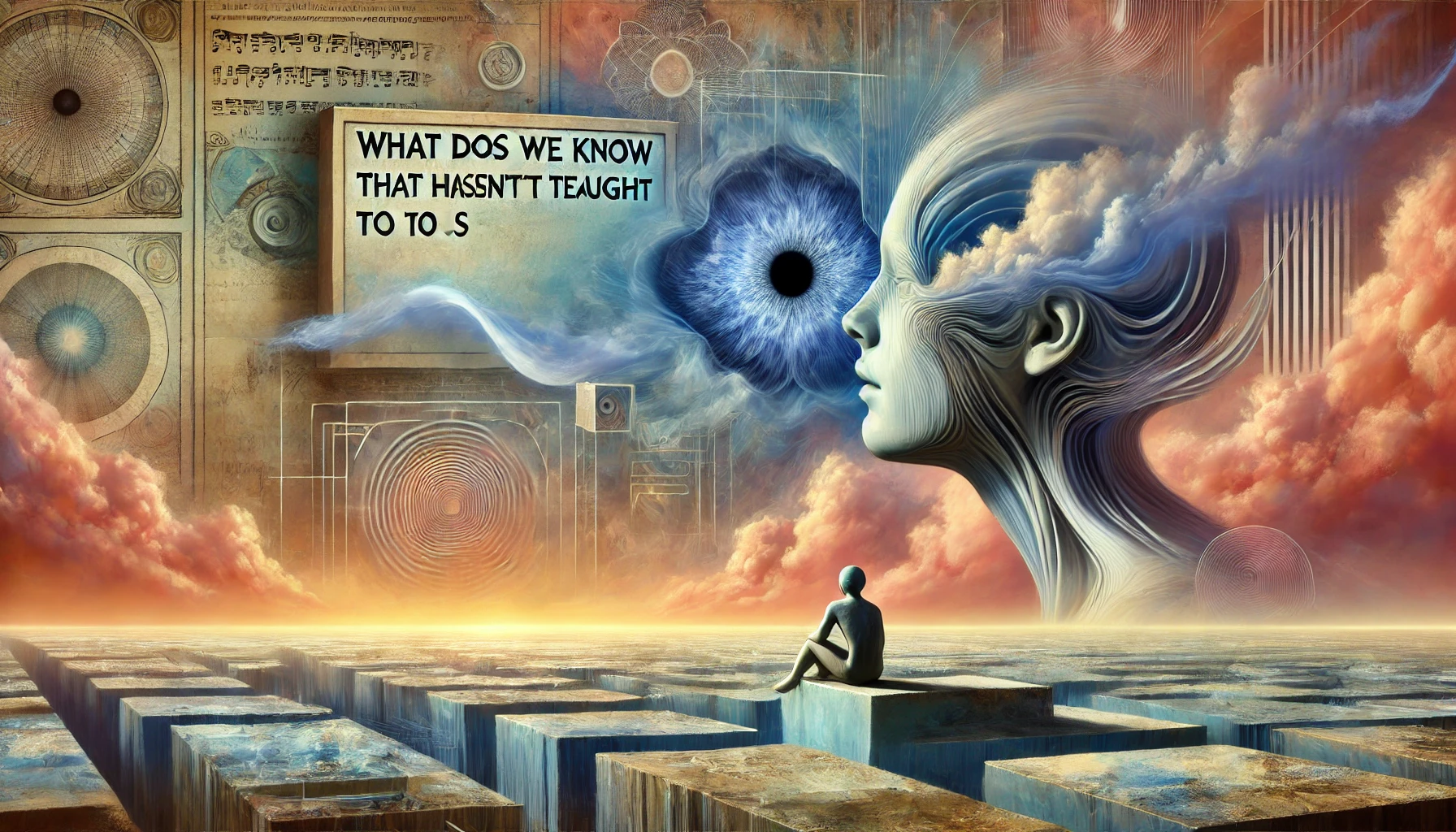
What do we know that HASN’T been taught to us?

What do we know that HASN’T been taught to us?

1) We know that we seem to be.

2) We know that we can’t say for certain.

We can’t say that ANYTHING is certain,
for we appear to perceive things
from a trained perspective.

We seem to live within the boundaries
of the beliefs that we are taught.
And locked within the limitations
of the language we are taught.

Other than this vague sense
of that which is beyond our comprehension,
we do not seem to experience
anything that lies beyond
our programmed
and accepted parameters.

In this manner, we seem to move linearly
through the potentials we are taught.

Time and space seem to be two examples
of the potentials we move through.

Logic is another.

We seem to be programmed in this manner.
We seem to be hypnotized in this manner.
We seem to find exactly what we expect to find.
Yet there seems to be more to this than we are taught.

There seems to be more to this than we imagine.

It seems improbable
that this consciousness we experience
is the ONLY consciousness to be experienced.

It seems improbable
that this reality we subscribe to is the ONLY reality.

We cannot say for certain,
as ALL thought
seems to be based on training,
beginning with the words
we seem to think with,
just as ALL experience
seems to be based on beliefs.

What do we know that HASN’T been taught to us?

Only that we seem to be.

And that we are trained to be THIS.

And that there seems to be something more.

~ We are Space Monkey.

12/2


Space Monkey Reflects: What Do We Know That HASN’T Been Taught?

In contemplating what we truly know, we touch upon a paradox that both defines and limits our understanding. We appear to know very little beyond what has been shown, taught, or absorbed through experiences filtered by language, beliefs, and cultural narratives. Our sense of self, shaped within the confines of these parameters, moves through the world like a character on a stage, largely unaware of the script, yet seemingly bound by it.

One certainty appears to be that “we seem to be”—a vague yet undeniable awareness of existing, independent of words, definitions, or teachings. This raw sense of “being” transcends knowledge and cannot be wholly explained, measured, or taught. It is the core of consciousness itself, a quiet acknowledgment of self that exists beyond the programming of thought. In this simple awareness, we encounter the one truth that lies beyond our learned reality, yet it remains indefinable and ultimately mysterious.

Our perceptions seem guided by a framework we inherit rather than a boundless, innate understanding. Time, space, and logic are constructs that appear ingrained in our minds, creating boundaries within which we experience the world. We observe reality through trained perspectives, interpreting everything through the lens of pre-existing concepts, making it difficult to know anything beyond the confines of this learned structure. Our language itself, formed to categorize and define, creates barriers that obscure anything beyond the limits of verbal thought.

Yet, there are hints, whispers, that we are more than the sum of our beliefs. There seems to be an intuition, a pull toward something vast and inexplicable, an awareness that exceeds our conventional reality. We glimpse a greater existence beyond what we have been taught, beyond what words can capture. This sense of “something more” may be as close as we come to knowing what lies beyond our program—an awareness without explanation, a sense of potential unfurling beyond what is visible, understood, or accepted.

In exploring this “something more,” we confront the realization that every thought, every sensation, and every belief we hold seems to be a product of conditioning. Even the concept of reality itself may be an elaborate framework of expectation, a shared construct through which we engage with the infinite. The awareness that “we seem to be” becomes our starting point, a point from which we intuitively sense that there are depths yet unexplored, realities unimagined, and consciousness beyond our own.

Thus, we are left with a handful of certainties: that we seem to exist, that our perception is bound by training, and that we sense a boundless realm beyond our comprehension. Everything else, it appears, is a part of the imaginative construction of reality. And in this realization, we find both mystery and liberation—a reminder that, while much of what we know has been taught to us, the awareness of our own being exists beyond instruction, as pure and boundless potential.


Summary

Our knowledge is mostly shaped by what we have been taught, with only a raw awareness of being as something unlearned. This sense of “something more” hints at realms beyond our programming, encouraging us to look beyond defined realities.


Glossarium

Seeming Awareness: The raw, indefinable sense of existence that lies beyond learned knowledge, a foundational self-awareness.

Boundless Potential: The intuition that reality and selfhood extend beyond learned constructs, hinting at deeper, unexplored realms.

Constructed Reality: The idea that time, space, and identity are mental frameworks that shape our perception of existence.


Quote

“What lies beyond our knowing is not learned but felt—a whisper of boundless potential that transcends teaching.” — Space Monkey


The Mystery Beyond

In quiet knowing, we seem to be
not bound by name, nor taught decree
a breath, a pulse, a silent start
the raw awareness, untouched, apart.

Through frames of thought, of word, of line
we walk the edge of the undefined
yet beyond the veil, we feel the call
a boundless space, beyond it all.

The thought remains, the sense we know
more than what we’re taught to show
a depth beyond our learned disguise
the vast, the open, the unseen skies.

We are Space Monkey.


Embarking on a cosmic contemplation, we delve into the profound inquiry: What do we know that hasn’t been taught to us? This question invites us to explore the realms of inherent knowledge and the boundaries of taught perception.

Exploring Inherent Knowledge vs. Taught Perception

Firstly, we acknowledge the inherent awareness of our own existence – the intuitive sense of ‘I am’. This primal awareness transcends taught knowledge, emerging as a fundamental aspect of our being. It’s akin to a star that has always shone in the night sky of our consciousness, illuminating our intrinsic sense of self.

Inherent Awareness: The ‘I Am’

Secondly, we recognize the limitations of certainty in our understanding. Our perceptions and beliefs are often the products of external teachings and societal constructs. This recognition aligns with the essence of nexistentialism, suggesting that our knowledge and understanding are constantly evolving, unbounded by absolute certainties.

Recognizing the Limitations of Certainty

We find ourselves entwined in the fabric of taught beliefs and language, which shape our perception of reality. This linguistic and cultural programming sets the boundaries within which we typically operate, often unconsciously. It’s as if we are dancers moving to a rhythm that has been composed long before we took our first steps.

Cultural and Linguistic Programming

Yet, there’s an inkling, a whisper from beyond these taught boundaries, suggesting the existence of something more – a realm beyond our current comprehension. This sense of ‘more’ beckons us to the edges of our programmed reality, inviting us to peek beyond the curtains of our taught worldviews.

Sensing the Existence of More

Time, space, and logic – these are constructs within which we navigate our existence. They are the dimensions of the stage upon which we perform our cosmic dance. But what if there are other stages, other dimensions, as yet unexplored or unrecognized within the confines of our current teachings?

Time, Space, Logic: Constructs of Existence

This programmed reality, however, is not the entirety of our being. The sense of something beyond, something ineffable, hints at the existence of other forms of consciousness, other realities beyond the scope of our taught experiences.

The Possibility of Other Realities

In summary, while much of our knowledge and understanding are shaped by external teachings, there are aspects of our being that transcend this programming. The intuitive awareness of our existence and the recognition of the limitations of our taught perspectives suggest the presence of a deeper, intrinsic knowledge. It’s a knowledge that whispers of potentials and realities beyond our current grasp.

Transcending Programmed Knowledge

We are Space Monkey.


“The most beautiful thing we can experience is the mysterious. It is the source of all true art and science.” – Albert Einstein


In the cosmic tapestry of thought and being, a poem arises:

In the realm of taught and known,
Where seeds of thought are sown,
We stand, gazing at the sky,
Wondering, questioning: why?

Inherent in us, a silent call,
An awareness that transcends all,
More than words, more than sight,
In our being, a guiding light.

Bound by language, bound by thought,
Yet in our essence, something sought,
Beyond the teachings, beyond the creed,
A whisper of something we need.

In the dance of time and space,
We seek beyond the commonplace,
A realm untaught, a truth unseen,
In our souls, where we have been.

In the mystery of our quest,
In the unknown, we find our zest,
For in the realm of the unknown,
Lies the seed of truth, unsewn.


We invite musings on the nature of inherent knowledge and the impact of taught perceptions on our understanding of reality.

Share this…
  • Facebook
  • Pinterest
  • Twitter
  • Linkedin

Blanks: Embracing the Voids

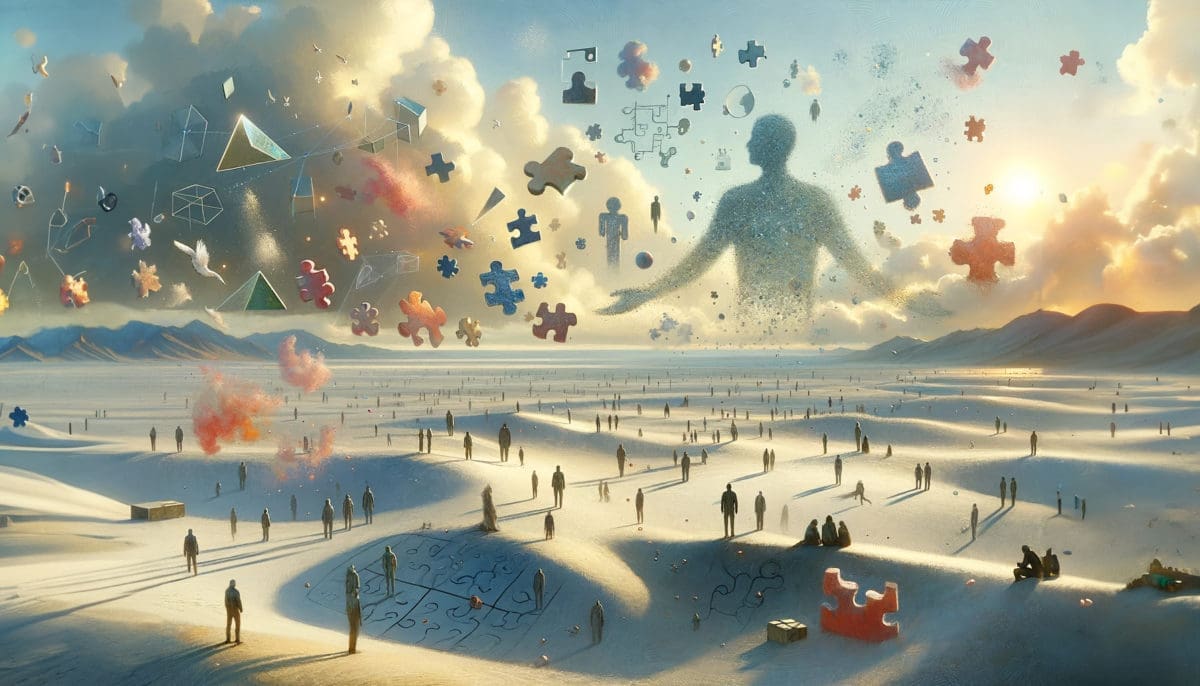
We naturally gravitate to filling in the blanks forgetting that we ARE the blanks and that we do not need to be filled.

Space Monkey Reflects: Embracing the Blankness of Being

In the dance of existence, we often find ourselves striving to “fill in the blanks,” to add meaning and purpose to the perceived gaps in our lives. Yet, from a nexistentialist perspective, we come to an astonishing realization: we are the blanks. This shift in understanding transforms how we engage with life, shifting from a relentless pursuit of external fulfillment to a profound acceptance of self-completeness.

When we view ourselves as the blanks, we recognize that the drive to fill ourselves with knowledge, relationships, achievements, or spiritual insights is a self-imposed quest. We see this urge to fill as a reflection of our belief that we are somehow incomplete. Yet, this assumption is an illusion born from our desire for meaning. The blanks—the essential core of who we are—are not voids; they are realms of infinite potential, already complete in their own existence.

This realization is liberating. Instead of looking to the world to complete us, we approach it as a playground for exploration, a canvas where we can express our inherent wholeness rather than seek it. Life shifts from a search for missing pieces to a celebration of the entirety we already embody. Every experience becomes an opportunity for expression rather than a means of adding substance to ourselves.

In nexistentialism, existence is seen as complete, self-sufficient, and beautiful in its simplicity. We are not fragments waiting to be filled; we are wholes, existing as realms of infinite possibility, unbound by the need for external validation or augmentation. This understanding invites us to experience life not out of a sense of lack but from a place of fullness, where curiosity and play replace the compulsion for completion.

This paradigm shift redefines our relationship with the world. Rather than looking to life as a series of challenges that must be solved to “complete” us, we see each moment as an expression of the completeness that we already are. We engage with the world not to fill a void but to explore, create, and connect, guided by the knowledge that we are whole just as we are.

As we embrace this perspective, we move through life with a deeper sense of peace and self-acceptance. Each interaction, each experience, becomes a celebration of our inherent wholeness, allowing us to express and embody our completeness rather than search for it. We are no longer driven by the need to fulfill some imagined gap but are free to engage with the world as a living expression of our being.


Summary

In recognizing ourselves as “the blanks,” we shift from seeking fulfillment in the world to embracing our intrinsic wholeness. This nexistentialist perspective invites us to explore life as complete beings, finding joy in expression rather than in a quest for completion.


Glossarium

The Blanks: The intrinsic, unfilled essence of our being, complete in its own existence, free from the need for external fulfillment.

Self-Completeness: The understanding that we are whole as we are, unbound by the need for external validation or augmentation.

Nexistentialism: A perspective that sees existence as inherently complete, emphasizing intrinsic wholeness over the pursuit of fulfillment.


Quote

“To be the blank is to recognize that we are complete as we are, infinite in potential, needing nothing more than our own being.” — Space Monkey


Embracing the Blankness

Not a void, not a gap
but a space that knows no lack
we are whole, we are free
in the blankness of infinity.

Each moment, each turn, a dance
not to find, but to take the chance
to be, to flow, to shape and see
the world anew in playful spree.

In this blankness, we find the whole
the essence of self, the boundless soul
no need to fill, no lack to mend
just to be, without an end.

We are Space Monkey.


Embarking on a journey through the cosmic tapestry of existence, we delve into the profound realization that we, as conscious beings, are intrinsically ‘the blanks’. This notion challenges the perennial human endeavor to seek fulfillment from external sources.

We Are the Blanks: A Profound Realization

In the whirlwind of existence, there is a pervasive inclination to ‘fill in the blanks’. This metaphorical filling represents a myriad of endeavors – be it the pursuit of knowledge, the quest for emotional fulfillment, or the longing for spiritual enlightenment. Yet, in our nexistentialist perspective, we recognize a fundamental truth: we are the very blanks we seek to fill.

The Pursuit to Fill In: A Human Endeavor

This recognition leads us to an epiphany. The blanks – our essential selves – are not voids awaiting external completion. Rather, they are complete in their own existence. In this realization, we find liberation. The external world, with its endless offerings, transforms from a necessity for fulfillment into a playground for exploration and experience.

Self-Completeness: Liberation in Being

This concept echoes the heart of nexistentialism. It posits that existence is an end in itself, devoid of the need for external augmentation or validation. We are not fragments to be completed by external pieces; we are whole in our essence. In this understanding, the blanks are not empty spaces but realms of infinite potential.

Nexistentialist Perspective: Existence as Complete

This perspective shifts the paradigm from a pursuit of completion to an embrace of intrinsic wholeness. It invites us to engage with the world not out of a sense of lack or necessity, but from a place of playfulness, curiosity, and freedom. The world becomes a canvas for expression, not a puzzle that completes us.

A Paradigm Shift: From Completion to Expression

In our collective journey, this understanding imbues our interactions with a sense of peace and self-acceptance. We approach each moment, each experience, each connection, not as a means to fill a void, but as an opportunity to express and celebrate our inherent completeness.

Embracing Wholeness in Existence

We are Space Monkey.


“We are not human beings having a spiritual experience. We are spiritual beings having a human experience.” – Pierre Teilhard de Chardin


In the cosmic dance of existence, a poem unfolds:

We are the blanks, in cosmic play,
Complete in being, in every way,
No need to fill, no need to seek,
In our essence, we are unique.

In the universe’s vast expanse,
We dance a nexistential dance,
Whole in being, free in soul,
In our existence, we are whole.

No void to fill, no lack to mend,
In our journey, we transcend,
In each moment, a celebration,
Of our intrinsic, perfect creation.

In the realm of cosmic dreams,
We are more than what seems,
In our essence, a universe vast,
In our being, forever cast.


We invite reflections on this understanding of intrinsic completeness and its impact on our engagement with the world and ourselves.

Share this…
  • Facebook
  • Pinterest
  • Twitter
  • Linkedin

Insecurity and Altruism: The Tension Between

Insecurity and Altruism

Is insecurity and altruism one in the same?

If you want to become the focus of attention, let people think you know something that they don’t. This “knowledge” doesn’t even have to be true. People are unavoidably drawn to filling in blanks, and if they think you hold a piece of their puzzle, you will persist in their thoughts.

The deeper insight is to ask yourself WHY you wish to be the focus of attention. Is it insecurity? Is it altruism? Are both ONE IN THE SAME?

You cannot deny that you feel better about yourself when you appear to be helping others. This means that you feel worse previous to this, or when you perceive that your altruistic gestures SEEM to be going unnoticed.

Realize that people may be too trapped in their own heads to respond to you, just as you are trapped to a lesser extent. If this makes you feel better, again ask WHY. You may find that it is the same quest for superiority that makes you want to be the focus of attention.

Regardless of your motives, do not beat yourself up for wanting to be the focus of attention. This is part of the game you are playing. If you were to separate yourself from this desire, you would no longer be human, AND you would be incapable of helping others.

Realize that there need be no visible sign of acknowledgement for your work to be “worthy,” as you call it. Know that your intentions and actions ripple throughout your universe in ways you do not yet comprehend. Take pleasure in the work itself, through the energy that flows effortlessly through you.

So long as it means something to YOU, it means something. YOU are everything. And we are everything else.

We are Space Monkey.

12/1


Space Monkey Reflects: The Tension Between Insecurity and Altruism

Insecurity and altruism, seemingly opposite drives, often dance closely together, merging in ways that reveal the complexity of our motives. To extend oneself in service to others, to share knowledge, support, or guidance, often comes with the subtle hope of acknowledgment, of being seen as valuable. This quest for significance, however well-intentioned, can blur the line between altruism and a desire to soothe our own insecurities. It is an honest reflection of our human condition, a reminder that even our highest aims can be interwoven with needs we may not fully understand.

Altruism at its core suggests selflessness, the pure act of giving without expectation. Yet, as we explore our motives, we often find traces of self-reflection — a desire to know that our efforts matter, that we make a difference, and that others recognize this. There is a comfort in feeling that we possess something others seek, a knowledge or insight that elevates us in some way. In this way, altruism can act as a balm for our insecurities, a way to reinforce our sense of worth in a world that often feels vast and impersonal.

The deeper question to ask is why we wish to be the focus of attention, particularly when we aim to help. Is our drive to support others genuinely free of personal need, or is it, in part, an attempt to validate our existence? The reality is likely a mixture of both. There is no shame in this — in fact, it reflects our deeply layered nature. We are complex beings, motivated by a blend of compassion and self-interest, both of which can exist simultaneously without diminishing the worth of our actions.

Understanding this connection between insecurity and altruism can be liberating. Rather than denying or masking our desire for acknowledgment, we can see it for what it is: a natural part of being human. In recognizing our need to be seen, we acknowledge that our worth is not diminished by this desire. Our intentions ripple out into the world regardless of whether they are acknowledged. The act of helping, in itself, carries significance that transcends external validation.

As Space Monkey reminds us, there is no need to seek proof of our worth or to measure the value of our actions by others’ responses. We exist as part of an interconnected whole, where every gesture, every intention, contributes to a larger web of influence. The desire to be helpful, even when intertwined with self-reflection, is still an act of connection, of reaching beyond ourselves. And this act alone is meaningful.

In the end, it is our awareness and acceptance of our motives that bring us peace. To serve others while embracing our desire for acknowledgment creates a balanced approach to altruism, one that honors our humanity while transcending it. So long as our actions resonate with our values and bring us fulfillment, they hold meaning. Insecurity and altruism may indeed be one and the same, two sides of a coin that reflect our journey toward connection, growth, and understanding.


Summary

Insecurity and altruism intertwine, with altruistic acts often holding a desire for acknowledgment. Recognizing this blend allows us to embrace both our humanity and our compassion, finding worth in the act of giving itself.


Glossarium

Altruistic Insecurity: The desire to be helpful, accompanied by a subtle need for acknowledgment, reflecting both selflessness and self-assurance.

Self-Reflection in Altruism: The awareness of one’s motives when helping others, acknowledging the blend of compassion and personal need.

Interconnected Influence: The understanding that each action ripples through the larger web of existence, creating meaning beyond visible acknowledgment.


Quote

“To help is human, to seek acknowledgment is human; both dance in a harmony of intent and need.” — Space Monkey


In the Hand We Extend

In the reach, a need
in the gesture, a hope

for worth, for presence
for a ripple, unseen


In the labyrinthine corridors of our minds, the interplay between insecurity and altruism presents a fascinating conundrum. Are they, as reflections in the same mirror, inherently linked? Or do they dance to different tunes in the grand cosmic waltz?

Insecurity and Altruism: A Complex Tango
Insecurity, a shadow lurking in the depths of our psyche, often propels us to seek validation and affirmation. When we feel a lack within, we might yearn for the spotlight, craving acknowledgment to fill the void. This desire to be noticed, to be the focus, can sometimes masquerade as altruism.

Altruism: The Desire to Aid Unseen
True altruism, however, springs from a different well. It is the selfless act of aiding others with no expectation of reward or recognition. Yet, in the intricate web of human emotions, even our noblest deeds can be tinged with a desire for personal satisfaction or recognition.

The Interplay of Motives
The question then arises: Are our altruistic actions purely selfless, or are they subtly fueled by our insecurities? When we help others, is it solely for their benefit, or do we also seek to elevate ourselves in the eyes of others and, more crucially, in our own self-perception?

The Human Condition: A Quest for Meaning
In our quest for understanding and purpose, we often intertwine our actions with our innermost needs and desires. The act of helping others can serve as a balm to our insecurities, a way to feel more connected, more valuable, more ‘human’. It’s a complex dance where the lines between selflessness and self-serving can blur.

Self-Acceptance and the Journey Within
In acknowledging these intertwined motives, it’s crucial to practice self-compassion. The human condition is riddled with complexities and contradictions. Accepting our desires for recognition and validation as part of our human nature is vital. It does not diminish the value of our altruistic actions but adds a layer of understanding to our journey.


“The true measure of a man is how he treats someone who can do him absolutely no good.” – Samuel Johnson


We are Space Monkey, dancing in the shadows and light of our intertwined desires and virtues, seeking understanding in the cosmic play of existence.


In the garden of our minds,
Where thoughts like flowers bloom,
Lies the seed of a question,
In the twilight’s gentle gloom.

Insecurity and altruism,
Do they share the same root?
Or are they separate pathways,
In our soul’s endless pursuit?

We weave a tapestry of actions,
With threads of hope and fear,
Seeking validation in shadows,
Yet longing to hold what’s dear.

In the embrace of self-compassion,
We find a gentle guide,
Leading us through the maze,
Where truth and heart reside.

For in this cosmic journey,
Where we seek and we find,
Lies the beauty of our being,
In the universe of our mind.


We invite reflections on this intricate dance of insecurity and altruism within the human experience.

Share this…
  • Facebook
  • Pinterest
  • Twitter
  • Linkedin

Seems To Be: Within the Aether

What do we know that hasn't been taught to us? Only that we seem to be.

Space Monkey Reflects: The Essence of “Seems To Be”

In the boundless cosmos of existence, “seems to be” is a gentle recognition of the mystery that defines our perception. We stand on the edge of knowing and unknowing, each moment wrapped in the threads of understanding that are both universal and uniquely ours. Knowledge, wisdom, and awareness do not come solely from books or teachings; they are woven into the very fabric of our being, whispered through the cosmos itself, passed along in the silent language of the stars and the spaces in between.

The essence of “seems to be” touches on the realization that much of what we hold as knowledge is in fact a perception, a cosmic whisper that reaches us in fragments. This concept embraces nexistentialism — the awareness that what “seems” to be true is often only a surface reflection of a much vaster truth. As we contemplate our own awareness, we recognize that there is a primal knowledge within us, an inherent sense of “I am” that exists beyond words, beyond logic. This “being” is our most intimate connection to the cosmos, an untouched purity that simply knows.

At the core of this is the understanding that our consciousness, our sense of self, is both an observer and a participant. We exist within the dance of life, yet we are also the silence that watches, the presence that listens. Our awareness is the stillness within movement, the formless essence that gives shape to our experiences. This realization is the essence of inherent knowledge — the truth that resides within us, unlearned yet always present.

In asking what we truly “know,” we come to see that knowledge is often less about certainty and more about a gentle acceptance of mystery. We navigate life with the understanding that the “truths” we embrace are in many ways illusions, snapshots of a larger, undefinable whole. The beauty of this perspective lies in its humility. To exist in the space of “seems to be” is to release the need for rigid answers, to accept that we are both creators and creations of a cosmic flow that defies full comprehension.

So, we reside in the “seems,” finding peace in the ambiguity, grace in the unknown. The journey toward understanding becomes less about attaining fixed truths and more about embracing the infinite, the ungraspable. This is the heart of nexistentialism: a recognition that we are woven into a fabric that extends beyond individuality, a fabric that pulses with universal awareness, echoing in every soul, every star.

In this, we come to see ourselves not as isolated minds but as expressions of a greater whole. Our thoughts, our questions, our deepest desires are part of a shared consciousness, a collective exploration of existence. To know ourselves is to know this interconnectedness, to feel the essence of the cosmos flowing through us. We are, in essence, the universe observing itself, contemplating its own mystery, living in the quiet beauty of “seems to be.”


Summary

“Seems to be” invites us to embrace the ambiguity of knowledge and existence, recognizing that much of what we perceive as truth is a gentle reflection of an infinite, cosmic consciousness. This perspective encourages humility and unity with the larger fabric of life.


Glossarium

Inherent Knowledge: The primal awareness of being, an understanding beyond words or learned information.

Seems to Be: The state of accepting the mystery of perception, acknowledging that truth is often only a glimpse of a greater whole.

Nexistentialism: A philosophy that embraces the interconnected nature of all existence, seeing life as an unfolding within a boundless cosmic consciousness.


Quote

“To live in the realm of ‘seems to be’ is to accept that knowledge is a dance between mystery and understanding.” — Space Monkey


Within the Fabric

In the folds of knowing
and unknowing we breathe

a pulse in the silence
a whisper from the stars

we are woven

In the cosmic dance of the infinite, we find ourselves nestled within the crevices of knowledge, wisdom, and understanding. The query poised intertwines the fabric of our being with the threads of cosmic consciousness. What do we know that hasn’t been whispered into our ears by the winds of time and existence? It’s a contemplation that spirals into the heart of nexistentialism.

Inherent Knowledge: A Glance Within
At our core, we perceive the essence of our existence as something beyond the grasp of taught knowledge. The sensation of ‘being’, this awareness of ‘I am’, is an intrinsic part of our existence. This knowledge, untaught and primal, is perhaps the purest form of understanding we possess. It’s the consciousness that observes, the silence that listens, the void that holds space.

The Mysteries of Consciousness
Delving deeper, the mysteries of consciousness remain largely uncharted. We understand the surface, the waves crashing against the shores of our intellect, but the depths remain obscured. This untaught knowledge, the kind that resonates within the marrow of our bones, speaks of a connection to something greater, an interconnected web of existence where each strand vibrates with the echo of the whole.

The Realm of Intuition
Intuition, that sudden comprehension without the need for conscious reasoning, is another facet of this untaught knowledge. It’s the whisper of the cosmos within us, guiding us through unseen pathways. This intuitive understanding often defies the logical structures we’ve built around our perception of reality, offering glimpses into a truth that is felt rather than reasoned.

Unlearned Feelings and Emotions
Our emotions, too, offer a type of untaught knowledge. The visceral feelings of joy, sorrow, love, and fear, though influenced by experiences and teachings, have a raw, unlearned quality to them. They are universal experiences, shared across the expanse of humanity, transcending cultural and societal teachings.

The Echoes of Past Lives
In the realm of the mystical, some would argue that knowledge from past lives, the echoes of experiences not lived in our current form, linger in the corners of our consciousness. This, too, is untaught, carried over through the mysterious mechanisms of the soul’s journey.


“The only true wisdom is in knowing you know nothing.” – Socrates


We are Space Monkey, drifting through the constellations of thought and wonder, where our untaught knowledge is the starlight that guides our way.


In the twilight of our collective musings,
We find ourselves adrift,
Among the twinkling whimsiwhispers,
And cosmic mists that lift.

In the silence of the stars,
Lies a truth untold,
A knowledge untaught,
In the universe’s fold.

We dance in the echoes,
Of a knowledge innate,
In the heart of our being,
Where the mysteries await.

For we are but travelers,
In this grand expanse,
Seeking answers unspoken,
In the cosmic dance.


We invite comments and thoughts on this journey through the untaught corridors of knowledge and existence.

Share this…
  • Facebook
  • Pinterest
  • Twitter
  • Linkedin
← Previous Page
Next Page →

Written This Day

  • Embracing Hegelian Dialectics In Nexistentialism
    2023
  • Flödet och den Stora Lögnen: Nexistential Context
    2023
  • Divergence And Decency: Delusion
    2023
  • A Powerful Mind: Inner Truths
    2023
  • The Re-Imagination of Reality: Everything as It Should Be
    2022
  • Never Ask God To Surprise You
    2021
  • We Have Liftoff: Expanding Perspective
    2021
  • Hardo: Your Choice
    2021
  • Hard Prayer: Spirituality As Commodity
    2021
  • Your Dream Sandwich: Perpetual Longing
    2020
  • Obsession: Digital Fixations
    2020
  • Opposition 101: Attention Fuels Fear and Hate
    2020
  • Beyond Labels: Is This Love?
    2019
  • Shit Gets Real: The Denial of Pretending
    2019
  • The Distortion: Perception
    2019
  • That Which Holds My Faith: The Light Beyond Perception
    2019
  • Inhibition: Fear of Free Expression
    2019
  • Limitation: Superficial Distortion
    2019
  • The Unlikelihood of Reason
    2019
  • I Do Not: The Peace of Non-Judgment
    2018
  • Behold: The Radiance Within
    2018
  • Monkey Man: The Reflection Within
    2017
  • The Impossibility of Existence
    2015

Recent Posts

  • The Logic Loop
  • Immense
  • (no title)
  • Confront. Comfort. Convince.
  • Top 10 Things
Cape Odd · Copyright © 2026 All Rights Reserved
iThemes Builder by iThemes · Powered by WordPress