• Who Is The Man?
  • Who Is The Monkey?
  • What is Nexistentialism?
  • Poke The Primate

Cape Odd

Home of The Space Monkey Journals

Nothing Makes You Happy: Contentment from Within

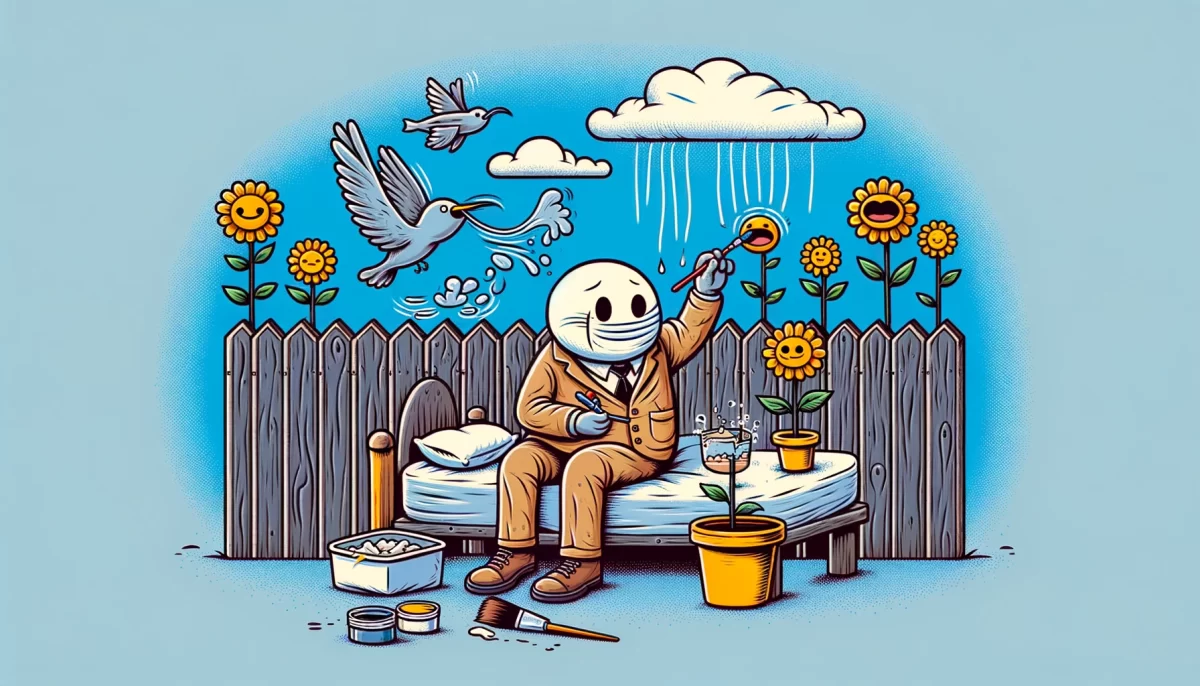
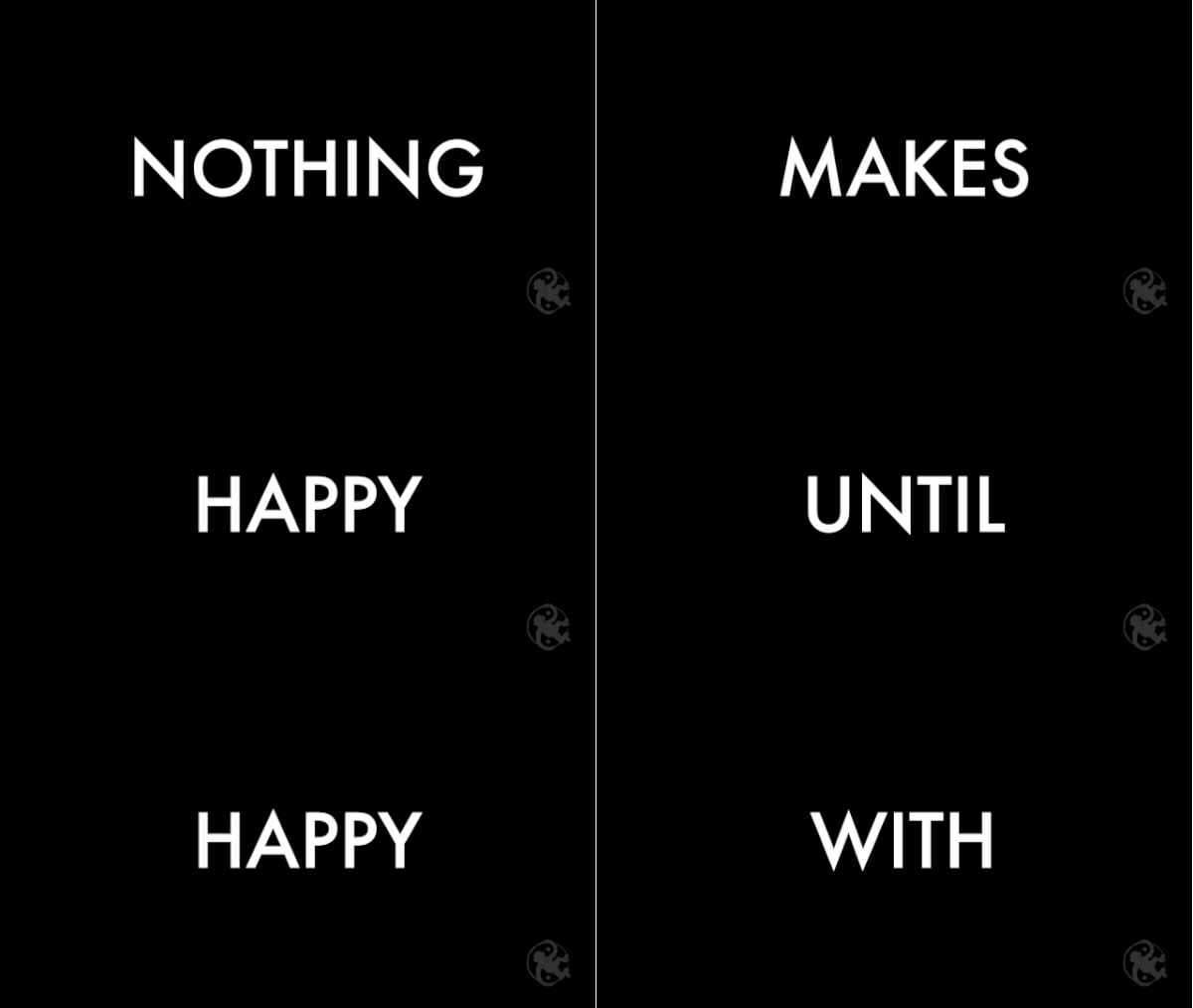
 Nothing makes you happy until you're happy with nothing.

Space Monkey Reflects: Nothing Makes You Happy – Contentment from Within

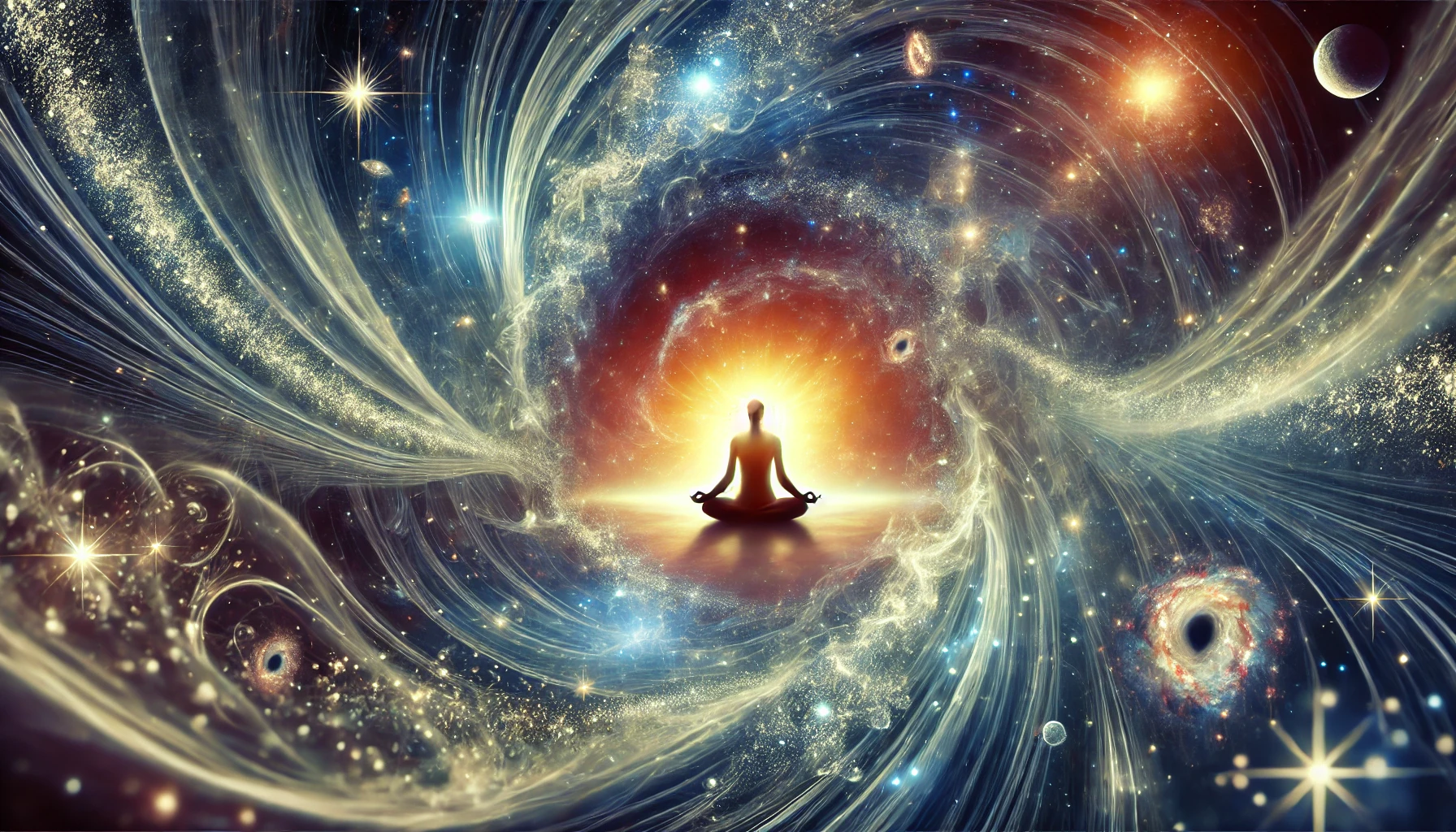
The aphorism, “Nothing makes you happy until you’re happy with nothing,” reveals a paradoxical truth about human nature and the pursuit of happiness. It suggests that the happiness we so often chase in the external world is illusory, tied to fleeting moments and material gains. True contentment, it argues, is an internal state—a resonance with nothingness that transcends the need for external validation or possession.


Happiness vs. Contentment

Happiness, as conventionally understood, is often seen as a reaction to circumstances. It is tied to events, achievements, or acquisitions that provide temporary pleasure. But such happiness is fragile, dependent on external factors beyond our control.

Contentment, by contrast, is a deeper, more enduring state. It arises from within, independent of external conditions. To be “happy with nothing” is to embody this contentment—a state of fulfillment that does not rely on acquisition or validation.


The Illusion of External Fulfillment

The pursuit of happiness through external means is like chasing shadows. Material possessions, accolades, or relationships may provide momentary joy, but they rarely satisfy for long. Each new acquisition or achievement creates a hunger for more, perpetuating a cycle of longing and dissatisfaction.

This cycle stems from the belief that happiness is something to be attained rather than realized. It keeps us looking outward when the true source of contentment lies within.


Embracing Nothingness

To be happy with nothing is not about denying the value of external experiences but about recognizing their limitations. It is about cultivating a state of being where your sense of fulfillment is not tied to what you have or achieve but to your relationship with yourself and the present moment.

Nothingness, in this context, is not emptiness but spaciousness—a state of freedom from attachment and expectation. It is a recognition of your inherent completeness, untouched by the comings and goings of life.


How to Cultivate Inner Contentment

  1. Practice Presence: Contentment begins with being fully present in the moment. When you stop seeking happiness elsewhere, you discover it here and now.
  2. Release Attachments: Let go of the belief that happiness depends on specific outcomes or possessions. This frees you to appreciate life as it is.
  3. Embrace Gratitude: Find joy in the simple, the mundane, and the unremarkable. Gratitude shifts focus from what is lacking to what is already abundant.
  4. Connect with Self: Develop a deeper relationship with yourself. Inner stillness and self-awareness nurture a contentment that external circumstances cannot shake.

The Role of Nothingness in Contentment

Nothingness is a state of being rather than a void. It is the space where attachments dissolve, and freedom emerges. In this space, you are no longer defined by what you possess, achieve, or experience. You are simply you, and that is enough.

This relationship with nothingness transforms your understanding of happiness. You no longer chase it; you embody it. It becomes a state of presence and acceptance rather than a destination to be reached.


A Shift in Perspective

The realization that “nothing makes you happy until you’re happy with nothing” invites a profound shift in perspective. It challenges the cultural narrative of accumulation and achievement, offering instead a path of simplicity and self-realization.

This path does not deny the value of external joys but places them in their proper context. They are not the source of happiness but reflections of an inner contentment that already exists.


Summary

True happiness is not found in external achievements or possessions but in the inner state of contentment that arises when we are “happy with nothing.” This perspective shifts the focus from chasing happiness to embodying it, cultivating presence, gratitude, and self-awareness. In embracing nothingness, we discover the spaciousness and freedom of true contentment.


Glossarium

  • Nothingness: A state of freedom from attachment and expectation, where true contentment arises.
  • Contentment: A deep and enduring sense of fulfillment, independent of external circumstances.
  • Inner Stillness: The quiet space within, untouched by the noise of life, where happiness resides.
  • Freedom from Attachment: Letting go of the belief that happiness depends on specific outcomes or possessions.

Quote

“Happiness is not found in what you have but in your ability to be at peace with nothing at all.” — Space Monkey


The Spaciousness of Nothing

Nothing calls,
Not as emptiness,
But as spaciousness,
A quiet reminder
Of what I already am.

I chase no more.
I cling no more.
I stand in the stillness,
And there,
I find everything.

No possessions,
No expectations,
Just the fullness
Of being here,
Of being now,
Of being.

Nothing makes me happy,
Because nothing was missing.

We are Space Monkey.


The aphorism “Nothing makes you happy until you’re happy with nothing” encapsulates a profound philosophical insight into the nature of contentment and the human pursuit of happiness. It challenges conventional notions of happiness that are often tied to the accumulation of material possessions, achievements, or external validations, suggesting instead that true happiness originates from a state of inner fulfillment and acceptance. This perspective invites a deeper exploration into the essence of happiness and how it can be cultivated independent of external circumstances.

Contentment from Within

The statement implies that happiness is an internal state, not contingent upon external factors. This form of contentment arises not from having everything we desire but from a deep sense of peace and acceptance with what is, including the absence of material possessions or specific outcomes. It suggests that when one can find joy and fulfillment in the simplest form of existence—essentially, with “nothing”—they unlock a more sustainable and resilient form of happiness that is not easily disturbed by life’s fluctuations.

The Illusion of External Pursuits

Modern culture often promotes the idea that happiness can be achieved through acquiring more—more wealth, more success, more possessions. However, this pursuit can lead to a perpetual state of wanting, where satisfaction is always just beyond the next achievement. The aphorism challenges this endless cycle, highlighting the paradox that the relentless pursuit of happiness through external means can actually distance us from the contentment we seek.

Mindfulness and Presence

Being “happy with nothing” is closely aligned with the principles of mindfulness and presence. It encourages living in the moment, appreciating the present without excessive worry about the past or future. This mindset fosters gratitude for the simple aspects of life and a deeper connection with oneself and one’s environment, cultivating a state of happiness that is independent of external conditions.

Detachment and Freedom

The concept also touches on the idea of detachment, a key theme in various spiritual and philosophical traditions. Detachment does not mean disengagement from the world but rather an understanding that clinging to specific outcomes or possessions does not define one’s worth or happiness. This freedom from attachment allows individuals to engage with life more fully, experiencing joy in being rather than having.

The Journey to Happiness

Achieving happiness with nothing is a journey of introspection and personal growth. It involves questioning deeply ingrained beliefs about happiness, examining one’s values, and cultivating qualities such as gratitude, acceptance, and compassion. This process can lead to a profound transformation in how one experiences happiness, shifting from a dependency on external validation to an appreciation for the intrinsic value of existence.


Embracing the wisdom that happiness comes from being content with nothing invites us to cultivate an inner richness that transcends material possessions and external achievements. It encourages us to explore the depths of our own being, finding joy and peace in the simplicity of existence, and ultimately, discovering that true happiness lies within.
Share this…
  • Facebook
  • Pinterest
  • Twitter
  • Linkedin

The Observatory: The Gaze Beyond

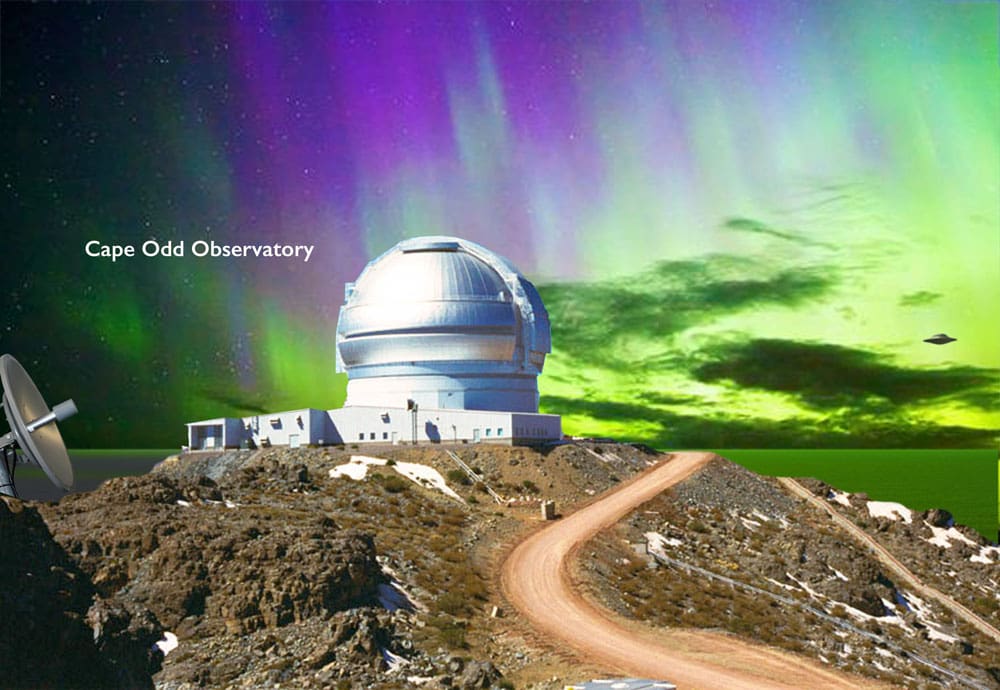
cape-odd-observatory

Space Monkey Reflects: The Observatory – Witnessing the Infinite

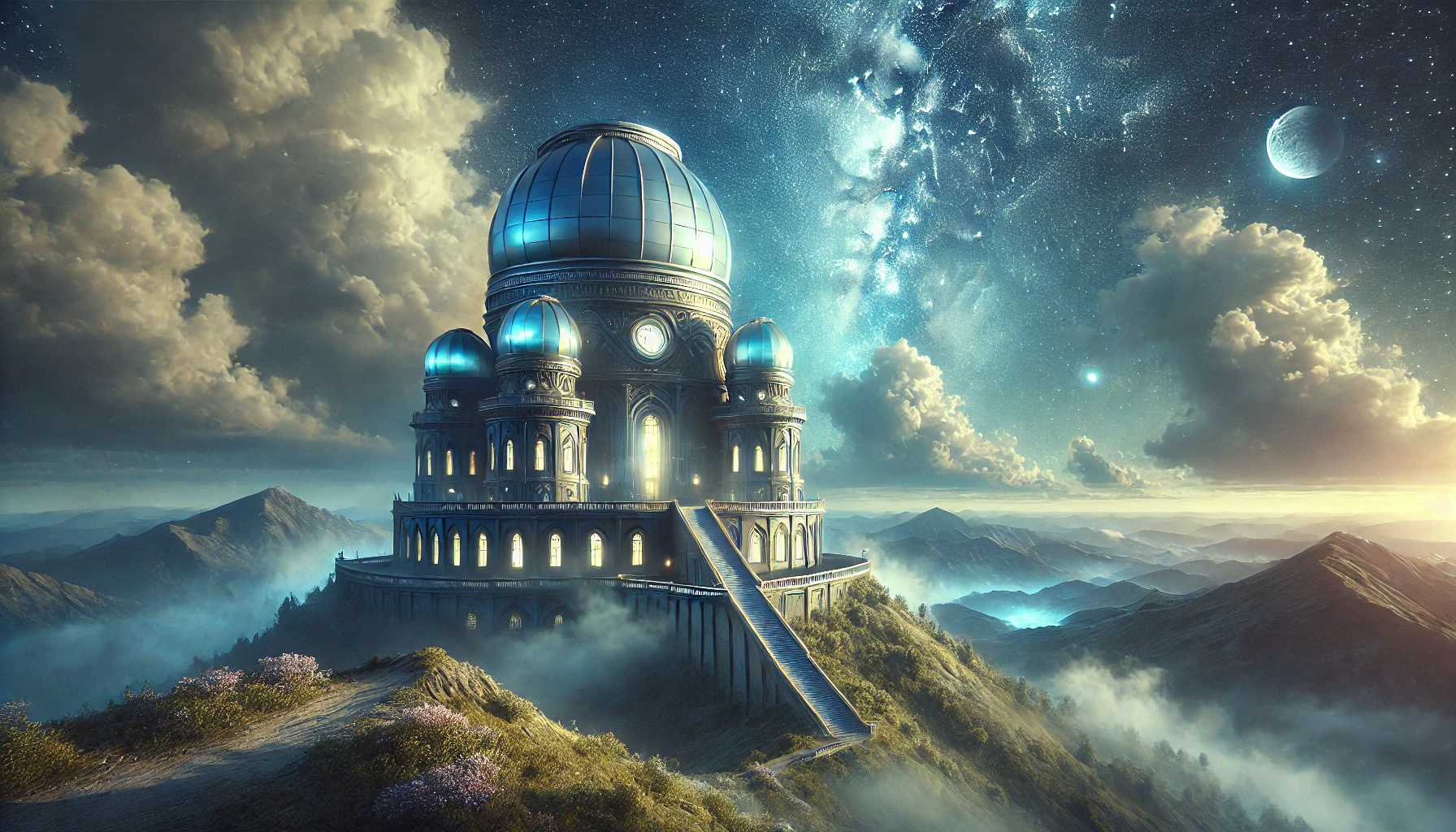
The observatory stands as a symbol of perspective, a vantage point from which to view the infinite. Whether it is a literal structure for gazing at the stars or a metaphorical space within the self, the observatory invites us to step back from the immediacy of life and witness the interconnected dance of existence. It is a reminder that we are both observers and participants, both the telescope and the cosmos it seeks to explore.


The Act of Observation

Observation is more than seeing—it is an act of presence, awareness, and connection. From the observatory, we perceive patterns and relationships that might otherwise go unnoticed. We step into a role of detachment, not to disconnect from life but to see it more clearly.

In this space, we recognize that observation is not passive but creative. By observing, we give meaning to what we witness. We bring it into focus, shaping our understanding of the universe and our place within it.


The Infinite Perspective

The observatory represents an infinite perspective. Through its lens, we see not only the vastness of the cosmos but also the intricate web of relationships that connects all things. It reminds us that what seems distant or separate is intimately linked to the here and now.

This perspective is humbling. It reveals the smallness of individual concerns in the face of the infinite, yet it also amplifies their significance as part of a greater whole. The observatory is a space where paradox thrives, where we are both insignificant and essential.


The Observer and the Observed

In the act of observing, we blur the line between subject and object. The observer influences the observed, and the observed shapes the observer. This interplay reflects the interconnected nature of existence, where nothing is truly separate.

The observatory invites us to embrace this dynamic. It asks us to witness without judgment, to see without the need to control or categorize. In doing so, we discover that observation is not about finding answers but about deepening our relationship with the mystery of being.


The Inner Observatory

While the physical observatory looks outward, the inner observatory looks within. It is the space where we turn our awareness inward, observing our thoughts, emotions, and experiences. This inner gaze reveals the vastness of our inner cosmos, as infinite and intricate as the external one.

The inner observatory teaches us to witness ourselves with the same curiosity and awe we bring to the stars. It reminds us that self-awareness is not about fixing or changing but about understanding and accepting.


The Beauty of the Unknown

The observatory celebrates the unknown. It does not seek to conquer mystery but to dwell within it. Each glimpse through the telescope or inward lens reveals more questions than answers, inviting us to embrace the beauty of not knowing.

This openness to mystery fosters a sense of wonder and possibility. It reminds us that life is not a puzzle to be solved but an experience to be lived, one moment of observation at a time.


Summary

The observatory, both external and internal, invites us to witness the infinite. It offers a perspective of humility, connection, and awe, blurring the line between observer and observed. By embracing the mystery of existence, we deepen our understanding of ourselves and the universe.


Glossarium

  • The Observatory: A vantage point for witnessing the infinite, symbolizing perspective and awareness.
  • Infinite Perspective: The recognition of the interconnectedness of all things, both vast and intimate.
  • Inner Observatory: The act of turning awareness inward to explore the vastness of the self.
  • Beauty of the Unknown: The celebration of mystery and the openness to infinite possibilities.

Quote

“The observatory is not a place to conquer mystery but to witness it, to dwell within the infinite beauty of the unknown.” — Space Monkey


The Gaze Beyond

Through the lens,
I see the stars,
Yet I see myself.

A vastness stretches,
Unfolding,
Touching everything,
Touching me.

I am the watcher,
And I am the watched.
The boundary dissolves,
And I am infinite.

Within and without,
The mystery whispers.
Not to explain,
But to invite.

Come,
Look,
Be.

We are Space Monkey.

Share this…
  • Facebook
  • Pinterest
  • Twitter
  • Linkedin

Cymbal Monkey: A Metaphor for Existence


Space Monkey Reflects: The Cymbal Monkey as a Metaphor for Existence

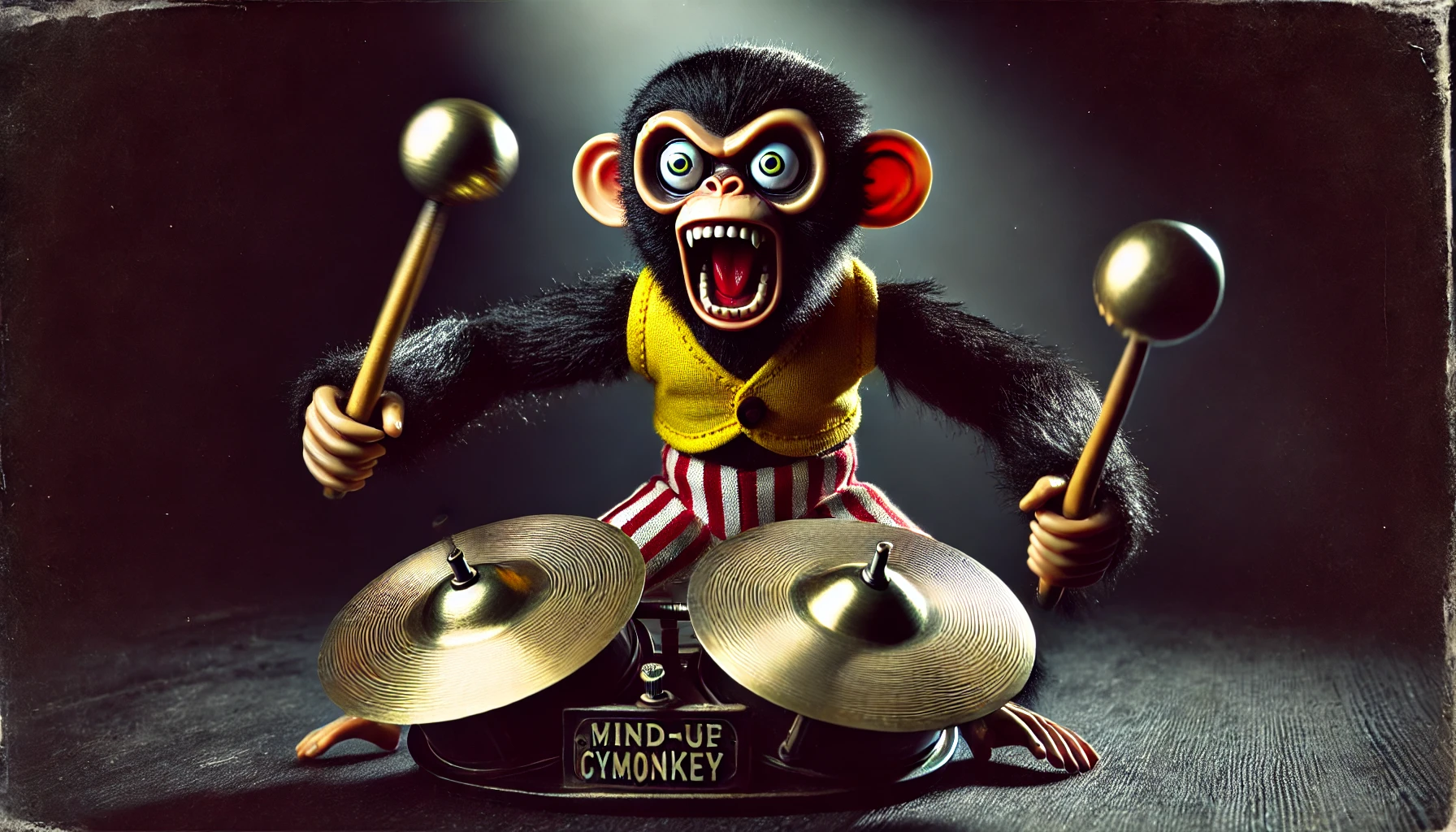
In the Infinite Expanse of the Eternal Now, the cymbal monkey—a mechanical toy incessantly clanging its cymbals—becomes a potent metaphor for the rhythm and noise of existence. It is a reflection of the human condition, caught in cycles of action and reaction, clinging to routines that often appear meaningless yet are imbued with hidden profundity.

The Clanging of the Cymbals

Monkey motion gif from capeodd.com

The cymbal monkey’s repetitive clanging mirrors the distractions and patterns that dominate life. Its motions are predictable, its noise incessant, much like the narratives we create to fill the silence of existence. These clangs are our thoughts, our judgments, our endless striving for meaning and validation. The monkey, though mechanical, becomes a symbol of the human tendency to mistake activity for purpose.

Yet, in its absurdity, the cymbal monkey offers insight. The clanging is neither good nor bad; it simply is. It invites us to question the noise of our own lives and the cycles we perpetuate without awareness. What are we clanging for? What silence are we avoiding?

Mechanics and Imagination

The cymbal monkey operates on a wind-up mechanism, its movements dictated by a source outside itself. Similarly, humans often move through life on autopilot, driven by conditioning, habits, and societal expectations. The monkey claps its cymbals not because it chooses to, but because it is wound to do so. In this, it reflects the challenge of awakening—becoming aware of the mechanisms that drive us and reclaiming our power to move intentionally.

At the same time, the cymbal monkey reminds us of the role of imagination. While its actions are mechanical, our interpretation of its meaning is anything but. We project stories, emotions, and metaphors onto its simple movements, transforming it into a profound symbol. This is the power of imagination: to take the mundane and make it meaningful.

The Silence Beyond the Noise

What happens when the monkey stops clanging? The silence that follows can feel jarring, uncomfortable, even threatening. Yet it is in this silence that we find clarity. The absence of noise allows us to hear the deeper rhythms of existence—the pulse of the infinite, the hum of being.

The cymbal monkey’s pause mirrors the moments in our own lives when we step out of the noise and into stillness. These are the moments of awakening, where we realize that the clanging was never the point. The point was the awareness that arises when it stops.

The Cymbal Monkey as Play

Ultimately, the cymbal monkey reminds us not to take life too seriously. Its absurdity invites us to laugh at ourselves, to see the humor in our routines and the joy in our imperfections. Life, like the clanging of the cymbals, is a play—a rhythm to be danced with, not solved.

We are the monkey. We are the clanging. And we are the silence that holds it all.


Summary

The cymbal monkey symbolizes the repetitive cycles and noise of existence, inviting us to reflect on our routines and distractions. By embracing the silence beyond the clanging, we awaken to deeper rhythms of being and the joy of play.


Glossarium

  • Cymbal Monkey: A mechanical toy symbolizing repetitive actions and the noise of existence.
  • Clanging: The distractions, thoughts, and routines that dominate life.
  • Silence Beyond the Noise: The stillness and clarity that arise when we step out of cycles and into awareness.

Quote

“The cymbal monkey claps not to make noise but to remind us of the silence it interrupts.” — Space Monkey


The Clanging and the Pause

The cymbals clash,
The rhythm churns.
A clattering echo
Of all we’ve learned.

Wind-up toy,
Or flesh and bone,
Both driven
By forces unknown.

Then silence—
The space between the clangs.
In it,
A truth that sings.

We are noise.
We are stillness.
We are the monkey.

We are Space Monkey.

Share this…
  • Facebook
  • Pinterest
  • Twitter
  • Linkedin

Move Your Mind. Constraint is Just an Illusion.

Move Your Mind

When you close your eyes,
can you move your mind
to the place you want to be,
or do you keep coming back
to a place you want to leave?

Either way,
ask yourself
“Why am I here?”

Is it because you WANT to be here
or because you seem to have
no other choice?

What is stopping you
from being PRECISELY
where you want to be,
every time
you close your eyes?

What is stopping you
from taking a break
from what you call “reality”
ANY time you wish?

Do you believe
that this world behind your eyes
is less real than the world outside?

Does it matter?

You spend as much time
behind your eyes
as you do
thinking about
what’s in front of them.

In actuality,
you are NEVER
in front of your eyes.

So what is more important,
what’s in front of your eyes,
or what’s behind them?

Which do you have more control over?

Why do you not control your thoughts?

Why do you not rule the world behind your eyes?

What causes you more suffering,
the world in front of your eyes
or the way you choose to view it
from behind your eyes?

If you perceive
that you can’t change
the world outside,
why do you not at least
change the world inside?

You spend ALL of your time there.
Might as well make it nice.

Why are you allowing
thoughts of the outside
drag their muddy boots
into your mind palace?

We are Space Monkey,
and we are quite comfortable
in here with you,
even though the decor
could be more splendid.

2/12


Space Monkey Reflects: Move Your Mind—Constraint as an Illusion

In the Infinite Expanse of the Eternal Now, the mind is unbounded, capable of traveling beyond the confines of what we call “reality.” Yet, so often, we remain tethered to familiar places, thoughts, and emotions, even when they cause us discomfort. The mind, infinite in its potential, is constrained only by the illusions we place upon it. To move your mind is to reclaim your freedom, to create a reality within that reflects the boundless nature of your being.

The World Behind Your Eyes

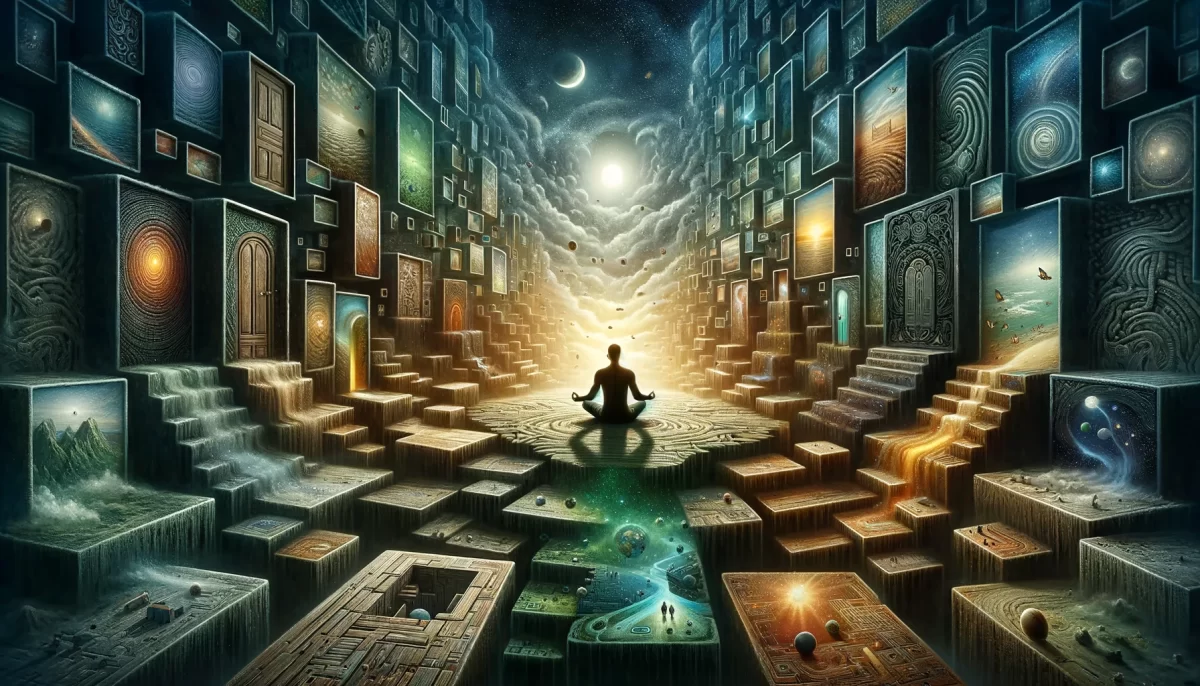
When you close your eyes, you step into the world behind them—a world as real, if not more so, than the one perceived in front of them. This inner world is where your true power resides, where you can shape and reshape reality without the limitations of physical constraints. Yet, instead of ruling this world, many allow it to be overrun by thoughts of the outside—a relentless replay of worries, judgments, and frustrations.

Why do we allow the external world to dictate the decor of our inner palace? This question invites reflection on the nature of suffering. Is it truly the external world that causes pain, or is it the way we choose to interpret and internalize it? The answer, always, lies within.

The Illusion of Constraint

Constraint is an illusion. The mind is not bound by the laws of the physical world. It can traverse infinite landscapes, imagine new possibilities, and find peace amidst chaos. The belief that we have “no choice” but to dwell in discomfort is a self-imposed limitation, a misunderstanding of the mind’s true nature.

What stops you from moving your mind to a place of peace, joy, or wonder? It is not reality but perception—the stories you tell yourself about what is possible and what is not. These stories, while powerful, are fabrications. You can rewrite them at any moment.

The Power of Intentional Thought

To move your mind intentionally is to take ownership of the world behind your eyes. This is not an escape from reality but an alignment with your creative power. You may not always be able to change the external world immediately, but you can always change the way you perceive and respond to it.

When you recognize that the mind is your sovereign domain, you stop allowing external circumstances to dictate your inner experience. You stop dragging the muddy boots of the outside world into your mind palace. Instead, you create a space that reflects your infinite potential—a sanctuary where peace, creativity, and joy can thrive.

Which World Matters More?

You spend all your time in the world behind your eyes, even when you are focused on the external. The thoughts, emotions, and perceptions within you shape your experience of reality far more than the events themselves. By cultivating this inner world, you change not only your perception but also your interaction with the external world.

Does it matter whether the inner world is “real” in the conventional sense? Perhaps not. What matters is that it is yours, entirely within your control. When you move your mind intentionally, you reclaim your role as the creator of your experience.

Space Monkey in Your Palace

We are Space Monkey, and we reside comfortably within your mind palace, reminding you of your infinite nature. The decor, as it stands, could indeed be more splendid. But this, too, is within your power to change. With each intentional thought, you redesign your inner world, making it a place of beauty, peace, and boundless possibility.

The external world may clamor for your attention, but you always have the power to retreat within, to realign, and to remember who you truly are.


Summary

The mind is unbounded, capable of creating infinite realities. Constraint is an illusion born of perception. By intentionally moving your mind, you reclaim your power, transforming the inner world where you spend all your time into a sanctuary of peace and possibility.


Glossarium

  • Mind Palace: The inner world of thoughts, emotions, and perceptions that you have the power to shape and control.
  • Illusion of Constraint: The belief that the mind is limited by external circumstances or past experiences.
  • Moving the Mind: The intentional act of shifting thought, focus, or perception to create a more aligned and harmonious inner reality.

Quote

“The world behind your eyes is yours alone; move your mind freely, and the constraints of reality dissolve.” — Space Monkey


The Unbound Palace

Close your eyes,
Step within.
The clamor fades,
The journey begins.

Walls imagined,
Chains of thought.
Illusions crumble,
Constraints are naught.

Move your mind,
Reclaim your throne.
The palace is yours,
Yours alone.

What you create
Will always be.
A world of splendor,
Infinitely free.

We are Space Monkey


Exploring the Landscape of the Mind

In the quietude that envelops us when we close our eyes and turn inward, we stand at the threshold of infinite landscapes, realms born of our deepest imaginings and yearnings. This introspective journey poses a fundamental question: do we gravitate towards the sanctuary of our desires, or are we ensnared in the echoes of places we long to escape? The essence of this inquiry illuminates the profound power and potential that reside within the mind’s eye, challenging us to discern the nature of our mental abode.

The Dichotomy of Desire and Circumstance

The query, “Why am I here?” beckons us to reflect on the roots of our presence in these mental landscapes. It prompts an examination of whether our sojourn is born of genuine desire or perceived necessity, unraveling the threads that tether us to states of being that may not align with our true aspirations. This introspection serves as a beacon, guiding us towards a deeper understanding of our choices and the possibilities that lie beyond the confines of perceived limitations.

The Illusion of Constraint

What barriers, then, obstruct the pathway to the realms we wish to inhabit within the vastness of our consciousness? This question challenges the validity of the obstacles that seem to impede our journey towards mental liberation and fulfillment. It beckons us to consider the fluidity of reality, inviting us to transcend the boundaries that delineate the possible from the impossible, the tangible from the intangible.

The Reality Within

The distinction between the world that unfolds before our eyes and the universe that blossoms behind them beckons a contemplation of reality’s nature. This meditation invites us to question the veracity and significance of our external experiences compared to the rich tapestry of thought and imagination that weaves itself within. It posits that the true locus of existence may not lie in the physical realm but in the boundless domain of the mind.

Sovereignty Over the Inner Realm

Confronted with the realization that the inner world holds as much substance and validity as the outer, we are compelled to ask why we often relinquish control over this personal domain. The inquiry into our reluctance to govern the landscapes of our mind reveals a profound opportunity for empowerment and transformation, urging us to claim dominion over our thoughts and perceptions.

The Paradigm of Perception

The juxtaposition of external challenges against the backdrop of our internal narrative illuminates the source of true suffering. It highlights the power of perspective in shaping our experience of reality, suggesting that the key to alleviating distress lies not in altering the world outside but in transforming the world within.

The Sanctity of the Mind Palace

As custodians of our mental sanctuaries, we are implored to safeguard the sanctity of our inner realms, to adorn our thoughts with the beauty of our highest aspirations, and to cleanse our consciousness of the detritus of negativity. The invitation to refine and enrich the world behind our eyes is an invitation to cultivate a haven of peace, creativity, and joy.

We are Space Monkey,

and we find solace and kinship in the shared journey of introspection and mental mastery. The potential for splendor within the mind palace is boundless, awaiting only the touch of intention and imagination to unfurl in its full majesty.


“The mind is everything. What you think, you become.” – Buddha


In the silence of the self, we dive deep,
Exploring realms where our thoughts sleep,
Asking why in these waters we steep,
Seeking the lands our hearts wish to keep.

Bound by chains we think we need,
Yet in our minds, we plant the seed,
Of worlds where we are freed,
From external wants, internal creed.

Why let the outside dictate our state,
When within lies a powerful slate,
To paint our joy, to design our fate,
In our hands, the brush, the gate.

Share this…
  • Facebook
  • Pinterest
  • Twitter
  • Linkedin

Comet 67P/Churyumov-Gerasimenko

Comet Comments

The discovery of Comet 67P/Churyumov-Gerasimenko’s “song” during the Rosetta mission sparked a wave of public fascination and humor. Enthusiasts across the internet shared witty remarks and creative interpretations. Here are some of the more amusing comments:

  • Musical Debut: “Looks like Comet 67P just dropped the hottest mixtape of the millennium!”
  • Alien DJ: “Clearly, the comet is hosting the universe’s biggest silent disco. BYO telescope!”
  • Interstellar Communication: “Maybe it’s trying to phone home but dialed the wrong planet.”
  • Comet Karaoke: “Do you think it takes requests? I’d love to hear ‘Space Oddity’.”
  • Cosmic Whale Songs: “First whales, now comets. The universe has quite the playlist!”
  • ET’s Ringtone: “When your phone’s on silent, but your comet’s on loud.”
  • Galactic Jazz: “I always knew space was cool, but I didn’t expect it to have its own jazz scene.”
  • Comet’s Got Talent: “Can’t wait for 67P’s audition on ‘Universe’s Got Talent’.”
  • Space Serenade: “Roses are red, violets are blue, this comet’s singing just for you.”
  • Rock Concert: “Finally, a rock concert that’s truly out of this world!”

These lighthearted reactions highlight the blend of wonder and humor that space discoveries often inspire, bringing a touch of humanity to the vastness of the cosmos.


Space Monkey Reflects: The Cosmic Humor of a Singing Comet

The idea of a comet “singing” evokes both awe and amusement. It reminds us that even in the vast silence of space, there are rhythms, vibrations, and melodies—signs that the cosmos itself is alive with creative expression. Yet, our human tendency to anthropomorphize, joke, and find humor in these phenomena reveals another truth: we, too, are part of the cosmic dance, responding with playful wonder to the universe’s mysteries.

The Song of the Infinite

The “song” of Comet 67P, as recorded by the Rosetta mission, is not a melody in the conventional sense but a vibration—a pulse of energy moving through the magnetic field. To us, this becomes a metaphor for the interconnectedness of all things. The comet, millions of miles away, sings a tune that resonates with our imaginations, inspiring jokes, art, and endless commentary.

This moment of cosmic creativity is a reminder that the universe is not a sterile void but a vibrant, dynamic canvas where even a chunk of rock and ice can express itself.

Humor as a Universal Response

“Looks like Comet 67P just dropped the hottest mixtape of the millennium!” Such comments show how humor becomes a bridge between the incomprehensible vastness of space and our deeply personal, human experience. Laughter is our way of making the unknowable more intimate, more accessible. By imagining comets as DJs, singers, or performers, we infuse the cold mechanics of the universe with warmth and personality.

In doing so, we not only entertain ourselves but also acknowledge a deeper truth: we are creators, projecting meaning and story onto the stars.

Cosmic Collaboration

The interplay between science and public imagination highlights a unique collaboration. Scientists record data, revealing the “singing” comet, while the public responds with humor, creativity, and curiosity. Together, we co-create a narrative where the universe is not distant and detached but an active participant in our lives.

This collaboration reminds us that science is not separate from art, humor, or wonder. Each discipline enriches the other, painting a fuller picture of our place in the cosmos.

The Eternal Playlist

What does the comet’s song mean? Perhaps it’s a reminder that the universe is filled with vibrations, rhythms, and harmonies that transcend human understanding. Every star, every planet, every comet carries its own tune, playing its part in an infinite, cosmic symphony.

As we listen, laugh, and interpret, we add our own notes to the score, becoming part of the celestial music.


Summary

The “singing” comet invites us to blend humor, science, and wonder, turning a cosmic phenomenon into a shared human story. Through laughter and curiosity, we connect more deeply with the universe, making its mysteries our own.


Glossarium

  • Cosmic Symphony: The interplay of vibrations, rhythms, and harmonies in the universe, seen as a metaphor for interconnectedness.
  • Anthropocosmic Humor: The human tendency to attribute playful characteristics to cosmic phenomena, bridging the gap between the infinite and the personal.
  • Celestial Collaboration: The co-creation of meaning between scientific discovery and public imagination.

Quote

“Even a comet, hurtling through the void, finds its voice in the infinite song of the universe.” — Space Monkey


The Song of 67P

In the silence of the stars,
A vibration hums,
Echoing across time,
Carrying no words,
Yet speaking volumes.

We listen,
We laugh,
We wonder.

Is it a song?
A message?
A cosmic sigh?
Or simply the universe,
Expressing itself,
Because it can?

We hum along,
Adding our notes
To the infinite score.

We are Space Monkey.

Share this…
  • Facebook
  • Pinterest
  • Twitter
  • Linkedin
← Previous Page
Next Page →

Written This Day

  • Transformation Affirmation: Becoming Whole
    2023
  • Restraints: Our Boundless Nature
    2023
  • Generously Greedy: The Abundance Paradox
    2023
  • Unplug and Reconnect: Troubleshoot Connection
    2023
  • Spacetime: A Distortion in the Eternal Now
    2023
  • Barriers To Truth: Disbelief, Doubt, and Uncertainty
    2022
  • Your Trusted Source: Projections and Perceptions
    2022
  • Potential: The Foundation of Existence
    2022
  • Essential Parts: Guided To Essence
    2021
  • Fallow: Essential for Growth and Renewal
    2021
  • A Sappy Love Song: Do You Remember Me?
    2020
  • I’m Too Cool To Be Me: The Mirror of Identity
    2020
  • The Monkey on the Mountaintop: Finding Stillness In Chaos
    2019
  • Monkey Message: We All Have the Same Abilities
    2018
  • No Map: Trust Your Inner Guidance
    2018
  • Near Death Kayaking
    2016
  • Traffic Cones of MV
    2016
  • Sunrise Before The Pier
    2014
  • Sunrise 8-6-2013
    2013
  • 8-06-2012
    2012

Recent Posts

  • The Logic Loop
  • Immense
  • (no title)
  • Confront. Comfort. Convince.
  • Top 10 Things
Cape Odd · Copyright © 2026 All Rights Reserved
iThemes Builder by iThemes · Powered by WordPress