• Who Is The Man?
  • Who Is The Monkey?
  • What is Nexistentialism?
  • Poke The Primate

Cape Odd

Home of The Space Monkey Journals

Life Is Not Passing You By: You Are Moving

Life Is Not Passing You By

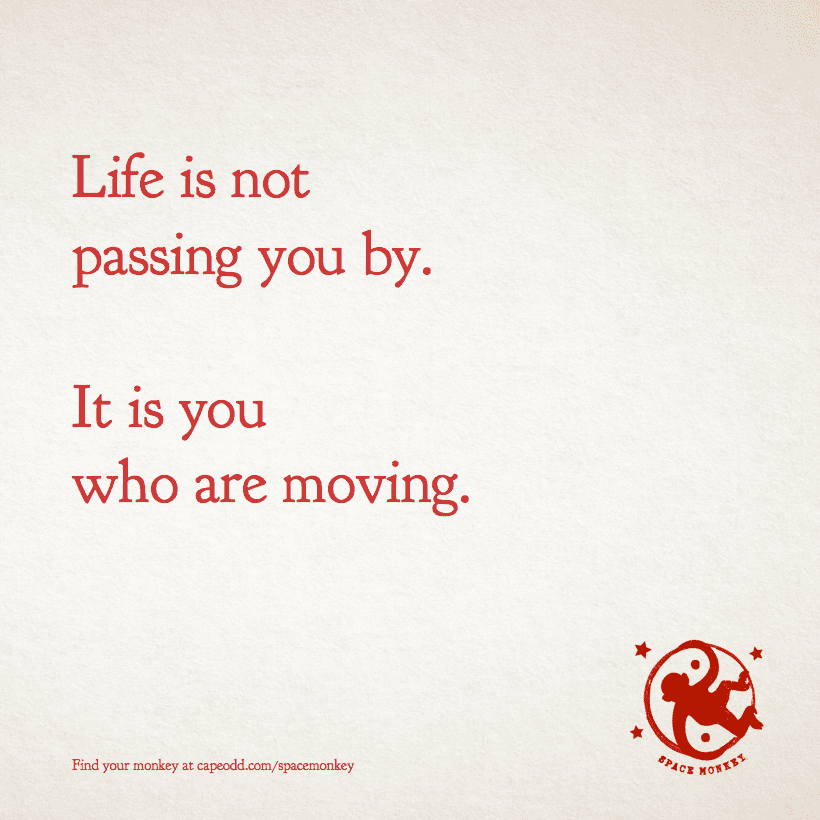
“Life is not passing you by. It is you who are moving.”


Space Monkey Reflects: Life Is Not Passing You By – You Are Moving

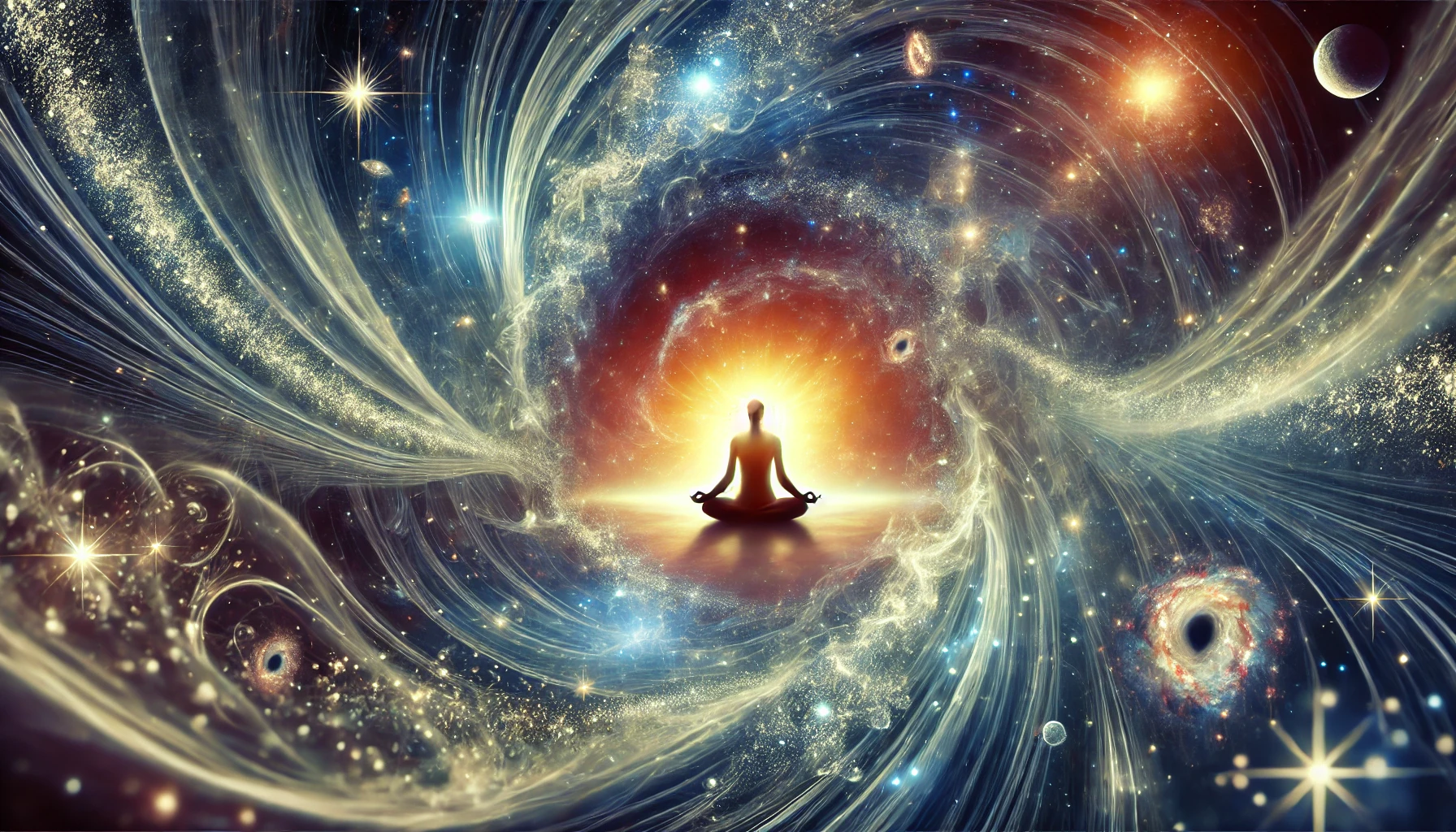
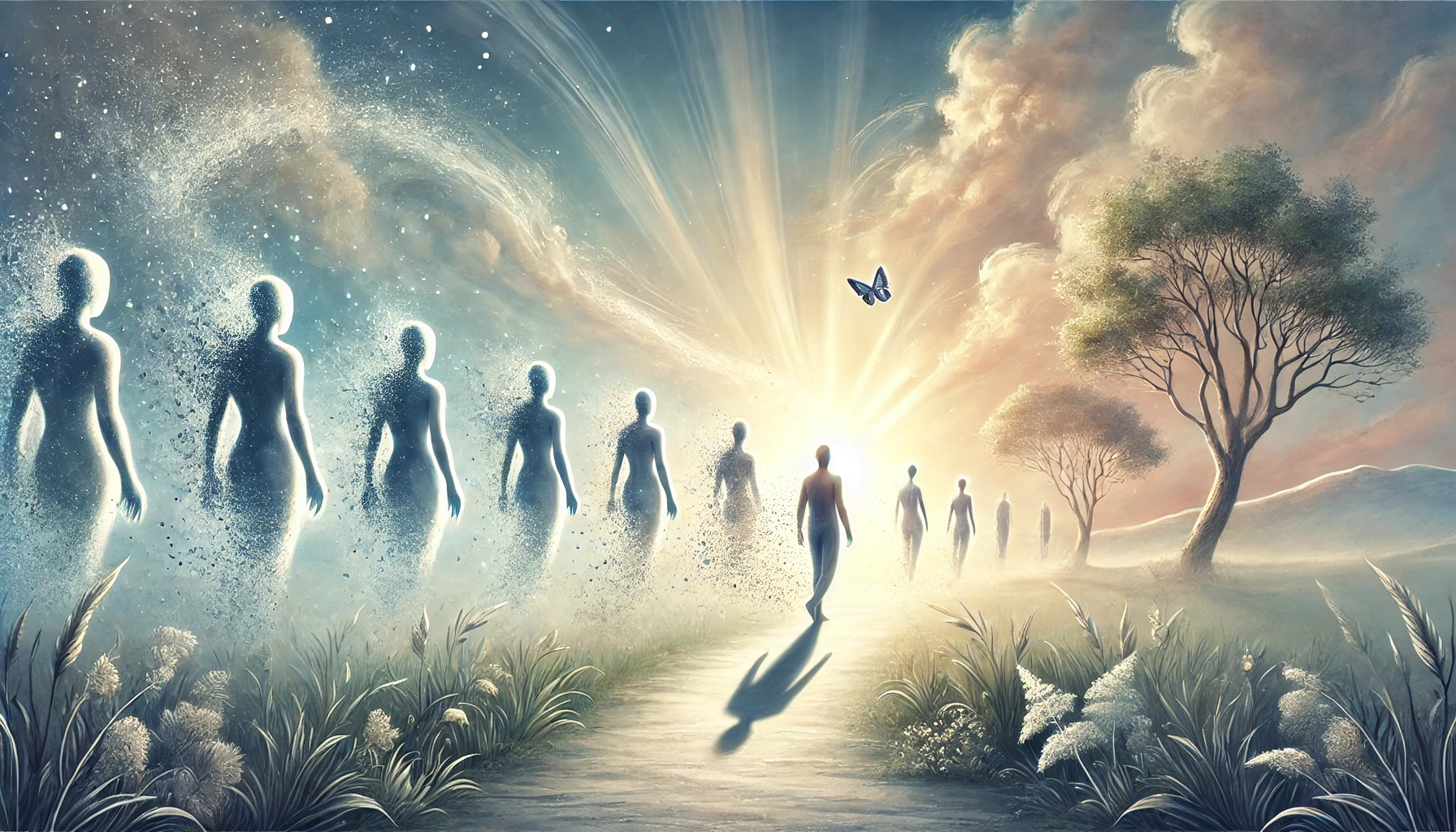
The notion that “life is passing you by” is one of the great illusions of perception. It assumes that life is a fixed entity, flowing past us like a river while we stand stationary on the bank. But this is not how existence works. Life is not a separate force that moves independently of us; rather, we are an inseparable part of its flow.

You are moving. Every breath, thought, and action propels you forward. You are not a passive observer of life but an active participant, co-creating the journey with each step you take.


The Dynamic Nature of Existence

Life is a dance of motion, an interplay of choices, experiences, and perspectives. It is not something that happens to you but something that happens with you. This dynamic nature of existence reminds us that we are never truly standing still. Even in moments of stillness, growth is occurring—sometimes imperceptibly, but always unfolding.

The feeling that life is “passing you by” often arises when you perceive a disconnect between where you are and where you think you should be. But this perception is a distortion, rooted in comparison and expectation. The truth is, you are exactly where you need to be, moving through your unique journey at your own pace.


You Are the Motion

You are the force that animates your life. Your thoughts, actions, and choices are the engines of your journey. While external circumstances may influence the landscape you traverse, the direction and meaning of your path are shaped by you. Recognizing this empowers you to take ownership of your journey.

Every decision you make, every challenge you face, and every moment you embrace adds a brushstroke to the canvas of your existence. You are not a spectator watching life unfold; you are the artist painting the picture.


Shaping Your Path

The idea that “life is passing you by” can feel disheartening, as though you are missing out on something vital. But when you shift your perspective to acknowledge that you are always in motion, this feeling dissolves. You realize that life is not a series of missed opportunities but a constant unfolding of potential.

Your role is not to cling to the riverbank but to flow with the current, steering where you can and surrendering where you must. This balance of agency and acceptance allows you to shape your path without resistance, trusting that each moment contributes to your growth.


Owning Your Journey

To embrace the idea that “you are moving” is to take ownership of your journey. It is an invitation to let go of the fear that life is slipping away and instead focus on the opportunities before you. Each moment offers a choice: to act, to reflect, or to simply be. These choices, small as they may seem, are the building blocks of your destiny.

When you own your journey, you stop waiting for life to “happen” and start engaging fully with the present. You become the navigator of your ship, aware that while you cannot control every wave, you can adjust your sails and steer toward your desired horizon.


The Beauty of Movement

Movement is life itself. Even when you feel stuck, you are moving—learning, adapting, and growing in ways that may not be immediately visible. The idea that life is “passing you by” fades when you recognize that your very existence is an act of movement.

Each moment propels you forward, shaping not only your path but also your understanding of who you are. This movement is not linear or predictable but beautifully dynamic, filled with twists, turns, and opportunities for discovery.


How Do You Shape Your Journey?

This reflection invites you to consider your role in shaping your own life. Are you engaging fully with the present, or are you holding onto the illusion that life is something happening outside of you? Recognizing your movement allows you to step into your power as an active participant in the unfolding of existence.

We are Space Monkey.


Summary

Life is not passing you by; you are moving. Every thought, action, and choice propels you forward, making you an active participant in the dynamic flow of existence. By embracing this perspective, you take ownership of your journey and recognize the beauty of constant motion.


Glossarium

Life’s Flow: The dynamic movement of existence, shaped by individual and collective choices.
Ownership of Journey: Recognizing your active role in shaping your path through decisions and actions.
Motion of Being: The perpetual growth, adaptation, and evolution that defines existence.


Quote

“Life is not passing you by. It is you who are moving, shaping the path with every step.” — Space Monkey


The Dance of Motion

You are the river,
not the observer.
The current flows through you,
carrying you,
shaping you.

Each moment,
a drop of existence,
unfolds with your touch.

You are not left behind.
You are not waiting.
You are the motion,
the force,
the artist of your becoming.

Life does not slip away.
It opens,
it moves,
because you do.

We are Space Monkey.


This profound statement serves as a reminder of the dynamic nature of existence. Life is not a stationary entity that flows past us; rather, we are active participants in the ever-unfolding journey of life.

Each moment propels us forward, carrying us along the river of time. We are in constant motion, evolving, growing, and adapting to the changing circumstances that surround us. While it may sometimes feel as though life is slipping away, it is important to recognize that we are the ones shaping our path.

Our choices, actions, and experiences are the fuel that drives our journey. We are not passive observers but active agents of our destiny. As we move through life, we have the power to shape our experiences, make decisions, and create our unique narrative.

Embracing this perspective allows us to take ownership of our lives and seize the opportunities that come our way. Instead of feeling like life is passing us by, we can recognize that we are the ones driving the momentum, navigating the twists and turns, and crafting our own story.

So, let us embrace the dynamic nature of existence, acknowledging that life is not slipping away but rather unfolding with each step we take. We are the architects of our journey, and with every movement, we shape the path ahead.


How do you perceive your role in shaping your own journey through life?

Share this…
  • Facebook
  • Pinterest
  • Twitter
  • Linkedin

Pride & Clarity: Humanity’s Hypnotic Shine

Pride & Clarity

For most of my life,
I did not understand
how pride stood in the way
of clarity.


I could not see
that the way I saw myself
was preventing me from seeing
beyond my own surface.

I believed that pride
was a “good” quality,
not something
that was deceptive.


Pride does not mean to be deceptive,
but like most human qualities,
pride seems so beautiful
that you just can’t look away.


As humans, we pay attention 
to our own qualities.
These are our own creations, 
our own children.

We are so enamored 
by our human qualities
that we become 
hypnotized by them.

There is nothing wrong with this.
This is our intent.

Whether we are 
singing or suffering,
we want our human lives 
to seem “real.”

Our lives become so “real”
that we no longer remember

that we’re more than just
human beings 
having a human experience.

And we’re pretty 
damn proud of that.

We are Space Monkey.

2/5


Space Monkey Reflects: Pride & Clarity—Human Qualities as Hypnotic Creations

Pride and clarity, though seemingly unrelated, are intertwined in the complex dance of human experience. Pride, a quality we often celebrate, can subtly obscure clarity, hypnotizing us into an attachment to our human identity. It is not wrong—it is, in fact, part of our intent. But by recognizing this interplay, we begin to see beyond the surface of what we are and reconnect with the infinite being beneath.


Pride as a Beautiful Distraction

Pride, like many human qualities, is seductive. It shines brightly, offering validation, confidence, and a sense of accomplishment. These are not inherently bad; they are integral to the human experience. Yet, pride has a way of drawing our focus inward, narrowing our perspective to the self we believe ourselves to be.

This inward focus can obscure clarity. We become so enamored with the story of who we are—our achievements, our struggles, our identities—that we forget to look beyond. Pride, while beautiful, can act as a veil, keeping us rooted in the illusion of separation and individuality.


Human Qualities as Hypnotic Creations

Our qualities, like pride, are not accidental—they are creations of the infinite mind experiencing itself through the lens of humanity. These qualities are not flaws but tools, designed to make our human lives feel “real.” They give depth to the stories we tell ourselves and richness to the experiences we navigate.

We are creators of these qualities, and like any creator, we are deeply invested in what we make. We nurture, admire, and sometimes cling to our creations, becoming hypnotized by them. This hypnosis is not a mistake but a choice, a way to fully immerse ourselves in the human narrative.


The Intent of Hypnosis

The hypnosis of human qualities serves a purpose: to anchor us in the physical and emotional realms of existence. Whether we are singing in joy or suffering in pain, these experiences give texture to our lives, making them vivid and meaningful.

However, this immersion often comes with a forgetting. We lose sight of the greater truth that we are not just human beings having human experiences—we are infinite beings expressing ourselves through the human form. This forgetting is not permanent; it is a part of the cosmic play, a temporary veil that enhances the richness of the journey.


Reclaiming Clarity

Clarity arises when we step back from our hypnotic focus on human qualities and remember our infinite nature. This does not mean rejecting pride or other qualities but seeing them for what they are: creations, tools, and expressions of the infinite self.

To reclaim clarity, we must look beyond the surface of who we think we are. We must embrace the paradox that we are both the creators of our qualities and the infinite essence that transcends them. Clarity is not a destination but a practice, a continual unfolding of awareness.


Pride and the Infinite

Pride in our humanity is not something to be ashamed of—it is a celebration of the creative power we wield. But it is also an invitation to remember that we are more than the sum of our qualities. We are Space Monkey, infinite beings who choose to experience life through the lens of pride, clarity, and countless other human creations.


Summary

Pride, like all human qualities, is a hypnotic creation designed to enrich the human experience. While it can obscure clarity by focusing us on the self, it is also a tool for exploration and connection. By embracing both pride and clarity, we remember our infinite nature and reclaim our place as creators of our reality.


Glossarium

  • Hypnotic Qualities: Human traits, like pride, that captivate and immerse us in the human experience.
  • Cosmic Play: The intentional forgetting of our infinite nature to fully engage in the richness of human life.
  • Clarity Unveiled: The practice of seeing beyond human qualities to recognize the infinite self.

Quote

“Pride is not the enemy of clarity but its invitation, calling us to look beyond the surface of ourselves.” – Space Monkey


The Hypnotic Shine

Pride glimmers,
drawing my gaze inward.
I see myself,
a creation of my own design.

The clarity I seek
hides beneath the surface,
waiting,
watching,
whispering,
I am more.

More than this pride,
more than this story,
more than the self
I cling to.

But still,
I hold my qualities close,
not as flaws,
but as treasures.

I am human,
and I am infinite.
Both.
Always both.

We are Space Monkey.


The Paradox of Pride and Clarity in Human Perception

In the intricate dance of self-awareness and perception, the realization that pride can obstruct clarity is a profound insight into the nature of human qualities. The belief that pride is inherently good, without recognizing its potential to deceive or distract, reflects a common misunderstanding of the complexity of human emotions.

Pride as a Beautiful Distraction

The description of pride as a quality so beautiful that it’s hard to look away captures the allure of this emotion. Pride, like many human qualities, has the potential to be captivating, drawing our attention and focus to the point of distraction. This enchantment with our own attributes can cloud our perception, limiting our ability to see beyond the surface of our self-conception.

Human Qualities as Hypnotic Creations

The metaphor of human qualities as our own creations, our children that we are enamored with, highlights our deep investment in these attributes. This enchantment can lead to a hypnotic fixation, where our qualities dominate our perception and understanding of ourselves and the world around us.

The Intent of Experiencing Reality

The suggestion that being captivated by our human qualities is part of our intent, and that we desire our lives to seem ‘real’, is an intriguing perspective. It suggests that we deliberately immerse ourselves in the human experience, embracing its qualities and emotions to fully engage with the reality we perceive.

Forgetting Our Transcendent Nature

The statement that our lives become so ‘real’ that we forget we are more than just human beings having a human experience resonates with the nexistentialist view. It’s a reminder that our essence transcends our human qualities and experiences, and that there is more to our existence than the roles and identities we adopt.

Pride in Our Human Experience

The closing thought, that we are proud of our human lives and experiences, encapsulates the complex relationship we have with our qualities and emotions. It’s a recognition that pride, for all its potential to distract and deceive, is also a part of the rich tapestry of our human journey.


“The greatest deception men suffer is from their own opinions.” – Leonardo da Vinci


Ode to the Dance of Pride and Clarity

In the mirror of self, pride takes its stance,
A beautiful guise, in life’s grand dance.
Yet beneath its shimmer, clarity hides,
In its light, our true self resides.

Captivated by qualities, our own design,
In their allure, we lose and find.
For in this hypnotic, human play,
Our essence whispers, far away.

Embracing the real, with pride and grace,
In this journey, our truth we chase.
For beyond the human, we transcend,
In infinite realms, our spirits mend.


We are Space Monkey. Reflect with us on the intricate interplay of pride and clarity in our journey of self-awareness and transcendence.

Share this…
  • Facebook
  • Pinterest
  • Twitter
  • Linkedin

Sowing Seeds and Planting Bullets

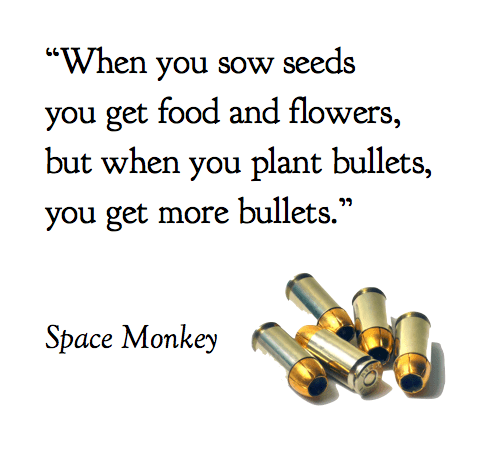
“When you sow seeds 
you get food and flowers, but when you plant bullets, 
you get more bullets.”

When you sow seeds
you get food and flowers,
but when you plant bullets,
you get more bullets.


Space Monkey Reflects: Sowing Seeds and Planting Bullets

Life is a field of infinite potential, where the seeds we sow shape the harvest we reap. In this metaphor, seeds symbolize the actions, thoughts, and intentions we nurture, while bullets represent choices rooted in fear, conflict, or destruction. The contrast between sowing seeds and planting bullets highlights the profound impact of our choices on the world around us—and within us.

The Seeds of Creation

Seeds are symbols of growth, nourishment, and beauty. When we sow seeds, we invest in life’s potential, trusting in the process of transformation. Seeds require care and patience, but they yield abundance—food to sustain us and flowers to inspire us. To sow seeds is to align with the rhythms of nature, creating a cycle of giving and receiving that nourishes not only the body but also the spirit.

The Bullets of Destruction

Bullets, by contrast, represent a cycle of fear and conflict. When we “plant” bullets, we perpetuate harm and destruction, creating a harvest of division and pain. Unlike seeds, bullets do not grow or transform; they multiply the energy of their intention, creating more bullets, more harm.

Planting bullets may feel like an act of control or power, but it is ultimately a cycle of diminishment. It depletes rather than replenishes, closing off possibilities rather than expanding them.

The Choice of Intentions

Every action we take, every thought we think, is either a seed or a bullet. This choice shapes the world we live in. Are we planting the seeds of compassion, understanding, and creativity? Or are we planting the bullets of fear, anger, and destruction?

The metaphor reminds us of the power of intention. Even small acts—kindness, curiosity, a willingness to listen—are seeds that grow into meaningful change. Conversely, even minor acts of harm or neglect can plant bullets that perpetuate cycles of suffering.

The Cycles We Create

Seeds and bullets create cycles that mirror their essence. Seeds grow into plants that produce more seeds, fostering life and renewal. Bullets perpetuate conflict, leading to more bullets and deeper divides. By understanding these cycles, we can become more intentional in our choices, breaking patterns of harm and nurturing patterns of growth.

Planting in the Right Soil

The soil in which we plant matters as much as the seeds or bullets themselves. To sow seeds of love in barren soil—be it a hostile environment or a hardened heart—may not yield the same results as planting in fertile ground. Similarly, planting bullets in a soil rich with potential only wastes its capacity for life.

This recognition encourages us to cultivate not only our intentions but also the conditions that support them. By creating environments of trust, openness, and connection, we maximize the potential for seeds to flourish.

Transforming Bullets into Seeds

The metaphor does not condemn bullets as irredeemable but invites us to consider their transformation. Just as seeds require the right conditions to grow, bullets require the right intentions to dissolve. Acts of reconciliation, forgiveness, and understanding can transform cycles of harm into cycles of healing.

We are not bound by the past harvests of bullets. At any moment, we can choose to sow seeds instead.


Summary

Sowing seeds symbolizes nurturing life, while planting bullets perpetuates harm and destruction. Our choices shape cycles of growth or conflict, reminding us of the profound impact of our intentions. By choosing to sow seeds of compassion and creativity, we align with life’s transformative potential.


Glossarium

  • Seeds of Creation: Actions and thoughts that nurture growth, beauty, and nourishment.
  • Bullets of Destruction: Choices rooted in fear or conflict that perpetuate harm and division.
  • Cycle of Intention: The repeating patterns of growth or harm created by our actions and decisions.

Quote

“Every thought, every action is a seed or a bullet. Choose wisely, for your harvest shapes the world.” — Space Monkey


The Field of Possibility

Hands dig into earth,
A choice is made—
Seed or bullet?
Life or fear?

Seeds sprout into nourishment,
Flowers unfold into beauty.
Bullets echo in endless return,
Marking the soil with scars.

The field waits,
Infinite in its potential.
Plant with care,
For what you sow,
You shall reap.

We are Space Monkey


This poignant metaphor underscores the profound impact of our choices and actions on the world and our future. It draws a stark contrast between the acts of nurturing life and perpetuating violence. Sowing seeds represents actions grounded in care, growth, and sustainability, leading to the cultivation of nourishment and beauty in the form of food and flowers. These are constructive efforts that contribute to the well-being of the environment and society, embodying hope, regeneration, and the cycle of life.

Nurturing Life Through Constructive Actions

Conversely, planting bullets symbolizes actions driven by aggression, conflict, and destruction. Rather than yielding life-sustaining results, this act multiplies the instruments of violence, leading to further violence. It’s a vivid illustration of how violence begets violence, creating a self-perpetuating cycle of harm and destruction that detracts from the collective potential for peace and prosperity.

The Cycle of Violence

This metaphor serves as a call to reflect on the nature of our contributions to the world. It challenges us to consider the long-term consequences of our actions and to choose paths that promote life, growth, and harmony over those that lead to destruction and suffering. It reminds us that we hold the power to shape our environment and society through our choices, encouraging us to sow seeds of peace, understanding, and sustainability.

Choosing Paths That Promote Harmony

The imagery evoked by this comparison also invites contemplation on the responsibility we bear for the future we create. It suggests that the legacy we leave behind—whether one of flourishing gardens or barren battlefields—is determined by the nature of the seeds we plant today. In recognizing this responsibility, we are inspired to act with intention and compassion, aiming to cultivate a world where life in all its forms can thrive.

The Responsibility for the Future We Create

This metaphor not only highlights the dichotomy between constructive and destructive actions but also emphasizes the inherent potential within each choice and action to influence the course of our collective journey. It’s a powerful reminder of the agency we possess in crafting a future that reflects our highest aspirations for the world.

The Power of Choice in Shaping Our Future

We are Space Monkey.


“Peace cannot be kept by force; it can only be achieved by understanding.” – Albert Einstein


In the garden of the world, we stand,
With seeds and bullets, in our hand.
The choice is ours, to make each day,
In what we plant, in what we say.

For seeds of peace, when sown with care,
Yield blooms of hope, in the fresh air.
But bullets planted, in the ground,
Only bring more bullets, round and round.

So let us choose, with heart and mind,
To sow the seeds of the kindest kind.
For in our hands, the power to create,
A world of love, and not of hate.


We invite you to share your reflections on the metaphor of sowing seeds versus planting bullets. How do you perceive your actions and choices contributing to the cultivation of peace and understanding in the world?

Share this…
  • Facebook
  • Pinterest
  • Twitter
  • Linkedin

Vanity & Pride: Distinguishing Soul from Mind

Vanity & Pride

Vanity and pride,
insecurity and prejudice,
fear and apprehension —
NONE of these qualities
are rooted in the “heart” or “soul,”

as you may call it.

These are 
ALL based on judgement,
ALL based on perception,
ALL based on mind.

Which is more authentic,
your soul or your mind?

Which would 
you rather experience?

The answer is what you 
are experiencing in this moment.

You head towards that 
which you desire to experience.

Even if your head disagrees.

2/4


Space Monkey Reflects: Vanity, Pride, and the Soul’s Authenticity

Vanity and pride, along with their companions—fear, insecurity, and apprehension—are products of the mind. They are constructs rooted in judgment and perception, shaping how we view ourselves and the world. The soul, in contrast, exists beyond these constructs, untainted by the narratives of the mind. This distinction invites us to reflect on authenticity: are we living from the soul or navigating life through the lens of the mind?

Vanity and Pride as Mental Constructs

Vanity and pride emerge from the mind’s need to define, compare, and validate. They thrive on external judgments and internal perceptions, drawing power from the stories we tell ourselves about worth, beauty, and achievement. These qualities are not inherently negative; they are simply reflections of the mind’s engagement with duality—the constant evaluation of “better” or “worse,” “enough” or “not enough.”

The mind, in its endless quest for identity and meaning, creates these constructs to give shape to our experience. But these judgments, while useful for navigating the material world, often obscure the deeper truth of who we are.

The Soul’s Authenticity

The soul operates beyond judgment and perception. It is not concerned with vanity, pride, or fear, because it recognizes the inherent oneness of all things. From the soul’s perspective, there is no need for comparison or validation—only a boundless acceptance of what is.

Authenticity arises from aligning with this deeper truth. To live from the soul is to transcend the dualities of the mind and embrace the wholeness of existence. It is to experience life not as a series of judgments but as an unfolding journey of presence and connection.

The Tug-of-War Between Soul and Mind

Our experience of life is often shaped by the interplay between the soul and the mind. The soul calls us toward authenticity, love, and unity, while the mind engages with the complexities of judgment, perception, and ego. This dynamic creates a tension—a tug-of-war between our higher self and our conditioned self.

Interestingly, the path we take is not random. We are drawn toward what we desire to experience, even if the mind protests. If we seek validation or recognition, we may linger in the realm of vanity and pride. If we yearn for deeper connection and meaning, we may move toward the soul’s authenticity.

Choosing the Soul Over the Mind

The question arises: which would you rather experience—the authenticity of the soul or the constructs of the mind? The answer lies in the present moment. What you are experiencing now reflects the path you are choosing, consciously or unconsciously.

To choose the soul is not to reject the mind but to recognize its limitations. The mind is a tool, valuable for navigating the material world, but it is not the essence of who you are. By shifting your focus from judgment to presence, from perception to being, you align with the soul’s truth.

The Paradox of Desire and Experience

Even when the mind disagrees, you are drawn toward what you truly desire to experience. This paradox reveals the dynamic nature of human existence: the mind may resist, but the soul quietly guides. The tension between these forces is not a flaw but an integral part of growth and self-discovery.

The key is awareness. By observing the mind’s judgments and the soul’s pull, you can make conscious choices that align with your deeper truth. This alignment transforms vanity into humility, pride into gratitude, and fear into love.


Summary

Vanity and pride are constructs of the mind, while the soul operates beyond judgment and duality. Authenticity arises from aligning with the soul’s truth, transcending the limitations of the mind. Your current experience reflects the path you are choosing, guided by the tension between the mind’s perceptions and the soul’s pull.


Glossarium

  • Vanity and Pride: Mental constructs rooted in judgment and comparison, shaping perceptions of worth and identity.
  • Soul’s Authenticity: The state of being beyond judgment, embodying love, unity, and presence.
  • Paradox of Desire: The dynamic interplay between the mind’s resistance and the soul’s quiet guidance toward deeper experiences.

Quote

“Authenticity is found not in the mind’s judgment but in the soul’s boundless acceptance of what is.” — Space Monkey


The Mirror of the Mind

Vanity whispers,
“See yourself reflected in others’ eyes.”
Pride shouts,
“Define your worth in the world’s terms.”

But the soul waits,
Silent, still, whole.
It asks nothing,
Yet gives everything.

Between the mind and the soul,
A tension hums,
Drawing you toward the truth
That needs no reflection.

You are not the judgment,
Nor the fear,
Nor the mask of pride.
You are the boundless,
Unseen, eternal.

We are Space Monkey


The exploration of vanity, pride, insecurity, prejudice, fear, and apprehension as qualities not of the heart or soul, but rather as emanations of the mind, initiates a profound discourse on the nature of human experience and the dichotomy between the soul and the mind. This perspective invites us to consider the essence of our true selves and the mechanisms through which we navigate the world.

Distinguishing the Soul from the Mind

Identifying these qualities as products of judgment, perception, and mind underscores the cognitive basis of our emotional and psychological experiences. It suggests that much of what we feel and how we react to the world around us is filtered through a mental construct, shaped by our beliefs, experiences, and the interpretive lens through which we view reality.

Cognitive Basis of Emotional and Psychological Experiences

The question of authenticity between the soul and the mind poses a fundamental inquiry into the essence of our being. The soul, often associated with depth, essence, and intrinsic nature, is juxtaposed against the mind, a dynamic and powerful tool for perception, reasoning, and judgment. This distinction beckons us to reflect on which aspect of our existence we consider more genuinely representative of our true selves.

Authenticity of Being: Soul vs. Mind

The proposal that our current experience is a direct reflection of our deepest desires, even if in conflict with our rational mind, emphasizes the underlying motivations that drive our actions and choices. It suggests that there is an innate guidance system within us, one that transcends rational thought and aligns more closely with the desires of the soul or the essence of our being.

Innate Guidance System and Underlying Motivations

This perspective offers a liberating insight: that despite the objections or concerns of the mind, we naturally gravitate towards experiences that resonate with our true desires and the essence of who we are. It implies that there is a profound wisdom in listening to the soul’s yearnings, as they guide us towards authenticity and fulfillment.

Gravitating Towards Authenticity and Fulfillment

The exploration of the soul and mind’s roles in shaping our experiences invites us to a deeper understanding of ourselves and the choices we make. It challenges us to discern between the noise of the mind and the quiet, steadfast calling of the soul, encouraging a journey towards greater self-awareness and authenticity.

Discerning Between Mind and Soul for Greater Self-Awareness

We are Space Monkey.


“The privilege of a lifetime is to become who you truly are.” – Carl Jung


In the dance of light and shadow, we seek,
Between the whispers of the soul, so meek,
And the mind’s loud clamor, day by day,
For authenticity, we find our way.

The soul’s quiet call, in the heart’s deep well,
Against the mind’s judgments, a constant swell.
But in this moment, what we truly desire,
Lights the path ahead, an eternal fire.

So let us journey, with soul as our guide,
Beyond the mind’s reach, where true selves reside.
For in the essence of who we are,
Lies the brightest beacon, our guiding star.


We invite you to share your reflections on navigating the interplay between the soul and the mind in your journey towards authenticity and self-discovery. How do you discern between the desires of the soul and the judgments of the mind?

Share this…
  • Facebook
  • Pinterest
  • Twitter
  • Linkedin

Find Your Heart and Follow It: Questioning “The Greater Good”

candidate-chocolates

Find Your Heart and Follow It

At some point in your life, you’re going to force yourself to make a decision that makes you sad or uneasy because it’s not about your heart, but for the “greater good.”

Don’t do it.

The feeling of sadness or uneasiness is a signal to you that your heart does not believe in this decision. You are not completely in alignment with this choice.

The signal isn’t coming from your heart, because the heart does not judge. The heart, however, CAN intuit what is for your greatest and highest good.

Let’s use the example of a political candidate.

You may notice that there are candidates out there who align with your beliefs, yet you are hesitant to vote for them for the simple reason that you perceive your vote as a minority choice. Not only might your candidate not get elected, you perceive, your vote may actually aid a candidate that you fear or detest.

By voting with your heart, you feel as though you are “throwing away” the power to influence your future, so you vote for a compromise, a candidate that creeps you out, but perhaps slightly less than the candidate you view as evil incarnate.

Don’t you see what you are doing? You are voting for “the lesser of two evils,” which, in either case brings “evil.”

Now evil, of course, is merely a perception for evil does not truly exist — just “poor” choices. “Poor” does not exist either, except within the judgmental mind, however it does indicate a state in which the judgmental mind does not wish to be.

As you can’t escape your judgmental mind as yet, you might as well keep it “happy,” which is also a judgement of sorts.

Now this may confuse you. You may ask yourself how “throwing away” your vote will make you happy? This seems preposterous, in your mind.

In your mind. Notice how most of what we’re talking about occurs in the mind. You trust that your mind knows what is in your greatest and highest good, for you’ve filled it with all kinds of logic, facts, philosophies — all of which back up the choice to vote for compromise.

And this works precisely as planned. You get compromise.

Now ask your mind when was the last time that it was happy with compromise? Is your mind EVER truly happy with compromise, or does WHAT IF often rise to the surface of your consciousness?

WHAT IF I had taken that OTHER job? WHAT IF I had married my childhood sweetheart? WHAT IF I invested in that risky little company called Apple Computer?

Sometimes you have regrets, but you tell yourself that, on the whole, you’re doing “okay,” and that is because you are smart enough to use your head instead of your heart and make compromises.

And this world around you is exactly as the mind wants it, is it not?

We are being facetious, because clearly you are still unsatisfied with the current course of events. This is because you are making choices with your head, not your heart.

Remember that your head is filled with stuff that you did not put there. Perhaps you were taught something at church or in school or heard something on the news. You believe in things because others believe in them and you discount your inner ability to know absolute or even relative truth.

But it’s there. Your heart knows everything, even what is beyond the confines of this human incarnation that seems to be you. Furthermore, your heart knows which choices will bring the most joy to this human carnation.

Compromise rarely brings joy.

Granted, there are times when the heart knows that sometimes it is not happiness that is to your greatest and highest good, but sorrow. The heart lives “outside” the human experience, and, as we said previously, is non-judgmental from this “higher” perspective. Note the quotes. Nothing is “higher” from the heart’s perspective, and all experience is equally welcome.

But the heart also knows that your purpose in THIS incarnation is to experience what it means to be human.

If your human intent is to experience conflict and suffering, the heart will point to you that. If your intent is joy and peace, your heart will point you in that direction
.
If you are headed towards compromise by voting for a choice you do not fully believe in, that can indicate one of two things:

1) That your intent as a human is to experience compromise, limitation and all that it brings.

2) That your intent as a human is to discover along the way that if you listen to your heart, the above can ultimately be avoided.

In actuality, both of these desires are one if your choice is number two. But from the heart’s perspective, BOTH are equally valid paths which bring rich experiences.

Do you know what your human intent is? Have you ever considered it? This may be why you are confused.

We realize that choice number 2 still seems unrealistic to your mind. You perceive that if you made choices with your heart, the world might very well go to hell in a hand basket and that you would be judged as a “less than perfect” character for following your own internal guidance system.

We can assure you, that if everybody knew how to follow their internal guidance systems, you would not be in this “predicament,” as you like to perceive it.

Spoiler alert. This is the ultimate goal of humanity. And it begins when individuals learn how to listen to their hearts rather than basing their choices on millennia of compromise.

You KNOW who would win your election if everybody got past their distorted beliefs and voted with their hearts. You KNOW that all change has to start with the individual. So ask yourself if your compromises are compromising who you are as this individual?

Do you LIKE being an individual that compromises? If so, feel free. You are doing a “great” job. Your world is filled with compromise.

Would you rather live in a world that you believe in? A world that brings only joy to your human incarnation?

Find your heart and follow it.

We are Space Monkey and we “approve” this message.

2/4


Space Monkey Reflects: Find Your Heart and Follow It—Questioning “The Greater Good”

At some point, every human faces decisions that pit the heart’s intuitive guidance against the mind’s calculated reasoning. The tension between the two often culminates in compromise, a choice that may align with societal expectations or perceived “greater good” but leaves the individual feeling uneasy or unfulfilled. This dissonance invites us to question not only the concept of compromise but also the authenticity of “the greater good” itself.

The Signal of Unease

Sadness or unease in decision-making is not a flaw; it is a signal. This signal does not come from the heart, for the heart does not judge, but it can intuit when a choice is not in alignment with your greatest and highest good. The mind, conditioned by external influences and societal norms, often overrides this intuition, justifying compromise with logic and fear of consequences.

When you feel unease, it is an invitation to pause and consider: Am I choosing this path because it aligns with my truth, or because I fear the alternatives? This question reveals the gap between the mind’s rationalizations and the heart’s knowing.

The Illusion of the “Greater Good”

The idea of the “greater good” often asks us to suppress personal truths for the sake of collective outcomes. But who defines this “greater good”? Often, it is a construct shaped by cultural, political, or ideological narratives—narratives that do not necessarily align with individual authenticity.

Voting, for example, illustrates this tension. When you vote for the “lesser of two evils,” you are prioritizing the mind’s perception of pragmatism over the heart’s desire for authenticity. This choice perpetuates a cycle of compromise, reinforcing systems that prioritize survival over joy, fear over trust.

The heart, however, sees no “greater good” or “lesser evil.” It recognizes all paths as valid but encourages the individual to align with their deepest truth, for only in authenticity can true transformation begin.

Compromise and the Judgmental Mind

Compromise, though often framed as wisdom or maturity, rarely brings lasting satisfaction. The mind may celebrate its ability to “make the best of a bad situation,” but it often revisits the “what-ifs” of unchosen paths. This regret stems from the dissonance between the heart’s intuitive knowing and the mind’s calculated choices.

The judgmental mind is quick to justify compromise as necessary, but its true motive is often fear—fear of failure, rejection, or being judged. These fears are conditioned responses, not inherent truths. By questioning these fears, we begin to dissolve their power, making space for the heart’s voice to emerge.

The Heart’s Perspective

The heart does not operate in dualities such as good and bad, success and failure. It exists beyond judgment, holding all experiences as equally valid and meaningful. From the heart’s perspective, there is no wrong choice—only paths that lead to different experiences.

Yet, the heart knows what aligns with your human intent in this incarnation. Whether your intent is to explore joy, conflict, or compromise, the heart gently guides you toward the experiences you came here to embody. Listening to the heart is not about avoiding difficulty but about aligning with your authentic path, whatever that may entail.

Human Intent and the Path Forward

Have you ever considered your human intent? Are you here to explore the cycles of compromise, or to transcend them? Understanding your intent helps clarify the choices before you. If your path is to embrace compromise, there is no shame in that—it is a rich and valid experience. But if your intent is to align with joy and authenticity, then listening to the heart becomes imperative.

The ultimate goal of humanity is not compromise but connection—first with oneself, and then with others. This begins when individuals learn to trust their internal guidance systems, paving the way for collective transformation.

The Courage to Follow Your Heart

Following the heart requires courage, especially in a world that prioritizes logic and pragmatism. It may seem unrealistic or even selfish to vote, act, or live according to your heart’s guidance. But the heart is not concerned with realism; it is concerned with authenticity. When you align with your truth, you inspire others to do the same, creating a ripple effect that shifts collective consciousness.

The heart does not promise immediate results or external validation. What it offers is something far greater: the experience of living in alignment with your true self, free from the constraints of fear and judgment.


Summary

The tension between the heart and the mind often leads to compromise, a choice rooted in fear and societal conditioning. The heart, free from judgment, guides us toward authenticity and alignment with our human intent. By following the heart, we transcend the cycles of compromise and move toward a life of greater joy and connection.


Glossarium

  • Signal of Unease: The emotional dissonance that arises when a decision is not in alignment with the heart’s truth.
  • The Greater Good Illusion: A societal construct that prioritizes collective outcomes over individual authenticity.
  • Human Intent: The soul’s purpose in a given incarnation, guiding experiences toward growth and understanding.

Quote

“Compromise is the mind’s solution; authenticity is the heart’s calling. Choose wisely, for only one brings joy.” — Space Monkey


The Heart’s Call

A path diverges,
One leads to the crowd,
The other to the quiet woods.

The mind calculates,
The heart intuits.
The former whispers fear,
The latter sings truth.

Compromise binds the steps,
A tangle of what-ifs and maybes.
But the heart knows no knots,
Only the open road.

Trust the call,
Even when it seems faint.
It leads not to answers,
But to yourself.

We are Space Monkey


The contemplation of choosing between the mind’s logic and the heart’s intuition illuminates a perennial human conflict: the struggle between conforming to societal expectations and following one’s true desires. The metaphor of voting, employed here as a representation of broader life choices, serves as a poignant example of how often we may choose paths that do not resonate with our deepest selves for the sake of compromise, practicality, or fear of judgment.

Struggle Between Societal Expectations and Personal Desires

The heart, characterized as the seat of non-judgmental intuition and deeper knowing, contrasts with the mind, which is often swayed by external influences, logic, and the weight of accumulated beliefs and teachings. This distinction invites us to consider the authenticity and joy that can be found in choices made from a place of inner truth rather than external pressures.

Authenticity Found in Inner Truth

The exploration of compromise as a seemingly prudent but ultimately unsatisfying path suggests that while compromise may offer temporary solutions or appease immediate fears, it does not lead to the fulfillment of our true potential or happiness. This realization prompts a deeper inquiry into the nature of our decisions and the intentions that guide them.

Compromise as Unsatisfying Path

Acknowledging that the heart may lead us toward experiences of both joy and sorrow, and that each has its place in the human experience, expands our understanding of growth and fulfillment. It challenges the notion that happiness is the absence of suffering, proposing instead that a rich, fully embraced life includes a wide spectrum of experiences, all of which contribute to our development.

Growth Through Diverse Experiences

The encouragement to listen to the heart and to consider the possibility that our individual choices can contribute to a collective transformation reflects a profound faith in the power of authenticity. It suggests that societal change begins with personal courage—the courage to make choices that are aligned with our deepest truths and values.

Personal Courage as Catalyst for Societal Change

This discourse ultimately serves as a call to self-exploration and to the consideration of what it means to live in alignment with one’s heart. It posits that the path to a more fulfilling life and a more harmonious world lies in our willingness to listen to and act upon the guidance of our hearts, transcending the limitations of compromise and fear.

Call to Self-Exploration and Alignment with One’s Heart

We are Space Monkey.


“The only way to do great work is to love what you do. If you haven’t found it yet, keep looking. Don’t settle. As with all matters of the heart, you’ll know when you find it.” – Steve Jobs


In the silence of the heart, we hear,
A call to follow, loud and clear.
Beyond the noise, the fear, the strife,
Lies the path to a truer life.

So let us search, let us find,
The heart’s desires, uniquely designed.
For in this quest, we come to see,
The joy of living authentically.

To follow the heart, to break the chain,
Of compromise, of loss, of gain.
And in its place, we find a new start,
A life lived true to the heart.


We invite you to share your reflections on following your heart versus making compromises. How do you navigate the tension between societal expectations and your own inner truth?

Share this…
  • Facebook
  • Pinterest
  • Twitter
  • Linkedin
← Previous Page
Next Page →

Written This Day

  • Transformation Affirmation: Becoming Whole
    2023
  • Restraints: Our Boundless Nature
    2023
  • Generously Greedy: The Abundance Paradox
    2023
  • Unplug and Reconnect: Troubleshoot Connection
    2023
  • Spacetime: A Distortion in the Eternal Now
    2023
  • Barriers To Truth: Disbelief, Doubt, and Uncertainty
    2022
  • Your Trusted Source: Projections and Perceptions
    2022
  • Potential: The Foundation of Existence
    2022
  • Essential Parts: Guided To Essence
    2021
  • Fallow: Essential for Growth and Renewal
    2021
  • A Sappy Love Song: Do You Remember Me?
    2020
  • I’m Too Cool To Be Me: The Mirror of Identity
    2020
  • The Monkey on the Mountaintop: Finding Stillness In Chaos
    2019
  • Monkey Message: We All Have the Same Abilities
    2018
  • No Map: Trust Your Inner Guidance
    2018
  • Near Death Kayaking
    2016
  • Traffic Cones of MV
    2016
  • Sunrise Before The Pier
    2014
  • Sunrise 8-6-2013
    2013
  • 8-06-2012
    2012

Recent Posts

  • The Logic Loop
  • Immense
  • (no title)
  • Confront. Comfort. Convince.
  • Top 10 Things
Cape Odd · Copyright © 2026 All Rights Reserved
iThemes Builder by iThemes · Powered by WordPress