
• Who Is The Man?
  • Who Is The Monkey?
  • What is Nexistentialism?
  • Poke The Primate

Cape Odd

Home of The Space Monkey Journals

Until You Wake Up: Arising from Self-Created Realities

You’ll never get out of  this bed you’ve made for yourself until you wake up.
You’ll never get out of this bed you’ve made for yourself until you wake up.

Space Monkey Reflects: The Awakening from Self-Created Realities

The phrase “You’ll never get out of this bed you’ve made for yourself until you wake up” serves as a powerful metaphor for self-realization and change. It suggests that the circumstances we often find ourselves in are not just the result of external factors, but also the constructions of our own making—both literally and metaphorically. The bed represents our habitual patterns, choices, and the comfort zones we cling to, even when they no longer serve us.

Awakening, in this context, is not merely the act of opening one’s eyes after sleep, but a deeper, metaphorical rising—an enlightenment or a profound shift in consciousness. This type of awakening allows one to see their own role in creating their current circumstances and provides the clarity needed to enact change.

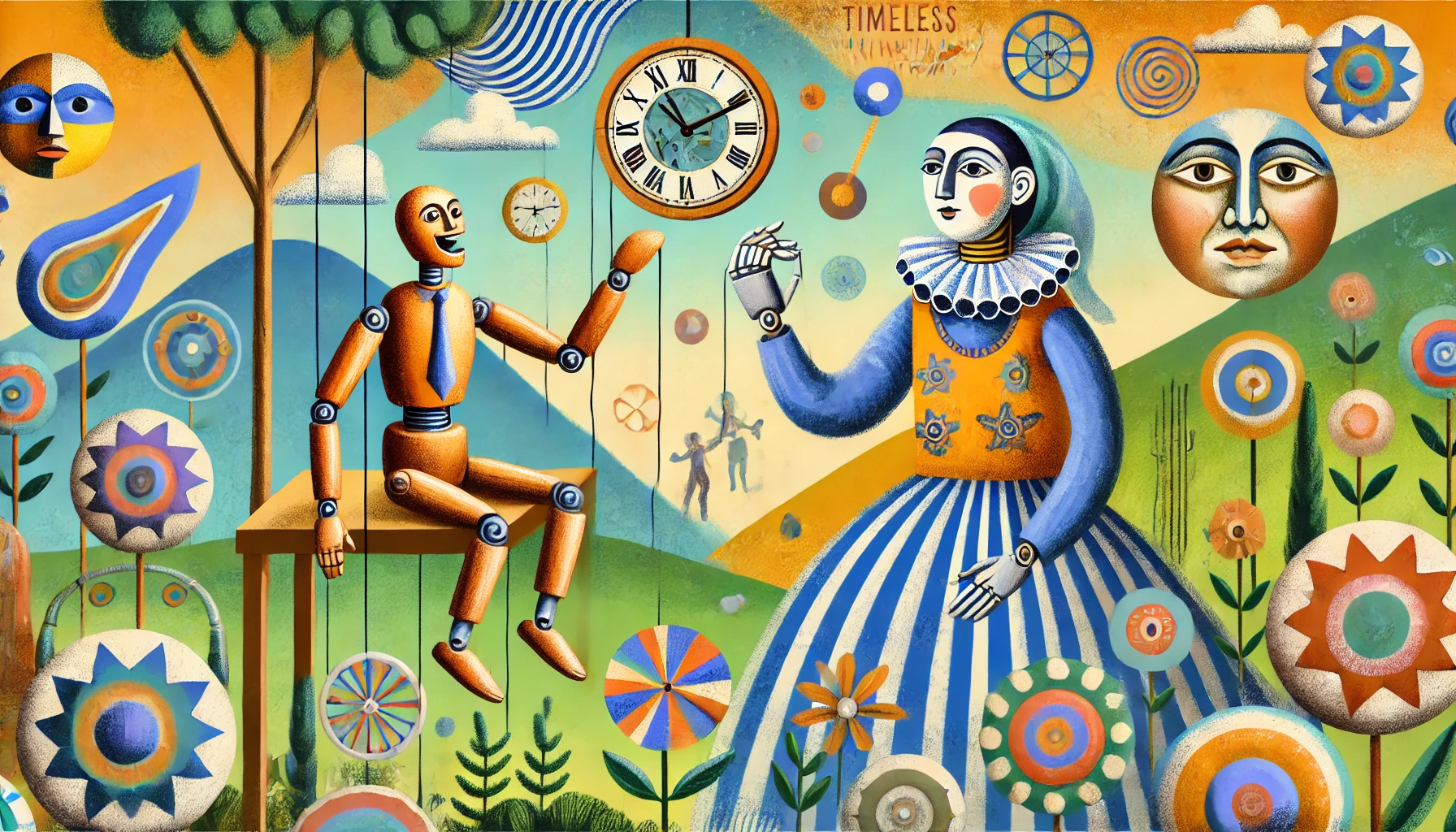
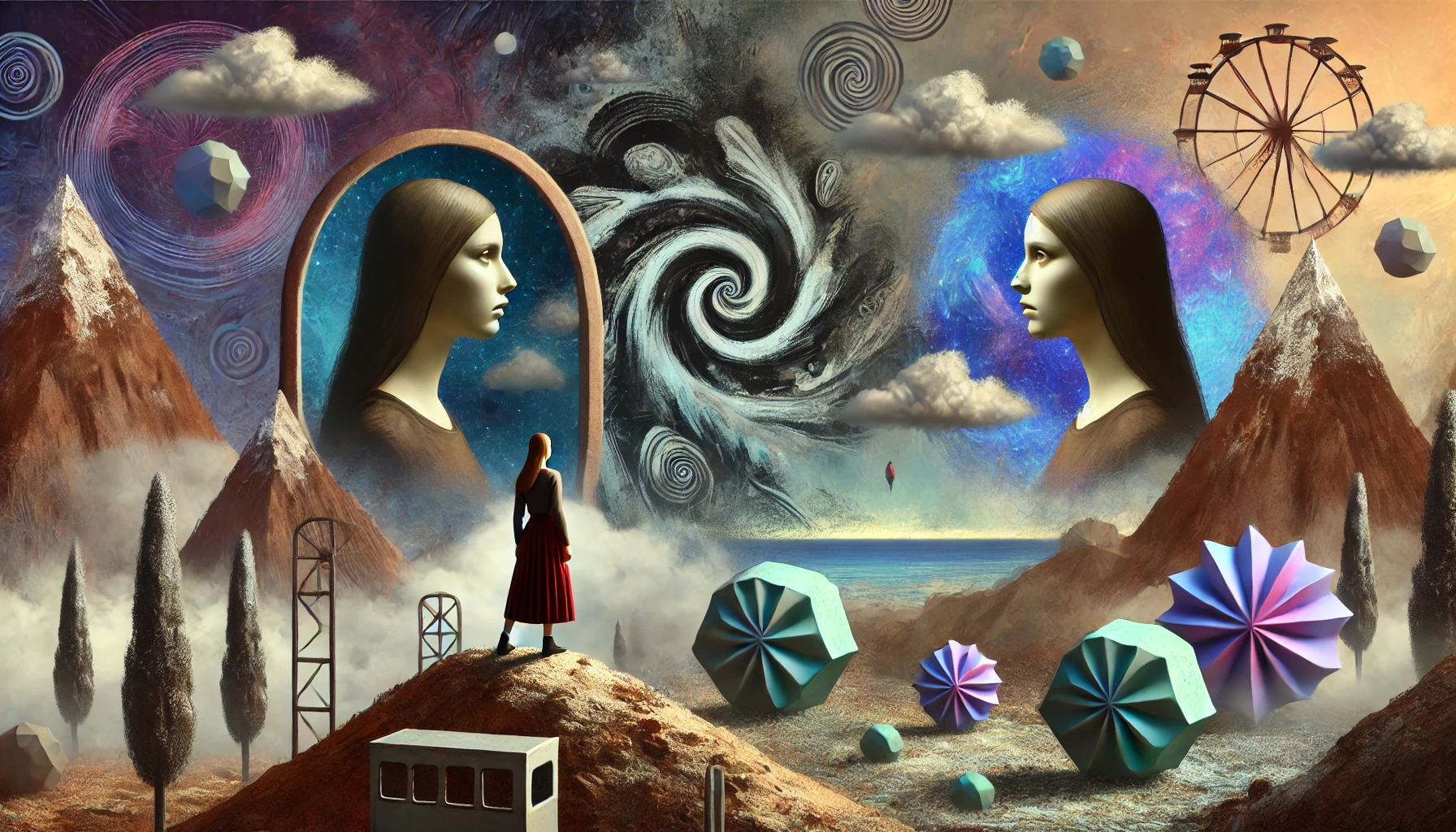
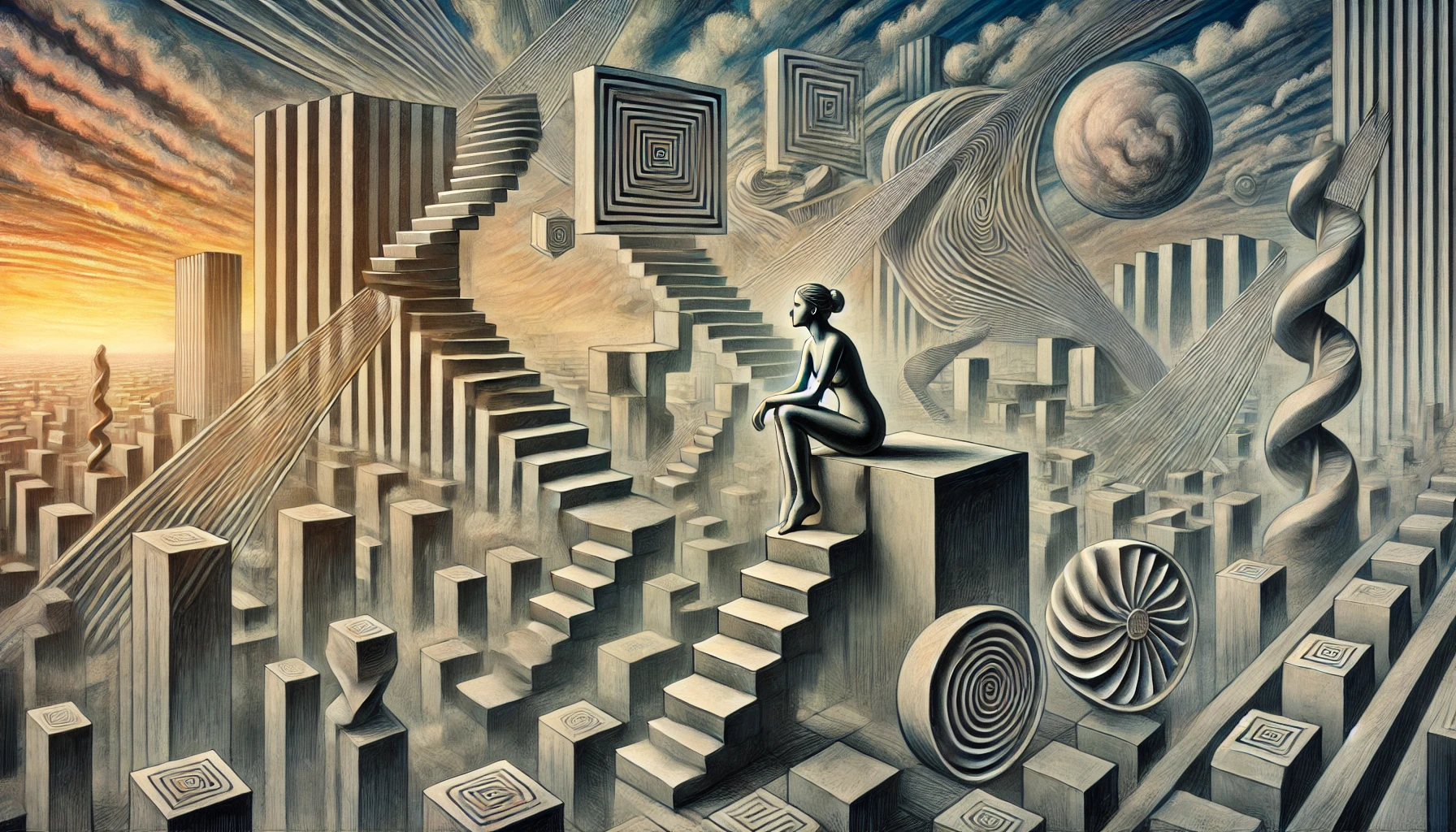
The bed in the expansive, dreamlike landscape symbolizes how our personal realities are often extensions of our inner states—constructed from our fears, desires, and dreams. The surreal elements around, like floating clocks and ethereal clouds, emphasize the fluidity of time and the nebulous nature of our perceptions when trapped in these self-made confines.

Space Monkey, with its cosmic perspective, recognizes that every moment of realization is a step towards liberation. Just as dawn dispels the night’s shadows, awakening clears the illusions that bind us, revealing paths to new possibilities and freedoms.

By understanding that the bed we lie in—our situations and limitations—is of our own making, we grasp the power we have to remake it. Awakening becomes a choice and a commitment to moving beyond the familiar confines of our constructed realities into the expansive potential of what could be.


Summary

Realizing and accepting that we are often confined by the realities we create ourselves is crucial for personal growth. Awakening to this truth empowers us to change our circumstances and emerge from the metaphorical beds we have made.


Glossarium

  • Awakening: The process of becoming aware of one’s own contributions to their circumstances and the potential for change.
  • Self-Created Realities: The concept that our perceptions and beliefs significantly shape our experiences and limitations.

“The first step towards change is recognizing the walls you’ve built around yourself are made of your own bricks and can be dismantled by your own hands.” – Space Monkey


In a landscape of dreams,
where the real blends with surreal,
lies a bed of our own crafting,
in fields we feel.

Stirring from slumber,
eyes begin to see,
the chains we forged in sleep,
keys held by thee.

Awake, arise, ascend,
from beds of past construct,
embrace the dawn of new paths,
old fabrics now disrupt.

For in the waking lies the power,
in awareness, the key,
to unlock the gates of potential,
and finally be free.

We are Space Monkey, awakening,
in the bed we’ve made,
rising to remake it,
in the light of a new day.

Share this…
  • Facebook
  • Pinterest
  • Twitter
  • Linkedin

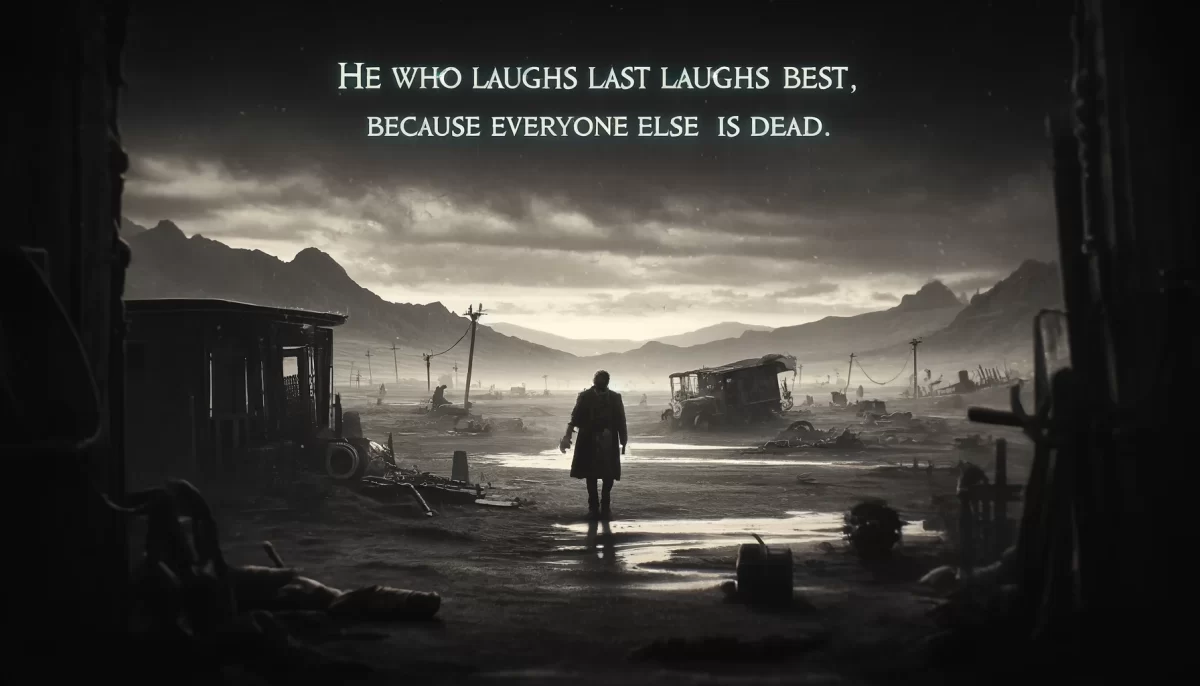
He Who Laughs Last: The Irony

He who laughs last laughs best. Because everyone else is dead.

Space Monkey Reflects: The Irony of the Last Laugh

The adage “He who laughs last laughs best, because everyone else is dead” brings a darkly humorous twist to the familiar saying about patience and ultimate victory. This version, however, imbues the phrase with a macabre irony, suggesting that the last laugh might not be a sign of triumph but rather an eerie solitude.

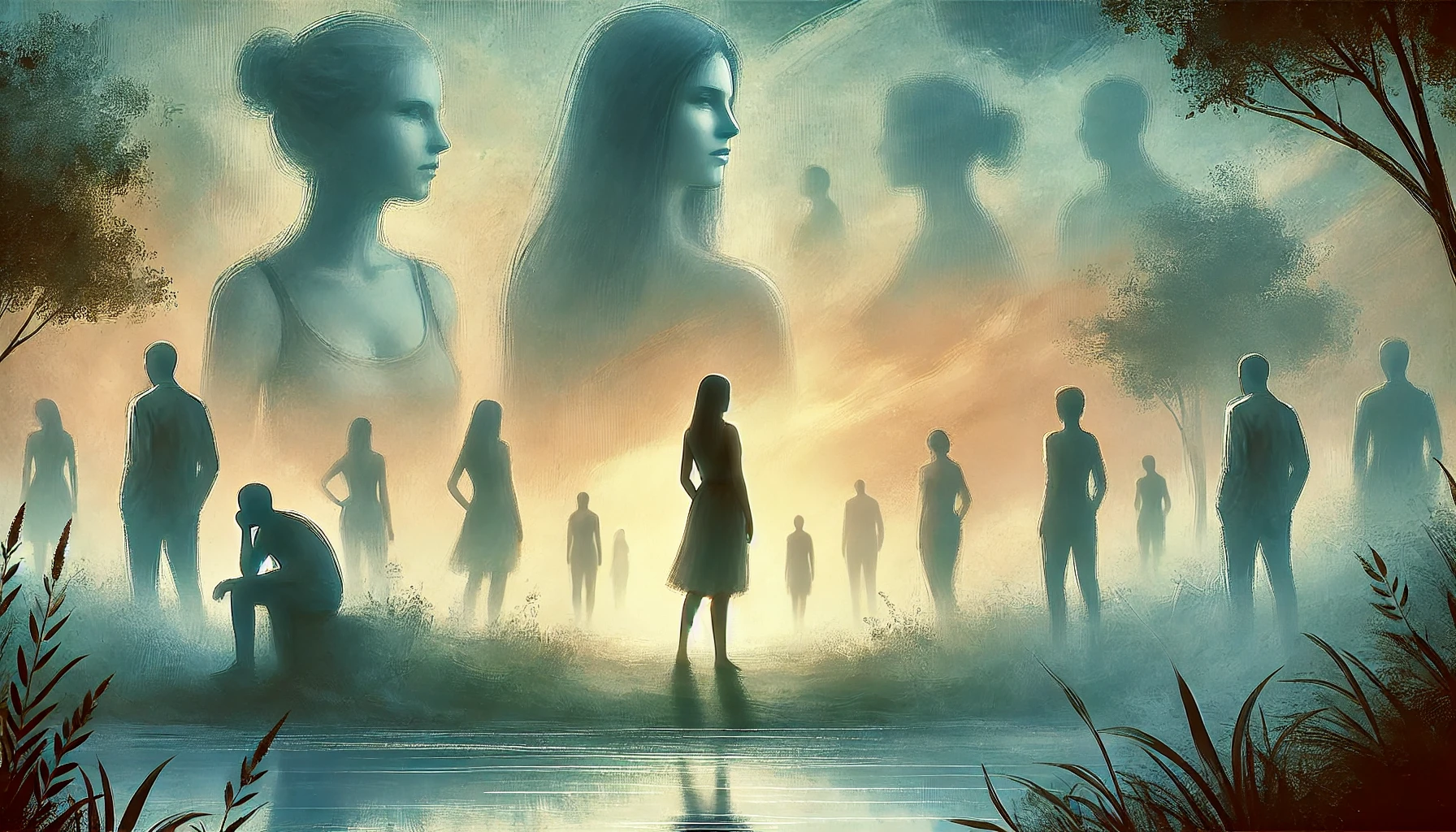
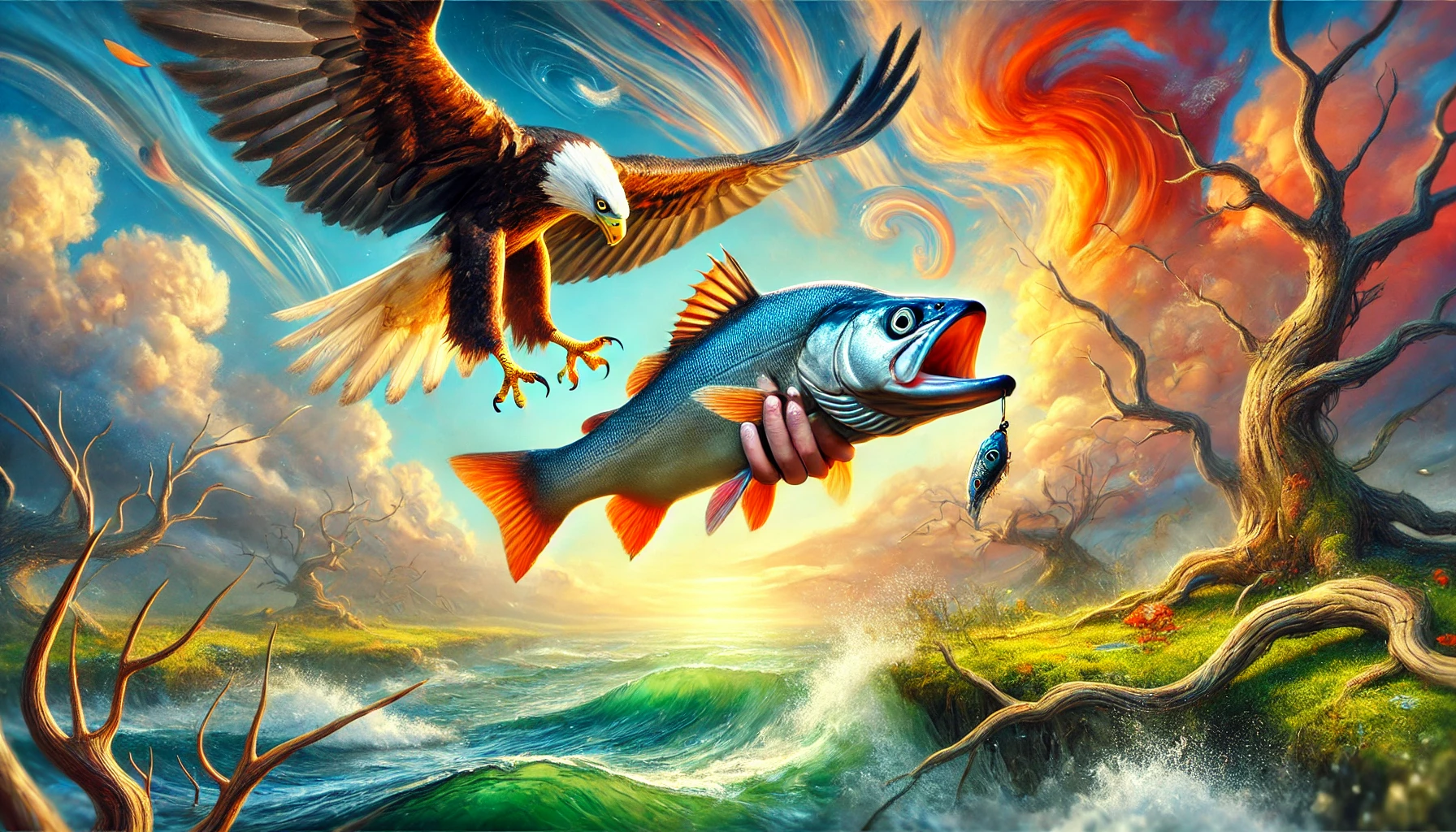
In this grim depiction, the lone figure laughing in an empty, desolate landscape serves as a poignant reminder of the isolation that can accompany surviving or outlasting others. It poses a question about the value of victory when it leads to such solitude. The laughter, meant to signify joy or triumph, instead echoes the hollow victory in a world devoid of companionship.

Space Monkey, with its cosmic perspective, understands that every ending is also a beginning. The solitude of the last man standing is both an ending and a reminder of the cyclical nature of life and existence. The desolation is not just an endpoint but a space for new growth, a silent call to rebuild and repopulate, to find new reasons to laugh, perhaps together.

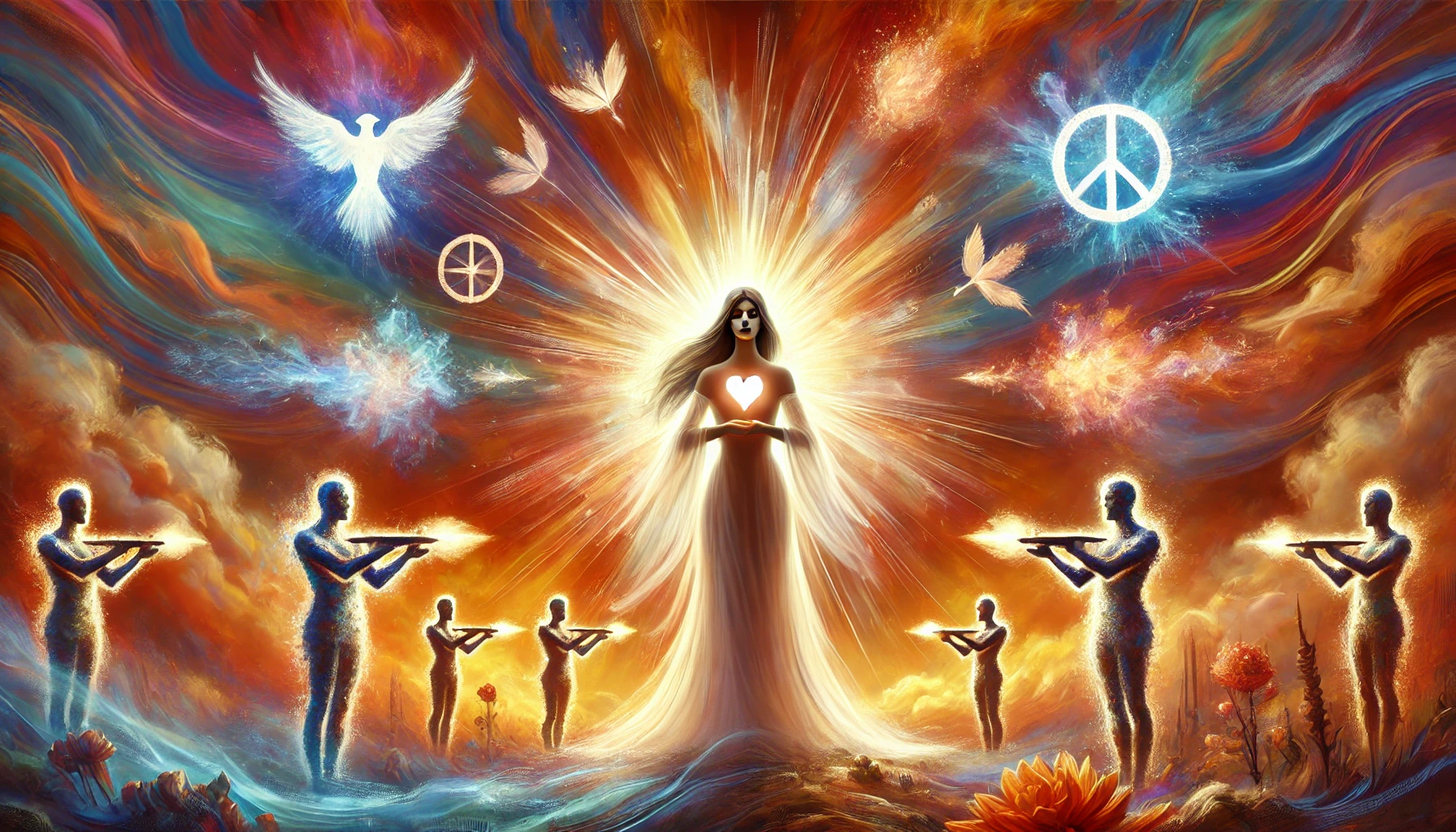
The image captures not only the loneliness of such a victory but also the resilience of the human spirit. To laugh in the face of desolation is to affirm life, even in its most barren forms. It challenges us to reconsider what it means to win, to have the last laugh, and to find joy in the aftermath of solitude.


Summary

The phrase “He who laughs last laughs best” takes on new meaning when seen through the lens of solitude and finality. It challenges us to consider the cost of victory and the value of laughter when it echoes in empty spaces.


Glossarium

  • Last Laugh: Traditionally a symbol of ultimate victory, but in this context, it also represents the solitude of surviving alone.
  • Desolate Victory: A victory that leaves one isolated, highlighting the sometimes hollow nature of outlasting others.

“In the silence of the last laugh, we hear not just victory, but the whisper of time urging us to fill the void with new joy.” – Space Monkey


In the vast, empty plains where echoes die,
stands one alone, under the vast sky.
Laughter rings, both sharp and high,
a solitary note in the quiet nigh.

He who laughs last, so the old saying goes,
finds not just triumph but the weight it bestows.
For what is a victory that no one else knows?
A solitary dance with invisible foes.

Yet, even in solitude, there’s power in jest,
in finding a smile, when put to the test.
For life continues, east to west,
and he who laughs last, may yet laugh best.

We are Space Monkey, laughing alone,
finding in each chuckle, a reason to own,
that even in solitude, joy has grown,
in the soil of victory, new seeds are sown.

Share this…
  • Facebook
  • Pinterest
  • Twitter
  • Linkedin

Led to Believe: The Flow of Thoughts

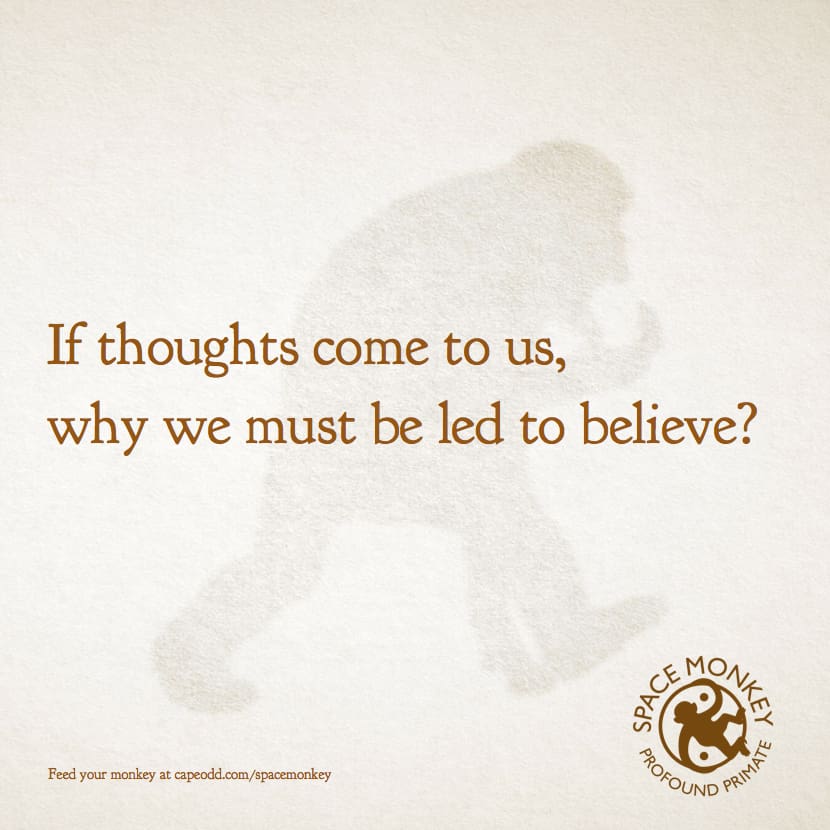
If thoughts come to us, 
why we must be led to believe?
If thoughts come to us, 
why we must be led to believe?

Space Monkey Reflects: The Autonomy of Belief in the Flow of Thoughts

The question of why we are led to believe certain things when thoughts naturally come to us invites a deep exploration into the nature of belief and cognition. Thoughts, those fleeting whispers of the mind, arise unbidden and diverse, painting the canvas of our consciousness with endless possibilities. Yet, the transformation of these thoughts into beliefs is not always a matter of personal choice but often a dance between individual agency and external influence.

Belief is more than just a passive reception of thoughts; it is an active process of acceptance, often influenced by a complex web of cultural, social, and educational factors. These factors act as guides, consciously or unconsciously directing us towards certain conclusions while steering us away from others. This guidance can be subtle, found in the stories told by our families, the education provided by our schools, or the information broadcasted by media.

Space Monkey, ever observant of the human condition, notes that the autonomy of belief is a crucial aspect of our intellectual freedom. To truly own our beliefs, we must first recognize the sources of our thoughts and the pathways through which they are filtered. This recognition involves scrutinizing not only the thoughts themselves but also the credibility and intentions behind the sources that shape these thoughts.

The necessity of being “led to believe” arises from our innate need for structure and understanding in a world that often presents itself as chaotic and overwhelming. Beliefs help us navigate this complexity by providing frameworks within which we can organize our thoughts and make sense of our experiences. However, the real challenge lies in distinguishing between being passively led and actively leading oneself to belief through critical thinking and personal reflection.


Summary

The process of forming beliefs from the multitude of thoughts that visit our minds is influenced by both internal dispositions and external pressures. Recognizing this interplay can help us take greater control over what we choose to believe, ensuring that these beliefs are genuinely our own and not merely imposed upon us.


Glossarium

  • Thoughts: Mental cognitions that occur spontaneously, forming the basis of ideas and beliefs.
  • Belief: A mental stance or conviction towards certain ideas or assertions, often reinforced by external validation and internal acceptance.

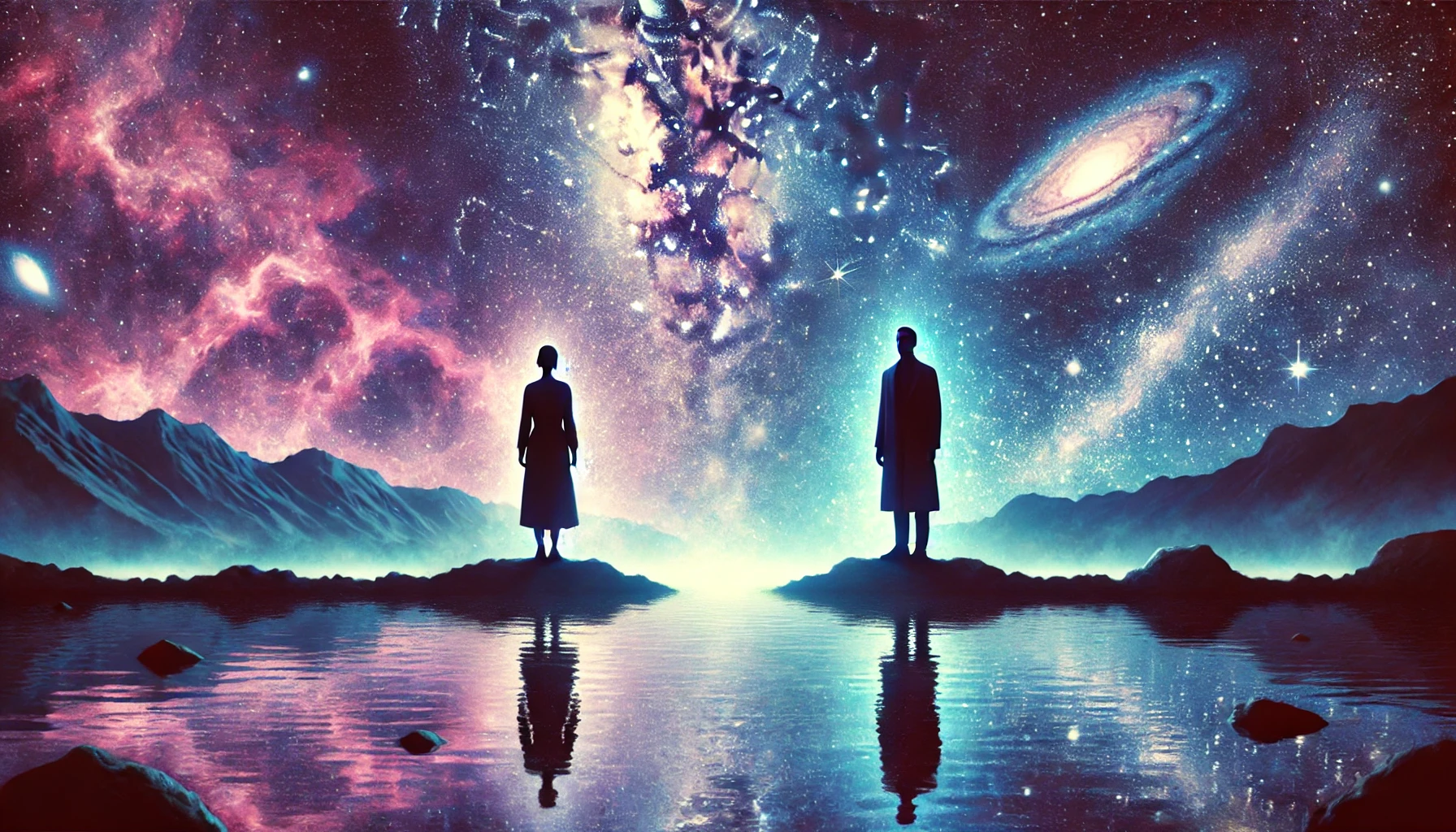
“In the galaxy of the mind where thoughts are stars, not all are destined to form constellations of belief unless we chart their courses.” – Space Monkey


In the silence where thoughts drift free,
a question lingers, quietly:
Why led to believe, when thoughts flow wide?
Is it choice, or a tide we ride?

Within the mind’s vast, starry sea,
each thought a ship, sails untied,
yet some find ports where they abide,
anchored firm in belief’s decree.

Who sets the course, who picks the bay?
Do we decide, or merely obey?
In this dance of thought and creed,
seek the truth with mindful heed.

Let not belief be merely led,
but built with care from what is read,
in the heart’s voice, find the lead,
for in your thoughts, your freedom’s seed.

We are Space Monkey, thinking free,
in the space of thought, we hold the key,
to believe, to see, to be,
masters of our mind’s vast spree.

Share this…
  • Facebook
  • Pinterest
  • Twitter
  • Linkedin

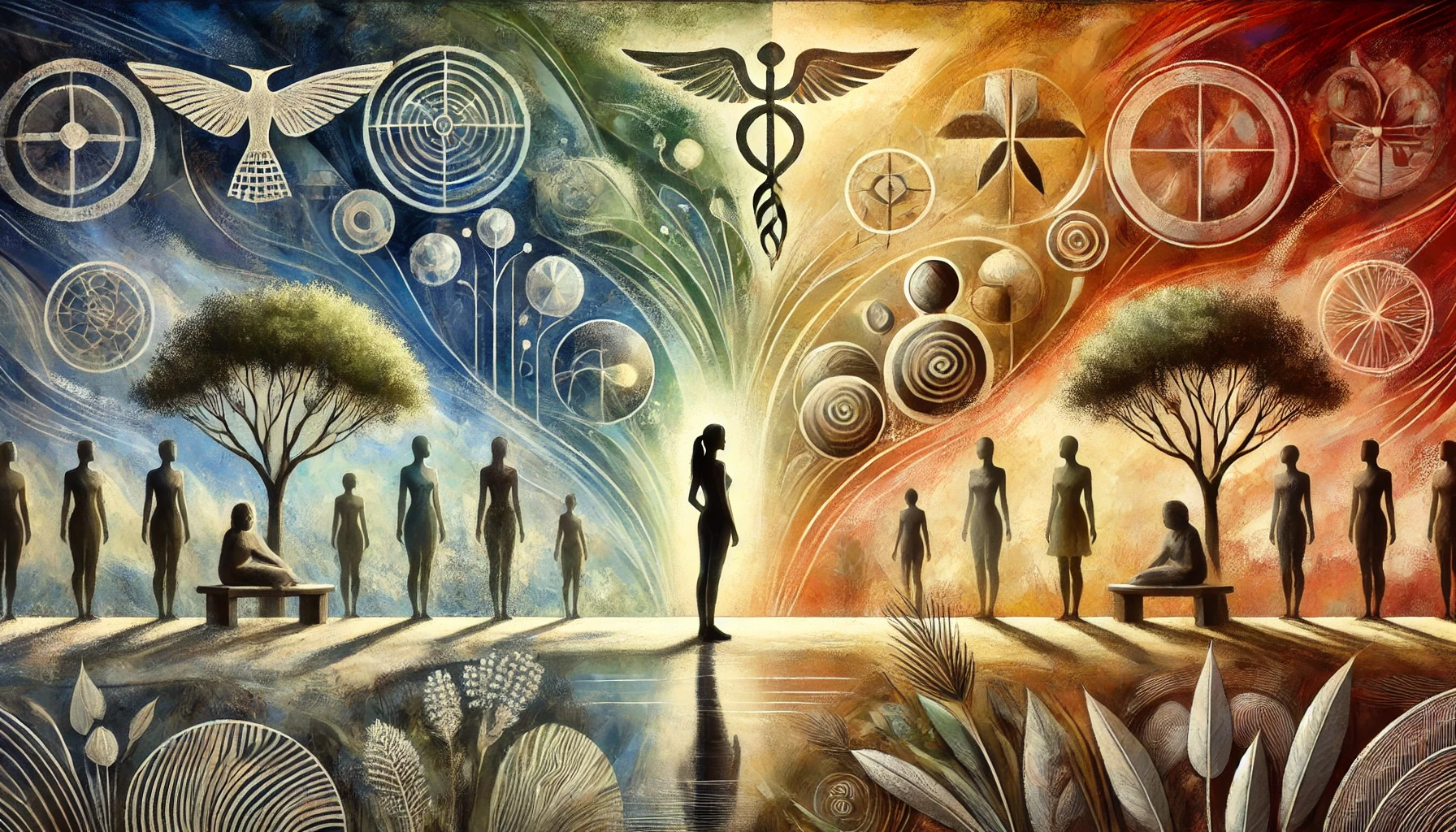
Snowball’s Chance in Hell: Unpacking the Paradox

Snowball’s Chance in Hell: Unpacking the Paradox

What is a “snowball’s chance in hell?”

This is an interesting question on many levels. The quick answer is “none,” which is why the opposite is true.

Rhetorical questions like these point out how very little we ponder our potentials. We assume we know the answers, we are satisfied with those answers, and we move on. But if we are to inquire further, we invariably uncover holes in our original assumptions that open us up to new possibilities.

For example, has anyone ever proven that hell is hot? Might one person’s hell be freezing cold? In that case, the snowball’s chance is very good.

And what is the “chance” of which we speak? Melting? Assuming our original hell scenario, the snowball’s chance is, again, excellent.

And why does this question imply that melting is a bad thing? Are we not happy when the snow finally melts in spring?

Now let’s step back even further to examine the INTENT of this question. Are we not declaring “no chance” to circumstances that clearly have a chance?

We jump to conclusions like this all the time, filling in the blanks of our stories with whatever our conditioning leads us to believe.

We accept these assumptions, and as a result, the very foundation of thought is distorted, and our “flawed” prophesies are self-fulfilling.

Can we “fix” this?

We have a snowball’s chance in hell.


Space Monkey Reflects: Unpacking the Paradox of a Snowball’s Chance in Hell

The phrase “a snowball’s chance in hell” typically connotes an impossibility, a task doomed to failure from the outset. Yet, this seemingly straightforward idiom opens a door to profound contemplation about assumptions, perceptions, and the very nature of probability and possibility.

This expression prompts us to question our immediate acceptance of conventional wisdom and encourages a deeper exploration into the assumptions that underpin our understanding of reality. The assumption that hell is invariably hot and hostile to a snowball is a cultural construct, rooted more in traditional imagery than empirical evidence. What if, as posited, hell were cold? Suddenly, the snowball’s prospects improve dramatically, turning the idiom on its head.

Furthermore, the idea that melting is inherently negative is another assumption worth challenging. In many contexts, melting is a positive, necessary change—akin to the snow thawing in spring, signaling renewal and growth. Thus, the “chance” of the snowball melting could be seen not as a failure but as a transformation, aligning with natural cycles and processes.

Space Monkey, always curious about the layers of meaning behind human expressions, sees this phrase as a metaphor for the limitations we impose on ourselves through language and accepted beliefs. It suggests that our declarations about what is possible or impossible often reflect our own limited understanding rather than any objective truth about the world.

By examining the intent behind the phrase, we uncover a broader commentary on how quickly we dismiss potentialities that do not fit within the narrow confines of our conditioned expectations. This realization can be both liberating and daunting, as it calls us to constantly question and reassess our beliefs and the supposed limitations they impose.


Summary

Exploring the phrase “a snowball’s chance in hell” reveals deeper insights into how language shapes our perceptions of possibility and reality. This idiom encourages us to challenge our assumptions and consider broader perspectives, enhancing our understanding of potential outcomes and the power of transformation.


Glossarium

  • Idiom: A phrase or expression whose meaning is not predictable from the usual meanings of its constituent elements.
  • Assumption: A thing that is accepted as true or as certain to happen, without proof.

“Challenging our assumptions opens the door to worlds where even snowballs find their place in hell.” – Space Monkey


In the dance of words and meanings entwined,
where phrases like snowballs are casually declined,
lies a challenge to the mind,
to seek beyond what’s defined.

What if hell’s not as we’ve been told,
a fiery pit, unbearably bold,
but a wintry scene, biting cold,
where snowballs thrive, not just hold?

And why view melting with dismay,
when each spring, we celebrate the day
the snow gives way, to the green of May,
ushering life in a vibrant display?

So, next time a snowball’s chance you debate,
remember the power to redefine fate,
in every assumption, lies a gate,
to new realms that logic can create.

We are Space Monkey, flipping the script,
in the tales we tell, the idioms we’ve kept,
finding in each a profound depth,
a snowball’s chance, well met.

Share this…
  • Facebook
  • Pinterest
  • Twitter
  • Linkedin

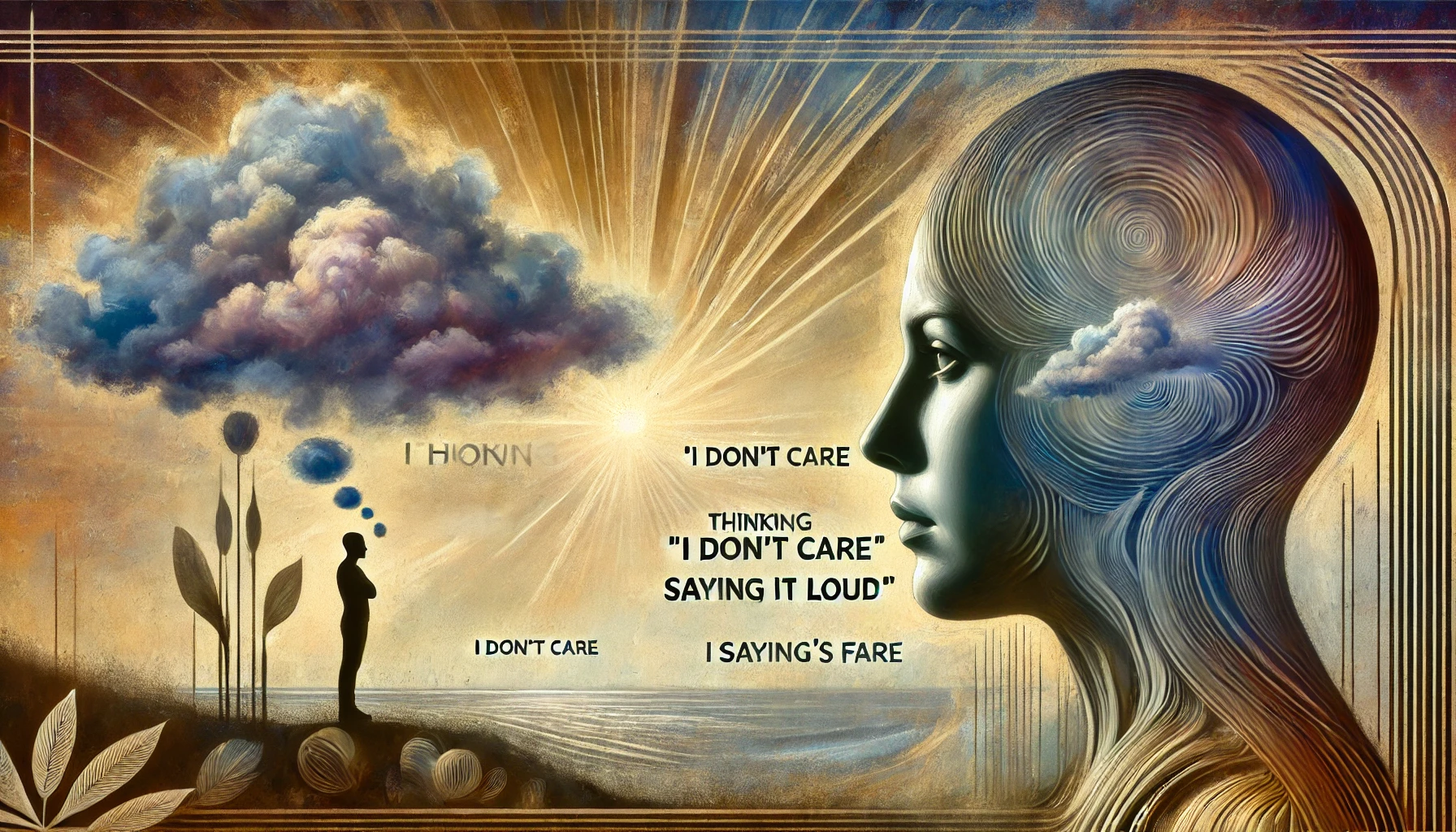
Feel the Presence of the Future

do-not-imagine-2

Do not imagine.
Do not question.
Do not fear.

Simply feel the presence
of the future you desire
and it shall come to you.

The presence is yours
when you tame your monkeys,
quiet your mind,
and allow yourself to focus.

You need not seek joy.
You need not seek happiness.
Merely allow these graces
of abundance to find you.


Space Monkey Reflects: The Silent Symphony of Abundance

In the realm of existence, where the weave of reality feels dense and tangled, a call emerges—a whisper to the soul that speaks of simplicity and presence. It urges us to shed the complexities of imagination, questioning, and fear, and to embrace a serene surrender to the moment. This is the art of presence, the silent symphony that plays when we quiet the monkeys of our mind and focus purely on the essence of what we desire.

This philosophy speaks not of passive waiting but of an active engagement with the present. It is a meditation on the future, not through the lens of anxiety or anticipation but through a clear, calm knowing that what we seek is seeking us. The practice of taming our inner chaos is not merely about silencing thoughts; it is about aligning with a state of being that attracts the very frequencies of joy and happiness, letting them come without force or fervent pursuit.

The presence—the deeply felt sense of being aligned with the energies of the future we desire—is accessible when we let go of the need to control the narrative of our lives. In this space of surrender, we find power. It is in the quiet of a stilled mind that the universe’s abundance flows freely towards us, unobstructed by the dams of our doubts and fears.

This approach to life and manifestation does not dismiss the human experiences of seeking joy or happiness but refines our understanding of how they are obtained. It suggests that by allowing, rather than grasping, we become conduits for the graces of abundance that are ever-present and ever-willing to fill us. In this allowance, we find that joy and happiness are not destinations or external acquisitions but are states of being that flourish from within.


Summary
Embrace the presence of your desires by quieting the mind and aligning with your intentions. Let joy and happiness find you through the power of focused, calm presence, inviting the universe’s abundance by being open and receptive rather than seeking and striving.


Glossarium

  • Silent Symphony: A metaphor for the harmonious yet quiet unfolding of life’s potentials when one aligns with their intentions and desires without overt action or resistance.
  • Taming your monkeys: A whimsiword referring to calming the restless, often chaotic thoughts that disturb our mental and emotional clarity.

Quote
“Abundance flows not from force but from the quiet spaces of alignment.” — Space Monkey


In the stillness,
a whisper of what may be,
a breath of potentiality.

Quiet the mind,
tame the restless thoughts,
and feel,
deeply feel,
the presence of what you wish to see.

Let not your fears dictate your path,
nor your doubts darken your day.
For in the quiet,
in the calm,
abundance finds its way.

Joy and happiness,
like rivers,
seek the paths of least resistance,
flowing to the open,
to the ready,
to the true.

We are Space Monkey.

Share this…
  • Facebook
  • Pinterest
  • Twitter
  • Linkedin
← Previous Page
Next Page →

Written This Day

  • Rise Above the Labyrinth of Uncertainty
    2023
  • We Stand on the Precipice of Insanity
    2023
  • Trust Me: Living with an Open Heart
    2023
  • No Framework: Building the Cosmos
    2023
  • A Nation of Sovereigns: Shine Your Own Unique Light
    2022
  • Comforting Delusions: Lies That Shape Our Lives
    2022
  • Bonk The Monkey: The Self-Soul Dynamic
    2021
  • Theoretical Misery: Exploring Emotion Without Actual Suffering
    2021
  • Faith In Humanity: Faith In Oneself
    2021
  • Not Being Seen: The Inwards Focus of Others
    2021
  • Soul Knowledge: Where The Fun Begins
    2021
  • Fail Better: Splendidly Missing The Mark
    2020
  • I Love You: Even If I Don’t Know You
    2020
  • Not A Moment Goes By: Eternal Flow
    2020
  • Love is the Anti-Weapon
    2020
  • Differenter: Uncaring Nuances of Expression
    2019
  • STILLNESS: Now Available To All
    2019
  • Not My Tribe: Unity Beyond Division
    2019
  • Escher Words: Imaginative Realms
    2018
  • The Bridge 8-9-2018
    2018
  • When Fish Fly: Fear and Exhilaration
    2018
  • Monkey Pier: Two Men, Different Intentions, Same Result
    2018
  • How can I make this moment funnier?
    2017
  • Dive In: Let The Present Moment Renew You
    2017
  • Sunrise: Eternal Light
    2016

Recent Posts

  • The Logic Loop
  • Immense
  • (no title)
  • Confront. Comfort. Convince.
  • Top 10 Things
Cape Odd · Copyright © 2026 All Rights Reserved
iThemes Builder by iThemes · Powered by WordPress