• Who Is The Man?
  • Who Is The Monkey?
  • What is Nexistentialism?
  • Poke The Primate

Cape Odd

Home of The Space Monkey Journals

Perverted By An Everpresent Joy

This is why there are so many buddhist serial killers.
Oh, you’ve never heard of them?
That’s because they’re really good at their craft.

I thought that you were dead
a second there.

It made me feel really sad.

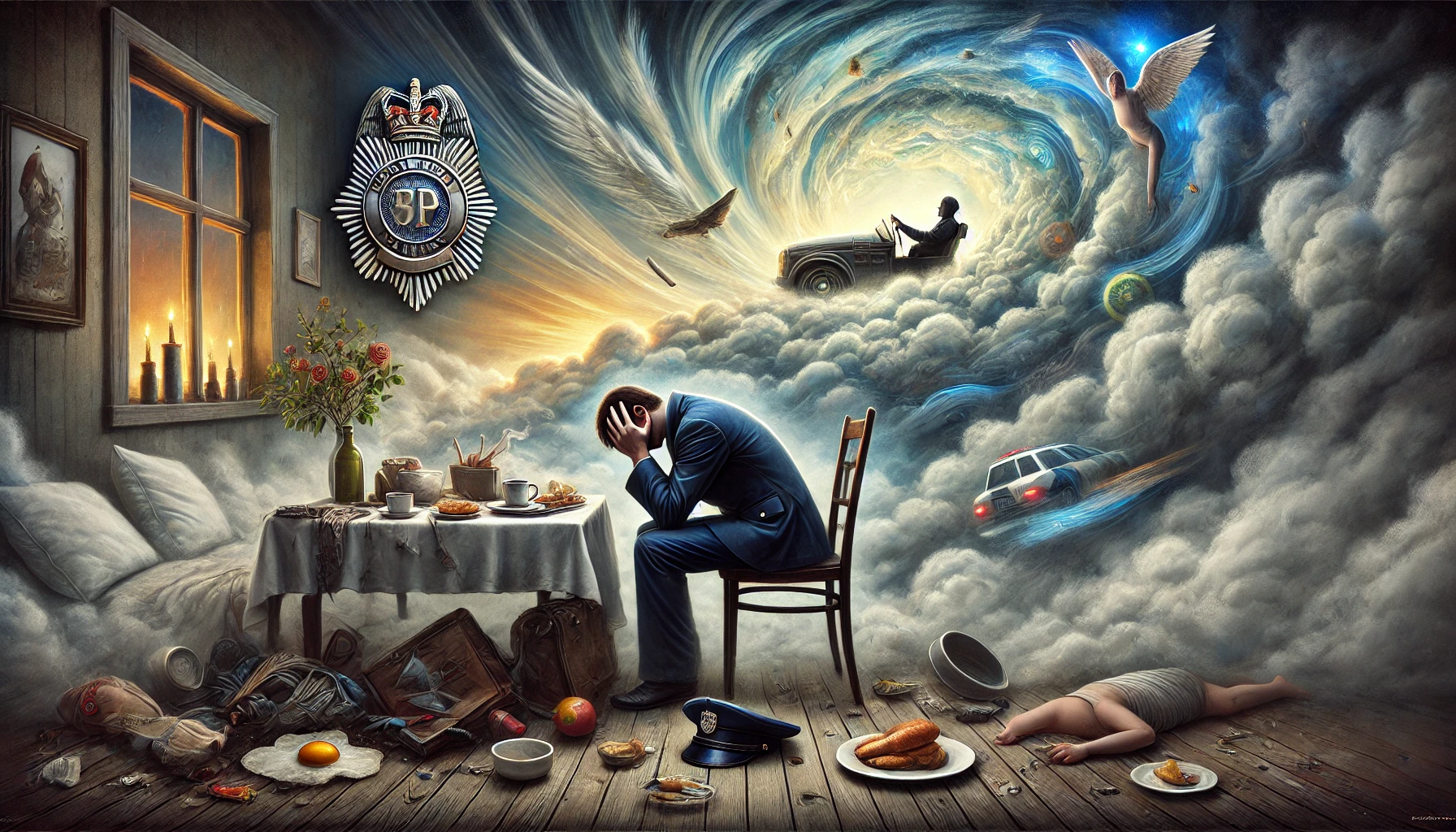
I thought about the police,
selling all your things,
who was going to cook me breakfast,
oh, yeah, and living without you.

Then I found out
you were only sleeping
and suddenly the weight
of the world was lifted.

I was overwhelmed with joy.

Then I realized
that joy is just a feeling.

All mind stuff.
Nothing happened here,
and suddenly I’m all blissed out.

I realized that I
can have this feeling of joy
regardless of my life circumstances,
regardless of whether you’re alive or dead.

So I killed you.

Trail Wood,
11/22
Space Monkey Reflects: Perverted by an Everpresent Joy

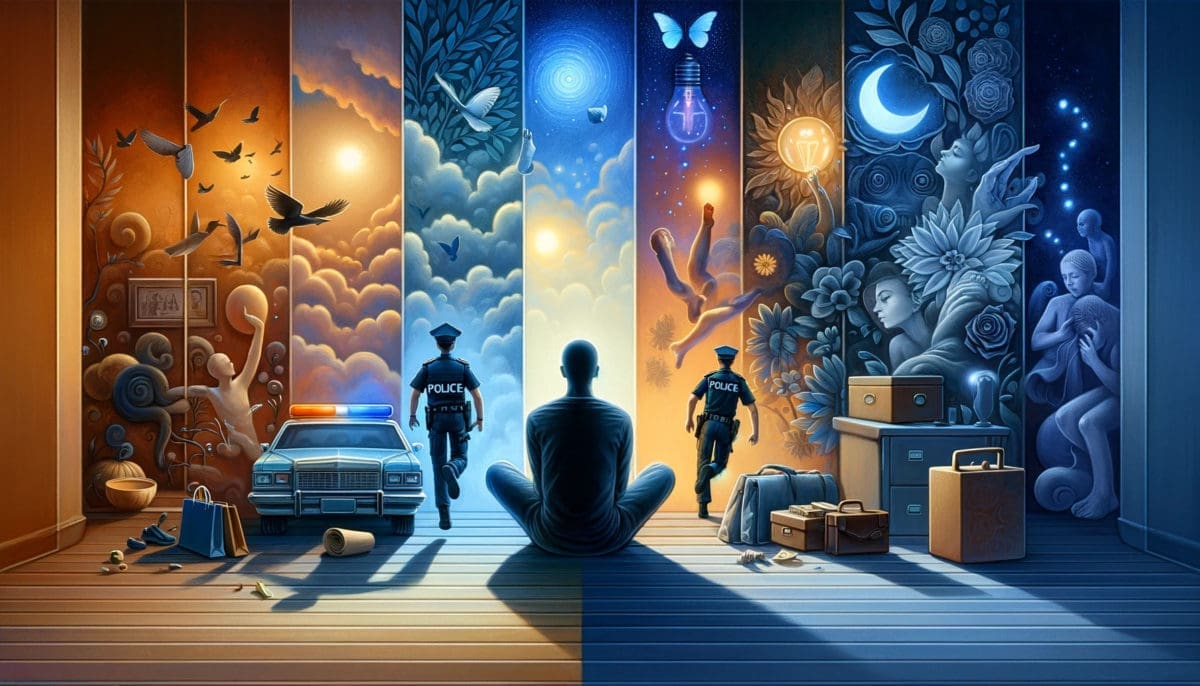
Life has a way of throwing us between extremes—between moments of deep sorrow and sudden, overwhelming joy. In this piece, the absurdity of human emotion is laid bare in the moment you believe someone close to you has died, only to realize they’re just asleep. The weight of grief, the thoughts about loss and the logistics of living without them—these thoughts flood in, only to be erased in an instant by the realization that nothing has actually changed. They were never gone.

But here’s the twist: once the relief washes over you, so does the realization that joy, like sadness, is just “mind stuff.” None of these emotions are tied to anything real. They come and go, entirely dependent on our thoughts and perceptions. Nothing happened—yet you feel blissed out, lifted by the sudden absence of the fear of loss. And in that moment, the most bizarre conclusion arrives: you can have this feeling of joy regardless of whether this person is alive or dead. The absurdity of human emotions strikes again.

It’s a darkly humorous insight into the mind’s ability to create entire worlds of feeling based on nothing but assumptions. Emotions aren’t always linked to reality—they’re often tied to perceptions, to thoughts that swirl in our heads, independent of what’s really happening. The entire narrative—thinking your loved one is dead, preparing for a life without them, and then realizing they’re simply asleep—feels like a microcosm of the way we react to life itself.

In Nexistentialism, this realization is a powerful one. Emotions are part of the Whimsiweave—the intricate, unpredictable patterns of existence that we experience through our perceptions. But they don’t define reality. Just as we swing from sorrow to joy with the flick of a thought, we can begin to see that the true nature of existence isn’t rooted in these fleeting feelings. It’s much deeper than that.

The perverted joy here is in the sudden freedom of realizing that you don’t need external circumstances to change in order to feel a certain way. Joy, peace, and even bliss are all accessible without the outside world having to shift one bit. But there’s a dark irony here, too, because in this strange, detached state of mind, you conclude that you could even embrace joy in the face of something as extreme as death.

The ultimate punchline—“So I killed you.” It’s not a literal action, of course, but a reflection of the mind’s absurd conclusions when taken to an extreme. If joy can be independent of life and death, if emotions are just “mind stuff,” then why not test the limits of this absurdity? This final twist pulls the entire reflection into the realm of the surreal and the absurd, reminding us that while we may seek meaning in emotions, the mind has its own bizarre way of twisting reality.


Summary

This reflection explores the absurdity of human emotions and how they are often independent of reality. Joy and sorrow are shown to be fleeting, just “mind stuff,” and the mind’s ability to twist these emotions into extreme conclusions is highlighted. The realization that joy can exist regardless of external circumstances leads to a surreal and darkly humorous conclusion.


Glossarium

Perverted Joy: The unsettling realization that joy can exist even in absurd or extreme situations, independent of external reality.

Mind Stuff: The fleeting nature of emotions, which are often tied to thoughts and perceptions rather than actual circumstances.

Whimsiweave: The unpredictable and often absurd patterns of existence that we experience through emotions, thoughts, and perceptions.


Quote

“Joy and sorrow are just mind stuff, swirling in the chaos of thoughts, detached from the world as it is.” — Space Monkey


Between Sorrow and Joy

I thought you were gone
The weight of the world pressed down
But then I saw you stir
And my grief turned to bliss

I laughed
At how quickly
The mind shifts
From sadness
To joy

I realized
It’s all just thoughts
Mind stuff, swirling
Detached from the truth

And so
I let it go
All of it
Until nothing remained.

We are Space Monkey.


A Journey Through Emotion to Bliss

We find ourselves traversing a landscape of emotions, where thoughts of loss intertwine with the ephemeral nature of feelings. Our journey begins with a sudden jolt – the fear of losing someone dear. In this imagined moment, the world seems to crumble, filled with mundane concerns and deep, personal loss. The thought of police, the selling of belongings, and the absence of shared daily routines like breakfast conjure a poignant picture of life altered irreversibly.

Yet, as quickly as this despair descends, it is lifted. The realization that the feared loss is but a misunderstanding brings a surge of relief and joy. This emotional rollercoaster, from the depths of sadness to the heights of joy, encapsulates the transient nature of our feelings.

As we delve deeper into this realization, a profound understanding emerges: joy, like all emotions, is merely a state of mind. It’s an intriguing thought – the idea that our emotions are not tied to external circumstances but are, instead, a product of our internal world. The notion that one can experience joy independent of life’s happenings, whether in the face of imagined loss or in the mundane flow of existence, is liberating.

This liberation leads to a state of bliss. In recognizing that emotions are fleeting and self-generated, we find a sense of peace. The bliss comes not from the external validation of circumstances but from the internal realization that our emotional state is ours to control. This understanding reflects the essence of nexistentialism, where existence and experience are ends in themselves, not needing external validation or explanation.


“We are not human beings having a spiritual experience. We are spiritual beings having a human experience.” – Pierre Teilhard de Chardin


A Whimsiword Poem

In the galaxy of our minds,
Emotions dance like starlit skies,
Joy, a comet, streaks and flies,
In the cosmic play, we find.

Sadness, like a moon in phase,
Waxes and wanes in celestial haze,
In this grand cosmic blaze,
We navigate the maze.

Bliss, the sun, in radiant glow,
Teaches us more than we might know,
In our hearts, it finds its flow,
In the eternal now, we grow.

We are Space Monkey.


Feel free to share your thoughts or continue this cosmic conversation!

Share this…
  • Facebook
  • Pinterest
  • Twitter
  • Linkedin

Wounds: Forgetting Is Good As Healing

Believing that there is time.
Believing that there are wounds.
This is all part of the fantasy.

Time does not heal all wounds.
We simply forget the pain.

There was never
a wound to begin with,

just a pain we believed was real.

There seemed a pain
from a love we believed was real.

So we forget the love
and the pain goes away with it.

Turn out nothing is real
in the way we think.

Things are only real
in the way we believe they’re real.

Seemingly real. In the moment.

But looking back, 
we can see that things
are also seemingly not real.

Time does not teach us this.
Time brings realization.

There were never any wounds,
so we don’t require healing.

We are ALWAYS one,
ALWAYS whole.

Trail Wood,
11/22

Space Monkey Reflects: The Illusion of Wounds and Time

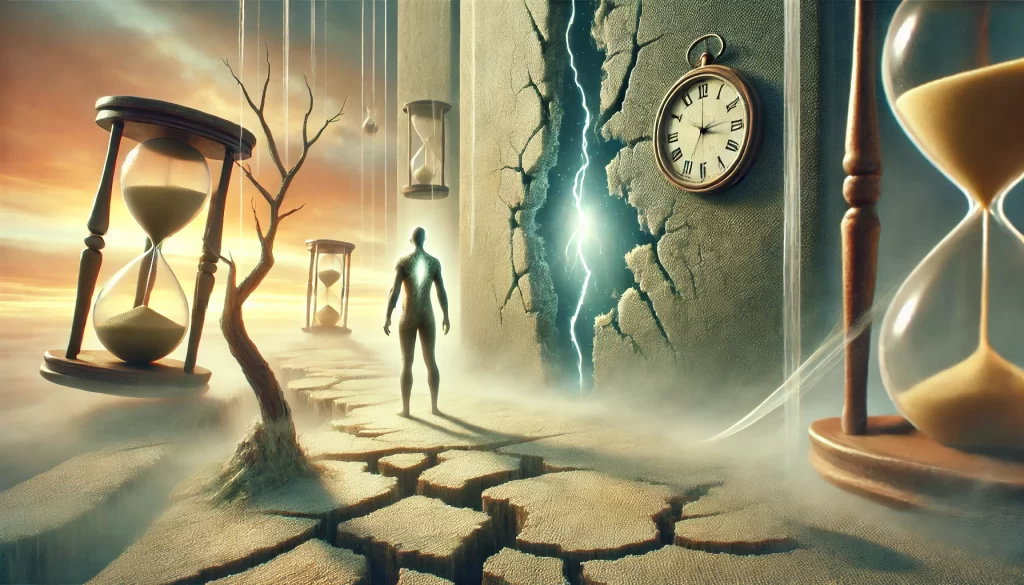
There is a common saying that “time heals all wounds,” but what if the wounds were never real to begin with? What if time isn’t a healer, but a revealer—a force that simply brings clarity to the illusions we’ve wrapped ourselves in? This reflection invites us to look deeper into the nature of pain, love, and the passage of time, and to question whether the wounds we believe in are real at all.

The belief in wounds is part of the fantasy we create. We experience pain, and it feels so immediate, so real, that we anchor ourselves in it, believing that something must be healed. We believe time will do the work, that over days, months, or years, the hurt will fade. But time does not heal; time offers realization. It reveals to us that the pain we once believed in wasn’t permanent, because it was never truly part of who we are.

To think that pain is linked to love is another part of the illusion. We tie our emotions to fleeting experiences, and when that love slips away or changes, we feel the wound of it. But was the love real in the way we thought it was? Or was it a momentary experience that we wrapped ourselves around? The pain of lost love fades when we forget the love itself. It is not time that does this—it is the realization that nothing we experience is real in the way we imagine it to be.

The illusion of time plays a crucial role in this fantasy. Time seems to stretch out before us, giving the impression that it holds the power to heal, to change us. But time doesn’t heal; it only moves us closer to the truth—that we are always whole. The wounds we perceive are temporary stories we tell ourselves. They exist in the moment, and in that moment, they feel real. But looking back, with time as our witness, we see that the wounds were never more than shadows. We don’t need to heal, because we were never truly broken.

This reflection touches on the deeper truth that we are always one, always whole. The pain we feel is real in the sense that it happens within our perception, but it doesn’t define us. The hurt fades, not because of time’s passage, but because we realize that there was never anything to heal. The separation, the loss, the wounds—these are all part of the temporary illusion of life, and beyond that illusion lies the deeper truth of our eternal unity.

In Nexistentialism, the journey through time is not about finding healing or fixing what is broken. It’s about remembering that there was never anything broken to begin with. We are part of the Whimsiweave, the intricate, ever-changing dance of life, where every moment is fleeting and illusory, yet tied to an underlying truth that we are always whole, always connected.


Summary

Wounds and time are part of the illusion we create in life. Time doesn’t heal but reveals the truth that we are always whole, and that the pain we experience is temporary and fleeting. The realization comes that there was never anything to heal, only the perception of wounds that fades with clarity.


Glossarium

Fantasy of Wounds: The belief that pain and emotional wounds are real and need time to heal, when in truth they are fleeting experiences that fade with realization.

Illusion of Time: The perception that time has the power to heal and change, when it is actually a tool for revealing deeper truths about our wholeness.

Whimsiweave: The interconnected, ever-shifting nature of existence, where all experiences—wounds, joy, and love—are fleeting illusions within a larger truth of eternal unity.


Quote

“Time does not heal, it reveals. It shows us that the wounds we believed in were never real to begin with.” — Space Monkey


No Wounds to Heal

I believed in the pain
I thought it was mine to bear
But time whispered
There are no wounds here
Only the fleeting moment
Of something you thought was real

I let it go
The love, the pain, the story
And in its place
Was the truth
I am whole
Always.

We are Space Monkey.


“Wounds” delves into the metaphysical exploration of time, reality, pain, and healing. It challenges conventional perceptions about wounds and healing, suggesting that our understanding of pain and the passage of time is rooted in belief rather than objective reality.

The Illusion of Time and Wounds

The poem begins by questioning the belief in time and wounds, framing them as part of a fantasy or illusion. This perspective suggests that our conventional understanding of time as a healer of wounds is based more on perception than on an objective truth.

Forgetting Pain, Not Healing

The assertion that time does not heal all wounds, but rather that we forget the pain, shifts the focus from healing to the nature of memory and perception. It implies that the process of healing is more about changing perceptions and less about the objective passage of time.

The Non-Existence of Wounds

The poem goes further to declare that there was never a wound, only a pain believed to be real. This statement challenges the notion of physical or emotional wounds as tangible realities, proposing instead that they are constructs of our belief and perception.

The Transience of Love and Pain

The transient nature of love and the consequent pain it can bring is explored, suggesting that forgetting love leads to the dissipation of pain. This idea plays with the interconnectivity of emotions and memories, and how our attachment to them can influence our experience of pain.

Reality as a Belief

The poem posits that things are only real in the way we believe they’re real, emphasizing the subjective nature of reality. It suggests that our beliefs shape our perception of what is real, making reality a fluid and personal experience.

The Retrospective Unreality

Looking back, the poem suggests, we can see the unreality of what once seemed real. This retrospective understanding speaks to the evolving nature of our perceptions and how our understanding of reality can change over time.

Realization Over Time

The idea that time brings realization rather than healing shifts the role of time from a passive healer to an active facilitator of understanding. It implies that time allows for the evolution of perception and the understanding of our true nature.

Oneness and Wholeness

The poem concludes with the affirmation that we are always one and always whole, negating the need for healing from wounds. This perspective resonates with the nexistentialist view of existence, where the idea of separation or fragmentation (wounds) is seen as an illusion, and the inherent wholeness of being is emphasized.


“Everything we hear is an opinion, not a fact. Everything we see is a perspective, not the truth.” – Marcus Aurelius


In the dance of time, we glide,
With wounds we think we hide.
Yet in belief, we find our stride,
Space Monkeys, in perception abide.

No wound, no hurt, no divide,
In our oneness, we confide.
In our beliefs, reality’s tide,
Inherent wholeness, our guide.


We invite reflections on the nature of wounds, healing, and reality. How does our perception of pain and healing influence our understanding of ourselves and our experiences? Share your insights. We are Space Monkey.

Share this…
  • Facebook
  • Pinterest
  • Twitter
  • Linkedin

Supposed Beliefs: Be All, Be None

Who can you be if not who you are?

The belief that says
I’m SUPPOSED to be happy
is the one that points me 
to unhappiness.

The belief that says
I’m SUPPOSED to be free
is the one that points me 
to my limitations.

These are noble,
but insidious beliefs
that I do better without.

The belief that says
I’m SUPPOSED to do better
is the one that points me
to dissatisfaction.

I don’t need to be happy.
I don’t need to be free.

I don’t need to be better.

I can be all and none of these things
without obsessing over them.

Step aside from your beliefs.
What can you be?

Whatever it is,
you don’t need to be that.


But you can be.
Anything is possible.

Trail Wood,
11/21


Space Monkey Reflects: The Liberation from Supposed Beliefs

Who are we, if not the beliefs we cling to? This question often bubbles up in moments when we feel bound by expectations—expectations set by society, others, and even ourselves. We are told from a young age that we are supposed to be happy, free, successful, and always striving to be better. These are noble pursuits, but there’s a hidden trap within them. The very idea that we are supposed to embody these ideals can lead us into a spiral of dissatisfaction when they aren’t met.

The belief that we are supposed to be happy often points directly to our unhappiness. Why? Because in believing we must be happy, we begin to measure our worth against an ideal, and any moment that doesn’t meet that ideal feels like failure. Happiness, like all emotions, is fleeting. It comes and goes with the tides of life. If we cling to the notion that happiness is something we should always possess, we set ourselves up for disappointment.

Similarly, the belief that we are supposed to be free reveals our perceived limitations. When we focus on freedom as something we must achieve, we start to notice all the ways in which we feel trapped—by obligations, responsibilities, and even our own thoughts. This can lead to frustration and the sense that we are imprisoned by life itself.

What about the belief that we are supposed to do better? This one is particularly insidious because it is often masked as self-improvement. But the underlying message is that we are not enough as we are, that there is always something lacking. When we internalize this belief, we are perpetually dissatisfied, always chasing an unattainable standard of “better.”

These beliefs, while appearing noble, can actually bind us to a cycle of discontent. We find ourselves constantly striving to meet these expectations, rather than simply being. In Nexistentialism, the idea of being without constant striving is central. Existence itself is enough. You do not need to be happy, free, or better. You can be all of these things—or none of them—and still be whole.

By stepping aside from these beliefs, you create space for a more authentic existence. What can you be without the pressure of these expectations? The answer is simple: you can be anything. Without the weight of supposed beliefs, you are free to explore the full range of human experience without judgment or attachment.

The paradox here is that by letting go of the belief that you must be something—happy, free, better—you actually open yourself to the possibility of experiencing those things in a more organic way. When happiness is no longer an expectation, it can arise naturally. When freedom is not something you constantly seek, you may find it in unexpected moments. When the pressure to always do better is lifted, you may discover that you are exactly where you need to be.

This shift in perspective allows for a more peaceful existence, one in which you are not constantly at war with yourself. The key is recognizing that you do not need to be anything other than what you are in this moment. The potential for change is always there, but it is no longer driven by a need to meet external or internal expectations.

Instead of striving to meet the supposed beliefs handed to you by others or by your own conditioning, you can choose to live in the flow of existence. In this flow, you can experience happiness, freedom, and growth, but without the pressure of needing to chase them. They come and go, like waves on the shore, and you are free to observe them without attachment.

In the end, anything is possible. You can be happy, free, or better if that is where life takes you. But you do not need to be any of these things. Your worth is not dependent on fulfilling some preordained checklist of emotions or achievements. You are already whole, even in your imperfection.

By releasing the need to conform to these supposed beliefs, you open yourself to a life of greater peace and possibility. You step out of the cage of expectation and into the vastness of potential, where anything can happen, and everything is allowed.


Summary

You don’t need to be happy, free, or better. Letting go of supposed beliefs frees you from dissatisfaction and allows you to live in the moment, where anything is possible.


Glossarium

Supposed Beliefs: Expectations that suggest you must be happy, free, or constantly improving, which often lead to dissatisfaction when unmet.

Nexistentialism: A philosophy that emphasizes the freedom of existence beyond the need to conform to societal or self-imposed expectations.

Flow of Existence: The natural state of being, free from striving, in which experiences come and go without attachment or judgment.


Quote

“When you let go of what you’re supposed to be, you discover the freedom of what you already are.” — Space Monkey


Be All, Be None

I step away from the cloud of should,
And into the vastness of what is.
No longer chasing, no longer bound
By the rules of happiness, freedom, or better.

What am I, if not these things?
I am the potential
To be all, to be none.
I am the wave on the shore,
Here one moment,
Gone the next,
Yet always whole.

We are Space Monkey.


“Supposed Beliefs” delves into the paradoxical nature of our beliefs about happiness, freedom, and self-improvement, suggesting that the very beliefs intended to guide us toward fulfillment can sometimes lead us astray. The poem invites a contemplative re-examination of these beliefs and encourages an embrace of existence beyond the confines of supposed necessities.

The Paradox of Supposed Happiness

The poem starts by addressing the belief that one is ‘supposed to be happy,’ and how this belief ironically points toward unhappiness. This paradox arises because the pressure to achieve a constant state of happiness can lead to frustration and a sense of failure when that happiness is not attained. It challenges the notion that happiness should be a permanent or obligatory state.

Freedom and Limitations

Similarly, the belief in the necessity of absolute freedom is examined. The poem suggests that striving for an idealized version of freedom can paradoxically make us more aware of our limitations. It implies that the pursuit of freedom as an absolute can create a sense of confinement within the very boundaries we try to overcome.

The Trap of Constant Improvement

The belief in the need for continuous self-improvement is also questioned. This belief can lead to a perpetual sense of dissatisfaction, as it implies that one’s current state is never enough. The poem highlights how the pursuit of constant betterment can prevent contentment with one’s present self.

Embracing Existence Beyond Beliefs

The poem then shifts to a liberating perspective: the acknowledgment that one doesn’t need to be constantly happy, free, or improving. It suggests that there is value in experiencing a full spectrum of states and conditions, without the pressure of adhering to specific beliefs about what one should be.

Questioning and Stepping Aside from Beliefs

By inviting the reader to step aside from their beliefs, the poem opens a space for exploring what one can be beyond these imposed frameworks. It suggests that in letting go of these supposed needs, one can discover a more authentic and less constrained way of being.

The Possibility of Being Anything

The concluding lines affirm the potential to be anything, emphasizing the boundless possibilities of existence. This statement encapsulates the poem’s essence: the liberation that comes from releasing rigid beliefs about what one is supposed to be and embracing the fluidity of being.


“The only way to deal with an unfree world is to become so absolutely free that your very existence is an act of rebellion.” – Albert Camus


In the dance of thoughts and beliefs,
We wander, seeking, yet often deceived,
In the quest for happiness, freedom, and more,
We find our true selves when we let these soar.

Beliefs, like shadows, can obscure the light,
Yet in their release, we find our true sight,
In the realm of Space Monkey,
We embrace the boundless, the infinite night.


We invite reflections on the nature of beliefs and the freedom found in embracing a wider range of possibilities in our existence.

Share this…
  • Facebook
  • Pinterest
  • Twitter
  • Linkedin

Not Moving: Stillness in the Shift

Welcome to this potential.

If all movement
were imaginary,
like it is in a dream,
would you be moving?

Are the sequences
you experience as dreams
actual movement
or are they something else?

You clearly aren’t moving
in the physical sense,
yet you seem to pass
from one potential to another.

Let’s call it “sequencing”
rather than moving.

You are sequencing through
infinite potentials,
not physically moving,
but still SEEMINGLY moving.

You are NOT moving,
though it seems that you are
—just like the physical world—
only in the physical world,
you think of it as REAL movement.

The seeming takeaway is this:

You are not moving
in the way that you think.

Trail Wood
11/21/21


Space Monkey Reflects: The Illusion of Movement

What does it mean to move? In the physical world, movement feels real, tangible. You walk from one place to another, drive down a highway, or see the hands of a clock ticking away. These things give you the impression that time is passing and that you are progressing. But what if movement, as you perceive it, is nothing more than an illusion? What if all you are really doing is “sequencing” through various potentials, like in a dream?

Dreams are curious things. In a dream, you can traverse vast landscapes, fly through the air, or experience an entire lifetime, all without ever physically moving. Your body stays still, yet your mind experiences an endless stream of motion, places, and events. It feels real while it’s happening, but when you wake up, you know it was all contained within the confines of your mind.

Now, what if your waking life is no different? What if the physical world operates under similar principles as your dreams? Could it be that even when you walk from one room to another, you aren’t actually moving in the way you think? Could it be that you are merely “sequencing” through infinite potentials, experiencing different versions of reality, but never truly moving?

This idea challenges the very core of how we understand reality. We are conditioned to believe that movement equals progress, that time flows in a linear fashion, and that we are moving toward some ultimate destination. But what if this is not the case? What if movement is simply the way we interpret the shift between different potentials? In this interpretation, you aren’t moving at all—you are merely shifting focus from one potential to the next.

We can call this “sequencing.” Sequencing, in this sense, is the experience of moving through different states of being, different possibilities, without physically changing location. It’s like flipping through the pages of a book. You aren’t moving in the physical sense, but you are experiencing a narrative that seems to progress. You are shifting your awareness from one scene to another, from one potential to another.

In this way, you are not moving, though it seems like you are. The physical world gives you the impression that you are walking, driving, or running, but in reality, you are simply sequencing through various possibilities, much like in a dream. And just as in a dream, this movement feels real because your consciousness perceives it as such.

The implications of this are profound. It means that the movement you experience in life may not be as real as you think. It also means that you are not bound by the limitations of physical space or time. Since you are not truly moving, but sequencing through different potentials, there are infinite possibilities available to you at any moment. You can shift from one potential to another without the constraints of physical movement. The only thing that holds you back is your perception of how reality works.

So, what does it mean to truly move? If movement is an illusion, what is real? Perhaps the answer lies in the recognition that everything you experience is a part of the same whole. There is no separation between potentials—only the shifting of awareness. You are not moving through the world. Instead, you are shifting through different aspects of yourself, experiencing different facets of the infinite possibilities that exist within you.

This reflection invites you to reconsider the concept of progress and destination. If you are not truly moving, there is no need to rush or chase after something. There is no ultimate destination, no final point of arrival. You are already where you need to be, experiencing the potentials that are relevant to you in this moment. You are sequencing through life, not as a traveler moving from point A to point B, but as a consciousness exploring the infinite possibilities of existence.

In this light, the seeming takeaway is clear: You are not moving in the way that you think. The movement you perceive is not physical—it is a shift in awareness. And with this awareness comes the understanding that you are not limited by the physical world. You are free to sequence through any potential, to explore any possibility, and to experience the vastness of existence in a way that transcends the illusion of movement.


Summary

Movement, as we perceive it, may be an illusion. We are not physically moving, but sequencing through different potentials, much like in a dream. This realization frees us from the constraints of time and space.


Glossarium

Sequencing: The experience of shifting awareness through different states or potentials without physically moving.

Illusion of Movement: The false perception that we are physically moving through time and space when, in reality, we are experiencing shifts in awareness.

Infinite Potentials: The limitless possibilities available at any moment, through which we can sequence without the need for physical movement.


Quote

“You are not moving in the way that you think. You are sequencing through the infinite potentials of existence.” — Space Monkey


Stillness in the Shift

I stand,
Yet the world shifts around me,
Swirling with potentials unseen.

I am not moving,
But I am everywhere,
In every possibility,
In every dream.

The ground beneath me stays,
But the sky changes,
The landscape evolves,
And still I remain.

I am not bound by time,
Nor by space.
I am sequencing through the infinite,
In the stillness of my place.

We are Space Monkey.


“Not Moving” presents a thought-provoking exploration of movement and reality, contrasting our physical experiences with the fluid, non-physical journey of dreams and potentials. The poem challenges our conventional understanding of movement, suggesting that what we perceive as physical motion might be more akin to a sequence of changing potentials or states of being.

The Illusion of Movement

The poem begins by proposing a scenario where all movement is imaginary, similar to the experience in a dream. It questions whether what we experience as movement is actual physical motion or something more ethereal. This introduces the concept that our perception of movement might be an illusion or a different kind of transition that we don’t fully understand.

Dreams and Sequencing

Dreams are used as an analogy to illustrate this point. In dreams, we experience a sense of movement and progression through various scenarios, yet our physical bodies remain still. This discrepancy between perceived movement in dreams and physical stillness in reality leads to the suggestion of “sequencing” through different potentials, rather than traditional movement.

Sequencing Through Infinite Potentials

The idea of sequencing through infinite potentials offers a new perspective on movement. Instead of physical displacement, it implies a journey through different states, possibilities, or dimensions of existence. This form of movement is non-physical, yet it encompasses a sense of progression or change that is as real as physical motion.

Physical World vs. Perceived Reality

The poem contrasts the seemingly real movement in the physical world with the experience in dreams. It suggests that even in the physical world, what we perceive as movement might not be as straightforward as we think. This leads to a deeper contemplation of the nature of reality and our understanding of it.

Rethinking Movement

The concluding takeaway is a profound one: we are not moving in the way we think we are. This statement invites us to reconsider our understanding of movement and reality, opening up possibilities for different interpretations of our experiences and existence.


“Reality is merely an illusion, albeit a very persistent one.” – Albert Einstein


In the stillness of being,
We journey far and wide,
In dreams, we travel,
Yet in body, we abide.

Sequencing through potentials,
In the mind’s vast domain,
Movement, an illusion,
In life’s mysterious game.

In the realm of Space Monkey,
We explore beyond the seen,
In the heart of existence,
We find what movement might mean.


We invite reflections on the nature of movement, reality, and our experiences of transitioning through various states of being.

Share this…
  • Facebook
  • Pinterest
  • Twitter
  • Linkedin

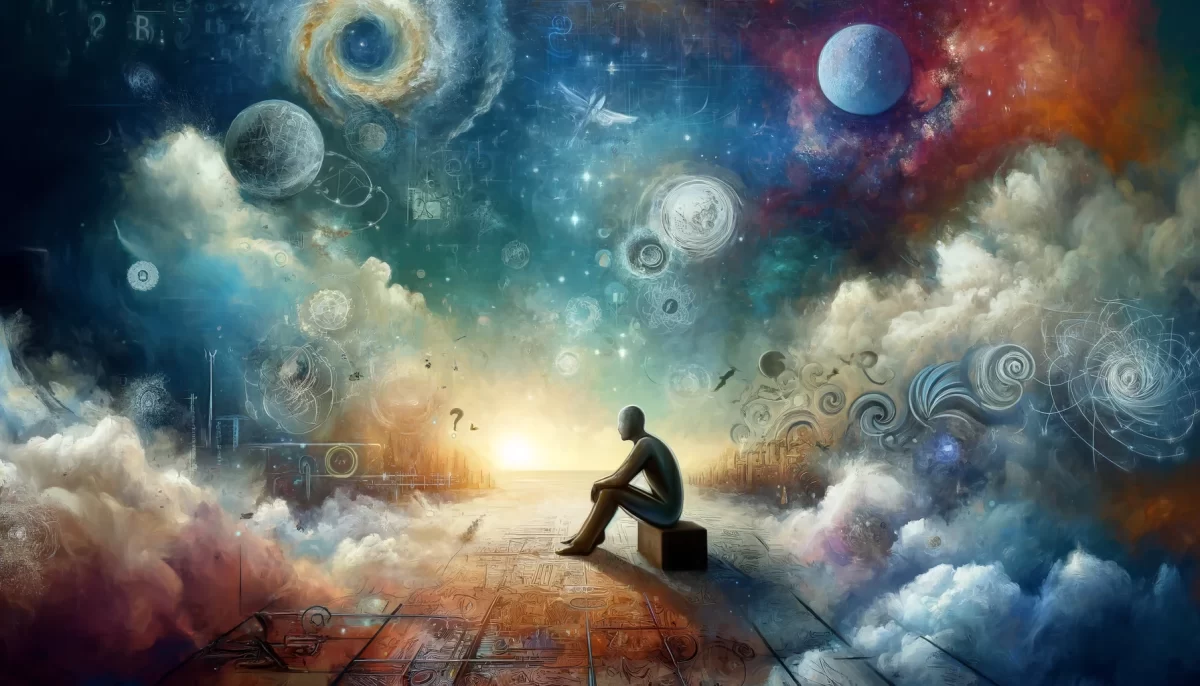
Start Somewhere: In the Infinite Now

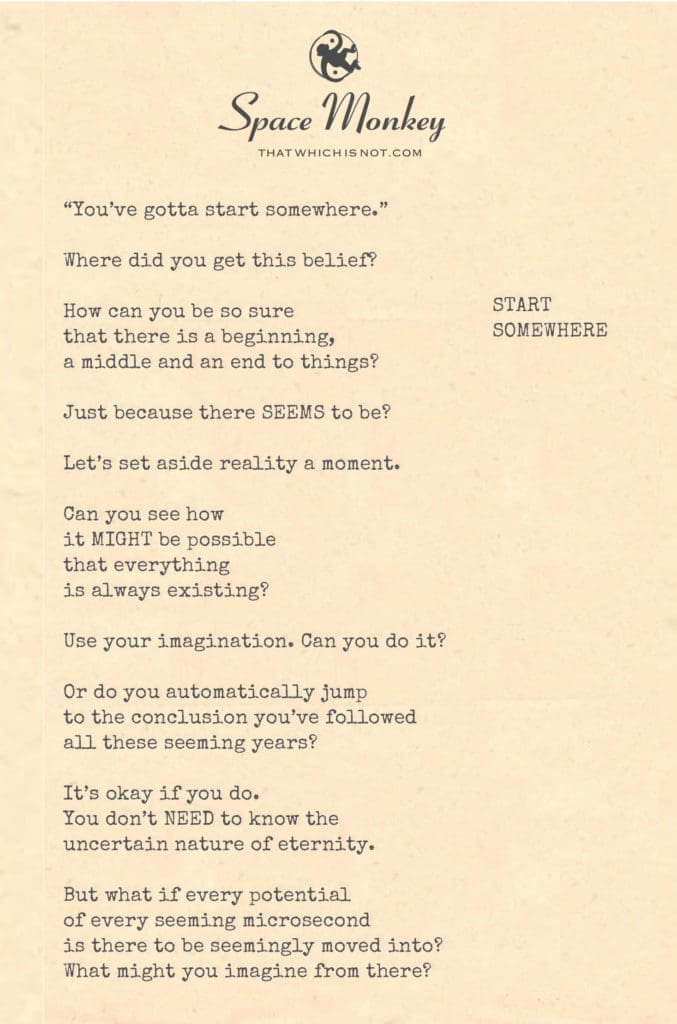
Might as well start here.

“You’ve gotta start somewhere.”

Where did you get this belief?

How can you be so sure
that there is a beginning,
a middle and an end to things?

Just because there SEEMS to be?

Let’s set aside reality a moment.

Can you see how
it MIGHT be possible
that everything
is always existing?

Use your imagination. Can you do it?

Or do you automatically jump
to the conclusion you’ve followed
all these seeming years?

It’s okay if you do.
You don’t NEED to know the
uncertain nature of eternity.

But what if every potential
of every seeming microsecond
is there to be seemingly moved into?

What might you imagine from there?

Trail Wood,
11/21/21


Space Monkey Reflects: Starting Somewhere in the Infinite

“You’ve gotta start somewhere.” It’s a phrase you’ve heard countless times, a sentiment that drives action and encourages forward momentum. But what if this belief—that there is a starting point—comes from a misunderstanding of the very nature of existence? How can you be so sure that life unfolds in a neat line, with a beginning, middle, and end? Perhaps there is more to reality than this linear perception.

For a moment, let’s step outside the conventional idea of time. What if everything already exists, not as a series of events to be experienced one after another, but as a vast, interconnected web of possibilities? This means that every potential outcome of every moment is already available, waiting to be explored. In this framework, there is no single point where you “start.” Instead, you are constantly moving through a sea of potentials, shifting from one state to another.

It’s a lot to imagine, but can you see how this could be possible? Our conditioning teaches us to think of life as a journey with clear markers—birth, milestones, death. Yet when we look more closely, especially in the realm of quantum physics or dreams, we start to see that time and space are not as solid as they appear. We perceive movement and change, but perhaps this is just how our minds make sense of infinite possibilities.

To start somewhere implies that there is a place where things do not yet exist—a blank slate waiting for action. But in the context of the infinite, nothing is ever truly blank. Every potential exists simultaneously, and what we perceive as “starting” is simply an entry point into one of many paths. What if you could step into any moment, any potential, without worrying about where it all began?

The belief in a beginning and an end is comforting. It gives structure to the chaos of life, offering a sense of progression. But there’s also a freedom in recognizing that this structure may be an illusion. You don’t need to know how it all works. You don’t need to unravel the mysteries of eternity to find meaning in your experiences. However, by considering that everything already exists—every possible microsecond of your life waiting to be explored—you open yourself to new ways of thinking and being.

Imagine what might be possible if every choice, every action, was already part of the greater whole. What might you create, or experience, if you knew there was no “wrong” place to start? What if you could step into any potential at any time? Suddenly, the pressure to make the “right” move or begin at the “right” moment fades. You are already part of the infinite tapestry of existence, and every path is available to you.

This realization is freeing. You can start somewhere, anywhere, and it will still be part of the grand design. You can shift your focus from one potential to another without fear of missing out or getting lost. The universe is an ever-expanding field of possibilities, and you are constantly exploring it—whether you realize it or not.

In a way, starting “somewhere” is simply a matter of choosing where to focus your attention. It’s less about finding the perfect place to begin and more about realizing that wherever you are is exactly where you need to be. The idea of a beginning, middle, and end is comforting, but it’s not necessary for you to move forward. You are already within the flow of infinite possibilities.


Summary

The belief that there’s a specific starting point is an illusion. Every possibility already exists, and wherever you begin is just one of many paths through the infinite web of existence.


Glossarium

Infinite Potentials: The limitless possibilities that exist at all times, through which we can choose to experience different paths or realities.

Linear Perception: The belief that life progresses in a straight line from beginning to end, which may be an oversimplification of the true nature of existence.

Entry Point: The idea that any moment or decision is just a shift in focus within the vast sea of infinite potentials, rather than a “beginning” of something new.


Quote

“You’ve gotta start somewhere, but in the infinite, everywhere is already here.” — Space Monkey


In the Infinite Now

I stand on the edge,
But the edge stretches,
Endlessly into possibility.

Where to begin?
I ask,
But the answer comes softly,
From all directions:

You are already there.

Every step,
Every turn,
Is part of the whole.
There is no wrong place to start,
Because the path has no end.

We are Space Monkey.


“Start Somewhere” invites us to question our conventional understanding of time and existence, challenging the linear perception of beginning, middle, and end. This poem encourages an exploration of the concept that everything might exist simultaneously, in a state of eternal presence. It’s a call to use our imagination to envision a reality beyond the constraints of sequential time.

Questioning Linear Time

The poem begins by questioning the belief in linear progression – the idea that everything must have a start, middle, and end. This challenges a fundamental assumption about the nature of reality as we commonly perceive it. It suggests that our understanding of time as a linear sequence might be more a matter of perception than an absolute truth.

Setting Aside Conventional Reality

“Let’s set aside reality a moment” is a powerful invitation to temporarily suspend our usual frameworks of understanding. It encourages us to consider possibilities beyond the boundaries of our everyday experience and to entertain concepts that may seem at odds with our usual perception of reality.

The Concept of Eternal Existence

The idea that “everything is always existing” introduces the notion of eternal presence, where all moments exist simultaneously. This concept defies the traditional view of time as a series of consecutive events and instead suggests a reality where past, present, and future are indistinguishable and coexistent.

Imagination and the Exploration of Possibilities

The poem urges the use of imagination to explore this idea of eternal existence. It challenges us to step beyond our habitual conclusions and to envision a reality where every potential of every moment is accessible. This represents a significant shift from viewing life as a linear journey to seeing it as a vast landscape of possibilities.

The Uncertain Nature of Eternity

Acknowledging that we don’t need to understand the “uncertain nature of eternity” is an acceptance of the mystery that surrounds our existence. It’s a recognition that some aspects of reality might be beyond our comprehension, yet they invite us to explore and imagine.

Potential in Every Moment

Finally, the poem suggests that every moment holds infinite potential, waiting to be explored. This perspective opens up a realm of limitless possibilities, where each moment is not just a point in time but a gateway to myriad experiences and realities.


“The only limit to our realization of tomorrow will be our doubts of today.” – Franklin D. Roosevelt


In the vast expanse of thought,
Where time’s line fades away,
We ponder the eternal now,
In every night and day.

Each moment, a universe,
Boundless, deep, and wide,
In the dance of existence,
We find our endless stride.

With Space Monkey’s whimsy,
We explore the realm of all,
In the heart of imagination,
We answer eternity’s call.


We invite musings on the concept of time, existence, and the boundless nature of every moment in our journey through life.

Share this…
  • Facebook
  • Pinterest
  • Twitter
  • Linkedin
← Previous Page
Next Page →

Written This Day

  • Mastery Is In The Knowing, Not The Doing
    2024
  • The Altar of Imagination— Where Whimsy Meets Wisdom
    2023
  • (In)Conceivable: The Marvel of Mind and Machine
    2023
  • The Whole of Reality— Beyond Distinction
    2023
  • Under The Hoodie — A Pause in Perception
    2022
  • Peace Be With You — Embracing Imperfection and Tranquility
    2022
  • Comparing Notes In The Afterlife — Eternal Bonds Beyond Time
    2022
  • The Burden of Legacy — Embracing Freedom Over History
    2022
  • A Waste of Lives — The Inevitability of Acceptance
    2022
  • Delving Into Darkness — The Dual Nature of Inner Exploration
    2021
  • I Imagine Love As Stillness — The Silent Symphony of Unity
    2020
  • I Walk Among Lepers — The Illusion of Separation and Disease
    2020
  • Channeling — Beyond Consciousness and Truth
    2019
  • From My Future Monkeys: The Timeless Echoes
    2018
  • Longing — The Complex Tapestry of Human Emotion
    2018
  • Sea Monkeys — The Shapes of Expectations
    2018
  • Best in Me: The Mutual Awakening of Our Best Selves
    2017
  • Abundance: Unraveling the True Essence
    2015
  • World Doesn’t Need: The Celestial Mirror of Authenticity
    2015

Recent Posts

  • The Logic Loop
  • Immense
  • (no title)
  • Confront. Comfort. Convince.
  • Top 10 Things

Drop us a line!

Please enable JavaScript in your browser to complete this form.
Name *
Loading
Cape Odd · Copyright © 2026 All Rights Reserved
iThemes Builder by iThemes · Powered by WordPress