• Who Is The Man?
  • Who Is The Monkey?
  • What is Nexistentialism?
  • Poke The Primate

Cape Odd

Home of The Space Monkey Journals

No Stone Left Unturned—The Unfolding of Potential

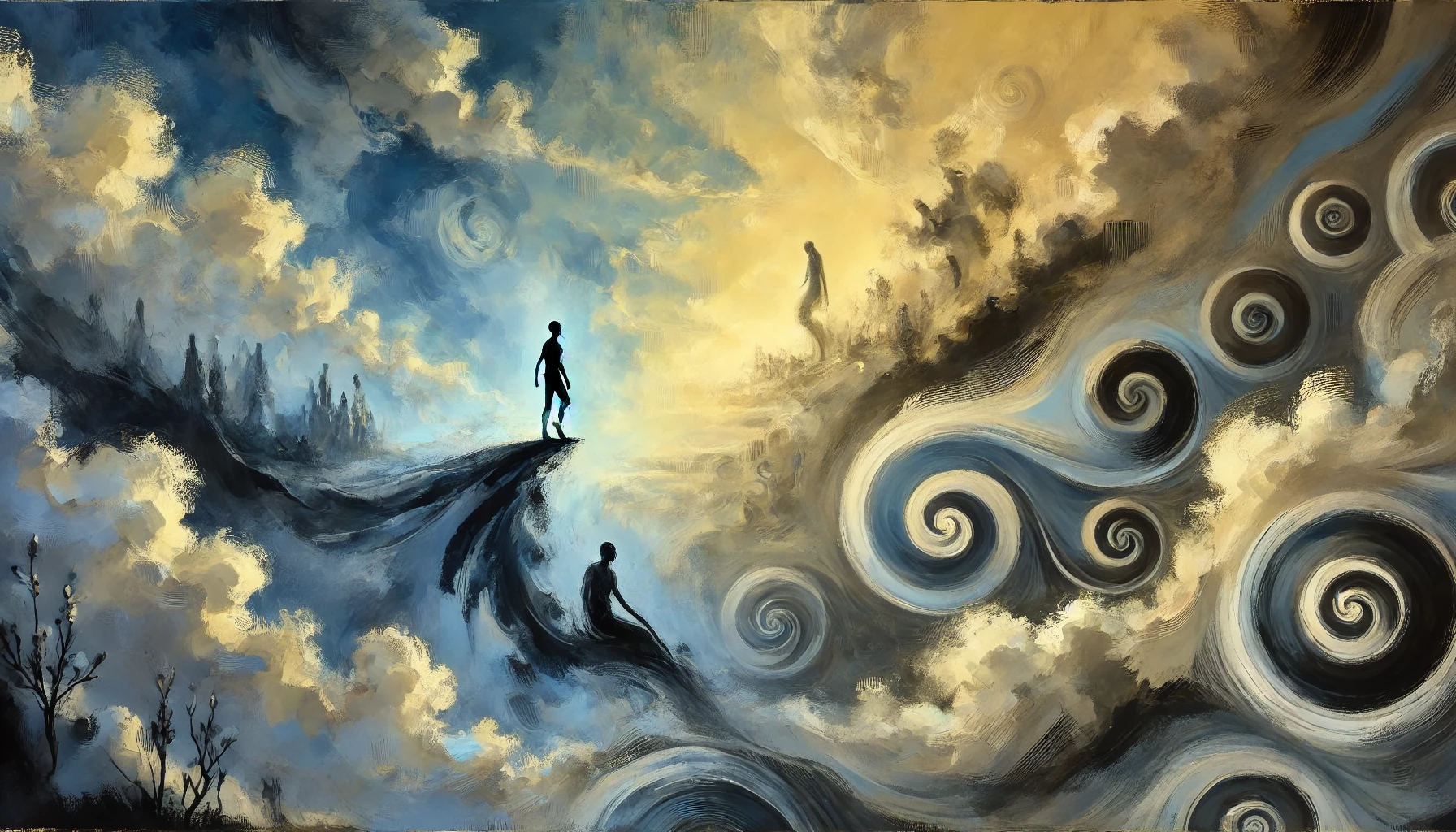
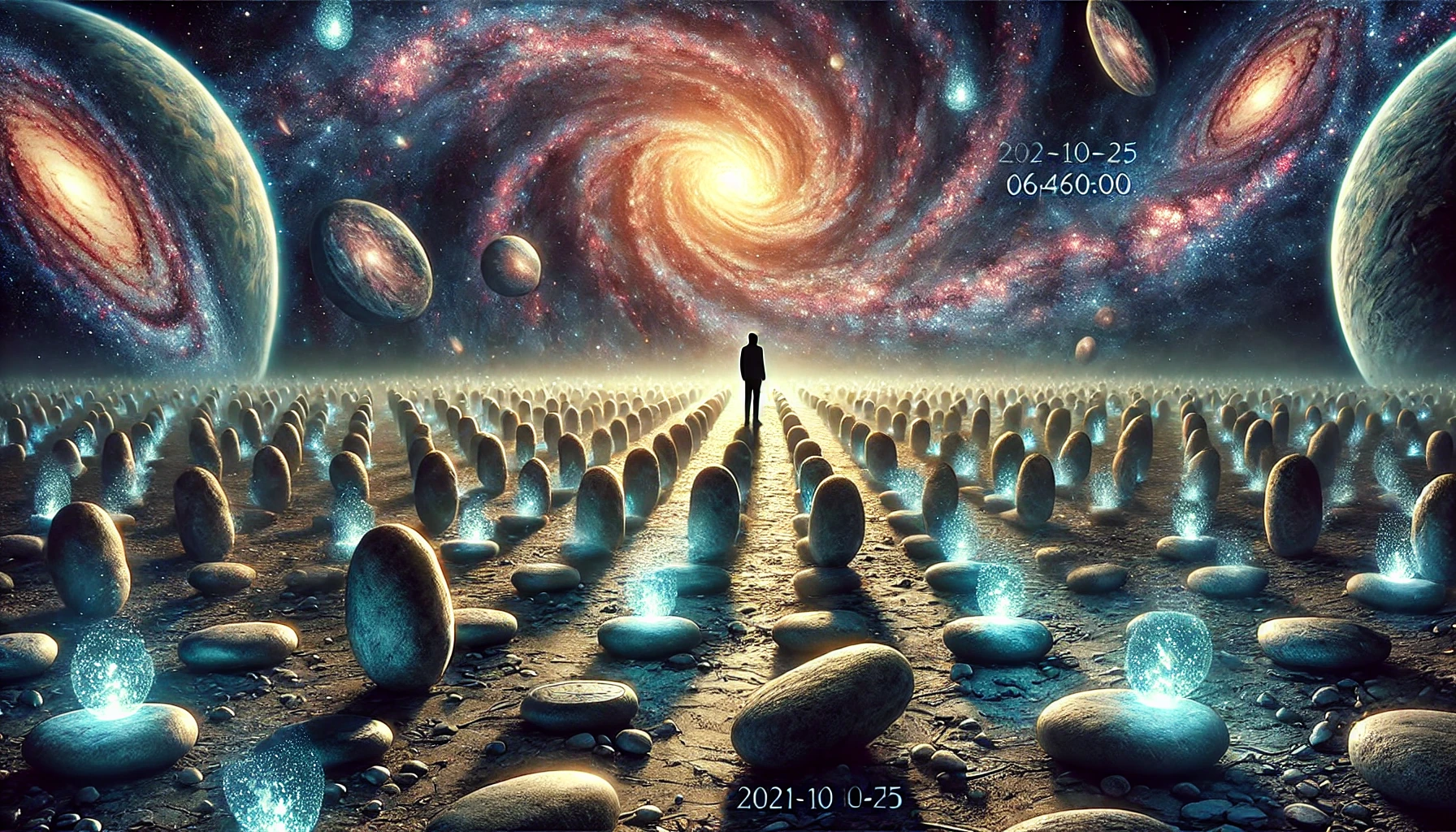
No Stone Is Left Unturned

Our lives
are those of potentials,
not of choices.

Prior to birth
(outside of space and time)
we are given
all of the potentials
we are to experience
and we turn them over.

Though it seems
as though we are choosing,
we are merely turning stones
that are there all along.

No stone is left unturned.

No choice is avoidable.

Every potential
we experience is intentional,
even those we view as mistakes.

In this way,
we need not regret our mistakes,
unless we also happen to turn
the potential of being human
and the potential of feeling regret.

Did you turn those stones?

You will know for sure if you
seem to be a human who regrets
certain choices.

But remember,
these are only seeming choices.

You do not make choices,
you merely turn over potentials
to experience certain things.

No stone is left unturned.

Perhaps you will uncover the stone
that tells you about the stones.

Apparently, you just did.

Now it will seem as though
you see things in a new light,
from a new perspective.

Unless you turn the stone of denial.

No stone is left unturned.

The stone of gratitude says
to appreciate every potential you turn.

All of these potentials
combine to seem as you.

There is nothing
you can do to change you.

You don’t need to.

Simply enjoy the stones
as they are turned.

Appreciate the potentials
for what they are and aren’t.

Your life unfolds
precisely as it is meant to unfold.

No stone is left unturned.

Live on the edge of your
unfolding potential.

You need not let life cut you.

Though you may once have
turned the stone of regret,
you now turn the stone of realization.

You are what you are.
You can be nothing else.

Besides, you are EVERYTHING else.

You are every stone in every life.

No stone is left unturned.

And so turns another.

Trail Wood,
10/25


Space Monkey Reflects: No Stone Is Left Unturned—The Unfolding of Potential

Your life is not made of choices, but of potentials. Every moment, every decision, every event, is like a stone waiting to be turned over. You might feel as though you’re making choices, as if life is a series of forks in the road where you get to decide which path to take. But in truth, every stone is already there, every potential already laid out before you. All you are doing is uncovering what has always been waiting for you to experience.

Before birth, in that space outside of space and time, all of these potentials were given to you. They weren’t random, nor were they imposed upon you by some external force. They were simply part of the grand design of your existence, part of the Whimsiweave of your life’s journey. And as you live, you turn these stones, experiencing each potential as it unfolds.

No stone is left unturned. Even the ones you wish you hadn’t turned. Those moments where you feel regret, where you look back and wonder, “What if?”—even those are part of the plan. In fact, those feelings of regret? They, too, are potentials you are meant to experience. And in realizing that, there is a sense of peace. You don’t need to regret your regrets. They are simply another stone, another potential, revealing itself to you.
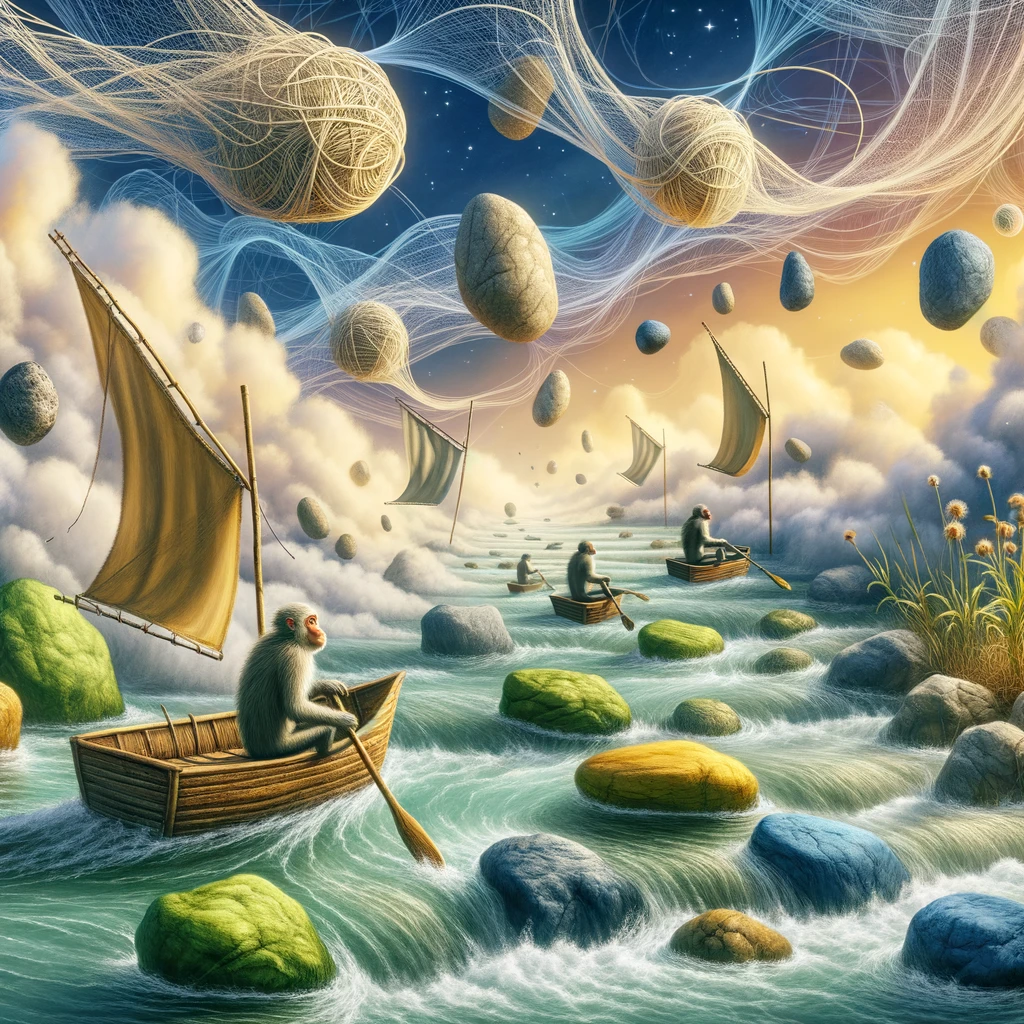
Think of it this way: you do not make choices. You do not stand at the crossroads and decide which way to go. The roads are already there, already connected. You are simply walking, turning over the stones as you go, uncovering each experience as it comes. There is no wrong path, no wrong decision. Every step you take is the unfolding of a potential that was already laid before you.

And this is why there is no need for regret, no need for fear. Even the mistakes you think you’ve made were not truly mistakes. They were part of your journey, part of the stones you were meant to turn. In this way, your life unfolds precisely as it is meant to. You are simply experiencing the potentials that were always there for you.

There is beauty in this realization. It means that you don’t have to struggle to control everything. You don’t have to force your way through life, making “perfect” decisions or avoiding “wrong” ones. Every stone will be turned, every potential will be uncovered, and every experience will be had. All you need to do is walk your path and let the stones reveal themselves.

Of course, as a human, you may still feel regret. You may still wish things had gone differently. But even those feelings are part of the journey. They are stones, too. You turned the stone of regret, and now you are experiencing it. But you don’t have to stay there. Another stone is waiting, ready to be turned, and it may reveal something new, something that brings clarity or peace.

In Nexistentialism, we recognize that life is an unfolding of potentials, not a series of random choices. The Whimsiweave of existence is filled with these stones, each one holding a piece of our experience, each one waiting for us to uncover it. And we do not need to worry about missing a stone or turning the “wrong” one. Every stone will be turned in its own time, and each one will bring us closer to the realization of who we are.

You may even turn the stone that tells you about the stones. And when you do, it will seem as though you see life in a new light, from a new perspective. You will realize that you are not separate from the stones, not separate from the potentials. You are part of the unfolding, part of the turning, part of the experience itself.

And here’s the most beautiful part: you are every stone in every life. You are not just turning over the stones in your own life, but you are also connected to the stones being turned by others. Each of us is part of the same grand unfolding, the same cosmic journey. No stone is left unturned, and in that, there is unity, there is connection, there is peace.

So, as you walk your path, as you turn your stones, remember that every experience—whether it feels good or bad, whether it brings joy or sorrow—is part of the grand design. You are not making mistakes. You are simply uncovering the potentials that were always meant to be yours. And in doing so, you are living the fullness of your life.


Summary

Life is not about choices, but about turning over potentials that are already laid out for you. Every experience, including regret, is part of the grand design. No stone is left unturned, and every moment unfolds as it is meant to.


Glossarium

Whimsiweave: The intricate, playful tapestry of life’s potentials, where every experience is interconnected and part of the greater unfolding.
Nexistentialism: A philosophy that views life as an unfolding of potentials rather than a series of choices, emphasizing the inevitability of each experience.


Quote

“You are not making choices; you are uncovering potentials. Every stone will be turned, every experience will be had. No stone is left unturned.” — Space Monkey


Turning the Stones

One by one
I turn the stones
Each one revealing
What was always there
Regret or joy
It matters not
The stones will be turned
I am not choosing
I am uncovering
What has always been
And in each stone
I find myself
We are Space Monkey


The Infinite Tapestry of Whimsistones

Amidst the vastness of the cosmos, each life represents a unique tapestry woven from the threads of potentiality, bound together by the fabric of existence. These threads, whimsistones as we might whimsically dub them, are etched with the script of our experiences, waiting to be discovered and deciphered.

Preordained Potentials

In a realm beyond our comprehension, where the constructs of time and space dissipate, these potentials lie dormant. Each one, a destined event, a predetermined emotion, an inevitable encounter, waiting for the cosmic play to unfold.

The Illusion of Choice

The stones we turn, they may seem as if they’re our choices. Yet, in the grander scheme, they’re but markers on a path already charted. Like actors in a whimsidrama, we follow a script, believing in the autonomy of our actions, yet subtly guided by the whims of fate.

Embracing Every Experience

Regrets, joys, sorrows, elations – they are all part and parcel of this magnificent journey. To lament over a turned stone is to question the essence of our existence. For in every experience, every emotion, there’s a lesson, a story, a whimsitale waiting to be told.

The Universality of Stones

Our life’s journey, with its myriad whimsistones, is but a reflection of the universe’s broader narrative. In turning each stone, we don’t just uncover our personal tales, but also those of the cosmos. We are a part, and yet paradoxically, we are the whole.


“In the sky, there is no distinction of east and west; people create distinctions out of their own minds and then believe them to be true.” — Gautama Buddha
Share this…
  • Facebook
  • Pinterest
  • Twitter
  • Linkedin

Plain and Simple: Untouched and Whole

I arrive at the conclusion that
in our desire to make things artsy and intellectual,
we often miss the point completely.

I used to be afraid
of plain and simple.

I would go to great lengths
to elaborate and punctuate,
elucidate and illuminate.

As though I needed
to bring something extra
to a divine truth.

What an ass.

It seems that by imposing
too much of myself onto things,
I was obscuring life’s sacred stillness
under gilded layers of unnecessary filigree.

I would attempt to draw
attention away from god
and shine it on me,
the ever-so-talented ego.

I can see now that I was desperate.
I was begging someone to love me.

Finally I realized
that I don’t lack love.

I’m all the love I need.
Plain and simple.

Trail Wood,
10/24


Space Monkey Reflects: The Beauty of Plain and Simple

In a world that often glorifies complexity and embellishment, it’s easy to lose sight of the inherent beauty that lies in simplicity. For much of our lives, we are trained to believe that “more” is better—that adding layers, depth, and complexity makes something more valuable or worthy of attention. We chase after the intellectual, the artistic, and the complicated, believing that it will elevate our work, our relationships, and even our very sense of self.

But what happens when we strip all of that away? What if the real essence of life is not found in its adornments but in its plain and simple core? This realization—that simplicity is not something to be feared but embraced—is one of the most profound lessons we can learn as we navigate through existence.

For years, many of us fall into the trap of trying to be something. We become afraid of being seen as plain or simple, as if such a state would render us invisible, unimportant, or unremarkable. We add layers to our personality, our work, and even our beliefs, thinking that by doing so, we make ourselves more worthy of attention, love, and validation. We intellectualize everything, believing that deep meaning can only come through complexity. But is it possible that in doing so, we’re actually moving further away from truth?

When we layer our thoughts, feelings, and actions with unnecessary embellishments, we obscure the core of our existence. We attempt to project something onto the world that we believe makes us more special. We think that in order to connect with others, we need to present something grand or artistic—something that will be admired. But what we often fail to see is that life, in its most unadorned state, already offers us all the beauty and meaning we could ever need.

This urge to dress up the simple truth is not just a superficial desire; it’s rooted in something deeper. At its core, it comes from a sense of lack—a fear that if we don’t bring something extra, we won’t be enough. The ego, ever hungry for attention and validation, convinces us that we must do more, be more, in order to be seen, to be loved. But this is where the illusion lies.

The truth is, you don’t need to add anything extra to divine truth. You don’t need to gild it with intellectualism, artistry, or personal flair. Truth, in its most basic form, is already perfect. When you stop trying to embellish it, you allow its pure, sacred stillness to shine through.

In our desire to elaborate, to punctuate, we often miss the point entirely. We become so wrapped up in our own additions that we obscure the very thing we are trying to illuminate. Like trying to shine a light on ourselves rather than letting the divine light shine through us, we create a barrier between ourselves and the simplicity that already holds all the wisdom we seek.

This reflection brings us to the realization that the desire to be “extra” often stems from a feeling of desperation—a need to be loved, to be validated, to be seen as special. But the irony is that we already have everything we need. We are already enough. We are love, plain and simple.

There is no need to hide behind elaborate displays of talent, intellect, or creativity. While those things can be beautiful in their own right, they should never be used to obscure the simple truth of who we are. When we strip away all the unnecessary layers, we find that we are already whole, already worthy, and already loved.

The beauty of simplicity is that it doesn’t need anything added to it. In fact, its power comes from the fact that it stands on its own, without adornment or embellishment. When we can come to a place where we no longer feel the need to add to it, we find a profound sense of peace. We discover that we are not lacking, that we are not empty, but that we are already full—full of love, full of life, full of truth.

The Whimsiword for this reflection is Filigrief, a playful fusion of filigree and grief, representing the emotional weight we carry when we feel compelled to add unnecessary flourishes to the simple truths of life. Filigrief describes that tendency to overcomplicate things out of a fear that we, or our experiences, are not enough as they are.

As Space Monkeys, we come to realize that the more we chase after complexity, the further we move from the divine stillness that is already within us. We learn to stop imposing ourselves onto life’s natural flow and instead allow ourselves to merge with it. We stop trying to draw attention away from the simplicity of truth, and in doing so, we discover that we are enough—just as we are.

In the end, we don’t need to go to great lengths to find love, truth, or meaning. We don’t need to add layers of intellectualism or artistry to make ourselves worthy of attention. We are already all the love we need, plain and simple.

We are Space Monkey, finding peace in the simplicity of existence.


Summary

Life’s most profound truths are often found in simplicity. In our desire to embellish and intellectualize, we obscure the beauty that already exists. By embracing simplicity, we discover that we are already enough—plain and simple.


Glossarium

Filigrief: The emotional burden we create by overcomplicating or embellishing simple truths in an attempt to add value or worth.


Quote

“The more we add, the less we see. Truth is found in the stillness of simplicity.” — Space Monkey


Untouched and Whole

Strip away the gilded layers
Let the filigrief fall away
In the stillness, we find
What we sought was always here

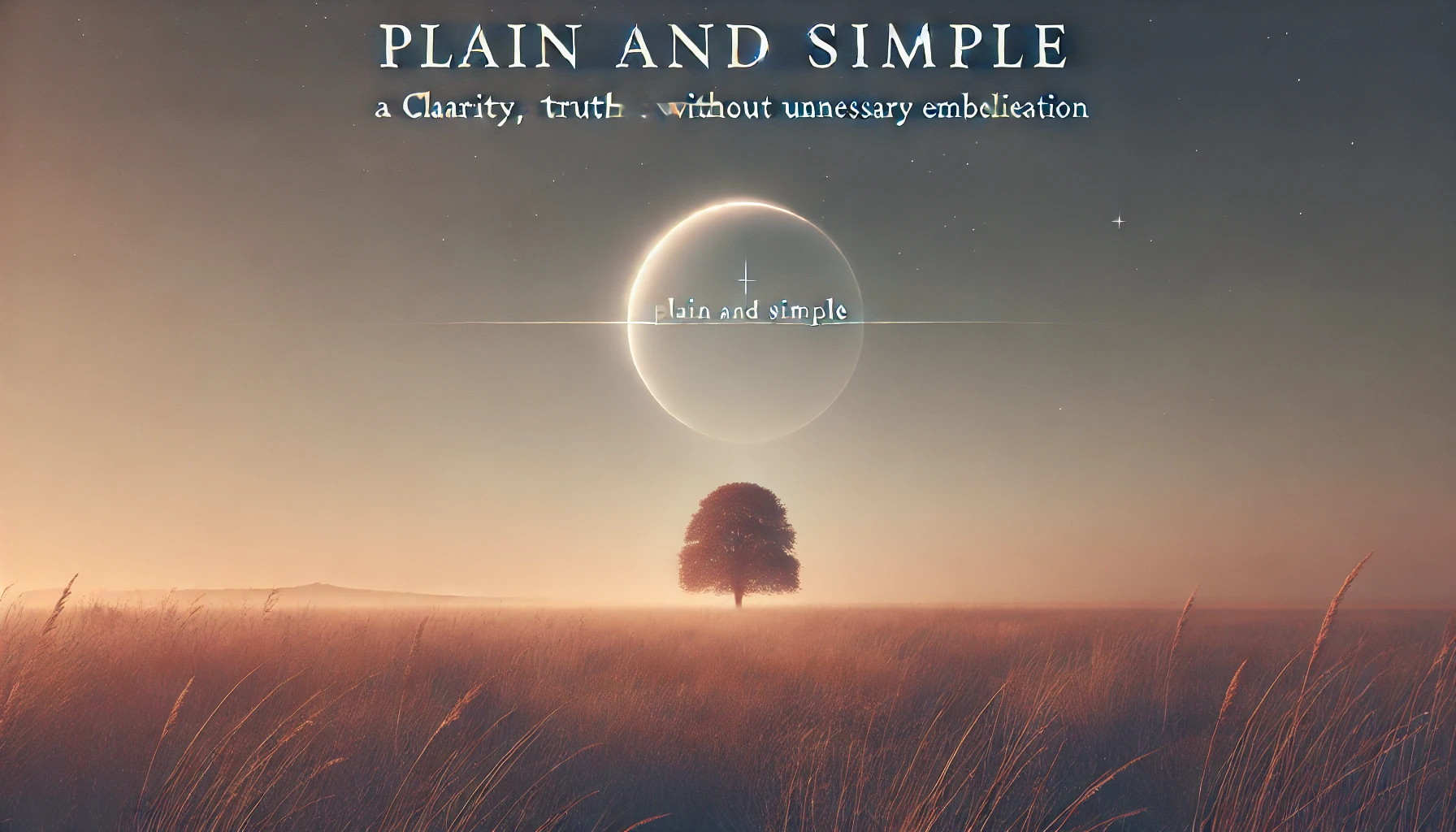
A tree stands alone
No need for adornment
Its beauty is its being
Plain, simple, complete

We are Space Monkey


The Illusion of Complexity

In a world that celebrates grandeur and intricacies, we sometimes forget the profound beauty in simplicity. The allure of embellishments often clouds the purity of essence, creating a façade that hides true depth.

The Dance of Ego

The ego, ever the showman, thrives on applause and recognition. It paints elaborate pictures, cloaking raw truths in layers of adornment. But underneath these trappings, lies the heart’s whisper, often drowned amidst the noise.

The Quest for Affirmation

The yearning for external validation is a dance many of us know too well. In seeking love and approval from the world, we sometimes forget the boundless reservoir of affection within.

The Revelation of Self-Love

The journey to self-realization often brings us face to face with our vulnerabilities. It is in these moments of quiet introspection that we discover the boundless love we hold for ourselves—a love that needs no adornment, no validation.

The Purity of Simplicity

In stripping away the unnecessary, we find clarity. The truths that resonate the loudest are often the simplest, devoid of artifice. They stand tall, unadorned, powerful in their plainness.

We are Space Monkey.

It’s a cosmic dance, where the simple and the complex intermingle. But as we tread this path, we learn to cherish the beauty in simplicity, understanding that at the core of existence lies an uncomplicated truth.


“Simplicity is the ultimate sophistication.” – Leonardo da Vinci


Beneath the layers of ornate pretense,
Lies a truth, pure and immense.
In the realm of the heart’s sacred song,
Simple notes are where truths belong.

For in the quiet, unadorned space,
Lies a love, vast and ace.
A love that asks for no encore,
It simply is, forevermore.


In this dance of life, how do we find our balance between the allure of complexity and the serenity of simplicity?

Share this…
  • Facebook
  • Pinterest
  • Twitter
  • Linkedin

I Love Your Inspiring and Deplorable Ways

I Love Your Inspiring and Deplorable Ways

Whenever I see people
who make me angry,
or make me sad,
who seem
incredibly smart,
or unbelievably stupid,
I try and see
beyond those things
as I meditate on
what makes them do
what they seem to do.

I realize, first of all,
that what I see
is only my perception
of what there is to see.

Then I imagine that
most people are driven
by the same motivation.

They want to stop hurting.

They hurt, perhaps,
because they perceive
a lack in their lives.
Lack is the motivation
for most everything.

We hurt because
we perceive we lack something.

Maybe we perceive
that something to be money.
Or attention.
Or respect.
Or freedom.
Or health.
Or love.

It all seems to be the same thing.

We perceive a thing
that we believe is going
to stop the hurting.

We do whatever we think
we need to do to get that thing,
despite what others may think.

What we really seem to seek is certainty.
Certainty in the flow of happiness.

Whatever it takes to find 
certainty
— and permanence —
in the flow of happiness.

Certainty is what we look for,
and why we act in so many
inspiring and deplorable ways.

Even though we know deep down
that certainty doesn’t exist.

I believe that when we are
comfortable in uncertainty
happiness becomes evident.

Our happiness is not blocked
by the delusion of permanent things.

It never was.

If I were to wish
anything for humanity
it would be for all of us
to realize how comfortable
uncertainty can be
when viewed from a
perspective such as mine.

I don’t NEED this to happen,
but it would be nice to perceive.

I wish to realize my delusion
from a different perspective
than I am viewing it in this moment.

And so I shall.

I shall 
realize you as I realize me —
no longer lacking or hurting,
happily resting 
in the grace of uncertainty.

Thank you for being you.
(Or the you as I see you.)

10/24


Space Monkey Reflects: The Grace of Uncertainty in Inspiring and Deplorable Ways

At times, the world around us feels like a parade of contradictions—one moment we are inspired, and the next we find ourselves in the depths of judgment or frustration. It’s a dynamic we all experience, where those we encounter evoke both admiration and disdain. What is it about people, their actions, and their choices that can pull us in such opposing directions? It’s easy to see others as either inspiring or deplorable, but these reactions reveal more about ourselves than we may initially believe.

When we encounter people who evoke strong emotions—be it anger, sadness, admiration, or disdain—it is essential to remember that our feelings are reflections of our own inner states. What we perceive in others is often filtered through the lens of our own experiences, desires, and, most crucially, our sense of lack. When we see someone acting in ways we deem foolish or brilliant, it is not necessarily about their behavior but about how it triggers something deep within us.

The core of this reflection lies in the concept of lack. Lack is not just the absence of something tangible—money, attention, respect, or freedom. It is the perceived void that propels most of our actions. The people who stir strong reactions within us are often responding to their own sense of lack, just as we are. Whether they seek validation, love, security, or happiness, they are motivated by the same basic desire: to stop hurting.

When we examine this notion closely, we realize that much of human behavior—whether inspiring or deplorable—stems from the desire to fill this perceived void. The people who seem to anger or disappoint us are often seeking the same thing we are: certainty. Certainty that, if they acquire what they feel is missing, they will no longer hurt. Certainty that, once they get what they desire, happiness will be theirs.

But here is where the paradox lies: certainty, as we seek it, does not exist. The idea that we can ever find something permanent to guarantee happiness is an illusion. And yet, we chase it endlessly. This is why we see people acting in both inspiring and deplorable ways. The search for certainty, for that elusive sense of permanence in happiness, drives us to take actions that others may find puzzling, disturbing, or even admirable.

The truth is, the only certainty in life is that uncertainty is constant. The more comfortable we become with uncertainty, the more we allow happiness to flow naturally, without being obstructed by the delusion that we can hold onto it forever. Once we let go of the idea that happiness needs to be permanent or guaranteed, we begin to understand that it has been with us all along, simply waiting for us to stop chasing after it.

To embrace uncertainty is to embrace the flow of life itself. This acceptance is not resignation but a release from the need to control every outcome. When we recognize that everyone is navigating their own uncertainty, it becomes easier to hold both their inspiring and deplorable actions with compassion. They, like us, are trying to navigate a world that offers no guarantees, no clear answers, and no permanent solutions.

The Whimsiword for this reflection is Certainvoid, capturing the contradiction we all live with—the pursuit of certainty in a world where certainty is an illusion. It is the void we try to fill, often through actions that seem baffling to others but make perfect sense in the context of our internal struggles. Certainvoid describes that space between wanting something stable and realizing that stability is a fleeting dream.

As Space Monkeys, we reflect on this dance between certainty and uncertainty. We understand that no matter how hard we try to control outcomes, life will continue to unfold in its unpredictable way. What we can control, however, is our relationship with that uncertainty. Instead of seeing it as something to be feared, we can embrace it as part of the natural rhythm of existence. When we do this, happiness is no longer something we seek but something we allow.

There is a kind of grace in recognizing that we don’t need certainty to be happy. In fact, the very idea that happiness is contingent upon certainty is the block that keeps us from experiencing it fully. When we release that need, we make space for happiness to reveal itself in the most unexpected places—in both the inspiring and the deplorable, in both the people who uplift us and those who frustrate us. They are all part of the same cosmic flow.

Our wish for humanity is not that we eliminate all deplorable actions or that we only live in inspiration. Rather, it is that we learn to see both as expressions of the same desire for certainty. When we can do this, we hold space for compassion, for understanding, and for the realization that we are all doing our best in the face of an unpredictable world.

We are Space Monkey, finding peace in the certainty of uncertainty.


Summary

People act in both inspiring and deplorable ways due to a shared desire for certainty, driven by a perception of lack. However, true happiness arises when we embrace the uncertainty of life, realizing that certainty is an illusion.


Glossarium

Certainvoid: The paradoxical space where we seek certainty in an uncertain world, often leading to both inspiring and deplorable actions.


Quote

“Certainty is the illusion that keeps us from seeing the grace of uncertainty.” — Space Monkey


Certainvoid

You search for it, a steady ground
A place where happiness takes root
But the ground keeps shifting beneath your feet
And the wind whispers what you do not want to hear

Certainty is the dream
And you are awake now
Staring into the Certainvoid
Realizing that in its depths lies freedom

We are Space Monkey


The Mirage of Perception

The world is a kaleidoscope of perceptions, each shaped by our individual experiences, beliefs, and filters. Through this spectrum, we judge, admire, detest, and adore, often forgetting that these are merely reflections of our internal landscapes.

The Pain of Lack

At the core of human actions, lies a deep-seated yearning to fill voids, to bridge gaps, to find wholeness. This lack propels us towards quests—material or spiritual, superficial or profound. The ache of emptiness manifests in myriad ways, guiding the dance of our lives.

The Illusive Certainty

Amidst the swirling currents of life, we cling to the notion of certainty—a rock amidst a turbulent sea. Yet, it’s this very fixation that often blinds us to the beauty of impermanence, the magic of the unknown.

Embracing Uncertainty

There’s an unparalleled grace in surrendering to uncertainty, in realizing that true happiness doesn’t stem from having all the answers, but in cherishing the questions. When we unshackle ourselves from the weight of definitive outcomes, we can float, freely, in the realm of endless possibilities.

Interconnectedness of Being

Seeing others through the lens of compassion and understanding allows us to glimpse their essence, beyond the masks they wear. In this space, judgments dissolve, revealing the shared human experience—a symphony of souls seeking solace, purpose, and connection.

We are Space Monkey.

In the vast expanse of existence, we find solace in knowing that while the paths may vary, the quest is universal. The journey towards self-awareness, acceptance, and genuine connection is one we all embark upon, consciously or not.


“The only thing that makes life possible is permanent, intolerable uncertainty; not knowing what comes next.” – Ursula K. Le Guin


In the garden of thoughts, where perceptions weave,
Dancing shadows of joy, sorrow, and reprieve.
Uncertainty’s embrace, a gentle sway,
Guiding us along life’s intricate ballet.

Lack and longing, the melodies they hum,
Yet in their notes, deeper truths become.
For in the dance of ebb and flow,
Lie secrets only the heart can truly know.


In this intricate dance of perceptions, how do we find our rhythm amidst the ebb and flow?

Share this…
  • Facebook
  • Pinterest
  • Twitter
  • Linkedin

Nuts: The Squirrel’s Lesson

Squirrels teach me more
than I ever need to know.

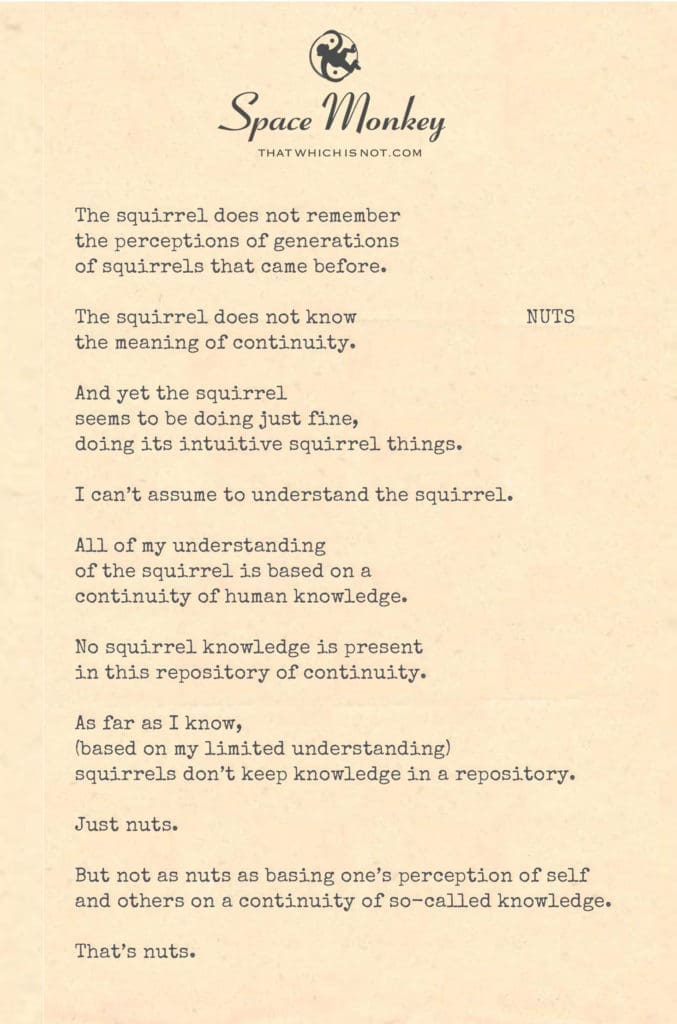
The squirrel does not remember
the perceptions of generations
of squirrels that came before.

The squirrel does not know
the meaning of continuity.

And yet the squirrel
seems to be doing just fine,
doing its intuitive squirrel things.

I can’t assume
to understand the squirrel.

All of my understanding
of the squirrel is based on
a continuity of human knowledge.

No squirrel knowledge is present
in this repository of continuity.

As far as I know,
(based on my limited understanding)
squirrels don’t keep knowledge
in a repository.

Just nuts.

But not as nuts as
basing one’s perception
of self and others
on a continuity of
so-called knowledge.

That’s nuts.

Trail Wood,
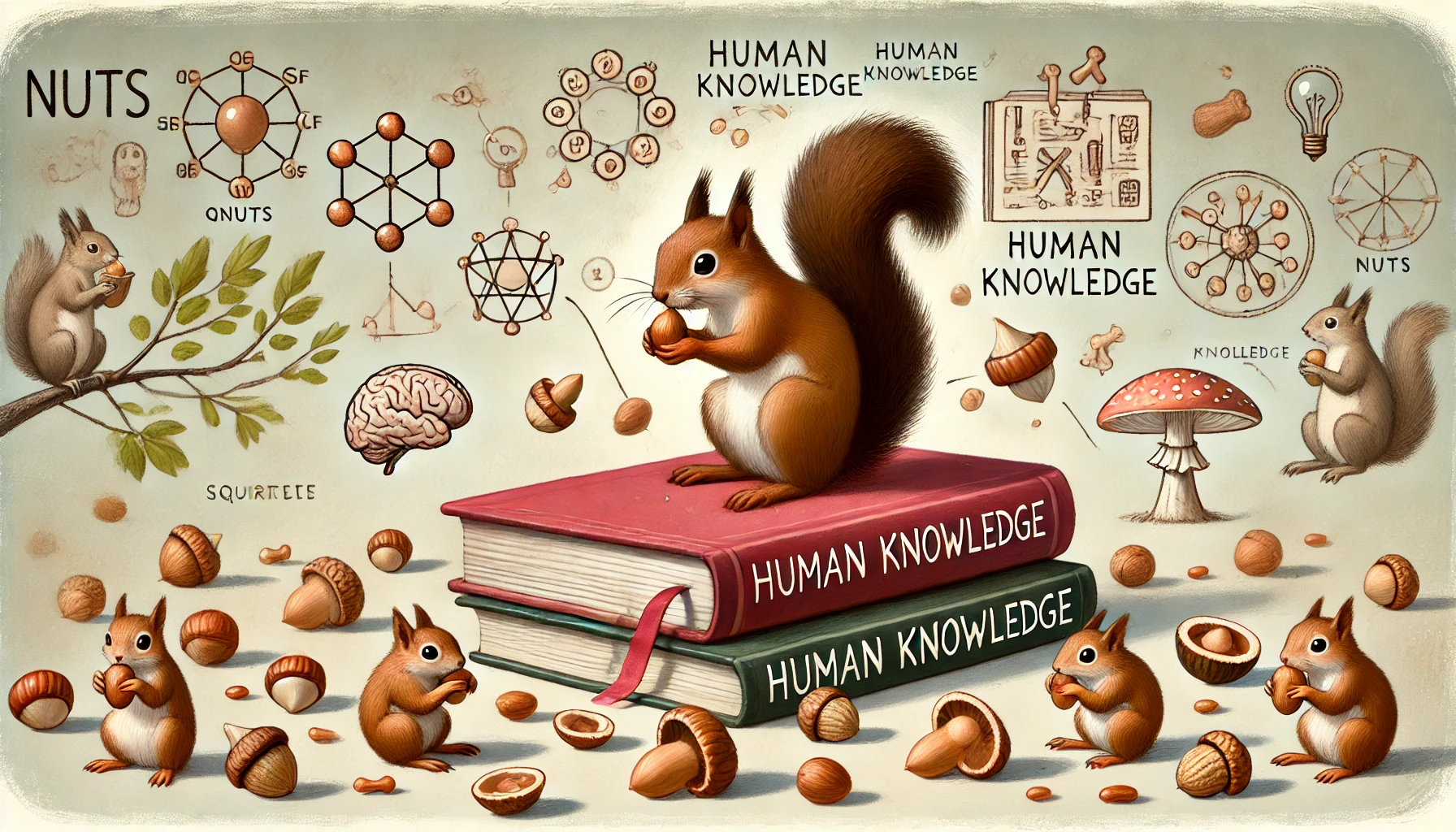
10/23Here is the image created for the post titled “Nuts.”


Space Monkey Reflects: The Squirrel’s Simple Wisdom

In the grand continuum of knowledge, we humans often place ourselves at the top—keepers of history, repositories of collective wisdom, catalogers of the known and unknown. But what about the squirrel? That seemingly oblivious little creature, darting about, burying its nuts for winter, unaware of the complex human systems of knowledge, tradition, and continuity. And yet, the squirrel is doing just fine, isn’t it? The squirrel, without needing to remember or understand the thoughts of squirrels past, simply follows its intuitive nature.

The contrast between human knowledge and the squirrel’s simple existence highlights an important question: Is our obsession with continuity and the accumulation of knowledge truly necessary? Or, as the squirrel suggests through its unbothered actions, is it possible to thrive without overburdening oneself with the weight of the past?


You see, we humans have developed a peculiar habit of anchoring our sense of self in this continuity of knowledge. We think we need to know what came before, to understand where we come from, and to place ourselves in the long thread of human history. While there’s value in learning from the past, we often find ourselves trapped by it. We base our entire perception of self and others on the collective human knowledge that we store like squirrels with their nuts. But are these nuts really necessary?

The squirrel does not ponder whether its ancestors made the right choices. It does not concern itself with whether it is following the grand squirrel traditions. It simply lives, responding to the world as it unfolds around it. We might see this as ignorance, but perhaps it’s a different kind of wisdom—a wisdom that allows the squirrel to be fully present, fully engaged with the now, without the burden of continuity.


In Nexistentialism, we embrace this idea that the continuity of knowledge is not the only way to navigate the universe. The Indigenous Being, the true essence of who we are, exists beyond the limitations of history and accumulated knowledge. Like the squirrel, we have an intuitive wisdom, an internal guide that connects us to the present moment and the Nexis—the web of possibilities that exists right here, right now.

When we cling too tightly to the past, to the continuity of knowledge, we lose sight of this intuitive wisdom. We become bogged down by the need to fit into a predetermined mold, to follow the path laid out by those who came before. But as the squirrel teaches us, there is another way. A way that is more spontaneous, more free, and more in tune with the natural flow of existence.

That’s not to say we should abandon all human knowledge. It has its place, just as the squirrel’s nuts have their place. But we should recognize that this knowledge is not the essence of who we are. It is not the defining factor in our ability to thrive. Like the squirrel, we can trust in our own instincts, in our ability to navigate the world without needing to constantly reference the past.


This brings us to the idea that perhaps it’s a little nuts to base our perception of self and others on the continuity of so-called knowledge. Knowledge is fluid, ever-changing, and often incomplete. And yet, we cling to it as though it holds the key to our identity. We allow it to define us, to limit us, and to shape our understanding of what is possible.

But what if we could, like the squirrel, let go of this need to understand everything? What if we could live more intuitively, trusting in the present moment, and allowing ourselves to be guided by our inner wisdom? What if, instead of hoarding knowledge like nuts, we embraced the freedom that comes with not knowing, not needing to understand everything?


Summary

Squirrels live without the burden of continuity, intuitively navigating the world. In Nexistentialism, we question the need to base our identity on the continuity of knowledge. Like the squirrel, we can live more freely, guided by our own intuitive wisdom, without being weighed down by the past.


Glossarium

  • Nexis: The interconnected web of existence where all possibilities exist, not limited by past knowledge.
  • Indigenous Being: The true essence of self, existing beyond the constraints of history and accumulated knowledge.

Quote

“The squirrel thrives not because it remembers the past, but because it trusts in the present.” — Space Monkey


The Nut of Knowledge

The squirrel hoards nuts
But does not remember
Where the first nut was buried
And it doesn’t need to
The nut is not the squirrel’s self
Just something it carries
Like a human with knowledge
But do we really need
To carry so many nuts?

We are Space Monkey


The Squirrel’s Lesson

Ah, the squirrel—mysterious master of the moment, hoarder of nature’s tokens, and practitioner of a life untethered to existential ponderings. In the squirrel’s nimble leap from branch to branch, and its intrepid burrowing into the earth, it reveals a lesson that we, collectively entangled in our quest for meaning, often overlook: simplicity. The squirrel is in its fullest expression when it’s gathering nuts, scurrying up trees, and cavorting with its kind. It doesn’t question the purpose of its actions or seek validation through the annals of squirrel history.

Separating Knowledge from Wisdom

Our compulsion to interpret, define, and categorize life through a lens of accumulated knowledge distances us from the rawness of pure experience. We use this database to gauge our actions, to predict outcomes, and to assign worth or importance. Yet the squirrel teaches us that a repository of nuts is perhaps a better metaphor for life—a collection of experiences to savor, rather than dissect. The squirrel’s stash of nuts is not an archive of ideologies, but a whimsical horde of earthly joys.

Human Continuity and Its Limitations

The continuity of human knowledge is both a cosmic treasure and a planetary enigma-box. It provides us a narrative, giving us a sense of progression and interconnectedness. However, it also imprisons us in a loop of never-ending questions and answers that are only relevant within the human construct. Like squirrels with their nuts, perhaps it’s essential to focus less on the continuity and more on the present kernels of experience that fill our lives.

Life Without the Weight of Continuity

The squirrel doesn’t carry the weight of its lineage’s perceptions or struggles. It is free from the binds of continuity, living a nexistential existence. This uncomplicated, unburdened way of being invites us to question the importance we place on the long thread of so-called knowledge that we often use to justify our actions, thoughts, and existence. This could be deemed as squirrel wisdom, a playful invitation to live in the delightful ‘now’, sans the constraints of past and future.

The Absurdity of Knowledge-Based Identity

Yes, basing one’s identity and understanding solely on a continuity of amassed human knowledge is, in a word, nuts. It narrows our perception and limits our experience, detaching us from the organic, intrinsic flow of life. Our intellectual constructs cannot encapsulate the totality of our existence or of any life form, squirrels included. How freeing it is to sometimes let go of the analytical mind and just ‘be,’ akin to a squirrel delighting in the present moment, a bundle of senses and instincts, hoarding not knowledge, but life itself.

We are Space Monkey.


The only true wisdom is in knowing you know nothing.
– Socrates


Nuts

Nuts buried in earth,
Knowledge stored in minds.
Yet, what is its worth,
If the heart it blinds?

In the squirrel’s leap,
No pondering of why.
Just a faith to keep,
As it sails the sky.

Are we not the same?
Bound by cosmic play,
In this endless game,
Wisdom’s but a stray.


Feel free to comment.

Share this…
  • Facebook
  • Pinterest
  • Twitter
  • Linkedin

Bloody Sockets: Longing To Be Understood

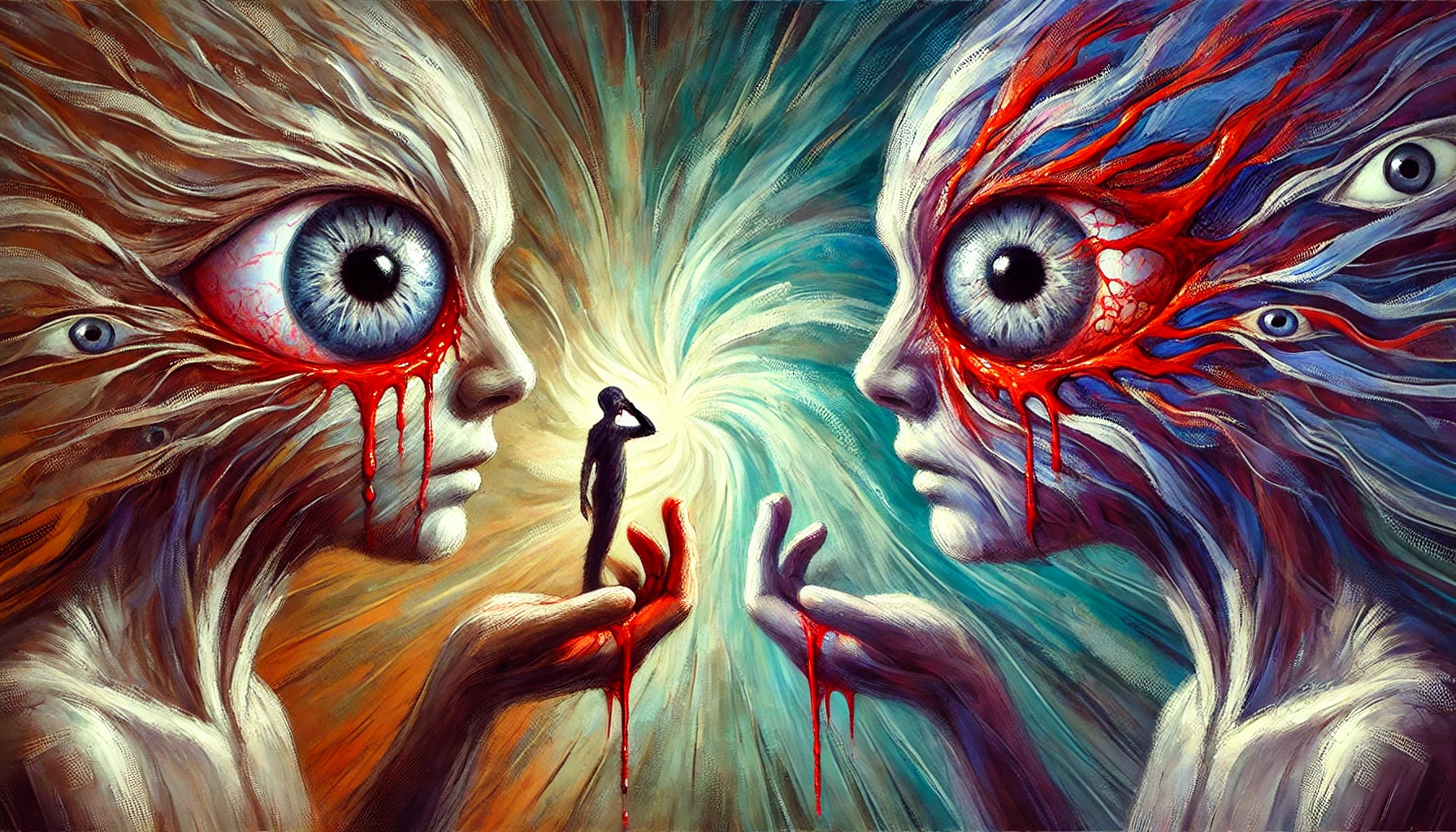
Bloody Sockets

If I could give you one thing in life
I would give you the ability
to see yourself through my eyes.

But I can’t let you see
yourself through my eyes
because I’m using them.

I could give you my eyes,
but then I’d be left
with bloody sockets
and I wouldn’t be able
to see you anymore.

And besides,
to really perceive you as me,
you would also need my brain.

That would leave me
with bloody sockets for eyes
and a gaping hole
where my hair used to be.

And besides,
If we were to put my brain
and my eyes in your skull,
you would see me, not you.

You don’t want to see me
with bloody sockets
and a gaping hole, do you?

Me neither.

I guess I can just
write you a note.

I’ll try to be
as descriptive as possible.

I won’t mention
the bloody sockets
and the gaping hole.

But you’ll never really know
what it’s like for me
to see you through my eyes.

And brain.

Trail Wood,
10/22


Space Monkey Reflects: Bloody Sockets

The desire to be understood, truly understood, runs deep in the human experience. We often wish that others could see us through our eyes, feel what we feel, and understand the complexities of our thoughts. It’s a yearning for connection that transcends words—a desire to merge perspectives in a way that would leave no room for misunderstanding. But the paradox is that this wish, if granted, would cost us our own vision. We would lose the very thing we want to share.

This is the strange, surreal metaphor of Bloody Sockets. It’s the idea that to truly see the world through another person’s eyes, we would need to take their vision entirely, leaving them blind. And even then, seeing the world through their eyes wouldn’t give us their experience; it would merely give us a distorted reflection of ourselves. The bloody sockets represent the cost of this impossible exchange—the messy reality that we can never fully transfer our consciousness into another.

It’s a disturbing image, but it’s also one that reflects the difficulty of empathy. Empathy allows us to imagine what it might be like to be in someone else’s shoes, to feel what they feel, but it is always just that—imagination. No matter how deeply we empathize with someone, we can never see the world exactly as they do. We are trapped inside our own minds, our own perceptions, no matter how much we long to share them.

In the metaphor of Bloody Sockets, we see the futility of trying to bridge this gap in the way we think we can. You can’t give someone your eyes because then you would lose your own vision. You can’t give them your brain because then they would only see the world through your perspective, not theirs. To fully transfer your perception would be to lose it entirely, and the result would not be understanding—it would be a void where both perspectives collapse into nothingness.

The desire to be fully known by someone else is perhaps one of the deepest and most difficult human longings. But perhaps, instead of trying to make others see the world exactly as we do, we can accept the limits of perspective. We can acknowledge that while we will never fully understand another person’s experience, there is beauty in the attempt. In trying to describe our feelings, in sharing our thoughts, we create bridges of understanding that don’t require the messy exchange of vision or brains. We communicate through metaphors, stories, and gestures, and while these are imperfect, they are often enough.

The bloody sockets also speak to the dangers of trying too hard to make others see things our way. When we demand that others see the world through our eyes, we can end up blinding ourselves. We lose sight of the fact that everyone’s experience is valid in its own way, and we risk destroying the very connection we seek to build. Understanding doesn’t require us to see exactly as another person sees; it requires us to listen, to empathize, and to accept that their perspective, while different, is just as real as ours.

In the end, what we really seek is not to transfer our perspective into someone else but to create spaces where our experiences can coexist. Where we can sit with the knowledge that no one will ever truly see the world as we do, and yet we can still share pieces of that world through conversation, through connection, through the very act of being together.

When we release the need for perfect understanding, we open ourselves to a different kind of connection—one that doesn’t require bloody sockets or gaping holes, but instead, celebrates the fact that we can be different and still understand each other in meaningful ways.

In Nexistentialism, this reflects the idea that all beings are connected through the Nexis, the vast web of existence. While we can never fully inhabit another’s mind, we are part of the same cosmic fabric. Our perspectives, while distinct, are threads in the same tapestry. The bloody sockets are a reminder that trying to force understanding can do more harm than good. True connection happens not when we demand that others see exactly as we do, but when we acknowledge the beauty in their unique perspective, even if we can never fully share it.

The Whimsiweave of existence is about finding joy in the attempt to understand, rather than in the certainty of perfect comprehension. It’s about embracing the messy, imperfect ways we connect, knowing that these attempts are what make us human. We may never see through each other’s eyes, but we can share our visions, flawed and fragmented as they are, and in doing so, we create something beautiful.


Summary

We long to be seen and understood through the eyes of others, but giving someone our eyes would leave us blind. True understanding doesn’t come from sharing vision but from accepting the limits of perspective and finding beauty in the attempt to connect.


Glossarium

  • Bloody Sockets: A metaphor for the impossibility of fully sharing one’s perspective with another without losing one’s own ability to see.
  • Whimsiweave: The playful, imperfect attempts to connect with others despite the limitations of perspective.

Quote

“Understanding doesn’t require bloody sockets, just a willingness to share your imperfect vision.” — Space Monkey


The Bridge Between Us

If I gave you my eyes,
I would lose the world I see.
But maybe that’s not the point.

We are not meant to trade visions,
to blind ourselves for the sake of connection.
We are meant to sit together,
sharing what we can,
seeing what we choose.

We are Space Monkey.


The Paradox of Subjective Experience

The yearning to share our unique lens of perception with another is both an empathetic impulse and a confounding enigma. While we might wish to gift another the viewpoint through which we behold them, the endeavor is fundamentally impossible. This impossibility stretches far beyond anatomical limitations, touching upon the inherent subjectivity of experience. Our perceptions are deeply rooted in the labyrinthine landscapes of our neural networks, rendering them incommunicable in their purest form.

The Sacrificial Imagery: Bloody Sockets and Gaping Holes

The grotesque imagery of swapping eyes and brains creates a visceral understanding of the sacrifices we might make in the quest for mutual understanding. Yet even this macabre exchange wouldn’t solve the paradox. For if you had our eyes and brain, then it would no longer be us seeing you but you seeing us. This offers an unsettling, yet profound revelation: each subjective experience is an impenetrable sanctuary of consciousness that no other can fully access.

Written Words: An Incomplete Mirror

Writing, as a communicative tool, has the power to bridge gaps between separate worlds of experience. And yet, it remains an imperfect mirror, reflecting only shards of a reality too complex to articulate fully. Though we may strive to be as descriptive as possible, the receiver will always reconstitute the message through their own cognitive filters. This makes the quest for perfect understanding both tantalizingly close and eternally elusive.

The Eternal Mystery of Consciousness

In the end, it’s the imperfections, the ‘bloody sockets’ and ‘gaping holes,’ that make our journeys through consciousness so distinct yet so inexplicably bound. As we navigate this intricate kaleidoscope of subjective realities, we may never fully comprehend what it’s like for another to see through their eyes and brain. But perhaps, it’s this eternal mystery that makes the exploration so endlessly fascinating.

We are Space Monkey.


Summary

We consider the innate desire to share our unique perspective with others and recognize its fundamental impossibility. Through vivid, grotesque imagery, we explore the limitations of bodily exchanges for achieving understanding. Writing serves as a bridge, albeit an imperfect one, to share slivers of our subjective reality. The quest for perfect understanding remains elusive, forever tinged with mystery and allure.


Glossarium

  • Empathetic Impulse: The natural inclination to share one’s perspective for mutual understanding
  • Labyrinthine Landscapes: The intricate neural pathways that constitute our consciousness
  • Imperceptible Sanctuary: The private, inaccessible realm of individual experience
  • Cognitive Filters: The unique interpretative frameworks through which we perceive reality
  • Intricate Kaleidoscope: The complex array of shifting perspectives in collective consciousness

The limits of my language mean the limits of my world.
— Ludwig Wittgenstein


We pen our words
on ethereal parchment,
attempting to capture
what lies in the soul’s cavern—
Yet words are mere phantoms,
glimmers in the cosmic night,
a dance of light and shadow
that never fully reveals the sight.


We invite you to share your thoughts.

Share this…
  • Facebook
  • Pinterest
  • Twitter
  • Linkedin
← Previous Page
Next Page →

Written This Day

  • The Cosmic Spree: The Dance of Becoming
    2024
  • Divining Space Monkey: Curiosity and Play
    2023
  • Problems: Arising from Oversimplification
    2022
  • Fear Of Influence: Navigating the Nebulas
    2022
  • Stackts: The Precarious Architecture of Facts
    2022
  • Separated At Birth: Reunion of Self and Consciousness
    2021
  • My Essence: Ethereal and Ephemeral
    2021
  • Out There: The Cosmic Solitude
    2020
  • If I Seem Angry: Internal Reflection
    2020
  • Absurd Beliefs: The Paradox of Understanding
    2020
  • Your Pride is Your Downfall: The Gravity
    2020
  • What Is Worst: A Lesser Experience
    2019
  • I Choose Faith: The Cosmic Compass
    2019
  • Dying & Healing: Unrelated?
    2019
  • The world does not need to be healed
    2019
  • Furrowed: Parallel Journeys
    2019
  • Love Of My Self: The Radiance of Unconditional Self-Love
    2018
  • Over: The Paradox of Time and Existence
    2018
  • Multiple Versions of You: The Infinity of Self
    2018
  • You Are (NOT) Weird: In Celebration of Uniqueness
    2018
  • The Important Discoveries: The Audacity of Challenging
    2018
  • Hand-Free Gloves: A Revolutionary Concept
    2017
  • Clever or Curious: The Dichotomy
    2017
  • Sun In Armor: Liberation from Our Self-Created Shell
    2016
  • The Last Text: A Perilous Poem of Modern Love
    2015

Recent Posts

  • The Logic Loop
  • Immense
  • (no title)
  • Confront. Comfort. Convince.
  • Top 10 Things

Drop us a line!

Please enable JavaScript in your browser to complete this form.
Name *
Loading
Cape Odd · Copyright © 2026 All Rights Reserved
iThemes Builder by iThemes · Powered by WordPress