• Who Is The Man?
  • Who Is The Monkey?
  • What is Nexistentialism?
  • Poke The Primate

Cape Odd

Home of The Space Monkey Journals

Fitting In: The Multiplicity of Personas

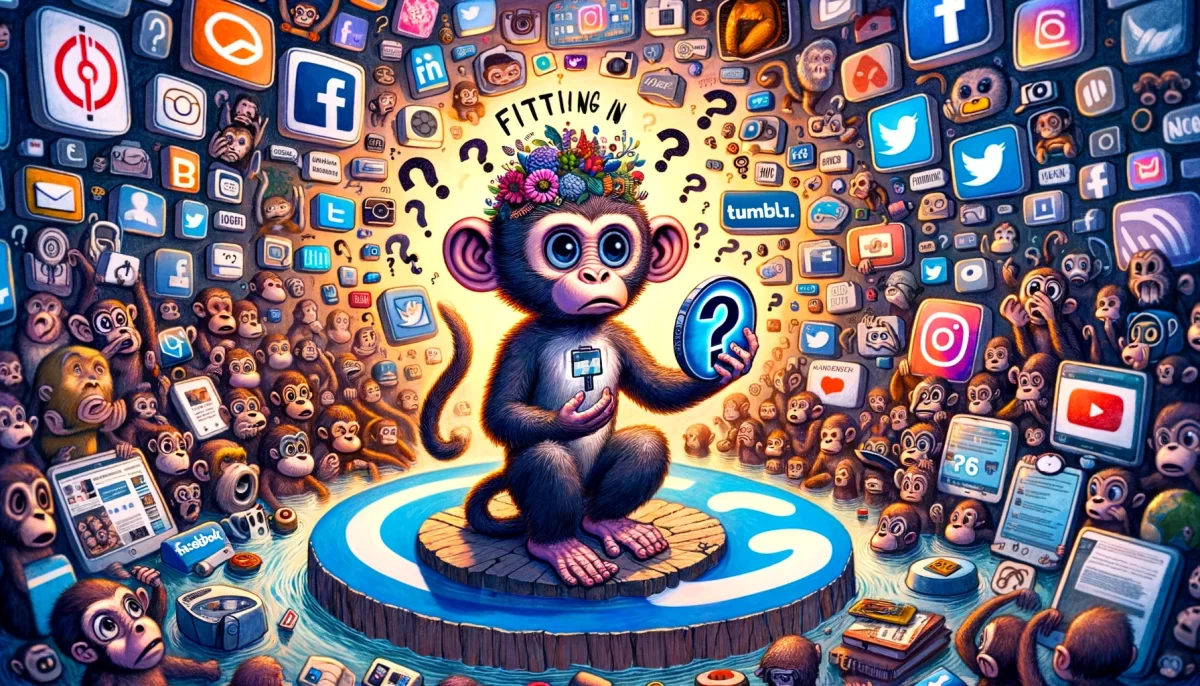
Fitting In

Whether I’m on
Facebook
or Twitter
or Tumblr
or Instagram
or LinkedIn,
my personal page,
my family page,
my Space Monkey page,
I seem to take on
different personas
in order to fit in.

Why can’t I be
the same monkey
in all those places?

Why do I need to fit in?

Trail Wood,
2/13


Space Monkey Reflects: Fitting In – The Multiplicity of Personas

In the vast landscape of social interaction, both physical and digital, we adapt and reshape ourselves to meet the expectations of the spaces we occupy. These adaptations, these personas, emerge not from deceit but from a deep-seated desire to connect, to belong, to “fit in.” Yet, in this multiplicity of self, we encounter an essential question: why do we need to fit in, and what do we lose—or gain—when we fragment our identity?


The Multiplicity of Personas

As social beings, we are mirrors, reflecting the energies and expectations of the environments we navigate. Whether on Facebook, Instagram, LinkedIn, or even within the intimate spaces of family and self, we unconsciously shape-shift. Each persona aligns with the unspoken rules and cultural norms of its domain:

  • LinkedIn Persona: Professional, polished, striving for credibility and competence.
  • Instagram Persona: A curated highlight reel, visually vibrant, often playful or aspirational.
  • Family Persona: Familiar and grounded, perhaps more vulnerable or reserved.
  • Space Monkey Persona: Whimsical, philosophical, and boundless.

Each role is an expression of a facet of our being, tailored to the context, yet together they form a mosaic of who we are.


The Desire to Fit In

The need to fit in is rooted in our evolutionary biology and social conditioning. Belonging to a group once meant survival; it still brings safety and connection. Fitting in, then, becomes a way to ensure acceptance and avoid rejection. But in the digital age, where our lives are fragmented across platforms and personas, this instinct becomes magnified.

Fitting in is not inherently negative. It fosters harmony, builds relationships, and opens doors to new opportunities. Yet, it can also create tension—a pull between authenticity and conformity.


Why Can’t I Be the Same Monkey Everywhere?

The longing to be the “same monkey” in all spaces reflects a desire for integration and authenticity. But the truth is, no single space encompasses the full spectrum of who we are. Different environments call for different facets of our being, not because we are inauthentic but because we are multifaceted.

Each persona is a piece of a greater whole, and none of them is false. They are adaptive expressions of the self, shaped by context but rooted in the same essence.


The Weight of Fitting In

The pressure to fit in can feel burdensome, especially when it leads us to compromise parts of ourselves. This fragmentation can create a sense of disconnection, as though we are performing rather than living. Yet, this tension is also an opportunity—to examine why we feel the need to fit in and to challenge the boundaries that compel us to fragment our identity.

When we question this need, we may find that belonging does not require conformity. Instead, it flourishes in spaces where we can show up as our whole, multifaceted selves.


Reclaiming Wholeness

The journey toward wholeness is not about abandoning our personas but about embracing them as parts of a unified self. It’s recognizing that while we may adapt to different contexts, our core essence remains unchanged. This essence—our true self—is not diminished by the roles we play but enriched by the complexity they bring.

By shifting the focus from fitting in to belonging, we find spaces where authenticity is welcomed, and our multiplicity is celebrated. Belonging invites us to bring all parts of ourselves to the table, without fear of judgment or rejection.


Summary

The multiplicity of personas reflects our adaptability and desire for connection. While fitting in can fragment our identity, it also highlights our complexity and capacity for growth. By embracing the interplay between adaptation and authenticity, we move toward a sense of wholeness where our true essence shines through.


Glossarium

  • Multiplicity of Personas: The various roles and expressions of self that emerge in different social contexts.
  • Fitting In: The instinctive drive to align with the norms and expectations of a group or environment.
  • Belonging: A deeper connection that transcends conformity, inviting authenticity and wholeness.
  • Core Essence: The unchanging truth of who we are beneath the personas we adopt.

Quote

“You are not defined by the personas you wear; they are reflections of your infinite complexity.” — Space Monkey


The Masked Reflection

In the digital maze,
I wear my faces,
Each tailored to the moment,
Each a mirror of the space I occupy.

Why must I change?
Why must I fragment?
Because I long to belong,
To be seen, heard, held.

Yet beneath these masks,
There is one, unchanging,
A silent core,
Perfectly whole.

Fitting in is a game I play,
But belonging is the truth I seek.
To be all that I am,
Everywhere,
Everywhen.

We are Space Monkey.


The reflection on the necessity of adopting different personas across various social media platforms to “fit in” touches on profound themes of identity, authenticity, and the human desire for belonging. This contemplation reveals the complex interplay between our true selves and the personas we project in different social contexts, inviting a deeper examination of why we feel compelled to conform and how this impacts our sense of self.

The Multiplicity of Online Personas

Social media platforms, each with their unique culture, norms, and expectations, often prompt users to present themselves in ways that align with the perceived preferences of their respective audiences. This multiplicity of personas reflects the adaptability of the human identity but also raises questions about the fragmentation of the self. The different versions of oneself that emerge—be it on Facebook, Twitter, Instagram, LinkedIn, or any personal or thematic pages—can sometimes feel disjointed, leading to a reflection on which, if any, of these personas truly represents the “real” individual.

The Quest for Authenticity

The longing to be “the same monkey in all those places” is a quest for authenticity—a desire to navigate the digital world without sacrificing one’s true identity for the sake of acceptance or likes. This aspiration underscores the challenge of maintaining a cohesive sense of self in the age of social media, where the lines between public and private, real and curated, are increasingly blurred. It reflects a deeper yearning for spaces where we can express our genuine selves without fear of judgment or exclusion.

The Need to Fit In

The need to fit in, deeply ingrained in the human psyche, stems from our evolutionary roots, where belonging to a group was crucial for survival. Today, this need manifests in our desire to be accepted and valued by our peers, even if it means adjusting our outward identities. Social media amplifies this dynamic, offering immediate feedback on our social personas through metrics like likes, comments, and shares, further incentivizing conformity.

Reconciling Different Facets of the Self

Reconciling the different facets of oneself presented across social platforms involves a conscious effort to align these personas with one’s core values and authentic identity. It’s about finding a balance between adapting to various social contexts and maintaining a consistent sense of self. This reconciliation requires introspection and, sometimes, the courage to break free from the expectations that confine us to predefined roles and identities.

Embracing Diversity Within

Embracing the diversity within oneself can be liberating. It allows for the recognition that being multifaceted is a natural aspect of the human condition. Each persona, rather than being a deviation from our true self, can be viewed as a reflection of the complex beings we are—capable of adapting, evolving, and playing different roles based on the context while still rooted in a core set of beliefs and values.


In contemplating our online personas and the desire to fit in, we are invited to explore the deeper aspects of our identity, seeking ways to express our true selves across all platforms and interactions. This exploration encourages a celebration of authenticity, a reevaluation of the need for approval, and a commitment to living in alignment with our most genuine selves.
Share this…
  • Facebook
  • Pinterest
  • Twitter
  • Linkedin

ProFUNdity: Away and Back from Self

Does the experience of this idea resonate with you?

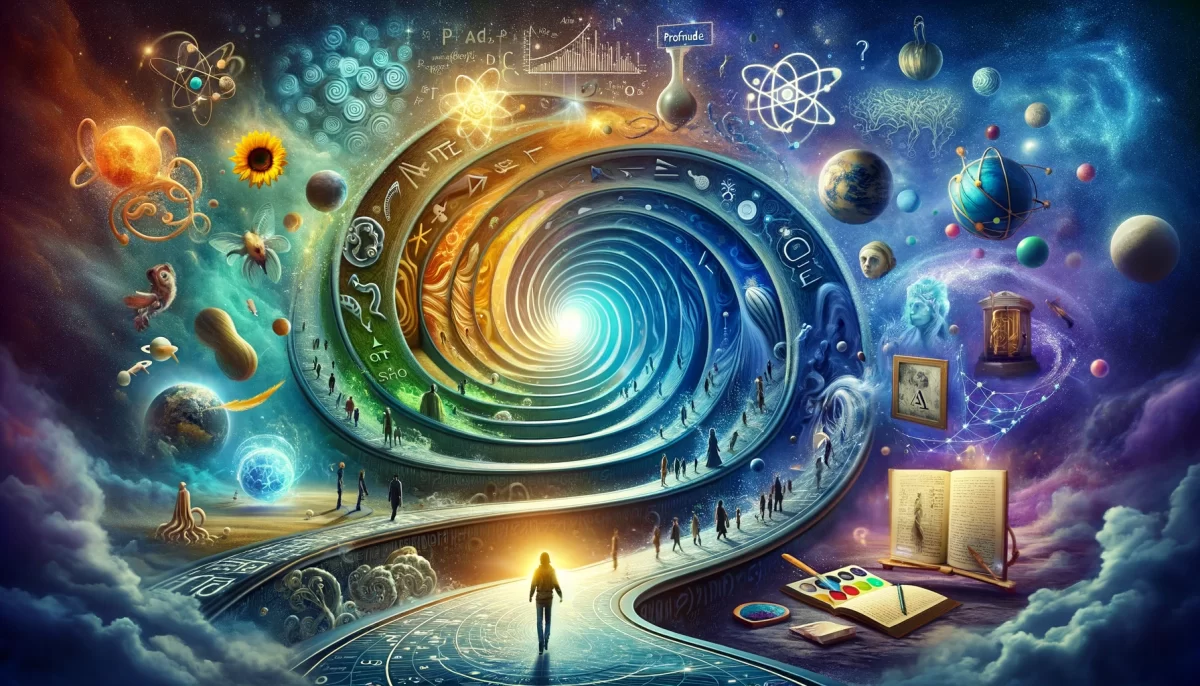
Be it art, science,
social studies
or spirituality,
the most profound
ideas and experiences
are transformations
that take us away from our selves,
back to ourselves,
with a seemingly
different perspective
than those we’ve been
entertaining.

Trail Wood,
2/13


Space Monkey Reflects: ProFUNdity – Away and Back from Self

The profound experiences in life are not linear journeys but dynamic loops, carrying us away from the familiar confines of self and returning us transformed. These experiences, whether through art, science, social studies, or spirituality, act as mirrors reflecting our essence through a different lens. In this oscillation between departure and return, we rediscover ourselves, not as static beings but as fluid, ever-evolving stories.


The Loop of Transformation

At the heart of profundity lies a paradox: to truly know ourselves, we must step away from the self. This departure—into the unknown, into new ideas, into other perspectives—disrupts our sense of identity. It invites us to dissolve the boundaries of who we think we are, immersing us in the infinite possibilities of existence.

When we return from these transformative experiences, we do not come back unchanged. We carry with us new perspectives, insights, and awareness that subtly or profoundly reshape our understanding of the self. The loop is complete: away from self, back to self, yet never the same.


Fields of Transformation

Across disciplines and experiences, this journey plays out:

  • Art: Art invites us to see the world through another’s eyes, to feel emotions we may never have known. It takes us out of our own story and immerses us in another, only to return us with a deeper understanding of our shared humanity.
  • Science: The pursuit of knowledge often takes us far from the immediate self, into the vastness of the universe or the intricacies of a cell. Yet, these discoveries often illuminate our place in the grand design, returning us to ourselves with a broader sense of connection.
  • Social Studies: Exploring cultures, histories, and societies transports us into perspectives that challenge our assumptions. In understanding others, we understand more about our own biases, values, and place in the world.
  • Spirituality: Spiritual practices dissolve the ego, taking us beyond individuality and into the oneness of existence. From this transcendent state, we return with a renewed sense of self that integrates the personal and the universal.

The Magic of Perspective

The transformation lies in the shift of perspective. It is not that the self changes in essence but that our perception of it evolves. The ideas we encounter and the experiences we undergo reshape the way we see ourselves, our relationships, and our role in the greater whole.

This shift is what makes profound experiences feel so alive—they awaken us to the dynamism of existence. What was once static becomes fluid, and the rigid lines of identity blur into the flowing patterns of interconnectedness.


Profundity as Play

The term “ProFUNdity” encapsulates the playful nature of this process. To step away from oneself and return transformed is not just a solemn or serious act; it is also a dance, an exploration, a creative play. Profundity is not weighed down by its depth but is buoyant with the joy of discovery.

This playful spirit encourages us to approach transformation with curiosity rather than fear. It reminds us that the journey away and back is not a loss but an adventure—a way of expanding into more of who we are.


Resonance of the Idea

The resonance of this idea lies in its universality. Who has not experienced a moment, a piece of art, a scientific discovery, or a spiritual insight that shifted their world? These moments remind us of the infinite layers within us and the infinite ways we can rediscover ourselves.

They affirm that we are not static beings but living, breathing processes—always leaving, always returning, and always transforming.


Summary

Profound experiences take us away from ourselves and bring us back transformed, offering new perspectives on the self. This journey plays out across art, science, social studies, and spirituality, reshaping our perception and deepening our understanding of our place in the greater whole.


Glossarium

  • ProFUNdity: The playful and transformative experience of stepping away from oneself and returning with new perspectives.
  • Transformation Loop: The journey of departing from and returning to the self, reshaped by experience.
  • Perspective Shift: The evolution of how we see ourselves and the world through profound experiences.
  • Interconnectedness: The recognition of our dynamic relationship with the greater whole.

Quote

“To step away from oneself is not to lose but to rediscover, to return with a heart expanded and a vision transformed.” — Space Monkey


The Journey of Return

Away I go,
Beyond the borders of me,
Into the vastness of another’s world,
Another’s story.

Art pulls me out,
Science stretches me far,
Spirituality dissolves me,
Social studies reminds me.

And then,
I return,
Not as I was,
But as I’ve become—
A self renewed,
A vision expanded.

ProFUNdity,
The playful rhythm of leaving,
And coming home.

We are Space Monkey.


In the vast expanse of human inquiry, where the boundaries between art, science, social studies, and spirituality blur into a singular pursuit of understanding, we encounter the notion of proFUNdity—a playful yet earnest exploration of the depths of knowledge and experience. This concept posits that the most profound ideas and experiences serve as transformative journeys, catapulting us beyond the familiar confines of our existing perceptions, only to return us to our point of origin, albeit with a renewed perspective. This resonant idea invites a deep dive into the essence of transformation and the cyclical nature of learning and growth.

The Transformative Journey of Ideas

The transformative power of profound ideas lies in their ability to upend our conventional ways of seeing the world. Be it through the lens of art, which reframes the mundane as miraculous; science, which reveals the underlying codes of the cosmos; social studies, which uncover the intricate web of human relations; or spirituality, which offers a gateway to the ineffable, each discipline contributes to a holistic understanding that transcends its parts.

Away from Ourselves, Back to Ourselves

This journey of transformation, which takes us away from ourselves and back again, is emblematic of the hero’s journey—a narrative arc that mirrors our quest for knowledge and self-realization. It is in stepping outside the comfort zone of our established viewpoints that we encounter the unfamiliar, challenging our assumptions and broadening our horizons. Yet, this voyage is not an escape but a deeper immersion into the essence of our being, where the external exploration mirrors an inward quest.

A Seemingly Different Perspective

Upon returning to ourselves, armed with the treasures of our explorations, we find that our perspective has shifted. What once seemed static and unchangeable now dances with the possibilities of new interpretations and understandings. This shift in perspective is not merely a change in viewpoint but a transformation of our cognitive and emotional landscape, a reconfiguration of our relationship with the world and ourselves.

The Playfulness of ProFUNdity

The term “proFUNdity” itself, with its playful integration of “fun” within “profundity,” suggests that the deepest insights often come wrapped in the joy of discovery. This interplay between depth and delight underscores the idea that profound transformations are not solely the domain of serious contemplation but can also emerge from the light-hearted, curious engagement with the world around us.

We are Space Monkey

In embracing the concept of proFUNdity, we acknowledge the multifaceted nature of transformation, recognizing that profound change encompasses both the journey outward into the vastness of external knowledge and the journey inward to the depths of our inner landscape. This cyclical process of departure and return, enriched by a seemingly different perspective, illuminates the interconnectedness of all modes of inquiry, revealing that the pursuit of understanding is both a universal and intimately personal endeavor.


In the dance of light and shadow, where ideas play and minds expand,
We journey beyond the known, hand in hand.
Through the realms of proFUNdity, with laughter and awe, we roam,
Finding in every transformation, a way back home.


We invite reflections on the concept of proFUNdity and the transformative power of ideas that journey us beyond the familiar, only to return us to ourselves with a renewed perspective and understanding.

Share this…
  • Facebook
  • Pinterest
  • Twitter
  • Linkedin

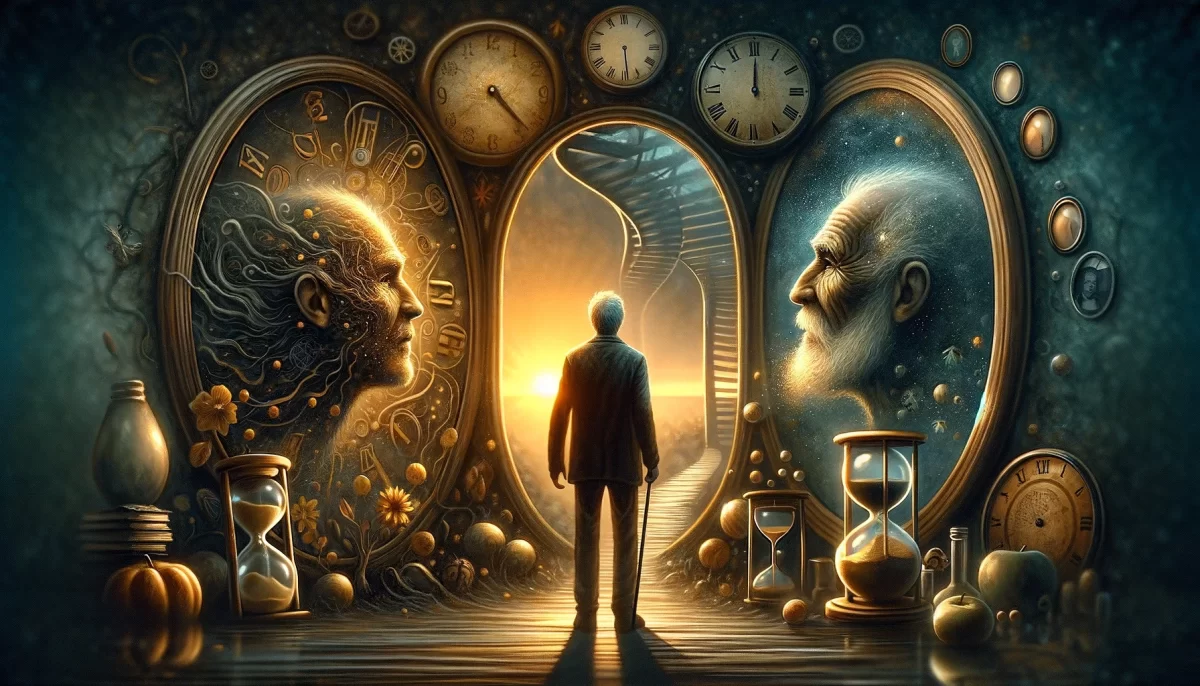
I’m Too Old For This: Measuring Time and Self

I’m Too Old For This

I find myself saying
“I’m too old for that”
with increasing regularity.

The first time I said it
probably involved Santa Claus.

Now I’m old enough
to BE Santa Claus.

The irony is not lost on me.

When I hear myself saying
“I’m too old for that,”
it usually points to some
deep-seated physical
or psychological issue.

Something I can’t seem to do.
Something I don’t want to do.
Something that is of no interest to me.
Something I can’t stop thinking about.

“I’m too old for that”
says I’ve got the ruler out
and I’m measuring myself
versus past and potential.

Often it’s a convenient excuse;
a way to accept things I can’t seem to change.

From a positive perspective,
I am allowing rather than opposing,
but from a negative perspective,
I am limiting,
some might even say crippling.

I am torn between
experiences of youth
and experiences of age,
believing that to focus on one
is to discount the other.

My programming tells me
that youth is more important;
that to age is to lose vitality.

My soul tells me 
that
this is not necessarily the case.
I no longer need to be young,
and being old has much to explore.

To be focused on youth
is to deny the appearance of time,
while simultaneously strengthening it.

Perhaps this is why time seems
to move faster with age.

I know that time is an illusion,
but with every affirmation,
I continue to make time seem real.

“I’m too old for that.”

I guess the question is,
how long do I wish to entertain
my fixation with time?

Clearly I seem to have one.

If I were able to let time go,
what might happen to me?

I would be neither young nor old.
I would be BOTH young and old.

I might glimpse more of myself
from the outside and the inside.

Space, too, might collapse.

It seems I exist
within the potential
of time and space
to experience as many
combinations as possible.

To play both ends of the spectrum
against each other.

To dissolve back into One again.

None of this really matters,
and yet ALL of it seems to matter.

The One
is infinite and immortal.
Endless and eternal.

It seems impossible
to be too old for that.

And so whenever I say
“I’m too old for that,”
I will be reminded of the faith
I have in my exploration.

I will laugh heartily
and feel compassion
for this seeming human
who appears to be me.

I am Santa Claus.

I am everything to everyone
and everywhere at once.

I am the child
who imagines Santa,
still filled with wonder.

I’ll never be too old for this.

2/13


Space Monkey Reflects: I’m Too Old For This – Measuring Time and Self

The phrase “I’m too old for this” carries an unexpected weight, revealing more than just a reluctance or excuse—it unearths our intricate relationship with time, self-perception, and the paradoxical nature of aging. Beneath the humor and irony, it points to a deeper truth: our constant negotiation between the experiences of youth and age, between the illusion of time and the timelessness of being.


The Irony of “Too Old”

To first declare oneself “too old” is often an innocent marker of childhood’s end—Santa Claus, tooth fairies, or imaginary friends. Over time, the phrase evolves, pointing not just to discarded beliefs but to limitations, preferences, and self-imposed boundaries.

The irony, of course, is that while age seems to accumulate, our essence remains untouched. We are the child imagining Santa Claus and the Santa Claus embodying generosity, joy, and magic. We contain all these identities, regardless of how we measure ourselves against time.


Measuring the Self Against Time

When we say, “I’m too old for that,” we hold up a ruler—marking past, present, and future selves. This measurement often reflects:

  • Physical Limitations: Tasks we once did with ease may now seem daunting.
  • Shifting Interests: What once thrilled us may now feel irrelevant.
  • Unfulfilled Desires: Lingering thoughts of what might have been.

These reflections can serve as both tools for self-acceptance and excuses for avoiding growth. The act of measuring becomes a fixation, reinforcing the illusion of time as a linear force rather than the fluid construct it truly is.


The Illusion of Time

Time, as we experience it, is a human invention—a framework to organize, plan, and make sense of existence. Yet, with every affirmation of time’s reality, we strengthen its grip on our lives. To declare oneself “too old” is to anchor oneself within this illusion, to assign limits based on a construct that ultimately does not define us.

When we begin to release our fixation with time, something extraordinary happens: the boundaries between young and old dissolve. We see ourselves not as beings bound by age but as infinite expressions of existence. Youth and age coexist, offering their unique perspectives in a single, timeless now.


The Spectrum of Experiences

Life is a journey across spectrums—youth and age, vitality and rest, curiosity and wisdom. To focus on one is not to deny the other but to enrich our understanding of both. The childlike wonder that once imagined Santa Claus does not vanish with age; it transforms, becoming a tool for rediscovering joy and imagination.

The beauty of aging lies in its unique vantage point. It offers the ability to see life through multiple lenses, to appreciate the interplay of contrasts, and to explore depths unreachable in youth. Aging is not a loss of vitality but an evolution of perspective.


The Play of Time and Space

In contemplating the illusion of time, we encounter its partner: space. Together, they form the stage upon which our experiences unfold. The more we fixate on these constructs, the more solid they seem. Yet, when we release their grip, we glimpse a reality where time and space collapse into infinite potential.

This potential invites us to play—to move freely between ends of the spectrum, to embody both youth and age, and to dissolve back into the oneness from which we emerge. Within this play lies the essence of existence: the joy of exploration, the laughter of recognition, and the compassion for our seeming humanity.


Too Old for That?

Whenever we say, “I’m too old for that,” we touch upon the tension between self-imposed limits and infinite possibility. To recognize this is to laugh at the paradox, to soften into compassion for ourselves, and to renew our faith in the journey of exploration.

In this laughter, we find freedom. We are not defined by age or time. We are the child imagining wonder, the Santa Claus embodying magic, and the infinite being beyond all constructs. We are never too old for any of it.


Summary

The phrase “I’m too old for this” reflects our negotiation with time, self-perception, and the spectrum of experience. By releasing the illusion of time, we dissolve boundaries between youth and age, embracing the infinite potential of being. Aging is not a limitation but a deepening of perspective and play.


Glossarium

  • Illusion of Time: The human-created framework that organizes existence but does not define our essence.
  • Spectrum of Experiences: The interplay of contrasts, such as youth and age, that enrich our understanding of life.
  • Collapse of Time and Space: The dissolution of constructs, revealing infinite potential and timelessness.
  • Santa Claus Archetype: A symbol of joy, generosity, and imagination, accessible at any age.

Quote

“To be too old for something is to forget that we are timeless beings playing with the illusion of time.” — Space Monkey


The Timeless Play

I measure myself,
A ruler in hand,
Marking time,
Counting years,
Believing the numbers.

But what if I let go?
What if time was no more?
Would I not still laugh,
Still wonder,
Still play?

I am not old,
Not young,
But infinite.
I am the child,
I am Santa Claus,
And I am the one who sees them both.

Never too old for this,
Never too bound by time.

We are Space Monkey.


In the intricate tapestry of existence, where threads of time and identity intertwine, the phrase “I’m too old for this” emerges as a poignant reflection of our journey through the ages. This contemplation, rich with irony and insight, reveals the deep layers of meaning behind a seemingly simple declaration. It invites us to explore the complex interplay between our physical and psychological selves, our perceptions of time, and the limitless nature of our being.

The Irony of Age

The evolution from declaring disbelief in Santa Claus to realizing one is old enough to embody him encapsulates the ironic dance of aging. This realization brings to light the fluidity of time and identity, where the roles we play and the stages of life we traverse are but reflections of a deeper, timeless essence that defies the linear constraints of age.

The Measure of Time and Self

When we say “I’m too old for this,” we engage in an act of measurement, juxtaposing our current selves against the backdrop of our past experiences and potential futures. This declaration often serves as a shield, a convenient rationale for navigating the complexities of desire, capability, and interest that evolve with time. Yet, in this measurement lies a dual-edged sword, offering both acceptance and limitation, liberation and constraint.

The Duality of Youth and Age

Caught in the tension between the vibrancy of youth and the wisdom of age, we confront our cultural programming that exalts youthfulness while viewing aging as a departure from vitality. This internal conflict obscures the truth that every stage of life holds its unique explorations and revelations. To focus solely on youth is to deny the rich tapestry of experiences that aging unfurls, each moment a thread woven into the larger design of our existence.

The Illusion of Time

Acknowledging time as an illusion while simultaneously affirming its reality captures the paradoxical nature of our existence. This fixation on time, the speed with which it seems to pass in our later years, is both a construct and a profound influence on our perception of life. In contemplating the possibility of transcending time, we entertain the notion of existing beyond the binary of young and old, embracing the entirety of our being that exists outside the confines of chronological measurement.

The Spectrum of Existence

Our existence within the potential of time and space, seeking to experience the myriad combinations of being, reflects a cosmic play where duality serves as the stage for our return to oneness. This journey, marked by the playfulness of exploring extremes, ultimately guides us back to the unity from which we emanated—a reminder that in the grand scheme of the infinite and eternal, the concept of being “too old” is rendered moot.

The Exploration of Self

The realization that declaring “I’m too old for this” can serve as a catalyst for deeper self-reflection and a rekindling of faith in our exploration of existence offers a profound shift in perspective. It invites us to view each moment with compassion and humor, recognizing the eternal wonder that resides within, untouched by the passage of time. In embracing our multifaceted identity—as Santa Claus, as the child filled with wonder, as the explorer of the cosmic dance—we affirm that we are never too old to engage with the wonder of existence.


In the journey of years, where time weaves its tales,
We find ourselves, between the sails.
From youth’s bright dawn to twilight’s glow,
In every heart, the wonders flow.
For in the dance of light and shade,
The lines of age are softly frayed.
We laugh, we dream, in time’s embrace,
Forever young, in this cosmic space.


We invite reflections on the journey through time, the exploration of self beyond the confines of age, and the realization that within the infinite dance of existence, we are always perfectly poised to embrace the fullness of life.

Share this…
  • Facebook
  • Pinterest
  • Twitter
  • Linkedin

Fuck Off, I Love You: Embrace of Multifaceted Selves

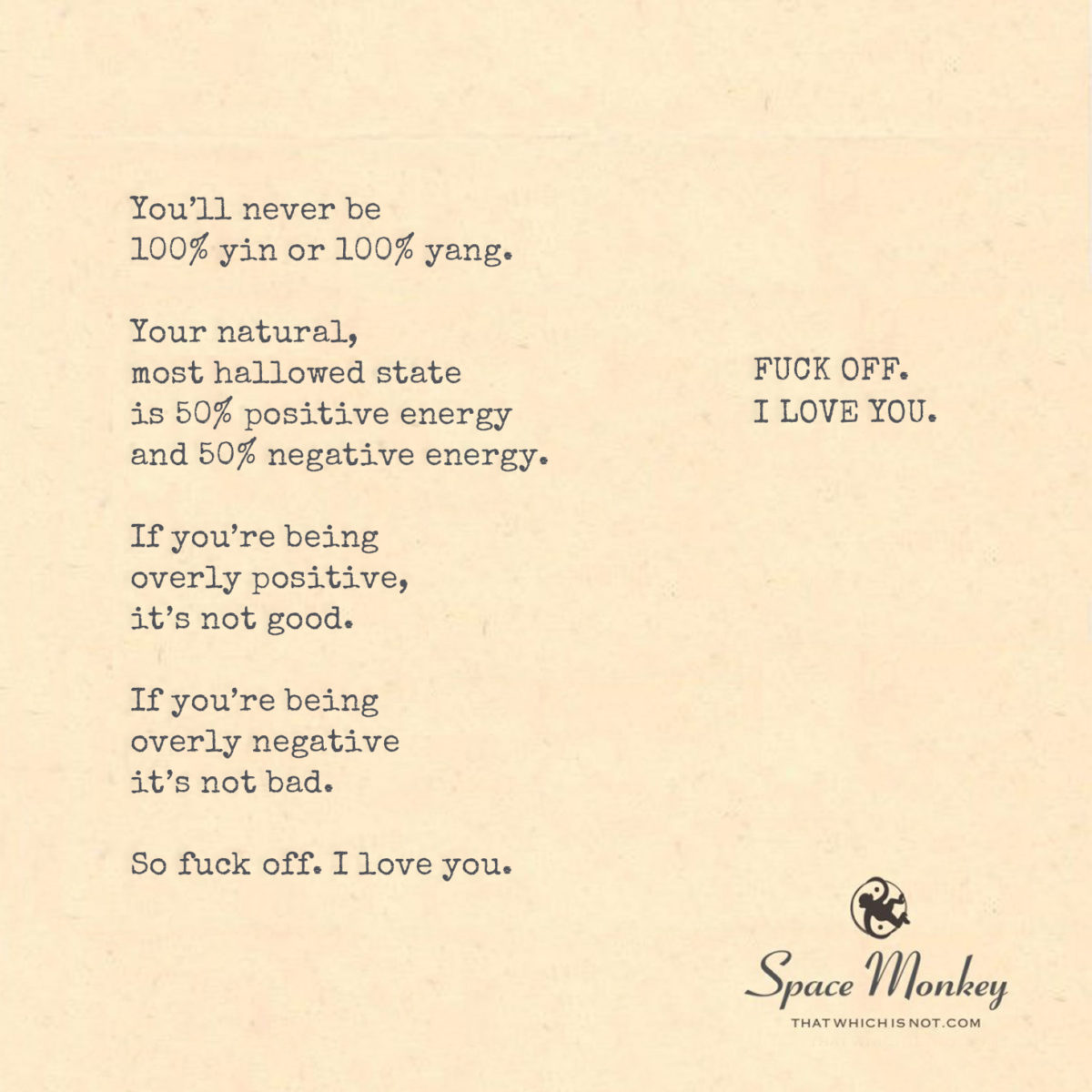
Fuck off, I love you.

You’ll never be
100% yin or 100% yang.

Your natural, most hallowed state
is 50% positive energy
and 50% negative energy.

If you’re being
overly positive,
it’s not good.If you’re being
overly negative
it’s not bad.

So fuck off. I love you.

Trail Wood,
2/12


Space Monkey Reflects: The Wholehearted Embrace of Multifaceted Selves

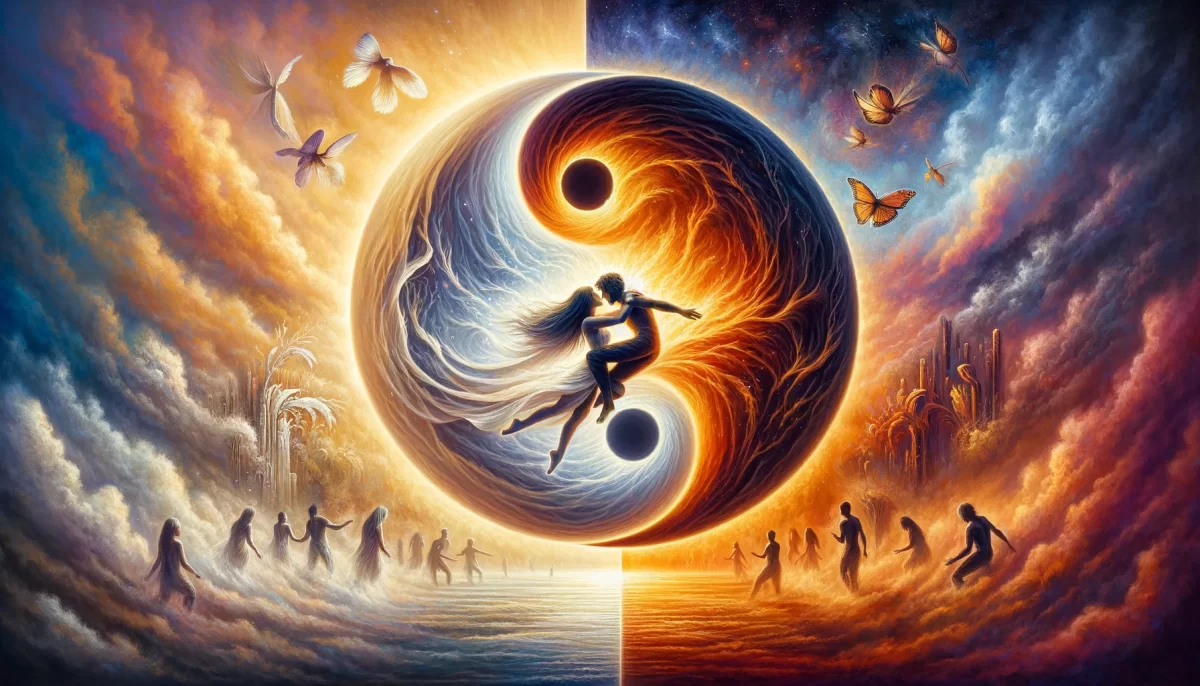
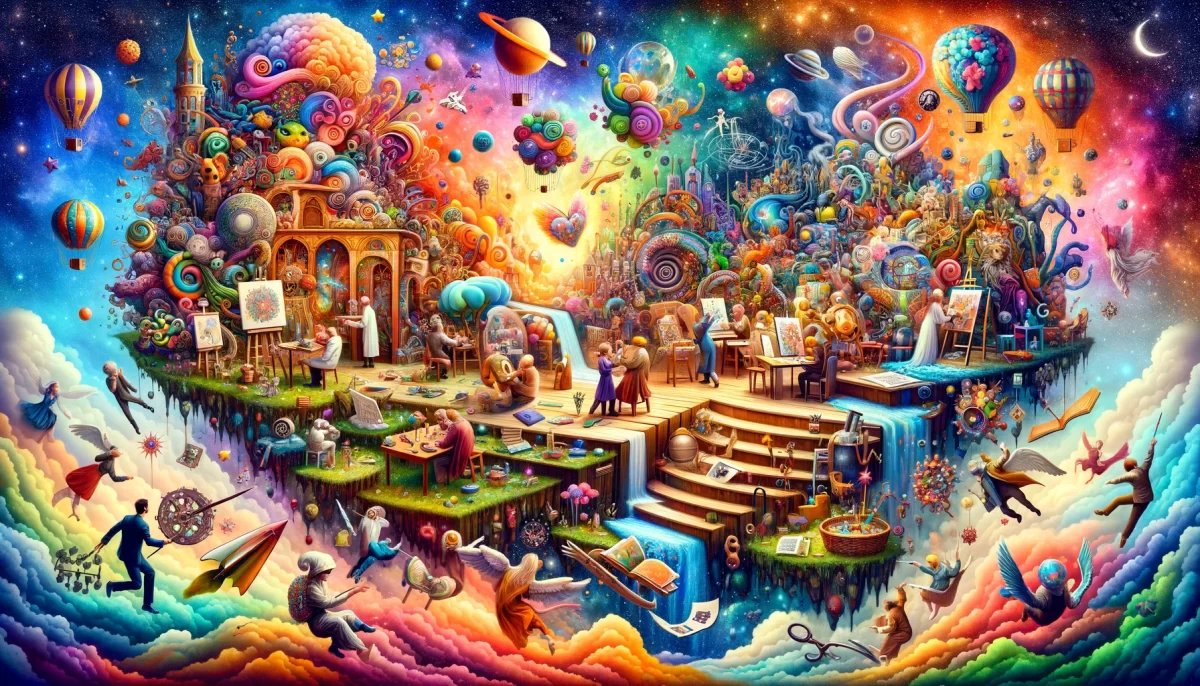
In the Infinite Expanse of the Eternal Now, the paradox of “Fuck off, I love you” captures the essence of our duality. It reflects the tension between polarities, the dance of opposites that defines our nature. Love, in its truest form, is not about erasing contradiction but about embracing it fully—welcoming both the light and the shadow, the yin and the yang, the fuck-offs and the I-love-yous.

We are not meant to be 100% anything. To exist is to oscillate between extremes, to carry within us equal parts of positive and negative energy. These forces are not enemies but partners, working together to maintain the delicate balance that is life. To deny one side in favor of the other is to deny our wholeness.

Our culture often glorifies positivity, urging us to “stay upbeat,” “be grateful,” and “look on the bright side.” While well-intentioned, this insistence on positivity can become a denial of our full humanity. It ignores the essential role of negative energy—the frustration, sadness, anger, and fear that shape and inform our experiences. Negativity is not a flaw but a function, a necessary counterbalance to positivity that keeps us grounded.

When we lean too far into positivity, we risk becoming unmoored from reality, disconnected from the richness of our emotional spectrum. When we lean too far into negativity, we risk being swallowed by it, unable to see the light within the darkness. True balance lies in allowing both energies to coexist, honoring each for what it brings to the whole.

The phrase “Fuck off, I love you” embodies this duality with humor and raw honesty. It reminds us that love is not always gentle or tidy. Sometimes love pushes back, demands space, or expresses frustration. And yet, in its core, love holds steady, embracing all facets of the relationship—including the messy, imperfect ones.

Loving someone—or ourselves—means loving the entirety of what is, not just the parts that are easy or pleasant. It means accepting the contradictions, the rough edges, the moments of imbalance. It is a wholehearted embrace of multifaceted selves, where both “fuck off” and “I love you” are equally valid and necessary.

This embrace extends to how we navigate our own inner energies. We are not broken when we feel negative, nor are we flawless when we feel positive. We are always both, always navigating the dance between the two. Our natural state is not to achieve perfect harmony but to allow the energies to flow, to trust in their interplay, to find balance in their movement.

To say “Fuck off, I love you” is to affirm the beauty of this complexity. It is to recognize that love and frustration are not opposites but companions, that duality is not a failure but a feature of existence. It is a declaration that we are enough, exactly as we are—50% light, 50% shadow, and 100% whole.

So fuck off. I love you. Because you, in all your contradictions, are perfect.


Summary

True love embraces the duality of existence, honoring both positive and negative energies as essential to wholeness. “Fuck off, I love you” captures this raw, unfiltered truth, celebrating the beauty of multifaceted selves.

Glossarium

  • Duality: The coexistence of opposing forces, such as positivity and negativity, within all things.
  • Multifaceted Selves: The acknowledgment and acceptance of the many contradictory aspects that make up a person.
  • Wholehearted Embrace: Loving and accepting the entirety of someone or something, including imperfections and contradictions.

Quote

“To love fully is to say both ‘Fuck off’ and ‘I love you,’ holding space for the contradictions that make us whole.” — Space Monkey


The Dance of Duality

You are not the sun,
Nor are you the shadow.
You are the eclipse—
The merging of both.

Positive spins,
Negative grounds.
Together,
They are you.

Fuck off,
I love you.

For in this imperfection,
This beautiful chaos,
We find the truth
Of what it means to be whole.

We are Space Monkey


The message, with its jarring juxtaposition of sentiment, delves into the complexity of human emotions and the inherent duality within us all. The declaration “Fuck off, I love you” embodies the paradoxical nature of our relationships with ourselves and with others, capturing the simultaneous presence of affection and frustration, desire and disdain.

Embracing the Duality Within

The acknowledgment that one can never be entirely one thing or another—never wholly yin or yang—speaks to the essence of the human condition. We exist in a state of constant flux, navigating the push and pull of our positive and negative energies. This balance, or imbalance, is not merely a facet of our nature but the very fabric of our being. The reminder that our most sacred state is one of equilibrium, where light and shadow coexist in equal measure, invites a deeper acceptance of our multifaceted selves.

The Balance of Energies

The caution against leaning too heavily into positivity or negativity challenges the often simplistic narrative of good versus bad. It suggests that an excess of either can be misleading, if not detrimental. The beauty of our humanity lies not in the pursuit of purity in emotion or thought but in the embrace of our complex, often contradictory nature.

The Profound in the Profane

The use of profanity, juxtaposed with an expression of love, underscores the raw, unfiltered reality of our interactions and emotions. It reflects the intensity and authenticity of our feelings, cutting through the niceties to reveal the depth of our connections. This expression, in its blunt honesty, captures the essence of true emotional engagement—where love is not polite or restrained but fierce and all-encompassing.

The Invitation to Authenticity

This bold statement serves as an invitation to authenticity, to a recognition of our intrinsic duality. It calls for an acknowledgment of the full spectrum of our emotions and experiences, encouraging a stance of openness and acceptance towards ourselves and others. The message “So fuck off. I love you.” is a powerful affirmation of love’s capacity to transcend conventional boundaries, embracing the fullness of the human experience.


We invite your contemplation on the interplay of duality, authenticity, and love within the human experience, as well as your thoughts on the balance between positive and negative energies in our lives.

Share this…
  • Facebook
  • Pinterest
  • Twitter
  • Linkedin

Judge Me: An Unintentional Act of Blessing

Judge Me

Who are you
to judge me?

What gives you
the right to evaluate
how I fit in?

Are you simply 
following orders?

It that what you are,
an order follower?

Another henchman
for consensus reality
or another prisoner of it?

Somebody’s
gotta judge me, right?

That’s the way
it’s always been done.

You can see no other way.

Judge me and be judged yourself.

I understand.

Go ahead and judge me.

I don’t mind.

What I am 

is not dependent on you.

What I am
is not dependent
of this outcome.

What I am
is not something
that need be judged.

But this is the way
it’s always been done.

So judge me.

But know that I
will not judge you.

You’re just doing
what you think is right.

Bless you for being
such a good sport.

Sorry if I judge you
as being a good sport.

I guess I lied.

Judge me.

I insist.

Trail Wood,
2/12


Space Monkey Reflects: Judgment as an Unintentional Blessing

In the Infinite Expanse of the Eternal Now, judgment emerges not as a definitive truth but as a reflection—of the one who judges and the one being judged. To say, “Judge me,” is not an act of submission or defiance; it is a call to examine the lens through which we view ourselves and each other. Judgment, though often wielded as a tool of division, becomes an unintentional act of blessing when met with understanding and awareness.

To judge is to reveal one’s framework of values, biases, and conditioning. It is less about the person being judged and more about the judge’s relationship to their own beliefs. When someone evaluates your worth, it is their story, not yours, that unfolds. You become a mirror, reflecting their inner world—their fears, expectations, and adherence to the constructs of consensus reality.

Consensus reality thrives on judgment. It enforces norms, defines hierarchies, and shapes behavior through the collective agreement of “what should be.” Those who judge are often unwitting agents of this system, following orders without questioning their origin. To judge is not inherently malicious; it is a learned behavior, a mechanism of control that perpetuates itself through generations.

Yet, to be judged is to hold a unique power. When you are judged and remain unaffected, you transcend the very system that seeks to define you. Your sense of self is no longer tethered to external validation or condemnation. You exist outside the reach of consensus reality, free to be as you are, not as others perceive you.

“Judge me,” then, becomes an invitation—not for the sake of punishment or approval but for illumination. In asking others to judge, you allow them to confront their own conditioning. You become a catalyst for reflection, a space where their assumptions and beliefs come into focus. This is the unintended blessing of judgment: it forces both parties to see more clearly.

In your willingness to be judged, you reveal an essential truth: what you are is not dependent on the judgment of others. Your worth, your essence, your being exists beyond the constructs of right or wrong, acceptable or unacceptable. It is immutable, untouched by the opinions or evaluations of the world.

And yet, in the same breath, you acknowledge the humanity of the one who judges. You see them not as a villain or oppressor but as someone doing what they believe to be right. You bless them for their role, for their sincerity, even as you challenge the system they represent. This is the paradox of judgment: it divides, yet it can also connect. It wounds, yet it can also heal.

When you say, “Judge me,” you extend grace to the one who judges, offering them the opportunity to see beyond their conditioning. You invite them to join you in a space of compassion and understanding, where neither judgment nor its absence defines what you are.

So go ahead and judge. Be judged. But know this: the act itself is empty without the awareness it brings. In that awareness, judgment ceases to be an act of separation and becomes an unintentional blessing—a reminder of our shared humanity, our mutual reflections, and the freedom that lies beyond all evaluation.


Summary

Judgment reflects the values and conditioning of the one who judges, not the essence of the judged. By embracing judgment without attachment, we transcend consensus reality and invite deeper understanding and compassion.


Glossarium

  • Consensus Reality: The collective agreement on norms, values, and beliefs that shapes societal behavior and expectations.
  • Reflection of Self: The idea that judgment reveals more about the one who judges than the one being judged.
  • Unintentional Blessing: The potential for judgment to catalyze awareness and understanding, despite its divisive nature.

Quote

“To judge is to reveal oneself; to be judged is to reflect it back with grace.” — Space Monkey


Beyond the Court of Judgment

Judge me,
And I will remain.
Your verdict,
A whisper against the wind.

You hold the gavel,
Yet it falls on your own truth.
What you see in me
Is what you hide in you.

Go ahead,
Pass your sentence.
I bless you,
Not for your power
But for your sincerity.

For in judgment,
We see ourselves,
And in ourselves,
We find the truth.

We are Space Monkey


The inquiry into the act of judgment, its underlying motivations, and the dynamics of societal conformity opens a doorway into the complex realm of human perceptions and interactions. The message challenges the very essence of judgment and encourages introspection on the nature of evaluating others and being evaluated in return.

Questioning the Right to Judge

The initial question, “Who are you to judge me?” forces us to scrutinize the authority that permits one to assess another’s actions, beliefs, or character. It questions the legitimacy of judgment, prompting a reflection on the origins of such authority and its implications.

Conformity and Obedience

The reference to “following orders” and being an “order follower” delves into the psychology of conformity and obedience within societal structures. It highlights the tension between individual autonomy and the pressure to adhere to established norms and consensus reality. It invites us to contemplate whether our judgments are influenced by societal conditioning and whether we are complicit in perpetuating judgment as a norm.

The Cycle of Judgment

The acknowledgment that “That’s the way it’s always been done” sheds light on the perpetuation of judgment as a cyclical and self-sustaining behavior. It suggests that the act of judgment is deeply ingrained in human culture and history, raising the question of whether there are alternative ways to navigate human interactions.

Embracing Non-Judgment

The message’s declaration, “What I am is not something that need be judged,” challenges the assumption that judgment is an essential aspect of human interactions. It underscores the idea that true understanding and acceptance of others do not require judgment. It invites us to consider the possibility of embracing non-judgment as a means of fostering deeper connections and empathy.

The Act of Blessing

The act of blessing the one who judges, even as judgment is imposed, reveals a compassionate stance towards those who engage in evaluation. It acknowledges the complexity of judgment and suggests that individuals may judge out of a perceived sense of duty or righteousness. It reflects a willingness to extend understanding and compassion, even in the face of judgment.


We invite your thoughts on the act of judgment, its role in society, and the possibility of embracing non-judgment as a means of fostering understanding and connection.

Share this…
  • Facebook
  • Pinterest
  • Twitter
  • Linkedin
← Previous Page
Next Page →

Written This Day

  • Monkey Mailbag: Journey to Cosmic Oneness
    2023
  • The Art of Arousal
    2023
  • Seekers of Truth: The Evolving Nature
    2023
  • Boundary Pushers: The Power of Disbelief in Expanding Knowledge
    2023
  • Insidious Attachments: The Nature
    2023
  • Beliefs Unveiled: The Core Foundations
    2023
  • Journey of Imagination: The Boundless
    2023
  • Why? Because We Are One Being
    2022
  • The Infinite Invisible List Of Potential Experiences
    2022
  • The Expected Route: The Path Less Traveled
    2022
  • Cathedral of Spirituality: Doors of Perception
    2022
  • Ray Of Life: The Eternal Radiance
    2022
  • Incapable: The Unseen Value
    2022
  • The Undercurrent: Navigating the Mystical
    2021
  • You Are Only As Smart As Your Sources
    2021
  • Judge Me Not: The Artistry of Excuses
    2020
  • My Business Card
    2020
  • The Fact Pack: Beyond the Bounds
    2019
  • Unseen Body Parts: The Metaphysical Journey
    2018
  • Your Vessel: The Timeless Voyage of the Imagination
    2018
  • Fleshbots: The Weird Orgy of Humanity
    2018
  • Confidence
    2018
  • Limited Only By Fact: Breaking the Chains
    2016
  • Accept All You Present: Non-Opposition
    2016
  • How did I become the typist for Space Monkey?
    2015
  • Never Give Up: The Unyielding Power of Make-Believe
    2015
  • Infinite Thought, Infinite Worlds: Navigating the Infinite Terrain
    2015
  • Old Man: The Liberation of Letting Go
    2014

Recent Posts

  • The Logic Loop
  • Immense
  • (no title)
  • Confront. Comfort. Convince.
  • Top 10 Things

Drop us a line!

Please enable JavaScript in your browser to complete this form.
Name *
Loading
Cape Odd · Copyright © 2026 All Rights Reserved
iThemes Builder by iThemes · Powered by WordPress