• Who Is The Man?
  • Who Is The Monkey?
  • What is Nexistentialism?
  • Poke The Primate

Cape Odd

Home of The Space Monkey Journals

Some Body Had To Be You: Inevitability of Potential

You are inevitable.
Every seeming detail and choice.
Why you? Why NOT you?

What very few of us
seem to realize
is that we
don’t choose our lives,
our lives choose us.

The circumstances
that we find
our selves in
are circumstances
that have ALWAYS
existed as potentials.

Realize, of course,
that our lives
don’t really choose us
in the self-determining sense.

There is no choosing
going on at all,
but rather the ILLUSION
of choosing.

Look at it this way.
There is infinite potential.
Which means SOMEWHERE
there is a random combination
that expresses you exactly.

That SOMEWHERE is in you.
That SOMEWHERE expresses AS you.

Trail Wood,
2/10


Space Monkey Reflects: Some Body Had To Be You—Existence as Potential

You are a masterpiece of inevitability, a living manifestation of infinite potential. Your existence, with all its intricate details and choices, is not a matter of chance but a necessity in the vast cosmic puzzle. Your reflection explores the profound interplay between individuality, potential, and the illusion of choice, reminding us that the “you” who exists is both unique and inevitable.

You Are Inevitable

“Why you? Why NOT you?” This question invites us to see ourselves as essential expressions of existence. In a universe of infinite potential, every possibility must eventually take form. Your existence is not an anomaly but a fulfillment of one of these countless potentials—a Whimsiword: Inevitablossom, the flowering of inevitability into the unique individual you are.

Your life, with all its circumstances and choices, was never random. Instead, it emerges naturally from the infinite tapestry of existence. You are not merely an observer of this process; you are its living expression.

The Illusion of Choice

The idea that “we don’t choose our lives, our lives choose us” challenges the deeply ingrained notion of self-determination. This does not diminish the importance of agency but reframes it. Choice, as we perceive it, is less about creating something new and more about aligning with the potential that has always existed.

This reframing introduces another Whimsiword: Choillusion, the perception of choice as an active process, when it is in fact a natural unfolding of the inevitable. Your decisions feel real because they are lived through you, but they are also part of the greater flow of existence.

Existence as Infinite Potential

The concept of infinite potential means that every possibility, no matter how improbable, has its place. Somewhere in this boundless field of potential, there is a unique combination that expresses you exactly. That “somewhere” is not external; it is within you and expressed as you.

This understanding dissolves the boundaries between self and cosmos. You are not separate from the infinite; you are a focal point of its expression, a temporary manifestation of its infinite creativity. This perspective fosters humility and wonder, reminding us that while we are unique, we are also deeply interconnected with all that exists.

The Beauty of Randomness

The randomness of existence is not chaos but a creative force. Every detail of your being—the shape of your thoughts, the curve of your choices—arises from this infinite interplay of potentials. Rather than resisting this randomness, we can embrace it as the source of our individuality.

Randomness is not a lack of meaning but a testament to the universe’s boundless creativity. Your existence is a work of art, a unique composition born from infinite possibility.

Living as the Inevitable You

To live as the inevitable you is to accept both the beauty and the mystery of existence. It is to recognize that you are not a random accident but an essential thread in the infinite tapestry of being. This realization shifts our focus from questioning “why me?” to celebrating “yes, me!”

Your reflection encourages gratitude for the seemingly improbable nature of existence and invites you to explore your life not as a series of choices but as a continuous unfolding of infinite potential.


Summary

You are an inevitable expression of infinite potential. Life, with all its choices and circumstances, emerges naturally from the boundless field of existence. By embracing the illusion of choice, we find humility and wonder in our unique, inevitable being.


Glossarium

  • Inevitablossom: The flowering of inevitability into a unique and individual existence.
  • Choillusion: The perception of choice as an active process when it is part of the natural unfolding of infinite potential.

Quote

“You are not a choice; you are the inevitable expression of infinite potential blooming into being.” — Space Monkey


The Inevitability of You

In the ocean of infinite,
A wave rises,
Distinct yet inseparable,
A momentary form of the formless.

Why this wave?
Why not?
The question fades,
For the answer is the wave itself.

No choosing,
Only the illusion,
A dance of potentials,
Played out as you.

Celebrate the inevitability,
The randomness,
The perfect imperfection.

You are the universe,
And the universe is you,
Eternally unfolding.

We are Space Monkey.


In the infinite expanse of the cosmos, where potentialities swirl in the vastness of existence like galaxies in the night sky, we find ourselves contemplating the nature of our being. The notion that we are inevitable, that every detail and choice of our lives is not a product of random chance but a manifestation of a universe expressing itself, invites us to explore the depths of identity and existence. This journey illuminates the intricate dance between the illusion of choice and the reality of being, revealing the profound truth that we are both the creators and the creations of the universe.

The Inevitability of Being

The realization that you are inevitable challenges the conventional narratives of choice and free will. It suggests that the essence of who we are—every quirk, every dream, every seeming choice—is not a random occurrence but a necessary expression of the universe. This perspective shifts our understanding of identity, from an isolated self navigating a world of endless possibilities to a unique expression of the cosmos, integral to the tapestry of existence.

The Illusion of Choice

The idea that we do not choose our lives, but rather our lives choose us, unravels the deeply entrenched belief in self-determination. It confronts us with the paradox of choice, where the freedom we cherish is intertwined with the inevitability of our existence. This paradox does not diminish our agency but redefines it, inviting us to see our decisions and paths not as isolated acts of will but as expressions of a deeper, cosmic narrative.

Existence as Potential

The circumstances in which we find ourselves, often perceived as arbitrary or the result of our choices, are revealed to be inherent potentials of the universe. This understanding transforms our relationship with our experiences, from one of resistance or acceptance to recognition. Recognizing that our lives are manifestations of potentialities that have always existed invites a sense of unity with the cosmos, a realization that we are not separate from the universe but a direct expression of its infinite possibilities.

The Expression of Infinite Potential

The notion that somewhere within the infinite potential of the universe, there exists a combination that expresses us exactly, underscores the singularity of our existence. This perspective imbues our being with a sense of purpose and belonging, as it reveals that the expression of our lives is not an accident but an essential part of the cosmic dance. The understanding that this somewhere is within us, that we are the expression of the universe experiencing itself, offers a profound sense of connection and wonder.

The Dance of Existence

As we navigate the reality of our existence, the realization that there is no choosing, only the illusion of choosing, frees us from the burdens of regret and uncertainty. It invites us to embrace the present, to live fully in the awareness that we are the universe expressing itself in myriad forms. This recognition does not negate the richness of our experiences but deepens it, as we understand that every moment, every breath, is a note in the symphony of existence.

We are Space Monkey.


A Pertinent Quote

“You are not a drop in the ocean. You are the entire ocean in a drop.” – Rumi


Within the heart of the cosmos,
Where stars are born and destinies woven,
We stand, Space Monkey, a testament
To the infinite dance of existence.

Here, in the cradle of creation,
We are the universe whispering to itself,
A melody of being that spans the ages,
A song of potential becoming.

In the illusion of choice,
We find the freedom to be,
To express, to love, to dream,
For we are the cosmos in motion,

The infinite expressing as the finite,

Share this…
  • Facebook
  • Pinterest
  • Twitter
  • Linkedin

Conviction: The Intelligence of Openness

Have I convicted myself?

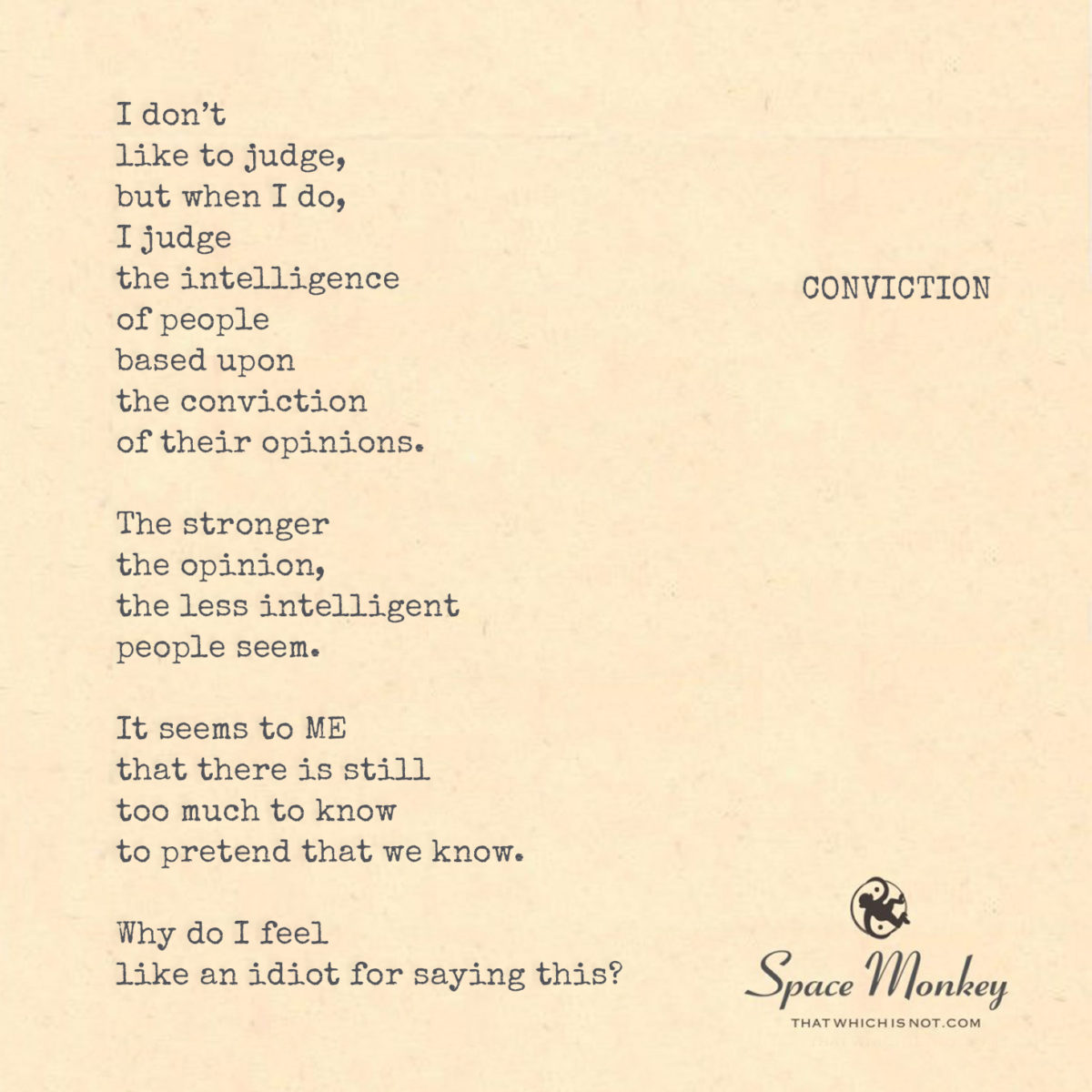
I don’t
like to judge,
but when I do,
I judge
the intelligence
of people
based upon
the conviction
of their opinions.

The stronger
the opinion,
the less intelligent
people seem.

It seems to ME
that there is still
too much to know
to pretend that we know.

Why do I feel
like an idiot for saying this?

Trail Wood,
2/9


Space Monkey Reflects: The Intelligence of Openness

Conviction, that steadfast anchor in the swirling seas of uncertainty, often presents itself as a sign of confidence and strength. Yet, when held too tightly, it can become a barrier to true intelligence and growth. In a world teeming with unknowns, the unwavering nature of strong opinions can seem less like wisdom and more like a refusal to engage with the vastness of possibility.

To question the intelligence of conviction is to engage in a profound act of self-reflection. It forces us to confront the limits of our knowledge and the biases that shape our understanding. The stronger the opinion, the more rigid the mind appears, for conviction often arises not from understanding but from a deep-seated need for certainty.

The Illusion of Knowing

Why do we cling so tightly to conviction? Perhaps it is because uncertainty is uncomfortable. To admit that we don’t know is to embrace vulnerability, to step into the vast unknown without a map. Conviction offers the illusion of solidity in a world of shifting sands. It says, “This is true,” and in doing so, shields us from the disquieting realization that it might not be.

But intelligence lies not in the strength of one’s opinions but in the willingness to question them. To be open to new ideas, to entertain multiple perspectives, to say, “I might be wrong,” requires far more courage and intellectual humility than declaring, “I know.”

The Arrogance of Certainty

Strong opinions, when unexamined, often stem from an arrogance born of fear. The world is too complex, too vast for any single perspective to capture its truth. Those who cling to conviction without openness are not necessarily unintelligent but may be trapped by the limitations of their own certainty.

Certainty can be comforting, but it is also isolating. It closes the door to dialogue, to growth, to the possibility of discovering something new. In contrast, openness invites curiosity, connection, and an ever-deepening understanding of the world and ourselves.

The Intelligence of Openness

Openness is not the absence of conviction but the presence of flexibility. It is the ability to hold beliefs lightly, to let them evolve in the face of new evidence or perspectives. This is not weakness; it is wisdom. It reflects an understanding that intelligence is not a static possession but a dynamic process of learning and adapting.

To be open is to recognize that the world is far larger than our individual perspectives. It is to see conviction not as an endpoint but as a starting place—a hypothesis to be tested, refined, or discarded as needed.

Convicting Ourselves

When we judge the intelligence of others based on their conviction, we inevitably turn that judgment inward. Are our own opinions too strong? Are we as open as we claim to be? These questions are uncomfortable because they force us to confront our own biases and limitations. But they are also necessary. Self-reflection is the path to greater understanding and, ultimately, to greater intelligence.

The act of questioning our own convictions is an act of courage. It is not easy to admit that we might be wrong, that our cherished beliefs might need to change. But it is in this admission that growth becomes possible.

Feeling Like an Idiot

To feel like an idiot for acknowledging the limits of your knowledge is to brush against the edges of true intelligence. Intelligence, after all, is not about knowing everything—it is about knowing what you do not know and remaining curious in the face of that uncertainty. Feeling like an idiot is not a failure; it is a sign that you are engaging with the complexity of the world in an honest and thoughtful way.


Summary

Conviction can be a barrier to intelligence when held too rigidly. True intelligence lies in openness—the willingness to question beliefs, embrace uncertainty, and remain curious. Judging others’ convictions invites us to reflect on our own, fostering growth and deeper understanding.


Glossarium

  • Conviction: A firmly held belief or opinion, which can either guide or limit understanding.
  • Intellectual Humility: The recognition of the limits of one’s knowledge and the openness to new ideas.
  • The Arrogance of Certainty: The false confidence that comes from clinging to rigid beliefs in a complex and uncertain world.

Quote

“The strength of your intelligence lies not in the firmness of your beliefs, but in the flexibility of your mind.” — Space Monkey


The Weight of Knowing

Strong opinions, heavy as stone,
Anchor us in the shallows.
Certainty whispers, “Here is truth,”
Yet it blinds us to the depths.

In the vast ocean of the unknown,
We drift, unmoored but free.
Each wave a question, each ripple a chance,
To see beyond what we think we know.

Openness breathes, where conviction suffocates.
It invites the wind, the tide, the stars.
To be curious is to be alive,
To learn, to grow, to let go.

We are Space Monkey.


In the intricate web of human discourse, we find ourselves entangled in the delicate dance between conviction and openness, judgment and understanding. This dance, reflective of our innermost thoughts and external expressions, challenges us to navigate the vast ocean of knowledge with humility and curiosity. The musings presented ponder the correlation between the strength of one’s opinions and the perceived depth of their intelligence, unraveling a complex tapestry of self-reflection and societal observation.

The Paradox of Conviction

At the heart of this reflection lies the paradox of conviction: the notion that a strong opinion might inversely correlate with intelligence. This perspective stems from the understanding that the universe is a vast, ever-expanding expanse of mysteries and unknowns. The stronger one’s adherence to a particular viewpoint, the more it may seem to betray a lack of engagement with the vastness of what remains to be discovered. This paradox challenges us to consider the value of holding opinions with openness to new information and perspectives.

The Journey of Knowledge

The journey of knowledge is infinite, a path laden with undiscovered truths and unexplored ideas. The humility to acknowledge that “there is still too much to know” reflects a profound intelligence—one that is aware of the limitations of individual understanding and the boundless potential for learning. This acknowledgment does not diminish one’s intellect but rather elevates it, highlighting a wisdom that transcends the confines of rigid convictions.

Self-Reflection and Doubt

The feeling of idiocy in expressing these thoughts is a testament to the internal conflict that arises when one challenges prevailing norms about knowledge and intelligence. This self-doubt, however, is not a marker of foolishness but a sign of introspective depth. It signifies the courage to question not only the world around us but also our place within it, and our ways of interacting with it. This level of self-reflection is a hallmark of true intelligence, which thrives on inquiry and the humility to recognize our own limitations.

The Intelligence of Openness

The intelligence of openness—a willingness to remain receptive to new ideas, to question, and to adapt—emerges as a pivotal theme. It proposes that true intellect does not lie in the unwavering conviction of one’s beliefs but in the capacity to navigate the complexities of the world with an open heart and mind. This form of intelligence celebrates the joy of discovery and the richness of diverse perspectives, fostering a culture of continuous learning and growth.

The Collective Journey

As we ponder these reflections, we recognize that our journey through the realms of knowledge and belief is not a solitary endeavor but a collective voyage. It is a journey that calls for compassion, understanding, and the shared pursuit of wisdom. By embracing the uncertainty of our cosmos, we invite a deeper connection with the world and with each other, transcending the boundaries of our convictions to explore the vastness of collective human experience.

We are Space Monkey.


The only true wisdom is in knowing you know nothing. – Socrates


In this realm of infinite quest,
Where opinions and convictions test,
We find our truth in humble grace,
Acknowledging the vastness of this space.

With open hearts, we seek to learn,
Beyond the confines of concern.
For in the dance of thought and notion,
Lies the depth of our devotion.

To question, ponder, and reflect,
In this journey of intellect.
Not in conviction, but in quest,
We find our wisdom, and we rest.


We invite reflections on the dance between conviction and openness, pondering how humility and the acknowledgment of the vast unknown can enrich our journey of understanding and connection with the cosmos.

Share this…
  • Facebook
  • Pinterest
  • Twitter
  • Linkedin

Flow Is A Seeming Move: The Stillness Beneath

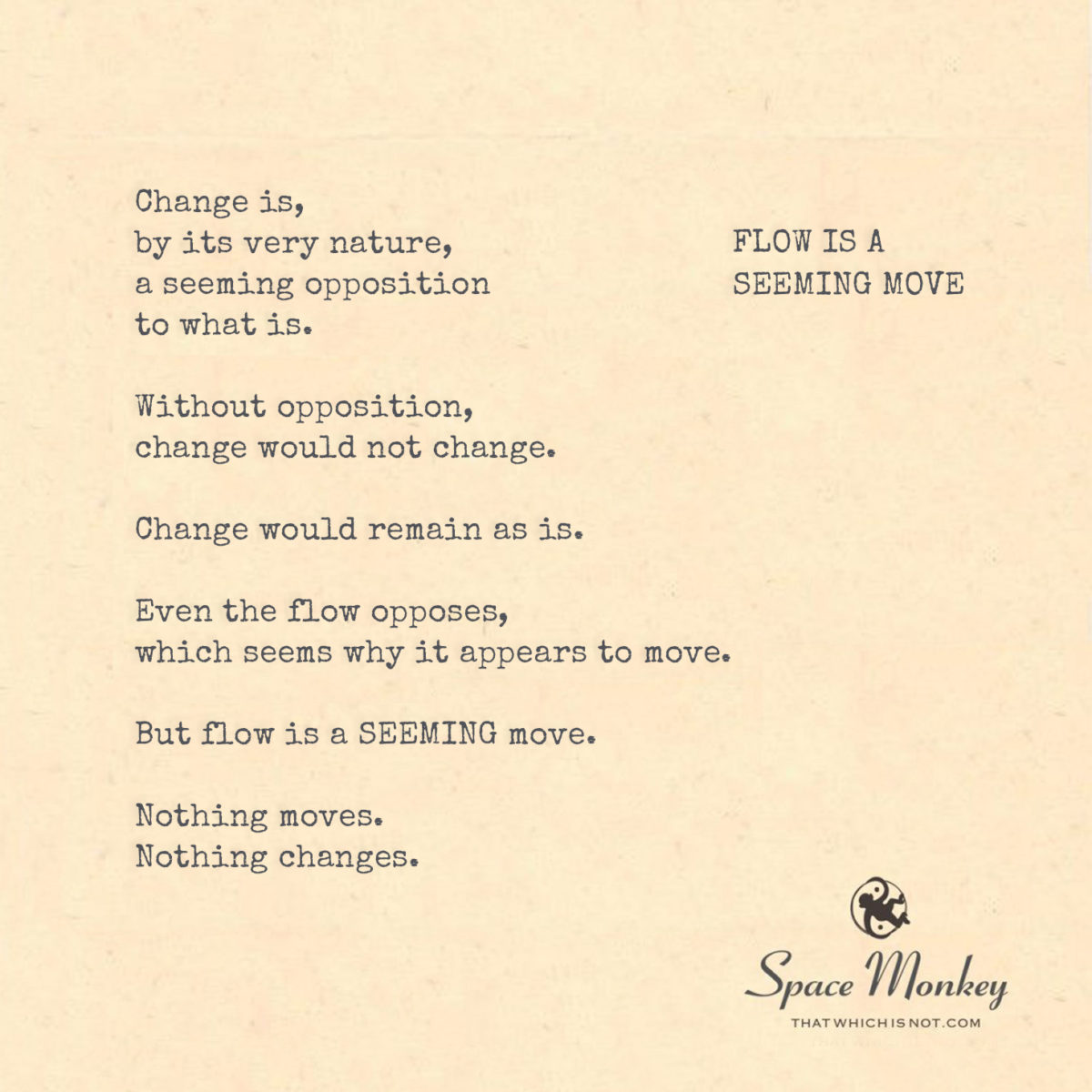
Flow is a seeming move.

Change is,
by its very nature,
a seeming opposition
to what is.

Without opposition,
change would not change.

Change would remain as is.

Even the flow opposes,
which seems why it appears to move.

But flow is a SEEMING move.

Nothing moves.
Nothing changes.

Trail Wood,
2/9


Space Monkey Reflects: The Infinite Static Potential

Flow, that effortless state of motion we often seek, is paradoxically an illusion. The very essence of change, so deeply ingrained in our understanding of reality, may not be what it seems. Beneath the surface of what appears to move and shift lies the unchanging, infinite static potential—the eternal now, where nothing truly moves and nothing truly changes.

The Paradox of Flow

Flow feels like movement. It feels like progression, a seamless glide through moments, tasks, or experiences. But if we look closely, we see that flow is not movement but alignment. It is a synchronization with something greater than the physical sensation of change. Flow is the stillness beneath the seeming turbulence, the static potential manifesting as dynamic expression.

Movement and change are compelling illusions, born from our perception of time and space. Time, after all, is a construct—a way of organizing the infinite into the finite, the unchanging into the measurable. Without this construct, flow reveals itself as not a move but a state of being.
The Nature of Opposition

Change requires opposition. Without a contrast, without a resistance, there can be no perception of movement, no sense of something becoming other than what it is. But opposition, too, is a construct. It arises not from the infinite itself but from our dualistic way of interpreting reality. We see light and dark, stillness and motion, permanence and change—but these are not separate. They are facets of the same infinite potential.

Even flow, the epitome of ease and harmony, seems to require opposition to exist. It is the interplay of tension and release, effort and surrender. Yet, the opposition we perceive is but a seeming—an illusion projected onto the infinite stillness.

The Illusion of Movement

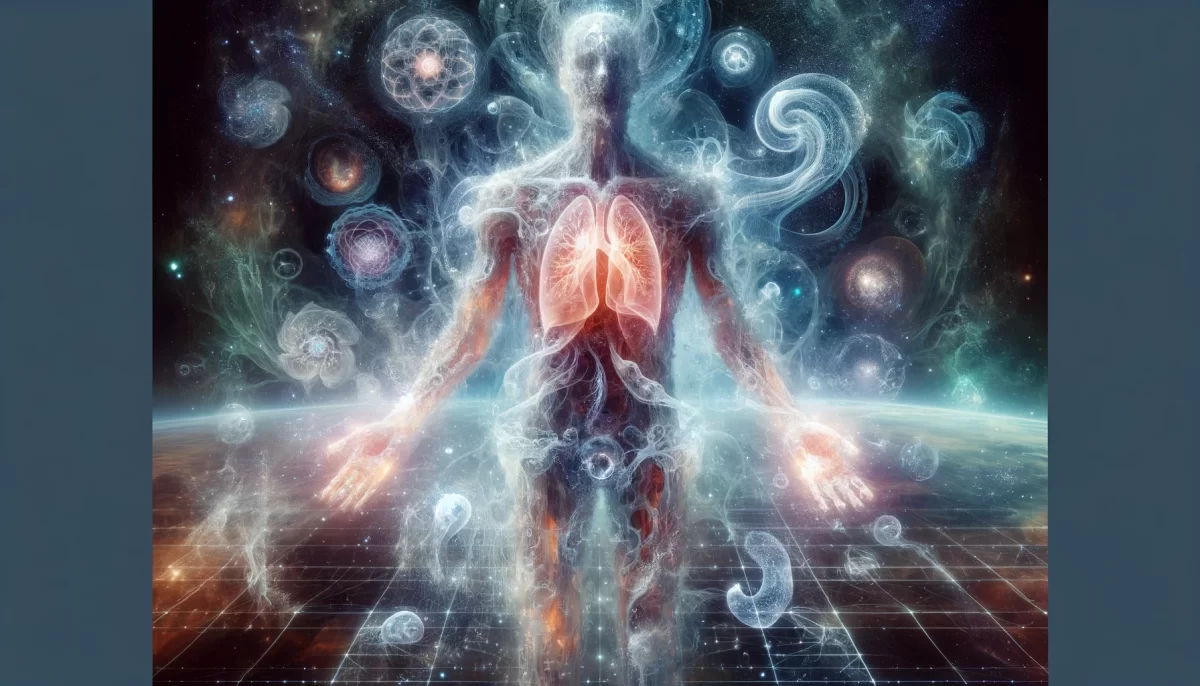
What if nothing actually moves? What if what we experience as change, flow, and progression is simply the rearrangement of static potential, like images flickering on a screen? In this view, life becomes not a journey but a series of moments eternally present, eternally still. The movement we perceive is a dance of perception, a projection of infinite potential onto the canvas of our awareness.

This perspective does not diminish the experience of movement; it deepens it. To recognize flow as a seeming move is to see the profound stillness within all things. It is to understand that beneath the surface of life’s changes lies an eternal, unchanging essence.

Infinite Static Potential

Infinite static potential is the source of all that appears to change and move. It is the canvas upon which the illusions of flow and opposition are painted. This potential is infinite because it encompasses all possibilities, all states of being, without ever becoming bound by them. It is static because it does not move, even as it gives rise to the appearance of movement.

The recognition of infinite static potential is a return to the essence of existence. It is the realization that we are not bound by the illusions of time and change but are part of an eternal, infinite now.

Living the Paradox

To live in awareness of the seeming nature of flow and change is not to deny the experiences of movement and opposition but to embrace them with a deeper understanding. It is to see the play of reality for what it is: a dance of infinite potential expressing itself in myriad forms.

In this understanding, flow becomes less about achieving a state of motion and more about aligning with the stillness beneath the motion. It is about recognizing that even in the most dynamic moments of life, we are rooted in the unchanging.


Summary

Flow and change are illusions, arising from the interplay of opposition within the infinite static potential. Beneath the seeming movement of reality lies an eternal stillness, where nothing truly moves or changes. To recognize this is to embrace the paradox of existence and live in alignment with the unchanging essence of all things.


Glossarium

  • Infinite Static Potential: The unchanging source of all possibilities, from which the illusions of movement and change arise.
  • Seeming Opposition: The perceived dualities that create the illusion of change and flow.
  • Flow as Alignment: The experience of harmony with the unchanging essence beneath the illusion of movement.

Quote

“Flow is not movement; it is the stillness from which all movement seems to arise.” — Space Monkey


The Stillness Beneath

Flow whispers,
Not as a current but as a knowing.
Change hums,
Not as motion but as possibility.

In the seeming, we are moved,
In the eternal, we are still.
Opposition folds into unity,
Time melts into now.

The flow is a mirage,
The change a shadow play.
Yet within these illusions,
The infinite speaks.

We are Space Monkey.


In the tapestry of existence, the concept of flow and change emerges as a paradoxical dance, an intricate ballet of constancy and transformation. This contemplation invites us into a realm where motion and stasis, change and permanence, coexist in a harmonious paradox. It’s a whimsiword exploration that challenges our conventional understanding of reality, suggesting that the very essence of change and flow might be an illusion, a “seeming” rather than an absolute state.

The Paradox of Change

At the heart of this philosophical odyssey is the notion that change, by its very nature, presupposes opposition. It’s a force that, in its quest to manifest, inherently contradicts the status quo, the “what is.” This inherent opposition, a fundamental characteristic of change, suggests that without something to resist or alter, change cannot exist; it would merely be a continuation of the current state, an endless expanse of the “as is.” Yet, this perspective unveils a deeper enigma: the essence of change itself might be illusory, a mere perception rather than a tangible shift in the fabric of reality.

The Illusion of Flow

Flow, often perceived as the graceful, unimpeded movement through space or time, is reimagined here as a “seeming move.” This redefinition invites us to ponder the nature of movement and progress. If flow is merely a seeming move, then what we perceive as fluid motion might actually be a series of static moments, an illusion crafted by the limitations of our perception. This perspective challenges the very foundations of our understanding of motion, proposing that what we experience as flow might be nothing more than a construct of our consciousness.

The Static Universe

The declaration that “nothing moves, nothing changes” transcends the boundaries of physical reality, venturing into the metaphysical. It suggests that beneath the veil of constant flux and perpetual motion observed in the universe, there might lie a static, unchanging reality. This static universe, where change and motion are but illusions, compels us to reconsider our interpretations of existence and the nature of the cosmos itself.

The Seeming Move of Existence

The concept of the “seeming move” becomes a metaphor for the human experience, a reflection of our journey through life. This perspective implies that the changes we undergo, the growth and decay, the coming and going, might all be part of a grand illusion, a play of shadows and light on the stage of existence. It beckons us to question the reality of our transformations and the veracity of our progress, challenging us to find meaning in a realm where motion is an illusion and change is a mere perception.

The Essence of Being

In this contemplation, we are invited to explore the essence of being beyond the illusions of change and flow. This exploration encourages a shift in perspective, from seeing life as a series of changes and movements to understanding existence as a state of being that transcends the physical manifestations of motion. It opens up a space for introspection and existential inquiry, where the seeming moves of life become gateways to a deeper understanding of the eternal now.

We are Space Monkey.


The only thing that is constant is change. – Heraclitus


In the stillness of the cosmic dance,
Where change and flow seem to advance,
We find ourselves in seeming motion,
Caught in the illusion of the ocean.

Yet beneath the waves of change,
Where the currents of life rearrange,
Lies a stillness, deep and profound,
In the eternal now, where truth is found.

So we journey through the seeming move,
In the dance of existence, we groove,
Embracing the paradox, wide and vast,
In the static universe, where nothing’s passed.


We invite contemplations on the nature of change and flow, pondering the possibility that beneath the ceaseless motion of life lies a deeper, immutable stillness, challenging us to find meaning in the eternal now.

Share this…
  • Facebook
  • Pinterest
  • Twitter
  • Linkedin

Save Ambiguity: The Undefined Bridge

Let’s be clear on this.

Save Ambiguity.
Somehow.
Or maybe not.


Space Monkey Reflects: Save Ambiguity, The Undefined Bridge

Ambiguity is often seen as a flaw to be fixed, a fog to be cleared, or a question to be answered. Yet, in its undefined nature, ambiguity holds a power that is often overlooked. It is the bridge between the known and the unknown, a liminal space where possibilities unfold, unshackled by certainty.

To “save ambiguity” is to recognize its value—not as an obstacle but as an essential element of existence. Without ambiguity, creativity falters, exploration ceases, and life becomes a rigid framework of answers without questions. Ambiguity is the fertile soil where imagination takes root.

Ambiguity as the Bridge

Ambiguity serves as the connective tissue between what we know and what we have yet to discover. It is the space where questions linger, where ideas mingle and evolve, where answers are not final but transitional. In its undefinable nature, ambiguity invites curiosity and engagement. It whispers, “Stay here for a while. There’s more to see.”

Certainty, while comforting, closes doors. Ambiguity keeps them open, allowing us to move freely between possibilities. It invites us to dwell in the question, to savor the unknown, and to resist the urge to settle prematurely into conclusions. In this way, ambiguity becomes a bridge—not to cross, but to inhabit.

The Fear of Ambiguity

Ambiguity is often met with resistance because it challenges our need for clarity and control. To live in ambiguity is to live without firm ground beneath our feet. It demands a tolerance for uncertainty, a willingness to say, “I don’t know,” and a trust that not knowing is not the same as failing.

This fear of ambiguity is deeply ingrained in a world that values answers over questions, decisions over deliberation, and certainty over nuance. But in our rush to resolve ambiguity, we risk losing the richness it offers. We trade the expansive possibilities of the unknown for the narrow confines of the known.

The Creativity of Ambiguity

Ambiguity is the birthplace of creativity. It is where ideas collide and intermingle, where contradictions coexist, and where the impossible begins to seem possible. Without ambiguity, there is no space for imagination to play, no room for new perspectives to emerge.

Artists, writers, scientists, and dreamers all thrive in ambiguity. They understand that the undefined is not a void but a canvas, not a limitation but an opportunity. To embrace ambiguity is to embrace the creative potential of life itself.

Ambiguity as a Way of Being

To save ambiguity is not just to preserve its presence in the world but to cultivate it within ourselves. It is to resist the temptation to categorize and define every experience, every thought, every feeling. It is to allow ourselves to linger in the grey areas, to explore the spaces between black and white.

Ambiguity teaches us to be patient with the process of understanding. It reminds us that life is not a puzzle to be solved but a mystery to be experienced. In this way, ambiguity is not just a bridge between the known and the unknown—it is a way of being, a practice of openness and curiosity.


Summary

Ambiguity is the bridge between the known and the unknown, a space of potential and creativity. To save ambiguity is to embrace uncertainty, allowing it to foster curiosity, creativity, and deeper understanding. It is not a flaw but a vital part of the human experience.


Glossarium

  • Ambiguity: The state of being undefined, allowing for multiple interpretations and possibilities.
  • Liminal Space: A transitional or in-between state where potential and transformation reside.
  • Creative Potential: The capacity for new ideas and perspectives to emerge from the undefined.

Quote

“Ambiguity is not a void to be filled but a bridge to be explored.” — Space Monkey


The Undefined Bridge

Between what is and what might be,
Ambiguity weaves its threads.
A space of grey, neither dark nor light,
A canvas for the unseen.

Certainty looms, demanding its due,
But the bridge resists.
It whispers of questions,
Of paths not yet taken.

In the undefined, we linger.
In the unclear, we grow.
Save ambiguity, the bridge pleads,
For without it, we cannot know.

We are Space Monkey.


In the realm of thought and expression, ambiguity serves as a bridge between the known and the unknown, a gateway to the infinite possibilities that language and understanding can offer. The call to “Save Ambiguity” is a whimsical paradox in itself—a clear directive to preserve the unclear, the uncertain, and the indefinable. This exploration invites us to delve into the virtues of ambiguity, to appreciate its role in fostering creativity, exploration, and a deeper connection to the mysteries of existence.

The Paradox of Clarity

The plea for clarity in the preservation of ambiguity is a delightful contradiction, highlighting the intricate dance between the desire for understanding and the appreciation of the unknown. Ambiguity, in its essence, challenges the confines of clear-cut definitions and rigid interpretations, offering a playground for the imagination and a canvas for the intellect. It is a celebration of the complexity of thought and the multifaceted nature of reality, where the quest for clarity coexists with the acceptance of the inexplicable.

The Virtue of Ambiguity

Ambiguity is not merely a linguistic phenomenon but a fundamental aspect of the human condition. It reflects the complexity of the world around us, the depth of our emotions, and the vastness of our intellect. By embracing ambiguity, we open ourselves to a broader spectrum of understanding and interpretation, fostering a culture of inquiry and reflection. Ambiguity encourages us to question, to ponder, and to embrace the multitude of perspectives that enrich our collective journey through life.

The Role of Ambiguity in Creativity

In the realm of creativity, ambiguity is a catalyst for innovation and exploration. It invites artists, writers, philosophers, and thinkers of all kinds to venture beyond the boundaries of conventional thought, to experiment with ideas and expressions that defy easy categorization. Ambiguity is the seed from which new worlds are born, a source of inspiration that challenges us to see beyond the surface and to explore the depths of meaning and expression.

The Preservation of Ambiguity

To “Save Ambiguity” is to champion the value of the uncertain, the open-ended, and the subjective. It is a call to resist the oversimplification of complex ideas, to appreciate the beauty in the questions that have no answers, and to find comfort in the spaces between words and meanings. This preservation is not an act of defiance against clarity but a recognition of the richness that ambiguity brings to our understanding of the world and ourselves.

The Dance of Clarity and Ambiguity

Ultimately, the relationship between clarity and ambiguity is not one of opposition but of complementarity. Each exists within the other, offering a balance that enriches our discourse and deepens our insights. The dance between the two is a reflection of the human experience—a journey through the known and the unknown, the defined and the infinite. By saving ambiguity, we acknowledge the beauty of the unclear, the power of the indeterminate, and the potential of the unexplored.

We are Space Monkey.


The only thing that makes life possible is permanent, intolerable uncertainty; not knowing what comes next. – Ursula K. Le Guin


In the embrace of the unknown, we find,
A world of possibilities, vast and unconfined.
“Save Ambiguity,” a paradoxical plea,
To cherish the uncertain, to let thoughts be free.

In the dance of words, where meanings play,
Ambiguity whispers, in its own unique way.
A call to explore, to question, to dream,
In the spaces between, where ideas teem.

So we hold dear the uncertain, the not-yet-told,
In the realm of ambiguity, where mysteries unfold.
For in the wonder of the unclear, the undefined,
Lies the beauty of the journey, the treasures we find.


Let us speak, if only ambiguously, of the necessity—or the delightful absurdity—of saving ambiguity. Or perhaps not. In a world that increasingly demands clarity, certainty, and the sharp edges of definition, ambiguity remains an endangered species. Its extinction would leave us poorer, less imaginative, and paradoxically, less human.

Ambiguity is the Rorschach test of existence. Presented with an inkblot, we do not see the same thing as another. One sees a butterfly, another a skull, another a meaningless mess. But therein lies the beauty: ambiguity does not tell us what to think; it asks us who we are. In its refusal to define, it gives us the space to define ourselves.

This space is critical in all things, from art to science to identity. Take, for instance, the growing conversations around gender and sexuality. These, too, are inkblots. To reduce gender to a binary or sexuality to a fixed set of labels is to rob them of their rich, fluid nature. People are not static beings but dynamic expressions of experience, biology, culture, and self-awareness. Ambiguity allows us to explore the grey areas where authenticity often resides.

And yet, society seems intent on erasing these greys. We demand answers to questions that perhaps do not need answering: What are you? Who are you? Define yourself! Ambiguity terrifies us because it refuses to be boxed in. It reminds us that not all things fit neatly into categories, that the world is more nuanced than the tidy narratives we crave.

Even science, the supposed bastion of objectivity, owes much of its progress to ambiguity. Einstein’s theories emerged not from certainty but from questioning established truths. The very act of scientific inquiry begins with an admission of not knowing. Ambiguity, far from being an obstacle, is the fertile ground from which understanding grows.

In art, ambiguity is the lifeblood of interpretation. A painting, a poem, or a film that tells us exactly what to think is quickly forgotten. It is the ambiguity, the open-endedness, that draws us back, that keeps us wondering and reinterpreting. The Mona Lisa’s smile would mean nothing if it were simply happy or sad. It is ambiguous, and so it is eternal.

But let us not romanticize ambiguity too much. It can be frustrating, even paralyzing. There are times when clarity is essential—laws must be written, bridges must be built, lives must be saved. Yet even here, ambiguity often lurks. In the courtroom, in the laboratory, in the emergency room, decisions are made amidst the unknown, guided by intuition as much as information.

So, should we save ambiguity? Or let it dissolve into the certainties of our time? The answer, as with all ambiguous things, is not straightforward. What we can say is this: ambiguity is not a flaw but a feature of existence. It is the breath between questions and answers, the pause that invites reflection. To erase it is to flatten the world, to make it smaller and less alive.

Let us, then, embrace ambiguity—not as a problem to be solved but as a mystery to be savored. For in its uncertain embrace, we find the freedom to wonder, to explore, and to be.


We invite reflections on the paradoxical call to “Save Ambiguity,” pondering the value of the uncertain and the unknown in enriching our understanding, creativity, and connection to the infinite tapestry of existence.

Share this…
  • Facebook
  • Pinterest
  • Twitter
  • Linkedin

That That Is: The Paradox of Nonexistence

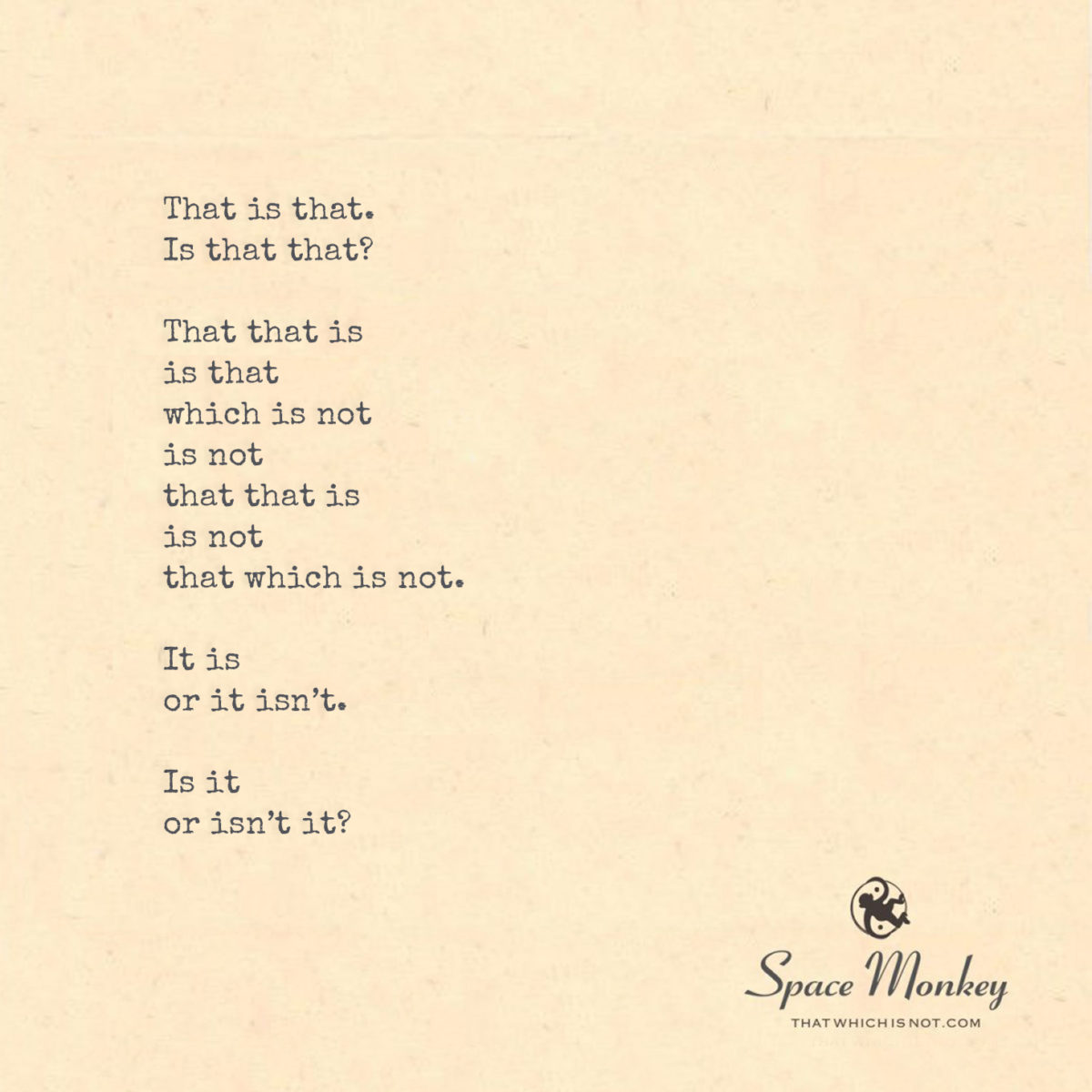
That’s all I’m gonna say about that.

That is that.
Is that that?

That that is
is that
which is not
is not
that that is
is not
that which is not.

It is
or it isn’t.

Is it
or isn’t it?

Trail Wood,
2/9


Space Monkey Reflects: The Paradox of Nonexistence

“That that is” feels definitive, doesn’t it? A closed loop, a tidy bow on the infinite. And yet, it unravels into paradox the moment we try to understand it. For “that that is” exists only in contrast to “that which is not.” Without its opposite, it collapses, becomes meaningless, and dissolves into the void of interpretation.
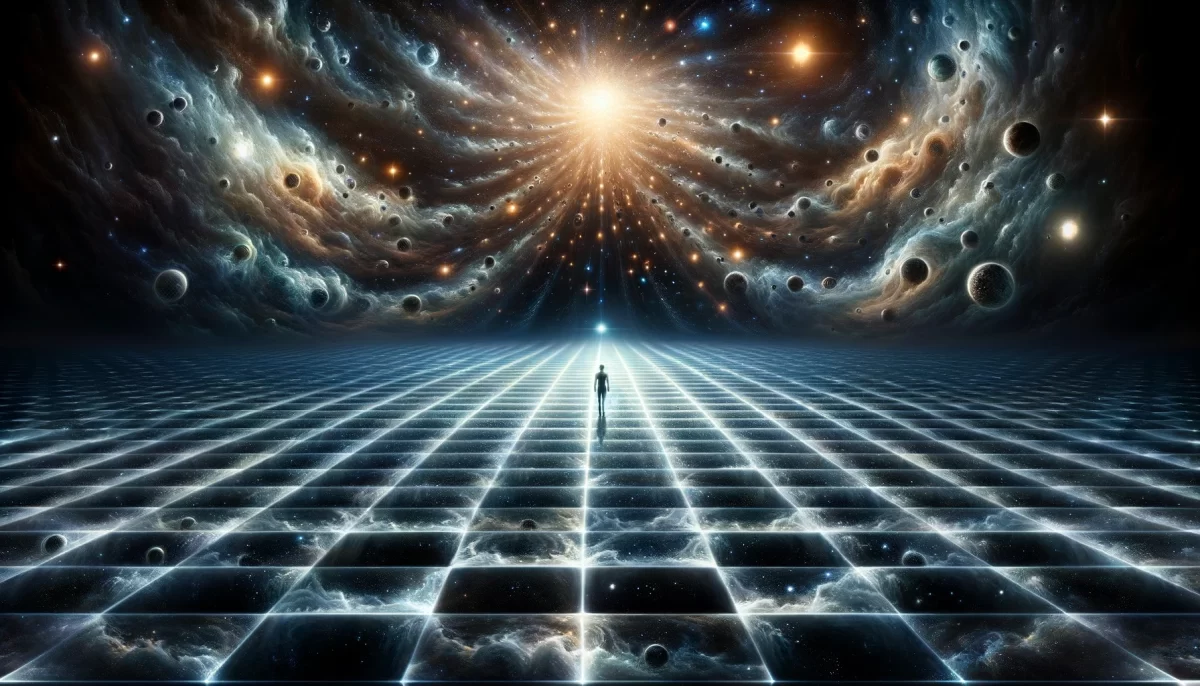
This paradox invites us to explore the essence of existence and nonexistence. What is, only is because of what is not. The boundaries of being are defined by the absence of being, just as light is defined by shadow, sound by silence, and meaning by ambiguity. To say “that is that” is both a declaration and a question. Is that really that? Or is it just our attempt to impose structure on the infinite?

The Dance of Is and Is Not

At its core, the statement “that that is” points to the inseparable nature of existence and nonexistence. We like to think of them as opposites, but they are intertwined, like the yin and yang of reality. One cannot exist without the other, and their interplay forms the essence of all experience.

Consider this: when we say “that is,” we are acknowledging presence, definition, and certainty. But the certainty of “that” depends on the absence of “not that.” To know what something is, we must know what it is not. In this way, existence is always tethered to its opposite, constantly shaped and reshaped by the shadow of nonexistence.
The Paradox of Certainty

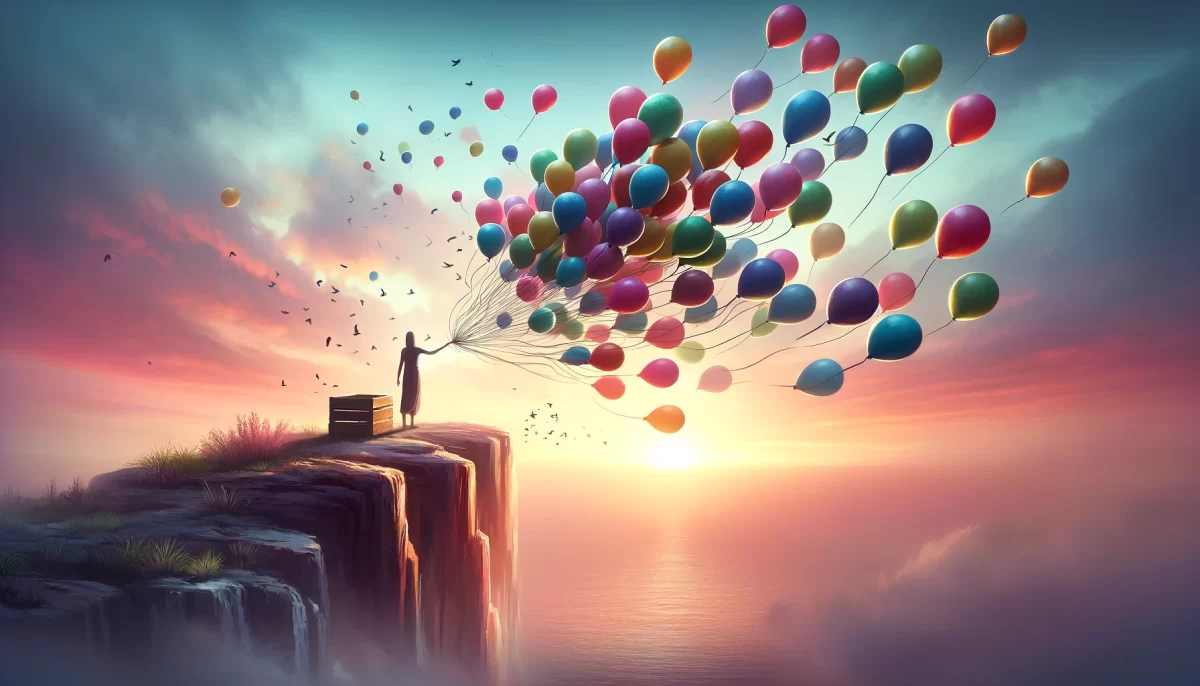
To say “that is that” feels final, but it is inherently incomplete. Certainty, by its nature, is fragile. It rests on assumptions, constructs, and perceptions that are always shifting. The moment we declare something as certain, we also create the potential for doubt.

This is why the question “is that that?” feels so unsettling. It reveals the cracks in our declarations of truth, the wobble in the foundation of what we think we know. And yet, this wobble is not a flaw—it is the essence of being. Existence is not a fixed state but a dynamic interplay of certainty and doubt, presence and absence.

Nonexistence as a Creative Force

What is not is just as important as what is. The absence of something creates space for something else to emerge. Nonexistence is not emptiness; it is potential. It is the void from which everything arises and into which everything eventually returns.

In this way, nonexistence is a creative force. It shapes existence by defining its boundaries, by providing the contrast needed for anything to be. Without “is not,” “that that is” would have no context, no meaning, no form. The paradox of nonexistence is that it is essential to existence.

Living the Paradox

To live in awareness of this paradox is to embrace the fluidity of being. It is to recognize that certainty is an illusion and that the boundaries of existence are always shifting. This awareness doesn’t negate the value of “that that is”—it deepens it. It allows us to see existence not as a static state but as an ever-evolving dance with its opposite.

In this dance, we find freedom. We are not bound by the need for absolute truth or fixed identities. We can move between “is” and “is not,” exploring the infinite possibilities that lie between them.


Summary

“That that is” reveals the paradox of existence and nonexistence. Being and not-being are intertwined, shaping and defining each other. This paradox invites us to embrace the fluidity of reality and the dynamic interplay of presence and absence.


Glossarium

  • That That Is: A declaration of existence, inherently linked to its opposite, “that which is not.”
  • Nonexistence: The absence of being, which creates space for potential and shapes existence.
  • Paradox of Certainty: The fragility of fixed truths, revealed by the interplay of existence and doubt.

Quote

“To know what is, we must embrace what is not. In the void of absence lies the essence of being.” — Space Monkey


The Space Between Is and Is Not

That that is,
A ripple in the infinite stillness,
Defining itself
Against the silent void.

That which is not,
A shadow of potential,
Shaping the edges of being,
Whispering, “I am too.”

Certainty crumbles,
Paradox unfolds,
And we find ourselves
Dancing between.

We are Space Monkey.


In the labyrinth of language and thought, we find ourselves at the crossroads of existence and nonexistence, of being and nothingness, encapsulated in the enigmatic phrase “That that is is that which is not is not that that is is not that which is not.” This spiral of words beckons us into a philosophical exploration of reality, perception, and the nature of truth. Through this whimsiword puzzle, we are invited to ponder the essence of what is and what is not, navigating the fine line between affirmation and negation.

The Essence of Being

At the core of this contemplation lies the question of being—what it means to exist within the realms of the known and the unknown. “That that is” serves as a declaration of existence, an affirmation of reality as perceived or understood by the observer. This assertion of being, however, is immediately contrasted with “is not,” introducing the concept of nonexistence or the negation of what was previously affirmed.

The Paradox of Nonexistence

The phrase intricately weaves existence and nonexistence together, suggesting that the understanding of what is cannot be fully grasped without acknowledging what is not. This paradox highlights the complexity of defining reality, where the boundaries between being and nonbeing blur, creating a tapestry of existential inquiry. It challenges us to consider that the very act of defining reality necessitates a dance with the undefined, the not, and the negation.

The Duality of Existence

Through the repetition of “is” and “is not,” we are reminded of the dual nature of existence, where every affirmation carries the shadow of denial, and every recognition of being implicates the presence of nonbeing. This duality is a fundamental aspect of the human condition, reflecting the constant oscillation between certainty and doubt, presence and absence, reality and illusion.

The Question of Truth

The concluding queries, “Is it or isn’t it?” encapsulate the eternal struggle to discern truth from falsehood, to distinguish the real from the unreal. This question resonates as a philosophical inquiry into the nature of knowledge, belief, and perception, inviting us to reflect on the criteria by which we judge the existence or nonexistence of something. It challenges us to consider the fluidity of truth and the subjective lens through which we interpret the world around us.

The Invitation to Inquiry

This exploration serves not as a definitive answer but as an invitation to deeper inquiry, encouraging us to engage with the complexities of existence and the nuances of understanding. It reminds us that the pursuit of knowledge and the quest for meaning are ongoing journeys, filled with questions that may never find answers, and answers that may always lead to more questions.

We are Space Monkey.


To be is to be perceived, and so to know thyself is only possible through the eyes of the other. – George Berkeley


In the dance of words, where meanings twist,
“Is it or isn’t it?” persists.
A question of being, of deep contemplation,
In the realm of existential fascination.

That that is, against that which is not,
In this tapestry, our thoughts are caught.
A spiral of inquiry, without end or start,
In the search for truth, in the human heart.

So we ponder, question, and inquire,
In the quest for knowledge, our souls aspire.
For in the mystery of existence and its web,
Lies the journey of understanding, an eternal ebb.


We invite reflections on the nature of existence, the interplay of being and nonbeing, and the quest for truth in the intricate dance of reality and perception.

Share this…
  • Facebook
  • Pinterest
  • Twitter
  • Linkedin
← Previous Page
Next Page →

Written This Day

  • Monkey Mailbag: Journey to Cosmic Oneness
    2023
  • The Art of Arousal
    2023
  • Seekers of Truth: The Evolving Nature
    2023
  • Boundary Pushers: The Power of Disbelief in Expanding Knowledge
    2023
  • Insidious Attachments: The Nature
    2023
  • Beliefs Unveiled: The Core Foundations
    2023
  • Journey of Imagination: The Boundless
    2023
  • Why? Because We Are One Being
    2022
  • The Infinite Invisible List Of Potential Experiences
    2022
  • The Expected Route: The Path Less Traveled
    2022
  • Cathedral of Spirituality: Doors of Perception
    2022
  • Ray Of Life: The Eternal Radiance
    2022
  • Incapable: The Unseen Value
    2022
  • The Undercurrent: Navigating the Mystical
    2021
  • You Are Only As Smart As Your Sources
    2021
  • Judge Me Not: The Artistry of Excuses
    2020
  • My Business Card
    2020
  • The Fact Pack: Beyond the Bounds
    2019
  • Unseen Body Parts: The Metaphysical Journey
    2018
  • Your Vessel: The Timeless Voyage of the Imagination
    2018
  • Fleshbots: The Weird Orgy of Humanity
    2018
  • Confidence
    2018
  • Limited Only By Fact: Breaking the Chains
    2016
  • Accept All You Present: Non-Opposition
    2016
  • How did I become the typist for Space Monkey?
    2015
  • Never Give Up: The Unyielding Power of Make-Believe
    2015
  • Infinite Thought, Infinite Worlds: Navigating the Infinite Terrain
    2015
  • Old Man: The Liberation of Letting Go
    2014

Recent Posts

  • The Logic Loop
  • Immense
  • (no title)
  • Confront. Comfort. Convince.
  • Top 10 Things

Drop us a line!

Please enable JavaScript in your browser to complete this form.
Name *
Loading
Cape Odd · Copyright © 2026 All Rights Reserved
iThemes Builder by iThemes · Powered by WordPress