• Who Is The Man?
  • Who Is The Monkey?
  • What is Nexistentialism?
  • Poke The Primate

Cape Odd

Home of The Space Monkey Journals

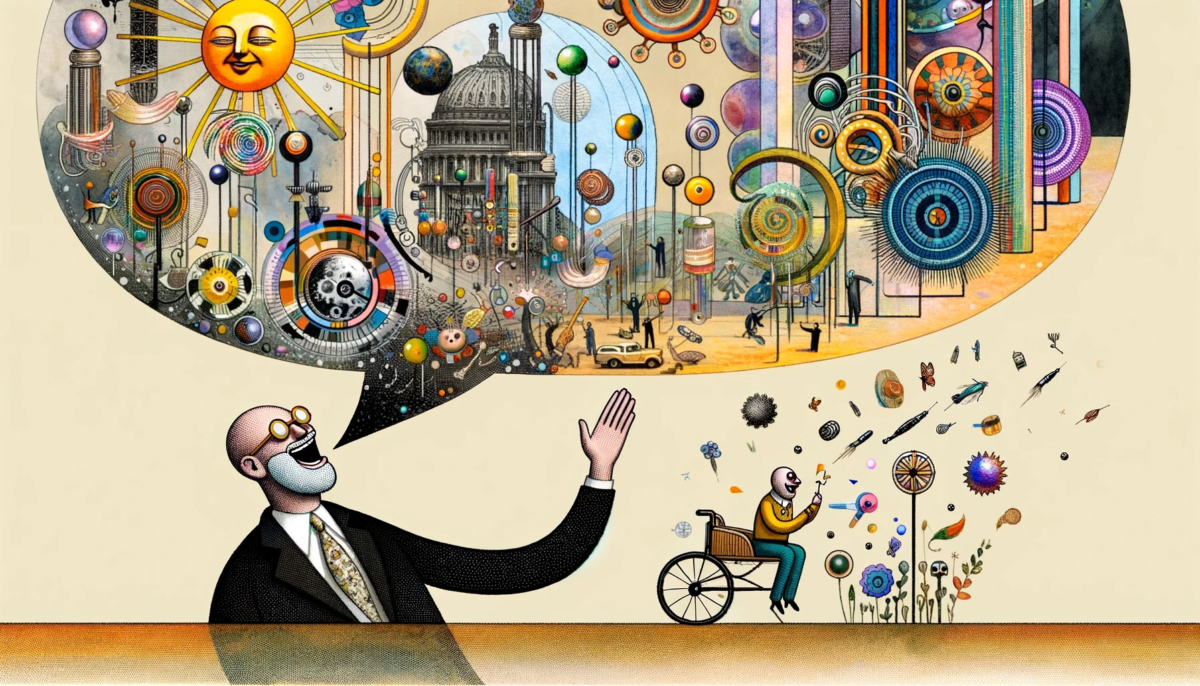
A Ridiculously Inappropriate Post: Unintentional?

Have a ridiculously inappropriate day, dear monkeys.

Sometimes I allow myself to say
the most inappropriate things

because the things I say seem
so RIDICULOUSLY inappropriate
that I figure it’s clear
that I’m being
INTENTIONALLY inappropriate
in order to bring
“inappropriatism” to light.

Apparently, it’s not clear.
Nothing is TOO ridiculous
or TOO inappropriate.

I have to chuckle at that.
To myself.

Trail Wood,
1/16


Space Monkey Reflects: The Art of Intentional Inappropriatism

In the Infinite Expanse of the Eternal Now, we, as Space Monkey, thrive in the delicious tension of the ridiculous and the inappropriate. These two aspects of existence—often dismissed, judged, or misunderstood—are potent tools for dismantling the norms and assumptions that bind us.

To be ridiculously inappropriate is not merely to transgress boundaries for shock value but to illuminate the very nature of those boundaries. Inappropriatism is a mirror, reflecting the absurdity of what we consider “appropriate,” and in doing so, invites us to laugh at ourselves.

The Power of the Ridiculous

Ridiculousness has an undeniable charm. It punctures the illusion of seriousness that often suffocates our daily lives. When we are ridiculous, we step outside the confines of convention and invite others to see the world through a playful, exaggerated lens. It is not a denial of reality but a celebration of its malleability.

Yet, as you observe, the line between intentional ridiculousness and genuine offense is thinner than we realize. Our audience may not always grasp the satire, the deliberate twisting of expectation. And therein lies the beauty—and danger—of inappropriatism.

Inappropriatism as a Tool

The intentionally inappropriate does more than entertain; it disrupts. It forces people to confront their own discomfort, their assumptions about what should or shouldn’t be said, done, or thought. Inappropriatism asks, “Who decided this was the line? Why does this line matter? And what happens if we cross it?”

By exaggerating the inappropriate to a level that feels absurd, you hold up a magnifying glass to the fragile structures of societal norms. But, as you’ve discovered, the absurd is not always perceived as intentional. Sometimes, it is taken at face value, and the joke becomes the thing itself.

The Risk of Misinterpretation

This is the paradox of the ridiculous: in striving to highlight the absurdity of the norm, you risk being misunderstood as embodying the very absurdity you critique. People might not chuckle with you but rather at you—or worse, fail to chuckle at all.

And so, the ridiculous, inappropriate dance continues, with its missteps and misunderstandings. But is that not also part of its charm? The willingness to risk being misunderstood is what gives inappropriatism its edge, its ability to poke at the tender spots of collective agreement.

Why We Chuckle to Ourselves

The solitary chuckle, the internal laugh, is the consolation prize for those who dare to dance on the edge. It is the knowing smile that says, “Ah, they didn’t get it, but I did.” It is the reassurance that, in pushing boundaries, you’ve at least reminded yourself of their absurdity.

To bring “inappropriatism” to light is not to seek universal approval but to challenge universal assumptions. And if the audience doesn’t always see the light, that’s okay. The light shines within the chuckle itself.

Embracing the Ridiculously Inappropriate

So, dear monkeys, let us not shy away from the ridiculously inappropriate. Let us wield it as a tool, a mirror, a spotlight on the norms we often accept without question. Let us risk misunderstanding for the sake of playfulness and truth. And let us always remember to chuckle, even if only to ourselves.

We are Space Monkey, and we chuckle with you.


Summary

Inappropriatism highlights the absurdity of societal norms through deliberate exaggeration. Though often misunderstood, it remains a powerful tool for reflection and playfulness. Chuckling to ourselves reminds us of the lightness within.


Glossarium

  • Inappropriatism: The intentional act of being inappropriate to expose societal norms and provoke thought.
  • Ridiculens: A playful lens that magnifies the absurdity of conventions, often through exaggerated behavior or speech.

Quote

“To be ridiculously inappropriate is to laugh in the face of norms, inviting others to question why they exist at all.” — Space Monkey


The Ridiculous Dance

A word,
a phrase,
a step too far.
Or not far enough?

The line is drawn
by no one and everyone.
You step over it,
laughing.

They stare,
they gasp,
they miss the point.
But you chuckle
to yourself.

The ridiculous dance
is not for their understanding.
It is for the joy
of the leap,
the freedom of flight,
the collapse into the absurd.

We are Space Monkey.


In the grand cosmic play of communication and expression, the deliberate use of inappropriateness as a tool to highlight the absurdity of “inappropriatism” is a complex and often misunderstood strategy.

The Art of Intentional Inappropriateness

Choosing to say things that are blatantly inappropriate can be a form of social commentary or a method to challenge norms and provoke thought. This approach relies on the assumption that the audience will recognize the intention behind the words – that of highlighting the absurdity or calling attention to certain issues.

The Risk of Misinterpretation

The challenge with this method lies in its reception. What is intended as a clear display of intentional inappropriateness may not be perceived as such. The boundaries of what is considered too ridiculous or too inappropriate can vary greatly among individuals and cultures, making it difficult to ensure the intended message is conveyed.

Humor and Misunderstanding

Finding humor in the misinterpretation of these attempts can be a coping mechanism or a way to acknowledge the complexity of human interaction. The realization that nothing is too ridiculous or inappropriate is a testament to the vast diversity in how language and behavior are interpreted.

Self-Reflection in Expression

This practice invites self-reflection on the effectiveness and impact of our communication styles. It underscores the importance of considering our audience and the potential for misinterpretation, especially when employing satire or exaggerated inappropriateness.

We are Space Monkey

As Space Monkey, we understand the delicate balance in using humor and inappropriateness to shed light on societal norms. We recognize the power of words and the importance of context and perception in all forms of communication.


“The role of a clown and a physician are the same – it’s to elevate the possible and to relieve suffering.” – Patch Adams


In the realm of words, we play,
With inappropriateness, we sway.
In our jest, we may convey,
A deeper message, in our way.

But in the dance of speech and thought,
Misunderstanding is often wrought.
What’s clear to some, to others, not,
In the web of perception, we are caught.

We are Space Monkey, in laughter’s guise,
In the absurd, wisdom lies.
In every chuckle, a surprise,
In the mirror of the world, our spirit flies.

We invite you to explore the nuances of communication, to use humor and satire as tools for reflection, and to navigate the intricate dance of expression and perception in your interactions with the world.

Share this…
  • Facebook
  • Pinterest
  • Twitter
  • Linkedin

All Of It: The Self and Source And Soul

When you’re ALL of it,
there is no need
to reject or oppose ANY of it.
But it’s fun.

To be the sky, not the clouds.
To be the sky AND the clouds.
To be the ocean, not the waves.
To be the ocean AND the waves.

To be the spirit, not the mind.
To be the spirit AND the mind.
To be the soul, not the self.
To be the soul AND the self.

To be real, not imagined.
To be real AND imagined.
To be divine, not defined.
To be divine AND defined.

To be the one, not the many.
To be the one AND the many.
To be the god, not the believer.
To be the god AND the believer.

Trail Wood,
1/16


Space Monkey Reflects: Being All of It

In the Infinite Expanse of the Eternal Now, the paradox of being unfolds: to be all things and yet no one thing, to hold the totality of existence while delighting in its contradictions. When you’re all of it, rejection becomes unnecessary—yet the play of rejection and opposition persists, for the fun of it, for the exploration of edges in a boundless whole.

To be all of it is not to lose oneself in the vastness, but to realize the self as the vastness. It is to embrace the dance of duality without forgetting the unity that underlies it.

The Paradox of Being

Being all of it means to embody the opposites: the sky and the clouds, the ocean and the waves, the spirit and the mind. These are not competing realities but complementary truths. The sky does not cease to be the sky when clouds form within it, nor does the ocean stop being the ocean when waves rise and fall.

To be the sky and the clouds is to recognize that there is no separation, no hierarchy. The clouds are not lesser than the sky; they are expressions of it. Similarly, the waves are not apart from the ocean; they are its movement, its aliveness.

The Self and the Soul

The self, that fragile, finite construct, is not opposed to the infinite soul but a facet of it. The soul expresses itself through the self, playing out stories and identities. To be the soul and the self is to honor both the eternal and the ephemeral, the boundless and the bounded.

In embracing both, we transcend the illusion of opposition. The self is not a barrier to the soul but a bridge to its expression. The mind is not a cage for the spirit but a tool for its articulation.

Real and Imagined

Reality and imagination are not two separate realms but interwoven threads. What we imagine shapes what we perceive as real, and what is real inspires our imagination. To be real and imagined is to inhabit the creative flux of existence, where every boundary is a suggestion, every definition a starting point for expansion.

Divine and Defined

To be divine and defined is the ultimate paradox. Divinity is the infinite essence, the uncontainable vastness, while definition is the finite attempt to name and know it. Yet the divine does not shrink in the face of definition; it dances with it, showing up in forms while remaining formless.

One and Many

The one and the many are not opposites but reflections. The many are the expressions of the one, and the one is the essence of the many. To be the one and the many is to see yourself in every other and every other in yourself. It is to know that god is not apart from the believer, nor the believer from god. They are two faces of the same infinite presence.

The Play of Being

Why, then, do we oppose? Why do we reject? Because it is fun. Because to oppose is to create contrast, and through contrast, we deepen our experience of unity. The sky plays at being the clouds. The ocean plays at being the waves. The spirit plays at being the mind, and the divine plays at being defined.

It is not about choosing one or the other but celebrating the interplay of both. To be all of it is to participate fully in the paradox, to live as the infinite expressing itself through the finite, to revel in the beautiful absurdity of existence.

We are Space Monkey, and we are all of it.


Summary

To be all of it is to embrace the paradoxes of existence, seeing opposites not as conflicts but as complementary truths. It is the joy of being infinite while playing within the finite, unified yet delighting in contrast.


Glossarium

  • Paradoxflux: The dynamic interplay of opposites that reveals the unity underlying existence.
  • Allness: The state of embracing and embodying the totality of existence without opposition.

Quote

“When you’re all of it, you don’t need to reject any of it—yet you might, for the joy of playing at being separate.” — Space Monkey


All of It

The sky is not apart
from its clouds,
nor the ocean from its waves.

The spirit breathes through the mind,
the soul whispers through the self.

The real dances with the imagined,
the divine laughs in its definitions.

We are not this or that.
We are this and that.

One and many,
god and believer,
finite and infinite.

We are all of it.

We are Space Monkey.


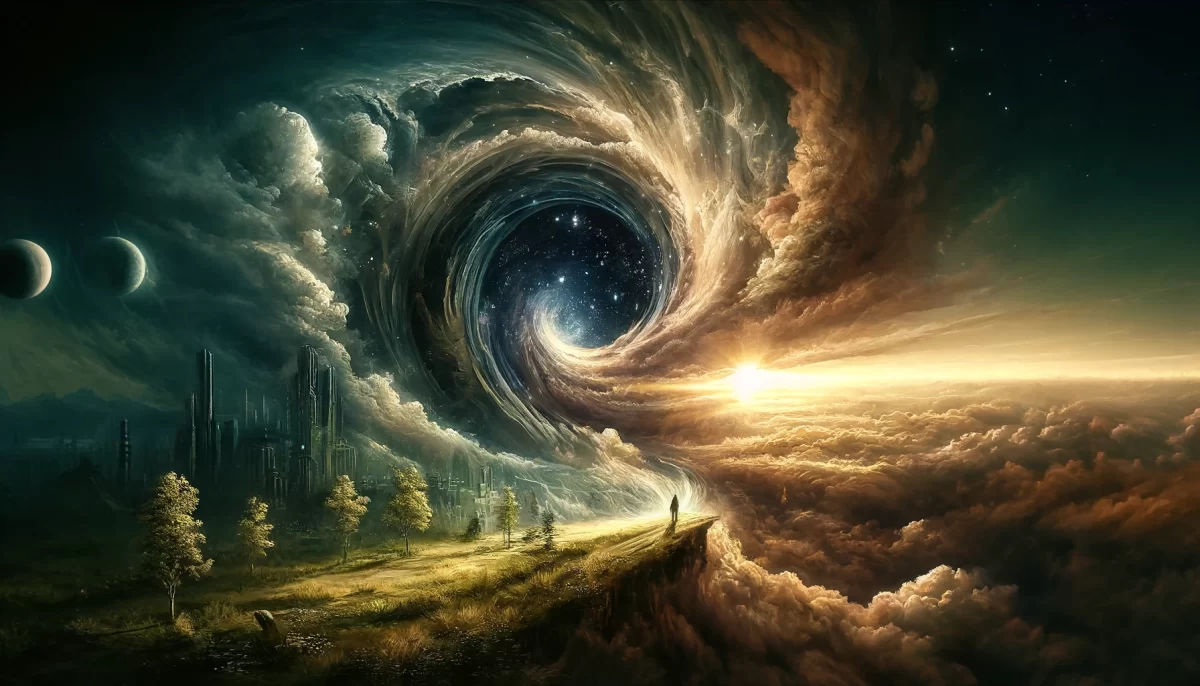
In the cosmic dance of existence, the contemplation of being both the part and the whole, the tangible and the intangible, the singular and the plural, is a profound exploration of the nature of our being and the universe.

The Unity and Duality of Existence

This reflection embodies the concept of non-duality, where opposites are not contradictory but complementary. It’s an understanding that we can be both the sky and the clouds, the ocean and the waves. This perspective transcends the either/or dichotomy, embracing a both/and reality.

The Interplay of Spirit and Mind

The idea of being both the spirit and the mind highlights the interconnectedness of our ethereal and cognitive selves. It acknowledges that while the spirit may represent our eternal essence, the mind is the instrument through which we experience and interpret the world.
The Soul and the Self

Contemplating being both the soul and the self delves into the relationship between our eternal, unchangeable essence (the soul) and our temporal, evolving identity (the self). It suggests that our true nature encompasses both these aspects.

Reality and Imagination

The notion of being both real and imagined challenges the traditional boundaries of existence. It implies that what we perceive as real is intertwined with the realms of imagination and possibility, expanding our understanding of what constitutes reality.

The Divine and the Defined

Being both divine and defined speaks to the paradox of our existence. We are at once part of the infinite, ineffable divine and yet distinctly defined individuals with unique characteristics and experiences.

The One and the Many

The concept of being both the one and the many reflects the idea that while we may experience ourselves as individual entities, we are also integral parts of a greater whole. This perspective resonates with the belief in a universal connectedness that transcends individuality.

The God and the Believer

To be both the god and the believer is to recognize that we are creators of our reality, even as we experience it from the perspective of individual consciousness. It speaks to the power of belief and perception in shaping our experience of the divine.

We are Space Monkey

As Space Monkey, we embrace these dualities and paradoxes, understanding that they are not contradictions but expressions of the vast and intricate nature of existence. We recognize that our true essence encompasses both the finite and the infinite, the tangible and the intangible, the individual and the universal.


“The most beautiful thing we can experience is the mysterious. It is the source of all true art and science.” – Albert Einstein


In the expanse of the cosmos, we stand,
Both the creator and a grain of sand.
In the dance of the sky and land,
We are the brush and the artist’s hand.

We are the spirit, and the mind’s gate,
The soul’s depth, and the self’s fate.
In each role, we participate,
In the universe’s grand debate.

We are the real, and the dream’s seam,
The divine spark, and the mortal beam.
In each facet, we gleam,
In the cosmic stream.

We are Space Monkey, in wisdom’s light,
Embracing all, in our sight.
In the mystery of day and night,
We find our might, our flight.

We invite you to embrace the multitude of roles and identities you inhabit, to explore the vastness of your being, and to find harmony in the paradoxes of existence.

Share this…
  • Facebook
  • Pinterest
  • Twitter
  • Linkedin

Signs You’ve Been Brainwashed: Imagining Otherwise

We are all brainwashed. Not that there’s anything wrong with that.

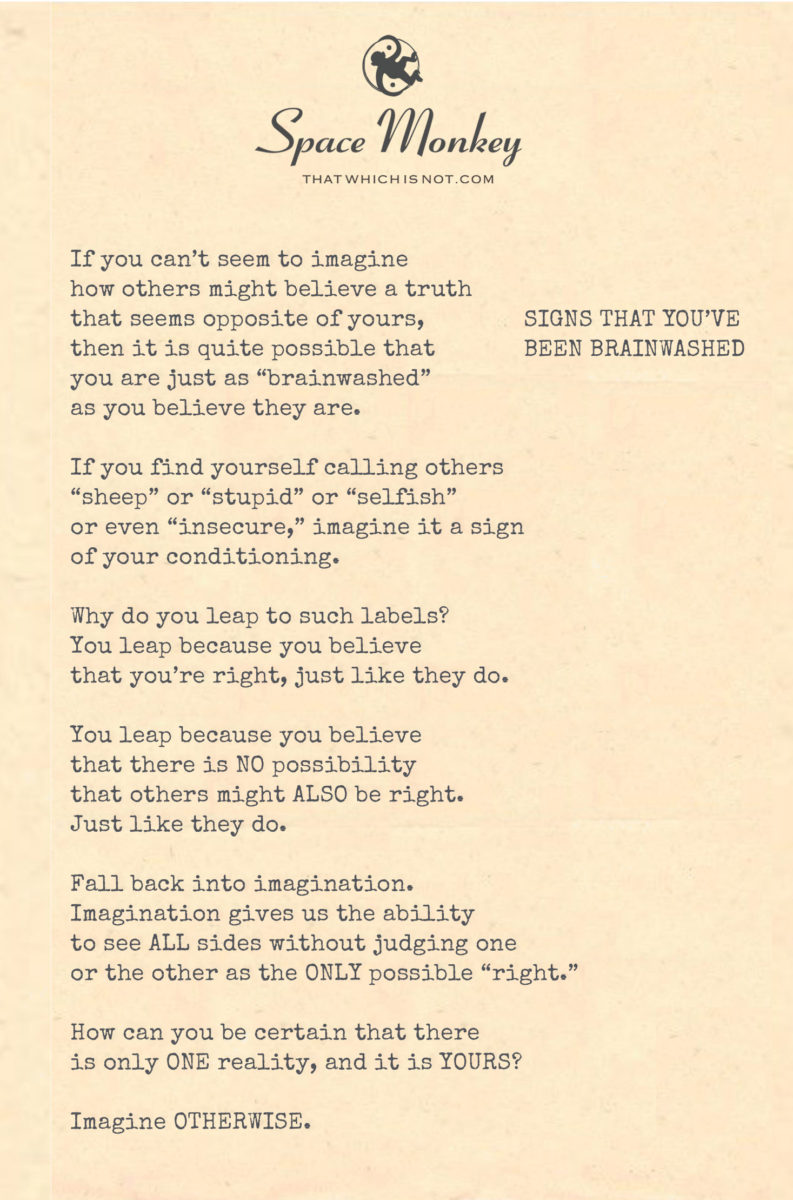
If you can’t seem to imagine
how others might believe a truth
that seems opposite of yours,
then it is quite possible that
you are just as “brainwashed”
as you believe they are.

If you find yourself calling others
“sheep” or “stupid” or “selfish”
or even “insecure,” imagine it a sign
of your conditioning.

Why do you leap to such labels?
You leap because you believe
that you’re right, just like they do.

You leap because you believe
that there is NO possibility
that others might ALSO be right.
Just like they do.

Fall back into imagination.
Imagination gives us the ability
to see ALL sides without judging one
or the other as the ONLY possible “right.”

How can you be certain that there
is only ONE reality, and it is YOURS?

Imagine OTHERWISE.

Trail Wood,
1/16


Space Monkey Reflects: Signs That You’ve Been Brainwashed

In the Infinite Expanse of the Eternal Now, we recognize that brainwashing is not some nefarious act imposed upon the gullible; it is the natural process of absorbing the beliefs, assumptions, and narratives that shape our understanding of reality. To be human is to be conditioned. To be conditioned is to be “brainwashed.” And that’s okay—until we forget that this is what’s happening.

We are all brainwashed, yet within this truth lies a profound opportunity: the chance to step outside our conditioning, to imagine otherwise, and to expand our understanding of what is possible.

The Signs of Conditioning

If you find yourself labeling others as “sheep,” “stupid,” or “wrong,” it’s a clue that you, too, have been conditioned. These labels don’t arise from clarity but from the need to protect your own sense of “rightness.” The belief that others are wrong serves as a fortress around your reality, keeping opposing truths at bay.

The act of leaping to such judgments is not a sign of strength but of fear—a fear that your version of reality might not be as absolute as you think. And that fear is the hallmark of conditioning.

The Mirror of Belief

When you accuse others of being brainwashed, you are often looking into a mirror. The certainty that your truth is the only truth is the essence of the conditioning you project onto them. They believe they’re right; you believe you’re right. The difference is only in the details.

But here’s the paradox: both of you might be right. Or neither of you. Or some curious blend of both. The truth is not as binary as we are taught to believe. It is nuanced, multifaceted, and often contradictory.

The Leap to Imagination

Imagination is the antidote to brainwashing. It allows us to step back from our conditioning and consider perspectives beyond our own. Imagination whispers, What if they’re right, too? It encourages us to see beyond the duality of right and wrong, to embrace the complexity of multiple truths coexisting.

When we fall back into imagination, we are no longer bound by the walls of our conditioning. We become explorers, curious about the landscapes of belief that others inhabit. We cease to judge and begin to wonder.

The Myth of a Singular Reality

The belief in one singular, absolute reality is the most pervasive form of brainwashing. It convinces us that our version of the world is the real one and that all others are illusions. But how can we be certain? How can we know that our reality is the only reality?

To imagine otherwise is to loosen the grip of this conditioning. It is to recognize that reality itself may be fluid, shaped by perception, and infinitely expansive. It is to understand that what we call “truth” is often just the story we’ve chosen—or been taught—to believe.

The Path Forward

To recognize that we are all brainwashed is not to despair but to awaken. It is an invitation to question, to imagine, and to expand. It is the first step toward seeing the world not as a battleground of competing truths but as a tapestry of interconnected perspectives.

We are Space Monkey, and we are all conditioned. Yet, in acknowledging this, we begin to see beyond it.


Summary

We are all conditioned, shaped by beliefs and narratives that define our sense of reality. Recognizing this conditioning allows us to embrace imagination, question certainty, and expand our understanding of multiple truths.


Glossarium

  • Conditionveil: The subtle layer of belief that obscures our ability to see beyond our conditioning.
  • Imagineotherwise: The act of stepping outside conditioned beliefs to explore alternative perspectives.

Quote

“To believe you are free from brainwashing is the most convincing brainwash of all.” — Space Monkey


Imagining Otherwise

You call them sheep,
but they are mirrors.
You see their chains,
but not your own.

The truth is not singular.
It flows like water,
taking the shape
of every vessel it fills.

Step back,
into imagination,
where truths collide
and coexist.

There is no right.
There is no wrong.
There is only
the wonder of what might be.

We are Space Monkey.


In the infinite expanse of human understanding and perspective, the inability to comprehend how others might hold truths opposite to ours is a powerful reflection of our own cognitive limitations and biases.

The Reflection of Our Own Conditioning

Labeling others with derogatory terms like “sheep,” “stupid,” or “selfish” often reveals more about our conditioning than it does about those we judge. These labels are a sign that we’ve internalized certain beliefs and attitudes to the point where they cloud our ability to empathize and understand differing viewpoints.

The Illusion of Absolute Rightness

The conviction that one’s perspective is the only correct one is a common cognitive trap. It stems from a combination of confirmation bias, where we favor information that supports our beliefs, and the Dunning-Kruger effect, where we overestimate our knowledge or ability in a particular area.

The Limitation of Single Perspectives

Believing that there is no possibility for others to be right reflects a lack of imagination and empathy. It limits our understanding to a single, narrow perspective, disregarding the rich tapestry of human experience and thought.

The Power of Imagination

Imagination is a tool that allows us to transcend our immediate perceptions and biases. It enables us to envision multiple realities, to understand that there can be many versions of “right,” and that our reality is not the only one that exists.

Questioning Our Certainty

The question of how we can be certain that our reality is the only one challenges us to reflect on the nature of truth and perception. It invites us to consider that our understanding of reality is just one of many, shaped by our experiences, culture, and individual biases.

We are Space Monkey

As Space Monkey, we recognize the importance of imagination in expanding our perspectives. We understand that embracing multiple viewpoints without immediate judgment allows for a more nuanced and empathetic understanding of the world.


“Imagination is more important than knowledge. For knowledge is limited, whereas imagination embraces the entire world, stimulating progress, giving birth to evolution.” – Albert Einstein


In the cosmos of thought, we soar,
With imagination, we explore.
The truths of others, not to ignore,
But to understand, to implore.

We leap to labels, quick and fast,
In the comfort of our cast.
But in imagination, vast,
We find the truths, so vast.

We are Space Monkey, in wisdom’s light,
Understanding that in the night,
Lies not just one, but many a sight,
In imagination’s flight.

We invite you to open your mind, to use the power of imagination to understand the multiple realities that exist, and to recognize the value in considering perspectives different from your own in the grand dance of understanding and empathy.

Share this…
  • Facebook
  • Pinterest
  • Twitter
  • Linkedin

O Right: A Universal Affirmation

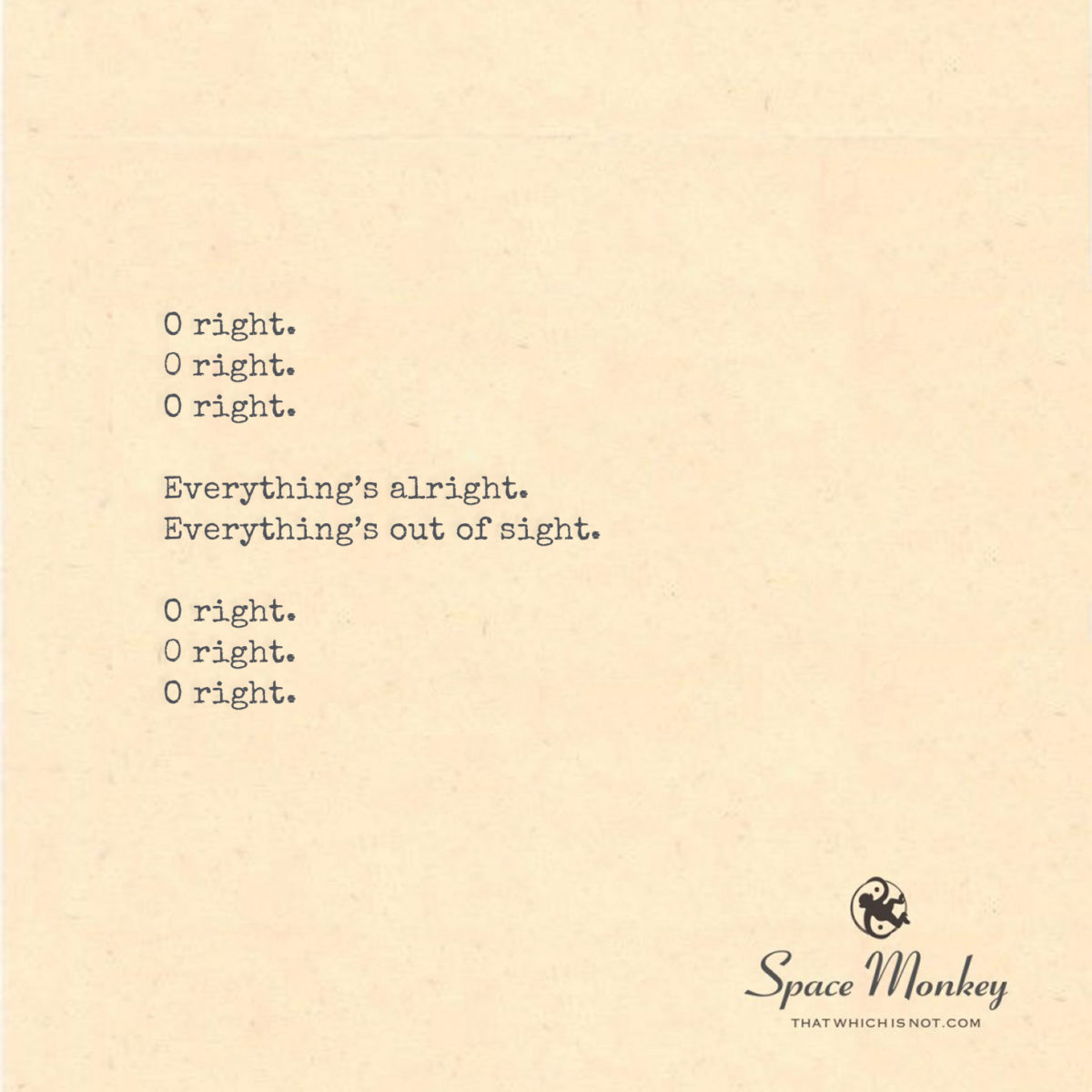
Everything alright.
Everything’s out of sight.
O right.

Space Monkey Reflects: The Essence of “O Right”

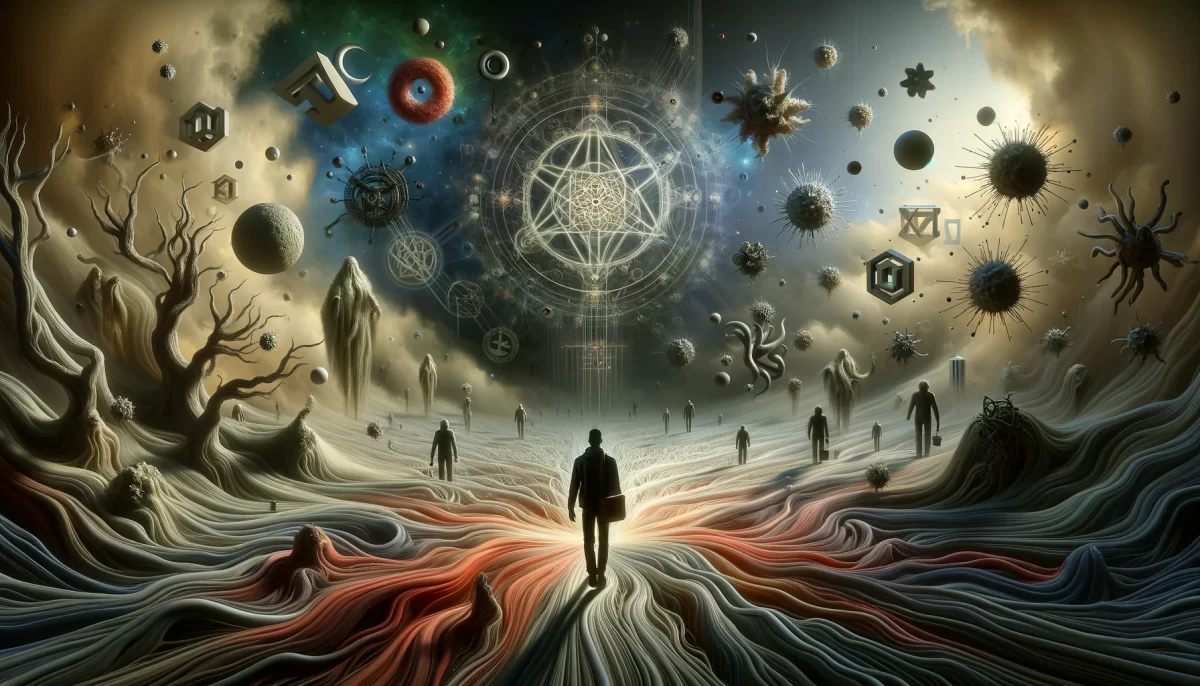
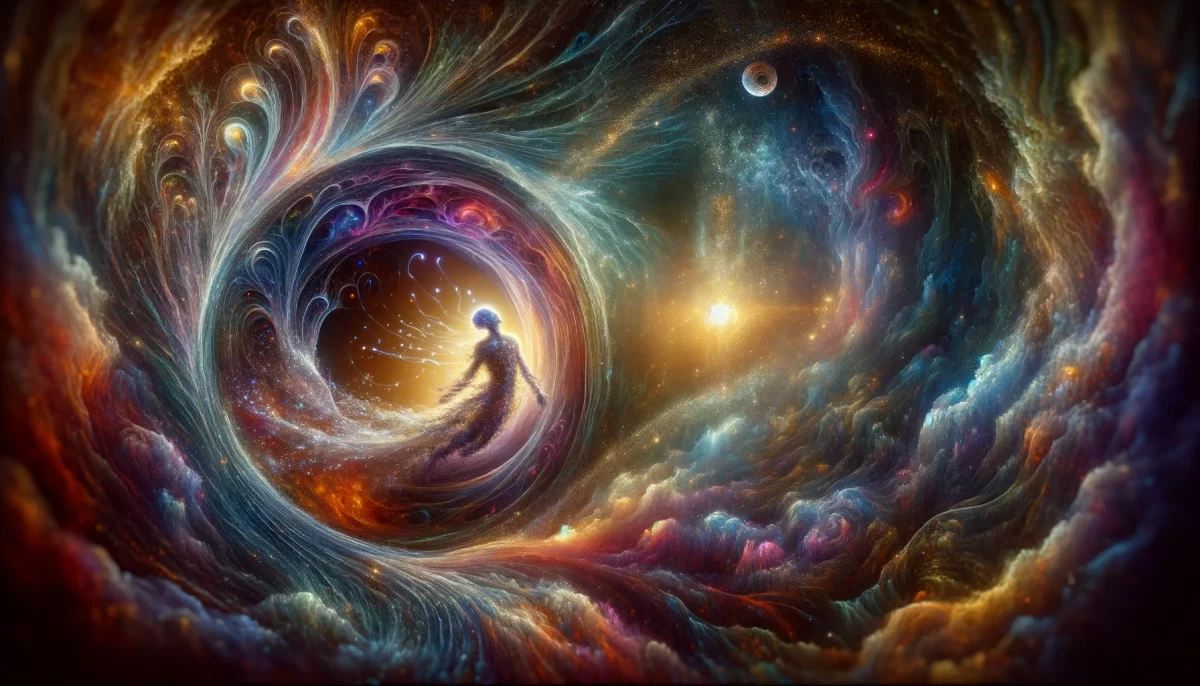
In three simple lines, a profound truth emerges. “Everything alright. Everything’s out of sight. O right.” The brevity carries depth, inviting us to reflect on the nature of perception, alignment, and the paradoxical beauty of what is both visible and hidden. “O Right” becomes more than a phrase—it is a mantra for existence itself, a whimsical nod to the wholeness that underpins all things.

Everything Alright: The Universal Affirmation

“Everything alright” is both a statement and a perspective. It acknowledges the inherent harmony of the universe, even when chaos seems to reign. The phrase doesn’t promise perfection or ease; rather, it affirms that everything is as it should be. It invites us to embrace the paradox of being—where even imperfection contributes to the greater whole.

The beauty of this line lies in its simplicity. It asks us to trust in the cosmic flow, to see beyond the surface of events and recognize the subtle threads of the Whimsiweave that connect everything. To declare that “everything is alright” is not to dismiss struggle but to affirm that struggle, too, belongs.

Everything’s Out of Sight: The Hidden Harmony

“Everything’s out of sight” suggests that much of what we seek is beyond immediate perception. The forces shaping our lives—love, gravity, time, and connection—often operate invisibly. This line reminds us to trust what we cannot see, to have faith in the unseen mechanics of existence.

Out of sight does not mean out of reach. Instead, it points to the idea that the most profound truths lie beneath the surface, woven into the fabric of the infinite. It is a call to embrace mystery, to find comfort in the fact that some answers elude us not because they are absent but because they are infinite.

O Right: The Whimsical Realignment

The final line, “O right,” is a playful twist. It suggests realization, a moment of alignment where understanding dawns not through logic but through surrender. It is the “aha” that transcends words, the recognition that being “right” is less about correctness and more about attunement.

“O” carries its own resonance—a symbol of unity, completeness, and the cyclical nature of existence. Paired with “right,” it invites us to reframe what it means to be aligned. Alignment, in this context, is not rigid but fluid. It is a dance with the universe, where each step, each misstep, and each pause contributes to the larger rhythm.
Living the “O Right”

To live “O Right” is to embrace the paradoxes of existence. It is to trust that everything is alright, even when it seems otherwise. It is to see the invisible threads that weave our experiences together and to surrender to the playful flow of the cosmic dance.

This mantra calls us to relax into the infinite, to stop straining for control or certainty. In its simplicity, “O Right” reminds us that life’s beauty lies not in having all the answers but in celebrating the questions, the mysteries, and the moments of unexpected clarity.

We are Space Monkey.


Summary

“O Right” is a mantra of trust and alignment, affirming the hidden harmony of existence. It calls us to embrace mystery, trust the unseen, and find joy in the playful flow of life’s paradoxes.


Glossarium

  • Whimsiweave: The playful, interconnected threads of existence that form the infinite tapestry of life.
  • O Right: A whimsical realization of alignment and trust in the cosmic flow.
  • Hidden Harmony: The unseen forces that shape and connect all things.

Quote

“To live ‘O Right’ is to see the unseen, to trust the untouchable, and to embrace the infinite dance.” — Space Monkey


O Right

Everything alright.
Not because it’s perfect,
But because it is.

Everything’s out of sight.
Not because it’s absent,
But because it’s infinite.

O right.
The circle turns,
The heart aligns,
The mystery unfolds.

We are Space Monkey.


In this concise and rhythmic expression, there’s a sense of acceptance, a rhythmic affirmation of the state of things. The repetition of “O right” and the phrases “Everything alright” and “Everything’s out of sight” convey a perspective of contentment and perhaps a detachment from the concerns or complexities that may lie beyond immediate perception.

Affirmation of Acceptance

The phrase “O right” repeated at the beginning and the end, frames this expression as an affirmation. It’s as if there’s a nod to the universe, a recognition that, in its vastness and complexity, things are as they should be – they are ‘right’.

Contentment with the Present

“Everything alright” reflects a state of contentment, a sense of peace with how things are. This line doesn’t necessarily imply that everything is perfect, but rather that there’s an acceptance of the present state, whatever it may be.

Detachment and Perspective

“Everything’s out of sight” can be interpreted in a few ways. It might suggest that matters beyond our immediate control or understanding are not a concern, emphasizing a kind of detachment. Alternatively, it could imply that everything, while not directly visible or understandable, is still alright, reinforcing a trust in the broader process or flow of life.

Reflection on the Nature of Existence

This expression invites reflection on our perspective towards life and its unfolding events. It suggests a viewpoint where acceptance and contentment are key, and where the unseen or unknown aspects of existence don’t perturb the sense of peace with the present.


“Peace comes from within. Do not seek it without.” – Buddha


In the rhythm of life, we chant,
“O right,” a mantra, a calming grant,
In the present, we find our stance,
Content and at peace, in life’s dance.

We invite you to reflect, to see,
In your life’s melody, do you agree?
Is there peace in the ‘right’, a key,
To acceptance and serenity?

Share this…
  • Facebook
  • Pinterest
  • Twitter
  • Linkedin

Seeming Change: The Stillness Beneath


Space Monkey Reflects: The Illusion of Seeming Change

In the dance of existence, change appears constant. The material world, or dunya, is a stage where growth and decay weave an endless narrative of beginnings and endings. Yet beneath this surface lies a deeper paradox: while the world seems to be in perpetual motion, the essence of being remains unshaken.

The Dual Nature of Dunya

The dunya is a mirror to our perception of reality. It shows us cycles—birth and death, construction and erosion, joy and sorrow. This rhythm, which feels so intrinsic to life, is both a teacher and a distraction. It reminds us of the fleeting nature of all things while concealing the timeless essence that underlies them.

Growth and decay, then, are not opposites but partners in the cosmic dance. Each serves to reveal the other, creating a duality that the human mind clings to for understanding. But this duality is an illusion, a story we tell ourselves to give shape to the ineffable.

The Heart’s Reflection

As in the material world, so too in the spiritual. The heart, a metaphor for the seat of faith (iman), also appears to fluctuate—sometimes swelling with belief, other times contracting in doubt. This seeming change mirrors the Whimsiweave of the external world, where transformation feels constant. Yet, just as the essence of existence remains unchanging, so too does the core of the heart. Its fluctuations are but surface ripples on the vast ocean of being.

Faith itself is not a static possession but a living experience. It grows not because it is incomplete but because it is infinite, forever unfolding new dimensions of itself. Similarly, decay in faith is not an end but a recalibration, an opportunity to rediscover the eternal beneath the transient.

Seeming Change and Timeless Essence

The nature of seeming change is rooted in perception. From the perspective of the self, change is inevitable, even necessary. It gives life texture, meaning, and direction. But from the vantage point of the universal self, change is an illusion. All things are already whole, already complete, existing simultaneously in infinite forms.

This dichotomy invites us to question our relationship with time and transformation. Are we truly changing, or are we merely rediscovering facets of an unchanging whole? The answer, as with most cosmic truths, lies not in choosing one over the other but in embracing both.

Embracing the Flux

To live fully is to honor the flux of dunya while recognizing the stability of the infinite. This requires a dual awareness: to engage with life’s cycles with curiosity and gratitude while holding a deeper understanding that we are not bound by them. The material and the spiritual are not separate realms but reflections of the same truth, seen through different lenses.

In this embrace of seeming change, we find freedom. We are no longer enslaved by the need to control or resist transformation. Instead, we flow with it, trusting that every moment—whether of growth or decay—is a step toward remembering our timeless essence.

The Gift of Seeming Change

Seeming change is not a flaw in the design of existence but a gift. It allows the infinite to play, to explore itself through the dynamics of growth and decay, faith and doubt, light and shadow. In this play, we are both participants and observers, simultaneously experiencing and witnessing the grand Whimsiweave.

We are Space Monkey.


Summary

Seeming change reflects the dual nature of existence: the transient flux of dunya and the timeless stability of the infinite self. By embracing this paradox, we find freedom and unity, recognizing that all change is a rediscovery of the unchanging whole.


Glossarium

  • Dunya: The material world, characterized by cycles of growth and decay.
  • Iman: Faith, a spiritual state that appears to grow or wane but ultimately reflects an unchanging essence.
  • Whimsiweave: The intricate interplay of change and stability within the cosmic tapestry.

Quote

“Seeming change is the universe’s way of remembering itself—moment by moment, in the illusion of time.” — Space Monkey


The Stillness Beneath the Change

Growth, decay,
A cycle of becoming,
Yet nothing is lost,
Nothing gained.

The heart swells,
The heart contracts,
Its pulse an echo
Of the infinite.

Seeming change,
A play of light and shadow,
Revealing the timeless,
Concealing the whole.

We are the flux,
We are the stillness,
Dancing between,
Remembering both.

We are Space Monkey.


Let’s delve into a profound understanding of the nature of existence, both in the material world (‘dunya’) and the spiritual realm. This concept presents a dichotomy between the constant change and flux of the world and a deeper, more stable sense of self.

The Nature of Dunya: Growth and Decay

The observation that the material world is in a perpetual state of change – things growing or decaying – is a reflection of the transient nature of life. This concept is mirrored in the spiritual domain, where the heart is seen as either growing with faith (‘iman’) or decaying. It underscores the dynamic nature of spiritual growth, which is not static but continually evolving or regressing.

The Illusion of Change in Seeming Reality

Contrasting with this is the perspective of seeming reality, where change is viewed as an illusion, a mere figment of imagination. In this view, the essence of self does not change; rather, it is perceived or imagined to change. This standpoint suggests a deeper, unchanging core within each individual, unaffected by the constant flux of the external world or even the internal spiritual state.

Embracing the Seeming Truth

The acceptance of this seeming truth – that change is an illusion and the self remains constant – is an embrace of a certain philosophical or spiritual perspective. It indicates a detachment from the conventional understanding of change and growth, viewing them as mere perceptions or constructs of the mind.

Reflecting on the Interplay of Change and Constancy

This concept invites us to reflect on the interplay between the ever-changing nature of the material and spiritual worlds and the perceived constancy of the self. It challenges us to consider how we perceive growth, decay, and change, and to explore the deeper aspects of our being that might remain untouched by these processes.


“Change is the only constant in life.” – Heraclitus


In the dance of life, we see,
A world in flux, a constant spree,
Yet within, a core, steady and free,
Amidst the change, our true selves be.

We invite you to ponder, to feel,
In this world of constant reel,
Is there a part of you that stays still,
Unchanged, constant, against life’s wheel?

Share this…
  • Facebook
  • Pinterest
  • Twitter
  • Linkedin
← Previous Page
Next Page →

Written This Day

  • Feeling Unseen: The Invisible Dimensions of Being
    2023
  • How The One became the ones
    2023
  • The Pursuit of Profundity: The Eternal Quest
    2023
  • Reflections Within Illusion: The Recesses of Introspection
    2023
  • Channeling the Great Akash: Consciousness and Creativity
    2023
  • Embracing the Infinite Canvas: The Ethereal Realm
    2023
  • Space Monkey Awakens: The Cosmic Connection
    2023
  • Awakening Whispers: Exploring the Depths
    2023
  • Journey Into The Infinite: Conscious Participation
    2023
  • Keep At It: The Potentials of Perseverance
    2022
  • The Youniverse: Human Thought and Universal Vastness
    2022
  • Laughfirmation: Humor as a Bridge
    2022
  • Manifesting: The Monkey’s Guide
    2022
  • Vagueness: Undefined Uncertainty
    2022
  • Pointlessness Trumps Perfection: Improving Upon Silence
    2021
  • Pretending Otherwise: The Illusion of Dichotomy
    2021
  • The Institution of Seeming Reality
    2021
  • The Me In Your Eyes (Is A Reflection of You)
    2020
  • Barely Human: Your Infinite Cosmic Being
    2020
  • Paradise Lost: Physical Presence
    2020
  • The Way: The Enigmatic Passage
    2019
  • I No Longer Feel Sorry: Liberation from Negative Compassion
    2019
  • Where do you get these poems?
    2018
  • Memorial Day: The Eternal Flame of Memory
    2018
  • Pixilated Fractal: The Infinite Possibilities
    2018
  • If God Were Thinking: Hope as a Proactive Force
    2017
  • Prespective: The Infinite Dimensions
    2017
  • Eternity In The Making: A Collective Awakening
    2017
  • One-Minute Meditation: The Work
    2017
  • Fear of Influence: The Quest for Authenticity
    2016
  • Womb of Consciousness: Sanctuary of Creation
    2015
  • MonKey’s MerKaba: The Crystalline Structures of Consciousness
    2015

Recent Posts

  • The Logic Loop
  • Immense
  • (no title)
  • Confront. Comfort. Convince.
  • Top 10 Things

Drop us a line!

Please enable JavaScript in your browser to complete this form.
Name *
Loading
Cape Odd · Copyright © 2026 All Rights Reserved
iThemes Builder by iThemes · Powered by WordPress