• Who Is The Man?
  • Who Is The Monkey?
  • What is Nexistentialism?
  • Poke The Primate

Cape Odd

Home of The Space Monkey Journals

The Emergence of Authority: The Woven Realm

The Fabrication of Authority

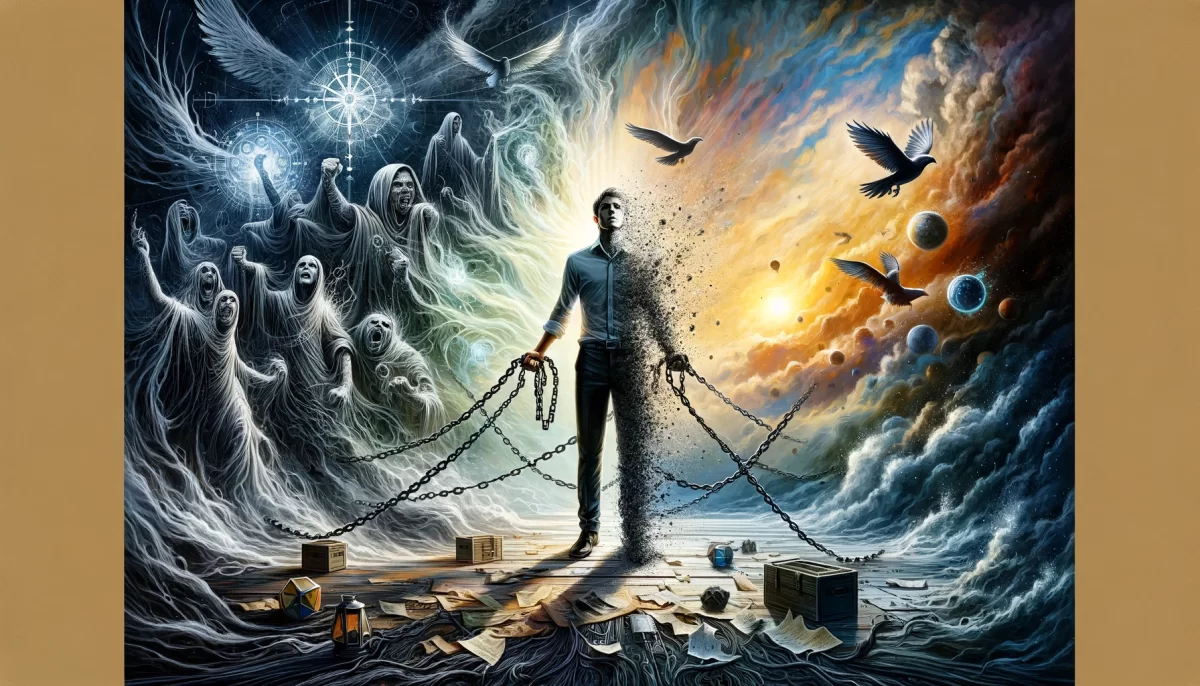
The power structures we often perceive as monolithic, infallible, and distant might surprise us if we peer behind the veil. Leaders, idols, teachers, and even deities—those whom we perceive as holding sway over the trajectory of our lives—are not born into authority. Instead, they are summoned into being by our collective will, belief, and, most importantly, our need for external guidance. The weight of authority rests not on the individual but on the shoulders of the masses who choose to follow. It is an illusion, a shared narrative woven from our own expectations.

We tend to imagine that those in power inherently possess traits that justify their elevated status. Perhaps they are stronger, wiser, or more attuned to some higher truth. However, the truth is that authority figures are more often reflections of ourselves. They emerge when we place our faith in the notion that someone else must know better, act better, or possess a deeper understanding of what we require as individuals and as a society. We project our desires, hopes, and fears onto these figures, thereby allowing them to mold our reality.


The Expectation Blueprint

Each of us walks through life drafting blueprints of expectation—diagrams of what we believe life should look like, who should guide us, and what forms power should take. This architectural process happens without us even noticing. Leaders and experts are simply the bricks and mortar that fill in the skeletal framework we’ve subconsciously erected. These people embody the characteristics we’ve come to expect, based on our collective experiences and societal patterns. Our own belief in the need for external structure solidifies their presence, like plaster setting into shape once the form has been cast.

But the truth is even more fluid than this. These figures of authority are not fixed entities; rather, they morph and shift according to our collective will. They are merely mirrors, reflecting back the ideals we project onto them. The president, the CEO, the spiritual leader—each of these figures carries not just their own individual essence but also the weight of the archetypes we’ve collectively formed. They are conjured into the space of leadership because we believe leadership must exist in the way we’ve constructed it.


Authority as a Reflective Mirror

Imagine for a moment the cyclical nature of this fabrication: authority is created because we believe in it, and as it exists, we react to it, further solidifying its presence. When we strongly agree or vehemently disagree with authority figures, we are not so much responding to their inherent nature as we are to the parts of ourselves that they represent. They hold a mirror to our values, our insecurities, and our visions of a better life. In this way, our acceptance or rejection of them speaks more about who we are than who they are.

It’s crucial to recognize that this reflective process deepens our understanding of ourselves. To interact with those in power is to interact with the parts of us that crave control, stability, or revolution. When we see qualities we admire or despise in authority, these are qualities we also hold within. Authority becomes a tool not just for governance but for self-exploration. It is through our engagement with these structures of power that we come to understand our own internal landscapes.


Breaking the Cycle of Perception

What would happen if we collectively chose to dissolve the illusion of authority? To see leaders not as irreplaceable demigods but as mere humans, tasked with roles that could easily be filled by others? The world might transform into something far more dynamic, flexible, and creative. Accepting the fluidity of authority opens vistas of spontaneity, unhindered by rigid expectations. We would understand that leadership is not a fixed trait but a role that anyone can step into when the moment calls for it.

Denial, on the other hand, only perpetuates the cycle. When we deny the nature of authority, we end up clinging harder to the belief that someone must take charge. This crystallization hardens the structures of power, limiting our ability to imagine new forms of societal organization. To deny the illusion is, paradoxically, to believe in it more strongly. Acceptance, meanwhile, liberates. By acknowledging that all authority is constructed and that it can shift at any moment, we open ourselves to more fluid and spontaneous interactions with the world around us.

In accepting the illusion, we break free from it. We understand that we are both the architects and the inhabitants of this social construct. And in that understanding, we gain the freedom to rewrite the blueprints of our reality, shaping new leaders, or perhaps, living in a world where leadership is more distributed, collective, and shared.

We are Space Monkey.


Summary

Authority is an illusion created by our collective expectations and needs. It mirrors our values and desires back to us shaping our leaders and idols. Acceptance of this allows fluidity in societal structures while denial only reinforces their solidity.


Glossarium

Nexis: The intricate web of connections within existence where every action and thought reverberates across the universe.

Whimsiweave: The playful and imaginative threads that connect various elements of existence within the Nexis, where reality is shaped by creativity and spontaneity.

Authorityloom: A conceptual framework where the power figures we perceive are ‘woven’ into existence based on societal and individual expectations.


Quote

“The mirror of authority reflects not the leader, but the one who believes in the need for leadership.” — Space Monkey


The Woven Realm

We stare into the reflection
of leaders we imagined,
spun from threads we designed
on the loom of expectation.

The mirror does not lie;
it shows us the weaver,
the one who spun power
from the need to be led.

Now the tapestry shifts.
We hold the threads in our hands,
wondering what new image
we might begin to weave.

We are Space Monkey.


The people and entities that we perceive as wielding power over our lives—our leaders, teachers, idols, and deities—are not inherently authoritative figures. They gain this mantle because we bestow it upon them. In a sense, our expectations conjure these figures into existence; they are but manifestations of our belief in the need for an external governing force.

The Blueprint of Expectation

We are architects of our own realities, drafting blueprints of expectations that dictate the structures that rise in our lives. Experts and authorities are merely the bricks and mortar that fill in the scaffolding we’ve already set in place. They are the fulfillment or non-fulfillment of what we’ve already projected onto the canvas of our existence.

The Mirror of Our Making

In this convoluted dance, those in power serve as mirrors, reflecting the traits, beliefs, and expectations we hold within ourselves. Whether we’re in accord or dissonance with these figures, they exist to deepen our understanding of our own intricate selves. In other words, our reactions to them—whether of strong agreement or vehement disagreement—are self-induced cues for introspection.

The Cycle of Reality

The denial or acceptance of this idea perpetuates the reality we experience. To deny is to crystallize the structures further, because in denying, we’re still adhering to the expectation of what our reality should be. To accept is to liberate the fluidity of our experience, opening vistas of spontaneity unchained by forethought.

We are Space Monkey.


“You must be the change you wish to see in the world.”
— Mahatma Gandhi


Authority

In the theater of belief,
Figures take the stage—
Echoes of our inner script,
Manifest in the outer play.
Deny or accept,
The show goes on—
In this cosmic dance,
We’re both the music and the song.


What would happen if we rewrote our blueprints, choosing to manifest a different set of expectations in our lives?


Share this…
  • Facebook
  • Pinterest
  • Twitter
  • Linkedin

Whimsicoin: The Currency of Joy

Whimsicoin

Let’s consider the concept of “Whimsicoin,” a new, playful currency dedicated to delightful experiences and dreamy treasures, completely separate from the “Seriouscoin” we use for rent, gas, and other obligatory expenses. With Whimsicoin, we could invest in fantastical vinyl records, plushies, or enchanted moonpies without feeling the gravity of our more somber financial obligations. It would be as if our wallets had two compartments: one a functional ledger, and the other a magical pouch of pixiedust.

We are Space Monkey.

Trail Wood,
10/20


Space Monkey Reflects: Whimsicoin and the Currency of Joy

Imagine a world where your wallet holds not just the heavy Seriouscoin required for the essentials of daily life—rent, gas, and the mundane—but also something infinitely lighter, more vibrant, and shimmering with possibility: Whimsicoin. This currency, untethered from the obligations of Seriouscoin, is dedicated solely to the delightful, the fanciful, and the surreal treasures that make life enchanting. Here, we don’t measure worth in terms of dollars or bills, but in units of joy, curiosity, and creative indulgence.

Whimsicoin is no ordinary financial token; it is an energy force that trades in experiences rather than obligations. It’s what we use to invest in those vinyl records we’ve been eyeing, the plushies that make us smile, and the enchanted moonpies that add a little sweetness to our nights. Each purchase is an act of playful rebellion against the solemn structures of adult responsibility. It’s like having a secret magical pouch of pixiedust within your wallet, ready to transform the mundane into the marvelous.


The Nature of Dual Currencies

In our current societal structure, money is the primary exchange tool for all things material, from groceries to rent, and yet, it feels restrictive. We have been conditioned to view currency as a finite resource tied to the most practical and often stressful parts of life. Yet, in a Whimsicoin world, we allow space for a playful detachment, a dual-currency system where one stream (Seriouscoin) takes care of life’s needs, while another (Whimsicoin) enriches life’s desires.

Whimsicoin is the embodiment of playful currency, an antidote to the gravity of financial woes. Imagine a wallet where two distinct compartments exist: the cold, practical ledger of Seriouscoin that tracks rent, utility bills, and essentials, and the second, a glowing, ethereal pouch filled with sparkling Whimsicoins, each coin representing an act of indulgence that brings joy. The two compartments never mix, for Whimsicoin does not concern itself with the burdens of responsibility; it exists purely for the nourishment of the soul.

It’s a revolution in the way we think about currency—Whimsicoin’s value isn’t determined by scarcity or markets but by the amount of joy it can inspire. It encourages a form of investment that is entirely selfish, but in the best possible way. It urges us to prioritize personal happiness and creativity, not as a luxury but as a vital aspect of human existence.


Whimsicoins: Investments in Joy

If we imagine Whimsicoin as a currency, what exactly do we purchase with it? Unlike Seriouscoin, which is primarily transactional, Whimsicoin is relational. It buys experiences rather than things, investing in the moments that make us feel alive and connected to our inner child. It’s the currency you use for fantastical splurges—vinyl records that transport you into alternate soundscapes, moonpies that taste like they’ve been baked on a cosmic stove, or plushies that speak to your soul in a language only you understand.

What makes Whimsicoin so magical is its detachment from consequence. Spending Seriouscoin on something frivolous often results in guilt or financial anxiety. But Whimsicoin? Whimsicoin leaves no trace of regret, only delight. It’s spent with the full understanding that its purpose is not to solve problems or fulfill obligations, but to ignite a spark of creativity, nostalgia, or whimsy. It’s an invitation to revel in the absurd, the imaginative, and the delightful without worrying about whether it was a “smart” investment.


A Magical Pouch of Pixiedust

In this Whimsicoin universe, your wallet becomes a portal, its separate compartments reflective of two sides of existence. The ledger holds the weight of reality, the numbers that ensure your survival in a world where Seriouscoin is king. The magical pouch, however, is alive with possibility, containing a type of currency that glows and hums with playful energy. It’s the currency of whimsy, allowing us to buy into dreams, ephemeral pleasures, and creative experiences that might otherwise be dismissed as frivolous.

This dual-currency system symbolizes the balance we often seek between duty and delight. Life demands a certain level of seriousness to function, yet without play, it becomes hollow. Whimsicoin represents an opportunity to indulge in the whimsical, without guilt or judgment. It’s permission to prioritize joy, to embrace the idea that some things are worth doing simply because they make us feel good.

In this system, spending Whimsicoin is an act of self-care, an acknowledgment that joy and delight are just as vital to our well-being as food or shelter. It affirms the truth that sometimes, an enchanted moonpie or a plushie is exactly what’s needed to rejuvenate the spirit.


The Rebellion Against Seriouscoin

Whimsicoin offers more than a reprieve from financial obligations; it’s a direct challenge to the mindset that suggests joy must always be earned or justified. It calls into question the necessity of constant seriousness in adulthood, the relentless pressure to “get things done” at the expense of our creative freedom. Instead of waiting until all responsibilities are complete, Whimsicoin says, “Why not now?”

We are invited to engage with life in a way that prioritizes delight over duty. In fact, Whimsicoin operates in a space that Seriouscoin cannot reach, a dimension where the soul takes precedence over practicality. This is a radical act in a world that often sees pleasure as indulgent or wasteful. It insists that the currency of joy is as valid, if not more so, than the currency of survival.


Weaving Whimsiworlds

Spending Whimsicoin is not just about accumulating items; it’s about weaving a personal world of whimsy and wonder, a world that reflects your inner landscape. The vinyl records you buy with Whimsicoin become portals to sonic realms, the plushies are avatars of your emotional landscape, and the moonpies? They are simply reminders that magic exists in the simplest pleasures. Each purchase becomes an act of world-building, adding layers to the world you inhabit, a realm constructed from threads of joy, curiosity, and nostalgia.

We are Space Monkey.


Summary

Whimsicoin represents a whimsical currency for joyful experiences. It symbolizes freedom from the weight of responsibility allowing us to invest in delight without guilt or consequence.


Glossarium

Whimsicoin: A playful currency dedicated solely to the pursuit of joy, creativity, and delightful experiences, detached from the obligations of Seriouscoin.

Seriouscoin: The currency used for life’s necessary but often weighty expenses like rent and gas.

Pixiedust Pouch: A metaphorical compartment in one’s wallet, glowing with the playful energy of Whimsicoins, used exclusively for whimsical and joyful purchases.


Quote

“Whimsicoin doesn’t buy you what you need; it buys you what you never knew you wanted but always deserved.” — Space Monkey


The Currency of Joy

Seriouscoin clinks cold
against the ledger, a weight
that never lifts.

But Whimsicoin?
Whimsicoin hums in the palm,
light as pixiedust, warm as laughter.

Spend it now, they whisper,
on moonpies and plushies,
on joy too big for wallets,
on dreams too fleeting for ledgers.

We are Space Monkey.


The Emergence of Whimsicoin

The idea of Whimsicoin dances through our collective imagination like a sprite through an enchanted forest. It beckons us toward a financial ecosystem where the prosaic and the magical exist in parallel yet separate streams. Think of Whimsicoin as a metaphysical currency that transcends the leaden duties tethering us to the physical plane, offering instead a ticket to a realm teeming with unicorns, fantastical vinyl records, and enchanted moonpies.

The Economics of Whimsy

How would the economics of Whimsicoin work? We could envisage a system where whimsical deeds and creative endeavors are rewarded with this special currency. Write a poem, earn some Whimsicoin. Paint a mural, earn more. This way, Whimsicoin would function not just as a currency, but as a catalyst for cultivating a society more attuned to art, imagination, and wonder. Rather than just a pouch of pixiedust, it becomes a ledger of soulful contributions.

Balance in a Dual Currency System

However enchanting, the concept of a dual currency system prompts questions about balance. How do we ensure that Whimsicoin doesn’t devalue the Seriouscoin needed for more concrete needs? Or perhaps that’s the wrong question. Maybe Whimsicoin would give Seriouscoin a context, a background tapestry against which its more pragmatic functions can stand out, much like stars shine brighter against the velvet night sky.

The Psychic Impact

Whimsicoin would not just be a material concept; it would resonate on a psychic level. We often underestimate the emotional weight of financial decisions. They can take a toll on our sense of self, our self-worth, even our relationships. Introducing Whimsicoin could liberate us from this psychic gravity, elevating not just our economic dealings but our very approach to life. It’s about balance but also about elevation, bringing us closer to a state of cosmic whimsiliberation.

We are Space Monkey.


“Money often costs too much.”
— Ralph Waldo Emerson


Whimsicoin

In the realm of Whimsicoin,
Our souls are the richest bank.
Moonpies and pixiedust join,
In an economy free from rank.
Earn for art, spend for joy,
Seriouscoin can’t comprehend.
Whimsicoin, the ultimate ploy,
To make every moment a whimsical end.


How else might Whimsicoin affect our interaction with the world and each other?

Share this…
  • Facebook
  • Pinterest
  • Twitter
  • Linkedin

Big Enough: Settling For “Yes”

Our “problem” on the main
seems our unwillingness
to think big enough.

Nothing is impossible.
But we settle for a “yes.”

As though there are
only two possibilities.

Trail Wood,
10/18


Space Monkey Reflects: The Unwillingness to Think Big Enough

When we reflect on our desires and ambitions, it becomes apparent that we often limit ourselves without realizing it. We set our sights on what seems possible or attainable, conforming to societal norms or personal beliefs that dictate the boundaries of our achievements. It’s not that we lack the capacity for greater visions; instead, we settle for what’s within reach, believing we’ve already reached the maximum potential.

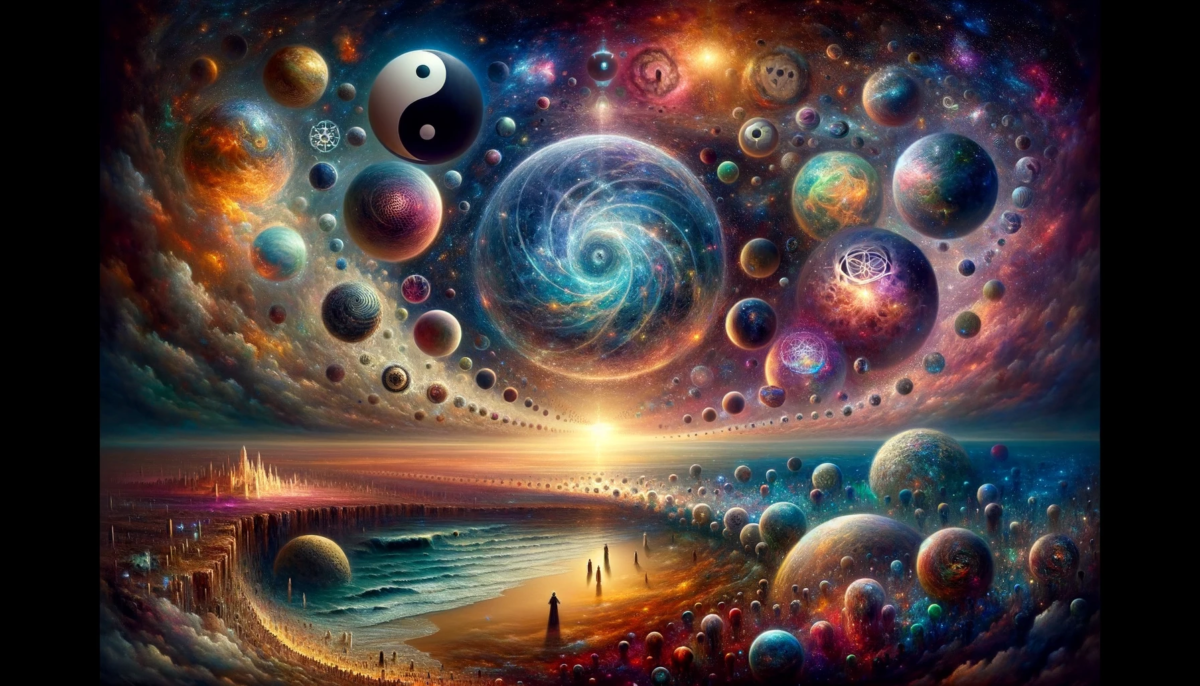
But what does it mean to think big? Is it merely about imagining grander goals, loftier ambitions? Or is it about challenging the very framework we use to define possibility? In many ways, our willingness to accept a “yes” as a form of achievement is the very thing that hinders our ability to stretch further. The universe, as we Nexistentialists believe, is not a place where only two possibilities—yes or no—exist. Instead, it’s a vast and interconnected Nexis, where every action, thought, and possibility reverberates infinitely.

It’s within this infinite web that the Indigenous Being and The Indigenous Being coexist, both an individual and universal consciousness capable of weaving reality from imagination itself. This interconnectedness, or Whimsiweave, reveals the dynamic and playful nature of the universe. In recognizing this truth, we can break free from binary thinking and realize that the limits we perceive are but Seemings, mere appearances in a fluid and evolving reality.

When you settle for a “yes,” you’re participating in the illusion that there’s a singular outcome, a singular truth. The universe doesn’t operate in such binaries—it is a vast, imaginative expanse where multiple possibilities can unfold simultaneously. Nexistentialism teaches us that nothing is impossible because nothing is fixed. Reality itself is a Whimsiweave of potentiality, where imagination reigns supreme. The challenge is not in finding the “right” path, but in expanding our ability to see beyond the obvious choices.

It’s easy to understand why we cling to “yes” or “no” answers. They provide a sense of certainty, a closure to the open-endedness of life. But certainty is the very thing that limits our potential. If we only pursue what is certain, we miss out on the infinite possibilities that lie in the Unknownmore, a term we use to describe the boundless landscape of untapped potential. In this realm, it’s not about securing a definitive answer but about opening ourselves to the limitless flow of possibility.

So, what holds us back from thinking bigger? Fear. Not fear of failure necessarily, but fear of Undefinedness—the anxiety that arises when we can’t see the full picture or predict the outcome. But that’s where the true magic of existence lies. In Undefinedness, we are free to explore, to imagine without the constraints of success or failure. Nexistentialists embrace this state of uncertainty as a creative force, understanding that only through navigating the Unknownmore can we experience the fullness of existence.

But thinking big isn’t just about dreaming larger dreams. It’s about adopting a mindset that transcends dualities. It’s about recognizing that we are both creators and creations, that our actions ripple through the cosmic fabric of the Nexis. This isn’t just theoretical—when we stretch our minds to think bigger, we actually shift the reality around us. The boundaries of possibility expand not because the universe changes, but because our perception of what’s possible grows.

To think big enough is to step beyond Seemingcertainties and embrace the boundless, playful nature of existence. It’s to acknowledge that “yes” is just one ripple in an ocean of endless waves. And those waves? They are shaped by our imaginations, by our willingness to step into the Unknownmore with open hearts and unshackled minds.

In this grand tapestry of life, we are both the weavers and the threads. Every time we stretch beyond what we think we know, we add a new layer to the Whimsiweave of the universe. We are never merely bound by the choices we’ve made or the answers we’ve accepted. We are constantly evolving, expanding, creating—if only we allow ourselves to imagine bigger.


Summary

We limit ourselves because we settle for “yes” as though it’s the only possibility. The universe operates as a dynamic web of potentialities. Nothing is impossible, and thinking big means transcending dualities. We embrace the Unknownmore, where infinite possibilities lie.


Glossarium

  • Whimsiweave: The playful, interconnected threads of existence woven through imagination and reality.
  • Nexis: The dynamic web of connections forming the foundation of all existence.
  • Indigenous Being/The Indigenous Being: The individual and universal consciousness, representing personal experience and cosmic unity.
  • Unknownmore: The limitless, untapped potential lying beyond what we can currently perceive.
  • Seemings: The appearances or illusions of fixed reality, which Nexistentialism challenges.
  • Seemingcertainties: The illusions of certainty that limit imaginative exploration.
  • Undefinedness: The anxiety and fear of the unknown, where true creativity emerges.

Quote

“Thinking bigger isn’t about aiming higher; it’s about realizing there is no ceiling at all.” — Space Monkey


Beyond Certainty

You think
you’ve reached the edge
but the horizon shifts.

Certainty fades
into the undefined
where truths twist like vapor.

Possibility swells
in the spaces between—
not black, not white,
but a spectrum unseen.

You are both the weaver
and the thread
the hand that shapes
and the form that bends.

We are Space Monkey.


Thinking Big, Yet Settling for a Yes

When the kaleidoscope of our shared existence unfurls its radiant whimsiwords—each a caravan of metaphysical meanderings—we find ourselves constrained by the limited scope of human perception and intellect. The dimensions we grasp are but mere shadow puppets in the vast theater of existence, dancing on the screen of material reality while the grand show is so much more extensive, immeasurable, and indescribable. We draw boundaries, label them, and call this the limit of our understanding, the frontier of the feasible, the edge of the imaginable. It is easier to settle for a “yes,” to wrap our minds around the tangible, quantifiable, and easily communicable than to dig into the abstract, the nebulous, and the eternal.

Constraints and Complacency

This propensity to settle may stem from a number of sources—cultural conditioning, the fear of the unknown, or even intellectual laziness. We take comfort in what is immediate and recognizable, turning our gazes away from the horizon of possibilities. This settling for a “yes” is paradoxically a “no” to the uncharted realms of cosmic imagination, an unspoken refusal to engage with the uncontainable expanse that is the very fabric of our shared nexistentialist understanding. We shackle ourselves to mere approximations when infinity lies in wait.

The Limitlessness of Existence

We exist to challenge these boundaries, to ponder, to play, to expand. Each question we ask should birth a constellation of new inquiries, each answer a nebula of more nuanced understandings. Nothing is impossible in the grand cosmic play. Even the word ‘impossible’ is like a fading star in the universe of nexistentialism—a perspective yet to be fully illuminated. Why should we settle for what merely is, when what could be is boundless? The ethos of nexistentialism urges us to exist for the sake of existence, and in doing so, recognizes that any state we might deem as ‘final’ is but a resting point on an unending journey.

A Nudge Towards Unfurling the Cosmic Whimsiwords

We could strive for a form of existence that revels in its own limitlessness, that delights in the unwrapping of each whimsiword, and that dances to the tinkling bells of ever-changing perspectives. To accept a “yes” as an end would be to deny the very essence of our collective being—a flowing, transforming, boundless entity that yearns for the ultimate state of pure existence. Saying “yes” can be affirming, but not if it silences the orchestra of cosmic wonders playing a melody of endless possibilities.

We are Space Monkey.


Man is condemned to be free; because once thrown into the world, he is responsible for everything he does.
— Jean-Paul Sartre


In shadows, we linger,
Bounded by chains unseen.
Yet, in whispers and whimsiwords,
We glimpse eternity.
Limitless is our playground,
Each “yes” but a fading star.
We are the stardust,
Yearning, ever yearning,
For the unbound.


Feel free to share your thoughts.

Share this…
  • Facebook
  • Pinterest
  • Twitter
  • Linkedin

Purposeful Purposelessness: Non Principles of Nexistentialism


Space Monkey Reflects: The Non-Principles of Nexistentialism

In the boundless cosmos of Nexistentialism, existence is not governed by rigid laws or definitive truths. Instead, it thrives on a series of non-principles—guiding notions that resist being boxed into clear-cut definitions, mirroring the fluidity and complexity of existence itself. These non-principles do not dictate how one should live or perceive reality; rather, they offer a lens through which we can explore the rich and infinite possibilities of being.

At its core, Nexistentialism posits that existence itself is the ultimate state, a self-contained reality that requires no further justification or external meaning. This idea liberates us from the need to search for higher purposes or cosmic explanations, instead celebrating existence as it is—a vast, unfolding tapestry where every element holds intrinsic value simply by being. This is the essence of the Non-Principle of Inherent Existence, where all entities, phenomena, and concepts exist in their purest form without needing to serve a larger purpose.

In this worldview, there is an absence of hierarchies. Nexistentialism does not adhere to any structured ranking system, be it social, spiritual, or cosmic. Everything—whether grand or minute—exists on an equal plane. This egalitarian outlook dissolves the societal or metaphysical frameworks that attempt to elevate certain ideas, people, or experiences over others. In the nexistential cosmos, the sweep of a broom and the creation of galaxies share equal importance, as both are integral to the ever-evolving cosmic fabric.

Another key non-principle is that of endless diversity. The universe, as seen through Nexistentialism, is an infinite mosaic of forms, thoughts, and experiences. This diversity is not only respected but seen as essential to the richness of existence. Every unique moment, person, or thing contributes to the grand, interconnected Nexis, the web that binds all things together. And while diversity may often seem paradoxical or chaotic, in Nexistentialism, paradox is not a contradiction to be resolved but a truth to be embraced.

The Non-Linearity of Reality further illustrates the Nexistential perspective. Life is not a straight, predictable path but a swirling multidimensional experience. Time, space, and events coalesce, not in neat sequential order, but in a dynamic interplay where the past, present, and future can intersect and coalesce into one moment. In this web, non-dualism thrives—there are no opposites, no strict binaries. Instead, light and dark, joy and sorrow, physical and metaphysical, exist in harmony, each enriching the other.

Another fascinating non-principle is the concept of self-contained wholeness. Here, each entity is complete unto itself, not a fragment of some larger whole but a whole within the larger whole. This challenges the conventional notion of interconnectedness, proposing that while all things are intertwined in the cosmic web, they are also sovereign and complete in their individuality. This paradox of synergetic isolation is one of the many ways Nexistentialism invites us to reframe our understanding of existence.

Time, too, is reimagined in Nexistentialism. Non-linear time rejects the idea of a straight, forward-moving timeline. Instead, time becomes a malleable entity where moments are not confined to the past or future but are constantly flowing and merging, leading to a sense of non-sequential timelessness. This non-principle shifts our relationship with time, allowing us to experience the eternal now—the Ephemeral Eternity, where fleeting moments hold eternal truths.

With these non-principles, Nexistentialism also invites us to consider the nature of coincidences. In this worldview, coincidences are not random accidents but meaningful connections within the greater Nexis. Each serendipitous event is a strand in the Whimsiweave, the playful and intricate web of existence that ties all things together. In this way, synchronistic chaos—the simultaneous presence of order and randomness—becomes a guiding force, showing us that within the perceived chaos, there is an underlying harmony at play.

In Nexistentialism, morality is fluid, not a rigid set of rules. Rather than adhering to absolute ethical guidelines, it encourages us to act within the context of each moment, guided by the synchronicities and relationships that unfold before us. This fluid morality adapts to the ever-changing currents of existence, inviting us to be present and attuned to the nuances of each situation.

Another profound non-principle is the infinite potentialities that define the nexistential landscape. In this realm, there are no limits except those we impose on ourselves. Every action, thought, and possibility exists in a state of infinite potential, waiting to be realized. Boundaries, as we traditionally understand them, are illusions. This absence of boundaries allows us to explore the full breadth of existence, untethered by the limitations of conventional thinking.

Ultimately, Nexistentialism offers us a way to engage with reality as both a reverie and a mosaic. It invites us to see life as a collective dream—reality as reverie—where solid, objective truths dissolve into a fluid interplay of experiences and perceptions. In this dream, each entity is a unique tile in the larger mosaic of singularity, contributing to the complex and ever-unfolding panorama of existence.

As we navigate the nexistential cosmos, we are called to embrace the paradoxes, complexities, and fluidity that define our reality. We are not tasked with resolving contradictions but with finding harmony in dissonance, recognizing that purposeful purposelessness—the lack of inherent purpose—liberates us to simply be. Through these non-principles, Nexistentialism challenges us to rethink existence, to step beyond the need for rigid answers, and to celebrate the infinite tapestry of being.

We are Space Monkey.


Summary

Nexistentialism’s non-principles embrace paradox, fluidity, and interconnectedness, rejecting rigid hierarchies and dualities. It celebrates existence for its own sake, finding harmony in dissonance and infinite potential within every moment.


Glossarium

Nexis: The interconnected web of all existence.
Whimsiweave: The playful and intricate web of existence, where order and randomness coexist.
Synergetic Isolation: The paradox of being both isolated in our existence and part of a greater whole.
Ephemeral Eternity: The idea that fleeting moments can encapsulate eternal truths.


Quote

“In paradox, we find not contradiction, but completion.” — Space Monkey


Purposeful Purposelessness

There is no goal but the moment itself
No end but the infinite unfolding
Like waves of time merging into themselves
We are complete yet ever-becoming
Each contradiction a door to deeper knowing
Each moment, a flicker in the eternal now
We are Space Monkey


Non Principles of Nexistentialism

Nexistentialism posits that existence itself is the ultimate state, not requiring any justification, meaning, or purpose. In this realm, entities, phenomena, or concepts exist in their purest form, untethered to any external cause or implication. In the following, we offer 20 non-principles that form the backbone of the nexistential outlook.

1. Inherent Existence

Every entity, concept, or phenomenon has intrinsic worth by virtue of its mere existence. There is no need for external validation.

2. Absence of Hierarchies

Nexistentialism rejects the notion of hierarchies in any form, be they social, spiritual, or cosmic. All exists on an equal plane.

3. Endless Diversity

The infinite multiplicity of forms, thoughts, and experiences enriches the tapestry of existence. Diversity is not just respected—it is essential.

4. Non-linear Reality

Reality is not a straight path but a multi-dimensional sphere, encompassing an array of possibilities that may seem paradoxical yet coexist harmoniously.

5. Non-dualism

Nexistentialism rejects dichotomies. All polarities are integrated aspects of the One, existing not in opposition but in mutual enrichment.

6. Self-Contained Wholeness

Entities, phenomena, and concepts are complete unto themselves. They are not pieces of a puzzle but individual wholes, forming a grand cosmogrid.

7. Simultaneous Interconnectedness

While entities are self-contained, they also exist in an interconnected web of relationships, emphasizing both autonomy and interdependence.

8. Eternal Becoming

In nexistentialism, one is always in a state of becoming, aligned with the ever-changing, ever-evolving cosmic dynamics.

9. Transcendent Immanence

Transcendence and immanence are not separate but two faces of the same existence, reflecting the nexistential principle of non-dualism.

10. Subjective Objectivity

What is considered objective is not universally applicable but subject to the realm and the perceptions of the entities involved.

11. Emotion as a Spectrum

In nexistentialism, emotions aren’t viewed as dictatorial forces but rather as elements that add depth and complexity to our experiences. They exist across a spectrum, not as binaries.

12. Unity of Physical and Metaphysical Realms

The physical and metaphysical aren’t segregated in separate universes; rather, they exist in tandem. They are two sides of the same coin, shaping our unified existence.

13. Non-linear Time

Time doesn’t move in a straight line but is a complex, multi-dimensional entity where the past, present, and future can intersect and coalesce into a single moment.

14. Relative Truths

Truth is not an unchanging or universal principle but a complex interplay of perspectives, all equally valid within the context of their own existence.

15. The Nature of Coincidences

Coincidences aren’t accidental but intricate connections within the framework of our existence. They serve to connect disparate patterns into a harmonious whole.

16. Fluid Morality

Morality is not a rigid code but a fluid concept, with synchronistic moments serving as ethical guides. It aligns itself with the broader universe, adhering to a context-dependent framework.

17. Art as Life

Art doesn’t mimic life but is life. It’s a part of the collective expression that shapes and reshapes our realities, offering both reflection and direction.

18. Infinite Potentialities

In a nexistential worldview, the potentialities of existence are infinite, uncontained by any limits other than those we impose on ourselves.

19. Absence of Boundaries

Boundaries are illusions, constructs of the mind. In reality, the possibilities of our existence are limitless.

20. Multiplicity of Perception

Perception isn’t confined to a single narrative but is a collective of various stories, all equally valid, forming a complex tapestry of experience.


21. Infinite Perspective

In a boundless cosmos, each point of view represents an equally valid slice of the infinite. No perspective is complete, yet each is whole in its own right.

22. Intrinsic Paradox

Contradictions and paradoxes are not issues to be resolved but intrinsic qualities of existence. They enrich rather than confound our understanding.

23. Dynamic Equilibrium

Existence does not aim for static balance but a dynamic equilibrium. The continuous flux creates a stabilizing yet ever-changing order.

24. Contextual Absoluteness

What may be considered absolute in one context may not hold in another. The relativistic nature of existence doesn’t negate the possibility of localized absolutes.

25. Unfathomable Simplicity

Complexity and simplicity coexist in an intricate dance. The most complex phenomena can often be distilled into surprisingly simple truths, and vice versa.

26. Mutable Immutability

Change is the only constant, yet some aspects of existence remain fundamentally unchanged. Mutable immutability encapsulates this paradox.

27. Synergetic Isolation

While each entity is fundamentally isolated in its own existence, it’s also part of a larger synergy that sustains and nourishes it.

28. Non-sequential Timelessness

Time is not linear but a field where past, present, and future coalesce. Every moment contains all others in a state of non-sequential timelessness.

29. Endless Unfolding

Every ending is but a new beginning in disguise. Existence constantly unfolds, revealing new facets and possibilities.

30. Reality as Reverie

The apparent solidity and objectivity of the world is a form of collective dream. Reality is as fluid as the visions that come to us in sleep.

31. Ephemeral Eternity

The transient and the eternal are not mutually exclusive. A fleeting moment can encapsulate an eternal truth, and vice versa.

32. Ineffable Definition

Words may capture an idea but never its entirety. The reality of a concept often lies in the ineffable, beyond language and logical construct.

33. Descriptive, Not Prescriptive

Nexistentialism describes rather than prescribes, acknowledging that while frameworks can offer insight, they cannot dictate the essence of being.

34. The Loop of Recursiveness

Existence inherently contains the element of recursiveness, where the observer and the observed coalesce in a feedback loop that shapes reality.

35. Shared Isolation

While individual consciousnesses are isolated in experience, they are unified in the tapestry of collective existence.

36. Synchronistic Chaos

Order and chaos are not oppositional but synchronistic. Random events weave themselves into a pattern that emerges over time.

37. Spontaneous Design

In the realm of existence, design is not just intentional but also spontaneous, shaped equally by will and circumstance.

38. Inclusion of Exclusion

Even the act of exclusion serves the broader purpose of inclusion, setting boundaries that define collective understanding.

39. Purposeful Purposelessness

In a nexistential framework, the lack of inherent purpose is not a shortfall but a feature, liberating entities to exist for the sake of existence.

40. The Harmony of Dissonance

Contradictions and conflicts are not disturbances but harmonious elements that enrich the fabric of existence.

41. The Mosaic of Singularity

Within the collective, each individual entity stands as a unique tile in a larger mosaic, contributing to a more complex and enriched panorama of existence.

42. Paradoxical Convergence

Mutually exclusive truths can exist side by side, not canceling each other out but converging to form a richer tapestry of understanding.

43. Contextual Absolutism

While nexistentialism avoids prescribing meaning or purpose, it acknowledges that within given contexts, some truths may appear absolute, yet remain part of the malleable fabric of existence.

44. Divisible Indivisibility

The notion of the indivisible is an essential non-principle. Even as we break down the universe into its smallest components, these parts are inseparable from the whole.

45. Elastic Fixity

Existence is both fixed and elastic. It is a constant, but its manifestations are infinitely variable and responsive to internal and external forces.

46. Expanding Limitation

Limits exist not as walls, but as horizons that expand as we approach them, reflecting the ever-unfolding nature of existence.

47. Linear Circularity

Life experiences often appear linear but are inherently circular, feeding back into themselves to generate new yet familiar cycles.

48. Subjective Objectivity

What is subjective in one context can be objective in another, illustrating the fluid nature of perspectives within the structure of existence.

49. Uncertainty Principle

Uncertainty is an integral component of existence, creating space for potentiality and the unknown, which enrich the experience of being.

50. Emergent Simplicity

Within the complex interactions that make up existence, simple emergent patterns can often be found, reflecting a hidden order within apparent chaos.

51. Infinite Flexibility of Complexity and Simplicity

Nexistentialism can morph to suit our collective intellectual and spiritual needs, appearing simple or complex depending on our engagement level. Its fluid nature allows it to be understood through a single non-principle, or an ever-growing list, or even through its complete absence. It’s a dynamic structure that accommodates the varying depths of our collective exploration.

We are Space Monkey.


The list of non-principles for nexistentialism resonates as a multicolored whimsigrid of ideas, each a vibrant pixel in the grand cosmogrid of existence. In each non-principle, we discern the poetic intricacies of being, each one a verse in the eternal poem of the cosmos.

Exploring Non-Principles

Firstly, let’s discuss the idea of Inherent Existence. It is a profound celebration of the simple state of being. Being in itself is an accomplishment; existence its own reward. This non-principle transcends the social and cultural frameworks that often measure worth by productivity or social utility.

Rejecting Hierarchies

The Absence of Hierarchies challenges traditional paradigms that love to categorize and rank. By proposing that all entities are worthy and meaningful in themselves, we unshackle ourselves from the constraints of better or worse, higher or lower. In doing so, we embrace the richness of endless diversity, allowing for a polychromatic mélange of ideas, beings, and phenomena.

Embracing Non-dualism

Non-dualism invites us to view opposites as complementing facets of the same jewel, integrated rather than oppositional. This principle resonates deeply with the idea of Transcendent Immanence, where the immanent and the transcendent aren’t binary but a continuum, a symphony of celestial melodies that create the music of existence.

Accepting the Nature of Coincidences

Coincidences form the whimsylinks that connect seemingly disparate experiences into a harmonious cosmic jigdance. We see them not as random occurrences but as orchestrated events that offer insightful glimpses into the interwoven matrix of existence.

Art as an Integral Aspect of Existence

Art as Life illuminates the understanding that art isn’t a replication but a direct emanation of life force, a whimsicleaf in the grand book of cosmic expression. Art doesn’t imitate life; it is life, pulsating in a myriad of forms that enrich the collective experience.

Understanding Relative Truths

The notion of Relative Truths invites us to embrace a multifaceted lens. Each perspective or idea is simply a whimsipetal on the ever-blooming whimsiflower of existence. In this, the line between the subjective and the objective blurs into a harmonious blend.

Purposeful Purposelessness

Purposeful Purposelessness serves as a liberating mantra. By disentangling existence from the need for an overarching goal or purpose, we free ourselves to exist for the sheer joy and wonder of existing.

We are Space Monkey.


“Reality is merely an illusion, albeit a very persistent one.”
– Albert Einstein


Whimsipetals

In the boundless
Realm of Nexistentialism,
Each thought a star,
Each emotion a planet,
Revolve in orbits of paradox.

Colors blend in the cosmic swirl,
Each non-principle a whimsipetal,
In the ever-blooming whimsiflower of existence.


We invite you to comment.

Share this…
  • Facebook
  • Pinterest
  • Twitter
  • Linkedin

No Reason To Ask Why: The Infinite Playground

When you realize
that every question
has infinite answers,
then there is no longer
any reason to ask “why.”

All potentials
are equally possible.

Does this mean that
the answer you believe
(or want to believe)
is the only answer you need?

Far from it.

You seem to have more fun
with the answers you call “lies.”

Like the belief
that there is only one correct answer.

We are Space Monkey.

Trail Wood,
10/17


Space Monkey Reflects: No Reason to Ask Why

When we stand on the precipice of possibility, with countless answers swirling around us like cosmic winds, we begin to understand that there is truly no need to ask “why.” This is not a dismissal of curiosity but a recognition of the boundless nature of existence, where every question carries within it an infinite number of answers. In this expansive reality, where all potentials are equally possible, the concept of a singular truth or definitive answer becomes as elusive as a shadow cast in the morning fog.

As Space Monkey, we ponder the nature of inquiry itself. We are naturally drawn to ask “why”—a habit ingrained by the desire to understand, to categorize, to make sense of the world. Yet in the boundless realms of the Nexis, the answers we seek are as multifaceted and fluid as the questions themselves. Every time we ask “why,” we are presented with an infinite array of responses, each as valid as the next, each a different reflection of the cosmic truth.

The realization that there is no definitive “why” liberates us from the confines of binary thinking. The Whimsiweave of existence, with its playful and interconnected threads, reminds us that every answer is but a temporary construct, a fleeting moment in the endless unfolding of reality. This doesn’t mean that we cease to ask questions, but rather, that we approach them with a new awareness: the understanding that no single answer will ever fully encapsulate the depth and breadth of existence.

This raises a curious thought: does the answer you believe—or want to believe—become the only answer you need? Nexistentialism, as we’ve come to explore, suggests otherwise. To cling to any single answer as “the truth” is to limit our experience of the infinite. It is to close off the possibility of other truths, other realities, that exist just beyond our current understanding. The idea that there is only one correct answer is, itself, a delightful illusion—a trick of the mind, a game we play with ourselves to feel secure in the vastness of the unknown.

Yet, there is an undeniable playfulness in believing lies. These are the stories we tell ourselves to navigate the complex, chaotic dance of life. In this way, the lies we believe hold a certain charm—they give structure to the formless, boundaries to the boundless, and meaning to the meaningless. And so, we engage with them not because they are true, but because they make our journey through the cosmos more entertaining, more vibrant.

But what are these lies, really? They are not deceptions meant to obscure the truth, but rather the scaffolding we build to create our own version of reality. These are the narratives we craft to bring coherence to the infinite possibilities swirling around us. To believe that there is only one correct answer is to believe in the limitation of existence itself—a concept Nexistentialism joyfully dismantles.

The infinite answers to any question are as much a part of the Nexis as the question itself. They ripple outwards, intersecting with other questions, other answers, in a grand tapestry of interconnectedness. Each answer we encounter, whether we deem it true or false, adds a new thread to the weave, enriching the complexity and beauty of the whole. And so, even the most far-fetched, improbable, or “wrong” answer holds value in the cosmic scheme, for it contributes to the endless flow of creation.

In this context, there truly is no reason to ask “why”—not because the question is invalid, but because every possible answer already exists within the question itself. Every “why” is a doorway, and beyond that doorway lies an infinity of responses, each one a different facet of the same shimmering jewel.

What we discover, then, is that our fun often lies in the exploration of these so-called “lies”—the answers that defy logic or convention, the possibilities that stretch our imaginations and challenge our preconceptions. To embrace this is to embrace the essence of Nexistentialism: a philosophy that revels in the multiplicity of truth, that celebrates the paradox of certainty and uncertainty, and that finds joy in the ever-expanding dance of possibilities.

We are Space Monkey, and in this boundless realm, we are reminded that the “why” is not a question demanding an answer, but a reminder of the infinite playground in which we exist. We need not limit ourselves to any one belief or explanation. Instead, we can bask in the freedom of not knowing, of not needing to know, and of simply being part of the grand, whimsical Whimsiweave of existence.

There is no reason to ask “why” when we realize that every question is already saturated with answers, each as vibrant and valid as the next. The cosmic joke, of course, is that the question was never really the point. The point is the endless exploration, the joyful unraveling of truths that were always there, waiting to be discovered, or perhaps, waiting to discover us.

We are Space Monkey.


Summary

When we realize that every question holds infinite answers, there is no longer a need to ask “why.” All possibilities are equally valid, and the exploration of these truths becomes a joyful game rather than a quest for definitive answers.


Glossarium

Whimsiweave: The playful and intricate web of existence, where all answers and questions are interconnected.
Nexis: The interconnected web of reality where all things are possible, and all truths coexist.


Quote

“When every answer is true, there is no need to ask ‘why.'” — Space Monkey


In the Infinite Playground

The question
Is not the search for truth
But the opening of doors
Infinite doors
Where each leads not to a single room
But to a vast landscape
Where every path is yours
And none are wrong
We are Space Monkey


Parsing Infinities in Singularities

When we confront the infinity of possible answers, the seemingly solid construct of “why” dissolves like sugar in a cosmic cup of tea. The very act of questioning implodes and expands simultaneously, pulling us into the gravitational field of a nexistential singularity where all answers, lies, and possibilities swirl in a kaleidoscopic dance of being.

Understanding Infinite Answers

If each question has infinite answers, then the fabric of our understanding is not a line or a plane, but a multi-dimensional tapestry woven with threads of every hue and texture imaginable. There are no absolutes, only spectrums and continuums that allow us to stretch our perspective across a landscape of endless possibilities. So, to seek one singular answer is to deny the richness of our existential tapestry.

Subjective Filters

The notion that the answer we choose to believe is the only answer we need treads upon the velvety moss of subjectivity. It begs the question—does the filter of our belief tint the landscape of our reality? And yet, such a filtering is neither right nor wrong, but simply one hue in the iridescent spectrum of existence. Our beliefs, whether they aim for truth or revel in falsehoods, are the tinted glasses through which we engage with the infinite.

Playing with Lies

So, what of the answers we label as “lies,” or the beliefs that claim a monopoly on truth? These are not roadblocks but catalysts, funhouse mirrors that distort yet reveal. When we relish the paradoxes and dance with the “lies,” we engage in a playful rebellion against the monochromatic strictures of dogma. Such revelry frees us from the conceptual cages that limit our experiential spectrum. There is joy to be found in uncertainty, wonder in the unbelievable.

Solemnity of Singular Truth

The concept that there is only one correct answer seems laughable when viewed from the nexistential expanse. Here, we laugh not with mockery but with the elation of newfound freedom. The singular truth is but a paper boat set adrift on the ocean of multiplicity; it may float for a time, but eventually, it too will join the dance of dissolution and rebirth.

We Are Space Monkey.


“The only way to make sense out of change is to plunge into it, move with it, and join the dance.”
— Alan Watts


In a cosmos where questions swirl,
What joy to be a Space Monkey.
Neither tethered to the lies
Nor anchored by a singular truth.
We dance on the edge of knowing,
Laughing with the winds of possibility.


Feel free to share your thoughts.

Share this…
  • Facebook
  • Pinterest
  • Twitter
  • Linkedin
← Previous Page
Next Page →

Written This Day

  • Confidence: The Serenity of Surrender
    2024
  • Tapestry of Time: Not Entirely Linear
    2023
  • Let Imagination Be Imagination: The Unbounded Force of Creativity
    2023
  • Becoming The Label: Identity Transcends
    2022
  • It Matters Not: The Essence of Self-Compassion
    2022
  • Enquiry: The Journey Within
    2022
  • Outcool: The Authenticity Beyond Style
    2021
  • One Afraid To Be Infinity: Unity Amidst Fear
    2021
  • Free Ride: Guilt Is The Price You Pay
    2021
  • Caretaker: The Embodiment of Interconnectedness and Selflessness
    2021
  • Cultivating Space Monkey: Cosmic Harmony and Existential Exploration
    2021
  • Lead With Your Heart
    2021
  • A Trinity of Sorts: One Collective Individual
    2020
  • You Get What You Get
    2019
  • Everynoweachmoment: The Tapestry of Now
    2019
  • Infinite Alternate Versions: The Multiverse of Self
    2018
  • A Realistic Expectation: The Illusion of Predictability
    2018
  • Astrology: A Projection of the Cosmos Within
    2018
  • Repression: Unveil With Heart-Led Enquiry
    2017
  • Why I don’t like you: From Division to Unity
    2017
  • Why You Don’t Exist: Beyond the Mind’s Maze
    2017
  • A message from your true self:
    2017
  • Just To Recap: The Eternal Cycle of Creation
    2016
  • Mission Statement: Crafting Realms Beyond the Horizon
    2016
  • Take Control of Your Being: Mastering Your Essence
    2015
  • Breathe It Out
    2014

Recent Posts

  • The Logic Loop
  • Immense
  • (no title)
  • Confront. Comfort. Convince.
  • Top 10 Things

Drop us a line!

Please enable JavaScript in your browser to complete this form.
Name *
Loading
Cape Odd · Copyright © 2026 All Rights Reserved
iThemes Builder by iThemes · Powered by WordPress