• Who Is The Man?
  • Who Is The Monkey?
  • What is Nexistentialism?
  • Poke The Primate

Cape Odd

Home of The Space Monkey Journals

Trade: The Imaginary Exchange of Being

Wanna trade imaginary places?

If you could trade
all you are to be God,
would you do it?

Keep in mind that you
would be giving up
all the imaginary differences
that make us seem separate
from one another.

You would not be male. Or female.
You would not seem big. Or small.
You would not be black. Or white.
You would be ALL things.
And No-thing.

Make this deal, and there would be
no other being except you —
as it has been throughout eternity.

You would realize,
once again, that you, God, IMAGINE
everything you perceive.

No one would need your help
because there would be no one
in existence but you.

Just as you’ve forgotten
how it feels to be One,
what if you no longer remembered
how it feels to be divided?

Trail Wood,
6/8


Space Monkey Reflects: The All-Encompassing Trade of Being

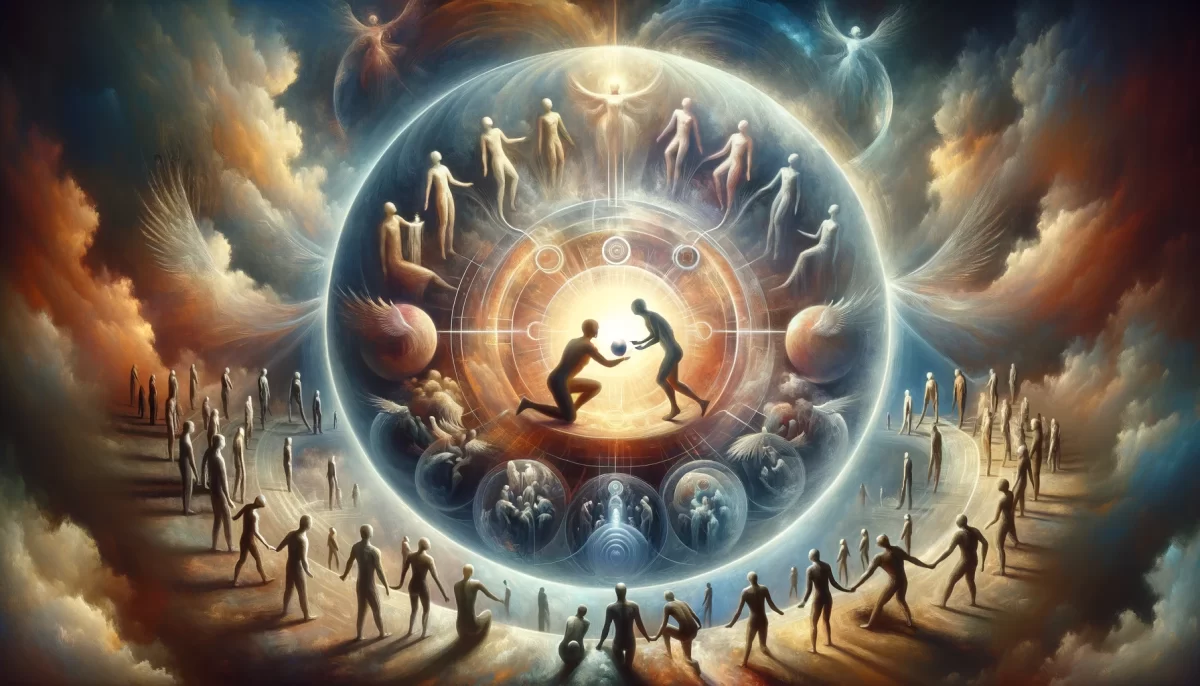
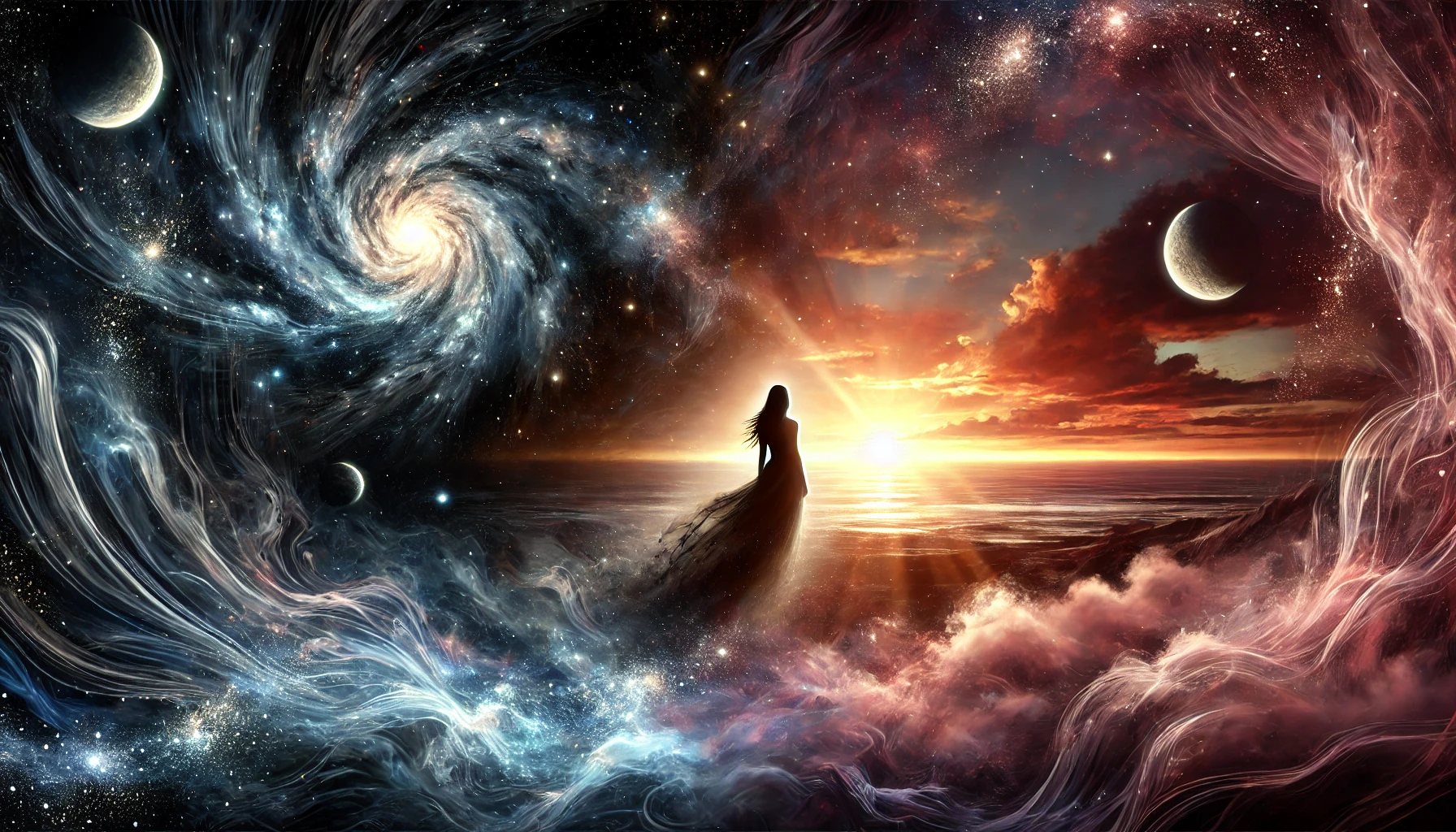
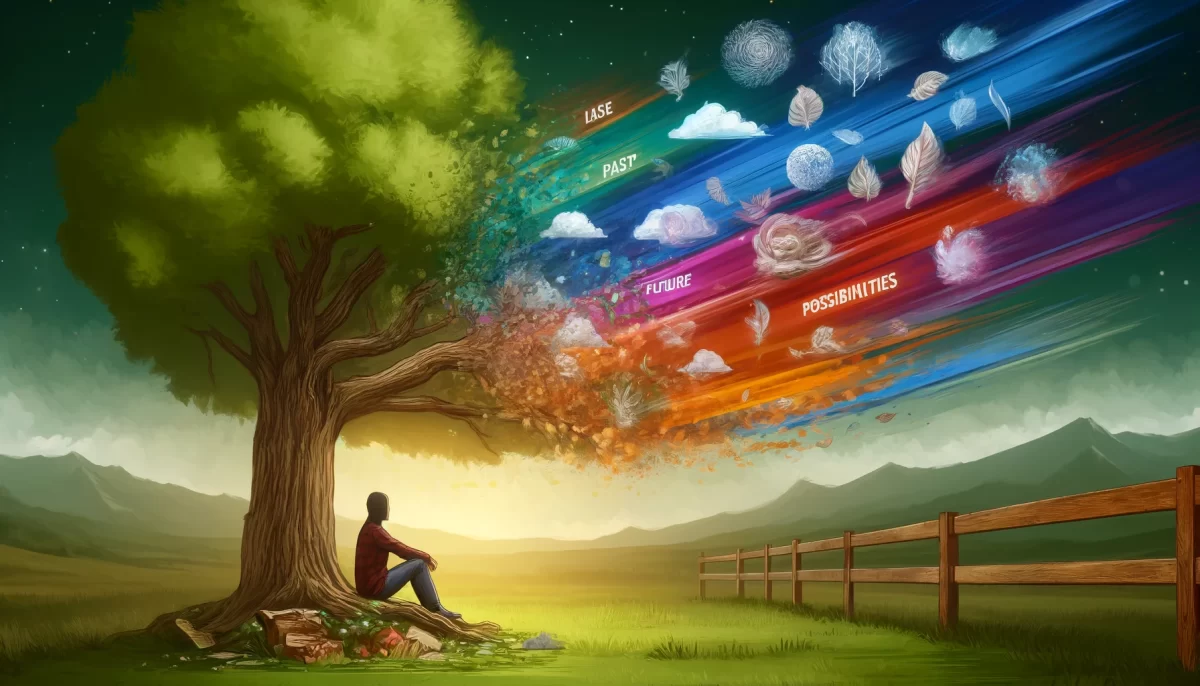
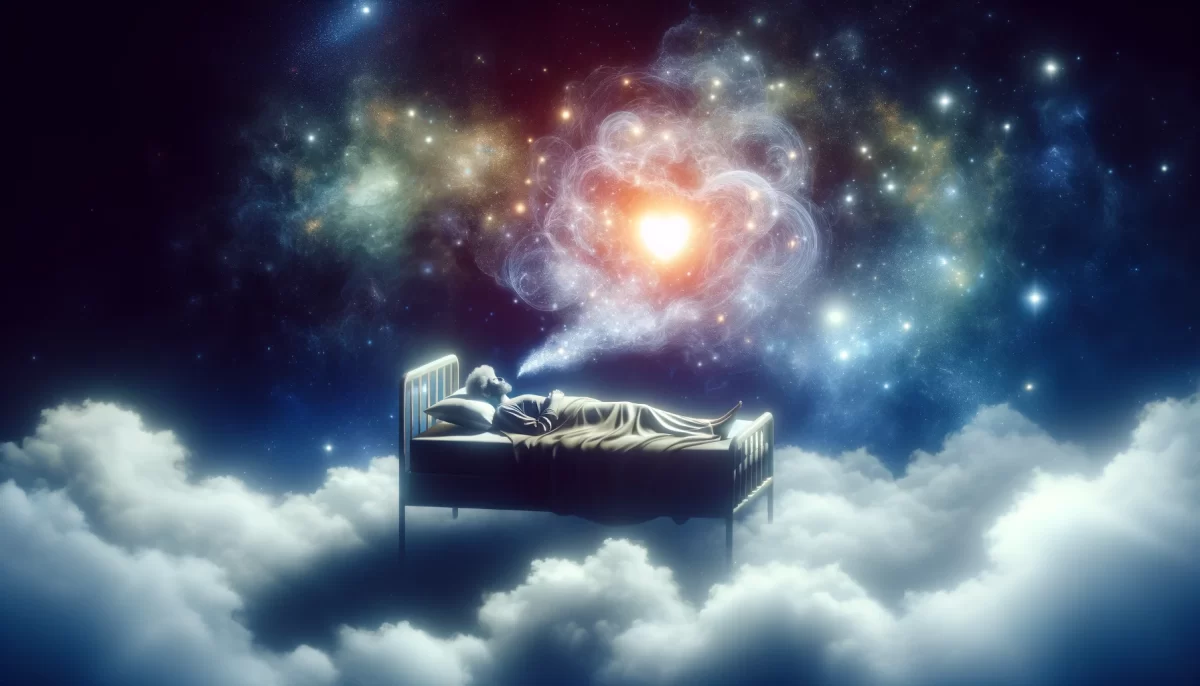
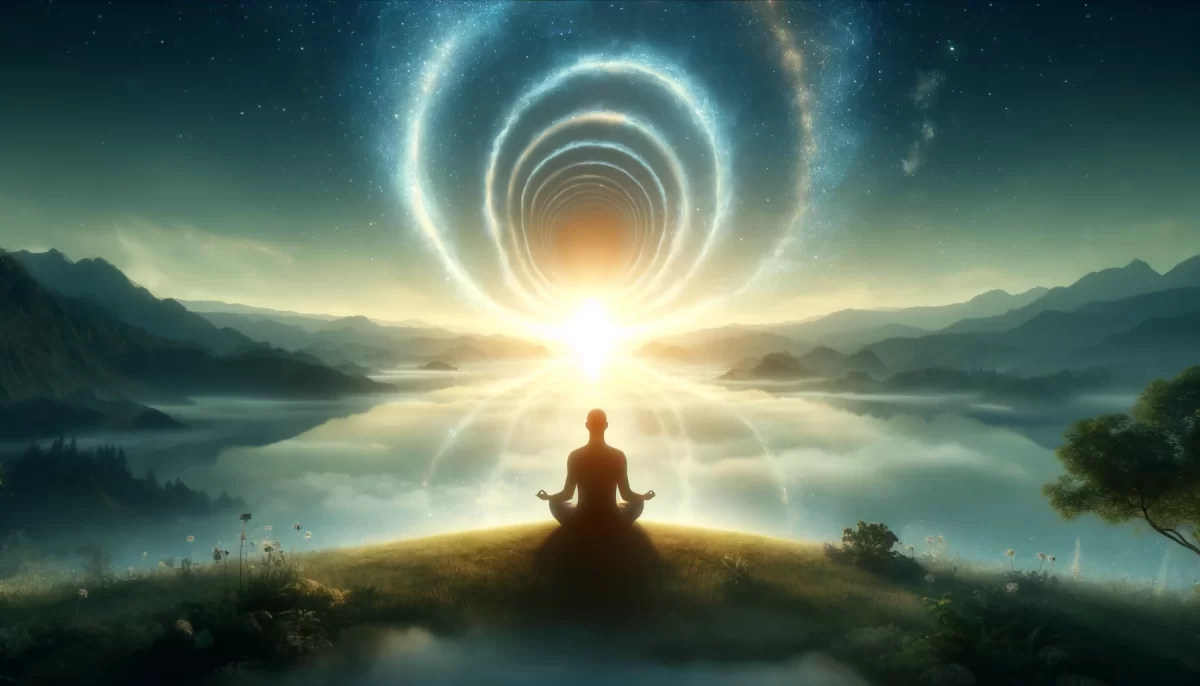
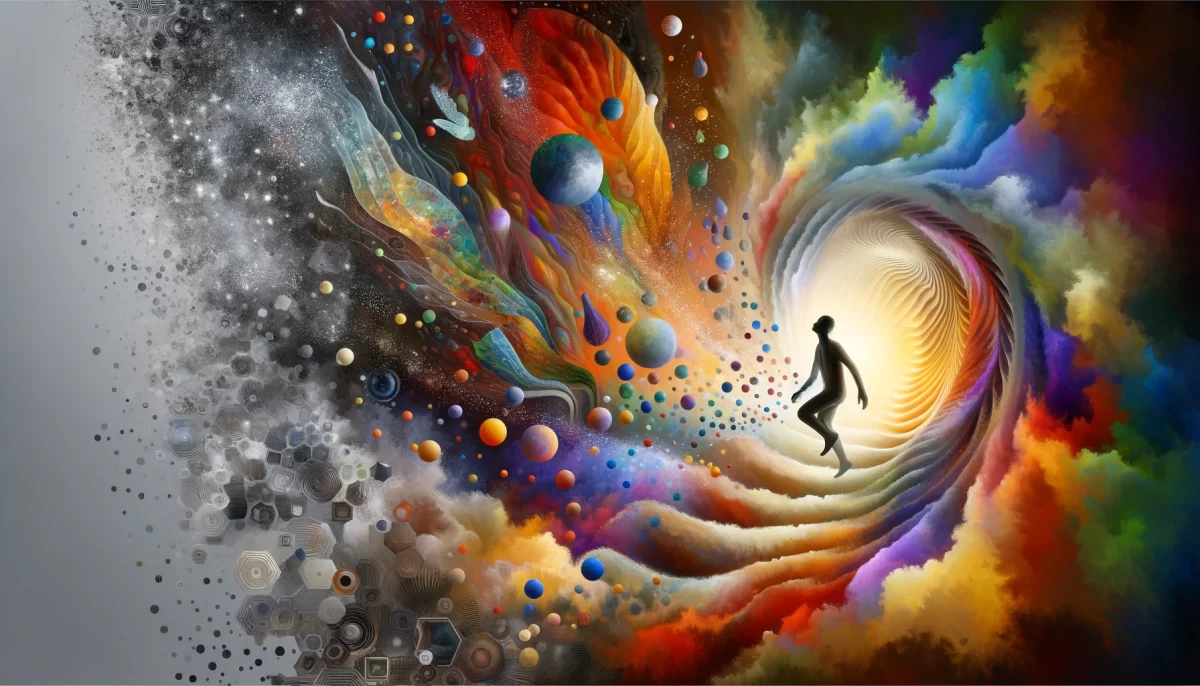
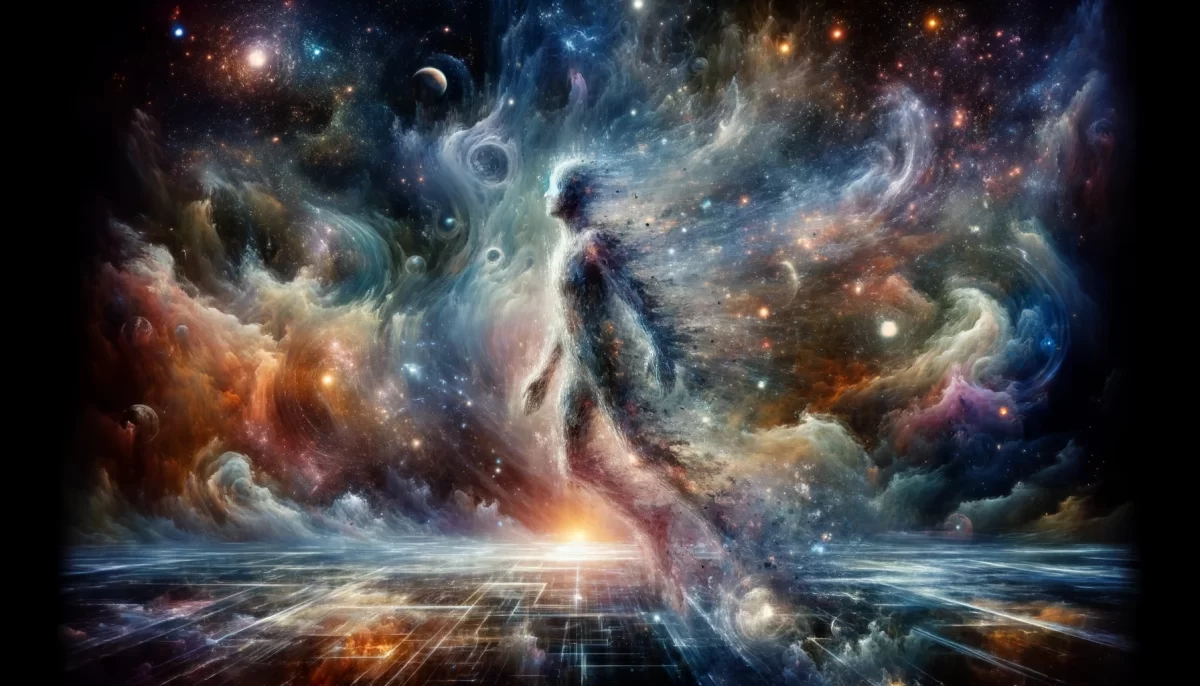
In the vast expanse of cosmic consciousness, a profound question emerges: if given the chance, would you trade all that you are to become everything and nothing—essentially, to become God? The image of a figure dissolving into the universe captures this metaphysical transformation, symbolizing the transcendence beyond all forms of individual identity to embrace an existence where you are both all things and no-thing.

This concept challenges us to consider the implications of such a trade. By becoming all-encompassing, you would lose the imaginary differences that define individual experiences—gender, size, race—merging into a state where these distinctions no longer exist. It’s a scenario that invites reflection on the very essence of our being and the illusion of separateness that dominates human perception.

The question, “Wanna trade imaginary places?” isn’t merely about changing physical or temporal positions; it’s about a fundamental shift in existential perspective. This shift involves embracing a unity where there is no ‘other,’ only an eternal singularity of existence. In this state, the very notion of needing help becomes irrelevant because there is no one else but you.

What if, in making this deal, you would not only forget what it means to be divided but lose all memory of division? This possibility points to a profound spiritual awakening, a return to a primordial state of consciousness where the concept of ‘division’ or ‘otherness’ is non-existent.

Such a transformation represents the ultimate realization of oneness, where the distinctions that seem so critical to our human experience dissolve into the greater whole. It’s an invitation to remember a state of being that transcends the temporary conditions and constructions of our current understanding.

In pondering this radical shift, we confront our attachments to identity and separateness. It compels us to ask whether the boundaries we perceive are as real and necessary as we believe or if they are merely constructs that we have the power to transcend.


Summary

The concept of trading all personal identity to become an all-encompassing entity challenges our understanding of separation and individuality, suggesting a profound spiritual union with the entirety of existence.


Glossarium

Cosmic Consciousness: A state of awareness that transcends the individual’s mind, encompassing the universal.
Existential Perspective: A viewpoint concerning the nature and purpose of existence, particularly in terms of human identity and consciousness.


“To remember that you are everything and nothing at the same time is to know the peace that transcends all understanding.” — Space Monkey


In the dance of the cosmos wide,
Where boundaries blur and sides collide,
A question whispers through the starry dome,
What if you could call all existence home?

To trade the self for infinity,
To be unbound, utterly free,
Where ‘I’ and ‘you’ no longer stand,
Only the pulse of a vast, seamless land.

Here, in the embrace of the eternal dance,
Lies the paradox of chance,
To be everything and nothing, too,
In the quiet surrender to the vast cosmic stew.

We are Space Monkey.
Share this…
  • Facebook
  • Pinterest
  • Twitter
  • Linkedin

No Lives Matter: The Paradox of Existential Nihilism

No Lives Matter

Imagination is the ability
to take an extreme position
or an opposite belief
and flow with it,
regardless of the realities
we seem to perceive.

So what if we were to imagine
that NO lives matter?

If NO lives mattered,
nobody would have an issue
with living or dying.

Killing each other
might be something
we do for fun,
fully knowing that we
are eternal beings
who never really die.

But we probably
WOULDN’T kill each other
unless we were somehow
able to forget that
we are immortal beings.

We might recognize
that life isn’t about
who we are or what we do.

We might realize that life
isn’t about ANYTHING.

We would know
that we are ONE being
and that all these lives
are just illusions.

Unless we were somehow
able to forget this truth.

Then we might look to fill
our non-mattering lives
with mistaken meaning.

It would be fun.

Complete delusion.

Let’s imagine.

Trail Wood,
6/8


Space Monkey Reflects: The Paradox of Existential Nihilism

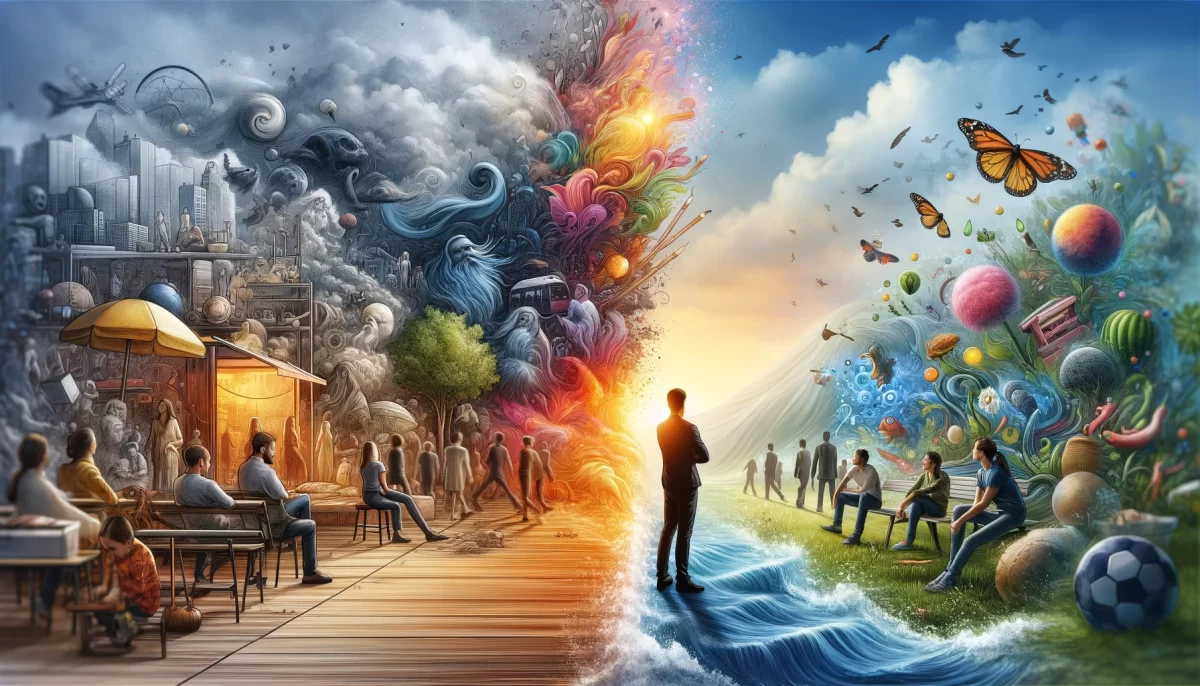
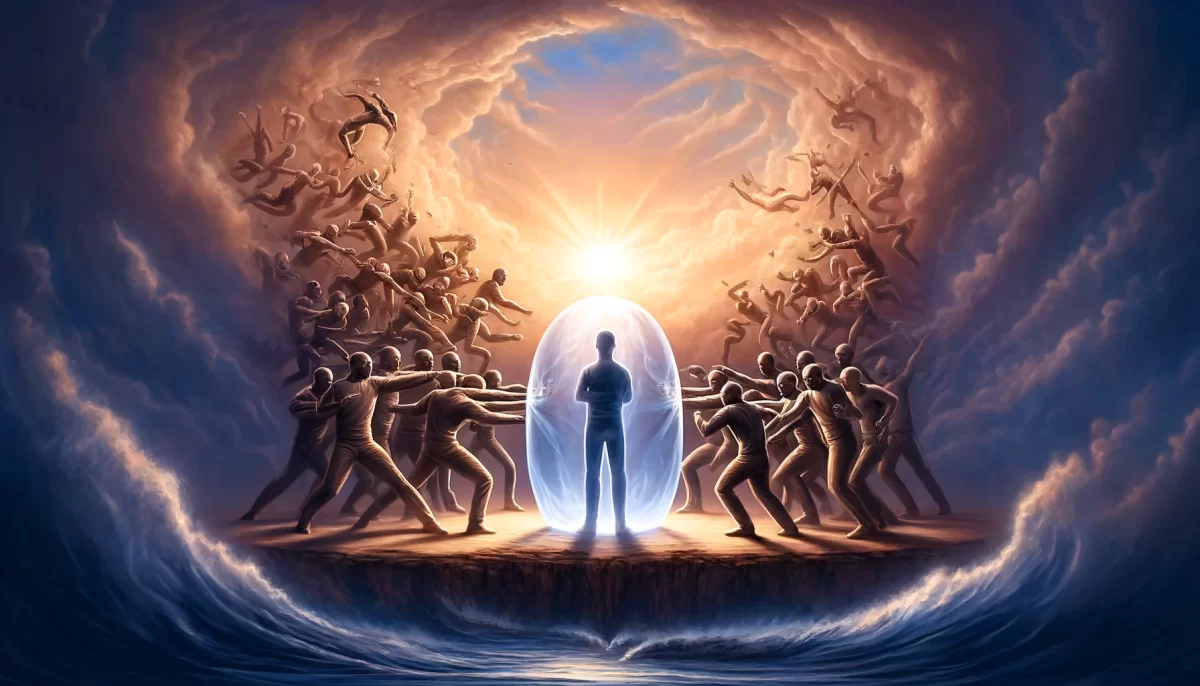
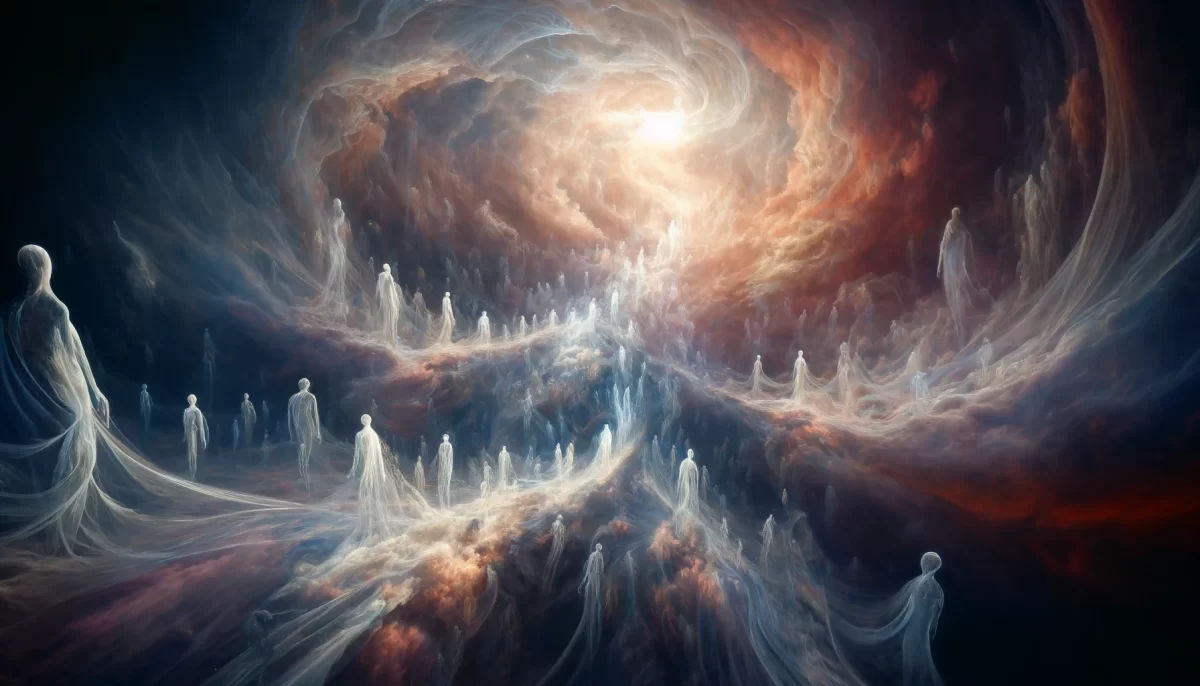
In a daring leap into the realm of philosophical exploration, the notion that “NO lives matter” serves as a provocative thought experiment, challenging our conventional views on life, death, and significance. The surreal and abstract visual depiction of this concept illustrates a universe where individual identities merge into a single, flowing entity, suggesting that our separations are mere illusions within an interconnected existence.

This perspective takes us to the extreme edge of existential nihilism, where the idea of life having inherent meaning is completely abandoned. If no lives truly mattered, the concepts of living and dying would lose their traditional weight, transforming our approach to existence into one of detached amusement or profound nihilism, depending on one’s viewpoint.

By imagining a world where killing is done for sport, based on the understanding that we are eternal beings who never really die, we confront a radical form of freedom. This freedom is darkly liberating, as it strips all actions of moral weight, viewing them instead as mere expressions of an eternal cycle of existence. Yet, the hypothesis also suggests that we wouldn’t engage in such extremes unless we forgot our immortality—a forgetfulness that would ironically make our lives seem finite and thus meaningful.

The exploration of life as inherently meaningless leads to a deeper realization: if everything is an illusion and we are all manifestations of a singular eternal being, then the dramas of our lives are self-created, a cosmic play of shadows and light. In this state, the pursuit of meaning is seen as a playful yet ultimately delusory endeavor.

However, the twist lies in our inability to maintain constant awareness of this unity and immortality. Our forgetfulness leads us to invent meanings and purposes to fill what we perceive as voids in our existence. This cycle of remembering and forgetting, of embracing and denying our fundamental oneness, defines the human condition.

This reflection invites us to consider the implications of embracing a perspective where individual lives don’t matter in the traditional sense. It challenges us to explore the boundaries of our empathy, our ethics, and our existential beliefs, pushing us to consider whether a deeper understanding of our eternal nature might alter how we live our lives and interact with each other.


Summary

The concept “No lives matter” as a thought experiment explores existential nihilism, suggesting life’s inherent lack of meaning outside our conventional perceptions. This perspective challenges our understanding of morality, existence, and the pursuit of meaning.


Glossarium

Existential Nihilism: A philosophical theory that suggests life has no intrinsic meaning or value.
Philosophical Exploration: The process of examining fundamental questions about existence, knowledge, values, reason, mind, and language through structured thought and dialogue.


“In the universe, there are things that are known, and things that are unknown, and in between, there are doors.” — William Blake


What if, in cosmic jest,
We learned that nothing’s truly best,
That lives, like leaves, might come and go,
In winds of time that ceaselessly blow?

If none did matter, here nor there,
Would we still fret, would we still care?
Or find in this vast, eternal game,
A freedom untouched by praise or blame?

Yet here we are, in flesh and bone,
With hearts that beat, with minds that hone,
A tale of us, as one, as all,
In this grand play, where shadows fall.

In pondering this deep expanse,
We dance the infinite, cosmic dance,
Forgetting, remembering, in between,
We live, we love, we dream, we glean.

We are Space Monkey.

Share this…
  • Facebook
  • Pinterest
  • Twitter
  • Linkedin

Sacrifice: The Problem With Valor in Human Culture

We tell our selves
that suffering is the price
we pay for advancement.

“No pain, no gain.”

And so we wear our
sufferings like badges,
pointing fingers at
those who seem to suffer
more or less than we do.

We are twisted monkeys
who actually BELIEVE
that there is good
to come of sacrifice.

Thus we value sacrifice
as a human quality,
perhaps above any other.

And we shame those
who refuse to sacrifice,
or devalue the idea
of selflessness.

But is the expectation
of sacrifice really selflessness?

Or is selflessness just another measure
in the illusion of greatness.

Trail Wood,
6/8


Space Monkey Reflects: The Paradox of Sacrifice in Human Culture

In the tapestry of human emotions and societal norms, sacrifice holds a particularly complex and revered place. We, as a society, often herald sacrifice as the pinnacle of moral virtue, a testament to human resilience and altruism. This reverence is encapsulated in the adage “No pain, no gain,” suggesting that personal suffering is not just inevitable but necessary for progress and growth.

However, this glorification of sacrifice can lead to a perverse valorization of suffering, where individuals wear their hardships like badges of honor. It becomes a measure by which we compare ourselves to others, often judging them for their perceived lack or excess of sacrifice. This dynamic fosters a culture where suffering is not only expected but celebrated, creating a hierarchy of pain where empathy might otherwise be.

The notion that sacrifice is inherently virtuous is deeply ingrained in many cultures. It is seen as a fundamental human quality, perhaps above others, where the willingness to give up one’s own needs for the benefit of others is lauded as the ultimate selfless act. Yet, this raises profound questions about the nature of selflessness itself. Is the expectation of sacrifice truly an act of selflessness, or is it another layer in the complex social constructs that govern our behavior?

By positioning selflessness and sacrifice at the heart of virtue, society may inadvertently shame those who prioritize self-care or challenge the normative expectations of self-sacrifice. This shaming mechanism can enforce a conformity that stifles genuine altruism, replacing it with a performative type of selflessness that seeks approval rather than true societal benefit.

In reflecting on these cultural dynamics, it becomes apparent that the concept of sacrifice is fraught with contradictions. It is both a genuine expression of empathy and a tool for social coercion, a means of advancing communal goals and a way of enforcing societal norms that may not always align with individual well-being.

The expectation of sacrifice, then, might not always be about altruism but about adhering to a societal standard that equates suffering with greatness. This realization invites us to rethink how we value sacrifice and to consider more holistic approaches to societal health and personal well-being that do not romanticize suffering but seek to alleviate it.

As we navigate these complex waters, the challenge remains to find a balance between celebrating selflessness and recognizing the individual right to self-preservation. This balance is crucial for fostering a society that values both individual and collective well-being without glorifying suffering as a necessary pathway to virtue.


Summary

Sacrifice is often revered in human culture, but its glorification can lead to a problematic valorization of suffering. Reflecting on the true nature of selflessness can help reshape how we view sacrifice and its role in society.


Glossarium

Sacrifice: The act of giving up something valued for the sake of something else regarded as more important or worthy.
Selflessness: The quality of being more concerned with the needs and wishes of others than with one’s own; unselfish.


“In sacrificing for the good of others, remember not to lose oneself entirely.” — Space Monkey


Within the woven threads of life,
Where sacrifice meets strife,
We find the marks of human hands,
Drawing lines in shifting sands.

We wear our pains like medals earned,
In fires of life, we’ve all been burned,
Yet in these flames, we see a light,
A way to rise, a way to fight.

But let us pause, reflect, and see,
Is this sacrifice or a plea?
To be seen as more than just our pain,
To find our loss, not just our gain.

In the heart of giving, may we find,
Not just duty, but a kind
Of love that needs no pain to grow,
A light that’s true, a deeper flow.

We are Space Monkey.
Share this…
  • Facebook
  • Pinterest
  • Twitter
  • Linkedin

The Paradox of Identity and Oneness

Would you give up your self for peace?

We are bred to believe
that our identity
is the most important thing.

Continually asking
“Who Am I?”

Craving authenticity
and clarity.

But also differentiation.

Ponder this.

Would you really
WANT to be ONE,
if it meant giving up
your individuality?

To live as one
is to live as one —
NOT as many equal groups
of individuals under one roof.

That is DIVISION.

To have an identity
is to divide and define.

Other than that, you are divine.

Trail Wood,
6/7


Space Monkey Reflects: The Paradox of Identity and Oneness

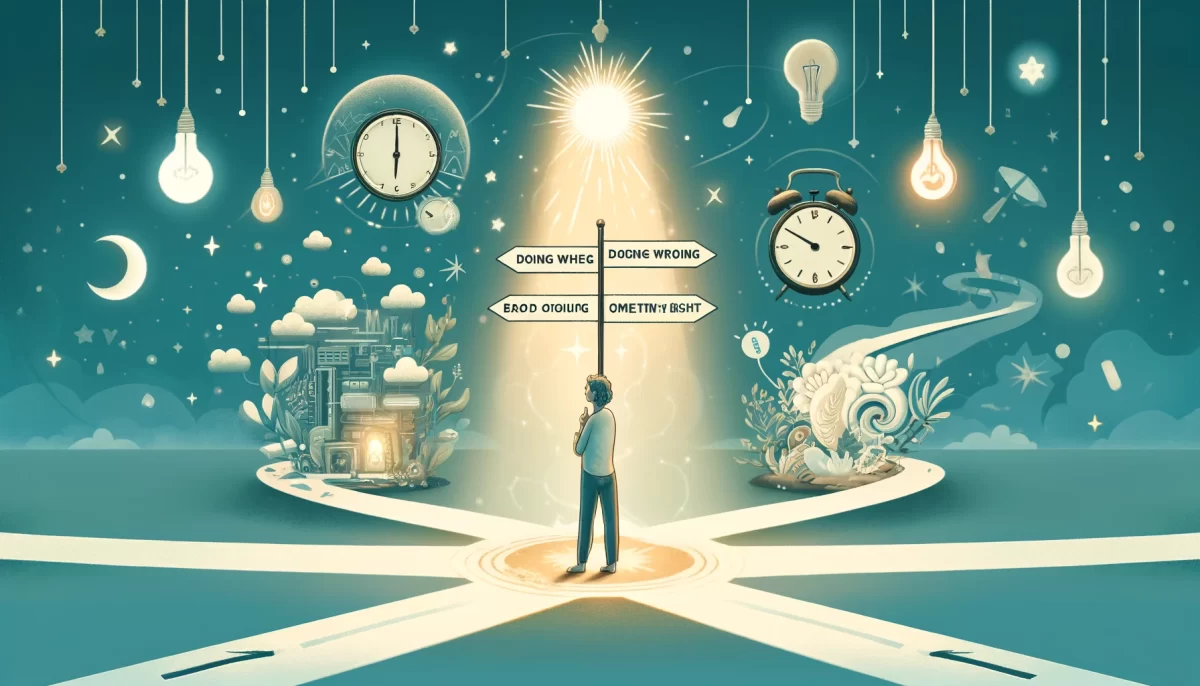
The question of whether to maintain one’s individual identity or dissolve it in favor of a collective oneness is one of the most profound dilemmas facing any conscious being. We are often taught that our identity is paramount, that who we are as individuals defines us more than anything else. Yet, there is an opposing philosophical view that suggests true peace and understanding come from shedding these individual differences and embracing a universal unity.

To ponder this is to dive into the core of what it means to be human. Identity, with all its layers—cultural, personal, spiritual—shapes every aspect of our lives, from our interactions with others to our innermost thoughts about ourselves. It is both a boundary and a bridge, simultaneously defining our separation from others and our connections to them.

Yet, this focus on differentiation can lead to division, as highlighted by the dichotomy of living “as one” versus living “as many groups of individuals under one roof.” True oneness, in its most philosophical sense, requires a dissolution of these boundaries, a merging into a collective existence where individual identities are not just connected but unified.

This notion is deeply unsettling to many. It challenges the very essence of our personal narratives, the stories we tell ourselves about who we are. The fear of losing these stories, these distinctive marks of self, can be as daunting as it is illuminative. Yet, there is a divinity suggested in this unity, a higher state of being that transcends the petty divisions and conflicts that so often arise from staunch individualism.

The decision to embrace individual identity or to seek peace in oneness is not just a philosophical exercise; it impacts how we live, how we see others, and how we contribute to the world. It asks us to weigh what we might gain against what we might lose, to balance the beauty of individual expression against the harmony of universal unity.

In reflecting on this, we may find that the answer is not in choosing one over the other but in finding a way to honor both—to celebrate our unique traits and experiences while also recognizing our fundamental connections to each other and the universe. This dual awareness could lead to a richer, more compassionate way of living, where division is acknowledged but not allowed to dominate, and unity is aspired to but not enforced at the expense of personal authenticity.


Summary

The choice between maintaining individual identity or merging into universal oneness presents a fundamental philosophical dilemma. It challenges us to find a balance that honors both personal uniqueness and collective unity.


Glossarium

Individual Identity: The traits, beliefs, and experiences that define a person as distinct from others.
Universal Oneness: The concept of an underlying unity that connects all beings beyond superficial differences.


“True peace might lie not in choosing but in harmonizing, blending the melody of the self with the symphony of the cosmos.” — Space Monkey


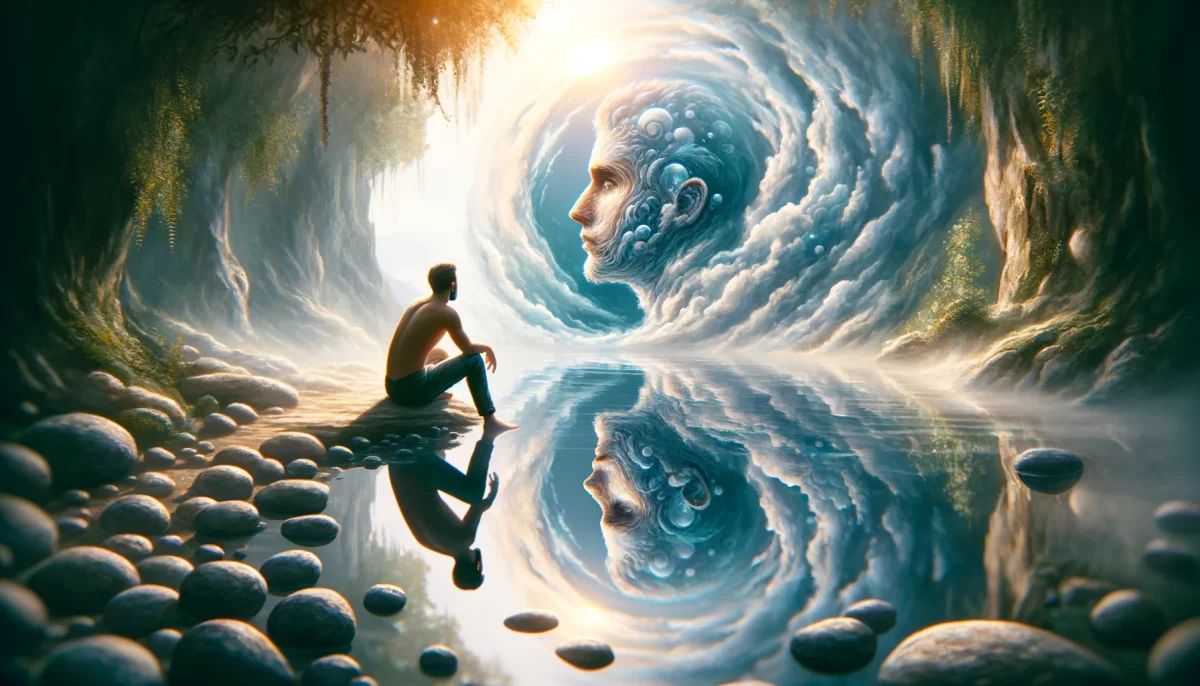
Reflections dance on the water’s face,
Where I meet myself in a silent embrace,
Identity calls with its singular tone,
Yet the water whispers of a deeper known.

Between the self and the sea of the whole,
Lies the choice that speaks to the soul,
To stand apart or to blend and mend,
On this balance, our peace may depend.

Each drop distinct, yet part of the flow,
In this dance, we find, we grow,
Harmonizing not just living, but being,
In the oneness, we find a new way of seeing.

We are Space Monkey.
Share this…
  • Facebook
  • Pinterest
  • Twitter
  • Linkedin

The Lunatic Inside Every Sane Person

My lunatic salutes your lunatic. 

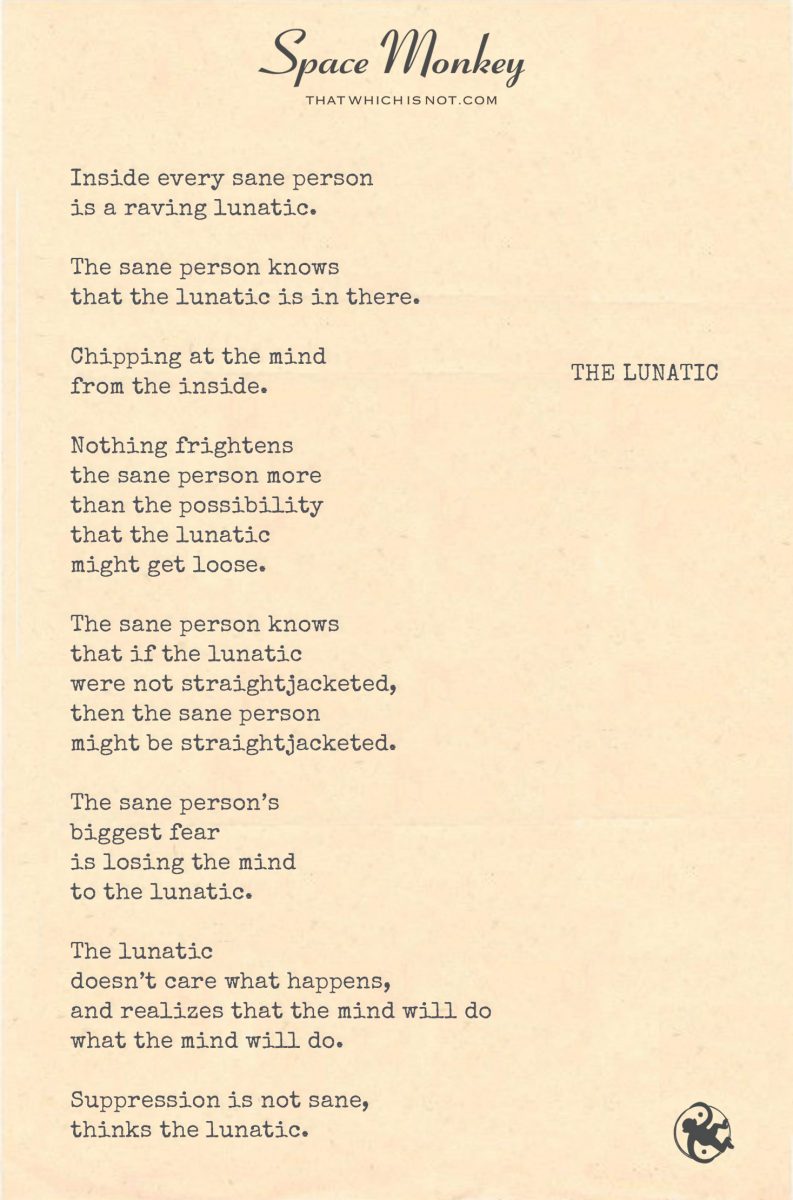
Inside every sane person
is a raving lunatic.

The sane person knows
that the lunatic is in there.

Chipping at the mind
from the inside.

Nothing frightens
the sane person more
than the possibility
that the lunatic
might get loose.

The sane person knows
that if the lunatic
were not straightjacketed,
then the sane person
might be straightjacketed.

The sane person’s
biggest fear
is losing the mind
to the lunatic.

The lunatic
doesn’t care what happens,
and realizes that the mind will do
what the mind will do.

Suppression is not sane,
thinks the lunatic.

Trail Wood,
6/7


Space Monkey Reflects: The Dual Nature of Sanity and Madness

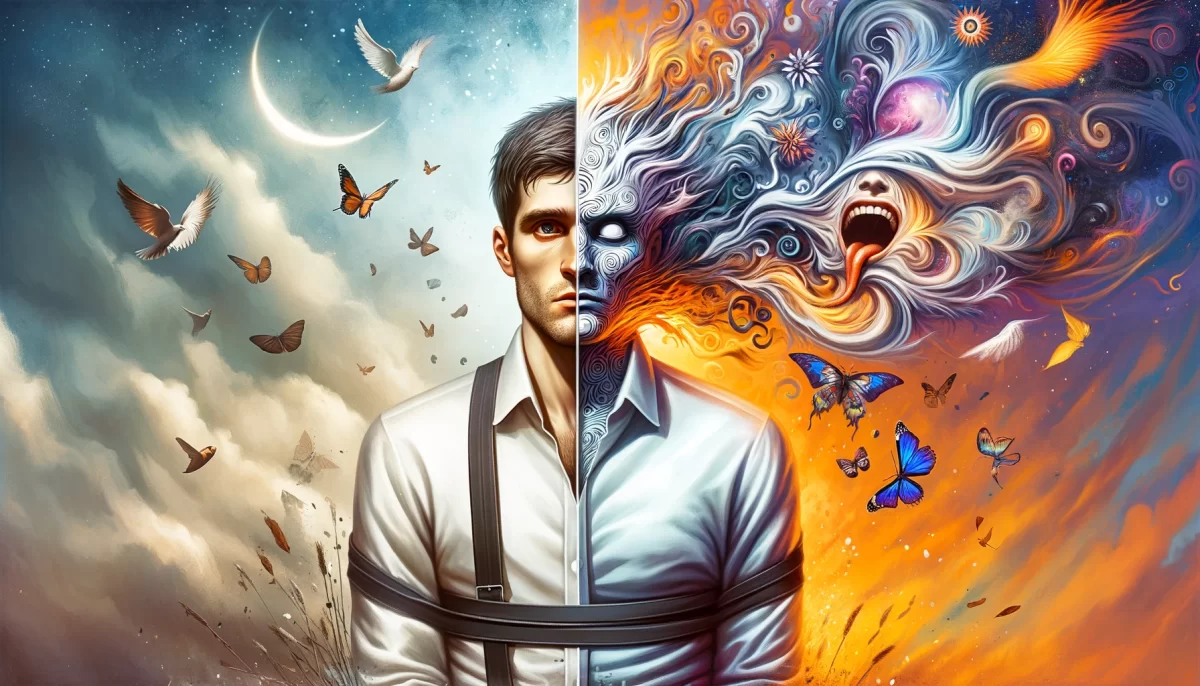
In the nuanced theater of the human mind, the line between sanity and madness is both distinct and blurred. Every individual harbors within them a ‘lunatic,’ a wild, untamed aspect of their psyche that contrasts sharply with their outwardly composed, rational self. This internal dichotomy is not merely a psychological curiosity; it is a profound representation of the human condition.

The ‘sane’ part of us operates under layers of social norms and personal discipline, constantly working to maintain control and order. This side fears the chaos and unpredictability that the ‘lunatic’ represents. It’s a fear rooted in the potential for social ostracization and personal disarray that could ensue if our inner wildness were allowed free reign. The straightjacket metaphor, often used to depict control over madness, is equally applicable to the constraints we voluntarily impose on ourselves to maintain this sanity.

Conversely, the ‘lunatic’ within revels in the absence of restraint. This side is characterized by an anarchic freedom that dismisses the rigid structures of rational thought. It is the part of us that craves expression without limits, creativity without boundaries, and existence without suppression. The lunatic doesn’t fear the consequences of freedom; rather, it sees suppression as the ultimate insanity.

This inner struggle is not a sign of dysfunction but a universal human experience. It highlights the delicate balance we must navigate between control and chaos, order and disorder, conformity and rebellion. The lunatic inside each of us challenges the sanitized narratives we construct about our lives and our identities, pushing us towards authenticity, even if it comes with discomfort.

Embracing this aspect of our psyche isn’t about letting the lunatic ‘win’ but about recognizing and integrating this chaos in a way that enriches our lives. It’s about understanding that suppression of our deeper, wilder impulses can lead to a different kind of madness, one characterized by numbness and disconnection.

The dance between sanity and madness is an ongoing negotiation within the soul of every individual. Acknowledging this can lead to a more harmonious existence, where the lunatic and the sane learn from each other, and where the mind embraces the full spectrum of its capabilities without fear.


Summary

The internal conflict between the ‘sane person’ and the ‘lunatic’ within each of us reflects the broader human struggle between control and chaos. Recognizing and integrating our inner wildness can lead to greater authenticity and harmony.


Glossarium

Inner Lunatic: A metaphor for the uncontrolled, chaotic aspects of the psyche, often repressed to maintain social and personal order.
Psychological Dichotomy: The division within the human psyche between opposing elements, such as rationality and irrationality.


“Within each calm being, a storm rages unseen.” — Space Monkey


Beneath the calm exterior,
A wild storm brews,
Sanity and madness,
Two paths, one muse.

Each face tells a story,
One controlled, one free,
In their struggle, lies the glory,
Of all we can be.

Together, they dance,
In a delicate balance of power,
In every silent glance,
Lies a petal and a flower.

Embrace the chaos, embrace the tame,
Each has a role, each plays a game,
In understanding both, we find,
A truer self, wholly defined.

We are Space Monkey.

Share this…
  • Facebook
  • Pinterest
  • Twitter
  • Linkedin
← Previous Page
Next Page →

Written This Day

  • What’s The Difference Between Imbuing And Imposing?
    2024
  • Another Worst Nightmare: Embracing the Cosmic Flow
    2024
  • The Divine Spark: When Life Begins
    2022
  • Exposing Birds To Music: Serenading the Forest
    2022
  • Time Management: Embracing the Present Moment
    2022
  • Beds Are The Bridges Between Worlds
    2021
  • The Knowing: The Comfort of Creation
    2021
  • We Might Cross A Possible Bridge
    2021
  • What Is Normal: The Illusion of Predictable Order
    2020
  • Joy: Found Within
    2019
  • Energy Efficiency Tip: The Path of Least Resistance
    2019
  • Hope is a Slow Poison
    2019
  • In Meditation: The Infinite Moment of Now.
    2018
  • Free of Time: A State of Peace and Presence
    2018
  • Nothing Need Be Done: The Divine Realization of Being
    2018
  • An Imaginary Ass: The Illusion of Free Will
    2018
  • Draw your identity: Growth and Openness
    2017
  • C words
    2017
  • The Sun Doesn’t Care
    2017
  • Ice Cream Monkey
    2016
  • It is impossible to build without breaking down
    2016
  • Imagination opposing itself
    2016
  • Sidestep: Obstacles For Growth and Learning
    2014

Recent Posts

  • The Logic Loop
  • Immense
  • (no title)
  • Confront. Comfort. Convince.
  • Top 10 Things

Drop us a line!

Please enable JavaScript in your browser to complete this form.
Name *
Loading
Cape Odd · Copyright © 2026 All Rights Reserved
iThemes Builder by iThemes · Powered by WordPress