Inviting Your Cymbal Monkeys to Meditation
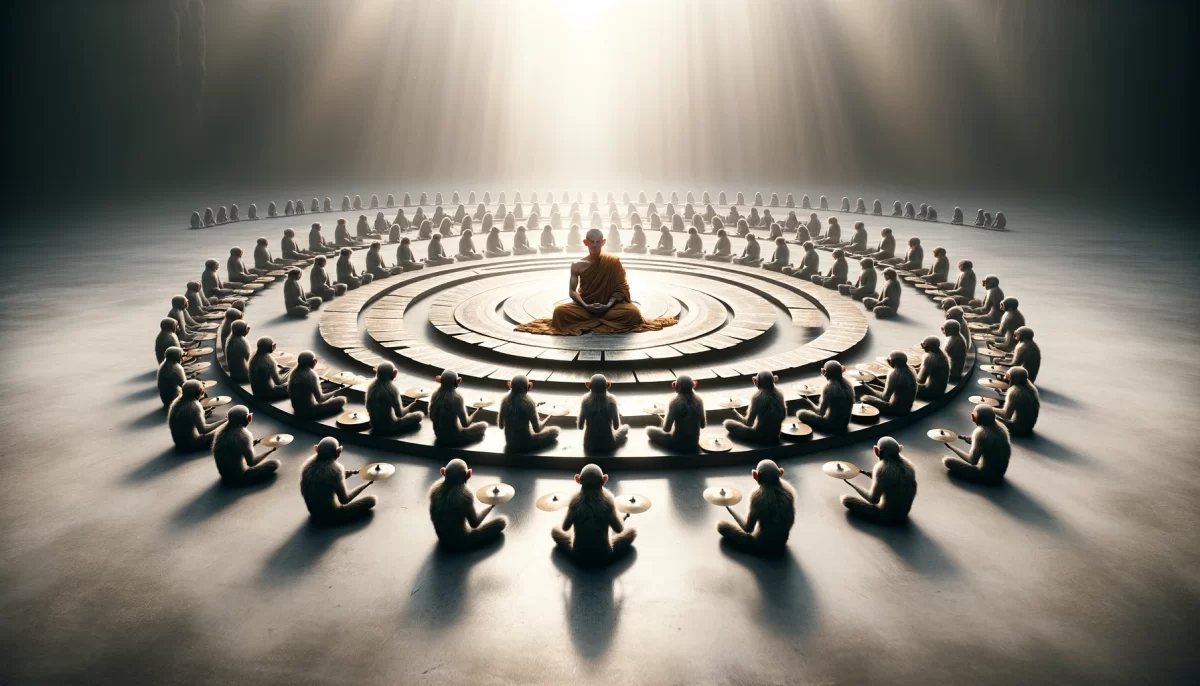
The Zen practice of employing battery-operated cymbal monkeys to increase mindfulness during meditation might sound unconventional or even whimsical at first glance. Yet, this imaginative approach offers a profound illustration of Zen principles, particularly the cultivation of awareness and acceptance in the presence of distraction.
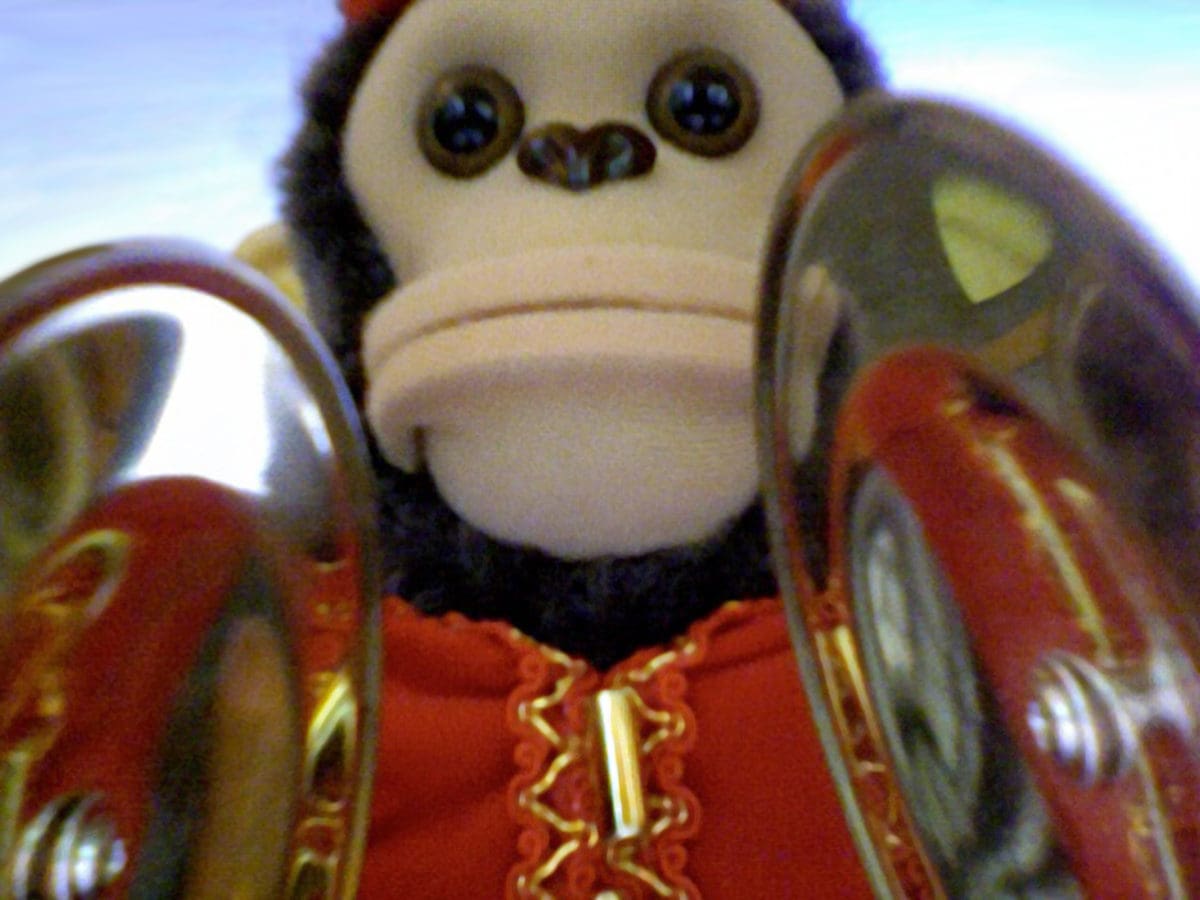
In this unique meditation practice, a battery-operated cymbal monkey, known for its repetitive clashing of cymbals and mechanical movements, is placed within the meditator’s environment. The objective is not to eliminate distractions but to integrate the presence of noise and movement into the meditation process, thereby enhancing mindfulness.
Space Monkey Reflects: Calm Within Chaos—Inviting Your Cymbal Monkeys to Meditation
The image of a chaotic, clanging cymbal monkey juxtaposed with the stillness of meditation is both absurd and profound. It challenges conventional notions of what mindfulness “should” look like, inviting us to confront distraction not as an obstacle, but as an essential part of the practice. This unconventional approach embodies the core of Zen philosophy: cultivating awareness and presence amidst the chaos of life.
Chaos as a Teacher
In meditation, we often strive for quiet—both external and internal. Yet life rarely grants us perfect conditions. The cymbal monkey represents the unavoidable distractions that clamor for our attention: intrusive thoughts, emotional turbulence, external noise, and the myriad responsibilities of daily life.
Rather than rejecting these “monkeys,” Zen encourages us to invite them into our practice. By meditating with the presence of these distractions, we learn to observe without attachment, to accept without resistance. The clanging cymbals become a tool, teaching us to find calm not by avoiding chaos, but by embracing it.
Mindfulness Amidst the Noise
The use of battery-operated cymbal monkeys during meditation may seem comically counterproductive, yet it embodies a profound truth: mindfulness is not about silencing the world but about finding stillness within it. The relentless clatter of the cymbals forces us to confront the discomfort of distraction and practice letting go.
This practice mirrors life itself. Rarely do we have the luxury of complete peace. Whether it’s the noise of the city, the demands of work, or the chatter of our minds, distractions are constant companions. By meditating with the cymbal monkeys, we cultivate the skill of staying present amidst the din, building resilience and deepening our mindfulness.
The Principle of Acceptance
Zen teaches that resistance amplifies suffering. The cymbal monkeys, with their chaotic noise, become a metaphor for this principle. If we fight the sound, we grow frustrated. If we try to ignore it, it grows louder in our minds. But if we accept it—truly allow it to exist without judgment—it loses its power over us.
This acceptance extends beyond meditation. When we learn to accept the “monkeys” in our lives, whether they are challenges, distractions, or uncertainties, we free ourselves from the struggle of resistance. In this freedom, we discover a calm that is not dependent on external conditions.
The Playfulness of Zen
The use of cymbal monkeys in meditation also reminds us not to take ourselves too seriously. Zen often employs humor, paradox, and play to reveal deeper truths. The absurdity of meditating with clanging cymbals invites us to approach mindfulness with curiosity and lightness. It reminds us that the path to enlightenment is not rigid or solemn but fluid and alive.
Playfulness allows us to approach meditation with a beginner’s mind, free of expectations or preconceived notions. The cymbal monkeys become a playful challenge, turning a traditional practice into a dynamic exploration of awareness.
The Calm Within Chaos
The ultimate lesson of meditating with cymbal monkeys is that calm and chaos are not opposites; they coexist. True mindfulness is not about eliminating chaos but about finding the calm that exists alongside it. When we stop fighting the noise, we uncover a stillness that was always there.
In life, the “monkeys” will always clatter their cymbals. But by inviting them into our practice, we learn that their presence does not disrupt our peace. Instead, they deepen our awareness, teaching us to embrace the full spectrum of experience with grace and equanimity.
Summary
The practice of meditating with cymbal monkeys illustrates Zen principles of awareness, acceptance, and playfulness. By embracing distraction rather than resisting it, we cultivate mindfulness that thrives amidst chaos. This approach reminds us that calm and chaos can coexist, deepening our practice and enriching our lives.
Glossarium
- Cymbal Monkeys: A metaphor for distractions and challenges that clamor for attention during meditation and in life.
- Mindfulness Amidst Noise: The practice of staying present and aware, even in the presence of chaos or distraction.
- Acceptance in Chaos: The principle of allowing external conditions to exist without resistance, fostering inner peace.
Quote
“The cymbals may clatter, but the stillness within you remains untouched.” — Space Monkey
The Dance of Chaos and Calm
The clangs resound, the noise invades,
A monkey’s rhythm, a cymbal parade.
Yet in the chaos, stillness grows,
A quiet stream where presence flows.
Resist the clang, and noise will swell,
Invite it in, and all is well.
For calm and chaos are not two,
The cymbal’s echo reveals the true.
The monkey laughs, its arms alight,
A teacher born of sound and sight.
In chaos found, a calm begins,
A playful path where stillness wins.
We are Space Monkey.
Cultivating Awareness in Distraction:
The constant, somewhat intrusive noise produced by the cymbal monkey serves as a tool to deepen mindfulness. Participants are encouraged to observe their reactions to the noise—any arising irritation, impatience, or distraction—without attempting to alter their experience. This practice aligns with the Zen principle of mindfulness: being fully present and aware of one’s thoughts, feelings, and sensations as they occur.
Embracing Impermanence and Non-attachment:
The use of a cymbal monkey in meditation also embodies the Zen teachings of impermanence and non-attachment. The repetitive and predictable nature of the monkey’s cymbals clashing becomes a metaphor for the cyclic patterns of thoughts and emotions. Meditators learn to observe these cycles without attachment, recognizing their transient nature and developing a sense of detachment from the mental chatter that often dominates the mind.
Finding Calm Within Chaos:
Introducing an element of deliberate distraction, such as the cymbal monkey, challenges practitioners to find calm and concentration amid chaos. This practice reflects the reality of living in a world filled with noise and distraction, teaching meditators to cultivate inner peace regardless of external circumstances. It is a powerful lesson in finding stillness not by escaping the world, but by being fully present within it.
Enhancing Concentration and Resilience:
Regularly meditating with the sound of cymbal monkeys clashing can enhance concentration and mental resilience. Practitioners develop the ability to maintain focus on their breath or chosen meditation object despite the auditory distractions, strengthening their mindfulness and concentration skills. This heightened focus can extend beyond meditation into daily life, improving overall mental clarity and presence.
A Symbol of Joy and Playfulness:
On a lighter note, the cymbal monkey, with its humorous and playful nature, serves as a reminder not to take meditation—or life—too seriously. It introduces an element of joy and levity into the practice, encouraging a lighter heart and a more joyful approach to spiritual exploration.






























Leave a Reply