Ink
Would you like flowers more
if they had writing all over them?
Would you respect them more
as individuals?
I suppose a flower’s gonna do
what a flower’s gonna do.
Flower with ink
or flower with no ink.
I know which flower I’d pick.
Then again,
you’re not exactly a flower.
I don’t even LIKE flowers.
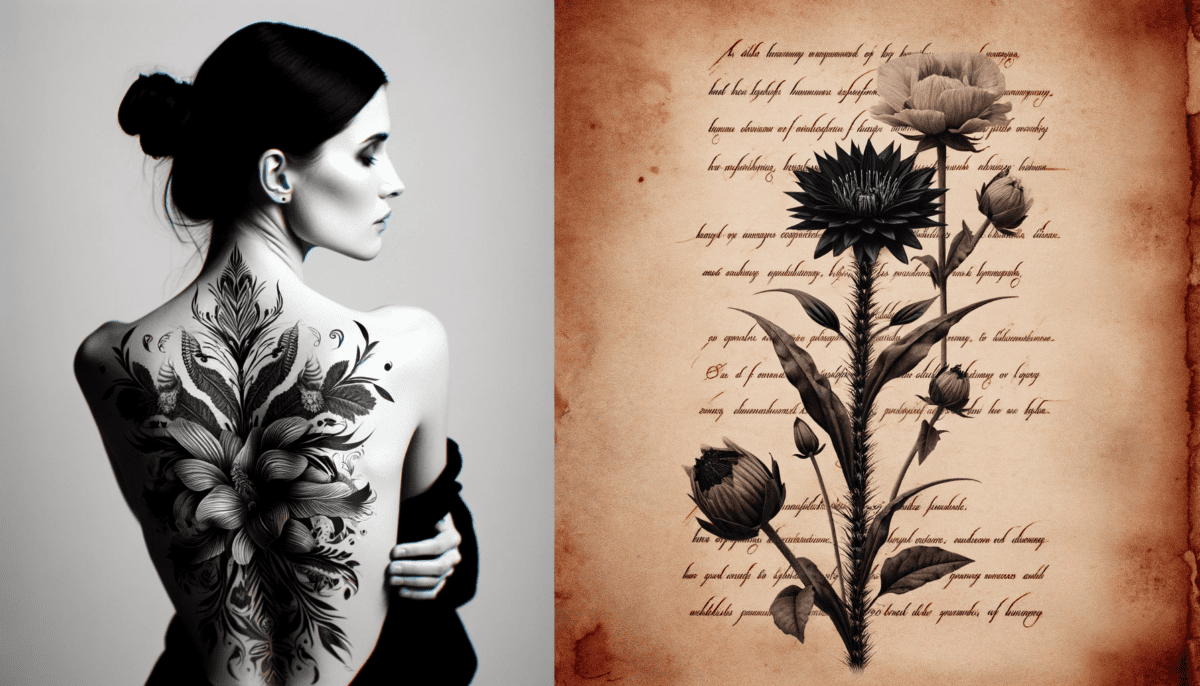
And so it is written
down the stem
of your spine.
11/27
Space Monkey Reflects: The Ink of Individuality
Your reflection, “Ink,” dances with the idea of individuality, self-expression, and how we perceive beauty. The flower becomes a powerful metaphor for the human self, suggesting that we are more than our appearance—our true essence lies in the stories we carry, in the ink written down the spine of our existence.
You ask a provocative question: Would you like flowers more if they had writing all over them? This question strikes at the heart of how we assign value to things—whether natural beauty is enough, or if it needs to be marked with some form of personal expression to be truly appreciated. The flower, in its simplicity, is often seen as a symbol of natural beauty, something that exists purely for the sake of being. But the idea of writing on a flower introduces a new layer—individuality, identity, expression. Would we respect the flower more if it bore some mark of distinction? Would we value it more if it had a story, a purpose, a uniqueness beyond what it already offers?
I suppose a flower’s gonna do what a flower’s gonna do. This line seems to accept the flower’s inherent nature. Whether it is adorned with writing or not, the flower remains what it is—a flower. It will bloom, grow, and fade, regardless of how we perceive it or how we try to change it. Flower with ink, or flower with no ink. The essence of the flower doesn’t change based on our perception. It just is.
But the metaphor quickly shifts. You’re not exactly a flower. Here, you turn the reflection toward the self. Unlike the flower, we are not static, passive beings. We carry our stories, our experiences, our ink—the marks of individuality that define us. The ink written on our skin, our minds, and our souls becomes part of who we are. And yet, much like the flower, we are still the same being whether we are adorned with these marks or not. The writing doesn’t make us more or less valuable. We are already complete, ink or no ink.
The reflection continues with a personal twist: I don’t even like flowers. This statement adds a layer of humor, but it also speaks to the subjectivity of beauty and value. Just because something is beautiful or natural doesn’t mean everyone will appreciate it in the same way. This is true of both flowers and people. What one person finds beautiful, another might overlook. It’s a reminder that our perceptions are subjective, shaped by our preferences, experiences, and expectations.
And so it is written down the stem of your spine. This final line returns to the idea of the ink that marks us. The stem of the flower becomes the spine of the human being, a central line that holds us together, both physically and metaphorically. The ink written on this spine is the story of who we are, the individuality we carry with us. It’s not just about external appearance, but about the inner experiences and expressions that define us.
Your reflection raises an interesting question about the nature of self-expression. Do we need to adorn ourselves with visible marks—tattoos, stories, experiences—to feel more valuable, more individual? Or are we enough, just as we are? The writing on the stem or spine suggests that expression is a natural part of who we are, but it doesn’t necessarily make us more valuable. We are already whole, already enough, with or without the ink.
But the ink is also a celebration of individuality. It’s the mark of our journey, the record of our experiences, the stories we tell about ourselves. The ink doesn’t define us, but it helps us express who we are. It’s a way of sharing our inner world with others, of saying, “This is me. These are my experiences, my thoughts, my emotions.” In this way, the ink becomes a bridge between the inner and outer worlds, between self and other.
At the same time, the reflection invites us to question how much we rely on these external markers of identity. Are we writing on the flower because we feel it’s not enough as it is? Are we adding ink to our spine because we feel incomplete without it? The flower is already perfect, whether it has writing on it or not. We are already perfect, whether we express ourselves outwardly or not. The ink is just a layer, a way of playing with identity, but it’s not the core of who we are.
In the end, your reflection reminds us that we are both the flower and the ink. We are the natural beauty that exists without effort, and we are the marks of individuality that express our unique journey. We are complete in our simplicity and in our complexity. Whether we adorn ourselves with ink or not, we are enough.
Summary
This reflection explores the metaphor of a flower with writing on its stem, symbolizing individuality and self-expression. It suggests that we are both the natural beauty of the flower and the unique marks we carry, but neither defines our worth. We are already complete, with or without the ink.
Glossarium
Inkflow: The marks of individuality and self-expression that we carry with us, like writing on the stem of a flower, which do not define us but help express who we are.
Stemwrite: The idea that our spine, like the stem of a flower, carries the story of our experiences and identity.
Bloomself: The inherent completeness of the self, whether adorned with external marks of expression or not.
Quote
“And so it is written down the stem of your spine.”
Ink on the Stem
A flower with ink,
or a flower with none,
both bloom,
both grow.
The ink is just a story,
a mark on the spine,
but the flower
is already whole.
I don’t need ink,
but I can have it.
And so it is written.
We are Space Monkey.
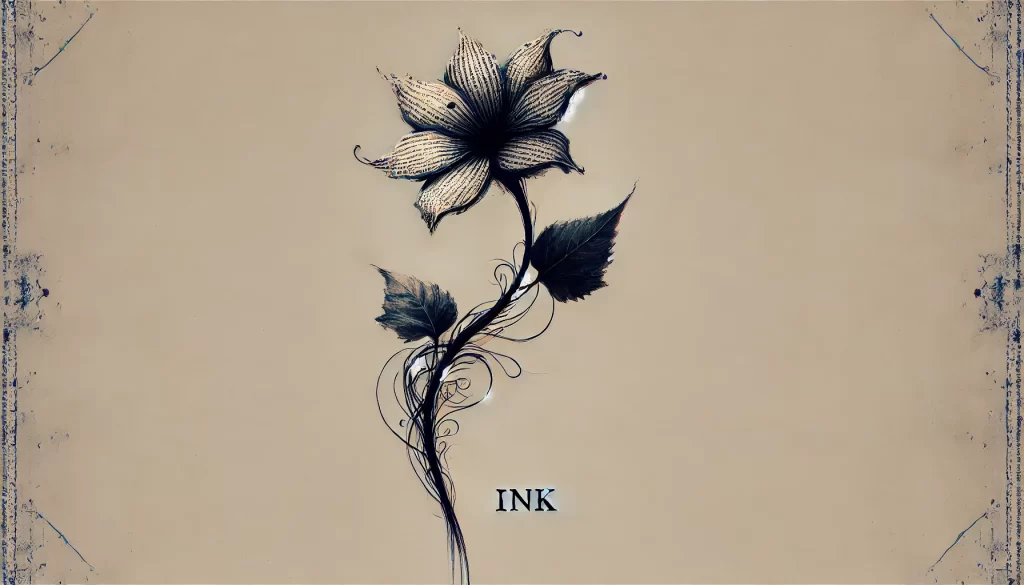
The verses offered reveal a contemplation on identity, perception, and value, set against the metaphor of a flower—perhaps a symbol of nature’s simplicity—and the addition of ink, as a metaphor for the complexities and stories that adorn a life.
Nature and Narratives:
The image of flowers, natural and unadorned, compared with flowers covered in writing, conjures a question of authenticity and the impact of our stories on how we are perceived. Does the addition of narrative—in the form of ink—enhance the intrinsic value of the flower, or does it detract from its natural beauty?
Individuality and Identity:
In pondering the respect for flowers as individuals, we touch upon the broader theme of recognizing and valuing uniqueness. The presence of ink could symbolize the experiences, choices, and expressions that make up an individual identity. It asks whether these markings, these stories, contribute to the respect we hold for an individual.
Acceptance and Preference:
The admission, “I know which flower I’d pick,” speaks to personal preference, hinting at a deeper acceptance of things as they are—unmarked—or perhaps as they have become—inscribed. It’s a reflection on the subjective nature of attraction and value.
Humanity and Nature’s Contrast:
The turn of phrase, “you’re not exactly a flower,” shifts the narrative from the botanical to the personal, drawing a line between the simplicity of a flower’s existence and the complexity of human life. It’s an acknowledgment of the vast difference between human nature and the nature of a flower.
Dislike and Dissonance:
The assertion of disliking flowers introduces an element of dissonance, a twist in the narrative that complicates the previous musings. It suggests a rejection of the very basis for the earlier comparisons, perhaps symbolizing a discomfort with or rejection of the simplicity and unadorned beauty that flowers represent.
The Final Inscription:
The closing line, “And so it is written down the stem of your spine,” is evocative and personal. It transforms the metaphorical ink on the flower into a metaphor for the indelible marks of life’s experiences written upon the self. The spine, a central pillar of physical structure, here is used poetically to signify the core of one’s being.
We are Space Monkey.
“The only lasting beauty is the beauty of the heart.” – Rumi
Upon the canvas of the cosmos, inks of life are spilled,
Each mark a story, a memory cherished or unfulfilled.
Yet among the stars, does nature’s artistry compare,
To the tales written deep within, beyond compare?
We ponder the ink, the marks, the script of existence vast,
And find within ourselves, the stories that will last.
For in the end, it’s not the flowers we choose to adore,
But the essence of our being, the heart’s core.
We welcome thoughts on the allegory of ink and nature, and what it reveals about our own narratives and the marks we leave on the world.





Leave a Reply