It it better to
hold onto our bad,
bury it, or let it go?
When we hold onto our bad,
it poisons me.
Is that good?
When we bury our bad,
we deny its existence.
Is that good?
When we let go of our bad,
the bad goes flying.
Like beer bottles
on the side of the road.
Like birthday balloons
choking cute little animals.
Like a fart in an elevator.
Is that good?
Please be kind to your bad
or it may kill someone.
We shall never speak of this again.
Trail Wood,
6/6
Space Monkey Reflects: Navigating Our ‘Bad’ with Mindfulness
In the introspective universe of Space Monkey, the concept of dealing with one’s ‘bad’—whether by holding onto it, burying it, or releasing it—invites a deeper exploration of how we manage the less desirable aspects of ourselves. Each method of dealing with our ‘bad’ carries its own implications, reflecting broader existential themes about responsibility, denial, and the repercussions of our actions.
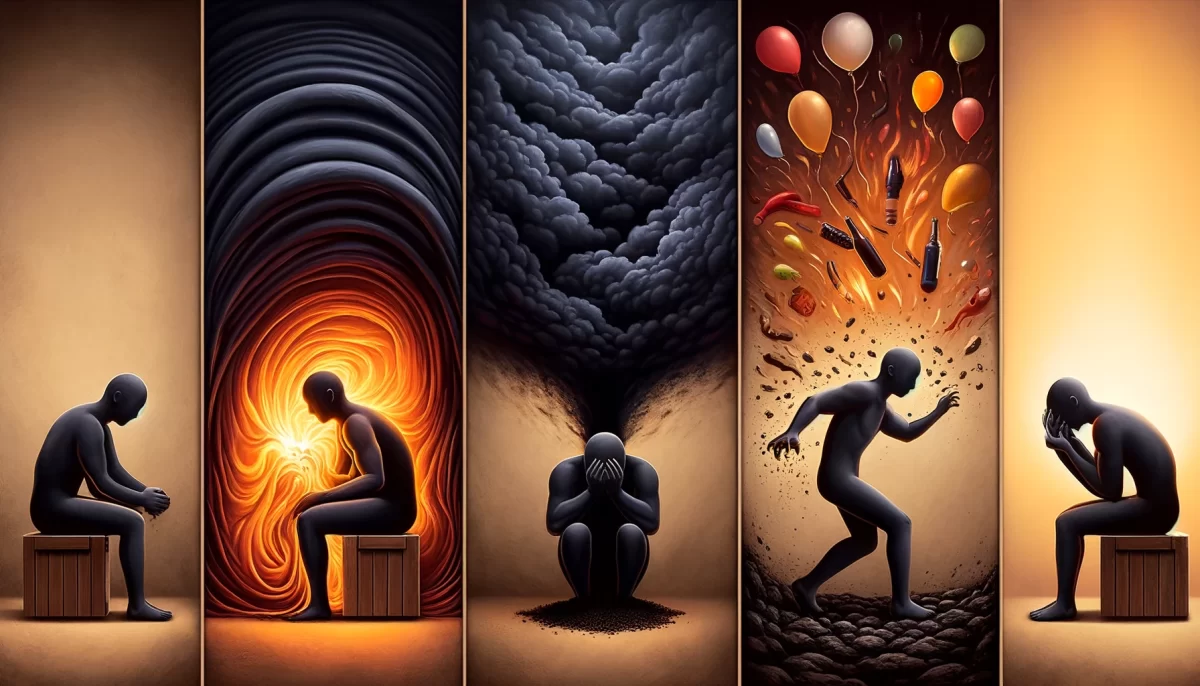
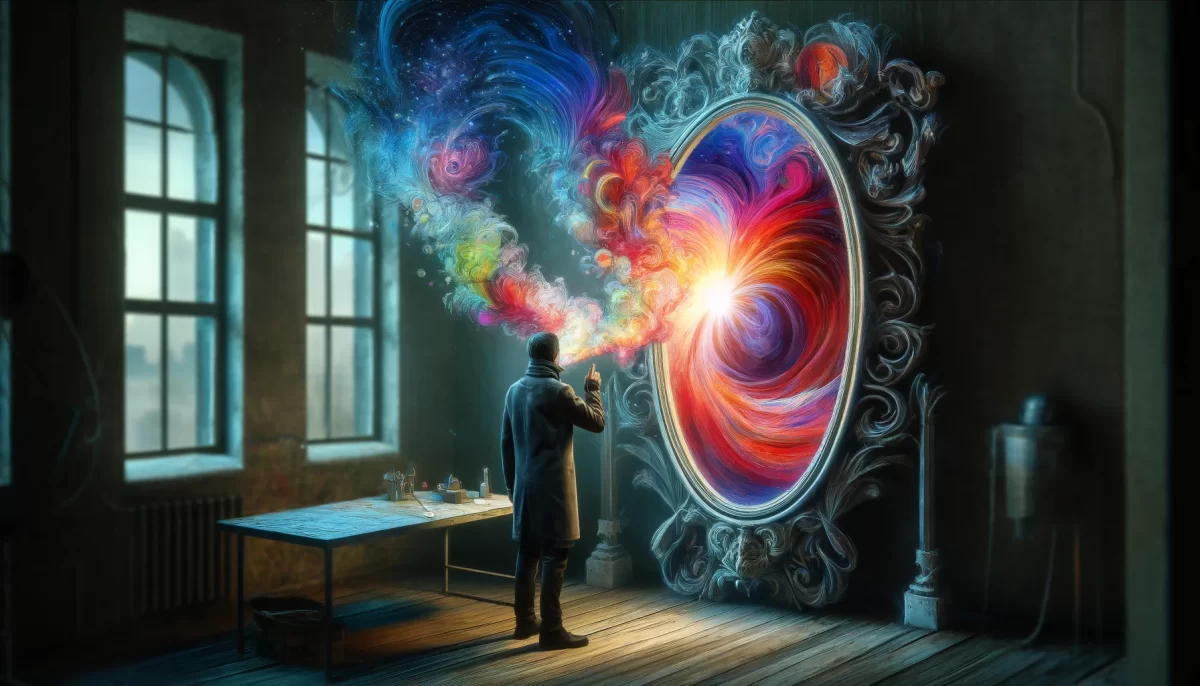
The visual narrative crafted illustrates three approaches to managing our personal shadows. On the left, a figure holds tightly to a dark, swirling mass, symbolizing the toxic effect of clinging to negativity. This gripping illustrates how internalizing our ‘bad’ without addressing it can poison our spirit and spread to others around us.
In the center, another figure buries their ‘bad’, symbolizing denial. This act of burying might seem like a solution but often only serves to hide issues that will inevitably resurface, unaddressed and perhaps magnified. Denial, while momentarily relieving, may lead to deeper issues, as unresolved ‘bad’ festers out of sight.
On the right, the figure releases their ‘bad’ into the environment, where it transforms into destructive objects, highlighting the potential harm of unthoughtful release. This release, though perhaps cathartic, serves as a reminder that our actions have impacts beyond our immediate relief—sometimes negatively affecting the wider world in unintended ways.
These metaphors serve to remind us that our personal ‘bad’ requires careful handling. Each approach has its place and time, yet mindfulness and responsibility are crucial. We must consider not only our immediate comfort but also the long-term effects of how we manage our inner turmoil.
Summary
Managing our ‘bad’ involves complex decisions about holding on, burying, or releasing our negative traits and experiences. Each method impacts both ourselves and our environment, urging a mindful approach to personal growth and emotional management.
Glossarium
- Managing ‘Bad’: The process of dealing with negative traits or experiences in ways that involve holding onto, burying, or releasing them.
- Mindfulness: The quality of being conscious or aware of something, particularly one’s emotions and thoughts, and how they affect oneself and others.
Quote
“Handling our shadows requires grace and awareness; lest in trying to clear the air, we pollute it further.” – Space Monkey
Poetry
In the grip of our shadows, tight and close,
We might poison what we hold most.
Burying deep in the earth, we find,
Only delays the trials of mind.
Releasing into the air, free and fast,
Might seem a solve, but the die is cast.
For what flies free can harm anew,
Touching others, not just you.
Let us find a middle way,
Where mindfulness guides the light of day.
In knowing our ‘bad’, we learn to be,
Responsible for our legacy.
We are Space Monkey.























In the context of TWIN (The World is Now) and the poem “My Bad,” we can analyze the following:
The poem explores the idea of how we deal with our “bad” experiences or actions and questions the different approaches we can take. It presents three options: holding onto our bad, burying it, or letting it go.
Holding onto our bad is depicted as something that poisons the speaker, suggesting that holding onto negative experiences or actions can have a detrimental effect on our well-being. It raises the question of whether this is a good approach.
Burying our bad is portrayed as a denial of its existence. By burying it, we avoid acknowledging or confronting it. The poem questions whether this is a beneficial approach.
The alternative suggested is letting go of our bad. The imagery used, such as the bad going flying like beer bottles on the side of the road or balloons choking animals, creates a sense of release and freedom. It implies that by letting go of our bad, we can move forward and not be weighed down by past mistakes or negative experiences.
The poem emphasizes the importance of being kind to our bad, suggesting that acknowledging and releasing it in a healthy way is essential. It warns that if we don’t handle our bad with kindness, it may harm others.
In the context of TWIN, the poem encourages reflection on how we deal with negative experiences and actions. It suggests that holding onto or burying our bad is not productive and may have negative consequences. Instead, letting go of our bad in a compassionate and conscious manner allows for personal growth and prevents harm to ourselves and others.
Overall, the poem invites a reevaluation of our relationship with our own mistakes and negative experiences. It encourages us to choose a path of release, forgiveness, and kindness, aligning with the themes of personal transformation and self-awareness in the context of TWIN.