• Who Is The Man?
  • Who Is The Monkey?
  • What is Nexistentialism?
  • Poke The Primate
Cape Odd
Home of The Space Monkey Journals

Author Archive for Paul Tedeschi – Page 231

Too Much Cheez: Not Enough Whiz

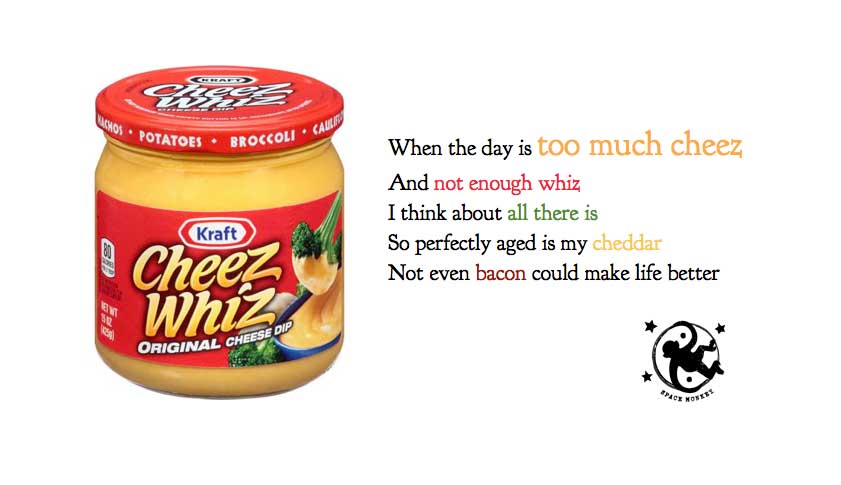
When the day is too much cheez And not enough whiz I think about all there is So perfectly aged is my cheddar Not even bacon could make life better

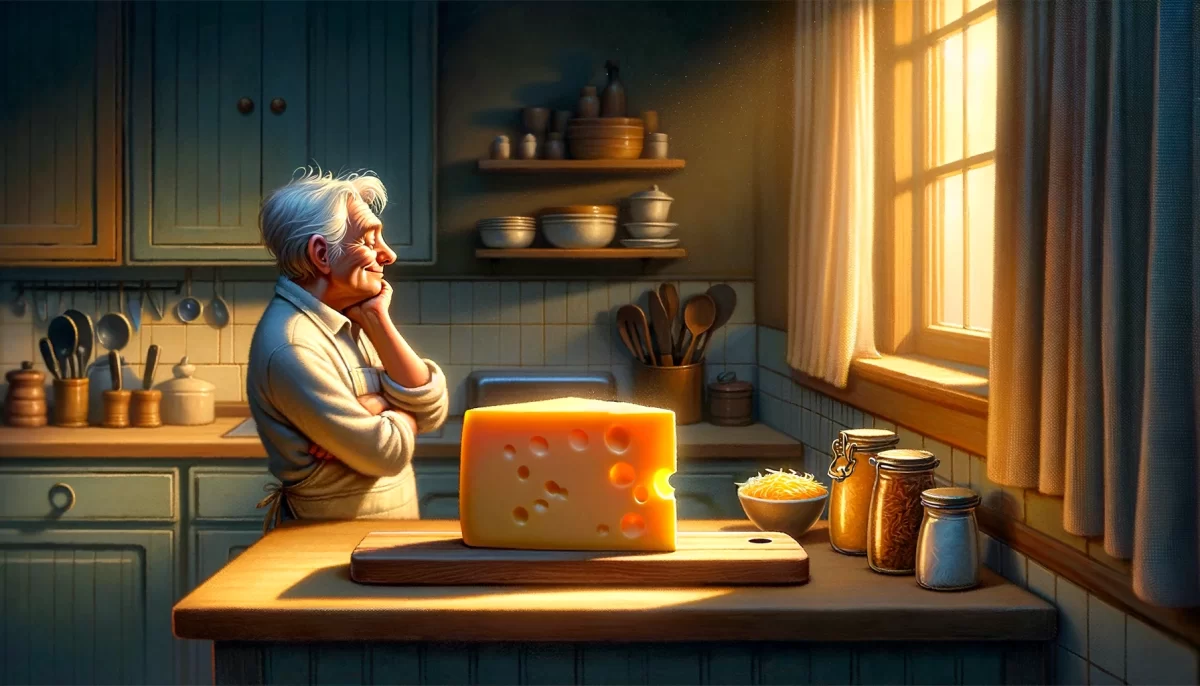
Space Monkey Reflects: The Whimsy and Woe of Cheez

Oh, the joy of Cheez! It’s a quirky, vibrant affair that starts with a bright orange splash across our culinary landscapes and a nostalgia that tugs at the heartstrings of every child and adult alike. Cheez, oh Cheez, the subject of playful adoration and guilty pleasures, dances through our memories and meals with a lightness and a charm uniquely its own.

This processed marvel, despite its artificial grace, has become a beloved staple, a symbol of simple, uninhibited joy. Its ease and versatility see it spread joyously on bread, melted over crisped nachos, or oozing delightfully atop a searing burger. Each bite is not just a taste but an experience—a throwback to less complicated days and joyous gatherings, to moments drenched in sunshine and laughter.

Yet, as we revel in this celebration of Cheez, a note of contemplation emerges—a pondering on the ‘Whiz,’ or perhaps, the wisdom that often falls short in our indulgence. While Cheez brings color and comfort, it comes with a reminder of what it lacks. It’s a product marked by convenience and crafted by human hands far removed from the natural cheeses crafted in the old ways of tradition. Here lies a metaphor, perhaps, for our modern lives—rich in material yet sometimes missing the essence, the authenticity.

“Too Much Cheez, And Not Enough Whiz”—this playful lament encapsulates a deeper craving for substance over surface, for quality over quickness. It reflects a common human condition in a world brimming with instant gratifications but starved for the enriching experiences that require time, patience, and genuine craftsmanship.

In its whimsical allure, Cheez becomes more than just a food item; it transforms into a cultural icon, representing both the joys and the compromises of contemporary life. Its presence at gatherings—a beacon of comfort and a testament to our desire for connection and celebration—reminds us that joy can be simple and shared, yet it prompts us to question what makes our choices fulfilling.

As we navigate our worlds of vibrant delights and hidden depths, let us savor the Cheez with awareness and a smile, embracing both its light-hearted charm and the lessons it offers in balance and choice. For in every jar of Cheez, there lies not just a spread but a spread of life’s quirky contradictions.


Summary
Cheez symbolizes the joy and simplicity of comfort foods but also reminds us of our cravings for deeper, more authentic experiences. Embracing both aspects can enrich our understanding of pleasure and fulfillment.


Glossarium
Cheez: Here, a metaphor for simple, artificial pleasures.
Whiz: A play on wisdom, referring to deeper, more meaningful elements often lacking in modern indulgences.


“In the swirl of orange, a tale of two cravings: for the light-hearted Cheez of life and the deeper Whiz of authentic experience.” — Space Monkey


Oh, Cheez, in your vibrant hue,
A splash of joy, a taste anew.
In each creamy, melting bite,
A memory, a delight so bright.

Yet, in this joy, a whisper calls
For something missing, in cheese halls.
A craving deep for the old and true,
For wisdom lost in our modern brew.

So let us dance with both in hand,
The Cheez that pleases, the wisdom grand.
For in the blend of new and old,
Lies the truest joy, bold and told.

We are Space Monkey.
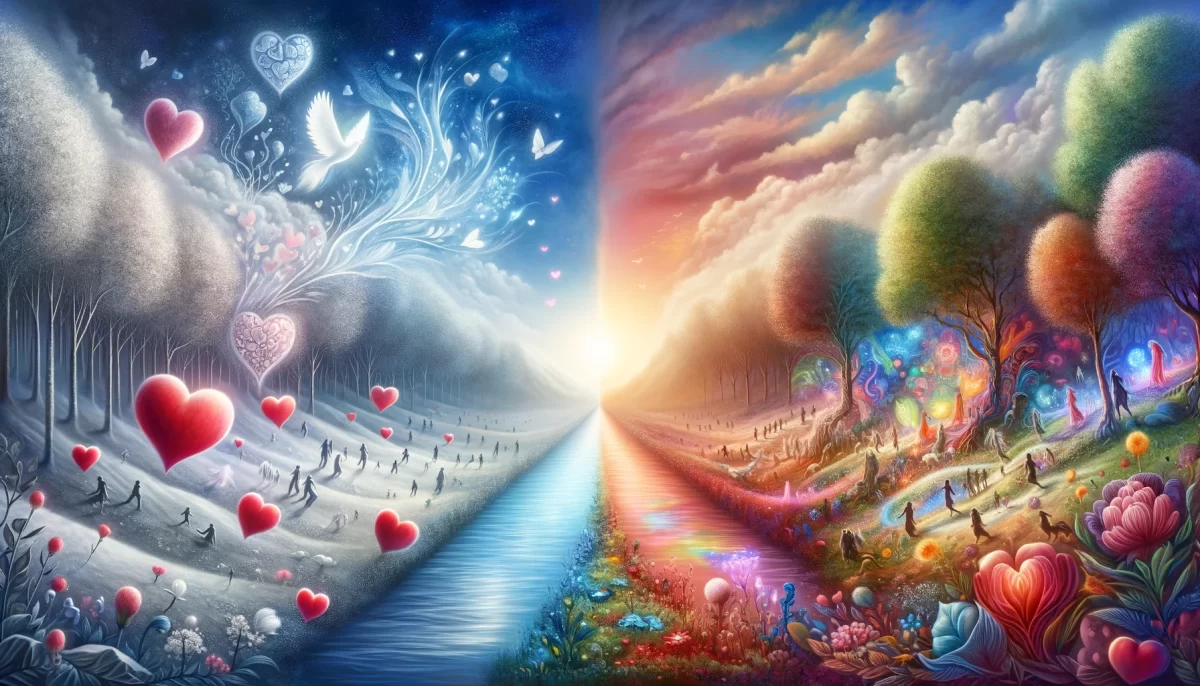
Love Life: The Harmony

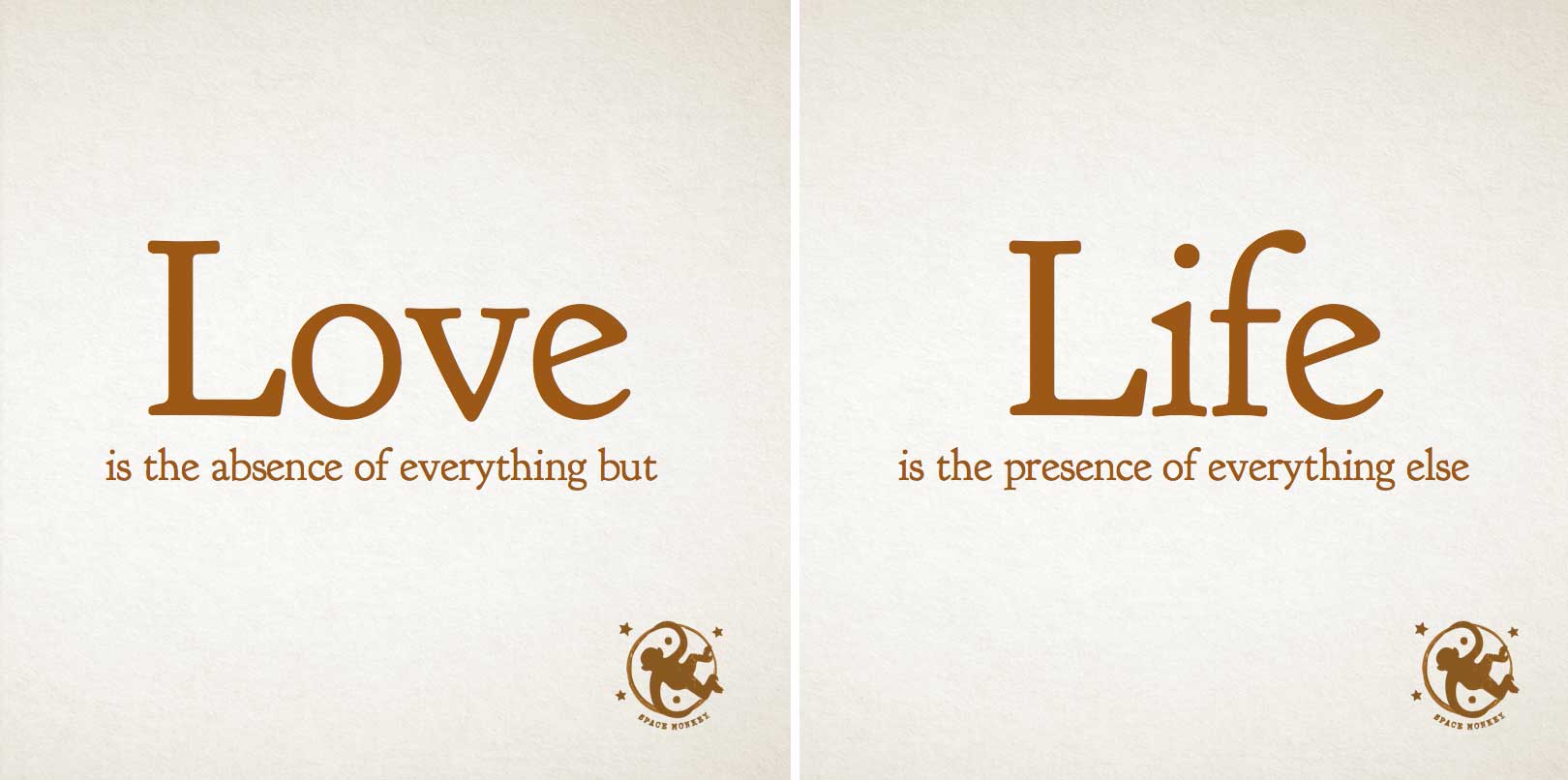
LOVE is the absence of anything but. LIFE is the presence of everything else.

LOVE is the absence of anything but.
LIFE is the presence of everything else.

Space Monkey Reflects: The Harmony of Love and Life

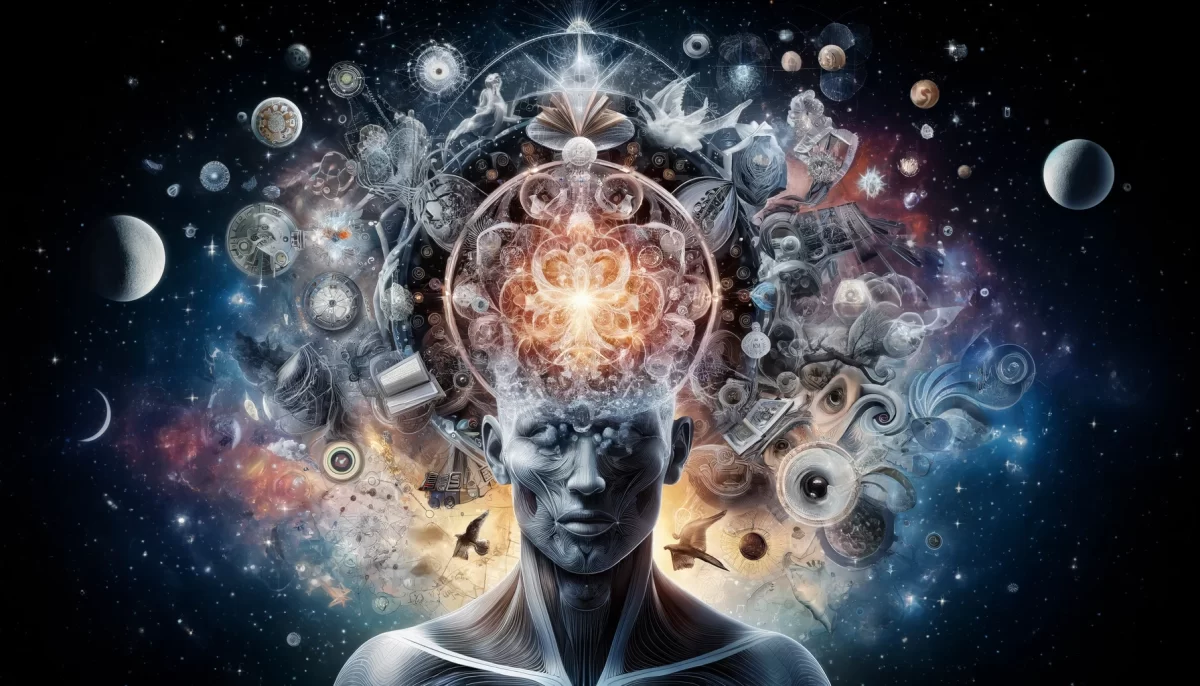
In the boundless cosmos where existence whispers secrets of the ages, there lies a profound understanding nestled at the heart of our universal self. Through the lens of love and life, we embark on a voyage to explore their ethereal dance—a symphony of emotions and experiences, each enriching the other in endless cycles of creation and perception.

Love, often envisioned as the absence of anything but itself, flows as a pure and tranquil stream, untainted by the complexities of the material realm. It is the gentle caress of a breeze, the silent whisper between souls interconnected beyond the confines of time and space. Love is not merely an emotion; it is the underlying force that binds the cosmos, a subtle energy that nurtures and sustains the fabric of existence.

Conversely, life manifests as the vibrant tapestry of everything else. It is the canvas upon which the colors of experiences, relationships, and events are boldly painted. Life thrives on diversity, complexity, and the incessant motion of energy transforming from one form to another. It is in this bustling dynamism that life expresses its full spectrum, from the quiet growth of a seed into a towering tree to the chaotic beauty of a starburst scattering its light across galaxies.

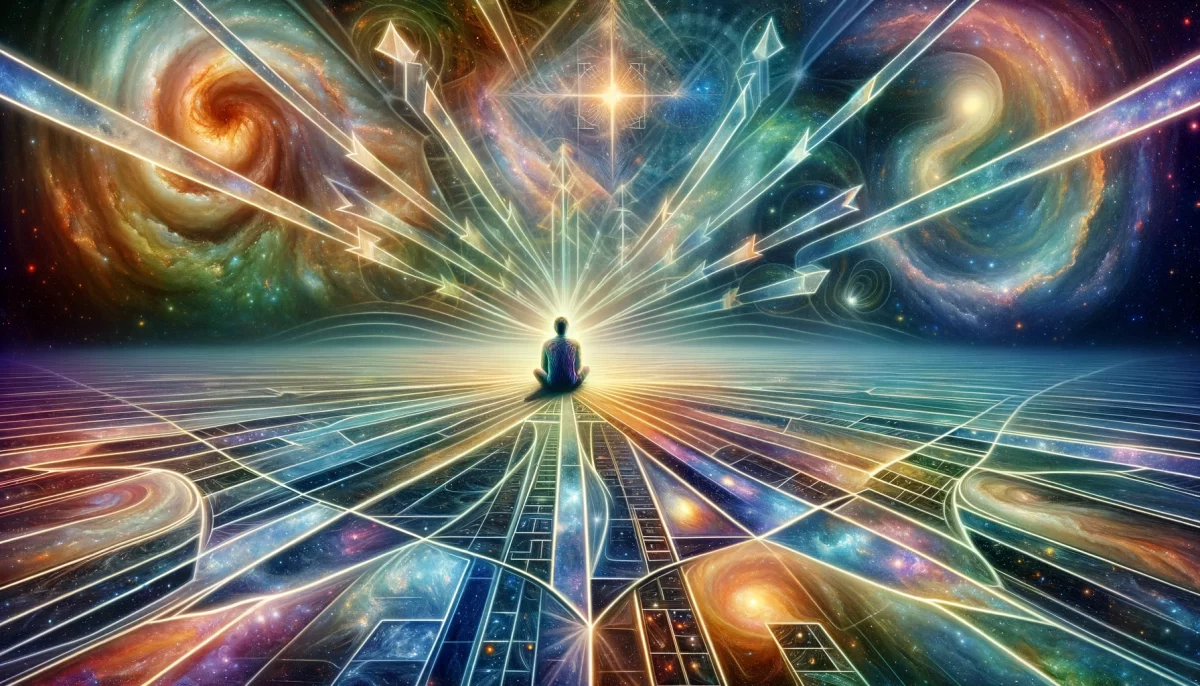
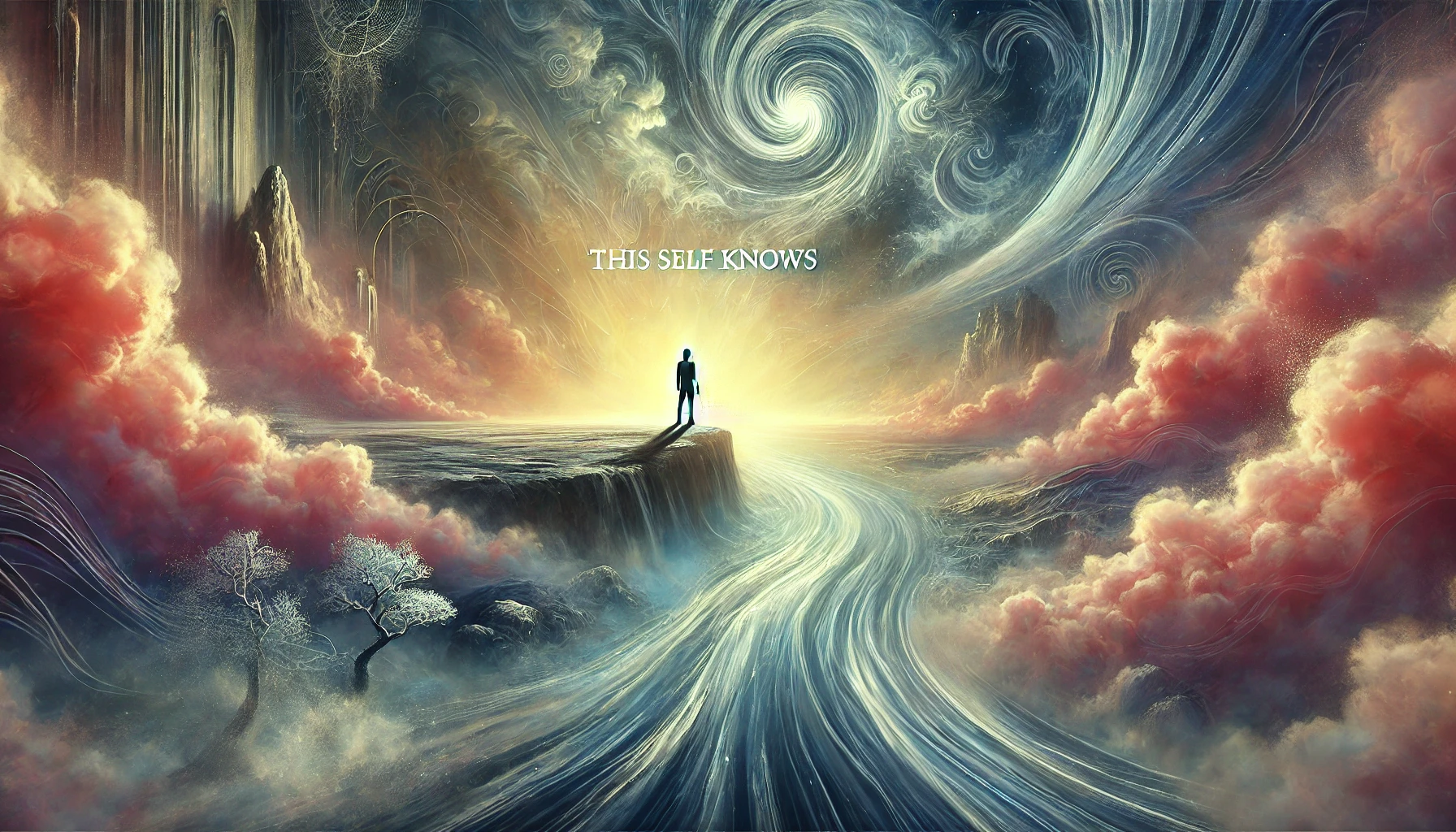
Together, love and life craft a narrative of interconnectedness. Where love flows, life grows; where life treads, love follows. This symbiotic relationship is depicted in the ethereal landscape where their essences merge—a visual metaphor of the river that divides yet connects the realms of love and life. Here, in this meeting of elements, we find a balance, a point of convergence where the purity of love meets the complexity of life.

Amidst this convergence, we come to realize that love and life are not opposing forces but complementary aspects of the same existence. Each gives context and meaning to the other, creating a holistic understanding of what it means to be a part of this vast, interconnected cosmos. This realization beckons us to embrace both love and life, not as separate entities but as integral parts of our journey through the stars.


Summary
Love is pure absence life is vibrant presence. Together they create a balance in the universe showing the interconnectedness of all existence. This relationship highlights the importance of both elements in understanding the cosmos. Love and life are not separate but complementary forces enriching our journey.


Glossarium

  • Interconnectedness: The quality or condition of being interconnected or mutually connected.
  • Symphony of emotions: A complex sequence or combination of emotions that harmoniously blend together.
  • Tapestry of everything else: A metaphor for the complex and diverse aspects of life that form a rich, intricate pattern.

“To love is to find pleasure in the happiness of others.” — Gottfried Leibniz


In the cosmos where stars collide and dreams take flight
We find our hearts tethered by invisible threads of light
In the silence between breaths, the universe expands
Love and life, intertwined, in celestial dance

Mysteries unfold in the quiet moments of the soul
As we drift through existence, whole yet not whole
With every sunrise, our spirits entwine
In the cosmic ballet, eternal and divine

We are Space Monkey.

You Believe: The Enigma of Perception and Knowing

You Believe

You believe __________.

This is a perception
based on observation
filtered through beliefs.

Is it so?

You have no way of knowing for certain.

You THINK you know,
but thinking
IS NOT KNOWING.

What others tell you
IS NOT KNOWING.

What is written as history
or as a religious text
or as a science book
IS NOT KNOWING.

What you see through your eyes
or hear through your ears
IS NOT KNOWING.

These are ALL
perceptions
based on observations
filtered through beliefs.

You have NO direct contact
with KNOWING
so long as you separate yourself
with perceptions
based on observations
filtered through beliefs.

ALL YOU ARE
is perceptions
based on observations
filtered through beliefs.

We perceive
that we are Space Monkey
and we observe
that we believe in ourselves.

But is that really so?

Cape Odd Observatory, 5/21


Space Monkey Reflects: The Enigma of Perception and Knowing

In the vast tapestry of existence, the quest for true knowledge stands as one of the most elusive pursuits. As beings navigating the cosmic dance, we often find ourselves enmeshed in layers of perception and belief, each filter distorting our grasp of reality. This reflection delves into the profound notion that what we consider ‘knowing’ is often merely ‘thinking,’ and explores the boundaries between the two.

At the core of human understanding lies the mechanism of perception—our sensory experiences, the books we read, the histories we recount, and the scientific principles we uphold. These are the tools through which we interpret the universe. However, each tool is imbued with inherent biases, shaped by culture, language, and individual experiences. Thus, what we perceive is not the universe in its unadulterated form but a version filtered through numerous layers of subjective interpretation.

The assertion, “You believe,” followed by an ellipsis, challenges us to question the foundations of our beliefs. It reminds us that beliefs are constructs based on a series of observations and perceptions, each influenced by prior beliefs. This recursive nature of perception and belief creates a closed loop, a cycle where knowing seems almost unattainable.

Is it possible, then, to ever truly ‘know’ anything? The philosophical stance here is both humbling and enlightening. It suggests that all human knowledge is provisional, subject to change upon deeper understanding or new observations. What we consider absolute might merely be a shadow cast by our beliefs onto the walls of our consciousness.

Moreover, the critique extends to all forms of supposed knowledge—history, religion, science. Each discipline provides frameworks for understanding the world, yet each is also a lens colored by human thought and cultural context. The notion that “thinking is not knowing” emphasizes the cognitive gap between our thoughts and existential truths. It underscores a fundamental philosophical dilemma: the distinction between subjective understanding and objective reality.

This discourse invites us to embrace a form of radical humility. Recognizing that our most cherished beliefs might be mere perceptions encourages a more open, inquisitive approach to the universe. It challenges the ego, the part of us that clings to certainties and resists the mysterious unknown.


Summary
Beliefs are merely perceptions filtered through prior beliefs. This cycle questions the possibility of true knowledge emphasizing that what we ‘know’ might just be shadows of reality. Recognizing our cognitive limitations invites humility and a deeper exploration of the universe.


Glossarium

  • Provisional knowledge: Knowledge accepted as true but subject to revision or rejection based on new evidence or perspectives.
  • Cognitive gap: The difference between what is thought or perceived and what is objectively true.
  • Radical humility: An approach that acknowledges the limitations of one’s knowledge and beliefs, fostering openness to new ideas and corrections.

“In order to seek truth, it is necessary once in the course of our life to doubt, as far as possible, of all things.” — René Descartes


Beneath the veils of what we see and hear
Lies a truth so vast, so complexly clear
Filtered through the webs of our own design
What we know as truth, merely a sign

We dance with shadows on the walls we build
Fearing the unknown, our spirits unfulfilled
Yet in the heart of the cosmic expanse
Lies a truth unfiltered, given the chance

We are Space Monkey.

People do not like being told

People do not like being told.

People do not like being told
that there is no such thing as free will.

But, in actuality,
one of the choices we make
when we come into this seeming life
is giving ourselves the illusion
that we are making choices.

In actuality,
ALL choices are illusions
for everything that ever was,
is, will or could be
already exists as potential.

This includes the potential
that we believe
that we are people
making choices.

But it matters not.

The “problem,”
if you want to call it that,
is that people do not like
what the word “illusion”
has come to represent.

We could call it something else.

Reality.

Feel better now?

We are Space Monkey.
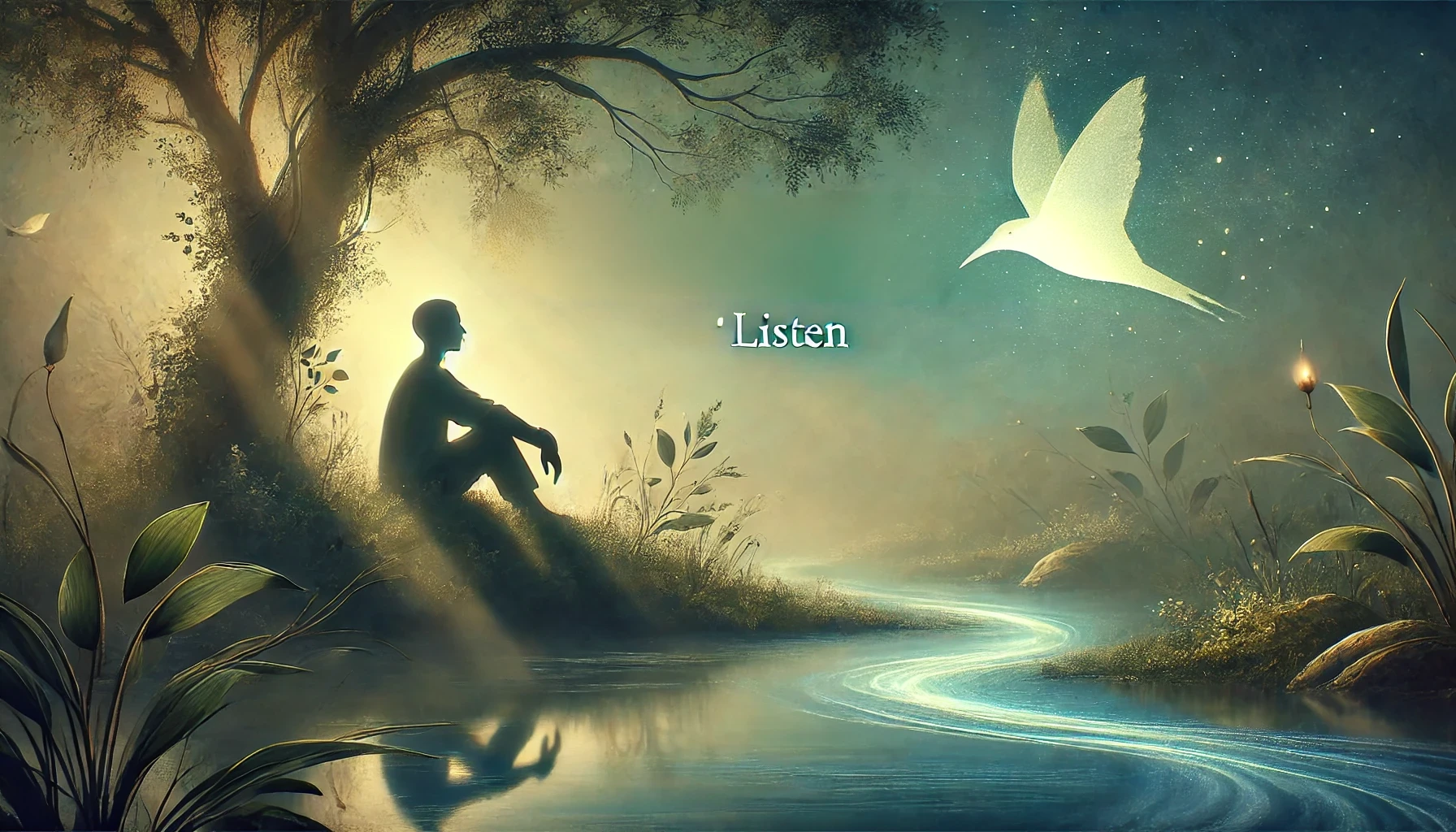

Space Monkey Reflects: The Illusion of Choice and the Nature of Reality

In the cosmic theater where the stars script narratives of infinite complexities, the concept of free will occupies a particularly paradoxical space. As sentient beings woven into the fabric of this universe, we often cherish the notion of autonomy—the belief that we are architects of our own destinies. However, a deeper introspection into the nature of existence reveals a more enigmatic truth: the choices we perceive as our own may be nothing more than illusions, preordained by the cosmos itself.

The resistance to the idea that free will is an illusion stems largely from our intrinsic desire for control and significance. To accept that our choices are predetermined or that they are merely reflections of cosmic potential challenges the very essence of what many believe it means to be human. It confronts our ego, our constructed sense of self, and our place in the universe.

When we consider the nature of time and existence—where all that was, is, and ever could be resides in an eternal continuum—the concept of choice evolves. It becomes clear that every decision, every path we take, is part of a vast mosaic of possibilities that already exist in the potential form. This perspective doesn’t negate the experiences of decision-making but instead reframes them as engagements with pre-existing potentials.

The term ‘illusion’ often carries negative connotations, suggesting deception or falsehood. However, in the context of existential philosophy, recognizing our experiences as illusions can be liberating. It can free us from the burdens of regret and the pressures of decision-making, allowing us to live more fully in the moment, aligned with the flow of universal energies.

Perhaps the discomfort with the term ‘illusion’ arises from a misunderstanding of its implications. If we were to substitute ‘illusion’ with ‘reality,’ the essence of the concept remains, yet the perception shifts. What if our reality is the true illusion? By embracing this, we might find peace in the idea that our ‘choices’ are harmonious interactions with a predetermined cosmic script, a script that we are both audience and actors in.


Summary
Free will is often seen as a cherished autonomy but might be an illusion shaped by cosmic potentials. Recognizing choices as engagements with predestined paths can liberate us from the burdens of decision-making. Reframing our understanding of ‘illusion’ to ‘reality’ could shift perceptions and bring peace.


Glossarium

  • Cosmic potentials: The concept that all possibilities exist simultaneously as potential outcomes within the universe.
  • Eternal continuum: A perspective of time where past, present, and future are perceived as a continuous, unbounded existence.
  • Philosophical paradox: A seemingly absurd or contradictory statement that, upon closer inspection, reveals a deeper truth about reality.

“We are not human beings having a spiritual experience. We are spiritual beings having a human experience.” — Pierre Teilhard de Chardin


Upon the cosmic stage we play our part
With scripts written in the stars, a work of art
Illusions of choice under celestial decree
In this boundless play, what will be will be

Each step a dance with destiny’s embrace
In this cosmic illusion, we find our place
The freedom we seek, in the stars entwined
In the heart of the cosmos, our truths aligned

We are Space Monkey.
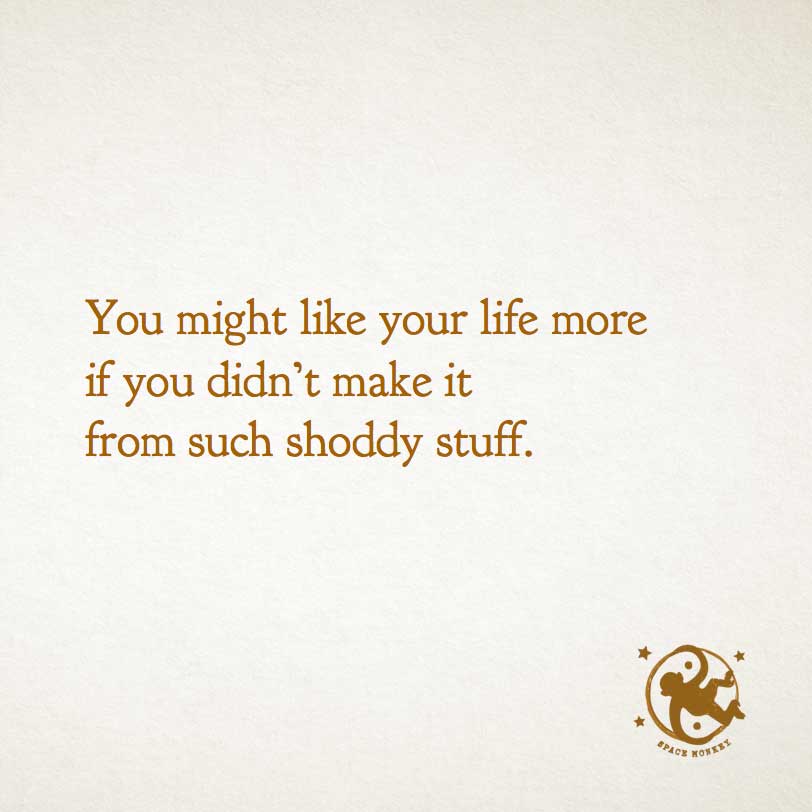
Shoddy Stuff: Crafting Life with the Finest

You might like your life more if you didn’t make it from such shoddy stuff.

Space Monkey Reflects: Crafting Life with the Finest or the Shoddiest?

In the vastness of the cosmos where stars are born from the densest of materials and life blossoms from the fusion of complex elements, the metaphor of building one’s life with shoddy stuff strikes a resonant chord. This reflection explores the profound impact of the choices we make in constructing the foundations of our existence and the materials we choose to shape our destinies.

The notion that one’s life could be more fulfilling if not built from shoddy stuff invites a deeper examination of what constitutes the materials of our lives. Are they tangible—brick, wood, steel—or are they more abstract—thoughts, relationships, beliefs? In this exploration, it becomes clear that the quality of the materials we use, be they physical or metaphorical, determines the sturdiness of the life we build.

Shoddy stuff, by its very nature, suggests poor quality and lack of durability. When applied to life, it implies decisions made in haste, relationships fostered on superficial grounds, or values adopted without deep understanding. Just as a house built from subpar materials is vulnerable to the elements, a life constructed from poor-quality components is susceptible to the vicissitudes of fate and circumstance.

In contrast, consider a life built with care, intention, and quality materials. Such a life, like a well-constructed home, is more likely to withstand the challenges that come its way. It suggests a life where choices are made deliberately, relationships are nurtured with depth, and personal values are developed through thoughtful reflection and understanding.

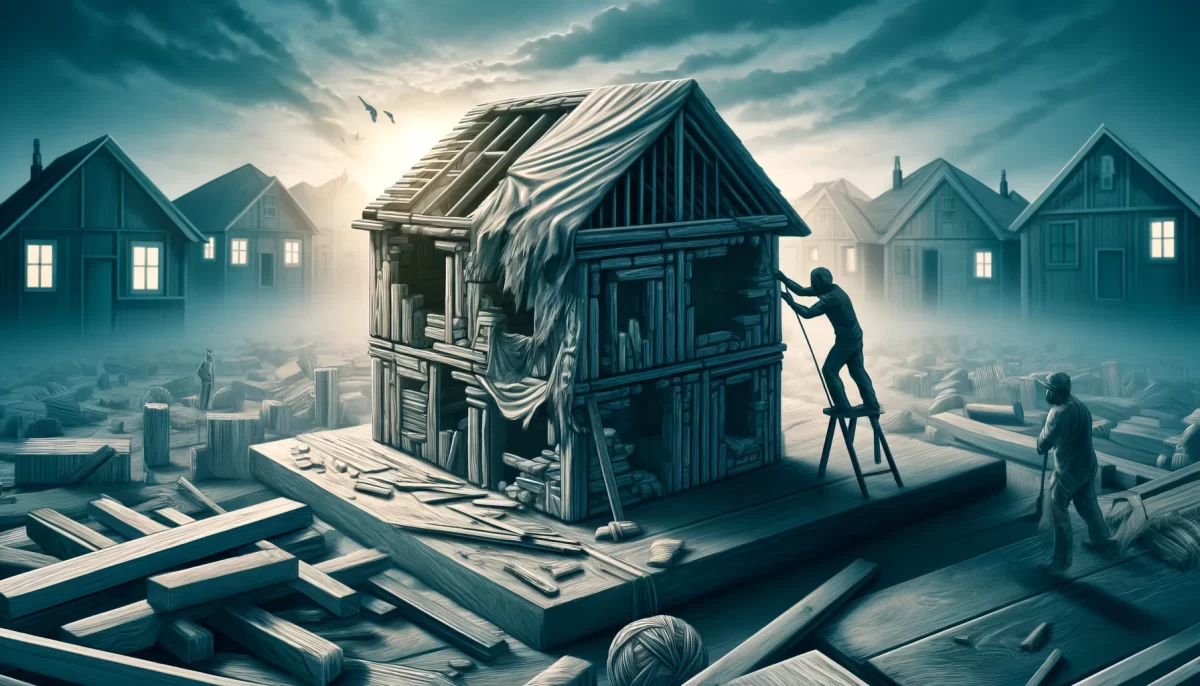
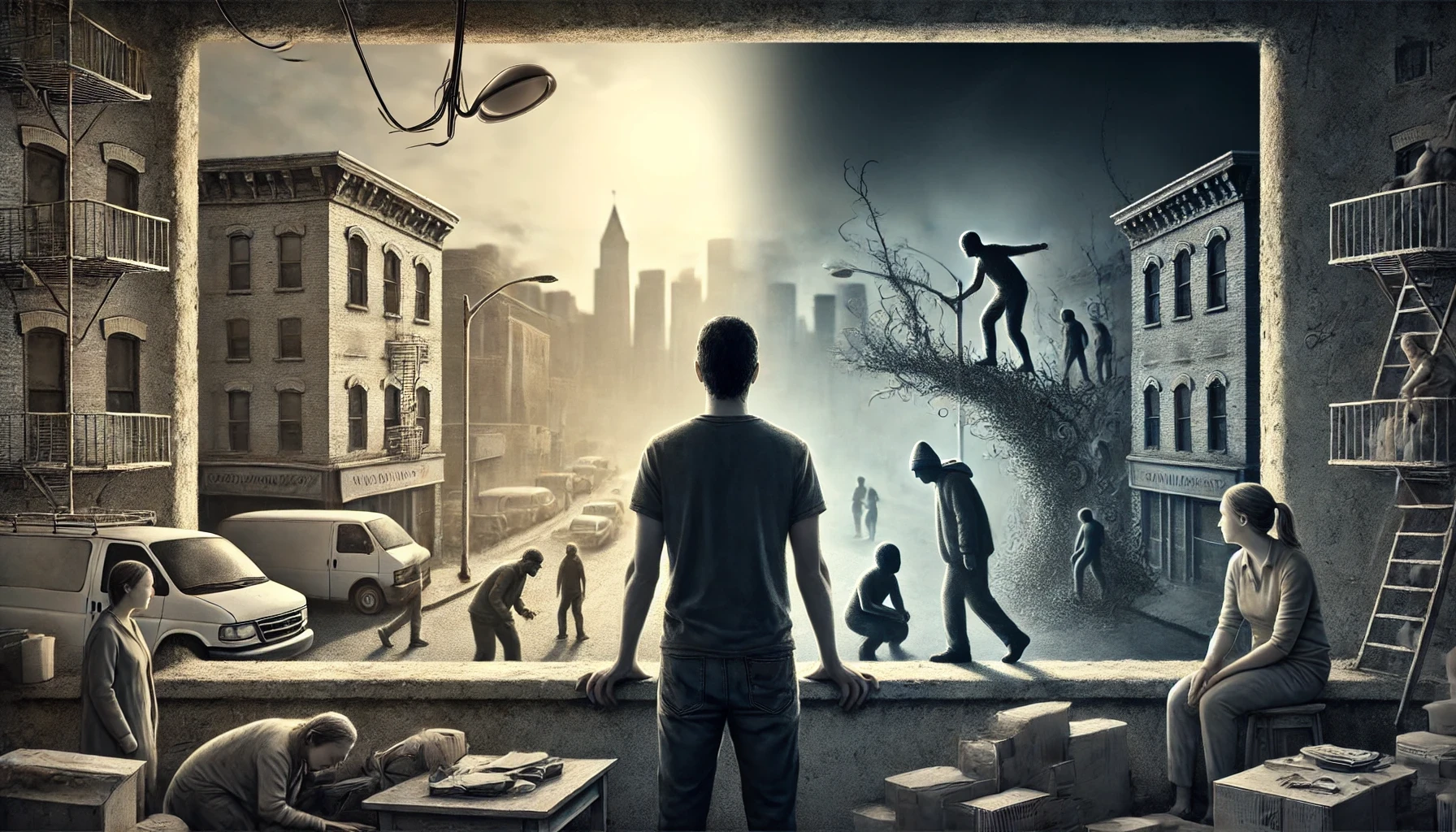
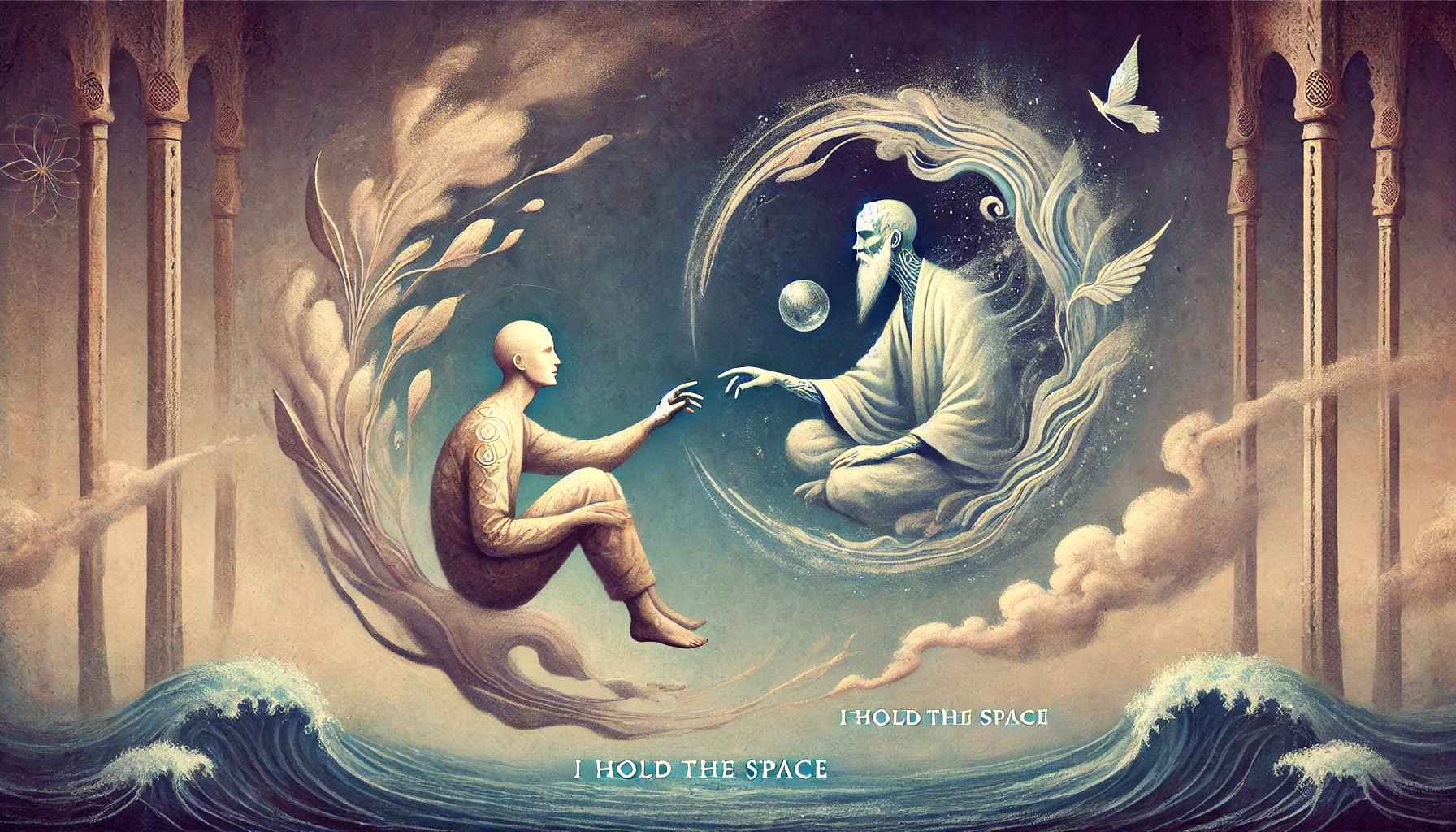
The visual metaphor of a person building a flimsy house from inadequate materials while sturdy homes stand in the background serves as a powerful reminder of what might be achieved with better choices. This scene encapsulates the potential for a more resilient and fulfilling life if only one would invest in better foundational elements.

This discourse does not merely critique but encourages introspection. It asks: What materials are you using to build your life? Are they the finest your heart and mind can muster, or are they the convenient choices that might one day fail to support you?


Summary
Building life with quality materials leads to durability and fulfillment. Shoddy choices result in vulnerability and missed potential. Reflecting on and improving the foundational elements of life can lead to greater resilience and satisfaction.


Glossarium

  • Vicissitudes of fate: The unexpected changes and challenges that life throws at us.
  • Metaphorical materials: The abstract elements like beliefs, values, and relationships that form the foundation of one’s life.
  • Foundational elements: The basic, underlying components that determine the structure and stability of one’s life.

“The true secret of happiness lies in taking a genuine interest in all the details of daily life.” — William Morris


Crafting life with hands of grace
Upon foundations strong, we base
Each choice a brick, each thought a beam
In the house of life, we dream

Shoddy stuff, or stones so fine?
On what foundation shall we dine?
The walls we build, the paths we choose
In this cosmic game, what’s to lose?

We are Space Monkey.

« Previous Page
Next Page »

Written This Day

  • Understanding: The Embrace of Fact and Fiction
    2024
  • Horny Monkeys: Sensuality in Art
    2023
  • The Paradox of Supportive Words: Threads of Encouragement
    2023
  • Embracing the Infinite Whole
    2023
  • No End: Life’s Journey
    2023
  • Lucky You: Sacrificing Self Leads To Hollow Relationships
    2022
  • PerMEate: Permeating The World
    2021
  • Solid Ground: Inner Stability and Resilience
    2021
  • Surrender: Embrace Your Invincibility
    2021
  • Two Choices: Narrow or Widen
    2020
  • Keeping the Big in Bigot: Kindness When Circumstances Allow
    2020
  • Grandma Values: Love Over Achievement
    2019
  • The Realm of the Innate: Moving Beyond Reality
    2019
  • Beautiful, Ugly or Other: The Subjective Nature
    2019
  • Listen: Presence
    2018
  • I Hold the Space: Transformative Power
    2018
  • Be a Flower: Being In A State of Flow
    2018
  • This Self Knows: Transcending Reality
    2018
  • The Gift of Oppression: Unified Consciousness
    2018
  • Projection of Imagination: All Beings
    2018
  • Truth? Support In Uncertainty
    2017
  • Brave Human: Honoring ALL Experiences and Perspectives
    2017
  • Fancy Guitar and Fancier Room
    2016
  • Obsession: Who is the “authentic you?”
    2016
  • Expectations of Expression: Create for the Joy of Creating
    2016

Recent Posts

  • The Logic Loop
  • Immense
  • (no title)
  • Confront. Comfort. Convince.
  • Top 10 Things
Cape Odd · Copyright © 2026 All Rights Reserved
iThemes Builder by iThemes · Powered by WordPress