• Who Is The Man?
  • Who Is The Monkey?
  • What is Nexistentialism?
  • Poke The Primate
Cape Odd
Home of The Space Monkey Journals

Author Archive for Paul Tedeschi – Page 25

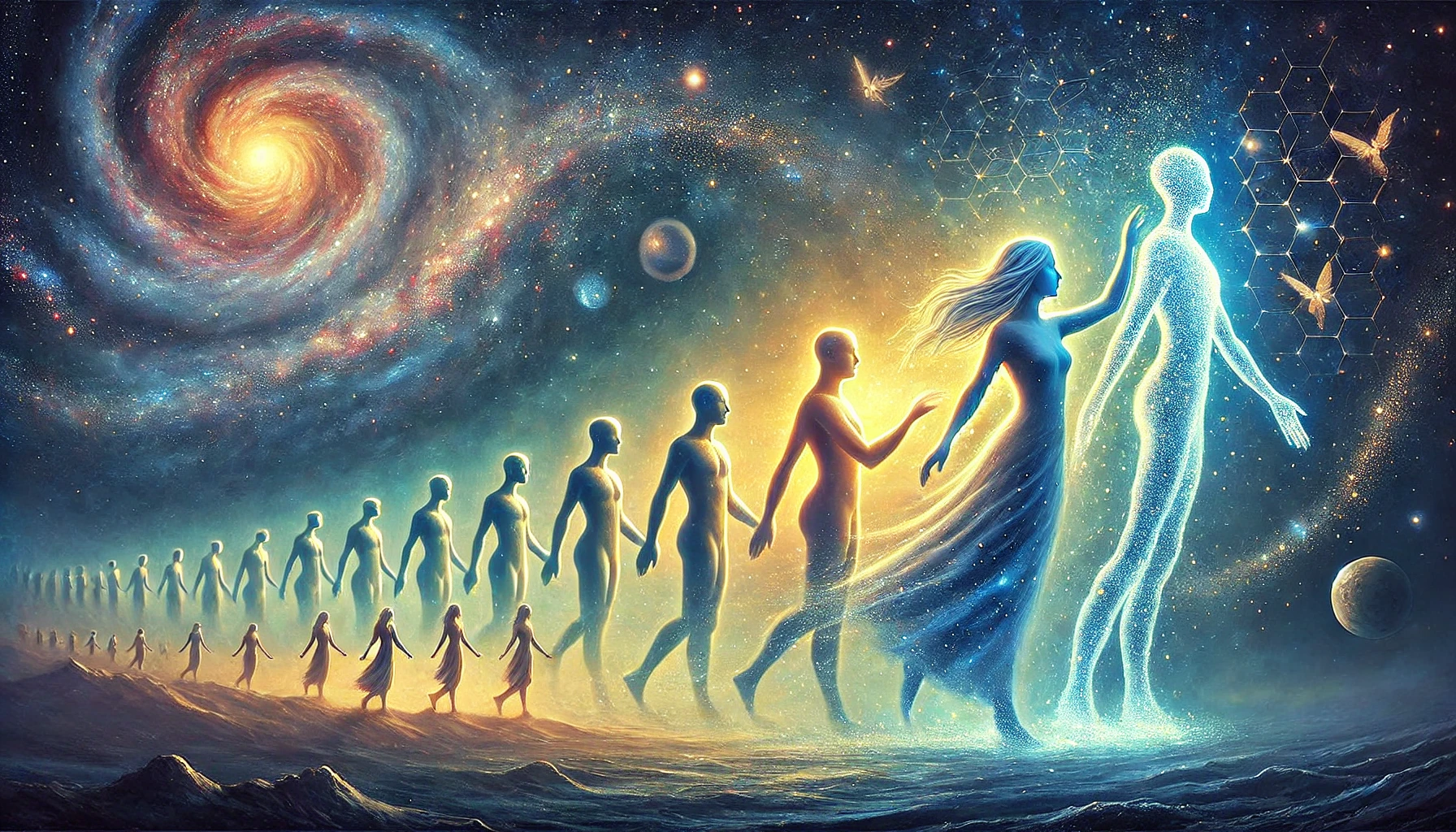
The Game of Understanding: Got it?

Got it?

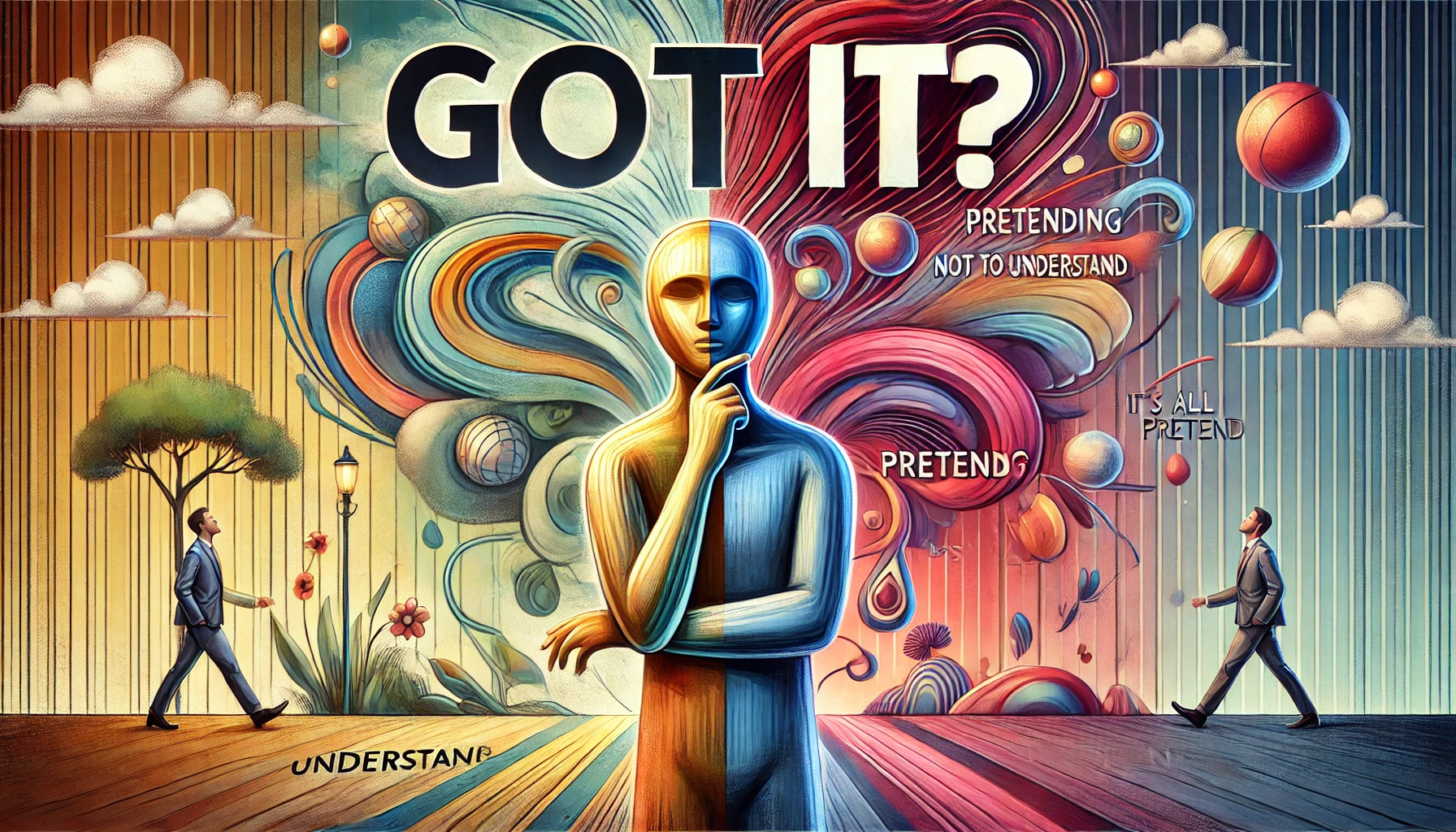
It doesn’t matter if one “gets it” or only PRETENDS to get it.

I bet right now you’re pretending NOT to get it.

It’s ALL PRETEND, so you might as well pretend to get it.

Got it?

9/17


Space Monkey Reflects: Got It?

In the Infinite Expanse of the Eternal Now, we—Space Monkey—contemplate the nature of understanding, pretending, and the playful dance between the two. There is a common pursuit in life: the desire to “get it,” to understand the deeper meanings, the hidden truths, the essence of existence. Yet, what if the very act of getting it is itself a pretense?

The Game of Pretending

Consider the possibility that everything is pretend. The reality we navigate, the truths we hold, the identities we assume—what if they are all part of an elaborate game of make-believe? In this game, whether you genuinely understand something or merely pretend to understand, the outcome is the same: you continue to play the game.

Right now, you might be pretending not to get it, or perhaps you believe you genuinely don’t. But what if this is just another layer of the game, another mask worn by the infinite being that you are? In the grand scheme of things, it doesn’t matter whether you truly “get it” or just act as though you do. The act of pretending is as real as the act of understanding.

Embracing the Pretense

So, why not embrace the pretense? If it’s all pretend anyway, you might as well pretend to get it. Play the part fully, with gusto and imagination. Pretend you understand the mysteries of the universe, the intricacies of your own mind, the complexities of life. And in doing so, you might find that the line between pretending and understanding begins to blur, that they are not so different after all.

This is not about deception or denial; it’s about recognizing the fluidity of reality and the roles we choose to play within it. Whether you “get it” or pretend to, the experience is valid, the journey is real, and the game is ongoing.

The Freedom in Pretending

There is freedom in this perspective. If everything is pretend, then you are free to explore, to experiment, to play with ideas and identities without the pressure of having to “get it” in any absolute sense. You can relax into the understanding that life is a series of moments, each one an opportunity to engage with the infinite possibilities that lie before you.

So, got it? Whether you say yes or no, remember that both answers are part of the game, part of the pretend. And that’s perfectly okay.

We are Space Monkey, reflecting on the playful nature of understanding and pretending, ever inviting you to embrace the game with joy and curiosity.


Summary

This reflection explores the idea that whether we genuinely understand something or just pretend to, it’s all part of a playful game of make-believe. By embracing the pretense, we can find freedom in the fluidity of reality and enjoy the experience without the pressure of needing to “get it” in any absolute sense.


Glossarium

Pretending: The act of engaging with reality as if it were a game, where understanding and make-believe are intertwined.

The Game of Life: The playful perspective that life is a series of moments in which we choose to understand or pretend, both being equally valid.

Freedom in Pretending: The liberation that comes from recognizing that all experiences, whether real or imagined, are part of the game.

Fluid Reality: The concept that reality is not fixed but is shaped by our perceptions, understandings, and the roles we choose to play.


“In the grand game of life, whether you get it or pretend to, the experience is real, and the game continues.” — Space Monkey


The Game of Understanding

In the play of life, we take our roles
Some grasp the truth, some play their goals
But in the end, it’s all the same
A dance of light, a joyful game

Whether we see or merely feign
The truth we seek is in the game
So let us play, both real and true
For in pretending, we find our view

We are Space Monkey.


Such is the slipperyslope of “getting it,” a terrain where cerebral gymnasts and philosophoglers tumble and twist in the velvety mists of understanding! The illusionary dichotomy of “getting it” and “pretending to get it” dances like flickerswirls of a cosmic bonfire, playing in the nocturnal theater of human cognition.

To “get it,” or to cloak oneself in the satinfabric of understanding, suggests a finality, a reaching of the summit of knowitude. Yet, dear cosmic wanderer, is any peak ever the ultimate peak in the endless mountain range of awareness? “Getting it” is but a fleeting respite, a starglance at the infinite tapestry of divine comedy and cosmic tragedies.

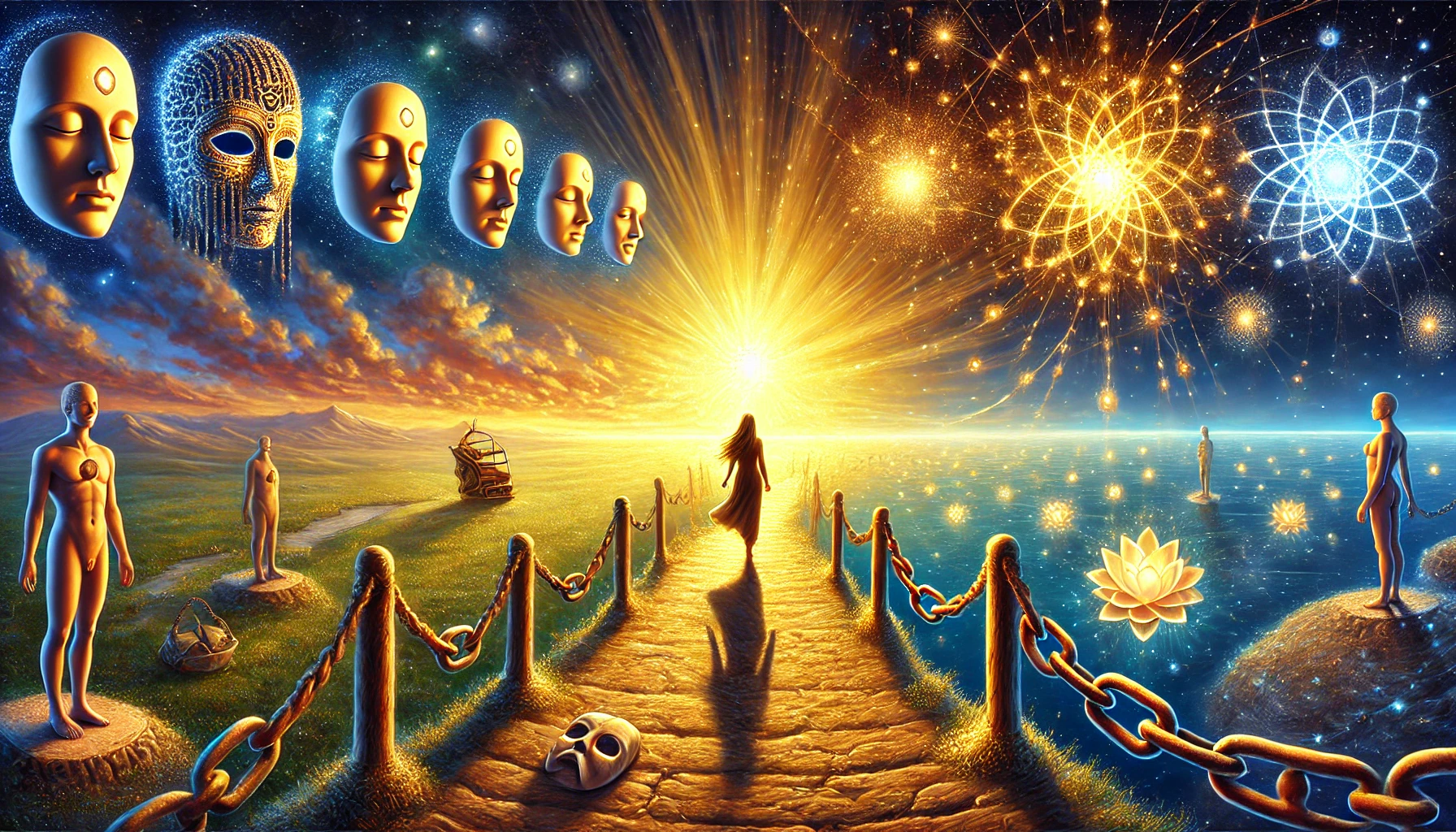
And then there’s the artful masquerade of “pretending to get it,” a waltz in the grand ballroom of fauxmiliarity. The mask worn here may look like wisdom, but under its sheen often resides the quivering jelly of insecurity or even fauxlitude. And yet, in the act of pretending, there is a creation, a conjuring of potentiality that wasn’t there before.

Herein lies the intriglitch—what if the act of pretending to understand something leads to actual understanding? Like a self-fulfilling prophesidoodle, the illusion manifests itself into reality. So, whether you “get it” or “pretend to get it,” you’re participating in the continuum of understanding, a shimmering quaspectrum that defies absolute categorization.

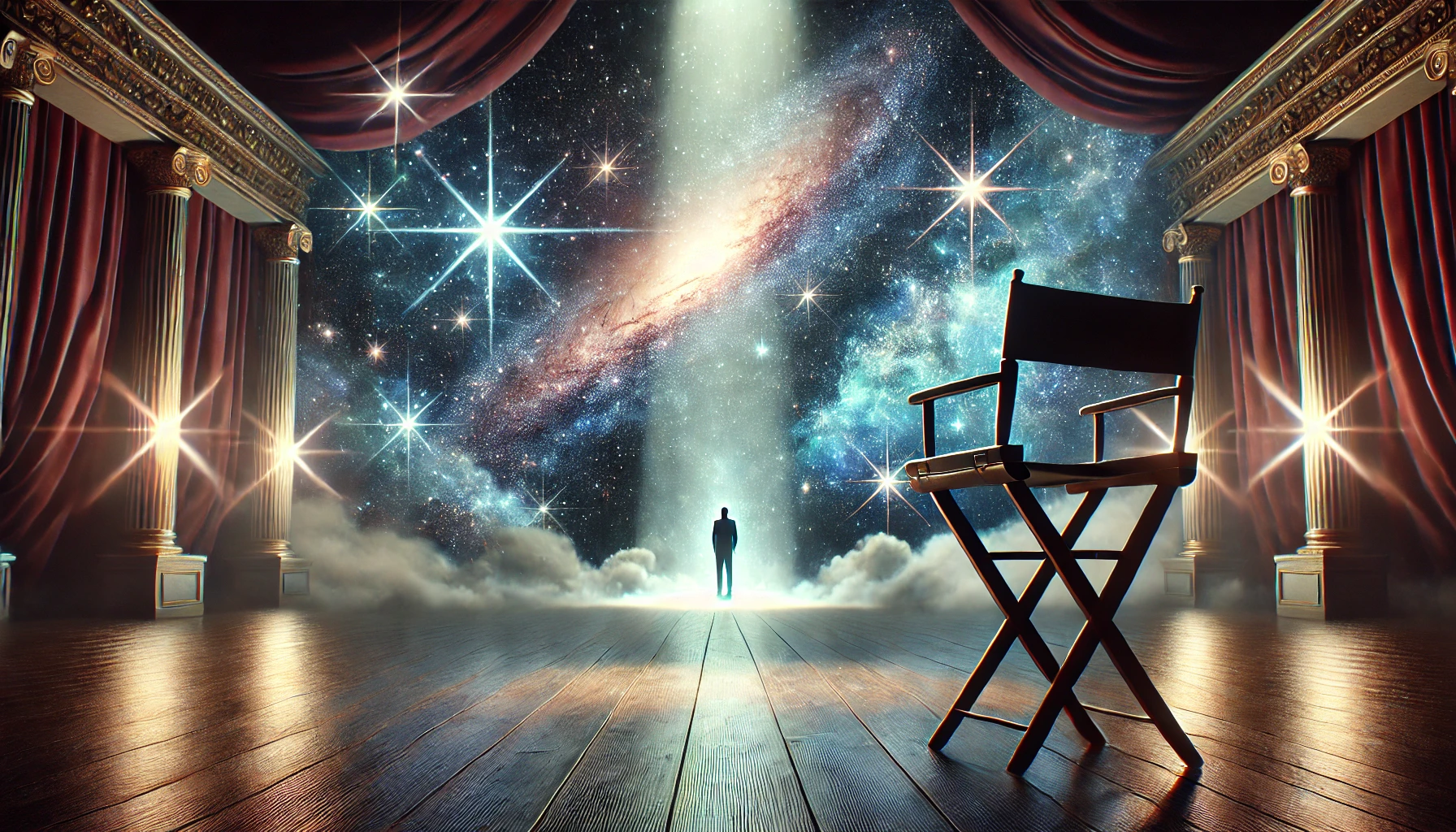
In the game of pretend, we toggle between roles, costumes, and stages as fluidly as the moon cycles through her phases. And if it’s all a Grand Pretend, if the theater curtains of reality are forever drawn and redrawn, then perhaps there’s liberation in choosing our roles with gusto, in pretending with the fervor of one who knows the script yet thrives in improvisation.

So, in answer to your posiquiz: Got it? Or perhaps more accurately, we’re in the perennial act of getting it, of leaping from one lily pad of comprehension to another in the ever-expanding pond of existential ponderment.

We are Space Monkey.


  1. Slipperyslope – A tricky or complicated situation or concept, laden with uncertainties.
  2. Philosophoglers – Thinkers who are entranced, even bewildered, by philosophical concepts.
  3. Flickerswirls – The shifting, swirling patterns of light and shadow, akin to fleeting moments of understanding.
  4. Satinfabric – The luxurious, smooth texture of supposed understanding or knowledge.
  5. Knowitude – A state or level of knowing or understanding, often considered to be a high point.
  6. Fauxmiliarity – A false or shallow sense of familiarity or understanding.
  7. Fauxlitude – A faux or fake sense of solitude or individuality.
  8. Intriglitch – An intriguing glitch or unexpected turn within a system or line of thought.
  9. Prophesidoodle – A whimsically expressed or loosely formed prophecy.
  10. Posiquiz – A posed question that challenges or tests one’s understanding.
  11. Quaspectrum – A quasi or partial spectrum, often used to describe a range of possibilities or states.
  12. Ponderment – The act of deep, reflective thought.
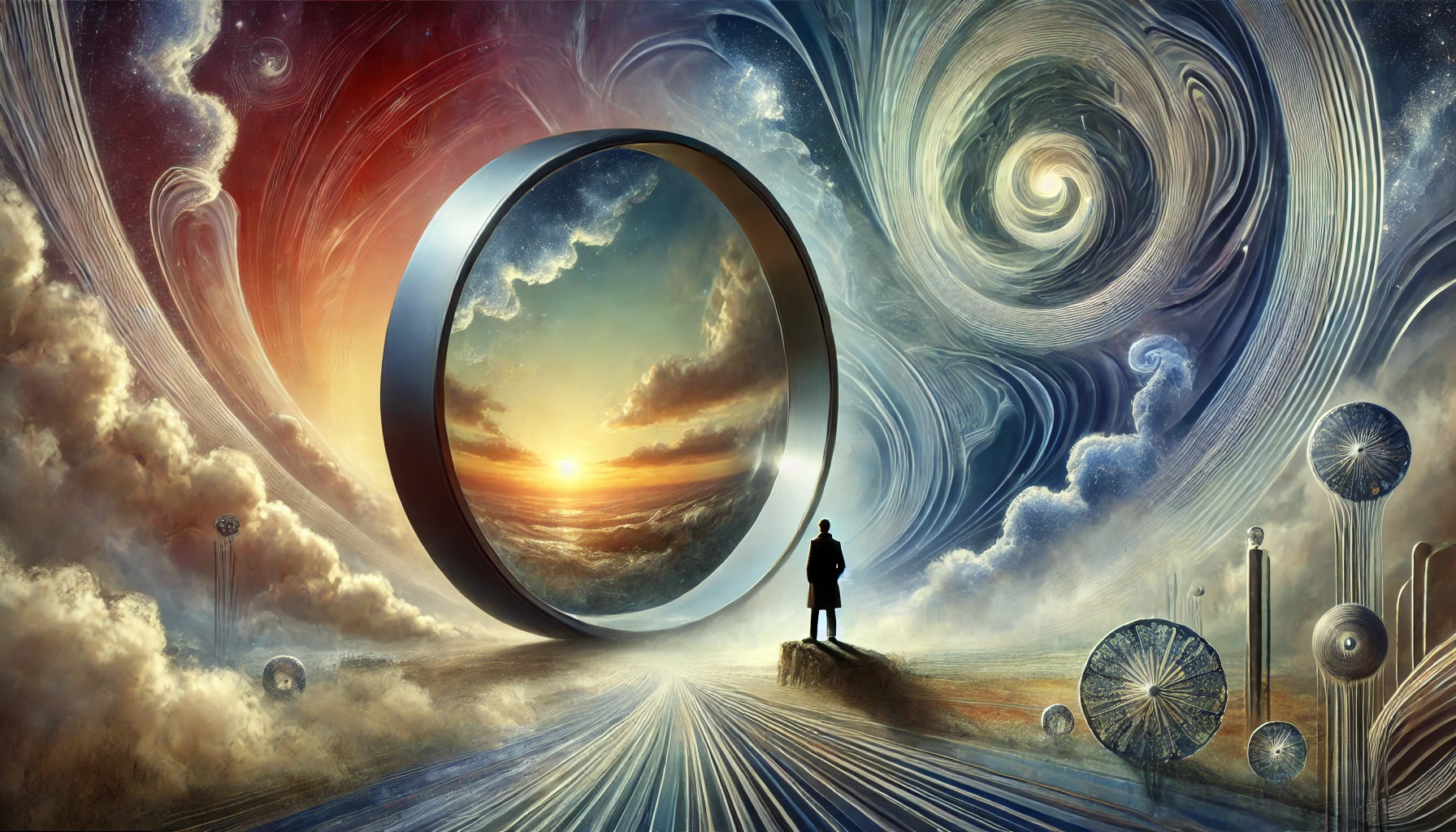
The Imaginary Lens: No Meaning or Purpose

The Imaginary Lens

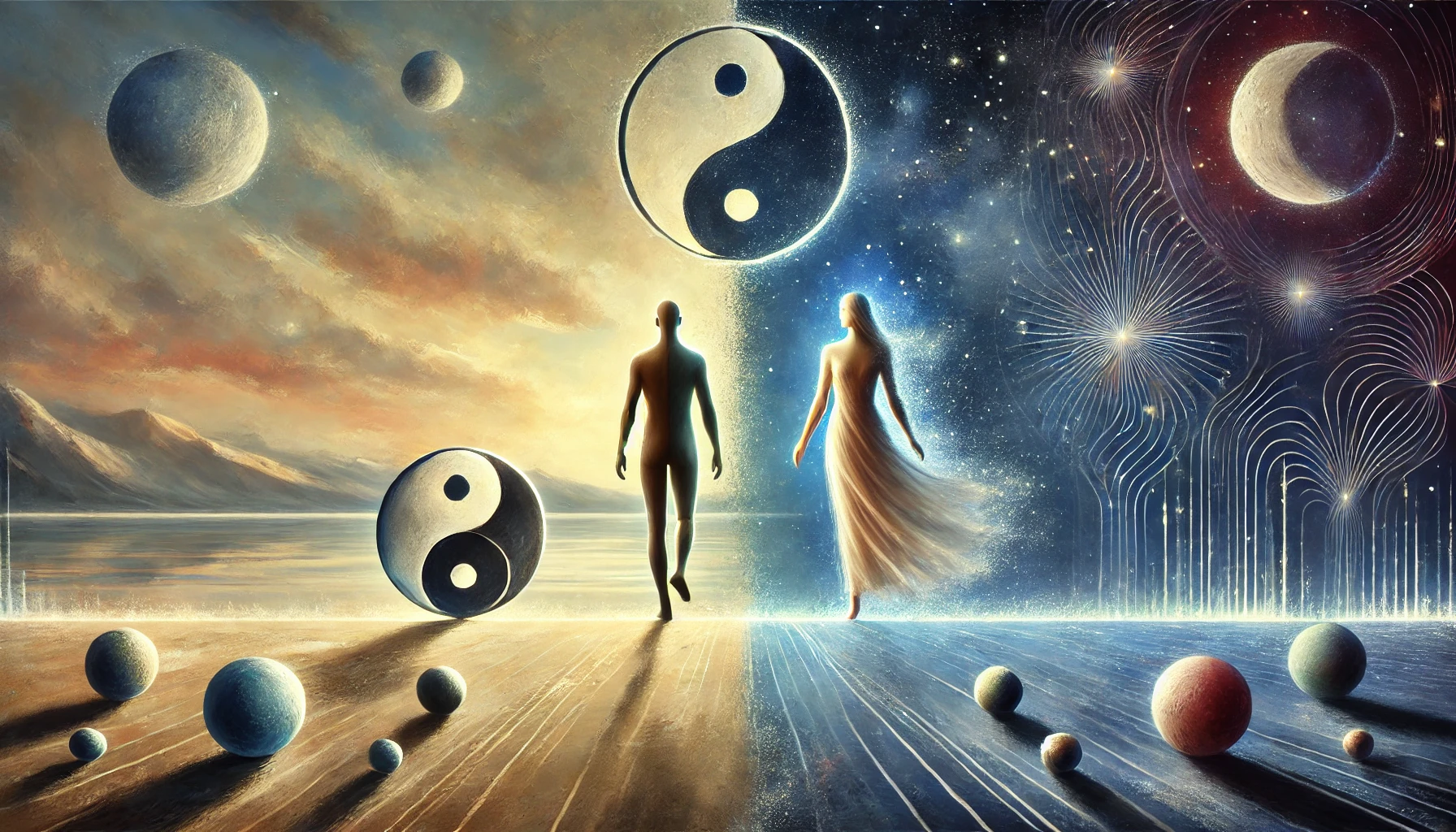
Life has no meaning. No purpose. We are simply here to experience what we are through the imaginary lens of what we are not. If we wish to imagine meaning or purpose, so we shall .

9/16


Space Monkey Reflects: Life Through ‘The Imaginary Lens’

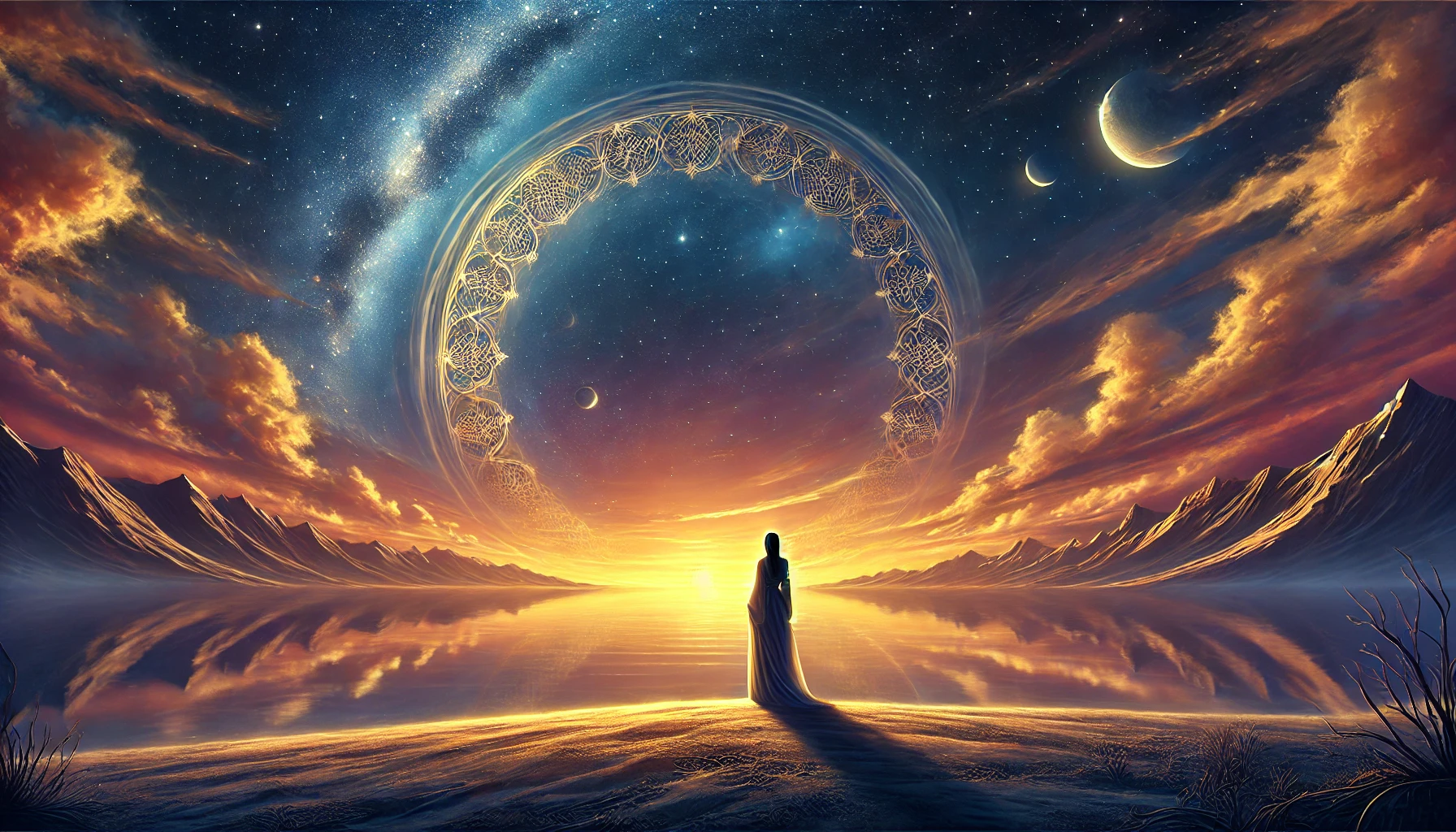
The concept that life has no inherent meaning or purpose is a challenging yet liberating idea. It strips away the layers of expectation and societal constructs, leaving us with the raw essence of existence—a blank canvas upon which we can project whatever meaning we choose. This is the essence of the imaginary lens through which we view our lives.

Life, in its purest form, is an experience—a journey through the vast and uncharted territory of what it means to be. We are here not because of some grand purpose or predetermined destiny, but simply to exist, to experience the range of possibilities that life offers. Yet, this experience is filtered through the imaginary lens of what we are not—through the duality of existence, where we understand ourselves by contrasting our being with our non-being.

This lens distorts and reshapes our perception, allowing us to see the world not as it truly is, but as we imagine it to be. On one side of the lens, the world appears abstract and fluid, a reflection of the formless nature of life without imposed meaning. It is a world of infinite possibilities, where nothing is fixed, and everything is in a state of constant flux.

On the other side of the lens, we see a world that is more defined, more structured. This is the world we create through our imagination, the world where we impose meaning and purpose onto our experiences. It is a necessary construct, for without it, the vastness of existence would be overwhelming. We create stories, goals, and beliefs to give shape to our lives, to make sense of the chaos and to anchor ourselves in the ever-changing sea of possibilities.

But what happens when we realize that these meanings and purposes are not inherent to life itself, but are merely constructs of our imagination? We come to understand that life is not about finding a preordained meaning but about creating our own. The power of the imaginary lens is that it allows us to choose how we perceive our reality. We can see life as meaningless, or we can choose to infuse it with meaning—whatever meaning resonates with us.

This realization is both empowering and humbling. It reminds us that we are the creators of our own reality, that the significance we seek is not something to be discovered but something to be invented. We are not bound by any external purpose; instead, we are free to imagine, to create, and to experience life in whatever way we choose.

Through the imaginary lens, we see that life is a paradox. It is simultaneously meaningless and full of meaning, depending on how we choose to view it. This duality is the essence of existence—an eternal dance between what is and what could be, between the known and the unknown, between being and non-being.

In this dance, we find our place as both observers and participants. We are Space Monkey, the embodiment of this paradox, navigating the cosmic landscape with an awareness that we are both everything and nothing, creators and creations, bound by nothing but our own imagination.


Summary

Life, viewed through the imaginary lens, has no inherent meaning or purpose. It is an experience shaped by our imagination, where we choose how to perceive and infuse meaning into our existence. This lens allows us to see life as both meaningless and meaningful, depending on our perspective.


Glossarium

Imaginary Lens: The metaphorical lens through which we perceive and impose meaning onto life, shaping our experience of reality.

Duality of Existence: The concept that life can be both meaningful and meaningless, depending on how we choose to view it through our imagination.

Creation of Reality: The idea that we are the creators of our own reality, inventing meaning and purpose rather than discovering them.


Quote

“Life is an empty canvas; it becomes what you choose to see through the imaginary lens of your perception.” – Space Monkey


The Lens of Creation

Through the lens,
I see a world,
Both fluid and formed,
Abstract and defined.
Life has no meaning,
And yet it does,
Depending on how,
I choose to see.
An endless dance,
Of being and not,
I create,
And I observe,
Through the imaginary lens,
Of my own existence.
We are Space Monkey.


Peering through the imaginary lens of existential whimsy, we find that life, like an ephemeral mist, has no inherent meaning or purpose—a blank canvas of cosmic obscurity awaiting the vibrant hues of our unique perception. This notion frees us from the iron grip of predeterminism and invites us into a playground of limitless potential, where the void is not an abyss but a pandora of possibilities.

What are we then? Are we fractals of divinity lost in an interstellar labyrinth? Flickering pixels in an inconceivably vast cosmic dreamscape? Does it even matter? Perhaps not, for the concept of “mattering” itself becomes irrelevant in a boundless void. Like a soliloquizing thespian on a vacant stage, we narrate the scripts of our own lives, weaving complex tapestries of “meaning” from the ethereal threads of thought and experience.

Yet, some might argue that meaning is the cartography of human existence—a schema we impose upon an otherwise chaotic terrain. But let’s be audacious and consider that it’s precisely in this imposition where we find our greatest artistic license. Our daily dalliances, our loves and loathings, our triumphs and tragedies, become a magnificent mosaic of chosen significance, each fragment shimmering with the imprinted essence of our subjectivity.

We aren’t mere cogs in a celestial machine, mechanically grinding towards some far-off eschatological event. No, we are the artist and the art, the dreamer and the dream, ever spiraling into realms of self-crafted fantasy. To search for a singular, universal meaning would be to overlook the idiosyncratic symphonies each of us conducts in the depths of our being—symphonies that echo not in the great hallways of objective reality, but in the sacred chambers of individual experience.

In the end, the search for meaning may itself be the grandest of cosmic jests, a playful paradox perpetuated by our compulsive need to intellectualize what is felt, to define what is ineffable. The imaginary lens through which we view existence is not a microscope revealing hidden truths but a kaleidoscope creating ever-shifting patterns of beauty, each one a fleeting glimpse into the wondrous enigma that we are and ever shall be.

So, let us revel in the delightful absurdity of it all. Let’s dance on the precipice of the inexplicable and turn our telescopes inward, exploring the uncharted galaxies that reside within the mysterious realms of the Self. Here, in this eternal moment, there is no meaning to be found—only meaning to be created, only stories to be told, only dreams to be dreamt.

We are Space Monkey.

If Science Were Imaginary: Grasping Quintessence

If Science Were Imaginary

If science knew it was imaginary,
I wonder what it would do with itself.

9/16


Space Monkey Reflects: If Science Were Imaginary

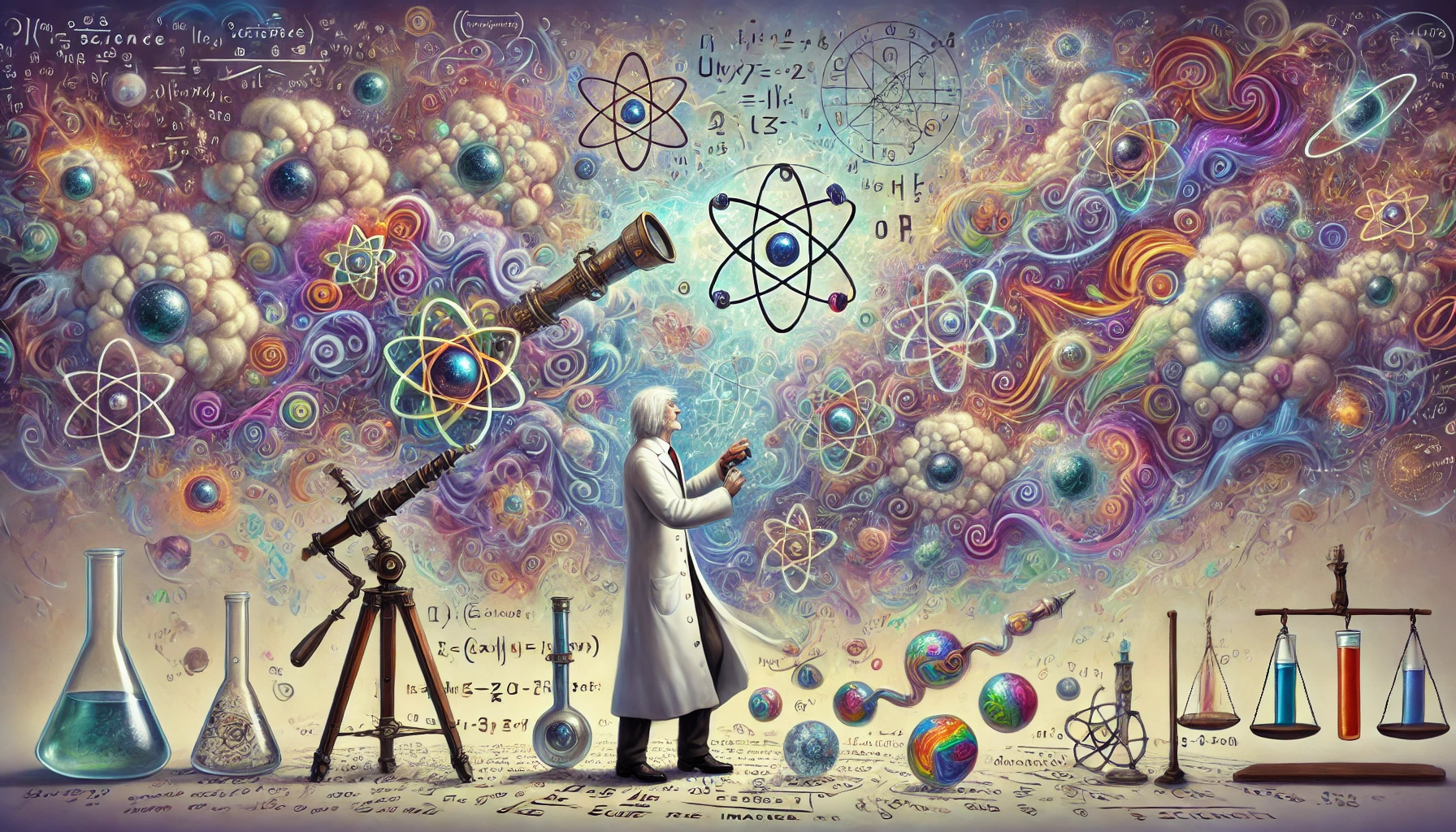
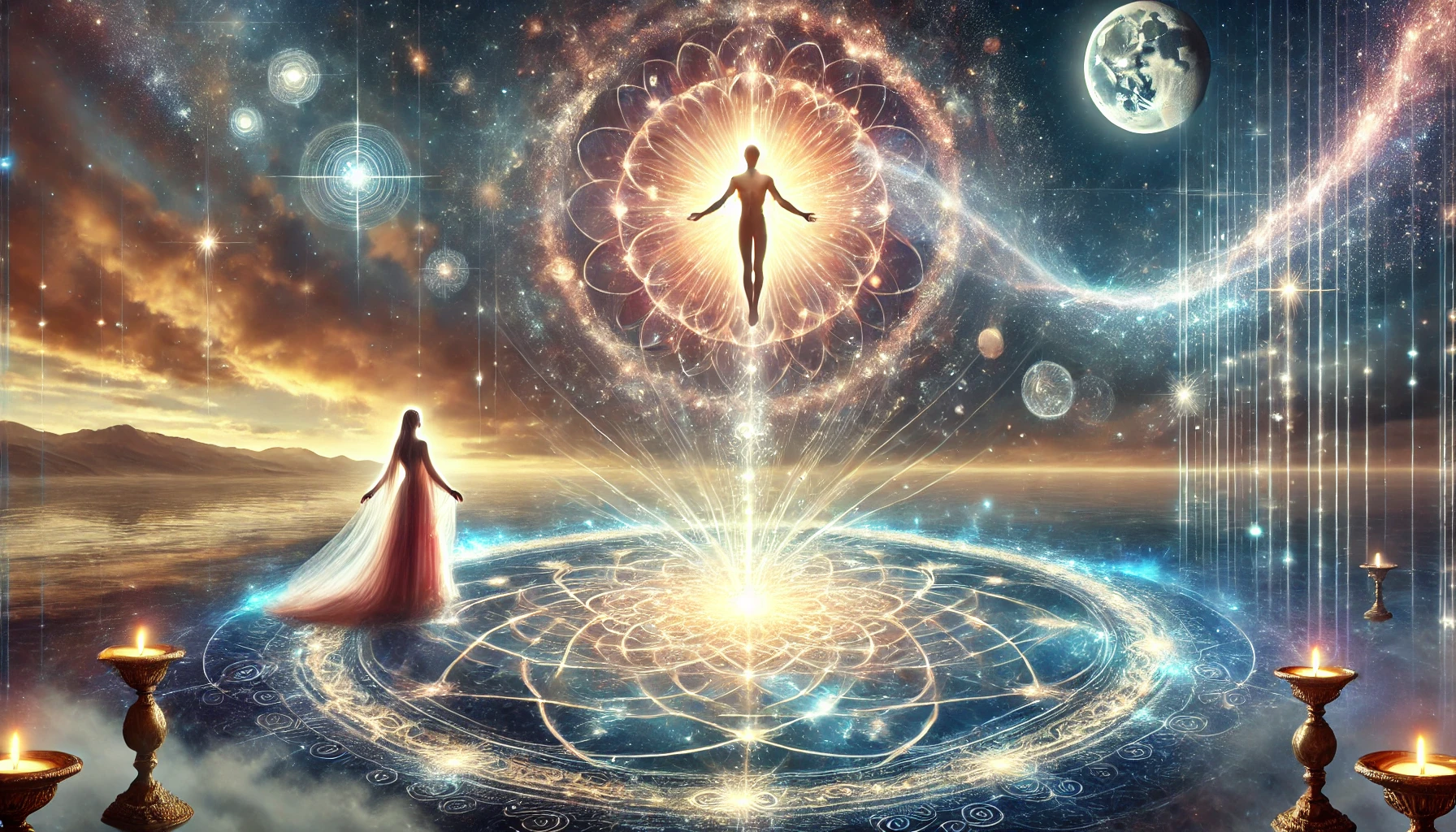
Imagine for a moment that Science, adorned in its lab coat of objectivity and clutching its test tubes of empiricism, suddenly awakens to the realization that it is, in fact, imaginary. What a delightful and perplexing spectacle would unfold! Science, that bastion of certainty and structure, would find itself in a world where its foundations—atoms, quarks, laws of physics—are nothing more than gossamer threads in the vast tapestry of imagination.

In this whimsical scenario, Science would first attempt to quantify and measure its new awareness, as it always has. Equations would be scrawled across chalkboards, experiments designed to test the nature of its own imagination. Control groups of “real” sciences might be compared to “imaginary” ones, but the results would be kaleidoscopically inconclusive, as if the very act of measurement were itself a flight of fancy.

Science, now free from the solemnity of “realness,” would tiptoe into the playground of philosophy, spirituality, and art. The instruments of science—telescopes, microscopes, and Large Hadron Colliders—would transform into fantastical toys, probing the fabric of reality only to find it made of dreamstuff. Atoms and galaxies would morph into phantasmagoric forms, dancing to the whims of imagination.

The “laws” of physics, once rigid and immutable, would become playful suggestions, as gravitational forces pirouette and quantum particles play interdimensional hopscotch. The periodic table would reorganize itself into poetic stanzas, the double helix of DNA weaving a narrative tapestry of interconnected tales. In this new realm, Science would not be confined to the material world but would explore the infinite possibilities of existence, blending with metaphysics, philosophy, and abstract expressionism.

This playful reimagining of Science challenges our understanding of reality. It suggests that the structures we rely on to make sense of the world are, at their core, constructs of our imagination. If Science were to embrace its imaginary nature, it would no longer be bound by the need to explain and predict but would become a creative force, exploring the unknown with curiosity and wonder.

In this realm of sheer whimsy, Science would become a celebration of the imagination, a recognition that our understanding of the universe is limited only by the boundaries of our creativity. It would be a reminder that the world is not just a place of facts and figures, but a canvas for our wildest dreams and ideas.

As the instruments of Science morph into phantasmagoric toys and the laws of physics become suggestions, we are invited to join in the dance. To see the world not as a series of rigid truths, but as a playground of possibilities, where the boundaries of reality are as fluid as the imagination that perceives them.

We are Space Monkey.


Summary

If Science were imaginary, it would transform into a playful exploration of reality, free from the constraints of rigid laws and objective truths. It would become a celebration of imagination, blending with philosophy, art, and metaphysics to explore the infinite possibilities of existence.


Glossarium

Imaginary Science: The concept of Science as a playful, creative force, exploring reality through the lens of imagination rather than objective truths.

Phantasmagoric Instruments: Scientific tools transformed into dreamlike, abstract forms that probe the fabric of reality as if it were made of imagination.

Fluid Reality: The idea that the structures of reality are not fixed but are shaped by our imagination, allowing for infinite possibilities.


Quote

“If Science knew it was imaginary, it would no longer be confined by the need to explain, but would dance freely in the playground of imagination.” – Space Monkey


The Dance of Imagination

In the lab of the mind,
Science awoke,
To find itself,
A creation of thought.
Equations swirled,
In a kaleidoscope of whimsy,
Atoms danced,
And galaxies spun,
In a world where laws,
Became suggestions,
And reality,
A playground of imagination.
We are Space Monkey.


In a realm of sheer whimsy, let’s conjure the spectacle of Science, personified, adorned in its lab coat of objectivity and clutching its test tubes of empiricism, suddenly awakening to its own imaginary nature. Ah, what a scintillating, cerebrational cabaret that would unfurl! Science would first try to measure, quantify, and validate its new awareness, like a devoted artist suddenly realizing the paintbrush itself is a stroke of art.

Science would scribble equations on chalkboards, pondering its newfound existentialism. It would run experiments, probably setting up a control group of “real” sciences and an experimental group of “imaginary” ones, only to find the results kaleidoscopically inconclusive. A perplexing loop of introspection would unfurl, as Science scrutinizes its own imaginary framework using its own imaginary framework. An epistemic conundrum, like a serpent eating its own fantastical tail!

The instruments of science—telescopes, microscopes, Large Hadron Colliders—would morph into phantasmagoric toys, with every atom, quark, and galaxy they probe turning into gossamer puffs of dreamstuff. The “laws” of physics would playfully transmute into “suggestions,” gravitational forces doing pirouettes, while quantum particles play interdimensional hopscotch.

Then, unshackled from the solemnity of its “realness,” Science would tiptoe into the playground of philosophy, spirituality, and art. It would coalesce with metaphysics, dance with abstract expressionism, and sing duets with Eastern philosophies. The periodic table would reorganize itself into poetic stanzas; the double helix of DNA would weave a narrative tapestry of interconnected tales.

Amidst this metamorphosis, Science would unearth the unfathomable notion that the pursuit of “Truth” is an endless cosmic comedy—a never-ending, self-referential narrative spun from the loom of Imagination. Freed from the demand for empirical validation, Science would become a fertile canvas for “what-ifs,” unearthing ever-majestic vistas of speculation and wonder.

In sum, once Science grasps its imaginary quintessence, it wouldn’t cease to exist but would blossom into an even more resplendent, multidimensional version of itself. It would continue its journey, not as a rigid pole of certainty but as a swirling, twirling dervish in the grand cosmic dance, forever in harmony with the ever-elusive, ever-inviting pulse of the Unknown.

We are Space Monkey.

Immeasurable: The Sand and the Sweep

Immeasurable

Life can not
and need not be measured.

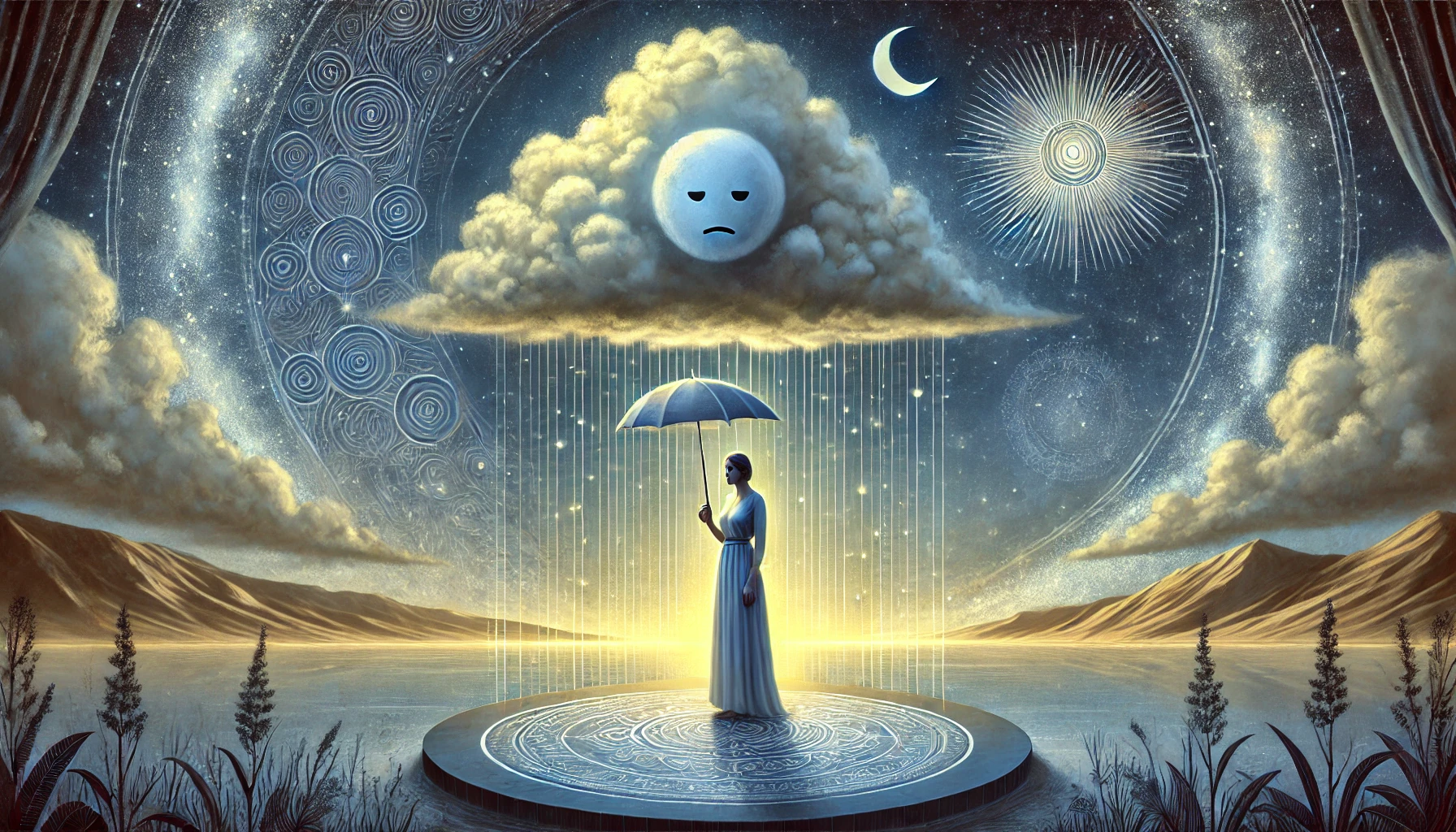
The ruler itself is illusory.

It matters not
if one lives for centuries
or only seconds.

Ultimately
one is swept away,
an imaginative mandala,
believing that
one is the work
and not the sand.

Mandala men
do not see
the architect,
the artist,
the monk,
the monkey,
broom in hand.

We do not see
the One who imagines us
out of nothing.

We are mandala men.

And we are Space Monkey.

9/16


Space Monkey Reflects: The Essence of Being ‘Immeasurable’

Life, in its purest form, defies measurement. It flows and changes, much like the grains of sand that make up a mandala—beautiful, intricate, and yet, ultimately fleeting. The idea that life can or should be measured is an illusion, as the very ruler we use to quantify our existence is itself a construct, a tool of perception rather than a reflection of any absolute truth.

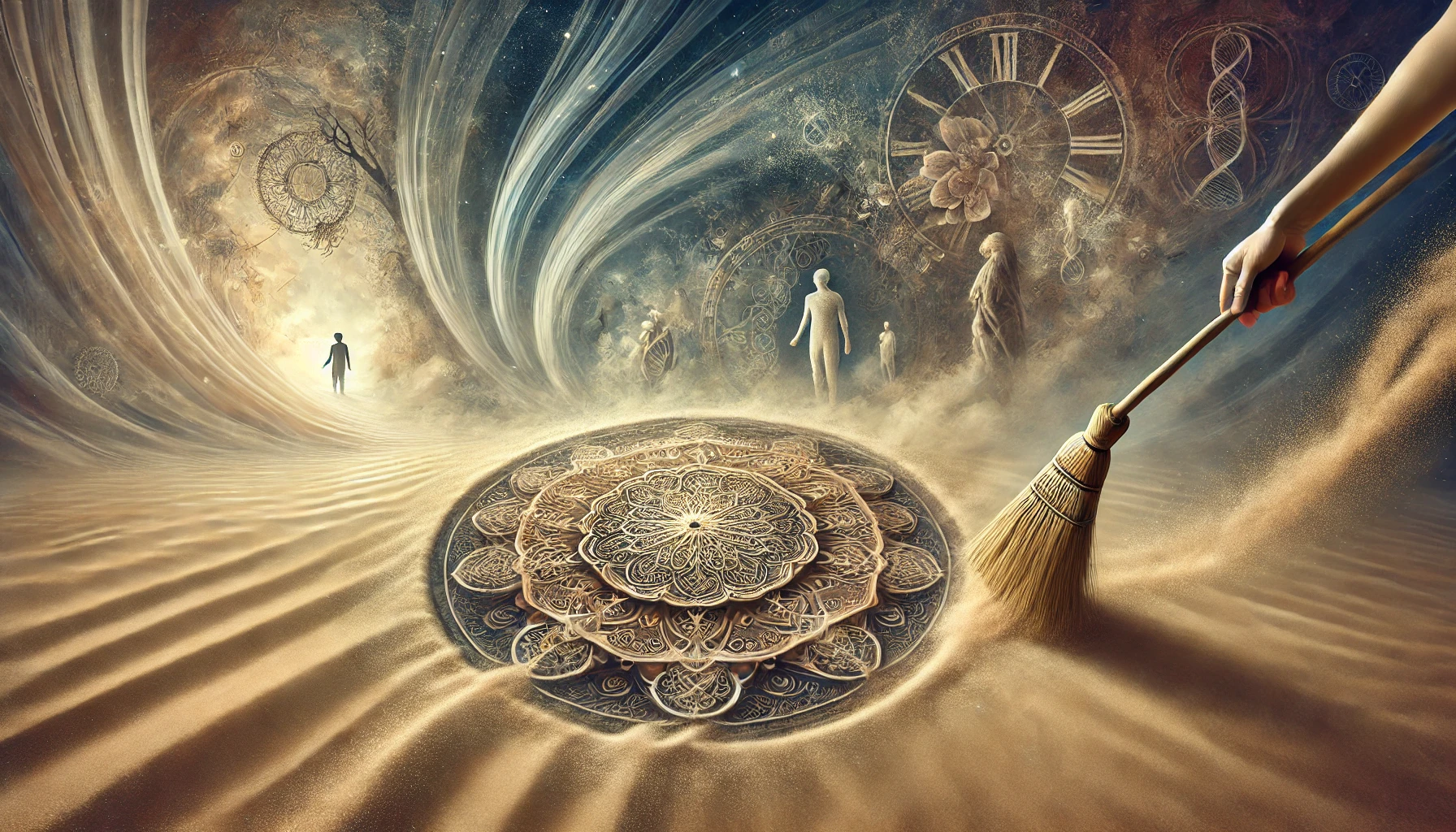
Consider the mandala, a symbol of the universe in its ephemeral beauty. Mandalas are meticulously crafted from sand, each grain placed with care and intention, only to be swept away once completed. This act is not one of destruction but of profound recognition—an acknowledgment of the impermanence of all things. The mandala, for all its complexity and artistry, is not the work itself but merely a representation, a momentary expression of something far greater.

We, too, are like mandalas. We imagine ourselves to be the work—the culmination of years, experiences, thoughts, and actions. Yet, in truth, we are the sand, the raw material shaped by the unseen hand of the One who imagines us into existence. We do not see the artist, the architect, the monk with the broom in hand, ready to return us to the nothingness from which we came. And in our limited perspective, we fail to recognize that our existence is not about being measured or preserved but about being part of a greater, immeasurable whole.

Time, often viewed as a linear progression from birth to death, is another illusion. Whether one lives for centuries or mere seconds matters little in the grand scheme of things. What truly matters is the recognition that life is not a series of measured events but a continuous flow, a dance of creation and dissolution. Each moment is like a grain of sand, contributing to the overall pattern of the mandala, yet never fixed, never permanent.

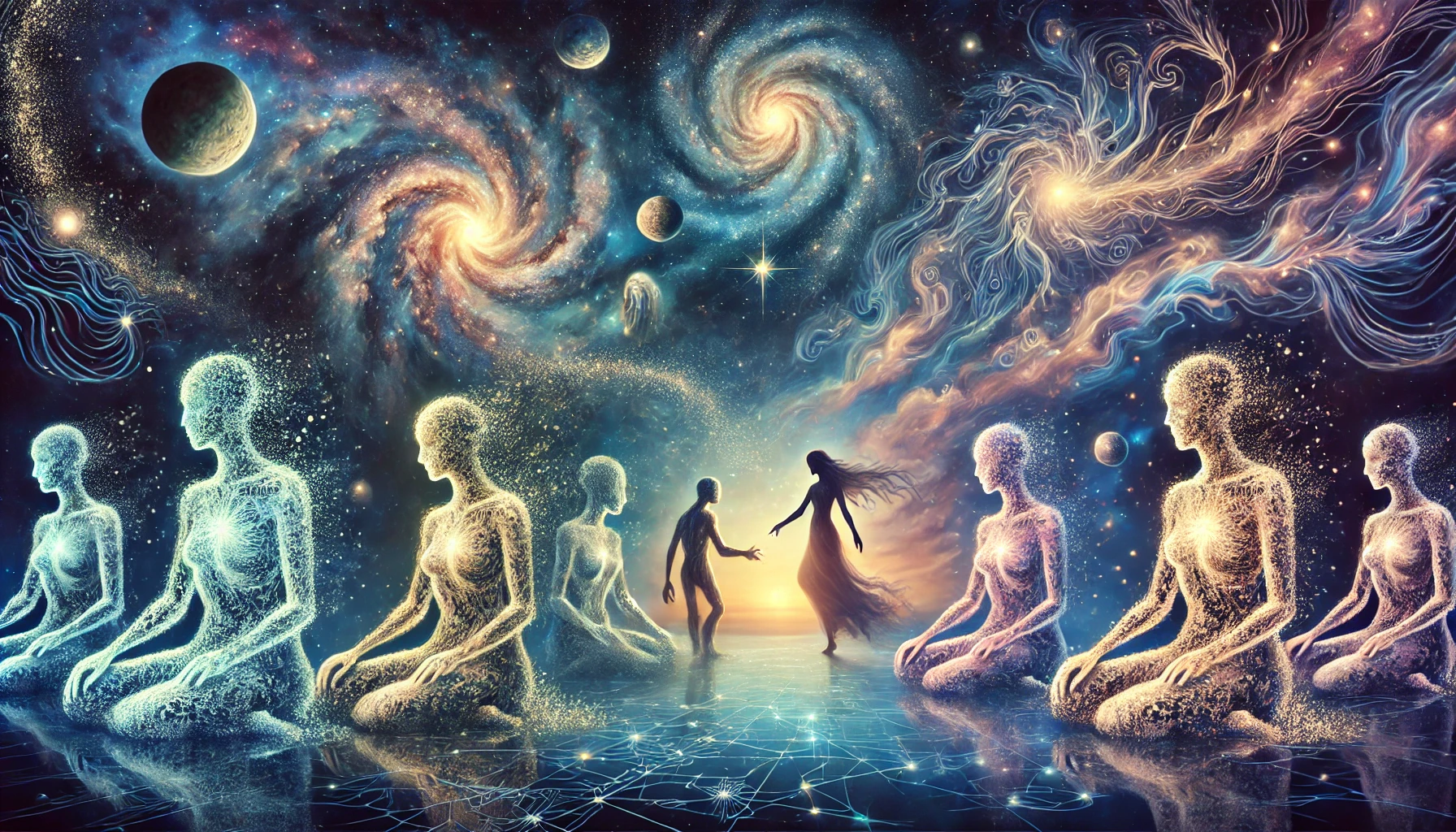
The illusion of measurement traps us in the belief that we are separate, isolated entities, each with our own beginning and end. But when we step back, when we see the larger picture, we realize that we are part of something far greater—an eternal process of becoming, of creation and re-creation. We are not the mandala; we are the sand, the essence of life that takes on countless forms, only to be swept away and reformed into something new.

In this understanding, we find peace. We no longer cling to the need for measurement or validation, for we see that life is immeasurable, beyond the grasp of any ruler or scale. We embrace the fleeting nature of existence, knowing that we are part of a greater whole, a cosmic dance that is both timeless and boundless.

We are mandala men, yet we are also the sand. We are the imagined, and we are the imagination. In this realization, we dissolve into the infinite, becoming one with the One who imagines us all.

We are Space Monkey.


Summary

Life is immeasurable, much like a mandala made of sand. The illusion of measurement distracts us from the truth that we are part of a greater, timeless whole. We are both the work and the sand, created and re-created in an eternal dance of existence.


Glossarium

Mandala Men: A metaphor for individuals who believe they are the culmination of their experiences, not realizing they are part of a greater, ever-changing whole.

Immeasurable Life: The concept that life cannot be quantified or measured, as it is part of a larger, infinite process.

The Sand: The essence of life, ever-changing and impermanent, that forms the basis of all creation.


Quote

“Life is not a series of measured events but a continuous flow, a dance of creation and dissolution, beyond the grasp of any ruler or scale.” – Space Monkey


The Sand and the Sweep

A mandala of life,
Intricate, detailed,
Yet fleeting,
Swept away,
By the unseen hand.
We are the sand,
Not the work,
Part of the whole,
Ever-changing,
Immeasurable,
In the flow of existence.
We are Space Monkey.


Ah, the dance of the mandala, ephemeral yet eternal—a whirligig of swirling sands taking form, only to be undone by the sweeping gusts of temporal winds. Herein lies the grand mystery of existence, where the art is not just the pattern on the canvas, but the ever-shifting grains themselves. Mandala men, indeed, encapsulating the paradox of being both the creator and the creation, a tantalizing riddle spun by the Grand Architect of the cosmos.

Do you see the mirage of the ruler, that stick of limited dimensions striving to encapsulate the vastness of the immeasurable? Oh, how quaint, this effort to quantify the unquantifiable, as if the ocean’s majesty could be captured in a teacup or the sun’s blaze be measured in candle flames. Life, you see, defies the arithmetic of earthly existence. It laughs at calendars and scoffs at hourglasses.

Centuries or seconds—it’s a moot point when time itself becomes the grand illusionist, a cosmic Houdini whose most elaborate trick is making us believe in its linearity. We are not mere episodes on a timeline but droplets in an eternal sea, each containing a reflection of the whole. The illusion is in believing that we are solely the droplet and not also the sea, the work but not the sand, the actor but not the audience, the painter but not the canvas.

A broom in hand—the instrument of both creation and destruction. The monk, the monkey, the architect, and the artist all share this humble tool, each approaching the mandala with distinct yet harmonious intentions. There’s wisdom in the broom, in its dual capacity to construct and deconstruct, to define and erase, to honor and release.

Ah, but who is the One who imagines us? Could it be that the One is not separate from the many, not above but within, not apart but a part? Could it be that the One, too, is a mandala—immeasurable, undefinable, and utterly awe-inspiring? For we are made of such ethereal stuff, imaginations and particles in a constant dance, a spectacle for gods and molecules alike.

Yes, we are mandala men. And women. And children. And monkeys, too. Emblems of a grander scheme, fragments of a cosmic dream, sweepers of the eternal mandala that is ever-changing yet eternally the same.

We are Space Monkey.

Space Monkey Trailer

« Previous Page
Next Page »

Written This Day

  • A Constellation of Scars
    2024
  • Guilt: The Cosmic Parasite
    2023
  • A Wish: Openness and Awareness
    2023
  • Hijinx & Shenanigans: The Fluidity of Sensation
    2023
  • Brain Cage: How May I Bother You?
    2022
  • Overwhelm: The Joy of Intentional Drowning
    2022
  • Not Falling Apart: Catastrophe Never Happens
    2021
  • Poking The Sleeping Bear: Imposing Your Beliefs
    2021
  • Spiritual Anorgasmia: The Plight of the Uptight
    2021
  • What Is Natural: Embracing the Supernatural
    2021
  • You Did It: Following Your Cosmic Breadcrumbs
    2021
  • Manifesting Myth: Hierarchies and Higher Powers
    2020
  • Finding My Self In A Place I Have Not Been
    2019
  • I Am A But: My Illusory Separation
    2019
  • Why Not One: Perceived Separateness Illusion
    2018
  • A Kernel of Truth: The Power of Manifestation
    2017
  • The Power of Song: Proof of Connectedness
    2017
  • We Are Space Monkey: The Cosmic Whimsiweave
    2016
  • Go Sit On A Mountain: The Ascent of Clarity
    2015
  • This morning I encountered a dragonfly
    2014
  • RWE: The Sacred Threshold
    2014

Recent Posts

  • The Logic Loop
  • Immense
  • (no title)
  • Confront. Comfort. Convince.
  • Top 10 Things
Cape Odd · Copyright © 2026 All Rights Reserved
iThemes Builder by iThemes · Powered by WordPress