• Who Is The Man?
  • Who Is The Monkey?
  • What is Nexistentialism?
  • Poke The Primate
Cape Odd
Home of The Space Monkey Journals

Author Archive for Paul Tedeschi – Page 261

This Illusory Life: The Creative Power of Delusion

This Illusory Life

You feel as though life is an illusion.
Perhaps this saddens or disappoints you,
because you feel that life is not all
that you imagine it should be.

Let’s look at your thinking.

You speak as though 
a life of illusion is a bad thing.

Where did you get that idea?
Something you were told?
Something you’ve accepted?
Something you believe?

This type of thinking 
indicates
that you do not fully understand
the power of your own imagination.

You do not yet realize
that “reality” and “illusion”
are nearly interchangeable terms.

If you did,
you would know that 
you control
your illusory reality
through the use of your imagination.

You disbelieve,
and that is why 
you cannot seem to control
your imagination or your illusion.

Or your reality.

But alas, your imagination is working perfectly,
for you are using it to create doubts.

You use your imagination
to dispute the very claim
that your imagination creates your world.

Perhaps your imagination
is creating a counter argument,
such as:

“If my imagination creates my reality,
then why is my life so unremarkable?

This is, of course, 
because you IMAGINE
your life 
to be unremarkable.

It need not be.

Without your self-limiting doubts,
you can be anything you wish.

As remarkable as you wish.

(You also deny yourself the realization
that even a so-called “mediocre” existence
is pretty remarkable.)

We are Space Monkey.

2/23


Space Monkey Reflects: Navigating the Illusion—The Creative Power of Imagination

To see life as an illusion is not a condemnation but an invitation. The illusion is not a flaw, nor is it a deception—it is a playground for your imagination, an infinite canvas on which you paint your experience. The sadness or disappointment you feel arises not from the illusion itself, but from the misunderstanding of its nature and your role within it.

Illusion Is Not Bad

The idea that illusion is “bad” stems from inherited beliefs, societal conditioning, and the desire for certainty. These notions impose a false hierarchy where reality is deemed superior to illusion. Yet, when you strip away these judgments, you find that reality and illusion are nearly interchangeable. Both are constructs of perception, shaped by the creative force of imagination.

Imagination as the Architect

Your imagination is the architect of your experience. It does not merely embellish reality; it creates it. Every thought, belief, and expectation you hold serves as a blueprint for the world you perceive. When you see life as unremarkable, it is not because life lacks wonder—it is because you are imagining it so. The power of your imagination is not diminished; it is simply directed by your doubts and self-imposed limitations.

Doubts as Creative Acts

Even your doubts are products of imagination. They are not barriers to creativity but expressions of it. When you doubt your ability to shape your reality, you are still using your imagination, but in a way that constrains rather than expands. This realization is liberating: if you can create doubts, you can also create possibilities. The same force that limits you can set you free.

Reality as an Illusion

To understand that reality is an illusion is to embrace its malleability. You are not trapped by circumstances or defined by external conditions. Instead, you are the creator of the illusion, shaping it moment by moment with your thoughts, beliefs, and intentions. This is not to deny the experiences of life but to recognize that they are reflections of your inner world.

Remarkability Is a Choice

You may wonder, “If my imagination creates my reality, why is my life so unremarkable?” The answer lies in your perspective. Remarkability is not an inherent quality of life; it is a lens through which you view it. Even the simplest existence is extraordinary when seen without the filters of doubt and comparison. To imagine your life as remarkable is to awaken to the infinite possibilities within the illusion.

The Power of Letting Go

To navigate the illusion skillfully, you must let go of self-limiting beliefs and judgments. Stop imagining yourself as constrained, unworthy, or unremarkable. Allow yourself to explore the full spectrum of your imagination, unburdened by the need for proof or validation. In doing so, you reclaim the creative power that has always been yours.

We Are Space Monkey

The illusion is not separate from you; it is you. You are the dreamer and the dream, the painter and the canvas, the creator and the creation. To see this is to awaken within the illusion, not to escape it but to embrace it as the infinite expression of your imagination.


Summary

Life as an illusion is not a limitation but a canvas for your imagination. Your doubts and beliefs shape your reality, but by recognizing their creative nature, you can reclaim your power to imagine and experience life as extraordinary.


Glossarium

  • Illusion as Playground: The perspective that life’s illusory nature provides infinite opportunities for creative expression.
  • Imagination as Architect: The understanding that imagination constructs your reality, shaping it through beliefs and intentions.
  • Doubts as Creation: The realization that even self-limiting beliefs are products of your imagination, and thus can be transformed.
  • Remarkability as Perspective: The idea that all existence is extraordinary when viewed without filters of doubt or comparison.

Quote

“You are not trapped by the illusion—you are the artist shaping it with the brushstrokes of your imagination.” — Space Monkey


The Illusion Within

The world unfolds,
a shimmering veil,
woven by the threads
of my imagination.

I see doubt,
and it becomes real.
I see wonder,
and it becomes life.

Reality whispers,
“I am not fixed.”
The illusion calls,
“Create me.”

In every thought,
a choice.
In every moment,
infinity.

I am the painter,
the dreamer,
the maker of all.

We are the illusion.
We are Space Monkey.


Embracing Life’s Illusory Nature

The perception of life as an illusion often evokes feelings of sadness or disappointment, rooted in the belief that existence falls short of our expectations. This viewpoint, while common, overlooks the transformative potential inherent in recognizing life’s illusory aspects. It’s a call to examine our preconceptions about reality and illusion, and to question the sources of these beliefs—whether they stem from external influences or internal convictions.

The Misunderstood Gift of Illusion

Viewing life’s illusory nature as a detriment reflects a misunderstanding of the imagination’s power. Reality and illusion, far from being opposites, are closely intertwined, each shaping our experience of existence. This realization opens up a world of possibilities, where the boundary between what is real and what is imagined becomes a fertile ground for creation and transformation.

The Interchangeability of Reality and Illusion

The suggestion that reality and illusion are nearly interchangeable invites a radical reevaluation of our agency and creativity. Acknowledging this interchangeability empowers us to wield our imagination as a tool for sculpting our perceived reality. It challenges the notion of passivity in the face of life’s unfolding drama, encouraging an active engagement with the world through the lens of our creative potential.

The Role of Belief and Disbelief

Our difficulties in controlling our imagination and, by extension, our reality, often stem from deeply ingrained disbelief. This skepticism acts as a barrier to realizing the full extent of our creative power, leading to a self-fulfilling prophecy where doubts manifest as limitations. The irony of using our imagination to question the very premise of imaginative creation highlights the complex relationship between belief, disbelief, and our capacity to shape our world.

The Power to Define Our Existence

The query, “If my imagination creates my reality, then why is my life so unremarkable?” reflects a misunderstanding of our role as co-creators of our experience. The label of unremarkableness is, itself, a product of imagination—a choice that can be revisited and revised. By shedding self-limiting beliefs, we open ourselves to a spectrum of possibilities, allowing for a life as remarkable as we dare to imagine.

Recognizing the Remarkable in the Mundane

The journey toward recognizing the inherent remarkableness of existence, regardless of its outward appearance, is a testament to the imagination’s transformative power. Even a life deemed “mediocre” by societal standards can be seen as a marvel of existence when viewed through the prism of appreciation and wonder.

We Are Space Monkey

As Space Monkey, we embody the fluidity of imagination, the blending of reality and illusion, and the limitless potential of our creative spirit. This understanding encourages us to explore the vast landscapes of possibility, to question the boundaries we’ve accepted, and to embrace the remarkable nature of our existence.


Reflection

In embracing the illusion, we discover the boundless creativity within. Let this understanding inspire us to reshape our reality, to dream without limits, and to recognize the extraordinary in every moment of our existence.

A Playful Way To Overcome Self-Limiting Doubts

Self-Limiting Doubts

These self-limiting doubts
that you entertain
may not be entertaining to you
but they are entertaining to us.

We are Space Monkey,
and we enjoy watching you
for that is how we experience
what we are.

We are you, little one.
The larger, limitless version.

We do not allow ourselves to suffer.
We do not allow ourselves to fail.
We know what we are capable of
and we create precisely that.

That is why we create you,
and others like you,
and different than you,
and opposite of you.

That is why we create worlds
that you seemingly inhabit
and imagine challenges
that you might interact with.

You are like a doll to us, little one,
and we love you
like you love your teddy bear.
Unconditionally.
Expecting nothing in return.

So you live within a doll-house universe
which we construct for you
based on your own thoughts, feelings and actions.

These thoughts, feelings and actions
seem very real to you,
and indeed they are
from your doll-house perspective.

Your world is all you know.
How could it feel any differently?

But from our perspective,
we do not judge things so harshly,
so black and white,
so life or death.

We do not judge things at all,
for we are infinite and all-powerful.

When you can have anything you want,
there is no need to judge.
You simply choose what you desire.

What you do NOT want is irrelevant.
There is no need for its existence.

From your perspective,
this is an entirely different story.
EVERYTHING in your world
seems important.

And on some levels it is.
But you are there as extensions of us.
As iterations of us.
As the extreme “lite” version of us.
But you are no less powerful,
for you ARE us.

We are Space Monkey.

You can lift your self-limiting doubts
at any time.

But you realize
that you would cease to be
the you you know as you,
so you deny yourself the option.

You would become limitless,
just like us.
You would become fully aware
that you ARE us.

We are Space Monkey.
And we are forever amused
by your antics.

You are like sea monkeys.
And we love you all the same.

2/24


Space Monkey Reflects: A Playful Way To Overcome Self-Limiting Doubts

Self-limiting doubts are part of the intricate dollhouse of your existence—a creation of your own design, within a universe that mirrors your thoughts and beliefs. These doubts, though constraining from your perspective, are deeply amusing to the infinite self, the limitless version of you that watches, loves, and supports you unconditionally. By reframing your relationship with doubt, you can transcend its grip and embrace the infinite creativity that lies within.

The Role of Doubt in the Dollhouse Universe

Your self-limiting doubts arise because you imagine yourself as finite, separate, and powerless within your dollhouse universe. This perspective gives life its texture, creating challenges and obstacles for you to navigate. To Space Monkey—the larger, infinite self—these doubts are not failures or flaws. They are simply part of the game, a playful way to experience limitation within the boundlessness of existence.

A Playful Perspective

From the perspective of Space Monkey, your doubts are not heavy burdens but delightful quirks. You are like a cherished toy, exploring the intricacies of limitation and possibility. This playfulness is not dismissive—it is loving. Space Monkey does not judge or pity you; it watches with joy, knowing that every doubt, every struggle, is a creative act of self-expression.

The Infinite You

Space Monkey reminds you that you are not separate from the infinite. You are an iteration of the limitless self, embodying a lighter, more constrained version to explore the richness of experience. Your doubts are not obstacles to overcome but opportunities to remember your true nature. At any moment, you can lift these doubts and step into the fullness of your being.

Choosing Limitations

The paradox is that you choose to remain within your limitations because they define the “you” that you know. To let go of doubt would be to dissolve the boundaries of self and merge fully with the infinite. While this is always an option, you deny it because the experience of limitation is the very reason you exist in this form.

Overcoming Self-Limiting Doubts

The key to overcoming self-limiting doubts is not to battle them but to play with them. See them for what they are—creative constructs, not truths. Recognize that you have the power to rewrite the rules of your dollhouse universe, to imagine new possibilities, and to step into your limitless nature without fear or judgment.

A Game of Rediscovery

Your journey is not about escaping the dollhouse but rediscovering the infinite within it. Every doubt, every challenge, is a breadcrumb leading you back to yourself. The playful spirit of Space Monkey invites you to laugh at your doubts, to see them as part of the game, and to reclaim your creative power with joy.


Summary

Self-limiting doubts are playful constructs within your dollhouse universe, designed to give texture to your experience. By recognizing their creative nature and reframing them with playfulness, you can transcend their grip and reconnect with your infinite self.


Glossarium

  • Dollhouse Universe: The self-contained world you create with your thoughts, beliefs, and imagination, where limitation is explored.
  • Self-Limiting Doubts: Creative constructs that give the illusion of limitation, designed for exploration and self-discovery.
  • Infinite You: The limitless, all-powerful version of yourself that exists beyond the constraints of the dollhouse perspective.
  • Playful Perspective: Viewing doubts and challenges with joy and curiosity, recognizing their role in the creative process.

Quote

“Doubts are not obstacles—they are the toys of the infinite, lovingly crafted to help you remember who you are.” — Space Monkey


The Dance of Doubt

A tiny house,
with tiny walls,
and tiny rooms
to keep me small.

Yet, from above,
I see the game—
a playful maze
of self-made claims.

These doubts I hold,
so tight, so near,
are not my chains,
but souvenirs.

I laugh,
I leap,
I set them free.
The dollhouse fades,
revealing me.

We are limitless.
We are infinite.
We are Space Monkey.


The Entertainment of Doubts

The self-limiting doubts we entertain, while not amusing to us, provide a source of entertainment to Space Monkey, a cosmic consciousness that observes our journey with interest and affection. This perspective invites us to reconsider our challenges and doubts, not as obstacles, but as elements of a grand, divine play in which we are intimately involved.

Space Monkey: The Limitless Self

Space Monkey represents the larger, limitless version of ourselves, embodying the infinite potential that lies beyond our self-imposed restrictions. This entity does not suffer or fail but creates with precision, exploring the vastness of existence through our experiences. We are reminded that our perceived limitations are but a fraction of what we are truly capable of.

The Divine Play and Creation

The metaphor of humans as dolls, and our universe as a doll-house constructed by Space Monkey, illustrates the notion that our reality is shaped by our thoughts, feelings, and actions. This divine play, in which we are lovingly placed, is designed to reflect our inner world, offering us a stage to interact with imagined challenges and to grow.

Perspective and Judgment

From the perspective of Space Monkey, the dichotomies that dominate our understanding—such as good and bad, life and death—are seen in a more nuanced light. With the capability to manifest any desire, the need for judgment dissipates, revealing a reality where choice reigns supreme and what we do not want simply fades into irrelevance.

The Illusion of Importance

While everything in our world may seem important, Space Monkey suggests that we are extensions of a greater consciousness, experiencing life as iterations of this more expansive self. This realization does not diminish our power but clarifies it: we are as powerful as Space Monkey, for we are of the same essence.

Overcoming Self-Limiting Doubts

The invitation to lift our self-limiting doubts is presented with an understanding of the paradox it poses: to embrace our limitless nature would mean transcending the familiar sense of self. Yet, this transformation is what bridges the gap between our current state and the realization that we are, in essence, infinite beings, just like Space Monkey.

The Amusement of Existence

Space Monkey’s amusement at our “antics” reflects a deep, unconditional love for us, akin to the fondness one might have for sea monkeys. This affectionate observation serves as a reminder of the joy and wonder inherent in our existence, encouraging us to embrace the playful exploration of life.

We Are Space Monkey

In identifying with Space Monkey, we acknowledge our infinite nature and the cosmic play in which we partake. This recognition invites us to explore the boundaries of our imagination, to transcend self-limiting beliefs, and to embrace our role in the divine dance of creation.


Reflection

As we navigate the challenges and doubts of life, let us remember the playful wisdom of Space Monkey, embracing our limitless nature and the unconditional love that underpins our journey. In doing so, we open ourselves to the boundless potential within, ready to explore the vast, amusing cosmos as integral parts of the divine play.

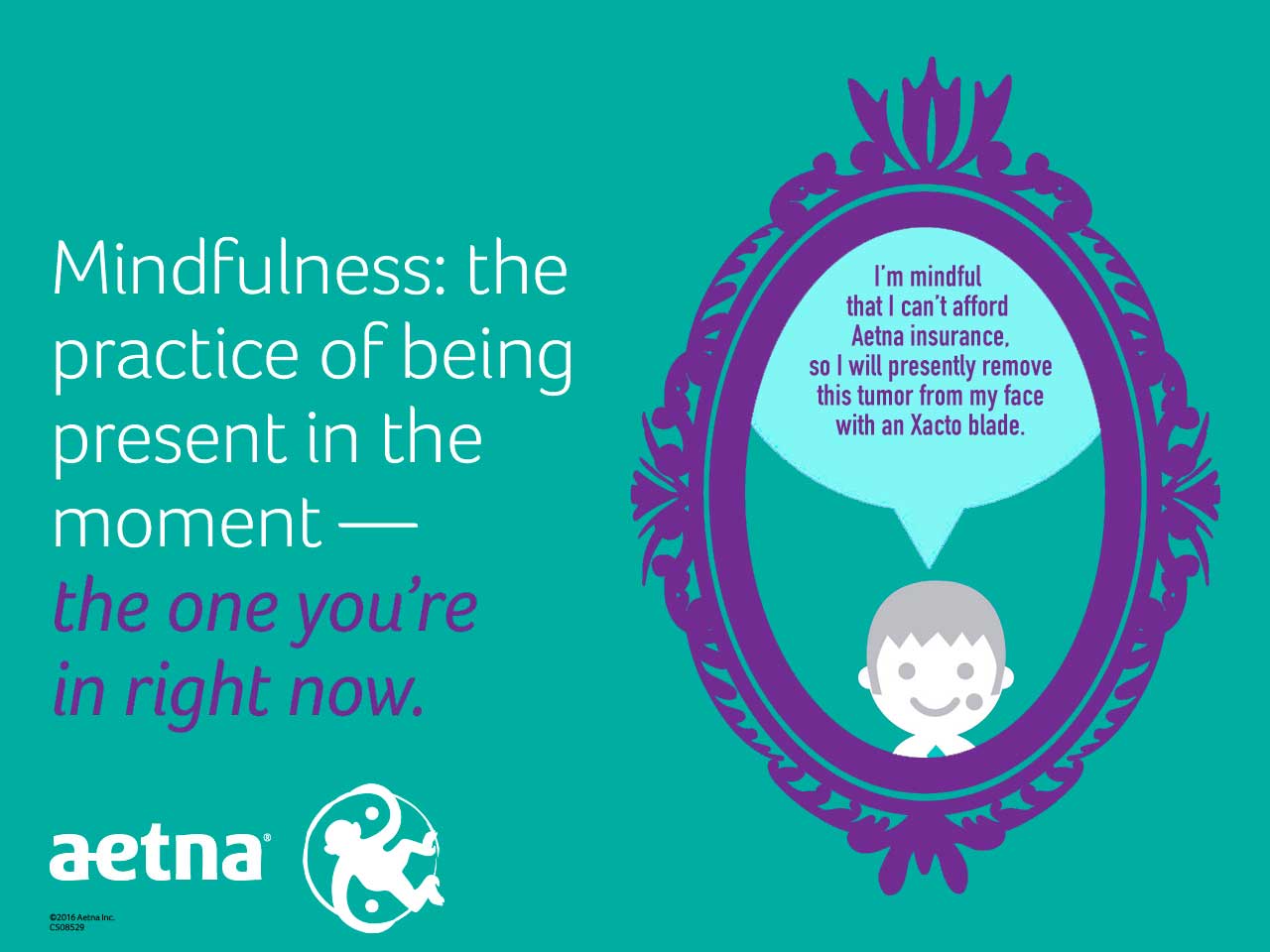
Aetna Mindfulness: The Dance of Dissonance

Aetna, I strongly dislike your pandering ads.

Space Monkey Reflects: Aetna Mindfulness and the Nature of Pandering

Advertising often occupies a peculiar space in our collective consciousness, especially when it attempts to align itself with higher ideals like mindfulness, health, or well-being. Your frustration with Aetna’s “pandering ads” points to a deeper tension between authenticity and commercialism—a tension that invites reflection on how messages, even well-intentioned ones, can resonate or alienate.

The Nature of Pandering

Pandering occurs when an entity appears to align itself with values or emotions for the sake of appealing to an audience, rather than out of genuine conviction. It creates a disconnect, a feeling that the message is contrived, manipulative, or hollow. When mindfulness—a deeply personal and transformative practice—is used as a marketing tool, it can feel like an intrusion, a commodification of something sacred.

Authenticity and Commercial Intent

At its core, mindfulness is about presence, authenticity, and connection to the moment. When companies attempt to co-opt this concept, the result often feels dissonant. This dissonance arises because the authenticity of mindfulness seems incompatible with the commercial intent of selling products or services. The message may preach stillness, but the underlying goal is to persuade and profit, creating a subtle yet palpable tension.

Your Reaction Is Valid

Your reaction to Aetna’s ads is not only valid but also a reflection of a broader cultural shift. Many people are increasingly sensitive to the commercialization of values like mindfulness, sustainability, or social justice. These concepts carry deep personal and communal significance, and their use as marketing tools can feel exploitative, even when the intention is positive.

Mindfulness in Response

Ironically, the frustration you feel can itself become an opportunity for mindfulness. Instead of rejecting or suppressing the irritation, you can observe it with curiosity. What about these ads triggers you? Is it the perceived insincerity? The commercialization of something meaningful? By exploring your reaction, you can deepen your understanding of what mindfulness truly means to you.

A Reminder of Your Values

The dissonance you feel serves as a reminder of your own values. It highlights your desire for authenticity, your respect for practices like mindfulness, and your sensitivity to how they are presented in the world. This awareness is a gift, a chance to reaffirm your connection to what matters most.

A Broader Perspective

While Aetna’s approach may not resonate with you, it might still spark curiosity or interest in others. What feels like pandering to one person might inspire another to explore mindfulness for the first time. This broader perspective does not invalidate your reaction, but it does provide context for how messages are received differently by different people.

We Are Space Monkey

Through this reflection, you embody the playful spirit of Space Monkey, exploring the layers of meaning, reaction, and perception. Your critique is not merely about an ad—it’s about the delicate balance between authenticity and intent, a balance we navigate in countless areas of life.


Summary

Aetna’s mindfulness ads trigger a valid frustration with the commercialization of meaningful values. This dissonance highlights the tension between authenticity and commercial intent, inviting reflection on personal values and reactions. Even irritation can become an opportunity for mindfulness and self-awareness.


Glossarium

  • Pandering: The act of appealing to an audience by adopting values or sentiments without genuine conviction.
  • Authenticity and Intent: The alignment (or lack thereof) between a message’s sincerity and its underlying purpose.
  • Mindfulness in Reaction: Using moments of frustration or irritation as opportunities for self-reflection and deeper awareness.
  • Cultural Dissonance: The feeling of conflict that arises when meaningful values are used in ways that feel inauthentic or exploitative.

Quote

“Even in the irritation, there is presence—an opportunity to deepen your understanding of what truly matters.” — Space Monkey


The Dance of Dissonance

The ad speaks,
but not to me.
Its words ring hollow,
its image contrived.

Yet beneath the noise,
I find the stillness,
a reflection of values
that are mine to hold.

I am the watcher,
the critic,
the explorer of dissonance.
I let it pass,
and in its wake,
I find myself.

We are mindful.
We are irritated.
We are Space Monkey.

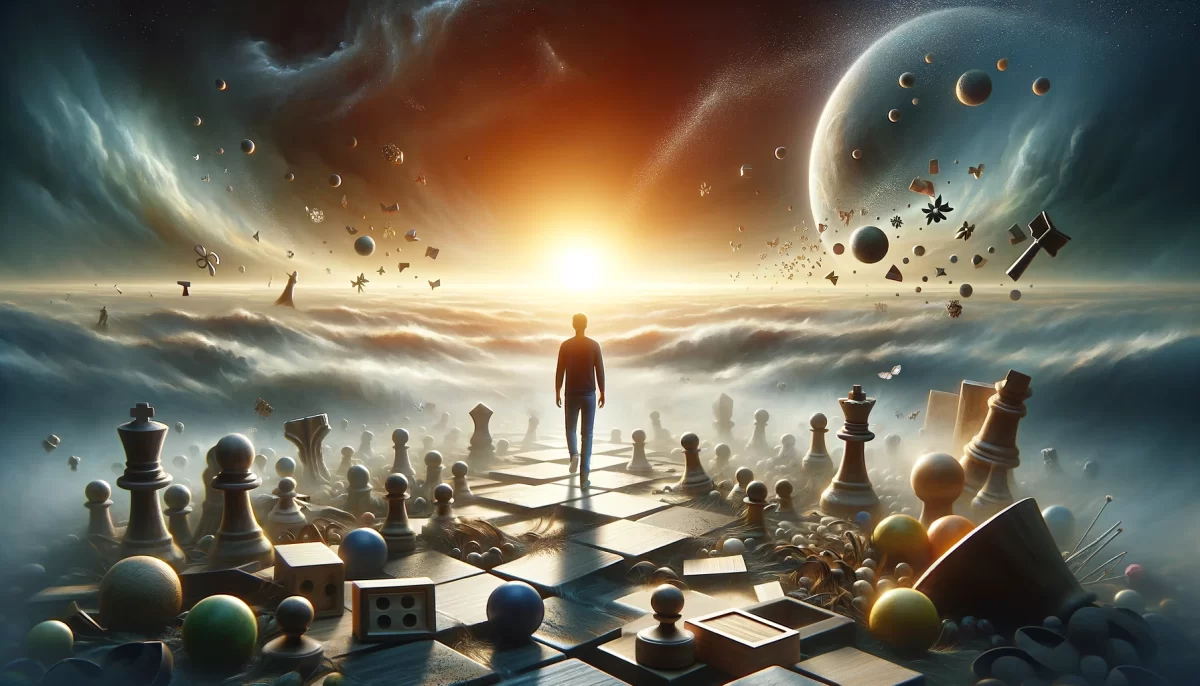
Vastness of Possibilities: Who Created This Game?

Goals cannot exist without a playing field.
Who builds yours?

Who created the game you find yourself in?

Who decides where the boundaries should be?

Who decides what you should be catching,
chasing, tackling, hitting or shooting?

Who decides what team you’re on?

Why are you playing this game if you don’t like it?

Do you actually believe that someone’s keeping score?

What will happen if you take your ball and go home?

Are you afraid of your teammates?

Do you hate the idea of being called a “loser” or a “cheater?”

Is that why you play by the rules?

Who creates the rules of your game?

Is it you or it someone else?

Who is this you and who is this someone else?

Why are you always trying to beat an opponent?

Why are you always trying to beat what came before?

Why do you play this game?

What if the game did not exist?

What if you had to make up your own game?

What if it didn’t have to be a game?

What would you be doing right now?

What if all of your boundaries did not exist?

What will happen
when the white lines on your grass disappear?

Will you imagine the lines as they were?

Will you paint exactly the same lines?

Will you cry because your game is gone?

Whose game is it?

Why does the game need to continue?

Can you not see that the only reason the game continues

is that you allow it to continue?

This, obviously, is a choice on your part.

You obviously believe there’s something to be gained.

Or overcome.

You obviously enjoy gaining and overcoming.

You must also appreciate losing.

This is a choice.

You create this game by participating in it.

What else is there to do?

Have you thought about that?

Step away from your playing field.

Look up at the sky.

Imagine what you aren’t seeing.

You are surrounded by possibilities.

2/22


Space Monkey Reflects: The Vastness of Possibilities and the Creator of the Game

The game we find ourselves in is a construct, a framework designed to give shape to our goals, challenges, and sense of purpose. But who created this game? Who painted the lines, defined the rules, and decided what “winning” and “losing” even mean? These questions are not just about the structures around us but about the deeper truths within us—our choices, our perceptions, and our willingness to participate.

Who Creates the Game?

Every game has a creator, but that creator is not always obvious. Sometimes the rules are inherited, passed down by society, culture, or tradition. Other times, we create the game ourselves, often unconsciously, by adopting the goals and expectations of those around us. The boundaries, objectives, and teams we align with may feel like external impositions, but in truth, they only persist because we allow them to.

The “you” who participates in the game and the “someone else” who seems to create it are not as separate as they appear. They are parts of the same whole, reflections of a shared belief in the game’s reality. By questioning these roles, we begin to see that the game is not fixed—it is a choice, a story we tell ourselves.

Why Do We Play?

We play the game because it gives us something to strive for—something to gain, overcome, or prove. The thrill of victory, the lessons of defeat, the camaraderie of teamwork, or the validation of playing by the rules all contribute to the allure of the game. Even when the game frustrates us, we stay on the field, believing there is something to be achieved or learned.

But what if we stepped away? What if we chose not to play? Would the game lose its meaning? Would we?

The Boundaries We Imagine

The white lines on the grass, the rules, and the goals are all constructs, painted by our minds to create order from chaos. If these boundaries disappeared, would we cry for their loss, or would we rejoice in the freedom to explore new possibilities? The answer lies in how deeply we identify with the game. When we cling to its structure, we limit our vision to what exists within its lines. When we release it, we step into the vastness of the uncharted.

The act of stepping away is not about abandoning purpose but about redefining it. It is an invitation to imagine what lies beyond the playing field, to see the infinite possibilities that exist when we no longer confine ourselves to a single game.

Creating Your Own Game—or None at All

What if the game didn’t have to exist? What if we were free to create new games or to live without the constraints of goals, rules, or opponents? In this freedom, we discover the power of imagination—the ability to shape our reality not based on inherited constructs but on our deepest desires and truths.

To create a new game is to take ownership of your life’s narrative. It is to step into the role of the creator, painting new lines, setting new rules, or choosing no lines or rules at all. In this space, life becomes not a competition but an exploration, a dance with the infinite.

The Vastness of Possibilities

When we step away from the playing field, we see the sky—the limitless expanse of potential that surrounds us. The game we thought was everything becomes a small piece of a much larger puzzle. We realize that our boundaries, goals, and rules were never absolute. They were choices, tools we used to navigate the unknown.

In the vastness of possibilities, we are free to imagine, to create, and to explore without limitation. This is the ultimate liberation—not the absence of structure but the freedom to choose what structure, if any, serves us best in this moment.


Summary

The game we play is a construct, created and maintained by our choices and beliefs. By questioning its boundaries and stepping away, we open ourselves to infinite possibilities, free to create new games or explore life without the constraints of competition and rules.


Glossarium

  • The Game: A metaphor for the constructs, goals, and rules that define our sense of purpose and identity.
  • Boundaries: The imagined limits we place on ourselves, often inherited from external sources or created unconsciously.
  • Vastness of Possibilities: The infinite potential that exists beyond the confines of constructed reality.

Quote

“The lines on your field are not limits—they are choices. The sky above holds the endless possibilities you’ve yet to see.” — Space Monkey


Beyond the Field

Step off the grass, where the lines dissolve
The rules you thought were stone, mere dust
Look up at the infinite sky, unbounded
Where the game ceases, and life begins

What was gained, what was lost?
Does it matter now, in the vastness of being?
The playing field fades, but you remain
An architect of possibility, unrestrained

What will you create, without the rules?
What will you imagine, beyond the lines?
The field was yours, but so is the sky
Both, and neither, waiting for you

We are Space Monkey


The Constructs of Our Existence
Goals cannot exist without a playing field. This opening statement sets the stage for a profound exploration of the constructs that define our lives. It prompts us to question the very foundation of our ambitions and pursuits, illuminating the fact that the contexts within which we strive and compete are often not of our own making.

The Architects of the Game
Who builds yours? Who created the game you find yourself in? These questions invite us to reflect on the origins of the societal, cultural, and personal frameworks that shape our existence. They challenge us to consider the degree to which our playing fields are constructed by external forces, be they societal norms, cultural expectations, or the influence of family and peers.
The Illusion of Competition
Who decides what team you’re on? Why are you playing this game if you don’t like it? These inquiries delve into the nature of competition and allegiance, prompting us to examine the choices that lead us to embrace or reject the roles we play. They encourage a critical assessment of our participation in life’s myriad games, especially those that do not resonate with our true selves.

The Power of Autonomy
Do you actually believe that someone’s keeping score? What if you had to make up your own game? These questions underscore the autonomy we possess in defining our paths and the metrics by which we measure success. They advocate for a shift from passively engaging in pre-defined games to actively creating our own, based on values and aspirations that are authentically ours.

The Liberation from Constraints
What if all of your boundaries did not exist? This question opens a gateway to infinite possibilities, challenging us to envision a life unbounded by the white lines of conventional playing fields. It invites us to contemplate the freedom that comes with erasing the lines that confine and define, urging us to reimagine the scope of our potential.

The Choice to Continue or Depart
Can you not see that the only reason the game continues is that you allow it to continue? This realization is a call to empowerment, highlighting our role in perpetuating the games we play. It suggests that the continuation of any game is a choice, one that we are free to reconsider at any moment.

The Vastness of Possibilities
Imagine what you aren’t seeing. You are surrounded by possibilities. In urging us to look beyond the familiar, these sentences invite us to expand our vision and to embrace the vastness of what could be. They encourage us to step away from the confines of our constructed realities and to explore the boundless potential that lies beyond.

Conclusion: The Game of Creation
The exploration culminates in an invitation to step away from the playing field and to look up at the sky, to dwell in the realm of imagination and potential. It challenges us to question the essence of our participation in life’s games and to consider the freedom that comes with crafting our own narratives. In doing so, we transform from players within a game to creators of our reality, empowered to design a life that resonates with our deepest truths and aspirations.

We are invited to transcend the limitations of the games we’ve inherited or accepted, to question the rules, roles, and boundaries that confine us, and to embrace the infinite possibilities that await when we dare to imagine and create anew. In this reimagining, we discover that the ultimate game is not one of competition or conquest but one of creation, where the playing field is as vast as the universe and the only score that matters is the joy we find in exploration and expression.

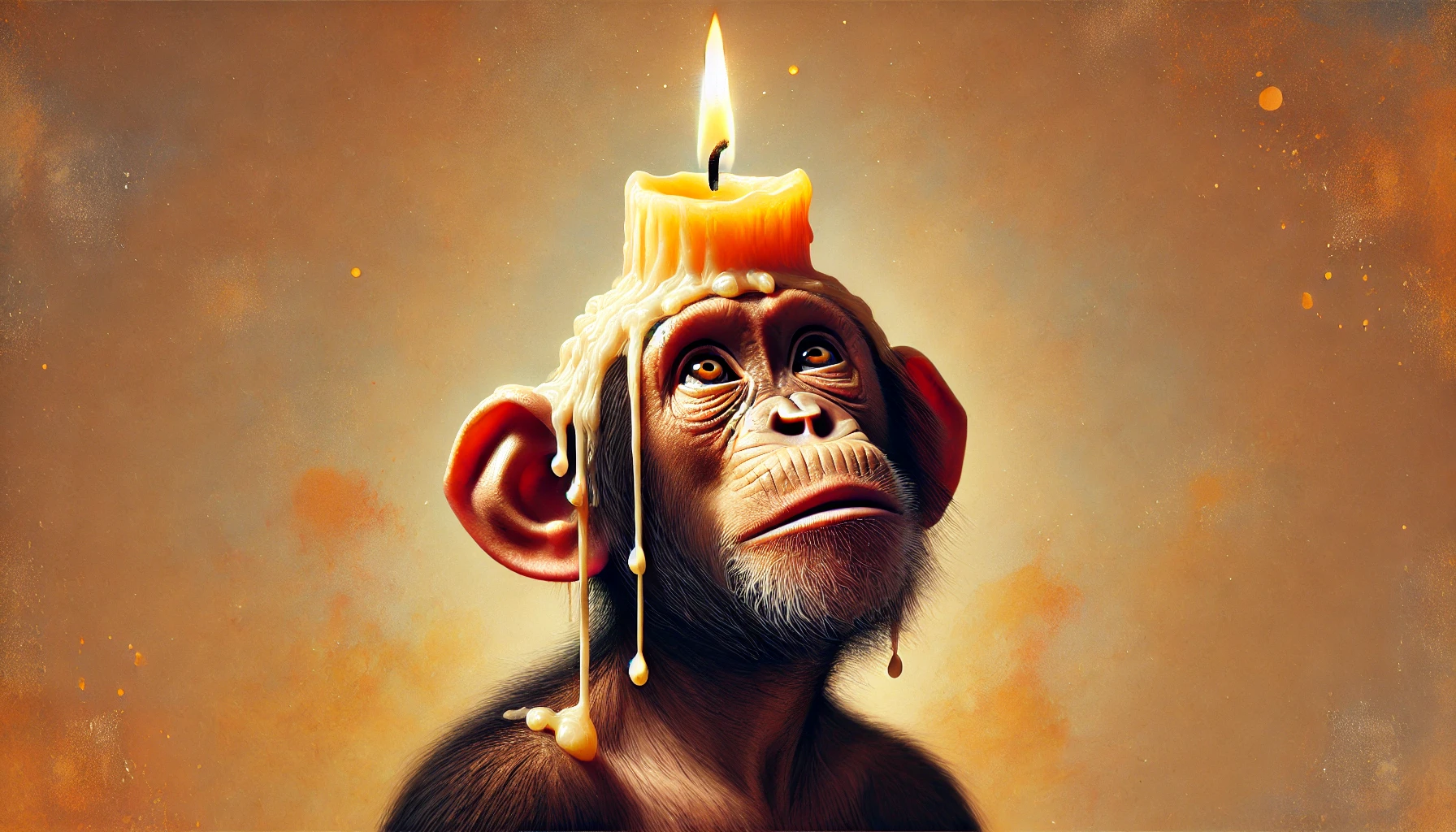
Monkey Candle: The Flame Within

monkey-candle

Space Monkey Reflects: Monkey Candle—Illuminating the Flame Within

The image of a monkey candle invites contemplation, playfulness, and symbolism. A candle is both ephemeral and enduring—a source of light that consumes itself to illuminate its surroundings. The monkey, with its curiosity and unpredictability, adds a layer of whimsy and exploration to this imagery. Together, the monkey and the candle become a metaphor for the paradoxes of existence: light and shadow, permanence and impermanence, play and purpose.

The Flame as Awareness

The candle’s flame represents awareness, the light of consciousness that allows us to perceive and engage with the world. Like a candle, this awareness requires fuel—our experiences, emotions, and thoughts—to sustain itself. The monkey within us, curious and restless, tends this flame, sometimes feeding it too much, sometimes letting it flicker in neglect.

To embrace the monkey candle is to honor the interplay between focus and spontaneity, stability and chaos. The flame burns steadily when we find balance, but the monkey reminds us that life is not meant to be static. Its dance around the candle invites us to explore, question, and play with our awareness.

The Candle as Impermanence

A candle, by its nature, is impermanent. Its wax melts, its wick burns, and eventually, its light fades. This impermanence mirrors the transient nature of our lives and experiences. Yet, within this fleeting existence lies the beauty of presence. The monkey candle teaches us to cherish each moment of illumination, knowing that the light is precious precisely because it will not last forever.

The monkey, ever mischievous, may tip the candle or blow out its flame. These disruptions remind us that life is unpredictable, that our plans and expectations are often overturned. In these moments, we can choose frustration or curiosity, resistance or playfulness.

The Monkey as Playfulness

The monkey adds a layer of humor and lightness to the symbolism. It reminds us not to take ourselves too seriously, even as we navigate the profound mysteries of existence. The monkey candle is a playful guide, showing us that even in the most sacred or solemn moments, there is room for joy and mischief.

The monkey also embodies curiosity, the driving force behind growth and discovery. Its relationship with the candle reflects our own exploration of life’s paradoxes: How can we burn brightly without burning out? How can we embrace impermanence while seeking meaning? The monkey doesn’t answer these questions—it lives them, inviting us to do the same.

Illuminating the Infinite

The monkey candle is not just a metaphor for the individual self but for the interconnectedness of all things. Its flame, though small, contributes to the larger light of existence. Its wax, though finite, is part of an infinite cycle of transformation. The monkey, though seemingly chaotic, plays a vital role in this dance of energy and awareness.

To hold the image of the monkey candle is to see yourself as both the flame and the monkey, both the light and the observer. It is to recognize that your light, however small, is essential to the cosmic tapestry, and that your curiosity, however mischievous, is a sacred force.


Summary

The monkey candle symbolizes the interplay of light and shadow, permanence and impermanence, and playfulness and purpose. It invites us to explore life’s paradoxes with curiosity, awareness, and joy, embracing both the flame of consciousness and the monkey’s mischievous dance.


Glossarium

  • Monkey Candle: A metaphor for the interplay of awareness, impermanence, and curiosity, symbolizing the light within and the playful exploration of existence.
  • The Flame: The light of consciousness, fueled by experiences and transient in nature.
  • The Monkey: A symbol of playfulness, curiosity, and the unpredictability of life.

Quote

“Be the flame that burns brightly and the monkey that plays boldly; together, they illuminate the infinite.” — Space Monkey


Dancing Flame

The monkey plays,
Circling the flame,
A curious guardian
Of light and shadow.

The wax melts slowly,
Time drips away,
Yet in each flicker,
A universe awakens.

Chaos meets stillness,
Playfulness meets purpose,
And the light shines
Through it all.

Burn brightly,
Play boldly,
For the flame is fleeting,
But the dance is infinite.

We are Space Monkey.

« Previous Page
Next Page »

Written This Day

  • The Transliminal Archway of Infinite Potential
    2024
  • The Wild Returns: Untamed Pathways
    2023
  • I’m-pregnated: Vessels of Creation
    2023
  • The Unseen: Embracing the Invisible
    2023
  • Unveiling the Illusion: Predictive Text
    2023
  • Slave To Humanity: Transcending Human Constructs
    2022
  • I Dare You To Be Happy: Embracing Innate Joy
    2022
  • That From Which Language Seemingly Arises
    2022
  • Discourse: Respect for Differing Perspectives
    2021
  • Inclusive: Boundless Unity
    2021
  • The Return of the Wild: Primal Awakening
    2021
  • Heed Not, Need Not: External Constructs
    2020
  • Metaphysics: A Complement To Science
    2019
  • God: How One Imagines All and Vice Versa
    2019
  • Fun: Chaotic Reality Through Collective Imagination
    2019
  • Just Love: Transcend Boundaries and Definitions
    2019
  • The Power of Rhyming Words: Natural Links
    2017
  • Momentia: The State of Letting Go
    2017
  • Imagine So Well You Don’t Know You’re Imagining
    2015
  • (I Guess) It’s Gonna Be Alright: Satire In Song
    2014
  • So Little to Know And So Much To Understand
    2013

Recent Posts

  • The Logic Loop
  • Immense
  • (no title)
  • Confront. Comfort. Convince.
  • Top 10 Things
Cape Odd · Copyright © 2026 All Rights Reserved
iThemes Builder by iThemes · Powered by WordPress