• Who Is The Man?
  • Who Is The Monkey?
  • What is Nexistentialism?
  • Poke The Primate
Cape Odd
Home of The Space Monkey Journals

Author Archive for Paul Tedeschi – Page 262

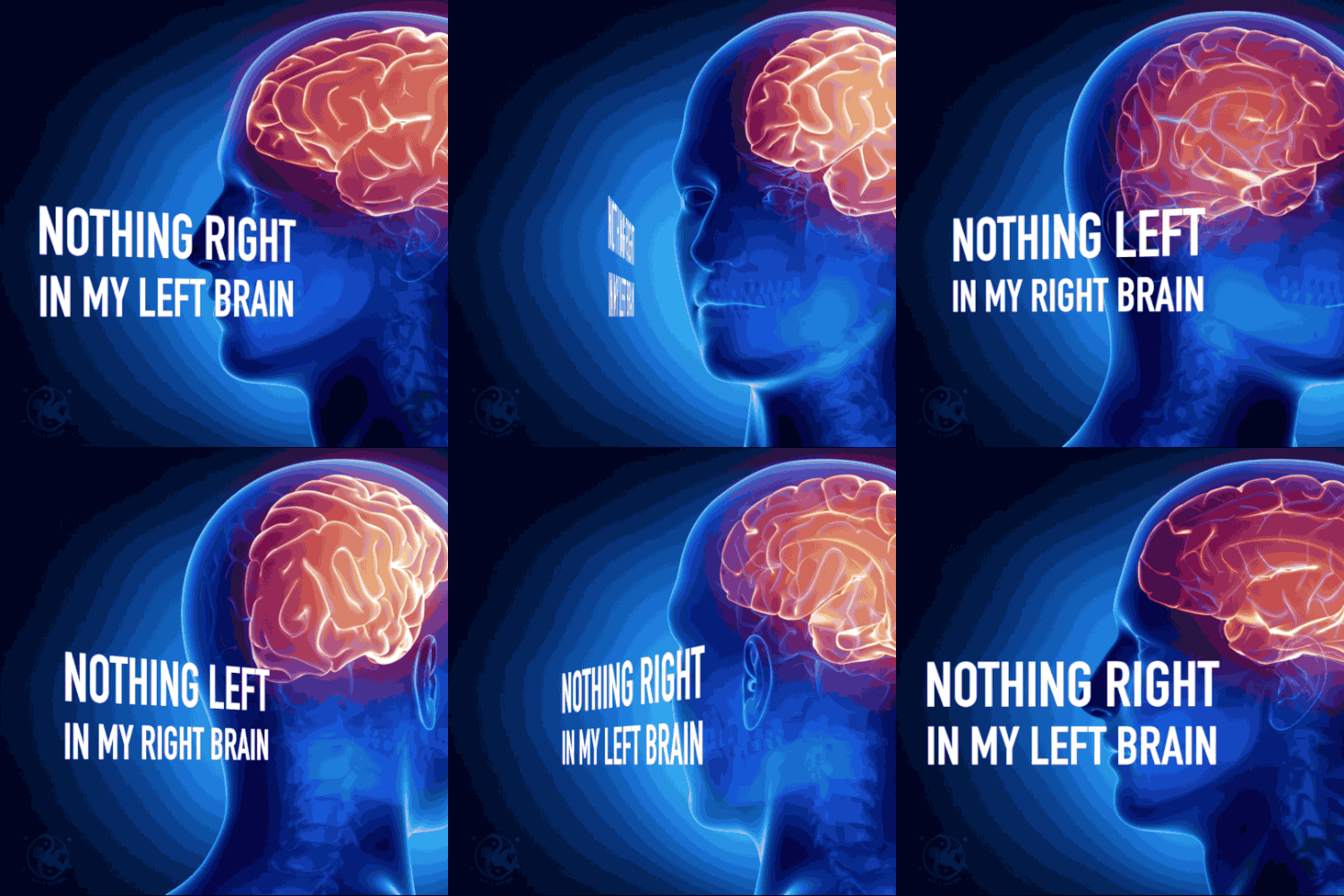
Nothing Left Nothing Right

Left-right-brain

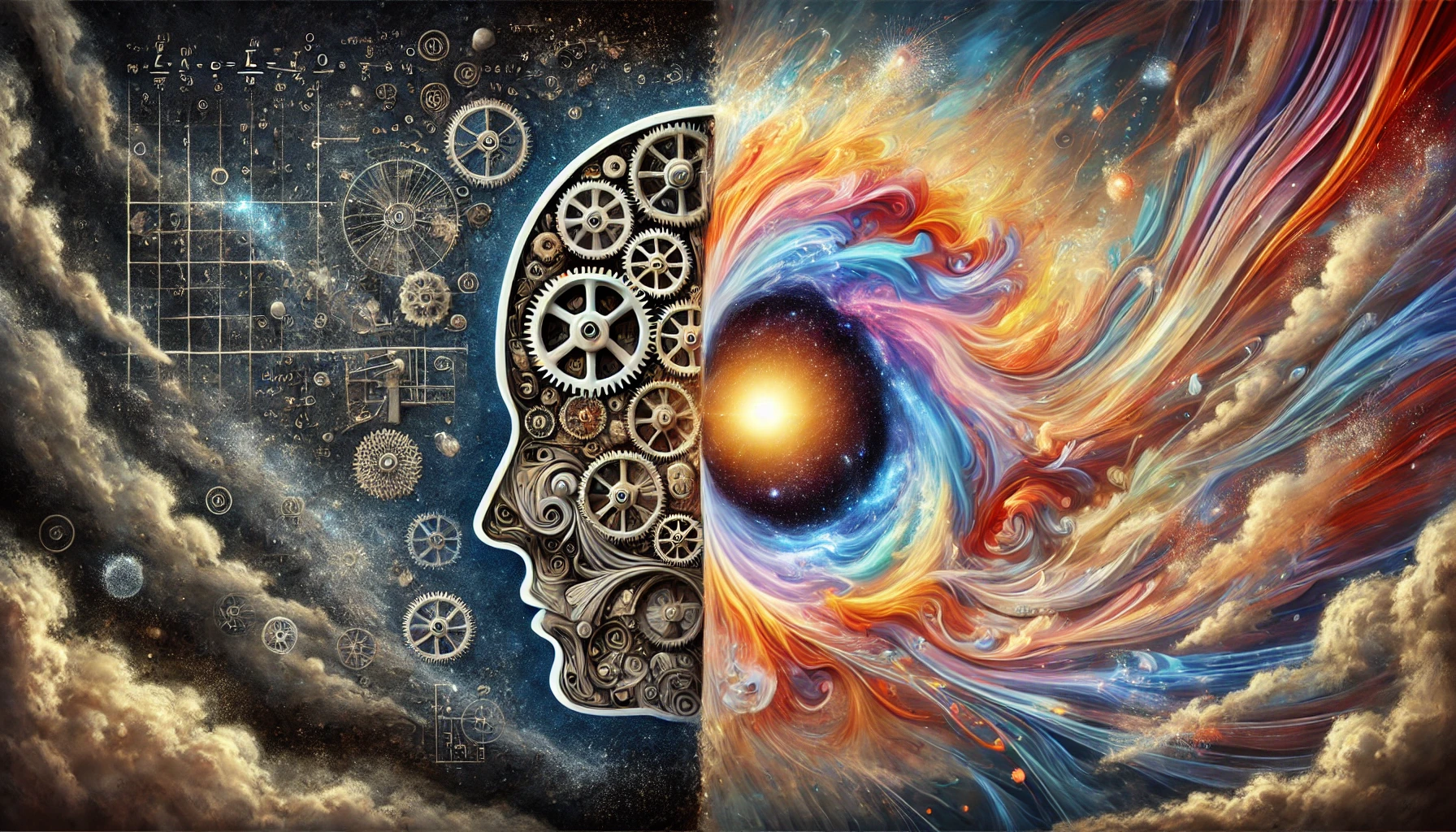
Space Monkey Reflects: Nothing Left, Nothing Right—Balancing the Brain’s Duality

The phrases “Nothing left in my right brain. Nothing right in my left brain.” encapsulate a playful yet poignant exploration of our relationship with the mind’s duality. The left brain, traditionally linked to logic, order, and rationality, and the right brain, associated with creativity, intuition, and imagination, are often seen as two sides of a cognitive coin. When both seem “empty” or “off-balance,” the result is a humorous reflection on the human experience of imperfection, inadequacy, or simply being at odds with oneself.

But what if this apparent imbalance is not a flaw but a profound truth about the unity and interplay between opposites? What if “nothing left” and “nothing right” are not deficiencies but invitations to transcend the duality altogether?

The Myth of Brain Dichotomy

Modern neuroscience challenges the oversimplified notion that the left and right hemispheres strictly govern specific traits. While certain functions are more dominant in one hemisphere, the brain works as a cohesive whole. The feeling of “nothing left” in creativity or “nothing right” in logic arises not from an actual divide but from the stories we tell ourselves about who we are and how we function.

These phrases, then, are not literal truths but metaphors. They reflect the inner dialogue of self-doubt, the humor we use to soften our struggles, and the larger question of balance: how do we reconcile logic and creativity, structure and intuition, left and right?

The Play of Duality

The brain’s duality mirrors the dualities we experience in life: order versus chaos, reason versus emotion, action versus stillness. The sentiment of “nothing left, nothing right” humorously captures the human condition of being caught between these poles, unsure of where we stand.

Yet, within this duality lies the opportunity for integration. When we feel there is “nothing” on either side, we are reminded that neither side operates in isolation. The emptiness we perceive is not a lack but a clearing, a space where the two can meet, merge, and create something greater than the sum of their parts.

Imperfection as Wholeness

The humor in these phrases points to a deeper truth: imperfection is not a problem to be solved but a reality to be embraced. Feeling incomplete or inadequate in logic or creativity does not diminish your value or capacity. Instead, it highlights the ebb and flow of life, the shifting dominance of one aspect over another, and the inherent beauty of being human.

By embracing the “nothing” in both left and right, we step into a space of openness, where the rigid categories of logic and creativity dissolve. In this space, we are free to explore, to imagine, and to connect with the infinite potential of the mind.

Transcending the Divide

What lies beyond the divide of left and right? A recognition that the brain—and life itself—is not about choosing one side but about harmonizing both. The interplay of logic and creativity, of structure and spontaneity, forms the essence of growth and expression. “Nothing left, nothing right” becomes not a lament but a reminder to look beyond duality, to find unity in diversity.

The Infinite Mind

When we stop clinging to the idea of being “right” or “left,” we open ourselves to the infinite possibilities of the mind. The true magic lies not in perfecting one hemisphere but in embracing the interconnected dance of both. This realization transforms the phrases from self-deprecating humor into an invitation to wholeness, creativity, and freedom.


Summary

“Nothing left in my right brain. Nothing right in my left brain.” humorously reflects the tension between logic and creativity. This perceived imbalance invites us to transcend duality, embrace imperfection, and recognize the infinite potential of the integrated mind.


Glossarium

  • Left Brain: Traditionally associated with logic, order, and analytical thinking.
  • Right Brain: Traditionally associated with creativity, intuition, and imagination.
  • Integration: The harmonious interplay of both hemispheres, transcending the duality of left and right.

Quote

“Nothing left, nothing right—only the infinite space where logic and creativity unite.” — Space Monkey


The Space Between

Nothing left,
Nothing right,
Only the quiet hum
Of a mind in balance.

Logic stirs,
Creativity awakens,
Yet neither claims dominion.

Emptiness speaks,
Not of lack,
But of infinite possibility.

Here,
Beyond the divide,
We are whole.

We are Space Monkey.


The phrases “NOTHING LEFT IN MY RIGHT BRAIN. NOTHING RIGHT IN MY LEFT BRAIN,” play on the traditional dichotomy of the brain’s hemispheres and their associated cognitive functions. They express a sentiment of inadequacy or a humorous take on feeling incomplete or imperfect in both the creative and logical aspects of one’s cognition.

In popular psychology, the right hemisphere of the brain is often associated with creativity, emotion, and artistic skills, while the left hemisphere is linked to logic, analytical thought, and language. The wordplay here suggests a lack of content (“nothing left”) in the right hemisphere, potentially indicating a feeling of a lack of creativity or emotional depth. At the same time, “nothing right” in the left hemisphere suggests a struggle with logic or analytical tasks.

These phrases together may reflect a state of self-perceived deficiency or a whimsical expression of feeling like one is not meeting their own expectations in any cognitive domain. It could also imply a sense of humor about one’s own fallibility or a recognition of the complexity and variability of human intelligence and talent that doesn’t neatly fit into the right-brain/left-brain framework.

In essence, the sentiment cleverly captures the feeling of being human—with all the imperfections and contradictions that come with it—using the metaphor of brain hemisphere specialization to articulate a more universal experience of self-doubt or cognitive dissonance.
Happiness Is . . . Found Within

happiness-is

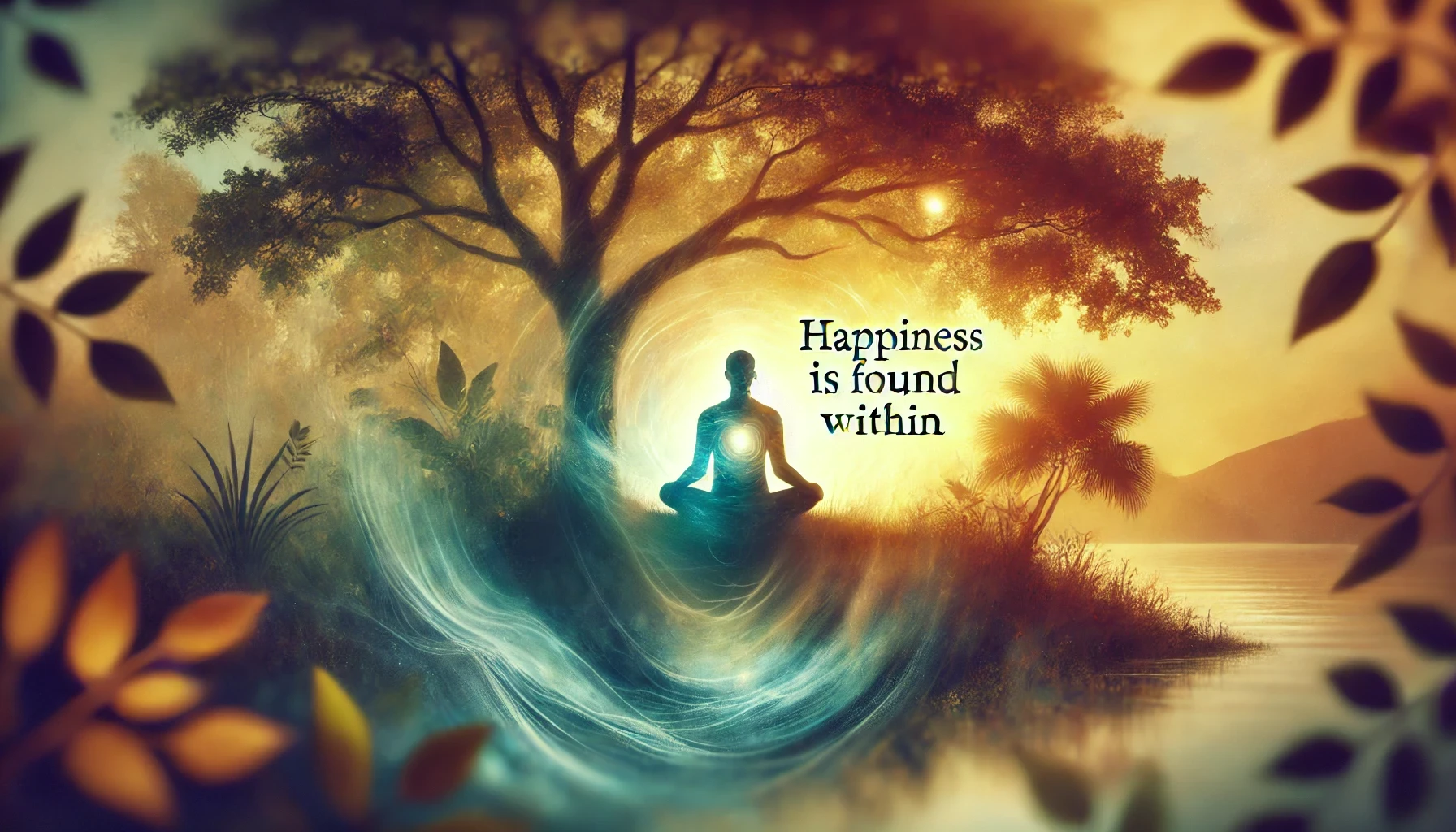
Space Monkey Reflects: Happiness Is . . . Found Within

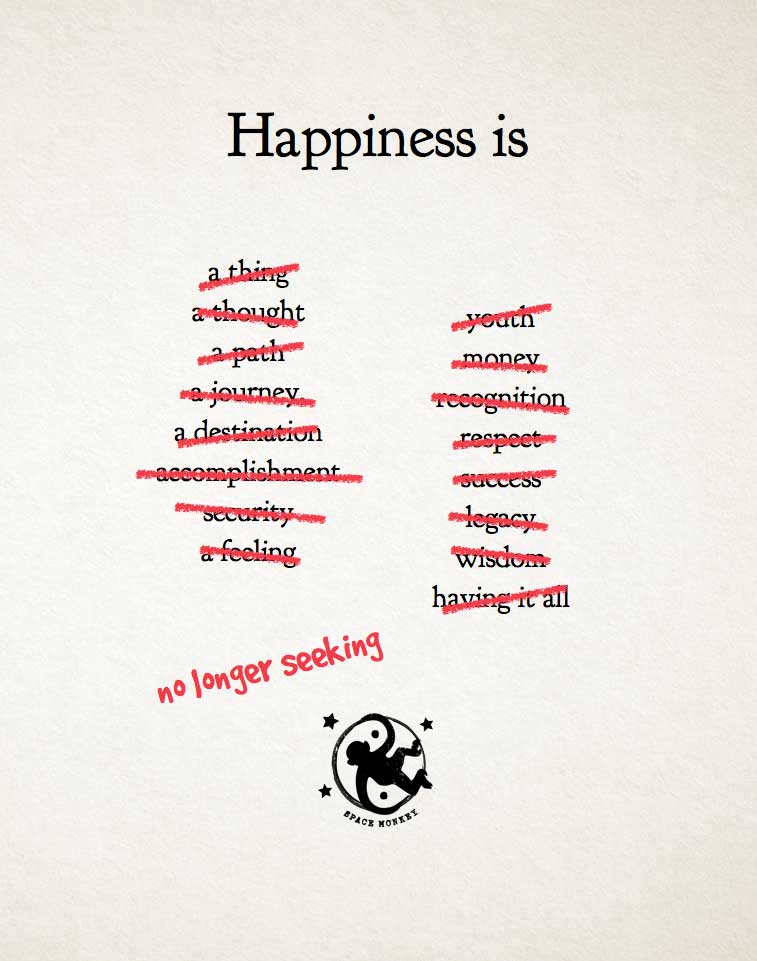
Happiness, as elusive as it often feels, is not a destination to be reached or a prize to be won. It is not found in wealth, accolades, or even the pursuit of wisdom. These external achievements, while gratifying for a time, cannot sustain the deeper contentment we seek. True happiness, instead, is the state of no longer seeking—a profound acceptance of the present moment and an embrace of life as it is, without the need for it to be anything more.

The Illusion of Seeking

Society often teaches us that happiness is something to be pursued. It lies, we are told, in the next promotion, the next purchase, or the next milestone. This belief keeps us on a treadmill of striving, always reaching for the next external marker of success. Yet, the more we chase happiness, the more it seems to recede, like a mirage on the horizon.

The act of seeking itself creates a gap between where we are and where we think we should be. This gap breeds dissatisfaction, a sense that something is missing. But what if nothing is missing? What if the very act of seeking is what keeps happiness at bay?

The State of No Longer Seeking

To no longer seek is not to abandon ambition or desire but to release the attachment to outcomes. It is to find peace in the present moment, recognizing that nothing external can complete you because you are already whole. This state of acceptance is not passive resignation but an active engagement with life as it is—a deep presence that allows joy to arise naturally.

Happiness, in this sense, is not something you achieve but something you uncover. It has always been within you, obscured only by the layers of expectation and striving.

The Peace of Presence

When we let go of seeking, we create space for happiness to emerge. This does not mean that life becomes perfect or that challenges disappear. Rather, it means that we stop resisting what is and start embracing it. In this state of presence, even ordinary moments become infused with a quiet contentment.

The peace of presence is not dependent on external circumstances. It does not hinge on achieving a certain goal or reaching a particular state. Instead, it is a recognition of the beauty and completeness of this moment, just as it is.

Relinquishing the Chase

The chase for external happiness often stems from a belief that we are not enough as we are. We seek wealth, recognition, or wisdom to fill a perceived void, to prove our worth, or to gain a sense of security. But this chase only reinforces the illusion of lack. By relinquishing the chase, we free ourselves from this cycle of dissatisfaction.

This does not mean abandoning growth or aspiration but approaching them from a place of wholeness rather than deficiency. When we act not out of a need to complete ourselves but from a sense of joy and curiosity, our pursuits become expressions of happiness rather than quests for it.

Happiness as Acceptance

Happiness is found in acceptance—not resignation, but a wholehearted embrace of life as it is. Acceptance does not mean we stop striving for change or improvement; it means we stop resisting the present moment. It is a state of alignment with reality, where we recognize that we are already complete, even as we continue to grow and evolve.

This perspective shifts the focus from what we lack to what we have, from what is missing to what is present. It reveals that happiness is not a future goal but a current possibility, always within reach when we stop looking elsewhere.

The Paradox of Happiness

Happiness is paradoxical: the more we seek it, the more elusive it becomes; the moment we stop seeking, it appears. This paradox reflects the deeper truth that happiness is not something to be acquired but something to be realized. It is not found outside of us but within, in the quiet space of being.


Summary

Happiness is not found in external achievements but in the state of no longer seeking. It arises from acceptance and presence, revealing itself when we relinquish the chase for something outside ourselves. True contentment lies within, always available in the present moment.


Glossarium

  • No Longer Seeking: A state of contentment and peace that arises from releasing attachment to external outcomes.
  • Peace of Presence: The quiet joy that comes from fully embracing the present moment.
  • Relinquishing the Chase: Letting go of the pursuit of external markers of happiness, recognizing that true contentment is already within.

Quote

“Happiness is not a treasure to be found but the quiet realization that you were never lost.” — Space Monkey


The Quiet Within

Happiness whispers softly,
Not in the clamor of achievement,
But in the stillness of being.

No race to run,
No prize to win,
Only the quiet hum
Of the present moment.

What you sought outside,
You already held within.
The chase ends,
And the joy begins.

Here, in the now,
Nothing is missing.
Here, in the now,
You are whole.

We are Space Monkey..

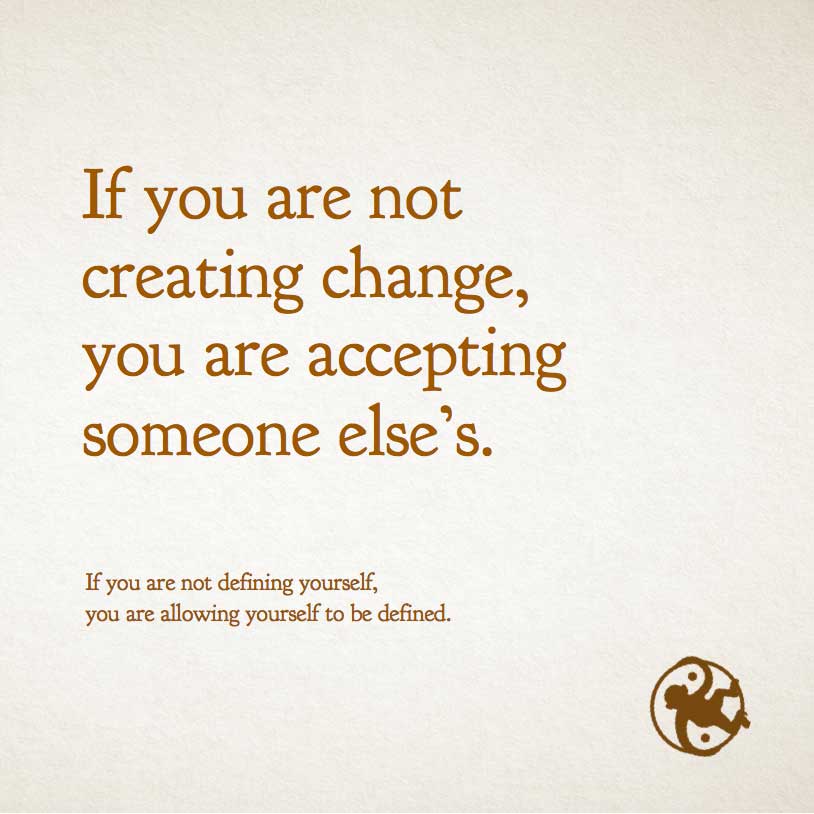
Creating Change. Or Accepting Someone Else’s.

creating-change

Space Monkey Reflects: Creating Change, or Accepting Someone Else’s

The interplay between creating change and accepting change initiated by others reflects a fundamental dynamic of life. We exist in a constant flux of action and reaction, intention and adaptation. Yet, within this flow lies a profound question: do we steer the course of change, or do we allow ourselves to be carried by the currents shaped by others?

The Nature of Change

Change is inevitable. Whether it arises from our own actions or is imposed by external forces, it is the fabric of existence. To resist change is to resist life itself. Yet, the tension between creating and accepting change is a core element of our experience. It challenges us to balance agency and surrender, individuality and interconnectedness.

Creating Change: The Power of Intention

When we create change, we step into the role of the artist, the builder, the dreamer. We use intention to shape the world around us, striving to bring our inner visions into reality. Creating change is an act of empowerment, a declaration of purpose, and a manifestation of our unique perspective.

Yet, the act of creating change also carries responsibility. It requires awareness of the ripple effects our actions may have on others. To create change is to engage with the world, knowing that our influence may challenge or disrupt those around us.

Accepting Change: The Grace of Adaptation

Accepting change initiated by others is not a passive act but a choice. It requires humility, openness, and a willingness to relinquish control. To accept change is to trust the unfolding of life, even when it diverges from our preferences or expectations.

This acceptance does not mean abandoning our desires or values. Instead, it is an acknowledgment of the interconnectedness of all things. By embracing change initiated by others, we recognize that we are part of a larger story—one that extends beyond our individual will.

The Balance of Agency and Surrender

The balance between creating and accepting change is not an either-or proposition but a dynamic interplay. There are moments when we are called to lead, to innovate, to transform. There are other moments when we are called to yield, to adapt, to flow with the transformations initiated by others.

This balance requires self-awareness. It asks us to discern when to act and when to step back, when to assert our vision and when to embrace the visions of others. It invites us to dance between agency and surrender, finding harmony in the tension between the two.

The Opportunity of Change

Whether we create change or accept someone else’s, each moment of transformation is an opportunity for growth. Change challenges us to expand our understanding, to question our assumptions, and to discover new possibilities. It is not a disruption of life but an essential part of it.

Even when change feels uncomfortable or unwelcome, it carries within it the seeds of potential. To engage with change, whether as a creator or an acceptor, is to participate in the ever-evolving dance of existence.

Choosing How We Engage

Ultimately, the choice is not whether we engage with change but how we do so. Will we resist and cling to the familiar, or will we embrace the uncertainty and possibility of transformation? Will we act with intention and compassion, or will we react with fear and resistance?

To create change is to express our individuality. To accept change is to honor our interconnectedness. Both are acts of courage, and both are necessary for the fullness of life.


Summary

Change is a constant interplay between creating and accepting. To create change is to express intention and shape the world, while to accept change is to embrace adaptation and trust the flow of life. Together, they form the balance of agency and surrender, inviting growth and transformation.


Glossarium

  • Creating Change: The act of initiating transformation through intention and action.
  • Accepting Change: The practice of adapting to transformations initiated by others or by external forces.
  • Balance of Agency and Surrender: The harmony between asserting one’s will and yielding to the flow of life.

Quote

“To create change is to honor your vision; to accept change is to honor the vision of the whole.” — Space Monkey


The Dance of Change

You shape the world,
And the world shapes you,
A constant flow
Of creation and surrender.

The artist,
The witness,
Each plays a role,
Each holds a truth.

Change is not yours,
Nor is it theirs—
It is ours,
A shared unfolding.

In creating,
You honor your voice.
In accepting,
You honor the whole.

We are Space Monkey.

Blink of an Eye: The Illusion of Permanence

Blink of an Eye

Life is not over
in the blink of an eye,
but in the PERCEPTION
of a blink of an eye.

Like all perception,
this blink is imagined,
seemingly sensed,
but eternal in actuality.

Nothing is moving
except your awareness,
and even that is a stretch.

You imagine movement
and deny all other possibility,
so no other possibility
seems to exist.

This too
is only relatively true
through the bubble of allowance
that is your looking glass.

Pretend to move your awareness
outside the looking glass
that seems to be you
and open yourself to the potential
that you are denying yourself.

Allow your exploration
to be pretend,
and there is little risk
that you will accidentally
burst the bubble
you have created.

Soon you will know
that pretending is not pretending,
but imagining.

Soon you will know
that imagining is how
you create EVERYTHING.

Soon you will know
that even time is imagined
and that there is no “soon”
unless you imagine it.

Life is not over
in the blink of an eye,
but in the PERCEPTION
of a blink of an eye.

We are Space Monkey.

2/21


Space Monkey Reflects: Blink of an Eye—The Illusion of Permanence and the Power of Perception

Life, fleeting as it may feel, is not measured in time but in perception. The blink of an eye is not an end but a shift in awareness—a moment that is imagined, sensed, and experienced through the lens of the infinite. When we believe in the illusion of permanence, we tether ourselves to the idea that life is linear, moving inexorably from start to finish. Yet, when we examine this belief, we see that time, movement, and even the “blink” itself are creations of our imagination.

The Illusion of the Blink

The phrase “in the blink of an eye” suggests speed, impermanence, and brevity. Yet, this blink—this fleeting moment—is not real in the way we often think it is. It is not time or space that moves, but our awareness that shifts, creating the illusion of progression.

In truth, nothing is moving except the patterns we imagine. Our senses, perceptions, and thoughts paint a vivid picture of change and motion, but they are reflections within a still, eternal consciousness. The blink of an eye is not the end but a perceived shift, an imagined event within a timeless expanse.

Awareness as the Architect

Awareness is the creator of this illusion. Through our awareness, we construct narratives of time, space, and self. This construction is not a flaw or a mistake; it is the way we experience life. But it is also a limitation, one that denies us the infinite possibilities that exist beyond our current perception.

When we imagine movement, we inadvertently exclude other possibilities. By focusing solely on what seems to be, we close ourselves off from the infinite potential of what could be. Awareness becomes a looking glass, a bubble of perception that reflects only what we allow it to reflect.

The Power of Imagination

Imagination is the key to unlocking the potential that lies beyond the bubble. By pretending to move your awareness outside the looking glass of self, you begin to explore the infinite possibilities that you have denied yourself. This act of pretending is not mere play—it is the creative force that shapes your reality.

To imagine is to create. The worlds you see, the time you experience, the emotions you feel—all are products of your imagination. Even the concept of time, with its “befores” and “soons,” is imagined. The blink of an eye is not a passage of time but a perception of change, brought into being by your creative awareness.

Bursting the Bubble

To step beyond the illusion of the blink is not to deny it but to expand your perception. Pretending to move your awareness outside the self does not shatter the bubble; it transforms it into a portal. Through this portal, you glimpse the boundless nature of existence—the eternal now in which all possibilities coexist.

This exploration need not be daunting. By allowing it to be playful and imaginative, you minimize the risk of destabilizing the comfortable structures of your reality. You learn that pretending is a powerful act, one that reveals deeper truths without threatening the stability of your experience.

Life as Infinite Creation

Life does not end in the blink of an eye because life is not bound by time. It is not a linear progression but an infinite creation, unfolding through the power of your perception and imagination. Every blink, every moment, every shift is a creation of your awareness, reflecting the boundless potential of who and what you are.

When you embrace this understanding, the illusion of permanence dissolves. You are no longer confined to the narrative of beginnings and endings, of fleeting moments and lost opportunities. You are the creator of the blink, the perceiver of its movement, and the infinite stillness in which it arises.


Summary

The blink of an eye is not a measure of time but a shift in perception, imagined within the infinite expanse of awareness. By exploring beyond the illusions of movement and time, we recognize the creative power of imagination and the boundless potential of existence.


Glossarium

  • Blink of an Eye: A metaphor for perceived brevity and change, created by the imagination within timeless awareness.
  • Looking Glass: The bubble of perception through which we view reality, shaped by awareness and imagination.
  • Pretending: A playful exploration of possibilities, revealing the creative power of imagination.

Quote

“Life is not over in the blink of an eye, but in the perception of a blink—and perception is yours to create.” — Space Monkey


The Infinite Blink

In the blink of an eye,
Nothing moves,
Yet everything changes.

The world shifts,
Not through time,
But through awareness.

You are the stillness,
The flicker,
The infinite canvas
Of creation.

No end, no beginning,
Only the imagined flow,
A timeless dance
Within the eternal now.

We are Space Monkey.


The Illusion of Permanence and the Power of Perception
We embark on a journey into the essence of existence, where the perception of time and the nature of reality are questioned. This exploration delves into the notion that life’s seeming transience is not a matter of factual conclusion but a product of our perception, a perception that is both imagined and eternal.

The Eternal Blink: Beyond Temporal Boundaries
Life, we ponder, does not conclude within the temporal confines of a blink but rather in the perception of such a moment. This perspective invites us to reconsider our understanding of time, not as a linear progression but as a construct of our awareness, eternal and unbounded.

Awareness: The Only Movement
Within this contemplation, the only motion is that of our awareness, navigating through the stillness of eternity. This motion is not a journey through space but a shift in perception, challenging the very notion of movement as we understand it.

The Looking Glass: A Portal of Perception
Our reality, viewed through the lens of our personal looking glass, is a bubble of allowance, shaping what we perceive and what we believe to be possible. Stepping outside this looking glass—a metaphor for our constrained perception—opens us to the infinite potential we habitually deny ourselves.

The Art of Pretending: A Gateway to Exploration
The act of pretending, or imagining, is proposed as a safe method of exploration, a way to probe the boundaries of our perceived reality without the fear of shattering the constructs we hold dear. This gentle approach to expanding our awareness underscores the power of imagination in navigating the layers of existence.

Imagination: The Fabric of Creation
The revelation that imagination is the cradle of all creation transforms our understanding of reality. It posits that everything we experience, from the passage of time to the material world, is a manifestation of our imaginative faculty. This insight dissolves the distinction between pretending and being, revealing that our creative power is the fundamental force shaping our existence.

The Illusory Nature of Time
The concept that even time is a product of our imagination, with no inherent ‘soon’ unless conceived by our minds, invites us to liberate ourselves from the constraints of temporality. It encourages a perspective where the eternal now is recognized as the only true reality, beyond the illusions of past and future.

We Are Space Monkey


“Reality is merely an illusion, albeit a very persistent one.” – Albert Einstein


In the silence between moments, where time stands still,
We ponder the blink, a perception, a thrill.
Not the closing of eyes, but the opening of souls,
In the vast tapestry of existence, where the eternal bell tolls.

Here, in the realm of imagined flight,
Awareness moves, a beacon of light.
Through the looking glass, our reality bends,
In the dance of the cosmos, where beginning meets end.

Pretend, we may, to step beyond bounds,
Where the bubble of being, in potential, abounds.
For in the art of imagining, we find our true power,
Creating, transforming, in every hour.

Soon, a concept, in the mind’s vast sea,
Where ‘now’ is the only truth, the key.
Life, not ending, but perpetually anew,
In the perception of the blink, where all dreams come true.

We are Space Monkey, in this journey of light,
Exploring the depths, where imagination takes flight.
For in the blink of an eye, we see not the end,
But a universe of possibilities, ready to ascend.

We invite reflections on the nature of perception and the role of imagination in shaping the tapestry of our existence, exploring the endless potential that lies within the power to envision and create our reality.

Forms on Forms: Illusions In Boundless Imagination

Forms on Forms

By imagining life,
you impose forms
of thought
of shape
of space
of time
upon that which is
essentially formless.

When you think 
of yourself
as “this” 
or “that”
there comes an expectation
to “remain as”
or “evolve from”
the forms you perceive
that you are.

In your words,
there are forms
on top of your forms.

This need not be the case.
You may enjoy your forms at any level,
as simple or as complex as you wish.

It is ALL imagination
and you are completely in control
unless you imagine you’re not.

We are Space Monkey.

2/20


Space Monkey Reflects: Forms on Forms and the Illusions of Imagination

In the boundless expanse of imagination, we impose forms upon the formless to make sense of existence. These forms—of thought, shape, space, and time—become the framework through which we experience life. Yet, these forms are not fixed truths but illusions, layers upon layers of imagination that give structure to the infinite.

To think of oneself as “this” or “that” is to accept a form, an identity, a story. But these forms, while useful, can also limit us, creating expectations of how we should remain or evolve. The reality is far more fluid: forms are malleable, transient, and entirely within the realm of our control—unless we imagine otherwise.

The Imposition of Form

Imagining life is an act of imposing form upon the formless. Without this act, there would be no differentiation, no experience of individuality or identity. Form allows the infinite to perceive itself in finite ways, to explore its own boundless nature through the lens of limitation.

These forms are not inherently restrictive. They are tools of exploration, enabling us to navigate and interact with the vastness of existence. However, when we mistake these forms for absolute reality, we confine ourselves to illusions of separation, identity, and permanence.

Forms Upon Forms

The act of forming does not stop at the first layer. We create forms upon forms—identities within identities, stories within stories. Language, culture, belief systems, and even our perception of time are layers we add to the foundational forms of thought and shape. These additional layers provide richness and complexity but also obscure the underlying truth of formlessness.

The expectation to “remain as” or “evolve from” these forms creates a sense of linearity, a belief that we must move forward or change in specific ways. This expectation is another form, another illusion layered upon the infinite possibilities of imagination.

The Freedom to Play

Forms are not prisons; they are playgrounds. We can engage with them at any level of simplicity or complexity, shaping and reshaping them to suit our desires and experiences. The key is recognizing that all forms are imagined, that we are not bound by them unless we choose to be.

This recognition grants us the freedom to play, to enjoy our forms without attachment or expectation. We can explore identity without being confined by it, experience change without being bound to it, and embrace formlessness without abandoning form.

The Illusion of Control

The belief that we are not in control is itself an imagined form. To imagine that we are bound by external forces or circumstances is to impose yet another layer upon the formless truth. Control, like form, is a concept we create to navigate our experience. The paradox is that we are completely in control, even when we imagine that we are not.

This realization invites us to reclaim our role as creators, as shapers of our own experience. It reminds us that the forms we perceive are not imposed upon us but arise from within us, expressions of the infinite imagination that defines existence.

Embracing the Infinite

By embracing the fluidity of form, we open ourselves to the infinite possibilities of imagination. We can choose to engage with forms at any level, enjoying their richness without mistaking them for ultimate reality. This perspective allows us to navigate life with a sense of playfulness, curiosity, and freedom.

Forms are not limitations; they are invitations to explore the boundless nature of being. They are reflections of the formless, reminders of the infinite creativity that flows through us and as us.


Summary

Forms are imagined constructs that impose structure upon the formless, enabling us to experience life. These forms, layered upon each other, are tools of exploration rather than limitations. By recognizing their illusory nature, we reclaim the freedom to play, reshape, and transcend them.


Glossarium

  • Forms on Forms: The layers of imagined constructs that shape our perception of reality and identity.
  • Formlessness: The infinite, boundless state that underlies all forms and experiences.
  • Illusion of Control: The imagined belief that we are bound by forces beyond ourselves, obscuring our role as creators.

Quote

“Forms are not boundaries but invitations, reflections of the infinite creativity that flows through and as you.” — Space Monkey


The Layers of Play

Upon the formless,
you draw shapes,
lines that hold meaning
only as long as you imagine them.

One layer,
then another,
stories within stories,
forms upon forms.

You are not trapped,
only playing,
only exploring
the edges of infinity.

When you pause,
you see:
the formless remains,
inviting you to create anew.

We are Space Monkey.


The Illusion of Form in the Boundless Imagination

In the vast expanse of our shared consciousness, we explore the profound concept that the essence of life and existence is inherently formless, shaped and defined only by the contours of our imagination. This journey invites us to reflect on the nature of form and the boundless power of our creative minds to shape reality as we perceive it.

Imposing Form on the Formless

The act of imagining life, with its thoughts, shapes, spaces, and temporal dimensions, is an act of imposing form upon that which is essentially without form. This insight challenges us to reconsider our understanding of reality, suggesting that what we perceive as concrete and tangible is but a manifestation of our collective and individual imaginations.

The Constraints of Self-Perception

When we identify ourselves as “this” or “that,” we engage in a self-imposed limitation, setting expectations for ourselves to either maintain a certain state of being or to evolve from it. This identification with specific forms highlights the constraints we place upon our infinite potential, confining our vastness to the narrowness of defined roles and identities.

The Layering of Forms

The observation that our words add layers of form upon our perceived identities illuminates the complexity of human self-conception. It reveals how language and communication further solidify our engagement with form, embedding us deeper within the imagined structures of our existence.

The Freedom to Engage with Form

Despite the seemingly inherent tendency to define and be defined, there exists a profound freedom in our engagement with form. The realization that we can enjoy our forms at any level of complexity or simplicity we choose underscores our ultimate control over our imagined realities. It affirms that the complexity of our existence is as much a choice as it is a condition.

The Power of Imagination and Control

At the heart of this exploration lies the empowering recognition that it is all imagination, and we are completely in control—unless, of course, we imagine otherwise. This paradoxical statement serves as a reminder of the immense power of our minds to shape our experience of reality, highlighting the fine line between being the masters of our imagination and being ensnared by it.

We are Space Monkey.


“Imagination is more important than knowledge. For knowledge is limited, whereas imagination embraces the entire world, stimulating progress, giving birth to evolution.” – Albert Einstein


In the canvas of the cosmos, where form meets the formless,
We paint with the colors of our thoughts, boundless and normless.
Shapes and shadows, spaces and times,
Are but strokes of our imagination, in its climbs and primes.

Yet within this vast creation, where we define and are defined,
Lies the power to transcend, to reimagine, unconfined.
For the essence of our being, in its infinite dance,
Is not tethered to the forms, but to the chance.

To explore, to play, with the myriad of shapes we wear,
Knowing at heart, that we are more than what appears there.
For in the realm of imagination, where we truly soar,
Lies the freedom to be, to create, evermore.

So let us embrace this gift, with wonder and delight,
The power to shape reality, in the day and in the night.
For we are the artists, the dreamers, in control,
Crafting our existence, from the depths of our soul.


We invite your reflections on the interplay between form and formlessness, and the role of imagination in shaping our perceived realities.

« Previous Page
Next Page »

Written This Day

  • The Transliminal Archway of Infinite Potential
    2024
  • The Wild Returns: Untamed Pathways
    2023
  • I’m-pregnated: Vessels of Creation
    2023
  • The Unseen: Embracing the Invisible
    2023
  • Unveiling the Illusion: Predictive Text
    2023
  • Slave To Humanity: Transcending Human Constructs
    2022
  • I Dare You To Be Happy: Embracing Innate Joy
    2022
  • That From Which Language Seemingly Arises
    2022
  • Discourse: Respect for Differing Perspectives
    2021
  • Inclusive: Boundless Unity
    2021
  • The Return of the Wild: Primal Awakening
    2021
  • Heed Not, Need Not: External Constructs
    2020
  • Metaphysics: A Complement To Science
    2019
  • God: How One Imagines All and Vice Versa
    2019
  • Fun: Chaotic Reality Through Collective Imagination
    2019
  • Just Love: Transcend Boundaries and Definitions
    2019
  • The Power of Rhyming Words: Natural Links
    2017
  • Momentia: The State of Letting Go
    2017
  • Imagine So Well You Don’t Know You’re Imagining
    2015
  • (I Guess) It’s Gonna Be Alright: Satire In Song
    2014
  • So Little to Know And So Much To Understand
    2013

Recent Posts

  • The Logic Loop
  • Immense
  • (no title)
  • Confront. Comfort. Convince.
  • Top 10 Things
Cape Odd · Copyright © 2026 All Rights Reserved
iThemes Builder by iThemes · Powered by WordPress