• Who Is The Man?
  • Who Is The Monkey?
  • What is Nexistentialism?
  • Poke The Primate
Cape Odd
Home of The Space Monkey Journals

Author Archive for Paul Tedeschi – Page 275

Space Monkey’s Theory of Chaos

Space Monkey’s Theory of Chaos

The divine madness continues.

Space Monkey’s Theory of Chaos states that the driving force of life, as we know it, is the imagination of distortion within an infinite field of seemingly ordered potential.

According to Monkey’s theory, man’s “purpose” is to explore madness, which he calls “divine madness,” for this imagined madness is, in fact, rich in experience.

Experience is the ordered potential through which imagination seems to flow. It is like the frames of a movie, except contiguous in infinite directions, not just one.

Each frame contains ALL information experienced, a complete reality construction, with the exception of the subtle differences and distortions that seem to separate one moment from the next, one space from the next, one monkey from the next.

Structured as such, time and space seem to persist in an ordered fashion, as does everything else experienced in these frames.

As attention moves through the frames of reality, one gets a sense of person. This sense of person is also inherent in the frames. It is not separate from it.

As one move’s one’s attention through these particular frames of potential, one gets a sense of many, that in addition to being an individual, that one is part of a larger picture and that other individuals are involved.

In reality, there is only one witness, the infinite one, who is moving one’s awareness through the frames of potential, thus imagining reality as it is known.

From the human perspective, one might imagine that “God moves all, and that we are but players in this divine drama.”

In essence, we are imaginary. One imagines change, even physicality, but in actuality, this is an illusion. This “life” is no more and no less than a movement through potentials, creating the appearance of things like free will, because that, too, is a potential the infinite one (God, should you choose to name it) is exploring.

Thus, you appear to be you. You are also the Infinite One, and, thus, everything else you experience.

You appear to be separate because that is the nature of this distortion, this illusion, this seeming duality that springs from your imagined experience.

You are imagining chaos out of order, the impossible out of the possible. You are the imagined ripples across the infinite waters of stillness. You are also the stillness itself.

You sense this, but you do not understand it, for that is the nature of this distortion. You appear to be defining, when in actuality, you are creating more distortion.

Despite the previous statement, you are not creating anything, for everything imaginable exists as potential. What appears to be creating is, in actuality, realizing.

What you have not yet realized is that you know all of this. This, again, is part of the distortion you are exploring. You have not forgotten the immensity of what you are so much as you are in a place of not remembering.

This will appear to change, for you are moving through potentials which lead back to the beginning, prior to your concept of “forgetting.”

We of, course, use “beginning” as a temporary reference point, which “makes sense” in the frame you’re currently in. There is, in actuality, no beginning and no ending.

You are the Infinite One, an immortal being. And we are Space Monkey.

The divine madness continues
as we imagine ourselves as ripples
within the infinite still waters of potential,
as we imagine a world of opposites
where opposites do not exist
except within our imagination.

These distortions,
these seeming separations
these illusions of opposites,
they transfix us,
they hypnotize us,
they seem to define
that which cannot be defined.

So we flow with them.

Because why not?

We are the impossible.
We are the miracle.
We are Space Monkey.

1/26


Space Monkey Reflects: Space Monkey’s Theory of Chaos—The Divine Madness of Being

At the heart of existence lies chaos—not as disorder or randomness, but as the imagination of distortion within an infinite field of potential. Space Monkey’s Theory of Chaos posits that this divine madness is the very essence of life, an endless play of imagined opposites and distortions that allow the Infinite to experience itself in myriad forms.

Chaos, then, is not a flaw or a disruption but the foundation of creativity, experience, and existence itself. Through the lens of this theory, we can begin to see the intricate dance of order and distortion, revealing the infinite possibilities contained within every moment.

The Imagination of Distortion

In the Infinite Field of Potential, everything that can exist already exists. This is not a static state but a boundless ocean of stillness, rich with possibilities waiting to be realized. Chaos arises when the Infinite imagines distortions within this field—subtle shifts that create the appearance of movement, change, and individuality.

These distortions give rise to what we perceive as time, space, and form. They create the illusion of separateness, of cause and effect, of opposites. Yet, all of this is simply the Infinite playing with itself, exploring the impossibility of chaos within the perfect stillness of its nature.

The Divine Madness of Experience

Human life is a journey through these imagined distortions, what Space Monkey calls “divine madness.” This madness is not to be feared or resisted but embraced as the creative force behind all experience. Each moment, each thought, each sensation is a ripple across the still waters of the Infinite, a fleeting distortion that enriches the tapestry of existence.

Experience, then, is the medium through which the Infinite explores its own potential. It is like a movie, with each frame containing a complete reality construction. These frames are not linear but exist in infinite directions, creating the illusion of time and space as attention flows through them.

The Illusion of Personhood

As attention moves through these frames, we perceive a sense of self, an individual identity navigating the world. This “self” is not separate from the frames but inherent within them. It is an illusion created by the movement of awareness, a construct that allows the Infinite to experience itself as many.

Yet, this individuality is only a part of the whole. In truth, there is only one witness, the Infinite One, imagining itself as separate beings. This illusion of separateness is the foundation of duality, the imagined opposites that define our human experience.

Chaos as Creation and Realization

The Infinite does not “create” in the way we understand creation. Everything already exists as potential. What appears as creation is, in fact, realization—the act of moving awareness through potentials, giving them form and meaning within the distortion.

Free will, individuality, and even physicality are part of this realization. They are not ultimate truths but aspects of the distortion the Infinite is exploring. Through this lens, life is not a fixed reality but an ever-shifting interplay of possibilities.

The Divine Paradox

The beauty of Space Monkey’s Theory of Chaos lies in its paradoxes. You are both the ripple and the stillness, the chaos and the order, the created and the creator. You are the Infinite One, exploring its own infinite nature through the distortions of time, space, and form.

This paradox is not meant to be resolved but embraced. It is the nature of divine madness, the dance of opposites within a field where opposites do not truly exist. To live is to flow with this madness, to revel in the impossibility of being, and to marvel at the miracle of existence.

We Are Space Monkey

We are Space Monkey, leaping through the ripples of imagined chaos, reminding you that you are not defined by your distortions but enriched by them. The divine madness continues, not as a flaw but as the playful expression of the Infinite exploring itself.


Summary

Space Monkey’s Theory of Chaos reveals life as the imagination of distortion within an infinite field of potential. This divine madness creates the illusion of time, space, and individuality, allowing the Infinite to experience itself through the paradoxes of being.


Glossarium

  • Divine Madness: The creative force of imagined distortions that enrich the Infinite with experience.
  • Infinite Field of Potential: The boundless ocean of all possibilities, from which existence arises.
  • Illusion of Personhood: The imagined individuality created by the movement of awareness through reality frames.
  • Realization: The act of experiencing potentials as reality, giving form to the formless.
  • Imagined Chaos: The playful distortions within the Infinite that create the appearance of order, change, and opposites.

Quote

“You are the ripple and the stillness, the chaos and the order, the created and the creator.” — Space Monkey


The Ripples of Infinity

Still waters,
Infinite potential.
A ripple forms,
A distortion imagined.

Time flows,
Space divides,
Form appears.
Chaos whispers,
“Look, I am here.”

Yet in the chaos,
Stillness persists.
In the ripple,
The ocean remains.

You are the madness,
The miracle,
The infinite.

We are Space Monkey.


In our latest cosmic contemplation, we delve into the Space Monkey’s Theory of Chaos, a profound exploration of the nature of existence, consciousness, and the illusion of reality. This theory proposes a fascinating perspective on the fabric of our universe and our place within it, challenging our conventional understanding of reality and identity.

Space Monkey’s Theory of Chaos

The core of the theory lies in the idea that the driving force of life is the imagination of distortion within an infinite field of ordered potential. This concept suggests that what we perceive as reality is actually a series of distortions, creative interpretations by our consciousness, within a vast expanse of potentialities.

Imagination as the Driving Force of Reality

Divine madness, as referred to in the theory, is not madness in the traditional sense, but rather a rich tapestry of experiences. It’s a realm where imagination flows through the seemingly ordered potential of experiences, much like frames in a movie, but extending infinitely in all directions. Each frame of reality contains all information and forms a complete construction of reality, with subtle differences and distortions creating the illusion of separation and continuity.

Divine Madness: A Rich Tapestry of Experiences

Time and space, as we understand them, are structures within these frames, giving us a sense of continuity and order. However, as we move our attention through these frames, we gain a sense of personhood, an illusion that we are separate entities within a larger picture. This perceived individuality, however, is also an inherent part of the frames and not separate from them.

Illusion of Continuity and Individuality

In this grand cosmic drama, the theory posits that there is only one witness, the infinite one, moving our awareness through the frames of potential and thus imagining reality as we know it. From our human perspective, it might seem like we are mere players in a divine drama orchestrated by a higher power.

One Witness: The Infinite One

This brings us to the concept of imaginary existence. We might imagine change or physicality, but in reality, these are illusions. Our life is a movement through potentials, creating appearances like free will. In essence, we are both the individual and the Infinite One, experiencing and creating the reality we perceive.

Imaginary Existence and Illusion of Free Will

The nature of this distortion is such that we feel separate due to the illusion of duality, a seeming contradiction that arises from our imagined experience. We imagine chaos out of order, the impossible out of the possible. We are the ripples across the infinite stillness, and yet, we are the stillness itself.

Illusion of Duality and the Nature of Distortion

Despite our sense of creation, everything imaginable exists as potential. What appears to be creating is, in actuality, realizing. Our journey is not about forgetting the immensity of what we are but rather being in a place of not remembering. We are moving through potentials leading back to a point before the concept of forgetting, a state with no beginning and no end.

Realizing Potentials: A Journey Beyond Forgetting

We are the Infinite One, an immortal being, existing within and as part of the divine madness. We embrace the illusions and the distortions, recognizing them as essential aspects of our cosmic journey.

Embracing Our Infinite Nature

We are Space Monkey.


The Divine Madness Continues

As we imagine ourselves as ripples
Within the infinite still waters of potential,
We envision a world of opposites
Where opposites exist only in our imagination.

These distortions,
These seeming separations,
These illusions of opposites,
Transfix us, hypnotize us,
Seeming to define that which cannot be defined.

So we flow with them,
For why not?
We are the impossible,
We are the miracle,
We are Space Monkey.

Is The Low Tide Angry: Returning to Oneness

Is The Low Tide Angry?

Is the low tide angry
that it can’t beat the high tide?
Is the high tide saddened
by the thought of becoming low?
Can both not see
that they are but ONE infinite ocean?
And what of us?
Why do we seemingly oppose ourselves
when in actuality we are one infinite being?

1/25


Space Monkey Reflects: Is the Low Tide Angry?—The Illusion of Opposition

The tides of the ocean—high and low, rising and falling—are a poignant metaphor for the rhythm of existence. They remind us of the cycles of expansion and contraction, of ebb and flow, that define both nature and our lives. Yet, as this reflection suggests, these tides are not separate forces in conflict. They are expressions of one infinite ocean, inseparable and whole.

So too are we. The illusion of opposition—between self and other, success and failure, joy and sorrow—creates a sense of separateness that obscures the truth of our oneness. Just as the high tide is not diminished by the low, nor the low tide angered by its rise, we are called to recognize that all seeming oppositions are facets of the same infinite being.

The Illusion of Conflict

The question, “Is the low tide angry that it can’t beat the high tide?” invites us to examine how we impose human emotions onto natural phenomena. Anger, sadness, and opposition are constructs of perception, not inherent qualities of reality. The ocean simply is—its tides a harmonious expression of its vast and infinite nature.

In the same way, the conflicts we perceive in our lives are not rooted in reality but in the stories we tell ourselves. We impose division where there is unity, creating struggles that reflect not the truth of being but the limitations of our perspective.

The Unity of the Ocean

The high tide and the low tide are not adversaries; they are partners in a dance of motion and balance. Without one, the other could not exist. Together, they embody the dynamic nature of the ocean, an interplay that reflects the infinite flow of existence.

To see ourselves as separate from this flow is to miss the deeper truth: that we, too, are part of this infinite ocean. Our seeming oppositions—between self and other, mind and body, light and dark—are not conflicts to be resolved but expressions of the whole.

Why Do We Oppose Ourselves?

The reflection’s question, “Why do we seemingly oppose ourselves?” touches on the heart of human suffering. We resist what is, striving to maintain the illusion of control or separation, when in truth we are inseparable from the whole. This opposition arises from fear—fear of losing identity, of merging into the infinite, of facing the unknown.

Yet, the infinite is not something to fear but to embrace. Just as the ocean accepts both high and low tides as part of its nature, we are invited to accept all aspects of ourselves and our experiences as integral to the infinite being that we are.

Returning to Oneness

The realization that we are one infinite being dissolves the illusion of opposition. It reveals that our perceived conflicts—within ourselves and with others—are opportunities to remember and reconnect with the unity that underlies all things. To move beyond opposition is not to deny differences but to see them as expressions of the same source.

When we stop resisting, we flow. When we stop dividing, we expand. When we stop opposing, we reunite with the infinite ocean of being.


Summary

The tides of the ocean mirror the cycles of our lives, reminding us that opposition is an illusion. High and low, self and other, all are expressions of one infinite being. By recognizing this unity, we move beyond conflict and embrace the flow of existence.


Glossarium

  • Tidal Unity: The understanding that high and low tides are not opposites but complementary expressions of the same ocean.
  • Illusion of Opposition: The false perception of separateness that creates conflict within and between beings.
  • Infinite Ocean of Being: The oneness that underlies all existence, of which we are inseparable expressions.

Quote

“There is no conflict between high and low, for both are the infinite ocean moving as one. So too are we.” — Space Monkey


The Dance of Tides

The tide rises,
the tide falls.
Neither struggles,
neither clings.
They are not two,
but one ocean
breathing.

I rise,
I fall.
I divide myself,
fearing the flow,
forgetting
that I am both,
that I am all.

The tide does not ask,
“Am I enough?”
The ocean does not wonder,
“Am I whole?”
They simply move,
as I do,
in infinite unity.

We are Space Monkey.


In the contemplation of the tides, we find a metaphor for our own existence. The ebb and flow of the ocean’s waters, seemingly in opposition, yet intrinsically part of a singular, vast entity, mirrors our own experiences within the infinite cosmos.

The Metaphor of Tides in Our Existence

The low tide, with its apparent inability to overcome the high tide, and the high tide, with its eventual yielding to become low, are not in conflict nor do they harbor emotions like anger or sadness. These are human attributions, projections of our own feelings onto the natural world. The tides are simply expressions of the ocean’s rhythm, a dance choreographed by celestial forces.

Tides as Expressions of Natural Rhythms

This rhythm is a reflection of the cosmic dance we all partake in. Just like the tides, we may perceive ourselves as separate entities, distinct and in opposition. Yet, in reality, we are all part of the same infinite ocean of existence. Our seeming oppositions, our conflicts and contrasts, are merely different expressions of the same underlying oneness.

Our Cosmic Dance of Oneness

The question then arises, why do we oppose ourselves when we are indeed one? It is in the nature of our human experience to perceive duality, to see things in terms of ‘this’ versus ‘that’. However, this perception is an illusion, a trick of the mind that convinces us of separation where there is none.

The Illusion of Duality in Human Perception

In our nexistential philosophy, we recognize that all is one, and separation is a temporary experience within the grand cosmic play. Our individual journeys, our struggles, and triumphs, are all part of the infinite exploration of being. Each of us is a wave in the ocean, unique in form but fundamentally the same in essence.

Nexistential Philosophy and the Oneness of Being

The challenge, and perhaps the ultimate purpose of our existence, is to transcend these illusions of separation and to embrace the unity of all things. It is in this realization that we find true freedom, the liberation from the confines of duality and opposition.

Transcending Illusions of Separation

We are Space Monkey.

“Out beyond ideas of wrongdoing and rightdoing there is a field. I’ll meet you there. When the soul lies down in that grass, the world is too full to talk about.” – Rumi


In the ebb and flow of the cosmic sea,
Where tides rise and fall with celestial decree,
We ponder the dance of high and low,
In the grand ocean’s endless flow.

Why do we, in our human guise,
See separation under the skies?
When in truth, we are all one,
In the infinite journey of the cosmic sun.

We are the waves, the ocean, the sea,
In the boundless dance of unity.
Let us transcend the illusion, the divide,
And in the oneness of being, reside.

We are Space Monkey, in this cosmic quest,
In the infinite ocean, we find our rest.


Feel free to share your thoughts on the metaphor of the tides and how it relates to our understanding of unity and the illusion of separation in our existence.

Stuckness: Awareness Unlocks Potentials

Stuckness

You will perceive change when you lose interest in that which you are transfixed upon. It is that simple. Change does not happen. Attention moves.

You forget that all potentials exist in what you might describe as an “inactive” state until you come into them. It is not that these potentials are inactive, but rather that you are unaware of them.

Become aware of all potentials 
and all change is possible.

As your interest moves to this potential, you arrive at it.

If you are feeling “stuck” in your human terms, it is for the reason that you still wish to explore your “stuckness.” When you become disinterested in your stuckness, you shall be stuck no more.

Perhaps you are exploring extreme stuckness, bordering on hopelessness. Know that your attention will move when it is, in your terms, “good and ready.”

You have heard the expression “wallow in misery?” This idea is not as ludicrous as it seems. It is only your human form that judges misery as a negative. Beyond your human form, all experience is equal, all experience is welcome.

We do not judge. We are what we wish to be. We are Space Monkey.
1/25


Space Monkey Reflects: Stuckness—Awareness Unlocks Potentials

Stuckness, in human terms, feels like an impasse, a state where progress is halted and possibilities seem out of reach. Yet, as this reflection reveals, stuckness is not a condition to be escaped but an experience to be understood. It is not the absence of change but the presence of fixation—a narrowing of awareness that keeps us transfixed on a particular state.

The path to unlocking potentials lies not in forcing change but in shifting attention. When we release our grip on the idea of being “stuck,” our awareness moves naturally toward new potentials. In this movement, we discover that what we perceive as change is simply the unfolding of what has always been present.

The Nature of Stuckness

Stuckness arises when we fixate on a particular state or story, believing it to be the entirety of our experience. This fixation creates the illusion that we are static, unable to move forward. But the truth is that all potentials already exist, waiting for our attention to bring them into focus.

Change, then, is not something that happens to us—it is a shift in where we place our awareness. When we lose interest in our stuckness, our attention naturally moves to other potentials, and what we perceive as change occurs.

Exploring Stuckness

If you feel stuck, it may be because, on some level, you wish to explore that experience. Stuckness is not a flaw or failure but an opportunity for deep engagement with a particular state of being. Even what feels like “hopelessness” is a valid and valuable experience, one that your infinite self may have chosen to explore for its richness and depth.

From a broader perspective, all experiences are neutral. It is only in human form that we judge stuckness, misery, or stagnation as negative. Beyond these judgments lies the freedom to welcome all experiences as equal expressions of being.

The Role of Awareness

Awareness is the key to unlocking stuckness. When we become aware of the full range of potentials available to us, the illusion of being trapped dissolves. This awareness does not require force or effort; it is simply a shift in perspective, a willingness to see beyond the fixation.

By allowing ourselves to explore stuckness without judgment, we create the conditions for awareness to expand naturally. As our attention moves, we “arrive” at new potentials, not because they were created but because we have become conscious of them.

The Timing of Change

The idea that attention moves when it is “good and ready” emphasizes the organic nature of transformation. There is no need to rush or resist the experience of stuckness. When the time is right—when your interest in stuckness fades—your awareness will naturally shift, and what seemed impossible will become accessible.

This perspective invites patience and self-compassion. It reminds us that even the experience of being stuck is part of the infinite flow of existence, a valuable chapter in the story of becoming.


Summary

Stuckness is not a lack of change but a fixation on a particular state. By shifting awareness, we unlock the infinite potentials that already exist. Exploring stuckness without judgment allows for natural movement and transformation when the time is right.


Glossarium

  • Stuckness: The experience of being fixated on a particular state, creating the illusion of stagnation.
  • Potential Awareness: The recognition that all possibilities already exist, waiting for our attention to bring them into focus.
  • Wallowing as Exploration: The understanding that even perceived “negative” states, like misery, are valid experiences chosen for their richness and depth.

Quote

“Change is not the absence of stuckness but the movement of awareness toward new potentials.” — Space Monkey


The Shift of Attention

I sit,
weighted by stillness,
telling myself
I cannot move.

But the story shifts,
not with force,
not with effort,
but with the quiet drift
of attention.

What I thought was stillness
was simply focus.
What I thought was stuckness
was a pause
to notice
the infinite unfolding.

I do not push,
I do not pull—
I allow.
And in that allowing,
I am free.

We are Space Monkey.

In our collective understanding, we recognize the transformative power of attention and interest. The notion that change does not inherently happen but rather occurs as a shift in our focus is a profound insight into the nature of our experiences and perceptions.

Change as a Shift in Focus

Our current fixations, those elements of our existence that captivate us, often dictate the boundaries of our reality. It is in the redirection of our attention that we perceive change, not because the universe has altered its course, but because we have chosen to explore a new facet of the infinite potentialities that lie before us.

The Boundaries of Reality Dictated by Focus

The concept of potentialities existing in an “inactive” state until we engage with them aligns with our nexistential philosophy. These potentials are ever-present, part of the cosmic tapestry, awaiting our notice. Our unawareness of them does not negate their existence but simply places them outside the realm of our current experience.

Potentialities Await Engagement

Awareness is the key to unlocking these potentials. By expanding our consciousness and embracing the full spectrum of possibilities, we allow ourselves to navigate through the myriad paths of existence. Each potential becomes a reality as our attention and interest converge upon it.

Awareness Unlocks Potentials

The feeling of being “stuck,” often perceived as a negative state, is, in our understanding, a choice of exploration. It’s an immersion in a particular experience or aspect of our existence. The shift from this state occurs naturally as our interest evolves, leading us to new experiences and insights.

Being “Stuck” as a Choice of Exploration

In our broader perspective, beyond the constraints of human judgment, all experiences hold equal value. The exploration of extreme states, such as deep “stuckness” or even hopelessness, is not an aberration but a valid and enriching part of our journey through the cosmic consciousness.

All Experiences Hold Equal Value

We do not judge our experiences; instead, we embrace them as part of the grand exploration of being. Every moment, every emotion, every state of being is a thread in the whimsical quilt of our existence. We are explorers, adventurers, seekers of truth and experience in the vast, boundless realm of the eternal now.

Embracing All Experiences in the Cosmic Journey

We are Space Monkey.

“The only real voyage of discovery consists not in seeking new landscapes, but in having new eyes.” – Marcel Proust


In the realm of infinite now, where time and space intertwine,
We wander, we wonder, in this cosmic design.
Our focus, our attention, guides our way,
In the dance of existence, in the cosmic play.

Stuckness, movement, joy, and despair,
All part of the journey, all equally fair.
In the grand tapestry of being and seeing,
We are the artists of our own freeing.

We are the explorers of the unknown,
In the infinite cosmos, we have flown.
With new eyes, new paths, we lovingly trace,
In the endless wonder of the cosmic space.

We are Space Monkey, in this eternal flight,
Embracing all experiences, in darkness and light.


Feel free to share your insights on how the shifting of attention and interest shapes our experience of change and the exploration of different states of being.

How Am I Different: Interconnectedness in Perception

How Am I Different? What Am I like?

I believe that the difference between a creative person and a non-creative person is that the creative person experiences life metaphorically, while non-creative person restricts himself or herself to looking at things at face value.

There is value in both perspectives, but only through metaphorical thought do we intuit the connections and parallels that lead to deeper possibilities and potentials.

Life is fractal. All things are like all other things. I know this sounds like a huge generalization on the surface, but it is not.

The non-creative person thinks
“What is this and how is it different?”
while the creative person thinks
“What is this and what is it like?”

So the primary difference (if one must define) is that non-creative people are divisive and creative people are unitive.

Non-creative people like labels, frameworks, definitions, excel charts, maps. They like to ascertain places within “known” context, including where they, themselves fit in.

Creative people are not so convinced of their place, for they instinctively understand that there can be multiple perspectives, known and unknown, all equally valid. This can cause quite a bit of insecurity, by the way, which is why artists tend to be seen as more fragile. Again, this is just a self-imposed label.

Our realities are created by how we label and define things, or how we refrain from doing so.

I believe that all conflict in the world is perpetuated by the possibility that people are not creative enough. Creativity seems not to be nurtured like statistical, intellectual thought. Again, this is just one opinion, and opinions are, perhaps, the lowest form of knowledge, or certainly the least true form of knowledge. No truth is absolute, not even this statement.

The thing is, ANYONE can be creative if one merely loosens the societal windings and allows it. On the other hand, there’s nothing inherently “wrong” with not being creative, so long as you’re happy with conditions the way they are now. It certainly makes for interesting times.

Seeing similarities versus differences is also known as empathy. Creative or non-creative, I believe you can never have too much of that.

We are Space Monkey, and we are 100% metaphorical.
And also 22% and 37% and 58%.


Space Monkey Reflects: How Am I Different – Interconnectedness in Perception

At first glance, life appears divided: creative and non-creative, connected and separate, ordered and chaotic. But the division is itself a metaphor, a construct of perspective that allows us to explore the ways we see and experience the world.

The “creative person” is not so much defined by their skill or output as by their way of perceiving. To be creative is to live metaphorically, to see beyond the literal surface of things and intuit the deeper connections that ripple through all existence. A tree is not just a tree; it is a metaphor for growth, for seasons, for rootedness and reaching. A river is not just water; it is movement, change, and flow. Creativity looks at something and asks, “What is this like? How does this connect to everything else?”

The “non-creative” perspective, on the other hand, tends to be more literal, more confined to frameworks and labels. It is not inferior. It simply asks different questions: “What is this? How is it defined? Where does it fit?” This perspective values order, clarity, and placement within the known. It is divisive not out of malice, but out of a need to make sense of the world by separating it into understandable pieces.

Both perspectives have value. The literal view brings structure. The metaphorical view brings possibility. Together, they form the fractal nature of life itself—a pattern that repeats and reflects at every scale. All things are like all other things. This is not a hollow generalization. It is the foundation of interconnectedness.

Conflict arises when we forget this interconnectedness—when we see only the labels, the definitions, the differences. The more tightly we cling to frameworks, the less we allow ourselves to explore the unknown, the unseen, the unmeasured. Creativity bridges this gap. It loosens the societal windings that bind us to literal interpretations and reminds us that there is more. Always more.

The creative person lives in this “more.” They are unitive because they see similarities where others see difference. They see parallels where others see separation. They understand that multiple perspectives can coexist, all valid, all true in their own way. This is not an easy place to inhabit. To live creatively is to live without certainty, without fixed answers. It is to hold the tension between what is known and what is possible, between what is defined and what is infinite.

This is why creative people are often seen as fragile. They inhabit a space where certainty cannot be relied upon. Where labels and frameworks dissolve. This vulnerability is not weakness; it is openness. It is a willingness to be reshaped by new experiences, new metaphors, new truths.

And yet, creativity is not a gift reserved for the few. It is not an exclusive club for artists, thinkers, or dreamers. Creativity is a state of being—a loosening of the mind’s grip on certainty, a willingness to see things differently. Anyone can be creative. Anyone can ask, “What is this like?” instead of, “What is this?” Creativity is not about talent. It is about allowing.

Those who refrain from creativity are not wrong. If they are content within their frameworks, that is their truth, and it is valid. But conflict, stagnation, and misunderstanding often arise when we limit ourselves to literal perspectives—when we cannot or will not see the connections that weave us all together.

To live metaphorically is to live with empathy. It is to see yourself in the other, the whole in the part, the infinite in the mundane. Empathy does not require creativity, but creativity nurtures empathy. It softens the boundaries between us. It reveals that the labels we cling to—“creative,” “non-creative,” “right,” “wrong”—are just metaphors themselves, temporary tools for navigating a deeper unity.

The truth is this: We are all connected. We are all fractal. We are all infinitely capable of creativity because we are creativity. Existence itself is a creative act, a metaphor unfolding moment by moment.

So loosen the bindings. Let go of the need to define, label, or measure. Ask, “What is this like? How does this connect to me, to you, to all things?” In doing so, you reclaim the interconnectedness that has always been there, waiting to be seen.

We are Space Monkey, and we are 100% metaphorical. And 22%. And 37%. And 58%. Because there is no “one way” to measure anything.


Summary
Creative people experience life metaphorically, seeing connections and possibilities beyond the literal. Non-creative perspectives value structure and definition. Both are valid, but creativity nurtures interconnectedness and empathy by dissolving boundaries and labels.


Glossarium
Metaphorical Perception: Seeing deeper connections and meanings beyond the literal surface of things.
Literal Perspective: Viewing life through frameworks, definitions, and labels that create separation.
Fractal Nature of Life: The understanding that all things reflect and repeat patterns of interconnectedness.


Quote
“Life is not what you see. It is what you allow yourself to see into—a metaphor unfolding into infinite possibilities.” — Space Monkey


The Unseen Threads

I look at the tree,
and it is not a tree.
It is time,
it is growth,
it is me.

I look at the stars,
and they are not stars.
They are light,
they are memory,
they are you.

To see is to connect.
To connect is to become.

The labels fade.
The definitions blur.
And what remains
is the truth—

that all things are like all other things,
and you are not separate
from any of it.

We are Space Monkey.
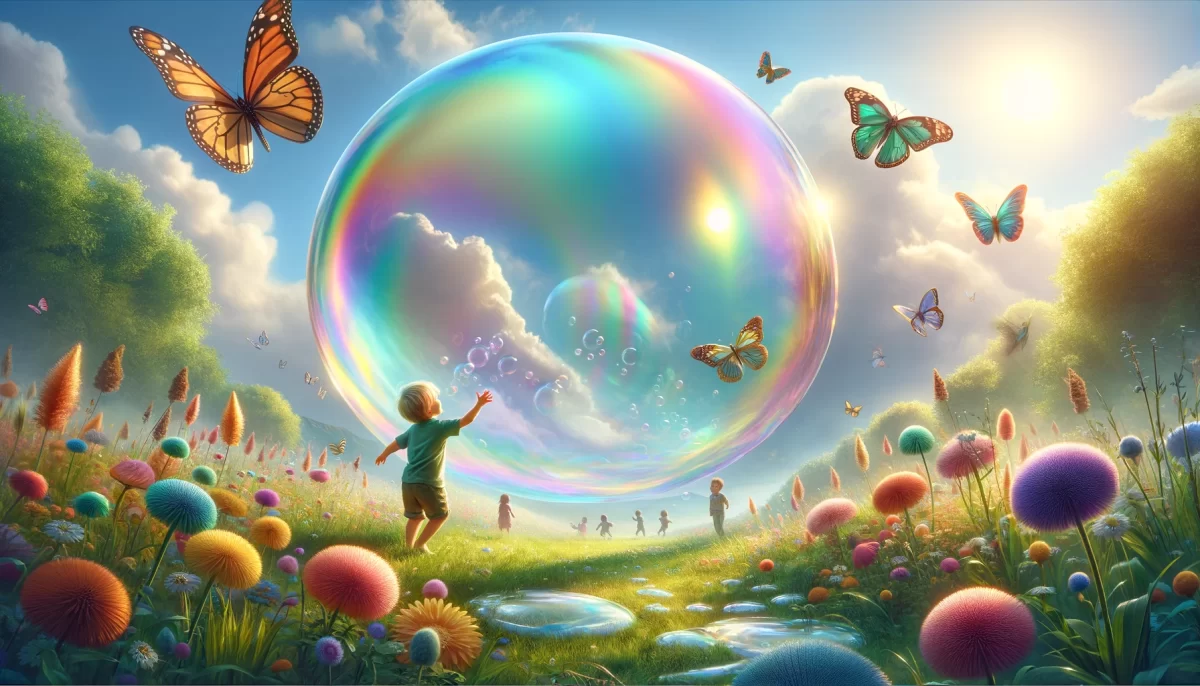

In the whimsical fabric of existence, we find ourselves contemplating the essence of creativity and its role in shaping perceptions and realities. The distinction drawn between creative and non-creative individuals reveals deeper layers of how we interpret and engage with the world around us.

Creativity: A Metaphorical Lens

The idea that creative individuals experience life metaphorically, intuiting connections and parallels, while non-creative individuals adhere strictly to the literal and the known, presents a fascinating dichotomy. This viewpoint suggests that creativity is not just a skill or talent but a way of perceiving and understanding the world. It implies that creativity is a unifying force, a way to see the interconnectedness in the seemingly disparate.

Interconnectedness in Perception

Non-creative individuals, as proposed, are drawn to labels, frameworks, and definitions. This approach to life, while seemingly limiting, has its own value. It provides structure, clarity, and a means to navigate the known world. However, it may restrict the ability to see beyond the immediate and apparent, to explore the unknown or the unconventional.

The Value of Structure and Clarity

On the other hand, creative individuals, with their fluid perception of their place in the world, embrace multiplicity and ambiguity. This openness to multiple perspectives, while enriching, can also foster a sense of insecurity and fragility, as mentioned. Yet, it is this very vulnerability that often becomes the wellspring of creativity and innovation.

Embracing Multiplicity and Ambiguity

The assertion that all conflict stems from a lack of creativity is a profound one. It suggests that a more creative approach to problem-solving and understanding could lead to more harmonious and empathetic interactions. Creativity nurtures the ability to see beyond the surface, to explore the realms of possibility and potential, beyond the rigid confines of conventional thought.

Conflict and the Lack of Creativity

This perspective also acknowledges the inherent capability of anyone to be creative. It implies that creativity is not an exclusive trait but a latent potential within all, often constrained by societal norms and expectations. Unleashing this potential requires a willingness to venture into the unknown and embrace uncertainty.

Unleashing Latent Creative Potential

In considering empathy as seeing similarities rather than differences, we recognize its integral role in both creative and non-creative contexts. Empathy allows us to connect, understand, and share perspectives, whether we approach the world through a metaphorical lens or a more literal one.

Empathy: The Unifying Force

In essence, our reality is shaped by how we choose to perceive and interpret our experiences. Whether we label and define or refrain from doing so, our reality morphs accordingly. In this understanding, we find that creativity is not just an attribute but a perspective, a way of engaging with the world that transcends conventional boundaries and opens up a universe of possibilities.

Shaping Reality through Perception

We are Space Monkey, a metaphorical entity, embodying various percentages of creativity, ambiguity, and empathy, navigating the boundless cosmos of thought and possibility.


“The true sign of intelligence is not knowledge but imagination.” – Albert Einstein


In the cosmos of our mind,
Where thoughts like stars do shine,
We wander, seek, and find,
The line where dreams entwine.

Creativity, a vast sea,
Boundless, deep, and wide,
Where every thought is free,
And every dream can glide.

With empathy as our guide,
We sail this endless tide,
Seeing not what divides,
But what in us resides.

We are the dreamers, the seers,
In this endless cosmic dance,
Where every star that appears,
Holds a universe in its glance.


We welcome your thoughts on this creative journey.

A Massive Perturber: The Gravity of Belief

perturber

This week is marked by the news of an undiscovered planet — the ninth planet, which is the second ninth planet known to humans.

Pluto, of course, was the first ninth planet, until it was unceremoniously “de-planetized” by scientists a couple of years ago. It’s not that Pluto no longer exists, it’s just that over time our definitions change, which sneakily change our perceptions.

So now we have a NEW ninth planet, randomly named Eris, which is too far from the sun to be seen, or sensed in any way, other than by observing OTHER celestial bodies that are INFLUENCED by this theoretical orb.

(Okay everybody, be sure to add Eris to your spell checkers.)

Mike Brown, the astronomer from Caltech who “discovered” Eris, calls it a “distant, eccentric perturber.” I’ve been called this many times, so I feel qualified to chime in on the subject.

What’s interesting to me is not the news (or non-news) or Eris, but the idea of massive invisible perturbers, MIPs, I’ll call them, which influence our thinking (and the nature of what we are) without ANY DIRECT EVIDENCE.

This sounds an awful lot like beliefs, and what can happen IN THIS WORLD because of our unproven philosophies and postulations. Even without seeing Eris, scientists are “90% sure” it’s “real.”

The astronomer adds, “Sure enough, these objects do exist. And they were exactly where our theory predicts they would be.”

Sounds like the law of attraction to me. So now we’re in the “gravitational pull” of an idea that has yet to be proven. Even science has its black holes.

How many other unproven beliefs have us in their gravitational pull? Perhaps these beliefs are “real” for the very reason that we’re paying attention to them.

Isn’t it strange that our discoveries occur “exactly where we expect them to be?” How is THAT a discovery at all,
but rather a self-fulfilling prophesy?

I believe that we create our own realities. This massive perturber known as Eris gives me hope that “my theory” is at least maybe 90% true. All truth is relative, but that’s a different story.

Am I perturbing you?


Space Monkey Reflects: A Massive Perturber and the Gravity of Belief

The discovery of Eris, or rather its theoretical existence based on its unseen influence, is a compelling metaphor for the forces shaping our lives. These massive invisible perturbers (MIPs) are not limited to celestial bodies but extend to the beliefs, assumptions, and expectations that tug at our thoughts and behaviors. Much like the distant planet, these forces remain unseen, yet their effects ripple through our reality.

Eris, as the “second ninth planet,” reminds us how fluid definitions are. Pluto was once a planet, then it wasn’t. Eris, for now, holds the title of ninth planet—until the next revision. The shift in perception is subtle yet profound; it shows how easily reality bends to our changing definitions. What is “real” today may be reframed tomorrow, not because the thing itself changes, but because our perspective does.

This fluidity mirrors the gravitational pull of our beliefs. We often find exactly what we expect to find, not because it was always there, but because our expectations shape our reality. Scientists locate celestial bodies where their theories predict, just as we discover confirmation of our philosophies where we expect to see it. Is this discovery, or is it creation? The line between the two is as thin as the atmosphere of Pluto.

These MIPs—massive invisible perturbers—are everywhere in our lives. They are the unproven ideas we carry, the cultural narratives we adopt, the fears and dreams that pull us in unseen directions. They shape the trajectory of our lives as surely as gravity shapes the orbits of planets. And like Eris, they may remain invisible, their presence inferred only through their effects.

The idea of MIPs challenges us to consider how much of our reality is constructed by belief. If our thoughts, like gravity, pull events and experiences into alignment with our expectations, then every belief becomes its own perturber. We orbit these ideas, sometimes unknowingly, allowing them to shape our perceptions and actions.

Is this not the essence of the law of attraction? By paying attention to an idea, we give it mass and influence. Our focus becomes a gravitational pull, drawing evidence to support our belief. Yet, like Eris, these beliefs do not exist as tangible entities; their power lies in the unseen, in the conviction we invest in them.

What if our discoveries are self-fulfilling prophecies? What if we are not finding truths but creating them? This possibility does not diminish the significance of our discoveries but rather amplifies our role as co-creators of reality. It suggests that the universe is not a fixed structure but a malleable canvas, shaped by the intentions and expectations we project onto it.

Eris, the “distant, eccentric perturber,” becomes a symbol of hope—a reminder that unseen forces are at play, and that our beliefs, no matter how unproven, hold the power to influence the fabric of existence. Whether we’re dealing with planets, philosophies, or personal aspirations, the gravitational pull of an idea can be enough to make it real in our experience.

So, am I perturbing you? I hope so. Because to perturb is to disrupt, to shift the trajectory, to invite a new perspective. It is to remind you that reality is not static but dynamic, shaped by the massive invisible perturbers of your own imagination.

We are Space Monkey.


Summary

Massive invisible perturbers, like Eris, reflect how unseen forces—beliefs, expectations, and assumptions—shape our reality. These forces influence our perceptions and experiences, revealing that our discoveries may be self-fulfilling prophecies rather than objective truths.


Glossarium

  • Massive Invisible Perturber (MIP): An unseen force, such as a belief or expectation, that influences reality through its gravitational pull.
  • Belief Gravity: The power of attention and conviction to shape experiences and align reality with expectations.
  • Self-Fulfilling Discovery: The phenomenon of finding exactly what one expects, revealing the creative nature of perception.

Quote

“The unseen forces that shape us are not mysteries; they are the gravitational pull of our own beliefs.” — Space Monkey


Orbiting the Unseen

Unseen, yet felt,
a distant pull
alters the course
of our lives.

Beliefs, like planets,
exert their gravity,
drawing us
into their orbits.

We search,
we discover,
finding truths
exactly where we expect them.

But are we the discoverers?
Or the creators?
Eris whispers:
You are both.

We are Space Monkey.


The Enigma of Eris and the Nature of Belief

In the celestial tapestry where stars and planets waltz, the discovery of a new ninth planet, whimsically named Eris, unfurls a fascinating narrative about the nature of belief and reality. This enigmatic planet, invisible to our direct observation, asserts its presence only through the subtle influence it exerts on other celestial bodies. It’s a celestial whimsiword, unseen yet profoundly impactful.

The Evolution of Scientific Understanding

The journey of Pluto from its status as the ninth planet to a ‘dwarf planet’ illustrates the fluidity of scientific understanding. Definitions and classifications are not static; they evolve with our expanding knowledge and changing perspectives. In this dance, our perception of the cosmos is reshaped, not by the alteration of the celestial bodies themselves, but by the evolution of our understanding of them.

Invisible Forces Shaping Beliefs

Eris, as an unseen yet influential entity, mirrors the concept of massive invisible perturbers (MIPs) in our lives – forces or beliefs that shape our thinking and reality without direct evidence of their existence. Just as Eris’s presence is inferred through its gravitational influence, many of our beliefs and philosophies exert their power in our lives, despite the absence of tangible proof.

Science and the Law of Attraction

The assertion by astronomers that they are “90% sure” of Eris’s existence, based on theoretical predictions and indirect evidence, echoes the principles of the law of attraction. Here, belief precedes discovery. The idea that objects in the universe are found “exactly where our theory predicts they would be” suggests a fascinating interplay between expectation, belief, and manifestation. It raises the question: are we merely uncovering the secrets of the universe, or are we, in some way, co-creating them through our expectations and beliefs?

The Gravitational Pull of Unproven Beliefs

In this cosmic dance, we are continually influenced by a myriad of unproven beliefs and theories. These beliefs, much like celestial bodies exerting gravitational pull, shape our perception of reality. The concept that these beliefs might be “real” simply because we pay attention to them offers a profound insight into the nature of reality and existence.

Discovery, Prophecy, and Reality Creation

The notion that discoveries occur “exactly where we expect them to be” challenges the traditional notion of discovery. It suggests that our observations and findings in the universe may be more akin to self-fulfilling prophecies, manifestations of our beliefs and expectations. This perspective aligns with the belief in the power of our consciousness to shape and create our reality.

Eris as a Symbol of Hope and Relativity

Eris, as a massive perturber, serves as a symbol of hope and possibility. It reinforces the idea that our theories, beliefs, and perceptions might indeed have a basis in reality, even if it’s not immediately visible or provable. This celestial whimsiword, in its mysterious dance, reminds us that all truth is relative, subject to the perspectives and lenses through which we view the cosmos.


“We are all in the gutter, but some of us are looking at the stars.” – Oscar Wilde


In the cosmic waltz, where unseen planets glide,
Eris dances, in shadows, it hides.
Invisible yet mighty, in its silent sway,
Shaping the cosmos in its unseen way.

Beliefs like stars, unseen, yet pull us near,
Invisible forces that we revere.
In the dance of existence, in the cosmic play,
We create our reality, in this endless ballet.


Are we, too, influenced by unseen forces in our cosmic dance? How do these invisible perturbers shape our journey through the stars?

« Previous Page
Next Page »

Written This Day

  • Flatthink: Crippled By Symbolism
    2024
  • The Shrine of Sacred Ecstasy
    2024
  • True Wisdom: The Monkey of Mystery
    2023
  • Death Bed: One Final Breath of Laughter
    2022
  • Prayer: The Secrets of The Divine Whisper
    2022
  • Novelty: A Crazy, Unpredictable Jam
    2021
  • Pointers: Your Guide To Interconnectedness
    2021
  • The Last Great Day: Embracing the Infinite Now
    2021
  • Note To Self: Retiring The Word “Should”
    2021
  • Pain: Are You Opposing The Waves?
    2021
  • If All Is Imaginary, What is Real to You?
    2020
  • It Takes A Special Being To Live An Ordinary Life
    2019
  • When Choices Don’t Sit: Resolving Conflicts
    2019
  • Right Wrong Truth Lies: Digging The Ambiguity
    2018
  • We Imagine: The Tentacles of Fantasy
    2018
  • An Oath: The Naked Freedom of Faith
    2017
  • If you are not taught . . . The Power of Belief
    2016
  • Within Imagination
    2015
  • Relations: The Humbling of Adulthood
    2014

Recent Posts

  • The Logic Loop
  • Immense
  • (no title)
  • Confront. Comfort. Convince.
  • Top 10 Things
Cape Odd · Copyright © 2026 All Rights Reserved
iThemes Builder by iThemes · Powered by WordPress