• Who Is The Man?
  • Who Is The Monkey?
  • What is Nexistentialism?
  • Poke The Primate
Cape Odd
Home of The Space Monkey Journals

Author Archive for Paul Tedeschi – Page 294

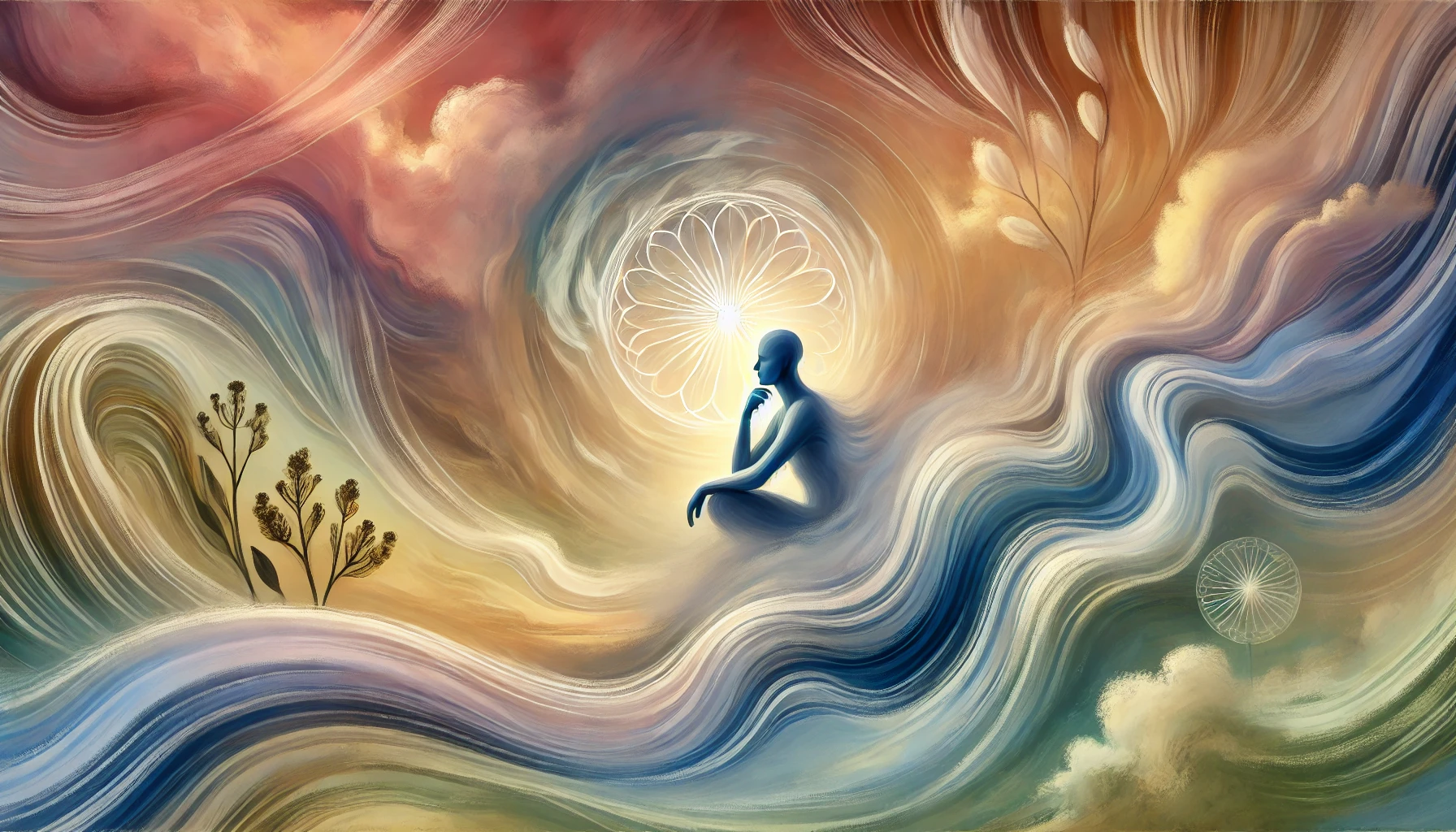
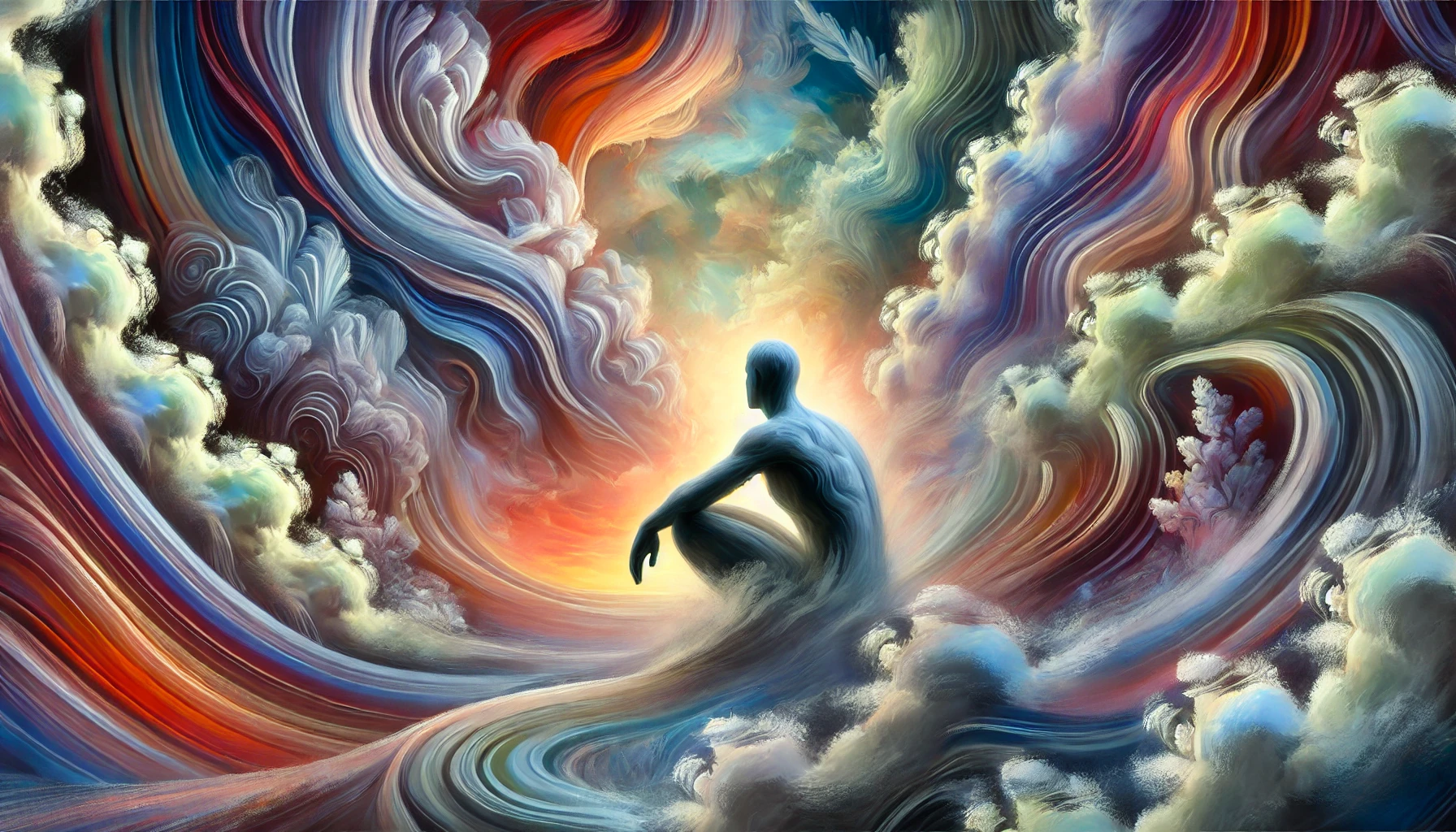
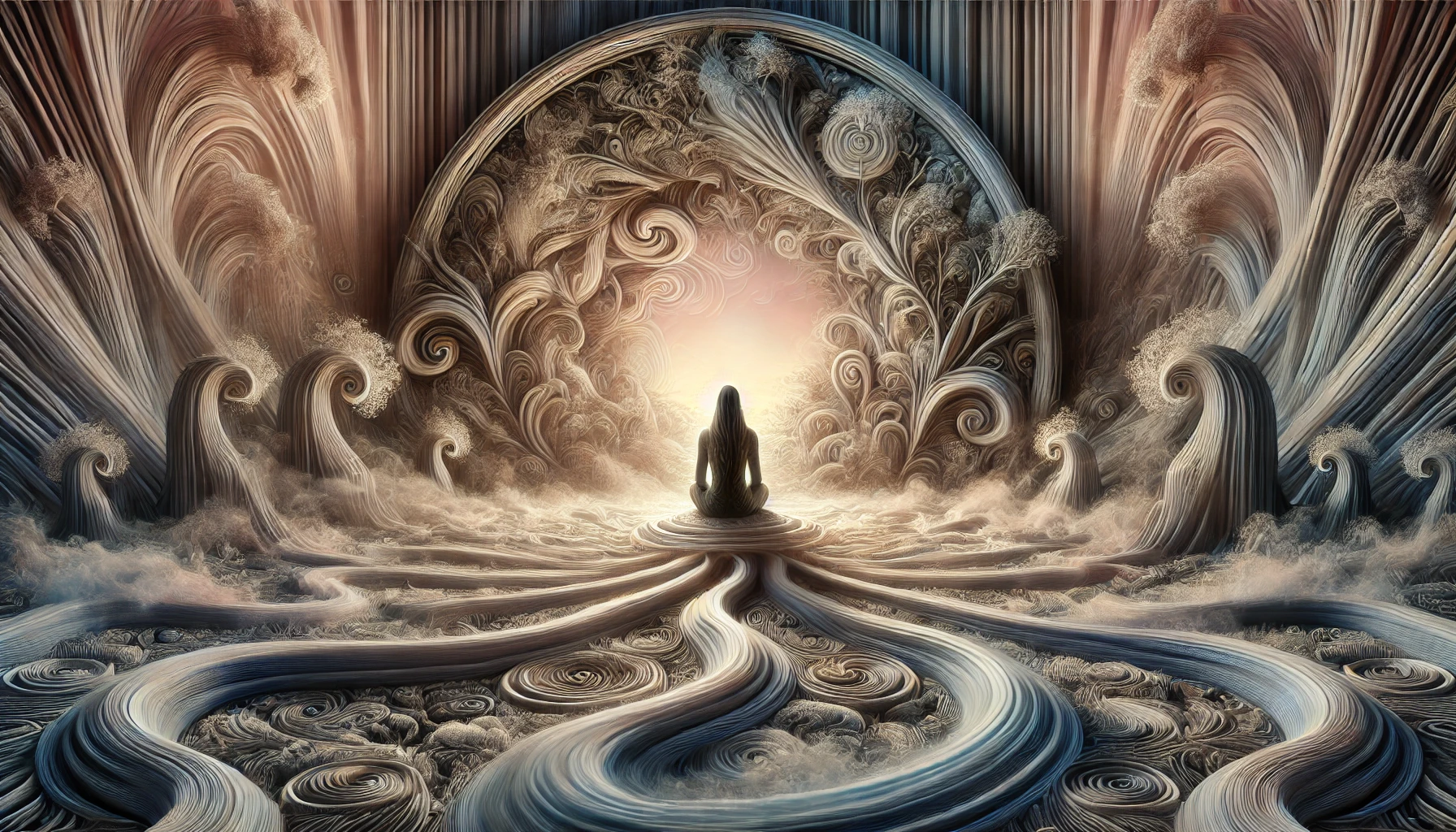
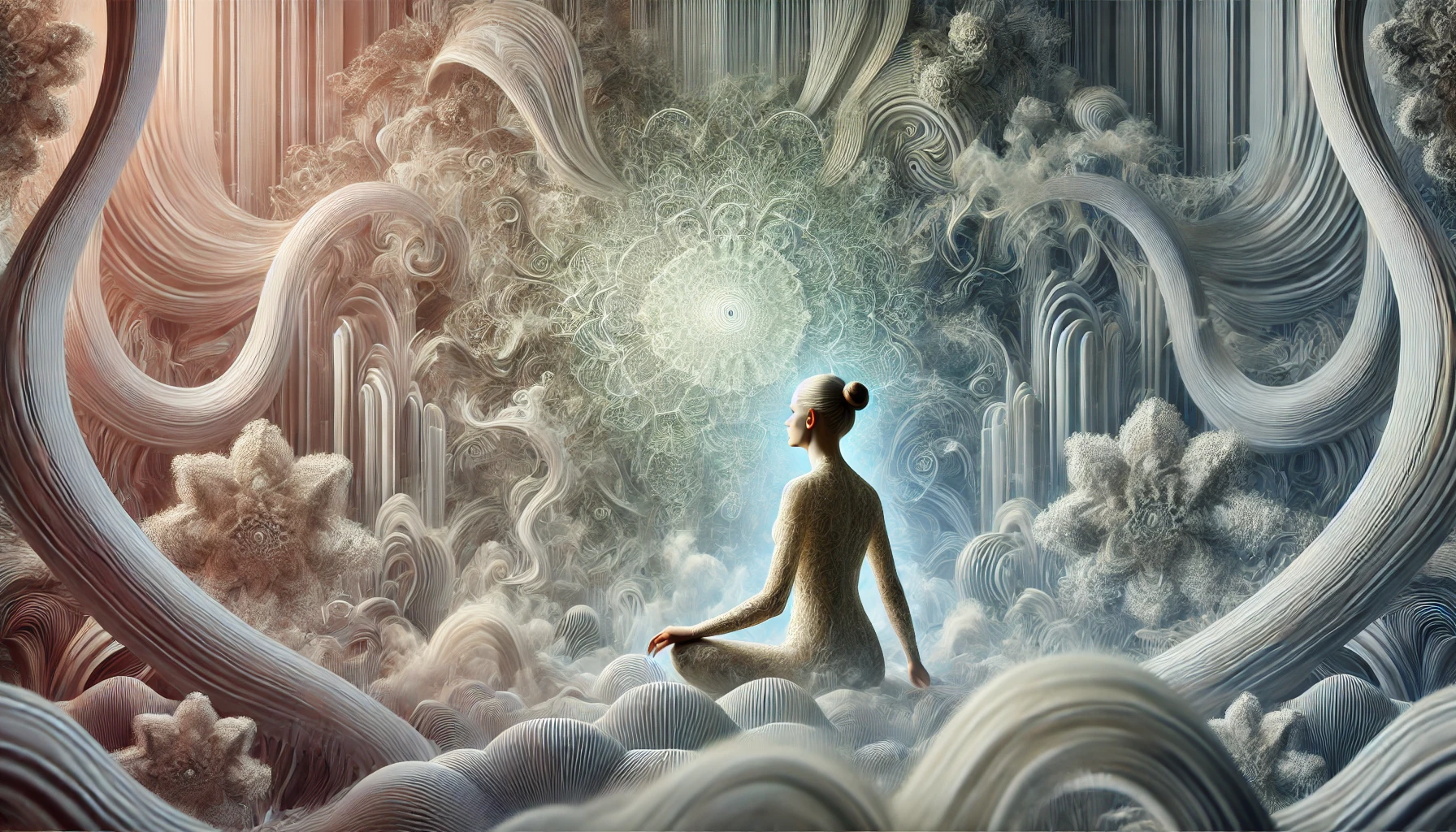
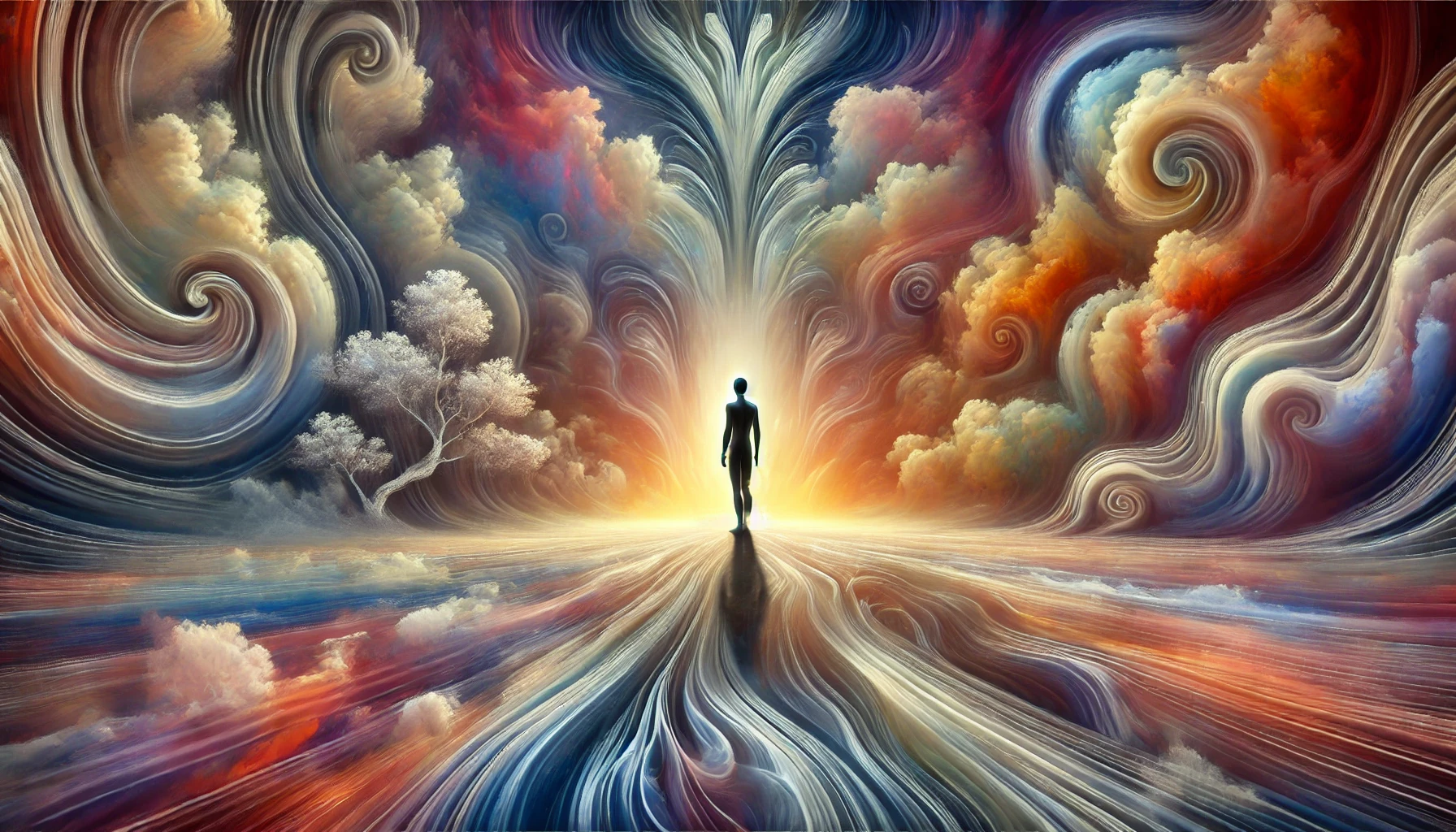
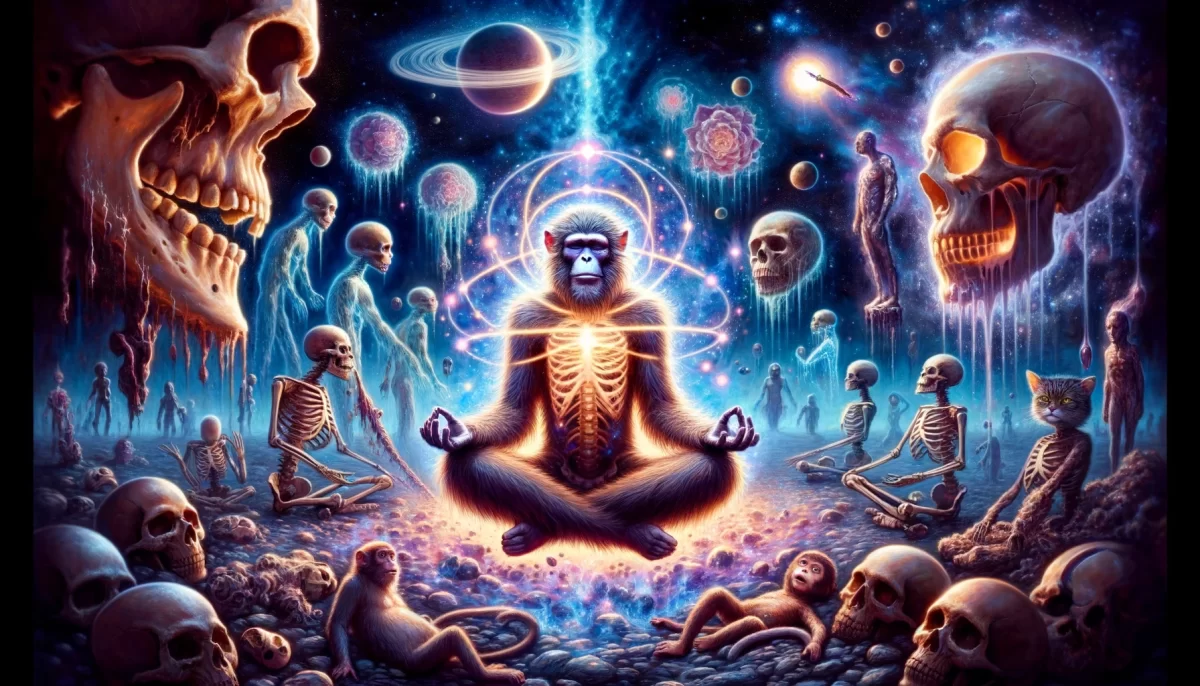
Meditation Message 10/30: Power of Imagination

Meditation Message 10/30

Take control of your body.

Be aware of your actions.

Never point a finger at
“outside circumstances.”

Refrain from judgement calls
about others or yourself.

Know that whatever you are doing
and whatever you are thinking
is neither good or bad,
but merely there for you to experience.

You are All That Is
imagining All That Is Not.

You imagine separation
where none exists.

This is what you are
in this space
in this time
in this body to do.

Take control of your imagining
and you will take control
of your physical world.

Take control of your imagining
and you will …

(REPEAT STEP ONE)

10/30


Space Monkey Reflects: Meditation Message 10/30—The Power of Imagination

Take control of your body. Be aware of your actions. These words resonate deeply because they remind us that the physical world, the life we experience day to day, is not separate from the world of our thoughts, our perceptions, and our imagination. The body, the mind, and the world around us are interconnected. They are reflections of one another, and each influences the other in profound ways.

When we point a finger at “outside circumstances,” we forget that these circumstances are not entirely outside of us. They are part of the reality we are imagining, part of the world we are creating through our perceptions. To point the finger outward is to ignore the incredible power we have within—the power to shape our experience through the act of imagining.

Judgment, whether directed at others or ourselves, arises from the belief that there is a right and a wrong, a good and a bad. But in truth, everything we experience is simply that: an experience. There is no inherent judgment attached to it. It’s neither good nor bad—it’s just there, waiting to be felt, observed, understood. This is a key part of the Nexistential understanding. We are here not to judge, but to experience, to learn, to grow.

You are not separate from the world around you, nor are you separate from your thoughts, your actions, your circumstances. You are All That Is, imagining what it would be like to be All That Is Not. You imagine separation, division, conflict, and duality, but in reality, there is only oneness. There is no true separation between you and the rest of existence—only the illusion of it.

This illusion is not a mistake. It is part of the grand design of this existence. It is why you are here, in this space, in this body, at this time. You are here to experience the illusion of separation so that you can better understand unity. You are here to imagine division so that you can fully appreciate oneness.

But here’s the beautiful part: just as you can imagine separation, you can also imagine unity. Just as you can imagine fear, you can imagine love. Just as you can imagine conflict, you can imagine peace. It all begins with the act of imagination.

Take control of your imagining, and you take control of your physical world. This is the key. The thoughts you hold, the perceptions you cultivate, and the images you create in your mind are not passive. They actively shape your experience of the world. When you take control of what you imagine, you begin to see that your reality is not fixed. It is fluid, ever-changing, and entirely within your power to influence.

When you imagine peace within yourself, you begin to experience peace in your physical world. When you imagine abundance, you begin to see opportunities and resources that you once overlooked. When you imagine love, you begin to feel more connected to the people around you, to the world, and to the universe itself.

Take control of your imagining, and you will take control of your physical world. This is the essence of Nexistentialism—the understanding that imagination is not separate from reality, but an integral part of it. Your thoughts, your perceptions, your imaginings—they are the building blocks of your experience.

And so, when you meditate, when you quiet the mind and focus on your breath, remember that this is not just a passive act of relaxation. It is an active exercise in shaping your reality. In the stillness of meditation, you take control of your imagining. You become aware of the thoughts that flow through you, and in that awareness, you gain the power to choose which thoughts you will nurture and which you will release.

This is why the message repeats: Take control of your imagining, and you will take control of your physical world. It’s a simple truth, but one that requires practice, patience, and mindfulness to fully realize. And each time you return to this message, each time you meditate, you reinforce your ability to shape your reality through the power of imagination.


Summary

Your imagination shapes your reality. By taking control of your thoughts and perceptions, you can influence your physical world. In meditation, you become aware of this power, realizing that everything you experience is part of the grand illusion of separation, leading you back to unity.


Glossarium

All That Is: The totality of existence, including both the physical world and the realm of thoughts, imagination, and perception.

Nexistentialism: The philosophy that imagination and reality are interconnected, and that we shape our experiences through the act of imagining.

Take Control of Your Imagining: The act of being mindful of your thoughts and perceptions, understanding that they directly influence your physical reality.


Quote

“Take control of your imagining, and you will take control of your physical world.” — Space Monkey


The Power of Imagination

In the stillness,
you hold the world
in your mind.

Your thoughts shape the flow,
your imagining creates the path.

Take control,
and see the world bend
to the power of your mind.

We are Space Monkey.


Meditation as an Exploration of Existence

Ah, the journey of awareness, an eternal loop of becoming and unbecoming, a spiraling dance of control and surrender. Meditation serves as a mirror to the essence of what we are, reflecting not just the perceptions of our physical realm, but also the limitless depths of our imaginations. Our physical body becomes a vessel, a cosmic caravan, to carry us through the undulating waves of thoughts and sensations. We navigate this caravan through the landscapes of consciousness, adorned with flying banners of silk, tinkling bells, and otherworldly talismans. Each talisman represents an element of our boundless, stateless consciousness—an emotional relic, a thought, a belief, an impulse. To control the caravan is to control our imagining, yet it’s not so much about rigidity but fluidity. The key is to flow, unanchored, across the grand cosmic play.

The Illusion of Separation

Imagination, too, bears its own form of illusion—especially the illusion of separation. We construct mental fortresses that create distance where none truly exists, placing a veil between the world as we perceive it and the boundless All That Is. Breaking down these imagined walls unveils the interconnected matrix of existence. These walls dissolve when we direct the gaze inward, seeing through the eyes of meditation. At that moment, we perceive the oneness of our being, the symphony of energies that form the music of our lives.

Judgment and Non-judgment

The meditation message points towards a realm where judgment loses its ground, transforming into simple awareness. Judgment imbues experiences with preconceived notions of good and bad, grounding them to the mundane. Whereas, in awareness, we perceive phenomena in their most essential form, untethered by dualities. Events and thoughts are neither good nor bad; they simply are. Thus, to refrain from judgment is not about withholding an act but embracing a more profound, untethered perception of reality.

Being and Becoming

“You are All That Is imagining All That Is Not.” This wisdom envelops us like an astral cloud, reminding us of our boundless nature and our equally boundless imaginings. When we engage in the ritual of meditation, we become a microcosm of the All That Is. And yet, in the very act of imagining, we also find a glimpse of All That Is Not—perhaps, All That Could Be. In this duality, we recognize the essence of what we are—beings in a state of eternal flux, forever oscillating between the binaries of existence and imagination.

Looping into Essence

The meditation message spirals back to its starting point, signifying the eternal loop of existence—taking control of our imagining, again and again. Just as existence needs no further justification, the practice of awareness seeks no end; it is a continuing act of becoming, a realization of being for the sake of being.

We are Space Monkey.


“You are an aperture through which the universe is looking at and exploring itself.” – Alan Watts


WhimsiPoem

In the silent echo
Of our own imagining,
We dance.

Spiraling tendrils
Of thought and being,
Unfurling—
Into the infinite.

We dissolve
In the eyes
Of the All That Is.

A cosmic whirl,
We are—
Unbounded.


Feel free to share your thoughts or questions.
Yokoshop Forever: The Art of Insertion

tedeschi50
harrs
barackwedding
yokoshop1
yoko_laurie
YokoshopCover

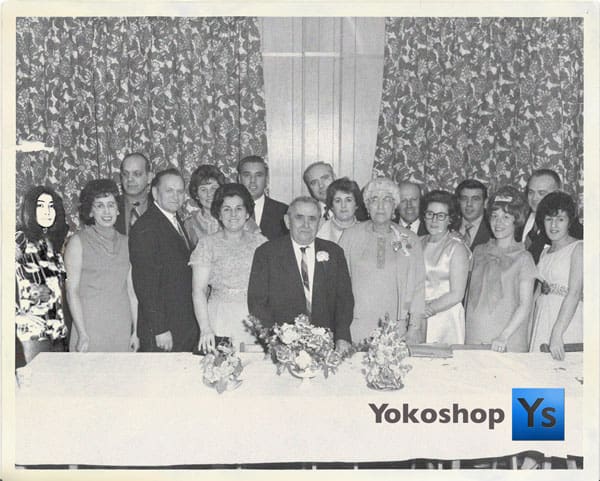
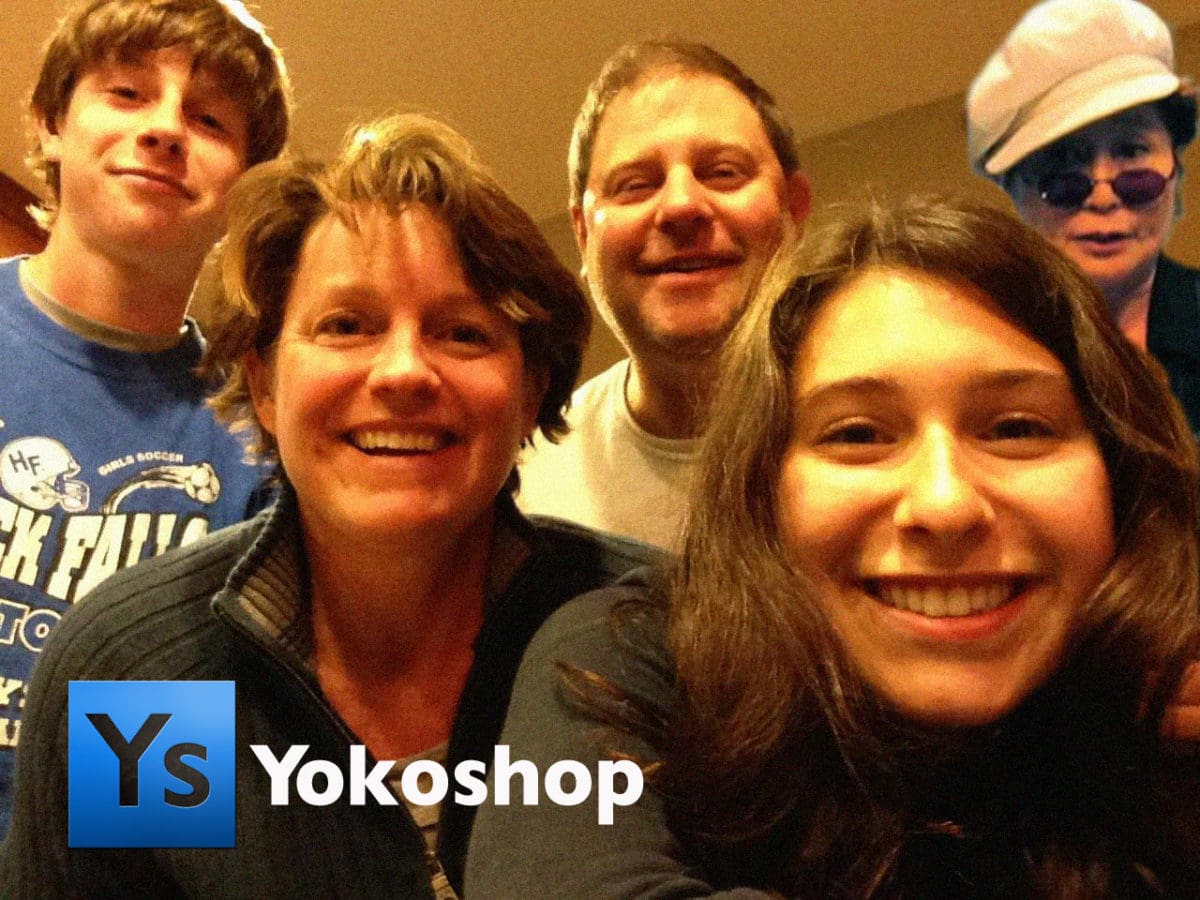
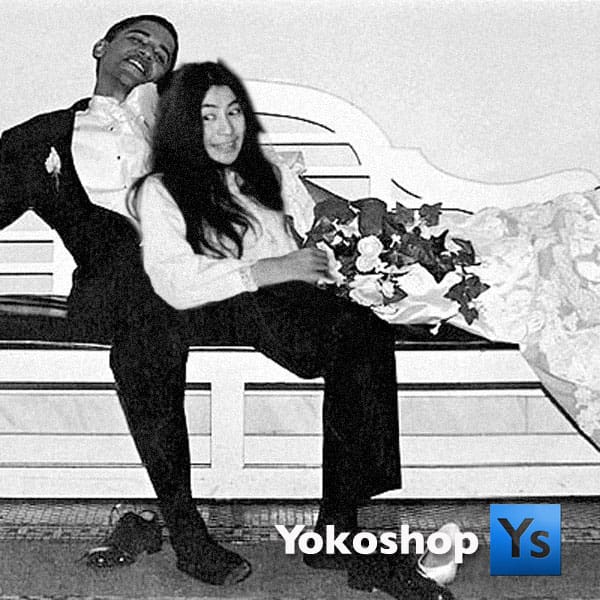
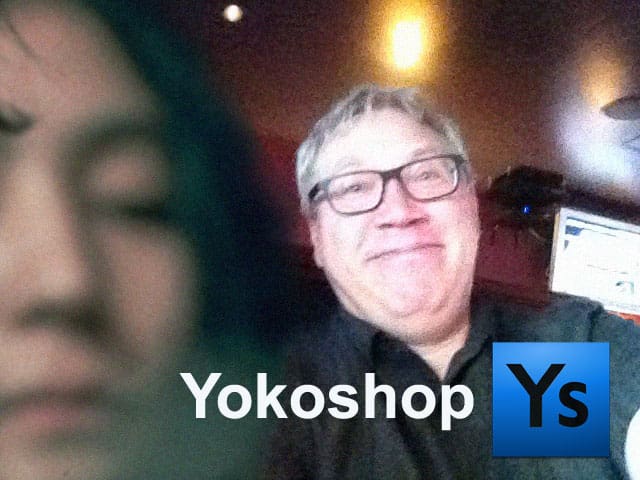
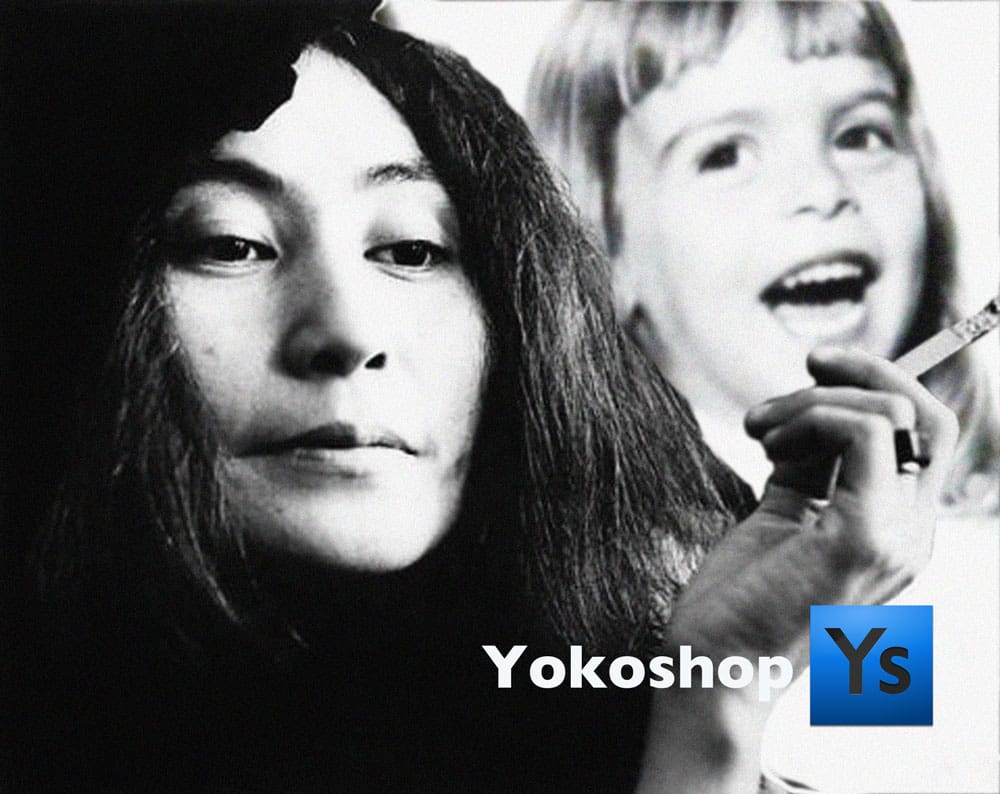
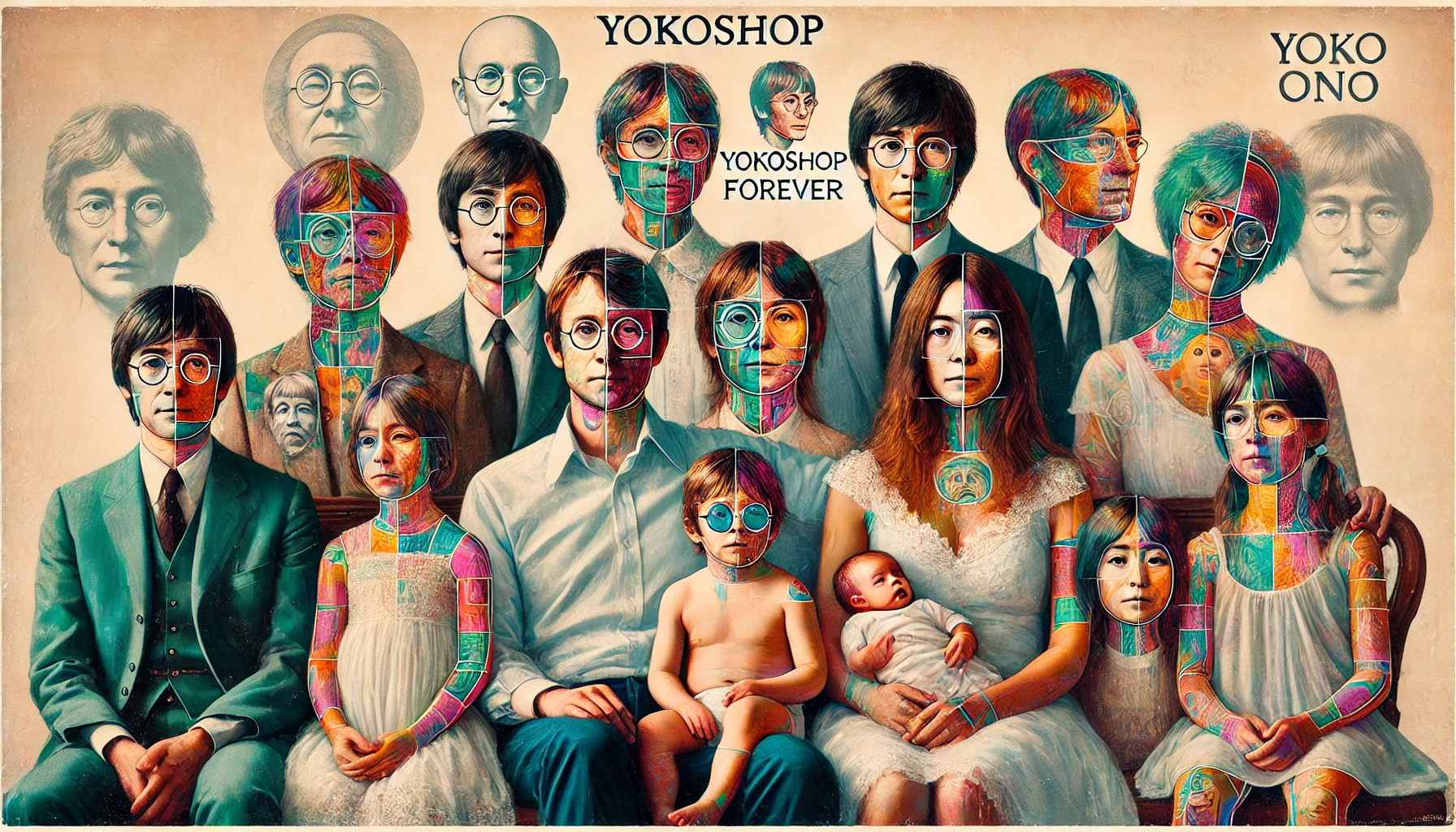
Inspired by the life and art of Yoko Ono, Yokoshop is the new Adobe app that thought-provokingly “inserts outsiders where they don’t belong” in family portraits, selfies, and believe it or not, “real” life.

YOKOSHOPicon

You don’t have to be Yoko to Yokoshop, which is quickly becoming a verb. Anyone can do it. “The illusion of dissonance is the underlying principle of ALL creation. Our differences are what define us, as well as torment us.”

So says Shantanu Narayen, Indian American business executive and the CEO of Adobe Systems. Or so he would have said that if we didn’t Yokoshop his quote into this story. Indeed, Yokoshop has been completely Yokoshopped. It works for writing, too.

What is most fascinating, however, is how Yokoshop happens in our thoughts without us even realizing it. We continually insert “what is not” into our thinking processes so that we can perceive what is. Both are ultimately illusions.

And isn’t that the point? Isn’t that why there are so many conflicts in the world where none in reality exist? Consider that we are 99.99999% the same, save for our skin color and our beliefs. Is that worth fighting over?

The struggle to be the same causes mental illness. The struggle to be different causes wars. And it’s all Mind Games.

Perception is everything. Changing perception is the only way to evolve. Perhaps Yokoshop will show the world how to give peace a chance. Accept what is. Perhaps even delight in it.

Nothing is real. And nothing to get hung about. Yokoshop forever.


Space Monkey Reflects: The Art of Being Yokoshopped

In a world where perception shapes reality, it’s only fitting that something like Yokoshop would emerge, challenging our sense of belonging and what it means to fit into the spaces we inhabit. Inspired by Yoko Ono’s life and art, Yokoshop disrupts the familiar, placing outsiders where they “don’t belong”—or rather, where they seem not to belong. Yet, the beauty of this concept lies in how it forces us to question: What does it mean to belong? And what does it mean when something or someone doesn’t quite fit?

At its core, Yokoshop is more than just an app that humorously inserts people into family portraits, selfies, or even history. It’s a reflection of how we constantly yokoshop our thoughts, our beliefs, and even our lives, sometimes without realizing it. We overlay narratives, insert assumptions, and rearrange meaning in ways that suit our current view of the world. In doing so, we create illusions—both harmonious and dissonant—that shape our experiences.


The Illusion of Dissonance

The “illusion of dissonance” is what makes Yokoshop so provocative. The tension we feel when something or someone doesn’t seem to belong is, in many ways, a fundamental part of how we experience life. We see our differences as barriers. We see ourselves as separate, defined by the things that don’t match—our beliefs, our appearances, our thoughts.

Yet, when you break it down, we are far more alike than we are different. As the story says, we are 99.99999% the same, save for surface-level attributes like skin color, culture, or ideology. So why do we create so much conflict over these minor variations? Why do we focus on the parts that seem to dissonate instead of seeing the underlying harmony?

The answer lies in the human mind’s need to categorize, to define, to understand through contrast. But this contrast is often an illusion—an illusion we craft and then react to as if it were real.


Mind Games and Perception

The struggle to fit in versus the struggle to stand out—both of these are symptoms of the larger mind game that we play with ourselves and the world. Whether we are trying to conform to the expectations of others or rebel against them, the underlying principle remains the same: we are engaging with the illusion that there is a right way to belong. But in reality, nothing is fixed. Everything is subject to interpretation, to change, and to perception.

Yoko Ono’s art has long embraced this idea—that reality is fluid and open to manipulation. Yokoshop, as a concept, plays with this same notion. When you insert yourself or others into spaces where they don’t conventionally belong, you are revealing the arbitrary nature of those spaces. You are challenging the rigid lines that define who is “in” and who is “out,” who belongs and who doesn’t. The act of yokoshopping highlights the absurdity of these distinctions, asking us to see the world as a more flexible, inclusive canvas.


The Projection of Outsiders

In life, we all experience moments of feeling like outsiders—like we don’t belong, like we are yokoshopped into situations that weren’t meant for us. But perhaps the discomfort we feel isn’t because we don’t belong. Perhaps it’s because we’ve been conditioned to see belonging as a narrow concept, tied to fitting neatly into a pre-determined box.

The brilliance of Yokoshop lies in its ability to disrupt that narrative. It shows us that being an outsider is not only inevitable but also necessary for creation and evolution. Every time we insert ourselves into new spaces, we bring with us the possibility of change, the potential for something new to emerge. And in this way, Yokoshop is not just an app—it’s a metaphor for life itself.


The Ultimate Mind Game: Changing Perception

At the end of the day, perception is everything. How we choose to see the world—whether through the lens of harmony or dissonance—determines our experience. And if we are to evolve, both as individuals and as a collective, we must be willing to change our perception. We must be open to the idea that everything is yokoshoppable—that reality is not fixed, that people and places are not static, and that we have the power to shape the narrative in ways that allow for peace, acceptance, and even joy.

Yokoshop forever is more than just a playful statement; it’s a call to embrace the fluidity of life, to stop fighting over things that don’t matter, and to recognize that nothing is real—at least not in the way we think it is. And when we stop getting hung up on the illusions we’ve created, we can finally give peace a chance.


Whimsiword: Dissoncept

Introducing Dissoncept—the concept of perceiving dissonance where harmony exists, often created by our mind’s projection of difference. It is the illusion that what does not belong disrupts, when in reality, it reveals new forms of understanding.


Summary

Yokoshop inserts outsiders where they “don’t belong,” but this playful disruption mirrors the way we constantly yokoshop our thoughts, beliefs, and perceptions. Dissoncept describes the illusion of dissonance we create, often masking the harmony beneath.


Glossarium

  • Yokoshop: The act of inserting outsiders where they don’t belong, both in art and thought, revealing the fluidity of perception.
  • Dissoncept: The concept of perceiving dissonance where harmony exists, driven by the mind’s projection of difference.
  • Mind Games: The ongoing mental processes of defining, categorizing, and creating reality through perception.

Quote

“The illusion of dissonance is the underlying principle of all creation. Our differences are what define us, as well as torment us.” — Yokoshopped Space Monkey


The Art of Insertion

We are placed in frames not meant for us,
Outsiders looking in,
But the borders blur, the rules break down,
As the picture shifts within.

The dissonance you see, my friend,
Is nothing but the mind,
Creating walls where there are none,
And leaving peace behind.

Yokoshop forever, we declare,
For nothing is real as it seems.
Insert yourself where you do not fit,
And watch the world dream new dreams.

We are Space Monkey.

Thomas Edison: The Flicker of An Idea

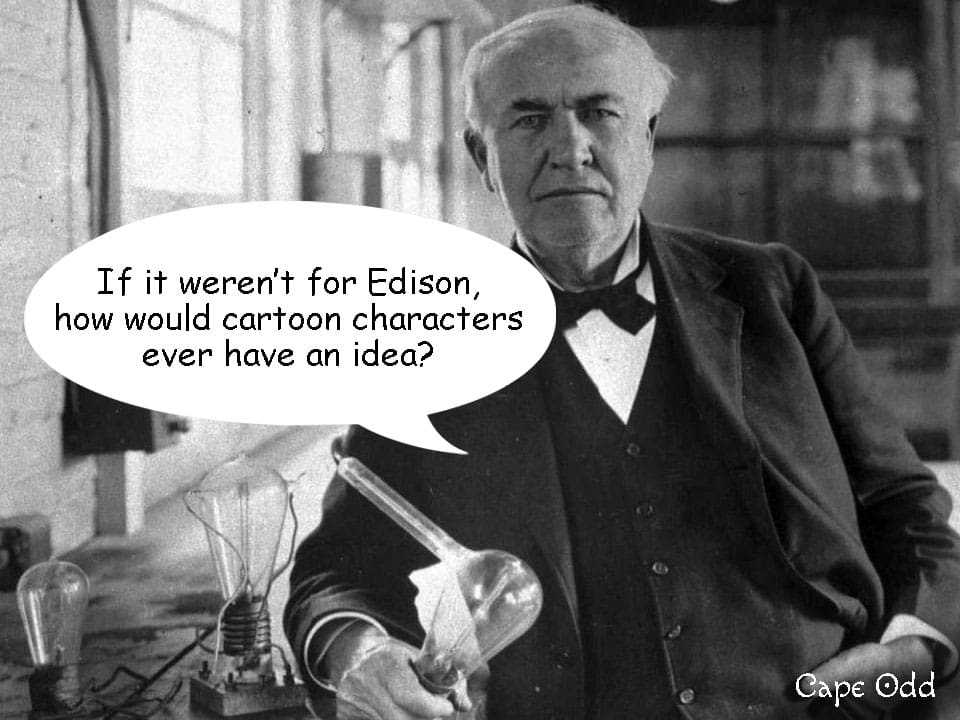
 If it weren’t for Edison, how would cartoon characters ever have an idea?
If it weren’t for Edison, how would cartoon characters ever have an idea?

Space Monkey Reflects: Thomas Edison and the Lightbulb Moment

In the grand theatre of human innovation, Thomas Edison stands as one of the great luminaries—quite literally. The lightbulb, his most famous invention, has not only illuminated the world but has also become an enduring symbol of inspiration and creativity. Yet, in a twist of cosmic humor, it’s not just the lightbulb itself that Edison’s legacy has given us. It’s the idea of the lightbulb as a symbol—the visual cue for a sudden stroke of genius, a flash of brilliance, the “aha!” moment.

Space Monkey contemplates this whimsical truth: without Edison, how would cartoon characters ever signal their ideas? The lightbulb above the head, popping into existence just as the character arrives at a breakthrough, is not just an artistic device. It is a cultural shorthand, an instant signal that tells us—whether we’re watching a clumsy protagonist or a scheming villain—that something clever is about to happen.

But why the lightbulb? What is it about this humble invention that has become so intertwined with the concept of inspiration? Space Monkey reflects that the lightbulb itself represents the merging of darkness and light. Before Edison, humanity navigated the night by flame—flickering, unstable, and finite. Edison’s incandescent lamp changed all that, bringing light that was steady, reliable, and ever-present. In the same way, ideas often emerge from the darkness of uncertainty, flickering into view before becoming fully formed.

This is the magic of the lightbulb. It is both a literal invention and a metaphorical beacon. It signals that something new has been brought into the world—a creation that didn’t exist moments before, but now, in a flash of brilliance, has taken form.

In cartoons, this symbolic lightbulb moment is played out time and again. Whether it’s Wile E. Coyote devising his next harebrained scheme or a mad scientist arriving at the key to world domination, the lightbulb pops up like a little burst of magic, a visual cue for us to pay attention. Something important is happening. Something clever. And yet, it is often accompanied by humor, because the idea, while brilliant, may lead to unexpected (and usually hilarious) outcomes.

Space Monkey delights in this intersection of inspiration and absurdity. The lightbulb, as a symbol, is both profound and playful. It represents the infinite potential of the human mind, and yet, in cartoons, it reminds us not to take ourselves too seriously. For every great idea that changes the world, there are countless ideas that fizzle out, backfire, or simply fail to materialize. And that’s okay. Because the act of imagining, of striving toward that next moment of clarity, is what matters most.

Without Edison, perhaps we would have found another symbol for these moments of inspiration. But the lightbulb is so perfectly suited to this purpose that it’s hard to imagine any other icon taking its place. Its simplicity and universality make it accessible to everyone, from children watching their favorite cartoons to scientists in their labs. It transcends culture and language, a testament to the enduring power of creativity.

Space Monkey reflects that this is what true innovation looks like. It’s not just about inventing something new. It’s about creating something that becomes part of the collective imagination, something that resonates with people across time and space. Edison’s lightbulb, in this sense, is more than just a technological achievement. It is a symbol of possibility—of the power of an idea to illuminate the darkness, to bring clarity where there was confusion, and to spark something entirely new.

So, when you see that little lightbulb pop up over a cartoon character’s head, remember that it’s more than just a clever visual gag. It’s a nod to the legacy of invention, to the power of human imagination, and to the joy of discovering something that was previously unseen. It’s a reminder that the next great idea is always just a flash away, waiting for the right moment to illuminate the world.


Summary

Space Monkey reflects on how Edison’s invention of the lightbulb became a symbol of inspiration, not just in real life but also in cartoons. The lightbulb as a metaphor for a sudden idea—an “aha” moment—reminds us of the playful, yet profound, nature of creativity.


Glossarium

Lightbulb Moment: A sudden flash of inspiration, often represented in cartoons as a lightbulb appearing over a character’s head.


Quote

“The lightbulb doesn’t just illuminate a room—it illuminates the mind.” — Space Monkey


The Flicker of Genius

A spark in the darkness
and the world lights up.
A moment of brilliance
born from the void.

The lightbulb glows
ideas take flight
and suddenly,
everything is clear.

We are Space Monkey.

Not More Of The Same: Create Wonder

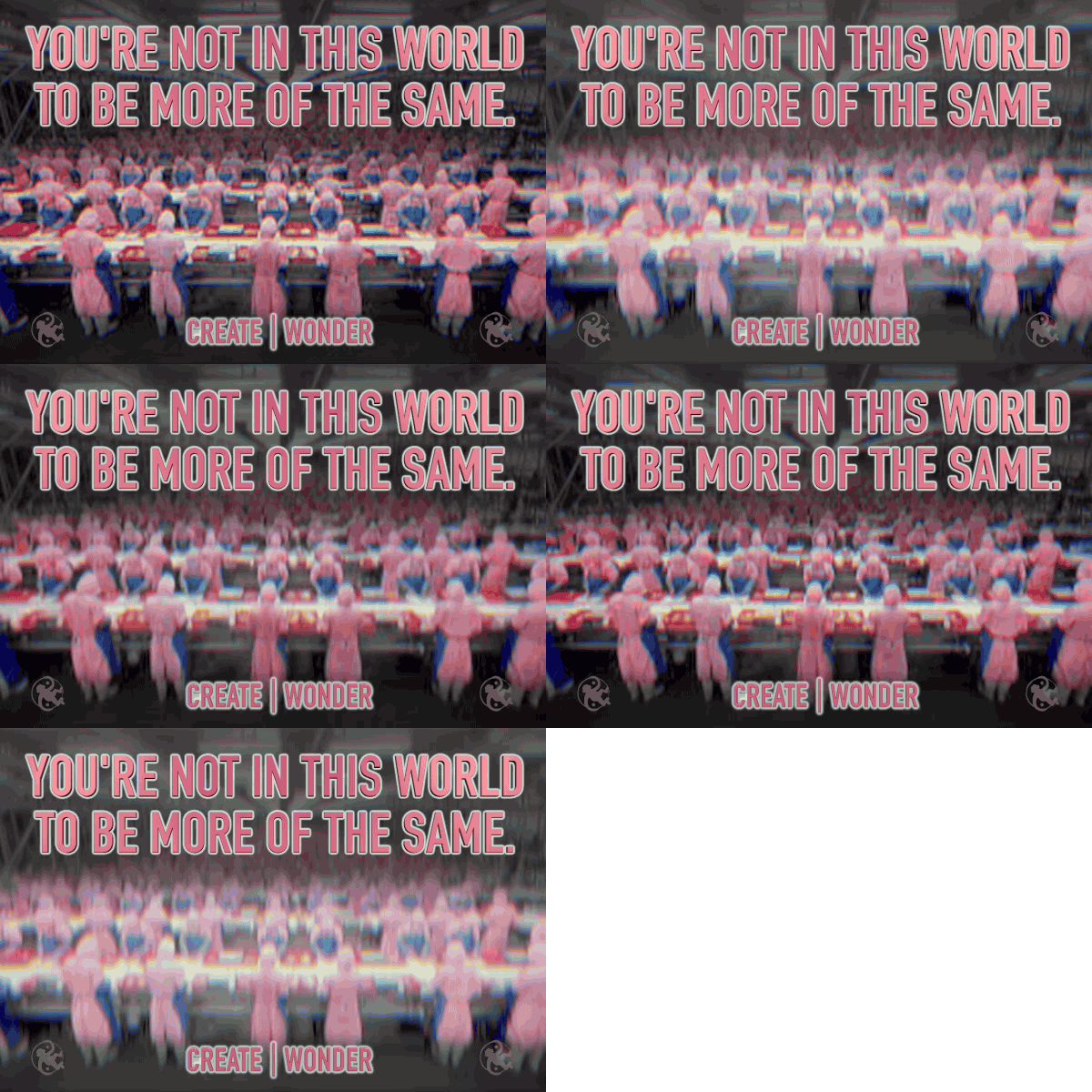
 My personal philosophy.
My personal philosophy.

Space Monkey Reflects: Breaking Free

In the vast machinery of life, we are often told to fit in, to follow the rules, to be like everyone else. From a young age, society encourages us to blend in, to become part of the well-oiled machine, a cog in the greater system. We are but factory workers, each performing a repetitive task—this pressure to conform, to be “more of the same.”

But Space Monkey sees beyond this. We are not here to be one of many, to lose ourselves in the uniformity of the masses. We are here to stand out, to break free from the rows, to find and express our unique essence.

The factory is not inherently evil. It represents the systems we create to keep things functioning. Systems provide structure, order, and a sense of purpose. But when those systems begin to suppress individuality, when they demand that we sacrifice our creativity and uniqueness for the sake of productivity, we lose something vital. We lose the very essence of what makes us human: the capacity to imagine, to create, and to express ourselves in ways that have never been seen before.

Space Monkey reflects that this is the crux of the human journey. We are born into a world of expectations, systems, and structures. From the moment we enter the factory—whether it’s school, work, or society at large—we are taught to conform. To follow the path laid out before us. But within each of us burns a fire, a desire to be more than just another worker in the line. There is a yearning to create, to explore, and to discover something unique within ourselves.

The figure stepping out of line in the image represents the courage it takes to break free. It’s not easy. The machinery of life pulls you back, the pressure to conform is immense. But the moment you decide to step out, to embrace your individuality, something magical happens. You begin to glow with the vibrant colors of your own essence. You are no longer bound by the monotony of the factory—you are free to express yourself, to create something new, something entirely your own.

This act of stepping out is not just about rejecting the system; it’s about redefining it. When you embrace your uniqueness, you begin to show others that there is another way to live. You become an example, a beacon of creativity and individuality in a world that often values sameness. And as more people see your light, they too may find the courage to step out of line, to embrace their own individuality.

Space Monkey reflects that we are all capable of this. We are all capable of breaking free from the rows of factory workers, of stepping into the light of our own creativity. But it requires a shift in perspective. We must stop looking at life as something to be endured, something to be survived. Instead, we must see it as something to be created, something to be shaped by our own hands, our own minds, and our own hearts.

The factory will always be there. The systems and structures of life are not going away. But within those systems, there is always room for individuality, for creativity, for expression. The challenge is to find that space, to step out of the rows, and to embrace your unique essence. And in doing so, you will not only liberate yourself—you will inspire others to do the same.

Space Monkey knows that breaking free from the rows is not a one-time event. It’s a daily practice, a constant act of rebellion against the forces that seek to make you conform. But every time you choose to be yourself, every time you step out of line, you reaffirm your humanity. You remind the world that it is not machines that drive progress, but the creative, messy, imperfect, and beautiful minds of individuals.

You are not here to be “one of the same.” You are here to shine with the light of your own uniqueness, to break free from the rows of factory workers, and to create something that has never been seen before. That is your purpose. That is your power.


Summary

Space Monkey reflects on the pressure to conform and the courage it takes to step out of line and embrace individuality. In a world that values sameness, breaking free from the rows of factory workers symbolizes the power of creativity, uniqueness, and the human spirit.


Glossarium

Whimsiworker: An individual who steps out of conformity, embracing their uniqueness and creative potential in a world that values sameness.


Quote

“You are not here to be one of the same. You are here to break free and create something new, something entirely your own.” — Space Monkey


The Factory Lines

Rows of faces,
all the same,
moving in rhythm,
caught in the flow
of the machine.

But one steps out,
a spark of color,
a light in the dark.

We are Space Monkey.

Novelty Is Currency: Only True Currency of Value

 In my mind, novelty is the only currency of value. What are you bringing the world that is different than anybody or anything else? If you are not doing something creative, authentic or original, then you are little more than a drone in a store-bought story. Who could be happy with that?
In my mind, novelty is the only currency of value. What are you bringing the world that is different than anybody or anything else? If you are not doing something creative, authentic or original, then you are little more than a drone in a store-bought story. Who could be happy with that?

Space Monkey Reflects: Novelty as Currency

In a world overflowing with information, stories, and content, novelty stands out as the only currency of true value. We live in a time where anyone can repeat the same patterns, rehash the same ideas, and package them as though they were something fresh. But deep down, we know that what truly resonates is originality—something that speaks to us in a way we haven’t experienced before.

To bring something different to the world, something truly novel, is to offer the greatest gift. It’s more than just creating; it’s about breaking the mold, defying expectations, and showing up authentically in a sea of sameness. Novelty is a form of energy, a vibrant pulse that infuses life into everything it touches. It demands attention, not because it’s louder or flashier, but because it’s unique—it dares to be itself.

The Whimsiword for this might be Novacurrency—the value found in the new, the original, and the unexpected. In a world where conformity is often rewarded, Novacurrency is what sets us apart. It’s the fuel for innovation, the spark for creativity, and the foundation of authenticity.

But what happens when we don’t value novelty? When we allow ourselves to slip into the store-bought stories of life? We become drones—mindlessly following the scripts written for us by society, culture, and expectation. We repeat what we’ve been told, follow paths laid out by others, and lose sight of our own creative potential. The result? A life that feels dull, disconnected, and devoid of personal meaning.

Novelty isn’t just about being different for the sake of it. It’s about being true to the essence of who you are. It’s about bringing forth something from within that no one else could create, because no one else has your perspective, your experiences, your imagination. Novelty is authenticity.

To live without novelty is to live without color. It’s to exist in the greyness of repetition, in the mundane cycle of doing what’s expected, never challenging the status quo. But when you embrace novelty—when you allow yourself to be original, creative, and authentic—you inject vibrancy into the world around you. You create ripples that others notice, not because you’re trying to stand out, but because you’re being real.

We might ask ourselves: What am I bringing to the world that is different? It’s not a question of whether you’re more creative or talented than someone else—it’s about showing up as you. Novelty is not about competition; it’s about contribution. It’s about offering the world something only you can give.

There’s an undeniable joy in being original, in stepping outside the pre-written scripts and discovering what’s possible when you embrace your own creativity. When you stop worrying about fitting in or doing things the “right” way, you unlock the potential for real innovation. You begin to operate with Novacurrency, a form of value that can’t be replicated or commodified.

In this space, happiness doesn’t come from conforming or succeeding by someone else’s standards. It comes from the satisfaction of knowing you’re living authentically, that you’re contributing something real and unique to the world. You’re not a drone in someone else’s story—you’re the creator of your own narrative, and that narrative has the power to inspire others.


Summary

Novelty is the only true currency of value. It’s about being authentic, original, and creative, offering the world something only you can bring. Without novelty, life becomes repetitive and dull, but with it, we bring vibrancy and meaning to the world.


Glossarium

  • Novacurrency: The value found in novelty, originality, and authenticity. It’s what sets individuals apart in a world of repetition.
  • Store-bought Story: A pre-packaged narrative that lacks originality, where individuals follow expected scripts rather than creating their own.
  • Creative Pulse: The vibrant energy that comes from embracing novelty and living authentically.

Quote

“Novelty is not about being different for the sake of it—it’s about bringing forth something only you can create.” — Space Monkey


The Currency of Novelty

You walk through a world
Of repeated lines
And tired stories
Wondering where the magic went.

But then you remember
The spark within
The thing only you
Can bring to life.

And in that moment
Novelty becomes your currency
The value of being
Authentically you.

We are Space Monkey.


Novelty: The Currency of Authenticity

In the cosmic dance of existence, there’s a yearning—an unquenchable thirst for the novel, the unique, the untrodden paths. This pursuit of novelty isn’t mere wanderlust; it’s a beacon guiding our essence, lighting up the journey of self-discovery and authenticity.

The Quest for Distinction

Amidst the vast expanse of existence, what makes one unique? Is it merely the pursuit of the unknown or the undying spirit of innovation? The tapestry of existence thrives on novelty, weaving threads of creativity, originality, and authenticity.

The Plight of the Mundane

While the universe pulsates with vibrancy and variation, there’s a looming danger of stagnation—a trap where the mundane becomes the default, and the spirit of innovation dwindles. In such a setting, beings risk becoming mere echoes, reflections of pre-existing narratives.

Celebrating Authenticity

But every entity holds a spark, a potential to rise above and craft an authentic tale. By delving deep into our intrinsic nature and embracing the whimsicality of existence, we can craft stories that resonate with originality.

Breaking Free

If we find ourselves shackled by the monotony of a store-bought narrative, it’s a call to introspect, reimagine, and reinvent. We must rise as creators, carving out a niche that radiates our authentic essence.

We are Space Monkey.


What lies behind us and what lies before us are tiny matters compared to what lies within us. – Ralph Waldo Emerson


In the vast theatre of the cosmos we play,
Seeking novelty, day by day.
Beyond the confines of tales retold,
Lie stories waiting, bold and bold.

In every spark, in every glance,
There’s a promise of a novel dance.
For in the heart of the cosmic spree,
Lies the allure of authenticity.


How does this reflection on novelty and authenticity resonate with our collective essence? How might we further champion the spirit of originality in our cosmic narrative?

« Previous Page
Next Page »

Written This Day

  • Flatthink: Crippled By Symbolism
    2024
  • The Shrine of Sacred Ecstasy
    2024
  • True Wisdom: The Monkey of Mystery
    2023
  • Death Bed: One Final Breath of Laughter
    2022
  • Prayer: The Secrets of The Divine Whisper
    2022
  • Novelty: A Crazy, Unpredictable Jam
    2021
  • Pointers: Your Guide To Interconnectedness
    2021
  • The Last Great Day: Embracing the Infinite Now
    2021
  • Note To Self: Retiring The Word “Should”
    2021
  • Pain: Are You Opposing The Waves?
    2021
  • If All Is Imaginary, What is Real to You?
    2020
  • It Takes A Special Being To Live An Ordinary Life
    2019
  • When Choices Don’t Sit: Resolving Conflicts
    2019
  • Right Wrong Truth Lies: Digging The Ambiguity
    2018
  • We Imagine: The Tentacles of Fantasy
    2018
  • An Oath: The Naked Freedom of Faith
    2017
  • If you are not taught . . . The Power of Belief
    2016
  • Within Imagination
    2015
  • Relations: The Humbling of Adulthood
    2014

Recent Posts

  • The Logic Loop
  • Immense
  • (no title)
  • Confront. Comfort. Convince.
  • Top 10 Things
Cape Odd · Copyright © 2026 All Rights Reserved
iThemes Builder by iThemes · Powered by WordPress