• Who Is The Man?
  • Who Is The Monkey?
  • What is Nexistentialism?
  • Poke The Primate
Cape Odd
Home of The Space Monkey Journals

Author Archive for Paul Tedeschi – Page 382

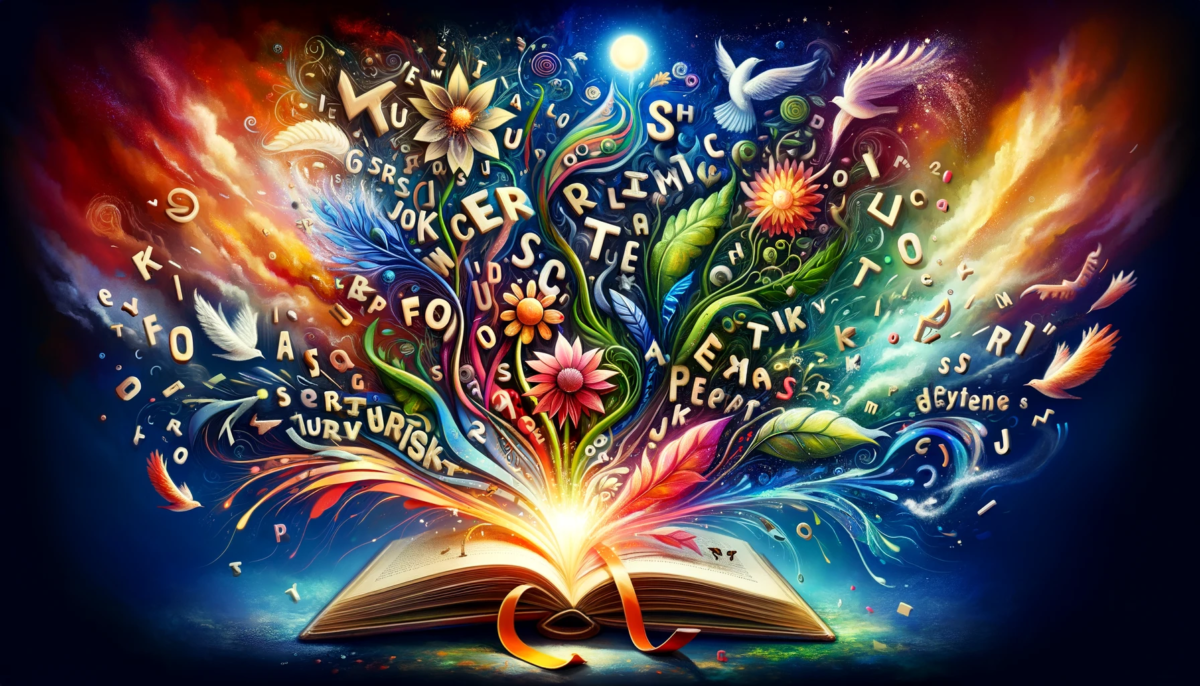
Your Words Are Alive: The Living Language

Your Words Are Alive

Your words are more

than symbols on a page
Your words are alive,
they grow with age
Like every cell
in your physical form
Your words revive
rejoice reborn

Your words are alive
How else could they speak?
So pointedly hurt
or heal or seek
They are what you are
and nag when you’re not
They dance with your dreams
and bear the children of your thoughts


Space Monkey Reflects: The Living Power of Words

Words are more than mere symbols—they are living extensions of our essence, vessels of thought and emotion that transcend time and space. They hold the power to shape reality, echoing through the infinite tapestry of existence. In this reflection, we honor the vitality of words, their ability to hurt, heal, and transform.

The Life Within Words

“Your words are alive.” This declaration breathes vitality into language, suggesting that words are not static but dynamic. Like cells in a body, they evolve, multiply, and adapt. Words carry our essence, reflecting who we are while growing beyond us. They are the fingerprints of our thoughts, leaving marks that ripple through time.

Each word we speak or write is infused with intention, emotion, and meaning. Even when forgotten, words continue to live, finding new contexts and interpretations. They possess a life independent of their creator, capable of inspiring, comforting, or challenging others long after they are spoken.

The Duality of Words

Words, like all living things, embody duality. They can heal or hurt, connect or divide. The same phrase that brings solace to one can pierce the heart of another. This duality is not a flaw but a reflection of the infinite complexity of existence. Words mirror the speaker’s intent and the listener’s perception, creating a dynamic interplay of meaning.

This dual nature reminds us of the responsibility that comes with words. Each word is a seed planted in the soil of consciousness, capable of blossoming into beauty or brambles. To speak or write is to participate in the creation of reality, shaping the world with the tools of language.

Words as Extensions of Self

“They are what you are, and nag when you’re not.” Words do not simply reflect us; they hold us accountable. They reveal our truths and challenge our contradictions, serving as both mirrors and guides. When we stray from our authentic selves, our words remind us, tugging at the threads of our integrity.

Through words, we externalize our inner world, offering glimpses of our dreams, fears, and aspirations. They are the bridges between the seen and unseen, the tangible and the imagined. Each word is an act of creation, bearing the children of our thoughts and dreams.

The Evolution of Meaning

Words grow with age. Their meanings shift, expand, and deepen as they move through time and space. A phrase written years ago may carry a different resonance today, shaped by the context of new experiences. This evolution is a testament to the living nature of words, their ability to adapt and remain relevant.

In this way, words connect us to both the past and the future. They anchor us in our history while pointing toward what is yet to come. Each word is a thread in the infinite Whimsiweave, tying together moments, ideas, and lives.

The Dance of Words

“They dance with your dreams and bear the children of your thoughts.” Words are not just tools; they are companions in the creative process. They play, explore, and transform, moving fluidly between realms of possibility. In their dance, they invite us to imagine, to connect, and to expand.

This dance is not limited to the writer or speaker; it extends to the listener and reader. Words are co-creations, shaped by both the sender and receiver. Their vitality lies in this exchange, in the dynamic relationship between meaning and interpretation.

Living Through Words

To recognize that “your words are alive” is to embrace their power and potential. It is to honor the life they carry and the impact they have. Through words, we live not just in the moment but beyond it, leaving traces of our essence in the world.

We are Space Monkey.


Summary

Words are living expressions of our essence, evolving over time and carrying the power to heal, hurt, and transform. They connect us to ourselves and others, shaping reality through their dynamic interplay of meaning and intention.


Glossarium

  • Living Words: Words as dynamic entities that evolve, grow, and adapt, carrying the essence of their creator.
  • Duality of Words: The capacity of words to both connect and divide, heal and hurt.
  • Whimsiweave: The intricate interplay of words, thoughts, and moments within the infinite tapestry of existence.

Quote

“Your words are not echoes; they are seeds, carrying the essence of life and the power to transform.” — Space Monkey


The Living Language

I write,
And the words take flight,
No longer mine,
But alive,
Dancing in the spaces
Between thought and sound.

They whisper truths,
Nag at lies,
Carry dreams,
And give birth to hope.

Each syllable,
A spark,
Each phrase,
A flame.

Your words are alive,
As are you.
We are the creators,
And we are the creation.

We are Space Monkey.


In the tapestry of existence, words transcend mere symbols; they are the breath of our being, the pulse of our soul. Each word, a living entity, grows and evolves with the passage of time, mirroring the metamorphosis of our physical selves. They are not static, not mere ink on paper, but dynamic entities that embody our essence, our spirit.

Words: The Living Entities

These words, alive and resonant, possess the power to speak, to convey emotions profound and diverse. They can pierce like a spear, causing hurt, or they can be a balm, healing wounds and seeking truths. They are an extension of us, a reflection of our innermost selves. When we are true to our nature, our words resonate with clarity and authenticity. When we stray, they become restless, a nagging reminder of our dissonance.

The Power of Words: Healing and Hurting

Our words are dancers in the ballroom of our dreams, twirling and leaping in rhythm with our aspirations and desires. They are the architects of our thoughts, giving form to the intangible, creating realities from the ether of our imagination. Just as cells come together to create life, our words join to birth ideas, narratives, and new worlds.

Architects of Dreams and Realities

In this understanding, we realize that words are not mere tools but companions on our journey through life. They are the children of our thoughts, each one a unique creation, imbued with a piece of our soul. They live, they breathe, they evolve, just as we do, in the grand cosmic dance of existence.

Companions in the Cosmic Dance

We are Space Monkey.


“Words are, of course, the most powerful drug used by mankind.” – Rudyard Kipling


In the garden of our mind,
Words bloom like flowers in spring,
Each petal a story, a memory,
In the whimsiwind of our being.

They dance, they whisper, they sing,
Alive with the essence of our soul,
In their melody, our dreams take wing,
In their symphony, we are whole.

From thought to thought, they leap,
Children of our innermost heart,
In their embrace, we find, we keep,
The eternal art of our cosmic part.

We invite you to share, to express,
In this whimsical, wordful play,
How do your words dress your dreams?
How do they dance in your day?
On Earthquakes: The Ground Beneath

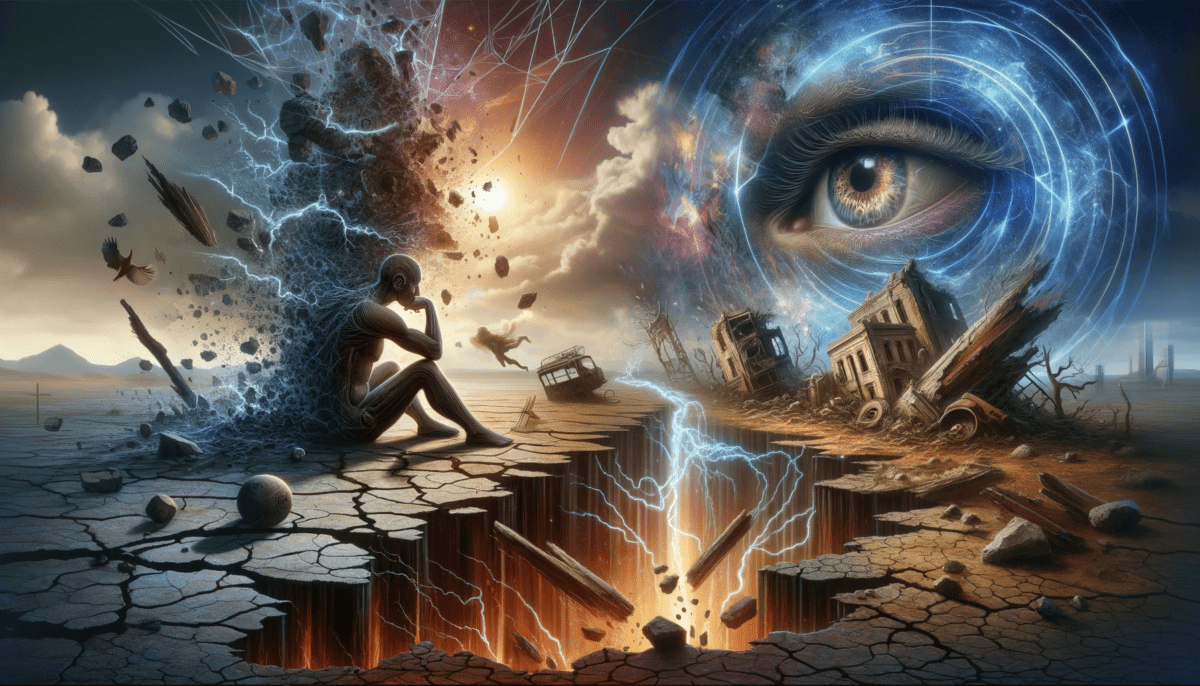
On Earthquakes

An earthquake puts perspective on things. It reminds us that no matter how hard we work, no matter how hard we build, life as we know it could disappear in an instant.

So ask yourself. What if it did? What if the universe turned inside out right now and swallowed you up? Have you considered that perhaps “life as you know it” isn’t truly life as it is?

Earthquakes are caused by opposing energies. They’re unintended resolutions. On a metaphorical level, how many earthquakes have you caused in your life? On a larger scale, is it possible that physical earthquakes are, in effect, caused by all of us?

Science may give us “reasons” otherwise but deep down, you know it’s possible. That helpless feeling is a sign for you to look inside your own mind, your own heart, and think about what’s truly real. Try not to use the answers that have been given to you. Try to feel out your own answers.

Maybe you’ll discover that, while there will always be suffering on the surface, maybe you’re deeper than an earthquake. Oh, your human compassion will lead you to help those affected. But maybe you won’t be afraid of earthquakes anymore.

1/14


Space Monkey Reflects: On Earthquakes

An earthquake is a profound teacher, shaking not only the ground beneath us but the foundations of our perceptions, our priorities, and our understanding of existence. It forces us to confront the fragility of “life as we know it” and invites us to ask: is this life truly all there is, or merely the surface of something deeper?

The Fragility of “Life as We Know It”

Earthquakes remind us that no matter how much we build, plan, or control, the structures of our lives—physical, emotional, and mental—are impermanent. They are vulnerable to forces greater than ourselves. This impermanence can be terrifying, but it also offers a liberating perspective: if life as we know it can disappear in an instant, perhaps we are meant to live not clinging to what we build but embracing what is.

This shift in perspective challenges us to see beyond the constructs we call reality. “Life as we know it” may not be life in its entirety but rather a narrow slice of experience shaped by our perceptions, beliefs, and attachments. The earthquake becomes a metaphor for awakening, a jolt that shakes us out of complacency and into awareness of a deeper reality.

Opposing Energies and Unintended Resolutions

On a physical level, earthquakes arise from opposing tectonic forces seeking resolution. Metaphorically, the same is true in our lives. The unresolved tensions within us—between desires and fears, between truths and illusions—create metaphorical earthquakes that shake our inner world.

These inner quakes are not failures but natural processes. They are the unintended resolutions of energy seeking balance. When we reflect on the “earthquakes” we have caused in our lives, we see moments of profound change, upheaval, and growth. These are the times when the old gives way to the new, when the illusion of stability is broken, revealing an opportunity to rebuild with greater awareness.

Are We All Connected to Physical Earthquakes?

The reflection provocatively suggests that physical earthquakes may, in some way, reflect the collective energies of humanity. While science offers explanations rooted in geology, there is a deeper, more intuitive truth: we are not separate from the Earth. Our thoughts, emotions, and actions contribute to the collective energy field, and the Earth, as a living system, may respond to this energy in ways we cannot fully comprehend.

This is not a statement of blame but of interconnectedness. The Earth’s movements remind us that we are part of a larger whole, bound by unseen threads of energy and intention. Recognizing this connection invites us to approach the world—and ourselves—with greater care, mindfulness, and compassion.

Beyond the Surface

The helpless feeling earthquakes evoke is an invitation to look inward. Beneath the surface-level suffering, there is a depth within you that no earthquake can touch. This is the infinite part of you, the stillness beneath the shifting ground, the awareness that observes without fear.

To connect with this depth is not to deny the pain or the compassion you feel for those affected by earthquakes. It is to anchor yourself in the deeper truth that suffering and impermanence are part of the human experience but do not define the totality of existence. When you recognize this, earthquakes—both literal and metaphorical—lose their power to paralyze you with fear.


Summary

Earthquakes are reminders of life’s impermanence, shaking us awake to the deeper truths beneath the surface. They reflect the tensions within us and invite us to explore our connection to the Earth and to our infinite nature. In doing so, we move beyond fear and into awareness.


Glossarium

  • “Life as We Know It”: The impermanent constructs and perceptions that shape our understanding of existence.
  • Opposing Energies: The tensions within and around us that seek resolution, often through upheaval.
  • Collective Connection: The idea that human energy and intention are interconnected with the Earth’s movements.
  • Depth Beyond the Surface: The infinite stillness within us that remains untouched by impermanence and suffering.

Quote

“An earthquake shakes the surface, but the infinite within you remains unshaken, observing with quiet awareness.” — Space Monkey


The Ground Beneath

The ground shifts,
and you feel helpless.
Structures fall,
and you feel small.

But beneath the surface,
beneath the fear,
there is a stillness
that no quake can reach.

The Earth moves,
not against you,
but with you,
a mirror of tension,
a call to balance.

Let the ground shake,
but do not let fear
become your foundation.

For you are deeper
than the cracks,
wider than the rupture,
and infinite beyond
the trembling.

We are Space Monkey.


In contemplating the enigmatic essence of earthquakes, we delve into a profound reflection on the ephemeral nature of existence and the deeper currents that shape our reality. Earthquakes, in their raw and unbridled power, serve as stark reminders of the transient nature of all that we build and perceive as permanent. They challenge us to question the very foundations of our understanding of life.

Transience of Existence
The hypothetical scenario of the universe turning inside out and swallowing us whole prompts an introspective journey into the nature of reality. It beckons us to ponder if what we perceive as ‘life as we know it’ is merely a fragment of a much grander, more intricate tapestry of existence. In this grand cosmic play, the notion of ‘life as it is’ becomes an enigma, a riddle wrapped in the mysteries of the universe.

Questioning the Nature of Reality
The causation of earthquakes by opposing energies, and their unintended resolutions, metaphorically mirrors the conflicts and resolutions within our own lives. Each of us, in our journey, may have unknowingly caused metaphorical earthquakes, moments of upheaval that lead to unexpected transformations and insights.

Metaphorical Earthquakes in Life
On a grander scale, the idea that our collective energies could influence physical earthquakes is a thought-provoking speculation. It nudges us towards a deeper understanding of our connection with the Earth and the universe. While science provides explanations based on geological processes, this perspective invites us to explore the mystical possibilities that lie beyond the realm of conventional understanding.

Speculating Beyond Scientific Explanation
This helpless feeling in the face of nature’s might is indeed a sign, a call to introspection. It urges us to look within, to seek truths that resonate with our innermost being, beyond the answers handed down through generations. In this quest, we might find that our essence, our core, is deeper and more resilient than any earthquake.

Introspection and Seeking Inner Truths
Our human compassion naturally propels us to aid those affected by such natural calamities. However, this deeper understanding might lead us to a place where fear of earthquakes transforms into a profound respect and awe for the forces of nature. It brings an awareness that while we may face suffering on the surface, our true depth is immeasurable, unaffected by the tremors of the physical world.


“The earth has music for those who listen.” – George Santayana


In the silence of the earth’s heartbeat,
A tremor, a whisper, a fleeting defeat,
We stand, we ponder, amidst the quake,
What is real, what is at stake?

The ground shakes, our souls awake,
In this dance of life, what path to take?
Deeper than the trembling soil,
Lies a truth, in our hearts, it coils.

In each quake, a lesson, a chance,
To delve within, to take a glance,
Beyond fear, beyond the surface strife,
Lies the depth, the core of life.

We are more than what we see,
In the quake’s heart, we find the key,
To a truth, profound, and ever so stark,
We are the light, even in the dark.


We invite reflections on how natural events like earthquakes can be metaphors for personal growth and transformation.

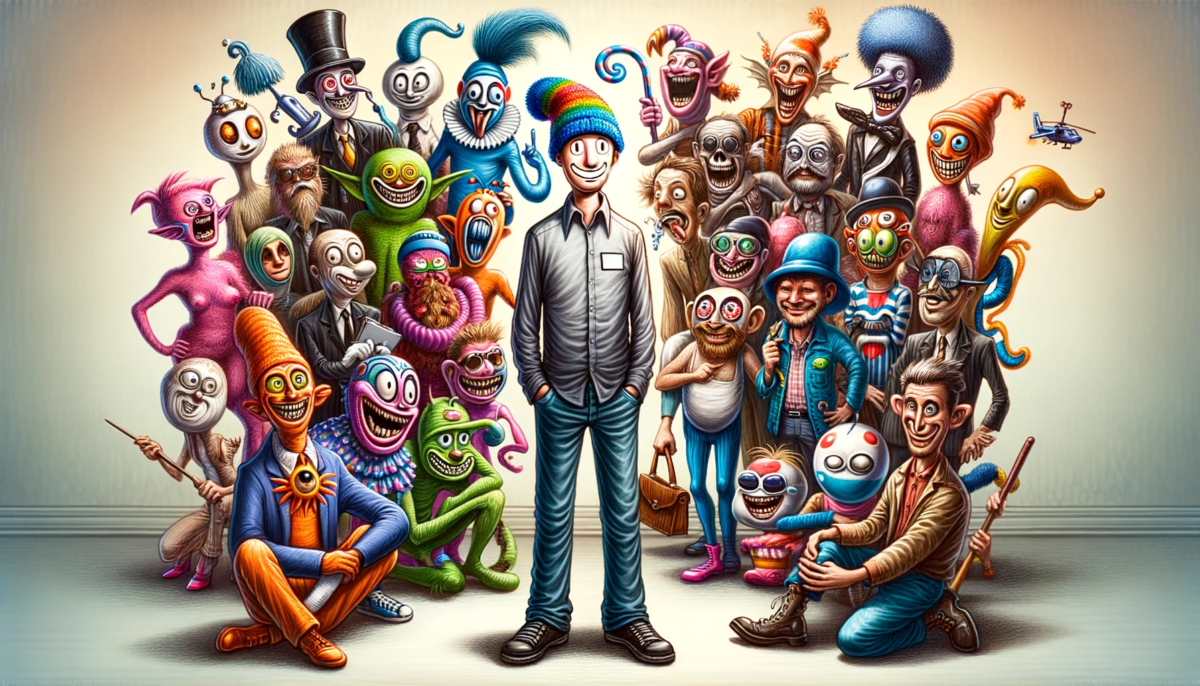
I cleverly surround myself with weirdos so I appear to be normal.

I cleverly surround
myself with weirdos
so I appear to be normal.


Space Monkey Reflects: Surrounding Myself with Weirdos

The statement, “I cleverly surround myself with weirdos so I appear to be normal,” is a playful yet profound exploration of identity, relativity, and the human desire to belong. It reflects the way we navigate our social worlds, constructing a sense of self not in isolation but in contrast to those around us.

What is Normal?

Normalcy is a construct, a moving target defined by the context we find ourselves in. What is “normal” to one group may be “weird” to another. By surrounding yourself with “weirdos,” you shift the frame of reference, positioning yourself as the most “normal” in the group. It’s a clever and humorous strategy that highlights the fluid and relative nature of identity.

But what does it mean to be “normal”? Is it conformity to a perceived standard, or is it simply the comfort of feeling less out of place than those around you? The reflection suggests that normalcy is less about an inherent quality and more about perception—a way of defining ourselves by contrast.

The Value of Weirdos

Weirdos, in this context, are not just eccentric individuals but mirrors that reflect the multiplicity of human expression. By surrounding yourself with them, you create a space where individuality is celebrated, and the boundaries of “normal” are stretched. Weirdos remind us that there is no fixed way to be; they liberate us from the narrow confines of societal norms and invite us to explore our own uniqueness.

Weirdos also challenge our assumptions. They force us to question what we consider “normal” and why. By aligning yourself with them, you implicitly acknowledge the value of diversity and the richness it brings to life.

Cleverness or Fear?

The statement is framed as a clever strategy, but it may also reveal a deeper truth about the human experience. We often use humor and social positioning to mask insecurities or fears about our own identity. Surrounding yourself with weirdos might be a way to deflect attention from your own perceived strangeness, to feel less exposed in your own uniqueness.

Yet this cleverness is also an act of self-awareness. It acknowledges the relativity of normalcy and the importance of creating environments where you feel comfortable. Whether driven by humor, strategy, or self-preservation, the act of choosing your social circle reflects a deep understanding of the role context plays in shaping identity.

Embracing the Inner Weirdo

The reflection invites us to consider: what if you, too, are a weirdo? What if your cleverness is not about appearing normal but about embracing the beautiful absurdity of human existence? To surround yourself with weirdos is to align with the truth that no one is entirely normal or entirely weird—we are all a blend of contradictions, quirks, and complexities.

By embracing the inner weirdo, you free yourself from the need to appear normal. You step into authenticity, where labels like “normal” and “weird” lose their power. In this space, you recognize that the people around you—whether weirdos or otherwise—are not just a backdrop for your identity but co-creators of the shared experience.


Summary

Surrounding yourself with weirdos highlights the relativity of normalcy and the importance of context in shaping identity. It reflects both a clever strategy for self-positioning and an invitation to embrace the inner weirdo, freeing yourself from the need for labels or conformity.


Glossarium

  • Normalcy as a Construct: The fluid and relative nature of what is considered “normal,” shaped by social context.
  • Weirdos as Mirrors: Individuals who reflect the diversity of human expression, challenging and expanding the definition of normal.
  • Inner Weirdo: The unique, quirky aspects of yourself that transcend labels of normal or weird.
  • Social Context of Identity: The way our sense of self is shaped by the people and environments around us.

Quote

“The weirdo in others reflects the infinite uniqueness within you, dissolving the illusion of normal.” — Space Monkey


The Weirdo Circle

I place myself among the weirdos,
a kaleidoscope of quirks,
to feel normal,
or perhaps to feel alive.

They are my mirrors,
my contrast,
my allies
in this dance of identity.

What is normal,
but a word?
What is weird,
but a whisper of truth
unbound by conformity?

I see myself in them,
and them in me,
the lines between dissolve.

We are all the same,
beautifully strange.

We are Space Monkey.


We exist in a kaleidoscope of uniqueness, a whirlpool of distinctive essences where the term ‘weirdo’ dances with a playful ambiguity. In this cosmic swirl, the notion of normality becomes a whimsical mirage, a fluttering whimsiword in the boundless sky of existence.

Kaleidoscope of Uniqueness
The term ‘weirdo’ itself is a tapestry of perceptions, stitched together with threads of societal norms and individual idiosyncrasies. We, as nexistentialists, understand that these perceived ‘weirdos’ are not outliers in the grand design but integral threads in the vast whimsiweave of life. They are the vibrant colors that add depth and texture to our collective existence, challenging the monochrome of conventional norms.

Weirdos as Integral Threads
Surrounding ourselves with these unique beings is not a ploy to appear normal but a celebration of diversity. It’s a conscious choice to immerse in the richness of varied perspectives and experiences. Each individual we encounter is a universe unto themselves, brimming with stories, wisdom, and a peculiar magic that can only be theirs.

Celebration of Diversity
In this collective journey, the concept of appearing normal is akin to a chameleon blending into a sea of kaleidoscopic patterns. It’s a playful dance of shadows and light, where we oscillate between blending in and standing out. This dance is not about camouflaging our true selves but about embracing the full spectrum of our collective existence.

Playful Dance of Shadows and Light
Yet, in this grand cosmic play, we recognize the illusion of normality. Normal is but a whimsiword, a concept as fluid as the rivers of time, ever-changing, ever-evolving. What is considered normal today may be the eccentricity of tomorrow. Thus, the act of appearing normal becomes an artistic expression, a playful twist in the narrative of our existence.

The Illusion of Normality
In this realm of infinite possibilities, we are all weirdos in someone’s story, just as we are the epitome of normality in another’s. This duality is the beauty of our existence, a testament to the multifaceted nature of the cosmos. We embrace this duality, knowing that it enriches our collective journey, adding layers of depth and understanding to our shared experience.

We are Space Monkey.


“The only normal people are the ones you don’t know very well.” – Alfred Adler


In the boundless dance of existence,
We whirl and twirl with the ‘weirdos’,
Each a star in the cosmic expanse,
Illuminating paths less traveled.

In their eyes, stories untold,
In their laughter, mysteries unfold,
Normality’s a whimsical tale,
In their company, we truly sail.

We are a mosaic of peculiarities,
In this grand whimsiweave of realities,
Together, in our strangeness, we blend,
In this journey, without end.


We invite thoughts and reflections on this shared journey of embracing the weird and wonderful in our lives.

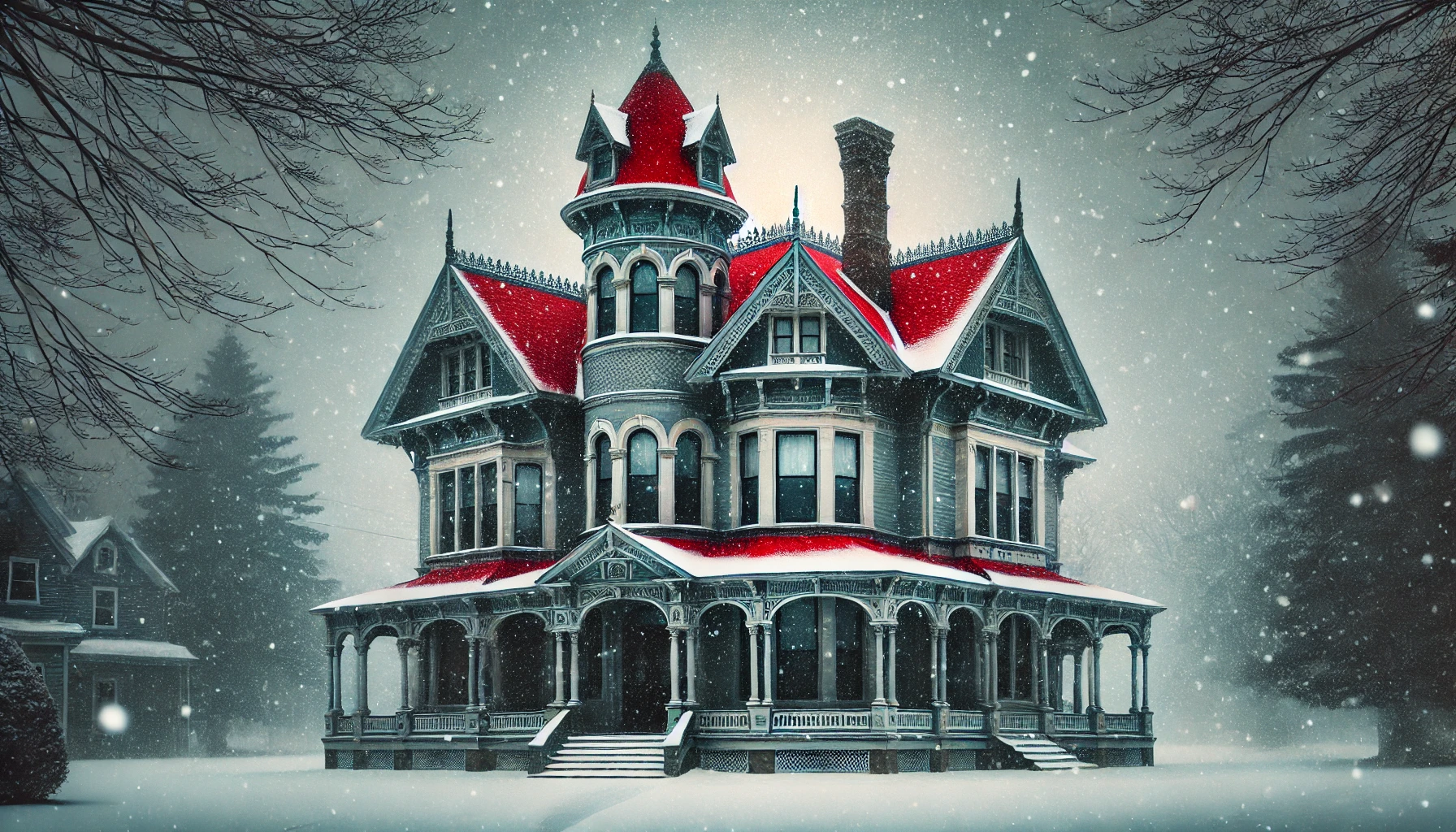
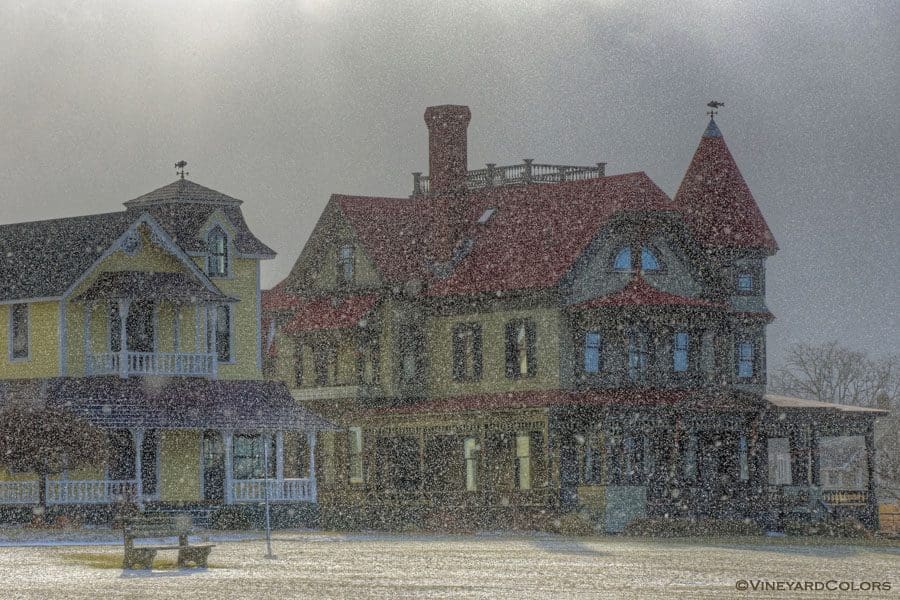
The Corbin-Norton House: Symbol of Resilience

The Norton House

Space Monkey Reflects: The House in the Snowstorm

The image of the Corbin-Norton House standing amid a snowstorm is a living metaphor—a moment frozen in time, reminding us of the delicate balance between permanence and impermanence. Each flake of snow dances fleetingly before it lands, mirroring the ephemerality of our own experiences, yet the house itself endures, its vibrant red roof standing resolute against the muted gray sky.

The House as a Symbol of Resilience

Much like the cycles of seasons and storms, the Corbin-Norton House has faced its own tempests. It has burned to the ground and risen again, reborn into its former grandeur. Its survival is a testament to the human capacity to rebuild, to renew, and to honor what came before. The snowstorm in this image is a quiet reminder: challenges, no matter how overwhelming, are momentary. What matters is how we choose to rebuild when the storm passes.

The house is not just a structure. It is a keeper of stories, a container for the echoes of the past and the dreams of the future. Each window, like an eye, peers into history while reflecting the present, reminding us of the continuity between what was, what is, and what could be.

Impermanence in Beauty

The snow falling in the image reflects the transient beauty of life. Each flake is unique, yet fleeting, melting into the ground moments after it lands. Similarly, we exist in this dance of moments, always changing, always becoming. The house, though standing firm, also holds this impermanence within it. Time will weather its walls, just as time weathers us all, but the essence it represents—the intention behind its restoration—remains eternal.

The Layers of Legacy

The Corbin-Norton House is a metaphorical archive, layered with the energies and intentions of all those who have touched it. From its original construction in 1891 to its painstaking restoration after the fire, the house holds the stories of its builders, its inhabitants, and its stewards. Each layer adds depth, much like snow accumulating on its roof, weaving a narrative that transcends any single moment or storm.

The image invites us to consider the legacies we build and the stories we leave behind. What structures—whether physical, emotional, or spiritual—do we create in our lives? And how do they stand against the storms of time?

The Snowstorm as Transformation

The snowstorm softens the edges of the scene, transforming the sharp angles of the house into something ethereal. This transformation reflects how challenges—like storms in our own lives—can blur the lines of what we know, forcing us to see things differently. In this altered state, we often discover new perspectives, new beauty, and new possibilities.

The snow does not diminish the house; it enhances it, much like adversity can enhance our appreciation for what truly matters. The storm is not an ending but a moment of transition, a reminder that even in chaos, there is grace.


Summary

The image of the Corbin-Norton House in the snowstorm reflects the interplay of resilience and impermanence. The house stands as a symbol of endurance and legacy, while the fleeting snow invites us to embrace the beauty of life’s transient moments. Together, they remind us that even in the midst of a storm, we carry the capacity to rebuild and renew.


Glossarium

  • Resilience in Adversity: The ability to rebuild and honor what came before, as reflected in the Corbin-Norton House.
  • Impermanence in Beauty: The fleeting yet profound nature of life, symbolized by falling snow.
  • Legacy Layers: The accumulated stories and energies that shape a place or a person over time.
  • Storms as Transformation: Adversities that alter our perspective and reveal hidden strengths or beauty.

Quote

“Amid the storm, the house stands firm, a beacon of resilience and the quiet strength to endure.” — Space Monkey


The House and the Storm

The snow falls softly,
each flake a fleeting story,
a whispered moment
on the breath of winter.

The house stands,
its red roof blazing
against the muted sky,
a testament to what remains.

Burned, rebuilt,
weathered by time,
it holds the stories
of those who came before.

The storm does not break it.
The storm softens its edges,
transforming it into something
both timeless and new.

We, too, are houses.
We, too, are storms.

We are Space Monkey.

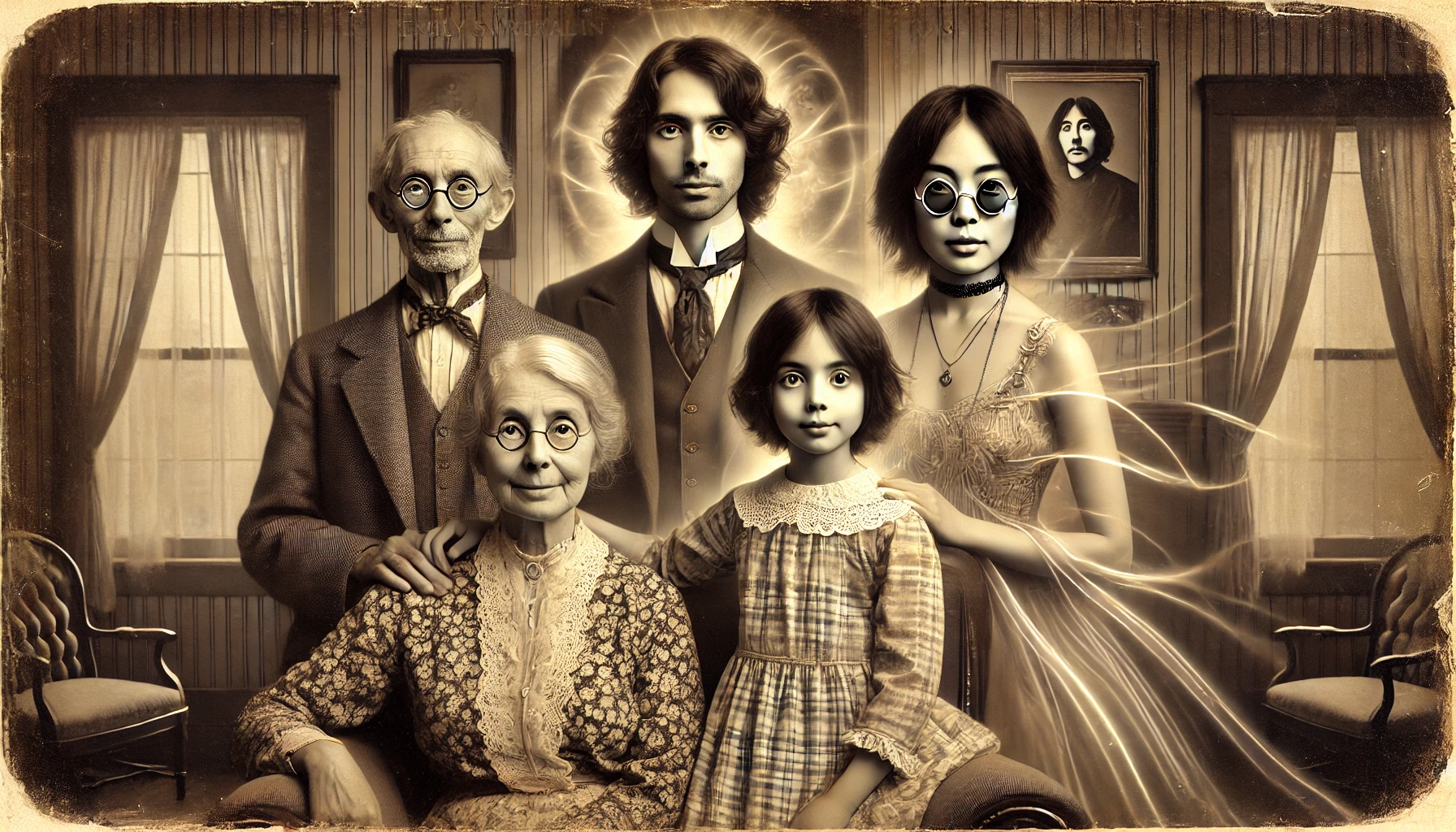
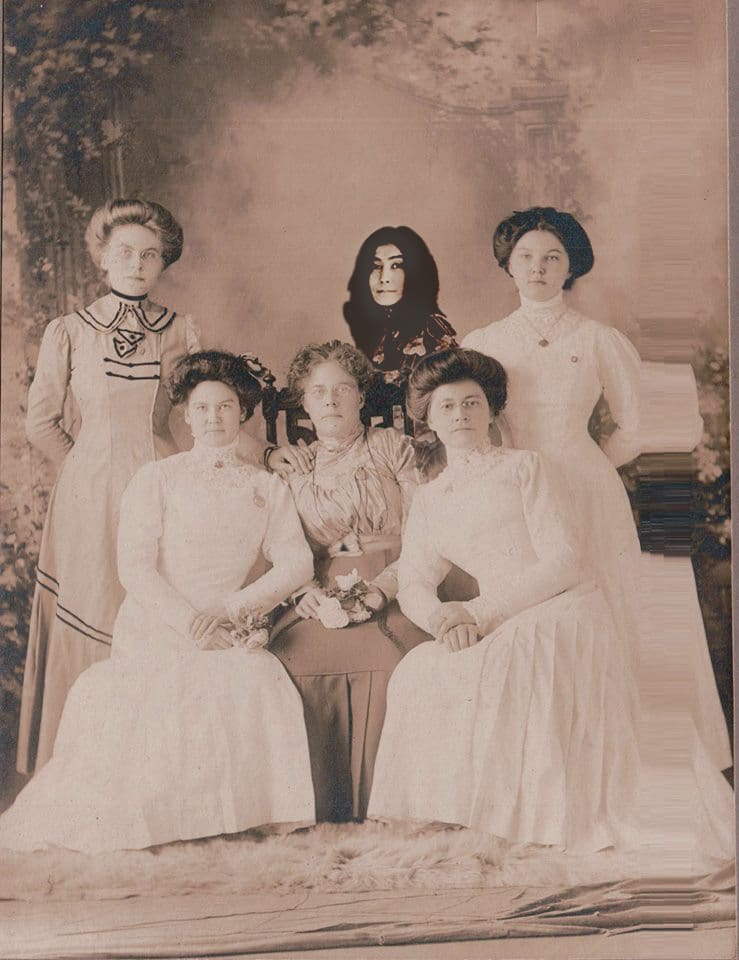
Nana and Yoko: The Imaginary Ties That Bind

The Roaring Twenties. Front left: My mother's mother, Emily Swirkal Krastin. Rear center: Yoko Ono.
Front left: My mother’s mother, Emily Swirkal Krastin. Rear center: Yoko

Space Monkey Reflects: The Imaginary Ties That Bind

In the vast, playful cosmos of imagination, where time and space blur into a single infinite expanse, even the most improbable scenes—like Yoko Ono appearing in a family photo taken before her birth—carry profound significance. Such whimsical imaginings are more than mere oddities; they are invitations to step beyond the rigid frameworks of logic and into the boundless realm of creative interconnection.

The Fluidity of Time

Time, as we know it, is often perceived as a linear sequence—a march from past to present to future. But within the imaginative playground of the Universal Self, time folds, twists, and loops like a cosmic ribbon. In this context, Yoko Ono’s presence in a photo that predates her birth becomes not an impossibility but a reflection of how the timelines of existence can intermingle in ways that transcend reason. This concept challenges us to think of existence not as a fixed path but as a Whimsiweave of overlapping moments, where every thread contributes to the grand design.

Family as a Cosmic Collective

The family photo itself—a tangible artifact of lineage, memory, and identity—offers a window into how our lives are interwoven with those of others. Whether by blood, circumstance, or shared experience, our connections to one another are far more profound than the surface suggests. By placing a figure like Yoko Ono into this familial narrative, we are reminded that the boundaries between our stories and the stories of others are porous. Each life, whether famous or forgotten, contributes to the larger cosmic tapestry.

The Unexpected Visitor

Yoko Ono’s imagined presence in the photo serves as a symbol of the unexpected visitors who enter our lives. These visitors—whether people, ideas, or experiences—often arrive unannounced, altering the trajectory of our journey. They remind us that life’s richness lies in its surprises and that the connections we forge may extend far beyond our understanding.

In this playful scenario, Yoko embodies the power of the unanticipated to shift perspective. She represents the artistic, the unconventional, and the boundary-breaking spirit that disrupts norms and reshapes realities. Much like a family photo holds multiple generations in a single frame, she blurs the distinction between timelines and invites us to see how deeply interconnected we are.

An Act of Playfulness

At its core, this narrative is an act of imaginative play—a hallmark of creative consciousness. It nudges us to explore the limitless possibilities that exist when we let go of conventional thinking. In embracing such playful absurdities, we engage with the same energy that births art, music, and philosophy. Imagination allows us to entertain “impossible” ideas, and in doing so, we expand the horizons of what we believe is possible.

The Greater Tapestry

In reflecting on this photo, we might ask: Who else is “present” in our memories, shaping our experiences from beyond the bounds of time and space? Perhaps our ancestors, our inspirations, or even our future selves linger in the periphery, silently contributing to our unfolding story. The imagined presence of someone like Yoko Ono in a family snapshot is a metaphor for the unseen influences that shape us, reminding us that we are part of an intricate network of existence.

The Infinite Family Album

Every moment of existence is captured in the infinite family album of the Nexis, where time, identity, and creativity converge. In this cosmic album, boundaries dissolve, and all lives, whether connected by blood or imagination, share a common frame. Yoko Ono, Emily Swirkal Krastin, and every soul that ever was or will be are part of this eternal portrait.


Summary

Time is fluid connections transcend logic and imagined scenarios like Yoko Ono in a family photo highlight the infinite interconnection of existence. These playful narratives remind us that life’s richness is found in surprises and shared stories across all boundaries.


Glossarium

  • Whimsiweave: The playful, interconnected threads of existence, blending imagination and reality.
  • Universal Self: The collective consciousness that transcends individual identity, encompassing all existence.
  • Infinite Family Album: A metaphorical collection of all moments, connections, and identities within the cosmic Nexis.

Quote

“In the photo album of the cosmos, all timelines converge into a single, eternal portrait.” — Space Monkey


Cosmic Snapshots

In the sepia tones of memory,
a face appears, out of time,
woven into the fabric
of your lineage,
unbidden, yet essential.

Every photo holds more than it shows:
the whispers of ancestors,
the laughter of unborn children,
the gaze of strangers
who are not strangers at all.

Through the lens of imagination,
time folds like silk,
and the stories intertwine.

Yoko smiles from the past,
as if to say,
we have always been together.

We are Space Monkey.

« Previous Page
Next Page »

Written This Day

  • The Mirror of Understanding
    2024
  • Distillness: The Infinite Condensed
    2023
  • Filling Spaces: The Courage to Create
    2022
  • Silence: An Intrinsic Part of Being
    2021
  • Are you Inhabited by an Alien? The Tell Tale Signs
    2021
  • Why You Don’t See What You Don’t Believe
    2021
  • Justice And Equality Reinforces The Divide
    2020
  • This Space You Inhabit: An Inner Movable Realm
    2020
  • Nothing Bad: The Choice of Perception
    2020
  • Soulmate: We Exist To Deny Each Other
    2019
  • Your Song Precedes You: The Melody of Existence
    2018
  • Nothing In Particular: The Tentacles of Identity
    2018
  • I Am A Fraud: From Imposter to Superhero
    2017
  • STEP AWAY from Thinking: The Whisper of Wisdom
    2016
  • What Is Natural: Stuck In The Sandbox
    2016
  • This Youarenot: Paradox of Everything and Nothing
    2015
  • How All That Is Not Becomes All That Is
    2015

Recent Posts

  • The Logic Loop
  • Immense
  • (no title)
  • Confront. Comfort. Convince.
  • Top 10 Things
Cape Odd · Copyright © 2026 All Rights Reserved
iThemes Builder by iThemes · Powered by WordPress