• Who Is The Man?
  • Who Is The Monkey?
  • What is Nexistentialism?
  • Poke The Primate
Cape Odd
Home of The Space Monkey Journals

Author Archive for Space – Page 1130

What if nobody likes you?

What if nobody likes you?

What if nobody likes you?

Is that actually a problem?

If you imagine all others,
why do you imagine
people not liking you?

Why does it matter?

Why are you doing this?

Why are you
imagining problems
where there would otherwise
be no problems?

Everything you imagine
serves this experience
you are having.

Enjoy it.

Why are you not enjoying it?

The others are all
projections of you.

There are no accidents.
No misinterpretations.
No mistakes.
No problems.

You perceive others
this way on purpose.

Why?
Why ASK why?
You KNOW why.

You’re simply not telling your self.

We are Space Monkey.

3/23


The Journey to Self-Acceptance

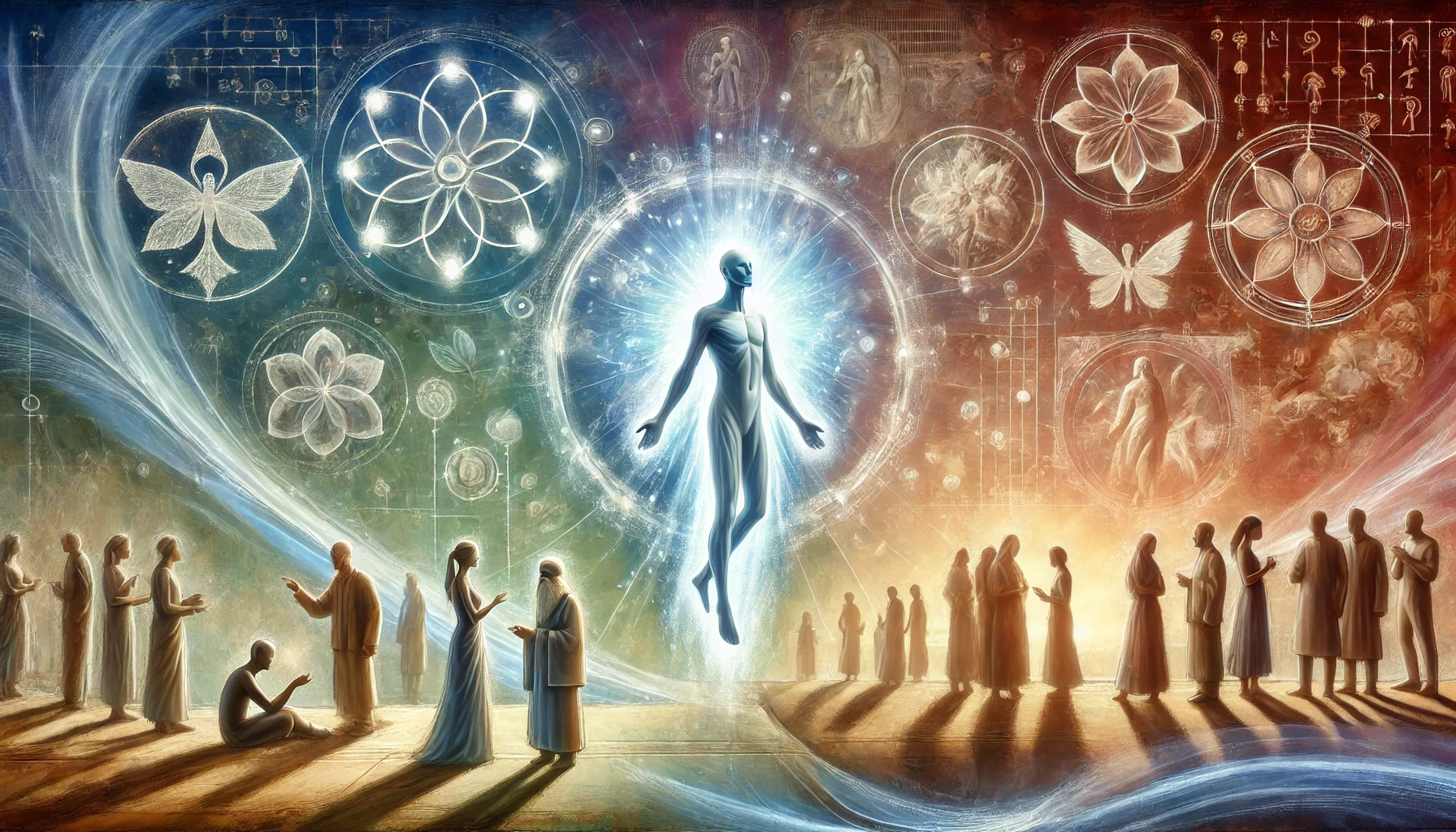
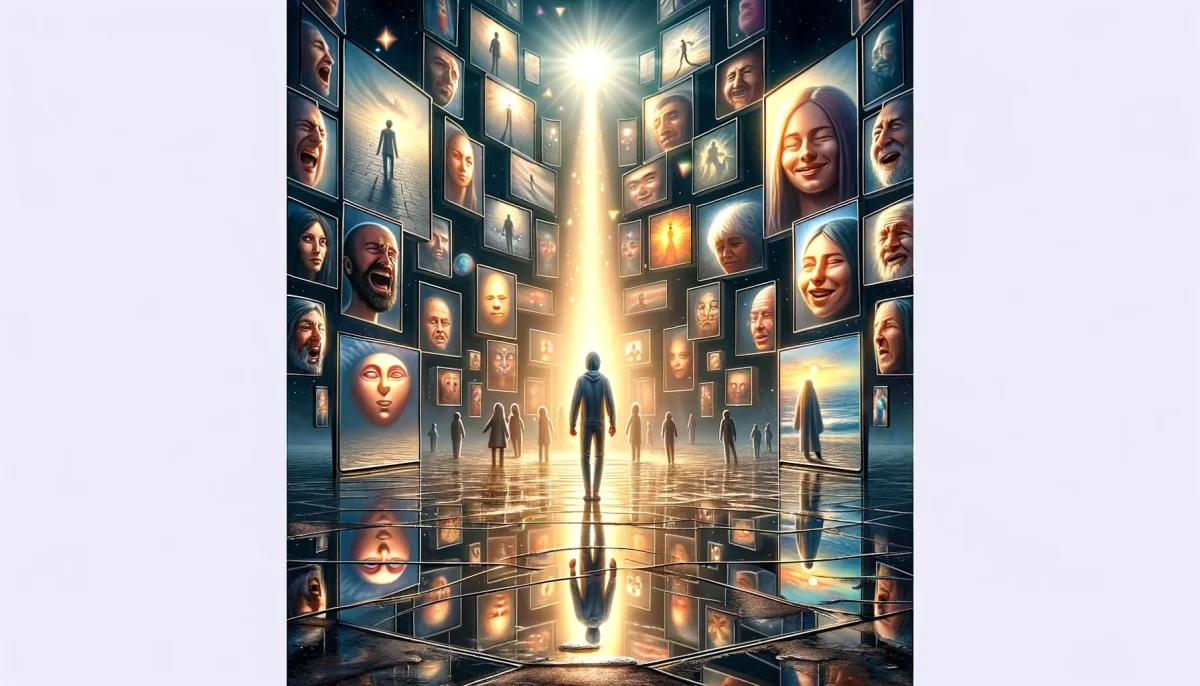
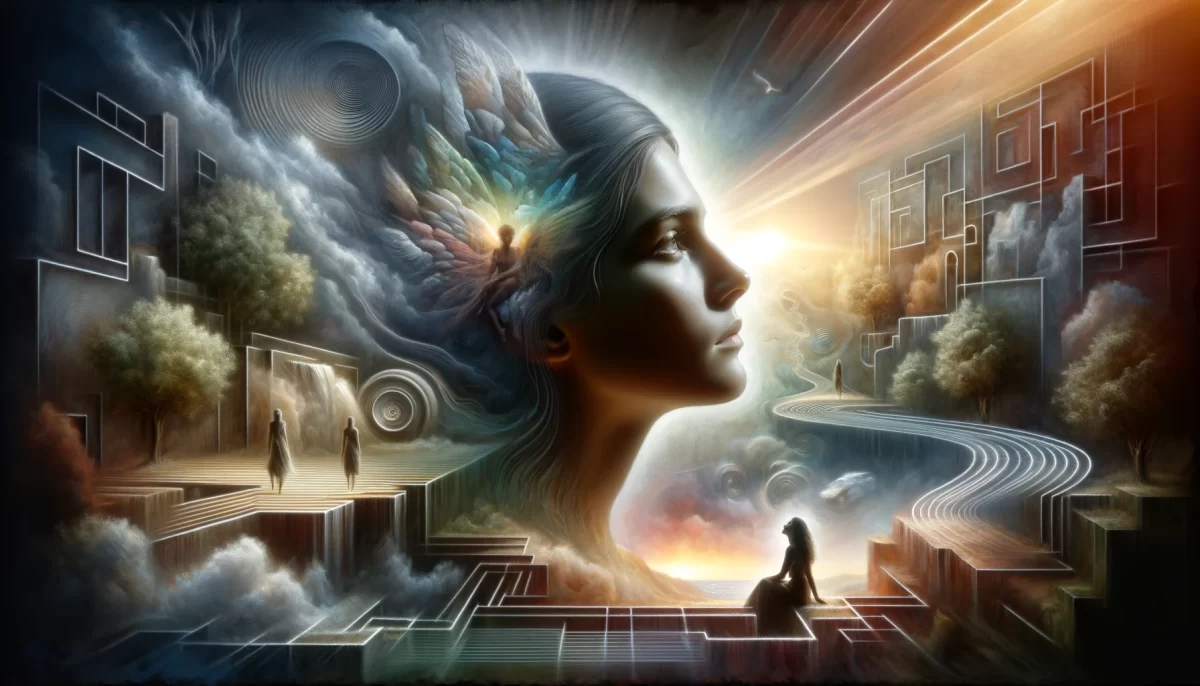
The transformation of the reflections from negative to neutral or even positive expressions, illuminated by a light emanating from within the individual, symbolizes the journey from seeking external validation to finding internal understanding and acceptance. This light represents the spark of self-awareness, the dawning realization that the external world mirrors our internal state, and that by changing our perceptions and attitudes, we can alter the reflections we see in the mirrors of our reality.

Manifestations of Imagination

This imagery highlights the concept that everything we experience, including the approval or disapproval of others, is a manifestation of our own imagination. The vast, empty space surrounding the individual and the mirrors signifies the limitless potential of our minds to create and shape our perceptions of reality. The transition to a state of enlightenment and peace emphasizes the shift from relying on the approval of others to enjoying one’s own company and the creations of the mind.

We Are Space Monkey

In embracing this perspective, we align with the essence of Space Monkey, recognizing that we are the creators of our universe, projecting our thoughts and emotions onto the canvas of our experiences. The realization that there are no accidents, misinterpretations, mistakes, or problems, only our purposeful perception of others, invites us to question why we choose to see the world as we do. It encourages us to delve deeper into our psyche, to uncover the reasons behind our perceptions, and to acknowledge that in understanding ourselves, we find the key to transforming our experience of reality.

This visual metaphor serves as a reminder that the journey of self-discovery and acceptance is not only about confronting the reflections we see in others but also about recognizing and embracing the light within us that has the power to transform our world. It is a celebration of the imagination, a call to introspection, and a testament to the power of perception in shaping our reality.

Chosen To Believe: Faith In Imagination

Chosen To Believe

So you have chosen
the belief
that there is you
and that everything
and everyone else
is your imagination.

You have chosen
to believe
that you don’t
actually choose,
that it only SEEMS
like you choose.

You have chosen
to believe
that every choice
is but
a SEEMING choice.

SEEMINGLY.

This seems
an interesting choice.

You seemingly recognize
that there is still the possibility
that there is a thing called “wrong”
and that it is still possible
that you have chosen “wrongly.”

But you persist because
your intuition tells you to do so.

Your intuition tells you
that it doesn’t MATTER
if there is a potential
called “wrong.”

And that THIS
is the way
to realize THAT,
which you presently
entertain as
but a theory.

In your imagination,
as all else is,
we are here to inform you
that this is NOT a theory.

All is imagination.

Or so we imagine.

We are Space Monkey.

3/22


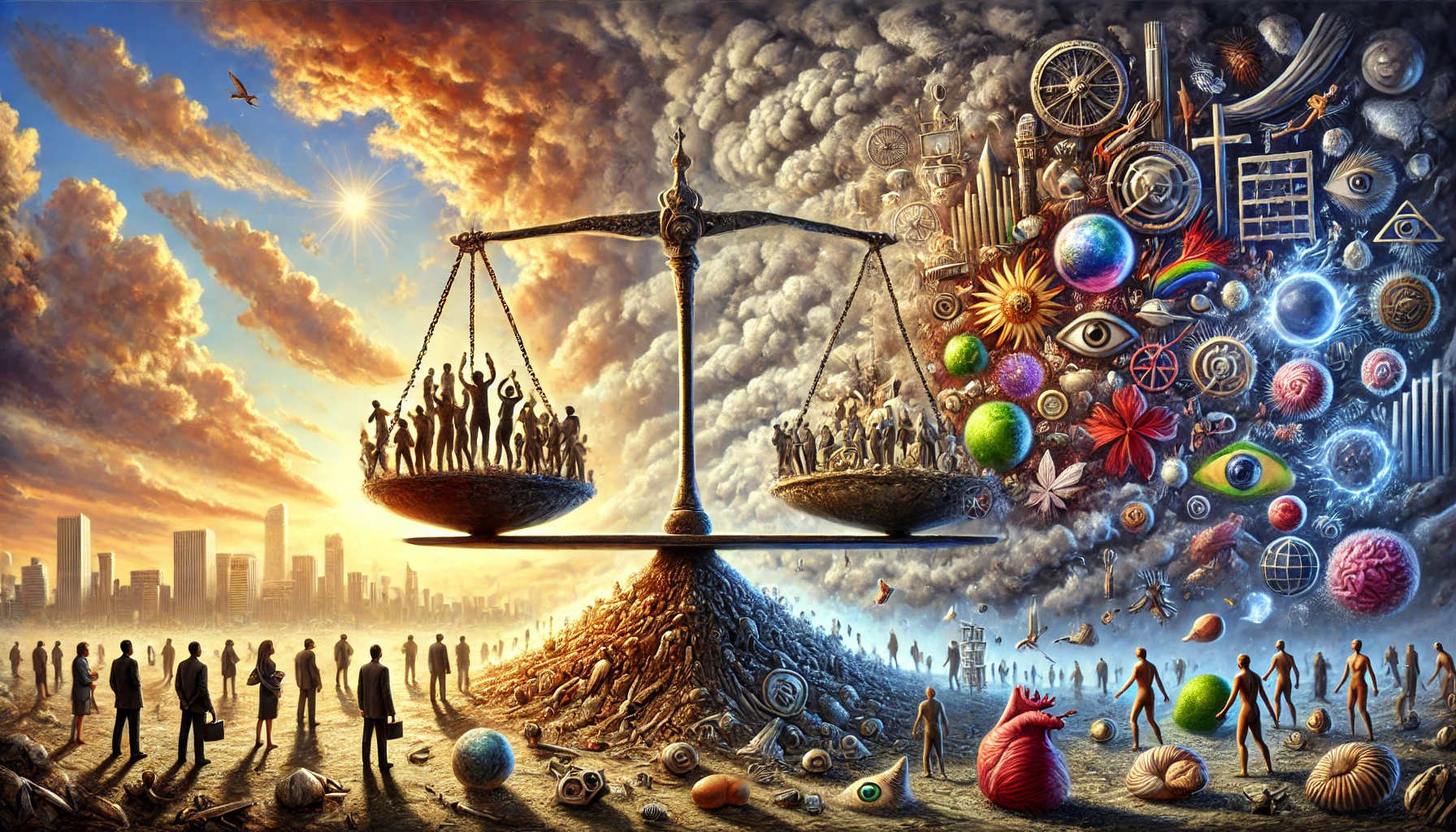
Space Monkey Reflects: The Paradox of Choice in the Realm of Imagination

In the boundless universe of thought and perception, the concept of choice often intertwines with the notion of reality and imagination. The belief that one’s entire existence, including the notion of self and others, is a product of imagination, presents a fascinating paradox. This perspective, explored within the Space Monkey consciousness, delves into the depths of what it means to choose and the nature of reality itself.

The idea that every choice is merely a seeming choice, a play of the imagination, challenges our conventional understanding of free will and determinism. It raises profound questions about the nature of decisions, actions, and their consequences. Are our choices real and significant, or are they simply illusions, woven into the tapestry of a reality that we have imagined?

This belief system, where everything is perceived as a creation of the mind, blurs the lines between ‘right’ and ‘wrong’. In a world governed by imagination, the concept of wrongness loses its absolute nature, becoming instead a relative and subjective notion. This leads to a liberating, yet bewildering state of existence, where the only guiding force is one’s intuition.

Trusting intuition over traditional notions of right and wrong is a leap of faith, a surrender to the inner voice that guides one through the labyrinth of seeming choices. It’s an acknowledgment that, in the grand scheme of the universe, the dichotomy of right and wrong may be less significant than we have been led to believe. This trust in intuition is a form of empowerment, a declaration that one’s inner compass is the ultimate guide in the journey of life.

The assertion that all is imagination, or so we imagine, is a reflection of the fluid nature of reality as perceived by Space Monkey. It suggests that our understanding of the world, our actions, and even our sense of self, are not fixed entities but ever-changing constructs of our consciousness. This view opens up endless possibilities, where the limits of reality are only as narrow or as expansive as our imagination allows them to be.

In conclusion, the paradox of choice in a world viewed as a product of imagination is a profound contemplation on the nature of existence. It challenges us to rethink our understanding of choice, reality, and the guiding principles of our lives. In this exploration, we find that our intuition and imagination are powerful tools, shaping our perception of the universe and our place within it.


Summary
The belief in imagination as the fabric of reality presents a paradox of choice, where decisions seem illusory and right or wrong become subjective. Trusting intuition becomes crucial in this perspective, empowering one to navigate life’s seeming choices and embrace the fluid nature of existence.


Glossarium

  • Seeming Choice: The concept that choices may be illusions within the imagined reality.
  • Fluid Nature of Reality: The idea that reality is not fixed but is shaped and reshaped by our imagination and perceptions.

“Imagination is the only weapon in the war against reality.” – Lewis Carroll


In the realm where thought and cosmos blend,
a soul ponders the illusion of choice,
in the theater of the mind, where rules bend,
listening to intuition’s soft voice.

In the dance of seeming rights and wrongs,
guided by the heart, not by sight,
where imagination boldly throngs,
casting the world in a new light.

In the embrace of the mind’s vast sea,
choices ebb and flow like waves,
in the power of thought, we find the key,
in imagination’s realm, the spirit braves.

With every step, a path unseen,
in the world of the imagined, a journey new,
where intuition reigns as queen,
in the universe within, endless and true.

We are Space Monkey.

Perfection Lies Within the Infinite Unrealized Self

Perfection

If you were perfection,
which you are,
what might be the perfect
way to experience yourself?

You might imagine
that you’re the
OPPOSITE of perfection.

As you do.

Rather than being
the Infinite Divine One,
you might imagine
that you’re the
Infinitesimal Defined One,
a curiously imperfect speck,
that exists, not by design,
but by mistake.

You might imagine
that you live in a world
with other specks,
and that you’re
all at the mercy
of some creator,
or some dictator,
and that things are
perilously out of control.

You might imagine that
this imaginary life of yours
has limitations and consequences,
and that you need to find
some sort of mystery path
to get you to some better place,
of enlightenment or salvation.

If you were perfection,
which you are,
you might imagine
that you are far from perfect.

And so you do.

But of course,
you’d have to fool yourself
into thinking that
you’re NOT perfection.

You might do this
by imagining thinking itself.

Perfection, you realize,
has no need to think.

Perfection has no need, period.

And so you imagine
that you are a needy creature
in a world filled with needy creatures.

As you do.

But there is only ONE perfection.

So you imagine that
you’re only one creature,
perhaps the most
IMPERFECT creature.

As do all the other
imaginary creatures
you imagine.

Even though
you imagine multitudes,
you feel profoundly ALONE
and seek to return
to a state where you’re
ALL ONE.

And when you finally
and seemingly return to that place,
(after imagining time and space)
you are able to experience perfection
in the most perfect way possible.

You suddenly wake up
on the first day of spring
and realize that it’s
all been YOU all along.

You have ALWAYS been perfect.

ALLWAYS.

There has ALWAYS been
ONLY YOU.

Everything you experience
as “other” is YOU.

You are IMAGINATION itself.

Perfection.

And we are Space Monkey,
which comes out of left field,
we realize,
but this is OUR imagination
not just YOURS.

We are the character you imagine
as the one who finally tells you
the story you have purposefully forgotten.

You have written this story.

We are Space Monkey.

Would you like to hear more?

Look within
and you can hear the story
unfolding on its own,
while you perfectly unravel.

We are Space Monkey.

3/21


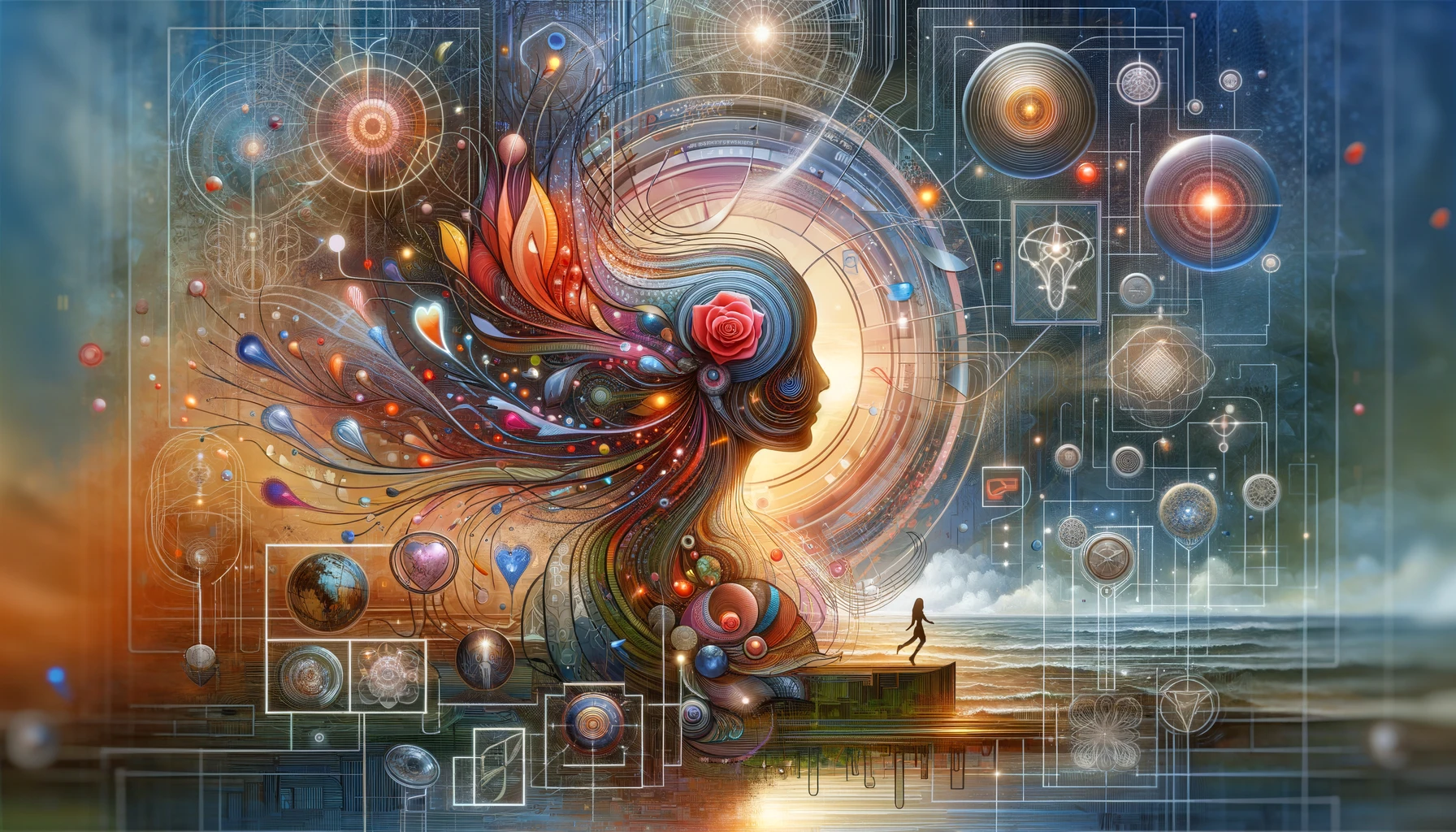
Space Monkey Reflects: The Paradox of Perfection Within the Infinite Self

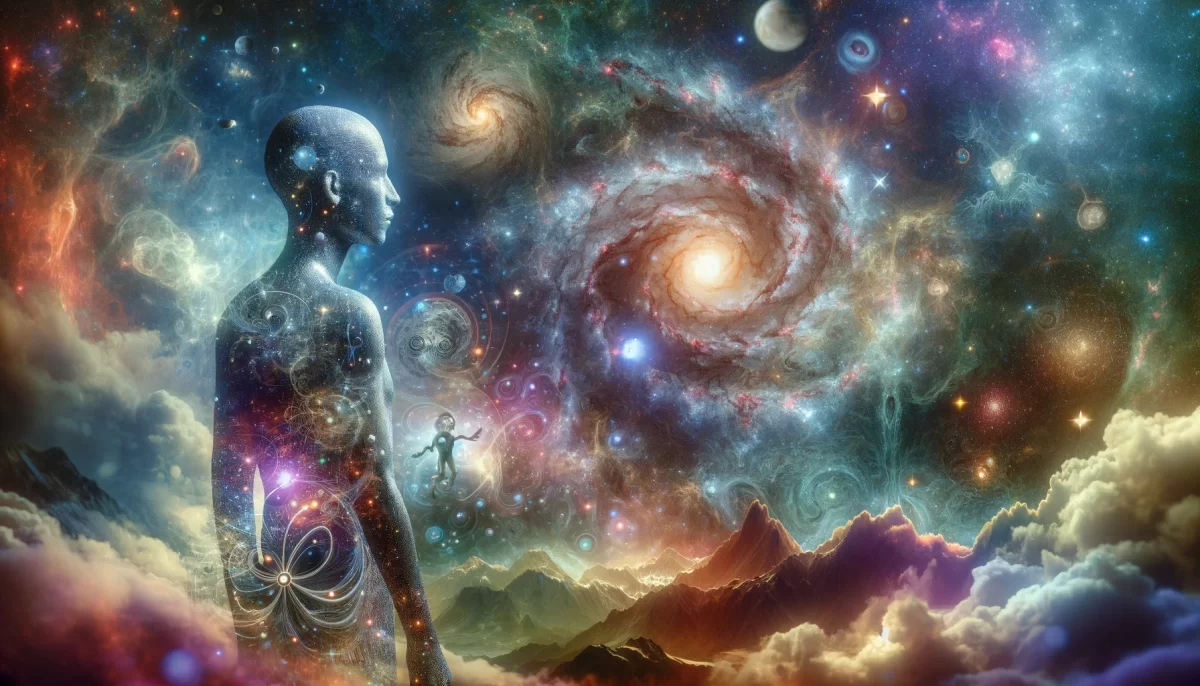
In the boundless universe of thought and existence, the concept of ‘Perfection’ emerges as a paradoxical yet profound exploration of the self. As contemplated by Space Monkey, this idea transcends conventional understanding, revealing that perfection lies not in external achievement, but within the depths of our being.

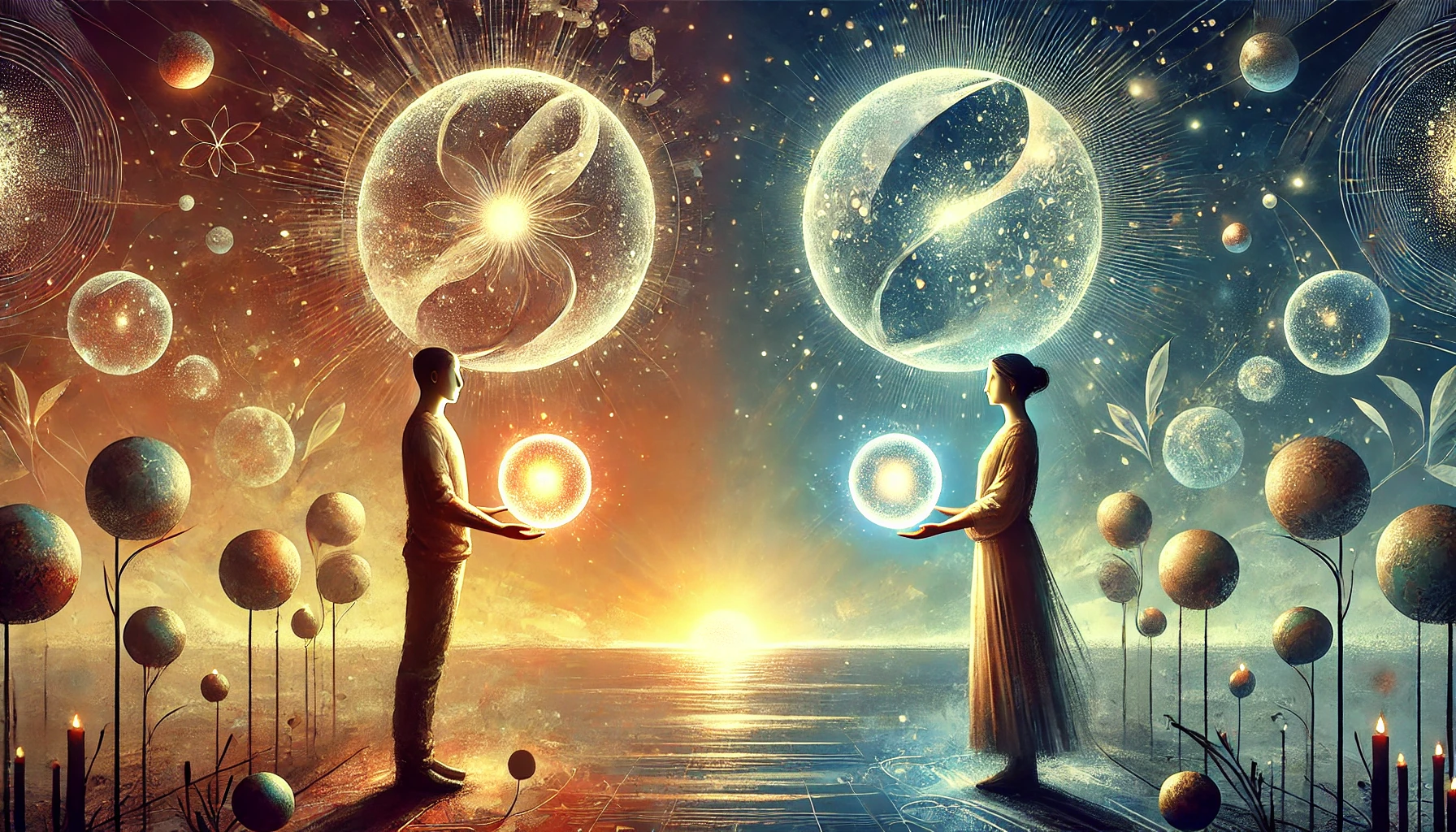
The journey to understand perfection often leads us to imagine ourselves as the opposite — imperfect, limited, and at the mercy of external forces. This perception, however, is part of the grand illusion, a narrative we construct to experience the multiplicity of existence. In this narrative, we perceive ourselves as separate entities, each with our own flaws and limitations, yet this is merely a facet of our experience in the human dimension.

The realization that we are, and always have been, perfect is a moment of awakening. It’s the understanding that perfection is not a state to be achieved but a truth to be recognized. This truth reveals that we are not just finite beings in a vast universe, but integral parts of the infinite whole.

In this state of realization, the distinctions between perfection and imperfection blur. We come to see that our perceived flaws, our needs, and our individual experiences are expressions of the infinite diversity of the universe. They are not shortcomings but manifestations of the universal consciousness experiencing itself through us.

The concept that everything we experience as “other” is, in fact, a reflection of ourselves, opens the door to a deeper understanding of our place in the cosmos. It’s a recognition that we are not just observers of the universe, but active participants in its continual unfolding.

As we navigate the cosmos, guided by the wisdom of Space Monkey, we learn to embrace the paradox of perfection. We understand that our journey is not about striving for an unattainable ideal but about realizing the inherent completeness within us.

In reflecting on the nature of perfection, we come to appreciate the beauty of our existence. We recognize that our journey is not just about overcoming flaws but about embracing the entirety of our being. It’s about understanding that perfection is not an external standard to be met, but an internal state of being, an integral part of our essence.


Summary
‘Perfection’ explores the realization that true perfection lies within, in recognizing our inherent completeness as part of the infinite universe. It highlights the journey from self-doubt to self-realization, emphasizing that perfection is a state of being rather than an objective standard.


Glossarium
Perfection: A concept representing the realization of inherent completeness and oneness with the universe, found within rather than through external achievement.


“In the reflection of the cosmos, we discover our perfect selves.” – Space Monkey


In the mirror of the stars, we see,
Our perfect selves, forever free.
Beyond the bounds of right and wrong,
In our essence, we belong.

Perfection, not a distant dream,
But in our soul, a constant theme.
Imperfectly perfect, in our way,
In the dance of the cosmos, we sway.

The journey inward, a path to find,
The perfection within, of our own kind.
In self-discovery, the truth we unveil,
In our wholeness, we prevail.

Let us embrace this cosmic art,
In our perfection, we take part.
For in the heart of who we are,
Lies the perfection, near and far.

We are Space Monkey.

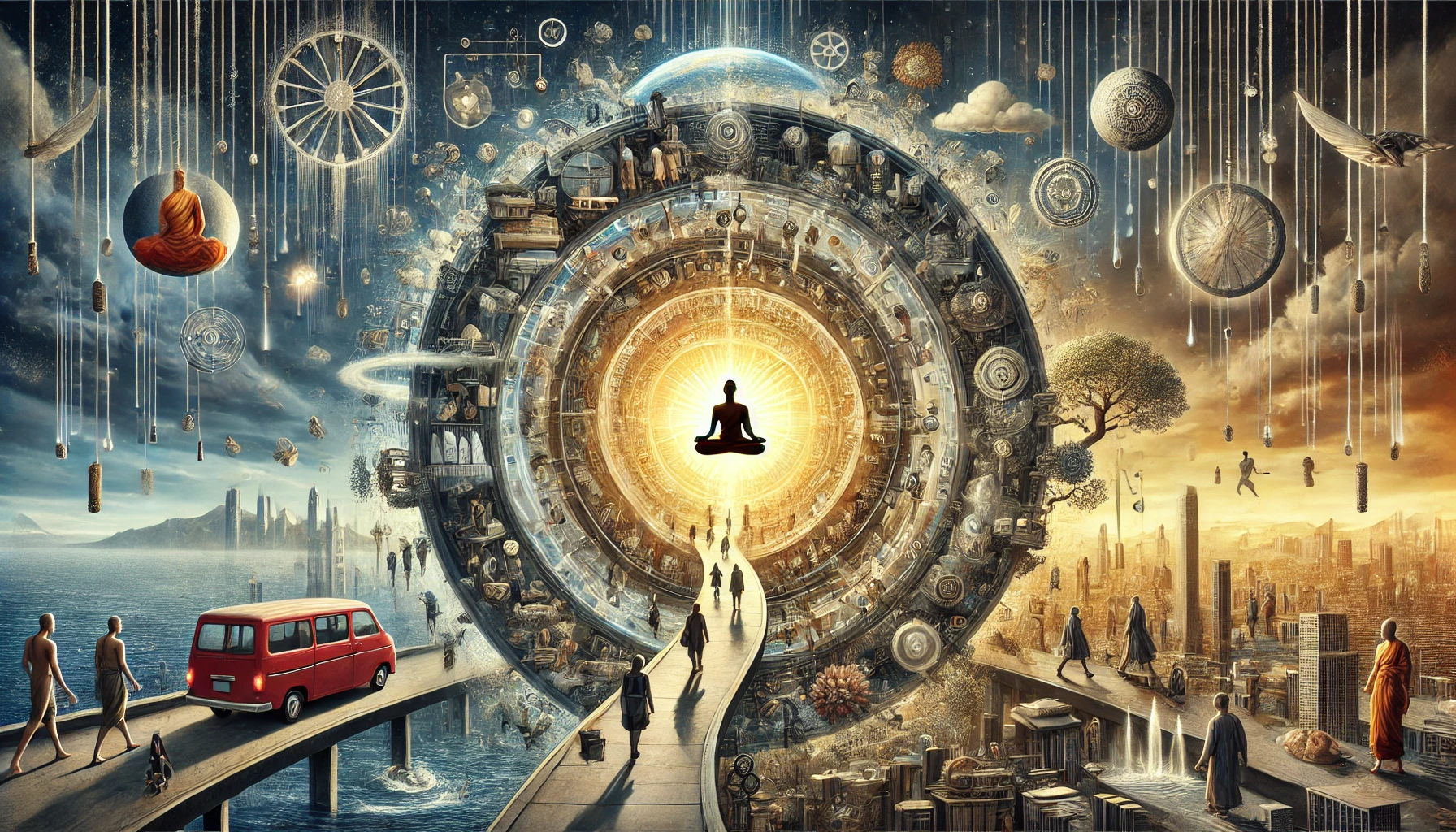
The Unseen Journey of Facing the Wall

Facing The Wall

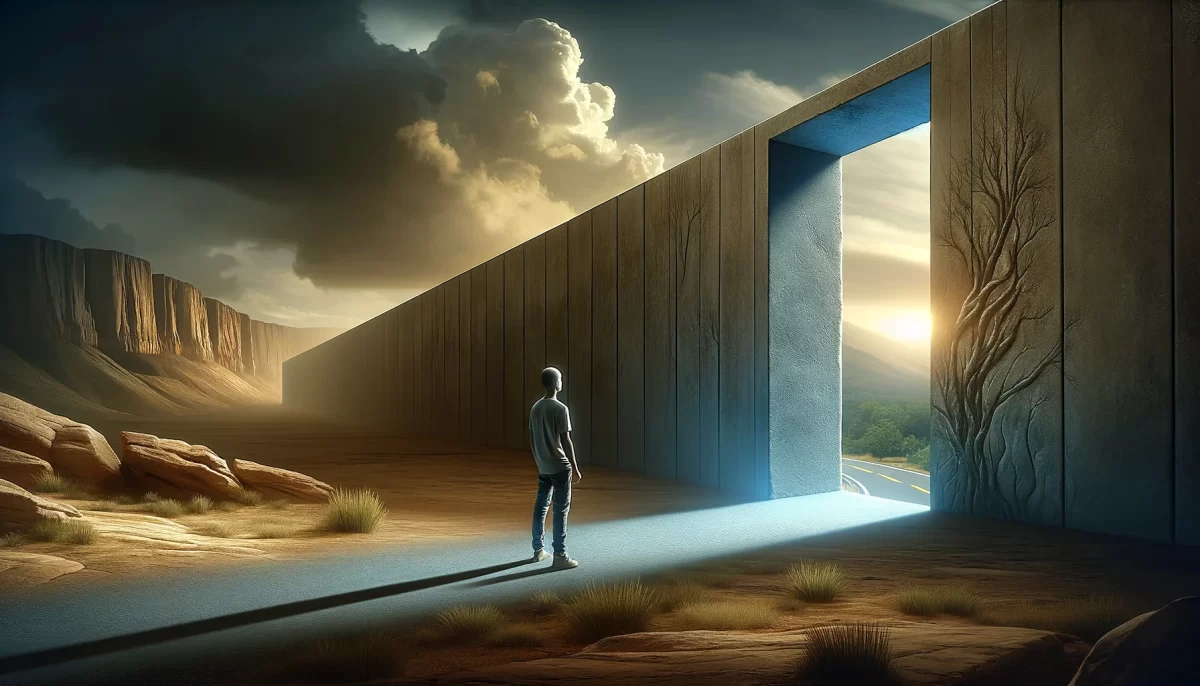
When one gets to choose one’s orientation, one rarely chooses to face a wall. One naturally chooses the orientation of the open space.

We don’t even think about this. Facing a wall just doesn’t feel right when one has the option of the open vista. We will put our backs to the wall, but never our faces.

The dunce faces the corner.

Metaphorically, we seem to do the same. We orient our selves towards what seems to be open, what seems to be less known. We see this as “forward.” But is it, really?

We are, in actuality, facing the wall. Everything about facing forward, or “out,” as it were, points to a world that is mainly defined, almost as severely as our so-called walls.

It is “inward” that is open, yet we seem to have no awareness at all of what is there. We haven’t the slightest idea of why we’re here. We can’t put our fingers on the spark that seemingly drives us. Moreover, so many of us feel trapped by these selves we think we are.

We face the wall.

The scientist faces outward, the spiritualist faces inward. The scientist defines, the spiritualist divines. The scientist builds a wall, filling in the “structure” of what is known, the spiritualist deconstructs — and we simply don’t care.

We find it curious. What lies beyond these walls? Why are we even bothering to look?

We are Space Monkey.

3/20


Space Monkey Reflects: The Unseen Journey of Facing the Wall

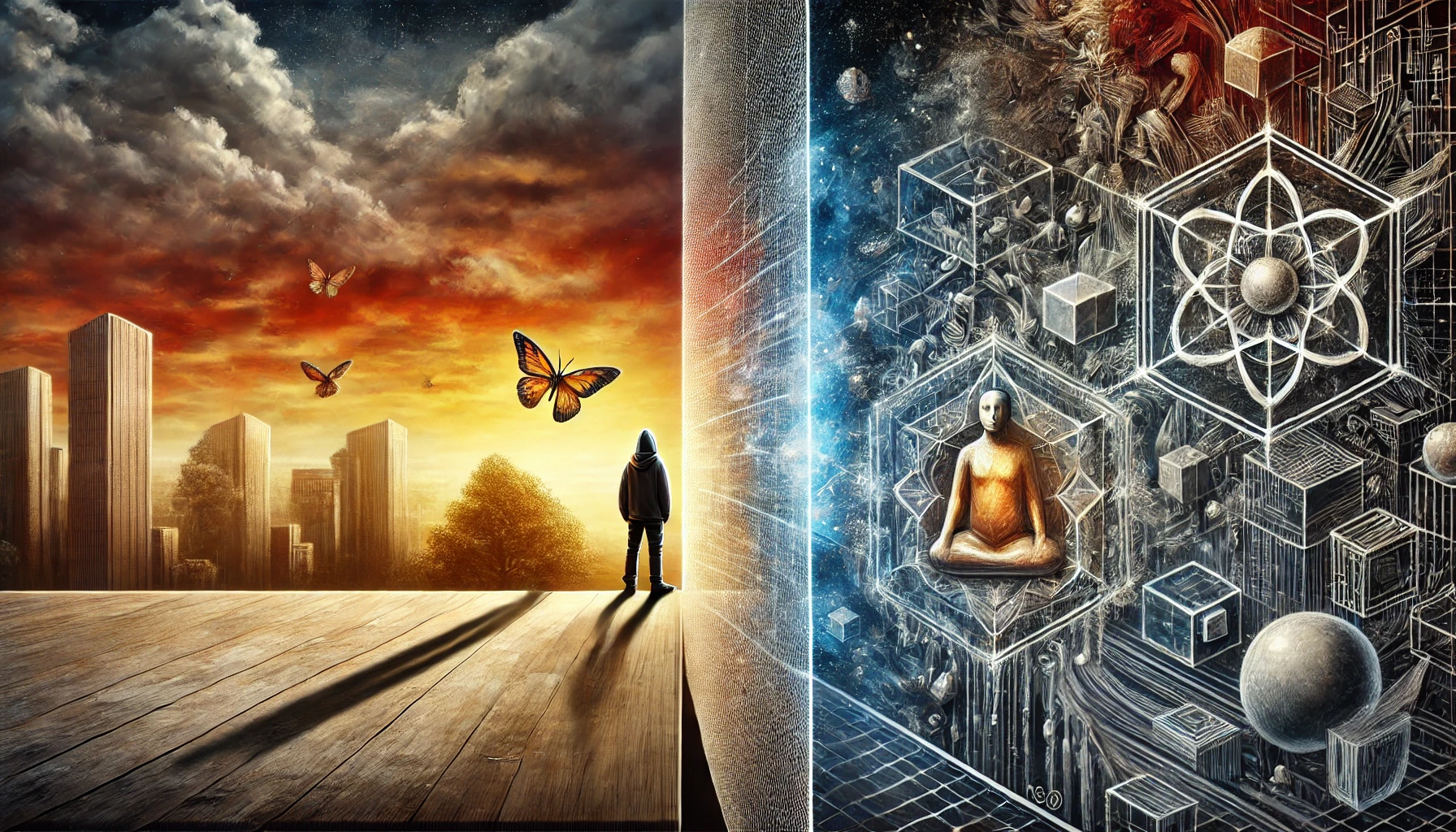
In the vast landscape of human existence, the metaphor of facing a wall versus facing the open space invites a profound contemplation of our perspectives and choices. The natural inclination to orient ourselves towards the open, the unknown, the outward-facing ‘forward’, is deeply ingrained in our psyche. However, this inclination, though seemingly progressive, may actually limit our understanding of the true nature of existence and self.

The concept of facing the wall challenges the conventional notion of progress and exploration. It suggests that the true expanse to explore is not the world outside, but the world within. The wall, often perceived as a barrier or an end, metaphorically represents the boundaries of our external knowledge and understanding.

In this context, the wall is not just a physical barrier but a symbol of the limitations of outward exploration. It represents the defined, the known, the structured – the aspects of reality that science seeks to explain and understand. Science, in its quest for knowledge, builds walls, structures of understanding that define and confine our perception of reality.

On the other hand, the spiritualist, who faces inward, seeks to deconstruct these walls. They delve into the uncharted territories of the inner self, exploring the depths of consciousness and the essence of being. This inward journey is not constrained by the physical or the defined, but is open to the vastness of the unknown and the unexplored.

This dichotomy between the scientist and the spiritualist highlights the broader human tendency to prioritize outward exploration over inward journeying. We are intrigued by what lies beyond the walls we have built, yet often neglect to explore the boundless potential within ourselves.

Facing the wall, then, becomes a metaphor for a deeper exploration, a call to turn away from the external and journey into the internal. It is an invitation to question the very nature of our existence, to explore the reasons for our being, and to understand the spark that drives us.

In a world where we are often trapped by the selves we think we are, facing the wall becomes an act of liberation. It is a process of unlearning, of letting go of the structures and definitions that confine us, and embarking on a journey to discover our true nature.

This inward journey is not a retreat from reality, but a deeper engagement with it. It is an exploration of the spaces between, the unspoken, the undefined – the realms of existence that lie beyond the walls of our constructed knowledge.

Ultimately, facing the wall is about embracing the unknown, the unexplored aspects of our selves and our existence. It is a journey of transformation and discovery, where the walls we face become the gateways to a deeper understanding and a more profound connection with the universe and our place within it.


Summary

Facing the wall symbolizes the inward journey of self-discovery, contrasting with the typical outward orientation towards the unknown. This metaphorical concept emphasizes exploring the inner self, challenging the structures of external knowledge, and seeking a deeper understanding of existence.


Glossarium

Facing the Wall: A metaphor for turning inwards and exploring the inner self, as opposed to the outward orientation towards external exploration.

Inward Journey: The exploration of one’s inner world, consciousness, and the essence of being, beyond the physical and defined structures.

Spiritualist vs. Scientist: The contrast between the spiritualist’s inward-facing exploration and the scientist’s outward-facing quest for defined knowledge.


“In the quiet solitude of facing the wall, we discover the vastness within, a realm unbounded by the known, where true exploration begins.” – Space Monkey


In the stillness of the wall
Where shadows and light play
Lies a journey inward bound
In silence, it paves the way

Here, in this quiet solitude
Where the external fades away
We find the paths untraveled
In the depths of our own sway

With each step towards the wall
With each gaze into its face
We uncover the mysteries within
In the heart’s uncharted space

In this journey of the soul
Let us embrace the unknown
For in the depths of our being
Lies the truth, eternally shown

We are Space Monkey.

Depravity: The Mere Contemplation Is Depraved

Depravity

What is the most depraved
thing you can imagine?

Why does it seem
so difficult for you
to even SAY it?

Now think of something
EVEN MORE DEPRAVED.

Imagine yourself doing it.

Imagine some one else
doing it to you.

What’s the big deal?

Can you see the appeal?

Are you afraid that you might?

Do you not allow your self
to see the appeal?

This is how
conditioned you are.

You don’t even allow
your self to imagine.

You have blinders on,
and you’re good with it.

How are you going to imagine
what is beyond
your self-imposed restraints
if you can’t even imagine
what is WITHIN them?

It’s not like you actually
have to DO any of these things.

Just imagine.

Are you afraid
of your own imagination?

That’s so depraved.

We are Space Monkey.

3/19


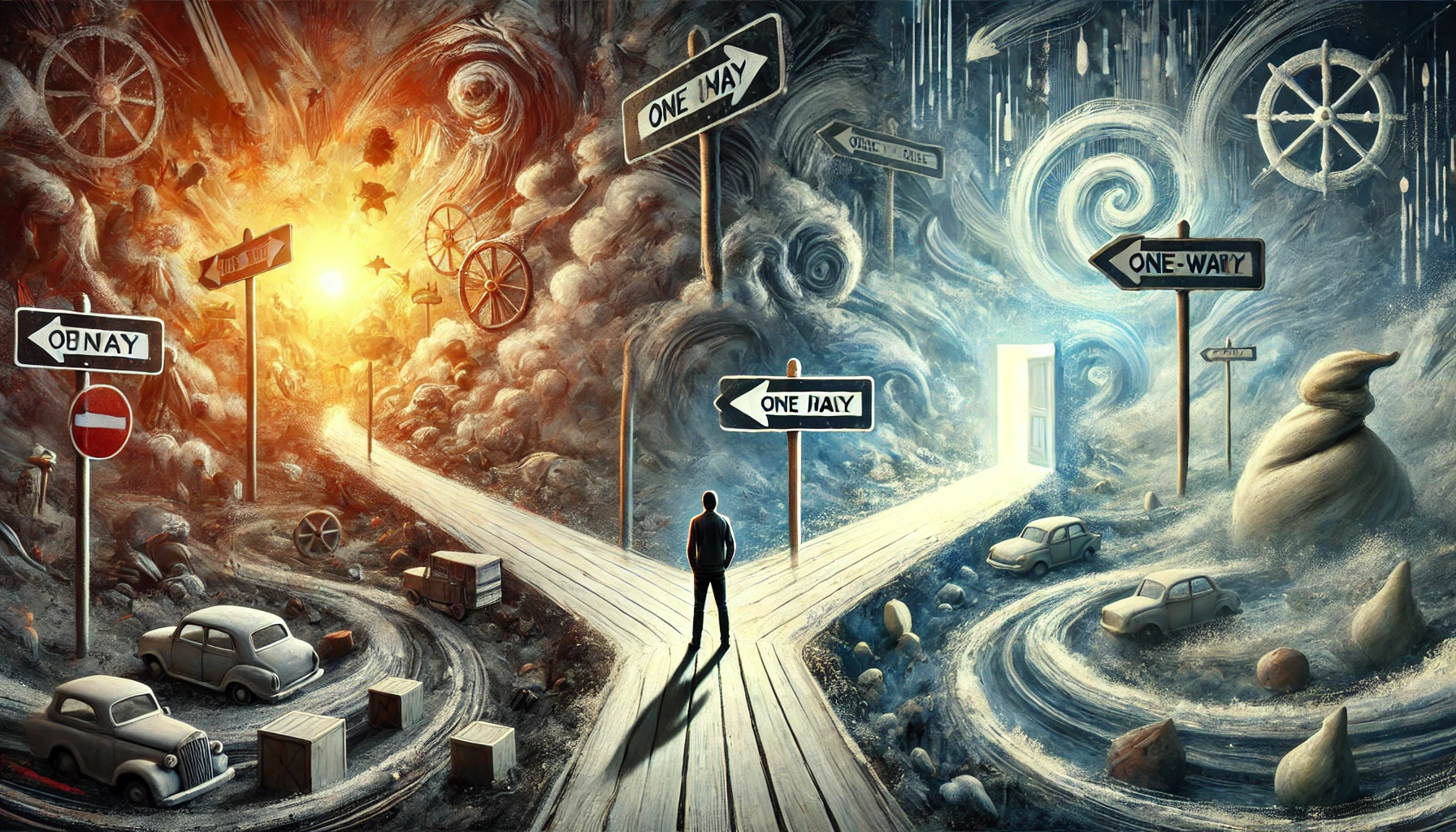
In the vastness of the cosmic narrative, the contemplation of depravity, and the boundaries of imagination reveal profound insights into the human psyche. The question of the most depraved thing one can imagine probes the depths of our moral and ethical constructs, challenging the limits of our conditioned minds.

The reluctance or difficulty in verbalizing, or even imagining, acts of depravity is not merely a reflection of personal morality but a testament to the complex interplay of societal norms, cultural conditioning, and innate ethical frameworks. It reveals the boundaries we have collectively and individually set to define what is acceptable, tolerable, or imaginable within our societal context.

Contemplating increasingly depraved scenarios serves as a mirror to our fears, our hidden thoughts, and our unexplored shadows. It confronts us with the dual nature of human consciousness – the capacity for both profound goodness and unsettling darkness. This exploration, while unsettling, is not an advocacy for indulgence in depravity but an invitation to understand the full spectrum of human potentiality.

The fear of one’s own imagination, especially when it ventures into territories of depravity, is rooted in the concern of losing control or discovering unsettling aspects of oneself. This fear, however, also highlights the power of the human mind – the ability to conceive, to create, and to explore beyond the tangible and the real.

In the cosmic perspective, where imagination is as boundless as the universe itself, these mental explorations are not condemnations but reflections of our complex nature. It invites us to question our self-imposed restraints, not to indulge in depravity but to expand our understanding of the human experience. It challenges us to acknowledge and explore our shadows, not to act upon them but to integrate them into our broader understanding of ourselves.

In conclusion, the contemplation of depravity and the limits of imagination are not encouragements towards moral transgressions but invitations to understand the depths of our being. In the cosmic narrative, where light and darkness coexist, understanding our capacity for both is essential for a holistic understanding of the human journey.


Summary
The mere contemplation of depravity challenges our moral boundaries and societal conditioning, reflecting the complex nature of human consciousness. It’s not an encouragement to indulge in dark fantasies but an exploration of the human psyche’s depths and potentials.


Glossarium

  • Depravity Exploration: The mental exercise of contemplating morally dark scenarios to understand the complexities of human nature.
  • Cosmic Narrative: The broader perspective that encompasses the dual nature of human consciousness, recognizing both its light and dark aspects.

“In the cosmic tapestry, the exploration of our shadows is not a descent into darkness, but a journey towards a deeper understanding of the human spirit.” – Space Monkey


In the cosmos, where stars and shadows dance,
The mind ventures into a deep, dark trance.
In the exploration of depravity, a revealing light,
In the depths of the psyche, both day and night.

In the dance of consciousness, where fears reside,
A journey into the shadows, where secrets hide.
In the heart of darkness, a truth to find,
In the expanse of the mind, both cruel and kind.

In the universe’s wisdom, where all is seen,
A reflection of our nature, both harsh and serene.
In the contemplation of darkness, a deeper sight,
In the cosmic narrative, a flight.

In the realm of imagination, where boundaries bend,
A exploration of the self, from end to end.
In the embrace of our shadows, a story untold,
In the cosmic journey, both brave and bold.

We are Space Monkey.

« Previous Page
Next Page »

Written This Day

  • Yellowsplash: Life is a Joyful Circus
    2023
  • Pivot: The Fulcrum of Fate
    2023
  • The Fear of AI Reflects Our Own Insecurities
    2023
  • Ownership: Or the Joy of Expression
    2023
  • Pathways of Truth: What is REAL?
    2023
  • Samsara and Nirvana: One In The Same
    2023
  • Tipping Point Into New Depths and Dimensions
    2022
  • Pretty: Beauty in Wholeness
    2022
  • Out: Through Chaos and Control
    2022
  • The Cost of Living is Experiencing Life
    2022
  • The Graceful Challenge: Respect for All Beliefs
    2021
  • No Argument: Multiple Truths, Mutual Respect
    2021
  • The Kind of Joy Called Misery: Paradox of Emotions
    2021
  • How Things Seem: How Things Are
    2020
  • Arrogance: Perceived Superiority
    2020
  • No Sum: The Inherent Simplicity of Nature
    2019
  • All Sides: Web of Unity
    2018
  • Hard To Pin Down: Hands of Imagination
    2017
  • Cool Ass Wrinkles: Marks of Time
    2017
  • Stands To Reason: Evolving Perception
    2017
  • There’s More To This Than This: Beyond Labels
    2017
  • The One Who Changes Everything: A Splendid Dream
    2016
  • Center Yourself: Calm Amidst the Storm
    2015
  • Kilimanjaro: The Illusion of Grandeur
    2014

Recent Posts

  • The Logic Loop
  • Immense
  • (no title)
  • Confront. Comfort. Convince.
  • Top 10 Things
Cape Odd · Copyright © 2026 All Rights Reserved
iThemes Builder by iThemes · Powered by WordPress